

Effect of the intratumoral microbiota on spatial and cellular heterogeneity in cancer
Open accessThe DOI matches its Crossref record; 41 of the 41 references it cites were found in a registry or an index.
Abstract
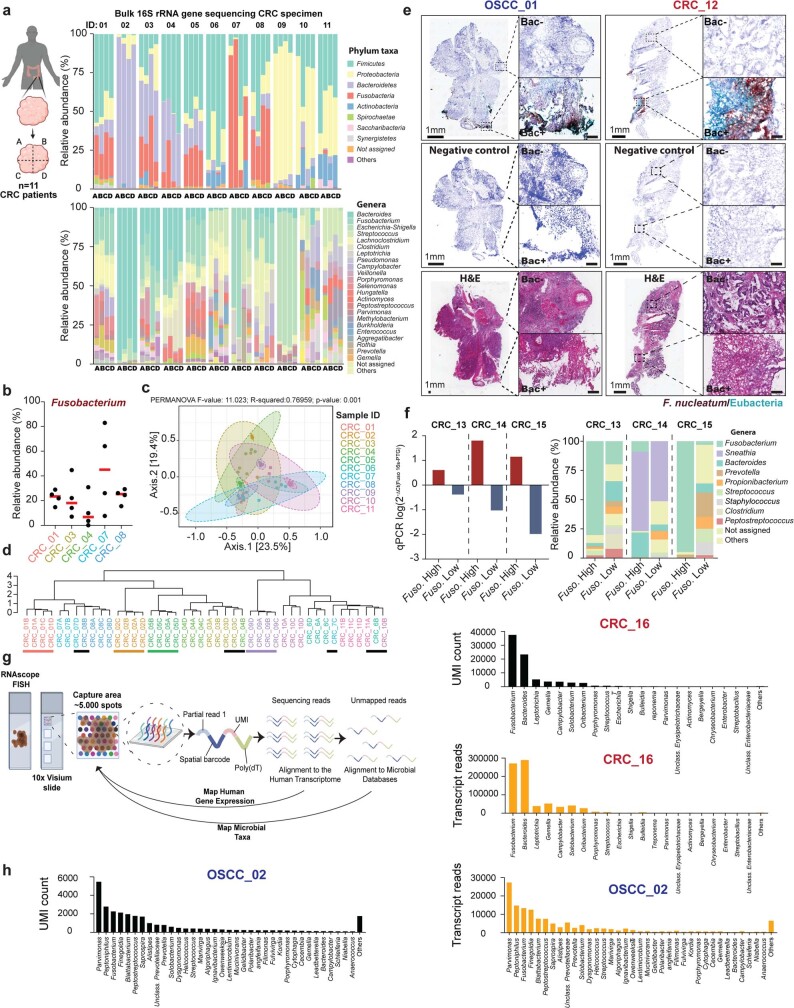
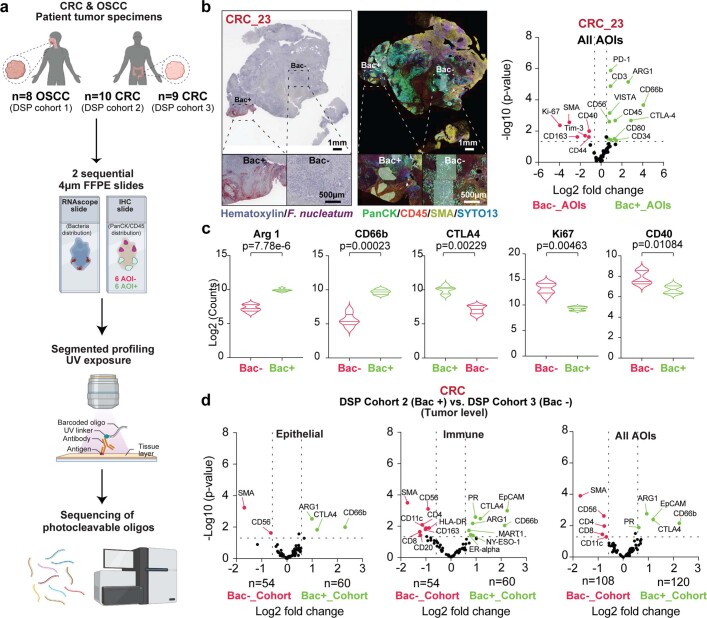
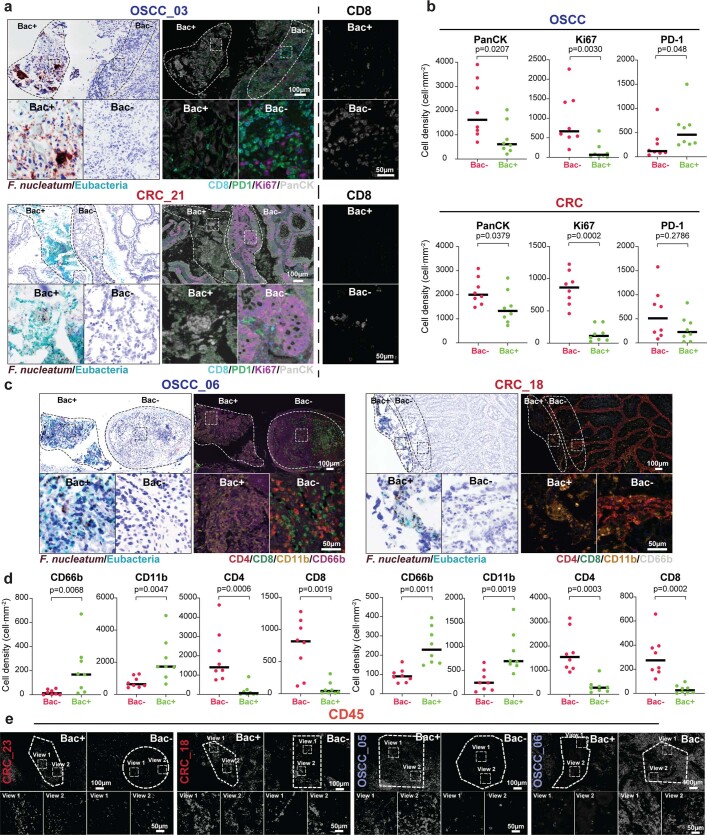
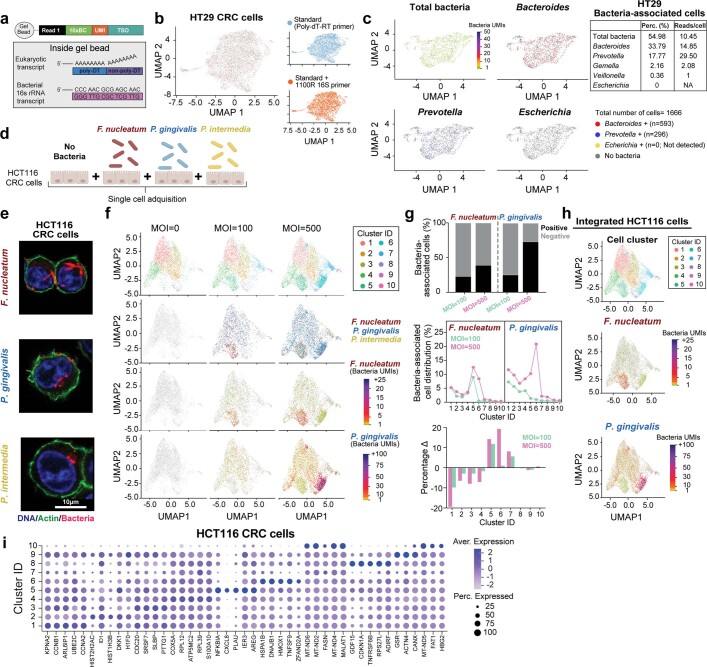
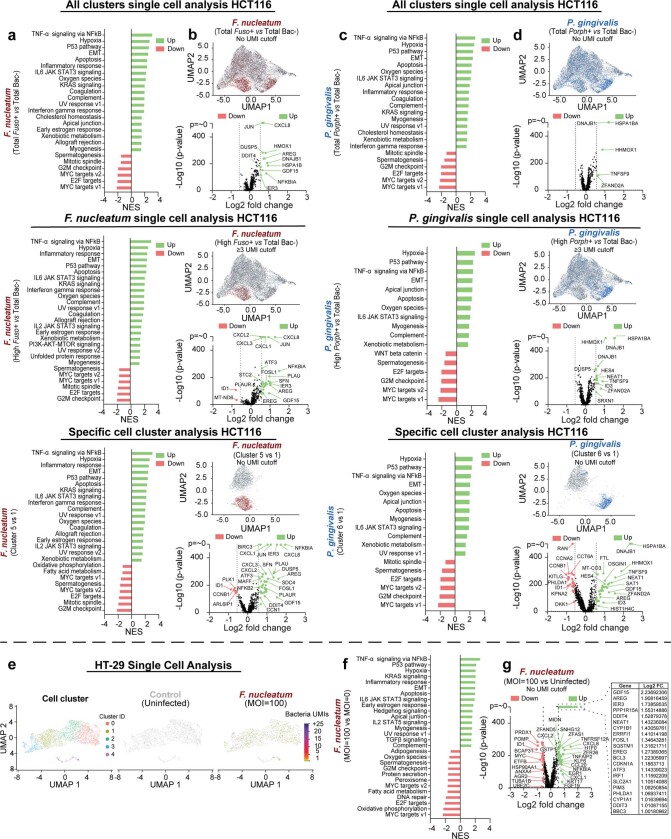
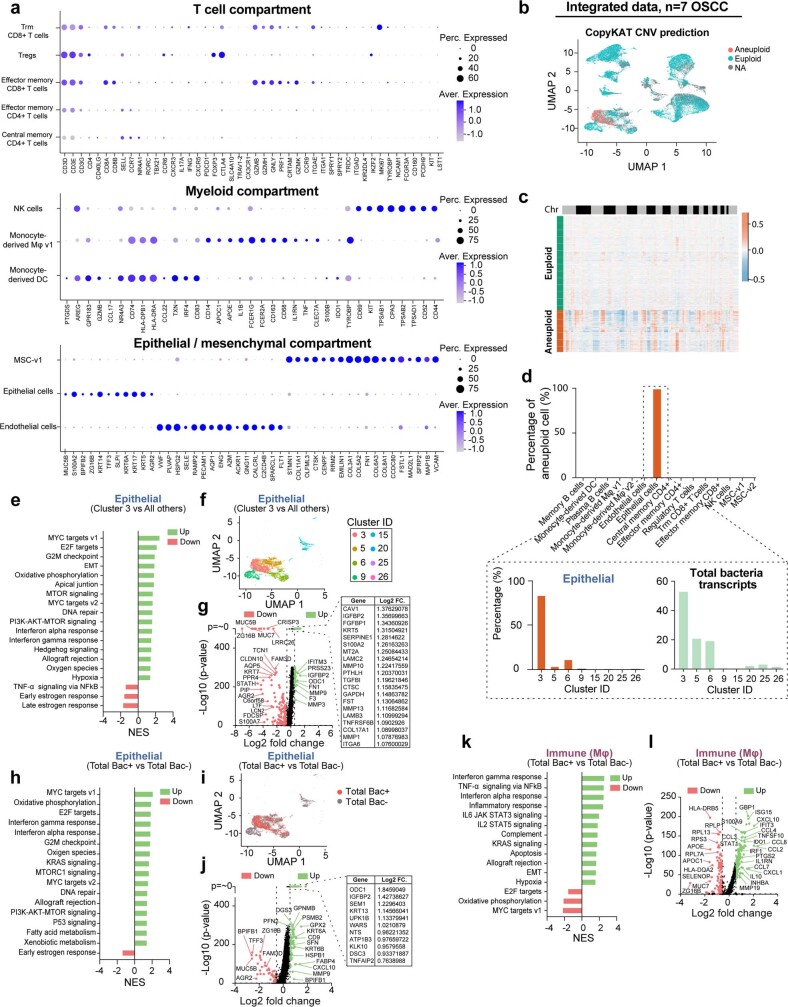
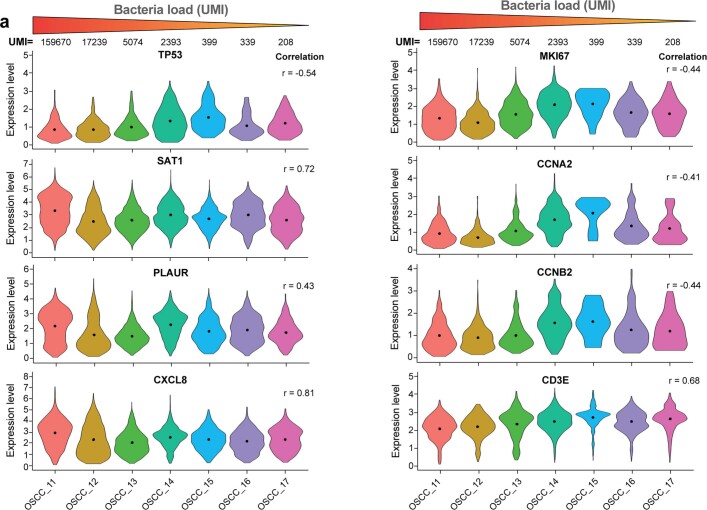
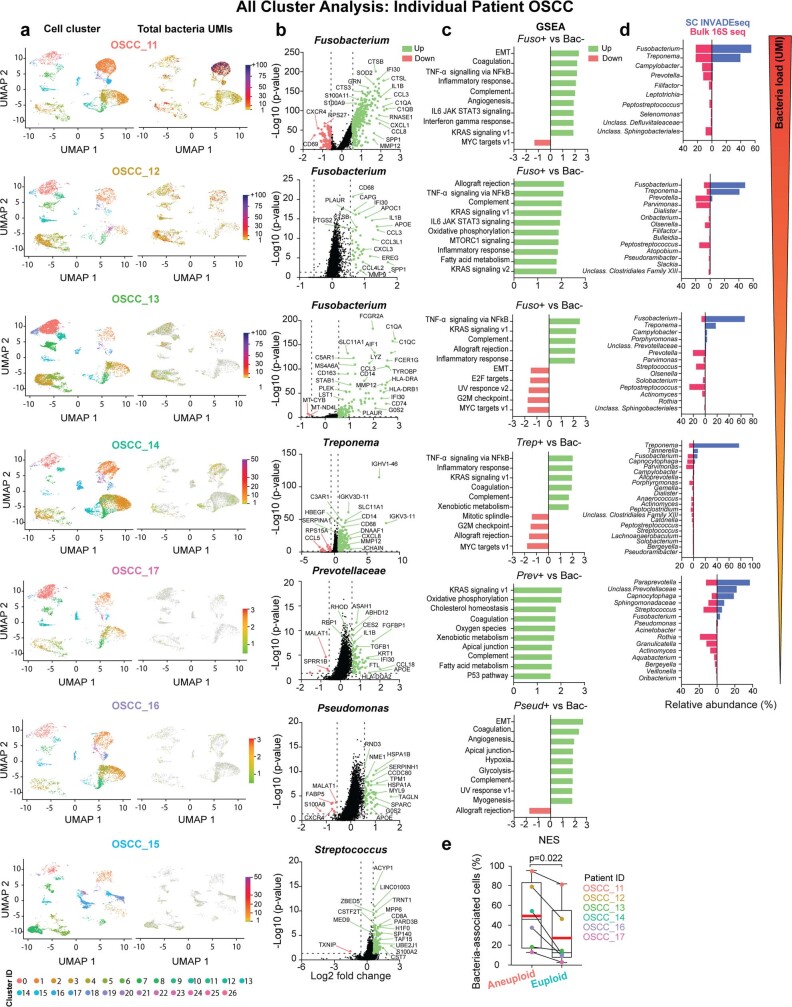
The tumour-associated microbiota is an intrinsic component of the tumour microenvironment across human cancer types 1,2 . Intratumoral host–microbiota studies have so far largely relied on bulk tissue analysis 1–3 , which obscures the spatial distribution and localized effect of the microbiota within tumours. Here, by applying in situ spatial-profiling technologies 4 and single-cell RNA sequencing 5 to oral squamous cell carcinoma and colorectal cancer, we reveal spatial, cellular and molecular host–microbe interactions. We adapted 10x Visium spatial transcriptomics to determine the identity and in situ location of intratumoral microbial communities within patient tissues. Using GeoMx digital spatial profiling 6 , we show that bacterial communities populate microniches that are less vascularized, highly immuno‑suppressive and associated with malignant cells with lower levels of Ki-67 as compared to bacteria-negative tumour regions. We developed a single-cell RNA-sequencing method that we name INVADEseq (invasion–adhesion-directed expression sequencing) and, by applying this to patient tumours, identify cell-associated bacteria and the host cells with which they interact, as well as uncovering alterations in transcriptional pathways that are involved in inflammation, metastasis, cell dormancy and DNA repair. Through functional studies, we show that cancer cells that are infected with bacteria invade their surrounding environment as single cells and recruit myeloid cells to bacterial regions. Collectively, our data reveal that the distribution of the microbiota within a tumour is not random; instead, it is highly organized in microniches with immune and epithelial cell functions that promote cancer progression.
Overview
The claims and statistics of this paper haven’t been checked yet.
Free: it reads the open-access text and checks the first 5 claims that cite a source we can check. Create a free account to check every claim.
Integrity signals
Registry
Cites
Statistics
Figures
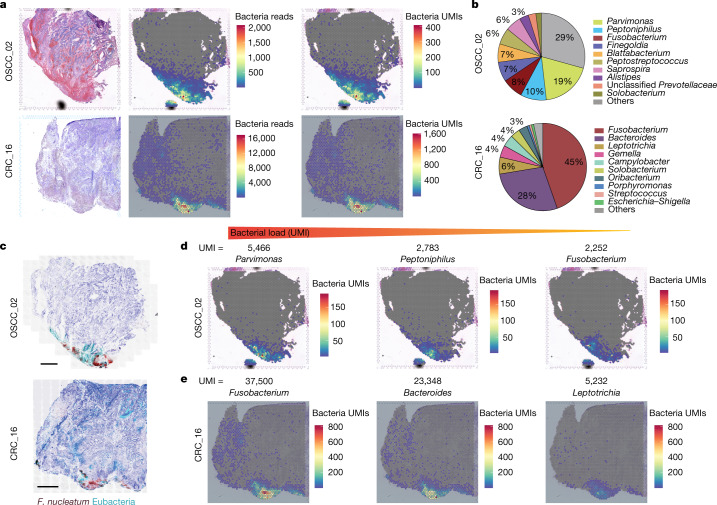
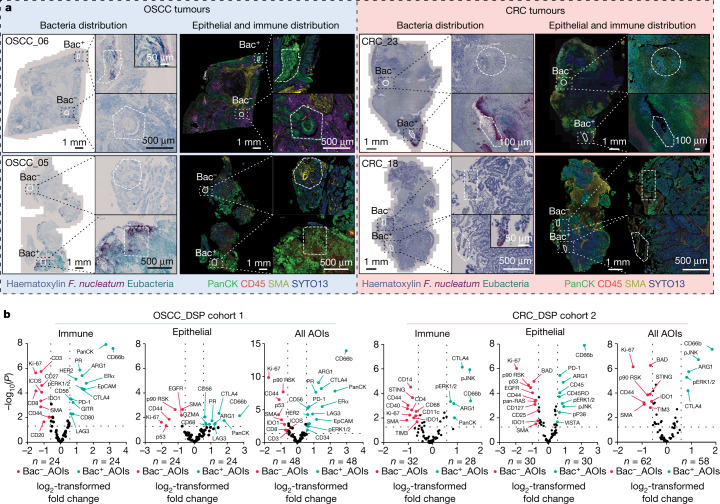
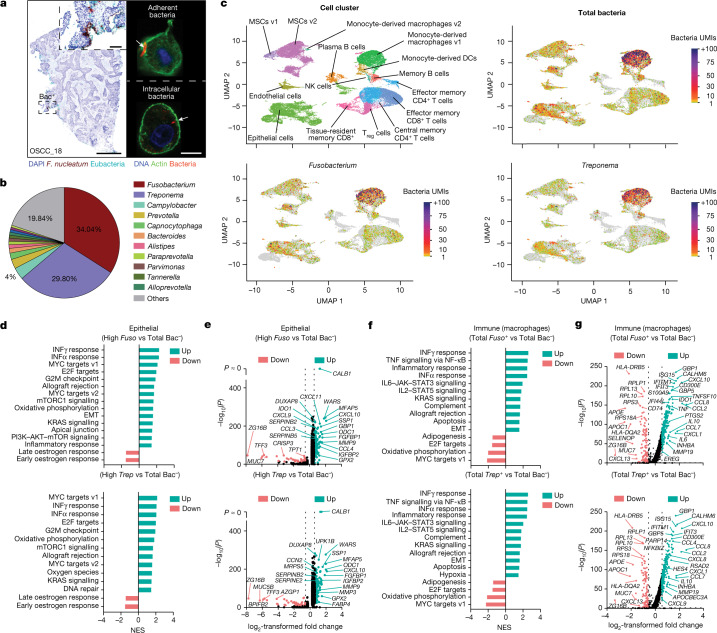
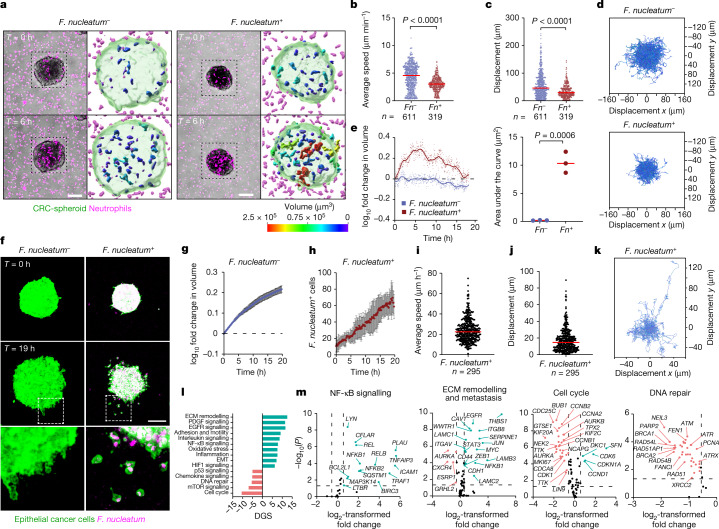
Verification
Claims the paper makes
The claims and statistics of this paper haven’t been checked yet.
Free: it reads the open-access text and checks the first 5 claims that cite a source we can check. Create a free account to check every claim.
Claims other papers make about this one
Each is checked against this paper’s own text: does it say what the citing paper says it does?
The cited source says what the claim attributes to it.
In the citing paper
“Galeano et al. introduced invasion-adhesion-directed expression sequencing (INVADEseq) targeting a conserved area of the bacterial 16 S rRNA, enabling the effective creation of cDNA libraries containing bacterial transcripts derived from human cells associated with bacteria.”
From Single-cell sequencing to multi-omics: technologies and applications (2024) · cites this paper as [158]
The cited source says what the claim attributes to it.
In the citing paper
“These microbes interact with both tumor and immune cells, influencing tumor dynamics by modulating immune responses, producing pro-proliferative metabolites, and reshaping the structural and biochemical landscape of the TME [38–40]”
From Phage therapy in oncology: opportunities for cancer prevention and treatment (2026) · cites this paper as [39]
The check wasn’t confident either way, so it gives no verdict — never disputed.
In the citing paper
“These microbes interact with both tumor and immune cells, influencing tumor dynamics by modulating immune responses, producing pro-proliferative metabolites, and reshaping the structural and biochemical landscape of the TME [38–40]”
From Phage therapy in oncology: opportunities for cancer prevention and treatment (2026) · cites this paper as [39]
Experimental — accuracy not yet measured
Self-check
Percentages, sums and reported differences re-computed from the paper’s own numbers.
The self-check needs the paper’s full text.
Citations
Cites
1 retracted
RETRACTED ARTICLE: Microbiome analyses of blood and tissues suggest cancer diagnostic approach
Poore, G. D., Kopylova, E., Zhu, Q., Carpenter, C., Fraraccio, S., Wandro, S., Kosciolek, T., Janssen, S., Metcalf, J., Song, S. J., et al. (2020) · Nature · doi:10.1038/s41586-020-2095-1 · Cited by 989
RetractedHighly parallel genome-wide expression profiling of individual cells using nanoliter droplets.
Macosko, E. Z., Basu, A., Satija, R., Nemesh, J., Shekhar, K., Goldman, M., Tirosh, I., Bialas, A. R., Kamitaki, N., Martersteck, E. M., et al. (2015) · Cell · doi:10.1016/j.cell.2015.05.002 · Cited by 7,110
Tumors: Wounds That Do Not Heal
Flier, J. S., Underhill, L. H., & Dvorak, H. F. (1986) · New England Journal of Medicine · doi:10.1056/nejm198612253152606 · Cited by 4,391
mRNA-Seq whole-transcriptome analysis of a single cell
Tang, F., Barbacioru, C., Wang, Y., Nordman, E., Lee, C., Xu, N., Wang, X., Bodeau, J., Tuch, B. B., Siddiqui, A., et al. (2009) · Nature Methods · doi:10.1038/nmeth.1315 · Cited by 3,969
Tumour heterogeneity and resistance to cancer therapies
Dagogo-Jack, I., & Shaw, A. T. (2018) · Nature Reviews Clinical Oncology · doi:10.1038/nrclinonc.2017.166 · Cited by 3,846
A Gene Encoding an Antigen Recognized by Cytolytic T Lymphocytes on a Human Melanoma
van der Bruggen, P., Traversari, C., Chomez, P., Lurquin, C., De Plaen, E., Van den Eynde, B., Knuth, A., & Boon, T. (1991) · Science · doi:10.1126/science.1840703 · Cited by 3,545
EMT Transition States during Tumor Progression and Metastasis
Pastushenko, I., & Blanpain, C. (2019) · Trends in Cell Biology · doi:10.1016/j.tcb.2018.12.001 · Cited by 2,876
Anderson, N. M., & Simon, M. C. (2020) · Current Biology · doi:10.1016/j.cub.2020.06.081 · Cited by 2,718
T cell exclusion, immune privilege, and the tumor microenvironment
Joyce, J. A., & Fearon, D. T. (2015) · Science · doi:10.1126/science.aaa6204 · Cited by 2,473
The human tumor microbiome is composed of tumor type–specific intracellular bacteria
Nejman, D., Livyatan, I., Fuks, G., Gavert, N., Zwang, Y., Geller, L. T., Rotter-Maskowitz, A., Weiser, R., Mallel, G., Gigi, E., et al. (2020) · Science · doi:10.1126/science.aay9189 · Cited by 2,464
Cited by
Items 701–800 of 997
Characterization of intra-tumoral microbiota from transcriptomic sequencing of Asian breast cancer
Yeo, L.-F., Lee, A. W. Y., Tee, P. Y. E., Chin, J. S. F., Lee, B. K. B., Lim, J., Teo, S., & Pan, J. W. (2025) · Scientific Reports · doi:10.1038/s41598-025-15877-x · Cited by 1
Liu, Y., Wu, E., Cheng, F., Zhang, M., Rou, Q., Nuertai, Z., Xu, M., Xu, S., Li, M., Zhang, L., et al. (2025) · PeerJ · doi:10.7717/peerj.20009 · Cited by 1
“Certain microbes, such as P. gingivalis , can activate signaling pathways like JAK1/STAT3 and recruit tumor-associated neutrophils, promoting OSCC progression ( Galeano Niño et al., 2022 ).”
Wu, J., Huang, L., Liu, Y., Wang, R., & Du, Y. (2025) · Pakistan Journal of Medical Sciences · doi:10.12669/pjms.41.11.11655 · Cited by 1
“Other studies 22,23 link high DNA aneuploidy content with increased vascular invasion and lymph node metastasis.”
Gopalkrishna, P., Prabhu, K., Puzhankara, L., Kedlaya, M. N., Dastidar, S. G., Solomon, M. C., & Murali, T. S. (2025) · BMC Oral Health · doi:10.1186/s12903-025-07118-4 · Cited by 1
Ran, S., Ye, J., Wang, H., Liu, F., Ou, S., Chen, Z., Song, Y., Liu, S., & Huang, R. (2025) · Scientific Reports · doi:10.1038/s41598-025-26249-w · Cited by 1
“1A and B), which was consistent with a previous study 38 .”
Wang, C., Chen, J., & Wang, W. (2025) · Journal of Biochemical and Molecular Toxicology · doi:10.1002/jbt.70536 · Cited by 1
“With scRNA ‐ seq technology, we could conduct in ‐ depth studies of various cell types in the tumor microenvironment and search for and identify new tumor ‐ associated cell types and cell states and relevant essential genes and signaling pathways [26].”
Ren, Z., Liu, X., Zhang, J., Song, M., Yang, Q., Li, C., & Liu, D. (2026) · In Silico Pharmacology · doi:10.1007/s40203-025-00511-5 · Cited by 1
“For instance, the presence of bacteria in oral squamous cell carcinoma and colorectal cancer is closely related to MAPK signalling pathway activation, which may occur via a myeloid cell reaction and lead to T cell exclusion (Galeano Niño et al. 2022 ).”
Detecting microbial footprints in cancer sequencing
Piccinno, G., Mjelle, R., & Segata, N. (2026) · Cancer Cell · doi:10.1016/j.ccell.2026.02.005 · Cited by 1
Dynamic reorganisation of intratumoural bacterial florae during colorectal cancer progression
Li, M., Li, Y., Li, C., Liu, A., Liu, Y., Li, Y., Xiao, J., Zhang, D., Jin, Y., Wang, G., et al. (2026) · British Journal of Cancer · doi:10.1038/s41416-026-03344-x · Cited by 1
Sphingomonas paucimobilis ‐Driven Epithelial–Endothelial Transition in Adenomyosis Pathogenesis
Chen, P., Shi, H., He, J., Liu, Y., Zhu, Y., Liang, X., Liu, G., & Yang, X. (2026) · Advanced Science · doi:10.1002/advs.202516652 · Cited by 1
“Anaerobic bacteria promote tumor invasion and metastasis through various pathways [ 15 ], and intra-tumoral microbes influence both tumor diversity and invasive properties [ 16 ].”
Microbial signatures with diagnostic potential in early gastric cancer: insights beyond H. pylori
Yang, R., Tao, L., Su, W., Zou, F., Wang, Y., Zhang, G., Chen, H., & Zhou, X. (2026) · BMC Microbiology · doi:10.1186/s12866-026-04981-1 · Cited by 1
Wang, Z., Zhang, J., Lu, H., Ni, J., Yang, S., Shi, Y., Zhang, S., Zhang, P., & Liu, L. (2026) · Advanced Science · doi:10.1002/advs.202517245 · Cited by 1
“To date, no antagonistic interactions between G. morbillorum and other established CRC-associated bacteria (e.g., Fusobacterium nucleatum ) have been reported [ 37, 38 ].”
Microbiota as a modulator of drug response: targeting microbial–drug crosstalk in cancer therapy
Zhao, T., Liu, M., Qiu, L. X., Zhang, H., Zhang, N., Liu, Z., Xia, Z., Luo, P., Huang, J., & Cheng, Q. (2026) · Gut Microbes · doi:10.1080/19490976.2026.2651930 · Cited by 1
Molecular imaging tools driving advances in multimodal imaging of the tumor microbiota
Zhang, Z., Peng, T., Su, M., Wang, Y., Chen, S., Xie, Z., & Li, J. J. (2026) · TrAC Trends in Analytical Chemistry · doi:10.1016/j.trac.2026.118859 · Cited by 1
Wang, R., Ren, J., Zhang, Y., Shi, J., Yuan, Y., & Tao, X. (2026) · Cancer Medicine · doi:10.1002/cam4.71798 · Cited by 1
Shan, Y., Huang, Y., Lee, A., Elmorsi, R. M., Phan, T., Chaudhury, I., Corbiere, T., Collins, L. B., Hirsch, E. B., Weinberg, B. A., et al. (2026) · Cell Reports Medicine · doi:10.1016/j.xcrm.2026.102757 · Cited by 1
Zhang, T., Yu, Y., Zhang, C. Z., Zhang, M., Yuan, S., Wang, Y., Dai, K., Zhang, L., Su, Y., & Zhang, M. (2026) · Microbiology Spectrum · doi:10.1128/spectrum.02247-25 · Cited by 1
The Silent Link: Exploring the Impact of Periodontal Diseases on Head and Neck Carcinogenesis
Afshar, Y., & Rezaei, N. (2026) · Clinical and Experimental Dental Research · doi:10.1002/cre2.70341 · Cited by 1
Feng, J., Liu, Y.-H., Gong, L.-M., Zhang, W.-X., Liu, C., Xiao, C.-C., Chen, L., Jin, M., Guan, Y.-Y., Gao, Z.-G., et al. (2026) · Military Medical Research · doi:10.1016/j.mmr.2026.100036 · Cited by 1
“Intratumoral pathogenic bacteria (especially F.n ) suppress the tumor immune microenvironment and promote CRC progression via PD-L1/MHC-I-mediated immune suppression [6,13] (Fig.”
Huang, Q., Chen, Q., Xiong, W., Sun, Y., Huang, Y., Dai, A., Chen, J., Wu, X., Jiang, Y., Wei, F., et al. (2026) · Microbial Biotechnology · doi:10.1111/1751-7915.70373 · Cited by 1
Łysiak, J., Abdulgater, A., Stępień, G., Przewoźna, U., Urowska, W., Osuch-Tomaszewska, P., Kossmann, M., Szalewska, L., Burtowicz, J., & Kazubek-Fuksiewicz, I. (2026) · International Journal of Innovative Technologies in Social Science · doi:10.31435/ijitss.2(50).2026.5462 · Cited by 1
Ali, S., Chaudhary, A. A., Sheikh, W. M., Ali, M. A. M., Chopra, C., Dar, M. A., Wani, A. K., & Bashir, S. M. (2026) · Pathology - Research and Practice · doi:10.1016/j.prp.2026.156543 · Cited by 1
The Intratumoral Microbiota in Breast Cancer: Roles in Progression, Immunity, and Therapy
Wei, Z., Cai, J., Wang, S., Li, Y., Luo, L., Chen, J., Li, F., Nie, H., Gong, K., & CAI, M. (2026) · Oncology Research Featuring Preclinical and Clinical Cancer Therapeutics · doi:10.32604/or.2026.079281 · Cited by 1
Luo, Z., Xu, D., Wang, Z., Wu, L., Ou, C., & Ou, Z. (2026) · Genes & Diseases · doi:10.1016/j.gendis.2026.102270 · Cited by 1
Hunter, J. G. L., Roach, A., Nieves, L. M., Islas, A. K. F., Islas, A., & DiPalma, M. P. (2026) · Frontiers in Immunology · doi:10.3389/fimmu.2026.1820477 · Cited by 1
Zeng, H., Liu, H., Yang, F., & Li, J. R. (2026) · Frontiers in Cellular and Infection Microbiology · doi:10.3389/fcimb.2026.1829524 · Cited by 1
Microbiome–Driven Carcinogenesis and Circulating Microbial Signals in Genitourinary Cancers
Kawashima, A., Jingushi, K., Saito, T., Uemura, T., Yamamoto, A., Sassi, N., Horitani, H., Inoguchi, S., Horibe, Y., Ishizuya, Y., et al. (2026) · Cancer Science · doi:10.1111/cas.70448 · Cited by 1
“Recent work has also shown that intratumoral microbiota can influence spatial and cellular heterogeneity within tumors and that tumor-resident intracellular microbiota can promote metastatic colonization in breast cancer [46, 47].”
Spatial Transcriptomics in Breast Cancer: Advances and Applications
Cao, Y., Xu, K., Li, X. Y., Zhang, J., Jin, W., & Liu, Y.-X. (2026) · Biology · doi:10.3390/biology15131061 · Cited by 1
Zhang, X., Chen, X., & Leng, Y. (2026) · Frontiers in Oncology · doi:10.3389/fonc.2026.1895422 · Cited by 1
“Microbial and viral gradients are an emerging frontier in gastric cancer spatial immune ecology (94).”
InfluentialZhou, J., Tao, H., Zou, F., Guo, H., Ding, R., Lei, Q., Zhou, X. Y., & Mei, S. (2026) · Frontiers in Immunology · doi:10.3389/fimmu.2026.1865305 · Cited by 1
“Compared with conventional host-or tumor-derived markers, microbiota-related features may provide information about spatial speci fi city, ecological dynamics, and host-microbe interactions within the TME.”
InfluentialBhargava, V., Gupta, S., Yadav, C., Panchal, I., Mathur, N., Kumar, R., Khangembam, C. D., & Lata, P. (2026) · Progress in Biophysics and Molecular Biology · doi:10.1016/j.pbiomolbio.2026.07.011 · Cited by 1
The intratumoral microbiome as an emerging hub in cancer pathogenesis and precision oncology
Sun, J., Song, S., Luo, S., Qing, F. A. N., Li, X., Liu, H., & Wu, G. (2026) · Molecular Cancer · doi:10.1186/s12943-026-02762-y · Cited by 1
Mechanisms linking the gut microbiota to colorectal cancer development and progression
Zheng, H., Zhang, W., Pang, Q., & Deng, H. (2026) · Microbiological Research · doi:10.1016/j.micres.2026.128689 · Cited by 1
Metaplasia creates a permissive niche for select Fusobacterium species in the stomach
Gómez-Garzón, C., O'Brien, V. P., Chen, Q., Garman, K. S., & Salama, N. R. (2026) · mBio · doi:10.1128/mbio.01747-26 · Cited by 1
“Specifically, it has been reported that Fusobacteria may induce immunosuppression by recruiting myeloid cells via chemokine upregulation in macrophages while excluding and inhibiting T (62, 64) and NK cells (65).”
Zhang, Y., Liu, J. S., Li, J., Liu, X., Su, Y., Luo, P., Zhang, Y., & Li, Z. (2026) · Cancer Nexus · doi:10.1002/cnx2.70037 · Cited by 1
Martin, A., Cattin, A.-L., Lockwood, P. K., Zepeda‐Rivera, M. A., Becker, C., Barber, T., Lobón, I., Thakkar, K., Bickley, L., Tippu, Z., et al. (2026) · Med · doi:10.1016/j.medj.2026.101335 · Cited by 1
Putting bacteria on the cancer map
Anderson, N. D., & Behjati, S. (2023) · Immunity · doi:10.1016/j.immuni.2022.12.016 · Cited by 1
[Progress in molecular mechanisms and targeted therapies of persistent cancer cells].
Li, X., Wang, L., & Zhao, W. (2023) · PubMed Central · doi:10.3760/cma.j.issn.0253-2727.2023.08.018 · Cited by 1
“[30] Galeano Niño JL, Wu H, LaCourse KD, et al.”
BackgroundBacteria in the cancer therapy
Miao, N. (2023) · Theoretical and Natural Science · doi:10.54254/2753-8818/22/20230936 · Cited by 1
Chow, L., Flaherty, E., Pezzanite, L. M., Williams, M., DOW, S. W., & Wotman, K. L. (2024) · Veterinary Sciences · doi:10.3390/vetsci11040167 · Cited by 1
The Evolving Landscape of Vaccines
(2024) · International Journal of Veterinary Science · doi:10.47278/book.cam/2024.439 · Cited by 1
Does Porphyromonas gingivalis truly inhibit the oral carcinogenesis?
Li, C., & Gong, Z. (2025) · Molecular Oncology · doi:10.1002/1878-0261.70037 · Cited by 1
“…of oral carcinogenesis, and (b) the intratumoral host-microbiota, as an intrinsic component of the tumor microenvironment (TME) across oral cancer, may induce permanent genetic alterations in the epithelial cells of the host that drive proliferation and/or survival of epithelial cells [2,3].”
Song, S., Xu, L.-S., Wang, L.-Q., Zhou, X., Jiang, X., & Li, C.-P. (2025) · World Journal of Gastrointestinal Oncology · doi:10.4251/wjgo.v17.i12.112936 · Cited by 1
Zhao, M., Zhang, X., Wang, F., Hu, X., Xue, Z., Chen, M., & Yue, J. (2023) · Research Square · doi:10.21203/rs.3.rs-2834643/v1 · Cited by 1
Cao, Q., Hong, A., Shen, R., Wang, C., & Liang, X. (2023) · Research Square · doi:10.21203/rs.3.rs-2916428/v1 · Cited by 1
Takle, S. T., Grøndal, S. M., Lien, M. E., Lianto, P., Deng, W., Lillestøl, R., Lønning, P. E., Lorens, J. B., Knappskog, S., & Halberg, N. (2024) · bioRxiv (Cold Spring Harbor Laboratory) · doi:10.1101/2024.08.08.607253 · Cited by 1
"The Interplay between Microbiome and Cancer Metabolism: A New Perspective on the Warburg Effect"Preprint
Xu, K., Motiwala, Z. Y., Corona‐Avila, I., Makhanasa, D., Alkhalifeh, L., & Khan, M. W. (2024) · Preprints.org · doi:10.20944/preprints202410.0058.v1 · Cited by 1
Zirem, Y., Ledoux, L., Ogrinc, N., Lagache, L., Bourette, R. P., Lagadec, C. H., Chaillou, P., Salzet, M., & Fournier, I. (2024) · bioRxiv (Cold Spring Harbor Laboratory) · doi:10.1101/2024.12.08.627387 · Cited by 1
Bi, S., Miao, J., Zhu, R., Ma, L., Chen, P., Dai, Z., Ding, Z., Zhao, C., & Wu, S. (2025) · Research Square · doi:10.21203/rs.3.rs-6516053/v1 · Cited by 1
El-Hadedy, D. E., Moran, G. P., & Al-Hebshi, N. N. (2025) · bioRxiv (Cold Spring Harbor Laboratory) · doi:10.1101/2025.10.01.679755 · Cited by 1
Marcho, L. M., Chakravarthy, K. B., Jhawar, S. R., & Spakowicz, D. J. (2026) · Journal for ImmunoTherapy of Cancer · doi:10.1136/jitc-2025-013314 · Cited by 1
“For instance, Galeano Niño et al 6 identified distinct microbial communities in different cancers, including spatial heterogeneity within tumors.”
Wang, H., Pham, C., Kurniyati, K., Liu, Z., Cai, J., Lynch, M. J., Li, J., James, C. D., Morgan, I. M., Crane, B. R., et al. (2026) · bioRxiv (Cold Spring Harbor Laboratory) · doi:10.64898/2026.04.20.719623 · Cited by 1
Aburajab, R., Karmouch, J. L., Jenq, R. R., & Craig, D. W. (2026) · Research Square · doi:10.21203/rs.3.rs-10554418/v1 · Cited by 1
Dynamics of the microbiome in pancreatic cancer from inception to invasion
Pfisterer, N. (2023) · eDiss (Georg-August-Universität Göttingen) · doi:10.53846/goediss-10152
Park, W., Bang, Y. H., Choi, J. H., Park, K., Lim, J., Lee, B., Han, K. Y., Pyo, D. H., Cho, Y. B., Kim, T., et al. (2023) · Research Square · doi:10.21203/rs.3.rs-3375190/v1
The extracellular matrix in peritoneal metastatic carcinoma
Qiu, Y. (2023) · Theoretical and Natural Science · doi:10.54254/2753-8818/15/20240464
Orchestration of the dynamic molecular and cellular society in cancer by intratumoral bacteria
Zhong, R., Yu, X., Yang, F., Yao, X., & Liu, X. (2023) · JUSTC · doi:10.52396/justc-2022-0186
Park, J., Lee, D., Lee, J. E., Lee, D., Song, I. H., Park, H. S., Choi, H., & Im, H. (2024) · Advanced Therapeutics · doi:10.1002/adtp.202300283
Li, L., & Zhou, X. (2024) · Research Square · doi:10.21203/rs.3.rs-3897483/v1
Validation of label-free optical imaging markers of pancreatic cancer using spatial transcriptomics
Knapp, T. G., Duan, S., Garcia, A. A., Merchant, J. L., & Sawyer, T. W. (2024) · Label-free Biomedical Imaging and Sensing (LBIS) · doi:10.1117/12.2691452
Cossart, P., Hacker, J. H., Holden, D. W., Normark, S. J., & Vogel, J. (2024) · microLife · doi:10.1093/femsml/uqae008
Cancer Associated Bacteria in Primary and Metastatic Non-Small Cell Lung CancerPreprint
Thakkar, K., Richard, C., Fu, H., Simpson, B. S. S., Cha, H., Augustine, M., Coulton, A., Castro, A., Veerian, S., AbdulJabbar, K., et al. (2024) · SSRN Electronic Journal · doi:10.2139/ssrn.4820266
Zirem, Y., Ledoux, L., Ogrinc, N., Bourette, R. P., Lagadec, C. H., Chaillou, P., Salzet, M., & Fournier, I. (2024) · SSRN Electronic Journal · doi:10.2139/ssrn.4826626
Système de spectrométrie de masse in vivo pour la chirurgie guidée des cancers œsogastriques
Ledoux, L. (2023) · theses.fr (ABES) · doi:10.70675/43e7a3b8zfbacz42c5za0d9zb071f8099698
The Emerging Role of the Microbiome in Carcinogenesis
Gates, T. J., Dietz, M. A., Martell, M., Balbo, S., Subramanian, S., & Staley, C. M. (2024) · Elsevier eBooks · doi:10.1016/b978-0-323-95488-4.00093-0
Mutagenicity and genotoxicity of naturally occurring tryptamines and their principal metabolites
Paley, E. L. (2024) · Elsevier eBooks · doi:10.1016/b978-0-443-28830-2.00008-7
Effects of Tumor-associated E. coli Metabolites on Migration of Colorectal Cancer Cells
Ignatova, N. I., Pryazhnikova, M. I., Seliverstov, A., Abidullina, A., Gamayunov, S. V., Shirmanova, M. V., & Николаевна, Д. И. (2025) · Archives of Razi Institute · doi:10.66224/ari.80.6.3499
Argyris, P. P., & Herzberg, M. C. (2024) · Elsevier eBooks · doi:10.1016/b978-0-323-95488-4.00134-0
Potential role of bacterial pathogens in the immunopathogenesis of ovarian cancer
Wierzbińska, W., & Kuźmycz, O. (2024) · Acta Universitatis Lodziensis Folia Biologica et Oecologica · doi:10.18778/1730-2366.18.15
Research Progress of Intratumoral Microbiota
张, 艺. (2024) · Advances in Clinical Medicine · doi:10.12677/acm.2024.1492564
Liu, B., Zhang, Y., Zhang, C., & Tian, D. (2024) · Elsevier eBooks · doi:10.1016/b978-0-443-14064-8.00014-x
Mapping Tumor-Infiltrating Microbes: Microniches to Single Cells in the Tumor Microenvironment
Bullman, S. (2024) · doi:10.52843/cassyni.0vd8kj
Self-citationBelizário, J. E., & Garay-Malpartida, M. (2024) · Livers · doi:10.3390/livers4040044
Oncobiomics – Karzinogenese, Diagnostik, Therapie
Spalinger, M. R., & Scharl, M. M. (2024) · Springer eBooks · doi:10.1007/978-3-662-68455-9_19
Influence du microbiote intestinal sur la régulation de l'immunosurveillance du cancer
del Socorro, T. P. (2024) · theses.fr (ABES) · doi:10.70675/232b3261z2813z464cz830dz0aed33c39ce7
Menero‐Valdés, P., Fernández, B., & Pereiro, R. (2025) · Wiley eBooks · doi:10.1002/9780470027318.a9839
Belalov, I., Wang, Y., Buzdin, A. A., & Li, X. (2025) · Elsevier eBooks · doi:10.1016/b978-0-443-19110-7.00003-3
Microbiome: A New Perspective on Immunotherapy for Metastatic Tumors
Liu, H., Wang, T., & Wu, J. (2025) · MedComm · doi:10.1002/mco2.70185
“Researchers like Galeano Niño have uncovered the spatial, cellular,andmolecularinteractionsbetweenthehostandintratumoral microbiota based on a novel single-cell RNA sequencing methodology called INVADEseq (invasion–adhesion-directed expression sequencing) [5].”
Zha, L., Shimomura, Y., Kitamura, T., Komukai, S., Narii, N., Komatsu, M., Shiba, S., Mizutani, S., Yamada, T., Yachida, S., et al. (2025) · European Journal of Cancer Prevention · doi:10.1097/cej.0000000000000974
Righetti, F., Massara, M., & Calcinotto, A. (2025) · The microbiomes of humans, animals, plants, and the environment · doi:10.1007/978-3-031-84065-4_8
Asnicar, F., & Manara, S. (2025) · The microbiomes of humans, animals, plants, and the environment · doi:10.1007/978-3-031-84065-4_6
Reece, A. S., & Hulse, G. K. (2025) · Elsevier eBooks · doi:10.1016/b978-0-443-13492-0.00027-x
Role of Microbiota in Pathogenesis of Gastrointestinal Cancers
Belkhiri, A., & Pidkovka, N. A. (2025) · Open Medicine Journal · doi:10.2174/0118742203388914250710052206
Targeted Discovery and Characterization of Type‐II PKS‐NRPS Hybrid DNA‐Alkylating Antibiotics
Nie, Q., Fang, S., Wu, L., Gao, R., Hu, Y., Ding, D., Pan, H., Pei, Z., He, J., Zhou, Q., et al. (2025) · Angewandte Chemie · doi:10.1002/ange.202512820
de Castro, Í. M. S. (2025) · Digital Library of Theses and Dissertations (Universidade de São Paulo) · doi:10.11606/t.95.2025.tde-05092025-155937
Qin, Z., Hao, Z., Wang, C., Lu, N., Qiu, P., Wang, S., & Yu, R. (2025) · Marine Drugs · doi:10.3390/md23090358
Acid-Resistant Oral Microbiome on Oral Cancer Development
Okuyama, K., & Yanamoto, S. (2025) · JAMA Otolaryngology–Head & Neck Surgery · doi:10.1001/jamaoto.2025.3044
Acid-Resistant Oral Microbiome on Oral Cancer Development—Reply
Barber, B. R., & Harris, H. R. (2025) · JAMA Otolaryngology–Head & Neck Surgery · doi:10.1001/jamaoto.2025.3047
Self-citationUEG Week 2025 DDM Summit Presentations
(2025) · United European Gastroenterology Journal · doi:10.1002/ueg2.70037
Xie, X., Zhang, S., Mai, Z., Zhan, J., Lei, S., Ouyang, Z., Weng, Z., Xie, X., Jingjing, H., & Wen, J. (2025) · Cancer Science · doi:10.1111/cas.70226
Wang, R., Dai, W., Chen, H., Liu, F., Liu, W., Ji, J., & Jin, Q. (2025) · Nano Research · doi:10.26599/nr.2025.94908194
Nakajima, Y., Okazaki, S., Tamura, M., Sato, S., & Imai, K. (2025) · FEBS Open Bio · doi:10.1002/2211-5463.70154
Dargel, E., Meissner, P., Becker, A., Strüder, D., Schneider, B., Zimpfer, A., Oehmcke-Hecht, S., Barrantes, I., & Maletzki, C. (2025) · Oral Oncology Reports · doi:10.1016/j.oor.2025.100770
Staphylococcus Enrichment in Cutaneous Melanoma
Park, H. S., Kim, Y. H., Kim, J., & Choi, J. W. (2025) · The Journal of Dermatology · doi:10.1111/1346-8138.70110
SMAD4 May Serve as a Candidate Molecular Marker for Immune-Based Therapies Across Human Pan-Cancer
Liu, J., Lin, Y., Chen, X., & Huang, Z. (2025) · International Conference on Bioinformatics and Biomedical Technology (ICBBT) · doi:10.1109/icbbt65815.2025.11276658
Naito, T., Hori, T., Tajima, S., Maki, A., Oana, K., KATO-NAGAOKA, N., Shima, T., Tsuji, H., Matsumoto, S., & Ishikawa, H. (2025) · Beneficial Microbes · doi:10.1163/18762891-bja00107
Li, Y., Huang, Z., Zhang, Z., Wang, Q., Li, F., Wang, S., Ji, X., Shu, S., Fang, X., & Jiang, L. (2024) · Figshare · doi:10.6084/m9.figshare.26580893
Duo, H., Li, Y., Lan, Y., Tao, J., Yang, Q., Xiao, Y., Sun, J., Li, L., Nie, X., Zhang, X., et al. (2024) · Figshare · doi:10.6084/m9.figshare.25963290
Duo, H., Li, Y., Lan, Y., Tao, J., Yang, Q., Xiao, Y., Sun, J., Li, L., Nie, X., Zhang, X., et al. (2024) · Figshare · doi:10.6084/m9.figshare.25963076
Duo, H., Li, Y., Lan, Y., Tao, J., Yang, Q., Xiao, Y., Sun, J., Li, L., Nie, X., Zhang, X., et al. (2024) · Figshare · doi:10.6084/m9.figshare.26729284
Metadata
- Authors
- Galeano Niño, J. L., Wu, H., LaCourse, K. D., Kempchinsky, A. G., Baryiames, A., Barber, B., Futran, N., Houlton, J., Sather, C., Sicinska, E., Taylor, A., Minot, S. S., Johnston, C. D., & Bullman, S.
- Affiliations
- Fred Hutch Cancer Center (US)
- University of Washington Medical Center (US)
- Herbert Irving Comprehensive Cancer Center (US)
- Corresponding author
- Johnston, Christopher D.
- Bullman, Susan
- ORCID
- Venue
- Nature
- Published
- 2022-11-16
- Volume
- 611
- Issue
- 7937
- Pages
- 810-817
- ISSN
- 0028-0836 (ISSN-L)
- 1476-4687
- PMC
- PMC9684076
- OpenAlex
- W4309334544
- Semantic Scholar
- 6717f1fc0c94d26c6693afed742936786e4a4011
- Cited by
- 887
- References
- 41
- Citations by year
- 2026: 214 · 2025: 292 · 2024: 228 · 2023: 148 · 2022: 4
- FWCI
- 55.33
- Type
- journal article
- Language
- en
- Open access
- hybrid
- doi.org
- Licence
- cc-by
- creativecommons.org/licenses/by/4.0 (tdm)
- creativecommons.org/licenses/by/4.0 (vor)
- Locations
- Nature (publishedVersion, cc-by)
- PubMed Central (publishedVersion, cc-by)
- PubMed (publishedVersion)
- RePEc: Research Papers in Economics (submittedVersion)
- Funders
- Cancer Research Institute (CRI4208)
- Fred Hutchinson Cancer Research Center (P30CA015704)
- University of Washington (P30 CA015704)
- National Institutes of Health (1s10od028685-01, CA015704)
- National Cancer Institute (CA015704, R00CA229984, CA080416, P30CA015704, T32CA080416)
- National Institute of Dental and Craniofacial Research (R01DE027850)
- Office of Research Infrastructure Programs, National Institutes of Health (S10OD028685)
- Topics
- Life Sciences › Biochemistry, Genetics and Molecular Biology › Molecular Biology › Gut microbiota and health
- Life Sciences › Biochemistry, Genetics and Molecular Biology › Molecular Biology › Single-cell and spatial transcriptomics
- Health Sciences › Medicine › Oncology › Cancer Immunotherapy and Biomarkers
- Keywords
- intratumoral microbiota, tumor microenvironment, spatial heterogeneity, oral squamous cell carcinoma, colorectal cancer, host-microbe interactions, single-cell RNA sequencing, spatial transcriptomics, GeoMx digital spatial profiling, tumor invasion, cell dormancy, DNA repair, inflammation, metastasis, Ki-67
- MeSH terms
- Host Microbial Interactions, Carcinoma, Squamous Cell, Humans, Mouth Neoplasms, Colorectal Neoplasms, Sequence Analysis, RNA, Disease Progression, Ki-67 Antigen, Gene Expression Profiling, Myeloid Cells, Tumor Microenvironment, Microbiota
About these checks
Registry, retraction, Cites and statistics results are computed, not judged, with one exception: a printed reference that no index lists is read once by a model before it counts as a citation error. Claims are extracted by a model and kept only when their quote appears verbatim in the text; each cited source is then checked, with a model’s help, for whether it says what the claim relies on. Those verdicts can be wrong — read the claim’s quote and the cited source before relying on one.
Statistics and arithmetic are recomputed, not judged.
Confidence bands are shown only for fields calibrated on our annotated test set. None is calibrated yet, so no band is shown.
What counts as a claim ›How we measure confidence ›How we check this ›
Are you an author, or do you see a problem with this page? Request a review
Data sources
Bibliographic data: Semantic Scholar, OpenAlex, Crossref.
Contains information from the Semantic Scholar Academic Graph Datasets, made available under the ODC Attribution License (ODC-BY 1.0).
Semantic Scholar’s data is described in: Kinney, R., et al. (2023). The Semantic Scholar Open Data Platform. arXiv:2301.10140.
