

Effect of the intratumoral microbiota on spatial and cellular heterogeneity in cancer
Open accessThe DOI matches its Crossref record; 41 of the 41 references it cites were found in a registry or an index.
Abstract
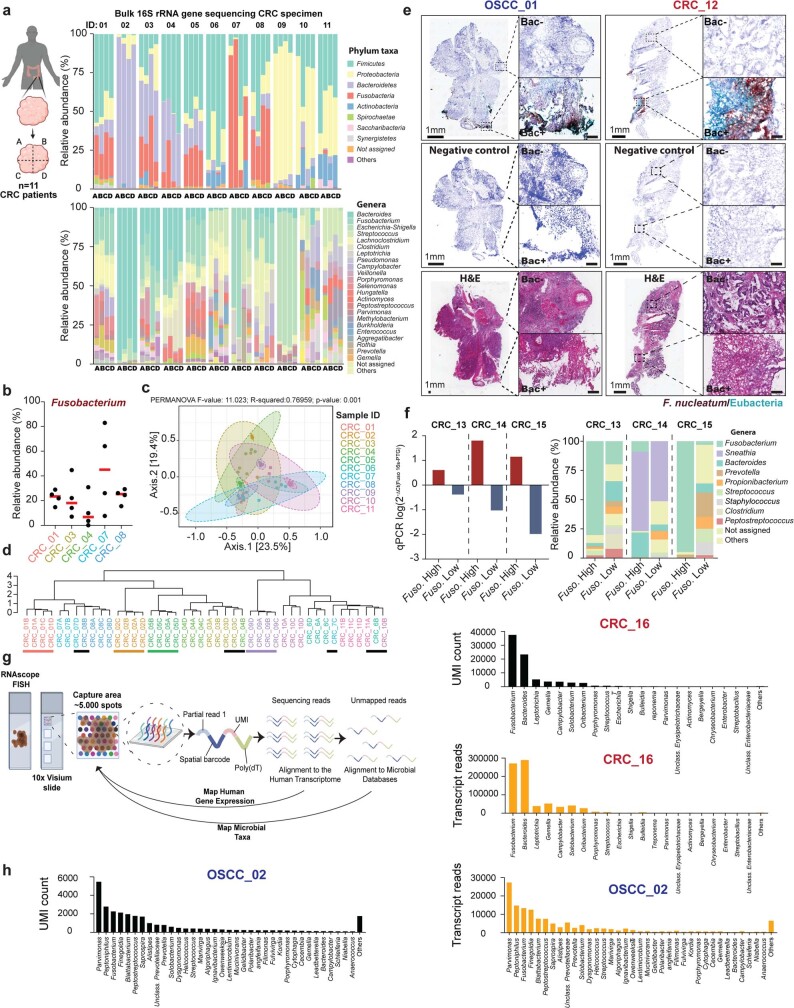
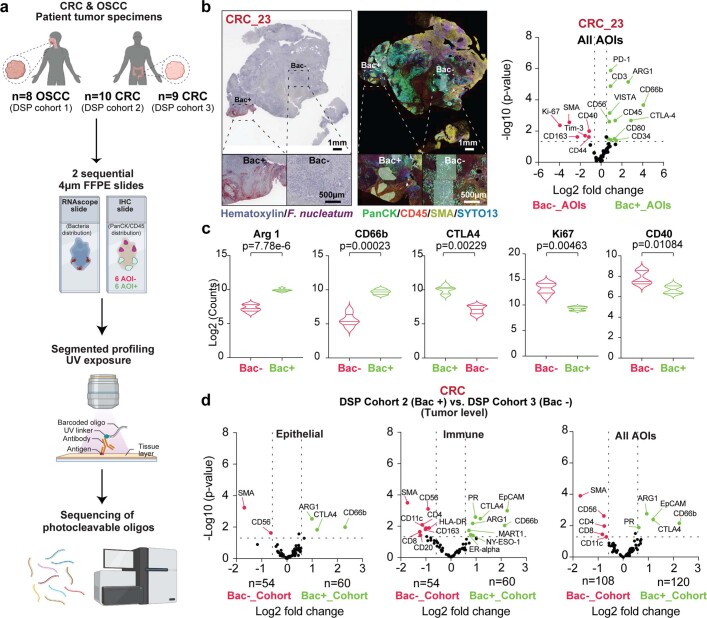
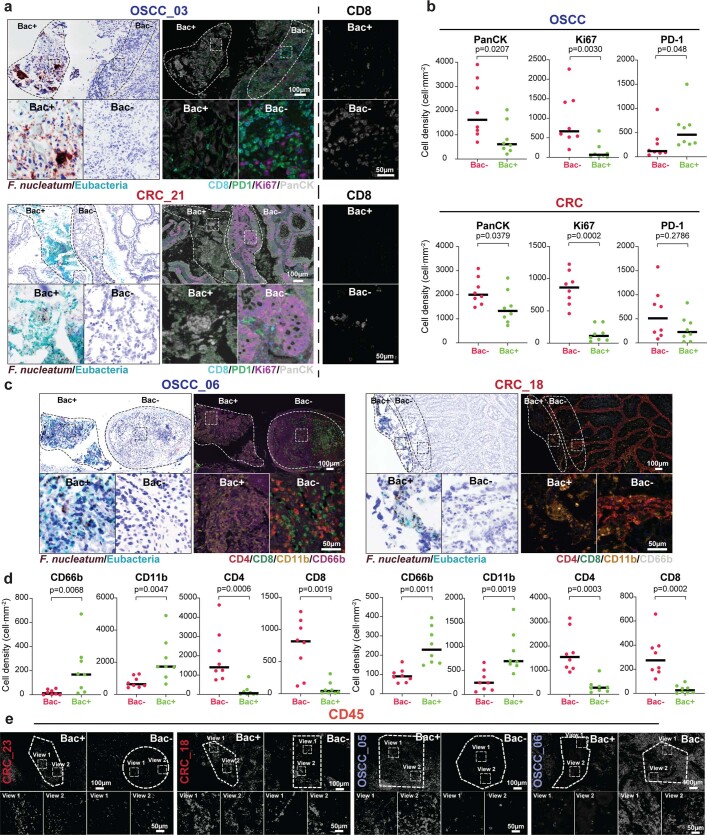
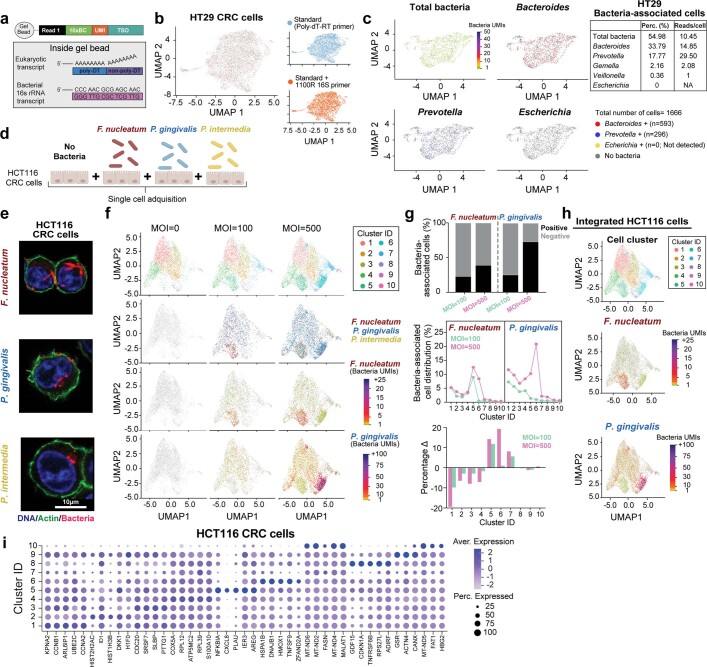
The tumour-associated microbiota is an intrinsic component of the tumour microenvironment across human cancer types 1,2 . Intratumoral host–microbiota studies have so far largely relied on bulk tissue analysis 1–3 , which obscures the spatial distribution and localized effect of the microbiota within tumours. Here, by applying in situ spatial-profiling technologies 4 and single-cell RNA sequencing 5 to oral squamous cell carcinoma and colorectal cancer, we reveal spatial, cellular and molecular host–microbe interactions. We adapted 10x Visium spatial transcriptomics to determine the identity and in situ location of intratumoral microbial communities within patient tissues. Using GeoMx digital spatial profiling 6 , we show that bacterial communities populate microniches that are less vascularized, highly immuno‑suppressive and associated with malignant cells with lower levels of Ki-67 as compared to bacteria-negative tumour regions. We developed a single-cell RNA-sequencing method that we name INVADEseq (invasion–adhesion-directed expression sequencing) and, by applying this to patient tumours, identify cell-associated bacteria and the host cells with which they interact, as well as uncovering alterations in transcriptional pathways that are involved in inflammation, metastasis, cell dormancy and DNA repair. Through functional studies, we show that cancer cells that are infected with bacteria invade their surrounding environment as single cells and recruit myeloid cells to bacterial regions. Collectively, our data reveal that the distribution of the microbiota within a tumour is not random; instead, it is highly organized in microniches with immune and epithelial cell functions that promote cancer progression.
Overview
The claims and statistics of this paper haven’t been checked yet.
Free: it reads the open-access text and checks the first 5 claims that cite a source we can check. Create a free account to check every claim.
Integrity signals
Registry
Cites
Statistics
Figures
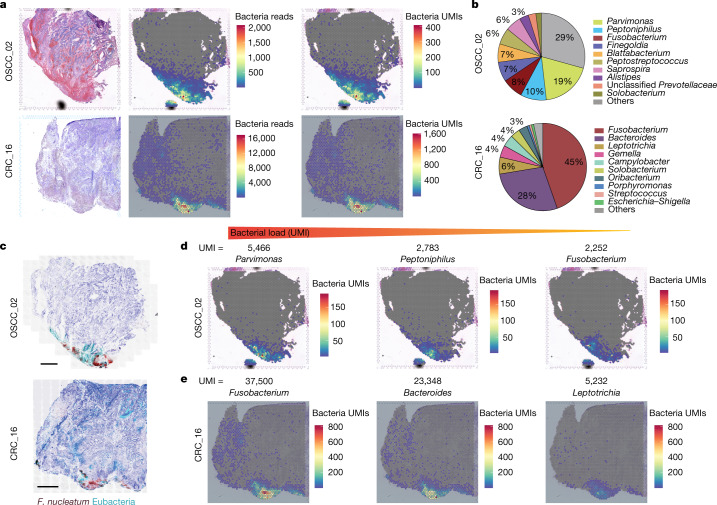
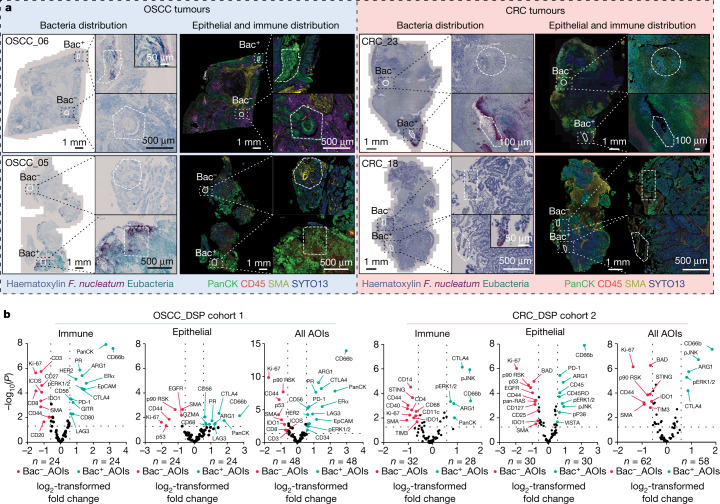
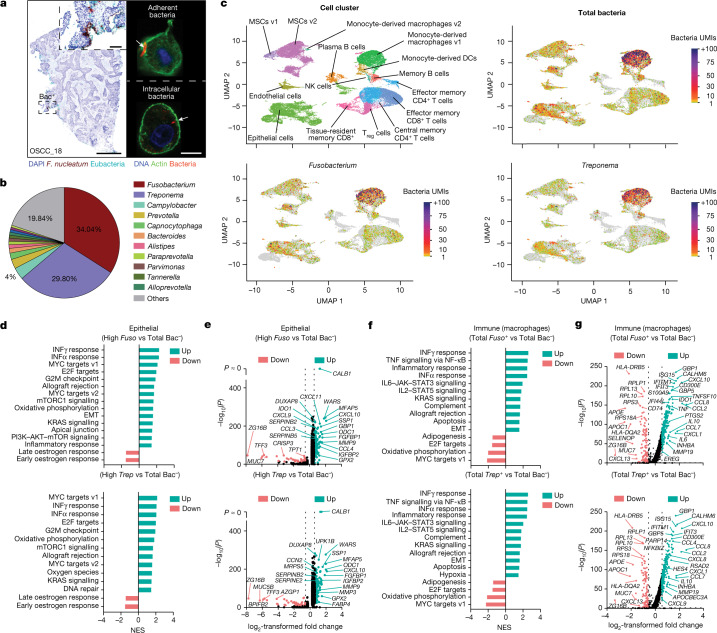
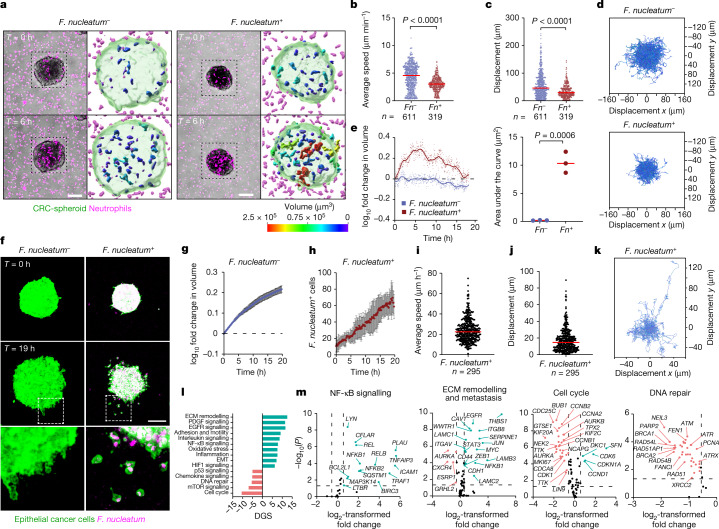
Verification
Claims the paper makes
The claims and statistics of this paper haven’t been checked yet.
Free: it reads the open-access text and checks the first 5 claims that cite a source we can check. Create a free account to check every claim.
Claims other papers make about this one
Each is checked against this paper’s own text: does it say what the citing paper says it does?
The cited source says what the claim attributes to it.
In the citing paper
“Galeano et al. introduced invasion-adhesion-directed expression sequencing (INVADEseq) targeting a conserved area of the bacterial 16 S rRNA, enabling the effective creation of cDNA libraries containing bacterial transcripts derived from human cells associated with bacteria.”
From Single-cell sequencing to multi-omics: technologies and applications (2024) · cites this paper as [158]
The cited source says what the claim attributes to it.
In the citing paper
“These microbes interact with both tumor and immune cells, influencing tumor dynamics by modulating immune responses, producing pro-proliferative metabolites, and reshaping the structural and biochemical landscape of the TME [38–40]”
From Phage therapy in oncology: opportunities for cancer prevention and treatment (2026) · cites this paper as [39]
The check wasn’t confident either way, so it gives no verdict — never disputed.
In the citing paper
“These microbes interact with both tumor and immune cells, influencing tumor dynamics by modulating immune responses, producing pro-proliferative metabolites, and reshaping the structural and biochemical landscape of the TME [38–40]”
From Phage therapy in oncology: opportunities for cancer prevention and treatment (2026) · cites this paper as [39]
Experimental — accuracy not yet measured
Self-check
Percentages, sums and reported differences re-computed from the paper’s own numbers.
The self-check needs the paper’s full text.
Citations
Cites
1 retracted
RETRACTED ARTICLE: Microbiome analyses of blood and tissues suggest cancer diagnostic approach
Poore, G. D., Kopylova, E., Zhu, Q., Carpenter, C., Fraraccio, S., Wandro, S., Kosciolek, T., Janssen, S., Metcalf, J., Song, S. J., et al. (2020) · Nature · doi:10.1038/s41586-020-2095-1 · Cited by 989
RetractedHighly parallel genome-wide expression profiling of individual cells using nanoliter droplets.
Macosko, E. Z., Basu, A., Satija, R., Nemesh, J., Shekhar, K., Goldman, M., Tirosh, I., Bialas, A. R., Kamitaki, N., Martersteck, E. M., et al. (2015) · Cell · doi:10.1016/j.cell.2015.05.002 · Cited by 7,110
Tumors: Wounds That Do Not Heal
Flier, J. S., Underhill, L. H., & Dvorak, H. F. (1986) · New England Journal of Medicine · doi:10.1056/nejm198612253152606 · Cited by 4,391
mRNA-Seq whole-transcriptome analysis of a single cell
Tang, F., Barbacioru, C., Wang, Y., Nordman, E., Lee, C., Xu, N., Wang, X., Bodeau, J., Tuch, B. B., Siddiqui, A., et al. (2009) · Nature Methods · doi:10.1038/nmeth.1315 · Cited by 3,969
Tumour heterogeneity and resistance to cancer therapies
Dagogo-Jack, I., & Shaw, A. T. (2018) · Nature Reviews Clinical Oncology · doi:10.1038/nrclinonc.2017.166 · Cited by 3,846
A Gene Encoding an Antigen Recognized by Cytolytic T Lymphocytes on a Human Melanoma
van der Bruggen, P., Traversari, C., Chomez, P., Lurquin, C., De Plaen, E., Van den Eynde, B., Knuth, A., & Boon, T. (1991) · Science · doi:10.1126/science.1840703 · Cited by 3,545
EMT Transition States during Tumor Progression and Metastasis
Pastushenko, I., & Blanpain, C. (2019) · Trends in Cell Biology · doi:10.1016/j.tcb.2018.12.001 · Cited by 2,876
Anderson, N. M., & Simon, M. C. (2020) · Current Biology · doi:10.1016/j.cub.2020.06.081 · Cited by 2,718
T cell exclusion, immune privilege, and the tumor microenvironment
Joyce, J. A., & Fearon, D. T. (2015) · Science · doi:10.1126/science.aaa6204 · Cited by 2,473
The human tumor microbiome is composed of tumor type–specific intracellular bacteria
Nejman, D., Livyatan, I., Fuks, G., Gavert, N., Zwang, Y., Geller, L. T., Rotter-Maskowitz, A., Weiser, R., Mallel, G., Gigi, E., et al. (2020) · Science · doi:10.1126/science.aay9189 · Cited by 2,464
Cited by
Items 801–900 of 997
Li, Y., Huang, Z., Zhang, Z., Wang, Q., Li, F., Wang, S., Ji, X., Shu, S., Fang, X., & Jiang, L. (2024) · Figshare · doi:10.6084/m9.figshare.26580902
Additional file 2 of Power-law scaling in intratumoral microbiota of colorectal cancer
Dovrolis, N., Gazouli, M., François Rigal, A., Whittaker, R. J., Matthews, T. J., Georgiou, K. E., Theodoropoulos, G., & Triantis, K. A. (2024) · Figshare · doi:10.6084/m9.figshare.26198924
Additional file 1 of Power-law scaling in intratumoral microbiota of colorectal cancer
Dovrolis, N., Gazouli, M., François Rigal, A., Whittaker, R. J., Matthews, T. J., Georgiou, K. E., Theodoropoulos, G., & Triantis, K. A. (2024) · Figshare · doi:10.6084/m9.figshare.26198891
Li, Y., Huang, Z., Zhang, Z., Wang, Q., Li, F., Wang, S., Ji, X., Shu, S., Fang, X., & Jiang, L. (2024) · Figshare · doi:10.6084/m9.figshare.26580899
Li, Y., Huang, Z., Zhang, Z., Wang, Q., Li, F., Wang, S., Ji, X., Shu, S., Fang, X., & Jiang, L. (2024) · Figshare · doi:10.6084/m9.figshare.26580896
Li, Y., Huang, Z., Zhang, Z., Wang, Q., Li, F., Wang, S., Ji, X., Shu, S., Fang, X., & Jiang, L. (2024) · Figshare · doi:10.6084/m9.figshare.26580908
Li, Y., Huang, Z., Zhang, Z., Wang, Q., Li, F., Wang, S., Ji, X., Shu, S., Fang, X., & Jiang, L. (2024) · Figshare · doi:10.6084/m9.figshare.26580890
Additional file 3 of Power-law scaling in intratumoral microbiota of colorectal cancer
Dovrolis, N., Gazouli, M., François Rigal, A., Whittaker, R. J., Matthews, T. J., Georgiou, K. E., Theodoropoulos, G., & Triantis, K. A. (2024) · Figshare · doi:10.6084/m9.figshare.26745389
Li, Y., Huang, Z., Zhang, Z., Wang, Q., Li, F., Wang, S., Ji, X., Shu, S., Fang, X., & Jiang, L. (2024) · Figshare · doi:10.6084/m9.figshare.26580905
食道胃接合部癌および胃癌における Fusobacterium nucleatum の存在と患者の生存率および酸性環境との関係
原, 淑., ハラ, ヨ., & Hara, Y. (2024) · Kumamoto University Repository (Kumamoto University)
Low-Input and Single-Cell Transcriptomic Technologies and Their Application to Disease Studies
Zhou, Z. (2023) · VTechWorks (Virginia Tech)
Britton, T. A. (2024) · eScholarship (California Digital Library)
Metagenome and Metabolome Analysis of Japanese Lynch Syndrome Cohort
FELIX, S., & Salim, F. (2024) · Institutional Repositories DataBase (IRDB)
Арслан, Л., Баязитов, И., Фарзалеев, Р., Мартьянова, А., Булыгина, Е., Ризванов, А., Мифтахова, Р., & Габдулхакова, А. (2025) · doi:10.24108/preprints-3114072
Angeborene Immunabwehr im oralen Epithel
Rothbächer, P. (2025) · Online Publication Service of Würzburg University (Würzburg University) · doi:10.25972/opus-43365
Zhou, R., Xiao, C., Zhou, P., Yan, O., Yin, B., Yao, X., Liu, J., Wu, X., Hou, W., Wang, Y., et al. (2026) · bioRxiv (Cold Spring Harbor Laboratory) · doi:10.64898/2026.01.14.699401
“28,29 Although emerging technologies have achieved higher spatial resolution ( 10 μm, even reaching subcellular levels, as in MERFISH and Xenium) 30-33 , this often comes at the cost of limited gene detection throughput ( 1000 genes), thereby restricting the systematic characterization of…”
Association of Fusobacterium nucleatum with suppressed anti-tumor T cell responses in gastric cancerPreprint
Hsieh, Y.-Y., Liu, W., Wang, C.-T., Kuo, W.-L., & Li, C. (2026) · Research Square · doi:10.21203/rs.3.rs-8216991/v1
Tumor microbial biodiversity and microsatellite instability in colorectal cancer
Mendall, C., Hullar, M. A. J., Curtis, K. R., Hill, C. M., Thomas, C. E., Ma, N., Randolph, T. W., Malen, R. C., Reedy, A. M., LaBrie, S., et al. (2026) · PLoS ONE · doi:10.1371/journal.pone.0359555
Effects of the local and distal microbiota on the development of Gastroesophageal Adenocarcinoma
Proaño-Vasco, A. (2025) · FreiDok plus (Universitätsbibliothek Freiburg) · doi:10.6094/unifr/273065
A new paradigm for treating lung cancer by targeting the intratumoral microbiome
Wei, W. (2026) · Acta Pharmaceutica Sinica B · doi:10.1016/j.apsb.2026.01.011
Kang, L., Ma, R., Zhao, X.-B., Han, Y., Shi, Y.-P., & Ha, W. (2026) · ACS Applied Materials & Interfaces · doi:10.1021/acsami.5c23737
Galbraith, N. J., White, M. G., & Smith, J. J. (2025) · Diseases of the Colon & Rectum · doi:10.1097/dcr.0000000000004037
Wang, C., Liang, W., Zhong, J., Wei, J., Zhou, C., Ma, C., Liao, Y., Gao, Y., He, C., Ma, Y., et al. (2026) · Gut Pathogens · doi:10.1186/s13099-026-00891-9
Qian, Q., Li, N., Cha, S., Zheng, S., Li, W., Yin, G., Sun, M., Ye, P., Hu, M., Shi, R., et al. (2026) · BMC Microbiology · doi:10.1186/s12866-026-04827-w
Rad, S. K., Li, R., Yeo, K. K. L., Tomita, Y., Price, T. J., Ingman, W. V., Townsend, A. R., & Smith, E. (2026) · Cytometry Part A · doi:10.1002/cyto.a.70019
Tumor-Resident Bacteria: Mechanisms of Carcinogenesis, Metastasis and Clinical Implications
Bose, C. K. (2026) · Indian Journal of Medical and Paediatric Oncology · doi:10.1055/s-0046-1817160
Targeting tumour-associated microbiota: a new strategy to hit tumour cells in the lung and breast
Bernardo, G. (2026) · Open Research Online (The Open University) · doi:10.21954/ou.ro.00108964
Mao, J., Chen, X. K., Zheng, W., Liu, B., Li, Z., Li, Y., Zhong, P., 陈四方, Tan, G., Wang, C., et al. (2026) · Oncology Letters · doi:10.3892/ol.2026.15521
Intratumoral bacteria engineered for tumor therapy
Zhang, H., Chen, Z., Yao, Z., Luo, S., Luo, C., Yang, R., Fu, H., & Huang, S. (2026) · Interdisciplinary medicine · doi:10.1002/inmd.70106
Ciencias Ómicas y medicina de precisión aplicadas a la identificación bacteriana
Castrillo, K. V. C. (2024) · Investigative News in Education (Universidad de Costa Rica)
The role of gut microbiota in the development, diagnosis, and treatment of gastric cancer
Hu, M., Xiao, Y., Zhang, X., Guo, J., Shen, T., Wang, Y., Deng, J., & Liu, D. Y. (2026) · Folia Microbiologica · doi:10.1007/s12223-026-01442-0
Qi, N., Wen, L., Li, S., & Feng, C. (2026) · Cell Communication and Signaling · doi:10.1186/s12964-026-02813-3
Licata, A. G. (2026) · Open Research Online (The Open University) · doi:10.21954/ou.ro.00109330
Thomas, C. E., Lorona, N. C., LaBrie, S. D., Curtis, K. R., Yin, H., Ma, N., Randolph, T. W., Qu, C., Huyghe, J. R., Thomas, S., et al. (2026) · Cancer Epidemiology Biomarkers & Prevention · doi:10.1158/1055-9965.epi-25-1580
Determining the role of Helicobacter pylori and the microbiota during gastric cancer progression
Giddings, H. J. (2025) · University of Birmingham Institutional Research Archive (University of Birmingham)
Marcos-Kovandzic, L. (2024) · theses.fr (ABES) · doi:10.70675/3bde4b45z23ecz4b69zb90dzabccd7cd7fca
Etude du microenvironnement bactérien dans le contexte de la carcinogenèse gastrique
Jauvain, M. (2025) · theses.fr (ABES) · doi:10.70675/760f8103zaffdz450bza634z33fd0a3713fe
Yang, H., Yan, L., Feng, H., Qi, F., Kong, F., Yu, Q., Zhu, W., Liang, C., Zhang, J., & Zhang, Z. (2026) · Frontiers in Microbiology · doi:10.3389/fmicb.2026.1811749
Mechanistic pathways of dysbiosis in oral cancer development
Niu, L., Al‐Ahmad, A., Scholz, K. J., Cieplik, F., & Wolf, M. (2026) · Advances in immunology · doi:10.1016/bs.ai.2026.04.001
The microbiome landscape of oral cancer in young patients
Satgunaseelan, L., Strbenac, D., Palme, C. E., Low, T.-H. H., Wykes, J., Manzie, T., Clark, J. R., Yang, J. Y. H., & Gupta, R. (2026) · JNCI Cancer Spectrum · doi:10.1093/jncics/pkag022
“48 Additionally, all our healthy controls were never smokers, whereas our patient cohort was a mixture of ever smokers and never smokers.”
Role of chemokines and chemokine receptors in cancer immunology
Babu, D., Natarajan, K., Rajaram, G., Arulsamy, S., & Natarajan, K. (2026) · Elsevier eBooks · doi:10.1016/b978-0-443-41551-7.00020-5
Intratumoral microbial distribution and tyrosine regulation in head and neck squamous cell carcinoma
Li, Y., Yao, Y., Hu, Y., Liu, F., Chen, X. M., Song, H., Li, D., Lv, S., Fang, Y., Sui, L., et al. (2026) · International Journal of Biological Macromolecules · doi:10.1016/j.ijbiomac.2026.152251
bacNeo: A Computational Toolkit for Identifying Bacteria‐Derived Neoantigens in Human Cancers
Wang, Y., Yuan, L., Gu, K. W., Cheng, X., Wen, B., & Zhang, Z. (2026) · iMetaMed · doi:10.1002/imm3.70040
Mitochondrial metabolism as a pharmacological target for cancer therapeutics
Yu, Y., Ding, W., Liu, S., Glorieux, C., Liu, P., & Huang, P. (2026) · Pharmacological Reviews · doi:10.1016/j.pharmr.2026.100137
Fluorescence in situ hybridization for visualizing microbiome-based markers in cancer
Habib, S., & Moinuddin (2026) · Elsevier eBooks · doi:10.1016/b978-0-443-40551-8.00020-2
Park, S. H., Park, J., Kim, J., Choi, H., Kim, I. G., Chung, E. J., & Na, K. J. (2026) · Scientific Reports · doi:10.1038/s41598-026-52324-x
“However, it has also been reported that direct Visium can be successfully applied to cancer microbiota research without an additional polyadenylation step 7,8 .”
Emerging concepts, hot topics, and open questions in today’s pancreatic cancer research
Keber, C. U., Schmitt, M., Visekruna, A., Brichkina, A. I., von Strandmann, E. P., Bartsch, J. W., Huber, M., Bauer, U., Gress, T. M., & Lauth, M. (2026) · Biochimica et Biophysica Acta (BBA) - Reviews on Cancer · doi:10.1016/j.bbcan.2026.189614
Li, S., Huang, J., Xu, S., Zhang, X., Liu, H., Wang, X., Ding, Z., Li, M., Liu, Z., Yong, T., et al. (2026) · Acta Pharmaceutica Sinica B · doi:10.1016/j.apsb.2026.05.018
Xing, J., Zhang, M., Yu, H., Su, M., Zhai, R., Wang, H. B., Li, J., Wu, Q., & Zhang, Y. (2026) · Cell Death and Differentiation · doi:10.1038/s41418-026-01757-y
dos Reis, M. B., Reis, M. T., Matsushita, M., Berardinelli, G. N., Cheregatto, T. C., Hirai, W. Y., Teodoro, V. A., Guimarães, D. P., & Reis, R. M. (2026) · Apmis · doi:10.1111/apm.70225
Multidrug Resistant Gram-negative Bacteria in Fragile Hosts
(2026) · Frontiers research topics · doi:10.3389/978-2-8325-8011-0
Yang, J., Liu, Y., Li, B., Zhang, T., Yan, L., Zhang, K., Xu, F., Wang, Z., Liu, Y., Lin, B., et al. (2026) · iScience · doi:10.1016/j.isci.2026.116084
Leng, F., 夏瑞瑛, Pei, J., Shi, Y., Gao, C., Wang, F., & Li, Y. N. (2026) · Frontiers in Immunology · doi:10.3389/fimmu.2026.1840903
Zhang, Y., Wang, L., Mao, J., Wu, Y., Foo, W., Wang, Z., Wu, J., Guo, Y., You, J., & Luo, L. (2026) · Journal of Controlled Release · doi:10.1016/j.jconrel.2026.115091
Zeng, Q., Ye, Y., Wu, K., Wang, K., Zhou, X., Zhou, W., Zhao, S., Zhang, T., & Chen, T. (2026) · Genes & Diseases · doi:10.1016/j.gendis.2026.102260
Nguyen, T., Saha, S., Gärtner, F., Eisler, S. A., Stadager, J., Torcuk, D., Haußer, A., Rathert, P., & Clark, A. G. (2026) · bioRxiv (Cold Spring Harbor Laboratory) · doi:10.64898/2026.06.10.731321
AKR1C3High CAFs located in the Invasive Tumor Front Drive OSCC ProgressionPreprint
Zhou, T., Luo, W., Wang, X., Zhang, L., Xia, S., Hu, Q., & Ni, Y. (2026) · Research Square · doi:10.21203/rs.3.rs-9514033/v1
Potential mechanisms underlying Enterococcus faecalis -driven pancreatic cancer cell proliferation
Guan, M., Guo, X., Kong, M., Qin, Y., Xu, H., Su, X., Wang, P., & Wang, X. S. (2026) · mBio · doi:10.1128/mbio.03963-25
Shen, D., Shu, Y., & Xiao, J. N. (2026) · Research Square · doi:10.21203/rs.3.rs-9714485/v1
Lin, A., Fang, X. Q., Zhu, L., Mou, W., & Luo, P. (2026) · Journal of Translational Internal Medicine · doi:10.1515/jtim-2026-0042
Heptachlor Epoxide Enhances Ovarian Cancer Invasion by NF‐κB Activation Mediated MMP‐2/‐9 Expression
Xu, F., Shen, Y., Zhou, W., Xu, Y., Lin, X., Li, T., La, M., Zhang, Y., Huang, X., Cheng, X., et al. (2026) · Journal of Applied Toxicology · doi:10.1002/jat.70281
Spatial atlas highlights contribution of C. difficile in early-stage colorectal cancerPreprint
Markham, N. O., Drewes, J. L., Green, E. H., Ball, W., Lunnemann, H. M., Simmons, A. J., Kaur, H., Queen, J., Geis, A. L., Pourmaleki, M., et al. (2026) · bioRxiv (Cold Spring Harbor Laboratory) · doi:10.64898/2026.06.18.733268
Sun, A., Wang, K., Sun, H., Tao, K., Li, X., Zhao, X., & Qiu, S. (2026) · Advanced Science · doi:10.1002/advs.76240
Multiomics integration with artificial intelligence: From bench to bedside in breast cancer
Shabir, S., Sofi, P. A., Peerzada, I. A., Ji, A., Qayoom, H., & Mir, M. F. (2026) · Elsevier eBooks · doi:10.1016/b978-0-443-49109-2.00014-6
Abebaw, D., Adugna, A., Tegegne, B. A., Teffera, Z. H., Selabat, B., Kindie, Y., Tilahun, M., Belew, H., Baylie, T., Mengistu, G., et al. (2026) · Clinical and Experimental Medicine · doi:10.1007/s10238-026-02222-3
“Within these niches, microbial communities interact closely with immune and epithelial cells, thereby shaping immune infiltration, promoting tumor progression, and modulating response to immunotherapy [28, 29].”
Guan, J., Jiang, X., Lv, Y., Xue, Y., Zhang, J. H., Ji, H., Li, G., Zhou, X., Yang, M., & Wang, Q. (2026) · Chemical Communications · doi:10.1039/d6cc02834a
Dynamic Virtual Tumor Cells Powered by Spatial Omics for Translational Oncology
Li, K., Liu, Y., Huang, G., Zhai, R., & Li, C. (2026) · GenoMed Connect · doi:10.69709/genomc.2026.147777
Self-antigen disrupts cDC1 mediated antitumor responsesPreprint
Schuster, V. P., Brown, K., Laverde, V., Berkowitz, N., Granados, A., Oshimori, N., Leech, J. M., Weckel, A., Scharschmidt, T. C., & Ruhland, M. K. (2026) · bioRxiv (Cold Spring Harbor Laboratory) · doi:10.64898/2026.06.25.734634
“Recent reports have shown that microbes serve as a clinically relevant, non-tumor antigen source within the skin TME (26,27,37).”
Xie, G., Li, M., Li, B., Guo, S., Wang, Y., Liu, J., Miao, R., Hou, W., & Wei, X. (2026) · Chemical Engineering Journal · doi:10.1016/j.cej.2026.179014
Accessible spatial host–microbe profiling in tumour tissuesPreprint
Wan, Y. K., Ng, A., Tham, J. Y., Li, B., Lim, M., Tan, I. B. H., Prabhakar, S., Nagarajan, N., Yeo, G. H. T., & Chia, M. (2026) · bioRxiv (Cold Spring Harbor Laboratory) · doi:10.64898/2026.07.02.735997
“Previous studies have shown that tumour niches that are colonized by CRC-associated microbes were also enriched in myeloid cells such as tumour-associated neutrophils (TANs) 12–14 .”
Meng, F., Wong, Z., Chen, J. Q., Zhang, Z., Deng, Z., & Tian, X. (2026) · Cell Communication and Signaling · doi:10.1186/s12964-026-03041-5
“…intratumoral microbiota have shown that bacteria can cluster in discrete microniches with distinct epithelial and immune features, whereas cancer cells affected by bacteria may invade surrounding tissue as single cells and at the same time recruit myeloid cells into bacteria-enriched regions [58].”
InfluentialYuan, Y., Wang, C., Li, N., Chen, H., Zhou, Z., Zhang, C., Zhang, H., Wang, S., Yu, Q., Cheng, X., et al. (2026) · ACS Applied Nano Materials · doi:10.1021/acsanm.6c01391
Yi, H., He, W., Ma, Z., Qiu, X., 任丽华, & Liang, X. (2026) · Frontiers in Microbiology · doi:10.3389/fmicb.2026.1880194
“…more closely with the host’s local immune and metabolic microenvironment, and are less susceptible to interference from short-term dietary and environmental fluctuations (Nejman et al., 2020; Galeano Niño et al., 2022), making them an active area of investigation in tumour microbiome research.”
Abo, H., Kim, S.-E. G., Ngo, V. L., Kuczma, M., & Gewirtz, A. T. (2026) · Mucosal Immunology · doi:10.1016/j.mucimm.2026.100382
Niu, J., Sun, W., Gong, R., & Pan, Q. (2026) · Clinical & Translational Oncology · doi:10.1007/s12094-026-04496-1
Liang, W., Falk, L., Lucarelli, D., Putze, P., Metwaly, A., Zheng, Y., Springer, F., Winogrodzki, T., Chan, Q., Pauli, T. M., et al. (2026) · bioRxiv (Cold Spring Harbor Laboratory) · doi:10.64898/2026.07.10.737736
Li, Y., Zhang, D., Tan, L., Xu, J., Sun, Y., Zhang, R., Cheng, Y., Li, Y., Guo, T., Jiang, H., et al. (2026) · mSystems · doi:10.1128/msystems.00500-26
Aging and the Microbiome: precondition for gastrointestinal carcinogenesis
Wizenty, J., & Sigal, M. (2026) · Best Practice & Research Clinical Gastroenterology · doi:10.1016/j.bpg.2026.102122
“Notably, the spatial abundance of bacterial communities in CRC is not random, but highly organised in microniches interacting with epithelial and immune cells as revealed by spatial transcriptomics [44].”
Dong, Y., Chen, K., Zheng, H., Liu, W., Yan, L., Luo, Z., Qin, Y., Lv, S., Yang, B., Chen, F., et al. (2026) · Journal for ImmunoTherapy of Cancer · doi:10.1136/jitc-2026-015159
Zu, D., Zhu, Y., Ma, Z., Xie, J., Chen, W., Chen, Y., Chen, G., Yao, Q., Chen, W., & Xu, C. (2026) · TrAC Trends in Analytical Chemistry · doi:10.1016/j.trac.2026.119040
抗菌肽在抗感染与免疫调节中的应用:作用机制、面临的挑战及新兴计算设计策略
Yanlin, W., 中国科学院昆明动物研究所, 中., Yaqian, Y., YuYang, Z., Zilei, D., Mehwish, K., Gang, G., Ren, L., 中国科学院大学, 北., & 昆明医科大学第三附属医院(云南省肿瘤医院)胸外科, 云. 6. (2026) · 动物学研究 · doi:10.24272/j.issn.2095-8137.2025.426
Harnessing the microbiome: a new frontier in lung cancer immunotherapy
Feng, K., Wang, J., Wang, S., Sun, Z., Qiu, M. Y., Zhou, Z., Li, Y., & Chen, K. (2026) · Cancer Biology and Medicine · doi:10.20892/j.issn.2095-3941.2025.0177
“Galeano Niño et al. 56 demonstrated that intratumoral bacteria exhibit a highly organized spatial distribution within specific tumor micron-iches, which are associated with reduced vascularization, local immunosuppression, and increased tumor cell invasion.”
Kuang, G., Qiu, Z., Li, L., Bai, J., Ji, H., & Liu, Y. (2026) · Frontiers in Cell and Developmental Biology · doi:10.3389/fcell.2026.1893882
“Studies of peripheral solid tumors have shown that intratumoral bacteria can exhibit tumor-type specificity (Nejman et al., 2020) and are associated with immune-cell recruitment, epithelial-cell states, cell migration, and local functional heterogeneity (Galeano Niño et al., 2022).”
Albert, V., Subramanian, A., & Agrawal, D. (2026) · Comprehensive physiology · doi:10.1002/cph4.70231
Mommana Chaudhary, H. I., Ijaz, H., Zahid, E., Bibi, S., Mushtaq, R., & Saddique, W. (2026) · The Research of Medical Science Review · doi:10.5281/zenodo.21551837
Wang, Y., Wu, N., Liao, Y., Li, J., Li, C., Liang, J., Zhou, D., Ge, L., Chen, X. T., & Zhang, S. (2026) · Cancer Letters · doi:10.1016/j.canlet.2026.218765
Watashige, N., Kubo‐Kaneda, M., Makino, M., Kato, M., Okamoto, K., Matsumoto, T., Kotaka, S., Toda, M., D’Alessandro‐Gabazza, C. N., Cann, I., et al. (2026) · Cells · doi:10.3390/cells15151358
Glazunova, E. V., Astakhova, L., Kurnosov, A., Doludin, Y. V., Lyundup, A., Kostin, A., Makarov, V., Yudin, S., & Zlobovskaya, O. A. (2026) · Frontiers in Cellular and Infection Microbiology · doi:10.3389/fcimb.2026.1887826
Serna, G., Obón‐Santacana, M., Baraibar, I., Moratalla-Navarro, F., Napoli, S., Ruíz‐Pace, F., Mulet-Margalef, N., Guinó, E., Alonso, L., Boleda, L., et al. (2026) · ESMO Open · doi:10.1016/j.esmoop.2026.108342
Microbiome—pancreatic cancer crosstalk: From tumor biology to therapeutic intervention
薛玉芹, Ye, J., Wang, S., Liu, M., Dai, F., Bai, M., Wang, Y., Savoji, A., Wang, Y., Hylemon, P. B., et al. (2026) · iMetaOmics. · doi:10.1002/imo2.70126
“However, emerging technologies such as single ‐ cell sequencing, spatial transcriptomics, and engineered microbial consortia are enabling more precise validation of causal mechanisms [189 – 191].”
Morales-Álvarez, C. M., Marín-Benesiu, F., Larrosa, M., Domínguez, A. C. J., Vázquez‐Alonso, F., Cubero, M. J. A., & Martínez-González, L. J. (2026) · Research Square · doi:10.21203/rs.3.rs-10241004/v1
Zhai, Y., Sun, Z., Zhang, S., & Zhao, T. (2026) · Discover Oncology · doi:10.1007/s12672-026-05697-4
“Furthermore, P. gingivalis can block apoptotic pathways in GECs by manipulating the JAK/ STAT axis, while Fn employs the same pathway to mediate myeloid recruitment and T cell exclusion [118].”
Chen, L., Bian, G., Qi, F., Cao, Y., Liao, X., Li, Q., Liang, H., Zhao, Z., Liu, X., Hoang, B. H., et al. (2026) · The Innovation Medicine · doi:10.59717/j.xinn-med.2026.100242
Lee, J. B., Yang, J., Chalita, M., Jung, Y., Park, H., Ro, M., Kim, H., Yang, E., Choi, S., Kim, M., et al. (2026) · Genome Medicine · doi:10.1186/s13073-026-01736-5
Intratumoral bacteria in cancer: from detection to biological relevance
Ding, M., Li, H., & Guo, W. (2026) · Frontiers in Oncology · doi:10.3389/fonc.2026.1904204
Guo, H., Wang, J., Niu, Y., & Liu, F. (2026) · Polish Journal of Microbiology · doi:10.33073/pjm-2026-012
“Battaglia et al. (2024) performed a pan-cancer analysis of the microbiome in metastatic cancer, and Galeano Niño et al. (2022) investigated the effect of the intratumoral microbiota on spatial and cellular heterogeneity in cancer.”
Dong, H., Ma, W., & Liu, S. (2026) · Molecular and Digital Medicine · doi:10.1016/j.mdmed.2026.100012
Metadata
- Authors
- Galeano Niño, J. L., Wu, H., LaCourse, K. D., Kempchinsky, A. G., Baryiames, A., Barber, B., Futran, N., Houlton, J., Sather, C., Sicinska, E., Taylor, A., Minot, S. S., Johnston, C. D., & Bullman, S.
- Affiliations
- Fred Hutch Cancer Center (US)
- University of Washington Medical Center (US)
- Herbert Irving Comprehensive Cancer Center (US)
- Corresponding author
- Johnston, Christopher D.
- Bullman, Susan
- ORCID
- Venue
- Nature
- Published
- 2022-11-16
- Volume
- 611
- Issue
- 7937
- Pages
- 810-817
- ISSN
- 0028-0836 (ISSN-L)
- 1476-4687
- PMC
- PMC9684076
- OpenAlex
- W4309334544
- Semantic Scholar
- 6717f1fc0c94d26c6693afed742936786e4a4011
- Cited by
- 887
- References
- 41
- Citations by year
- 2026: 214 · 2025: 292 · 2024: 228 · 2023: 148 · 2022: 4
- FWCI
- 55.33
- Type
- journal article
- Language
- en
- Open access
- hybrid
- doi.org
- Licence
- cc-by
- creativecommons.org/licenses/by/4.0 (tdm)
- creativecommons.org/licenses/by/4.0 (vor)
- Locations
- Nature (publishedVersion, cc-by)
- PubMed Central (publishedVersion, cc-by)
- PubMed (publishedVersion)
- RePEc: Research Papers in Economics (submittedVersion)
- Funders
- Cancer Research Institute (CRI4208)
- Fred Hutchinson Cancer Research Center (P30CA015704)
- University of Washington (P30 CA015704)
- National Institutes of Health (1s10od028685-01, CA015704)
- National Cancer Institute (CA015704, R00CA229984, CA080416, P30CA015704, T32CA080416)
- National Institute of Dental and Craniofacial Research (R01DE027850)
- Office of Research Infrastructure Programs, National Institutes of Health (S10OD028685)
- Topics
- Life Sciences › Biochemistry, Genetics and Molecular Biology › Molecular Biology › Gut microbiota and health
- Life Sciences › Biochemistry, Genetics and Molecular Biology › Molecular Biology › Single-cell and spatial transcriptomics
- Health Sciences › Medicine › Oncology › Cancer Immunotherapy and Biomarkers
- Keywords
- intratumoral microbiota, tumor microenvironment, spatial heterogeneity, oral squamous cell carcinoma, colorectal cancer, host-microbe interactions, single-cell RNA sequencing, spatial transcriptomics, GeoMx digital spatial profiling, tumor invasion, cell dormancy, DNA repair, inflammation, metastasis, Ki-67
- MeSH terms
- Host Microbial Interactions, Carcinoma, Squamous Cell, Humans, Mouth Neoplasms, Colorectal Neoplasms, Sequence Analysis, RNA, Disease Progression, Ki-67 Antigen, Gene Expression Profiling, Myeloid Cells, Tumor Microenvironment, Microbiota
About these checks
Registry, retraction, Cites and statistics results are computed, not judged, with one exception: a printed reference that no index lists is read once by a model before it counts as a citation error. Claims are extracted by a model and kept only when their quote appears verbatim in the text; each cited source is then checked, with a model’s help, for whether it says what the claim relies on. Those verdicts can be wrong — read the claim’s quote and the cited source before relying on one.
Statistics and arithmetic are recomputed, not judged.
Confidence bands are shown only for fields calibrated on our annotated test set. None is calibrated yet, so no band is shown.
What counts as a claim ›How we measure confidence ›How we check this ›
Are you an author, or do you see a problem with this page? Request a review
Data sources
Bibliographic data: Semantic Scholar, OpenAlex, Crossref.
Contains information from the Semantic Scholar Academic Graph Datasets, made available under the ODC Attribution License (ODC-BY 1.0).
Semantic Scholar’s data is described in: Kinney, R., et al. (2023). The Semantic Scholar Open Data Platform. arXiv:2301.10140.
