

Effect of the intratumoral microbiota on spatial and cellular heterogeneity in cancer
Open accessThe DOI matches its Crossref record; 41 of the 41 references it cites were found in a registry or an index.
Abstract
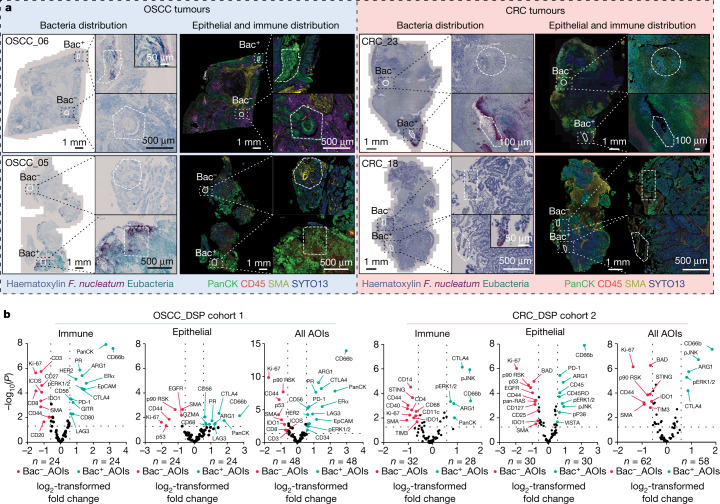
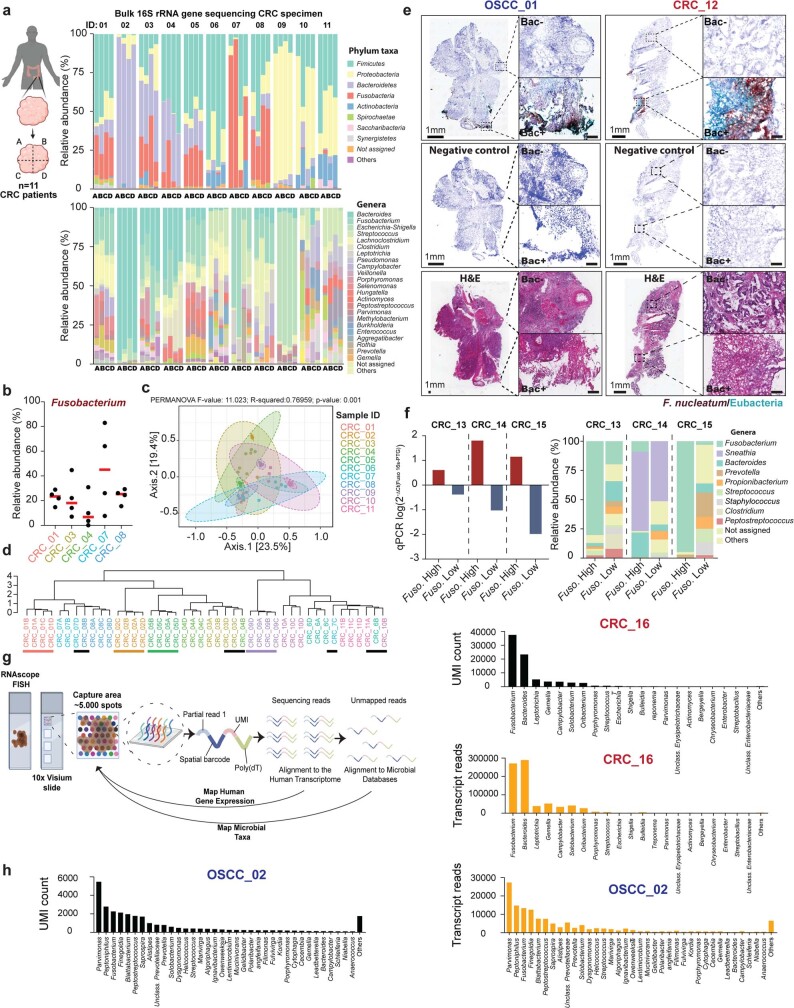
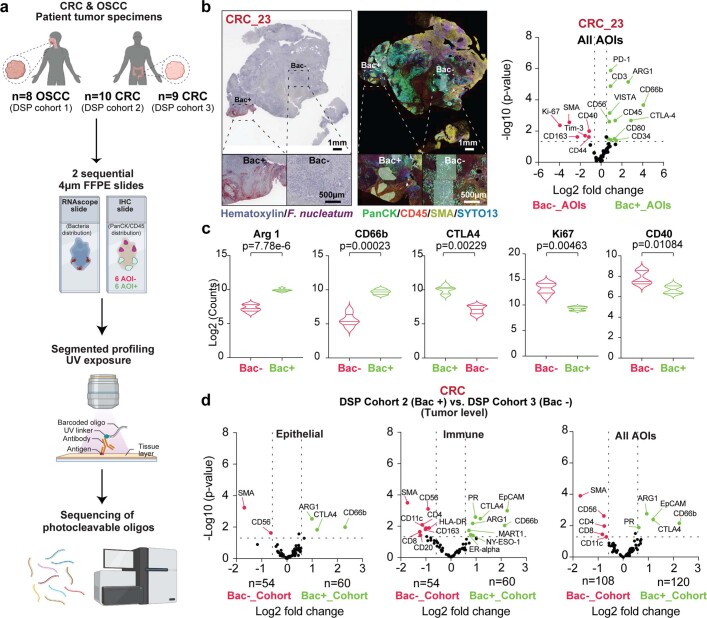
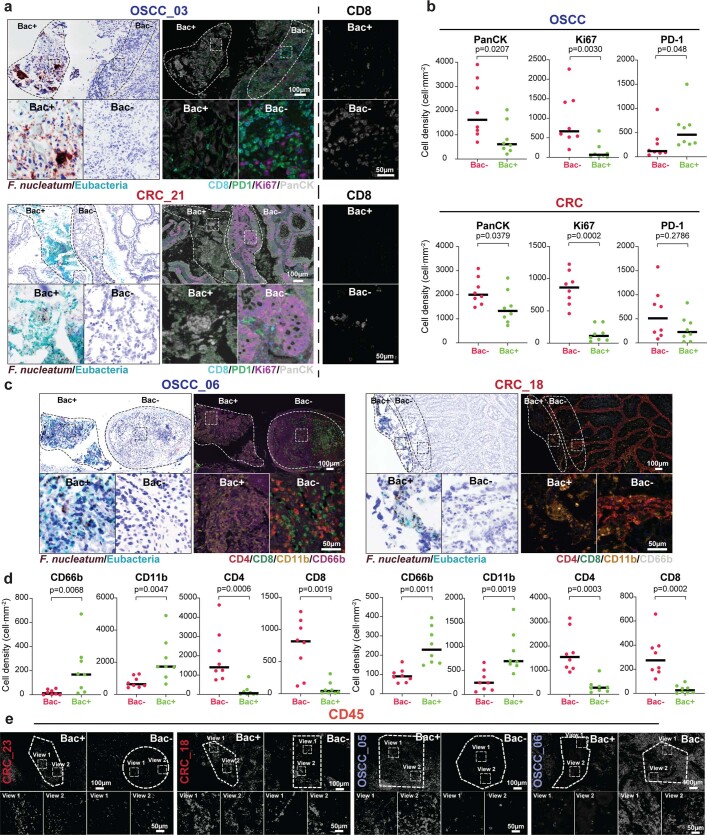
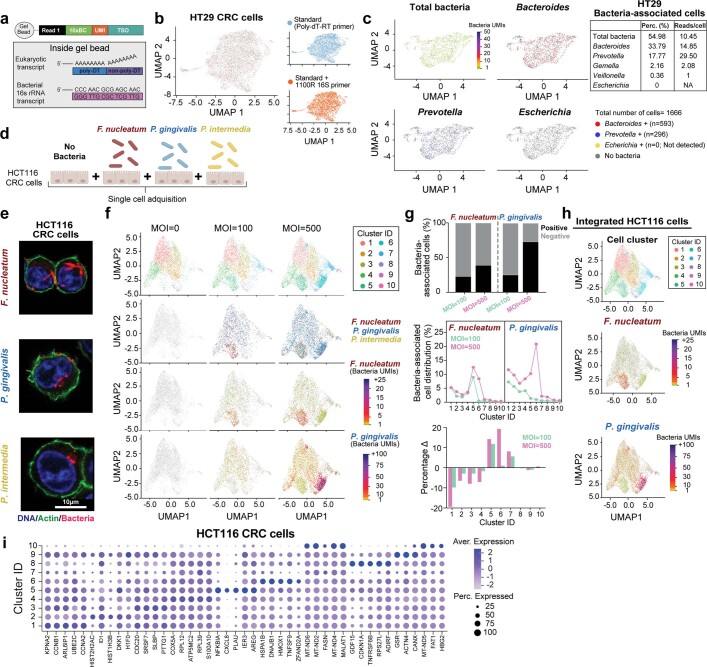
The tumour-associated microbiota is an intrinsic component of the tumour microenvironment across human cancer types 1,2 . Intratumoral host–microbiota studies have so far largely relied on bulk tissue analysis 1–3 , which obscures the spatial distribution and localized effect of the microbiota within tumours. Here, by applying in situ spatial-profiling technologies 4 and single-cell RNA sequencing 5 to oral squamous cell carcinoma and colorectal cancer, we reveal spatial, cellular and molecular host–microbe interactions. We adapted 10x Visium spatial transcriptomics to determine the identity and in situ location of intratumoral microbial communities within patient tissues. Using GeoMx digital spatial profiling 6 , we show that bacterial communities populate microniches that are less vascularized, highly immuno‑suppressive and associated with malignant cells with lower levels of Ki-67 as compared to bacteria-negative tumour regions. We developed a single-cell RNA-sequencing method that we name INVADEseq (invasion–adhesion-directed expression sequencing) and, by applying this to patient tumours, identify cell-associated bacteria and the host cells with which they interact, as well as uncovering alterations in transcriptional pathways that are involved in inflammation, metastasis, cell dormancy and DNA repair. Through functional studies, we show that cancer cells that are infected with bacteria invade their surrounding environment as single cells and recruit myeloid cells to bacterial regions. Collectively, our data reveal that the distribution of the microbiota within a tumour is not random; instead, it is highly organized in microniches with immune and epithelial cell functions that promote cancer progression.
Overview
The claims and statistics of this paper haven’t been checked yet.
Free: it reads the open-access text and checks the first 5 claims that cite a source we can check. Create a free account to check every claim.
Integrity signals
Registry
Cites
Statistics
Figures
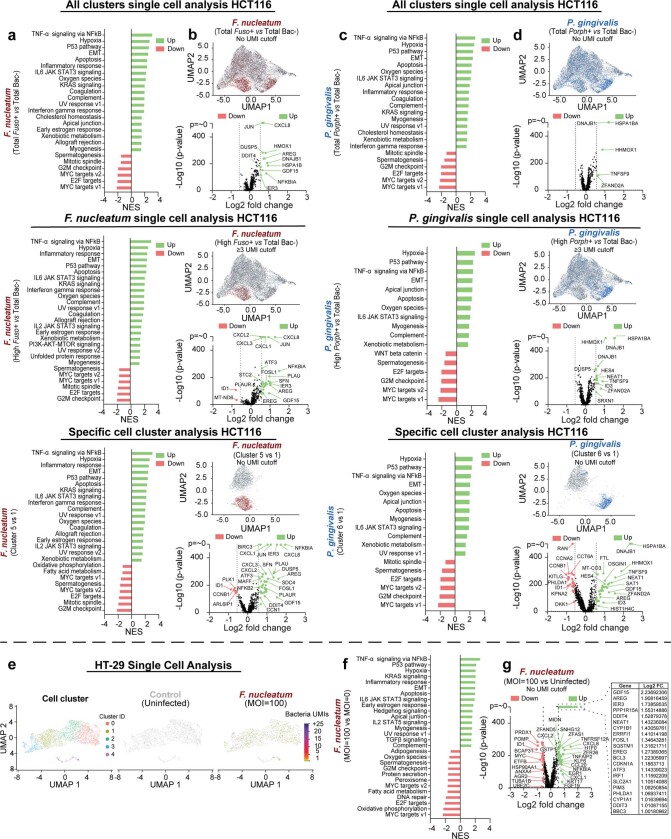
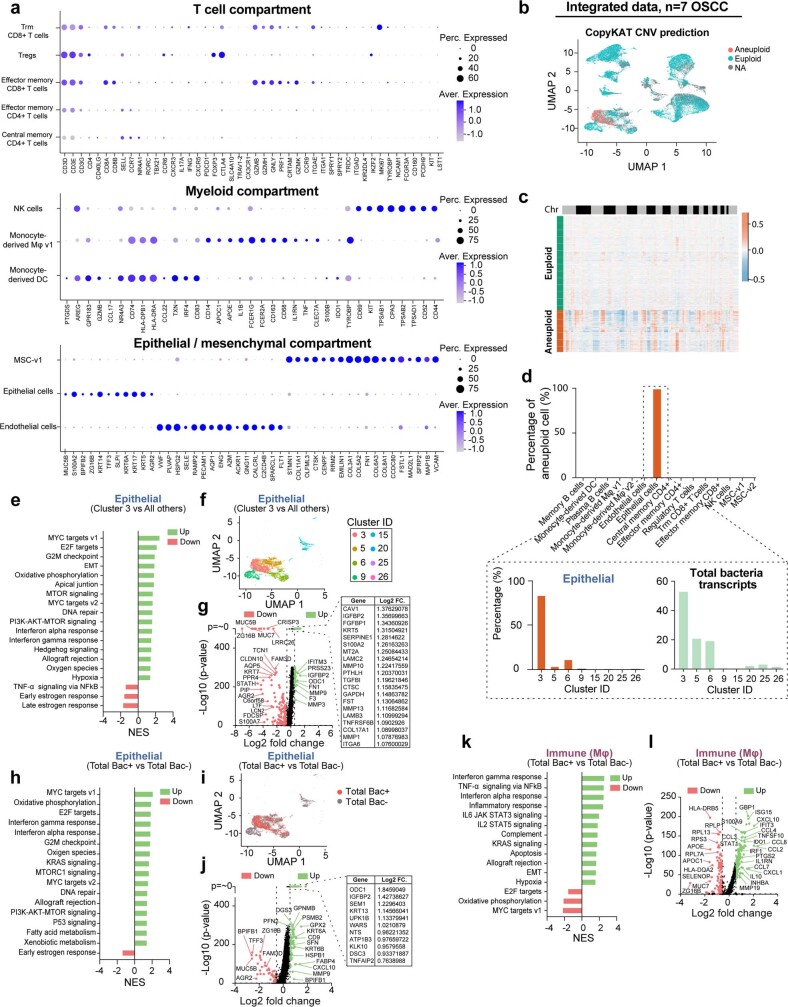
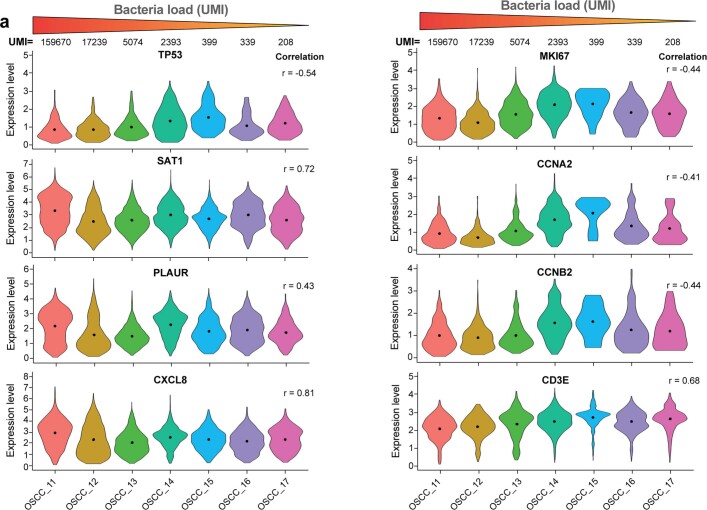
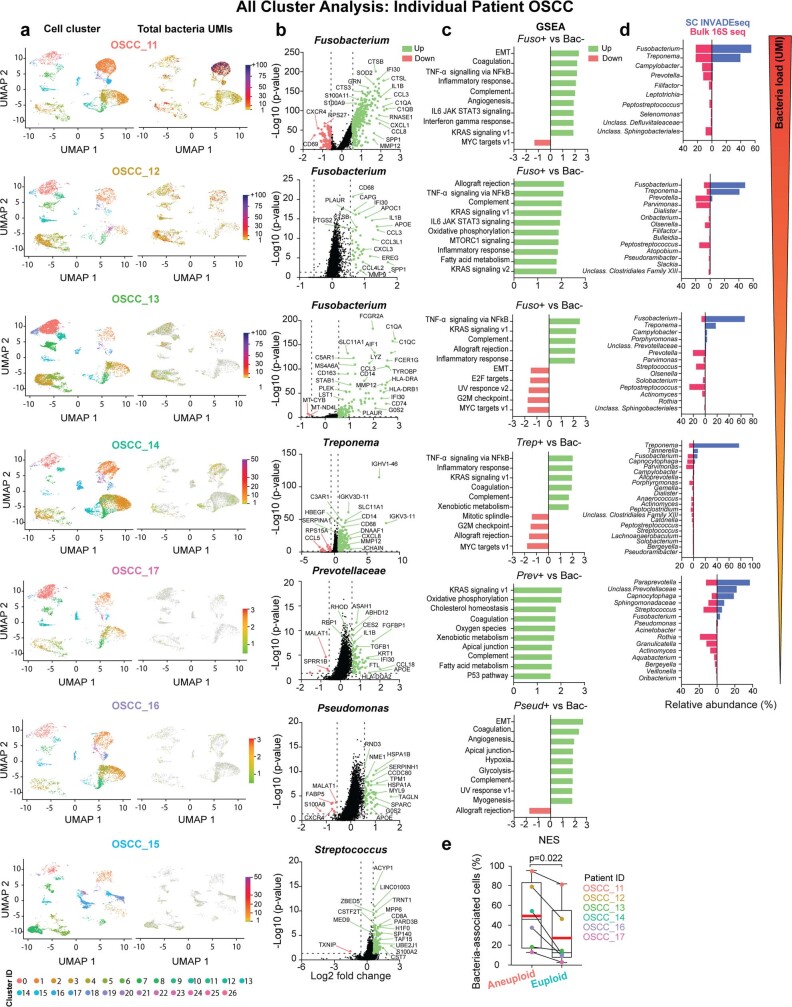
Verification
Claims the paper makes
The claims and statistics of this paper haven’t been checked yet.
Free: it reads the open-access text and checks the first 5 claims that cite a source we can check. Create a free account to check every claim.
Claims other papers make about this one
Each is checked against this paper’s own text: does it say what the citing paper says it does?
The cited source says what the claim attributes to it.
In the citing paper
“Galeano et al. introduced invasion-adhesion-directed expression sequencing (INVADEseq) targeting a conserved area of the bacterial 16 S rRNA, enabling the effective creation of cDNA libraries containing bacterial transcripts derived from human cells associated with bacteria.”
From Single-cell sequencing to multi-omics: technologies and applications (2024) · cites this paper as [158]
The cited source says what the claim attributes to it.
In the citing paper
“These microbes interact with both tumor and immune cells, influencing tumor dynamics by modulating immune responses, producing pro-proliferative metabolites, and reshaping the structural and biochemical landscape of the TME [38–40]”
From Phage therapy in oncology: opportunities for cancer prevention and treatment (2026) · cites this paper as [39]
The check wasn’t confident either way, so it gives no verdict — never disputed.
In the citing paper
“These microbes interact with both tumor and immune cells, influencing tumor dynamics by modulating immune responses, producing pro-proliferative metabolites, and reshaping the structural and biochemical landscape of the TME [38–40]”
From Phage therapy in oncology: opportunities for cancer prevention and treatment (2026) · cites this paper as [39]
Experimental — accuracy not yet measured
Self-check
Percentages, sums and reported differences re-computed from the paper’s own numbers.
The self-check needs the paper’s full text.
Citations
Cites
1 retracted
RETRACTED ARTICLE: Microbiome analyses of blood and tissues suggest cancer diagnostic approach
Poore, G. D., Kopylova, E., Zhu, Q., Carpenter, C., Fraraccio, S., Wandro, S., Kosciolek, T., Janssen, S., Metcalf, J., Song, S. J., et al. (2020) · Nature · doi:10.1038/s41586-020-2095-1 · Cited by 989
RetractedHighly parallel genome-wide expression profiling of individual cells using nanoliter droplets.
Macosko, E. Z., Basu, A., Satija, R., Nemesh, J., Shekhar, K., Goldman, M., Tirosh, I., Bialas, A. R., Kamitaki, N., Martersteck, E. M., et al. (2015) · Cell · doi:10.1016/j.cell.2015.05.002 · Cited by 7,110
Tumors: Wounds That Do Not Heal
Flier, J. S., Underhill, L. H., & Dvorak, H. F. (1986) · New England Journal of Medicine · doi:10.1056/nejm198612253152606 · Cited by 4,391
mRNA-Seq whole-transcriptome analysis of a single cell
Tang, F., Barbacioru, C., Wang, Y., Nordman, E., Lee, C., Xu, N., Wang, X., Bodeau, J., Tuch, B. B., Siddiqui, A., et al. (2009) · Nature Methods · doi:10.1038/nmeth.1315 · Cited by 3,969
Tumour heterogeneity and resistance to cancer therapies
Dagogo-Jack, I., & Shaw, A. T. (2018) · Nature Reviews Clinical Oncology · doi:10.1038/nrclinonc.2017.166 · Cited by 3,846
A Gene Encoding an Antigen Recognized by Cytolytic T Lymphocytes on a Human Melanoma
van der Bruggen, P., Traversari, C., Chomez, P., Lurquin, C., De Plaen, E., Van den Eynde, B., Knuth, A., & Boon, T. (1991) · Science · doi:10.1126/science.1840703 · Cited by 3,545
EMT Transition States during Tumor Progression and Metastasis
Pastushenko, I., & Blanpain, C. (2019) · Trends in Cell Biology · doi:10.1016/j.tcb.2018.12.001 · Cited by 2,876
Anderson, N. M., & Simon, M. C. (2020) · Current Biology · doi:10.1016/j.cub.2020.06.081 · Cited by 2,718
T cell exclusion, immune privilege, and the tumor microenvironment
Joyce, J. A., & Fearon, D. T. (2015) · Science · doi:10.1126/science.aaa6204 · Cited by 2,473
The human tumor microbiome is composed of tumor type–specific intracellular bacteria
Nejman, D., Livyatan, I., Fuks, G., Gavert, N., Zwang, Y., Geller, L. T., Rotter-Maskowitz, A., Weiser, R., Mallel, G., Gigi, E., et al. (2020) · Science · doi:10.1126/science.aay9189 · Cited by 2,464
Cited by
Items 601–700 of 997
Microbiota Manipulation as an Emerging Concept in Cancer Therapy
Spalinger, M. R., & Scharl, M. M. (2023) · Visceral Medicine · doi:10.1159/000534810 · Cited by 4
“…convincingly showed that tumors are not sterile either, and while the gut microbiome might in fl uence the composition of this tumor-speci fi c microbiome, tumors themselves harbor rather speci fi c bacteria that might contribute to the nature and strength of anti-cancer immune responses [4, 12 – 14].”
BackgroundSymbiotic symphony: Understanding host-microbiota dialogues in a spatial context
Chatterjee, S., Leach, S. T., Lui, K., & Mishra, A. (2024) · Seminars in Cell and Developmental Biology · doi:10.1016/j.semcdb.2024.03.001 · Cited by 6
Activin A signaling stimulates neutrophil activation and macrophage migration in pancreatitis
Wiley, M. B., Bauer, J. I., Álvarez, V., Mehrotra, K., Cheng, W., Kolics, Z., Giarrizzo, M., Ingle, K., Bialkowska, A. B., & Jung, B. H. (2024) · Scientific Reports · doi:10.1038/s41598-024-60065-y · Cited by 4
Microbiota and the landscape of the prostate tumor microenvironment.
Gupta, K. R., & Kyprianou, N. (2023) · PubMed Central · Cited by 4
Exploring the Role of Cellular Interactions in the Colorectal Cancer Microenvironment
Tang, J., Chen, L., Shen, X., Xia, T., Li, Z., Chai, X., Huang, Y., Yang, S., Peng, X., Lai, J., et al. (2025) · Journal of Immunology Research · doi:10.1155/jimr/4109934 · Cited by 3
“The presence of bacteria such as F. nucleatum , Bacter-oides, and Treponema — which are found at higher levels in CRC — has been associated with an increased risk of CRC [215, 216].”
Jin, P., Ji, X., Bai, J., Su, W., Ke, B., Liu, Y., & Wang, B. (2025) · Frontiers in Immunology · doi:10.3389/fimmu.2025.1622959 · Cited by 3
Azimi, M. (2025) · Journal of Cancer · doi:10.7150/jca.115037 · Cited by 3
Focus on gut microbes: new direction in cancer treatment
Liao, L., Zeng, M., Liu, D., He, Y., Du, W., & Cao, Y. (2025) · Frontiers in Oncology · doi:10.3389/fonc.2025.1505656 · Cited by 3
“Interestingly, the ef fi cacy of ICIs may be in fl uenced not only by microbial composition but also by tumor type, as different malignancies induce distinct microbiota alterations that can either enhance or impair immunotherapeutic response (51).”
Ye, X., Sun, Y., Yang, L., Chen, C., Li, S., Dong, S., Qin, X., Li, X., Liu, C., Huo, J., et al. (2025) · Chemical Engineering Journal · doi:10.1016/j.cej.2025.168488 · Cited by 3
Fang, J., Wu, M., Shen, H., Liu, W., & Zhang, T. (2025) · Frontiers in Oncology · doi:10.3389/fonc.2025.1616928 · Cited by 3
Microenvironment of Solid Tumors
Korneenko, T. V., Pestov, N. B., Shakhparonov, M. I., & Barlev, N. A. (2025) · Frontiers in Bioscience-Landmark · doi:10.31083/fbl36940 · Cited by 3
Bacteria modulate tumor-associated macrophages to combat cancer
Chen, Z., Li, J., Wang, J. J., Bai, Y., Zhang, Z., Chen, G., Cao, X. T., & Jin, D. (2025) · Critical Reviews in Oncology/Hematology · doi:10.1016/j.critrevonc.2025.104983 · Cited by 3
Microbial variations in the multibody sites of the pancreatic ductal adenocarcinoma patients
Zhu, Y., Zhi, M., Liang, X., Li, L., Dong, M., Zhang, G., Wang, L., Wang, P., Zhong, N., Feng, Q., et al. (2025) · International Journal of Surgery · doi:10.1097/js9.0000000000003799 · Cited by 3
Honcharyuk, I., Caridi, B., Pinco, P., Ferri, S., Giani, A. D., Baeri, A., Amoroso, C., Massironi, S., & Facciotti, F. (2025) · Expert Review of Clinical Immunology · doi:10.1080/1744666x.2025.2602537 · Cited by 3
Liu, Z., Ren, P., Xue, Y., Liu, S., Li, S., Li, Y., & Zhang, Y. (2025) · Clinical Science · doi:10.1042/cs20256616 · Cited by 3
Yu, Y., Li, Y., Wang, J., Zhu, Y.-J., Zhang, Z., Xiao, Z., Chen, Y., Qu, Y., Han, L., & Zhang, H. (2026) · Experimental Hematology and Oncology · doi:10.1186/s40164-026-00757-5 · Cited by 3
“Last but not the least, the roles of the microbiome [265, 266], ion elements [267] and exosomes [268] in tumor initiation and progression have received increasing attention these years, while they are usually insufficient in current co-culture model, impeding the practical application of the…”
Cheng, G., Jiang, X., Zhu, L., Chen, X., Liu, R., Zhu, L., Hu, X., Zhang, S. L., Tan, W., Lin, D., et al. (2026) · Science Advances · doi:10.1126/sciadv.ady1644 · Cited by 3
Wang, X., Li, W., Fu, Y., Xie, J., Yu, L., Miao, R., Cao, J., Chen, T., Zhang, X., Chen, Y., et al. (2026) · Nano Today · doi:10.1016/j.nantod.2026.103012 · Cited by 3
Jin, K., Cao, L.-L., He, N.-A., Ye, L., Zhan, X., Jiang, F., & Wang, J. (2026) · Gland Surgery · doi:10.21037/gs-2025-1-572 · Cited by 3
Stepanyan, A., Kotsafti, A., Rosato, A., Castagliuolo, I., Scarpa, M., Scarpa, M., on behalf of the IMMUNOREACT Study Group, Agostini, M., Angriman, I., Antoniutti, M., et al. (2026) · British Journal of Cancer · doi:10.1038/s41416-026-03443-9 · Cited by 3
From Microbial Ecology to Functional Components in Microbe–Host Interactions
Wang, T., Wang, Z., Yang, X., & Zhang, L. (2026) · Biology · doi:10.3390/biology15080635 · Cited by 3
“…man et al. combined multi-omics analyses with high-resolution imaging techniques, such as multiplex fluorescence in situ hybridization and RNAscope, to reveal the metabolic activity of bacteria in tumors in situ, advancing correlative analyses toward functional validation [28,31].”
A One Health Perspective on Cancer: A Narrative Review
Duarte, S. A. C., Pinto‐Leite, R., & QUEIROGA, F. L. (2026) · Medical Sciences · doi:10.3390/medsci14020221 · Cited by 3
“…microbiome, comprising distinct microbial ecosystems within tumor tissues that vary across cancer types [197], appears to be organized in microniches that interact with immune and epithelial cells that support cancer progression [198], and may influence treatment efficacy and prognosis [199,200].”
Intratumoral Microbiota in Tumor: Current Understandings and Future Perspectives
Chen, J., Bai, Y., Shen, L., Ying, J., Xu, J. Q., Tang, J., & Bao, Y.-J. (2026) · MedComm · doi:10.1002/mco2.70825 · Cited by 3
“When coupled with focal hemorrhage and altered interstitial pressure, these features facilitate the retention of blood-borne microorganisms within the tumor microvascular bed and enhance their extravasation into the stroma, thereby creating a relatively permissive colonization window [ 33, 77 ].”
Investigating the role of the intratumoral microbiome in thyroid cancer development and progression
Ataollahi, H., Hedayati, M., Zia-Jahromi, N., DANESHPOUR, M. S., & Siadat, S. D. (2024) · Critical Reviews in Oncology/Hematology · doi:10.1016/j.critrevonc.2024.104545 · Cited by 3
Liu, Y., Chen, X., Li, G., Xu, J., Zeng, Q., Xu, R., Gong, Y., & Chen, W. (2024) · Chemical Engineering Journal · doi:10.1016/j.cej.2024.157802 · Cited by 3
He, A., Huang, Z., Chen, X., Qi, K., Zhang, S., Li, F., Lu, H., Wang, J., Peng, J., & Song, C. (2025) · The FASEB Journal · doi:10.1096/fj.202500124 · Cited by 3
The intratumor microbiota and thyroid cancer: a review
Liu, S., Xiong, X., Hao, T., Shi, X., & Zhao, Y. (2025) · Frontiers in Endocrinology · doi:10.3389/fendo.2025.1536155 · Cited by 6
“It has been observed that the microbial community within a tumor exhibits a non-random distribution; rather, it was precisely structured into microniches linked to immune and epithelial cell functions that in fl uenced cancer progression (27).”
Intratumoral microbiota: a new perspective in cancer initiation, development, and therapy
Liu, H., Luo, Z. K., Luo, F., Wang, X., Wei, H., & Yu, C. (2025) · RSC Pharmaceutics · doi:10.1039/d5pm00045a · Cited by 3
Gong, G., Yin, Q., Liu, Q., Zhang, Y., Liu, J., Dai, M., Li, J., He, X., Pan, J., He, Y., et al. (2024) · Small · doi:10.1002/smll.202408746 · Cited by 3
Microbiome in urologic neoplasms: focusing on tumor immunity
Zou, J., Xu, B., Gao, H., Luo, P., Chen, T., & Duan, H. (2024) · Frontiers in Immunology · doi:10.3389/fimmu.2024.1507355 · Cited by 3
Intestinal Microbiome Modulation of Therapeutic Efficacy of Cancer Immunotherapy
Silveira, M. A. D., Rodrigues, R. R., & Trinchieri, G. (2025) · Gastroenterology Clinics of North America · doi:10.1016/j.gtc.2024.10.005 · Cited by 3
Uchida, S., Yokobori, T., Yanagisawa, K., Erkhem‐Ochir, B., Dorjkhorloo, G., Okami, H., Katayama, C., Shibasaki, Y., Nakazawa, N., Komine, C., et al. (2025) · Annals of Surgical Oncology · doi:10.1245/s10434-025-17773-0 · Cited by 3
Rouanne, M., Chen, N., Mariuzza, D. L., Yang, Z., Li, F., Santos, K. D. L., Savage, T. M., Vincent, R. L., Mendelsohn, C. L., Danino, T., et al. (2026) · Science Translational Medicine · doi:10.1126/scitranslmed.adv7600 · Cited by 3
Towards inmunotherapeutic exploitation strategies of rotumor and antitumor cytokines
Olivera, I. (2023) · Depósito Académico Digital Universidad de Navarra (University of Navarra) · doi:10.15581/10171/69099 · Cited by 3
Spatial Total RNA Sequencing of Formalin-Fixed Paraffin Embedded Tissues by spRandom-seqPreprint
Liao, Y., Zhang, S., Chen, J., Chen, Y., Lyu, Y., Zhu, B., Chen, H., Zhu, Y., Xu, Z., Yin, Y., et al. (2025) · bioRxiv (Cold Spring Harbor Laboratory) · doi:10.1101/2025.02.19.638981 · Cited by 3
Won, K., Jin, P.-R., Davis, L., Orjala, J., Armstrong, A. T., Wang, W. H., Kothandaraman, H., Utturkar, S. M., Bae, D., Jeong, B., et al. (2025) · bioRxiv (Cold Spring Harbor Laboratory) · doi:10.1101/2025.09.25.678601 · Cited by 3
Bacteria in tumours promote cancer progression
Flemming, A. (2022) · Nature reviews. Immunology · doi:10.1038/s41577-022-00819-9 · Cited by 2
Current computational methods for spatial transcriptomics in cancer biology
Mo, J., Bae, J., Saqib, J., Hwang, D., Jin, Y., Park, B. J., Park, J., & Kim, J. (2024) · Advances in cancer research · doi:10.1016/bs.acr.2024.06.006 · Cited by 2
Oral microbes and gastrointestinal cancers: new strategies and insights
Huang, C., Li, Y., & He, C. (2025) · Clinical & Translational Oncology · doi:10.1007/s12094-025-03891-4 · Cited by 2
Microbiota recruitment for brain cancer management
Mehrian‐Shai, R. (2025) · Exploration of Medicine · doi:10.37349/emed.2025.1001335 · Cited by 2
Li, C., & Gong, Z. (2025) · Advanced Science · doi:10.1002/advs.202506869 · Cited by 2
Gao, W., Yuan, H., & Qing, S. (2025) · PLoS ONE · doi:10.1371/journal.pone.0329231 · Cited by 2
“Most cancers, such as oral, prostate, breast, and ovarian types exhibit unique bacterial profiles and functional relationships [11–13].”
Bacteria-Based Roles in Solid Tumors: Potential for Prevention and Treatment
Huang, J., Zhang, A., Sun, J., Fu, Y., Li, W., & Wang, Y. (2025) · Pathogens · doi:10.3390/pathogens14090874 · Cited by 2
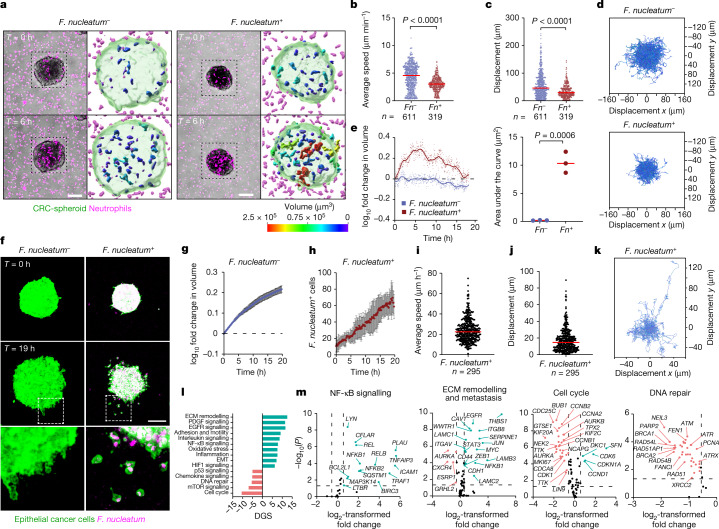
“Within colorectal cancer (CRC), Fusobacterium nucleatum ( Fn ) orchestrates myeloid cell infiltration at infection loci and modulates transcriptional programming in epithelial cells, consequently enhancing local tissue invasion capabilities [11].”
Vella, G., & Rescigno, M. (2025) · Molecular Oncology · doi:10.1002/1878-0261.70115 · Cited by 2
Liu, H., Liu, Y., Dai, Y., Zhang, L., & Long, M. (2025) · Translational Cancer Research · doi:10.21037/tcr-2025-357 · Cited by 2
“Accumulative research on the regulatory function of microbial communities in cancer occurrence and development has revealed their significant impacts on tumor initiation, progression, metastasis, and treatment response (5-7).”
Zhou, J., Li, Y., Zhu, T., Yang, K., Zhang, C., Zhang, R., Zhang, X., Zhou, D., Ding, X., Qiao, Y., et al. (2025) · iScience · doi:10.1016/j.isci.2025.114174 · Cited by 2
In Situ Coordination‐Assembly Nano‐Drugs/Probes for Enhanced Tumor Retention and Responsive Release
Liu, F., Li, X., Xu, S., Guo, C., & Wang, L. (2025) · Angewandte Chemie · doi:10.1002/ange.202521465 · Cited by 2
Liao, H., Liu, S., Sun, X. P., Huang, Z., Sun, Y., Guo, J., Li, F., & Xu, B. (2025) · Chemical Engineering Journal · doi:10.1016/j.cej.2025.171642 · Cited by 3
Luo, X.-W., Yang, Y.-Y., He, F.-J., Xie, S.-Y., Feng, S.-L., & Wang, X. (2025) · Chemical Engineering Journal · doi:10.1016/j.cej.2025.172394 · Cited by 2
Larionova, E., & Moran, G. P. (2026) · FEMS Microbes · doi:10.1093/femsmc/xtag002 · Cited by 2
“Evidence supplied by spatial profiling in CRC tissues identified both P. gingivalis and Fn as being associated with the same cell clusters and significantly upregulating the signalling pathways involved in EMT, inflammation, and metastasis (Niño et al. 2022 ).”
InfluentialShen, P., Cui, W., Lin, J., Wang, Z., Li, Z., & Liu, B. (2026) · Frontiers in Immunology · doi:10.3389/fimmu.2025.1716230 · Cited by 2
Wang, W.-J., Liu, T.-B., Li, Y.-G., Jia, J., Zhao, M.-Q., Huang, Y.-X., Dong, J.-G., Xia, Y., & Liang, J. (2025) · Journal of Pharmacy and Pharmacology · doi:10.1093/jpp/rgaf128 · Cited by 2
You, X., & Liu, Y. (2025) · GenoMed Connect · doi:10.69709/genomc.2025.131100 · Cited by 2
Kaźmierczak-Siedlecka, K., Kucharski, R., Stachowska, E., Pelikant‐Małecka, I., Marano, L., Makarewicz, W., Kalinowska, M., Dambrauskas, Z., & Kalinowski, L. (2026) · Frontiers in Pharmacology · doi:10.3389/fphar.2026.1732712 · Cited by 2
Oh, H. N., & Hur, H. (2026) · Oncology Reports · doi:10.3892/or.2026.9071 · Cited by 2
First Description of Oral Microbiota in Domestic Cats Affected by Oral Squamous Cell Carcinoma
Anderson, J. G., Scarsella, E., Soltero‐Rivera, M. M., Goldschmidt, S. L., Rojas, C. A., & Ganz, H. H. (2026) · Pathogens · doi:10.3390/pathogens15020207 · Cited by 2
Li, S., Wang, L., Xing, X., & Li, X. (2026) · Discover Oncology · doi:10.1007/s12672-026-04613-0 · Cited by 2
Tang, X., Man, C., Liu, Z., Gong, D., & Fan, Y. (2026) · Frontiers in Immunology · doi:10.3389/fimmu.2026.1745842 · Cited by 2
Targeting metabolic vulnerabilities with advanced delivery systems
Ye, W., Li, X., Chandra, J., Yu, J., Zhou, T., & Li, Z. (2026) · Trends in Pharmacological Sciences · doi:10.1016/j.tips.2026.01.003 · Cited by 2
Harnessing engineered bacteria for revolutionizing cancer immunotherapy
Zhou, K., Cao, L., Luo, H.-Y., Wang, K.-N., Song, Z., & Bu, L. (2026) · Advanced Composites and Hybrid Materials · doi:10.1007/s42114-026-01664-3 · Cited by 2
Githaka, J. M. (2026) · Critical Reviews in Oncology/Hematology · doi:10.1016/j.critrevonc.2026.105258 · Cited by 2
The lethal symbiont: exploring the pathophysiology of cancer
Nolan, E., Li, L., Giampazolias, E., Ombrato, L., & Malanchi, I. (2026) · Physiological Reviews · doi:10.1152/physrev.00019.2025 · Cited by 2
Analysis of intratumoural bacteria: Opportunities and challenges for cancer therapy
Jiang, X., Zhang, C., Cao, S., Peng, Y., Zhao, M., Zhang, X., & Gao, Y. (2026) · Acta Pharmaceutica Sinica B · doi:10.1016/j.apsb.2026.03.022 · Cited by 2
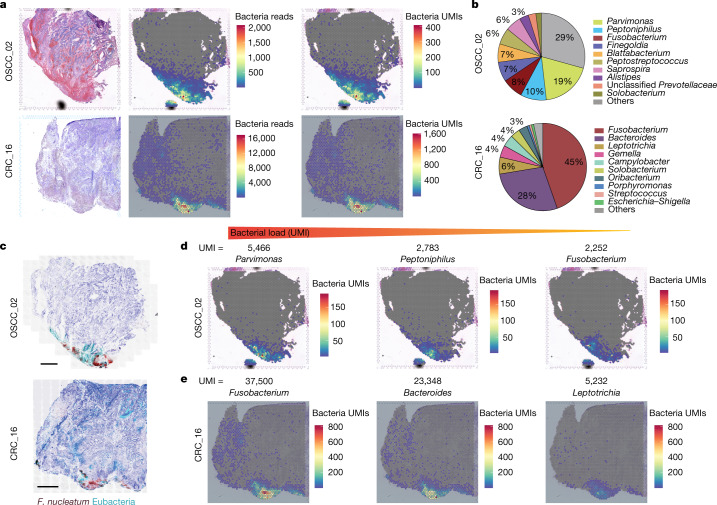
“The most dominant bacterial genera, Parvimonas (19%), Pepto-niphilus (10%), Fusobacterium (8%), and Finegoldia (7%), are detected in data obtained from 10x Visium RNA-sequencing of oral squamous cell carcinoma 37 .”
Mucosal immunity in cancer metastasis: roles, mechanisms, and therapeutic implications
Miao, Y., Cui, D., Bi, Y., & Zhang, R. (2026) · Frontiers in Immunology · doi:10.3389/fimmu.2026.1809558 · Cited by 2
“…inactive intracellular bacteria, causing them to re-express pathogen-associated molecular patterns with immunogenicity and release pro-in fl ammatory factors, thereby enhancing local innate immune activation and matrix remodeling, accelerated the recurrence process of the tumor (27, 47, 130).”
Advances in microbiome in gastrointestinal cancer
Wong, C. C., & Yu, J. (2026) · Holistic Integrative Oncology · doi:10.1007/s44178-026-00241-4 · Cited by 2
Mayoral, E. P., Mayoral, L. P.-C., Hernández‐Huerta, M. T., Cabrera-Fuentes, H. A., González, E. E. J., Ruiz, H. M., Cruz, M. M., Romero-Díaz, C., Villegas, M. E. A., Andrade, G. M., et al. (2026) · Cancers · doi:10.3390/cancers18081219 · Cited by 2
“Recent advances in microbiome research have shown that tissue-associated microbial communities can influence carcinogenesis through local inflammatory effects, systemic metabolic signaling, and immune modulation [3].”
Zhang, W., Zhao, W., Ye, L., Wang, H., Chen, Z., Liu, X., Li, Y., Zhang, Q., Zhang, H., Liu, Y., et al. (2026) · Journal of Translational Medicine · doi:10.1186/s12967-026-08109-x · Cited by 2
Wang, S., Su, Z., Zhang, X., Wang, S., Chen, X., Xu, X., He, B., & Zheng, Y. (2026) · Bioactive Materials · doi:10.1016/j.bioactmat.2026.03.059 · Cited by 2
Zhang, Y., Tan, B., Zhou, Q., Xu, L., & Zhou, L. (2026) · Cancer Biology and Medicine · doi:10.20892/j.issn.2095-3941.2025.0686 · Cited by 2
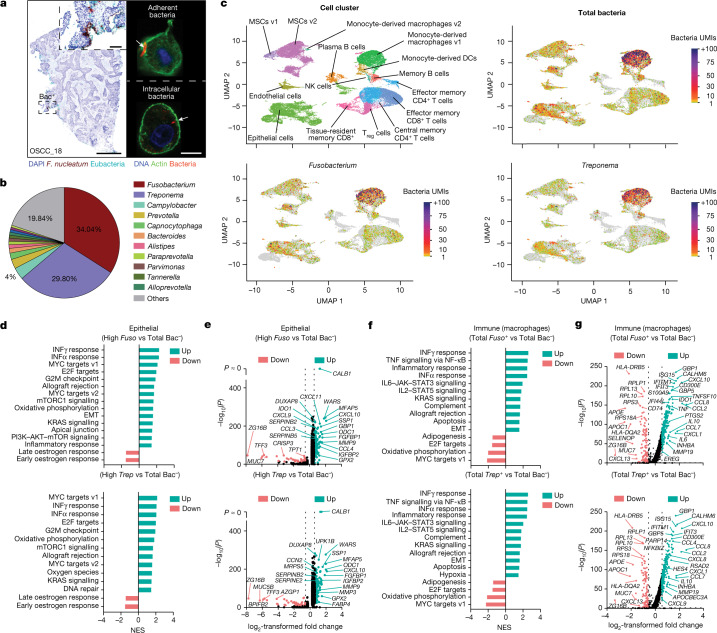
“This strategy elucidated microbial preferences for specific micro-niches and cell types with respect to adhesion and invasion, and identified bacteria-associated alterations in host signaling pathways at the single-cell level 33 .”
Zhang, H., Zhang, X., Guo, J., Huang, X., An, M., Wang, S., Wang, S., & Fu, B. (2026) · Molecular Biology Reports · doi:10.1007/s11033-026-11858-z · Cited by 2
Wang, J., Liu, Y., Yan, Y. J., Chen, X., Chen, G., Chen, Y., Chen, X., & Liu, S. (2026) · Frontiers in Microbiology · doi:10.3389/fmicb.2026.1782471 · Cited by 2
Multiplexed Engineering of Salmonella Typhimurium for Targeted Cancer Therapies
Liu, X., Zhang, P. D., Chen, D., Xu, S., Wu, S. S., & Qiao, J. (2026) · ACS Synthetic Biology · doi:10.1021/acssynbio.6c00119 · Cited by 2
Diao, Q., Wang, M., Chang, T., Wang, Y., Zhang, L., Li, B., Zhao, X., & Jiang, T. (2026) · ACS Nano · doi:10.1021/acsnano.6c00894 · Cited by 2
Experimental models for intestinal host-microbe interactions
Li, Y., Gasaly, N., & de Vos, P. (2026) · EMBO Molecular Medicine · doi:10.1038/s44321-026-00450-4 · Cited by 2
“However, conclusions drawn from these systems must be strictly strati fi ed, as their malignant origin imposes signi fi cant metabolic and signaling biases that deviate from normal intestinal physiology (Galeano Nino et al, 2022).”
Oral epithelial barrier: Gatekeeper of mucosal immunity and driver of disease
Wang, Q., Li, X., Xue, F., Zhao, P., & Mu, Y. (2026) · Microbiological Research · doi:10.1016/j.micres.2026.128568 · Cited by 2
Fusobacterium nucleatum in cancer: from bystander to driver
Zhong, Z.-W., Lu, Y.-Q., Duan, Y., Ma, J. Y., & Liu, N. (2026) · Gut · doi:10.1136/gutjnl-2025-338000 · Cited by 2
Li, Z., ZHANG, J., Guan, H., Yang, W., Chan, W. H., Li, N., Zhong, C., Zhang, G., Yu, S., Lü, A., et al. (2026) · Translational research · doi:10.1016/j.trsl.2026.06.021 · Cited by 2
Li, L., Shi, X., Liu, M., Xu, T., Chen, Y., Wang, R., Zhang, Q., & Li, D. (2026) · Pathogens · doi:10.3390/pathogens15070687 · Cited by 2
Mao, Y., Xie, F., Chu, X., Zhang, W., Dou, K., Hu, B., Fu, L., 丁致薰, Zhu, S., Cao, W., et al. (2026) · Molecular Cancer · doi:10.1186/s12943-026-02731-5 · Cited by 2
“In addition, the intratumoral microbiota affects the spatial and cellular heterogeneity of tumors, remodels the local immune microenvironment, suppresses immune cell infiltration and activation, and provides immune shelter for metastatic tumor cells [256].”
Xie, M., Xie, Z., Wang, H., Yang, X., Zhang, Y., Xiong, K., Tang, X., Wang, Y., Chen, X., Zhang, Y., et al. (2026) · Journal of Controlled Release · doi:10.1016/j.jconrel.2026.115303 · Cited by 2
Bacteroides acidifaciens enriched by KRAS mutation promotes colorectal tumorigenesis
Jiao, Y., Cheng, C. H., Gao, X., Li, W., Ji, F., Liang, C., Huang, P., Ko, L. H., Ye, L., Kam, I. C. H., et al. (2026) · Cell Host & Microbe · doi:10.1016/j.chom.2026.08.010 · Cited by 2
Vitamin D-dependent microbiota-enhancing tumor immunotherapy
Izquierdo, J. M. (2024) · Cellular and Molecular Immunology · doi:10.1038/s41423-024-01184-4 · Cited by 2
“In fact, nearly 20% of malignant cancers are associated with microbial infections [4].”
Novel insights at the crossroads of antibiotic use and cancer risk
Malanović, N., & Vejzović, D. (2023) · Cell Stress · doi:10.15698/cst2023.06.280 · Cited by 2
“Recent articles report a strong association of malignant tumors with fungi and bacteria, which exhibit high immuno-suppressive properties and strongly promote cancer progression [7-9].”
BackgroundHåheim, L. L., Olsen, I., Thelle, D. S., & Rønningen, K. S. (2024) · BMJ Open · doi:10.1136/bmjopen-2023-082116 · Cited by 2
Liang, X., Hong, A. R., Shen, R., Zhu, M., & Tian, W. (2024) · American Journal of Translational Research · doi:10.62347/ukqb2042 · Cited by 2
“Cancer affects hundreds of millions of people worldwide, with clinical outcome depending on multiple factors, including the availability of reli - able biomarkers [1, 2].”
BackgroundXie, Y., Wang, J., Li, C., Wang, M., Sun, J., Chang, J., Lin, J., & Li, C. (2024) · Angewandte Chemie · doi:10.1002/ange.202417592 · Cited by 2
Investigation of Exome-Wide Tumor Heterogeneity on Colorectal Tissue-Based Single Cells
Szakállas, N., Kalmár, A., Barták, B. K., Nagy, Z. B., Valcz, G., Linkner, T. R., Rada, K. R., Takács, I., & Molnár, B. (2025) · International Journal of Molecular Sciences · doi:10.3390/ijms26020737 · Cited by 2
Bacteria, stem cells and cancer
Pani, G. (2025) · Cancer Gene Therapy · doi:10.1038/s41417-025-00876-x · Cited by 2
Association of Oral Health Determinants With Oral Squamous Cell Carcinoma in Never‐Smoking Adults
Zhou, P., Yeshoua, B. J., Konuthula, N., Pan, C., Ferrandino, R. M., Holte, S., Rizvi, Z. H., Marchiano, E. M., Futran, N. D., & Barber, B. R. (2025) · Head & Neck · doi:10.1002/hed.28119 · Cited by 2
“In addition, several bacteria such as Fusobacterium nucleatum , Porphyromonas gingivalis , and Treponema denticola are common periodontal pathogens with carcinogenic potential [43, 44].”
Self-citationTranscriptomic analysis reveals novel targets in benign schwannoma using machine learning
Yan, S., Zhao, J., Gao, P., Li, Z., Zhao, L., & Wang, P. (2025) · Neuroscience · doi:10.1016/j.neuroscience.2025.06.048 · Cited by 2
Chen, L., Yang, T., Zhang, Z., Yang, Y., Long, S., Wang, M., & Zeng, H. (2025) · Scientific Reports · doi:10.1038/s41598-025-23412-1 · Cited by 2
“The intratumoral microbiota is an intrinsic component of the tumor microenvironment and involved in cancer progression, immune surveillance, and chemotherapy resistance 67 .”
A gut reaction can tune tumour fate during chemotherapy
Li, L., & McAllister, F. M. (2023) · Nature · doi:10.1038/d41586-023-00476-5 · Cited by 2
Advances in the Application of Bacteria in Tumor Therapy
张, 媛. (2024) · Hans Journal of Biomedicine · doi:10.12677/hjbm.2024.142024 · Cited by 2
Yim, H. C. H., El-Omar, E. M., Wu, J. C., Sung, J. J. �., & Lee, Y. Y. (2024) · Journal of Gastroenterology and Hepatology · doi:10.1111/jgh.16565 · Cited by 2
Metabolic modeling of the host - gut microbiota ecosystem
Lambert, A. (2024) · theses.fr (ABES) · doi:10.70675/25bc7695zd6d7z4765z8c46z7291ffbad514 · Cited by 2
ScMicrobesAtlas: A comprehensive microbial atlas at single-cell resolution in human disease contexts
Liu, J., Hou, R., Ji, L., Gong, Y., Pan, L., Liu, P., Dong, J., Guo, H., Zhang, Y., Xu, J., et al. (2025) · Genes & Diseases · doi:10.1016/j.gendis.2025.101594 · Cited by 1
Chen, P., Tian, W., Zeng, A., Gu, H., & Zeng, J. (2025) · Cancer Medicine · doi:10.1002/cam4.70900 · Cited by 1
Wang, M., Guo, A., Zhang, L., Wu, S., Du, J., & Yu, T. (2025) · Animal Research and One Health · doi:10.1002/aro2.70016 · Cited by 1
Bai, Q., Chang, X., Zou, X., & Zhang, B. (2025) · Discover Oncology · doi:10.1007/s12672-025-02880-x · Cited by 1
The role of Gram‐positive cocci in cancer initiation, progression, and its application in therapy
Liang, C., Zhou, Z., Li, P., & Xiao, H. (2025) · International Journal of Cancer · doi:10.1002/ijc.70063 · Cited by 1
“39,40 43 Notably, lung cancer patients exhibit an obvious increase in total bacterial load and reduced respiratory bacterial diversity.”
Metadata
- Authors
- Galeano Niño, J. L., Wu, H., LaCourse, K. D., Kempchinsky, A. G., Baryiames, A., Barber, B., Futran, N., Houlton, J., Sather, C., Sicinska, E., Taylor, A., Minot, S. S., Johnston, C. D., & Bullman, S.
- Affiliations
- Fred Hutch Cancer Center (US)
- University of Washington Medical Center (US)
- Herbert Irving Comprehensive Cancer Center (US)
- Corresponding author
- Johnston, Christopher D.
- Bullman, Susan
- ORCID
- Venue
- Nature
- Published
- 2022-11-16
- Volume
- 611
- Issue
- 7937
- Pages
- 810-817
- ISSN
- 0028-0836 (ISSN-L)
- 1476-4687
- PMC
- PMC9684076
- OpenAlex
- W4309334544
- Cited by
- 887
- References
- 41
- Citations by year
- 2026: 214 · 2025: 292 · 2024: 228 · 2023: 148 · 2022: 4
- FWCI
- 55.33
- Type
- journal article
- Language
- en
- Open access
- hybrid
- doi.org
- Licence
- cc-by
- creativecommons.org/licenses/by/4.0 (tdm)
- creativecommons.org/licenses/by/4.0 (vor)
- Locations
- Nature (publishedVersion, cc-by)
- PubMed Central (publishedVersion, cc-by)
- PubMed (publishedVersion)
- RePEc: Research Papers in Economics (submittedVersion)
- Funders
- Cancer Research Institute (CRI4208)
- Fred Hutchinson Cancer Research Center (P30CA015704)
- University of Washington (P30 CA015704)
- National Institutes of Health (1s10od028685-01, CA015704)
- National Cancer Institute (CA015704, R00CA229984, CA080416, P30CA015704, T32CA080416)
- National Institute of Dental and Craniofacial Research (R01DE027850)
- Office of Research Infrastructure Programs, National Institutes of Health (S10OD028685)
- Topics
- Life Sciences › Biochemistry, Genetics and Molecular Biology › Molecular Biology › Gut microbiota and health
- Life Sciences › Biochemistry, Genetics and Molecular Biology › Molecular Biology › Single-cell and spatial transcriptomics
- Health Sciences › Medicine › Oncology › Cancer Immunotherapy and Biomarkers
- Keywords
- intratumoral microbiota, tumor microenvironment, spatial heterogeneity, oral squamous cell carcinoma, colorectal cancer, host-microbe interactions, single-cell RNA sequencing, spatial transcriptomics, GeoMx digital spatial profiling, tumor invasion, cell dormancy, DNA repair, inflammation, metastasis, Ki-67
- MeSH terms
- Host Microbial Interactions, Carcinoma, Squamous Cell, Humans, Mouth Neoplasms, Colorectal Neoplasms, Sequence Analysis, RNA, Disease Progression, Ki-67 Antigen, Gene Expression Profiling, Myeloid Cells, Tumor Microenvironment, Microbiota
About these checks
Registry, retraction, Cites and statistics results are computed, not judged, with one exception: a printed reference that no index lists is read once by a model before it counts as a citation error. Claims are extracted by a model and kept only when their quote appears verbatim in the text; each cited source is then checked, with a model’s help, for whether it says what the claim relies on. Those verdicts can be wrong — read the claim’s quote and the cited source before relying on one.
Statistics and arithmetic are recomputed, not judged.
Confidence bands are shown only for fields calibrated on our annotated test set. None is calibrated yet, so no band is shown.
What counts as a claim ›How we measure confidence ›How we check this ›
Are you an author, or do you see a problem with this page? Request a review
Data sources
Bibliographic data: Semantic Scholar, OpenAlex, Crossref.
Contains information from the Semantic Scholar Academic Graph Datasets, made available under the ODC Attribution License (ODC-BY 1.0).
Semantic Scholar’s data is described in: Kinney, R., et al. (2023). The Semantic Scholar Open Data Platform. arXiv:2301.10140.
