

Effect of the intratumoral microbiota on spatial and cellular heterogeneity in cancer
Open accessThe DOI matches its Crossref record; 41 of the 41 references it cites were found in a registry or an index.
Abstract
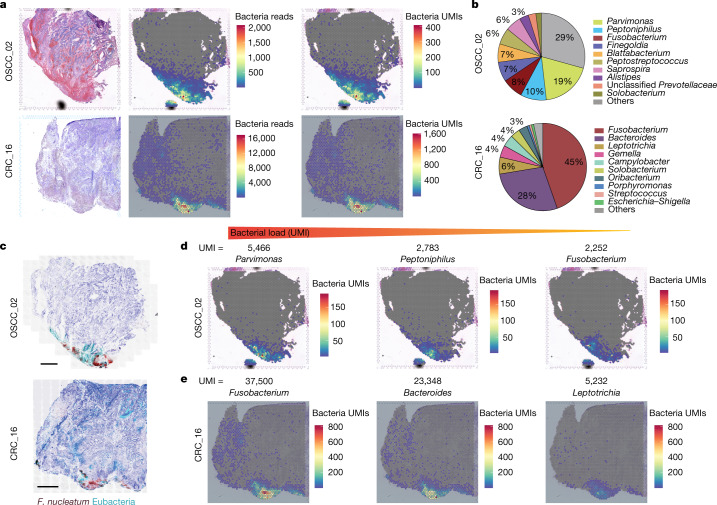
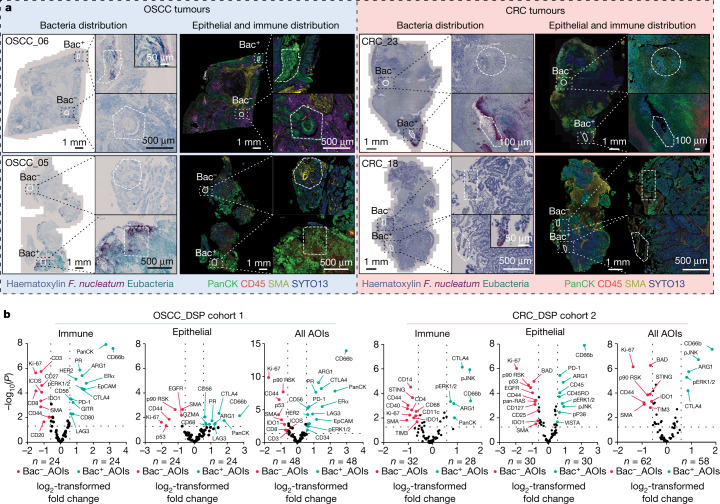
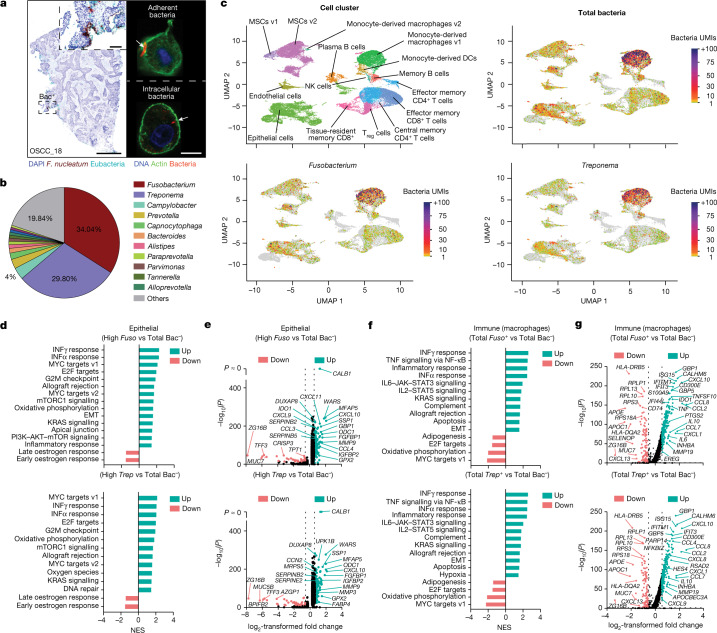
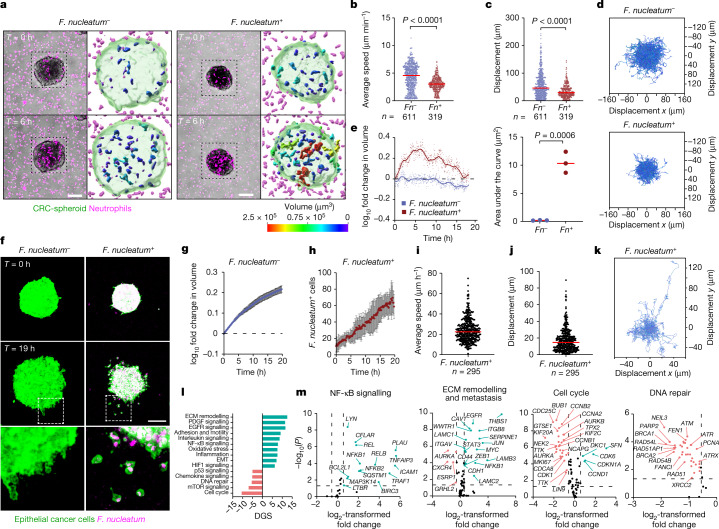
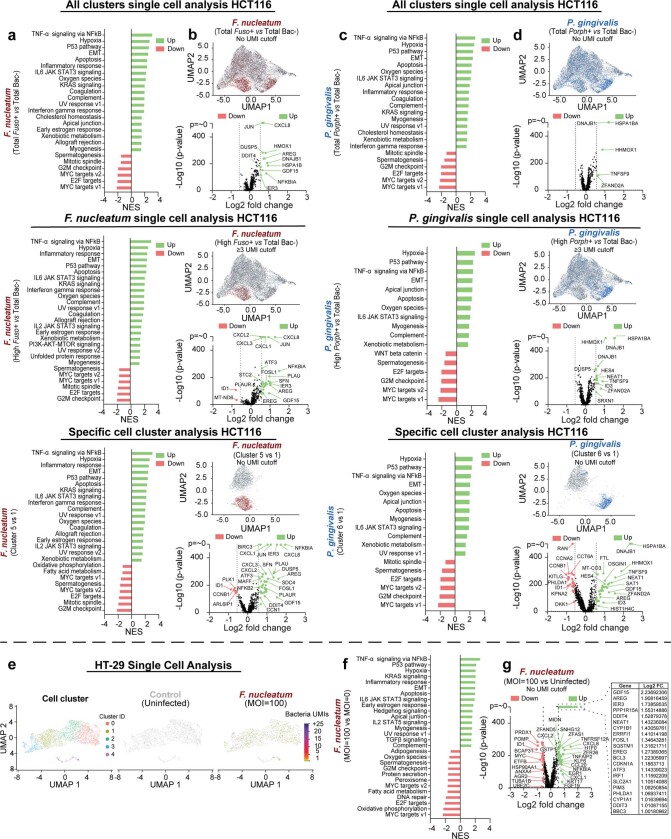
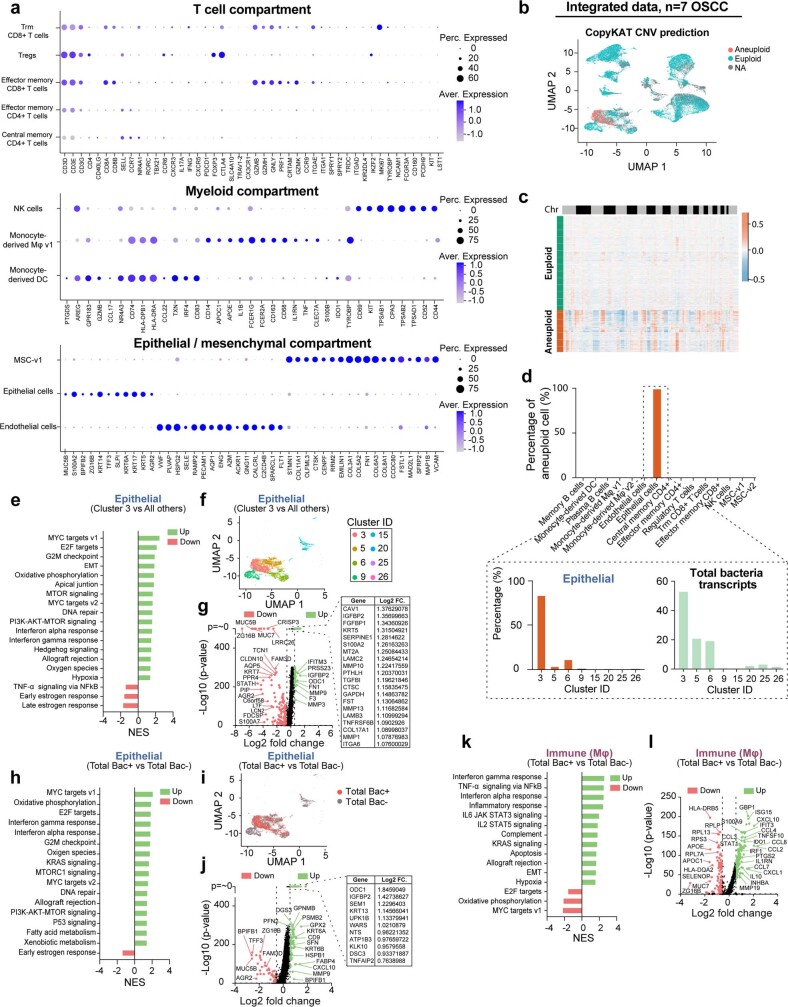
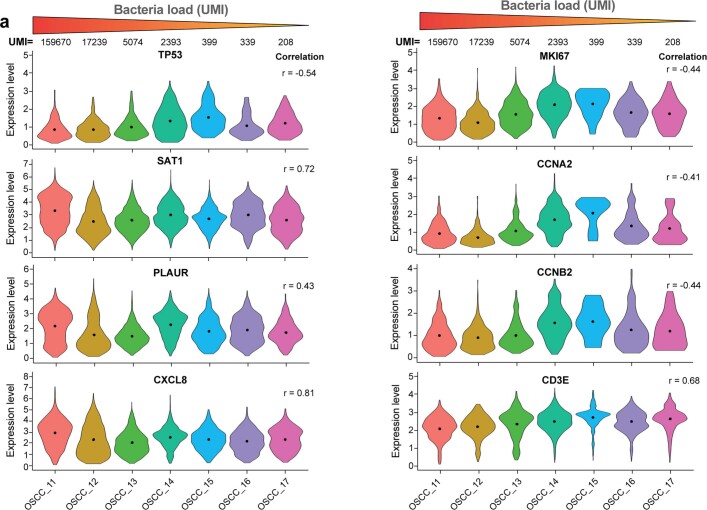
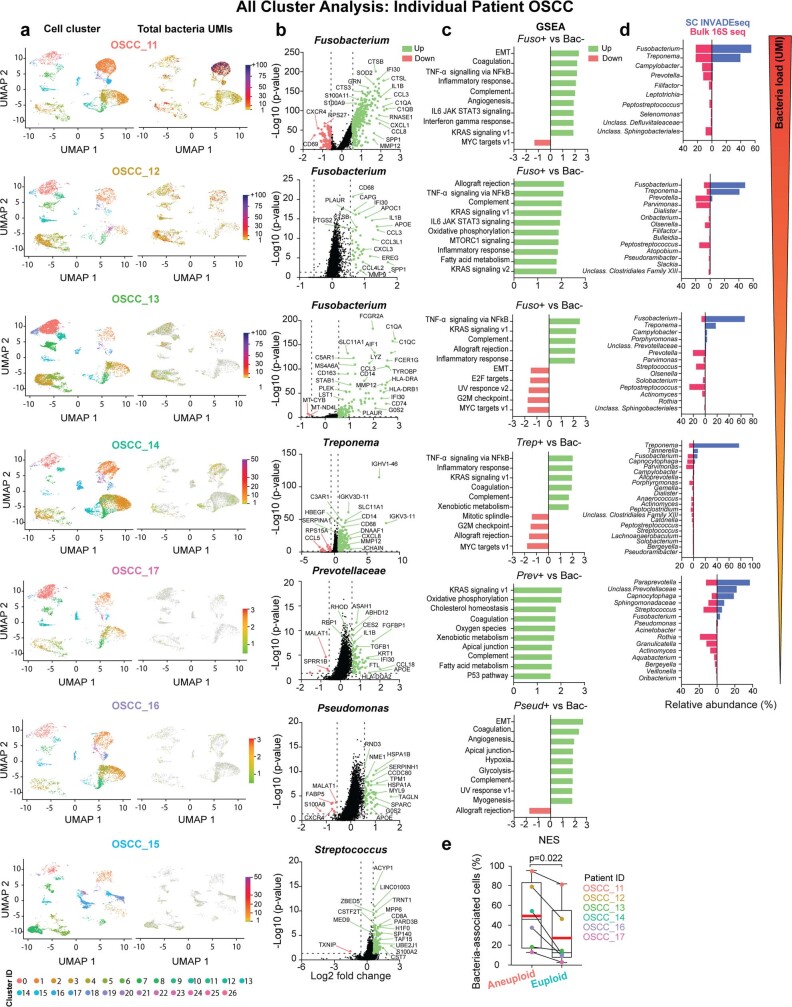
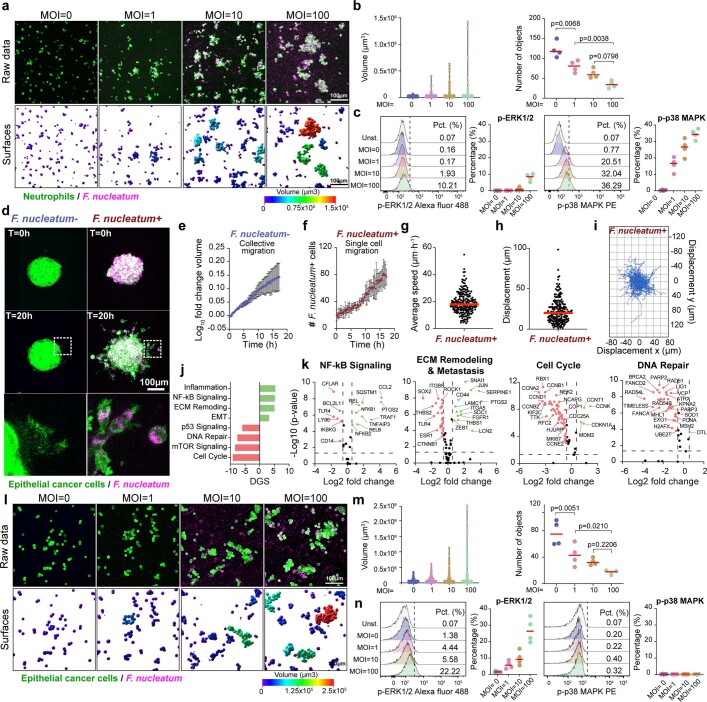
The tumour-associated microbiota is an intrinsic component of the tumour microenvironment across human cancer types 1,2 . Intratumoral host–microbiota studies have so far largely relied on bulk tissue analysis 1–3 , which obscures the spatial distribution and localized effect of the microbiota within tumours. Here, by applying in situ spatial-profiling technologies 4 and single-cell RNA sequencing 5 to oral squamous cell carcinoma and colorectal cancer, we reveal spatial, cellular and molecular host–microbe interactions. We adapted 10x Visium spatial transcriptomics to determine the identity and in situ location of intratumoral microbial communities within patient tissues. Using GeoMx digital spatial profiling 6 , we show that bacterial communities populate microniches that are less vascularized, highly immuno‑suppressive and associated with malignant cells with lower levels of Ki-67 as compared to bacteria-negative tumour regions. We developed a single-cell RNA-sequencing method that we name INVADEseq (invasion–adhesion-directed expression sequencing) and, by applying this to patient tumours, identify cell-associated bacteria and the host cells with which they interact, as well as uncovering alterations in transcriptional pathways that are involved in inflammation, metastasis, cell dormancy and DNA repair. Through functional studies, we show that cancer cells that are infected with bacteria invade their surrounding environment as single cells and recruit myeloid cells to bacterial regions. Collectively, our data reveal that the distribution of the microbiota within a tumour is not random; instead, it is highly organized in microniches with immune and epithelial cell functions that promote cancer progression.
Overview
The claims and statistics of this paper haven’t been checked yet.
Free: it reads the open-access text and checks the first 5 claims that cite a source we can check. Create a free account to check every claim.
Integrity signals
Registry
Cites
Statistics
Figures
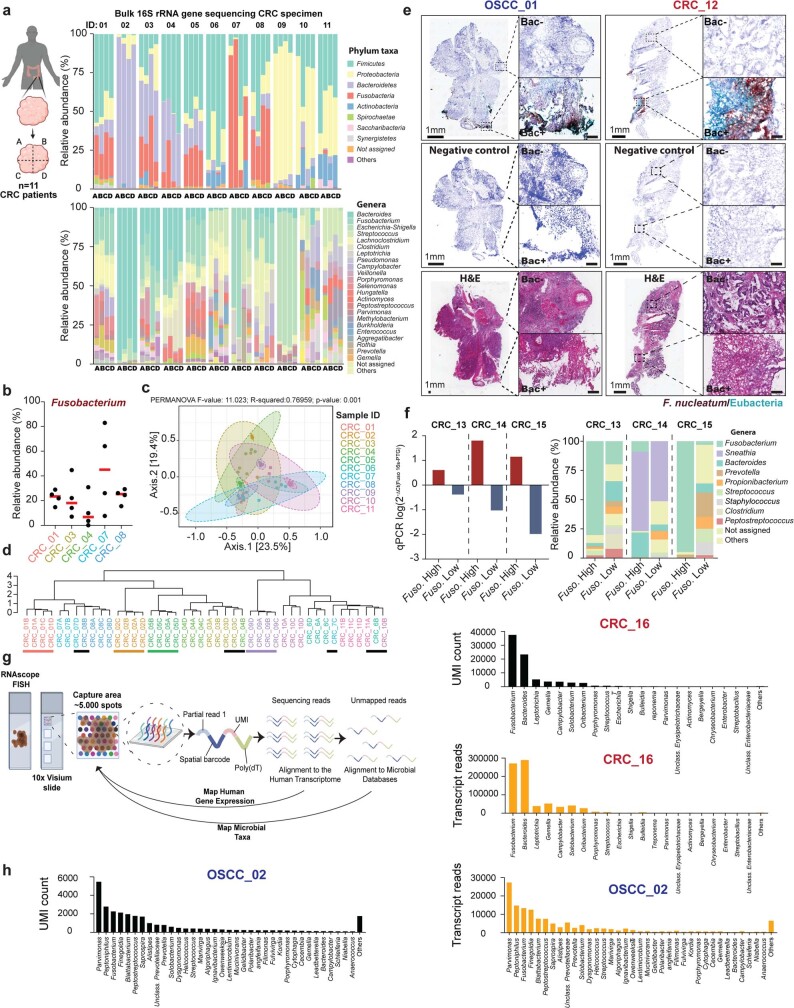
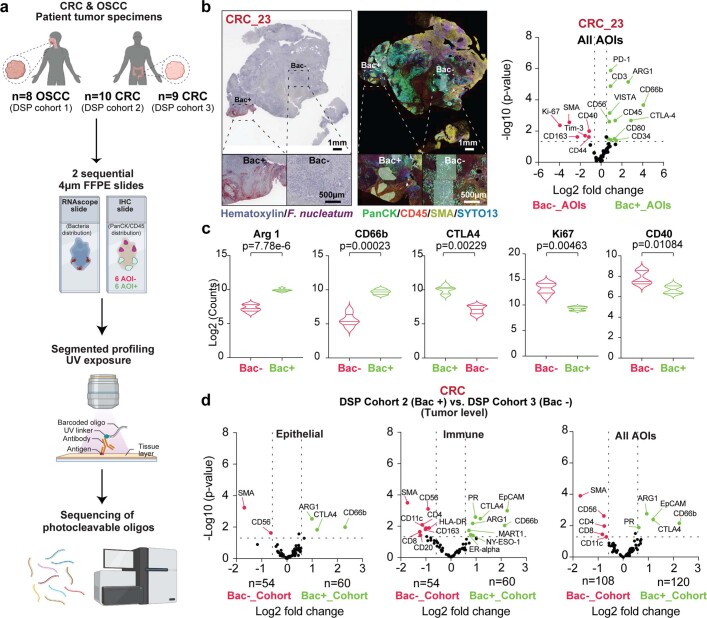
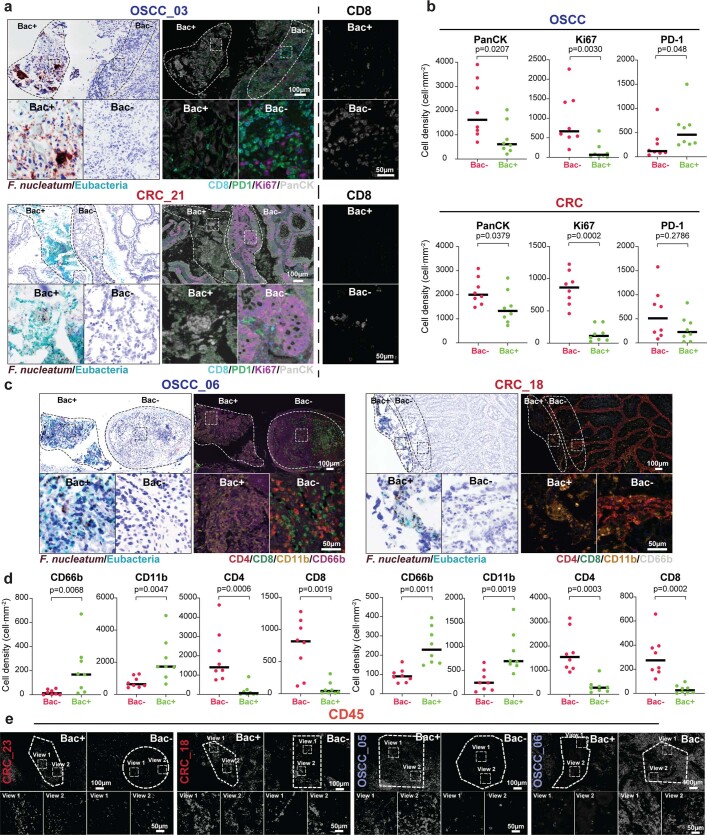
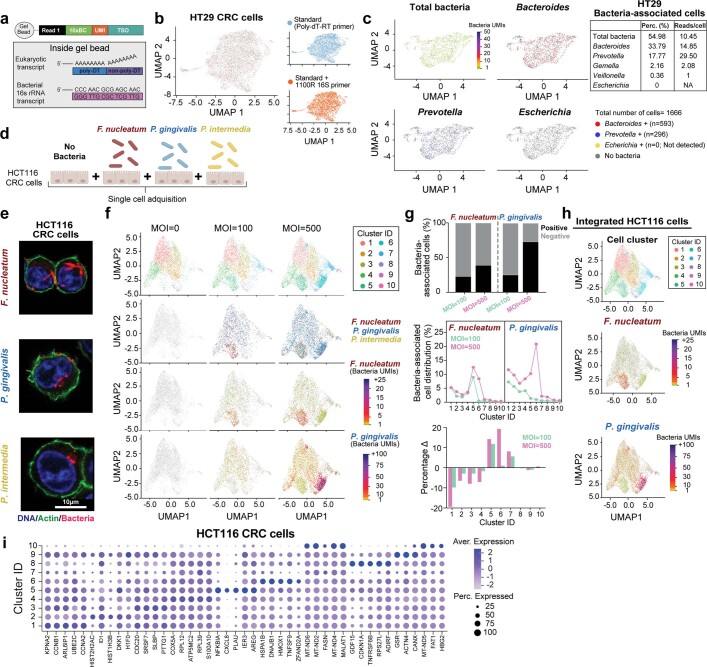
Verification
Claims the paper makes
The claims and statistics of this paper haven’t been checked yet.
Free: it reads the open-access text and checks the first 5 claims that cite a source we can check. Create a free account to check every claim.
Claims other papers make about this one
Each is checked against this paper’s own text: does it say what the citing paper says it does?
The cited source says what the claim attributes to it.
In the citing paper
“Galeano et al. introduced invasion-adhesion-directed expression sequencing (INVADEseq) targeting a conserved area of the bacterial 16 S rRNA, enabling the effective creation of cDNA libraries containing bacterial transcripts derived from human cells associated with bacteria.”
From Single-cell sequencing to multi-omics: technologies and applications (2024) · cites this paper as [158]
The cited source says what the claim attributes to it.
In the citing paper
“These microbes interact with both tumor and immune cells, influencing tumor dynamics by modulating immune responses, producing pro-proliferative metabolites, and reshaping the structural and biochemical landscape of the TME [38–40]”
From Phage therapy in oncology: opportunities for cancer prevention and treatment (2026) · cites this paper as [39]
The check wasn’t confident either way, so it gives no verdict — never disputed.
In the citing paper
“These microbes interact with both tumor and immune cells, influencing tumor dynamics by modulating immune responses, producing pro-proliferative metabolites, and reshaping the structural and biochemical landscape of the TME [38–40]”
From Phage therapy in oncology: opportunities for cancer prevention and treatment (2026) · cites this paper as [39]
Experimental — accuracy not yet measured
Self-check
Percentages, sums and reported differences re-computed from the paper’s own numbers.
The self-check needs the paper’s full text.
Citations
Cites
1 retracted
RETRACTED ARTICLE: Microbiome analyses of blood and tissues suggest cancer diagnostic approach
Poore, G. D., Kopylova, E., Zhu, Q., Carpenter, C., Fraraccio, S., Wandro, S., Kosciolek, T., Janssen, S., Metcalf, J., Song, S. J., et al. (2020) · Nature · doi:10.1038/s41586-020-2095-1 · Cited by 989
RetractedHighly parallel genome-wide expression profiling of individual cells using nanoliter droplets.
Macosko, E. Z., Basu, A., Satija, R., Nemesh, J., Shekhar, K., Goldman, M., Tirosh, I., Bialas, A. R., Kamitaki, N., Martersteck, E. M., et al. (2015) · Cell · doi:10.1016/j.cell.2015.05.002 · Cited by 7,110
Tumors: Wounds That Do Not Heal
Flier, J. S., Underhill, L. H., & Dvorak, H. F. (1986) · New England Journal of Medicine · doi:10.1056/nejm198612253152606 · Cited by 4,391
mRNA-Seq whole-transcriptome analysis of a single cell
Tang, F., Barbacioru, C., Wang, Y., Nordman, E., Lee, C., Xu, N., Wang, X., Bodeau, J., Tuch, B. B., Siddiqui, A., et al. (2009) · Nature Methods · doi:10.1038/nmeth.1315 · Cited by 3,969
Tumour heterogeneity and resistance to cancer therapies
Dagogo-Jack, I., & Shaw, A. T. (2018) · Nature Reviews Clinical Oncology · doi:10.1038/nrclinonc.2017.166 · Cited by 3,846
A Gene Encoding an Antigen Recognized by Cytolytic T Lymphocytes on a Human Melanoma
van der Bruggen, P., Traversari, C., Chomez, P., Lurquin, C., De Plaen, E., Van den Eynde, B., Knuth, A., & Boon, T. (1991) · Science · doi:10.1126/science.1840703 · Cited by 3,545
EMT Transition States during Tumor Progression and Metastasis
Pastushenko, I., & Blanpain, C. (2019) · Trends in Cell Biology · doi:10.1016/j.tcb.2018.12.001 · Cited by 2,876
Anderson, N. M., & Simon, M. C. (2020) · Current Biology · doi:10.1016/j.cub.2020.06.081 · Cited by 2,718
T cell exclusion, immune privilege, and the tumor microenvironment
Joyce, J. A., & Fearon, D. T. (2015) · Science · doi:10.1126/science.aaa6204 · Cited by 2,473
The human tumor microbiome is composed of tumor type–specific intracellular bacteria
Nejman, D., Livyatan, I., Fuks, G., Gavert, N., Zwang, Y., Geller, L. T., Rotter-Maskowitz, A., Weiser, R., Mallel, G., Gigi, E., et al. (2020) · Science · doi:10.1126/science.aay9189 · Cited by 2,464
Cited by
Items 101–200 of 997
The tumor ecosystem in head and neck squamous cell carcinoma and advances in ecotherapy
Gong, Y., Bao, L., Xu, T., Yi, X., Chen, J., Wang, S., Pan, Z., Huang, P. C., & Ge, M. (2023) · Molecular Cancer · doi:10.1186/s12943-023-01769-z · Cited by 56
“Recently, GeoMx digital spatial profiling platform found that intratumoral bacteria-colonized microniches had immunosuppressive effect by excluding CD3+ T cells and recruiting neutrophils [117].”
BackgroundA Roadmap for the Human Gut Cell Atlas
Zilbauer, M., James, K. R., Kaur, M., Pott, S., Li, Z., Burger, A., Thiagarajah, J. R., Burclaff, J., Jahnsen, F. L., Perrone, F., et al. (2023) · Nature Reviews Gastroenterology & Hepatology · doi:10.1038/s41575-023-00784-1 · Cited by 55
Zhu, C., Liu, C., Wu, Q., Sheng, T., Zhou, R., Ren, E., Zhang, R., Zhao, Z., Shi, J., Shen, X., et al. (2024) · Signal Transduction and Targeted Therapy · doi:10.1038/s41392-024-02028-3 · Cited by 57
Yang, X., Zhang, Z., Shen, X., Xu, J., Weng, Y., Wang, W., & Xue, J. (2023) · Cellular Oncology · doi:10.1007/s13402-023-00831-8 · Cited by 55
“With the emergence of novel detection techniques, in addition to exploring the effect of the gut microbiome on cancer, attention is gradually being focused on the diversity of the intratumoral microbiome on tumor progression [7, 10].”
Serrated colorectal cancer: preclinical models and molecular pathways
Aiderus, A., Barker, N., & Tergaonkar, V. (2023) · Trends in cancer · doi:10.1016/j.trecan.2023.09.011 · Cited by 55
De-coding the complex role of microbial metabolites in cancer
Escriva, P. P., Bernardino, C. C. T., & Letellier, E. (2025) · Cell Reports · doi:10.1016/j.celrep.2025.115358 · Cited by 54
Zhao, F., An, R., Ma, Y., Yu, S., Gao, Y., Wang, Y., Yu, H., Xie, X., & Zhang, J. (2025) · Clinical and Translational Medicine · doi:10.1002/ctm2.70273 · Cited by 55
Li, W., Zhang, Z., Wu, R., Mao, M., Ji, Y., Wang, X., Dou, S., Yan, M., & Chen, W. (2025) · Journal of Extracellular Vesicles · doi:10.1002/jev2.70070 · Cited by 54
Zhou, Y., Wang, L., Liu, M., Jiang, H., & Wu, Y. F. (2025) · Cell Biology and Toxicology · doi:10.1007/s10565-025-10048-0 · Cited by 56
Fusobacterium in the microbiome: from health to disease across the oral–gut axis and beyond
Li, Z., Liu, J., Li, J., Zhou, Z., Huang, X., Gopinath, D., Luo, P., Wang, Q., & Shan, D. (2025) · npj Biofilms and Microbiomes · doi:10.1038/s41522-025-00838-z · Cited by 55
Silver, N. L., Dai, J., Kerr, T. D., Altemus, J. B., Garg, R. R., Simmons, H. L., Alban, T. J., Noël‐Romas, L., Makarov, V., Shih, D. J. H., et al. (2026) · Nature Cancer · doi:10.1038/s43018-025-01067-1 · Cited by 55
“Cells were returned to a standard mammalian cell culture conditions for 4 h, consistent with similar prior studies 11 .”
Gao, Z., Jiang, A., Li, Z., Zhu, L., Mou, W., Shen, W., Luo, P., Tang, B., Zhang, J., & Lin, A. (2025) · Med Research · doi:10.1002/mdr2.70006 · Cited by 51
Chen, C., Su, Q., Zi, M., Hua, X., & Zhang, Z. (2025) · npj Biofilms and Microbiomes · doi:10.1038/s41522-025-00818-3 · Cited by 51
“…developments in spatial meta-omics pro fi ling — employing targeted nucleic-acid hybridization probes to resolve microbial taxa distributions within TMEs — have begun to delineate the architecture of the intratumoural microbiome and its modulatory effects on adjacent cellular phenotypes 234,235 .”
AI-predicted spatial transcriptomics unlocks breast cancer biomarkers from pathology
Shulman, E. D., Campagnolo, E. M., Lodha, R., Chung, Y., Stemmer, A., Cantore, T., Ru, B., Chang, T., Biswas, S., Dhruba, S. R., et al. (2026) · Cell · doi:10.1016/j.cell.2026.04.023 · Cited by 56
Guo, S., Xing, S., Wu, Z., Chen, F., Pan, X., Li, Q., Liu, W., & Zhang, G. (2024) · Cell Reports Medicine · doi:10.1016/j.xcrm.2024.101753 · Cited by 49
Chen, F.-F., Guo, S., Li, Y., Lu, Y., Liu, L., Chen, S., An, J., & Zhang, G. (2024) · Gut Microbes · doi:10.1080/19490976.2024.2442037 · Cited by 49
“22 It is currently accepted that some bacteria present within the bloodstream might travel to the tumor.”
Dysbiosis and extraintestinal cancers
He, R., Qi, P., Shu, L.-Z., Ding, Y., Zeng, P., Wen, G., Xiong, Y., & Deng, H. (2025) · Journal of Experimental & Clinical Cancer Research · doi:10.1186/s13046-025-03313-x · Cited by 49
Fu, Y., Li, J., Cai, W., Huang, Y., Liu, X., Ma, Z., Tang, Z., Bian, X., Zheng, J., Jiang, J., et al. (2024) · Acta Pharmaceutica Sinica B · doi:10.1016/j.apsb.2023.11.018 · Cited by 48
“By applying in situ spatial-profiling technologies and single-cell RNA sequencing method concurrently, Galeano et al. 9 firstly reported that intra-tumoral microbiota were highly organized and populated micro-niches which were highly immuno-suppressive, less vascularized as well as lower Ki67 expression, rather than dis…”
BackgroundMethodInfluentialConde‐Pérez, K., Aja‐Macaya, P., Buetas, E., Trigo‐Tasende, N., Nasser‐Ali, M., Rumbo‐Feal, S., Nión, P., Arribas, E. M., Estévez, L. S., Otero‐Alén, B., et al. (2024) · Molecular Oncology · doi:10.1002/1878-0261.13604 · Cited by 48
“The similarities between the colorectal epithelium and the subgingival cavity, such as similar pH and low percentage of oxygen levels, create favorable conditions for the adaptation and overgrowth of these harmful periodontal organisms [110,111].”
BackgroundIntratumoral microbiota: implications for cancer onset, progression, and therapy
Wu, J., Zhang, P., Mei, W., & Zeng, C. (2024) · Frontiers in Immunology · doi:10.3389/fimmu.2023.1301506 · Cited by 46
Duizer, C., Salomons, M., van Gogh, M., Gräve, S., Schaafsma, F. A., Stok, M. J., Sijbranda, M., Sivasamy, R. K., Willems, R. J. L., & de Zoete, M. R. (2025) · Gut Microbes · doi:10.1080/19490976.2025.2458203 · Cited by 47
“34 This is in accordance with our own research, which identifies all Fusobacterium strains tested to be inducers of CXCL8 in HT-29 cells.”
Wekking, D., van den Ende, T., Bijlsma, M. F., Vidal-Itriago, A., Nieuwdorp, M., & van Laarhoven, H. W. M. (2025) · Cancer Treatment Reviews · doi:10.1016/j.ctrv.2025.103025 · Cited by 46
Microbial signals in primary and metastatic brain tumors
Morad, G., Damania, A. V., Melendez, B., Singh, B. B., Veguilla, F. J., Soto, R. A., Hoballah, Y. M., Sahasrabhojane, P. V., Wong, M. C., Ahmed, M. M., et al. (2025) · Nature Medicine · doi:10.1038/s41591-025-03957-4 · Cited by 46
“Our findings align with recent reports of bacterial nucleic acids in various cancer types, including GBM and CNS metastases 4,7,15,16 , and their heterogeneous distribution within the TME 7 .”
InfluentialSelf-citationChen, F., Yang, J., Guo, Y., Su, D., Sheng, Y., & Wu, Y. (2023) · Frontiers in Immunology · doi:10.3389/fimmu.2023.1140995 · Cited by 45
“The intratumor microbes were distributed heterogeneously across tumors at the microscopic level (50).”
BackgroundThe intratumoral microbiota: friend or foe?
Ferrari, V., & Rescigno, M. (2023) · Trends in cancer · doi:10.1016/j.trecan.2023.03.005 · Cited by 46
Progress on the pathological tissue microenvironment barrier-modulated nanomedicine
Han, H., Xing, L., Chen, B., Liu, Y., Zhou, T., Wang, Y., Zhang, L., Li, L., Cho, C., & Jiang, H. (2023) · Advanced Drug Delivery Reviews · doi:10.1016/j.addr.2023.115051 · Cited by 45
Multimodal immune phenotyping reveals microbial-T cell interactions that shape pancreatic cancer
Li, Y., Chang, R. B., Stone, M. L., Delman, D., Markowitz, K., Xue, Y., Coho, H., Herrera, V. M., Li, J. H., Zhang, L., et al. (2024) · Cell Reports Medicine · doi:10.1016/j.xcrm.2024.101397 · Cited by 45
“3,38,39 Consistent with this, our data show that gram-negative bacteria, detected using LPS and 16S rRNA, are found within tumor cells and stromal cell populations, including CD68 + macrophages.”
Engineering bacteria for cancer immunotherapy
Zalatan, J. G., Petrini, L. F. T., & Geiger, R. (2024) · Current Opinion in Biotechnology · doi:10.1016/j.copbio.2023.103061 · Cited by 45
Li, X., Ma, Y., Xin, Y., Ma, F., & Gao, H. (2023) · ACS Applied Materials & Interfaces · doi:10.1021/acsami.3c01210 · Cited by 44
The microbiome and rise of early-onset cancers: knowledge gaps and research opportunities
Mima, K., Hamada, T., Inamura, K., Baba, H., Ugai, T., & Ogino, S. (2023) · Gut Microbes · doi:10.1080/19490976.2023.2269623 · Cited by 43
“154 Roelands et al. have reported a large multi-omic analyses of fresh-frozen specimens from 348 patients with primary colon cancer using RNA, whole-exome, deep T cell receptor, bacterial 16S rRNA gene, and whole-genome sequencing.”
BackgroundTumour organoids and assembloids: Patient‐derived cancer avatars for immunotherapy
Mei, J., Liu, X., Tian, H., Chen, Y., Cao, Y., Zeng, J., Liu, Y., Chen, Y., Gao, Y., Yin, J., et al. (2024) · Clinical and Translational Medicine · doi:10.1002/ctm2.1656 · Cited by 44
“221,222 It has been confirmed that microorganisms, including tumours, are distributed all over the human body.”
BackgroundNiu, Y., Zhao, X., Li, Y., Ma, X., Yang, W., Ma, J., Li, W., & Yuan, W. (2025) · Advanced Science · doi:10.1002/advs.202504188 · Cited by 43
Neutrophil-based delivery platforms: from natural mechanisms to engineered therapeutics
Li, Y., Zhang, X., Li, Y., Sun, L., Hu, N., Lui, S., Duan, Z., Gong, Q., & Luo, K. (2026) · Theranostics · doi:10.7150/thno.117363 · Cited by 42
“Bacterial communities within the TME can also alter the behavior of neutrophils and other immune cells, influencing tumor progression [222].”
Galaski, J., Rishiq, A., Liu, M., Bsoul, R., Bergson, A., Lux, R., Bachrach, G., & Mandelboim, O. (2024) · iScience · doi:10.1016/j.isci.2024.110157 · Cited by 43
“2,6,26 In this study, we show that RadD of F. nucleatum subsp. nucleatum binds to the inhibitory immune receptor Siglec-7, adding to previously established immune inhibitory interactions including the binding of Fap2 to TIGIT 7 and CbpF to CEACAM1.”
The role of oral microbiota in cancer
Lan, Z., Liu, W.-J., Cui, H., Zou, K., Chen, H. H., Zhao, Y., & Yu, G. (2023) · Frontiers in Microbiology · doi:10.3389/fmicb.2023.1253025 · Cited by 42
“Recently, a sequencing study involving 369 breast cancer cases, 93 non-malignant cases and 419 healthy controls revealed a decrease relative abundance of representative oral microorganisms, namely P. gingivalis and F. nucleatum , in breast cancer patients (Wu et al., 2022).”
BackgroundRobinson, W., Stone, J. K., Schischlik, F., Gasmi, B., Kelly, M. C., Seibert, C., Dadkhah, K., Gertz, E. M., Lee, J. S., Zhu, K., et al. (2024) · Science Advances · doi:10.1126/sciadv.adj7402 · Cited by 41
Chen, Y., Yang, L., Huang, Y., Zhu, T., Zhang, L., Cheng, M., Wu, C., Li, P., Liang, M., Zhang, X., et al. (2025) · Journal for ImmunoTherapy of Cancer · doi:10.1136/jitc-2024-010365 · Cited by 42
Exploring the Role of the Gut and Intratumoral Microbiomes in Tumor Progression and Metastasis
Ševčíková, A., Mladosievičová, B., Mego, M., & Čierniková, S. (2023) · International Journal of Molecular Sciences · doi:10.3390/ijms242417199 · Cited by 40
“According to the findings, the highly organized distribution of bacteria within tumors affects immune and epithelial cell functions, leading to disease progression [7].”
BackgroundMethodExploring the gut microbiota and its potential as a biomarker in gliomas
Aljarrah, D., Chalour, N., Zorgani, A., Nissan, T. A., & Pranjol, M. Z. I. (2024) · Biomedicine & Pharmacotherapy · doi:10.1016/j.biopha.2024.116420 · Cited by 40
Modulation of host immunity by sensory neurons
Saraiva‐Santos, T., Zaninelli, T. H., & Pinho-Ribeiro, F. A. (2024) · Trends in Immunology · doi:10.1016/j.it.2024.03.005 · Cited by 40
Accurately deciphering spatial domains for spatially resolved transcriptomics with stCluster
Wang, T., Shu, H., Hu, J., Wang, Y., Chen, J. W., Peng, J., & Shang, X. (2024) · Briefings in Bioinformatics · doi:10.1093/bib/bbae329 · Cited by 40
Current state and future prospects of spatial biology in colorectal cancer
Carranza, F., Diaz, F. C., Ninova, M., & Velazquez-Villarreal, E. I. (2024) · Frontiers in Oncology · doi:10.3389/fonc.2024.1513821 · Cited by 40
Liao, K., Wen, J., Liu, Z., Zhang, B., Zhang, X., Fu, Y., Zhang, W., Hu, H., Ai, K., Zhu, W., et al. (2025) · Ageing Research Reviews · doi:10.1016/j.arr.2025.102820 · Cited by 40
Jiang, M., Yang, Z., Dai, J., Wu, T., Jiao, Z., Yu, Y., Kang, N., Chen, W., & Yang, A. (2023) · MedComm · doi:10.1002/mco2.376 · Cited by 39
Multi-omics analysis reveals the interplay between intratumoral bacteria and glioma
Li, T., Zhao, Z., Peng, M., Zhang, L., Wang, C., Luo, F., Zeng, M., Sun, K., Fang, Z., Luo, Y., et al. (2024) · mSystems · doi:10.1128/msystems.00457-24 · Cited by 39
Okuyama, K., Suzuki, K., & Yanamoto, S. (2023) · Cancers · doi:10.3390/cancers15041111 · Cited by 38
Liu, R., Yang, H., Qu, S., Yang, P., Zhi, X., Xu, Y., Dai, Z., & Qian, L. (2023) · Aggregate · doi:10.1002/agt2.423 · Cited by 38
Mou, W., Deng, Z., Zhu, L., Jiang, A., Lin, A., Xu, L., Deng, G., Huang, H., Guo, Z., Zhu, B., et al. (2025) · Science Advances · doi:10.1126/sciadv.adu1727 · Cited by 38
Raman, V., Deshpande, C. P., Khanduja, S., Howell, L. M., Dessel, N. V., & Forbes, N. S. (2023) · Cell Host & Microbe · doi:10.1016/j.chom.2023.09.006 · Cited by 39
Computational methods and challenges in analyzing intratumoral microbiome data
Wang, Q., Liu, Z., Ma, A., Li, Z., Liu, B., & Ma, Q. (2023) · Trends in Microbiology · doi:10.1016/j.tim.2023.01.011 · Cited by 37
“In addition, they found that cell-associated bacteria affect the expression of host genes involved in inflammation, metastasis, cell dormancy, and DNA repair pathways [57].”
BackgroundJin, J., Liu, X., & Shiroguchi, K. (2024) · iMetaOmics. · doi:10.1002/imo2.9 · Cited by 37
Meta-analysis of oral microbiome reveals sex-based diversity in biofilms during periodontitis
Pinto, R. D., Ferri, C., Giannoni, M., Cominelli, F., Pizarro, T. T., & Pietropaoli, D. (2024) · JCI Insight · doi:10.1172/jci.insight.171311 · Cited by 37
“…anatomical and functional connections to the gut, oral ecosystems have not been extensively studied, although local microbial composition, distribution, and organization in functional microniches have been implicated in diseases of the mouth, such as oral cancers (13) and periodontitis (14, 15).”
BackgroundSpatial transcriptomics maps host–gut microbiome biogeography at high resolution
Ntekas, I., Takayasu, L., McKellar, D. W., Grodner, B., Holdener, C., Schweitzer, P. A., Park, Y. S., Sauthoff, M., Shi, Q., Brito, I., et al. (2026) · Nature Microbiology · doi:10.1038/s41564-026-02286-7 · Cited by 38
“17 and 19).”
Galeano Niño, J. L., Wu, H., LaCourse, K. D., Srinivasan, H., Fitzgibbon, M., Minot, S. S., Sather, C., Johnston, C. D., & Bullman, S. (2023) · Nature Protocols · doi:10.1038/s41596-023-00888-7 · Cited by 36
Self-citationGuillot, N., Roméo, B., Manesh, S. S., Milano, G., Brest, P., Zitvogel, L., Hofman, P., & Mograbi, B. (2023) · Trends in Molecular Medicine · doi:10.1016/j.molmed.2023.08.004 · Cited by 36
Diet-microbiome interactions in cancer
Abdeen, S. K., Mastandrea, I., Stinchcombe, N., Puschhof, J., & Elinav, E. (2025) · Cancer Cell · doi:10.1016/j.ccell.2025.03.013 · Cited by 36
Baas, F. S., Brusselaers, N., Nagtegaal, I. D., Engstrand, L. G., & Boleij, A. (2024) · Cell Host & Microbe · doi:10.1016/j.chom.2024.07.008 · Cited by 36
Design of probiotic delivery systems and their therapeutic effects on targeted tissues
Xu, C., Guo, J., Chang, B., Zhang, Y., Tan, Z., Tian, Z., Duan, X., Ma, J., Jiang, Z., & Hou, J. (2024) · Journal of Controlled Release · doi:10.1016/j.jconrel.2024.08.037 · Cited by 36
Long, J., Wang, J., Xiao, C., You, F., Jiang, Y., & Li, X. (2024) · Cell Communication and Signaling · doi:10.1186/s12964-024-01831-3 · Cited by 35
Spatial Heterogeneity of Intratumoral Microbiota: A New Frontier in Cancer Immunotherapy Resistance
Tan, Q., Cao, X., Zou, F., Wang, H., Xiong, L., & Deng, S. (2025) · Biomedicines · doi:10.3390/biomedicines13051261 · Cited by 35
“Galeano Niño et al. reported that bacterial communities mainly reside in microenvironments with poor vascularization, high immuno-suppression, and association with malignant cells with low Ki-67 expression [22].”
Fusobacterium nucleatum : a novel immune modulator in breast cancer?
Little, A., Tangney, M., Tunney, M. M., & Buckley, N. E. (2023) · Expert Reviews in Molecular Medicine · doi:10.1017/erm.2023.9 · Cited by 35
The intratumoral microbiota: From microniches to single cells
Bullman, S. (2023) · Cell · doi:10.1016/j.cell.2023.03.012 · Cited by 35
Self-citationInchingolo, A. M., Malcangi, G., Piras, F., Palmieri, G., Settanni, V., Riccaldo, L., Morolla, R., Buongiorno, S., de Ruvo, E., Inchingolo, A. D., et al. (2023) · Journal of Personalized Medicine · doi:10.3390/jpm13060933 · Cited by 35
“Niño et al., 2022 [51] Observational study To evaluate the effect of the intratumoral microbiome on cancer spatial and cellular heterogeneity.”
BackgroundInfluentialRetractedCell membrane-coated nanoparticles for targeting carcinogenic bacteria
Sun, L., Wang, D., Feng, K., Zhang, J. A., Gao, W., & Zhang, L. (2024) · Advanced Drug Delivery Reviews · doi:10.1016/j.addr.2024.115320 · Cited by 34
Spatial transcriptomics: a new frontier in cancer research
Huang, S., Ouyang, L., Tang, J., Qian, K., Chen, X., Xu, Z., Ming, J., & Xi, R. (2024) · Clinical Cancer Bulletin · doi:10.1007/s44272-024-00018-8 · Cited by 34
“Galeano et al. employed ST to identify the types and locations of intratumoral microbial communities in patient, revealing highly organized spatial distribution and their role in promoting cancer progression [91].”
Hu, J., Ran, S., Huang, Z., Liu, Y., Hu, H., Zhou, Y., Ding, X., Yin, J., & Zhang, Y. (2024) · Acta Biomaterialia · doi:10.1016/j.actbio.2024.06.042 · Cited by 34
The Gut‒Liver Axis in Liver Disease: Molecular Mechanisms and Therapeutic Targets
Chen, Z., Liao, S., Wu, S., Chen, S., Tang, Q., Zhou, L., Li, X., Hu, H., Xu, J., Zhang, A., et al. (2025) · MedComm · doi:10.1002/mco2.70458 · Cited by 34
Therapeutic modulation of the liver immune microenvironment
Tilg, H., Adolph, T. E., & Tacke, F. (2023) · Hepatology · doi:10.1097/hep.0000000000000386 · Cited by 31
“[237] Sookoian et al [226] observed intrahepatic bacterial DNA in obese subjects with NAFLD with particular detection of Proteobacteria .”
BackgroundSpatial Dissection of the Immune Landscape of Solid Tumors to Advance Precision Medicine
Mauro, F. D., & Arbore, G. (2024) · Cancer Immunology Research · doi:10.1158/2326-6066.cir-23-0699 · Cited by 34
“Finally, a study on both oral squamous cell carcinoma and colorectal cancer integrated SP and ST with the scRNAseq method invasion–adhesion-directed expression sequencing, uncovering host–microbe interactions and the distribution pattern of intra-tumoral microbiota in organized microniches (84).”
BackgroundIntratumoral Microbiome: Foe or Friend in Reshaping the Tumor Microenvironment Landscape?
Kyriazi, A. A., Karaglani, M., Agelaki, S., & Baritaki, S. (2024) · Cells · doi:10.3390/cells13151279 · Cited by 33
Harnessing the microbiome for cancer therapy
Hajjar, R., Mars, R. A. T., & Kashyap, P. (2026) · Nature Reviews Microbiology · doi:10.1038/s41579-025-01268-6 · Cited by 34
Awareness of intratumoral bacteria and their potential application in cancer treatment
Liang, Y., Li, Q., Liu, Y., Guo, Y., & Li, Q. (2023) · Discover Oncology · doi:10.1007/s12672-023-00670-x · Cited by 33
Untangling the web of intratumor microbiota in lung cancer
Liu, W. L., Xu, J., Pi, Z., Chen, Y., Jiang, G., Wan, Y., & Mao, W. (2023) · Biochimica et Biophysica Acta (BBA) - Reviews on Cancer · doi:10.1016/j.bbcan.2023.189025 · Cited by 31
Cheng, W., Li, F., & Yang, R. (2024) · Gastro Hep Advances · doi:10.1016/j.gastha.2024.05.012 · Cited by 31
Fusobacterium nucleatum modulates the Wnt/β-catenin pathway in colorectal cancer development
Mondal, T., Chattopadhyay, D., Mondal, P. S., Das, S., Mondal, A., Das, A., Samanta, S., & Saha, T. (2025) · International Journal of Biological Macromolecules · doi:10.1016/j.ijbiomac.2025.140196 · Cited by 32
Application of Spatial Omics in the Cardiovascular System
Hu, Y., Jia, H., Cui, H., & Song, J. (2025) · Research · doi:10.34133/research.0628 · Cited by 33
“The GeoMx Digital Spatial Profiler (GeoMx DSP) by NanoString, launched in 2019, is a proteomics platform that uses nucleic acid probe-conjugated antibodies to capture target proteins in situ, allowing for the co-analysis of hundreds of proteins on the same paraffin tissue section [ 46 , 47 ].”
Advancements in understanding tumor‑resident bacteria and their application in cancer therapy
Luo, Y., Huang, X., Wang, R., Lin, Y., Sun, J., Li, K., Wang, D. Y., Yan, Y., & Qiao, Y. (2025) · Military Medical Research · doi:10.1186/s40779-025-00623-1 · Cited by 31
Knisely, A. T., Seo, Y. D., Wargo, J. A., & Chelvanambi, M. (2023) · Cancers · doi:10.3390/cancers15030777 · Cited by 32
Ahluwalia, P. K., Ballur, K., Leeman, T., Vashisht, A., Singh, H., Omar, N., Mondal, A. K., Vaibhav, K., Baban, B., & Kolhe, R. B. (2024) · Cancers · doi:10.3390/cancers16030480 · Cited by 31
“In another interesting study, spatial analysis was used to analyze host-bacterial interactions in the tumor microenvironment [121].”
Single-cell transcriptomics: background, technologies, applications, and challenges
Duhan, L., Kumari, D., Naime, M., Parmar, V. S., Chhillar, A. K., Dangi, M., & Pasrija, R. (2024) · Molecular Biology Reports · doi:10.1007/s11033-024-09553-y · Cited by 31
Tumor-resident microbes: the new kids on the microenvironment block
Li, L., Chandra, V., & McAllister, F. (2024) · Trends in Cancer · doi:10.1016/j.trecan.2023.12.002 · Cited by 30
Higashi, D. L., Krieger, M., Qin, H., Zou, Z., Palmer, E. A., Kreth, J., & Merritt, J. L. (2023) · Environmental Microbiology Reports · doi:10.1111/1758-2229.13153 · Cited by 31
“Recent studies have independently identified P. micra as a discriminating biomarker for various types of gastric, oral, and colorectal cancers (CRC) (Coker et al., 2018; Galeano Nino et al., 2022; Yang et al., 2018; Yao et al., 2021).”
ResultRecent advances in biomimetic strategies for the immunotherapy of glioblastoma
You, H., Geng, S., Li, S., Imani, M., Brambilla, D., Sun, T., & Jiang, C. (2024) · Biomaterials · doi:10.1016/j.biomaterials.2024.122694 · Cited by 30
Spatiotemporal multi-omics: exploring molecular landscapes in aging and regenerative medicine
Chu, L.-X., Wang, W.-J., Gu, X.-P., Wu, P., Gao, C., Zhang, Q., Wu, J., Jiang, D.-W., Huang, J.-Q., Ying, X.-W., et al. (2024) · Military Medical Research · doi:10.1186/s40779-024-00537-4 · Cited by 29
“These challenges include handling the data’s high dimensionality and intricate spatial structures [259, 260], as well as discerning spatial patterns and cellular diversities [261].”
BackgroundDysbiosis of Oral Microbiome: A Key Player in Oral Carcinogenesis? A Critical Review
Devaraja, K., & Aggarwal, S. (2025) · Biomedicines · doi:10.3390/biomedicines13020448 · Cited by 29
Yu, J., Liang, Y., Zhang, Q., Ding, H., Xie, M., Zhang, J., Hu, W., Xu, S., Xiao, Y., Xu, S., et al. (2025) · Cell Host & Microbe · doi:10.1016/j.chom.2025.04.003 · Cited by 29
Wekking, D., Silva, C. A. C., Viscò, R., Denaro, N., Lambertini, M., Maccioni, A., Loddo, E., Willard-Gallo, K. E., Scartozzi, M., Derosa, L., et al. (2025) · Critical Reviews in Oncology/Hematology · doi:10.1016/j.critrevonc.2025.104767 · Cited by 30
Divergent tumor immunity determined by bacteria-cancer cell engagement
Yao, B., Liu, X.-M., Ruan, K., Fang, X., Jiang, C., Bian, W., Guo, Y., Zhu, X., Shang, Z., Hu, T., et al. (2026) · Cell · doi:10.1016/j.cell.2025.12.044 · Cited by 29
Intratumoural microbiota: from theory to clinical application
Ji, H., Jiang, Z., Wei, C., Ma, Y., Zhao, J., Wang, F., Zhao, B., Wang, D., & Tang, D. (2023) · Cell Communication and Signaling · doi:10.1186/s12964-023-01134-z · Cited by 29
“showed that exposure to Fusobacterium nucleatum resulted in significant upregulation of signaling pathways involved in tumor progression, including extracellular matrix remodeling, metastasis, cell adhesion and migration, as well as EGFR, PDGF, EMT and NF-κB signal pathway is up-regulated [62].”
BackgroundCancer invasion and anaerobic bacteria: new insights into mechanisms
Hurst, R., Brewer, D. S., Gihawi, A., Wain, J. R., & Cooper, C. S. (2024) · Journal of Medical Microbiology · doi:10.1099/jmm.0.001817 · Cited by 29
Shigematsu, Y., Saito, R., Amori, G., Kanda, H., Takahashi, Y., Takeuchi, K., Takahashi, S., & Inamura, K. (2024) · Cancer Science · doi:10.1111/cas.16315 · Cited by 28
“15 Fusobacterium nucleatum , an oral commensal bacterium, is enriched in primary CRC tissues compared with adjacent noncancerous tissues 16,17 and is recognized as a key member of CRC-associated bacteria.”
BackgroundGenomics of host–microbiome interactions in humans
Ferretti, P., Johnson, K. E., Priya, S., & Blekhman, R. (2025) · Nature Reviews Genetics · doi:10.1038/s41576-025-00849-8 · Cited by 28
“…in a cell type-specific manner, and studies have used new techniques, such as scRNA-seq and spatial transcriptomics approaches, to identify the spatial, cellular and molecular interactions between microorganisms and host cells in mice, zebrafish and the human tumour microenvironment 93,113–116 .”
InfluentialIntratumor microbiota: a novel tumor component
Gong, Y., Huang, X., Wang, M., & Liang, X. (2023) · Journal of Cancer Research and Clinical Oncology · doi:10.1007/s00432-023-04576-7 · Cited by 28
Fusobacterium nucleatum carcinogenesis and drug delivery interventions
Chen, Z., & Huang, L. (2024) · Advanced Drug Delivery Reviews · doi:10.1016/j.addr.2024.115319 · Cited by 27
Ceylan, A., Uyar, R., Çelik, D., Rafieerad, A., Çınar, Ö. Ö., Summak, G. Y., Gürcan, C., Giro, L., Khoueiry, R., Türktaş, M., et al. (2024) · Nano Today · doi:10.1016/j.nantod.2024.102285 · Cited by 27
Li, Y., Ma, A., Johnson, W. E., Eng, C., De, S., Jiang, S., Li, Z., Spakowicz, D. J., & Ma, Q. (2025) · Nature Methods · doi:10.1038/s41592-025-02807-y · Cited by 27
Bai, B., Ma, J., Xu, W., Chen, X., Xu, C., Lv, C., Su, W., Li, Y., Sun, H., Zhang, B., et al. (2025) · Frontiers in Microbiology · doi:10.3389/fmicb.2025.1699893 · Cited by 28
Huang, S. W., He, C., Li, J., Gao, Y., Wang, Z., & Wei, Y. (2023) · The Innovation · doi:10.1016/j.xinn.2023.100456 · Cited by 29
The evil companion of OSCC : Candida albicans
Yang, Z., Zhang, S., Ji, N., Li, J., & Chen, Q. (2023) · Oral Diseases · doi:10.1111/odi.14700 · Cited by 27
Constantin, M., Chifiriuc, M. C., Mihăescu, G., Corcionivoschi, N., Burlibaşa, L., Bleoţu, C., Tudorache, S. I., Mitache, M. M., Filip, R., Munteanu, S.-G., et al. (2024) · Frontiers in Immunology · doi:10.3389/fimmu.2024.1373504 · Cited by 27
Metadata
- Authors
- Galeano Niño, J. L., Wu, H., LaCourse, K. D., Kempchinsky, A. G., Baryiames, A., Barber, B., Futran, N., Houlton, J., Sather, C., Sicinska, E., Taylor, A., Minot, S. S., Johnston, C. D., & Bullman, S.
- Affiliations
- Fred Hutch Cancer Center (US)
- University of Washington Medical Center (US)
- Herbert Irving Comprehensive Cancer Center (US)
- Corresponding author
- Johnston, Christopher D.
- Bullman, Susan
- ORCID
- Venue
- Nature
- Published
- 2022-11-16
- Volume
- 611
- Issue
- 7937
- Pages
- 810-817
- ISSN
- 0028-0836 (ISSN-L)
- 1476-4687
- PMC
- PMC9684076
- OpenAlex
- W4309334544
- Cited by
- 887
- References
- 41
- Citations by year
- 2026: 214 · 2025: 292 · 2024: 228 · 2023: 148 · 2022: 4
- FWCI
- 55.33
- Type
- journal article
- Language
- en
- Open access
- hybrid
- doi.org
- Licence
- cc-by
- creativecommons.org/licenses/by/4.0 (tdm)
- creativecommons.org/licenses/by/4.0 (vor)
- Locations
- Nature (publishedVersion, cc-by)
- PubMed Central (publishedVersion, cc-by)
- PubMed (publishedVersion)
- RePEc: Research Papers in Economics (submittedVersion)
- Funders
- Cancer Research Institute (CRI4208)
- Fred Hutchinson Cancer Research Center (P30CA015704)
- University of Washington (P30 CA015704)
- National Institutes of Health (1s10od028685-01, CA015704)
- National Cancer Institute (CA015704, R00CA229984, CA080416, P30CA015704, T32CA080416)
- National Institute of Dental and Craniofacial Research (R01DE027850)
- Office of Research Infrastructure Programs, National Institutes of Health (S10OD028685)
- Topics
- Life Sciences › Biochemistry, Genetics and Molecular Biology › Molecular Biology › Gut microbiota and health
- Life Sciences › Biochemistry, Genetics and Molecular Biology › Molecular Biology › Single-cell and spatial transcriptomics
- Health Sciences › Medicine › Oncology › Cancer Immunotherapy and Biomarkers
- Keywords
- intratumoral microbiota, tumor microenvironment, spatial heterogeneity, oral squamous cell carcinoma, colorectal cancer, host-microbe interactions, single-cell RNA sequencing, spatial transcriptomics, GeoMx digital spatial profiling, tumor invasion, cell dormancy, DNA repair, inflammation, metastasis, Ki-67
- MeSH terms
- Host Microbial Interactions, Carcinoma, Squamous Cell, Humans, Mouth Neoplasms, Colorectal Neoplasms, Sequence Analysis, RNA, Disease Progression, Ki-67 Antigen, Gene Expression Profiling, Myeloid Cells, Tumor Microenvironment, Microbiota
About these checks
Registry, retraction, Cites and statistics results are computed, not judged, with one exception: a printed reference that no index lists is read once by a model before it counts as a citation error. Claims are extracted by a model and kept only when their quote appears verbatim in the text; each cited source is then checked, with a model’s help, for whether it says what the claim relies on. Those verdicts can be wrong — read the claim’s quote and the cited source before relying on one.
Statistics and arithmetic are recomputed, not judged.
Confidence bands are shown only for fields calibrated on our annotated test set. None is calibrated yet, so no band is shown.
What counts as a claim ›How we measure confidence ›How we check this ›
Are you an author, or do you see a problem with this page? Request a review
Data sources
Bibliographic data: Semantic Scholar, OpenAlex, Crossref.
Contains information from the Semantic Scholar Academic Graph Datasets, made available under the ODC Attribution License (ODC-BY 1.0).
Semantic Scholar’s data is described in: Kinney, R., et al. (2023). The Semantic Scholar Open Data Platform. arXiv:2301.10140.
