

Effect of the intratumoral microbiota on spatial and cellular heterogeneity in cancer
Open accessThe DOI matches its Crossref record; 41 of the 41 references it cites were found in a registry or an index.
Abstract
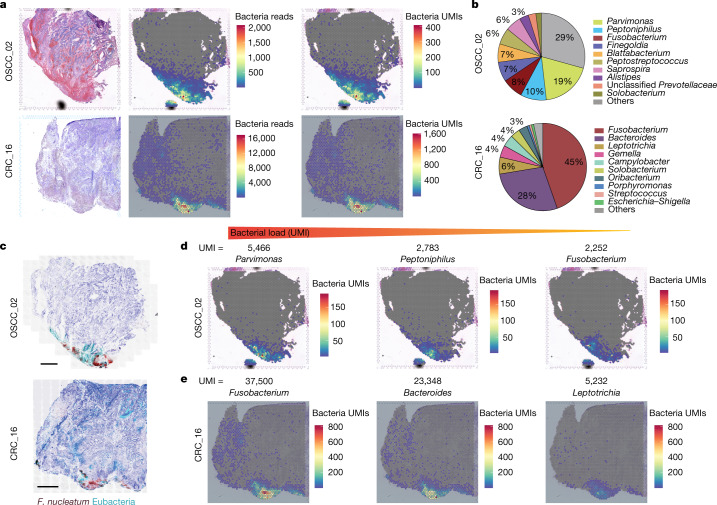
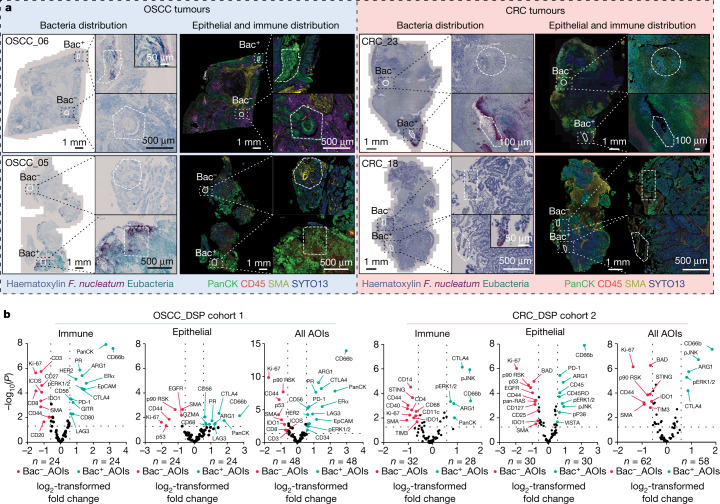
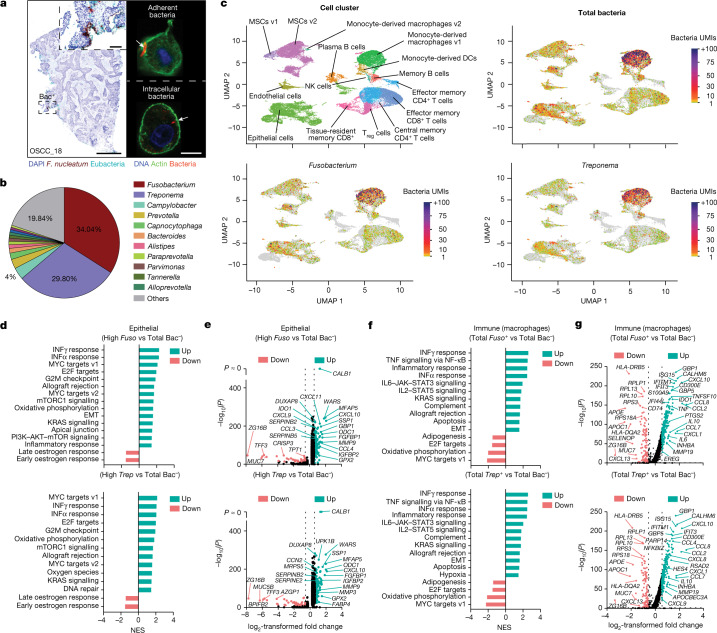
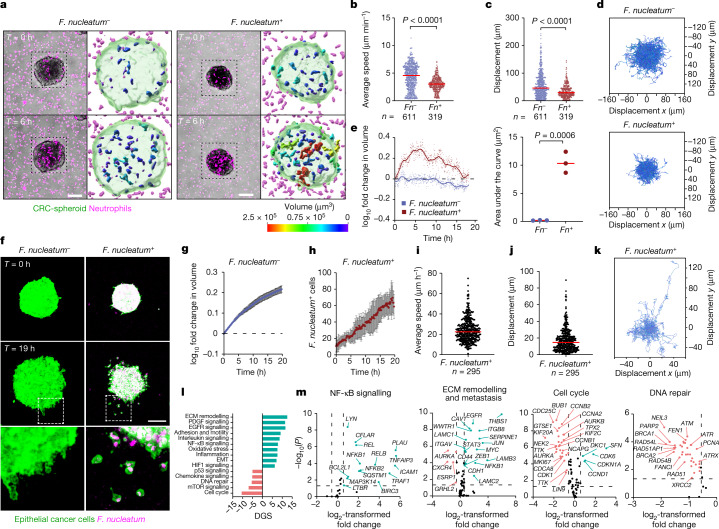
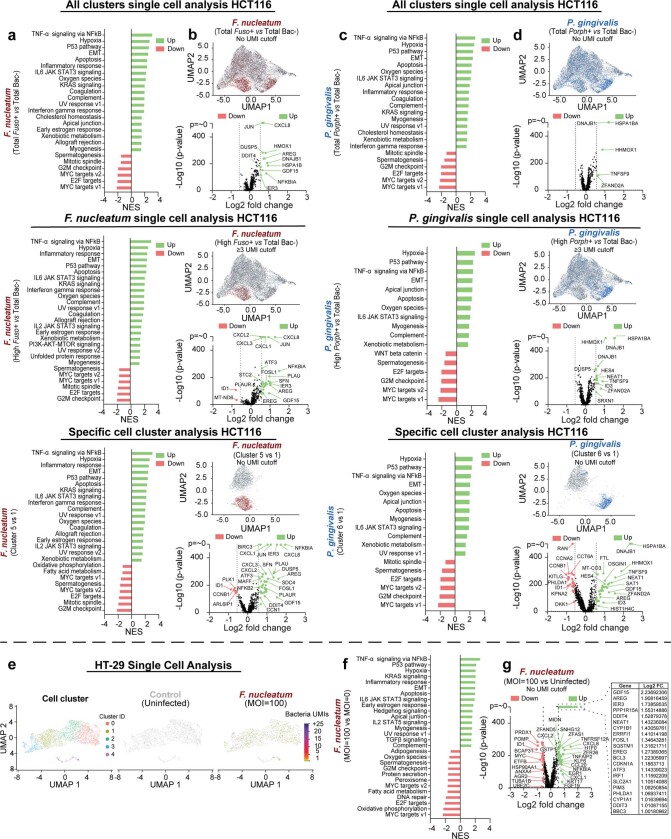
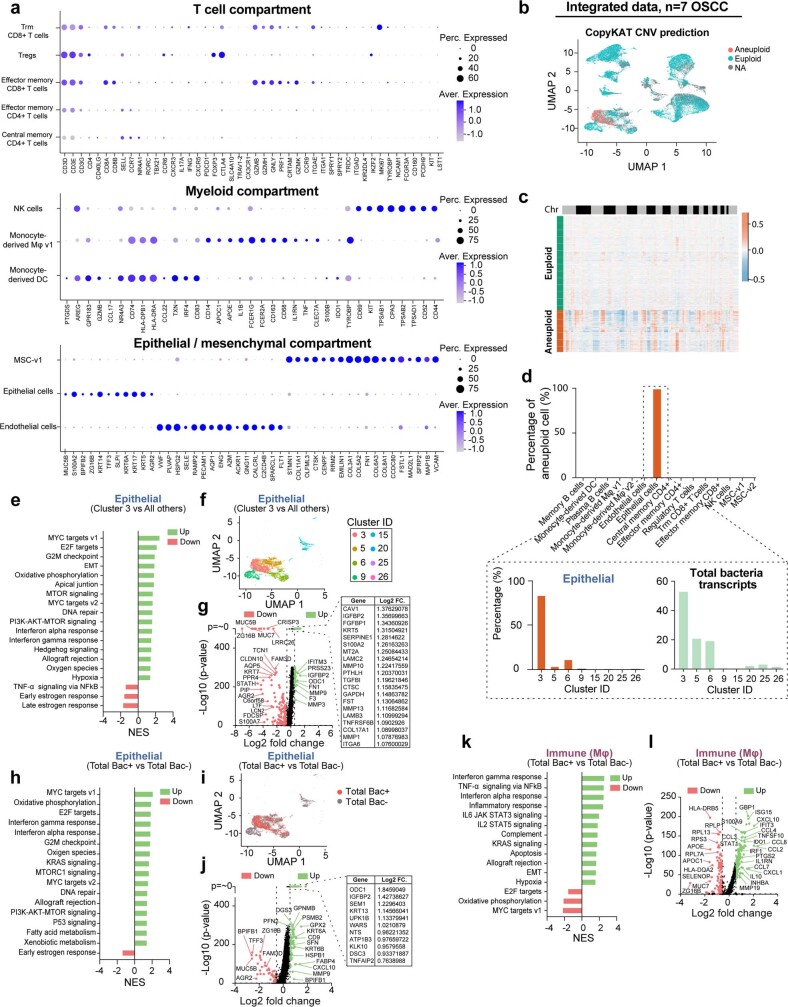
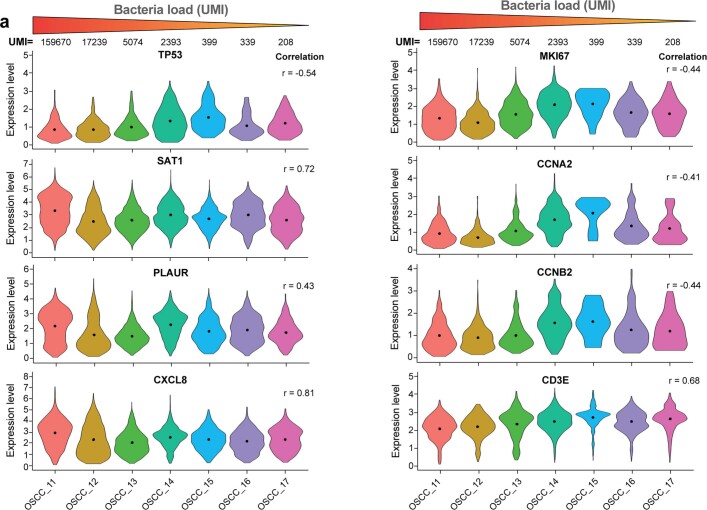
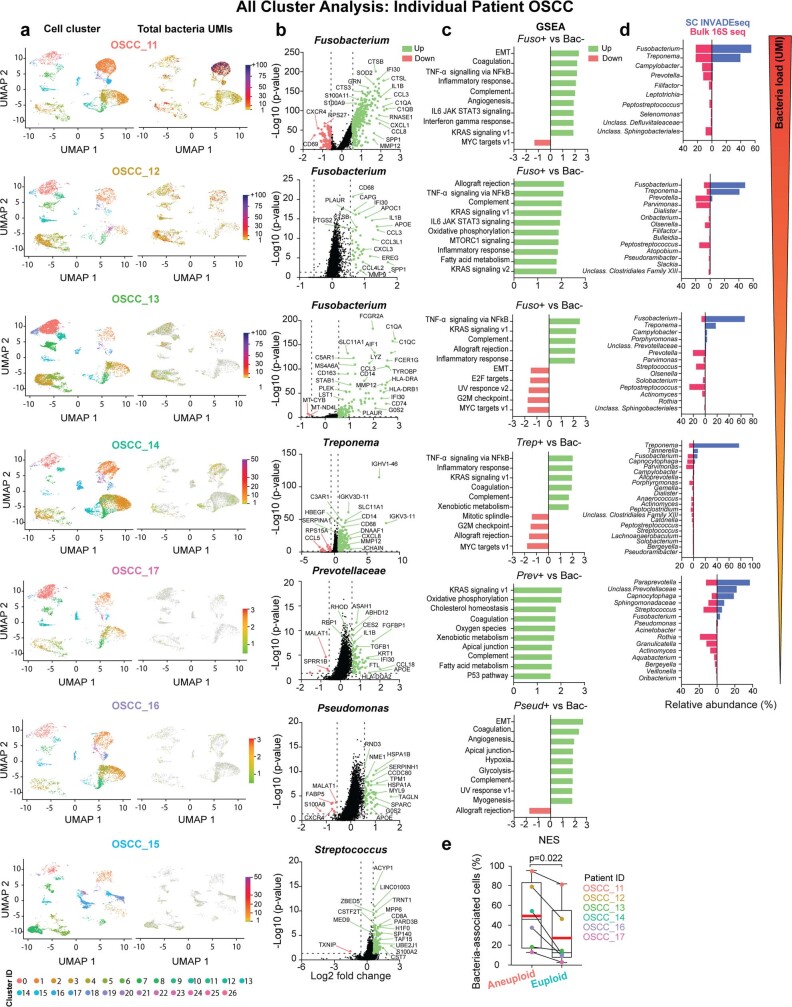
The tumour-associated microbiota is an intrinsic component of the tumour microenvironment across human cancer types 1,2 . Intratumoral host–microbiota studies have so far largely relied on bulk tissue analysis 1–3 , which obscures the spatial distribution and localized effect of the microbiota within tumours. Here, by applying in situ spatial-profiling technologies 4 and single-cell RNA sequencing 5 to oral squamous cell carcinoma and colorectal cancer, we reveal spatial, cellular and molecular host–microbe interactions. We adapted 10x Visium spatial transcriptomics to determine the identity and in situ location of intratumoral microbial communities within patient tissues. Using GeoMx digital spatial profiling 6 , we show that bacterial communities populate microniches that are less vascularized, highly immuno‑suppressive and associated with malignant cells with lower levels of Ki-67 as compared to bacteria-negative tumour regions. We developed a single-cell RNA-sequencing method that we name INVADEseq (invasion–adhesion-directed expression sequencing) and, by applying this to patient tumours, identify cell-associated bacteria and the host cells with which they interact, as well as uncovering alterations in transcriptional pathways that are involved in inflammation, metastasis, cell dormancy and DNA repair. Through functional studies, we show that cancer cells that are infected with bacteria invade their surrounding environment as single cells and recruit myeloid cells to bacterial regions. Collectively, our data reveal that the distribution of the microbiota within a tumour is not random; instead, it is highly organized in microniches with immune and epithelial cell functions that promote cancer progression.
Overview
The claims and statistics of this paper haven’t been checked yet.
Free: it reads the open-access text and checks the first 5 claims that cite a source we can check. Create a free account to check every claim.
Integrity signals
Registry
Cites
Statistics
Figures
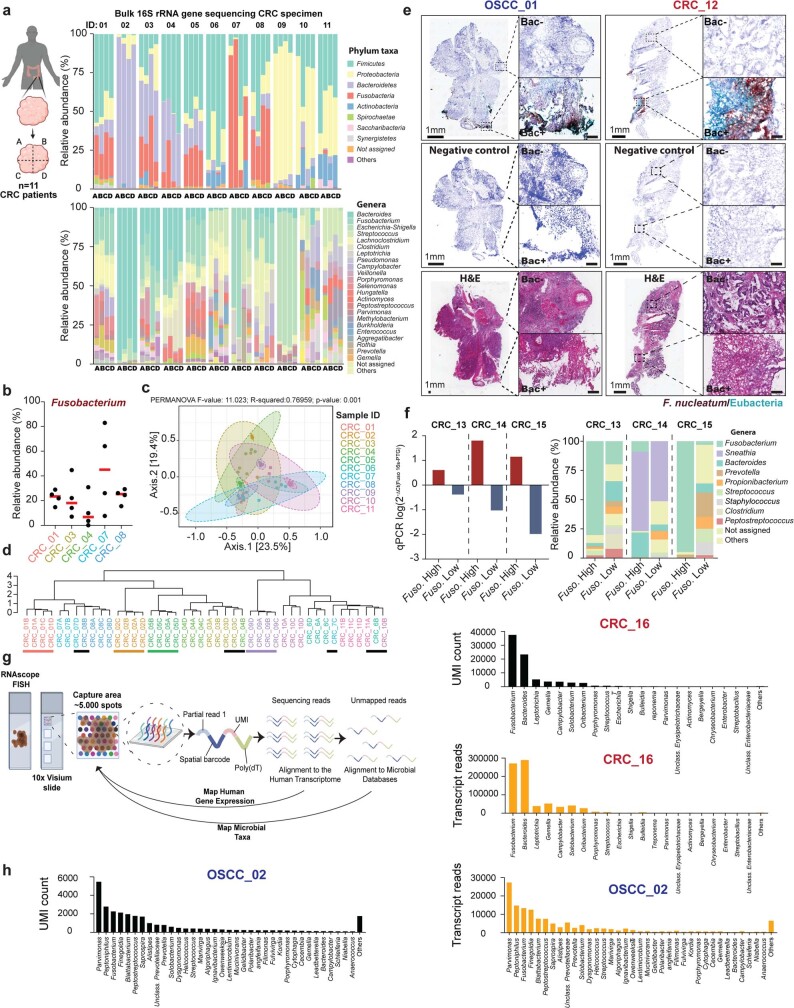
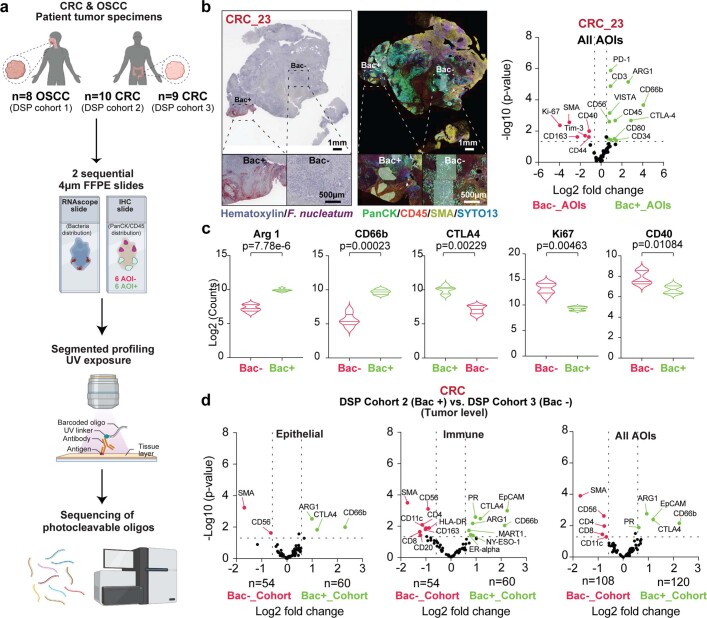
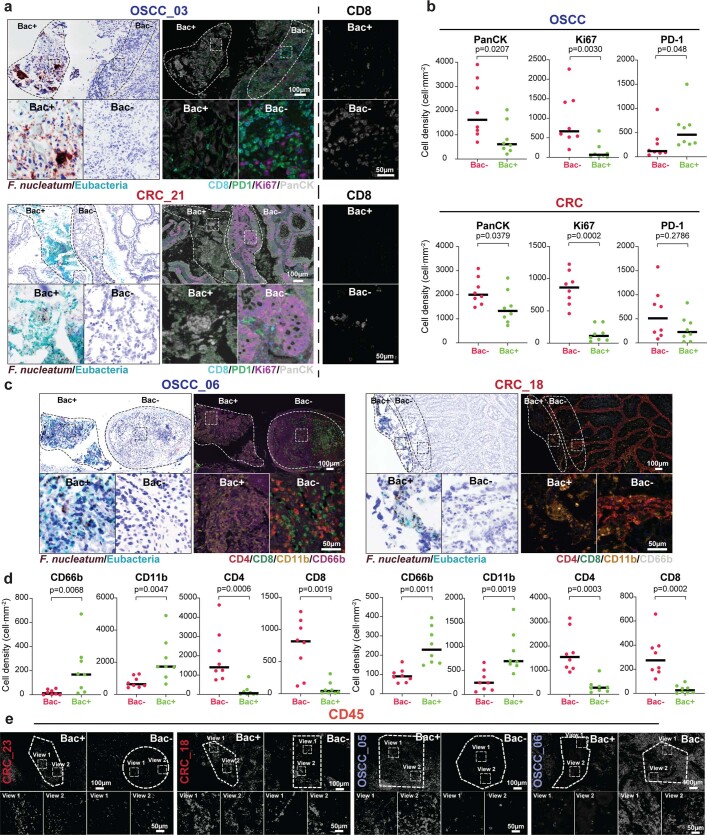
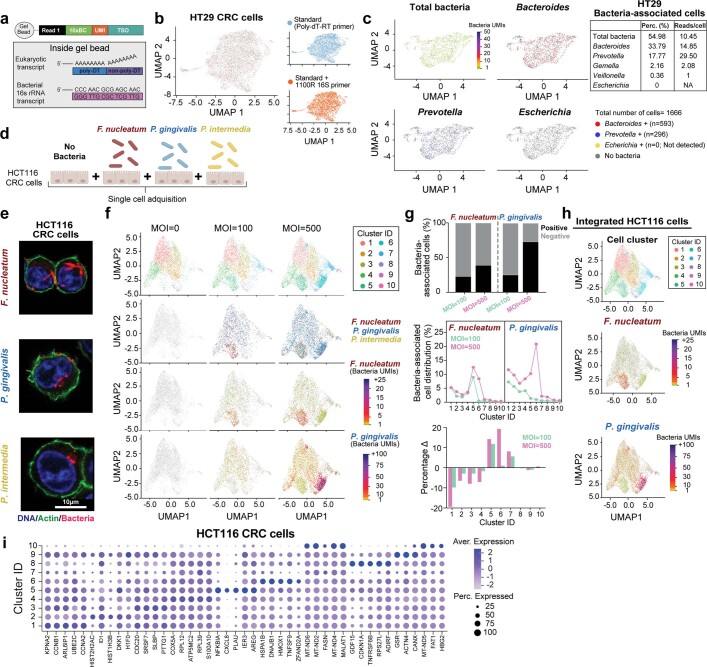
Verification
Claims the paper makes
The claims and statistics of this paper haven’t been checked yet.
Free: it reads the open-access text and checks the first 5 claims that cite a source we can check. Create a free account to check every claim.
Claims other papers make about this one
Each is checked against this paper’s own text: does it say what the citing paper says it does?
The cited source says what the claim attributes to it.
In the citing paper
“Galeano et al. introduced invasion-adhesion-directed expression sequencing (INVADEseq) targeting a conserved area of the bacterial 16 S rRNA, enabling the effective creation of cDNA libraries containing bacterial transcripts derived from human cells associated with bacteria.”
From Single-cell sequencing to multi-omics: technologies and applications (2024) · cites this paper as [158]
The cited source says what the claim attributes to it.
In the citing paper
“These microbes interact with both tumor and immune cells, influencing tumor dynamics by modulating immune responses, producing pro-proliferative metabolites, and reshaping the structural and biochemical landscape of the TME [38–40]”
From Phage therapy in oncology: opportunities for cancer prevention and treatment (2026) · cites this paper as [39]
The check wasn’t confident either way, so it gives no verdict — never disputed.
In the citing paper
“These microbes interact with both tumor and immune cells, influencing tumor dynamics by modulating immune responses, producing pro-proliferative metabolites, and reshaping the structural and biochemical landscape of the TME [38–40]”
From Phage therapy in oncology: opportunities for cancer prevention and treatment (2026) · cites this paper as [39]
Experimental — accuracy not yet measured
Self-check
Percentages, sums and reported differences re-computed from the paper’s own numbers.
The self-check needs the paper’s full text.
Citations
Cites
1 retracted
RETRACTED ARTICLE: Microbiome analyses of blood and tissues suggest cancer diagnostic approach
Poore, G. D., Kopylova, E., Zhu, Q., Carpenter, C., Fraraccio, S., Wandro, S., Kosciolek, T., Janssen, S., Metcalf, J., Song, S. J., et al. (2020) · Nature · doi:10.1038/s41586-020-2095-1 · Cited by 989
RetractedHighly parallel genome-wide expression profiling of individual cells using nanoliter droplets.
Macosko, E. Z., Basu, A., Satija, R., Nemesh, J., Shekhar, K., Goldman, M., Tirosh, I., Bialas, A. R., Kamitaki, N., Martersteck, E. M., et al. (2015) · Cell · doi:10.1016/j.cell.2015.05.002 · Cited by 7,110
Tumors: Wounds That Do Not Heal
Flier, J. S., Underhill, L. H., & Dvorak, H. F. (1986) · New England Journal of Medicine · doi:10.1056/nejm198612253152606 · Cited by 4,391
mRNA-Seq whole-transcriptome analysis of a single cell
Tang, F., Barbacioru, C., Wang, Y., Nordman, E., Lee, C., Xu, N., Wang, X., Bodeau, J., Tuch, B. B., Siddiqui, A., et al. (2009) · Nature Methods · doi:10.1038/nmeth.1315 · Cited by 3,969
Tumour heterogeneity and resistance to cancer therapies
Dagogo-Jack, I., & Shaw, A. T. (2018) · Nature Reviews Clinical Oncology · doi:10.1038/nrclinonc.2017.166 · Cited by 3,846
A Gene Encoding an Antigen Recognized by Cytolytic T Lymphocytes on a Human Melanoma
van der Bruggen, P., Traversari, C., Chomez, P., Lurquin, C., De Plaen, E., Van den Eynde, B., Knuth, A., & Boon, T. (1991) · Science · doi:10.1126/science.1840703 · Cited by 3,545
EMT Transition States during Tumor Progression and Metastasis
Pastushenko, I., & Blanpain, C. (2019) · Trends in Cell Biology · doi:10.1016/j.tcb.2018.12.001 · Cited by 2,876
Anderson, N. M., & Simon, M. C. (2020) · Current Biology · doi:10.1016/j.cub.2020.06.081 · Cited by 2,718
T cell exclusion, immune privilege, and the tumor microenvironment
Joyce, J. A., & Fearon, D. T. (2015) · Science · doi:10.1126/science.aaa6204 · Cited by 2,473
The human tumor microbiome is composed of tumor type–specific intracellular bacteria
Nejman, D., Livyatan, I., Fuks, G., Gavert, N., Zwang, Y., Geller, L. T., Rotter-Maskowitz, A., Weiser, R., Mallel, G., Gigi, E., et al. (2020) · Science · doi:10.1126/science.aay9189 · Cited by 2,464
Cited by
Items 401–500 of 997
Choudhury, A., Scano, C., Barton, A., Kearney, C. M., & Greathouse, K. L. (2025) · Microbial Biotechnology · doi:10.1111/1751-7915.70241 · Cited by 10
Xie, Y., Wang, J., Han, Y., Zhu, G., Li, L., Sun, Q.-Q., & Li, C. (2025) · Advanced Materials · doi:10.1002/adma.202515904 · Cited by 10
Fan, Y., Gu, X., Yang, H., Chen, Y., Fang, C., Deng, H., & Dai, L. (2025) · Molecular Biomedicine · doi:10.1186/s43556-025-00376-2 · Cited by 10
Zheng, H., Chen, X., Li, Q., Liu, Y., & Cai, J. (2023) · Frontiers in Immunology · doi:10.3389/fimmu.2023.1084926 · Cited by 10
“In this regard, an in-depth understanding of the distribution and function of the tumor microbiota is important to facilitate the understanding of oncogenic effects and to provide new therapeutic strategies for cancer(56).”
BackgroundRedefining Mucosal Inflammation with Spatial Genomics
Caetano, A. J., & Sharpe, P. T. (2024) · Journal of Dental Research · doi:10.1177/00220345231216114 · Cited by 10
“…and GeoMx digital spatial profiling, demonstrated how bacterial communities populate microniches that are less vascularized, highly immune-suppressive, and associated with malignant cells with lower levels of proliferation as compared to bacteria-negative tumor regions (Galeano Nino et al. 2022).”
BackgroundDuggan, W. P., Kısakol, B., Woods, I., Azimi, M., Düßmann, H., Fay, J., O’Grady, T., Maguire, B., Reynolds, I. S., Salvucci, M., et al. (2024) · Gut Microbes · doi:10.1080/19490976.2024.2350149 · Cited by 10
“50 Therefor it is likely that other species may also have contributed toward the differential pathway signaling observed amongst fusobacteria high and low ROI’s in this study.”
BackgroundDuo, H., Li, Y., Yang, L., Tao, J., Yang, Q., Xiao, Y., Sun, J., Li, L., Nie, X., Zhang, X., et al. (2024) · Genome biology · doi:10.1186/s13059-024-03290-y · Cited by 10
Roles of intralesional bacteria in the initiation and progression of oral squamous cell carcinoma
Luo, Z., Lv, S., Lou, F., Yan, L., Xu, J., Kang, N., Dong, Y., & Jin, X. (2024) · Cancer Medicine · doi:10.1002/cam4.70209 · Cited by 10
“62,76,78,85 P. gingivalis and F. nucleatum also promote cell invasion and migration via activation of integrin/focal adhesion kinase (FAK) signaling, triggered by TLR/myeloid differentiation primary response 88 (MyD88).”
BackgroundZepeda‐Rivera, M. A., Eisele, Y., Baryiames, A. A., Wu, H., Mengoni, C., Piccinno, G., McMahon, E. F., LaCourse, K. D., Jones, D. S., Hauner, H., et al. (2024) · Gut Microbes · doi:10.1080/19490976.2024.2442522 · Cited by 10
Self-citationRepurposing antibiotics: A dual-action approach against bacteria-induced cancer
Upadhyay, A., Jha, H. C., Pal, D., & Kumar, A. (2025) · Cancer Pathogenesis and Therapy · doi:10.1016/j.cpt.2025.02.005 · Cited by 10
“14 Drug repurposing has emerged as a promising solution for this challenge; it involves the application of preexisting drugs to new therapeutic targets and indications.”
Chen, M., & Bie, L. (2025) · Cancer Cell International · doi:10.1186/s12935-025-03745-7 · Cited by 10
Intratumoral microbiota in HCC: A new kid on the block?
Ji, J., Ji, F., & Bayarsaikhan, E. (2023) · Hepatology · doi:10.1097/hep.0000000000000454 · Cited by 10
Intratumor microbiota and colorectal cancer: Comprehensive and lucid review
Zong, Z., Zeng, W., Li, Y., Wang, M., Cao, Y., Cheng, X., Jin, Z., Mao, S., & Zhu, X. (2024) · Chinese Journal of Cancer Research · doi:10.21147/j.issn.1000-9604.2024.06.07 · Cited by 9
Leveraging adenosine triphosphate for cancer theranostics
Li, Y., Zhang, X., Wang, J., Wang, K., Li, X., Qiao, X., He, W., Cai, J., Liu, D., & Yang, L. (2025) · Theranostics · doi:10.7150/thno.106291 · Cited by 9
“Tumor heterogeneity manifests at three levels: first, there are significant differences among various tumor types [198]; second, heterogeneity exists among individuals with the same type of tumor [199]; and third, spatial variations occur within a single tumor [200, 201].”
Dissecting the physics of bacterial biofilms with agent-based simulations
Nam, K.-M., Li, C., Cockx, B., Nguyen, D. T., Li, Y., Kreft, J., & Yan, J. Q. (2025) · Current Opinion in Solid State and Materials Science · doi:10.1016/j.cossms.2025.101228 · Cited by 9
Huang, H., Peng, H. C., He, Y., Chen, Y., Ye, Q., Jin, S., Yin, N., Yang, Q., Gao, Y., Yang, L., et al. (2025) · ACS Nano · doi:10.1021/acsnano.4c15868 · Cited by 9
Survival mechanism of pancreatic tumor bacteria and their ability to metabolize chemotherapy drugs
Khan, Z. A., Sobkowiak, M. J., Ghorbani, M., Tajpara, P., Al‐Manei, K., Halimi, A., Ateeb, Z., Özenci, V., Heuchel, R. L., Löhr, M. J., et al. (2025) · Microbiology Spectrum · doi:10.1128/spectrum.01820-25 · Cited by 9
Wei, X., Zhang, Y., Chen, Y., Mo, Z., Jiang, B., Zhao, J., & Zhou, S. (2025) · Biomaterials · doi:10.1016/j.biomaterials.2025.123729 · Cited by 9
Microbiota: a dawn for cancer metastasis therapy
Xia, S., Jia, D., & Wang, L. (2025) · Trends in Molecular Medicine · doi:10.1016/j.molmed.2025.09.008 · Cited by 9
The pursuit of ultrasensitive phosphoproteomics to unravel signalling in rare cells
Gaizley, E. J., & Šurinová, S. (2025) · Communications Biology · doi:10.1038/s42003-025-09131-3 · Cited by 9
“It is becoming increasingly evi-dentthatdistinctsubsetsofcellsareresponsibleformanydiseaseoutcomes, includingdrugresponsiveness,therapyresistance,canceroriginsand metastasis,andinfection 1 – 6 .”
Sorrenti, E., Governa, V., Bressan, D., Cremonesi, E., Formaggio, N., Latino, I., Calì, B., Torcasio, C., Basso, C., Galafassi, J., et al. (2026) · Cell Host & Microbe · doi:10.1016/j.chom.2026.02.006 · Cited by 9
Johnston, C. D., Goetting‐Minesky, M. P., Kennedy, K., Godovikova, V., Zayed, S. M., Roberts, R. J., & Fenno, J. C. (2023) · Molecular Oral Microbiology · doi:10.1111/omi.12441 · Cited by 9
Self-citationB cell immune profiles in dysbiotic vermiform appendixes of pancreatic cancer patients
Vietsch, E. E., Latifi, D., Verheij, M., van der Oost, E., de Wilde, R. F., Haen, R., van den Boom, A. L., Koerkamp, B. G., Doornebosch, P. G., van Verschuer, V. M. T., et al. (2023) · Frontiers in Immunology · doi:10.3389/fimmu.2023.1230306 · Cited by 9
Cao, L., Wei, S., Zongyi, Y., Chen, F., Ba, Y., Weng, Q., Zhang, J., & Zhang, H. (2024) · Heliyon · doi:10.1016/j.heliyon.2024.e24713 · Cited by 9
N6-methyladenosine-dependent signaling in colorectal cancer: Functions and clinical potential
Liu, S., Liu, M., Li, Y., & Song, Q. (2024) · Critical Reviews in Oncology/Hematology · doi:10.1016/j.critrevonc.2024.104360 · Cited by 9
Relevance of harmful intratumoral microbiota in cancer progression and its clinical application
Yu, R., Wang, S., & Han, L. (2024) · Biomedicine & Pharmacotherapy · doi:10.1016/j.biopha.2024.117238 · Cited by 9
Chen, Y., Zheng, Y., & Liu, S. (2024) · Journal of Cellular and Molecular Medicine · doi:10.1111/jcmm.70182 · Cited by 9
Lin, H., Ma, Z. S., Li, J., Zhu, H., Huang, X., Chen, H., Tu, L., Lian, Y., & Su, Y. (2025) · Frontiers in Immunology · doi:10.3389/fimmu.2024.1500863 · Cited by 9
Bacteria and Carcinogenesis and the Management of Cancer: A Narrative Review
Plewa, P., Kiełbowski, K., Mentel, O., Figiel, K., Bakinowska, E., Becht, R., Banach, B., & Pawlik, A. (2025) · Pathogens · doi:10.3390/pathogens14050509 · Cited by 9
“Moreover, these spots are characterized by a greater expression of immune checkpoints such as programmed cell death protein 1 (PD-1) and cytotoxic T-lymphocyte-associated protein 4 (CTLA-4) [83].”
Zhang, S., Wang, Z., Liu, A., Li, J., Zhuang, J., Ji, X., Mulama, P. I., Li, M., Cao, H., Tan, E., et al. (2025) · Advanced Science · doi:10.1002/advs.202500582 · Cited by 9
A spatial perspective on bacteria in tumours
Livyatan, I., & Straussman, R. (2022) · Nature · doi:10.1038/d41586-022-03669-6 · Cited by 9
Microbial Pathogenesis in the Era of Spatial Omics
Lempke, S. L., May, D., & Ewald, S. E. (2023) · Infection and Immunity · doi:10.1128/iai.00442-22 · Cited by 10
Intra-tumoral bacteria in head and neck cancer: holistic integrative insight
Meng, Y., Deng, J., Deng, W., & Sun, Z. (2025) · Cancer Biology and Medicine · doi:10.20892/j.issn.2095-3941.2024.0311 · Cited by 8
“Studies have shown that P. gingivalis , together with other oral bacteria, such as Fusobacterium , affect the heterogeneity of cancer cells and change the transcriptional program, thereby affecting specific cellular behaviors 6,87,88 .”
InfluentialProgress of extracellular vesicles-based system for tumor therapy
Wang, F., Yin, L., & Hu, Y. (2025) · Journal of Controlled Release · doi:10.1016/j.jconrel.2025.02.066 · Cited by 8
Dynamic causal effects of gut microbiota on cervical Cancer lesion progression
Zhu, F., Li, L., Zhang, H., Liu, J., Wu, D., & Xu, Q. (2025) · Scientific Reports · doi:10.1038/s41598-025-00483-8 · Cited by 8
“Recent studies utilizing spatial transcriptomics and single-cell sequencing revealed that tumor-associated bacteria exhibit nonrandom organization in hypoxic, immune-suppressive microniches characterized by reduced vascularization and increased recruitment of myeloid cells 59 .”
Yan, L., Wu, F., Jiao, J., Maimaiti, A., Li, Y., Shao, L., Liang, Q., Xiong, X., & Qin, Z. (2025) · International Journal of Nanomedicine · doi:10.2147/ijn.s491473 · Cited by 8
Microbiome dynamics in breast cancer: Mechanisms, therapeutic impacts and research gaps
Effiong, M. E., Ikeji, N. C., Bella-Omunagbe, M., Afolabi, I. S., & Chinedu, S. N. (2025) · Critical Reviews in Oncology/Hematology · doi:10.1016/j.critrevonc.2025.104879 · Cited by 8
Saito, R., Shigematsu, Y., Amori, M., Amori, G., Takamatsu, M., Nishida, K., Kanda, H., Takahashi, Y., Miura, Y., Takeuchi, K., et al. (2025) · Cancers · doi:10.3390/cancers17172733 · Cited by 8
Jang, S., Lee, E. J., Park, S., Lim, H. J., Ahn, B., Huh, Y., Koh, H., & Park, Y. R. (2025) · Microbiome · doi:10.1186/s40168-025-02178-8 · Cited by 8
Recent Advances in Nanomedicine for Modulating Intratumoral Bacteria in Cancer Therapy
Zhang, Y., Zhang, H., Xu, J., Xu, Z., Lou, J., Zheng, Q., Yuan, S., Zhu, L., & Xu, X. (2025) · Molecular Pharmaceutics · doi:10.1021/acs.molpharmaceut.5c00677 · Cited by 8
Qu, S., Jia, W., Liu, X., Yao, Q., Chen, C., Zhao, Z., Nie, Y., Chang, F., Yang, Z., Peng, C., et al. (2025) · Frontiers in Immunology · doi:10.3389/fimmu.2025.1652433 · Cited by 8
“…primarily reside intracellularly within cancer cells (17), infection with bacteria leads to the upregulation of pro-oncogenic genes in tumor cells (18), enhancing their proliferative capacity and promoting cancer progression and metastasis (17), For instance, Fusobacterium nucleatum exhibits…”
Profiling the heterogeneity of microbial populations and communities at the single‐cell level
Wu, L. H., Zuo, W., Cao, Z., Qu, Z., & Dai, L. (2025) · mLife · doi:10.1002/mlf2.70047 · Cited by 8
Wu, T., Zhang, F., Liu, H., Ma, F., Yu, Y., Sun, D., Ren, J., Wang, W., Elsabahy, M., & Gao, H. (2025) · Journal of Controlled Release · doi:10.1016/j.jconrel.2025.114400 · Cited by 8
Quan, L., Rong, H., Yue, J., Xu, J., Zheng, Y., & Yuan, P. (2025) · Journal of Translational Medicine · doi:10.1186/s12967-025-07355-9 · Cited by 8
Deng, J., Kuang, W., Chen, W., Zhou, E., Wu, Y., Yang, Z., Chen, J., Cao, X., Yin, Z., Liu, J., et al. (2025) · Acta Pharmaceutica Sinica B · doi:10.1016/j.apsb.2025.12.014 · Cited by 8
“Microbiome composition can significantly vary between individuals 3,52,67 , posing challenges in translating bacterial characteristics identified in large-scale population studies to individual patients.”
Intratumoral Microbiome: Impact on Cancer Progression and Cellular Immunotherapy
Leonov, G. E., Starodubova, A. V., Makhnach, O. V., Goldshtein, D. V., & Salikhova, D. I. (2025) · Cancers · doi:10.3390/cancers18010100 · Cited by 8
Wolf, M., Scholz, K. J., Al‐Ahmad, A., Steinberg, T., Kruse, A., Rezasoltani, S., Cieplik, F., & Conrads, G. (2026) · Virulence · doi:10.1080/21505594.2026.2629110 · Cited by 8
“As γ-glutamyl transpeptidase – mediated GSH metabolism can generate ROS and promote genomic instability [17,110], these shifts provide a plausible mechanistic link between Fan colonization and the severe chromosomal abnormalities associated with Fusobacterium in epithelial cells [111].”
Setting higher standards for reports of microbial species in human cancers
Salzberg, S. L., Chia, M., Tay, C. Y., de Miranda, N. F. C. C., Smit, V. T. H. B. M., Wesseling, J., Irizarry, R. A., Marshall, B. J., Willerslev, E., Neefjes, J., et al. (2026) · Nature Cancer · doi:10.1038/s43018-026-01121-6 · Cited by 8
Toward a consensus on the tumor microbiota: Evidence, standards, and interpretation
Duan, T., Rosenbaum, A., Chandra, V., Tiraboschi, L., Rescigno, M., McAllister, F. M., Straussman, R., & Meisel, M. (2026) · Cancer Cell · doi:10.1016/j.ccell.2026.02.011 · Cited by 8
Rodrigues, R. C., Sousa, C., & Vale, N. (2024) · Microorganisms · doi:10.3390/microorganisms12061126 · Cited by 8
Power-law scaling in intratumoral microbiota of colorectal cancer
Dovrolis, N., Gazouli, M., Rigal, F., Whittaker, R. J., Matthews, T. J., Georgiou, K. E., Theodoropoulos, G. E., & Triantis, K. A. (2024) · Gut Pathogens · doi:10.1186/s13099-024-00631-x · Cited by 8
Zonulin as Gatekeeper in Gut–Brain Axis: Dysregulation in Glioblastoma
Hagemeyer, H., Hellwinkel, O., & Bello, J. P. (2024) · Biomedicines · doi:10.3390/biomedicines12081649 · Cited by 8
“Mi-crobiota Mi-crobiota have also been reported to influence tumor outcome directly by modifying inflammatory transcriptional pathways, tumor carcinogenesis, and tumor-infiltrating immune cells [46].”
BackgroundLabel-free evanescent imaging of cellular heterogeneity in membrane protein binding kinetics
Huang, C. Y., Liu, Z., Xu, J., Li, L., Chen, Y., Zhao, Y., & Zhang, P. (2024) · Sensors and Actuators B Chemical · doi:10.1016/j.snb.2024.136377 · Cited by 8
Intratumoral Microbiota: Insights from Anatomical, Molecular, and Clinical Perspectives
Lombardo, C., Fazio, R., Sinagra, M., Gattuso, G., Longo, F., Lombardo, C., Salmeri, M., Zanghì, G., & Loreto, C. (2024) · Journal of Personalized Medicine · doi:10.3390/jpm14111083 · Cited by 8
Guan, X., Bu, F., Fu, Y., Zhang, H., Xiang, H., Chen, X., Chen, T., Wu, X.-J., Wu, K., Liu, L., et al. (2024) · iScience · doi:10.1016/j.isci.2024.111338 · Cited by 8
“34,35 Bacteria overwhelmingly dominated the microbiome (>90%), even though viruses and fungi were also considered during microbiome identification.”
Zhang, L., Duan, X., Zhao, Y., Zhang, D., & Zhang, Y. (2025) · Frontiers in Immunology · doi:10.3389/fimmu.2025.1526589 · Cited by 9
Yijia, Z., Li, X., Ma, L., Wang, S., Du, H., Wu, Y., Yu, J., Xiang, Y., Xiong, D.-Q., Shan, H., et al. (2025) · Cancer Immunology Immunotherapy · doi:10.1007/s00262-025-03972-x · Cited by 8
Profiling of the tumor-associated microbiome in patients with hepatocellular carcinoma
Schulz, C., Vilchez‐Vargas, R., Öcal, E., Koch, N., Puhr‐Westerheide, D., Burnell, L. F., Hirner-Eppeneder, H., Benckert, J., Pech, M., Reimer, P., et al. (2025) · Gut Pathogens · doi:10.1186/s13099-025-00727-y · Cited by 8
Microbiota in colorectal cancer related to liver metastasis
Wei, P., Han, W., Zhang, Z., Tian, X. W., Chen, Y., Wang, Q., Xie, W., Liu, Y., Gao, Y., & Chang, H. (2024) · Chinese Journal of Cancer Research · doi:10.21147/j.issn.1000-9604.2024.01.02 · Cited by 8
Liang, P., Chen, Q., Chen, X., Zhang, X., Xiao, Y., Liang, G., Liu, M., He, J., Liang, W., Liang, Y., et al. (2024) · Translational Lung Cancer Research · doi:10.21037/tlcr-24-393 · Cited by 8
“Our observations warrant further investigation towards rationally harnessing the microbiota tumor heterogeneity profiles in the immunotherapy (43).”
Phage therapy in oncology: opportunities for cancer prevention and treatment
Mutalik, V. K., Inman, J. L., Chang, H., Arkin, A., & Mao, J.-H. (2026) · Trends in Molecular Medicine · doi:10.1016/j.molmed.2026.02.001 · Cited by 7
Khan, Z. A., Song, S., Xu, H., Ahmad, M., Wang, A., Abdullah, A., Jiang, L., & Ding, X. (2025) · International Journal of Antimicrobial Agents · doi:10.1016/j.ijantimicag.2025.107471 · Cited by 7
Pan-cancer neural regulation pattern with implications for patient stratification and immunotherapy
Gao, Y., Guo, J., Yang, W., Liu, K., Yang, Q., Li, S., Lv, D., Cai, Y., Xu, K., Zhou, W., et al. (2025) · Molecular Therapy — Nucleic Acids · doi:10.1016/j.omtn.2025.102732 · Cited by 7
Ciappina, G., Toscano, E., Mauro, G. D., Franchina, T., Basile, F., Vanni, G., Facchini, G., Nasti, G., Quagliariello, V., Maurea, N., et al. (2026) · Cancers · doi:10.3390/cancers18050869 · Cited by 7
Bacterial cell fate under stress: lipid remodeling and antimicrobial peptide attack
Vejzović, D., Schwaiger, T., Topciu, A., Petrowitsch, L., Arnautovic, A., & Malanović, N. (2026) · npj Antimicrobials and Resistance · doi:10.1038/s44259-026-00195-7 · Cited by 7
“This is especially relevant in the current era of the silent pandemic era, where life-threatening secondary fungal 14 or bacterial 15 infections are frequently associated with Covid-19 [2] or cancer 16 – 19 .”
Mitochondrial respiration supports cancer growth independent of OXPHOS
Chinopoulos, C. (2026) · Biochimica et Biophysica Acta (BBA) - Reviews on Cancer · doi:10.1016/j.bbcan.2026.189593 · Cited by 8
Deciphering the Tumor–Immune–Microbe Interactions in HPV-Negative Head and Neck Cancer
Hu, M., Coleman, S. S., Fadlullah, M. Z. H., Spakowicz, D. J., Chung, C. H., & Tan, A. C. (2023) · Genes · doi:10.3390/genes14081599 · Cited by 7
Microbiome‐driven anticancer therapy: A step forward from natural products
Guan, Y., Wu, D., Wang, H., & Liu, N. (2024) · mLife · doi:10.1002/mlf2.12118 · Cited by 8
“Protumorigenic in fl ammation promotes cancer development by initiating in fl ammatory signaling pathways, upregulating in-fl ammatory mediators, and reshaping the TME to trigger in-fl ammatory responses in epithelial cells 29,30 .”
BackgroundInfluentialMechanisms by Which the Intratumoral Microbiome May Potentiate Immunotherapy Response
Figueroa, D. N., & Colbert, L. E. (2024) · Journal of Clinical Oncology · doi:10.1200/jco.24.00908 · Cited by 7
Li, S., Zhao, T., Liu, N., Li, Y., Chen, H., Tang, C., Wei, Y., Lu, H., & Huang, X. (2024) · Oral Oncology · doi:10.1016/j.oraloncology.2024.107094 · Cited by 7
Becker, A., Oehmcke-Hecht, S., Dargel, E., Kaps, P., Freitag, T., Kreikemeyer, B., Junghanss, C., & Maletzki, C. (2024) · Expert Opinion on Drug Discovery · doi:10.1080/17460441.2024.2439456 · Cited by 7
“Parvimonas , Peptoniphilus , and Fusobacterium were identified as the dominant genera facilitating T-cell exclusion in these bacterially colonized (HPV − oral) tumor regions [113] (Figure 4).”
Gao, W., Li, F., Wu, T., & Ji, L. (2025) · Microbial Pathogenesis · doi:10.1016/j.micpath.2025.107296 · Cited by 7
Recent progress on drug delivery systems of regulating intratumoral bacteria for tumor therapy
Feng, J. Q., Liu, Y., Gong, L., Liu, C., Xiao, C., Chen, L., Jin, M., Gao, Z., Huang, W., & Li, Y. (2025) · Chinese Chemical Letters · doi:10.1016/j.cclet.2025.110907 · Cited by 7
Chen, Z., Qi, H., Xue, Y., Zhang, Y., Zhang, Z., Xu, S., Liao, S., Zeng, X., Wu, J., Lv, X., et al. (2025) · MedComm – Oncology · doi:10.1002/mog2.70015 · Cited by 7
Britton, T. A., Lee, J. H., Chang, C., Bhat, A. H., Chen, Y.-W., Ali, R. M., Wu, C., Das, A., & Ton‐That, H. (2025) · mBio · doi:10.1128/mbio.01032-25 · Cited by 7
Cui, X., Yi, C., Liu, J., Qi, J., Deng, W., Yuan, X., Zhou, R., Chen, M., Xiang, Q., & Xu, H. (2025) · Investigative Ophthalmology & Visual Science · doi:10.1167/iovs.66.9.6 · Cited by 7
Leveraging selection for function in tumor evolution: System-level cancer therapies
Thomas, F., Capp, J., Dujon, A. M., Marusyk, A., Asselin, K., Campone, M., Pujol, P., Alix‐Panabières, C., Roche, B., Újvári, B., et al. (2025) · Evolution Medicine and Public Health · doi:10.1093/emph/eoaf022 · Cited by 7
“The tumor microbiota is especially known to shape spatial and cellular heterogeneity in tumors [ 61].”
Research progress on gut microbiota in colorectal cancer immunotherapy
Li, J., Yue, Y., Pan, J., & Liang, F. (2025) · Biochimica et Biophysica Acta (BBA) - Reviews on Cancer · doi:10.1016/j.bbcan.2025.189476 · Cited by 7
Hu, Y., Lin, C., Zhang, L., Jiang, X., Li, H., & Wu, Y. (2026) · Advanced Science · doi:10.1002/advs.202523582 · Cited by 8
“Evidence for intratumoral bacterial spatial heterogeneity in HCC remains preliminary [ 189, 198, 208 ], but the possibility that microbial niches co-localize with immuno-suppressive myeloid clusters is an important area for future validation [ 208–210 ].”
Tumor-resident intracellular bacteria benefit metastasis
Koyama, K., & Inamura, K. (2023) · Annals of Translational Medicine · doi:10.21037/atm-22-6209 · Cited by 7
“A recent study revealed that bacterial distribution within a tumor microenvironment is not random but is organized in microniches with specific tumor-promoting functions of immune and epithelial cells (14).”
Getting off tract: contributions of intraorgan microbiota to cancer in extraintestinal organs
Thomas, S. C., Miller, G., Li, X., & Saxena, D. (2023) · Gut · doi:10.1136/gutjnl-2022-328834 · Cited by 7
GTADC: A Graph-Based Method for Inferring Cell Spatial Distribution in Cancer Tissues
Zhang, T., Zhang, Z., Li, L., Ren, J., Wu, Z., Gao, B., & Wang, G. (2024) · Biomolecules · doi:10.3390/biom14040436 · Cited by 7
The value of intratumoral microbiota in the diagnosis and prognosis of tumors
Zhou, L., Zhang, W., Fan, S., Wang, D., & Tang, D. (2024) · Cell Biochemistry and Function · doi:10.1002/cbf.3999 · Cited by 7
Wu, B., Quan, C., He, Y., Matsika, J., Huang, J., Liu, B., & Chen, J. (2024) · Expert Opinion on Biological Therapy · doi:10.1080/14712598.2024.2371543 · Cited by 7
“The distribution of microbiota in CRC is selective, and it increases the phosphorylation levels of JNK, ERK1, ERK2, and P38 in tumors, which implies the activation of signaling pathways in response to bacterial infection [45].”
Progress in the Study of Intratumoral Microorganisms in Hepatocellular Carcinoma
Song, Y., Tian, S., Li, Z., Miao, J., Wu, M., Xu, T., Wu, X., Qiao, J., Zhang, X., Zhao, H., et al. (2025) · Journal of Hepatocellular Carcinoma · doi:10.2147/jhc.s496964 · Cited by 7
Liu, G., Liu, K., Ji, L., & Li, Y. (2025) · Scientific Reports · doi:10.1038/s41598-025-87194-2 · Cited by 7
“…interactions in space, cells and molecules, and confirmed the influence of intratumoral microbiota on tumor heterogeneity through the application of in situ spatial analysis technology and single-cell RNA sequencing technology in oral squamous cell carcinoma and colorectal cancer 19 .”
The Role of the Microbiome in Cancer Therapies
Chalif, J., Goldstein, N. E. S., Mehra, Y., Spakowicz, D. J., & Chambers, L. (2025) · Hematology/Oncology Clinics of North America · doi:10.1016/j.hoc.2024.12.005 · Cited by 7
Computational single cell oncology: state of the art
Paas-Oliveros, E., Lemus, E. H., & de Anda‐Jáuregui, G. (2023) · Frontiers in Genetics · doi:10.3389/fgene.2023.1256991 · Cited by 7
Chiral coating-mediated interactions of bacteria with diverse biointerfaces
Jiang, H., Liu, R., Liu, Y., Luo, H., Cao, Z., & Liu, J. (2023) · Science China Chemistry · doi:10.1007/s11426-023-1880-8 · Cited by 7
Molecular landscapes of oral cancers of unknown etiologyPreprint
Deneuve, S., Fervers, B., Senkin, S., Bouaoun, L., Pérol, O., Chavanel, B., Lu, L., Coste, I., Renno, T., Zavadil, J., et al. (2023) · medRxiv · doi:10.1101/2023.12.15.23299866 · Cited by 7
Nieciecki, V., Blum, F. C., Johnson, R. C., Testerman, T. L., McAvoy, T. J., King, M. C., Gushchin, V., Whitmire, J. M., Frey, K. G., Glang, L. A., et al. (2025) · mSphere · doi:10.1128/msphere.00652-24 · Cited by 6
Burke, C., Glynn, T. J., Jahangir, C. A., Murphy, C. L., Buckley, N. E., Tangney, M., Rahman, A., & Gallagher, W. M. (2025) · Expert Review of Molecular Diagnostics · doi:10.1080/14737159.2025.2465743 · Cited by 6
Green, E. H., Kotrannavar, S., Rutherford, M. E., Lunnemann, H. M., Kaur, H., Heiser, C. N., Ding, H., Simmons, A. J., Liu, X., Lacy, D. B., et al. (2025) · The Journal of Pathology · doi:10.1002/path.6406 · Cited by 6
“This approach is especially revealing in the context of bacteria-associated tumorigenesis [10,60,61].”
Light-Responsive Hydrogel with Nano-Microstructures for Bacteria Eradication and Tumor Therapy
Hu, H., Xu, Z., Liu, J., Hu, H., Yang, H., Ma, J., Chen, J., Xu, H., Cai, Z., Wang, X., et al. (2025) · ACS Applied Nano Materials · doi:10.1021/acsanm.5c01116 · Cited by 6
Hamza, M., Wang, S., Liu, Y., Li, K., Zhu, M., & Chen, L. (2025) · Microbiological Research · doi:10.1016/j.micres.2025.128156 · Cited by 6
Host-microbe-cancer interactions on-a-chip
Sousa, M. G. C., Brasino, D. S. K., Krieger, M., Dindar, D. A., Duhen, R., Zhang, Z., França, C. M., & Bertassoni, L. E. (2025) · Frontiers in Bioengineering and Biotechnology · doi:10.3389/fbioe.2025.1505963 · Cited by 6
Research progress on fecal microbiota transplantation in tumor prevention and treatment
Wu, Y., Chen, X., Wu, Q., & Wang, Q. (2025) · Open Life Sciences · doi:10.1515/biol-2022-0954 · Cited by 6
“Notably, the distribution of the intra-tumor microbiota is not random; rather, it is highly organized in microecological niches with immune and epithelial cell functions that promote cancer progression [19].”
Fu, Y., Nan, M., Ren, Q., Chen, X., & Gao, J. (2025) · Bioinformatics · doi:10.1093/bioinformatics/btaf172 · Cited by 6
“…can be constructed, the interactions between cells can be revealed in-depth, and the mechanism of multicellular collaboration can be analyzed, which provides important clues for the study of cellular heterogeneity and tissue dynamics in complex diseases such as tumors (Galeano Ni ~ no et al. 2022).”
Dive into the bone: new insights into molecular mechanisms of cancer bone invasion
Tsukasaki, M. (2025) · Journal of Bone and Mineral Research · doi:10.1093/jbmr/zjaf054 · Cited by 6
Biesel, E. A., Sundheimer, J., Badr, M. T., Posadas‐Cantera, S., Chikhladze, S., Fichtner‐Feigl, S., & Wittel, U. A. (2025) · Frontiers in Cellular and Infection Microbiology · doi:10.3389/fcimb.2025.1521952 · Cited by 6
“…et al., demonstrate that the intratumoral microbiota is organized into distinct microniches and functionally impacts tumor biology by activating oncogenic pathways (e.g. JUN/FOS) and immune-suppressive mechanisms (e.g. JAK – STAT), thereby promoting cancer progression (Galeano Niño et al., 2022).”
Metadata
- Authors
- Galeano Niño, J. L., Wu, H., LaCourse, K. D., Kempchinsky, A. G., Baryiames, A., Barber, B., Futran, N., Houlton, J., Sather, C., Sicinska, E., Taylor, A., Minot, S. S., Johnston, C. D., & Bullman, S.
- Affiliations
- Fred Hutch Cancer Center (US)
- University of Washington Medical Center (US)
- Herbert Irving Comprehensive Cancer Center (US)
- Corresponding author
- Johnston, Christopher D.
- Bullman, Susan
- ORCID
- Venue
- Nature
- Published
- 2022-11-16
- Volume
- 611
- Issue
- 7937
- Pages
- 810-817
- ISSN
- 0028-0836 (ISSN-L)
- 1476-4687
- PMC
- PMC9684076
- OpenAlex
- W4309334544
- Cited by
- 887
- References
- 41
- Citations by year
- 2026: 214 · 2025: 292 · 2024: 228 · 2023: 148 · 2022: 4
- FWCI
- 55.33
- Type
- journal article
- Language
- en
- Open access
- hybrid
- doi.org
- Licence
- cc-by
- creativecommons.org/licenses/by/4.0 (tdm)
- creativecommons.org/licenses/by/4.0 (vor)
- Locations
- Nature (publishedVersion, cc-by)
- PubMed Central (publishedVersion, cc-by)
- PubMed (publishedVersion)
- RePEc: Research Papers in Economics (submittedVersion)
- Funders
- Cancer Research Institute (CRI4208)
- Fred Hutchinson Cancer Research Center (P30CA015704)
- University of Washington (P30 CA015704)
- National Institutes of Health (1s10od028685-01, CA015704)
- National Cancer Institute (CA015704, R00CA229984, CA080416, P30CA015704, T32CA080416)
- National Institute of Dental and Craniofacial Research (R01DE027850)
- Office of Research Infrastructure Programs, National Institutes of Health (S10OD028685)
- Topics
- Life Sciences › Biochemistry, Genetics and Molecular Biology › Molecular Biology › Gut microbiota and health
- Life Sciences › Biochemistry, Genetics and Molecular Biology › Molecular Biology › Single-cell and spatial transcriptomics
- Health Sciences › Medicine › Oncology › Cancer Immunotherapy and Biomarkers
- Keywords
- intratumoral microbiota, tumor microenvironment, spatial heterogeneity, oral squamous cell carcinoma, colorectal cancer, host-microbe interactions, single-cell RNA sequencing, spatial transcriptomics, GeoMx digital spatial profiling, tumor invasion, cell dormancy, DNA repair, inflammation, metastasis, Ki-67
- MeSH terms
- Host Microbial Interactions, Carcinoma, Squamous Cell, Humans, Mouth Neoplasms, Colorectal Neoplasms, Sequence Analysis, RNA, Disease Progression, Ki-67 Antigen, Gene Expression Profiling, Myeloid Cells, Tumor Microenvironment, Microbiota
About these checks
Registry, retraction, Cites and statistics results are computed, not judged, with one exception: a printed reference that no index lists is read once by a model before it counts as a citation error. Claims are extracted by a model and kept only when their quote appears verbatim in the text; each cited source is then checked, with a model’s help, for whether it says what the claim relies on. Those verdicts can be wrong — read the claim’s quote and the cited source before relying on one.
Statistics and arithmetic are recomputed, not judged.
Confidence bands are shown only for fields calibrated on our annotated test set. None is calibrated yet, so no band is shown.
What counts as a claim ›How we measure confidence ›How we check this ›
Are you an author, or do you see a problem with this page? Request a review
Data sources
Bibliographic data: Semantic Scholar, OpenAlex, Crossref.
Contains information from the Semantic Scholar Academic Graph Datasets, made available under the ODC Attribution License (ODC-BY 1.0).
Semantic Scholar’s data is described in: Kinney, R., et al. (2023). The Semantic Scholar Open Data Platform. arXiv:2301.10140.
