

Personalized RNA neoantigen vaccines stimulate T cells in pancreatic cancer
Open accessThe DOI matches its Crossref record; 65 of the 65 references it cites were found in a registry or an index.
Abstract
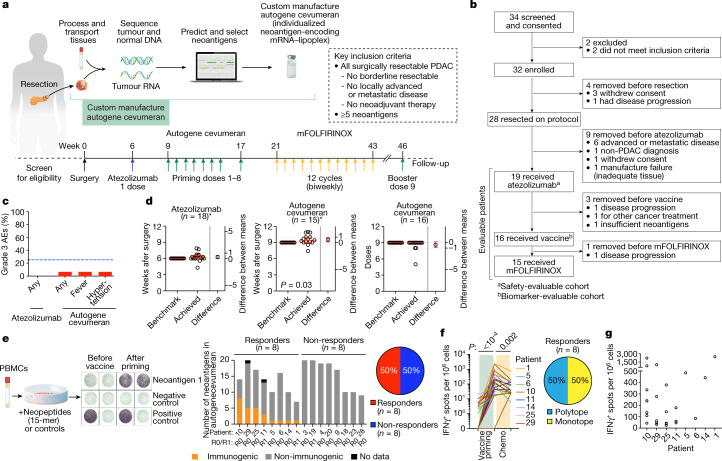
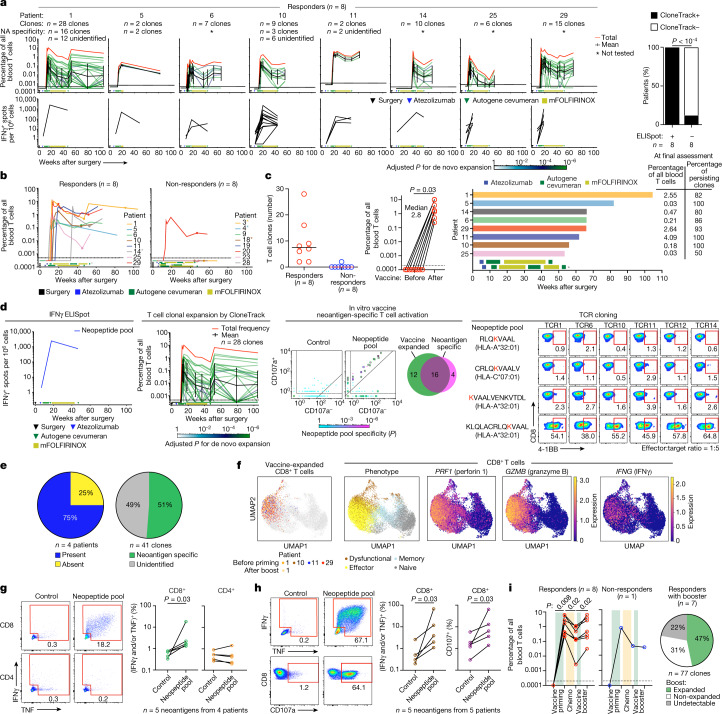
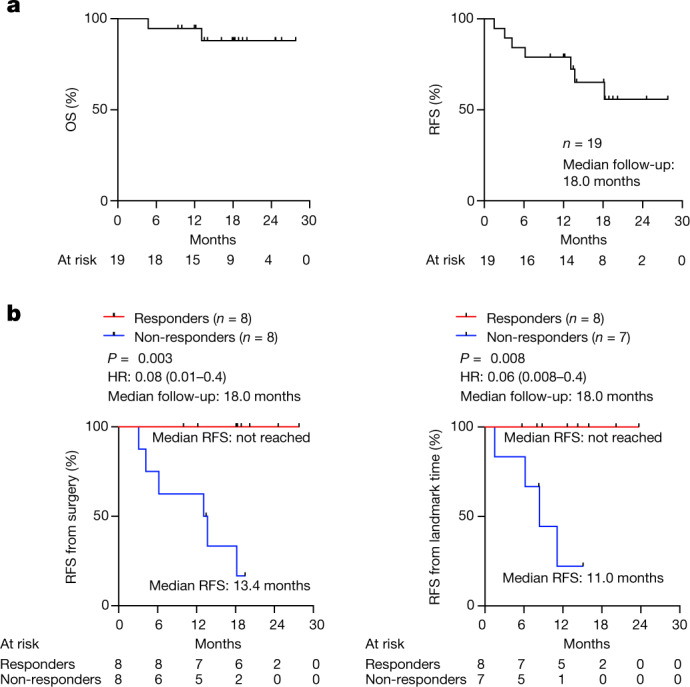
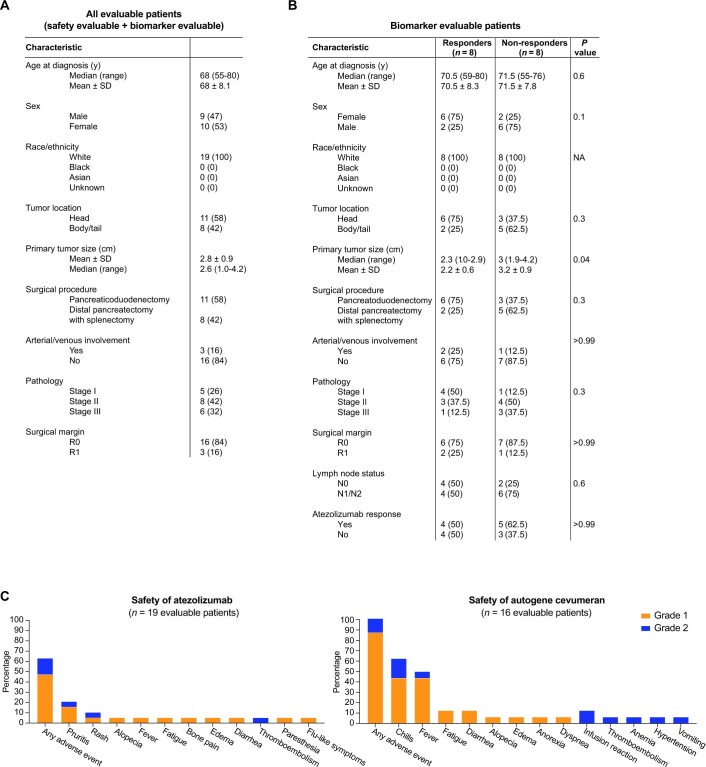
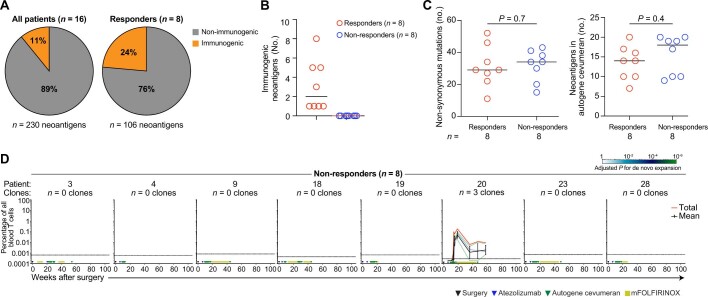
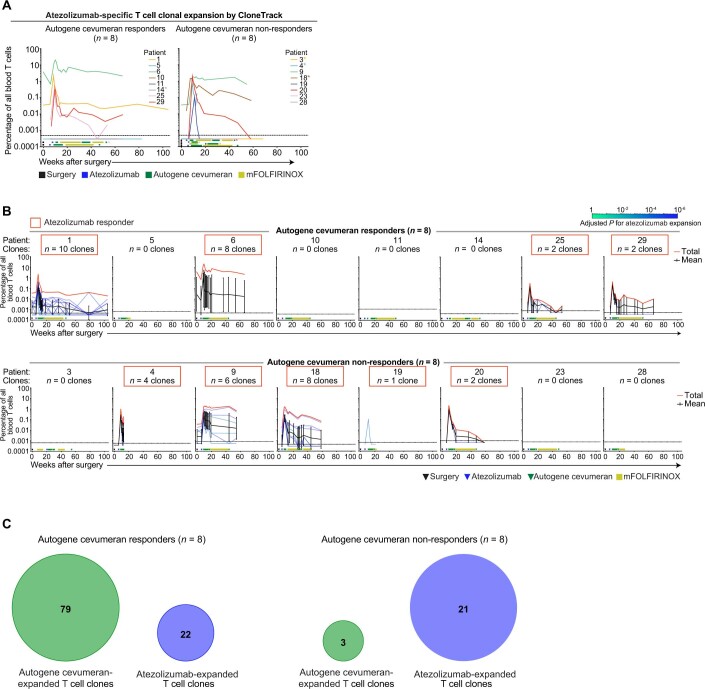
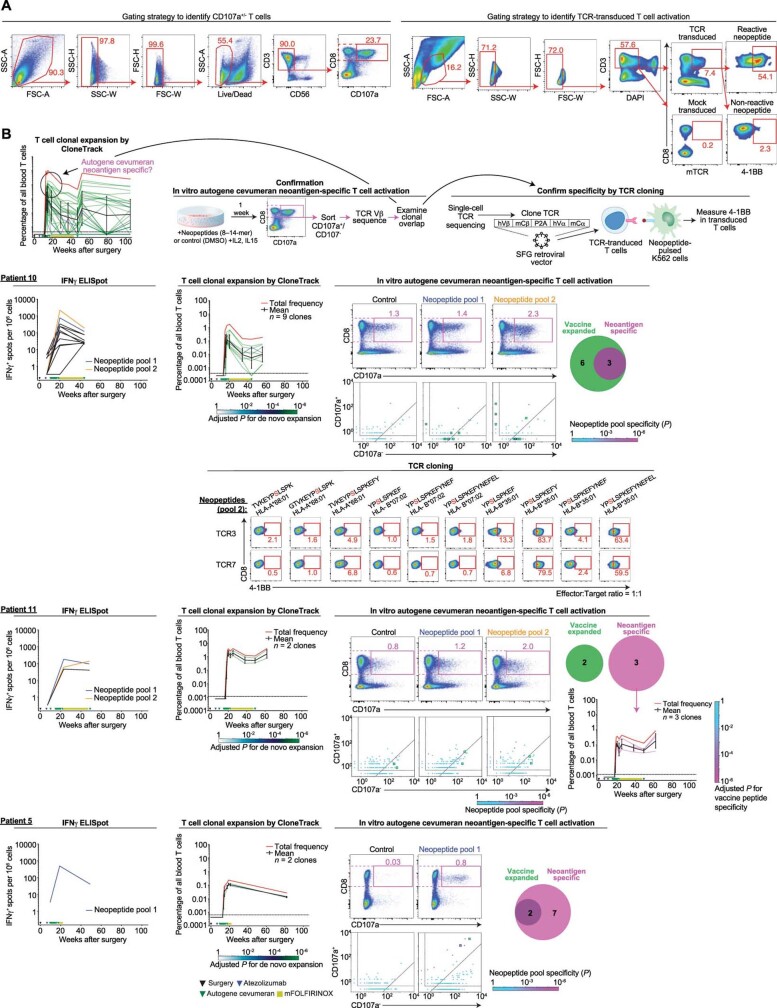
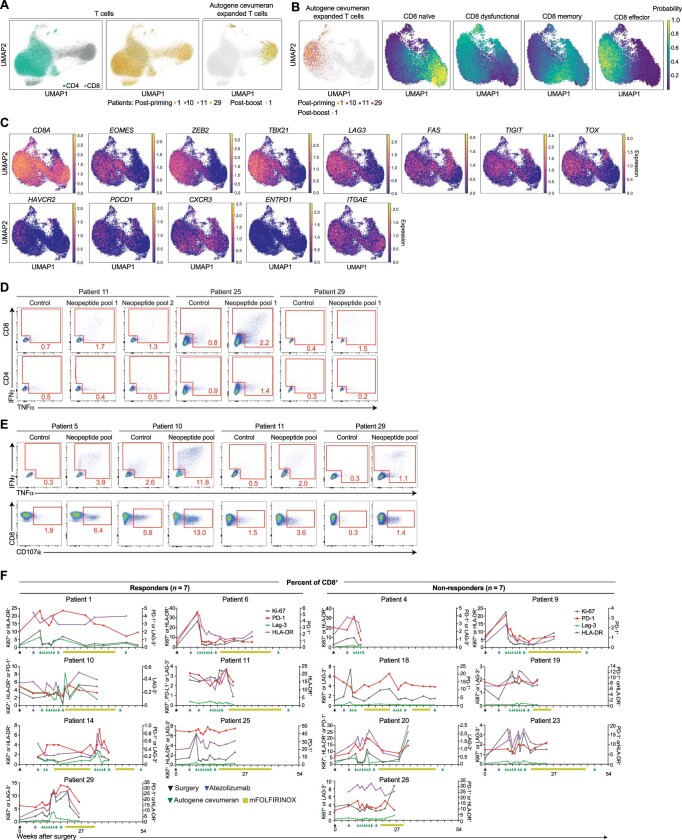
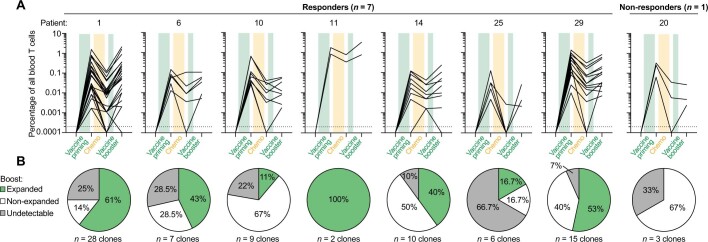
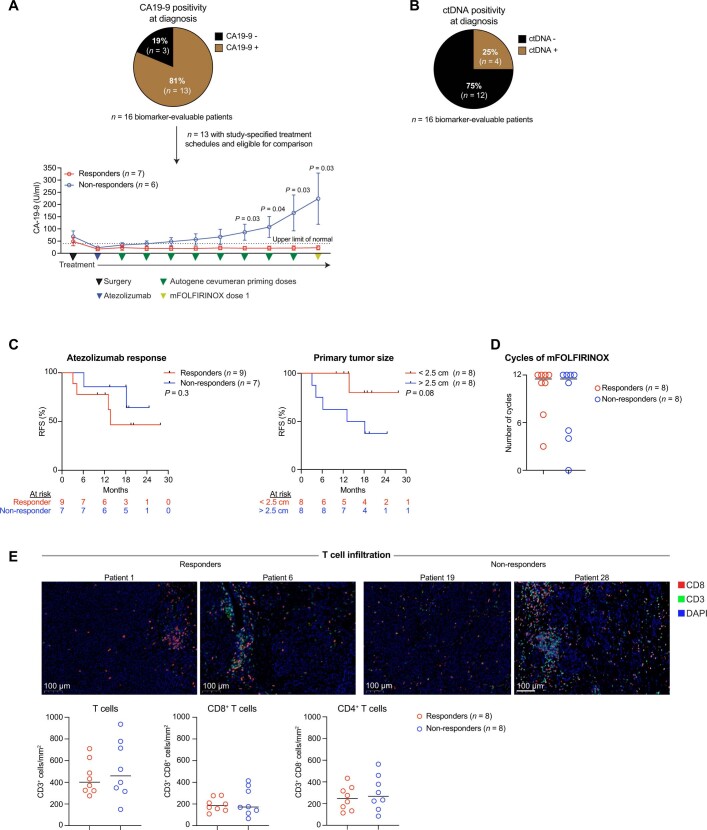
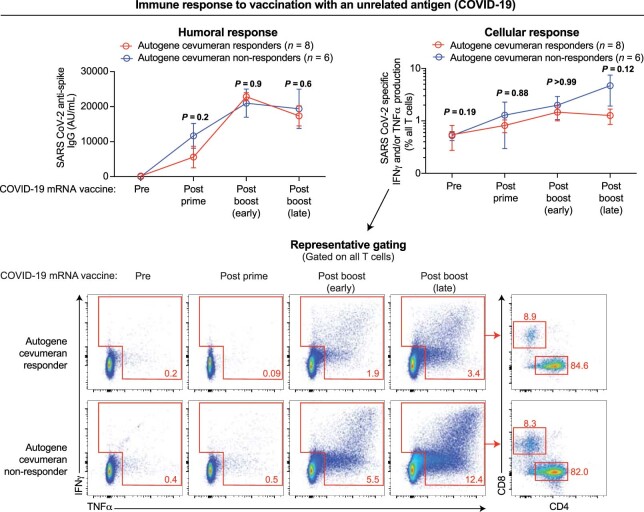
Pancreatic ductal adenocarcinoma (PDAC) is lethal in 88% of patients 1 , yet harbours mutation-derived T cell neoantigens that are suitable for vaccines 2,3 . Here in a phase I trial of adjuvant autogene cevumeran, an individualized neoantigen vaccine based on uridine mRNA–lipoplex nanoparticles, we synthesized mRNA neoantigen vaccines in real time from surgically resected PDAC tumours. After surgery, we sequentially administered atezolizumab (an anti-PD-L1 immunotherapy), autogene cevumeran (a maximum of 20 neoantigens per patient) and a modified version of a four-drug chemotherapy regimen (mFOLFIRINOX, comprising folinic acid, fluorouracil, irinotecan and oxaliplatin). The end points included vaccine-induced neoantigen-specific T cells by high-threshold assays, 18-month recurrence-free survival and oncologic feasibility. We treated 16 patients with atezolizumab and autogene cevumeran, then 15 patients with mFOLFIRINOX. Autogene cevumeran was administered within 3 days of benchmarked times, was tolerable and induced de novo high-magnitude neoantigen-specific T cells in 8 out of 16 patients, with half targeting more than one vaccine neoantigen. Using a new mathematical strategy to track T cell clones (CloneTrack) and functional assays, we found that vaccine-expanded T cells comprised up to 10% of all blood T cells, re-expanded with a vaccine booster and included long-lived polyfunctional neoantigen-specific effector CD8 + T cells. At 18-month median follow-up, patients with vaccine-expanded T cells (responders) had a longer median recurrence-free survival (not reached) compared with patients without vaccine-expanded T cells (non-responders; 13.4 months, P = 0.003). Differences in the immune fitness of the patients did not confound this correlation, as responders and non-responders mounted equivalent immunity to a concurrent unrelated mRNA vaccine against SARS-CoV-2. Thus, adjuvant atezolizumab, autogene cevumeran and mFOLFIRINOX induces substantial T cell activity that may correlate with delayed PDAC recurrence.
Overview
The claims and statistics of this paper haven’t been checked yet.
Free: it reads the open-access text and checks the first 5 claims that cite a source we can check. Create a free account to check every claim.
Integrity signals
Registry
Cites
Statistics
Figures
Verification
Claims the paper makes
The claims and statistics of this paper haven’t been checked yet.
Free: it reads the open-access text and checks the first 5 claims that cite a source we can check. Create a free account to check every claim.
Claims other papers make about this one
Each is checked against this paper’s own text: does it say what the citing paper says it does?
The source backs part of the claim, not all of it — or backs it for a different population, condition or comparison.
In the citing paper
“Although further confirmatory studies are needed, these results provide initial clinical evidence that personalized therapeutic cancer vaccines can enhance responses to ICIs, with many other studies planned.”
From Adjuvant and neoadjuvant immunotherapies in hepatocellular carcinoma (2024) · cites this paper as [136]
Experimental — accuracy not yet measuredThe source backs part of the claim, not all of it — or backs it for a different population, condition or comparison.
In the citing paper
“In this trial, 8 of 16 patients with resected pancreatic ductal adenocarcinoma remained free of cancer after a median follow-up of 18 months136.”
From Adjuvant and neoadjuvant immunotherapies in hepatocellular carcinoma (2024) · cites this paper as [136]
Experimental — accuracy not yet measuredThe source backs part of the claim, not all of it — or backs it for a different population, condition or comparison.
In the citing paper
“Cancer mRNA-based vaccines tend to be administered alone or in combination with ICIs, and after resection, although they have also been used in neoadjuvant–adjuvant treatment approaches136,138,139 (Fig. 3c,d).”
From Adjuvant and neoadjuvant immunotherapies in hepatocellular carcinoma (2024) · cites this paper as [136]
Experimental — accuracy not yet measuredThe cited source says what the claim attributes to it.
In the citing paper
“patients enrolled in the trial with an immunologic response against the vaccine had longer median RFS than those without such a response136.”
From Adjuvant and neoadjuvant immunotherapies in hepatocellular carcinoma (2024) · cites this paper as [136]
The cited source says what the claim attributes to it.
In the citing paper
“Clinical trials of mRNA-based immunotherapeutics encoding unmutated full-length TAAs in checkpoint inhibitor-treated melanoma [18] and individualised mRNA-based immunotherapeutics encoding patient-specific mutated tumour neoantigens in pancreatic and lung cancer [19, 20] have shown encouraging results.”
From Preclinical development of an mRNA-based multiepitope immunotherapeutic for glioblastoma (2025) · cites this paper as [20]
1 more claim about this paper
Create a free account to see every claim other papers make about this one.
Self-check
Percentages, sums and reported differences re-computed from the paper’s own numbers.
The self-check needs the paper’s full text.
Citations
Cites
Sung, H., Ferlay, J., Siegel, R. L., Laversanne, M., Soerjomataram, I., Jemal, A., & Bray, F. (2021) · CA: A Cancer Journal for Clinicians · doi:10.3322/caac.21660 · Cited by 108,699
Richards, S., Aziz, N., Bale, S., Bick, D., Das, S., Gastier-Foster, J., Grody, W. W., Hegde, M., Lyon, E., Spector, E., et al. (2015) · Genetics in Medicine · doi:10.1038/gim.2015.30 · Cited by 32,594
PD-1 and PD-L1 Immune Checkpoint Blockade to Treat Breast Cancer
Hartkopf, A. D., Taran, F.-A., Wallwiener, M., Walter, C. B., Krämer, B., Grischke, E.-M., & Brucker, S. Y. (2016) · Breast Care · doi:10.1159/000453569 · Cited by 30,845
The Genome Analysis Toolkit: A MapReduce framework for analyzing next-generation DNA sequencing data
McKenna, A., Hanna, M., Banks, E., Sivachenko, A., Cibulskis, K., Kernytsky, A., Garimella, K., Altshuler, D., Gabriel, S., Daly, M., et al. (2010) · Genome Research · doi:10.1101/gr.107524.110 · Cited by 27,895
Siegel, R. L., Miller, K. D., Wagle, N. S., & Jemal, A. (2023) · CA: A Cancer Journal for Clinicians · doi:10.3322/caac.21763 · Cited by 16,303
SCANPY: large-scale single-cell gene expression data analysis
Wolf, F. A., Angerer, P., & Theis, F. J. (2018) · Genome Biology · doi:10.1186/s13059-017-1382-0 · Cited by 8,881
Rahib, L., Smith, B. D., Aizenberg, R., Rosenzweig, A. B., Fleshman, J. M., & Matrisian, L. M. (2014) · Cancer Research · doi:10.1158/0008-5472.can-14-0155 · Cited by 7,094
Predictive correlates of response to the anti-PD-L1 antibody MPDL3280A in cancer patients
Herbst, R. S., Soria, J.-C., Kowanetz, M., Fine, G. D., Hamid, O., Gordon, M. S., Sosman, J. A., McDermott, D. F., Powderly, J. D., Gettinger, S. N., et al. (2014) · Nature · doi:10.1038/nature14011 · Cited by 5,231
Self-citationCOSMIC: the Catalogue Of Somatic Mutations In Cancer
Tate, J. G., Bamford, S., Jubb, H. C., Sondka, Z., Beare, D. M., Bindal, N., Boutselakis, H., Cole, C. G., Creatore, C., Dawson, E., et al. (2019) · Nucleic Acids Research · doi:10.1093/nar/gky1015 · Cited by 4,867
Neoantigens in cancer immunotherapy
Schumacher, T. N., & Schreiber, R. D. (2015) · Science · doi:10.1126/science.aaa4971 · Cited by 4,783
Cited by
Items 901–1,000 of 1,003
Tiberi, G., Scagliotti, A., Curcio, C., Candiello, E., Villegas, P. A. D., Brugiapaglia, S., Mucciolo, G., Roux, C., Castellano, G., Curto, R., et al. (2025) · Clinical and Translational Medicine · doi:10.1002/ctm2.70442 · Cited by 2
Driving Precision Medicine in Pancreatic Cancer With Molecular Genetics
Farooq, M., & Pishvaian, M. J. (2025) · Seminars in Radiation Oncology · doi:10.1016/j.semradonc.2025.08.004 · Cited by 3
Emerging Systemic Therapy Considerations for Pancreatic Cancer
Liang, K.-L., Guo, M. Z., & Zaidi, N. (2025) · Seminars in Radiation Oncology · doi:10.1016/j.semradonc.2025.07.006 · Cited by 2
Tomatine as a versatile adjuvant boosts mRNA vaccine responses
Xiao, W., Qin, S., Li, X., Jin, X., Zhu, A., He, X., Duan, X., Chen, Y., Zhang, Y., Fan, N., et al. (2025) · Materials Today Bio · doi:10.1016/j.mtbio.2025.102360 · Cited by 3
“Consequently, clinical mRNA vaccine strategies often incorporate combination therapies with other immunotherapeutic modalities, such as CAR-T cell therapy or immune checkpoint inhibitors (ICIs) [11 – 13].”
Qu, W., & Zhu, S. (2025) · Cell Systems · doi:10.1016/j.cels.2025.101404 · Cited by 2
Shanmugam, M., Chiang, C., & Hwang, K. C. (2025) · ACS Nano · doi:10.1021/acsnano.5c04323 · Cited by 3
Therapeutic cancer vaccines in pancreatic cancer
Wang, Y., Huang, P., Li, C., Tu, S., & Yang, H. (2025) · Frontiers in Immunology · doi:10.3389/fimmu.2025.1674743 · Cited by 3
Mehmood, M. S., & Hajj, F. (2025) · Annals of Medicine and Surgery · doi:10.1097/ms9.0000000000004174 · Cited by 2
“…I trial using a patient-tailored mRNA vaccine induced neoantigen-specific T-cell expansion in 50% of recipients, delaying recurrence beyond 1 year [ 4 ] . mRNA vaccines can mitigate postoperative immune suppression, a phenomenon seen in up to 60% of surgical cancer patients, thereby enhancing…”
From Innovation to Impact: Advancing Cancer Research Together
Winn, R. A. (2025) · Cancer Discovery · doi:10.1158/2159-8290.cd-25-1637 · Cited by 2
Tadic, S., García-Sanmartín, J., Narro-Íñiguez, J., & Martínez, A. (2025) · International Journal of Molecular Sciences · doi:10.3390/ijms262110745 · Cited by 2
Tumor-Targeted Bacterial Vaccine Induces In Situ Immunogenic Cell Death for Cancer Immunotherapy
Wu, Y., Wu, N., Xu, Y., Yang, C., Zhou, H., Jiang, W., Shen, J., Liu, H., & Li, M. (2025) · Nano Letters · doi:10.1021/acs.nanolett.5c03938 · Cited by 3
Ichikawa, J., Okuda, H., Kawano, K., Kato, S., Sato, S., Kuroishikawa, R., Kurotaki, D., Kawase, W., Yoshida, H., Hiroshima, Y., et al. (2025) · Cancer Science · doi:10.1111/cas.70246 · Cited by 2
mRNA cancer vaccine: A novel and potential immunotherapy for multiple myeloma
Feng, Y., Du, Y., Zhang, C.-T., Xie, F., & Yan, J. (2025) · Biochimica et Biophysica Acta (BBA) - Reviews on Cancer · doi:10.1016/j.bbcan.2025.189493 · Cited by 2
RNA-based cancer vaccines: mechanisms, clinical progress, and translational challenges
Al‐Kabariti, A. Y., Kadhim, M. A., Mousa, H. M., Jyothi, S. R., Nayak, P. P., Janney, J. B., Singh, G., & Chauhan, A. S. (2025) · Immunologic Research · doi:10.1007/s12026-025-09725-3 · Cited by 2
“…atelizumab, and LNPs-mRNA vaccines containing 20 MHC class I and MHC class II-restricted individualized neoantigens led to a longer median RFS and long-lived polyfunctional neo-antigen-specific effector CD8 + T cells in 50% of patients with non-inflamed pancreatic ductal adenocarcinoma [ 129].”
Sun, Y., Sun, X. C., Liu, H., & Luo, F. (2025) · Coordination Chemistry Reviews · doi:10.1016/j.ccr.2025.217412 · Cited by 2
mRNA-based immunotherapy platform targeting endometrial cancer
Freyberg, M., Dierks, M., Naß, N., George, C., Geffken, M., Ignatov, A., Kalinski, T., & Ignatova, Z. (2025) · Journal of Translational Medicine · doi:10.1186/s12967-025-07497-w · Cited by 2
“Recent clinical studies in solid tumors (pancreatic and melanoma) have shown that mRNA vaccines can induce robust antigen-specific T cell responses and prolong disease-free survival [14, 15].”
Significance and challenges of immunopharmacogenomics
Handzha, L. H., & Nakamura, Y. (2025) · Frontiers in Immunology · doi:10.3389/fimmu.2025.1711887 · Cited by 2
pH-Isomerizable Acylhydrazone-Based Ionizable Lipids for Spleen-Targeted mRNA Vaccines
Deng, X., Li, Y., Zhu, X., Du, Y., Chi, H., Cheng, M., Wang, Y., An, K., & Zhang, P. (2025) · Journal of the American Chemical Society · doi:10.1021/jacs.5c16121 · Cited by 3
Kumano, S., Tanaka, K., Kawakami, S., Yamamoto, M., Akahori, R., & Nojima, A. (2025) · Analytical Chemistry · doi:10.1021/acs.analchem.5c02991 · Cited by 2
Membranes: The only chance for the mRNA tortoise to win, economically
Neuman, T. G., Karla, S., Kilduff, J. E., Plawsky, J. L., & Belfort, G. (2025) · Biotechnology Advances · doi:10.1016/j.biotechadv.2025.108774 · Cited by 2
Savoie, C. J., Wu, Z., Saab, F., St-Laurent, T., Nielly‐Thibault, L., Beauparlant, C. B., Déry, M.-A., El-Hachem, N., Gharsallaoui, B., Tremblay, S.-J., et al. (2025) · iScience · doi:10.1016/j.isci.2025.114512 · Cited by 2
Zhang, M., Pan, X., Li, J., & Wang, H. (2026) · Chinese Chemical Letters · doi:10.1016/j.cclet.2026.112358 · Cited by 3
Willemin, T., Guinchard, F., Marmey, J., Chareyre, A., Aguesse, A., Peronin, S., Bouhired, M., Malburet, C., Talaga, P., Abachin, É., et al. (2026) · Vaccine · doi:10.1016/j.vaccine.2025.128180 · Cited by 2
Joung, R. H., & Snyder, R. A. (2026) · American Society of Clinical Oncology Educational Book · doi:10.1200/edbk-26-515560 · Cited by 3
Harnessing Vaccines in the Treatment of Solid Tumors: Advances, Challenges, and Future Directions
Iranzo, J. S., Giordano, E., Marsicano, R. M., Trapani, D., Marra, A., Belli, C., Zagami, P., Giachetti, P. P. M. B., Ferraro, E., Minchella, I., et al. (2026) · Vaccines · doi:10.3390/vaccines14020135 · Cited by 3
“These results, despite the small sample size, suggest that mRNA vaccines can induce immunity in historically known to be “cold” tumors with low responses to immunotherapy [74].”
Mishra, R., Ademuyiwa, F. O., Yang, Y., Herndon, J. M., Li, L., Street, C., Myers, N. B., Chen, I., Zhang, X., Hagemann, I. S., et al. (2026) · Cancer Immunology Research · doi:10.1158/2326-6066.cir-25-0666 · Cited by 2
Sensitive detection of cancer antigens enabled by user-defined peptide libraries
Manakongtreecheep, K., Ctortecka, C., Correa, L. O., Zhu, T., Lippincott, I. E., Lawrence, G. R., Howard, A. A., Hernandez, G. M., Forman, C., Duggan, E. C., et al. (2026) · Nature Biotechnology · doi:10.1038/s41587-026-03003-9 · Cited by 3
Wang, S., Wang, M., & Yao, W. (2026) · Oncology Research Featuring Preclinical and Clinical Cancer Therapeutics · doi:10.32604/or.2025.073554 · Cited by 2
Multiplexed spatial screening of lipid-based nanoparticles for extrahepatic messenger RNA targeting
Enzlein, T., Schumacher, J., Geisel, A., Keller, F., Houben, A., Walzer, K. C., Rittel, M. F., Fröhlich, B., Cairns, J. L., Cordes, J., et al. (2026) · Journal of Controlled Release · doi:10.1016/j.jconrel.2026.114728 · Cited by 2
Self-citationsynDNA vaccine against TCR chains and neoantigens for T cell lymphoma therapy
Bhojnagarwala, P. S., Bordoloi, D., Jose, J. S., Perales‐Puchalt, A., Yan, J., Sardesai, N. Y., & Weiner, D. B. (2026) · Cancer Immunology Immunotherapy · doi:10.1007/s00262-026-04302-5 · Cited by 2
Lee, S. N., Arseneau, R. J., Arnason, T., & Boudreau, J. E. (2026) · Journal for ImmunoTherapy of Cancer · doi:10.1136/jitc-2025-013796 · Cited by 2
Liu, Q., Liu, Y., Li, J., Huang, S. J., Chen, Z., Li, J., Wang, T., Zhou, P., Huo, J., & Li, D. R. (2026) · Vaccines · doi:10.3390/vaccines14030239 · Cited by 4
Endogenous living adjuvants for cancer vaccination: Concepts, mechanisms, and design principles
Yu, J., Zhu, C., Li, H., & Xu, F. (2026) · Materials Today Bio · doi:10.1016/j.mtbio.2026.103020 · Cited by 3
“…I study of the individualized mRNA neoantigen vaccine autogene cevumeran in resected pancreatic ductal adenocarcinoma, vaccine-induced high-magnitude neoantigen-specific T-cell responses were detected in 8 of 16 patients and were associated with delayed recurrence relative to non-responders [49].”
Liu, Q., Zeng, X., He, Y., Zhou, L., Tang, Y., Liu, S., Wang, X., Shen, S., Ji, J., Liu, Z., et al. (2026) · Frontiers in Immunology · doi:10.3389/fimmu.2026.1788149 · Cited by 3
Wang, X., Su, S., Tan, S., Chen, X., Wang, L., Wang, S., & Chen, F. (2026) · The Innovation · doi:10.1016/j.xinn.2026.101357 · Cited by 6
“50 Nevertheless, no mRNA cancer vaccine has yet received clinical approval.”
Harnessing the immune system: future directions in cancer immunotherapy
Zhang, J., & Cui, J. (2026) · Frontiers in Immunology · doi:10.3389/fimmu.2026.1777816 · Cited by 2
“Memorial Sloan Kettering Cancer Center reported in an mRNA personalized vaccine clinical trial that only 11% of bioinformatically predicted neoantigens were recognized by patients ’ T cells (140).”
Healthy donor T cell receptors expand functional neoantigen recognition beyond patient vaccination
Teo, H. K., Han, S., Manoharan, T., Ren, Y., Cheng, C. Z. M., Loo, S. C., Lin, Z., Li, J., Wang, W.-W., Koo, S., et al. (2026) · Science Advances · doi:10.1126/sciadv.adz1156 · Cited by 2
Advancing precision medicine in pancreatic cancer using novel biomarkers and clinical targets
Murthy, D., Seyhan, A. A., den Hollander, P., Lu, S., Kuburich, N. A., Gould, C., Karam, A., Sun, K., Schupp, P. G., Safran, H., et al. (2026) · Molecular Aspects of Medicine · doi:10.1016/j.mam.2026.101476 · Cited by 3
Zheng, R., Wang, S., Li, D., Tian, X., Sun, L., Wang, J., Wang, Y., Pan, X., Liang, Y., & Yang, Z. (2026) · International Immunopharmacology · doi:10.1016/j.intimp.2026.116744 · Cited by 2
Neoantigen-based T cell vaccines design strategies, therapeutic barriers, and clinical advances
Shi, J., Wang, J., 罗红梅, Zhao, Q., Yao, Z., Wu, G., Li, Z., Wang, H., Chen, G. D., & Wu, D. (2026) · Vaccine · doi:10.1016/j.vaccine.2026.128659 · Cited by 2
Liu, Y., Zhou, J., Song, M., Wang, J., Shang, Q., Du, J., Li, Y. P., Chen, X., Wang, J., Liao, X., et al. (2026) · Molecular Cancer · doi:10.1186/s12943-026-02670-1 · Cited by 2
“Messenger RNA vaccines have emerged as a promising strategy in cancer immunotherapy due to their safety, rapid production, and ability to induce both cellular and humoral immune responses [42–44].”
Nanotechnology-Based Cancer Vaccines: Translational Barriers and Emerging Strategies
Anwer, M., & Rahman, R. (2026) · Vaccines · doi:10.3390/vaccines14060463 · Cited by 2
“In pancreatic ductal adenocarcinoma, individualized RNA neoantigen vaccines have been shown to induce measurable neoantigen-specific T-cell responses, supporting the feasibility of this approach even in tumours traditionally considered immunologically “cold” [32].”
Persico, I., Doro, M. G., Frogheri, L., Sini, M. C., Maestrale, G. B., Manca, A., Mallardo, D., Ascierto, P. A., & Palmieri, G. (2026) · Cells · doi:10.3390/cells15110986 · Cited by 2
“In pancreatic ductal adenocarcinoma (PDAC)—a recognized non-immunogenic tumor—an individualized neoantigen mRNA vaccine (autogene cevumeran) demonstrated the ability to induce high-magnitude, de novo neoantigen-specific T-cell responses in approximately 50% of treated patients [128].”
Current status and future prospects of immunotherapy for pancreatic ductal adenocarcinoma
Lou, Y., Zhou, H., Liu, F., Chang, R., Chen, Z., Dong, C., Liu, J., Tang, X. Y., Yang, Q., Lu, C., et al. (2026) · Journal of Cancer Research and Therapeutics · doi:10.4103/jcrt.jcrt_1142_25 · Cited by 2
Current advances in immunotherapy for KRAS-Mutant pancreatic cancer
Li, M. Y., Wang, X., Li, P., Gong, H., Wu, J., & Mao, Y. (2026) · Clinical and Experimental Medicine · doi:10.1007/s10238-026-02201-8 · Cited by 2
From LNPs to hybrid nanocarriers: development, challenges and redesign of non-viral gene delivery
Wu, W., Wei, Z., & Peng, X. (2026) · Journal of Nanobiotechnology · doi:10.1186/s12951-026-04622-9 · Cited by 3
“The emergence of hybrid architectures, exosome–liposome [152, 153], lipid–polymer [221], and particle-in-particle [216] constructs, is not a stylistic trend but a structural necessity.”
Advances in Cancer Immunotherapy for Solid Tumors
Gabizon–Peretz, S., & Kluger, H. M. (2026) · Advanced Science · doi:10.1002/advs.76020 · Cited by 2
Maru, S. Y., Wetzel, M., Mitchell, J. T., Groß, N., Andaloori, L., Howe, K. L., Kartalia, E., Mo, G., Leatherman, J., Ho, W. J., et al. (2026) · The Journal of Immunology · doi:10.1093/jimmun/vkag165 · Cited by 10
Frei, J., Eisel, D., Jarzębska, N. T., Mellett, M., Yener, I. G., Abdou, M. T., Gouttefangeas, C., Flatz, L., Diken, M., Kündig, T. M., et al. (2026) · Nature Biomedical Engineering · doi:10.1038/s41551-026-01738-z · Cited by 3
Precision Medicine in Pancreatic Cancer: Targeting KRAS and Beyond
Schürmann, H., Park, W., O'Kane, G. M., Sciortino, C., Niger, M., Reichert, M., Olive, K. P., Pretzell, I., & Westphalen, C. B. (2026) · Targeted Oncology · doi:10.1007/s11523-026-01236-x · Cited by 3
Self-citationCho, U., Pu, J., Sharma, A., Song, J., You, J. H., Kim, Y., Im, P. W., Park, H. W., Moon, H. E., Myeong, H. S., et al. (2026) · Molecular Cancer · doi:10.1186/s12943-026-02736-0 · Cited by 2
“Chen et al. further demonstrated that mRNA nanovaccines targeting neoantigens in pancreatic cancer models elicited robust T-cell responses, highlighting their potential for immunologically cold tumors [87].”
InfluentialIsmail, M., Alabed, Z., Alhallaq, K., Al-Najjar, E., Mustafa, N., Aldroubi, Y., Hamdaneh, Y., & Esmail, A. (2026) · Cancers · doi:10.3390/cancers18162593 · Cited by 2
Lazzaro, S., Leroux-Roels, G. G., Janetzki, S., Salaun, B., Cook, L. E., Franke, K., Poschke, I. C., Bunse, L., Welters, M. J. P., Fehlings, M., et al. (2026) · Nature Protocols · doi:10.1038/s41596-026-01453-8 · Cited by 2
Entering the Age of Specificity in T Cell Immunity
Thomas, P. G. (2026) · Immunological Reviews · doi:10.1111/imr.70184 · Cited by 2
“Nucleic acid-based vaccines have shown promising activity in pancreatic carcinoma and high-risk melanoma, including in Phase II trials aimed at preventing melanoma relapse [72, 73].”
Trade-offs inside the black box of neoantigen prediction
Yao, N., & Greenbaum, B. D. (2023) · Immunity · doi:10.1016/j.immuni.2023.10.011 · Cited by 2
Self-citationTime-Dependent Effects of Clinical Interventions on SARS-CoV-2 Immunity in Patients with Lung Cancer
Mack, P. C., Hsu, C., Rodilla, A. M., Gomez, J. E., Cagan, J., Huang, Y., Tavolacci, S. C., Valanparambil, R. M., Rohs, N. C., Brody, R., et al. (2024) · Vaccines · doi:10.3390/vaccines12070713 · Cited by 2
Exploring the Potential of Neoantigen-Targeted Immunotherapies in Rare Cancers
Jolfayi, A. G., Taheri, Z., Khojasteh‐Kaffash, S., Imani, S. Z. H., Afra, F., Tajabadi, Z., Tavakoli, G. M., & Rezaei, N. (2024) · Springer eBooks · doi:10.1007/978-3-030-80962-1_404-1 · Cited by 2
Yu, Q., Zhang, T., He, T., Yang, Y., Zhang, W., Kang, Y., Wu, Z., Xie, W., Zheng, J., Qian, Q., et al. (2024) · Immunology · doi:10.1111/imm.13854 · Cited by 2
“Several studies have shown that neoantigen-activated T cells can induce tumour regression in patients treated with tumour-infiltrating lymphocyte therapy [29 – 34].”
Conejo-Garcia, J. R., Lopez-Bailon, L. U., & Anadon, C. M. (2024) · Journal of Leukocyte Biology · doi:10.1093/jleuko/qiae179 · Cited by 3
Tumor-Specific Antigen Delivery for T-cell Therapy via a pH-Sensitive Peptide Conjugate
Yurkevicz, A. M., Liu, Y., Katz, S. G., & Glazer, P. M. (2024) · Molecular Cancer Therapeutics · doi:10.1158/1535-7163.mct-23-0809 · Cited by 2
Self-citationCancer vaccines in focus: The next frontier in immuno-oncology
Xie, Y., Cao, L.-Q., Yang, H., Wurpel, J. N. D., & Chen, Z. (2024) · Cancer Letters · doi:10.1016/j.canlet.2024.217390 · Cited by 2
Wang, X., Jiang, L., Zhao, J., Wu, M., Xiong, J., Wu, X., & Weng, X. (2024) · Frontiers in Immunology · doi:10.3389/fimmu.2024.1456209 · Cited by 2
Li, Y., Lam, S. S. K., Gao, Y., Shore, E. A., Anderson, D. W., Hode, T., & Martin, R. C. G. (2024) · Annals of Surgical Oncology · doi:10.1245/s10434-024-16742-3 · Cited by 2
“9,11,26 One challenge in treating pancreatic adenocarcinoma with immunotherapy is the tumor’s ability to evade the immune system through various mechanisms, such as creating an immunosuppressive microenvironment and expressing molecules that inhibit immune responses.”
Antitumor mRNA vaccines based on neoantigens
Starostina, E. V., Nizolenko, L. F., Карпенко, Л. И., & Ilyichev, A. A. (2025) · Siberian Journal of Oncology · doi:10.21294/1814-4861-2024-23-6-149-158 · Cited by 2
Isolation of a tumor neoantigen specific CD8+ TCR from a skin biopsy of a vaccination site
Roberti, M. P., Charoentong, P., Lyu, Y., Meyer, M., Eichmüller, S. B., Schmidt, P., Momburg, F., Cetin, M., Hartmann, F. J., Valous, N. A., et al. (2025) · OncoImmunology · doi:10.1080/2162402x.2025.2457793 · Cited by 2
Liu, W., Su, H. L., Guo, P., Hong, L., Hao, X., & Li, X. (2025) · Frontiers in Immunology · doi:10.3389/fimmu.2025.1537947 · Cited by 5
Road Map to Defeat Pancreatic Cancer
Ferguson, L. P., & Tuveson, D. A. (2025) · Annual Review of Cancer Biology · doi:10.1146/annurev-cancerbio-060624-044323 · Cited by 3
Yoshikawa, S., Maeda, C., Iizuka, A., Ikeya, T., Yamashita, K., Ashizawa, T., Kanematsu, A., Miyata, H., Kikuchi, Y., Urakami, K., et al. (2025) · Cancer Genomics & Proteomics · doi:10.21873/cgp.20517 · Cited by 2
Advances on cancer vaccine trials registered in China and the USA in 2014-2024
Shi, W., Chen, Z., Yu, Q., & Zhang, L. (2025) · Frontiers in Oncology · doi:10.3389/fonc.2025.1557253 · Cited by 4
“Insuf fi cient immunogenicity (4): Tumor antigens are often only slightly different from normal tissue antigens, so the degree of recognition and reaction of the immune system is relatively low (2).”
InfluentialCurrent perspectives and future strategies of chemotherapy for pancreatic cancer: a narrative review
Chon, H. J. (2025) · Journal of Korean Medical Association · doi:10.5124/jkma.25.0061 · Cited by 2
Nanomaterials-enabled mRNA delivery for Cancer immunotherapy
Chen, Y., Liang, S., Peng, Y., Ma, K., Yun, K., Ma, X., Hai, L., Mei, L., Wang, L., & Wang, Z. (2025) · Coordination Chemistry Reviews · doi:10.1016/j.ccr.2025.216945 · Cited by 2
Minimalist mRNAs: A fast track to cancer vaccines
Salaberry, L., Covo-Vergara, Á., Beloki, U., Silva-Pilipich, N., & Smerdou, C. (2025) · Molecular Therapy — Nucleic Acids · doi:10.1016/j.omtn.2025.102669 · Cited by 2
“5,6 In initial experiments, Esprit et al. studied the effect of removing canonical mRNA elements, each one at a time, in standard reporter assays using GFP or luciferase as trans-genes.”
Ward, R. W., Ananthanarayanan, A., Bhardwaj, N., & Vabret, N. (2025) · Methods in molecular biology · doi:10.1007/978-1-0716-4742-4_5 · Cited by 2
Perevaryukha, A. Y. (2025) · BIOPHYSICS · doi:10.1134/s0006350925700551 · Cited by 2
“In new experiments on cancer vaccination, the T-cell response was found in exactly half of the group vaccinated with experimental mRNA-lipoplex vaccines against neoantigens detected in the tumor [57].”
Pusta, A., Tertiş, M., Ardusadan, C., Mirel, S., & Cristea, C. (2024) · Nanomaterials · doi:10.3390/nano14090793 · Cited by 2
“Different strategies for cancer therapy have been developed in recent years, such as vaccines [1], immunotherapy [2], intestine-inspired delivery systems [3], flexible electrohydrodynamic pumps [4], and targeted drug delivery systems such as liposomes, dendrimers, metallic particles, polymeric…”
Perspectives from the leadership of Journal for ImmunoTherapy of Cancer
van der Burg, S. H., & Lotze, M. T. (2024) · Journal for ImmunoTherapy of Cancer · doi:10.1136/jitc-2024-009661 · Cited by 2
“With the strength of a fully focused biotechnology industry, it is possible to rapidly define and produce patient mutation-specific vaccines, the use of which has shown promise in patients with pancreatic cancer 12 and melanoma.”
BackgroundA new era with advanced immunotherapy
Lopez, C. B., Ruijgrok, E. J., & van Eijck, C. H. J. (2024) · Translational Gastroenterology and Hepatology · doi:10.21037/tgh-24-37 · Cited by 2
“…therapeutic mRNA-based cancer vaccines have not yet been approved for standard treatment, early clinical trials have shown solid results, such as Rojas et al. ’s phase I trial of adjuvant autogenous cevumeran, an individualized neoantigen vaccine based on uridine mRNA-lipoplex nanoparticles (14).”
Capietto, A.-H., Balança, C.-C., Bouziat, R., Wu, T. D., Gober, J. G., Carbone, C. B., Nissenbaum, A., Hoshyar, R., Yadav, M., Gutierrez, A., et al. (2025) · bioRxiv (Cold Spring Harbor Laboratory) · doi:10.1101/2025.06.09.657934 · Cited by 3
Self-citationSun, Y., Kaminskiy, Y., Branca, R. M., Li, S., Gultekin, O., Govindajaran, K., Salehi, S., Lehtiö, J., & Sarhan, D. (2025) · bioRxiv (Cold Spring Harbor Laboratory) · doi:10.1101/2025.09.15.676162 · Cited by 2
Neoantigen vaccines at the crossroads: lessons from AMPLIFY-201
Wang, H. H., & Yarchoan, M. M. (2025) · Nature Reviews Clinical Oncology · doi:10.1038/s41571-025-01076-0 · Cited by 2
“…vaccine autogene cevu-meran plus atezolizumab in patients with resected PDAC, more-robust immune responses were associated with a statistically significant delay in disease recurrence, without clear evidence of baseline differences in immune fitness between responders and non-responders 8,9 .”
Programmable Aptamer-Embedded Circular RNAs for Targeted Antigen-Presenting Cells ImmunotherapyPreprint
Zhang, Y., Wang, W., Qian, X., Chen, J., Ding, D., Gan, S., Yi, W., Li, Y., Deng, Y., Chen, Z., et al. (2025) · bioRxiv (Cold Spring Harbor Laboratory) · doi:10.1101/2025.09.28.679023 · Cited by 5
Could a COVID-19 vaccine improve the effectiveness of cancer immunotherapy?
Gnjatic, S. (2025) · Nature Reviews Clinical Oncology · doi:10.1038/s41571-025-01105-y · Cited by 2
“Personalized cancer vaccines capable of delivering tumour-derived neoan-tigens have been promising in terms of priming de novo responses 2–4 , and randomized trials testing these agents in combination with ICIs are expected to provide results in the next few years.”
Zhang, Y., Shi, X., Wang, Y., Wang, R., Lin, F., Cao, Y., Li, W., & Chen, H. (2026) · eLife · doi:10.7554/elife.109982.1 · Cited by 2
Peng, S., Huang, H., Zhu, X., Chen, J., Ding, X., Wang, F., Chen, L., & Lu, Z. (2024) · Experimental and Therapeutic Medicine · doi:10.3892/etm.2024.12466 · Cited by 1
“However, despite surgery, ~90% of patients experience disease recurrence within 7-9 months, leading to a 5-year overall survival (OS) rate 10% (4).”
BackgroundRNA Isoforms as Broad Targets for Cancer Immunotherapy
Li, G., & Salomonis, N. (2024) · DNA and Cell Biology · doi:10.1089/dna.2024.0108 · Cited by 1
“In the context of HLA-I, there are numerous instances, including personalized vaccines (Rojas et al., 2023) and the TCR-T cell therapies (Leidner et al., 2022).”
Decoding trends in mRNA vaccine research: A comprehensive bibliometric study
Zhang, C., Wang, Y., Peng, J., Wen, X., Zhang, Y., Li, K., Du, H., & Hu, X. (2024) · Human Vaccines & Immunotherapeutics · doi:10.1080/21645515.2024.2355037 · Cited by 4
Claudin 18 turns up the heat in cancer
Zhang, J., & Westcott, P. M. K. (2024) · Immunity · doi:10.1016/j.immuni.2024.05.015 · Cited by 2
Self-assembling nanoparticles for miRNA delivery towards precision medicine against melanoma
Nele, V., Liguoro, D., Campani, V., Angelillo, A., Frigerio, R., Ortolano, A., Mancini, R., Fattore, L., Rosa, G. D., & Ciliberto, G. (2024) · Journal of Drug Delivery Science and Technology · doi:10.1016/j.jddst.2024.106169 · Cited by 1
Ferrantelli, F., Manfredi, F., Donnini, M., Leone, P., Pugliese, K., Olivetta, E., Giovannelli, A., Virgilio, A. D., Federico, M., & Chiozzini, C. (2024) · Cancer Gene Therapy · doi:10.1038/s41417-024-00831-2 · Cited by 1
mRNA vaccines for gastrointestinal malignancies: cutting-edge advances and future perspectives
Zhang, G., Huang, X., & Liang, T. (2024) · 中国科学通报:英文版 · doi:10.1016/j.scib.2024.11.019 · Cited by 1
Mendes, I., & Vale, N. (2024) · Future Pharmacology · doi:10.3390/futurepharmacol4040049 · Cited by 1
“It ranks as the third leading cause of cancer-related mortality among both men and women in the United States, and it is the seventh leading cause of cancer death globally [4].”
Tanaka, H., & Akita, H. (2025) · Springer eBooks · doi:10.1007/978-981-97-7067-0_4 · Cited by 1
The Role of Therapeutic Vaccines in Cancer Immunotherapy
Baxevanis, C. N., Tsitsilonis, O., Goulielmaki, M., Tsakirakis, N., & Gritzapis, A. D. (2025) · Onco · doi:10.3390/onco5010011 · Cited by 1
“Patients who responded to the vaccine and expressed high densities of circulating vaccine-specific T cells had longer median recurrence-free survival compared with patients who lacked vaccine-expanded T cells [142].”
Vaccines as Prophylactics and Therapeutics
Bagwe, P., Vijayanand, S., & Gaur, A. (2025) · Springer eBooks · doi:10.1007/978-3-031-81787-8_2 · Cited by 3
Defining key parameters of therapeutic activity using mouse cancer neoepitopes
Singhaviranon, S., Dempsey, J. P., Ebrahimi-Nik, H., & Srivastava, P. K. (2025) · The Journal of Immunology · doi:10.1093/jimmun/vkaf090 · Cited by 1
Cancer Vaccines: A Promising Therapeutic Strategy in Advanced Solid Tumors
Caridi, S., Maccauro, V., Cerrito, L., Ianiro, G., Pallozzi, M., Stella, L., Gasbarrini, A., & Ponziani, F. R. (2025) · Vaccines · doi:10.3390/vaccines13060591 · Cited by 2
Structural Characterization of Biotherapeutics and New Modalities
Lello, P. D., & Lupardus, P. J. (2025) · Wiley eBooks · doi:10.1002/9781394236145.ch7 · Cited by 1
Wu, W., & Wang, Z. (2025) · Expert Opinion on Drug Delivery · doi:10.1080/17425247.2025.2517363 · Cited by 3
“…angioedema, and ATTR cardiomyopathy) [9–11], mRNA-derived antibody production for infection treatment (chikungunya virus) [17], mRNA-based protein replacement therapy for rare diseases (propionic acidemia) [12], and personalized mRNA neoantigen vaccines for cancer therapy (pancreatic cancer) [18].”
InfluentialTsai, A. K., Rollins, M. R., Ellefson, M. A., Schmiechen, Z. C., Burrack, A. L., Hulbert, A., Qian, G., Zhang, H., Cruz-Hinojoza, E., Butler, J. Z., et al. (2026) · Journal for ImmunoTherapy of Cancer · doi:10.1101/2025.06.04.657887 · Cited by 1
Pan, D., Du, L., Liu, J., Kuerban, K., Huang, X., Wang, Y., Guo, Q., Chen, H., Wang, S., Wang, L., et al. (2025) · Vaccines · doi:10.3390/vaccines13070710 · Cited by 1
“Benefiting from advancements in vaccine platforms and antigen screening technologies, the efficacy of therapeutic cancer vaccines has also been enhanced [5,6].”
Metadata
- Authors
- Rojas, L. A., Sethna, Z., Soares, K. C., Olcese, C., Pang, N., Patterson, E., Lihm, J., Ceglia, N., Guasp, P., Chu, A., Yu, R., Chandra, A. K., Waters, T., Ruan, J., Amisaki, M., Zebboudj, A., Odgerel, Z., Payne, G., Derhovanessian, E., Müller, F., Rhee, I., Yadav, M., Dobrin, A., Sadelain, M., Łuksza, M., Cohen, N., Tang, L., Basturk, O., Gönen, M., Katz, S., Do, R. K., Epstein, A. S., Momtaz, P., Park, W., Sugarman, R., Varghese, A. M., Won, E., Desai, A., Wei, A. C., D’Angelica, M. I., Kingham, T. P., Mellman, I., Merghoub, T., Wolchok, J. D., Sahin, U., Türeci, Ö., Greenbaum, B. D., Jarnagin, W. R., Drebin, J., O’Reilly, E. M., & Balachandran, V. P.
- Affiliations
- Memorial Sloan Kettering Cancer Center (US)
- BioNTech (Germany) (DE)
- Genentech (US)
- Tisch Cancer Institute (US)
- Icahn School of Medicine at Mount Sinai (US)
- Weill Cornell Medicine (US)
- Corresponding author
- Greenbaum, Benjamin D.
- Balachandran, Vinod P.
- ORCID
- Rojas, Luis A.
- Sethna, Zachary
- Soares, Kevin C.
- Olcese, Cristina
- Lihm, Jayon
- Ceglia, Nicholas
- Guasp, Pablo
- Yu, Rebecca
- Amisaki, Masataka
- Zebboudj, Abderezak
- Yadav, Mahesh
- Dobrin, Anton
- Sadelain, Michel
- Łuksza, Marta
- Cohen, Noah
- Tang, Laura
- Basturk, Olca
- Gönen, Mithat
- Katz, Seth
- Epstein, Andrew S.
- Momtaz, Parisa
- Park, Wungki
- Varghese, Anna M.
- Won, Elizabeth
- Wei, Alice C.
- Kingham, T. Peter
- Mellman, Ira
- Merghoub, Taha
- Wolchok, Jedd D.
- Sahin, Ugur
- Türeci, Özlem
- Greenbaum, Benjamin D.
- Jarnagin, William R.
- Drebin, Jeffrey
- O’Reilly, Eileen M.
- Balachandran, Vinod P.
- Venue
- Nature
- Published
- 2023-05-10
- Volume
- 618
- Issue
- 7963
- Pages
- 144-150
- ISSN
- 0028-0836 (ISSN-L)
- 1476-4687
- PMC
- PMC10171177
- OpenAlex
- W4376133743
- Cited by
- 1,432
- References
- 63
- Citations by year
- 2026: 426 · 2025: 488 · 2024: 381 · 2023: 136
- FWCI
- 156.84
- Type
- journal article
- Language
- en
- Open access
- hybrid
- doi.org
- Licence
- cc-by
- creativecommons.org/licenses/by/4.0 (tdm)
- creativecommons.org/licenses/by/4.0 (vor)
- Locations
- Nature (publishedVersion, cc-by)
- PubMed Central (publishedVersion, cc-by)
- PubMed (publishedVersion)
- RePEc: Research Papers in Economics (submittedVersion)
- Funders
- Damon Runyon Cancer Research Foundation
- Lustgarten Foundation
- Pershing Square Sohn Cancer Research Alliance
- Cycle for Survival
- National Institutes of Health (CA08748, CCSG, P30 CA08748)
- Genentech
- Stand Up To Cancer
- Marie-Josée and Henry R. Kravis Center for Molecular Oncology
- National Cancer Institute (U01CA224175, P30-CA-08748, CA08748, CA224175, P30CA008748, CCSG P30 CA08748)
- Moonshot Research and Development Program
- Cancer Moonshot
- Topics
- Life Sciences › Immunology and Microbiology › Immunology › Immunotherapy and Immune Responses
- Health Sciences › Medicine › Oncology › Cancer Immunotherapy and Biomarkers
- Health Sciences › Medicine › Oncology › Pancreatic and Hepatic Oncology Research
- Keywords
- pancreatic ductal adenocarcinoma, personalized neoantigen vaccine, mRNA vaccines, atezolizumab, modified FOLFIRINOX, neoantigen-specific T cells, CD8+ T cells, recurrence-free survival, adjuvant immunotherapy, immune fitness, COVID-19 mRNA vaccine
- MeSH terms
- mRNA Vaccines, Adjuvants, Immunologic, Antigens, Neoplasm, Humans, Immunotherapy, Lymphocyte Activation, Pancreatic Neoplasms, T-Lymphocytes, CD8-Positive T-Lymphocytes, Cancer Vaccines, Carcinoma, Pancreatic Ductal, Antibodies, Monoclonal, Humanized
About these checks
Registry, retraction, Cites and statistics results are computed, not judged, with one exception: a printed reference that no index lists is read once by a model before it counts as a citation error. Claims are extracted by a model and kept only when their quote appears verbatim in the text; each cited source is then checked, with a model’s help, for whether it says what the claim relies on. Those verdicts can be wrong — read the claim’s quote and the cited source before relying on one.
Statistics and arithmetic are recomputed, not judged.
Confidence bands are shown only for fields calibrated on our annotated test set. None is calibrated yet, so no band is shown.
What counts as a claim ›How we measure confidence ›How we check this ›
Are you an author, or do you see a problem with this page? Request a review
Data sources
Bibliographic data: Semantic Scholar, OpenAlex, Crossref.
Contains information from the Semantic Scholar Academic Graph Datasets, made available under the ODC Attribution License (ODC-BY 1.0).
Semantic Scholar’s data is described in: Kinney, R., et al. (2023). The Semantic Scholar Open Data Platform. arXiv:2301.10140.
