

Personalized RNA neoantigen vaccines stimulate T cells in pancreatic cancer
Open accessThe DOI matches its Crossref record; 65 of the 65 references it cites were found in a registry or an index.
Abstract
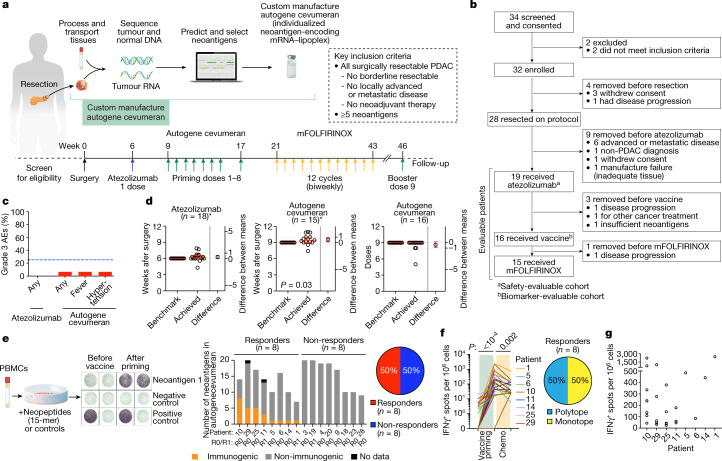
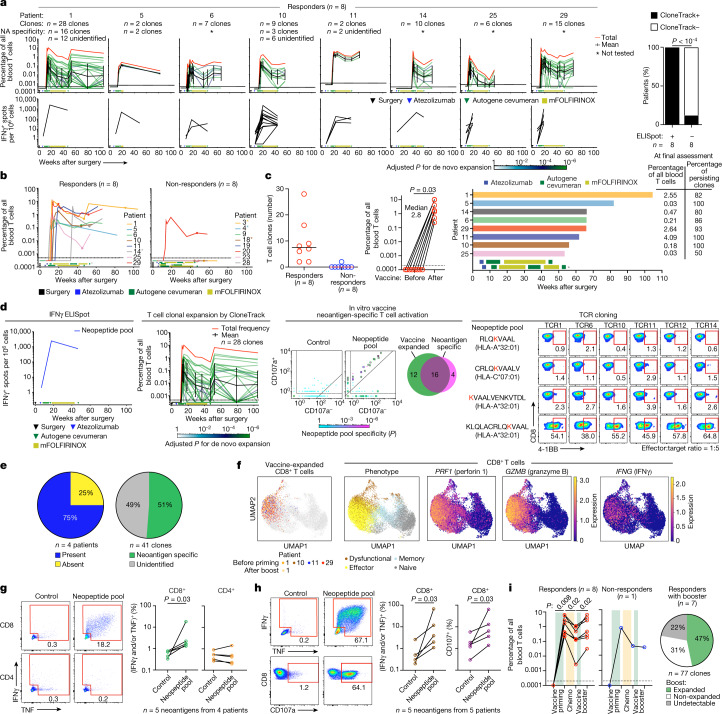
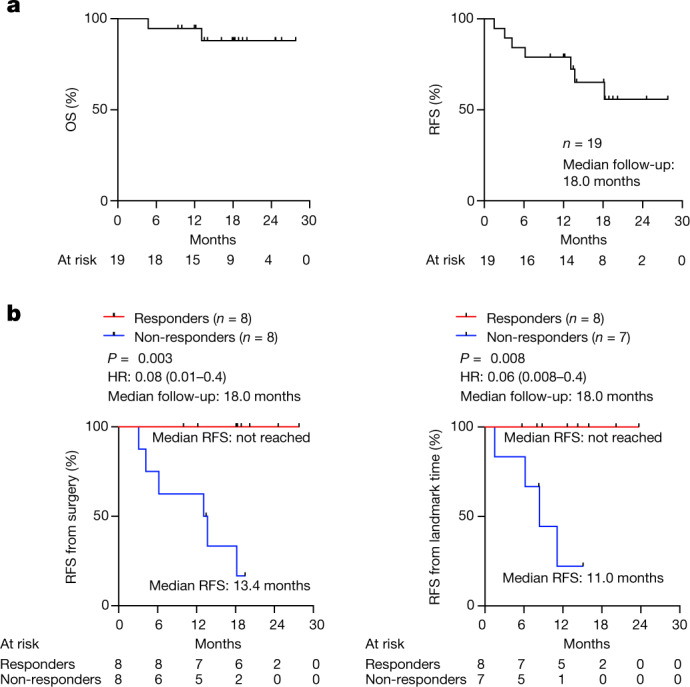
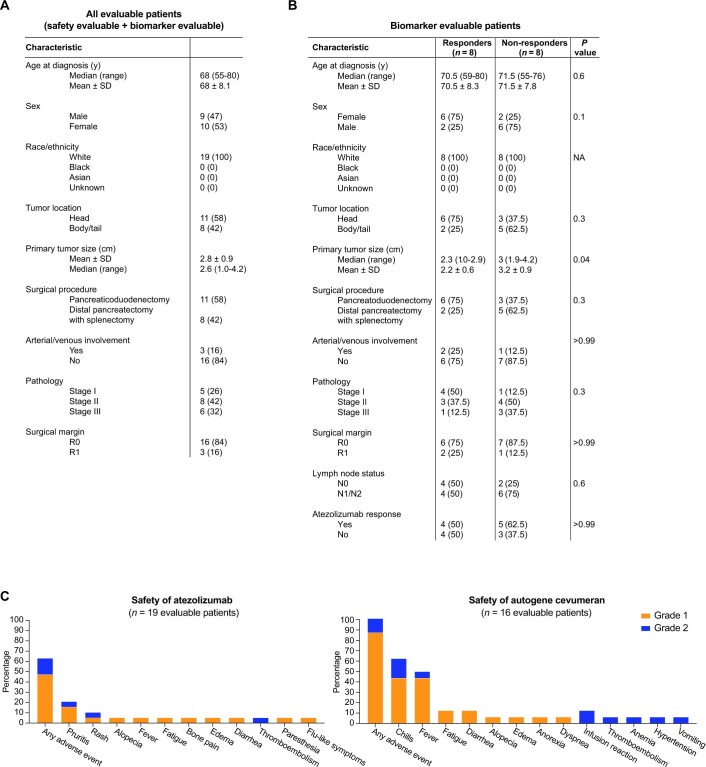
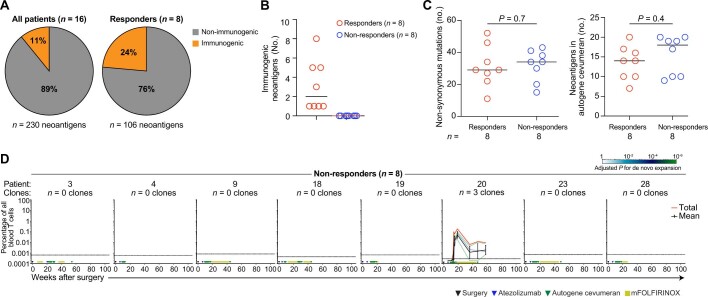
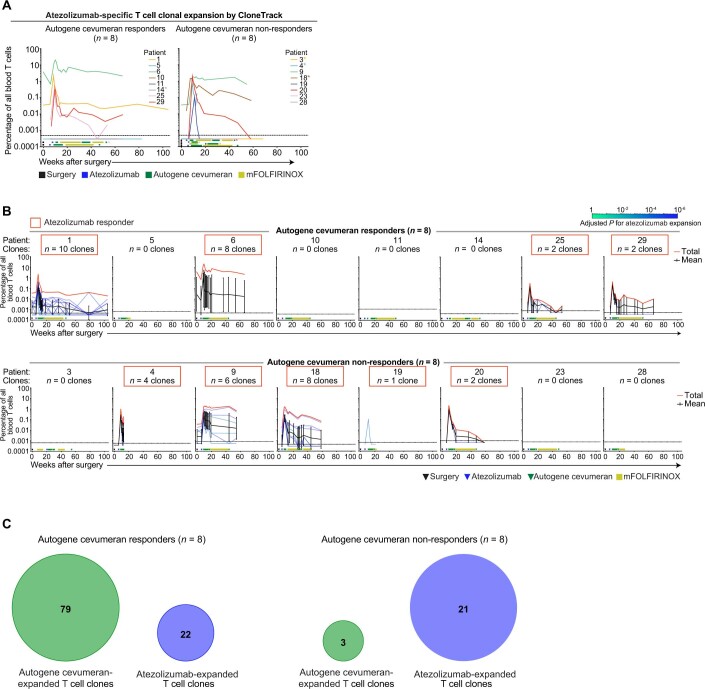
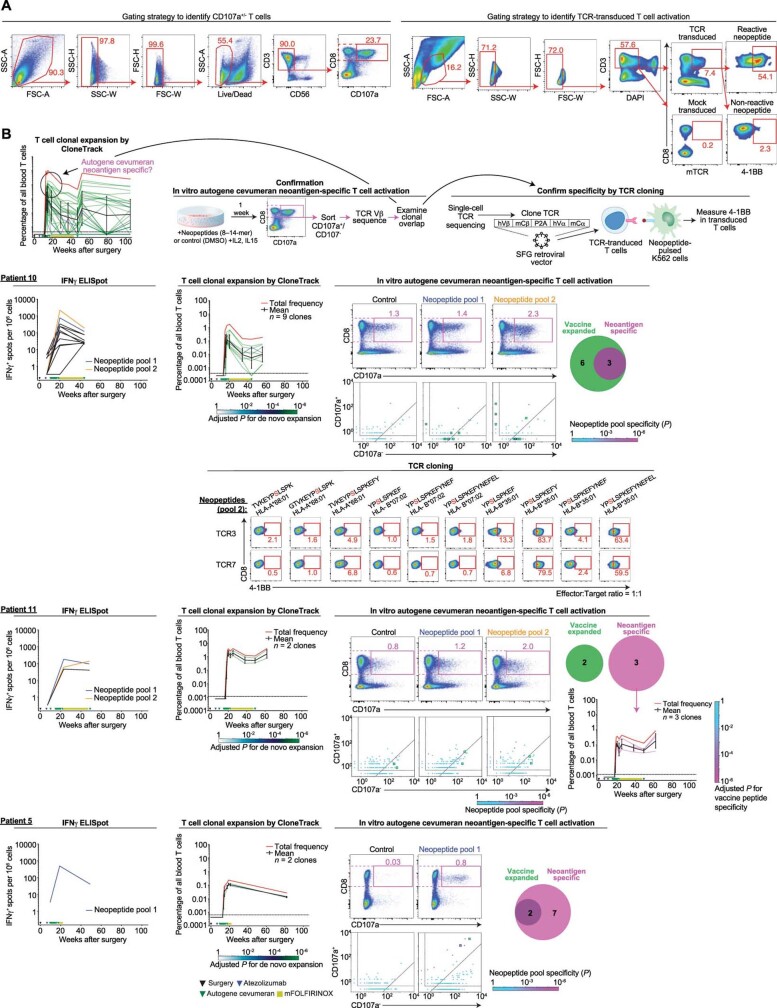
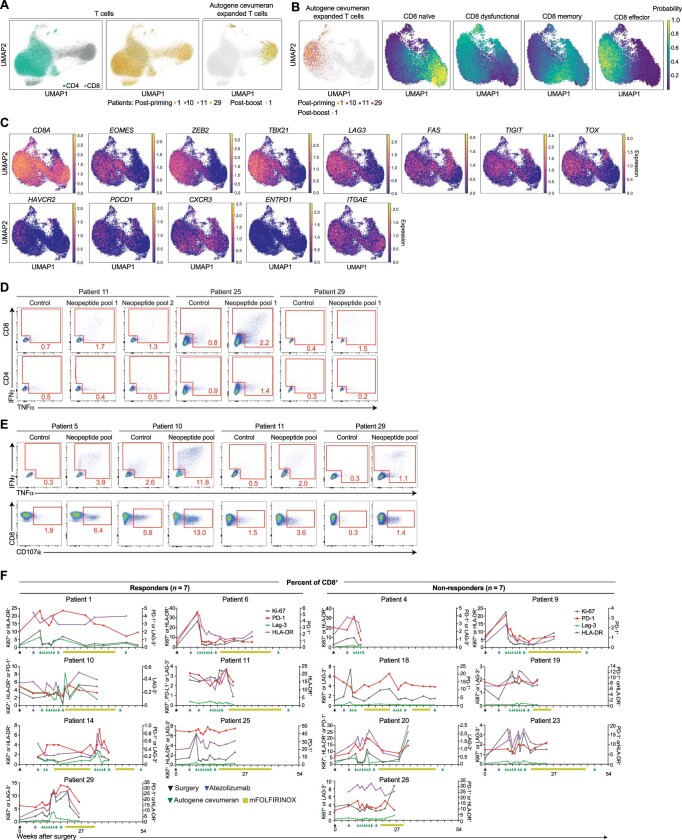
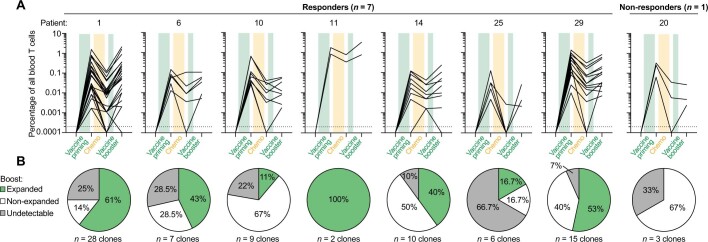
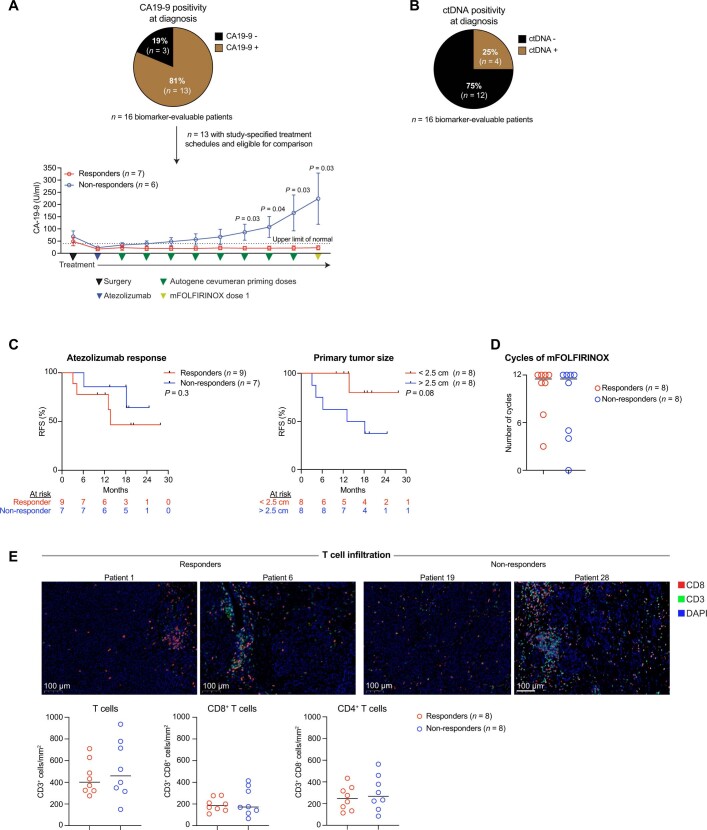
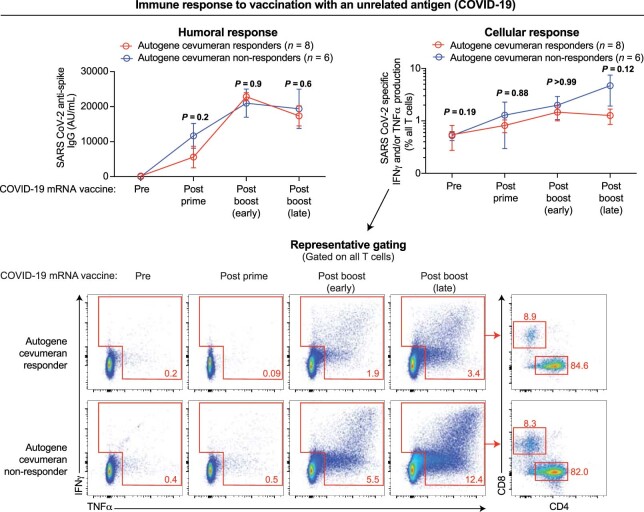
Pancreatic ductal adenocarcinoma (PDAC) is lethal in 88% of patients 1 , yet harbours mutation-derived T cell neoantigens that are suitable for vaccines 2,3 . Here in a phase I trial of adjuvant autogene cevumeran, an individualized neoantigen vaccine based on uridine mRNA–lipoplex nanoparticles, we synthesized mRNA neoantigen vaccines in real time from surgically resected PDAC tumours. After surgery, we sequentially administered atezolizumab (an anti-PD-L1 immunotherapy), autogene cevumeran (a maximum of 20 neoantigens per patient) and a modified version of a four-drug chemotherapy regimen (mFOLFIRINOX, comprising folinic acid, fluorouracil, irinotecan and oxaliplatin). The end points included vaccine-induced neoantigen-specific T cells by high-threshold assays, 18-month recurrence-free survival and oncologic feasibility. We treated 16 patients with atezolizumab and autogene cevumeran, then 15 patients with mFOLFIRINOX. Autogene cevumeran was administered within 3 days of benchmarked times, was tolerable and induced de novo high-magnitude neoantigen-specific T cells in 8 out of 16 patients, with half targeting more than one vaccine neoantigen. Using a new mathematical strategy to track T cell clones (CloneTrack) and functional assays, we found that vaccine-expanded T cells comprised up to 10% of all blood T cells, re-expanded with a vaccine booster and included long-lived polyfunctional neoantigen-specific effector CD8 + T cells. At 18-month median follow-up, patients with vaccine-expanded T cells (responders) had a longer median recurrence-free survival (not reached) compared with patients without vaccine-expanded T cells (non-responders; 13.4 months, P = 0.003). Differences in the immune fitness of the patients did not confound this correlation, as responders and non-responders mounted equivalent immunity to a concurrent unrelated mRNA vaccine against SARS-CoV-2. Thus, adjuvant atezolizumab, autogene cevumeran and mFOLFIRINOX induces substantial T cell activity that may correlate with delayed PDAC recurrence.
Overview
The claims and statistics of this paper haven’t been checked yet.
Free: it reads the open-access text and checks the first 5 claims that cite a source we can check. Create a free account to check every claim.
Integrity signals
Registry
Cites
Statistics
Figures
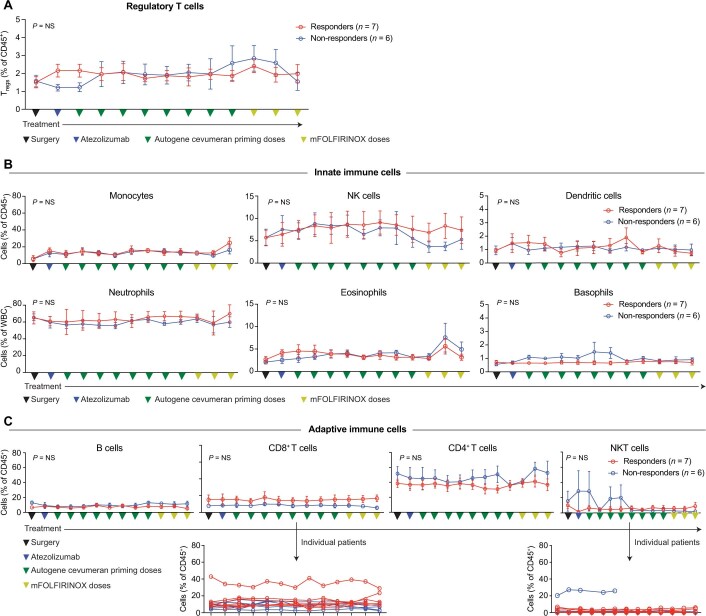
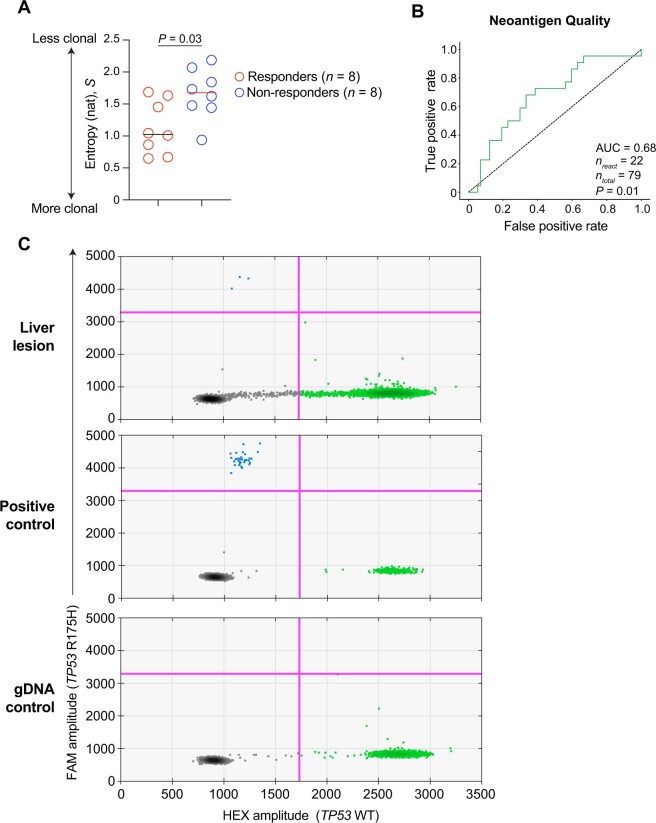
Verification
Claims the paper makes
The claims and statistics of this paper haven’t been checked yet.
Free: it reads the open-access text and checks the first 5 claims that cite a source we can check. Create a free account to check every claim.
Claims other papers make about this one
Each is checked against this paper’s own text: does it say what the citing paper says it does?
The source backs part of the claim, not all of it — or backs it for a different population, condition or comparison.
In the citing paper
“Although further confirmatory studies are needed, these results provide initial clinical evidence that personalized therapeutic cancer vaccines can enhance responses to ICIs, with many other studies planned.”
From Adjuvant and neoadjuvant immunotherapies in hepatocellular carcinoma (2024) · cites this paper as [136]
Experimental — accuracy not yet measuredThe source backs part of the claim, not all of it — or backs it for a different population, condition or comparison.
In the citing paper
“In this trial, 8 of 16 patients with resected pancreatic ductal adenocarcinoma remained free of cancer after a median follow-up of 18 months136.”
From Adjuvant and neoadjuvant immunotherapies in hepatocellular carcinoma (2024) · cites this paper as [136]
Experimental — accuracy not yet measuredThe source backs part of the claim, not all of it — or backs it for a different population, condition or comparison.
In the citing paper
“Cancer mRNA-based vaccines tend to be administered alone or in combination with ICIs, and after resection, although they have also been used in neoadjuvant–adjuvant treatment approaches136,138,139 (Fig. 3c,d).”
From Adjuvant and neoadjuvant immunotherapies in hepatocellular carcinoma (2024) · cites this paper as [136]
Experimental — accuracy not yet measuredThe cited source says what the claim attributes to it.
In the citing paper
“patients enrolled in the trial with an immunologic response against the vaccine had longer median RFS than those without such a response136.”
From Adjuvant and neoadjuvant immunotherapies in hepatocellular carcinoma (2024) · cites this paper as [136]
The cited source says what the claim attributes to it.
In the citing paper
“Clinical trials of mRNA-based immunotherapeutics encoding unmutated full-length TAAs in checkpoint inhibitor-treated melanoma [18] and individualised mRNA-based immunotherapeutics encoding patient-specific mutated tumour neoantigens in pancreatic and lung cancer [19, 20] have shown encouraging results.”
From Preclinical development of an mRNA-based multiepitope immunotherapeutic for glioblastoma (2025) · cites this paper as [20]
1 more claim about this paper
Create a free account to see every claim other papers make about this one.
Self-check
Percentages, sums and reported differences re-computed from the paper’s own numbers.
The self-check needs the paper’s full text.
Citations
Cites
Sung, H., Ferlay, J., Siegel, R. L., Laversanne, M., Soerjomataram, I., Jemal, A., & Bray, F. (2021) · CA: A Cancer Journal for Clinicians · doi:10.3322/caac.21660 · Cited by 108,699
Richards, S., Aziz, N., Bale, S., Bick, D., Das, S., Gastier-Foster, J., Grody, W. W., Hegde, M., Lyon, E., Spector, E., et al. (2015) · Genetics in Medicine · doi:10.1038/gim.2015.30 · Cited by 32,594
PD-1 and PD-L1 Immune Checkpoint Blockade to Treat Breast Cancer
Hartkopf, A. D., Taran, F.-A., Wallwiener, M., Walter, C. B., Krämer, B., Grischke, E.-M., & Brucker, S. Y. (2016) · Breast Care · doi:10.1159/000453569 · Cited by 30,845
The Genome Analysis Toolkit: A MapReduce framework for analyzing next-generation DNA sequencing data
McKenna, A., Hanna, M., Banks, E., Sivachenko, A., Cibulskis, K., Kernytsky, A., Garimella, K., Altshuler, D., Gabriel, S., Daly, M., et al. (2010) · Genome Research · doi:10.1101/gr.107524.110 · Cited by 27,895
Siegel, R. L., Miller, K. D., Wagle, N. S., & Jemal, A. (2023) · CA: A Cancer Journal for Clinicians · doi:10.3322/caac.21763 · Cited by 16,303
SCANPY: large-scale single-cell gene expression data analysis
Wolf, F. A., Angerer, P., & Theis, F. J. (2018) · Genome Biology · doi:10.1186/s13059-017-1382-0 · Cited by 8,881
Rahib, L., Smith, B. D., Aizenberg, R., Rosenzweig, A. B., Fleshman, J. M., & Matrisian, L. M. (2014) · Cancer Research · doi:10.1158/0008-5472.can-14-0155 · Cited by 7,094
Predictive correlates of response to the anti-PD-L1 antibody MPDL3280A in cancer patients
Herbst, R. S., Soria, J.-C., Kowanetz, M., Fine, G. D., Hamid, O., Gordon, M. S., Sosman, J. A., McDermott, D. F., Powderly, J. D., Gettinger, S. N., et al. (2014) · Nature · doi:10.1038/nature14011 · Cited by 5,231
Self-citationCOSMIC: the Catalogue Of Somatic Mutations In Cancer
Tate, J. G., Bamford, S., Jubb, H. C., Sondka, Z., Beare, D. M., Bindal, N., Boutselakis, H., Cole, C. G., Creatore, C., Dawson, E., et al. (2019) · Nucleic Acids Research · doi:10.1093/nar/gky1015 · Cited by 4,867
Neoantigens in cancer immunotherapy
Schumacher, T. N., & Schreiber, R. D. (2015) · Science · doi:10.1126/science.aaa4971 · Cited by 4,783
Cited by
Exploring treatment options in cancer: tumor treatment strategies
Liu, B., Zhou, H., Tan, L., Siu, K. T. H., & Guan, X.-Y. (2024) · Signal Transduction and Targeted Therapy · doi:10.1038/s41392-024-01856-7 · Cited by 1,201
The cancer-immunity cycle: Indication, genotype, and immunotype
Mellman, I., Chen, D. S., Powles, T., & Turley, S. J. (2023) · Immunity · doi:10.1016/j.immuni.2023.09.011 · Cited by 953
Self-citationStoop, T. F., Javed, A. A., Oba, A., Koerkamp, B. G., Seufferlein, T., Wilmink, J. W., & Besselink, M. G. (2025) · The Lancet · doi:10.1016/s0140-6736(25)00261-2 · Cited by 479
Therapeutic cancer vaccines: Advancements, challenges, and prospects
Fan, T., Zhang, M., Yang, J., Zhu, Z., Cao, W., & Dong, C. (2023) · Signal Transduction and Targeted Therapy · doi:10.1038/s41392-023-01674-3 · Cited by 597
“…while fl ow cytometry analysis of peptide-MHC conjugates (e.g., tetramer) enables detecting the number of neoantigen-speci fi c T cells in PBMCs. 97,116 Researchers have previously used intracellular cytokine staining (ICS) to determine activation status and cytotoxicity of T cells after in vitro…”
BackgroundMethodInfluentialHuang, Y., Guo, X., Wu, Y., Chen, X., Feng, L., Xie, N., & Shen, G. (2024) · Signal Transduction and Targeted Therapy · doi:10.1038/s41392-024-01745-z · Cited by 490
CD8+ T cells in the cancer-immunity cycle
Giles, J. R., Globig, A.-M., Kaech, S. M., & Wherry, E. J. (2023) · Immunity · doi:10.1016/j.immuni.2023.09.005 · Cited by 449
Precision treatment in advanced hepatocellular carcinoma
Yang, X., Yang, C., Zhang, S., Geng, H., Zhu, A. X., Bernards, R., Qin, W., Fan, J., Wang, C., & Gao, Q. (2024) · Cancer Cell · doi:10.1016/j.ccell.2024.01.007 · Cited by 429
Therapeutic developments in pancreatic cancer
Hu, Z. I., & O’Reilly, E. M. (2024) · Nature Reviews Gastroenterology & Hepatology · doi:10.1038/s41575-023-00840-w · Cited by 413
“A phase I trial (NCT04161755) of autogene cevumeran, an individualized mRNA neoantigen vaccine, was conducted in patients with resectable PDAC 187,188 .”
Self-citationDendritic cells as orchestrators of anticancer immunity and immunotherapy
Heras-Murillo, I., Adán-Barrientos, I., Galán, M., Wculek, S. K., & Sancho, D. (2024) · Nature Reviews Clinical Oncology · doi:10.1038/s41571-024-00859-1 · Cited by 383
“…with ICIs or ICIs and chemotherapy, have been shown to induce potent vaccine-specific T cell responses that correlate with durable objective responses in patients with advanced-stage melanoma and delayed disease recurrence in those with resectable pancreatic ductal adenocarcinoma 178,185,186 .”
Targeting cancer with mRNA–lipid nanoparticles: key considerations and future prospects
Kon, E., Ad-El, N., Hazan-Halevy, I., Stotsky-Oterin, L., & Peer, D. (2023) · Nature Reviews Clinical Oncology · doi:10.1038/s41571-023-00811-9 · Cited by 371
“In this study, the treatment regimen involved administration of an ICI and one to eight doses of personalized cancer vaccine followed by 12 bi-weekly doses of fluorouracil, leucovorin, irinotecan and oxaliplatin (FOLFIRINOX) 126 .”
BackgroundMethodPrinciples and therapeutic applications of adaptive immunity
Chi, H., Pepper, M., & Thomas, P. G. (2024) · Cell · doi:10.1016/j.cell.2024.03.037 · Cited by 330
Adjuvant and neoadjuvant immunotherapies in hepatocellular carcinoma
Llovet, J. M., Pinyol, R., Yarchoan, M., Singal, A. G., Marron, T. U., Schwartz, M., Pikarsky, E., Kudo, M., & Finn, R. S. (2024) · Nature Reviews Clinical Oncology · doi:10.1038/s41571-024-00868-0 · Cited by 391
RNA neoantigen vaccines prime long-lived CD8+ T cells in pancreatic cancer
Sethna, Z., Guasp, P., Reiche, C., Milighetti, M., Ceglia, N., Patterson, E., Lihm, J., Payne, G., Lyudovyk, O., Rojas, L. A., et al. (2025) · Nature · doi:10.1038/s41586-024-08508-4 · Cited by 319
“For the differential gene analysis, we specifically examined only cells belonging to CloneTrack clones in patients 1, 6, 10, 11, 14 and 29 ( n = 9,110 cells).”
InfluentialSelf-citationTrials and Tribulations of MicroRNA Therapeutics
Seyhan, A. A. (2024) · International Journal of Molecular Sciences · doi:10.3390/ijms25031469 · Cited by 381
“Consequently, the success of mRNA vaccines has paved the way for integrating mRNA-based technology into personalized neoantigen vaccines, seamlessly incorporating them into the standard oncological workflow [133,134].”
BackgroundEmerging non-viral vectors for gene delivery
Wang, C., Pan, C., Yong, H., Wang, F., Bo, T., Zhao, Y., Ma, B., He, W., & Li, M. (2023) · Journal of Nanobiotechnology · doi:10.1186/s12951-023-02044-5 · Cited by 286
“…on Clini-caltrials.gov, LNP and liposomes are currently being utilized to transport various mRNA for cancer therapy in currently recruiting studies, mainly targeting melanoma, solid tumors, ovarian cancer, urothelial cancer, lymphoma [105, 106], and pancreatic ductal adenocarcinoma [107].”
BackgroundCancer immune evasion, immunoediting and intratumour heterogeneity
Roerden, M., & Spranger, S. (2025) · Nature Reviews Immunology · doi:10.1038/s41577-024-01111-8 · Cited by 265
“One study using adoptively transferred TCR-engineered T cells showed that both CD8 + and CD4 + T cells were required for effective tumour eradication 83 , and cancer vaccine studies have repeatedly shown that vaccines that include MHC class II neoantigens have enhanced immunological potency 84,85 .”
Challenges in developing personalized neoantigen cancer vaccines
Katsikis, P. D., Ishii, K. J., & Schliehe, C. (2024) · Nature Reviews Immunology · doi:10.1038/s41577-023-00937-y · Cited by 258
Yarchoan, M., Gane, E. J., Marron, T. U., Perales-Linares, R., Yan, J., Cooch, N., Shu, D. H., Fertig, E. J., Kagohara, L. T., Bartha, G., et al. (2024) · Nature Medicine · doi:10.1038/s41591-024-02894-y · Cited by 250
“…treatment of pancreatic ductal Article https://doi.org/10.1038/s41591-024-02894-y adenocarcinoma showed that patients with a vaccine response (50% of all patients) achieved improved recurrence-free survival compared to those who did not mount a T cell response to the vaccine neoanti-gens 41 .”
ResultInfluentialCancer mRNA vaccines: clinical advances and future opportunities
Sayour, E. J., Boczkowski, D., Mitchell, D. A., & Nair, S. K. (2024) · Nature Reviews Clinical Oncology · doi:10.1038/s41571-024-00902-1 · Cited by 234
“Interestingly, unlike SARS-CoV-2 mRNA vaccines, these cancer vaccines are administered intravenously, suggesting that this could be an ideal route in sensitizing prototypically ‘cold’ tumours such as PDAC 12,82 .”
InfluentialCurrent and future immunotherapeutic approaches in pancreatic cancer treatment
Farhangnia, P., Khorramdelazad, H., Nickho, H., & Delbandi, A.-A. (2024) · Journal of Hematology & Oncology · doi:10.1186/s13045-024-01561-6 · Cited by 229
Pant, S., Wainberg, Z. A., Weekes, C. D., Furqan, M., Kasi, P. M., Devoe, C. E., Leal, A. D., Chung, V., Basturk, O., VanWyk, H., et al. (2024) · Nature Medicine · doi:10.1038/s41591-023-02760-3 · Cited by 267
“However, recently, treatment with a personalized neoantigen vaccine administered in combination with checkpoint inhibitor and cytotoxic chemotherapy observed T cell responses that associated with prolonged RFS after adjuvant therapy in pancreatic cancer 38 .”
BackgroundSelf-citationGlioblastoma evolution and heterogeneity from a 3D whole-tumor perspective
Mathur, R., Wang, Q., Schupp, P. G., Nikolic, A., Hilz, S., Hong, C., Grishanina, N. R., Kwok, D., Stevers, N. O., Jin, Q., et al. (2024) · Cell · doi:10.1016/j.cell.2023.12.013 · Cited by 236
A neoantigen vaccine generates antitumour immunity in renal cell carcinoma
Braun, D. A., Moranzoni, G., Chea, V., McGregor, B. A., Blass, E., Tu, C. R., Vanasse, A. P., Forman, C., Forman, J., Afeyan, A. B., et al. (2025) · Nature · doi:10.1038/s41586-024-08507-5 · Cited by 207
“However, immune responses to more than one targeted neoantigen was seen in only 4 out of 8 patients (50% of immune responders and 25% of all patients who received the vaccine) 2 .”
InfluentialProgress and prospects of mRNA-based drugs in pre-clinical and clinical applications
Shi, Y., Shi, M., Wang, Y., & You, J. (2024) · Signal Transduction and Targeted Therapy · doi:10.1038/s41392-024-02002-z · Cited by 206
Stem-like exhausted and memory CD8+ T cells in cancer
Gebhardt, T., Park, S. L., & Parish, I. A. (2023) · Nature Reviews Cancer · doi:10.1038/s41568-023-00615-0 · Cited by 215
Nucleic acid drugs: recent progress and future perspectives
Sun, X., Setrerrahmane, S., Li, C., Hu, J., & Xu, H. (2024) · Signal Transduction and Targeted Therapy · doi:10.1038/s41392-024-02035-4 · Cited by 179
Probiotic neoantigen delivery vectors for precision cancer immunotherapy
Redenti, A., Im, J., Redenti, B., Li, F., Rouanne, M., Sheng, Z., Sun, W., Gurbatri, C. R., Huang, S., Komaranchath, M., et al. (2024) · Nature · doi:10.1038/s41586-024-08033-4 · Cited by 198
Targeting MHC-I molecules for cancer: function, mechanism, and therapeutic prospects
Wu, X., Li, T., Jiang, R., Yang, X., Guo, H., & Yang, R. (2023) · Molecular Cancer · doi:10.1186/s12943-023-01899-4 · Cited by 223
“An ICB immunotherapy, atezolizumab, and an individualized neoantigen vaccine with up to 20 MHC-I and MHC-II restricted neoantigens in nanoparticles autogene cevumeran are being tested in a phase I clinical trial [139].”
BackgroundWang, Y.-S., Kumari, M., Chen, G.-H., Hong, M.-H., Yuan, J. P.-Y., Tsai, J.-L., & Wu, H.-C. (2023) · Journal of Biomedical Science · doi:10.1186/s12929-023-00977-5 · Cited by 173
“They addressed chemotherapy treatment is not affecting the effect of cancer vaccine for delaying PDAC recurrence [175].”
BackgroundChemically Modified Platforms for Better RNA Therapeutics
Shi, Y., Zhen, X., Zhang, Y., Li, Y., Koo, S., Saiding, Q., Kong, N., Liu, G., Chen, W., & Tao, W. (2024) · Chemical Reviews · doi:10.1021/acs.chemrev.3c00611 · Cited by 172
Tumour mutational burden: clinical utility, challenges and emerging improvements
Budczies, J., Kazdal, D. N., Menzel, M., Beck, S., Kluck, K., Altbürger, C., Schwab, C., Allgäuer, M., Ahadova, A., Kloor, M., et al. (2024) · Nature Reviews Clinical Oncology · doi:10.1038/s41571-024-00932-9 · Cited by 218
Therapeutic resistance to anti-oestrogen therapy in breast cancer
Will, M., Liang, J., Metcalfe, C., & Chandarlapaty, S. (2023) · Nature Reviews Cancer · doi:10.1038/s41568-023-00604-3 · Cited by 176
Nanotechnology-based mRNA vaccines
Chen, S., Huang, X., Xue, Y., Álvarez-Benedicto, E., Shi, Y., Chen, W., Koo, S., Siegwart, D. J., Dong, Y., & Tao, W. (2023) · Nature Reviews Methods Primers · doi:10.1038/s43586-023-00246-7 · Cited by 165
RNA aggregates harness the danger response for potent cancer immunotherapy
Méndez‐Gómez, H. R., DeVries, A., Castillo, P., Roemeling, C. A. V., Qdaisat, S., Stover, B. D., Xie, C., Weidert, F. L., Zhao, C., Moor, R., et al. (2024) · Cell · doi:10.1016/j.cell.2024.04.003 · Cited by 177
Therapeutic induction of antigen-specific immune tolerance
Kenison, J. E., Stevens, N. A., & Quintana, F. J. (2023) · Nature reviews. Immunology · doi:10.1038/s41577-023-00970-x · Cited by 179
“These methods may enable not only the identification of candidate antigens for the induction of antigen-specific tolerance but also the monitoring of response to therapy, providing personalized approaches like those being developed for cancer immunotherapy 234 .”
Strategies for non-viral vectors targeting organs beyond the liver
Kim, J., Eygeris, Y., Ryals, R. C., Jozić, A., & Sahay, G. (2023) · Nature Nanotechnology · doi:10.1038/s41565-023-01563-4 · Cited by 175
“Given that neoantigen mRNA-loaded lipoplexes yielded weaker T-cell responses against pancreatic cancer in patients with splenectomies 86 , delivering mRNA vaccines to the spleen might be a key determinant for successful cancer vaccination.”
2026 – A CANCER IMMUNOTHERAPY MODALITY BASED ON DENDRITIC CELL REPROGRAMMING IN VIVO
Ascic, E., Åkerström, F., Nair, M. S., Rosa, A., Kurochkin, I., Zimmermannová, O., Catena, X., Rotankova, N., Veser, C., Rudnik, M., et al. (2024) · Science · doi:10.1016/j.exphem.2024.104584 · Cited by 165
Exploiting the therapeutic implications of KRAS inhibition on tumor immunity
Molina-Arcas, M., & Downward, J. (2024) · Cancer Cell · doi:10.1016/j.ccell.2024.02.012 · Cited by 152
Cross-priming in cancer immunology and immunotherapy
Luri‐Rey, C., Teijeira, Á., Wculek, S. K., de Andrea, C. E., Herrero, C., López‐Janeiro, Á., Rodriguez-Ruiz, M. E., Heras‐Murillo, I., Aggelakopoulou, M., Berraondo, P., et al. (2025) · Nature reviews. Cancer · doi:10.1038/s41568-024-00785-5 · Cited by 166
“Indeed, preliminary evidence suggested that those patients who responded to the vaccine did not relapse or had delayed relapses 306 .”
RNA‐based medicine: from molecular mechanisms to therapy
Sparmann, A., & Vogel, J. (2023) · The EMBO Journal · doi:10.15252/embj.2023114760 · Cited by 159
Current trends in sensitizing immune checkpoint inhibitors for cancer treatment
Wei, J., Li, W., Zhang, P., Guo, F., & Liu, M. (2024) · Molecular Cancer · doi:10.1186/s12943-024-02179-5 · Cited by 160
Recent advances in therapeutic cancer vaccines
Zaidi, N., Jaffee, E. M., & Yarchoan, M. M. (2025) · Nature reviews. Cancer · doi:10.1038/s41568-025-00820-z · Cited by 163
Enhancing RNA-lipid nanoparticle delivery: Organ- and cell-specificity and barcoding strategies
Wei, P.-S., Thota, N., John, G., Chang, E., Lee, S., Wang, Y., Ma, Z., Tsai, Y.-H., & Mei, K. (2024) · Journal of Controlled Release · doi:10.1016/j.jconrel.2024.08.030 · Cited by 149
“…both Moderna and BioNTech are developing over forty mRNA therapeutics for a range of applications, from Zika virus vaccines [13], personalized cancer vaccines [14], tolerogenic autoimmune/allergy vaccines [15,16], and various protein therapeutics, [17] e.g., Human erythropoietin (hEPO) [18].”
Pan-cancer proteogenomics expands the landscape of therapeutic targets
Savage, S. R., Yi, X., Lei, J. T., Wen, B., Zhao, H., Liao, Y., Jaehnig, E. J., Somes, L. K., Shafer, P. W., Lee, T. D., et al. (2024) · Cell · doi:10.1016/j.cell.2024.05.039 · Cited by 152
Autogene cevumeran with or without atezolizumab in advanced solid tumors: a phase 1 trial
Lopez, J. S., Powles, T. B., Braiteh, F., Siu, L. L., LoRusso, P. M., Friedman, C. F., Balmanoukian, A. S., Gordon, M. S., Yachnin, J., Rottey, S., et al. (2025) · Nature Medicine · doi:10.1038/s41591-024-03334-7 · Cited by 146
“The design of the study 25 and other ongoing trials with autogene cevumeran were informed by the first-in-human phase 1 trial (NCT03289962), from which we report a non-prespecified interim analysis here.”
Self-citationClinical advances of mRNA vaccines for cancer immunotherapy
Yaremenko, A. V., Khan, M. M., Zhen, X., Tang, Y., & Tao, W. (2025) · Med · doi:10.1016/j.medj.2024.11.015 · Cited by 149
Advances in the management of pancreatic cancer
Chiaro, M. D., Sugawara, T., Karam, S. D., & Messersmith, W. A. (2023) · BMJ · doi:10.1136/bmj-2022-073995 · Cited by 161
Turning cold into hot: emerging strategies to fire up the tumor microenvironment
Ma, K., Wang, L., Li, W., Tang, T., Ma, B., Zhang, L., & Zhang, L. (2024) · Trends in cancer · doi:10.1016/j.trecan.2024.11.011 · Cited by 135
Gainor, J. F., Patel, M. R., Weber, J. S., Gutierrez, M., Bauman, J. E., Clarke, J. M., Julian, R., Scott, A. J., Geiger, J. L., Kirtane, K., et al. (2024) · Cancer Discovery · doi:10.1158/2159-8290.cd-24-0158 · Cited by 124
Developments in nanotechnology approaches for the treatment of solid tumors
Venturini, J., Chakraborty, A., Baysal, M. A., & Tsimberidou, A. M. (2025) · Experimental Hematology and Oncology · doi:10.1186/s40164-025-00656-1 · Cited by 131
“These promising results have led to the initiation of a global phase 3 randomized trial (IMCODE 003, BNT122) [131].”
Turning cold tumors into hot tumors to ignite immunotherapy
Liu, Y., Wang, Y., Wang, S., Li, J., He, W. A., Fan, X.-J., & Wan, X. (2025) · Molecular Cancer · doi:10.1186/s12943-025-02477-6 · Cited by 136
The immune microenvironment of colorectal cancer
Kennel, K. B., & Greten, F. R. (2025) · Nature reviews. Cancer · doi:10.1038/s41568-025-00872-1 · Cited by 143
“For example, CAR-T cells targeting molecules on the surface of tumour cells could be promising tools for the treatment of advanced CRC 205 , yet several obstacles including the immunosuppressive TME, which inhibits CAR-T cell migration into and persistence within tumours, must be overcome 206 .”
Pancreatic cancer tumor microenvironment is a major therapeutic barrier and target
Hartupee, C. D., Nagalo, B. M., Chabu, C. Y., Tesfay, M. Z., Coleman‐Barnett, J., West, J. T., & Moaven, O. (2024) · Frontiers in Immunology · doi:10.3389/fimmu.2024.1287459 · Cited by 139
“…and conventional chemotherapy in the adjuvant setting induced substantial T cell activity and demonstrated an increased recurrence-free survival in the phase I feasibility trial; although this patient population was limited to resected tumors and up to 20 neoepitopes within each vaccine (178).”
BackgroundCancer vaccines: current status and future directions
Zhou, Y., Wei, Y., Tian, X., & Wei, X. (2025) · Journal of Hematology & Oncology · doi:10.1186/s13045-025-01670-w · Cited by 135
“…encoding maximum 20 neoantigens individually and formulated with uridine LPX, demonstrated significant clinical efficacy when combined with atezolizumab and chemotherapy, greatly decreasing the risk of recurrence and death in patients with resected pancreatic ductal adenocarcinoma (PDAC) [144].”
InfluentialUltrathin Clay Nanoparticles‐Mediated Mutual Reinforcement of Ferroptosis and Cancer Immunotherapy
Liu, J., Zhan, J., Zhang, Y., Huang, L., Yang, J., Feng, J., Ding, L., Shen, Z., & Chen, X. S. (2023) · Advanced Materials · doi:10.1002/adma.202309562 · Cited by 122
From structural design to delivery: mRNA therapeutics for cancer immunotherapy
Zhou, F., Huang, L., Li, S., Yang, W., Chen, F., Cai, Z., Liu, X., Xu, W., Lehto, V., Lächelt, U., et al. (2023) · Exploration · doi:10.1002/exp.20210146 · Cited by 127
The aged tumor microenvironment limits T cell control of cancer
Chen, C.-Y., Jaiswal, S., Martínez, D., Yerinde, C., Ji, K. Y., Miranda, V., Fung, M. E., Weiss, S. A., Zschummel, M., Taguchi, K., et al. (2024) · Nature Immunology · doi:10.1038/s41590-024-01828-7 · Cited by 128
“Despite promising early results in humans 63 , our preclinical data suggest that older individuals with cancer may have reduced benefit from this immunotherapy strategy due to the inability of CD8 + T cells to be adequately primed by aged cDC1s.”
Cancer cell-intrinsic mechanisms driving acquired immune tolerance
Ghorani, E., Swanton, C., & Quezada, S. A. (2023) · Immunity · doi:10.1016/j.immuni.2023.09.004 · Cited by 127
“Progress toward the development of effective, personalized neoantigen vaccines 234–236 has been driven by ad-vancesinhigh-throughputgenomics,MHCclassIligandidentifica-tion, predictive modeling of peptide-MHC interactions, and vaccine technology, particularly around delivery strategies and adjuvants,…”
BackgroundLipid nanoparticles: Composition, formulation, and application
Xu, S., Hu, Z., Song, F., Xu, Y. G., & Han, X. (2025) · Molecular Therapy — Methods & Clinical Development · doi:10.1016/j.omtm.2025.101463 · Cited by 128
Machine learning methods and harmonized datasets improve immunogenic neoantigen prediction
Müller, M., Huber, F., Arnaud, M., Kraemer, A. I., Altimiras, E. R., Michaux, J., Taillandier-Coindard, M., Chiffelle, J., Murgues, B., Gehret, T., et al. (2023) · Immunity · doi:10.1016/j.immuni.2023.09.002 · Cited by 118
Recent advances in nanoparticulate RNA delivery systems
Witten, J. J., Hu, Y., Langer, R., & Anderson, D. G. (2024) · Proceedings of the National Academy of Sciences · doi:10.1073/pnas.2307798120 · Cited by 122
“Complexation of RNA with cationic lipids in the form of lipoplexes has also shown recent prom - ising clinical results for cancer vaccination (37).”
BackgroundInfluentialHan, X., Alameh, M., Gong, N., Xue, L., Ghattas, M., Bojja, G., Xu, J., Zhao, G., Warzecha, C. C., Padilla, M. S., et al. (2024) · Nature Chemistry · doi:10.1038/s41557-024-01557-2 · Cited by 112
Present and future of cancer nano-immunotherapy: opportunities, obstacles and challenges
Wang, M., Yu, F., & Zhang, Y. (2025) · Molecular Cancer · doi:10.1186/s12943-024-02214-5 · Cited by 128
Organoids for Functional Precision Medicine in Advanced Pancreatic Cancer
Boilève, A., Cartry, J., Goudarzi, N., Bedja, S., Mathieu, J. R. R., Bani, M. A., Nicolle, R., Mouawia, A., Bouyakoub, R., Nicotra, C., et al. (2024) · Gastroenterology · doi:10.1053/j.gastro.2024.05.032 · Cited by 115
Cancer vaccines and the future of immunotherapy
Pail, O., Lin, M. J., Anagnostou, T., Brown, B. D., & Brody, J. (2025) · The Lancet · doi:10.1016/s0140-6736(25)00553-7 · Cited by 116
Eliciting antitumor immunity via therapeutic cancer vaccines
Peng, K., Zhao, X., Fu, Y., & Liang, Y. (2025) · Cellular and Molecular Immunology · doi:10.1038/s41423-025-01316-4 · Cited by 114
“BNT122 is a personalized RNA-LPX vaccine containing up to 20 neoepitopes presented on MHC class I and MHC class II molecules [299].”
Resident memory T cells and cancer
Gavil, N. V., Cheng, K., & Masopust, D. (2024) · Immunity · doi:10.1016/j.immuni.2024.06.017 · Cited by 111
Consensus, debate, and prospective on pancreatic cancer treatments
Wang, J., Yang, J., Narang, A. K., He, J., Wolfgang, C. L., Li, K., & Zheng, L. (2024) · Journal of Hematology & Oncology · doi:10.1186/s13045-024-01613-x · Cited by 109
Sun, S., Liu, L., Zhang, J., Sun, L., Shu, W., Yang, Z., Yao, H., & Zhang, Z. (2025) · Journal of Hematology & Oncology · doi:10.1186/s13045-025-01732-z · Cited by 113
“Remarkably, patients with vaccine-induced T cells showed delayed recurrence, challenging the assumption that low-TMB tumors are resistant to vaccine [35].”
InfluentialThe advances of adjuvants in mRNA vaccines
Xie, C., Yao, R., & Xia, X. (2023) · npj Vaccines · doi:10.1038/s41541-023-00760-5 · Cited by 104
“…studies have shown that mRNA vaccines based on individualized neoantigens can potentiate the therapeutic ef fi cacy of immunotherapy drugs like pembrolizumab and atezolizumab and delay the recurrence of melanoma and pancreatic cancer via inducing neoantigen-speci fi c CD8 + cell responses 8,9 .”
BackgroundFei, Y., Yu, X., Liu, P., Ren, H., Wei, T., & Cheng, Q. (2024) · Advanced Materials · doi:10.1002/adma.202409812 · Cited by 104
Glioblastoma vaccines: past, present, and opportunities
Xiong, Z., Raphael, I., Olin, M., Okada, H., Li, X., & Kohanbash, G. (2024) · eBioMedicine · doi:10.1016/j.ebiom.2023.104963 · Cited by 90
“37,38 More than just targeting designed antigens, some patients treated with these antigen-targeting strategies exhibit antigen spreading to other non-targeting antigens.”
BackgroundWainberg, Z. A., Weekes, C. D., Furqan, M., Kasi, P. M., Devoe, C., Leal, A. D., Chung, V. M., Perry, J., Kheoh, T. S., McNeil, L. K., et al. (2025) · Nature Medicine · doi:10.1038/s41591-025-03876-4 · Cited by 101
“Although subsequent chemotherapy has the potential to negatively impact expanding tumor-specific T cells, prior use of sequential vaccination and chemotherapy regimens has shown that vaccine-induced T cell responses can be maintained following cytotoxic therapy 11,12 .”
Self-citationElkrief, A., Pidgeon, R., Vareki, S. M., Messaoudene, M., Castagner, B., & Routy, B. (2025) · Nature Reviews Drug Discovery · doi:10.1038/s41573-025-01211-7 · Cited by 109
“…strategies are being explored to safely enhance immunotherapy responses — such as combination ICIs 54 , personalized vaccine-based immune therapies 55 , antibody–drug conjugates 56 and next-generation cytokines 57 — while also seeking to decrease the toxic effects associated with these therapies.”
The next generation of immunotherapies for lung cancers
Zhao, S., Zhao, H., Yang, W., & Zhang, L. (2025) · Nature Reviews Clinical Oncology · doi:10.1038/s41571-025-01035-9 · Cited by 115
“Autogene cevumeran is another mRNA-based personalized cancer vaccine targeting up to 20 neoantigens selected based on bioinformatical prediction and immunogenicity ranking 246 .”
Recent progress in mRNA cancer vaccines
Yao, R., Xie, C., & Xia, X. (2024) · Human Vaccines & Immunotherapeutics · doi:10.1080/21645515.2024.2307187 · Cited by 104
Pancreatic cancer–restricted cryptic antigens are targets for T cell recognition
Ely, Z. A., Kulstad, Z. J., Günaydın, G., Addepalli, S., Verzani, E. K., Casarrubios, M., Clauser, K. R., Wang, X., Lippincott, I. E., Louvet, C., et al. (2025) · Science · doi:10.1126/science.adk3487 · Cited by 103
Gautam, S. K., Batra, S. K., & Jain, M. (2023) · Molecular Cancer · doi:10.1186/s12943-023-01813-y · Cited by 106
“A noteworthy recent study demonstrated that the mRNA-based personalized vaccine having multiple neoepitopes constituted in the same liposomal delivery platform that was used to develop breakthrough SARS-CoV-2 mRNA vaccine is easy to expand and deliver back to the patients in a time-dependent manner [327].”
BackgroundSpleen-Targeted mRNA Vaccine Doped with Manganese Adjuvant for Robust Anticancer Immunity In Vivo
Luo, Z., Lin, Y., Meng, Y., Li, M., Ren, H., Shi, H., Cheng, Q., & Wei, T. (2024) · ACS Nano · doi:10.1021/acsnano.4c09902 · Cited by 94
Trained immunity: Target for prophylaxis and therapy
Ziogas, A., Bruno, M., van der Meel, R., Mulder, W. J. M., & Netea, M. G. (2023) · Cell Host & Microbe · doi:10.1016/j.chom.2023.10.015 · Cited by 93
Zhang, X., Goedegebuure, S. P., Chen, M. Y., Mishra, R., Zhang, F., Yu, Y. Y., Singhal, K., Li, L., Gao, F., Myers, N. B., et al. (2024) · Genome Medicine · doi:10.1186/s13073-024-01388-3 · Cited by 98
Digestive cancers: mechanisms, therapeutics and management
Zhan, T., Betge, J., Schulte, N., Dreikhausen, L., Hirth, M., Li, M., Weidner, P., Leipertz, A., Teufel, A., & Ebert, M. P. A. (2025) · Signal Transduction and Targeted Therapy · doi:10.1038/s41392-024-02097-4 · Cited by 100
Rappuoli, R., Alter, G., & Pulendran, B. (2024) · Cell · doi:10.1016/j.cell.2024.07.021 · Cited by 93
The tumour microenvironment in pancreatic cancer — new clinical challenges, but more opportunities
Kung, H., Zheng, K., Zimmerman, J. W., & Zheng, L. (2025) · Nature Reviews Clinical Oncology · doi:10.1038/s41571-025-01077-z · Cited by 101
“Understanding whether and/or how neoantigen-specific T cells traffic to the TME would be important in expanding the clinical utility of neoantigen-based vaccines beyond minimal residual diseases 112,113 .”
InfluentialPallares, R. M., Barmin, R. A., Wang, A., Kiessling, F. M., & Lammers, T. (2025) · Journal of Controlled Release · doi:10.1016/j.jconrel.2025.113991 · Cited by 89
Unlocking the Therapeutic Applicability of LNP-mRNA: Chemistry, Formulation, and Clinical Strategies
Huang, X., Ma, Y., Ma, G., & Xia, Y. (2024) · Research · doi:10.34133/research.0370 · Cited by 97
“…and immune checkpoint therapy (anti-PD-L1 monoclonal antibody), a significant T cell response was observed in 50% of the patients, suggesting that this personalized mRNA vaccine could trigger substantially enhanced immune responses and opened a new avenue for this detrimental disease [122].”
BackgroundPadilla, M. S., Mrksich, K., Wang, Y., Haley, R. M., Li, J. J., Han, E. L., El-Mayta, R. D., Kim, E. H., Dias, S., Gong, N., et al. (2025) · Nature Communications · doi:10.1038/s41467-024-55137-6 · Cited by 89
The future of affordable cancer immunotherapy
Schaft, N., Dörrie, J., Schuler, G., Schuler‐Thurner, B., Sallam, H., Klein, S., Eisenberg, G., Frankenburg, S., Lotem, M., & Khatib, A. (2023) · Frontiers in Immunology · doi:10.3389/fimmu.2023.1248867 · Cited by 88
“, NCT04161755 in pancreatic cancer (91), NCT02316457 in triple-negative breast cancer, NCT03815058 in melanoma, NCT04486378 in colorectal cancer, NCT03480152 in gastrointestinal cancer (92), NCT05761717 in hepatocellular carcinoma, and NCT03289962 in several solid tumors).”
BackgroundmRNA Cancer Vaccines: Construction and Boosting Strategies
Liu, X., Huang, P., Yang, R., & Deng, H. (2023) · ACS Nano · doi:10.1021/acsnano.3c05635 · Cited by 82
Meynard-Piganeau, B., Feinauer, C., Weigt, M., Walczak, A. M., & Mora, T. (2024) · Proceedings of the National Academy of Sciences · doi:10.1073/pnas.2316401121 · Cited by 92
Hilmi, M., Delaye, M., Muzzolini, M., Nicolle, R., Cros, J. F., Hammel, P. R., Cardot‐Ruffino, V., & Neuzillet, C. (2023) · The Lancet. Gastroenterology & hepatology · doi:10.1016/s2468-1253(23)00207-8 · Cited by 82
Computational immunogenomic approaches to predict response to cancer immunotherapies
Addala, V., Newell, F., Pearson, J. V., Redwood, A., Robinson, B. W. S., Creaney, J., & Waddell, N. (2023) · Nature Reviews Clinical Oncology · doi:10.1038/s41571-023-00830-6 · Cited by 86
“Similar trends were observed with the EMT signature in patients with malignant peritoneal mesotheliomas treated with atezolizumab plus bevacizumab 300 307,308 .”
Personalized neoantigen cancer vaccines: current progression, challenges and a bright future
Wu, D., Jia, S., Xing, S., Ma, H., Wang, X., Tang, Q., Li, Z., Wu, Q., Bai, M., Zhang, X., et al. (2024) · Clinical and Experimental Medicine · doi:10.1007/s10238-024-01436-7 · Cited by 84
“Therefore, in the adjuvant therapy following surgery [12, 34] or maintenance therapy following chemotherapy [14] where the patients have less tumor burden, it is more suitable for tumor neoantigen vaccine to play a key role in removing minimal residual disease.”
BackgroundResponse and Resistance to RAS Inhibition in Cancer
Ebright, R. Y., Dilly, J., Shaw, A. T., & Aguirre, A. J. (2025) · Cancer Discovery · doi:10.1158/2159-8290.cd-25-0349 · Cited by 83
Chibaya, L., DeMarco, K. D., Lusi, C. F., Kane, G. I., Brassil, M. L., Parikh, C. N., Murphy, K. C., Chowdhury, S. R., Li, J., Ma, B., et al. (2024) · Science Translational Medicine · doi:10.1126/scitranslmed.adj9366 · Cited by 77
Improving outcomes of patients with pancreatic cancer
Dreyer, S. B., Beer, P. A., Hingorani, S. R., & Biankin, A. V. (2025) · Nature Reviews Clinical Oncology · doi:10.1038/s41571-025-01019-9 · Cited by 81
“…the mRNA vaccine autogene cevu-meran, encoding up to 20 personalized neoantigens, in combination with a single dose of neoadjuvant atezolizumab (an ICI) plus modified FOLFIRINOX chemotherapy in patients with PDAC, which resulted in excellent long-term disease control following surgery 218,219 .”
Covalent Organic Frameworks: Opportunities for Rational Materials Design in Cancer Therapy
Zhou, L., Guan, Q., & Dong, Y. (2023) · Angewandte Chemie International Edition · doi:10.1002/anie.202314763 · Cited by 75
Luo, D. Y., Zhou, J., Ruan, S., Zhang, B., Zhu, H., Que, Y., Ying, S., Li, X., Hu, Y., & Song, Z. (2025) · Cell Death and Disease · doi:10.1038/s41419-025-07385-7 · Cited by 81
Sivakumar, S., Jainarayanan, A., Arbe-Barnes, E. H., Sharma, P. K., Leathlobhair, M. N., Amin, S., Reiss, D. J., Heij, L. R., Hegde, S., Magen, A., et al. (2025) · Nature Communications · doi:10.1038/s41467-024-55424-2 · Cited by 76
“Firstly, reference receptor-ligand database was immune-cell-speci fi c, generated through intercepting the human ligand-receptor database from Fantom (https://fantom.gsc.riken.jp/) with the genes that were captured in the PancrImmune scMulti-omics dataset (Supplementary Data 7).”
InfluentialAdvances in RNA-based cancer therapeutics: pre-clinical and clinical implications
Yan, Y., Liu, S., Wen, J., He, Y., Duan, C., Nabavi, N., Ashrafizadeh, M., Sethi, G., Liu, L., & Ma, R. (2025) · Molecular Cancer · doi:10.1186/s12943-025-02463-y · Cited by 80
Metadata
- Authors
- Rojas, L. A., Sethna, Z., Soares, K. C., Olcese, C., Pang, N., Patterson, E., Lihm, J., Ceglia, N., Guasp, P., Chu, A., Yu, R., Chandra, A. K., Waters, T., Ruan, J., Amisaki, M., Zebboudj, A., Odgerel, Z., Payne, G., Derhovanessian, E., Müller, F., Rhee, I., Yadav, M., Dobrin, A., Sadelain, M., Łuksza, M., Cohen, N., Tang, L., Basturk, O., Gönen, M., Katz, S., Do, R. K., Epstein, A. S., Momtaz, P., Park, W., Sugarman, R., Varghese, A. M., Won, E., Desai, A., Wei, A. C., D’Angelica, M. I., Kingham, T. P., Mellman, I., Merghoub, T., Wolchok, J. D., Sahin, U., Türeci, Ö., Greenbaum, B. D., Jarnagin, W. R., Drebin, J., O’Reilly, E. M., & Balachandran, V. P.
- Affiliations
- Memorial Sloan Kettering Cancer Center (US)
- BioNTech (Germany) (DE)
- Genentech (US)
- Tisch Cancer Institute (US)
- Icahn School of Medicine at Mount Sinai (US)
- Weill Cornell Medicine (US)
- Corresponding author
- Greenbaum, Benjamin D.
- Balachandran, Vinod P.
- ORCID
- Rojas, Luis A.
- Sethna, Zachary
- Soares, Kevin C.
- Olcese, Cristina
- Lihm, Jayon
- Ceglia, Nicholas
- Guasp, Pablo
- Yu, Rebecca
- Amisaki, Masataka
- Zebboudj, Abderezak
- Yadav, Mahesh
- Dobrin, Anton
- Sadelain, Michel
- Łuksza, Marta
- Cohen, Noah
- Tang, Laura
- Basturk, Olca
- Gönen, Mithat
- Katz, Seth
- Epstein, Andrew S.
- Momtaz, Parisa
- Park, Wungki
- Varghese, Anna M.
- Won, Elizabeth
- Wei, Alice C.
- Kingham, T. Peter
- Mellman, Ira
- Merghoub, Taha
- Wolchok, Jedd D.
- Sahin, Ugur
- Türeci, Özlem
- Greenbaum, Benjamin D.
- Jarnagin, William R.
- Drebin, Jeffrey
- O’Reilly, Eileen M.
- Balachandran, Vinod P.
- Venue
- Nature
- Published
- 2023-05-10
- Volume
- 618
- Issue
- 7963
- Pages
- 144-150
- ISSN
- 0028-0836 (ISSN-L)
- 1476-4687
- PMC
- PMC10171177
- OpenAlex
- W4376133743
- Semantic Scholar
- 55fd904db721ad5dce7a927013289852b215482c
- Cited by
- 1,432
- References
- 63
- Citations by year
- 2026: 426 · 2025: 488 · 2024: 381 · 2023: 136
- FWCI
- 156.84
- Type
- journal article
- Language
- en
- Open access
- hybrid
- doi.org
- Licence
- cc-by
- creativecommons.org/licenses/by/4.0 (tdm)
- creativecommons.org/licenses/by/4.0 (vor)
- Locations
- Nature (publishedVersion, cc-by)
- PubMed Central (publishedVersion, cc-by)
- PubMed (publishedVersion)
- RePEc: Research Papers in Economics (submittedVersion)
- Funders
- Damon Runyon Cancer Research Foundation
- Lustgarten Foundation
- Pershing Square Sohn Cancer Research Alliance
- Cycle for Survival
- National Institutes of Health (CA08748, CCSG, P30 CA08748)
- Genentech
- Stand Up To Cancer
- Marie-Josée and Henry R. Kravis Center for Molecular Oncology
- National Cancer Institute (U01CA224175, P30-CA-08748, CA08748, CA224175, P30CA008748, CCSG P30 CA08748)
- Moonshot Research and Development Program
- Cancer Moonshot
- Topics
- Life Sciences › Immunology and Microbiology › Immunology › Immunotherapy and Immune Responses
- Health Sciences › Medicine › Oncology › Cancer Immunotherapy and Biomarkers
- Health Sciences › Medicine › Oncology › Pancreatic and Hepatic Oncology Research
- Keywords
- pancreatic ductal adenocarcinoma, personalized neoantigen vaccine, mRNA vaccines, atezolizumab, modified FOLFIRINOX, neoantigen-specific T cells, CD8+ T cells, recurrence-free survival, adjuvant immunotherapy, immune fitness, COVID-19 mRNA vaccine
- MeSH terms
- mRNA Vaccines, Adjuvants, Immunologic, Antigens, Neoplasm, Humans, Immunotherapy, Lymphocyte Activation, Pancreatic Neoplasms, T-Lymphocytes, CD8-Positive T-Lymphocytes, Cancer Vaccines, Carcinoma, Pancreatic Ductal, Antibodies, Monoclonal, Humanized
About these checks
Registry, retraction, Cites and statistics results are computed, not judged, with one exception: a printed reference that no index lists is read once by a model before it counts as a citation error. Claims are extracted by a model and kept only when their quote appears verbatim in the text; each cited source is then checked, with a model’s help, for whether it says what the claim relies on. Those verdicts can be wrong — read the claim’s quote and the cited source before relying on one.
Statistics and arithmetic are recomputed, not judged.
Confidence bands are shown only for fields calibrated on our annotated test set. None is calibrated yet, so no band is shown.
What counts as a claim ›How we measure confidence ›How we check this ›
Are you an author, or do you see a problem with this page? Request a review
Data sources
Bibliographic data: Semantic Scholar, OpenAlex, Crossref.
Contains information from the Semantic Scholar Academic Graph Datasets, made available under the ODC Attribution License (ODC-BY 1.0).
Semantic Scholar’s data is described in: Kinney, R., et al. (2023). The Semantic Scholar Open Data Platform. arXiv:2301.10140.
