

Personalized RNA neoantigen vaccines stimulate T cells in pancreatic cancer
Open accessThe DOI matches its Crossref record; 65 of the 65 references it cites were found in a registry or an index.
Abstract
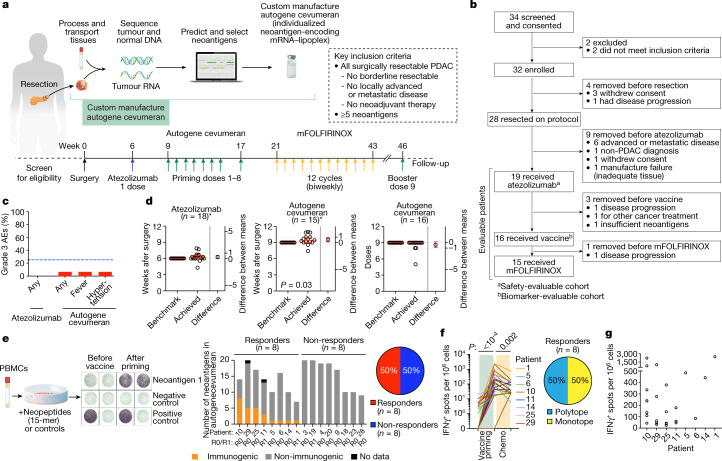
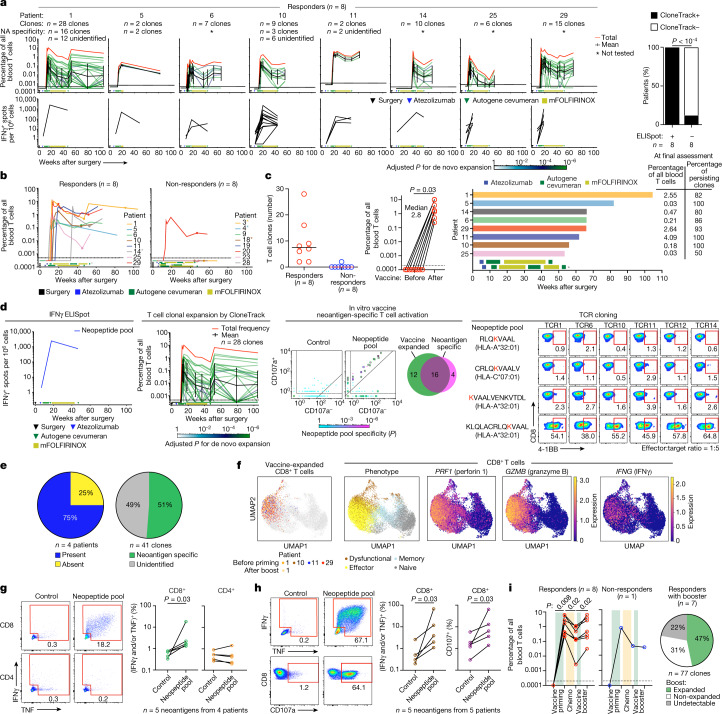
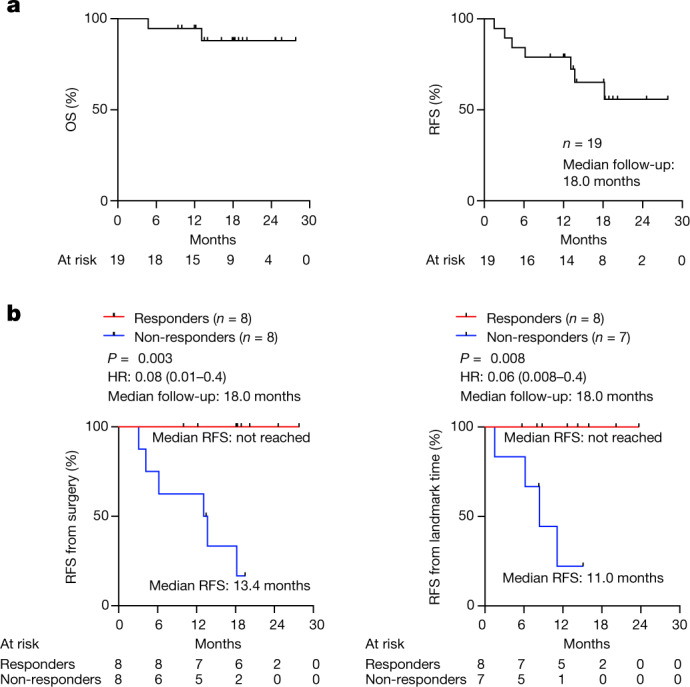
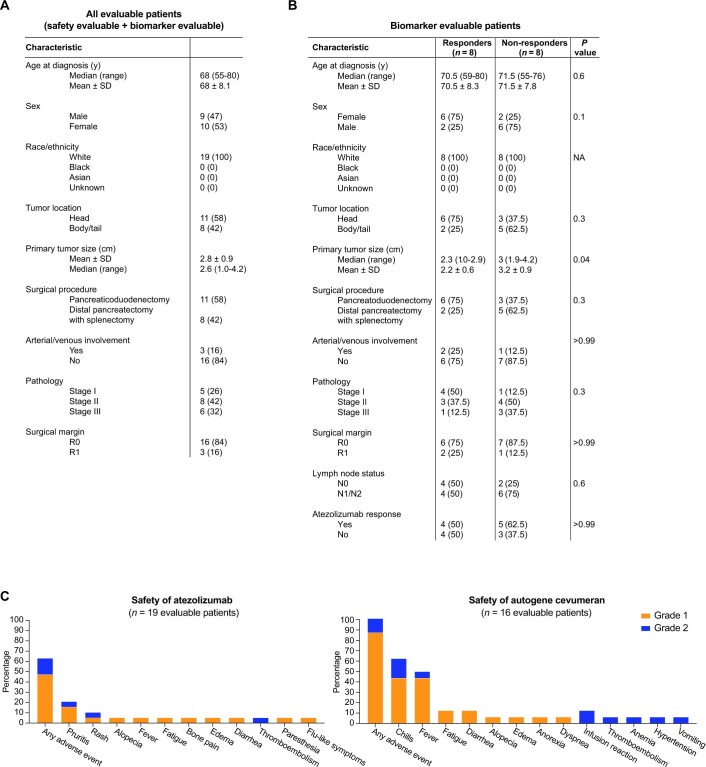
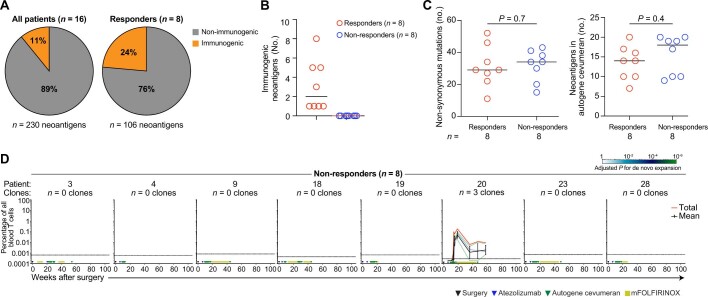
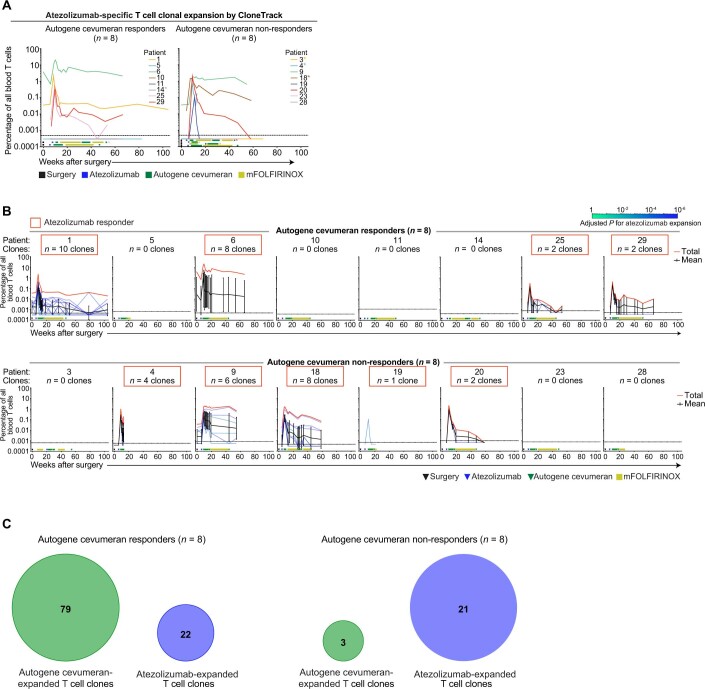
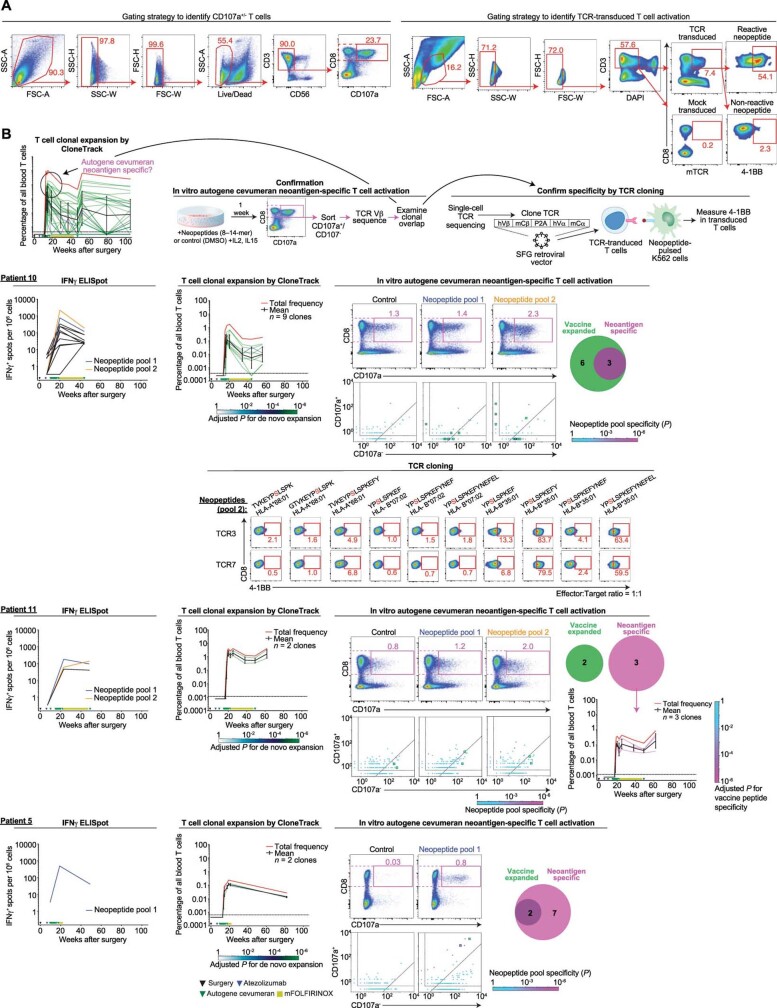
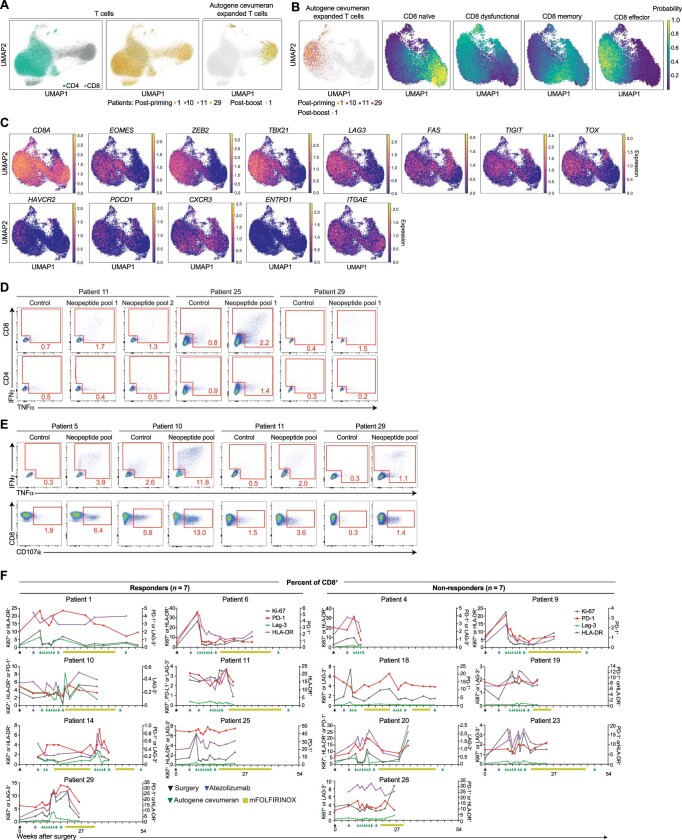
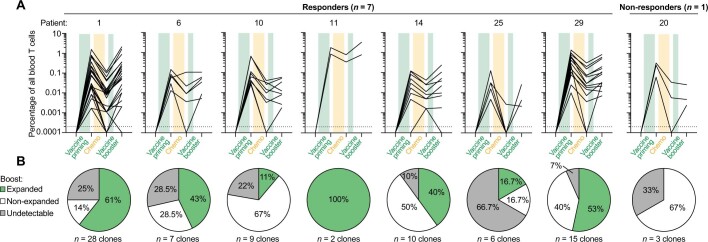
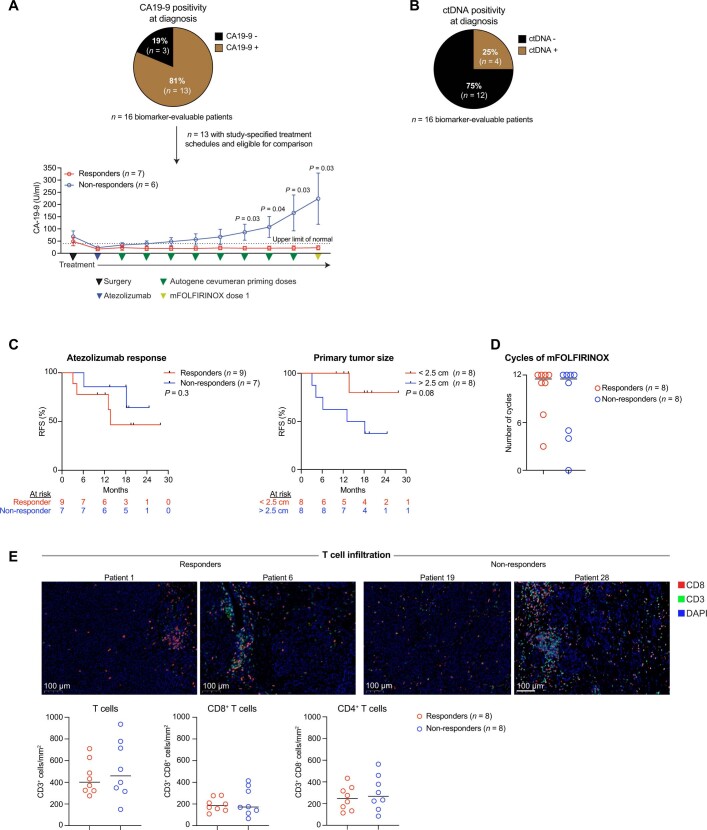
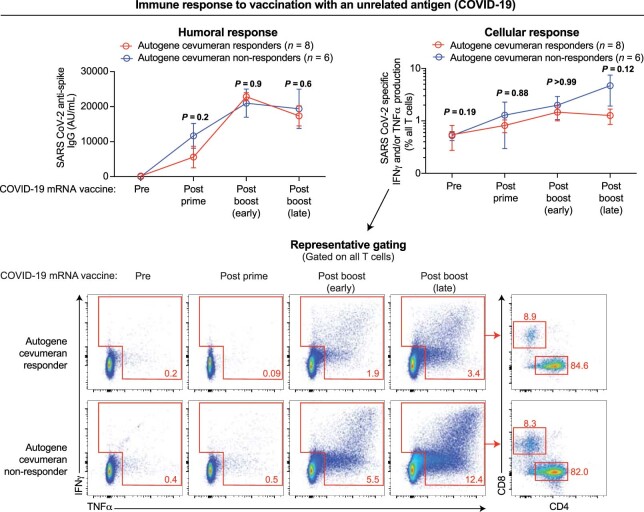
Pancreatic ductal adenocarcinoma (PDAC) is lethal in 88% of patients 1 , yet harbours mutation-derived T cell neoantigens that are suitable for vaccines 2,3 . Here in a phase I trial of adjuvant autogene cevumeran, an individualized neoantigen vaccine based on uridine mRNA–lipoplex nanoparticles, we synthesized mRNA neoantigen vaccines in real time from surgically resected PDAC tumours. After surgery, we sequentially administered atezolizumab (an anti-PD-L1 immunotherapy), autogene cevumeran (a maximum of 20 neoantigens per patient) and a modified version of a four-drug chemotherapy regimen (mFOLFIRINOX, comprising folinic acid, fluorouracil, irinotecan and oxaliplatin). The end points included vaccine-induced neoantigen-specific T cells by high-threshold assays, 18-month recurrence-free survival and oncologic feasibility. We treated 16 patients with atezolizumab and autogene cevumeran, then 15 patients with mFOLFIRINOX. Autogene cevumeran was administered within 3 days of benchmarked times, was tolerable and induced de novo high-magnitude neoantigen-specific T cells in 8 out of 16 patients, with half targeting more than one vaccine neoantigen. Using a new mathematical strategy to track T cell clones (CloneTrack) and functional assays, we found that vaccine-expanded T cells comprised up to 10% of all blood T cells, re-expanded with a vaccine booster and included long-lived polyfunctional neoantigen-specific effector CD8 + T cells. At 18-month median follow-up, patients with vaccine-expanded T cells (responders) had a longer median recurrence-free survival (not reached) compared with patients without vaccine-expanded T cells (non-responders; 13.4 months, P = 0.003). Differences in the immune fitness of the patients did not confound this correlation, as responders and non-responders mounted equivalent immunity to a concurrent unrelated mRNA vaccine against SARS-CoV-2. Thus, adjuvant atezolizumab, autogene cevumeran and mFOLFIRINOX induces substantial T cell activity that may correlate with delayed PDAC recurrence.
Overview
The claims and statistics of this paper haven’t been checked yet.
Free: it reads the open-access text and checks the first 5 claims that cite a source we can check. Create a free account to check every claim.
Integrity signals
Registry
Cites
Statistics
Figures
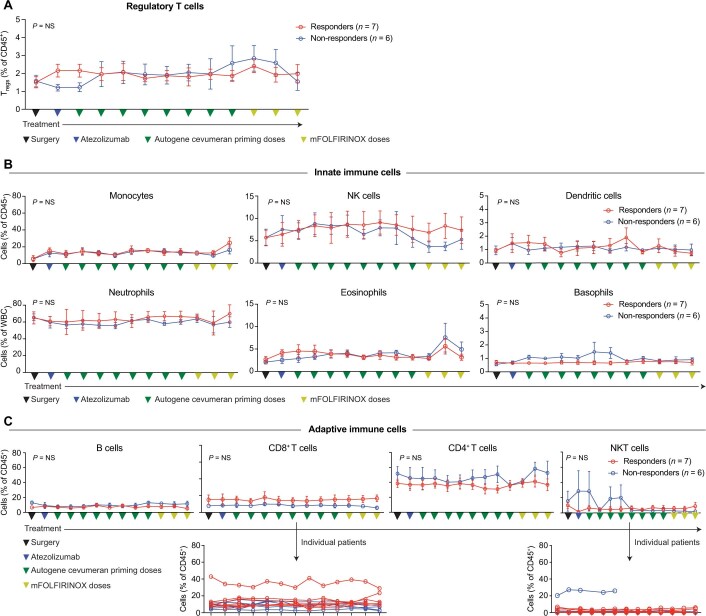
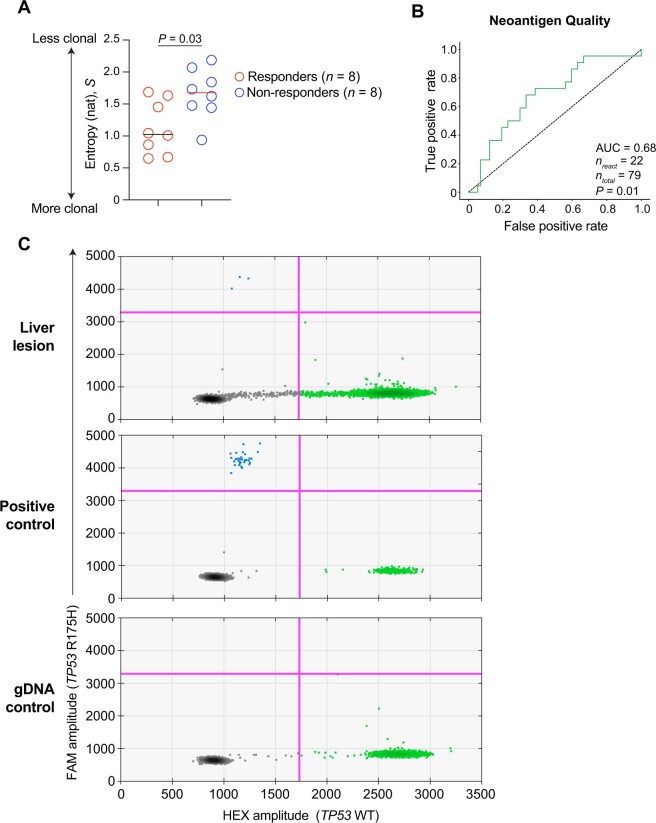
Verification
Claims the paper makes
The claims and statistics of this paper haven’t been checked yet.
Free: it reads the open-access text and checks the first 5 claims that cite a source we can check. Create a free account to check every claim.
Claims other papers make about this one
Each is checked against this paper’s own text: does it say what the citing paper says it does?
The source backs part of the claim, not all of it — or backs it for a different population, condition or comparison.
In the citing paper
“Although further confirmatory studies are needed, these results provide initial clinical evidence that personalized therapeutic cancer vaccines can enhance responses to ICIs, with many other studies planned.”
From Adjuvant and neoadjuvant immunotherapies in hepatocellular carcinoma (2024) · cites this paper as [136]
Experimental — accuracy not yet measuredThe source backs part of the claim, not all of it — or backs it for a different population, condition or comparison.
In the citing paper
“In this trial, 8 of 16 patients with resected pancreatic ductal adenocarcinoma remained free of cancer after a median follow-up of 18 months136.”
From Adjuvant and neoadjuvant immunotherapies in hepatocellular carcinoma (2024) · cites this paper as [136]
Experimental — accuracy not yet measuredThe source backs part of the claim, not all of it — or backs it for a different population, condition or comparison.
In the citing paper
“Cancer mRNA-based vaccines tend to be administered alone or in combination with ICIs, and after resection, although they have also been used in neoadjuvant–adjuvant treatment approaches136,138,139 (Fig. 3c,d).”
From Adjuvant and neoadjuvant immunotherapies in hepatocellular carcinoma (2024) · cites this paper as [136]
Experimental — accuracy not yet measuredThe cited source says what the claim attributes to it.
In the citing paper
“patients enrolled in the trial with an immunologic response against the vaccine had longer median RFS than those without such a response136.”
From Adjuvant and neoadjuvant immunotherapies in hepatocellular carcinoma (2024) · cites this paper as [136]
The cited source says what the claim attributes to it.
In the citing paper
“Clinical trials of mRNA-based immunotherapeutics encoding unmutated full-length TAAs in checkpoint inhibitor-treated melanoma [18] and individualised mRNA-based immunotherapeutics encoding patient-specific mutated tumour neoantigens in pancreatic and lung cancer [19, 20] have shown encouraging results.”
From Preclinical development of an mRNA-based multiepitope immunotherapeutic for glioblastoma (2025) · cites this paper as [20]
1 more claim about this paper
Create a free account to see every claim other papers make about this one.
Self-check
Percentages, sums and reported differences re-computed from the paper’s own numbers.
The self-check needs the paper’s full text.
Citations
Cites
Sung, H., Ferlay, J., Siegel, R. L., Laversanne, M., Soerjomataram, I., Jemal, A., & Bray, F. (2021) · CA: A Cancer Journal for Clinicians · doi:10.3322/caac.21660 · Cited by 108,699
Richards, S., Aziz, N., Bale, S., Bick, D., Das, S., Gastier-Foster, J., Grody, W. W., Hegde, M., Lyon, E., Spector, E., et al. (2015) · Genetics in Medicine · doi:10.1038/gim.2015.30 · Cited by 32,594
PD-1 and PD-L1 Immune Checkpoint Blockade to Treat Breast Cancer
Hartkopf, A. D., Taran, F.-A., Wallwiener, M., Walter, C. B., Krämer, B., Grischke, E.-M., & Brucker, S. Y. (2016) · Breast Care · doi:10.1159/000453569 · Cited by 30,845
The Genome Analysis Toolkit: A MapReduce framework for analyzing next-generation DNA sequencing data
McKenna, A., Hanna, M., Banks, E., Sivachenko, A., Cibulskis, K., Kernytsky, A., Garimella, K., Altshuler, D., Gabriel, S., Daly, M., et al. (2010) · Genome Research · doi:10.1101/gr.107524.110 · Cited by 27,895
Siegel, R. L., Miller, K. D., Wagle, N. S., & Jemal, A. (2023) · CA: A Cancer Journal for Clinicians · doi:10.3322/caac.21763 · Cited by 16,303
SCANPY: large-scale single-cell gene expression data analysis
Wolf, F. A., Angerer, P., & Theis, F. J. (2018) · Genome Biology · doi:10.1186/s13059-017-1382-0 · Cited by 8,881
Rahib, L., Smith, B. D., Aizenberg, R., Rosenzweig, A. B., Fleshman, J. M., & Matrisian, L. M. (2014) · Cancer Research · doi:10.1158/0008-5472.can-14-0155 · Cited by 7,094
Predictive correlates of response to the anti-PD-L1 antibody MPDL3280A in cancer patients
Herbst, R. S., Soria, J.-C., Kowanetz, M., Fine, G. D., Hamid, O., Gordon, M. S., Sosman, J. A., McDermott, D. F., Powderly, J. D., Gettinger, S. N., et al. (2014) · Nature · doi:10.1038/nature14011 · Cited by 5,231
Self-citationCOSMIC: the Catalogue Of Somatic Mutations In Cancer
Tate, J. G., Bamford, S., Jubb, H. C., Sondka, Z., Beare, D. M., Bindal, N., Boutselakis, H., Cole, C. G., Creatore, C., Dawson, E., et al. (2019) · Nucleic Acids Research · doi:10.1093/nar/gky1015 · Cited by 4,867
Neoantigens in cancer immunotherapy
Schumacher, T. N., & Schreiber, R. D. (2015) · Science · doi:10.1126/science.aaa4971 · Cited by 4,783
Cited by
Items 701–800 of 1,004
Yaku, H., Takahashi, K., Okada, H., Kobiyama, K., Shiokawa, M., Uza, N., Kodama, Y., Ishii, K. J., & Seno, H. (2024) · Biochemical and Biophysical Research Communications · doi:10.1016/j.bbrc.2024.150534 · Cited by 5
Vaccines targeting p53 mutants elicit anti-tumor immunity
Chai, D., Wang, X., Fan, C., Wang, J., Lim, J. M., Yu, X., Young, K. H., & Li, Y. (2024) · Cancer Letters · doi:10.1016/j.canlet.2024.217421 · Cited by 5
The rise of mRNA therapeutic vaccines
Du, J., Fan, Z., Huang, J., Li, Z., Hu, H., & Li, Y. (2025) · RSC Pharmaceutics · doi:10.1039/d4pm00309h · Cited by 5
Fragment Autoantigens Stimulated T‐Cell‐Immunotherapy (FAST) as a Fast Autologous Cancer Vaccine
Li, Y., Chen, H., Shen, Q., Liu, Y. J., Li, P., Ma, Y., Wang, Y., Li, S., Yan, X., Liu, L., et al. (2025) · Advanced Science · doi:10.1002/advs.202502937 · Cited by 7
Zhang, Y., Zhang, L., Gao, H., Du, S., Chen, Q., Lu, X., & Lin, J. (2025) · Nano Today · doi:10.1016/j.nantod.2025.102757 · Cited by 5
Human genetics of responses to vaccines
Karp‐Tatham, E., Knight, J. C., & Bolze, A. (2025) · Clinical & Experimental Immunology · doi:10.1093/cei/uxaf034 · Cited by 6
Cryptic but critical: non-canonical antigens in cancer immunotherapy
Gonçalves, G., Dolcetti, R., Ooi, J. D., & Faridi, P. (2025) · Trends in Immunology · doi:10.1016/j.it.2025.06.002 · Cited by 5
Laheurte, C., Boullerot, L., Ndao, B., Malfroy, M., Queiroz, L., Guillaume, P., Loyon, R., Seffar, E., Gravelin, E., Renaudin, A., et al. (2025) · Cell Reports Medicine · doi:10.1016/j.xcrm.2025.102196 · Cited by 5
“4,6,48,49 Beyond their cytokine polyF capacity, we found that UCPVax-expanded CD4 + T cells express cytotoxic molecules as well as transcription factors involved in cytotoxic CD4 + T cell differentiation.”
Cancer Vaccination and Immune-Based Approaches in Pancreatic Cancer
Bloom, M. D., Shaikh, A. R., Sun, Z., Bashir, B., & Snook, A. E. (2025) · Cancers · doi:10.3390/cancers17142356 · Cited by 7
“Several completed trials have explored combination approaches using vaccines and immune checkpoint blockade [35,39,160].”
InfluentialBacterial outer membrane vesicles OMV-LL for delivery of neoantigen mRNA to induce anti-HCC therapy
Cheng, J., Wu, S., Zhu, C., Lin, S., Liu, F., Chen, S., & Ye, Y. (2025) · Frontiers in Immunology · doi:10.3389/fimmu.2025.1633345 · Cited by 5
“These trials have yielded promising results that support their practical applications (3, 4), Tumor antigens, categorized into TAA and TSA, are crucial in cancer immunotherapy.”
Fernández, E., Vernet, R., Urwyler, M., Rohr, O. V., Charrier, E., Belkouch, M., Saingier, V., Courtout, F., DeVito, C., Ancrenaz, V., et al. (2025) · Experimental Hematology and Oncology · doi:10.1186/s40164-025-00703-x · Cited by 6
“The early success of mRNA-based, personalized cancer vaccines in the adjuvant setting, in combination with immune checkpoint inhibitors, has led to renewed interest in the field [4].”
InfluentialNano-enabled strategies for targeted immunotherapy in gastrointestinal cancers
Chen, C., Li, J., Hua, X., Deng, T., & Zhang, Z. (2025) · Frontiers in Immunology · doi:10.3389/fimmu.2025.1653829 · Cited by 11
“Vaccination expanded neoantigen-speci fi c T cell populations in 50% of treated patients, demonstrating feasibility and immunogenicity in the adjuvant setting (128).”
Xiang, J., Zhang, J., Tian, D., Zhang, L., Xu, Y., & Lu, X. (2025) · International Journal of Surgery · doi:10.1097/js9.0000000000003231 · Cited by 5
“Adjuvant autogene cevumeran, an individualized neoantigen vaccine formulated with uridine mRNA-lipoplex nanoparticles, elicited robust T-cell activity and prevented recurrence when combined with atezolizumab and mFOLFIRINOX in PDAC [88] .”
Functional Precision in Pancreatic Cancer: Redefining Biomarkers with Patient-Derived Organoids
Chew, C. A. Z., Wun, C. M., Lee, Y. F., Chee, C. E., Ho, K. Y., & Bonney, G. K. (2025) · International Journal of Molecular Sciences · doi:10.3390/ijms26189083 · Cited by 6
“Genomic characterization has not been without significant impact and has paved the way for therapeutic innovations such as personalized mRNA neoantigen vaccines, as recently demonstrated in the MSKCC trial [48].”
Silva, H. M., & Rosa, R. C. A. (2025) · Journal of the Egyptian National Cancer Institute · doi:10.1186/s43046-025-00323-w · Cited by 5
“Recently, an mRNA-based vaccine for pancreatic cancer developed by BioNTech and Genentech demonstrated in a phase 1 clinical trial that half of the participants developed tumor-specific T cells after treatment, indicating a significant adaptive immune response [76].”
Targeted immunomodulation for chronic diseases through advanced delivery platforms
Girela, M., Gupta, D., Grattoni, A., & Chua, C. Y. X. (2025) · Expert Opinion on Drug Delivery · doi:10.1080/17425247.2025.2580443 · Cited by 7
“To counter this, biomaterial platforms as seen in Figure 1 studies have focused on depot formulations and RNA-loaded carriers that direct immune deviation at the site of delivery [114,123,124].”
Anindita, J., Tanaka, H., Oyama, R., Matsumaru, A., Nakai, Y., Tange, K., Nagaoka, K., Nakanishi, H., Kawamura, T., Tanaka, T., et al. (2025) · Journal of Controlled Release · doi:10.1016/j.jconrel.2025.114414 · Cited by 6
Seclì, L., Nocchi, L., Leoni, G., Cotugno, G., Troise, F., Romano, G., Busiello, T., Micarelli, E., Garzia, I., Antonucci, L., et al. (2025) · Journal for ImmunoTherapy of Cancer · doi:10.1136/jitc-2025-013035 · Cited by 6
Xue, L.-M., Liu, Y., Liu, W.-C., & Phang, K. C. (2025) · International Immunopharmacology · doi:10.1016/j.intimp.2025.115948 · Cited by 5
Engineering Anti-Tumor Immunity: An Immunological Framework for mRNA Cancer Vaccines
Roy, O., & Anderson, K. S. (2025) · Vaccines · doi:10.3390/vaccines13121222 · Cited by 6
“In pancreatic ductal adenocarcinoma, Autogene Cevumeran induced neoantigen-specific T cell responses in 8/16 patients, with vaccine responders exhibiting significantly longer recurrence-free survival versus non-responders [2].”
Advances in the development of personalized neoantigen therapies
Brightman, S. E., & Butterfield, L. H. (2025) · The Journal of Experimental Medicine · doi:10.1084/jem.20241234 · Cited by 5
Nanovaccines in gastrointestinal cancers
Wang, Y., Huang, P., Li, C., Tu, S., & Yang, H. (2025) · Frontiers in Immunology · doi:10.3389/fimmu.2025.1680053 · Cited by 5
“…vaccine formulated with uridine mRNA in LNPs together with atezolizumab and chemotherapy appeared to be safe and practicable, and elicited robust neoantigen − speci fi c T − cell responses in approximately 50% of unselected patients with resectable pancreatic cancer (NCT04161755) (83) (Figure 2).”
Lu, M., Liu, Y., Xu, L., Gao, Y., Liu, P., Liu, Z., Tan, X., Li, W., Lin, Y., Chen, L., et al. (2025) · Frontiers in Immunology · doi:10.3389/fimmu.2025.1727642 · Cited by 5
Munir, Y. A., Magaji, M., Muhammad, A. N., Muhammad, A. D., & Hussaini, M. (2025) · UMYU Scientifica · doi:10.56919/usci.2544.006 · Cited by 5
“The demonstrated ability to manufacture a rapid clinical product ( 1-2 weeks) opens new opportunities for truly personalised, real-time adaptive vaccination strategies (Rojas et al ., 2023).”
Cai, Z., Lin, K., Dong, X., Li, Z., Chen, G., Guo, L., Mou, P., Chen, P., Huang, J., Li, L., et al. (2025) · Journal for ImmunoTherapy of Cancer · doi:10.1136/jitc-2025-013043 · Cited by 5
Genomic evolution of pancreatic cancer at single-cell resolution
Zhang, H., Sashittal, P., Karnoub, E.-R. R., Jakatdar, A., Umeda, S., Hong, J., Noronha, A. M., Cardenas, A., Erakky, A., McIntyre, C. A., et al. (2026) · Nature Genetics · doi:10.1038/s41588-025-02468-9 · Cited by 10
“New therapeutic approaches such as poly-ADP ribose polymerase inhibitors, KRAS inhibitors and immunotherapies are being developed to target individual tumors’ vulnerabilities with promising results 9–12 .”
Self-citationPipe dream to pipeline: Journey of cancer vaccines and the road ahead
Onkar, S., Bozkus, C. C., Saxena, M., & Bhardwaj, N. (2026) · Cell Reports Medicine · doi:10.1016/j.xcrm.2025.102575 · Cited by 7
Cancer Neoantigen Vaccines Emerge Efficacious
Sultan, H., & Schreiber, R. D. (2026) · Annual Review of Medicine · doi:10.1146/annurev-med-071723-045853 · Cited by 5
Boudreault, J., Rahimirad, S., Wang, N., Yan, G., Lima, L. C., Poulet, S., Dai, M., Ali, S., & Lebrun, J. J. (2026) · Molecular Cancer · doi:10.1186/s12943-026-02587-9 · Cited by 5
Yu, H., Yang, Y., Lin, P., Liu, C., Wen, Y., Huang, Z., Fang, Z., Hu, Z., & St, H. (2026) · Nature Communications · doi:10.1038/s41467-026-69972-2 · Cited by 7
“Similarly, the personalized BNT-122 vaccine induced markedly prolonged median recurrence-free survival (RFS) in responders in a Phase I adjuvant trial for pancreatic ductal adenocarcinoma, and elicited long-lived effector T cell clones with an estimated lifespan of 7.7 years 5,6 .”
InfluentialOvercoming multidimensional immunotherapy resistance in PDAC: from microenvironment to clinic
Yan, J., Ou, H., Wang, S., Jin, K., Yu, X., & Wu, W. (2026) · Frontiers in Immunology · doi:10.3389/fimmu.2026.1782960 · Cited by 5
“Furthermore, this vaccine has been shown to amplify CD8 + T cells that are speci fi c to neoantigens, exhibit functionality, and persist over time, which is of considerable signi fi cance for the immunotherapy of PDAC, a tumor type that is not typically in fl ammatory (17).”
Hori, M., Qiao, N., Yamada, K., Yum, J., Ogura, S., Uchida, S., Kim, H. J., Naito, M., & Miyata, K. (2026) · ACS Applied Bio Materials · doi:10.1021/acsabm.6c00050 · Cited by 5
Han, J., Zhou, J., Dwivedy, A., Xue, T., Bhatta, R., Liu, Y., Nguyen, D., Yang, B., Wang, Y., Wang, X., et al. (2026) · Proceedings of the National Academy of Sciences · doi:10.1073/pnas.2504976123 · Cited by 5
“After formulation, the mRNA-LNP was dialyzed three times through a 3.5 K MWCO Slide-A-Lyzer dialysis cassette (Thermo Scientific).”
InfluentialRecent Advances in mRNA Therapeutic Cancer Vaccines
Laflin, A. D., Pan, J., You, M., & Jiang, S. (2026) · Annual Review of Biomedical Engineering · doi:10.1146/annurev-bioeng-110824-034150 · Cited by 5
T cell exhaustion landscapes and therapeutic modulation in cancer immunity
Bautista, J., & López‐Cortés, A. (2026) · Frontiers in Cell and Developmental Biology · doi:10.3389/fcell.2026.1827716 · Cited by 5
“…intervention that broadens or amplifies tumor-reactive repertoires, whereas checkpoint blockade provides a permissive context for clonal expansion and effector deployment rather than generating new antigen-specificities on its own (Rojas et al., 2023; Khleif and Gupta, 2025) (Figures 1B, 2).”
Combinatorial in situ cancer vaccines: unlocking broad and enhanced antitumor responses
Chen, W., Baig, J., Choi, H., & Son, S. (2026) · Signal Transduction and Targeted Therapy · doi:10.1038/s41392-026-02821-2 · Cited by 6
“25,26 Due to the limited antigenic diversity of the vaccine, antigen spreading is restricted, resulting in a narrower immune response and reduced recruitment of new T-cell clones targeting secondary tumor antigens.”
Intratumoral T cell activation kills tumors regardless of T cell specificity
Smith, O. C. G., Dao, T. T., Gavil, N. V., O’Flanagan, S. D., Rubin, A. J., Nguyen, S., Watowich, M., Liu, N., Weyu, E., Quarnstrom, C. F., et al. (2026) · Nature Immunology · doi:10.1038/s41590-026-02642-z · Cited by 8
Targeting KRAS -Mutated NSCLC: Novel TKIs and Beyond
Cantor, D. J., & Aggarwal, C. (2023) · Clinical Cancer Research · doi:10.1158/1078-0432.ccr-23-1658 · Cited by 5
Covalent Organic Frameworks: Opportunities for Rational Materials Design in Cancer Therapy
Zhou, L., Guan, Q., & Dong, Y. (2023) · Angewandte Chemie · doi:10.1002/ange.202314763 · Cited by 19
Lee, J. S., Karthikeyan, D., Fini, M., Vincent, B. G., & Rubinsteyn, A. (2023) · Briefings in Bioinformatics · doi:10.1093/bib/bbad495 · Cited by 5
Advances in Systemic Therapy in Pancreatic Cancer
Yu, K. H. (2024) · Hematology/Oncology Clinics of North America · doi:10.1016/j.hoc.2024.03.002 · Cited by 5
Röhnisch, T., Martos-Contreras, M. C., Manoochehri, M., Nogueira, M. S., Bremm, F., Dörrie, J., Christoph, J., Kunz, M., & Schönharting, W. (2024) · Frontiers in Immunology · doi:10.3389/fimmu.2024.1414737 · Cited by 5
Using peptide barcodes for simultaneous profiling of protein expression from mRNA
Kumano, S., Tanaka, K., Akahori, R., Yanagiya, A., & Nojima, A. (2024) · Rapid Communications in Mass Spectrometry · doi:10.1002/rcm.9867 · Cited by 5
Fang, C., Sun, H., Wen, J. A., Wu, X., Wu, Q., & Zhai, D. (2024) · Medicine · doi:10.1097/md.0000000000039057 · Cited by 5
“[36] It is important to acknowledge that this study has certain limitations.”
Emerging Cancer Immunotherapies: Cutting-Edge Advances and Innovations in Development
Maccagno, M., Tapparo, M., Saccu, G., Rumiano, L., Kholia, S., Silengo, L., & Sanchez, M. B. H. (2024) · Medical Sciences · doi:10.3390/medsci12030043 · Cited by 7
“In the field of anti-tumor therapies, nanoparticles have been utilized in diverse applications, including vaccination against neoantigens in clinical trials [59].”
BackgroundExogenous or in situ vaccination to trigger clinical responses in pancreatic cancer
Beatty, G. L., & Jaffee, E. M. (2024) · Carcinogenesis · doi:10.1093/carcin/bgae065 · Cited by 5
Improving CD3 bispecific antibody therapy in solid tumors using combination strategies
Lloyd, K. A., Middelburg, J., Ovcinnikovs, V., Pencheva, N., Kemper, K., & van Hall, T. (2025) · Frontiers in Oncology · doi:10.3389/fonc.2025.1548446 · Cited by 6
Kanai, M. (2025) · Cancers · doi:10.3390/cancers17040606 · Cited by 5
“In addition, personalized vaccines [42] or pan-KRAS inhibitors [43], may offer new avenues for improving the efficacy of the ICI and RT combination in the future.”
Cell-free DNA: plays an essential role in early diagnosis and immunotherapy of pancreatic cancer
Wen, Y., Zhao, G., & Dai, C. (2025) · Frontiers in Immunology · doi:10.3389/fimmu.2025.1546332 · Cited by 5
A review of common immunotherapy and nano immunotherapy for acute myeloid leukemia
Wang, Y., Yang, X., Liu, Y., & Li, Y. (2025) · Frontiers in Immunology · doi:10.3389/fimmu.2025.1505247 · Cited by 7
“Studies have shown that half of patients with unresectable pancreatic ductal adenocarcinoma (PDAC) showed a signi fi cant ability to induce antigen-speci fi c T cells by using a novel personalized antigen vaccine developed by uridine-modi fi ed mRNA-lipid nanoparticle technology (178).”
Song, N., Tao, R., Li, H., Zhang, R., Huang, Y. H., Zhang, L., Liu, Y., Yang, D., & Yao, C. (2025) · Angewandte Chemie · doi:10.1002/ange.202500566 · Cited by 11
Inflammation, Immunosuppression, and Immunotherapy in Pancreatic Cancer—Where Are We Now?
Fudalej, M. M., Krupa, K., Badowska-Kozakiewicz, A. M., & Deptała, A. (2025) · Cancers · doi:10.3390/cancers17091484 · Cited by 5
“The study by Rojas et al. (2023) reported preliminary evidence that adjuvant autogene cevumeran, in combination with atezolizumab and mFOLFIRINOX, induced substantial T-cell activity in patients with surgically resected PDAC that correlated with delayed recurrence [92].”
Yong, S., Ha, M., & Cho, S. (2025) · ACS Biomaterials Science & Engineering · doi:10.1021/acsbiomaterials.5c00738 · Cited by 5
Liang, Z., Xu, Y., & Li, C. (2025) · DNA repair · doi:10.1016/j.dnarep.2025.103874 · Cited by 7
Endogenous T cell responses to fusion-derived neoantigens in pediatric acute leukemias
Tirtakusuma, R., Ghonim, M. A., Schattgen, S., Muller, B., de Velde, L.-A. V., Khan, T. M., Crawford, J. C., Ma, J., Abdelhamed, S., Vegesana, K., et al. (2025) · Leukemia · doi:10.1038/s41375-025-02710-7 · Cited by 5
“The murine studies were approved by the St Jude Children ’ s Research Hospital Animal Care and Use Committee and carried out according to Of fi ce of Laboratory Animal Welfare guidelines.”
Immunopeptidomics-guided identification of functional neoantigens in non-small cell lung cancer
Nicholas, B., Bailey, A. G., McCann, K. J., Wood, O., Currall, E., Johnson, P., Elliott, T. J., Ottensmeier, C. H. H., & Skipp, P. J. S. (2026) · npj Precision Oncology · doi:10.1038/s41698-026-01539-2 · Cited by 6
“Personalised neoantigen vaccines are already being trialled for the treatment of melanoma, glioblastoma and pancreatic cancer 62 – 64 .”
CircRNAs in Pancreatic Cancer: New Tools for Target Identification and Therapeutic Intervention
Weidle, U. H., & Nopora, A. (2024) · Cancer Genomics & Proteomics · doi:10.21873/cgp.20451 · Cited by 5
Cancer vaccines are back, revitalized
Vonderheide, R. H. (2023) · Med · doi:10.1016/j.medj.2023.06.004 · Cited by 5
Cancer drug approvals and setbacks in 2023
Dolgin, E. (2023) · Nature Cancer · doi:10.1038/s43018-023-00683-z · Cited by 5
Maru, S. Y., Wetzel, M., Mitchell, J. T., Groß, N., Andaloori, L., Howe, K., Kartalia, E., Mo, G., Leatherman, J. M., Ho, W. J., et al. (2025) · bioRxiv (Cold Spring Harbor Laboratory) · doi:10.1101/2025.03.27.645833 · Cited by 5
“Given the known paucity of tumor neoantigens in PDAC tumors (26–28), it is unsurprising that there were few KRAS-specific T cells to activate with KRAS G12D -pulsed APCs.”
Cross-competition shapes CD8+ T cell hierarchies and differentiation after RNA vaccinationPreprint
McCarron, M. J., Hornburg, M., Wu, T. D., Tong, A.-J., Tähtinen, S., Darwish, M., Freund, E. C., Feng, Y., Eisel, D., Balança, C.-C., et al. (2025) · bioRxiv (Cold Spring Harbor Laboratory) · doi:10.1101/2025.10.26.684631 · Cited by 6
Self-citationStructural changes from wild-type define tumor-rejecting neoantigens
Adams, A. C., Macy, A. M., Borden, E. S., Herrmann, L. M., Brambley, C. A., Sonar, S. A., Ma, T., Li, X., Hughes, A., Roe, D. J., et al. (2025) · Journal for ImmunoTherapy of Cancer · doi:10.1136/jitc-2025-013148 · Cited by 4
Murakami, H., Takahama, S., Akita, H., Kobayashi, S., Masuta, Y., Nagatsuka, Y., Higashiguchi, M., Tomokuni, A., Yoshida, K., Takahashi, H., et al. (2024) · Frontiers in Immunology · doi:10.3389/fimmu.2024.1363568 · Cited by 4
“…trials investigating the use of atezolizumab and personalized RNA neoantigen vaccines, as well as mFOLFIRINOX as adjuvant chemotherapy in patients with pancreatic cancer, those with vaccine antigen-speci fi c T cells in their PBMCs exhibited a signi fi cantly improved recurrence-free survival (36).”
BackgroundBowen, C. M., Demarest, K., Vilar, E., & Shah, P. D. (2024) · American Society of Clinical Oncology Educational Book · doi:10.1200/edbk_433576 · Cited by 5
Peng, S., Fan, D., Tu, H.-F., Cheng, M., Arend, R. C., Levinson, K. L., Tao, J., Roden, R. B. S., Hung, C., & Wu, T. ‐. (2024) · Cell & Bioscience · doi:10.1186/s13578-024-01338-x · Cited by 4
HLA class II-restricted T cell epitopes in public neoantigens of ESR1 and PIK3CA in breast cancer
Ando, Y., Miyadera, H., Bando, H., Hashimoto, S., Noguchi, E., & Hara, H. (2025) · BMC Cancer · doi:10.1186/s12885-025-13992-6 · Cited by 4
Dorvash, M., Illing, P. T., Croft, N. P., Ramarathinam, S. H., & Purcell, A. W. (2025) · Molecular & Cellular Proteomics · doi:10.1016/j.mcpro.2025.101030 · Cited by 4
Current and Future Directions in Immunotherapy for Gastrointestinal Malignancies
Lewis, C. R., Samhouri, Y., Sherry, C., Dadgar, N., Raj, M. S., & Wagner, P. L. (2025) · International Journal of Translational Medicine · doi:10.3390/ijtm5030033 · Cited by 4
“Vaccine-expanded T cells persisted for up to 2 years post-vaccination [94,95].”
Kruse, S., Fricke, L. T., Zottnick, S., Schlösser, A., Grabowska, A. K., Feidt, E., Uhl, P., Junglas, E., Förster, J. D., Blersch, J., et al. (2025) · OncoImmunology · doi:10.1080/2162402x.2025.2548002 · Cited by 4
“15,16 Nevertheless, also polymeric and inorganic NPs have various useful characteristics, which is why they have received increasing attention in recent years.”
Ko, H., Kim, C. H., Son, S., Shin, J. M., & Park, J. H. (2025) · Biomaterials · doi:10.1016/j.biomaterials.2025.123733 · Cited by 5
Chiello, J. L., Shaikh, N., Jacobi, J. J., Gaulin, N., Santos, G. S., Keck, C., Hess, S. M., Lichty, B. D., Singh, P. K., Rosario, S. R., et al. (2025) · Molecular Therapy · doi:10.1016/j.ymthe.2025.09.047 · Cited by 6
RNA vaccines for cancer: revolutionizing immunization strategies
Huang, D., Zhang, J., Zeng, X., Zhang, Y., & Song, E. (2025) · Trends in cancer · doi:10.1016/j.trecan.2025.09.003 · Cited by 6
Zhang, J., Lin, X., Zhang, Y., Jin, G., & Zheng, K. (2025) · Biochimica et Biophysica Acta (BBA) - Reviews on Cancer · doi:10.1016/j.bbcan.2025.189484 · Cited by 4
Immunomodulatory vaccine demonstrates therapeutic efficacy across cancer types
Han, T., Liu, G., Bao, C., Zong, J., Fei, C., Li, J., Xu, S., Ma, Q., & Qian, Y. (2025) · Scientific Reports · doi:10.1038/s41598-025-21924-4 · Cited by 4
B cell–reactive neoantigens boost antitumor immunity
Kim, J. Y., An, J., Kim, S.-Y., Jo, H.-Y., Lee, E. J., Kim, M. J., Cha, H., Lee, S., Park, H., Kim, S. C., et al. (2025) · Science Advances · doi:10.1126/sciadv.adx8303 · Cited by 4
“To investigate the role of B cells in the efficacy of human cancer vaccine, we collected data from 11 studies ( 59 – 69 ) that used personalized neoantigen vaccines.”
Spiga, M., Potenza, A., Magnani, Z. I., Beretta, S., Camisa, B., Conte, L., Airaghi, A., Mohammadi, N., Perani, L., Doglioni, C., et al. (2026) · Nature Communications · doi:10.1038/s41467-025-67263-w · Cited by 4
Chen, Y., Yt, Z., Shi, H., Yang, W., Xu, H., Li, Y., & Ding, Z. (2026) · Frontiers in Immunology · doi:10.3389/fimmu.2025.1658670 · Cited by 4
Peng, J., Yang, J., Antonopoulou, G., Fang, R., Adhikari, B., Vogt, M., Wolf, E., Sun, C., Du, S., Godfrey, L., et al. (2026) · Nature Communications · doi:10.1038/s41467-026-69013-y · Cited by 4
“Given the recent advances on antigen-based therapies to improve the tumor antigenicity 54,55 , our fi ndings on the combinatory effect of MEKi and HDACi on supporting the antigen presentation machinery provide functional evidence and avenues to induce more durable immune-mediated tumor elimination…”
Sadaqa, E., Fajriawan, A. A., & Muttaqien, S. E. (2026) · Biointerface Research in Applied Chemistry · doi:10.33263/briac161.028 · Cited by 4
Stem-like T cells in cancer immunotherapy: biology, regulation and therapeutic targeting
Wang, H., Yao, Z., Luo, R., Kang, K., Na, F., & Lu, Y. (2026) · Frontiers in Immunology · doi:10.3389/fimmu.2026.1764549 · Cited by 4
“Therapeutic vaccination targeting either shared tumor antigens or patient-speci fi c neoantigen (neoAg) pools represents a promising strategy to activate antitumor T cell immunity (149, 150).”
Disrupting PDGFRA-driven immune evasion in glioma: vaccine-based strategies on the horizon
Zhang, X., Li, X., Cui, R., Yu, X., Zhang, Z., Luo, Z., Chen, G., & Lin, S. H. (2026) · Frontiers in Oncology · doi:10.3389/fonc.2026.1666612 · Cited by 5
Lee, V., Sachidanand, A. S., Rodriguez, C., Wang, J., Onners, B., Qi, H., Parkinson, R. M., McPhaul, T. J., Durham, J. N., Ding, D., et al. (2026) · Nature Communications · doi:10.1038/s41467-026-69294-3 · Cited by 4
“They show promise in clinical trials for both immunologically “ hot ” and “ cold ” tumors, including PDAC, particularly when administered in a minimal disease setting to prevent the recurrence 22 – 24 .”
Miyake-Stoner, S. J., Maine, C. J., Chou, A. C., Dailey, G. P., Spasova, D. S., Domingo, C. C., Sparks, J., Picarda, G. G. A., Lyerly, H. K., Crosby, E. J., et al. (2026) · Molecular Therapy · doi:10.1016/j.ymthe.2026.03.026 · Cited by 4
Recent advances in LNP-mRNA vaccines
Redenti, B. J., Zhong, Y., Yu, C., & Dong, Y. (2026) · Colloids and Surfaces B Biointerfaces · doi:10.1016/j.colsurfb.2026.115675 · Cited by 5
mRNA vaccines in oncology: personalized cancer immunization and neoantigen targeting
Parganiha, M., Rathored, J., & Painkra, D. S. (2026) · Molecular & Cellular Oncology · doi:10.1080/23723556.2026.2652613 · Cited by 5
“74 On the other hand, initial basket trials in progressive metastatic disease indicate immunogenicity can be observed with low objective response rates, which is indicative of biological inhibitory capacity, including immune exclusion, antigen presentation defects, T cell exhaustion, and subclonal…”
The versatile interplay between steatotic liver disease and liver cancer
Rahbari, M., Gris‐Oliver, A., Ramadori, P., Aicher, D., Sia, D., MALEK, N. P., Loomba, R. S., Bataller, R. A., Llovet, J. M., & Heikenwälder, M. F. (2026) · Nature reviews. Cancer · doi:10.1038/s41568-026-00918-y · Cited by 4
“Similarly, vaccine-based therapies in HCC have shown induction of immune responses against neoantigens 273,274 .”
Emerging precision therapeutics for pancreatic ductal adenocarcinoma: KRAS and beyond
Misirian, A., Pai, J., & Hanna, D. L. (2026) · Therapeutic Advances in Medical Oncology · doi:10.1177/17588359261432058 · Cited by 4
“56 The mRNA neoantigen vaccine, autogene cevumeran, is one adjuvant therapy that delivers neoantigens to tumor cells, helping induce neoantigen-specific T-cell responses.”
Li, X., Wu, B., Lu, X., Yang, J., Zhu, Y., Yamagata, H. M., Tong, E. C., Mitchell, M. J., & Han, X. (2026) · ACS Nano Medicine · doi:10.1021/acsnanomed.6c00043 · Cited by 5
Bridging clinical gaps in personalized cancer neoantigen vaccines
Khaddour, K., & Ott, P. A. (2026) · Cancer Cell · doi:10.1016/j.ccell.2026.04.002 · Cited by 6
Hallmarks and correlates of effective adoptive cell immunotherapy for cancer
Krishna, S., Robbins, P. F., Lowery, F. J., & Rosenberg, S. A. (2026) · Nature reviews. Immunology · doi:10.1038/s41577-026-01312-3 · Cited by 5
“…immune reactions using direct immunization against putative cancer antigens, referred to as ‘cancer vaccines’: Therapeutic cancer vaccines have been extensively studied and can sometimes give rise to T cells that are reactive to cancer-related antigens 8,9 , including neoantigens 10–14 (Box 1).”
Wang, H. H., Huff, A. L., Haldar, S. D., Berg, M., Thoburn, C. J., Heumann, T. R., Anders, R. A., Barrett, B., Bever, K. M., Pishvaian, M. J., et al. (2026) · Nature Communications · doi:10.1038/s41467-026-74711-8 · Cited by 4
Advances in RNA delivery to extrahepatic tissues and cells
Li, Z., Guo, S., & Huang, Y. (2026) · Journal of Controlled Release · doi:10.1016/j.jconrel.2026.115170 · Cited by 4
Breast Cancer: Epidemiology, Molecular Classification, Diagnostics and Evolving Treatment Paradigms
Unuofin, J. O., Adefisan, A. O., Paimo, O. K., Maphetu, N., & Lebelo, S. L. (2026) · Molecules · doi:10.3390/molecules31142551 · Cited by 5
Take Five: harmonization in personalized cancer vaccines for cancer immunotherapy
Cho, S., Lee, J., Lee, Y.-M., & Nam, J. (2026) · Experimental & Molecular Medicine · doi:10.1038/s12276-026-01807-y · Cited by 4
“Across melanoma, PDAC, and other tumor types, the association between strong neoantigen-speci fi c CD8 ⁺ T cell responses and improved clinical outcomes is evident 9,70,71 .”
Boulch, M. L., Jacquet, E., Nhiri, N., Shmulevitz, M., & Jais, P. H. (2024) · Scientific Reports · doi:10.1038/s41598-024-55947-0 · Cited by 4
Wang, A. Z., Brink, H. J., Bouma, R. G., Affandi, A. J., Twilhaar, M. K. N., Heijnen, D. A. M., van Elk, J., Maaskant, J. J., Konijn, V. A. L., Stolwijk, J. G. C., et al. (2024) · Bioconjugate Chemistry · doi:10.1021/acs.bioconjchem.4c00403 · Cited by 4
Immunotherapies in breast cancer: harnessing the cancer immunity cycle
Lok, V. M., Olson-Mcpeek, S. K., Spiegelhoff, G., Cortez, J., Detz, D., & Czerniecki, B. J. (2024) · Expert Opinion on Therapeutic Targets · doi:10.1080/14728222.2024.2427038 · Cited by 4
“Several personalized mRNA cancer vaccines have demonstrated safety and robust antigen-specific T-cell expansion in pancreatic ductal adenocarcinoma and non-small cell lung cancer patients [97,98] and several preclinical and clinical trials are currently evaluating mRNA vaccines within BC [99].”
Shao, S., Chen, X., Chen, Y., Wang, M., Huang, J., Wang, J., Yu, X., Li, X., Zhang, Y., Yuan, P., et al. (2025) · 中国科学通报:英文版 · doi:10.1016/j.scib.2025.04.015 · Cited by 4
Song, R., Li, X., Zhu, J., He, J., & Na, J. (2025) · Vaccines · doi:10.3390/vaccines13050469 · Cited by 5
Muragaki, Y., Ishikawa, E., Tamura, M., Kawamata, T., Gosho, M., Hashimoto, K., Komori, T., Yokoo, H., Matsutani, M., Maebayashi, K., et al. (2025) · Japanese Journal of Clinical Oncology · doi:10.1093/jjco/hyaf078 · Cited by 4
Metadata
- Authors
- Rojas, L. A., Sethna, Z., Soares, K. C., Olcese, C., Pang, N., Patterson, E., Lihm, J., Ceglia, N., Guasp, P., Chu, A., Yu, R., Chandra, A. K., Waters, T., Ruan, J., Amisaki, M., Zebboudj, A., Odgerel, Z., Payne, G., Derhovanessian, E., Müller, F., Rhee, I., Yadav, M., Dobrin, A., Sadelain, M., Łuksza, M., Cohen, N., Tang, L., Basturk, O., Gönen, M., Katz, S., Do, R. K., Epstein, A. S., Momtaz, P., Park, W., Sugarman, R., Varghese, A. M., Won, E., Desai, A., Wei, A. C., D’Angelica, M. I., Kingham, T. P., Mellman, I., Merghoub, T., Wolchok, J. D., Sahin, U., Türeci, Ö., Greenbaum, B. D., Jarnagin, W. R., Drebin, J., O’Reilly, E. M., & Balachandran, V. P.
- Affiliations
- Memorial Sloan Kettering Cancer Center (US)
- BioNTech (Germany) (DE)
- Genentech (US)
- Tisch Cancer Institute (US)
- Icahn School of Medicine at Mount Sinai (US)
- Weill Cornell Medicine (US)
- Corresponding author
- Greenbaum, Benjamin D.
- Balachandran, Vinod P.
- ORCID
- Rojas, Luis A.
- Sethna, Zachary
- Soares, Kevin C.
- Olcese, Cristina
- Lihm, Jayon
- Ceglia, Nicholas
- Guasp, Pablo
- Yu, Rebecca
- Amisaki, Masataka
- Zebboudj, Abderezak
- Yadav, Mahesh
- Dobrin, Anton
- Sadelain, Michel
- Łuksza, Marta
- Cohen, Noah
- Tang, Laura
- Basturk, Olca
- Gönen, Mithat
- Katz, Seth
- Epstein, Andrew S.
- Momtaz, Parisa
- Park, Wungki
- Varghese, Anna M.
- Won, Elizabeth
- Wei, Alice C.
- Kingham, T. Peter
- Mellman, Ira
- Merghoub, Taha
- Wolchok, Jedd D.
- Sahin, Ugur
- Türeci, Özlem
- Greenbaum, Benjamin D.
- Jarnagin, William R.
- Drebin, Jeffrey
- O’Reilly, Eileen M.
- Balachandran, Vinod P.
- Venue
- Nature
- Published
- 2023-05-10
- Volume
- 618
- Issue
- 7963
- Pages
- 144-150
- ISSN
- 0028-0836 (ISSN-L)
- 1476-4687
- PMC
- PMC10171177
- OpenAlex
- W4376133743
- Semantic Scholar
- 55fd904db721ad5dce7a927013289852b215482c
- Cited by
- 1,432
- References
- 63
- Citations by year
- 2026: 426 · 2025: 488 · 2024: 381 · 2023: 136
- FWCI
- 156.84
- Type
- journal article
- Language
- en
- Open access
- hybrid
- doi.org
- Licence
- cc-by
- creativecommons.org/licenses/by/4.0 (tdm)
- creativecommons.org/licenses/by/4.0 (vor)
- Locations
- Nature (publishedVersion, cc-by)
- PubMed Central (publishedVersion, cc-by)
- PubMed (publishedVersion)
- RePEc: Research Papers in Economics (submittedVersion)
- Funders
- Damon Runyon Cancer Research Foundation
- Lustgarten Foundation
- Pershing Square Sohn Cancer Research Alliance
- Cycle for Survival
- National Institutes of Health (CA08748, CCSG, P30 CA08748)
- Genentech
- Stand Up To Cancer
- Marie-Josée and Henry R. Kravis Center for Molecular Oncology
- National Cancer Institute (U01CA224175, P30-CA-08748, CA08748, CA224175, P30CA008748, CCSG P30 CA08748)
- Moonshot Research and Development Program
- Cancer Moonshot
- Topics
- Life Sciences › Immunology and Microbiology › Immunology › Immunotherapy and Immune Responses
- Health Sciences › Medicine › Oncology › Cancer Immunotherapy and Biomarkers
- Health Sciences › Medicine › Oncology › Pancreatic and Hepatic Oncology Research
- Keywords
- pancreatic ductal adenocarcinoma, personalized neoantigen vaccine, mRNA vaccines, atezolizumab, modified FOLFIRINOX, neoantigen-specific T cells, CD8+ T cells, recurrence-free survival, adjuvant immunotherapy, immune fitness, COVID-19 mRNA vaccine
- MeSH terms
- mRNA Vaccines, Adjuvants, Immunologic, Antigens, Neoplasm, Humans, Immunotherapy, Lymphocyte Activation, Pancreatic Neoplasms, T-Lymphocytes, CD8-Positive T-Lymphocytes, Cancer Vaccines, Carcinoma, Pancreatic Ductal, Antibodies, Monoclonal, Humanized
About these checks
Registry, retraction, Cites and statistics results are computed, not judged, with one exception: a printed reference that no index lists is read once by a model before it counts as a citation error. Claims are extracted by a model and kept only when their quote appears verbatim in the text; each cited source is then checked, with a model’s help, for whether it says what the claim relies on. Those verdicts can be wrong — read the claim’s quote and the cited source before relying on one.
Statistics and arithmetic are recomputed, not judged.
Confidence bands are shown only for fields calibrated on our annotated test set. None is calibrated yet, so no band is shown.
What counts as a claim ›How we measure confidence ›How we check this ›
Are you an author, or do you see a problem with this page? Request a review
Data sources
Bibliographic data: Semantic Scholar, OpenAlex, Crossref.
Contains information from the Semantic Scholar Academic Graph Datasets, made available under the ODC Attribution License (ODC-BY 1.0).
Semantic Scholar’s data is described in: Kinney, R., et al. (2023). The Semantic Scholar Open Data Platform. arXiv:2301.10140.
