

Personalized RNA neoantigen vaccines stimulate T cells in pancreatic cancer
Open accessThe DOI matches its Crossref record; 65 of the 65 references it cites were found in a registry or an index.
Abstract
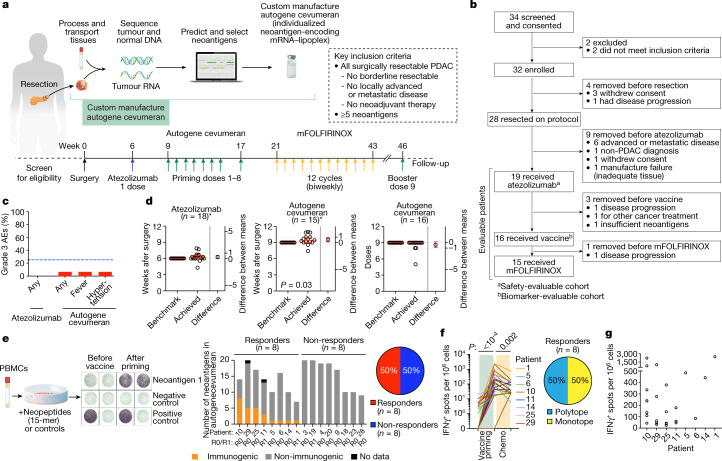
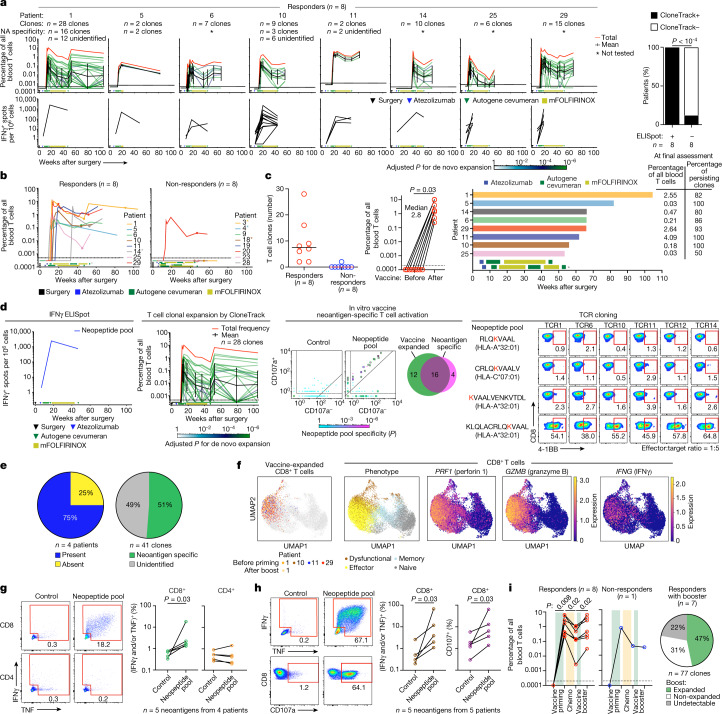
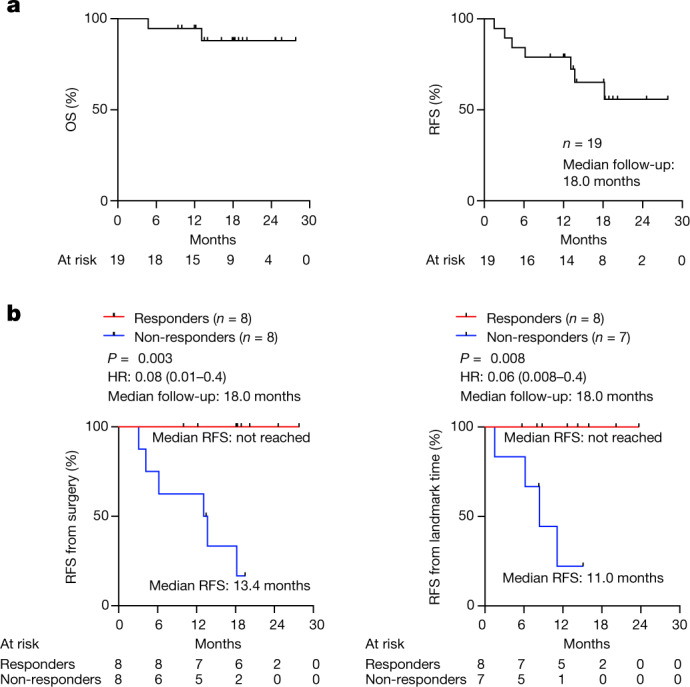
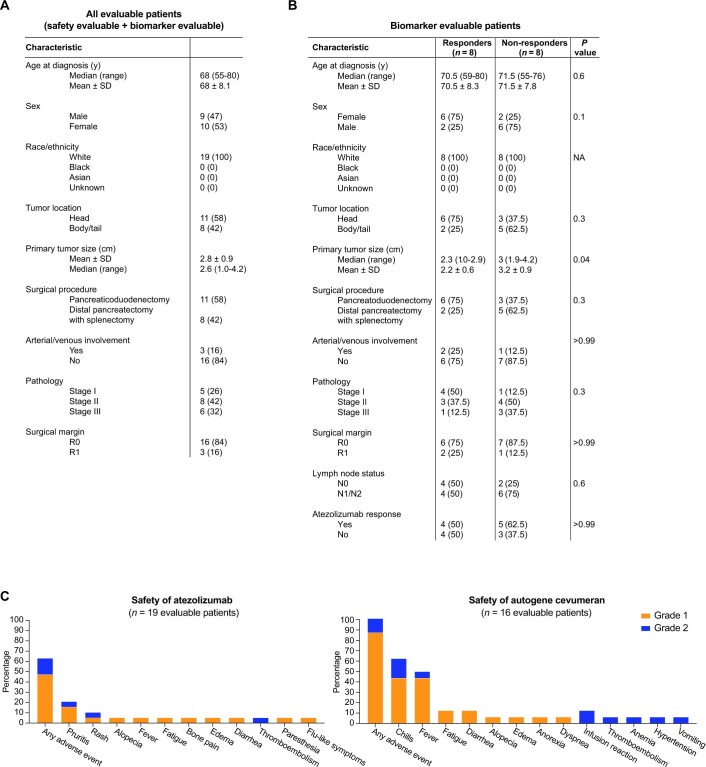
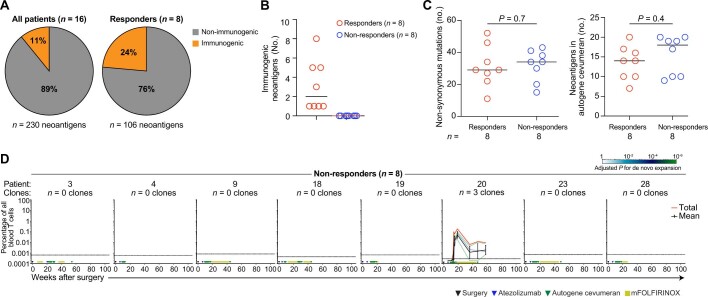
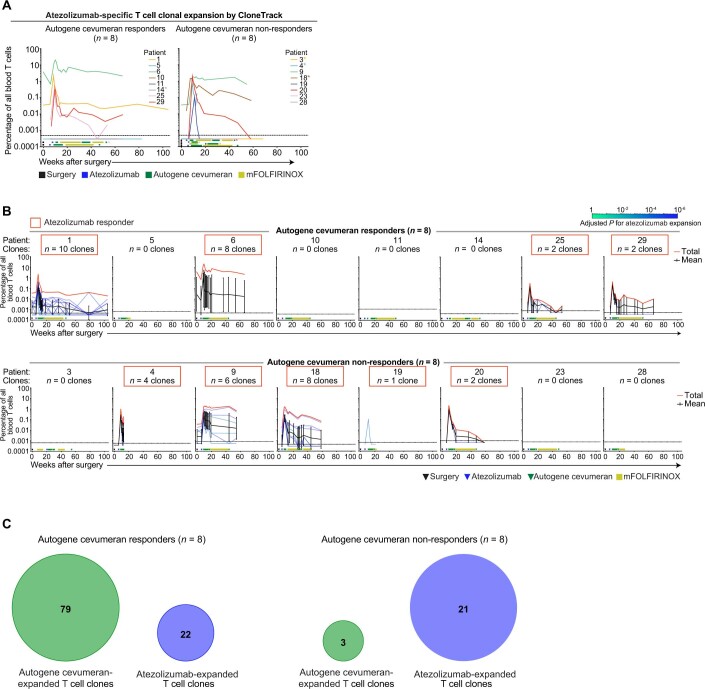
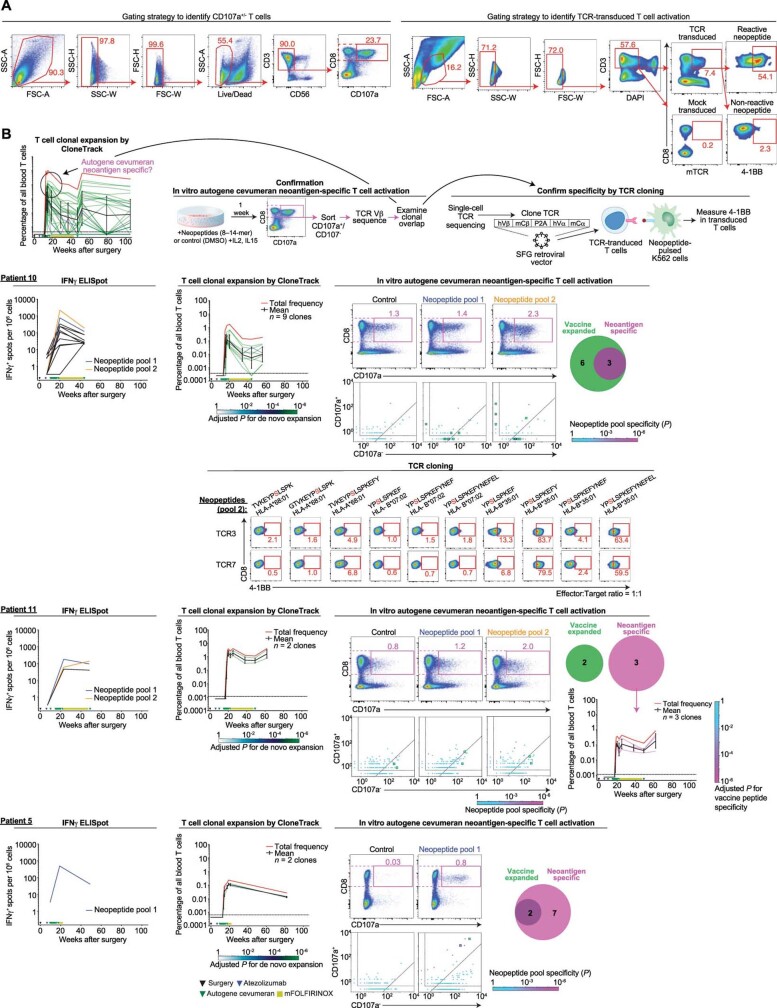
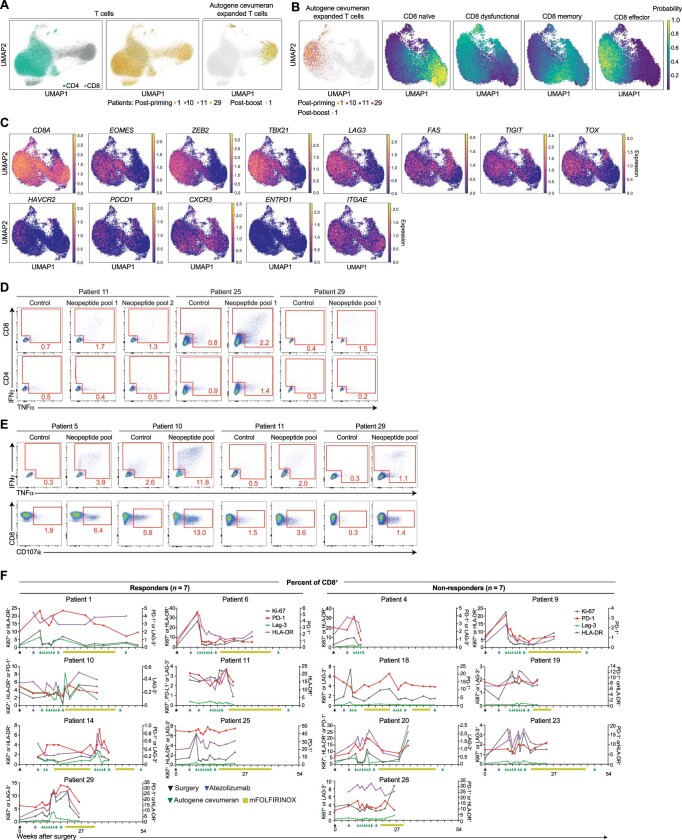
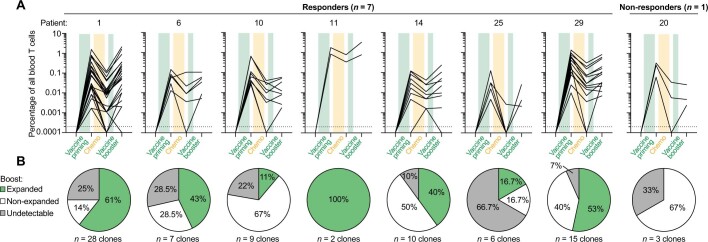
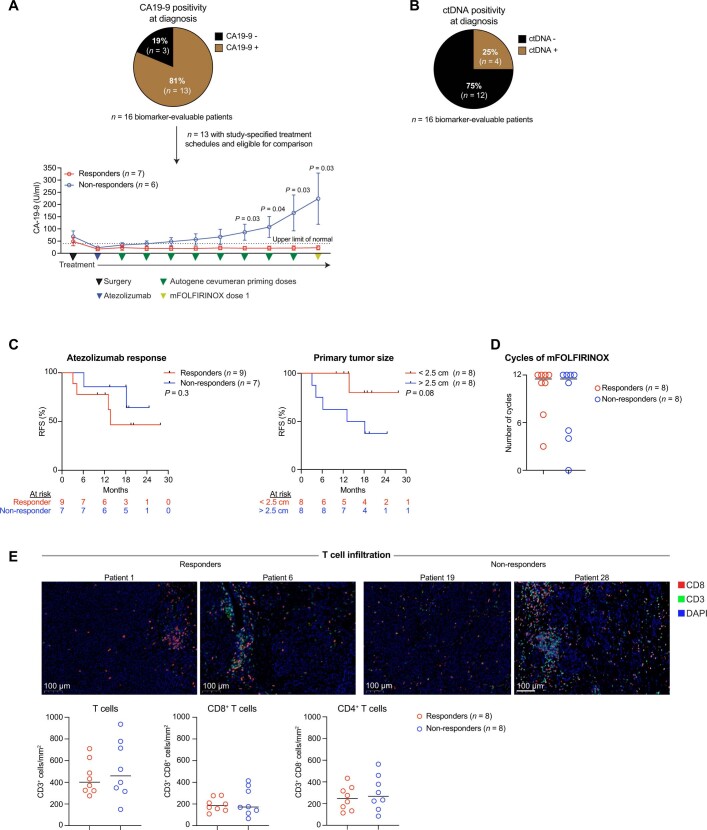
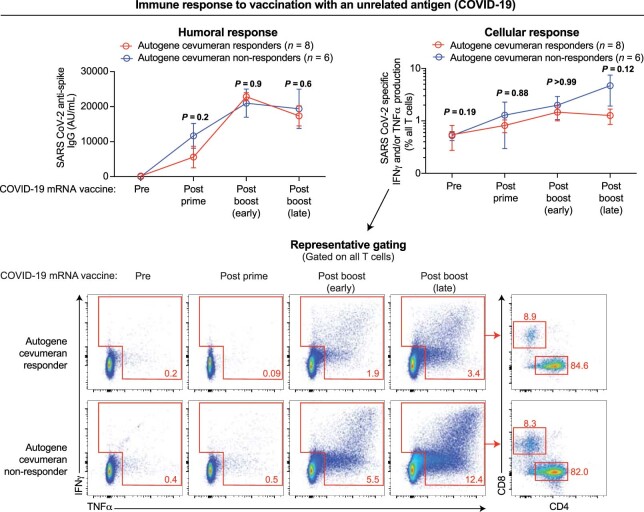
Pancreatic ductal adenocarcinoma (PDAC) is lethal in 88% of patients 1 , yet harbours mutation-derived T cell neoantigens that are suitable for vaccines 2,3 . Here in a phase I trial of adjuvant autogene cevumeran, an individualized neoantigen vaccine based on uridine mRNA–lipoplex nanoparticles, we synthesized mRNA neoantigen vaccines in real time from surgically resected PDAC tumours. After surgery, we sequentially administered atezolizumab (an anti-PD-L1 immunotherapy), autogene cevumeran (a maximum of 20 neoantigens per patient) and a modified version of a four-drug chemotherapy regimen (mFOLFIRINOX, comprising folinic acid, fluorouracil, irinotecan and oxaliplatin). The end points included vaccine-induced neoantigen-specific T cells by high-threshold assays, 18-month recurrence-free survival and oncologic feasibility. We treated 16 patients with atezolizumab and autogene cevumeran, then 15 patients with mFOLFIRINOX. Autogene cevumeran was administered within 3 days of benchmarked times, was tolerable and induced de novo high-magnitude neoantigen-specific T cells in 8 out of 16 patients, with half targeting more than one vaccine neoantigen. Using a new mathematical strategy to track T cell clones (CloneTrack) and functional assays, we found that vaccine-expanded T cells comprised up to 10% of all blood T cells, re-expanded with a vaccine booster and included long-lived polyfunctional neoantigen-specific effector CD8 + T cells. At 18-month median follow-up, patients with vaccine-expanded T cells (responders) had a longer median recurrence-free survival (not reached) compared with patients without vaccine-expanded T cells (non-responders; 13.4 months, P = 0.003). Differences in the immune fitness of the patients did not confound this correlation, as responders and non-responders mounted equivalent immunity to a concurrent unrelated mRNA vaccine against SARS-CoV-2. Thus, adjuvant atezolizumab, autogene cevumeran and mFOLFIRINOX induces substantial T cell activity that may correlate with delayed PDAC recurrence.
Overview
The claims and statistics of this paper haven’t been checked yet.
Free: it reads the open-access text and checks the first 5 claims that cite a source we can check. Create a free account to check every claim.
Integrity signals
Registry
Cites
Statistics
Figures
Verification
Claims the paper makes
The claims and statistics of this paper haven’t been checked yet.
Free: it reads the open-access text and checks the first 5 claims that cite a source we can check. Create a free account to check every claim.
Claims other papers make about this one
Each is checked against this paper’s own text: does it say what the citing paper says it does?
The source backs part of the claim, not all of it — or backs it for a different population, condition or comparison.
In the citing paper
“Although further confirmatory studies are needed, these results provide initial clinical evidence that personalized therapeutic cancer vaccines can enhance responses to ICIs, with many other studies planned.”
From Adjuvant and neoadjuvant immunotherapies in hepatocellular carcinoma (2024) · cites this paper as [136]
Experimental — accuracy not yet measuredThe source backs part of the claim, not all of it — or backs it for a different population, condition or comparison.
In the citing paper
“In this trial, 8 of 16 patients with resected pancreatic ductal adenocarcinoma remained free of cancer after a median follow-up of 18 months136.”
From Adjuvant and neoadjuvant immunotherapies in hepatocellular carcinoma (2024) · cites this paper as [136]
Experimental — accuracy not yet measuredThe source backs part of the claim, not all of it — or backs it for a different population, condition or comparison.
In the citing paper
“Cancer mRNA-based vaccines tend to be administered alone or in combination with ICIs, and after resection, although they have also been used in neoadjuvant–adjuvant treatment approaches136,138,139 (Fig. 3c,d).”
From Adjuvant and neoadjuvant immunotherapies in hepatocellular carcinoma (2024) · cites this paper as [136]
Experimental — accuracy not yet measuredThe cited source says what the claim attributes to it.
In the citing paper
“patients enrolled in the trial with an immunologic response against the vaccine had longer median RFS than those without such a response136.”
From Adjuvant and neoadjuvant immunotherapies in hepatocellular carcinoma (2024) · cites this paper as [136]
The cited source says what the claim attributes to it.
In the citing paper
“Clinical trials of mRNA-based immunotherapeutics encoding unmutated full-length TAAs in checkpoint inhibitor-treated melanoma [18] and individualised mRNA-based immunotherapeutics encoding patient-specific mutated tumour neoantigens in pancreatic and lung cancer [19, 20] have shown encouraging results.”
From Preclinical development of an mRNA-based multiepitope immunotherapeutic for glioblastoma (2025) · cites this paper as [20]
1 more claim about this paper
Create a free account to see every claim other papers make about this one.
Self-check
Percentages, sums and reported differences re-computed from the paper’s own numbers.
The self-check needs the paper’s full text.
Citations
Cites
Sung, H., Ferlay, J., Siegel, R. L., Laversanne, M., Soerjomataram, I., Jemal, A., & Bray, F. (2021) · CA: A Cancer Journal for Clinicians · doi:10.3322/caac.21660 · Cited by 108,699
Richards, S., Aziz, N., Bale, S., Bick, D., Das, S., Gastier-Foster, J., Grody, W. W., Hegde, M., Lyon, E., Spector, E., et al. (2015) · Genetics in Medicine · doi:10.1038/gim.2015.30 · Cited by 32,594
PD-1 and PD-L1 Immune Checkpoint Blockade to Treat Breast Cancer
Hartkopf, A. D., Taran, F.-A., Wallwiener, M., Walter, C. B., Krämer, B., Grischke, E.-M., & Brucker, S. Y. (2016) · Breast Care · doi:10.1159/000453569 · Cited by 30,845
The Genome Analysis Toolkit: A MapReduce framework for analyzing next-generation DNA sequencing data
McKenna, A., Hanna, M., Banks, E., Sivachenko, A., Cibulskis, K., Kernytsky, A., Garimella, K., Altshuler, D., Gabriel, S., Daly, M., et al. (2010) · Genome Research · doi:10.1101/gr.107524.110 · Cited by 27,895
Siegel, R. L., Miller, K. D., Wagle, N. S., & Jemal, A. (2023) · CA: A Cancer Journal for Clinicians · doi:10.3322/caac.21763 · Cited by 16,303
SCANPY: large-scale single-cell gene expression data analysis
Wolf, F. A., Angerer, P., & Theis, F. J. (2018) · Genome Biology · doi:10.1186/s13059-017-1382-0 · Cited by 8,881
Rahib, L., Smith, B. D., Aizenberg, R., Rosenzweig, A. B., Fleshman, J. M., & Matrisian, L. M. (2014) · Cancer Research · doi:10.1158/0008-5472.can-14-0155 · Cited by 7,094
Predictive correlates of response to the anti-PD-L1 antibody MPDL3280A in cancer patients
Herbst, R. S., Soria, J.-C., Kowanetz, M., Fine, G. D., Hamid, O., Gordon, M. S., Sosman, J. A., McDermott, D. F., Powderly, J. D., Gettinger, S. N., et al. (2014) · Nature · doi:10.1038/nature14011 · Cited by 5,231
Self-citationCOSMIC: the Catalogue Of Somatic Mutations In Cancer
Tate, J. G., Bamford, S., Jubb, H. C., Sondka, Z., Beare, D. M., Bindal, N., Boutselakis, H., Cole, C. G., Creatore, C., Dawson, E., et al. (2019) · Nucleic Acids Research · doi:10.1093/nar/gky1015 · Cited by 4,867
Neoantigens in cancer immunotherapy
Schumacher, T. N., & Schreiber, R. D. (2015) · Science · doi:10.1126/science.aaa4971 · Cited by 4,783
Cited by
Items 801–900 of 1,003
Vaccine boosts T cells that target pancreatic tumours
Huff, A. L., & Zaidi, N. (2023) · Nature · doi:10.1038/d41586-023-01526-8 · Cited by 4
Quantitative Theory of Viral-Immune Coevolution May Be within Reach
Mora, T., & Walczak, A. M. (2023) · PRX Life · doi:10.1103/prxlife.1.011001 · Cited by 5
Therapeutic Vaccination and Cancer Immunotherapy
Murphy, J. F. (2023) · Journal of Exploratory Research in Pharmacology · doi:10.14218/jerp.2023.00049 · Cited by 4
Guan, X., Li, Y., Guan, X., Fan, L., & Ying, J. (2024) · PeerJ · doi:10.7717/peerj.16805 · Cited by 4
Delivery of Rna Drugs: Beyond the Liver, More than Vaccine
Elnaggar, M. G., He, Y., & Yeo, Y. (2023) · European Journal of Pharmaceutics and Biopharmaceutics · doi:10.1016/j.ejpb.2024.114203 · Cited by 5
Skubleny, D., Spratlin, J. L., Ghosh, S., Greiner, R., Schiller, D., & Rayat, G. R. (2024) · Cancers · doi:10.3390/cancers16040786 · Cited by 5
“In a landmark Phase 1B trial, Rojas et al. demonstrated that personalized mRNA BioNTech vaccines containing unique tumour neoantigens significantly augmented immune microenvironments and survival in pancreatic adenocarcinoma patients [38].”
BackgroundFantini, M. C., Tsang, K. Y., & Arlen, P. M. (2024) · Expert Review of Vaccines · doi:10.1080/14760584.2024.2397011 · Cited by 4
“…individualized neoantigen mRNA vaccine based on uridine mRNA-lipoplex nanoparticles for the treatment of pancreatic ductal adenocarcinoma (PDAC) [64]; liposomal RNA (RNA-LPX) vaccine, targeting four non-mutated melanoma TAAs alone or in combination with PD-1 checkpoint inhibitors for the…”
mRNA vaccines in the treatment of cancer
Galant, N., Krzyżanowska, N., & Krawczyk, P. A. (2025) · Oncology in Clinical Practice · doi:10.5603/ocp.101582 · Cited by 5
Pathak, G. P., Shah, R., Castonguay, M., Cheng, A., Fris, J., Murphy, R. E., Darling, G. E., Ednie, A. C., French, D. G., Henteleff, H., et al. (2024) · Cancer Medicine · doi:10.1002/cam4.70262 · Cited by 6
“Higher PD-L1 expression is associated with abundant tumor-infiltrating lymphocytes, especially in tumors with KRAS mutations [40].”
BackgroundmRNA-based cancer vaccines: A novel approach to melanoma treatment
Prabhakar, P. K., Upadhyay, T. K., & Sahu, S. K. (2024) · Advances in immunology · doi:10.1016/bs.ai.2024.10.010 · Cited by 5
mRNA Technology in Modern Medicine: Review and Future Prospects
Silva, H. M. (2025) · Clinical and Molecular Epidemiology · doi:10.53964/cme.2025001 · Cited by 4
Mutated DNMT3A creates a public HLADQ- binding neoantigen on acute myeloid leukemia
van der Lee, D. I., Argiro, E. M., Laan, S. N. J., Honders, M. W., de Jong, R. C. M., Struckman, N. E., Falkenburg, J. H. F., & Griffioen, M. (2025) · Frontiers in Immunology · doi:10.3389/fimmu.2025.1556121 · Cited by 5
Cancer vaccines: the experts speak
Marchal, I. (2025) · Nature Biotechnology · doi:10.1038/s41587-025-02606-y · Cited by 4
Bathini, M., Bocaniciu, D., Johnson, F. D., de Jong, R. C. P., Yu, F., Aloi, V. D., Kuiken, M. C., Mors, J. R., Giebel, L., Champagne, J., et al. (2026) · Communications Biology · doi:10.1038/s42003-026-09570-6 · Cited by 6
“Thiscould haveimportanttranslationalimplications,forexample,whenselecting tumorantigensforinclusionincancervaccinesthatarecurrentlyselected basedonexpressionlevels 21 .”
Alexopoulos, G. S. (2023) · American Journal of Geriatric Psychiatry · doi:10.1016/j.jagp.2023.05.012 · Cited by 4
Andrews, C. E., Zilberberg, J., Pérez‐Ollé, R., Exley, M. A., & Andrews, D. W. (2023) · Journal of Neuro-Oncology · doi:10.1007/s11060-023-04491-4 · Cited by 5
Federico, M. (2023) · Vaccines · doi:10.3390/vaccines11121847 · Cited by 4
“Furthermore, data from a phase I clinical trial carried out with an individualized neo-antigen vaccine for pancreatic ductal adenocarcinoma tumors were recently published [14].”
BackgroundLaparoscopic partial splenectomy in distal pancreatectomy may preserve splenic function
Bell‐Allen, N., McNamara, A., Bull, N. B., Lewin, J., & O’Rourke, N. (2024) · ANZ Journal of Surgery · doi:10.1111/ans.18880 · Cited by 4
“This is consistent with the recommended dissection of stations 10, 11, and 18 in the ISGPS consensus statement.”
BackgroundMethodFuture of Dendritic Cell–Based Approaches in Pancreatic Cancer
Somasundaram, A., & Yeh, J. J. (2024) · Journal of Clinical Oncology · doi:10.1200/jco.24.00846 · Cited by 4
New Insights into Personalized Surgical Oncology
Frountzas, M. (2025) · Journal of Personalized Medicine · doi:10.3390/jpm15070295 · Cited by 4
“From a therapeutic perspective, neoantigen-based vaccines are demonstrating real-world feasibility in pancreatic and glioblastoma trials, where de novo immune-mediated T-cell responses seem to delay or prevent tumor recurrence [17,18].”
Neoadjuvant and Adjuvant Therapy in Resectable Pancreatic Adenocarcinoma
Johnson, R., McClelland, P. H.-T., & Ahmad, S. A. (2024) · Surgical Clinics of North America · doi:10.1016/j.suc.2024.04.002 · Cited by 3
NitraTh epitope-based neoantigen vaccines for effective tumor immunotherapy
Zhang, W., Shi, X., Huang, S., Yu, Q., Wu, Z., Xie, W., Li, B., Xu, Y., Gao, Z., Li, G., et al. (2024) · Cancer Immunology Immunotherapy · doi:10.1007/s00262-024-03830-2 · Cited by 3
Molecular Differences in Pancreatic Ductal Adenocarcinomas from Black versus White Patients
Mandal, S., Teslow, E. A., Huang, M., Yu, Y., Sridhar, S., Crawford, H. C., Hockenberry, A. J., Stoppler, M. C., Levin, A. M., & Huang, L. (2025) · Cancer Research Communications · doi:10.1158/2767-9764.crc-24-0376 · Cited by 5
Deep Clustering-Based Immunotherapy Prediction for Gastric Cancer mRNA Vaccine Development
Lan, H., Zhao, J., Yuan, L., Li, M., Pu, X., & Guo, Y. (2025) · International Journal of Molecular Sciences · doi:10.3390/ijms26062453 · Cited by 3
Evoking the Cancer-immunity cycle by targeting the tumor-specific antigens in Cancer immunotherapy
Guo, X., Bai, J., Wang, X., Guo, S., Shang, Z., & Shao, Z. (2025) · International Immunopharmacology · doi:10.1016/j.intimp.2025.114576 · Cited by 3
Qin, D., Huang, K., Yao, Z., Xi, P., Jiang, L., Wei, R., & Li, S. (2025) · Journal of Inflammation Research · doi:10.2147/jir.s519779 · Cited by 3
Meulewaeter, S., Velder, M. D., Reckelbus, D., Mwangi, K., Ehouarne, T., Aernout, I., Engelen, Y., Halimi, F., herteryck, I. V., Bels, L. D., et al. (2025) · Molecular Therapy — Methods & Clinical Development · doi:10.1016/j.omtm.2025.101493 · Cited by 3
A lentiviral vector targeting a KRAS neoepitope for cancer immunotherapy
Goloudina, A. R., Chevalier, F. L., Authié, P., Ciret, S., Nemirov, K., Fert, I., Moncoq, F., Vesin, B., Noirat, A., Blanc, C., et al. (2025) · Scientific Reports · doi:10.1038/s41598-025-05134-6 · Cited by 3
“So far, immunotherapy targeting such shared neoantigens showed encouraging, yet partial, results in pre-clinical and clinical trials (NCT04117087) 5,11 .”
TCR-based cellular immunotherapy for hepatocellular carcinoma: advances, challenges, and prospects
Zeng, W., Zhu, W., Yuan, G., Chen, J., Wang, Z., Hou, J., & Jiang, D. (2025) · Cancer Immunology Immunotherapy · doi:10.1007/s00262-025-04122-z · Cited by 3
Neukirch, L., Uhrig-Schmidt, S., von Werthern, K., Tuch, A., Kraske, J. A., Lyu, Y., Lenoir, B., Eichmüller, S. B., Meyer, M., Zörnig, I., et al. (2025) · Molecular Therapy · doi:10.1016/j.ymthe.2025.07.014 · Cited by 3
Updates on molecular targets and clinical trials with targeted therapies for pancreatic cancer
Safyan, R. A., & Chiorean, E. G. (2025) · Surgical Oncology · doi:10.1016/j.suronc.2025.102268 · Cited by 4
Multi-adjuvant personalized neoantigen vaccines: Fine-tuning anti-cancer T cells
Wang, H. H., & Zaidi, N. (2025) · Cell · doi:10.1016/j.cell.2025.08.025 · Cited by 3
Mastoli, S. Y., Saraf, S. A., & Dey, A. (2025) · International Journal of Biological Macromolecules · doi:10.1016/j.ijbiomac.2025.147854 · Cited by 3
Frey, A., Clulo, K., Fei, Y., Dumit, T. C., Scallo, F., Allen, J. W., Chang, E., Perry, C. J., Wirth, L. V., Jacobs, D., et al. (2025) · Cell Reports · doi:10.1016/j.celrep.2025.116359 · Cited by 4
“1– 3 However, in contrast to vaccines against pathogens, cancer vaccine therapies face unique challenges, including increased reliance on CD8 + T cells as opposed to antibody-mediated immunity and long-term sustainment of T cell response.”
Ranchon, F., Slimano, F., Ayyoub, M., Bérard, C., Grand, A., Kroemer, M., Paolettí, X., Schwiertz, V., Tomasini, P., Bardin, C., et al. (2025) · Annales Pharmaceutiques Françaises · doi:10.1016/j.pharma.2025.10.001 · Cited by 3
Parikh, C. N., DeMarco, K. D., Bhalerao, N., Giwa, H. K., Kane, G. I., Dinnell, R. W., Ma, B., Mori, H., Brassil, M. L., Murphy, K. C., et al. (2026) · Nature Communications · doi:10.1038/s41467-026-74574-z · Cited by 5
“…tailored to a patient ’ s unique mutational pro fi le have shownpromising results in early phasetrials in PDAC patients in combination with anti-PD-L1 ICB and chemotherapy regimens post-surgery 48 , even resulting in persistent antigen-speci fi c T cells peripherally in respondersyears later 49 .”
Li, Y., Kang, X., Yu-na, S., Akter, L., VanLuinen, E., Nakkala, J. R., & Chen, X. (2025) · Scientific Reports · doi:10.1038/s41598-025-21238-5 · Cited by 4
Castillo, M. B., Rankothgedera, S., Thevasagayampillai, S., Kandasamy, A., Lewis, J., Woody, C. L., de Freitas, M. V., Antunes, D. A., El‐Zein, R. A., & Gunaratne, P. H. (2025) · Frontiers in Immunology · doi:10.3389/fimmu.2025.1635810 · Cited by 3
Lipid Monolayers Adsorbing mRNA as Models for mRNA Enclosed in Lipid Nanoparticles for Transfection
Grava, M., Weber, K., Reed, J., Weber, B., Shen, C. C., Haas, H., & Schneck, E. (2025) · Langmuir · doi:10.1021/acs.langmuir.5c04076 · Cited by 3
Immunotherapeutics in metastatic cancer management
Shukla, M., Shri, P., Mahobiya, S. K., & Vishwakarma, R. K. (2025) · Discover Oncology · doi:10.1007/s12672-025-03561-5 · Cited by 3
“Responders had a promising 18-month relapse-free survival [33].”
Yang, X. F., Wang, Y., Zhou, J., Li, S., Ye, J., Sun, Y., He, M., Fan, K., Chen, Z., Tian, F., et al. (2025) · Proceedings of the National Academy of Sciences · doi:10.1073/pnas.2504718122 · Cited by 4
Qiu, K., Mao, M., Song, Y. H., Duan, X., Rao, Y., Feng, L., Cheng, D., Shao, X., Liang, Y., Jiang, C., et al. (2025) · Molecular Therapy — Nucleic Acids · doi:10.1016/j.omtn.2025.102780 · Cited by 3
“4 This versatility makes mRNA vaccines a powerful platform with broad applicability beyond infectious diseases, opening new avenues for cancer immunotherapy.”
Garza, B., Calhoun, J., Norman, P. J., Cline, N., Kichula, K. M., Farias, T. D. J., Sams, S. B., Boorgula, M. P., Danhorn, T., Haugen, B. R., et al. (2025) · The Journal of Clinical Endocrinology & Metabolism · doi:10.1210/clinem/dgaf639 · Cited by 3
Lee, W., Woo, H.-M., Cho, J. H., & Kim, M. S. (2025) · Frontiers in Oncology · doi:10.3389/fonc.2025.1718911 · Cited by 3
“…demonstrating strong concordance with clinical responses (10, 61), while mRNA vaccines extend precision medicine principles to immune-based relapse prevention by generating tumor-speci fi c T cell responses, with vaccine responders showing signi fi cantly prolonged recurrence-free survival (11).”
InfluentialHeendeniya, S. N., Chen, S., Bhatti, S. H., Zahra, Q. U. A., Rahimizadeh, K., Poudel, B. H., Wilton, S. D., & Veedu, R. N. (2025) · Experimental Biology and Medicine · doi:10.3389/ebm.2025.10784 · Cited by 4
Pancreatic cancer: advances in immunology, translational analyses and therapeutic paradigms
O'Reilly, E. M. (2026) · Nature Reviews Gastroenterology & Hepatology · doi:10.1038/s41575-025-01170-9 · Cited by 4
Self-citationmRNA Vaccines for Cancer Treatment
Torphy, R. J., Balachandran, V., & Soares, K. C. (2026) · Surgical Oncology Clinics of North America · doi:10.1016/j.soc.2025.10.006 · Cited by 3
Self-citationPersonalized cancer vaccines and their integration with standard of care modalities
Snäkä, T., Friedlaender, A., Graciotti, M., Hernandez, M., Rossier, L., Kirchner, V., & Kandalaft, L. E. (2026) · Cancer Treatment Reviews · doi:10.1016/j.ctrv.2026.103095 · Cited by 3
Hepatocellular Carcinoma – from Immunobiology to Immunotherapy
Roehlen, N., Bengsch, B., Rennert, C., Schultheiß, M., & Thimme, R. (2026) · Zeitschrift für Gastroenterologie · doi:10.1055/a-2722-5684 · Cited by 3
Tanji, Y., Shimada, S., Kato, M., Akiyama, Y., Hatano, M., Tsukihara, S., Igarashi, Y., Kodera, K., Okazaki, K., Yasukawa, K., et al. (2026) · EBioMedicine · doi:10.1016/j.ebiom.2026.106137 · Cited by 3
Lu, N., Han, J., Dong, L., Li, T., Margonis, G. A., Wang, J. J., Cao, H., Sun, Y., Wang, W., & Lin, C. (2026) · Journal of Translational Medicine · doi:10.1186/s12967-025-07287-4 · Cited by 3
“Although several studies for both mRNA and DC vaccines did not reach median OS or PFS when follow-up ended [21, 51, 54, 62, 64, 71], our sensitivity analysis excluding these studies did not change the results.”
Burghardt, T., Thalmayr, S., Obeser, L., Pöhmerer, J., Yazdi, M., Höhn, M., Völkl, M., Sieber‐Schäfer, F., Zahler, S., Merkel, O. M., et al. (2026) · Journal of the American Chemical Society · doi:10.1021/jacs.5c19141 · Cited by 2
Immunoinformatic insights for design and clinical prospects of pan-RAS cancer vaccine
Srivastava, R., & Rana, T. R. K. (2026) · Frontiers in Medicine · doi:10.3389/fmed.2026.1727976 · Cited by 3
Multimodal radiomics for precision management of colorectal cancer
Wei, Y., & Zhang, L. (2026) · Discover Oncology · doi:10.1007/s12672-026-04751-5 · Cited by 3
Qiao, N., Chen, J., Liu, Y., Chen, Z. J., & Chen, S. J. (2026) · MedScience · doi:10.1007/s11684-026-1210-6 · Cited by 5
Kehm, H., Zens, S., Baumann, D., Meng, Z., de Ru, A. H., Tjokrodirijo, R. T. N., Vent, C., Murawjew, O., Braun, S., Weiß, A., et al. (2026) · Science Advances · doi:10.1126/sciadv.adr6132 · Cited by 3
“In the context of the current interest in therapeutic exploitation of the neoantigen-specific T cell response in pancreatic cancer ( 9 , 50 ), the detection of reactivity by “private” TCRs in this experiment prompted us to search for potential tumor mutanome-encoded neoepitopes.”
Self-citationMix, M. R., Sievers, C. M., Hassert, M., Kannan, S. K., Pewe, L. L., Huang, S. C., He, R., Fain, C. E., Heidarian, M., Hancox, L. S., et al. (2026) · Journal of Clinical Investigation · doi:10.1172/jci197812 · Cited by 4
“Like pathogens, tumors harbor targetable antigens that can be identified and implemented into vaccine regimens (24, 37, 39).”
InfluentialKhan, M. M. U. R. H., Khalil, M. I. K., Zhuo, Y., Liu, H., Gu, J., Wang, S., Hussain, I., Liu, Y., Hussain, Y., Khan, R., et al. (2026) · Materials Today Advances · doi:10.1016/j.mtadv.2026.100808 · Cited by 5
Ling, X., Zhang, Y., Zhu, L., Xu, Z., Bao, Y., Lin, H., Wu, J., Shi, J., Liu, L., & Dong, Q. (2026) · Cellular Signalling · doi:10.1016/j.cellsig.2026.112589 · Cited by 3
Takrori, E., Abdulmajid, M., Devagudi, D., Sohail, R., Sadiq, Z., Berneau, C., Shenouda, A., Adelli, R., Peshin, S., & Singal, S. (2026) · International Journal of Molecular Sciences · doi:10.3390/ijms27104413 · Cited by 3
“…a fixed shared antigen; early clinical work with individualized mRNA-lipoplex neoantigen vaccination (autogene cevumeran) in surgically resected PDAC demonstrated induction of mutation-specific T cells and suggested a link between vaccine-induced responses and delayed recurrence in responders [47].”
Saccu, G., & Fagoonee, S. (2026) · Frontiers in Cell and Developmental Biology · doi:10.3389/fcell.2026.1812373 · Cited by 3
“…for mRNA cancer vaccine development has focused on personalized formulations encoding patient-specific neoantigens and tumor-associated antigens, with the aim of eliciting robust activation of the host immune system to selectively eliminate malignant cells (Rojas et al., 2023; Killock, 2024).”
InfluentialXie, L., Ma, F., Qiu, C., Tong, S., Gong, J., Xie, X. C., Li, L., Chen, J., Huang, Y., & Pan, S. (2026) · ACS Nano · doi:10.1021/acsnano.6c03357 · Cited by 3
Hwang, J.-E., Park, J., Kim, H., Li, S., & Im, H. (2026) · Journal of Hematology & Oncology · doi:10.1186/s13045-026-01811-9 · Cited by 4
Xiao, N., Chen, C., Yang, X., Hao, J., Xie, M., Wang, J., Xiang, J., Liu, C., Jiang, X., Huang, S., et al. (2026) · Frontiers in Immunology · doi:10.3389/fimmu.2026.1894189 · Cited by 4
Burn, O. K., Dasyam, N., & Hermans, I. F. (2023) · Critical Reviews™ in Oncogenesis · doi:10.1615/critrevoncog.2023049407 · Cited by 3
Sng, C. C. T., Kallor, A. A., Simpson, B. S. S., Bedran, G., Alfaro, J. A., & Litchfield, K. (2024) · Frontiers in Immunology · doi:10.3389/fimmu.2024.1347542 · Cited by 3
Lin, S., Hong, J., Wu, S., Zhu, C., Liu, F., Lin, W., Cai, X., Ye, Y., & Chen, Y. (2024) · Journal of Leukocyte Biology · doi:10.1093/jleuko/qiae092 · Cited by 4
Du, Q., Zhan, Y., Zhang, Z., Yang, J., Jonckheere, N., Shi, S., Wang, W., Xu, J., Liu, J., & Yu, X. (2024) · Journal of Gastrointestinal Oncology · doi:10.21037/jgo-24-340 · Cited by 4
“Huang et al. and Rojas et al. recently described potential neoantigen and mRNA vaccine candidates in PAAD and cholangiocarcinoma based on public sequencing data (30,40).”
Current status of cancer genome medicine for pancreatic ductal adenocarcinoma
Doi, T., Ishikawa, T., Moriguchi, M., & Itoh, Y. (2025) · Japanese Journal of Clinical Oncology · doi:10.1093/jjco/hyaf012 · Cited by 4
Threading the Needle: Navigating Novel Immunotherapeutics in Pancreatic Ductal Adenocarcinoma
Demir, T., Moloney, C., & Mahalingam, D. (2025) · Cancers · doi:10.3390/cancers17050715 · Cited by 4
“Imaging assessments revealed stable metabolic activity in three patients, while one exhibited a significant 69.2% reduction in metabolic activity [194].”
InfluentialImproving the Efficacy of Cancer mRNA Vaccines
Kirtane, A. R., & Traverso, G. (2025) · The Cancer Journal · doi:10.1097/ppo.0000000000000764 · Cited by 3
“…Immune cell ingress is driven by a local release of chemokines and cytokines such as chemokine (C-C motif) ligand (CCL) 2, 3, and 4, granulocyte-macrophage colony-stimulating factor (GM-CSF), interleukin (IL)-1 β , tumor necrosis factor (TNF)- α , IL6, C-X-C motif chemokine ligand (CXCL)-2, and 10.”
Hung, J. T., Mynam, R. S., Patel, M. A., Ozogbo, S. I., LoConte, N. K., & Kratz, J. D. (2025) · Journal of Gastrointestinal Cancer · doi:10.1007/s12029-025-01194-z · Cited by 4
“These studies build on the preliminary efficacy signal of personalized RNA vaccines in the setting of minimal residual disease in PDAC with 50% of subjects achieving T-cell response and yielding improvement in recurrence free survival [63].”
Vaccins antigéniques dans le mélanome : vers un nouveau paradigme thérapeutique
Svabek, C., Maiezza, S., Desmedt, E., Mortier, L., & Boileau, M. (2025) · Bulletin du Cancer · doi:10.1016/j.bulcan.2025.02.012 · Cited by 3
Domínguez‐Romero, A. N., Esquivel-García, C. A., Martínez‐Cortés, F., Martínez-Zarco, B. A., Odales, J., Abraham-Ruiz, S., Maruri, J., Villegas-Ruíz, V., Gevorkian, G., & Manoutcharian, K. (2025) · Molecular Immunology · doi:10.1016/j.molimm.2025.06.003 · Cited by 3
Sandstad, V. B. B., Modvig, S., & Holmström, M. O. (2025) · Cancer Immunology Immunotherapy · doi:10.1007/s00262-025-04107-y · Cited by 3
Immunotherapy in Gastrointestinal Cancers: Current Insights
Jiang, X., Zhan, Y., Yang, D., & Bao, L. (2025) · Clinical Pharmacology Advances and Applications · doi:10.2147/cpaa.s497836 · Cited by 9
Kanu, E. N., Fletcher, A. A., Bao, J., Agritelley, E. S., Button, J., Eckhoff, A. M., Comatas, K., Wang, T., Hwang, B.-J., Lidsky, M. E., et al. (2025) · Cancer Immunology Immunotherapy · doi:10.1007/s00262-025-04146-5 · Cited by 3
Billing, L., Martin, L., Henser‐Brownhill, T., Samangouei, P., Leach, A., Knight, P., Apostolidou, M., Ladak, A., Nagel, B., & Kwok, A. (2025) · Advanced Science · doi:10.1002/advs.202514417 · Cited by 3
mRNA vaccines do not stop with COVID-19
Zhou, J., Zhang, Y., Mo, K., Newbert, H., & Song, X. (2023) · The Lancet · doi:10.1016/s0140-6736(23)01514-3 · Cited by 3
Four ways research aims to outwit cancer’s evasion tactics
Eisenstein, M. S. (2023) · Nature · doi:10.1038/d41586-023-02607-4 · Cited by 3
Recent Developments of Vaccines as a Precision Medicine Approach to Cancer Immunotherapy
Murphy, J. F. (2024) · Cancer Screening and Prevention · doi:10.14218/csp.2024.00009 · Cited by 3
Bhattacharya, M., Sarkar, A., Wen, Z., Wu, Y., & Chakraborty, C. (2024) · Molecular Biotechnology · doi:10.1007/s12033-024-01242-2 · Cited by 3
“These types of neoantigen-based cancer vaccines are entered into the clinical trial [11, 13, 15, 16].”
Zhang, T., Celiker, B., Shao, Y., Gai, J., Hill, C. M., Wang, C., & Zheng, L. (2024) · Clinical Cancer Research · doi:10.1158/1078-0432.ccr-24-2251 · Cited by 5
“A recent study by Rojas and colleagues (12) demonstrated that adjuvant autogene cevumeran, an individualized neoantigen vaccine, was able to induce safe and sustained neoantigen-specific T-cell response in 50% of the unselected patients with resectable PDAC when administered with atezolizumab and…”
Challenges and Emerging Strategies of Immunotherapy for Glioblastoma
Mao, M., Yao, L., Ma, X., & Xie, H. (2025) · ChemBioChem · doi:10.1002/cbic.202400848 · Cited by 4
Rappaport, A., Bekerman, E., Boucher, G. R., Sung, J., Carr, B., Corzo, C. A., Larson, H., Kachura, M. A., Scallan, C. D., Geleziunas, R., et al. (2025) · The Journal of Immunology · doi:10.1093/jimmun/vkae052 · Cited by 3
Cancer Immunogenomics Approaches and Applications to Cancer Vaccines
Garfinkle, E. A. R., & Mardis, E. R. (2025) · The Cancer Journal · doi:10.1097/ppo.0000000000000762 · Cited by 3
The Role of Nanoparticles in Therapy of Real-World Patients with Pancreatic Cancer: A Scoping Review
Konstantinidis, I. K., Tsokkou, S., Katsikeros, D., Chatzikomnitsa, P., Papakonstantinou, M., Liampou, E., Toutziari, E., Giakoustidis, D. E., Bangeas, P., Papadopoulos, V. N., et al. (2025) · Cancers · doi:10.3390/cancers17101726 · Cited by 3
Employing RNA editing to engineer personalized tumor-specific neoantigens (editopes)Preprint
Pecori, R., Casati, B., Merdler-Rabinowicz, R., Landesman, N., Sanghvi, K., Zens, S., Kipfstuhl, K., Pinamonti, V., Arnold, A., Lindner, J. M., et al. (2023) · bioRxiv (Cold Spring Harbor Laboratory) · doi:10.1101/2023.03.16.532918 · Cited by 3
Nanomedicine Approaches for In Vivo Cancer Immunotherapy
Hofstraat, S. R. J., Anbergen, T., & van der Meel, R. (2023) · Nanomedicine · doi:10.2217/nnm-2023-0230 · Cited by 3
Nakagawa, M., Evans, T. T., Bimali, M., Coleman, H. N., Crane, J., Darwish, N., Faulkner, J. L., Jones, A., Kelly, H., Lieblong, B. J., et al. (2025) · medRxiv · doi:10.1101/2025.01.18.25320725 · Cited by 3
Ross, S. B., Popover, J. L., Sucandy, I., Christodoulou, M., Pattilachan, T. M., & Rosemurgy, A. S. (2024) · The American Surgeon · doi:10.1177/00031348241248703 · Cited by 2
Cancer Vaccines: Another Aspect to Immunotherapy
Al-Janabi, I. I. (2024) · Al-Rafidain Journal of Medical Sciences · doi:10.54133/ajms.v7i1.1057 · Cited by 2
Precision Oncology in Pancreatic Cancer and Future Treatment Directions
Mahmasani, L. A., & O'Reilly, E. M. (2025) · Surgical Oncology Clinics of North America · doi:10.1016/j.soc.2025.03.002 · Cited by 3
Self-citationPancreatic Cancer: Early Detection and Novel Therapies
Murthy, A. V., Nagendran, A., & Rao, D. (2025) · Journal of Translational Gastroenterology · doi:10.14218/jtg.2024.00037 · Cited by 4
Cancer therapy via neoepitope-specific monoclonal antibody cocktails
Hartman, C. J., Mohamed, A. O., Shukla, G. S., Pero, S. C., Sun, Y., Rodríguez–Jiménez, R., Genovese, N. F., Köhler, N., Hemphill, T. R., Huang, Y. H., et al. (2025) · Cancer Immunology Immunotherapy · doi:10.1007/s00262-025-04075-3 · Cited by 2
“…growth factor signaling, enabling angiogenesis and tumor proliferation [55], while Lama1, an extracellular matrix protein, provides structural support that may aid tumor cell survival [56] but higher expression has also been an indicator of lower risk of colorectal cancer recurrence [59].”
Volkmar, M., Hoser, D., Lauenstein, C., Rebmann, J., Hotz‐Wagenblatt, A., Rieger, J., Poschke, I. C., Becker, J. P., Riemer, A. B., Sprick, M. R., et al. (2025) · Journal for ImmunoTherapy of Cancer · doi:10.1136/jitc-2025-011802 · Cited by 2
“…the growing interest in the development of personalized T-cell therapy for PDAC, either through neoepitope vaccination or engineered T-cell therapy, 17 27 we therefore embarked on a proof of concept study aimed at the isolation of TCRs targeting neoepitopes as identified by “reverse immu-nology”…”
Development of therapeutic cancer vaccines based on cancer immunity cycle
Zhang, J., Zheng, Y., Xu, L., Gao, J., Ou, Z., Zhu, M., & Wang, W. (2025) · Frontiers of Medicine · doi:10.1007/s11684-025-1134-6 · Cited by 2
Targeting Advanced Pancreatic Ductal Adenocarcinoma: A Practical Overview
Citterio, C., Vecchia, S., Mordenti, P., Anselmi, E., Ratti, M., Guasconi, M., & Orlandi, E. (2025) · Gastroenterology Insights · doi:10.3390/gastroent16030026 · Cited by 2
Using the Cancer Epitope Database and Analysis Resource (CEDAR)
Koşaloğlu‐Yalçın, Z., Vita, R., Blazeska, N., Peters, B., & Sette, A. (2025) · Methods in molecular biology · doi:10.1007/978-1-0716-4566-6_3 · Cited by 2
Surgery based on resectability status of pancreatic cancer: a narrative review
Einama, T., Ohara, M., Ichio, K., Kobayashi, K., Shinada, H., Yonamine, N., Tsunenari, T., Takao, M., Takihata, Y., Ueno, H., et al. (2025) · Japanese Journal of Clinical Oncology · doi:10.1093/jjco/hyaf131 · Cited by 2
“…new anticancer drugs or regimens [98] with marked therapeutic effects are developed, such as Atezolizumab and FOLFIRINOX combined with personalized RNA neoantigen vaccines [99], it is expected that the number of CS cases will increase even further, and this may improve the prognosis of UR patients.”
Metadata
- Authors
- Rojas, L. A., Sethna, Z., Soares, K. C., Olcese, C., Pang, N., Patterson, E., Lihm, J., Ceglia, N., Guasp, P., Chu, A., Yu, R., Chandra, A. K., Waters, T., Ruan, J., Amisaki, M., Zebboudj, A., Odgerel, Z., Payne, G., Derhovanessian, E., Müller, F., Rhee, I., Yadav, M., Dobrin, A., Sadelain, M., Łuksza, M., Cohen, N., Tang, L., Basturk, O., Gönen, M., Katz, S., Do, R. K., Epstein, A. S., Momtaz, P., Park, W., Sugarman, R., Varghese, A. M., Won, E., Desai, A., Wei, A. C., D’Angelica, M. I., Kingham, T. P., Mellman, I., Merghoub, T., Wolchok, J. D., Sahin, U., Türeci, Ö., Greenbaum, B. D., Jarnagin, W. R., Drebin, J., O’Reilly, E. M., & Balachandran, V. P.
- Affiliations
- Memorial Sloan Kettering Cancer Center (US)
- BioNTech (Germany) (DE)
- Genentech (US)
- Tisch Cancer Institute (US)
- Icahn School of Medicine at Mount Sinai (US)
- Weill Cornell Medicine (US)
- Corresponding author
- Greenbaum, Benjamin D.
- Balachandran, Vinod P.
- ORCID
- Rojas, Luis A.
- Sethna, Zachary
- Soares, Kevin C.
- Olcese, Cristina
- Lihm, Jayon
- Ceglia, Nicholas
- Guasp, Pablo
- Yu, Rebecca
- Amisaki, Masataka
- Zebboudj, Abderezak
- Yadav, Mahesh
- Dobrin, Anton
- Sadelain, Michel
- Łuksza, Marta
- Cohen, Noah
- Tang, Laura
- Basturk, Olca
- Gönen, Mithat
- Katz, Seth
- Epstein, Andrew S.
- Momtaz, Parisa
- Park, Wungki
- Varghese, Anna M.
- Won, Elizabeth
- Wei, Alice C.
- Kingham, T. Peter
- Mellman, Ira
- Merghoub, Taha
- Wolchok, Jedd D.
- Sahin, Ugur
- Türeci, Özlem
- Greenbaum, Benjamin D.
- Jarnagin, William R.
- Drebin, Jeffrey
- O’Reilly, Eileen M.
- Balachandran, Vinod P.
- Venue
- Nature
- Published
- 2023-05-10
- Volume
- 618
- Issue
- 7963
- Pages
- 144-150
- ISSN
- 0028-0836 (ISSN-L)
- 1476-4687
- PMC
- PMC10171177
- OpenAlex
- W4376133743
- Cited by
- 1,432
- References
- 63
- Citations by year
- 2026: 426 · 2025: 488 · 2024: 381 · 2023: 136
- FWCI
- 156.84
- Type
- journal article
- Language
- en
- Open access
- hybrid
- doi.org
- Licence
- cc-by
- creativecommons.org/licenses/by/4.0 (tdm)
- creativecommons.org/licenses/by/4.0 (vor)
- Locations
- Nature (publishedVersion, cc-by)
- PubMed Central (publishedVersion, cc-by)
- PubMed (publishedVersion)
- RePEc: Research Papers in Economics (submittedVersion)
- Funders
- Damon Runyon Cancer Research Foundation
- Lustgarten Foundation
- Pershing Square Sohn Cancer Research Alliance
- Cycle for Survival
- National Institutes of Health (CA08748, CCSG, P30 CA08748)
- Genentech
- Stand Up To Cancer
- Marie-Josée and Henry R. Kravis Center for Molecular Oncology
- National Cancer Institute (U01CA224175, P30-CA-08748, CA08748, CA224175, P30CA008748, CCSG P30 CA08748)
- Moonshot Research and Development Program
- Cancer Moonshot
- Topics
- Life Sciences › Immunology and Microbiology › Immunology › Immunotherapy and Immune Responses
- Health Sciences › Medicine › Oncology › Cancer Immunotherapy and Biomarkers
- Health Sciences › Medicine › Oncology › Pancreatic and Hepatic Oncology Research
- Keywords
- pancreatic ductal adenocarcinoma, personalized neoantigen vaccine, mRNA vaccines, atezolizumab, modified FOLFIRINOX, neoantigen-specific T cells, CD8+ T cells, recurrence-free survival, adjuvant immunotherapy, immune fitness, COVID-19 mRNA vaccine
- MeSH terms
- mRNA Vaccines, Adjuvants, Immunologic, Antigens, Neoplasm, Humans, Immunotherapy, Lymphocyte Activation, Pancreatic Neoplasms, T-Lymphocytes, CD8-Positive T-Lymphocytes, Cancer Vaccines, Carcinoma, Pancreatic Ductal, Antibodies, Monoclonal, Humanized
About these checks
Registry, retraction, Cites and statistics results are computed, not judged, with one exception: a printed reference that no index lists is read once by a model before it counts as a citation error. Claims are extracted by a model and kept only when their quote appears verbatim in the text; each cited source is then checked, with a model’s help, for whether it says what the claim relies on. Those verdicts can be wrong — read the claim’s quote and the cited source before relying on one.
Statistics and arithmetic are recomputed, not judged.
Confidence bands are shown only for fields calibrated on our annotated test set. None is calibrated yet, so no band is shown.
What counts as a claim ›How we measure confidence ›How we check this ›
Are you an author, or do you see a problem with this page? Request a review
Data sources
Bibliographic data: Semantic Scholar, OpenAlex, Crossref.
Contains information from the Semantic Scholar Academic Graph Datasets, made available under the ODC Attribution License (ODC-BY 1.0).
Semantic Scholar’s data is described in: Kinney, R., et al. (2023). The Semantic Scholar Open Data Platform. arXiv:2301.10140.
