

Personalized RNA neoantigen vaccines stimulate T cells in pancreatic cancer
Open accessThe DOI matches its Crossref record; 65 of the 65 references it cites were found in a registry or an index.
Abstract
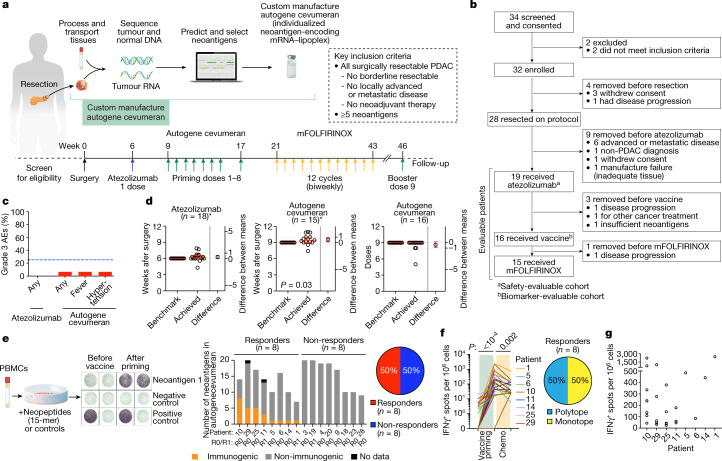
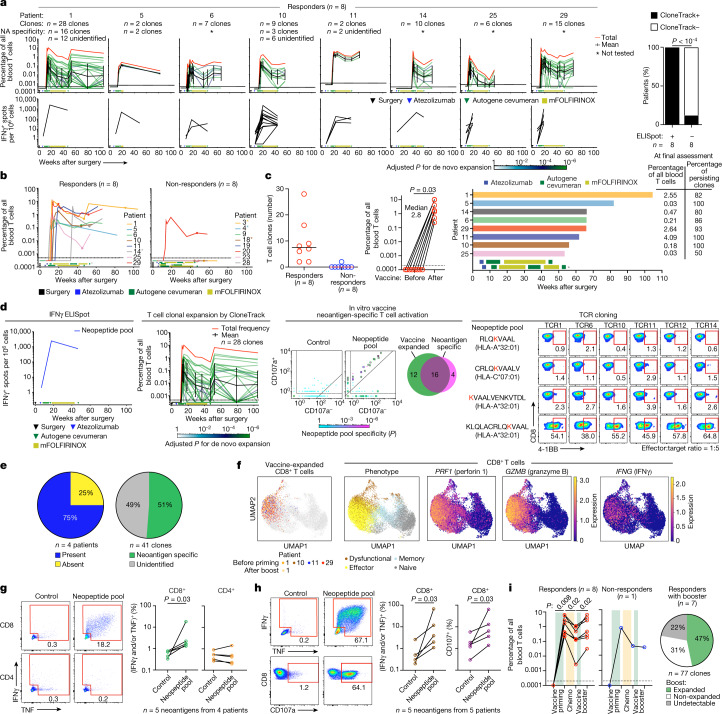
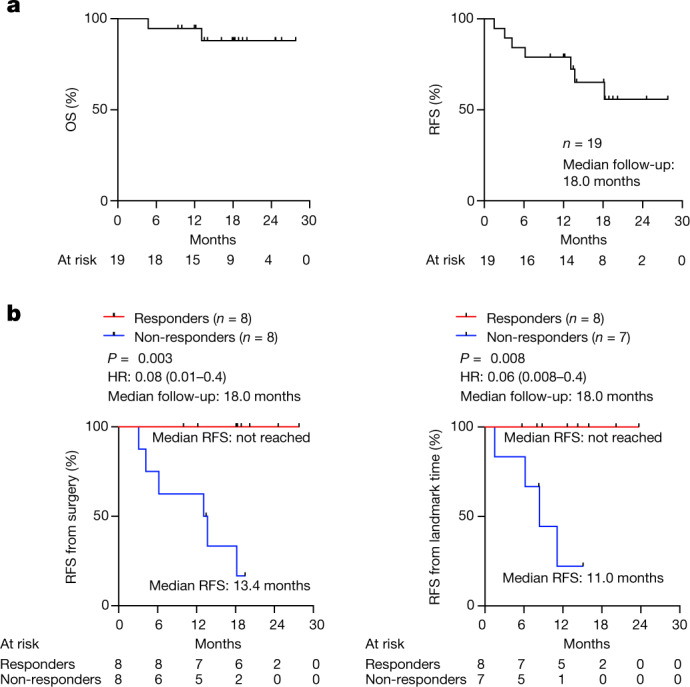
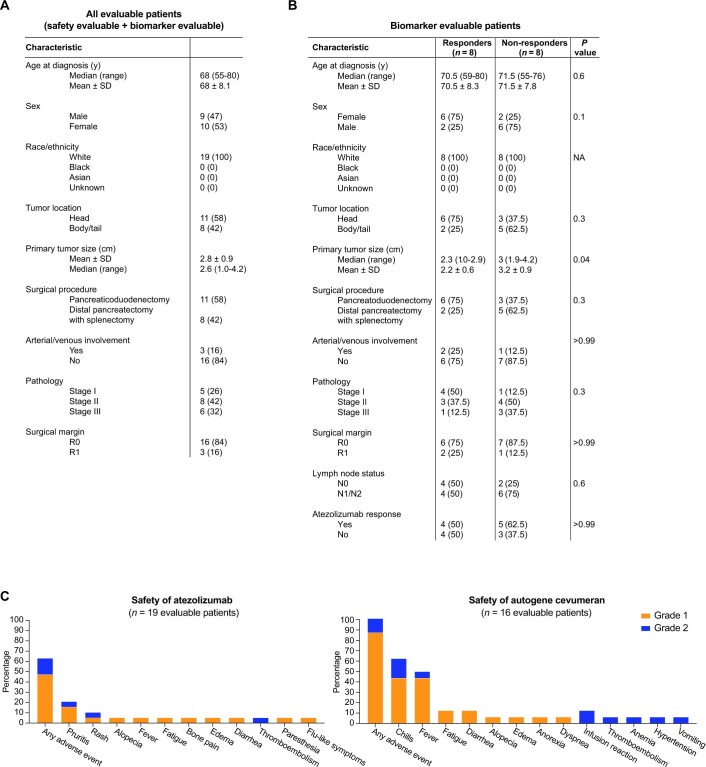
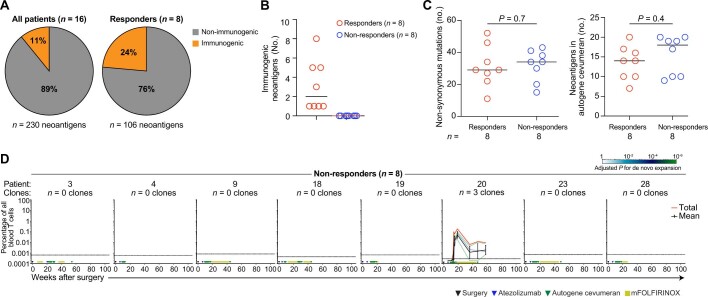
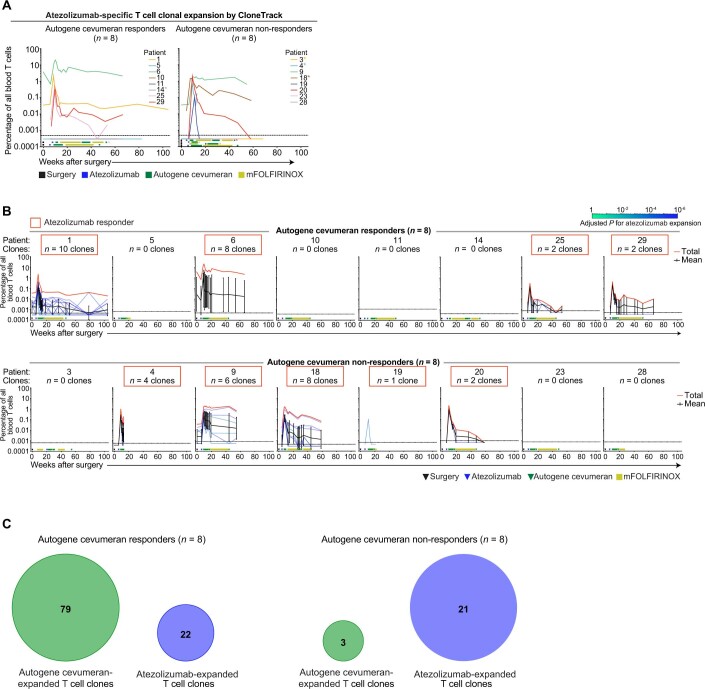
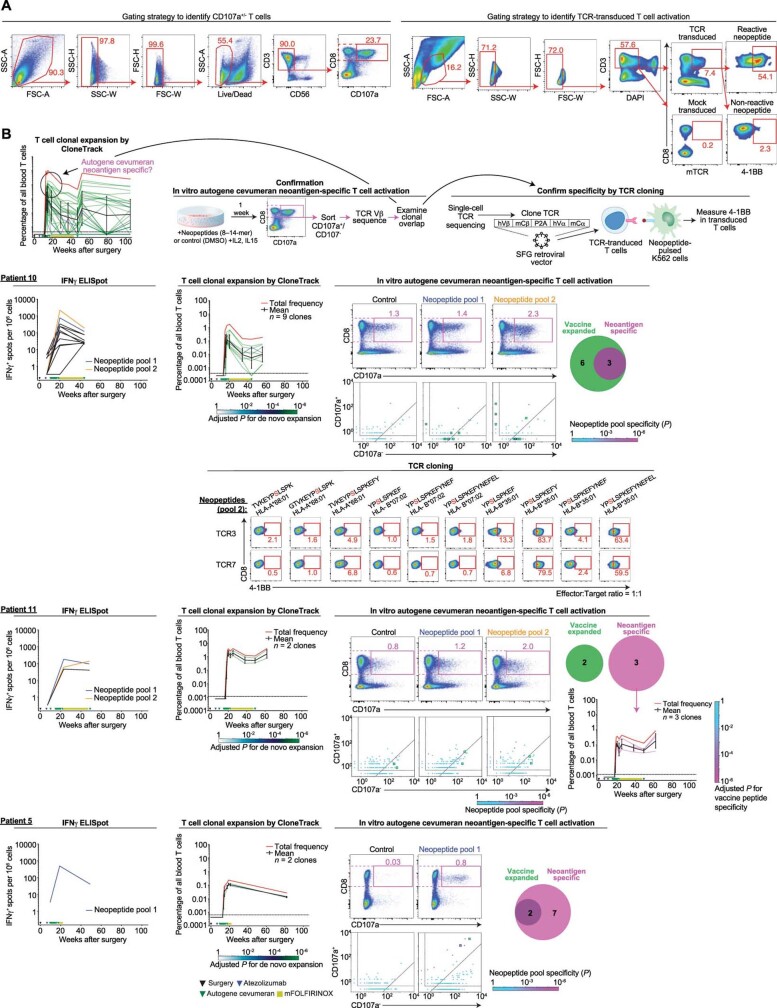
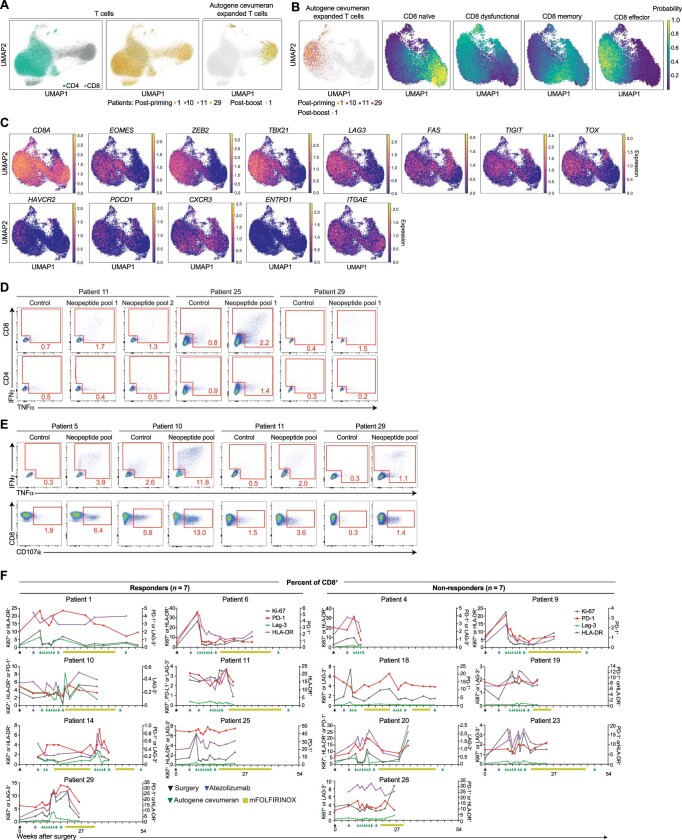
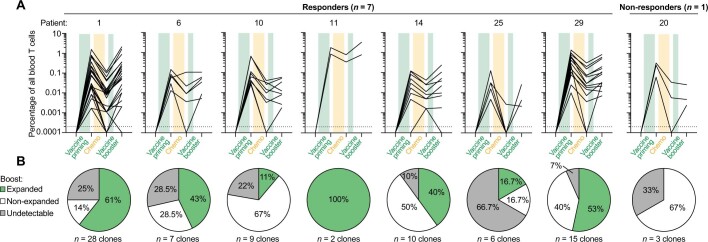
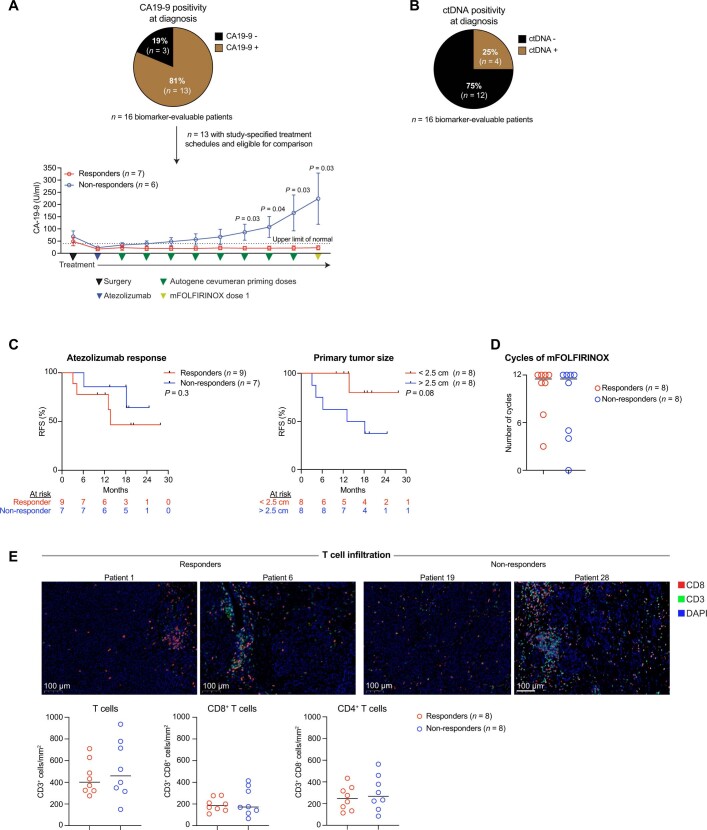
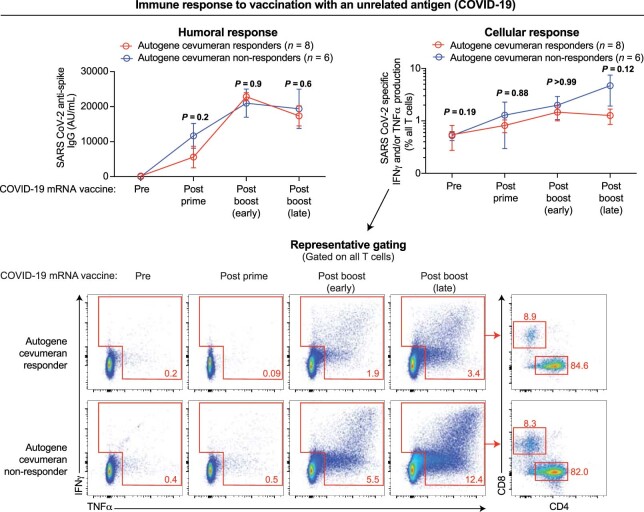
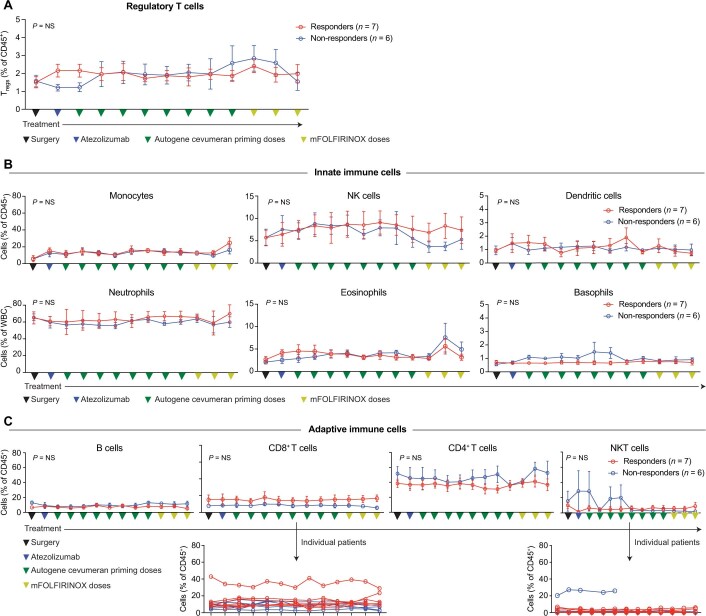
Pancreatic ductal adenocarcinoma (PDAC) is lethal in 88% of patients 1 , yet harbours mutation-derived T cell neoantigens that are suitable for vaccines 2,3 . Here in a phase I trial of adjuvant autogene cevumeran, an individualized neoantigen vaccine based on uridine mRNA–lipoplex nanoparticles, we synthesized mRNA neoantigen vaccines in real time from surgically resected PDAC tumours. After surgery, we sequentially administered atezolizumab (an anti-PD-L1 immunotherapy), autogene cevumeran (a maximum of 20 neoantigens per patient) and a modified version of a four-drug chemotherapy regimen (mFOLFIRINOX, comprising folinic acid, fluorouracil, irinotecan and oxaliplatin). The end points included vaccine-induced neoantigen-specific T cells by high-threshold assays, 18-month recurrence-free survival and oncologic feasibility. We treated 16 patients with atezolizumab and autogene cevumeran, then 15 patients with mFOLFIRINOX. Autogene cevumeran was administered within 3 days of benchmarked times, was tolerable and induced de novo high-magnitude neoantigen-specific T cells in 8 out of 16 patients, with half targeting more than one vaccine neoantigen. Using a new mathematical strategy to track T cell clones (CloneTrack) and functional assays, we found that vaccine-expanded T cells comprised up to 10% of all blood T cells, re-expanded with a vaccine booster and included long-lived polyfunctional neoantigen-specific effector CD8 + T cells. At 18-month median follow-up, patients with vaccine-expanded T cells (responders) had a longer median recurrence-free survival (not reached) compared with patients without vaccine-expanded T cells (non-responders; 13.4 months, P = 0.003). Differences in the immune fitness of the patients did not confound this correlation, as responders and non-responders mounted equivalent immunity to a concurrent unrelated mRNA vaccine against SARS-CoV-2. Thus, adjuvant atezolizumab, autogene cevumeran and mFOLFIRINOX induces substantial T cell activity that may correlate with delayed PDAC recurrence.
Overview
The claims and statistics of this paper haven’t been checked yet.
Free: it reads the open-access text and checks the first 5 claims that cite a source we can check. Create a free account to check every claim.
Integrity signals
Registry
Cites
Statistics
Figures
Verification
Claims the paper makes
The claims and statistics of this paper haven’t been checked yet.
Free: it reads the open-access text and checks the first 5 claims that cite a source we can check. Create a free account to check every claim.
Claims other papers make about this one
Each is checked against this paper’s own text: does it say what the citing paper says it does?
The source backs part of the claim, not all of it — or backs it for a different population, condition or comparison.
In the citing paper
“Although further confirmatory studies are needed, these results provide initial clinical evidence that personalized therapeutic cancer vaccines can enhance responses to ICIs, with many other studies planned.”
From Adjuvant and neoadjuvant immunotherapies in hepatocellular carcinoma (2024) · cites this paper as [136]
Experimental — accuracy not yet measuredThe source backs part of the claim, not all of it — or backs it for a different population, condition or comparison.
In the citing paper
“In this trial, 8 of 16 patients with resected pancreatic ductal adenocarcinoma remained free of cancer after a median follow-up of 18 months136.”
From Adjuvant and neoadjuvant immunotherapies in hepatocellular carcinoma (2024) · cites this paper as [136]
Experimental — accuracy not yet measuredThe source backs part of the claim, not all of it — or backs it for a different population, condition or comparison.
In the citing paper
“Cancer mRNA-based vaccines tend to be administered alone or in combination with ICIs, and after resection, although they have also been used in neoadjuvant–adjuvant treatment approaches136,138,139 (Fig. 3c,d).”
From Adjuvant and neoadjuvant immunotherapies in hepatocellular carcinoma (2024) · cites this paper as [136]
Experimental — accuracy not yet measuredThe cited source says what the claim attributes to it.
In the citing paper
“patients enrolled in the trial with an immunologic response against the vaccine had longer median RFS than those without such a response136.”
From Adjuvant and neoadjuvant immunotherapies in hepatocellular carcinoma (2024) · cites this paper as [136]
The cited source says what the claim attributes to it.
In the citing paper
“Clinical trials of mRNA-based immunotherapeutics encoding unmutated full-length TAAs in checkpoint inhibitor-treated melanoma [18] and individualised mRNA-based immunotherapeutics encoding patient-specific mutated tumour neoantigens in pancreatic and lung cancer [19, 20] have shown encouraging results.”
From Preclinical development of an mRNA-based multiepitope immunotherapeutic for glioblastoma (2025) · cites this paper as [20]
1 more claim about this paper
Create a free account to see every claim other papers make about this one.
Self-check
Percentages, sums and reported differences re-computed from the paper’s own numbers.
The self-check needs the paper’s full text.
Citations
Cites
Sung, H., Ferlay, J., Siegel, R. L., Laversanne, M., Soerjomataram, I., Jemal, A., & Bray, F. (2021) · CA: A Cancer Journal for Clinicians · doi:10.3322/caac.21660 · Cited by 108,699
Richards, S., Aziz, N., Bale, S., Bick, D., Das, S., Gastier-Foster, J., Grody, W. W., Hegde, M., Lyon, E., Spector, E., et al. (2015) · Genetics in Medicine · doi:10.1038/gim.2015.30 · Cited by 32,594
PD-1 and PD-L1 Immune Checkpoint Blockade to Treat Breast Cancer
Hartkopf, A. D., Taran, F.-A., Wallwiener, M., Walter, C. B., Krämer, B., Grischke, E.-M., & Brucker, S. Y. (2016) · Breast Care · doi:10.1159/000453569 · Cited by 30,845
The Genome Analysis Toolkit: A MapReduce framework for analyzing next-generation DNA sequencing data
McKenna, A., Hanna, M., Banks, E., Sivachenko, A., Cibulskis, K., Kernytsky, A., Garimella, K., Altshuler, D., Gabriel, S., Daly, M., et al. (2010) · Genome Research · doi:10.1101/gr.107524.110 · Cited by 27,895
Siegel, R. L., Miller, K. D., Wagle, N. S., & Jemal, A. (2023) · CA: A Cancer Journal for Clinicians · doi:10.3322/caac.21763 · Cited by 16,303
SCANPY: large-scale single-cell gene expression data analysis
Wolf, F. A., Angerer, P., & Theis, F. J. (2018) · Genome Biology · doi:10.1186/s13059-017-1382-0 · Cited by 8,881
Rahib, L., Smith, B. D., Aizenberg, R., Rosenzweig, A. B., Fleshman, J. M., & Matrisian, L. M. (2014) · Cancer Research · doi:10.1158/0008-5472.can-14-0155 · Cited by 7,094
Predictive correlates of response to the anti-PD-L1 antibody MPDL3280A in cancer patients
Herbst, R. S., Soria, J.-C., Kowanetz, M., Fine, G. D., Hamid, O., Gordon, M. S., Sosman, J. A., McDermott, D. F., Powderly, J. D., Gettinger, S. N., et al. (2014) · Nature · doi:10.1038/nature14011 · Cited by 5,231
Self-citationCOSMIC: the Catalogue Of Somatic Mutations In Cancer
Tate, J. G., Bamford, S., Jubb, H. C., Sondka, Z., Beare, D. M., Bindal, N., Boutselakis, H., Cole, C. G., Creatore, C., Dawson, E., et al. (2019) · Nucleic Acids Research · doi:10.1093/nar/gky1015 · Cited by 4,867
Neoantigens in cancer immunotherapy
Schumacher, T. N., & Schreiber, R. D. (2015) · Science · doi:10.1126/science.aaa4971 · Cited by 4,783
Cited by
Items 401–500 of 1,003
Agrawal, N., Ates, L. S., Schille, S. A., Chaturvedi, A., Vogt, J., Vukovic, N., Dulberger, C. L., Vogel, A. B., Diekmann, J., Diken, M., et al. (2026) · Nature Immunology · doi:10.1038/s41590-026-02545-z · Cited by 19
“…modified RNA (modRNA), which is used in two currently licensed mRNA vaccines against COVID-19; and (2) nucleoside-unmodified RNA (uRNA), which was considered in early clinical trials of COVID-19 vaccine development (NCT04380701) and is currently being explored in oncology 21,22 .”
A therapeutic peptide vaccine for fibrolamellar hepatocellular carcinoma: a phase 1 trial
Baretti, M., Kirk, A. M., Ladle, B. H., Kamdar, Z. P., Bendinelli, K. J., Ho, W. J., Adhikari, S., Clark, N. A., Sundararaman, B., Wang, H., et al. (2025) · Nature Medicine · doi:10.1038/s41591-025-03995-y · Cited by 19
Personalized Cancer Vaccines: Current Advances and Emerging Horizons
Lu, L., Lu, X., & Luo, W. (2025) · Vaccines · doi:10.3390/vaccines13121231 · Cited by 18
“Rojas et al. investigated the feasibility of Autogene cevumeran that encodes up to 20 patient-specific neoantigens, with ICI after tumor resection in pancreatic ductal adenocarcinoma patients as adjuvant therapy, prior to chemotherapy [72].”
Emerging nanoparticle-based therapies for pancreatic cancer: Current clinical landscape
Salgado-Pascual, A., Zalba, S., Lasarte, J. J., & Garrido, M. J. (2025) · Advanced Drug Delivery Reviews · doi:10.1016/j.addr.2025.115760 · Cited by 18
Heterocellular crosstalk and architecture of the pancreatic tumour microenvironment
Arnold, F., Vecchio, A. D., Hussain, Z., & Sherman, M. H. (2026) · Nature reviews. Cancer · doi:10.1038/s41568-025-00905-9 · Cited by 17
The promises and challenges of neoantigen cancer vaccines
Ott, P. A. (2026) · Nature Biotechnology · doi:10.1038/s41587-026-03018-2 · Cited by 19
“Another clinical trial, albeit smaller and not randomized, provides further evidence for potential PCV-induced clinical efficacy 68 .”
Mapping intratumor heterogeneity across layers for advancing immunotherapy
Marine, J., Bartok, O., Sagie, S., Vitiello, P. P., Bardelli, A., Weller, C., Chang, T., Tonelli, C., Spranger, S., Ruppin, E., et al. (2026) · Cell · doi:10.1016/j.cell.2026.03.025 · Cited by 16
“146,147 –148 In this setting, immune pressure may be concentrated on only a subset of tumor subclones bearing the relevant antigen, consistent with the branch-specific effects of ITH described above.”
Nanotechnology-based drug delivery strategies for cancer therapy
Xu, Y., Ren, X., Yu, M., Weng, Y., Liu, Y., Song, B., Niu, J., Qiao, Z., Lin, Y., Cao, Y., et al. (2023) · Chinese Science Bulletin (Chinese Version) · doi:10.1360/tb-2023-0802 · Cited by 20
Amplifying mRNA vaccines: potential versatile magicians for oncotherapy
Hu, C., Liu, J., Cheng, F., Bai, Y., Mao, Q., Xu, M., & Liang, Z. (2023) · Frontiers in Immunology · doi:10.3389/fimmu.2023.1261243 · Cited by 17
“In clinical studies, cancer vaccines have demonstrated positive effects in the active immunotherapy of tumors, including the eradication of tumor cells and prevention of tumor metastasis and recurrence (2, 3).”
BackgroundInfluentialRNA vaccines: A transformational advance
Brown, B. D., Fauci, A. S., Belkaid, Y., & Mérad, M. (2023) · Immunity · doi:10.1016/j.immuni.2023.11.009 · Cited by 17
Wang, Q., Zhang, Z., Wang, Z., Wang, J., Ren, Y., Sun, X., Tian, J., Kang, F., Zhao, X., & Yan, H. (2024) · Advanced Functional Materials · doi:10.1002/adfm.202400485 · Cited by 16
Nanobody-liposomes as novel cancer vaccine platform to efficiently stimulate T cell immunity
Bouma, R. G., Twilhaar, M. K. N., Brink, H. J., Affandi, A. J., Mesquita, B. S., Olesek, K., van Dommelen, J. M. A., Heukers, R., de Haas, A. M., Kalay, H., et al. (2024) · International Journal of Pharmaceutics · doi:10.1016/j.ijpharm.2024.124254 · Cited by 18
Downregulation of HNRNPA1 induced neoantigen generation via regulating alternative splicing
Sun, Y., Xiong, B., Shuai, X., Li, J., Wang, C., Guo, J., Cheng, Z., & Liu, S. (2024) · Molecular Medicine · doi:10.1186/s10020-024-00849-0 · Cited by 16
“In addition, the good tolerance, consistent humoral and cellular immune responses elicited by neoantigen had been proved (Rojas et al. 2023).”
BackgroundEnhancing cell‐based therapies with synthetic gene circuits responsive to molecular stimuli
Galvan, S., Teixeira, A. P., & Fussenegger, M. (2024) · Biotechnology and Bioengineering · doi:10.1002/bit.28770 · Cited by 16
“New vaccine technologies based on the delivery of nucleic acids, in particular RNA, have generated enormous interest, especially since the SARS ‐ CoV ‐ 2 pandemic, thanks to their potential for different applications (Ho et al., 2021; Liu, 2019; Rojas et al., 2023).”
Advances in Vaccines for Melanoma
Cui, C., Ott, P. A., & Wu, C. J. (2024) · Hematology/Oncology Clinics of North America · doi:10.1016/j.hoc.2024.05.009 · Cited by 18
Luo, F., Xu, C., Zhang, C., Tan, A., Lu, D., Luo, P., Cheng, P., Zhang, W., Bai, L., Yu, C., et al. (2024) · Frontiers in Immunology · doi:10.3389/fimmu.2024.1490044 · Cited by 18
Oyama, K., Nakata, K., Abe, T., Hirotaka, K., Fujimori, N., Kiyotani, K., Iwamoto, C., Ikenaga, N., Morisaki, S., Umebayashi, M., et al. (2025) · Frontiers in Immunology · doi:10.3389/fimmu.2025.1571182 · Cited by 16
In vivo armed macrophages curb liver metastasis through tumor-reactive T-cell rejuvenation
Notaro, M., Borghetti, M., Bresesti, C., Giacca, G., Kerzel, T., Mercado, C. M., Beretta, S., Monti, M., Merelli, I., Iaia, S., et al. (2025) · Nature Communications · doi:10.1038/s41467-025-58369-2 · Cited by 16
“After recent groundbreaking applications of RNA-based vaccines in the COVID-19pandemic,therehasbeengrowinginterestintheapplication of this technology for the development of innovative tumor vaccines 10,11 .”
Yang, S., Ta, Y. N., & Chen, Y. (2025) · Drug Delivery and Translational Research · doi:10.1007/s13346-025-01908-7 · Cited by 19
“These results highlight the potential of nanotechnol - ogy-based strategies to synergize effectively with immune checkpoint blockade in PDAC [ 63].”
Advances in precision oncology using patient-derived organoids and functional biomaterials
Singh, H., Mijakovic̀, I., & Singh, P. (2025) · Frontiers in Cell and Developmental Biology · doi:10.3389/fcell.2025.1670328 · Cited by 19
Meng, C., Zhang, H., Yi, X., Kong, G., Zhang, X., Wang, B., Xu, Y., Qi, H., Wu, Q., Zhang, K. K., et al. (2025) · Molecular Cancer · doi:10.1186/s12943-025-02480-x · Cited by 15
“Likewise, the ORR for mRNA vaccine in advanced melanoma or HCC was reported as 50% in the phase I trials [8, 9].”
mRNA-based personalized cancer vaccines: opportunities, challenges and outcomes
Ibragimova, A. A., Fedorov, A. A., Kirilenko, K. M., Чойнзонов, Е. Л., Denisov, E. V., & Patysheva, M. R. (2025) · Acta Naturae · doi:10.32607/actanaturae.27707 · Cited by 17
“Since T-cell activity in patients with resected pancreatic adenocarcinoma correlated with delayed recurrence, a global randomized phase II trial was initiated [30].”
Lipid-Based Colloidal Nanocarriers for Site-Specific Drug Delivery
Shameli, K., Kalali, B. N., Moeini, H., & Kartouzian, A. (2026) · Colloids and Interfaces · doi:10.3390/colloids10010007 · Cited by 15
Alshorman, J., Mehran, M. J., Bahrami, Y., Mohammadzadeh, S., Barzigar, R., Morshedi, M., Haider, K. H., Tembo, K. M., Rong, S.-J., Jadgal, N., et al. (2026) · Clinical and Experimental Medicine · doi:10.1007/s10238-026-02107-5 · Cited by 22
“…mRNA neoantigen vaccine autogene cevumeran has been evaluated as adjuvant therapy in resected pancreatic ductal adenocarcinoma, including in combination with checkpoint blockade, demonstrat - ing feasibility and induction of neoantigen-specific T-cell responses in a subset of patients( 99 ).”
Saini, A., Li, S., Wang, Z., Plebanski, M., & Ju, Y. (2026) · ACS Nano · doi:10.1021/acsnano.6c00334 · Cited by 17
Toledo, B., Deiana, C., Scianò, F., Brandi, G., Marchal, J. A., Perán, M., & Giovannetti, E. (2024) · Expert Review of Clinical Pharmacology · doi:10.1080/17512433.2024.2319340 · Cited by 18
“For example, the use of vaccines or oncolytic viruses, to enhance antigen presentation and improve the recognition of tumor cells by the immune system [216].”
BackgroundJiménez, D. J., Javed, A., Rubio‐Tomás, T., Seye-Loum, N., & Barceló, C. (2024) · International Journal of Molecular Sciences · doi:10.3390/ijms25052860 · Cited by 17
How does a cancer vaccine work?
Drew, L. (2024) · Nature · doi:10.1038/d41586-024-00841-y · Cited by 15
Salek, M., Förster, J. D., Becker, J. P., Meyer, M., Charoentong, P., Lyu, Y., Lindner, K. A. M., Lotsch, C., Volkmar, M., Momburg, F., et al. (2024) · Molecular & Cellular Proteomics · doi:10.1016/j.mcpro.2024.100825 · Cited by 16
“In contrast, the second sample, at a lower intensity, indicates exact coelution with the reference, similar to what was observed for the PDX example.”
ResultShi, G., Xu, Y., Qiu, H., Cao, F., Xiao, Z.-X., Zhang, C., & Zha, G. (2024) · Acta Biomaterialia · doi:10.1016/j.actbio.2024.12.003 · Cited by 16
Recent advances in mRNA-based therapeutics for neurodegenerative diseases and brain tumors
Yang, L., Li, S., Hou, C., Wang, Z., He, W., & Zhang, W. (2025) · Nanoscale · doi:10.1039/d4nr04394d · Cited by 15
Advances in Novel Targeted Therapies for Pancreatic Adenocarcinoma
Hoang, T. A., & Tsang, E. S. (2025) · Journal of Gastrointestinal Cancer · doi:10.1007/s12029-024-01149-w · Cited by 18
“In a phase 1 trial for resectable PDAC, an individualized mRNA neoantigen vaccine (autogene cevumeran) was used in combination with atezolizumab and chemotherapy, leading to expanded vaccine-enhanced T-cells and longer recurrence-free survival compared to the control group [125].”
Lemke, S., Dubbelaar, M. L., Zimmermann, P., Bauer, J., Nelde, A., Gravel, N. H., Scheid, J., Wacker, M., Jung, S., Dengler, A., et al. (2025) · Journal for ImmunoTherapy of Cancer · doi:10.1136/jitc-2024-011366 · Cited by 17
“5 6 18 19 However, for a broad and effective clinical application of immunother-apies in large patient populations, tools for efficiently identifying and selecting naturally presented tumor antigens that go beyond current prediction algorithms are required.”
Rewriting the dendritic cell code in cancer—from subset identity to immunotherapeutic design
Barcelos, E. C. S., Ricciuti, D., Mondanelli, G., & Gargaro, M. (2025) · FEBS Letters · doi:10.1002/1873-3468.70108 · Cited by 18
A BCMA-mRNA vaccine is a promising therapeutic for multiple myeloma
Dutta, D., Liu, J., Wen, K., Ray, A., Salatino, A., Liu, X., Gullà, A., Hideshima, T., Song, Y. Y., & Anderson, K. C. (2025) · Blood · doi:10.1182/blood.2025028597 · Cited by 17
Neoantigen-driven personalized tumor therapy: An update from discovery to clinical application
Xie, N., Shen, G., Huang, C., & Zhu, H. (2025) · Chinese Medical Journal · doi:10.1097/cm9.0000000000003708 · Cited by 15
“[84] In another phase I/II study, researchers evaluated the safety and tolerability of a therapeutic vaccine encoding 20 neoantigens derived from common driver mutations, in combination with immune checkpoint blockade (ICB), in patients with advanced solid tumors.”
Emerging Therapeutic Approaches to Pancreatic Adenocarcinoma: Advances and Future Directions
Peng, C., & Oberstein, P. E. (2025) · Current Treatment Options in Oncology · doi:10.1007/s11864-025-01352-2 · Cited by 14
“The use of mRNA vaccines in COVID-19 pandemic has generated increasing interest in using mRNA vaccines in cancer [ 151 ].”
Batist, G., Kavan, P., Augustin, L. B., Schottel, J. L., Moradian, J., Lee, J. T., & Saltzman, D. A. (2026) · Cancer Immunology Immunotherapy · doi:10.1007/s00262-026-04307-0 · Cited by 18
Targeting extrachromosomal DNA in human cancers
Wong, I. T.-L., Yi, H., Melillo, B. N., Cravatt, B. F., Chang, H. Y., & Mischel, P. S. (2026) · Nature Reviews Drug Discovery · doi:10.1038/s41573-025-01369-0 · Cited by 15
Challenges and opportunities in the development of combination immunotherapy with OX40 agonists
Redmond, W. L. (2023) · Expert Opinion on Biological Therapy · doi:10.1080/14712598.2023.2249396 · Cited by 14
“Numerous clinical trials are currently exploring a variety of novel vaccine approaches including personalized vaccine platforms targeting neoanti-gens that appear promising [143–145].”
BackgroundInnate immune response restarts adaptive immune response in tumors
Li, W.-S., Zhang, Q., Li, Q., Liu, S.-Y., Yuan, G.-Q., & Pan, Y.-W. (2023) · Frontiers in Immunology · doi:10.3389/fimmu.2023.1260705 · Cited by 16
Cancer/Testis Antigens as Targets for RNA-Based Anticancer Therapy
Shim, K., Jo, H., & Jeoung, D. (2023) · International Journal of Molecular Sciences · doi:10.3390/ijms241914679 · Cited by 17
“Neoantigen-specific mRNA cancer vaccines stimulate adaptive immune responses by delivering tumor antigens into antigen-presenting cells (APCs) and induce vigorous anticancer immunity in pancreatic cancer [85].”
Tumor Burden Dictates the Neoantigen Features Required to Generate an Effective Cancer Vaccine
Garzia, I., Nocchi, L., Avalle, L., Troise, F., Leoni, G., Seclì, L., Antonucci, L., Cotugno, G., Allocca, S., Romano, G., et al. (2024) · Cancer Immunology Research · doi:10.1158/2326-6066.cir-23-0609 · Cited by 14
Huang, X., Zhu, X., Yang, H., Li, Q., Gai, L., Sui, X., Lü, H., & Feng, J. (2024) · Molecules · doi:10.3390/molecules29071462 · Cited by 14
“Rojas et al. utilized mRNA vaccines to treat pancreatic ductal adenocarcinoma (PDAC), inducing neoantigen-specific CD8 + T cells in eight patients, and expanding more specific T cells with boosters resulted in a longer median recurrence-free survival (at 18-month median follow-up) [35].”
BackgroundLee, H. J., Hwang, S. J., Jeong, E. H., & Chang, M. H. (2024) · The Journal of Microbiology · doi:10.1007/s12275-024-00133-0 · Cited by 15
“In the future, the CAR-T cell technology can be used to develop cancer vaccines for recurrent pancreatic cancer and refractory malignant sarcoma along with disease-related neoantigen mRNA (Lin et al., 2022; Rojas et al., 2023).”
BackgroundHou, Y., Li, Y., Zhang, Y., Zhang, J., & Wu, D. (2024) · Frontiers in Immunology · doi:10.3389/fimmu.2024.1423212 · Cited by 14
Bottom-up synthetic immunology
Göpfrich, K., Platten, M., Frischknecht, F., & Fackler, O. (2024) · Nature Nanotechnology · doi:10.1038/s41565-024-01744-9 · Cited by 14
“It is already being successfully employed against other infections 18 but also to target personalized neoantigens in patients with hard-to-treat cancers with remarkable success 19 .”
Zhao, Y., Qin, C., Chen, L., Li, Z., Zhao, B., Li, T., Zhang, X., & Wang, W. (2024) · Biochimica et Biophysica Acta (BBA) - Reviews on Cancer · doi:10.1016/j.bbcan.2024.189183 · Cited by 16
Challenges and New Directions in Therapeutic Cancer Vaccine Development
Pan, D., Liu, J., Huang, X., Wang, S., Kuerban, K., Yan, Y., Zhu, Y. Z., & Ye, L. (2024) · Vaccines · doi:10.3390/vaccines12121341 · Cited by 15
“This personalized approach could elicit stronger antitumor immune responses while minimizing the risk of off-target effects [23].”
Khan, J., Ghosh, P. K., Bajpai, U., Dwivedi, K., & Saluja, D. (2024) · Discover Oncology · doi:10.1007/s12672-024-01712-8 · Cited by 16
“Additionally, researchers are modifying the tumor microenvironment to enhance the efficacy of chemotherapy and immunotherapy for previously untreatable patients [31].”
Large-scale transcript variants dictate neoepitopes for cancer immunotherapy
Ji, S., Wang, F., Wu, Y., Hu, H., Xing, Z., Zhu, J., Xu, S., Han, T., Liu, G., Wu, Z., et al. (2025) · Science Advances · doi:10.1126/sciadv.ado5600 · Cited by 16
Therapeutic mRNA vaccine applications in oncology
Elliott, L. A., Foster, T. P., Castillo, P., Méndez-Gómez, H., & Sayour, E. J. (2025) · Molecular Therapy · doi:10.1016/j.ymthe.2025.04.044 · Cited by 17
Membrane-IL12 adjuvant mRNA vaccine polarizes pre-effector T cells for optimized tumor control
Peng, K., Zhao, X., Li, H., Fu, Y., & Liang, Y. (2025) · The Journal of Experimental Medicine · doi:10.1084/jem.20241454 · Cited by 14
Firuzpour, F., Barancheshmeh, M., Ziarani, F. F., Karami, L., & Aram, C. (2025) · Biochemistry and Biophysics Reports · doi:10.1016/j.bbrep.2025.102135 · Cited by 22
“Moreover, the use of computational frameworks and bioinformatics supports the customization of therapies based on individual genetic profiles which is a concept known as Personalized Medicine [33 – 36].”
mRNA vaccine for treating pancreatic cancer
Bird, L. (2023) · Nature reviews. Immunology · doi:10.1038/s41577-023-00899-1 · Cited by 14
Immune-Modulating Lipid Nanomaterials for the Delivery of Biopharmaceuticals
Kim, S., Choi, B., Kim, Y., & Shim, G. (2023) · Pharmaceutics · doi:10.3390/pharmaceutics15061760 · Cited by 17
“The remarkable progress of mRNA cancer vaccines has led to a shift in focus towards the development of immunotherapeutic treatments using biopharmaceuticals [24].”
BackgroundHybrid LNP Prime Dendritic Cells for Nucleotide Delivery
Das, R., Halabi, E. A., Fredrich, I. R., Oh, J., Peterson, H. M., Ge, X., Scott, E., Köhler, R. H., Garris, C., & Weissleder, R. (2023) · Advanced Science · doi:10.1002/advs.202303576 · Cited by 18
How personalized cancer vaccines could keep tumours from coming back
Dolgin, E. (2024) · Nature · doi:10.1038/d41586-024-01717-x · Cited by 14
Norimatsu, J., Mizuno, H. L., Watanabe, T., Obara, T., Nakakido, M., Tsumoto, K., Cabral, H., Kuroda, D., & Anraku, Y. (2024) · Materials Horizons · doi:10.1039/d4mh00325j · Cited by 14
Maietta, I., González‐Fernández, Á., & Simón‐Vázquez, R. (2025) · Advanced Drug Delivery Reviews · doi:10.1016/j.addr.2025.115638 · Cited by 14
Advances in mRNA‐Lipid Nanoparticle Engineering for Immune Cell Targeting and Immune Modulation
Kim, C., Lee, Y., Lee, H., & Kim, B. (2025) · Small Methods · doi:10.1002/smtd.202501401 · Cited by 14
Nel, A. E., Luo, L., Liao, Y., & Wang, X. (2025) · ACS Nano · doi:10.1021/acsnano.5c14753 · Cited by 16
Type I interferon restricts mRNA vaccine efficacy through suppression of antigen uptake in cDCs
Lobb, T. A., Dickson, A. M., Guo, W., Beeram, S., Carrero, J. A., Dalben, Y. R., DiPaolo, R. J., Alspach, E., Tse, L. V., & Ferris, S. T. (2026) · npj Vaccines · doi:10.1038/s41541-025-01362-z · Cited by 13
“Beyond its major impact in aiding to resolve the COVID-19 pandemic, the potential of mRNA-based therapeutics is vast, with applications extending from viruses like in fl uenza 1 and human immunode fi ciency virus 2,3 to cancer 4 – 6 .”
van Eijck, C. W. F., Strijk, G. J., Vietsch, E. E., van der Sijde, F., Verheij, M., Mustafa, D. A. M., Vink, M., Aerts, J. G. J. V., van Eijck, C. H. J., & Willemsen, M. (2023) · European Journal of Cancer · doi:10.1016/j.ejca.2023.113440 · Cited by 13
Structural and physical features that distinguish tumor-controlling from inactive cancer neoepitopes
Custódio, J. M. F., Ayres, C. M., Rosales, T. J., Brambley, C. A., Arbuiso, A. G., Landau, L. M., Keller, G. L. J., Srivastava, P. K., & Baker, B. M. (2023) · Proceedings of the National Academy of Sciences · doi:10.1073/pnas.2312057120 · Cited by 14
“Although there has been some clinical promise (1, 2), most neoepitopes are poorly or nonimmunogenic, and bona fide, protective neoepitopes are exceedingly rare: only a small handful of neoepitopes that unambiguously protect from tumor growth and extend survival have been identified, all in mouse…”
BackgroundTumour-reactive plasma cells in antitumour immunity: current insights and future prospects
Chen, P., Chu, Y., & Liu, R. (2024) · Immunotherapy Advances · doi:10.1093/immadv/ltae003 · Cited by 16
“Vinod et al . reported that personalised RNA vaccines based on neoantigens significantly improved the prognosis of pancreatic ductal adenocarcinoma [52].”
BackgroundComprehensive profiling of cancer neoantigens from aberrant RNA splicing
Wickland, D. P., McNinch, C., Jessen, E., Necela, B. M., Shreeder, B., Lin, Y., Knutson, K. L., & Asmann, Y. W. (2024) · Journal for ImmunoTherapy of Cancer · doi:10.1136/jitc-2024-008988 · Cited by 15
Kim, S. H., Lee, B. R., Kim, S., Kim, S., Kim, M.-S., Kim, J., Lee, I., Kim, H.-S., Nam, G., Kim, I., et al. (2024) · Experimental & Molecular Medicine · doi:10.1038/s12276-024-01259-2 · Cited by 14
Self-citationDai, S., Peng, Y., Wang, G., Chen, C., Chen, Q., Yin, L., Yan, H., Zhang, K., Tu, M., Lu, Z., et al. (2024) · Cell Death and Differentiation · doi:10.1038/s41418-024-01358-7 · Cited by 14
Chen, M., Wang, T., Tian, D., Hai, C., & Qiu, Z. (2024) · Heliyon · doi:10.1016/j.heliyon.2024.e37263 · Cited by 14
“Considering that individualized RNA CD8 + T-cell vaccines for pancreatic cancer patients have already entered clinical trials [150], this type of antibody could also be tailored for gastric cancer patients on the basis of the relative levels of STAT3 and its associated signaling molecules within…”
BackgroundDual and multi-immune activation strategies for emerging cancer immunotherapy
Zhang, Y., Liu, L., He, H., Sun, Y., & Zhong, Z. (2024) · Materials Today · doi:10.1016/j.mattod.2024.08.006 · Cited by 13
The future of genetic medicines delivered via targeted lipid nanoparticles to leukocytes
Tarab‐Ravski, D., Stotsky‐Oterin, L., Elisha, A., Kundoor, G. R., Ramishetti, S., Hazan‐Halevy, I., Haas, H., & Peer, D. (2024) · Journal of Controlled Release · doi:10.1016/j.jconrel.2024.10.014 · Cited by 13
Neoantigen prioritization based on antigen processing and presentation
Tokita, S., Kanaseki, T., & Torigoe, T. (2024) · Frontiers in Immunology · doi:10.3389/fimmu.2024.1487378 · Cited by 13
Zeng, Q., Zhang, S., Leng, N., & Xing, Y. (2024) · Critical Reviews in Oncology/Hematology · doi:10.1016/j.critrevonc.2024.104576 · Cited by 13
Individualized Neoantigen-Directed Melanoma Therapy
Khaddour, K., & Buchbinder, E. I. (2025) · American Journal of Clinical Dermatology · doi:10.1007/s40257-025-00920-4 · Cited by 15
Cai, Z., Li, Z., Zhong, W., Lin, F., Dong, X., Ye, H., Guo, Y., Chen, G., Yu, X., Yu, H., et al. (2025) · Advanced Science · doi:10.1002/advs.202407976 · Cited by 13
Huang, X., Lin, H., Lv, Y., Li, K., Zhang, Z., Deng, J., & Shen, L. J. (2025) · Journal of Translational Medicine · doi:10.1186/s12967-025-06088-z · Cited by 15
RetractedThe Landmark Series: Therapeutic Cancer Vaccine Strategies for Cold Tumors
Blair, A. B., Zheng, L., & Soares, K. C. (2025) · Annals of Surgical Oncology · doi:10.1245/s10434-025-17281-1 · Cited by 13
Self-citationZhang, P., Pan, J., Lin, S., Peng, B., Zhang, J., Zhang, J., Xu, L., Lai, Y. L., Yu, H., & Xu, Z. (2025) · Advanced Drug Delivery Reviews · doi:10.1016/j.addr.2025.115620 · Cited by 15
Biomarkers of mRNA vaccine efficacy derived from mechanistic modeling of tumor-immune interactions
Voutouri, C., Munn, L. L., Stylianopoulos, T., & Jain, R. K. (2025) · PLoS Computational Biology · doi:10.1371/journal.pcbi.1013163 · Cited by 14
Decrypting the Immune Symphony for RNA Vaccines
Weidensee, B., & Sahu, I. (2025) · Vaccines · doi:10.3390/vaccines13080882 · Cited by 14
“Personalized cancer immunotherapy is among the most promising frontiers, where RNA vaccines encoding patient-specific neoantigens can be combined with immune checkpoint inhibitors to reprogram immunologically “cold” tumors into responsive “hot” microenvironments [164].”
Cancer vaccines: advances, hurdles, and future directions
Vlachostergios, P. J. (2025) · Exploration of Targeted Anti-tumor Therapy · doi:10.37349/etat.2025.1002350 · Cited by 16
Modified mRNA Formulation and Stability for Cardiac and Skeletal Muscle Delivery
Żak, M. M., Kaur, K., Yoo, J., Kurian, A. A., Adjmi, M., Mainkar, G., Yoon, S., & Zangi, L. (2023) · Pharmaceutics · doi:10.3390/pharmaceutics15092176 · Cited by 13
“Millions of modRNAs vaccines (made by Moderna and Pfizer/BioNTech) have been administrated successfully to avert SARS-CoV-2-related death and hospitalization.”
BackgroundInfluentialPark, M. N. (2023) · International Journal of Molecular Sciences · doi:10.3390/ijms242115906 · Cited by 14
“Consequently, PDACs may exhibit weak antigenicity and have a reduced number of infiltrating T cells [247].”
BackgroundmRNA and Synthesis-Based Therapeutic Proteins: A Non-Recombinant Affordable Option
Niazi, S. K., & Magoola, M. (2023) · Biologics · doi:10.3390/biologics3040020 · Cited by 14
Considerations on the Design of Lipid-based mRNA Vaccines Against Cancer
Meulewaeter, S., Zhang, Y., Wadhwa, A., Fox, K., Lentacker, I., Harder, K. W., Cullis, P. R., Smedt, S. C. D., Cheng, M. H. Y., & Verbeke, R. (2023) · Journal of Molecular Biology · doi:10.1016/j.jmb.2023.168385 · Cited by 13
How Different are Self and Nonself?
Tiffeau-Mayer, A., Levine, J., Russo, C. J., Marcou, Q., Bialek, W., & Greenbaum, B. D. (2026) · PRX Life · doi:10.1103/fbct-vzwm · Cited by 14
Self-citationSpotlight on cancer immunotherapies
(2025) · Nature Biotechnology · doi:10.1038/s41587-025-02645-5 · Cited by 13
Multidisciplinary Standards and Evolving Therapies for Patients With Pancreatic Cancer
Safyan, R. A., Kim, E., Dekker, E. N., Homs, M. Y. V., Aguirre, A. J., Koerkamp, B. G., & Chiorean, E. G. (2024) · American Society of Clinical Oncology Educational Book · doi:10.1200/edbk_438598 · Cited by 12
Involvement of SIRT1-mediated cellular immune response in cancer
Liu, N., Li, J., Dai, H., Liang, X., & Fan, H. (2024) · Biomedicine & Pharmacotherapy · doi:10.1016/j.biopha.2024.117482 · Cited by 12
Splicing dysregulation: hallmark and therapeutic opportunity in pancreatic cancer
Naro, C., Ruta, V., & Sette, C. (2024) · Trends in Molecular Medicine · doi:10.1016/j.molmed.2024.11.007 · Cited by 14
mRNA-LNP vaccine strategies: Effects of adjuvants on non-parenchymal liver cells and tolerance
Svensson, M., Limeres, M. J., Zeyn, Y., Gambaro, R. C., Islan, G. A., Berti, I. R., Ghazi, S. F.-E., Pretsch, L., Hilbert, K., Schneider, P. M., et al. (2025) · Molecular Therapy — Methods & Clinical Development · doi:10.1016/j.omtm.2025.101427 · Cited by 13
“44,45 Inter-estingly, the state of activation of liver DCs, LSECs, and KCs was not affected by the presence of adjuvants.”
An mRNA vaccine encoding proteasome-targeted antigen enhances CD8+ T cell immunity
Ling, J., Chen, H., Huang, M., Wang, J., & Du, X. (2025) · Journal of Controlled Release · doi:10.1016/j.jconrel.2025.02.074 · Cited by 13
Cao, F., Xu, Y., Guan, Y., Zhang, K., Qiu, H., Xu, Z. C., He, Y., Xiao, Z. X., Zha, G., & Pang, J. (2025) · Journal of Nanobiotechnology · doi:10.1186/s12951-025-03607-4 · Cited by 13
“BNT122 and mRNA-4157 are two personalized neoantigen-specific cancer vaccines based on mRNA technology capable of encoding 20–34 patient-specific neoantigens [8, 9].”
Yang, Z., Liu, K., Li, H., Li, Y., Sun, Q., Shang, W., Wang, M., Yang, Y., Liu, H., Yin, D., et al. (2025) · ACS Nano · doi:10.1021/acsnano.5c09729 · Cited by 13
Pati, S. S., Dhal, S., Pattnaik, R., Tripathy, S., & Kumar, S. (2025) · Current Medical Science · doi:10.1007/s11596-025-00112-5 · Cited by 14
Zhao, H., Cheng, Y., Zhang, T., Wang, Q., Xu, Y., Wang, G., Song, Y., Chen, H., Wu, Y., Zhang, M., et al. (2025) · Cell Research · doi:10.1038/s41422-025-01199-0 · Cited by 13
Personalized neoantigen cancer vaccines: Why clinical benefit remains inconsistent
Singh, S., Banerjee, M., & Kushwah, A. S. (2026) · Critical Reviews in Oncology/Hematology · doi:10.1016/j.critrevonc.2026.105336 · Cited by 13
Safety and efficacy of mRNA vaccines: a mechanistic and public health perspective
Blakney, A. K., Top, K. A., Cowling, B. J., Larson, H. J., Shattock, R. J., & Sadarangani, M. (2026) · The Lancet · doi:10.1016/s0140-6736(26)00512-x · Cited by 18
Precision medicine meets cancer vaccines
(2023) · Nature Medicine · doi:10.1038/s41591-023-02432-2 · Cited by 13
Metadata
- Authors
- Rojas, L. A., Sethna, Z., Soares, K. C., Olcese, C., Pang, N., Patterson, E., Lihm, J., Ceglia, N., Guasp, P., Chu, A., Yu, R., Chandra, A. K., Waters, T., Ruan, J., Amisaki, M., Zebboudj, A., Odgerel, Z., Payne, G., Derhovanessian, E., Müller, F., Rhee, I., Yadav, M., Dobrin, A., Sadelain, M., Łuksza, M., Cohen, N., Tang, L., Basturk, O., Gönen, M., Katz, S., Do, R. K., Epstein, A. S., Momtaz, P., Park, W., Sugarman, R., Varghese, A. M., Won, E., Desai, A., Wei, A. C., D’Angelica, M. I., Kingham, T. P., Mellman, I., Merghoub, T., Wolchok, J. D., Sahin, U., Türeci, Ö., Greenbaum, B. D., Jarnagin, W. R., Drebin, J., O’Reilly, E. M., & Balachandran, V. P.
- Affiliations
- Memorial Sloan Kettering Cancer Center (US)
- BioNTech (Germany) (DE)
- Genentech (US)
- Tisch Cancer Institute (US)
- Icahn School of Medicine at Mount Sinai (US)
- Weill Cornell Medicine (US)
- Corresponding author
- Greenbaum, Benjamin D.
- Balachandran, Vinod P.
- ORCID
- Rojas, Luis A.
- Sethna, Zachary
- Soares, Kevin C.
- Olcese, Cristina
- Lihm, Jayon
- Ceglia, Nicholas
- Guasp, Pablo
- Yu, Rebecca
- Amisaki, Masataka
- Zebboudj, Abderezak
- Yadav, Mahesh
- Dobrin, Anton
- Sadelain, Michel
- Łuksza, Marta
- Cohen, Noah
- Tang, Laura
- Basturk, Olca
- Gönen, Mithat
- Katz, Seth
- Epstein, Andrew S.
- Momtaz, Parisa
- Park, Wungki
- Varghese, Anna M.
- Won, Elizabeth
- Wei, Alice C.
- Kingham, T. Peter
- Mellman, Ira
- Merghoub, Taha
- Wolchok, Jedd D.
- Sahin, Ugur
- Türeci, Özlem
- Greenbaum, Benjamin D.
- Jarnagin, William R.
- Drebin, Jeffrey
- O’Reilly, Eileen M.
- Balachandran, Vinod P.
- Venue
- Nature
- Published
- 2023-05-10
- Volume
- 618
- Issue
- 7963
- Pages
- 144-150
- ISSN
- 0028-0836 (ISSN-L)
- 1476-4687
- PMC
- PMC10171177
- OpenAlex
- W4376133743
- Cited by
- 1,432
- References
- 63
- Citations by year
- 2026: 426 · 2025: 488 · 2024: 381 · 2023: 136
- FWCI
- 156.84
- Type
- journal article
- Language
- en
- Open access
- hybrid
- doi.org
- Licence
- cc-by
- creativecommons.org/licenses/by/4.0 (tdm)
- creativecommons.org/licenses/by/4.0 (vor)
- Locations
- Nature (publishedVersion, cc-by)
- PubMed Central (publishedVersion, cc-by)
- PubMed (publishedVersion)
- RePEc: Research Papers in Economics (submittedVersion)
- Funders
- Damon Runyon Cancer Research Foundation
- Lustgarten Foundation
- Pershing Square Sohn Cancer Research Alliance
- Cycle for Survival
- National Institutes of Health (CA08748, CCSG, P30 CA08748)
- Genentech
- Stand Up To Cancer
- Marie-Josée and Henry R. Kravis Center for Molecular Oncology
- National Cancer Institute (U01CA224175, P30-CA-08748, CA08748, CA224175, P30CA008748, CCSG P30 CA08748)
- Moonshot Research and Development Program
- Cancer Moonshot
- Topics
- Life Sciences › Immunology and Microbiology › Immunology › Immunotherapy and Immune Responses
- Health Sciences › Medicine › Oncology › Cancer Immunotherapy and Biomarkers
- Health Sciences › Medicine › Oncology › Pancreatic and Hepatic Oncology Research
- Keywords
- pancreatic ductal adenocarcinoma, personalized neoantigen vaccine, mRNA vaccines, atezolizumab, modified FOLFIRINOX, neoantigen-specific T cells, CD8+ T cells, recurrence-free survival, adjuvant immunotherapy, immune fitness, COVID-19 mRNA vaccine
- MeSH terms
- mRNA Vaccines, Adjuvants, Immunologic, Antigens, Neoplasm, Humans, Immunotherapy, Lymphocyte Activation, Pancreatic Neoplasms, T-Lymphocytes, CD8-Positive T-Lymphocytes, Cancer Vaccines, Carcinoma, Pancreatic Ductal, Antibodies, Monoclonal, Humanized
About these checks
Registry, retraction, Cites and statistics results are computed, not judged, with one exception: a printed reference that no index lists is read once by a model before it counts as a citation error. Claims are extracted by a model and kept only when their quote appears verbatim in the text; each cited source is then checked, with a model’s help, for whether it says what the claim relies on. Those verdicts can be wrong — read the claim’s quote and the cited source before relying on one.
Statistics and arithmetic are recomputed, not judged.
Confidence bands are shown only for fields calibrated on our annotated test set. None is calibrated yet, so no band is shown.
What counts as a claim ›How we measure confidence ›How we check this ›
Are you an author, or do you see a problem with this page? Request a review
Data sources
Bibliographic data: Semantic Scholar, OpenAlex, Crossref.
Contains information from the Semantic Scholar Academic Graph Datasets, made available under the ODC Attribution License (ODC-BY 1.0).
Semantic Scholar’s data is described in: Kinney, R., et al. (2023). The Semantic Scholar Open Data Platform. arXiv:2301.10140.
