

Personalized RNA neoantigen vaccines stimulate T cells in pancreatic cancer
Open accessThe DOI matches its Crossref record; 65 of the 65 references it cites were found in a registry or an index.
Abstract
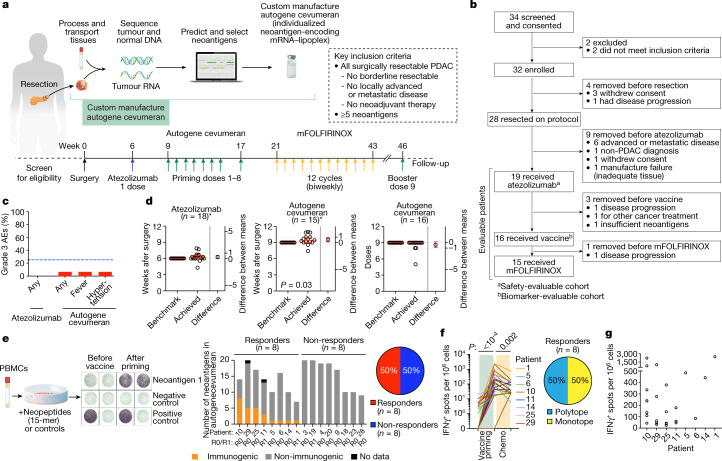
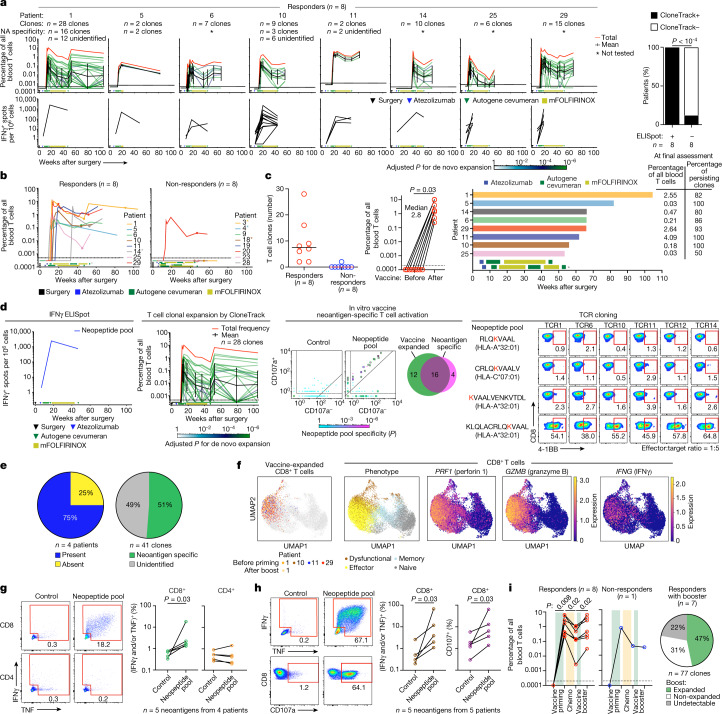
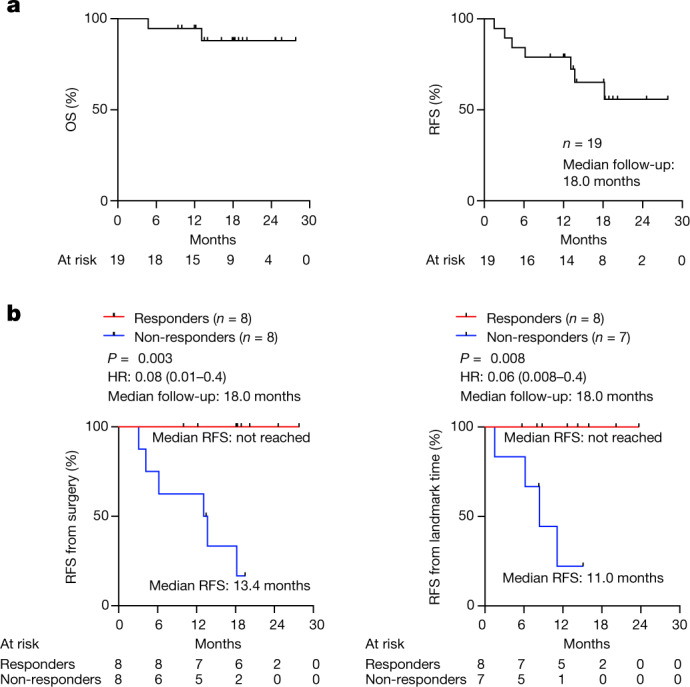
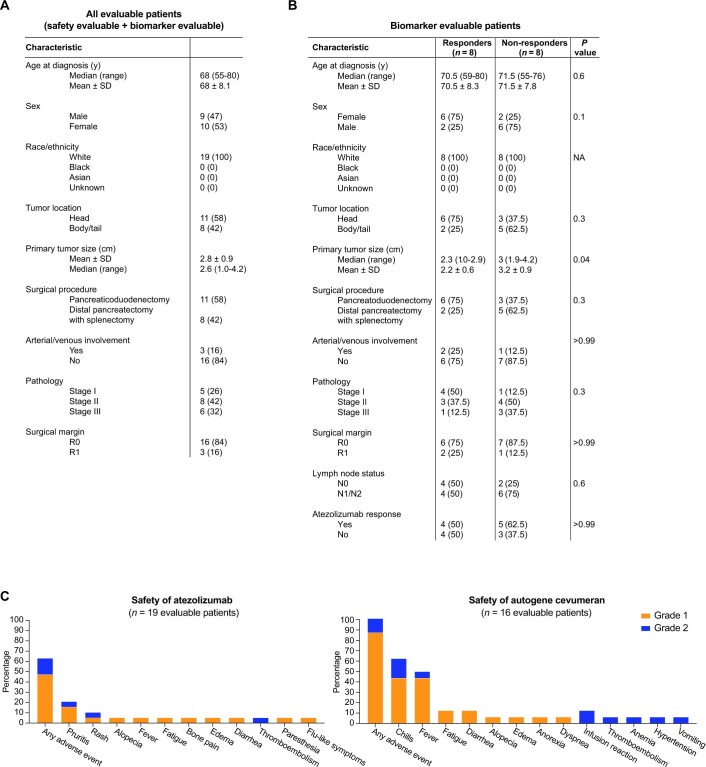
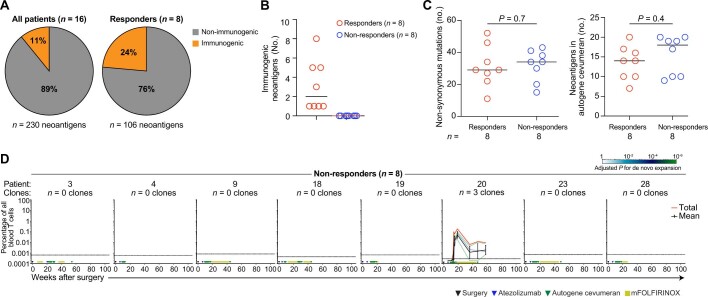
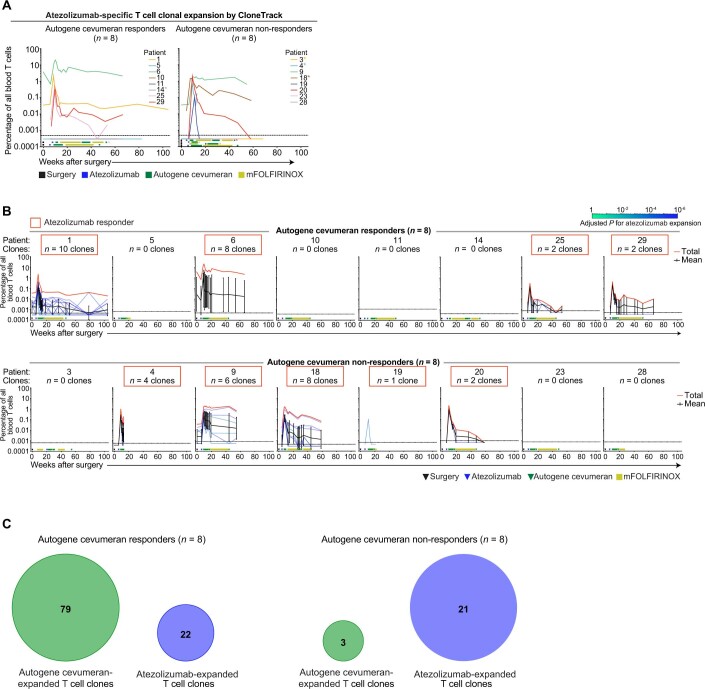
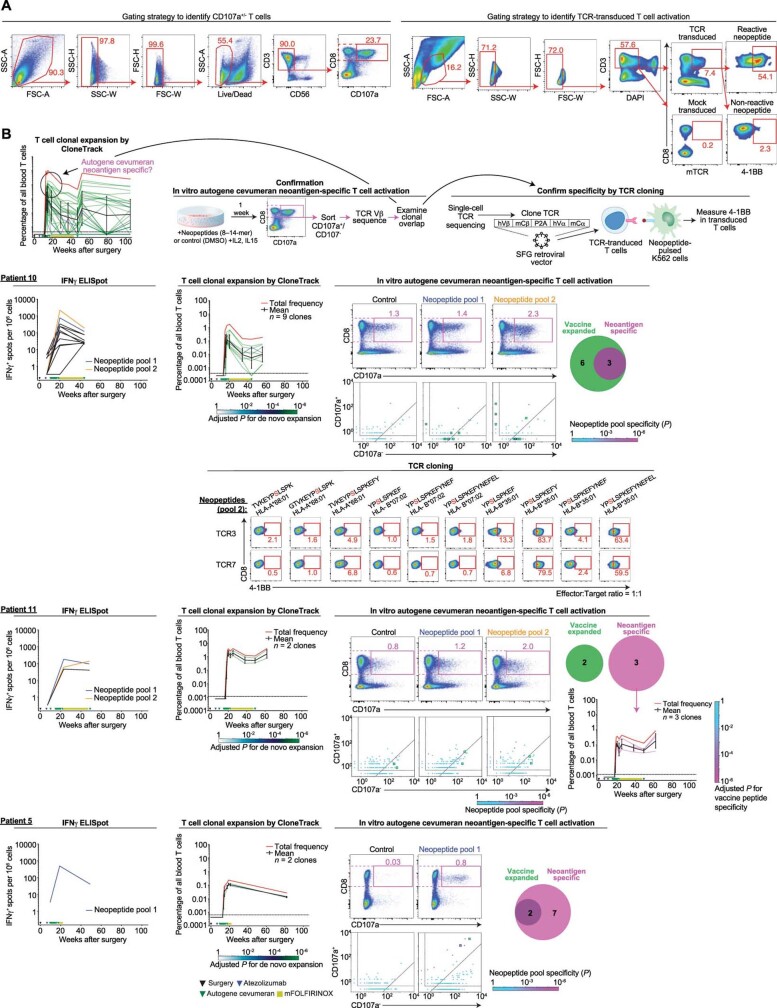
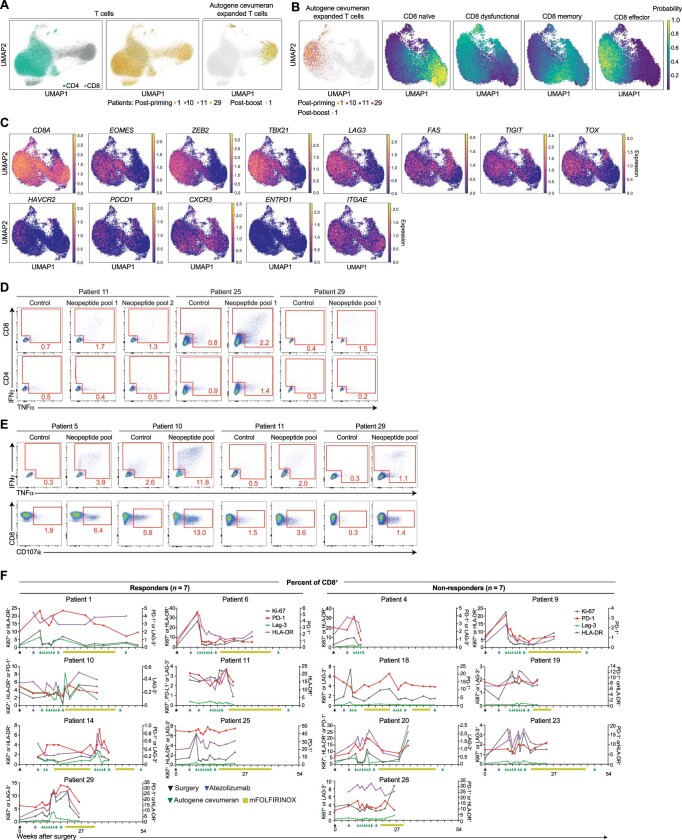
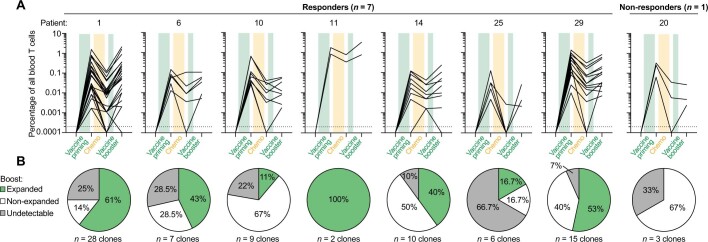
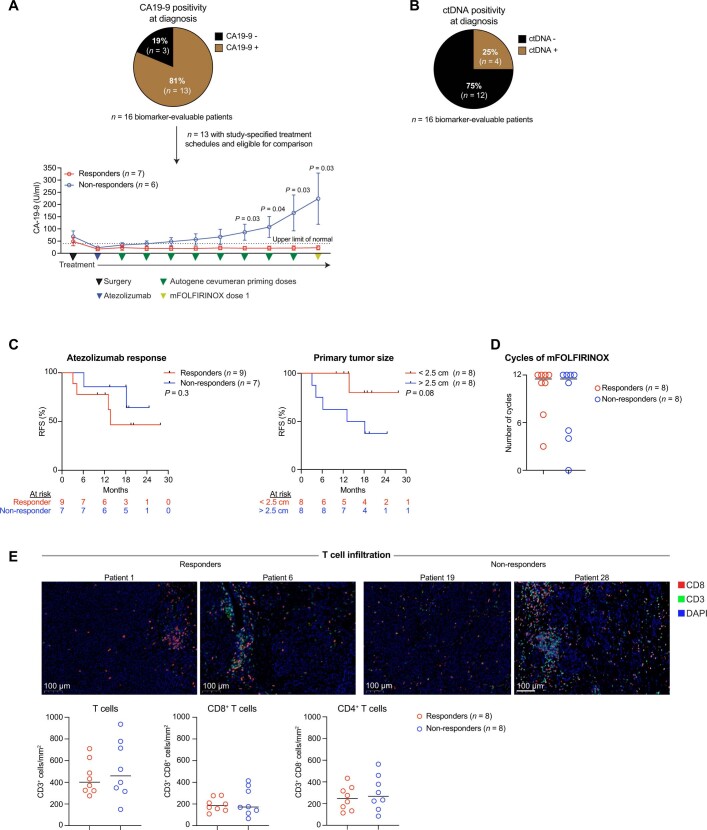
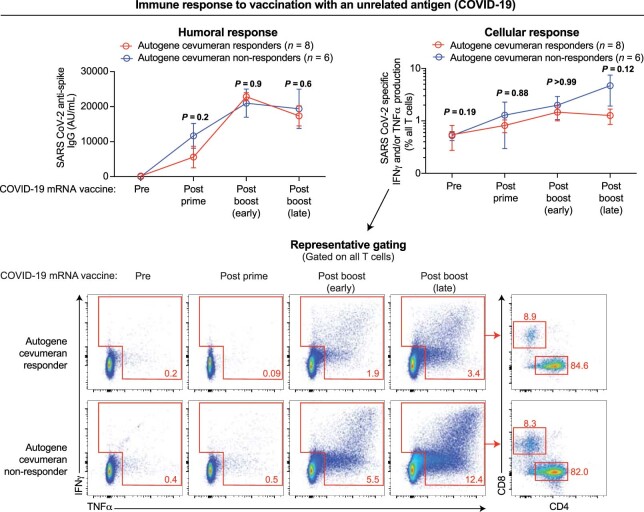
Pancreatic ductal adenocarcinoma (PDAC) is lethal in 88% of patients 1 , yet harbours mutation-derived T cell neoantigens that are suitable for vaccines 2,3 . Here in a phase I trial of adjuvant autogene cevumeran, an individualized neoantigen vaccine based on uridine mRNA–lipoplex nanoparticles, we synthesized mRNA neoantigen vaccines in real time from surgically resected PDAC tumours. After surgery, we sequentially administered atezolizumab (an anti-PD-L1 immunotherapy), autogene cevumeran (a maximum of 20 neoantigens per patient) and a modified version of a four-drug chemotherapy regimen (mFOLFIRINOX, comprising folinic acid, fluorouracil, irinotecan and oxaliplatin). The end points included vaccine-induced neoantigen-specific T cells by high-threshold assays, 18-month recurrence-free survival and oncologic feasibility. We treated 16 patients with atezolizumab and autogene cevumeran, then 15 patients with mFOLFIRINOX. Autogene cevumeran was administered within 3 days of benchmarked times, was tolerable and induced de novo high-magnitude neoantigen-specific T cells in 8 out of 16 patients, with half targeting more than one vaccine neoantigen. Using a new mathematical strategy to track T cell clones (CloneTrack) and functional assays, we found that vaccine-expanded T cells comprised up to 10% of all blood T cells, re-expanded with a vaccine booster and included long-lived polyfunctional neoantigen-specific effector CD8 + T cells. At 18-month median follow-up, patients with vaccine-expanded T cells (responders) had a longer median recurrence-free survival (not reached) compared with patients without vaccine-expanded T cells (non-responders; 13.4 months, P = 0.003). Differences in the immune fitness of the patients did not confound this correlation, as responders and non-responders mounted equivalent immunity to a concurrent unrelated mRNA vaccine against SARS-CoV-2. Thus, adjuvant atezolizumab, autogene cevumeran and mFOLFIRINOX induces substantial T cell activity that may correlate with delayed PDAC recurrence.
Overview
The claims and statistics of this paper haven’t been checked yet.
Free: it reads the open-access text and checks the first 5 claims that cite a source we can check. Create a free account to check every claim.
Integrity signals
Registry
Cites
Statistics
Figures
Verification
Claims the paper makes
The claims and statistics of this paper haven’t been checked yet.
Free: it reads the open-access text and checks the first 5 claims that cite a source we can check. Create a free account to check every claim.
Claims other papers make about this one
Each is checked against this paper’s own text: does it say what the citing paper says it does?
The source backs part of the claim, not all of it — or backs it for a different population, condition or comparison.
In the citing paper
“Although further confirmatory studies are needed, these results provide initial clinical evidence that personalized therapeutic cancer vaccines can enhance responses to ICIs, with many other studies planned.”
From Adjuvant and neoadjuvant immunotherapies in hepatocellular carcinoma (2024) · cites this paper as [136]
Experimental — accuracy not yet measuredThe source backs part of the claim, not all of it — or backs it for a different population, condition or comparison.
In the citing paper
“In this trial, 8 of 16 patients with resected pancreatic ductal adenocarcinoma remained free of cancer after a median follow-up of 18 months136.”
From Adjuvant and neoadjuvant immunotherapies in hepatocellular carcinoma (2024) · cites this paper as [136]
Experimental — accuracy not yet measuredThe source backs part of the claim, not all of it — or backs it for a different population, condition or comparison.
In the citing paper
“Cancer mRNA-based vaccines tend to be administered alone or in combination with ICIs, and after resection, although they have also been used in neoadjuvant–adjuvant treatment approaches136,138,139 (Fig. 3c,d).”
From Adjuvant and neoadjuvant immunotherapies in hepatocellular carcinoma (2024) · cites this paper as [136]
Experimental — accuracy not yet measuredThe cited source says what the claim attributes to it.
In the citing paper
“patients enrolled in the trial with an immunologic response against the vaccine had longer median RFS than those without such a response136.”
From Adjuvant and neoadjuvant immunotherapies in hepatocellular carcinoma (2024) · cites this paper as [136]
The cited source says what the claim attributes to it.
In the citing paper
“Clinical trials of mRNA-based immunotherapeutics encoding unmutated full-length TAAs in checkpoint inhibitor-treated melanoma [18] and individualised mRNA-based immunotherapeutics encoding patient-specific mutated tumour neoantigens in pancreatic and lung cancer [19, 20] have shown encouraging results.”
From Preclinical development of an mRNA-based multiepitope immunotherapeutic for glioblastoma (2025) · cites this paper as [20]
1 more claim about this paper
Create a free account to see every claim other papers make about this one.
Self-check
Percentages, sums and reported differences re-computed from the paper’s own numbers.
The self-check needs the paper’s full text.
Citations
Cites
Sung, H., Ferlay, J., Siegel, R. L., Laversanne, M., Soerjomataram, I., Jemal, A., & Bray, F. (2021) · CA: A Cancer Journal for Clinicians · doi:10.3322/caac.21660 · Cited by 108,699
Richards, S., Aziz, N., Bale, S., Bick, D., Das, S., Gastier-Foster, J., Grody, W. W., Hegde, M., Lyon, E., Spector, E., et al. (2015) · Genetics in Medicine · doi:10.1038/gim.2015.30 · Cited by 32,594
PD-1 and PD-L1 Immune Checkpoint Blockade to Treat Breast Cancer
Hartkopf, A. D., Taran, F.-A., Wallwiener, M., Walter, C. B., Krämer, B., Grischke, E.-M., & Brucker, S. Y. (2016) · Breast Care · doi:10.1159/000453569 · Cited by 30,845
The Genome Analysis Toolkit: A MapReduce framework for analyzing next-generation DNA sequencing data
McKenna, A., Hanna, M., Banks, E., Sivachenko, A., Cibulskis, K., Kernytsky, A., Garimella, K., Altshuler, D., Gabriel, S., Daly, M., et al. (2010) · Genome Research · doi:10.1101/gr.107524.110 · Cited by 27,895
Siegel, R. L., Miller, K. D., Wagle, N. S., & Jemal, A. (2023) · CA: A Cancer Journal for Clinicians · doi:10.3322/caac.21763 · Cited by 16,303
SCANPY: large-scale single-cell gene expression data analysis
Wolf, F. A., Angerer, P., & Theis, F. J. (2018) · Genome Biology · doi:10.1186/s13059-017-1382-0 · Cited by 8,881
Rahib, L., Smith, B. D., Aizenberg, R., Rosenzweig, A. B., Fleshman, J. M., & Matrisian, L. M. (2014) · Cancer Research · doi:10.1158/0008-5472.can-14-0155 · Cited by 7,094
Predictive correlates of response to the anti-PD-L1 antibody MPDL3280A in cancer patients
Herbst, R. S., Soria, J.-C., Kowanetz, M., Fine, G. D., Hamid, O., Gordon, M. S., Sosman, J. A., McDermott, D. F., Powderly, J. D., Gettinger, S. N., et al. (2014) · Nature · doi:10.1038/nature14011 · Cited by 5,231
Self-citationCOSMIC: the Catalogue Of Somatic Mutations In Cancer
Tate, J. G., Bamford, S., Jubb, H. C., Sondka, Z., Beare, D. M., Bindal, N., Boutselakis, H., Cole, C. G., Creatore, C., Dawson, E., et al. (2019) · Nucleic Acids Research · doi:10.1093/nar/gky1015 · Cited by 4,867
Neoantigens in cancer immunotherapy
Schumacher, T. N., & Schreiber, R. D. (2015) · Science · doi:10.1126/science.aaa4971 · Cited by 4,783
Cited by
Items 101–200 of 1,004
Type I conventional dendritic cells facilitate immunotherapy in pancreatic cancer
Mahadevan, K. K., Dyevoich, A. M., Chen, Y., Li, B., Sugimoto, H., Sockwell, A. M., McAndrews, K. M., Sthanam, L. K., Wang, H., Shalapour, S., et al. (2024) · Science · doi:10.1126/science.adh4567 · Cited by 78
Clinical development of therapeutic mRNA applications
Żak, M. M., & Zangi, L. (2025) · Molecular Therapy · doi:10.1016/j.ymthe.2025.03.034 · Cited by 79
Cancer chemoprevention: signaling pathways and strategic approaches
Ren, J., Yan, G., Yang, L., Kong, L., Guan, Y., Sun, H., Liu, C., Liu, L., Han, Y., & Wang, X. (2025) · Signal Transduction and Targeted Therapy · doi:10.1038/s41392-025-02167-1 · Cited by 84
KRAS: the Achilles’ heel of pancreas cancer biology
Drizyte‐Miller, K., Talabi, T., Somasundaram, A., Cox, A. D., & Der, C. J. (2025) · Journal of Clinical Investigation · doi:10.1172/jci191939 · Cited by 73
“There is also preliminary evidence that individualized mRNA neoantigen vaccines administered in combination with anti–PD-L1 inhibitors and chemotherapy in surgery-eligi-ble patients with PDAC elicited T cell responses and correlated with delayed recurrence (NCT04161755) (163).”
Circular RNA‐based neoantigen vaccine for hepatocellular carcinoma immunotherapy
Wang, F., Guang, C., Wang, Y., Zhuang, Q., Cai, Z., Li, Y., Gao, S., Li, F., Zhang, C., Zhao, B., et al. (2024) · MedComm · doi:10.1002/mco2.667 · Cited by 76
Cancer vaccines: platforms and current progress
Lei, W., Zhou, K., Lei, Y., Qiu, L., & Zhu, H. (2025) · Molecular Biomedicine · doi:10.1186/s43556-024-00241-8 · Cited by 77
“…pellets Silicon uGCVax [162] MSN DC [163] PLGA PRECIOUS-01 [164] VLP Cervarix [165] Gardasil [166] Aluminium salt Aluminium hydroxide [167] Emulsion adjuvants Montanide ISA-51 Cimavax-EGF [168] Melanoma-associated helper peptides [141, 169] RV001 [170] BNT112, BNT113, BNT115, and BNT116 [64, 160].”
Fan, T., Xu, C., Wu, J., Cai, Y., Cao, W., Shen, H., Zhang, M., Zhu, H., Yang, J., Zhu, Z., et al. (2024) · Science Advances · doi:10.1126/sciadv.adn9961 · Cited by 70
“Nevertheless, T H 1-biased cellular and humoral responses are a prerequisite for potent antitumor immunity by PCV ( 15 – 18 ).”
InfluentialWang, H., Mu, J.-K., Chen, Y., Liu, Y., Li, X., Li, H., & Cao, P. (2024) · Advanced Science · doi:10.1002/advs.202308235 · Cited by 75
Overcoming therapy resistance in pancreatic cancer: New insights and future directions
Espona‐Fiedler, M., Patthey, C., Lindblad, S., Sarró, I., & Öhlund, D. (2024) · Biochemical Pharmacology · doi:10.1016/j.bcp.2024.116492 · Cited by 72
“Most notably, a personalized RNA neoantigen vaccine (Autogene Cevumeran) in combination with adjuvant Atezolizumab and FOFLIRINOX induced a remarkable antitumor T cell activity and delayed PDAC recurrence in a study involving 16 patients after surgically resected PDAC tumors [179].”
Single-cell immune repertoire analysis
Irac, S. E., Soon, M. S. F., Borcherding, N. C., & Tuong, Z. K. (2024) · Nature Methods · doi:10.1038/s41592-024-02243-4 · Cited by 67
“In contrast, only 1 in 8 nonresponders showed a similar response 92 . scTCR-seq analyzed with Scirpy further demonstrated that the mRNA vaccines expanded polyclonal effector CD8 + T cells after chemotherapy and vaccine booster 92 .”
InfluentialRNA vaccines for cancer: Principles to practice
Guasp, P., Reiche, C., Sethna, Z. M., & Balachandran, V. P. (2024) · Cancer Cell · doi:10.1016/j.ccell.2024.05.005 · Cited by 69
Self-citationThe quest for nanoparticle-powered vaccines in cancer immunotherapy
Sun, Z., Zhao, H., Ma, L., Shi, Y., Ji, M., Sun, X., Ma, D., Zhou, W., Huang, T., & Zhang, D. (2024) · Journal of Nanobiotechnology · doi:10.1186/s12951-024-02311-z · Cited by 72
Current Landscape of Cancer Immunotherapy: Harnessing the Immune Arsenal to Overcome Immune Evasion
Mitra, A., Kumar, A., Amdare, N. P., & Pathak, R. (2024) · Biology · doi:10.3390/biology13050307 · Cited by 82
Morgan, D. M., Horton, B. L., Bhandarkar, V., Van, R., Dinter, T., Zagorulya, M., Love, J. C., & Spranger, S. (2024) · Science Immunology · doi:10.1126/sciimmunol.adi3487 · Cited by 67
“However, a recent clinical study using adjuvant mRNA vaccination in patients with pancreatic cancer identified an enrichment of non-responders in patients who had their spleens removed during deb-ulking surgery ( 52 ).”
BackgroundDigital patient twins for personalized therapeutics and pharmaceutical manufacturing
Fischer, R.-P., Volpert, A., Antonino, P. O., & Ahrens, T. D. (2024) · Frontiers in Digital Health · doi:10.3389/fdgth.2023.1302338 · Cited by 64
“Clinical studies show that this strategy is clinically effective in several cancer entities such as melanoma (42) or prostate cancer (43).”
BackgroundLe, N. D., Nguyễn, B. L., Patil, B. R., Chun, H., Kim, S., Nguyen, T. O. O., Mishra, S. K., Tandukar, S., Chang, J., Kim, D. Y., et al. (2024) · ACS Nano · doi:10.1021/acsnano.3c13039 · Cited by 60
mRNA vaccine designs for optimal adjuvanticity and delivery
Mochida, Y., & Uchida, S. (2024) · RNA Biology · doi:10.1080/15476286.2024.2333123 · Cited by 63
Tumor immune microenvironment in pancreatic ductal adenocarcinoma revisited – Exploring the “Space”
Bräutigam, K., Skok, K., Szymoński, K., Rift, C. V., & Karamitopoulou, E. (2025) · Cancer Letters · doi:10.1016/j.canlet.2025.217699 · Cited by 66
Huber, F., & Bassani‐Sternberg, M. (2025) · Nature reviews. Immunology · doi:10.1038/s41577-025-01208-8 · Cited by 66
“Eight patients responded immunologically to the vaccine by inducing de novo neoantigen-specific T cell responses that were associated with delayed recurrence 129 .”
Novel strategies for modulating the gut microbiome for cancer therapy
Cho, Y. S., Han, K., Xu, J., & Moon, J. J. (2024) · Advanced Drug Delivery Reviews · doi:10.1016/j.addr.2024.115332 · Cited by 65
“These treatments are expected to work synergistically to clear the massive local tumor, and a recent phase I trial has achieved great success even in pancreatic cancer through substantial T cells activation [194].”
Current Progress and Future Perspectives of RNA-Based Cancer Vaccines: A 2025 Update
Magoola, M., & Niazi, S. K. (2025) · Cancers · doi:10.3390/cancers17111882 · Cited by 71
“…BioNTech demonstrated remarkable efficacy in pancreatic ductal adenocarcinoma patients, with vaccine-induced immune responses persisting for nearly four years after treatment in some patients and showing a reduced risk of cancer recurrence at three-year follow-up compared to non-responders [3].”
An Intravascular Magnetic Catheter Enables the Retrieval of Nanoagents from the Bloodstream
Iacovacci, V., Ricotti, L., Sinibaldi, E., Signore, G., Vistoli, F., & Menciassi, A. (2018) · Advanced Science · doi:10.1002/advs.201800807 · Cited by 60
Dendritic Cell–Based Immunotherapy in Patients With Resected Pancreatic Cancer
Land, F. R. V. ‘., Willemsen, M., Bezemer, K., van der Burg, S. H., van den Bosch, T. P. P., Doukas, M., Fellah, A., Kolijn, P. M., Langerak, A. W., Moskie, M., et al. (2024) · Journal of Clinical Oncology · doi:10.1200/jco.23.02585 · Cited by 64
Feng, K., Zhang, X., Li, J., Han, M., Wang, J., Chen, F., Yi, Z., Di, L., & Wang, R. (2025) · Nature Communications · doi:10.1038/s41467-025-60448-3 · Cited by 66
“11, 12).”
Advances in mRNA-Based Cancer Vaccines
Ni, L. (2023) · Vaccines · doi:10.3390/vaccines11101599 · Cited by 62
“In some clinical trials, personalized vaccines have contained up to 20 neoantigens [59], which might promote vaccine efficacy.”
BackgroundComponents, Formulations, Deliveries, and Combinations of Tumor Vaccines
Liu, T., Yao, W., Sun, W., Yuan, Y., Liu, C., Liu, X., Wang, X., & Jiang, H. (2024) · ACS Nano · doi:10.1021/acsnano.4c05065 · Cited by 59
Maine, C. J., Miyake-Stoner, S. J., Spasova, D. S., Picarda, G. G. A., Chou, A. C., Brand, E. D., Olesiuk, M. D., Domingo, C. C., Little, H. J., Goodman, T. T., et al. (2025) · Nature Communications · doi:10.1038/s41467-025-55843-9 · Cited by 62
Cancer vaccines as enablers of immunotherapy
Khleif, S. N., & Gupta, S. (2025) · Nature Immunology · doi:10.1038/s41590-025-02308-2 · Cited by 65
“…by T cells 22 , in silico platforms/algorithms have been developed to predict the binding affinity of mutant peptides to MHC molecules (for example, NetMHC, MHCFlurry and NetMHCpan 121–123 ), thus increasing the likelihood of identifying proper neoantigens that can be recognized by TCRs 70,91,124 .”
InfluentialXu, L., Cao, Y., Ya, X., Li, R., & Xu, X. (2023) · Macromolecular Bioscience · doi:10.1002/mabi.202300238 · Cited by 57
Neoantigen cancer vaccines: a new star on the horizon
Li, X., You, J., Hong, L., Liu, W., Guo, P., & Hao, X. (2023) · Cancer Biology and Medicine · doi:10.20892/j.issn.2095-3941.2023.0395 · Cited by 79
“Moreover, a recent report high-lighted the significant T cell activity induced by the personalized RNA neoantigen vaccine, autogene cevumeran, when T a b l e 3 C o n t i nu e d combined with atezolizumab and mFOLFIRINOX, potentially leading to a delayed recurrence of pancreatic ductal adenocarcinoma (PDAC) 98 .”
BackgroundAn Overview of Nanoparticle-Based Delivery Platforms for mRNA Vaccines for Treating Cancer
Yang, L., Chen, X., Wang, K., Li, L., & Zhang, H. (2024) · Vaccines · doi:10.3390/vaccines12070727 · Cited by 58
“Furthermore, it exhibited the ability to induce a significant population of neoantigen-specific T cells in 50% of patients diagnosed with unresectable pancreatic ductal adenocarcinoma (PDAC) [126].”
BackgroundNext-generation cancer vaccines and emerging immunotherapy combinations
Brandenburg, A., Heine, A., & Brossart, P. (2024) · Trends in cancer · doi:10.1016/j.trecan.2024.06.003 · Cited by 58
Individualized mRNA vaccines evoke durable T cell immunity in adjuvant TNBC
Şahin, U., Schmidt, M., Derhovanessian, E., Cortini, A., Vogler, I., Omokoko, T., Godehardt, E., Attig, S., Newrzela, S., GRUTZNER, J., et al. (2026) · Nature · doi:10.1038/s41586-025-10004-2 · Cited by 68
“In pancreatic cancer, a tumour with low number of mutations and highly immune suppressive environment, this vaccine induced immune responses in 50% of patients, which correlated positively with clinical outcome 5 .”
Self-citationClinical immunotherapy in pancreatic cancer
Ye, X., Yu, Y., Zheng, X., & Ma, H. (2024) · Cancer Immunology Immunotherapy · doi:10.1007/s00262-024-03632-6 · Cited by 62
Nucleic acid-based drugs for patients with solid tumours
Huayamares, S. G., Loughrey, D., Kim, H., Dahlman, J. E., & Sorscher, E. J. (2024) · Nature Reviews Clinical Oncology · doi:10.1038/s41571-024-00883-1 · Cited by 61
“Intramuscular administration is typically used for cancer vaccines, particularly those reliant on non-viral nanocarriers, and this approach has been shown to elicit strong immune responsiveness 116,227 .”
InfluentialIngels, J., Cock, L. D., Stevens, D., Mayer, R. L., Théry, F., Sanchez, G. S., Vermijlen, D., Weening, K., Smet, S. D., Lootens, N., et al. (2024) · Cell Reports Medicine · doi:10.1016/j.xcrm.2024.101516 · Cited by 76
“Recently, in a phase I clinical trial evaluating individualized neoantigen vaccination in 16 resected pancreatic patients, circulating T cell responses were studied ex vivo by ELISpot, showing frequences between 0.01% and 2% of total PBMCs. 20 These T cell responses could be correlated with clinical benefit: patients w…”
BackgroundInfluentialOptimized circular RNA vaccines for superior cancer immunotherapy
Yu, H., Wen, Y., Yu, W., Lu, L., Yu, Y., Liu, C., Hu, Z., Fang, Z., & Huang, S. (2024) · Theranostics · doi:10.7150/thno.104698 · Cited by 57
“However, it is only in recent years that mRNA-based cancer vaccines have shown promising clinical outcomes [2,3].”
Immunotherapy in Biliary Tract Cancers: Current Standard-of-Care and Emerging Strategies
Lo, J. H.-J., Agarwal, R., Goff, L. W., & Heumann, T. R. (2023) · Cancers · doi:10.3390/cancers15133312 · Cited by 58
D’Alise, A. M., Leoni, G., Cotugno, G., Siani, L., Vitale, R. L., Ruzza, V., Garzia, I., Antonucci, L., Micarelli, E., Venafra, V., et al. (2024) · Clinical Cancer Research · doi:10.1158/1078-0432.ccr-23-3940 · Cited by 55
Kapoor, K. S., Harris, K., Arian, K. A., Ma, L., Zancanela, B. S., Church, K. A., McAndrews, K. M., & Kalluri, R. (2024) · Bioactive Materials · doi:10.1016/j.bioactmat.2024.08.002 · Cited by 59
A multi-adjuvant personal neoantigen vaccine generates potent immunity in melanoma
Blass, E., Keskin, D. B., Tu, C. R., Forman, C., Vanasse, A. P., Sax, H. E., Shim, B., Chea, V. A., Kim, N., Carulli, I. P., et al. (2025) · Cell · doi:10.1016/j.cell.2025.06.019 · Cited by 57
Pancreatic cancer: molecular pathogenesis and emerging therapeutic strategies
Rozengurt, E., & Eibl, G. (2026) · Signal Transduction and Targeted Therapy · doi:10.1038/s41392-025-02499-y · Cited by 66
Virus-like Particle (VLP) Vaccines for Cancer Immunotherapy
Ruzzi, F., Semprini, M. S., Scalambra, L., Palladini, A., Angelicola, S., Cappello, C., Pittino, O. M., Nanni, P., & Lollini, P. (2023) · International Journal of Molecular Sciences · doi:10.3390/ijms241612963 · Cited by 53
“Some of the most extensively researched neoantigens for vaccines and immunotherapy are clonal neoantigens of KRAS, BRAF, and PIK3CA driver genes, but many others are under investigation as therapeutic vaccine targets in several cancers [94,100,102,103].”
BackgroundArtificial intelligence and neoantigens: paving the path for precision cancer immunotherapy
Bulashevska, A., Nacsa, Z., Lang, F., Braun, M., Machyna, M., Diken, M., Childs, L. H., & König, R. (2024) · Frontiers in Immunology · doi:10.3389/fimmu.2024.1394003 · Cited by 57
“Vaccinating against cancer induces long-lasting de novo antitumor immunity and is termed active immunotherapy (3, 4).”
BackgroundWang, X., Wang, W., Zou, S., Xu, Z., Cao, D., Zhang, S., Wei, M., Zhan, Q., Wen, C., Li, F., et al. (2024) · Cell Research · doi:10.1038/s41422-024-00990-9 · Cited by 53
Advances and applications of RNA vaccines in tumor treatment
Yang, R., & Cui, J. (2024) · Molecular Cancer · doi:10.1186/s12943-024-02141-5 · Cited by 58
“Its mRNA vaccine contains 20 MHC class I and MHC class II-restricted neoantigens, injected intravenously into the patient’s body with lipid nanoparticles (LNPs), massively activating the patient’s T-cells and delaying relapse [71].”
BackgroundMessenger RNA-Based Therapeutics and Vaccines: What’s beyond COVID-19?
Li, D., Liu, C., Li, Y., Tenchov, R., Sasso, J. M., Zhang, D., Li, D., Zou, L., Wang, X., & Zhou, Q. A. (2023) · ACS Pharmacology & Translational Science · doi:10.1021/acsptsci.3c00047 · Cited by 53
Tumor-Specific CD4 T Cells Instruct Monocyte Differentiation in Pancreatic Ductal Adenocarcinoma
Patterson, M. T., Burrack, A. L., Xu, Y., Hickok, G. H., Schmiechen, Z. C., Becker, S., Cruz-Hinojoza, E., Schrank, P. R., Kennedy, A. E., Firulyova, M. M., et al. (2022) · Cell Reports · doi:10.1016/j.celrep.2023.112732 · Cited by 51
“70 Together, our findings supporta pivotal role for tumor-specific CD4 T cells in governing anti-tumor macrophage fate and inform immunotherapy design by directing efforts to engage anti-tumor CD4 T cells.”
Advances in nucleic acid-based cancer vaccines
Liao, H., & Liu, S. (2025) · Journal of Biomedical Science · doi:10.1186/s12929-024-01102-w · Cited by 53
“Recently, at the three-year follow-up, 6/8 patients with vaccine-induced immune responses (responders) survived, while 7/8 patients without vaccine-induced immune responses (nonresponders) experienced tumor recurrence [224].”
T cell-based cancer immunotherapy: opportunities and challenges
Ma, K., Xu, Y., Cheng, H., Tang, K., Ma, J., & Huang, B. (2025) · Science Bulletin · doi:10.1016/j.scib.2025.03.054 · Cited by 55
Apavaloaei, A., Zhao, Q., Hesnard, L., Cahuzac, M., Durette, C., Larouche, J., Hardy, M., Vincent, K., Brochu, S., Laverdure, J., et al. (2025) · Nature Cancer · doi:10.1038/s43018-025-00979-2 · Cited by 58
“…have benefited some patients via direct (target recognition) or indirect (systemic immune activation and epitope spreading) vaccine responses 37–39 , we posit that adding unmutated canonical and noncanonical TSAs to the target repertoire could substantially improve the efficacy and durability…”
Osorio, J. C., Knorr, D. A., Weitzenfeld, P., Blanchard, L., Yao, N., Baez, M., Sevilla, C., DiLillo, M., Rahman, J. A., Sharma, V. P., et al. (2025) · Cancer Cell · doi:10.1016/j.ccell.2025.07.013 · Cited by 50
TIRTL-seq: deep, quantitative and affordable paired TCR repertoire sequencing
Pogorelyy, M. V., Kirk, A. M., Adhikari, S., Minervina, A. A., Sundararaman, B., Vegesana, K., Brice, D. C., Scott, Z. B., SJTRC Study Team, Wolf, J., et al. (2025) · Nature Methods · doi:10.1038/s41592-025-02907-9 · Cited by 54
Self-citationNext-generation therapies for pancreatic cancer
Buckley, C. W., & O'Reilly, E. M. (2024) · Expert Review of Gastroenterology & Hepatology · doi:10.1080/17474124.2024.2322648 · Cited by 54
“In a PDAC adjuvant setting, a phase I trial of autogene cevumeran, an individualized mRNA neoantigen vaccine, was conducted in patients with resectable PDAC [144].”
BackgroundSelf-citationThe Platform Technology Approach to mRNA Product Development and Regulation
Skerritt, J. H., Tucek, C. L., Sutton, B. A., & Nolan, T. M. (2024) · Vaccines · doi:10.3390/vaccines12050528 · Cited by 55
“Tumour-specific neoantigens are a form of personalised cancer immunotherapy, and each collection of neoantigen sequences is tailored to the individual profile of the candidate [65,66,95].”
BackgroundDevelopment of Thermally Stable mRNA-LNP Delivery Systems: Current Progress and Future Prospects
Kafle, U., Truong, H. Q., Cao, T. G. N., & Meng, F. (2024) · Molecular Pharmaceutics · doi:10.1021/acs.molpharmaceut.4c00826 · Cited by 52
Nanocarriers for cutting-edge cancer immunotherapies
Hu, J. K., Arvejeh, P. M., Bone, S., Hett, E. C., Marincola, F. M., & Roh, K. (2025) · Journal of Translational Medicine · doi:10.1186/s12967-025-06435-0 · Cited by 49
“Autogene cevumeran (BNT122) is a personalized RNA neoantigen vaccine that induced de novo T cell responses to neoantigens in 8 of 16 pancreatic cancer patients in a Phase I trial [353].”
Neoantigen enriched biomimetic nanovaccine for personalized cancer immunotherapy
Li, Y., Fang, M., Yu, H., Wang, X., Xue, S., Jiang, Z., Huang, Z., Rong, S., Wei, X., Lu, Z., et al. (2025) · Nature Communications · doi:10.1038/s41467-025-59977-8 · Cited by 55
“Personalised neoantigen vaccines, with high immunogenicity and tumour speci fi city, are being tested in clinical trials and have shown promising outcome 3,11 – 14 .”
Nanotechnology for immuno-oncology
Grippin, A., Lee, D., Parkes, E. E., Jiang, W., & Kim, B. Y. S. (2025) · Nature Cancer · doi:10.1038/s43018-025-01025-x · Cited by 57
“https://doi.org/10.1038/s43018-025-01025-x survival 55,130 .”
InfluentialBaharom, F., Hermans, D., Delamarre, L., & Seder, R. A. (2024) · Nature reviews. Immunology · doi:10.1038/s41577-024-01091-9 · Cited by 53
Croft, W. D., Pearce, H., Margielewska‐Davies, S., Lim, L., Nicol, S. M., Zayou, F., Blakeway, D., Marcon, F., Powell-Brett, S. F., Mahon, B. S., et al. (2023) · eLife · doi:10.7554/elife.86125 · Cited by 49
“, 2022) or personalized vaccine regimens (Rojas et al., 2023).”
Engineered mRNA Delivery Systems for Biomedical Applications
Wang, J., Zhu, H., Gan, J., Liang, G., Li, L., & Zhao, Y. (2024) · Advanced Materials · doi:10.1002/adma.202308029 · Cited by 50
Park, W., Choi, J., Hwang, J., Kim, S. H., Kim, Y., Shim, M. K., Park, W., Yu, S., Jung, S., Yang, Y., et al. (2025) · ACS Nano · doi:10.1021/acsnano.4c16562 · Cited by 52
Self-citationZhang, H., Li, S., Liu, S. M., Liao, Y., Liu, H., Yang, M., & Chen, P. (2025) · Molecular Cancer · doi:10.1186/s12943-025-02491-8 · Cited by 52
LncRNAs: the good, the bad, and the unknown
Arunkumar, G. (2023) · Biochemistry and Cell Biology · doi:10.1139/bcb-2023-0155 · Cited by 49
Seclì, L., Leoni, G., Ruzza, V., Siani, L., Cotugno, G., Scarselli, E., & D’Alise, A. M. (2023) · International Journal of Molecular Sciences · doi:10.3390/ijms242316591 · Cited by 49
“…vaccination, particularly in the setting of solid tumors with a high neoantigen load, with NSCLC and melanoma the most common indications, but also in “cold tumors” with low mutation burden, such as Microsatellite Stability (MSS) tumors and Pancreatic Ductal Adenocarcinoma (PDAC) [40,56–59].”
BackgroundFerreira, N. L. C., Kulkarni, A., Agorku, D., Midelashvili, T., Hardt, O., Legler, T. J., Ströbel, P., Conradi, L., Alves, F., Ramos‐Gomes, F., et al. (2024) · Cellular Oncology · doi:10.1007/s13402-024-00958-2 · Cited by 51
“In PDAC, the antibody has been shown to potentiate the immune response of a personalized mRNA vaccine [ 11 ].”
BackgroundAdvanced nano-based strategies for mRNA tumor vaccine
Qu, Y., Xu, J., Zhang, T., Chen, Q., Sun, T., & Jiang, C. (2023) · Acta Pharmaceutica Sinica B · doi:10.1016/j.apsb.2023.07.025 · Cited by 46
“In addition, BioNTech recently introduced BNT122 combined with anti-PD-L1 antibody atezoli-zumab and mFOLFIRINOX chemotherapy, which can signifi-cantly delay the recurrence time of pancreatic cancer patients undergoing surgical resection 95 .”
MethodFacts and Hopes on RAS Inhibitors and Cancer Immunotherapy
Boumelha, J., Molina‐Arcas, M., & Downward, J. (2023) · Clinical Cancer Research · doi:10.1158/1078-0432.ccr-22-3655 · Cited by 46
Xu, X., Wang, X., Liao, Y., Luo, L., & Nel, A. E. (2025) · ACS Nano · doi:10.1021/acsnano.4c14102 · Cited by 47
Wei, X. X., Jiang, Y., Chenwu, F., Li, Z., Wan, J., Li, Z., Zhang, L., Wang, J., & Song, M. (2025) · Nano-Micro Letters · doi:10.1007/s40820-025-01862-6 · Cited by 64
The SysteMHC Atlas v2.0, an updated resource for mass spectrometry-based immunopeptidomics
Huang, X., Gan, Z., Cui, H., Lan, T., Liu, Y., Caron, É., & Shao, W. (2023) · Nucleic Acids Research · doi:10.1093/nar/gkad1068 · Cited by 47
Zhao, H., Shao, X., Yu, Y., Huang, L., Amor, N. P., Guo, K., Weng, C., Zhao, W., Yang, A., Hu, J., et al. (2024) · npj Vaccines · doi:10.1038/s41541-024-00813-3 · Cited by 44
Zhang, W., Hou, Y., Yin, S., Miao, Q., Lee, K., Zhou, X., & Wang, Y. (2024) · Journal of Nanobiotechnology · doi:10.1186/s12951-024-02580-8 · Cited by 47
Wells, K., Liu, T., Zhu, L., & Yang, L. P. H. (2024) · Nanoscale · doi:10.1039/d4nr01780c · Cited by 46
Liu, Y., Han, J., Hsu, W., LaBella, K. A., Deng, P., Shang, X., de Lara, P. T., Cai, L., Jiang, S., & DePinho, R. A. (2024) · Cancer Discovery · doi:10.1158/2159-8290.cd-24-0489 · Cited by 50
Transient inhibition of type I interferon enhances CD8+ T cell stemness and vaccine protection
Broomfield, B. J., Tan, C. W., Qin, R. Z., Abberger, H., Duckworth, B. C., Alvarado, C., Dalit, L., Lee, C. L., Mugan, R. S., Mazrad, Z. A. I., et al. (2025) · The Journal of Experimental Medicine · doi:10.1084/jem.20241148 · Cited by 48
CD4 T cell–activating neoantigens enhance personalized cancer vaccine efficacy
Huff, A. L., Longway, G., Mitchell, J. T., Andaloori, L., Davis-Marcisak, E. F., Chen, F., Lyman, M. R., Wang, R., Mathew, J., Barrett, B., et al. (2023) · JCI Insight · doi:10.1172/jci.insight.174027 · Cited by 46
Dong, L., Deng, X., Li, Y., Zhu, X., Shu, M., Chen, J., Luo, H., An, K., Cheng, M., Zhang, P., et al. (2024) · Journal of the American Chemical Society · doi:10.1021/jacs.4c04331 · Cited by 43
Advancements and challenges in personalized neoantigen-based cancer vaccines
Singh, P., Khatib, M. N., Roopashree, R., Kaur, M., Srivastava, M., Barwal, A., Rajput, G. V. S., Rajput, P., Syed, R., Sharma, G., et al. (2025) · Oncology Reviews · doi:10.3389/or.2025.1541326 · Cited by 47
Recent progress in cancer vaccines and nanovaccines
Poudel, K., Vithiananthan, T., Kim, J. O., & Tsao, H. (2024) · Biomaterials · doi:10.1016/j.biomaterials.2024.122856 · Cited by 43
Gan, J., Lei, J., Li, Y., Lu, M., Yu, X., & Yu, G. (2024) · Journal of the American Chemical Society · doi:10.1021/jacs.4c12166 · Cited by 43
Organ-on-a-chip models for development of cancer immunotherapies
Chernyavska, M., Masoudnia, M., Valerius, T., & Verdurmen, W. P. R. (2023) · Cancer Immunology Immunotherapy · doi:10.1007/s00262-023-03572-7 · Cited by 43
“Following up on the success of mRNA-based vaccines to prevent Covid-19 infections, also personalized therapeutic tumor vaccines hold promise, e.g., for treatment of pancreatic cancer [11] or melanoma [12].”
BackgroundInfluentialInnovations in Cancer Therapy: Endogenous Stimuli-Responsive Liposomes as Advanced Nanocarriers
Torres, J., Oses, J. K. V., Rabasco, A. M., González-Rodríguez, M. L., & García, M. C. (2025) · Pharmaceutics · doi:10.3390/pharmaceutics17020245 · Cited by 60
“In this context, experimental vaccines, like BNT122 (BioNTech) [69] and mRNA-4157 (ModernaTX, Inc., Cambridge, MA, USA) [70], which use lipid nanoparticles (LNPs), have been designed to induce immune responses against tumor-specific antigens in several types of cancer.”
Zhao, Y., Tian, Z., Wang, J., Cui, M., Cao, Z., Liu, P., Li, R., Cai, S., Hu, Y., Ma, Y., et al. (2025) · Science Advances · doi:10.1126/sciadv.ady6460 · Cited by 42
“Moreover, BioNTech SE has accelerated the development of intravenously administered mRNA vaccines, with ongoing clinical trials targeting non–small cell lung cancer and pancreatic cancer, further driving the demand for intravenous vaccine innovations ( 20 , 21 ).”
Current and emerging concepts for systemic treatment of metastatic colorectal cancer
Steup, C., Kennel, K. B., Neurath, M. F., Fichtner-Feigl, S., & Greten, F. R. (2025) · Gut · doi:10.1136/gutjnl-2025-335412 · Cited by 39
“135 Autogene cevumeran is currently being tested in a global phase II trial for the adjuvant treatment of high-risk stage 2 and stage 3 colorectal cancer (NCT04486378).”
Guo, X., Guo, M., Cai, R., Hu, M., Rao, L., Su, W., Liu, H., Gao, F., Zhang, X., Liu, J., et al. (2024) · Science Advances · doi:10.1126/sciadv.adp3680 · Cited by 39
mRNA vaccines in tumor targeted therapy: mechanism, clinical application, and development trends
Gao, Y., Yang, L., Li, Z., Peng, X., & Li, H. (2024) · Biomarker Research · doi:10.1186/s40364-024-00644-3 · Cited by 43
“In addition, mRNA vaccines can also regulate the expression of immune checkpoint molecules in the TME [143].”
BackgroundThe 2024 Report on the Human Proteome from the HUPO Human Proteome Project
Omenn, G. S., Orchard, S. E., Lane, L., Lindskog, C., Pineau, C., Overall, C. M., Budnik, B., Mudge, J. M., Packer, N. H., Weintraub, S. T., et al. (2024) · Journal of Proteome Research · doi:10.1021/acs.jproteome.4c00776 · Cited by 41
Personalized nanovaccines for treating solid cancer metastases
Feng, T., Hu, J., Wen, J., Qian, Z., Che, G., Zhou, Q., & Zhu, L. (2024) · Journal of Hematology & Oncology · doi:10.1186/s13045-024-01628-4 · Cited by 41
“For instance, a personalized mRNA vaccine, autogene cevu-meran (BNT122), has been developed for pancreatic cancer treatment in a phase I clinical trial [78].”
Yu, Z., Cao, L., Shen, Y., Chen, J., Li, H., Li, C., Yin, J., Li, Y., Meng, Y., & Li, X. (2025) · Advanced Healthcare Materials · doi:10.1002/adhm.202404612 · Cited by 45
Engineering Lipid Nanoparticles for mRNA Immunotherapy
Zwolsman, R. C., Darwish, Y. B., Kluza, E., & van der Meel, R. (2025) · Wiley Interdisciplinary Reviews Nanomedicine and Nanobiotechnology · doi:10.1002/wnan.70007 · Cited by 43
An mRNA lipid nanoparticle-incorporated nanofiber-hydrogel composite for cancer immunotherapy
Zhu, Y., Yao, Z., Li, S., Ma, J., Wei, C. Y., Yu, D., Stelzel, J. L., Ni, B. Y. X., Miao, Y., Batavia, K. V., et al. (2025) · Nature Communications · doi:10.1038/s41467-025-61299-8 · Cited by 49
“In detail, the D6 LiNx comprising 30 μ g mOVA was s.c . injected on day 0, compared with three doses of D6 LNPs containing 10 μ g mOVA each on days 0, 7, and 14.”
Raybould, M. I. J., Greenshields‐Watson, A., Agarwal, P., Aguilar-Sanjuan, B., Olsen, T. H., Turnbull, O. M., Quast, N. P., & Deane, C. M. (2024) · Cell Reports · doi:10.1016/j.celrep.2024.114704 · Cited by 39
Unveiling the resistance to therapies in pancreatic ductal adenocarcinoma
Shah, A., Ganguly, K., Rauth, S., Sheree, S. S., Khan, I., Ganti, A. K., Ponnusamy, M. P., Kumar, S., Jain, M., & Batra, S. K. (2024) · Drug Resistance Updates · doi:10.1016/j.drup.2024.101146 · Cited by 40
Lnc-H19-derived protein shapes the immunosuppressive microenvironment of glioblastoma
Chen, J., Gao, Y., Zhong, J., Wu, X., Leng, Z., Liu, M., Wang, Y., Wang, Y., Yang, X., Huang, N., et al. (2024) · Cell Reports Medicine · doi:10.1016/j.xcrm.2024.101806 · Cited by 52
“24,25 Lnc-H19, also known as H19, stands as one of the pioneering LncRNAs to be characterized and has been recognized for its role as an oncogene in various malignancies, including GBM. 26 H19 exerts its influence by interacting with mRNAs in a competitive endogenous RNA mechanism, thereby modulating the expression of…”
InfluentialGenetics and biology of pancreatic ductal adenocarcinoma
Ying, H., Kimmelman, A. C., Bardeesy, N. M., Kalluri, R., Maitra, A., & DePinho, R. A. (2024) · Genes & Development · doi:10.1101/gad.351863.124 · Cited by 48
Lombaerde, E. D., Chen, Y., Ye, T., Deckers, J., Mencarelli, G., Swarte, K. D., Lauwers, H., Coen, R. D., Kasmi, S., Bevers, S., et al. (2024) · Advanced Functional Materials · doi:10.1002/adfm.202310623 · Cited by 36
Neoantigens in cancer immunotherapy: focusing on alternative splicing
Huang, P., Wen, F., Tuerhong, N., Yang, Y., & Li, Q. (2024) · Frontiers in Immunology · doi:10.3389/fimmu.2024.1437774 · Cited by 41
Engineering challenges and translational opportunities in emerging gene delivery platforms
Ma, Y., Dong, S., Wu, A., Jeong, S. D., Lee, A. S., Jiang, W., & Kim, B. Y. S. (2026) · Nature Biomedical Engineering · doi:10.1038/s41551-026-01643-5 · Cited by 49
“…(NCT03382405 and NCT05085366) 243 , Epstein–Barr virus (NCT05164094), Zika virus (NCT03014089) 244 , malaria (NCT05581641) and human immunodeficiency virus (HIV) (NCT05217641), and oncology programmes are advancing personalized and shared-antigen cancer vaccines using similar platforms 245,246 .”
Metadata
- Authors
- Rojas, L. A., Sethna, Z., Soares, K. C., Olcese, C., Pang, N., Patterson, E., Lihm, J., Ceglia, N., Guasp, P., Chu, A., Yu, R., Chandra, A. K., Waters, T., Ruan, J., Amisaki, M., Zebboudj, A., Odgerel, Z., Payne, G., Derhovanessian, E., Müller, F., Rhee, I., Yadav, M., Dobrin, A., Sadelain, M., Łuksza, M., Cohen, N., Tang, L., Basturk, O., Gönen, M., Katz, S., Do, R. K., Epstein, A. S., Momtaz, P., Park, W., Sugarman, R., Varghese, A. M., Won, E., Desai, A., Wei, A. C., D’Angelica, M. I., Kingham, T. P., Mellman, I., Merghoub, T., Wolchok, J. D., Sahin, U., Türeci, Ö., Greenbaum, B. D., Jarnagin, W. R., Drebin, J., O’Reilly, E. M., & Balachandran, V. P.
- Affiliations
- Memorial Sloan Kettering Cancer Center (US)
- BioNTech (Germany) (DE)
- Genentech (US)
- Tisch Cancer Institute (US)
- Icahn School of Medicine at Mount Sinai (US)
- Weill Cornell Medicine (US)
- Corresponding author
- Greenbaum, Benjamin D.
- Balachandran, Vinod P.
- ORCID
- Rojas, Luis A.
- Sethna, Zachary
- Soares, Kevin C.
- Olcese, Cristina
- Lihm, Jayon
- Ceglia, Nicholas
- Guasp, Pablo
- Yu, Rebecca
- Amisaki, Masataka
- Zebboudj, Abderezak
- Yadav, Mahesh
- Dobrin, Anton
- Sadelain, Michel
- Łuksza, Marta
- Cohen, Noah
- Tang, Laura
- Basturk, Olca
- Gönen, Mithat
- Katz, Seth
- Epstein, Andrew S.
- Momtaz, Parisa
- Park, Wungki
- Varghese, Anna M.
- Won, Elizabeth
- Wei, Alice C.
- Kingham, T. Peter
- Mellman, Ira
- Merghoub, Taha
- Wolchok, Jedd D.
- Sahin, Ugur
- Türeci, Özlem
- Greenbaum, Benjamin D.
- Jarnagin, William R.
- Drebin, Jeffrey
- O’Reilly, Eileen M.
- Balachandran, Vinod P.
- Venue
- Nature
- Published
- 2023-05-10
- Volume
- 618
- Issue
- 7963
- Pages
- 144-150
- ISSN
- 0028-0836 (ISSN-L)
- 1476-4687
- PMC
- PMC10171177
- OpenAlex
- W4376133743
- Semantic Scholar
- 55fd904db721ad5dce7a927013289852b215482c
- Cited by
- 1,432
- References
- 63
- Citations by year
- 2026: 426 · 2025: 488 · 2024: 381 · 2023: 136
- FWCI
- 156.84
- Type
- journal article
- Language
- en
- Open access
- hybrid
- doi.org
- Licence
- cc-by
- creativecommons.org/licenses/by/4.0 (tdm)
- creativecommons.org/licenses/by/4.0 (vor)
- Locations
- Nature (publishedVersion, cc-by)
- PubMed Central (publishedVersion, cc-by)
- PubMed (publishedVersion)
- RePEc: Research Papers in Economics (submittedVersion)
- Funders
- Damon Runyon Cancer Research Foundation
- Lustgarten Foundation
- Pershing Square Sohn Cancer Research Alliance
- Cycle for Survival
- National Institutes of Health (CA08748, CCSG, P30 CA08748)
- Genentech
- Stand Up To Cancer
- Marie-Josée and Henry R. Kravis Center for Molecular Oncology
- National Cancer Institute (U01CA224175, P30-CA-08748, CA08748, CA224175, P30CA008748, CCSG P30 CA08748)
- Moonshot Research and Development Program
- Cancer Moonshot
- Topics
- Life Sciences › Immunology and Microbiology › Immunology › Immunotherapy and Immune Responses
- Health Sciences › Medicine › Oncology › Cancer Immunotherapy and Biomarkers
- Health Sciences › Medicine › Oncology › Pancreatic and Hepatic Oncology Research
- Keywords
- pancreatic ductal adenocarcinoma, personalized neoantigen vaccine, mRNA vaccines, atezolizumab, modified FOLFIRINOX, neoantigen-specific T cells, CD8+ T cells, recurrence-free survival, adjuvant immunotherapy, immune fitness, COVID-19 mRNA vaccine
- MeSH terms
- mRNA Vaccines, Adjuvants, Immunologic, Antigens, Neoplasm, Humans, Immunotherapy, Lymphocyte Activation, Pancreatic Neoplasms, T-Lymphocytes, CD8-Positive T-Lymphocytes, Cancer Vaccines, Carcinoma, Pancreatic Ductal, Antibodies, Monoclonal, Humanized
About these checks
Registry, retraction, Cites and statistics results are computed, not judged, with one exception: a printed reference that no index lists is read once by a model before it counts as a citation error. Claims are extracted by a model and kept only when their quote appears verbatim in the text; each cited source is then checked, with a model’s help, for whether it says what the claim relies on. Those verdicts can be wrong — read the claim’s quote and the cited source before relying on one.
Statistics and arithmetic are recomputed, not judged.
Confidence bands are shown only for fields calibrated on our annotated test set. None is calibrated yet, so no band is shown.
What counts as a claim ›How we measure confidence ›How we check this ›
Are you an author, or do you see a problem with this page? Request a review
Data sources
Bibliographic data: Semantic Scholar, OpenAlex, Crossref.
Contains information from the Semantic Scholar Academic Graph Datasets, made available under the ODC Attribution License (ODC-BY 1.0).
Semantic Scholar’s data is described in: Kinney, R., et al. (2023). The Semantic Scholar Open Data Platform. arXiv:2301.10140.
