

Personalized RNA neoantigen vaccines stimulate T cells in pancreatic cancer
Open accessThe DOI matches its Crossref record; 65 of the 65 references it cites were found in a registry or an index.
Abstract
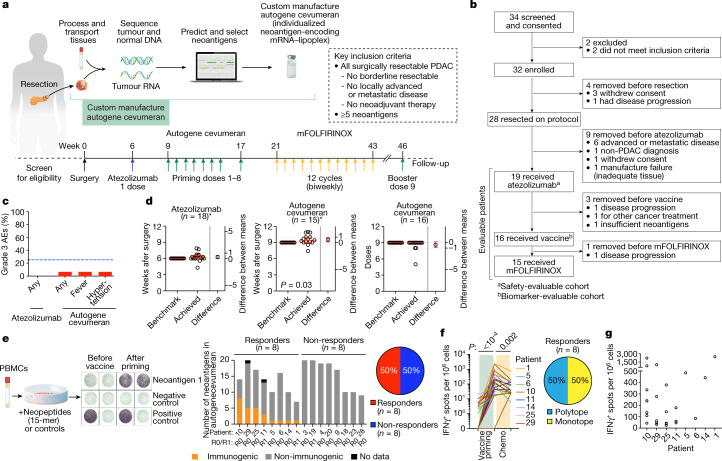
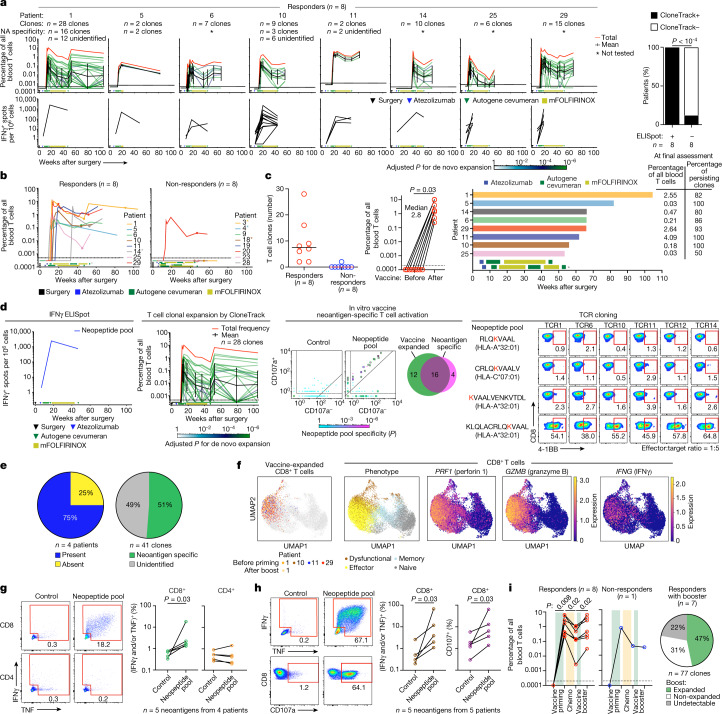
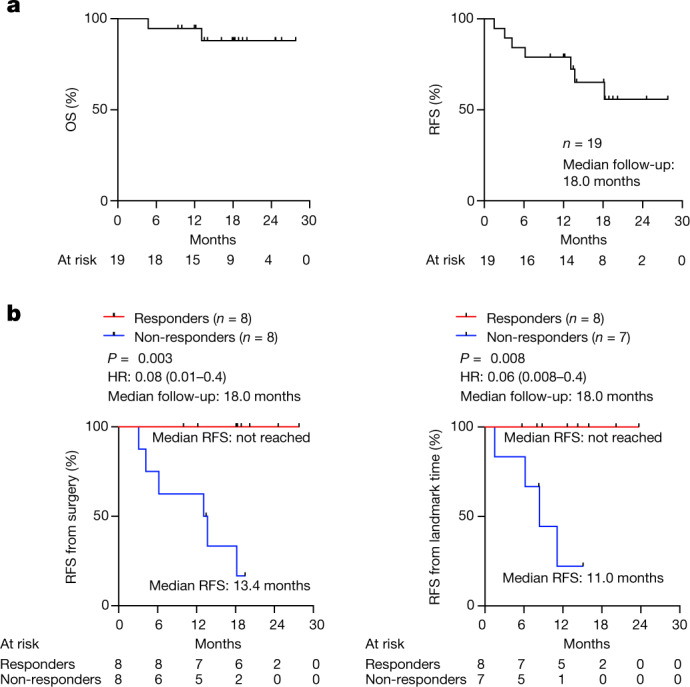
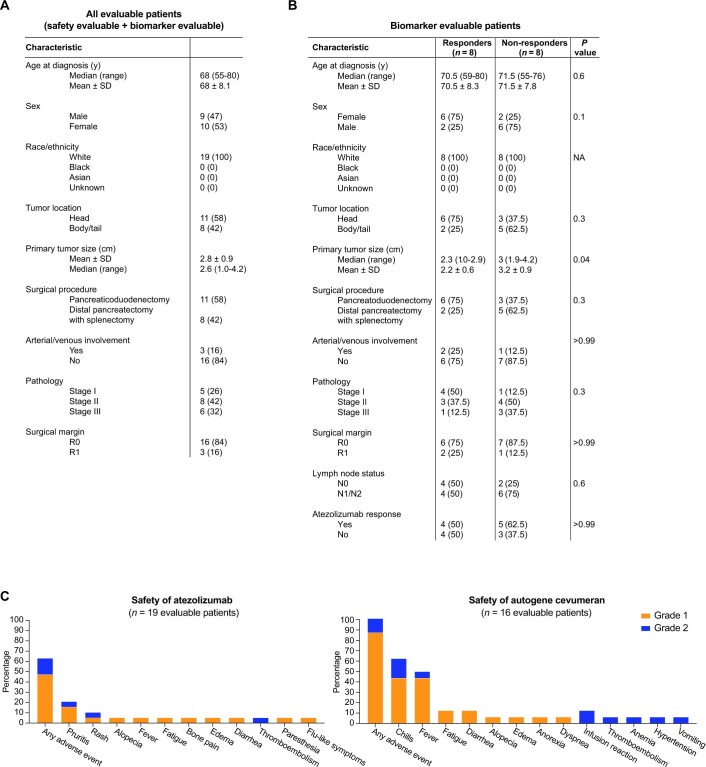
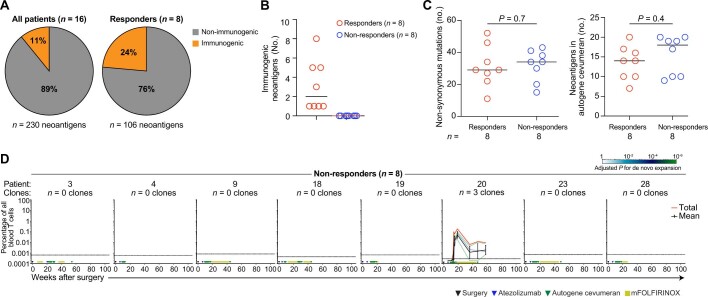
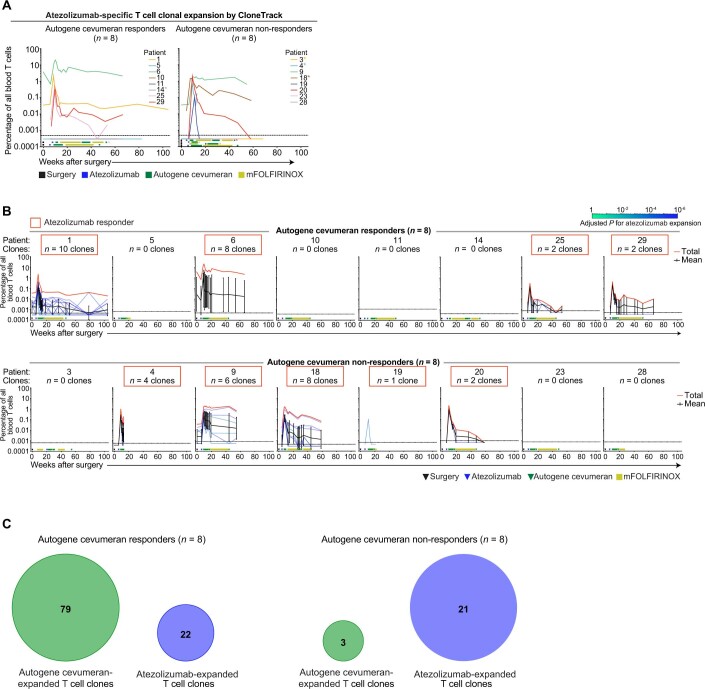
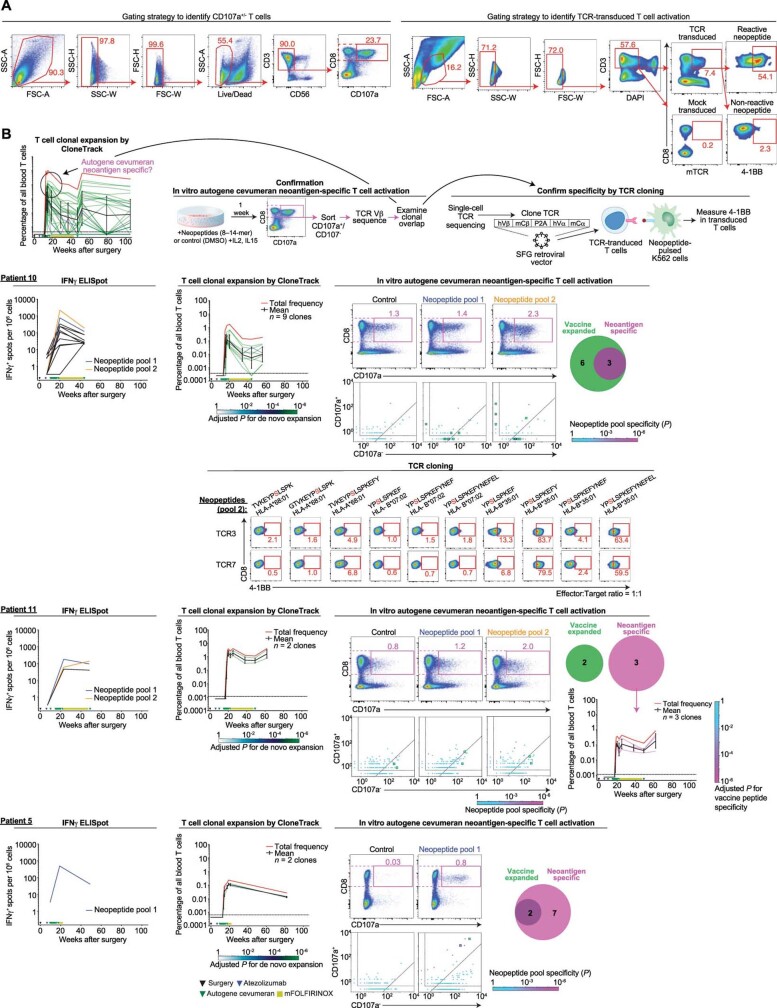
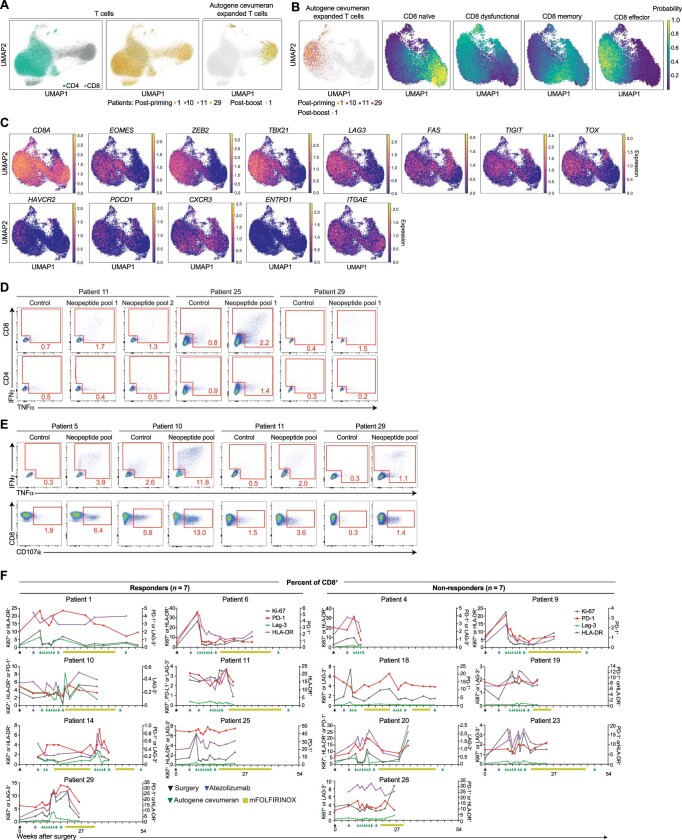
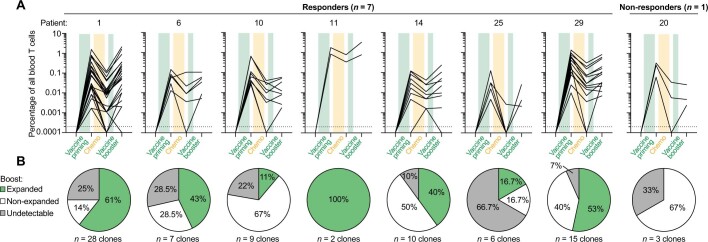
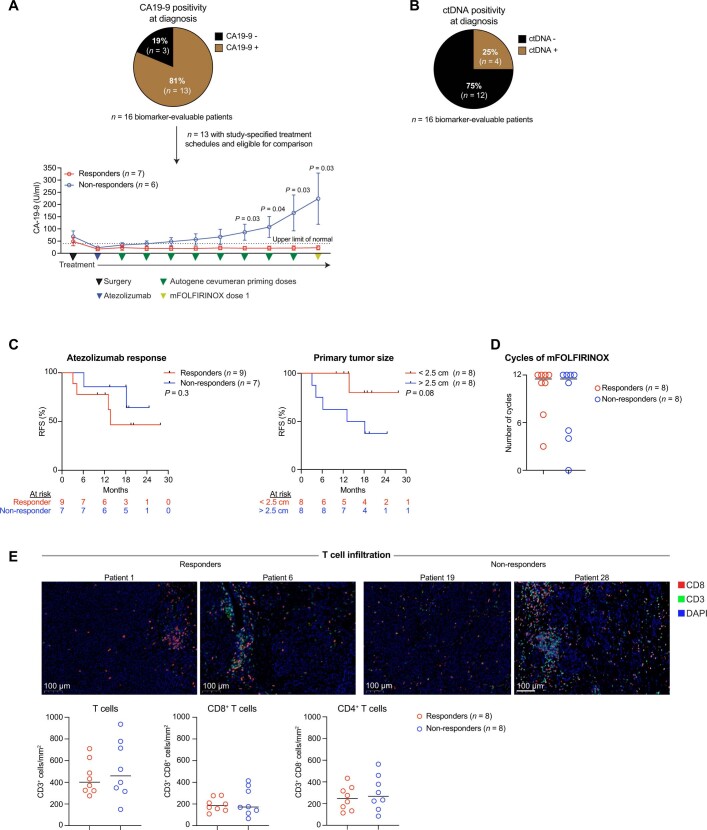
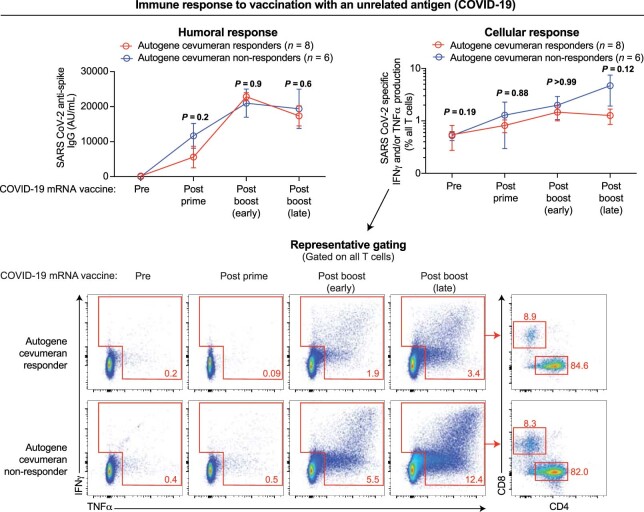
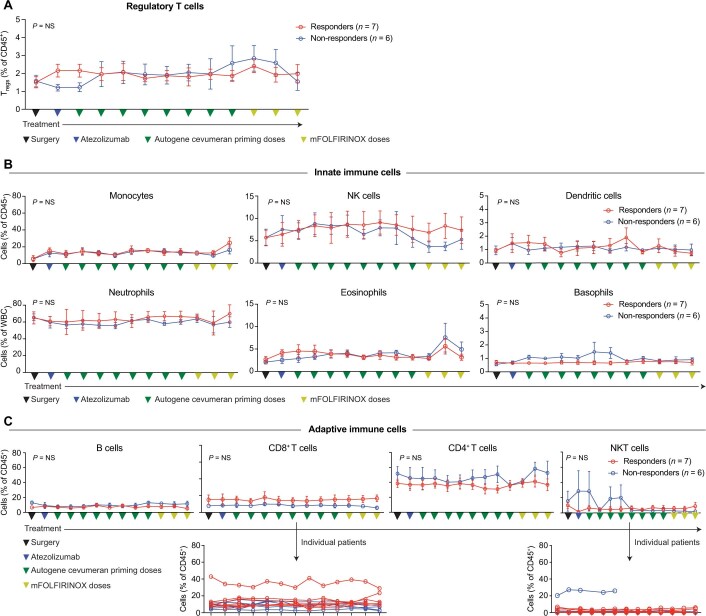
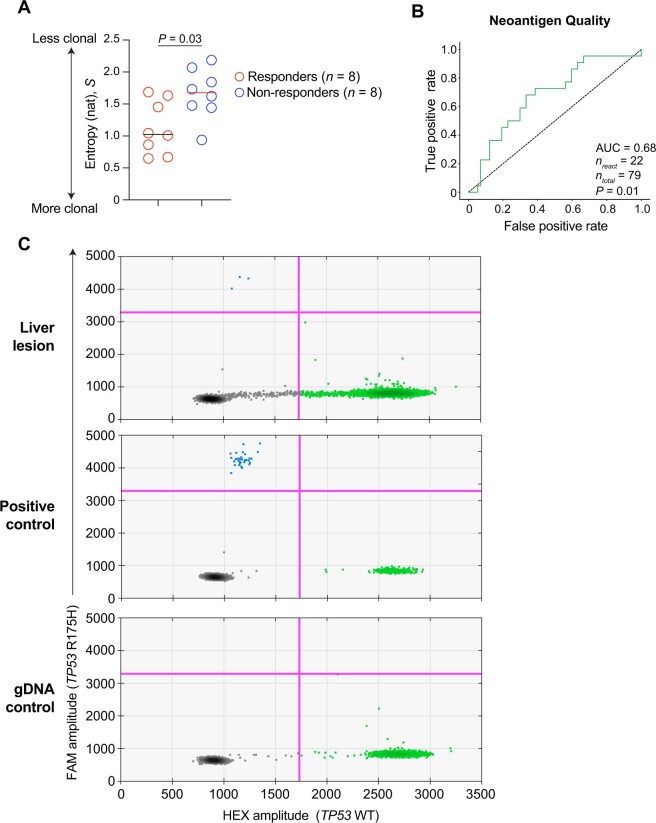
Pancreatic ductal adenocarcinoma (PDAC) is lethal in 88% of patients 1 , yet harbours mutation-derived T cell neoantigens that are suitable for vaccines 2,3 . Here in a phase I trial of adjuvant autogene cevumeran, an individualized neoantigen vaccine based on uridine mRNA–lipoplex nanoparticles, we synthesized mRNA neoantigen vaccines in real time from surgically resected PDAC tumours. After surgery, we sequentially administered atezolizumab (an anti-PD-L1 immunotherapy), autogene cevumeran (a maximum of 20 neoantigens per patient) and a modified version of a four-drug chemotherapy regimen (mFOLFIRINOX, comprising folinic acid, fluorouracil, irinotecan and oxaliplatin). The end points included vaccine-induced neoantigen-specific T cells by high-threshold assays, 18-month recurrence-free survival and oncologic feasibility. We treated 16 patients with atezolizumab and autogene cevumeran, then 15 patients with mFOLFIRINOX. Autogene cevumeran was administered within 3 days of benchmarked times, was tolerable and induced de novo high-magnitude neoantigen-specific T cells in 8 out of 16 patients, with half targeting more than one vaccine neoantigen. Using a new mathematical strategy to track T cell clones (CloneTrack) and functional assays, we found that vaccine-expanded T cells comprised up to 10% of all blood T cells, re-expanded with a vaccine booster and included long-lived polyfunctional neoantigen-specific effector CD8 + T cells. At 18-month median follow-up, patients with vaccine-expanded T cells (responders) had a longer median recurrence-free survival (not reached) compared with patients without vaccine-expanded T cells (non-responders; 13.4 months, P = 0.003). Differences in the immune fitness of the patients did not confound this correlation, as responders and non-responders mounted equivalent immunity to a concurrent unrelated mRNA vaccine against SARS-CoV-2. Thus, adjuvant atezolizumab, autogene cevumeran and mFOLFIRINOX induces substantial T cell activity that may correlate with delayed PDAC recurrence.
Overview
The claims and statistics of this paper haven’t been checked yet.
Free: it reads the open-access text and checks the first 5 claims that cite a source we can check. Create a free account to check every claim.
Integrity signals
Registry
Cites
Statistics
Figures
Verification
Claims the paper makes
The claims and statistics of this paper haven’t been checked yet.
Free: it reads the open-access text and checks the first 5 claims that cite a source we can check. Create a free account to check every claim.
Claims other papers make about this one
Each is checked against this paper’s own text: does it say what the citing paper says it does?
The source backs part of the claim, not all of it — or backs it for a different population, condition or comparison.
In the citing paper
“Although further confirmatory studies are needed, these results provide initial clinical evidence that personalized therapeutic cancer vaccines can enhance responses to ICIs, with many other studies planned.”
From Adjuvant and neoadjuvant immunotherapies in hepatocellular carcinoma (2024) · cites this paper as [136]
Experimental — accuracy not yet measuredThe source backs part of the claim, not all of it — or backs it for a different population, condition or comparison.
In the citing paper
“In this trial, 8 of 16 patients with resected pancreatic ductal adenocarcinoma remained free of cancer after a median follow-up of 18 months136.”
From Adjuvant and neoadjuvant immunotherapies in hepatocellular carcinoma (2024) · cites this paper as [136]
Experimental — accuracy not yet measuredThe source backs part of the claim, not all of it — or backs it for a different population, condition or comparison.
In the citing paper
“Cancer mRNA-based vaccines tend to be administered alone or in combination with ICIs, and after resection, although they have also been used in neoadjuvant–adjuvant treatment approaches136,138,139 (Fig. 3c,d).”
From Adjuvant and neoadjuvant immunotherapies in hepatocellular carcinoma (2024) · cites this paper as [136]
Experimental — accuracy not yet measuredThe cited source says what the claim attributes to it.
In the citing paper
“patients enrolled in the trial with an immunologic response against the vaccine had longer median RFS than those without such a response136.”
From Adjuvant and neoadjuvant immunotherapies in hepatocellular carcinoma (2024) · cites this paper as [136]
The cited source says what the claim attributes to it.
In the citing paper
“Clinical trials of mRNA-based immunotherapeutics encoding unmutated full-length TAAs in checkpoint inhibitor-treated melanoma [18] and individualised mRNA-based immunotherapeutics encoding patient-specific mutated tumour neoantigens in pancreatic and lung cancer [19, 20] have shown encouraging results.”
From Preclinical development of an mRNA-based multiepitope immunotherapeutic for glioblastoma (2025) · cites this paper as [20]
1 more claim about this paper
Create a free account to see every claim other papers make about this one.
Self-check
Percentages, sums and reported differences re-computed from the paper’s own numbers.
The self-check needs the paper’s full text.
Citations
Cites
Sung, H., Ferlay, J., Siegel, R. L., Laversanne, M., Soerjomataram, I., Jemal, A., & Bray, F. (2021) · CA: A Cancer Journal for Clinicians · doi:10.3322/caac.21660 · Cited by 108,699
Richards, S., Aziz, N., Bale, S., Bick, D., Das, S., Gastier-Foster, J., Grody, W. W., Hegde, M., Lyon, E., Spector, E., et al. (2015) · Genetics in Medicine · doi:10.1038/gim.2015.30 · Cited by 32,594
PD-1 and PD-L1 Immune Checkpoint Blockade to Treat Breast Cancer
Hartkopf, A. D., Taran, F.-A., Wallwiener, M., Walter, C. B., Krämer, B., Grischke, E.-M., & Brucker, S. Y. (2016) · Breast Care · doi:10.1159/000453569 · Cited by 30,845
The Genome Analysis Toolkit: A MapReduce framework for analyzing next-generation DNA sequencing data
McKenna, A., Hanna, M., Banks, E., Sivachenko, A., Cibulskis, K., Kernytsky, A., Garimella, K., Altshuler, D., Gabriel, S., Daly, M., et al. (2010) · Genome Research · doi:10.1101/gr.107524.110 · Cited by 27,895
Siegel, R. L., Miller, K. D., Wagle, N. S., & Jemal, A. (2023) · CA: A Cancer Journal for Clinicians · doi:10.3322/caac.21763 · Cited by 16,303
SCANPY: large-scale single-cell gene expression data analysis
Wolf, F. A., Angerer, P., & Theis, F. J. (2018) · Genome Biology · doi:10.1186/s13059-017-1382-0 · Cited by 8,881
Rahib, L., Smith, B. D., Aizenberg, R., Rosenzweig, A. B., Fleshman, J. M., & Matrisian, L. M. (2014) · Cancer Research · doi:10.1158/0008-5472.can-14-0155 · Cited by 7,094
Predictive correlates of response to the anti-PD-L1 antibody MPDL3280A in cancer patients
Herbst, R. S., Soria, J.-C., Kowanetz, M., Fine, G. D., Hamid, O., Gordon, M. S., Sosman, J. A., McDermott, D. F., Powderly, J. D., Gettinger, S. N., et al. (2014) · Nature · doi:10.1038/nature14011 · Cited by 5,231
Self-citationCOSMIC: the Catalogue Of Somatic Mutations In Cancer
Tate, J. G., Bamford, S., Jubb, H. C., Sondka, Z., Beare, D. M., Bindal, N., Boutselakis, H., Cole, C. G., Creatore, C., Dawson, E., et al. (2019) · Nucleic Acids Research · doi:10.1093/nar/gky1015 · Cited by 4,867
Neoantigens in cancer immunotherapy
Schumacher, T. N., & Schreiber, R. D. (2015) · Science · doi:10.1126/science.aaa4971 · Cited by 4,783
Cited by
Items 301–400 of 1,004
Advances in the Management of Pancreatic Cancer: Current Strategies and Emerging Therapies
Peshin, S., Takrori, E., Kodali, N. A., Bashir, F., & Singal, S. (2025) · International Journal of Molecular Sciences · doi:10.3390/ijms26157055 · Cited by 26
“These results highlight the promise that mRNA-based vaccines could reduce the relapse risk, and a global phase II trial is ongoing to assess efficacy and safety in a larger cohort [85–88].”
Sensitive neoantigen discovery by real-time mutanome-guided immunopeptidomics
Shapiro, I. E., Huber, F., Michaux, J., & Bassani‐Sternberg, M. (2025) · Nature Communications · doi:10.1038/s41467-025-62647-4 · Cited by 24
Progress in cancer vaccines enabled by nanotechnology
Kim, B., Abdelfattah, N. S., Hostetler, A., & Irvine, D. J. (2025) · Nature Nanotechnology · doi:10.1038/s41565-025-02021-z · Cited by 24
Pancreatic cancer in 2025: Have we found a solution?
Tonini, V., & Zanni, M. (2025) · World Journal of Gastroenterology · doi:10.3748/wjg.v31.i43.111433 · Cited by 26
“At a median follow-up of 18 months, patients who responded to the vaccine demonstrated significantly longer recurrence-free survival than non-responders[193].”
Rota, M., Torresan, I., Palmerio, S., Tasselli, E., Rossi, A., Zivi, A., & Zacchi, F. (2025) · Critical Reviews in Oncology/Hematology · doi:10.1016/j.critrevonc.2025.105068 · Cited by 27
Huang, L., Zhao, F., He, M., Fang, Y., Ma, X., Lu, S., Li, E., Xiao, H. Q., Zhu, H., Wang, X., et al. (2024) · Journal of Controlled Release · doi:10.1016/j.jconrel.2024.01.002 · Cited by 24
Recent Findings on Therapeutic Cancer Vaccines: An Updated Review
Sheikhlary, S., Lopez, D. H., Moghimi, S., & Sun, B. (2024) · Biomolecules · doi:10.3390/biom14040503 · Cited by 26
The neoantigens derived from transposable elements – A hidden treasure for cancer immunotherapy
Hu, Z., Guo, X., Li, Z., Meng, Z., & Huang, S. (2024) · Biochimica et Biophysica Acta (BBA) - Reviews on Cancer · doi:10.1016/j.bbcan.2024.189126 · Cited by 24
Das, R., Ge, X., Fei, F., Parvanian, S., Weissleder, R., & Garris, C. (2024) · Small Methods · doi:10.1002/smtd.202400633 · Cited by 26
Focus on Pancreatic Cancer Microenvironment
Pratticò, F., & Garajová, I. (2024) · Current Oncology · doi:10.3390/curroncol31080316 · Cited by 26
Chattopadhyay, S., Hazra, R., Mallick, A., Gayen, S., & Roy, S. (2024) · Biochimica et Biophysica Acta (BBA) - Reviews on Cancer · doi:10.1016/j.bbcan.2024.189170 · Cited by 26
Pretto, S., Yu, Q., Bourdely, P., Cafarello, S. T., Acker, H. H. V., Verelst, J., Richiardone, E., Vanheer, L., Roshanzadeh, A., Schneppenheim, F., et al. (2025) · Nature Metabolism · doi:10.1038/s42255-025-01233-w · Cited by 26
EcDNA-borne structural variants drive oncogenic fusion transcript amplification
Yi, H., Zhang, S., Swinderman, J. T., Wang, Y., Kanakaveti, V., Hung, K. L., Wong, I. T.-L., Srinivasan, S., Curtis, E. J., Bhargava-Shah, A., et al. (2026) · Cell · doi:10.1016/j.cell.2025.12.009 · Cited by 23
“73,74 As these fusions are absent in normal cells yet amplified via ecDNA in cancers, they present precise targets for detection and treatment of ecDNA-driven cancers.”
Neoadjuvant Immunotherapy for Localized Pancreatic Cancer: Challenges and Early Results
Chick, R. C., Gunderson, A. J., Rahman, S., & Cloyd, J. M. (2023) · Cancers · doi:10.3390/cancers15153967 · Cited by 22
“A recently published phase I study of cevumeran, an adjuvant, personalized mRNA neoantigen vaccine, in combination with atezolizumab (anti-PD-L1) demonstrated immunogenicity and safety; if biopsy specimens would be adequate for vaccine production, neoadjuvant use could be considered [58].”
BackgroundInkjet printing-based high-throughput DNA synthesis
Deng, X. J., Li, H., & Song, Y. (2023) · Giant · doi:10.1016/j.giant.2023.100222 · Cited by 23
Masum, M. H. U., Wajed, S., Hossain, M. I., Moumi, N. R., Talukder, A., & Rahman, M. M. (2024) · PLoS ONE · doi:10.1371/journal.pone.0305413 · Cited by 27
Xu, X., Li, T., Yang, T., Liu, F., Guo, Z., Wu, H. Y., Tang, Y., & Chen, H. (2024) · Nano Letters · doi:10.1021/acs.nanolett.4c02959 · Cited by 22
Novel Therapies for Pancreatic Cancer
Chung, V., Mizrahi, J. D., & Pant, S. (2024) · JCO Oncology Practice · doi:10.1200/op.24.00279 · Cited by 23
Cancer vaccines: an update on recent achievements and prospects for cancer therapy
Chekaoui, A., Garofalo, M., Gad, B., Staniszewska, M., Chiaro, J., Pancer, K. W., Gryciuk, A., Cerullo, V., Salmaso, S., Caliceti, P., et al. (2024) · Clinical and Experimental Medicine · doi:10.1007/s10238-024-01541-7 · Cited by 23
Emmers, M., Welters, M. J. P., Dietz, M. V., Santegoets, S. J. A. M., Boekesteijn, S., Stolk, A., Loof, N. M., Dumoulin, D. W., Geel, A., Steinbusch, L. C., et al. (2025) · Nature Communications · doi:10.1038/s41467-025-60281-8 · Cited by 21
“…seven prime and booster injections has been used for mutation-speci fi c neoantigen vaccines and resulted in strong ex-vivo detectable responses 23,29,30 , suggesting that stronger vaccine induced LRPAP1 21-30 -speci fi c CD8 + T-cell responses may be achieved when the number of injections is…”
T cell receptor specificity landscape revealed through de novo peptide design
Visani, G. M., Pun, M. N., Minervina, A. A., Bradley, P. H., Thomas, P. G., & Nourmohammad, A. (2025) · Proceedings of the National Academy of Sciences · doi:10.1073/pnas.2504783122 · Cited by 23
Intratumoral heterogeneity and immunotherapy resistance: clinical implications
Keenan, B. P., Yadav, M., Ansstas, G., Fabrizio, D. A., Murugesan, K., Montesion, M., Niyogi, D. G., Mellman, I., & Melero, I. (2025) · Annals of Oncology · doi:10.1016/j.annonc.2025.10.1239 · Cited by 26
Self-citationAdvances in Neoantigen-Based Cancer Vaccines
Wu, A.-C., Nakamura, Y., & Kiyotani, K. (2025) · Cancers · doi:10.3390/cancers18010144 · Cited by 25
“%) of 16 resected patients [20].”
Li, X., Kaboli, P. J., Roozitalab, G., Salahi, S., Qian, H., Zhang, X., Chen, K., & İmani, S. (2026) · Cellular Oncology · doi:10.1007/s13402-026-01199-1 · Cited by 25
Zhang, H., Gao, X., Sun, Q., Dong, X., Zhu, Z., & Yang, C. (2024) · Acta Biomaterialia · doi:10.1016/j.actbio.2024.02.004 · Cited by 22
When synthetic biology meets medicine
Feng, Y., Su, C., Mao, G., Sun, B., Cai, Y., Dai, J., & Ma, Y. (2024) · Life Medicine · doi:10.1093/lifemedi/lnae010 · Cited by 22
Universal CAR 2.0 to overcome current limitations in CAR therapy
Schlegel, L. S., Werbrouck, C., Boettcher, M., & Schlegel, P. (2024) · Frontiers in Immunology · doi:10.3389/fimmu.2024.1383894 · Cited by 23
“Whole genome sequencing is used to identify targetable mutations in the tumor with patient-individual cancer vaccines (228).”
Tadic, S., & Martínez, A. (2024) · Frontiers in Immunology · doi:10.3389/fimmu.2024.1433185 · Cited by 23
“In addition, the responders had longer recurrence-free survival suggesting that this vaccine induced ef fi cient anti-tumor immune response (160).”
Design and Evaluation of Synthetic Delivery Formulations for Peptide-Based Cancer Vaccines
Song, K., & Pun, S. H. (2024) · BME Frontiers · doi:10.34133/bmef.0038 · Cited by 20
“Several therapeutic cancer vaccines employing this strategy are currently undergoing evaluation in clinical trials [2–4].”
MethodDeslignière, E., Barnes, L. F., Powers, T. W., Friese, O. V., & Heck, A. J. R. (2025) · Molecular Therapy — Methods & Clinical Development · doi:10.1016/j.omtm.2025.101454 · Cited by 20
Pauken, K. E., Alhalabi, O., Goswami, S., & Sharma, P. (2025) · Cancer Cell · doi:10.1016/j.ccell.2025.03.005 · Cited by 22
Li, M., Yang, Y., Yang, Z., Kang, L., Ma, Z., Luo, J., Fan, Z., Tian, X., Deng, Y., Ke, H., et al. (2025) · Nano Today · doi:10.1016/j.nantod.2025.102727 · Cited by 20
Jiang, G., Zhou, X., Chen, S., Zhong, F., Huang, G., Wu, B., Mou, Q., Jiang, G., & Lin, T. (2025) · Cancer Genetics · doi:10.1016/j.cancergen.2025.06.006 · Cited by 20
Overcoming therapy resistance in pancreatic cancer: challenges and emerging strategies
du Toit‐Thompson, T., Leck, L. Y. W., Gillson, J., Pavlakis, N., Gill, A. J., Samra, J. S., Mittal, A., & Sahni, S. (2025) · Advanced Drug Delivery Reviews · doi:10.1016/j.addr.2025.115647 · Cited by 22
Roth, S., Apte, M. V., Balachandran, V. P., Biffi, G., Conroy, T., Cukierman, E., Dotan, E., Esposito, I., Grünwald, B. T., Klauß, M., et al. (2026) · Nature Reviews Disease Primers · doi:10.1038/s41572-026-00699-6 · Cited by 28
Self-citationSrivastava, P. K. (2024) · Journal of Clinical Investigation · doi:10.1172/jci176740 · Cited by 20
“In the high-throughput DNA-sequencing era (2012 and onward), patients with melanoma (104–106), glioblastoma (107, 108), pancreatic cancer (109), lung cancer (110), or bladder cancer (106) have been immunized with long peptides (or RNA encoding such peptides) containing neoepitopes that were…”
BackgroundStructural basis for self-discrimination by neoantigen-specific TCRs
Finnigan, J. P., Newman, J. H., Patskovsky, Y., Patskovska, L., Ishizuka, A. S., Lynn, G. M., Seder, R. A., Krogsgaard, M., & Bhardwaj, N. (2024) · Nature Communications · doi:10.1038/s41467-024-46367-9 · Cited by 23
Tumor Microenvironment‐Responsive Polymer‐Based RNA Delivery Systems for Cancer Treatment
Zhang, Y., Zhang, M., Song, H., Dai, Q., & Liu, C. (2024) · Small Methods · doi:10.1002/smtd.202400278 · Cited by 23
Szymura, S. J., Wang, L., Zhang, T., Cha, S.-C., Song, J. Y., Dong, Z., Anderson, A., Oh, E., Lee, V., Wang, Z., et al. (2024) · Nature Communications · doi:10.1038/s41467-024-50880-2 · Cited by 22
“Differential gene expression analysis of each of the relevant B-lineage cell clusters revealed a pattern of signi fi cantgenedownregulationfollowing thevaccineinclusters0,1, and 2, but not plasma cell-like clusters 5 and 10 (Fig.”
BackgroundThe progress of tumor vaccines clinical trials in non-small cell lung cancer
Wang, X., Niu, Y., & Bian, F. (2024) · Clinical & Translational Oncology · doi:10.1007/s12094-024-03678-z · Cited by 22
“BNT122, an individualized neoantigen vaccine based on uridine mRNA-lipoplex nanoparticles, has already been proved to greatly enhance the activity of T cells and substantially prolong the time to relapse in postoperative pancreatic cancer patients [49].”
Strategies to Overcome Hurdles in Cancer Immunotherapy
Kim, J. H., Lee, B. J., Moon, S., Lee, H., Lee, J., Kim, B., Jung, K., Seo, H., & Chung, Y. (2024) · Biomaterials Research · doi:10.34133/bmr.0080 · Cited by 21
“Moderna and BioNTech, leaders in mRNA vaccine development, are currently conducting clinical trials using these cutting-edge technologies [129,130].”
BackgroundLi, X.-N., Wang, F., Chen, K., Wu, Z., Zhang, R., Xiao, C., Zhao, F., Wang, D., Zhao, H., Ran, Y., et al. (2025) · Journal for ImmunoTherapy of Cancer · doi:10.1136/jitc-2024-010581 · Cited by 22
Personalized Immunity: Neoantigen-Based Vaccines Revolutionizing Hepatocellular Carcinoma Treatment
Aggeletopoulou, I., Pantzios, S., & Triantos, C. K. (2025) · Cancers · doi:10.3390/cancers17030376 · Cited by 20
“Several malignancies, such as non-small cell lung cancer [51], melanoma [52], pancreatic cancer [53], and urothelial carcinoma [54], have demonstrated enhanced responses to ICIs when associated with higher TMB and/or an increased neoanti-gen load.”
Advances in Polymer‐Based Self‐Adjuvanted Nanovaccines
Ling, X., Dong, Z., He, J., Chen, D., He, D. N., Guo, R. H., He, Q., & Li, M. (2025) · Small · doi:10.1002/smll.202409021 · Cited by 22
Tumor microenvironment acidosis favors pancreatic cancer stem cell properties and in vivo metastasis
Rolver, M. G., Roda, J. C., Dai, Y., Flinck, M., Ialchina, R., Hindkær, J., Dyhr, R. T., Bodilsen, A. N., Prasad, N. S., Baldan, J., et al. (2025) · iScience · doi:10.1016/j.isci.2025.111956 · Cited by 21
“1,2 Despite important recent developments, 3,4,5 first-line treatment for pancreatic cancer remains chemotherapy and radiation, yet these only increase survival by weeks or a few months.”
Exploring the immuno-nano nexus: A paradigm shift in tumor vaccines
Li, Y., Xu, Y., Su, W., Xu, J., Ye, Z., Wang, Z., Liu, Q., & Chen, F. (2025) · Biomedicine & Pharmacotherapy · doi:10.1016/j.biopha.2025.117897 · Cited by 20
Advances in Vaccine-Based Therapies for Pancreatic Cancer
McMillan, M. T., & Soares, K. C. (2025) · Journal of Gastrointestinal Cancer · doi:10.1007/s12029-025-01165-4 · Cited by 19
“…trial of adjuvant mRNA vaccination following upfront resection in resectable PDAC, vaccine response rates were numerically lower in the patients who underwent splenectomy (28.6% vs 66.7%, p = 0.3), suggesting the importance of splenic immune cell populations following IV LPX mRNA vaccination [21].”
InfluentialSelf-citationTang, S., Huang, L., Ge, J., Li, J., Qiu, M., Zhang, Y., Long, M., Wu, G., Zhang, R., Ma, X., et al. (2025) · Journal of Nanobiotechnology · doi:10.1186/s12951-025-03318-w · Cited by 19
Proteomics in pancreatic cancer
Cai, F., Gu, Y., Ling, Y., Yi, G., Zang, S., Su, T., Liu, Y., Li, A., Wang, D., Zhao, W., et al. (2025) · Biomarker Research · doi:10.1186/s40364-025-00805-y · Cited by 21
“Notably, tumor-specific neoantigens encoded by KRAS mutations have been identified as highly immunogenic targets for precision cancer vaccines to enhance antitumor immunity, with encouraging preclinical and clinical outcomes [32, 33].”
CircRNA: Unlocking new frontiers in therapeutic and vaccine development
Bahrulolum, H., Rouzbahani, F. N., Hoseini, Z. S., Chaharmahali, M., & Hosseini, S. M. (2025) · Molecular Therapy · doi:10.1016/j.ymthe.2025.10.038 · Cited by 20
Nanomedicine and epigenetics: New alliances to increase the odds in pancreatic cancer survival
Urbanova, M., Cihova, M., Buociková, V., Slopovský, J., Dubovan, P., Pinďák, D., Tomáš, M., García‐Bermejo, L., Rodríguez-Garrote, M., Earl, J., et al. (2023) · Biomedicine & Pharmacotherapy · doi:10.1016/j.biopha.2023.115179 · Cited by 20
Tumor vaccines: Toward multidimensional anti-tumor therapies
Tan, Y., Chen, H., Gou, X., Fan, Q., & Chen, J. (2023) · Human Vaccines & Immunotherapeutics · doi:10.1080/21645515.2023.2271334 · Cited by 19
Evaluating NetMHCpan performance on non-European HLA alleles not present in training data
Atkins, T. K., Solanki, A., Vasmatzis, G., Cornette, J. L., & Riedel, M. D. (2024) · Frontiers in Immunology · doi:10.3389/fimmu.2023.1288105 · Cited by 25
“For example, peptide-MHC binding predictions have been used to select peptides for a cancer neoantigen vaccine and to explain asymptotic SARS-CoV-2 infection in individuals with a speci fi c HLA-B allele (2, 3).”
MethodProfile of Katalin Karikó and Drew Weissman: 2023 Nobel laureates in Physiology or Medicine
Krammer, F., & Palese, P. (2024) · Proceedings of the National Academy of Sciences · doi:10.1073/pnas.2400423121 · Cited by 22
Personalized Cancer Vaccines Directed against Tumor Mutations: Building Evidence from Mice to Humans
Fritsch, E. F., & Ott, P. A. (2024) · Cancer Research · doi:10.1158/0008-5472.can-24-0565 · Cited by 19
Lack of shared neoantigens in prevalent mutations in cancer
Ragone, C., Cavalluzzo, B., Mauriello, A., Tagliamonte, M., & Buonaguro, L. (2024) · Journal of Translational Medicine · doi:10.1186/s12967-024-05110-0 · Cited by 21
“Only recently, an early phase trial in pancreatic cancer has generated a clinical benefit in terms of prolonged recurrence free survival (RFS) [14].”
BackgroundKristensen, N. P., Dionisio, E., Bentzen, A. K., Tamhane, T., Kemming, J. S., Nos, G., Voss, L. F., Hansen, U. K., Lauer, G. M., & Hadrup, S. R. (2024) · Science Advances · doi:10.1126/sciadv.adm8951 · Cited by 22
Tumor-Derived Antigenic Peptides as Potential Cancer Vaccines
Sotirov, S., & Dimitrov, I. (2024) · International Journal of Molecular Sciences · doi:10.3390/ijms25094934 · Cited by 22
“In silico algorithms These therapies involve the administration of neoantigen-specific vaccines [53] or the genetic modification of patient-derived T cells to express neoantigen-specific TCRs [54] or chimeric antigen receptors (CARs) [55]. are used to predict and prioritize neo-antigen potential…”
BackgroundHossein, H. H. S., Iommelli, F., Pietro, N. D., Curia, M. C., Piattelli, A., Palumbo, R., Roviello, G. N., & Rosa, V. D. (2024) · Vaccines · doi:10.3390/vaccines12050519 · Cited by 22
“After this novel treatment, they found that vaccine-expanded T-cells comprised up to 10% of all blood T-cells, re-expanded with a vaccine booster, and included long-lived polyfunctional neoantigen-specific effector CD8 + T-cells [33].”
BackgroundEngineering CaP-Pickering emulsion for enhanced mRNA cancer vaccines via dual DC and NK activations
Wu, S., Zhou, Y., Asakawa, N., Wen, M., Sun, Y., Ming, Y., Song, T., Chen, W., Ma, G., & Xia, Y. (2024) · Journal of Controlled Release · doi:10.1016/j.jconrel.2024.07.051 · Cited by 19
Current status of nucleic acid therapy and its new progress in cancer treatment
Lou, W., Zhang, L., & Wang, J. (2024) · International Immunopharmacology · doi:10.1016/j.intimp.2024.113157 · Cited by 22
Nanomaterial-based cancer immunotherapy: enhancing treatment strategies
Tian, M., Liu, X., & Pei, H. (2024) · Frontiers in Chemistry · doi:10.3389/fchem.2024.1492215 · Cited by 20
“Neoantigen peptide vaccines directly activate T cells by synthesizing peptide segments, while mRNA vaccines induce an immune response by translating and expressing neoantigens in vivo (Rojas et al., 2023).”
BackgroundNeoantigen sequestrated autophagosomes as therapeutic cancer vaccines
Zhang, J., Cao, J., Wang, L., Li, S., Meng, F., Liang, X., Jiang, H., Luo, R., Zhu, D., Zhang, F., et al. (2024) · Journal of Controlled Release · doi:10.1016/j.jconrel.2024.10.019 · Cited by 20
Advances in immunotherapy and targeted therapy for pancreatic cancer
Zhou, X., Wang, X., Yang, S., & Huang, Z. (2024) · Oncology and Translational Medicine · doi:10.1097/ot9.0000000000000074 · Cited by 21
Targeting the KRAS Oncogene for Patients with Metastatic Colorectal Cancer
Miao, R., Yu, J. B., & Kim, R. D. (2025) · Cancers · doi:10.3390/cancers17091512 · Cited by 21
Pancreatic cancer is feeling the heat
Maru, S. Y., & Jaffee, E. M. (2024) · Journal for ImmunoTherapy of Cancer · doi:10.1136/jitc-2024-010124 · Cited by 19
Drzeniek, N. M., Kahwaji, N., Picht, S., Dimitriou, I. M., Schlickeiser, S., Moradian, H., Geissler, S., Schmueck‐Henneresse, M., Gossen, M., & Volk, H. (2024) · Advanced Science · doi:10.1002/advs.202308447 · Cited by 18
Wang, Q., Wang, J., Xu, K., & Luo, Z. (2024) · Frontiers in Immunology · doi:10.3389/fimmu.2024.1481247 · Cited by 21
Song, J., Su, D., Wu, H., & Guo, J. (2025) · Pharmaceutics · doi:10.3390/pharmaceutics17060798 · Cited by 21
Zhang, Z., & Wu, Y. (2025) · Frontiers in Immunology · doi:10.3389/fimmu.2025.1641518 · Cited by 21
“The results were encouraging: 50% of patients mounted T-cell responses against neoantigens, and these responders had signi fi cantly improved disease-free survival at three years compared to non-responders (101).”
Advances and Strategies in Enhancing mRNA Cancer Vaccines
Zhang, M., Chen, S., Hu, H.-J., Ong, Y., & Ni, Q. (2025) · Advanced Materials · doi:10.1002/adma.202509880 · Cited by 23
mRNA Cancer Vaccines: From Pandemic Paradigm to Personalized Oncology Therapeutics
Yang, B., Liu, J., Yang, L., & Liu, X. (2025) · Cancer Innovation · doi:10.1002/cai2.70041 · Cited by 22
“In a collaborative effort by Moderna and Merck, the Phase I trial of BNT122 (mRNA ‐ LNP) (NCT04161755) evaluated the efficacy of IV ‐ administered vaccines encoding 20 personalized neoantigens in post ‐ resection PDAC patients [142, 143].”
Key Clinical Frontiers of mRNA Loaded Lipid Nanoparticles in Cancer Vaccines
Cao, L., Min, J., Yu, M., Zhang, Z., Yuan, D., & Chen, D. (2025) · International Journal of Nanomedicine · doi:10.2147/ijn.s565558 · Cited by 20
Beyond PD‐1/PD‐L1: New Immune Checkpoints and Therapeutic Combinations in Cancer Immunotherapy
Li, Y., Kang, Z., & Du, Y. (2026) · Medicine Bulletin · doi:10.1002/mdb2.70018 · Cited by 22
Progress in RNA‐Targeted Therapeutics for Human Diseases
Zhang, W., Jiang, A., Jia, B., Jin, Y., Chen, Y., Li, Z., Liao, Y., Zhang, H., Lin, Z., Fang, X., et al. (2026) · MedComm · doi:10.1002/mco2.70607 · Cited by 22
A personalized mRNA vaccine has exhibited potential in the treatment of pancreatic cancer
Kang, N., Zhang, S., & Wang, Y. Z. (2023) · Holistic Integrative Oncology · doi:10.1007/s44178-023-00042-z · Cited by 20
“Personalized RNA neoantigen vaccines: On May 10, 2023, a research team comprised of the Memorial Sloan Kettering Cancer Center, BioNTech, and Genentech (a subsidiary of Roche) published a paper in the prestigious academic journal Nature titled "Personalized RNA neoantigen vaccines stimulate T cells in pancreatic cance…”
BackgroundThe Role of Immune Checkpoint Inhibitors in Metastatic Pancreatic Cancer: Current State and Outlook
Tran, L. C., Özdemir, B. C., & Berger, M. D. (2023) · Pharmaceuticals · doi:10.3390/ph16101411 · Cited by 20
“Moreover, autogene cevumeran induced a significant T cell response in 50% of the patients, translating into longer recurrence-free survival compared to those patients who did not develop adequate T cell expansion [128].”
BackgroundResultGorchs, L., Moro, C. F., Asplund, E., Oosthoek, M., Solders, M., Ghorbani, P., Sparrelid, E., Rangelova, E. B., Löhr, M. J., & Kaipe, H. (2024) · Cancer Research Communications · doi:10.1158/2767-9764.crc-23-0405 · Cited by 19
“Indeed, 8 out of 16 patients who received individualized mRNA neoantigen vaccines in a recent phase I clinical trial had a strong and durable T-cell response against neoantigens (39).”
BackgroundRelevance of mutation-derived neoantigens and non-classical antigens for anticancer therapies
Aparicio, B., Theunissen, P., Hervás‐Stubbs, S., Fortes, P., & Sarobe, P. (2024) · Human Vaccines & Immunotherapeutics · doi:10.1080/21645515.2024.2303799 · Cited by 22
“135 In summary, all these results indicate the feasibility of neoAg vaccine preparation and administration to a variety of cancer patients, which in most cases are immunogenic and, when applied mainly in combination with ICI, yields promising clinical results.”
BackgroundD’Aiello, A., Stiles, B. M., Ohri, N., Levy, B. P., Cohen, P. R., & Halmos, B. (2024) · Clinical Lung Cancer · doi:10.1016/j.cllc.2024.02.004 · Cited by 19
mRNA vaccine development and applications: A special focus on tumors (Review)
Chen, B., Yang, Y., Wang, X., Yang, W., Lu, Y., Wang, D., Zhuo, E., Tang, Y., Su, J., Tang, G., et al. (2024) · International Journal of Oncology · doi:10.3892/ijo.2024.5669 · Cited by 22
“…meso‑ thelioma (125), glioblastoma (126), malignant glioma (127) and renal cell carcinoma (128), as well as mRNA vaccines for pancreatic cancer (129), melanoma (130), BCa (131), non‑small cell lung cancer (132), prostate cancer (133), ovarian cancer (134) and colorectal cancer (135) and are…”
BackgroundIdentification of immunogenic HLA class I and II neoantigens using surrogate immunopeptidomes
Tokita, S., Fusagawa, M., Matsumoto, S., Mariya, T., Umemoto, M., Hirohashi, Y., Hata, F., Saito, T., Kanaseki, T., & Torigoe, T. (2024) · Science Advances · doi:10.1126/sciadv.ado6491 · Cited by 19
Immunogenicity and Efficacy of Personalized Adjuvant mRNA Cancer Vaccines
Berraondo, P., Cuesta, R., Sanmamed, M. F., & Melero, I. (2024) · Cancer Discovery · doi:10.1158/2159-8290.cd-24-1196 · Cited by 18
Classic versus innovative strategies for immuno-therapy in pancreatic cancer
Formelli, M. G., Palloni, A., Tavolari, S., Deiana, C., Andrini, E., Marco, M. D., Campana, D., Lamberti, G., & Brandi, G. (2025) · Advanced Drug Delivery Reviews · doi:10.1016/j.addr.2025.115671 · Cited by 20
Jiang, Y., Li, Y., Wu, T., Cao, L., Xu, G., Liu, J., Hua, C., Ding, C., Yang, B., Tong, R., et al. (2025) · Hepatology · doi:10.1097/hep.0000000000001605 · Cited by 20
“[4,5] mRNA vaccine offers a novel alternative compared with the DNA vaccine, which carries the risk of integrating into the host genome, and the peptide vaccine, which faces challenges such as HLA restriction and complex preparation.”
The mRNA-Based Innovative Strategy: Progress and Challenges
Zhou, H., Wei, D., Chen, Z., Chen, H., Dong, C., Cai, W., Wang, J., Liu, X., Li, Y., Yang, Y., et al. (2026) · Nano-Micro Letters · doi:10.1007/s40820-025-01906-x · Cited by 25
“For the king of cancer—pancreatic carcinoma, Rojas et al. https://doi.org/10.1007/s40820-025-01906-x © The authors developed autogene cevumeran, a personalized RNA neoan-tigen vaccine for pancreatic ductal adenocarcinoma (PDAC) [30].”
InfluentialAndersen, M. H. (2026) · Signal Transduction and Targeted Therapy · doi:10.1038/s41392-026-02710-8 · Cited by 20
Neoantigens in cancer immunotherapy: quantity vs. quality
Wolf, Y., & Samuels, Y. (2023) · Molecular Oncology · doi:10.1002/1878-0261.13483 · Cited by 17
Decoding the obesity–cancer connection: lessons from preclinical models of pancreatic adenocarcinoma
Ruiz, C. F., Garcia, C. C., Jacox, J. B., Lawres, L., & Muzumdar, M. D. (2023) · Life Science Alliance · doi:10.26508/lsa.202302228 · Cited by 17
“…speci fi c for a KRAS mutant epitope elicits an anti-tumor immune response (Leidner et al, 2022), whereas mRNA vaccines targeting patient-speci fi c neoantigens led to immune responses concordant with prevention of relapse in half of patients after surgery in early-stage disease (Rojas et al, 2023).”
BackgroundEmerging Prognostic and Predictive Factors in Pancreatic Cancer
Karamitopoulou, E. (2023) · Modern Pathology · doi:10.1016/j.modpat.2023.100328 · Cited by 17
Neoadjuvant personalized cancer vaccines: the final frontier?
Richard, G., Ruggiero, N., Steinberg, G. D., Martin, W. D., & Groot, A. S. D. (2024) · Expert Review of Vaccines · doi:10.1080/14760584.2024.2303015 · Cited by 21
“A critical conclusion that can be inferred from many of these clinical studies is that endogenous T cells are able to [10–13].”
InfluentialZhou, X., Zhang, B., Hu, J., Shen, J., Chen, Z., Zhang, J., Wu, B., Zhou, E., Peng, S., Wong, T., et al. (2024) · The Innovation Medicine · doi:10.59717/j.xinn-med.2024.100052 · Cited by 20
Targeting Neoantigens in Pancreatic Ductal Adenocarcinoma
Singh, G., Kutcher, D., Lally, R., & Rai, V. (2024) · Cancers · doi:10.3390/cancers16112101 · Cited by 17
“Due to PDAC having a lower mutation rate as compared to other cancers, they produce fewer neoantigens [82]; however, a median of 38 neoantigens per PDAC tumor has been reported [83].”
BackgroundTapescu, I., Madsen, P. J., Lowenstein, P. R., Castro, M. G., Bagley, S. J., Fan, Y., & Brem, S. S. (2024) · Frontiers in Oncology · doi:10.3389/fonc.2024.1454370 · Cited by 19
Updates in Immunotherapy for Pancreatic Cancer
Chick, R. C., & Pawlik, T. M. (2024) · Journal of Clinical Medicine · doi:10.3390/jcm13216419 · Cited by 21
“Autogene cevumeran [54], TACTOPS [55] + Trials where the experimental arm met the primary endpoint or were considered favorable.”
BackgroundMethodInfluentialBetter, Faster, Stronger: Accelerating mRNA ‐Based Immunotherapies With Nanocarriers
Carvalho, H., Fidalgo, T. A. S., Acúrcio, R. C., Matos, A. I., Satchi‐Fainaro, R., & Florindo, H. F. (2024) · Wiley Interdisciplinary Reviews Nanomedicine and Nanobiotechnology · doi:10.1002/wnan.2017 · Cited by 19
Genetic immune escape in cancer: timing and implications for treatment
Martínez-Jiménez, F., & Chowell, D. (2024) · Trends in cancer · doi:10.1016/j.trecan.2024.11.002 · Cited by 18
Song, N., Tao, R., Li, H., Zhang, R., Huang, Y., Zhang, L., Liu, Y., Yang, D., & Yao, C. (2025) · Angewandte Chemie International Edition · doi:10.1002/anie.202500566 · Cited by 20
Hushmandi, K., Fooladi, A. A. I., Reiter, R. J., Farahani, N., Liang, L., Aref, A. R., Nabavi, N., Alimohammadi, M., Liu, L., & Sethi, G. (2025) · Experimental Hematology and Oncology · doi:10.1186/s40164-025-00662-3 · Cited by 17
“The abundance of epitopes can be assessed through DNA or RNA sequencing to confirm whether the predicted antigen is present and actively expressed by the tumor cells [80, 81].”
Wu, Y., Sun, G., Ren, W., Yang, G., Wang, C., Ye, X., Chen, Y., Pang, X., Zhang, Q., Wang, Z. J., et al. (2025) · Journal of Nanobiotechnology · doi:10.1186/s12951-025-03681-8 · Cited by 16
“Despite neoantigen-peptide vaccines showing promise in anti-tumor immunotherapy for solid tumors, such as melanoma [51] and pancreatic cancer [52, 53], the role of mRNA-based neoantigen vaccines for HCC models remains largely unexplored.”
Metadata
- Authors
- Rojas, L. A., Sethna, Z., Soares, K. C., Olcese, C., Pang, N., Patterson, E., Lihm, J., Ceglia, N., Guasp, P., Chu, A., Yu, R., Chandra, A. K., Waters, T., Ruan, J., Amisaki, M., Zebboudj, A., Odgerel, Z., Payne, G., Derhovanessian, E., Müller, F., Rhee, I., Yadav, M., Dobrin, A., Sadelain, M., Łuksza, M., Cohen, N., Tang, L., Basturk, O., Gönen, M., Katz, S., Do, R. K., Epstein, A. S., Momtaz, P., Park, W., Sugarman, R., Varghese, A. M., Won, E., Desai, A., Wei, A. C., D’Angelica, M. I., Kingham, T. P., Mellman, I., Merghoub, T., Wolchok, J. D., Sahin, U., Türeci, Ö., Greenbaum, B. D., Jarnagin, W. R., Drebin, J., O’Reilly, E. M., & Balachandran, V. P.
- Affiliations
- Memorial Sloan Kettering Cancer Center (US)
- BioNTech (Germany) (DE)
- Genentech (US)
- Tisch Cancer Institute (US)
- Icahn School of Medicine at Mount Sinai (US)
- Weill Cornell Medicine (US)
- Corresponding author
- Greenbaum, Benjamin D.
- Balachandran, Vinod P.
- ORCID
- Rojas, Luis A.
- Sethna, Zachary
- Soares, Kevin C.
- Olcese, Cristina
- Lihm, Jayon
- Ceglia, Nicholas
- Guasp, Pablo
- Yu, Rebecca
- Amisaki, Masataka
- Zebboudj, Abderezak
- Yadav, Mahesh
- Dobrin, Anton
- Sadelain, Michel
- Łuksza, Marta
- Cohen, Noah
- Tang, Laura
- Basturk, Olca
- Gönen, Mithat
- Katz, Seth
- Epstein, Andrew S.
- Momtaz, Parisa
- Park, Wungki
- Varghese, Anna M.
- Won, Elizabeth
- Wei, Alice C.
- Kingham, T. Peter
- Mellman, Ira
- Merghoub, Taha
- Wolchok, Jedd D.
- Sahin, Ugur
- Türeci, Özlem
- Greenbaum, Benjamin D.
- Jarnagin, William R.
- Drebin, Jeffrey
- O’Reilly, Eileen M.
- Balachandran, Vinod P.
- Venue
- Nature
- Published
- 2023-05-10
- Volume
- 618
- Issue
- 7963
- Pages
- 144-150
- ISSN
- 0028-0836 (ISSN-L)
- 1476-4687
- PMC
- PMC10171177
- OpenAlex
- W4376133743
- Semantic Scholar
- 55fd904db721ad5dce7a927013289852b215482c
- Cited by
- 1,432
- References
- 63
- Citations by year
- 2026: 426 · 2025: 488 · 2024: 381 · 2023: 136
- FWCI
- 156.84
- Type
- journal article
- Language
- en
- Open access
- hybrid
- doi.org
- Licence
- cc-by
- creativecommons.org/licenses/by/4.0 (tdm)
- creativecommons.org/licenses/by/4.0 (vor)
- Locations
- Nature (publishedVersion, cc-by)
- PubMed Central (publishedVersion, cc-by)
- PubMed (publishedVersion)
- RePEc: Research Papers in Economics (submittedVersion)
- Funders
- Damon Runyon Cancer Research Foundation
- Lustgarten Foundation
- Pershing Square Sohn Cancer Research Alliance
- Cycle for Survival
- National Institutes of Health (CA08748, CCSG, P30 CA08748)
- Genentech
- Stand Up To Cancer
- Marie-Josée and Henry R. Kravis Center for Molecular Oncology
- National Cancer Institute (U01CA224175, P30-CA-08748, CA08748, CA224175, P30CA008748, CCSG P30 CA08748)
- Moonshot Research and Development Program
- Cancer Moonshot
- Topics
- Life Sciences › Immunology and Microbiology › Immunology › Immunotherapy and Immune Responses
- Health Sciences › Medicine › Oncology › Cancer Immunotherapy and Biomarkers
- Health Sciences › Medicine › Oncology › Pancreatic and Hepatic Oncology Research
- Keywords
- pancreatic ductal adenocarcinoma, personalized neoantigen vaccine, mRNA vaccines, atezolizumab, modified FOLFIRINOX, neoantigen-specific T cells, CD8+ T cells, recurrence-free survival, adjuvant immunotherapy, immune fitness, COVID-19 mRNA vaccine
- MeSH terms
- mRNA Vaccines, Adjuvants, Immunologic, Antigens, Neoplasm, Humans, Immunotherapy, Lymphocyte Activation, Pancreatic Neoplasms, T-Lymphocytes, CD8-Positive T-Lymphocytes, Cancer Vaccines, Carcinoma, Pancreatic Ductal, Antibodies, Monoclonal, Humanized
About these checks
Registry, retraction, Cites and statistics results are computed, not judged, with one exception: a printed reference that no index lists is read once by a model before it counts as a citation error. Claims are extracted by a model and kept only when their quote appears verbatim in the text; each cited source is then checked, with a model’s help, for whether it says what the claim relies on. Those verdicts can be wrong — read the claim’s quote and the cited source before relying on one.
Statistics and arithmetic are recomputed, not judged.
Confidence bands are shown only for fields calibrated on our annotated test set. None is calibrated yet, so no band is shown.
What counts as a claim ›How we measure confidence ›How we check this ›
Are you an author, or do you see a problem with this page? Request a review
Data sources
Bibliographic data: Semantic Scholar, OpenAlex, Crossref.
Contains information from the Semantic Scholar Academic Graph Datasets, made available under the ODC Attribution License (ODC-BY 1.0).
Semantic Scholar’s data is described in: Kinney, R., et al. (2023). The Semantic Scholar Open Data Platform. arXiv:2301.10140.
