

Personalized RNA neoantigen vaccines stimulate T cells in pancreatic cancer
Open accessThe DOI matches its Crossref record; 65 of the 65 references it cites were found in a registry or an index.
Abstract
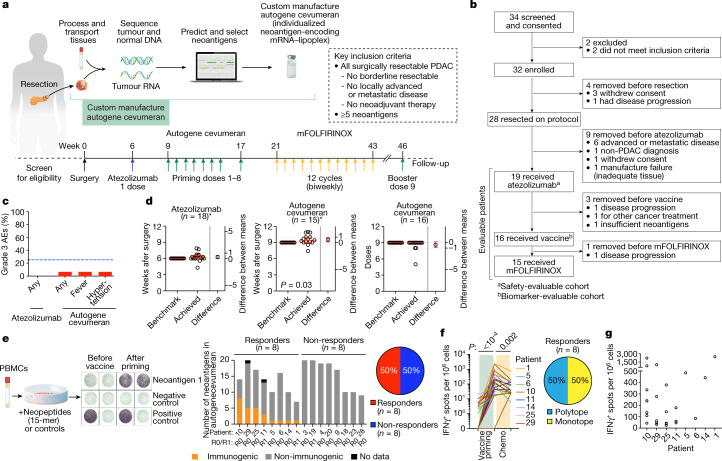
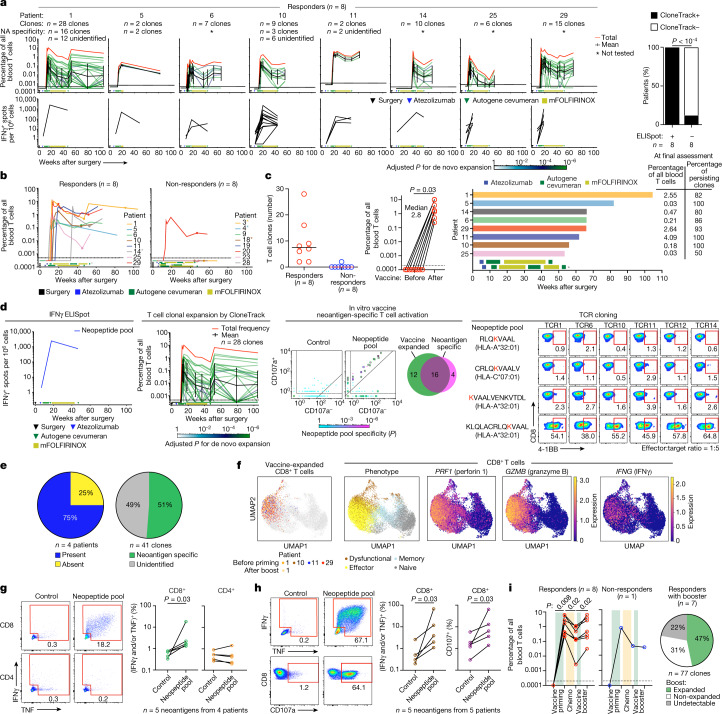
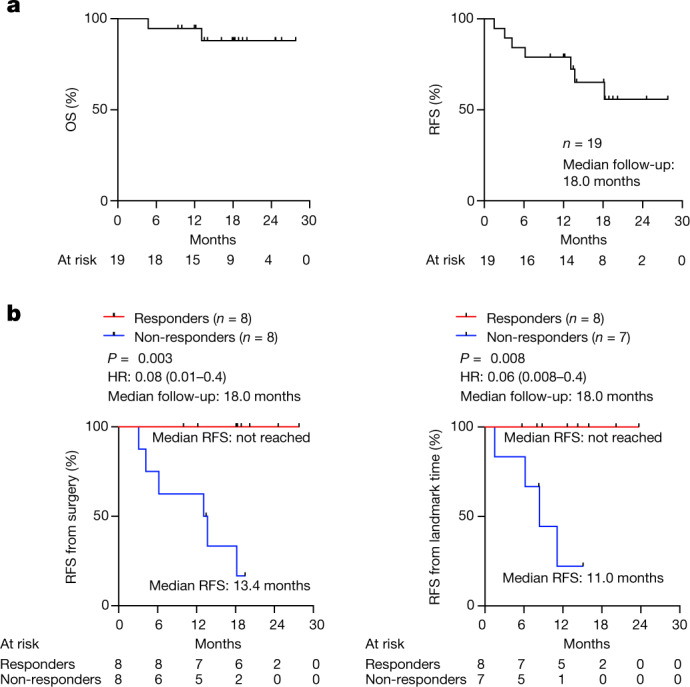
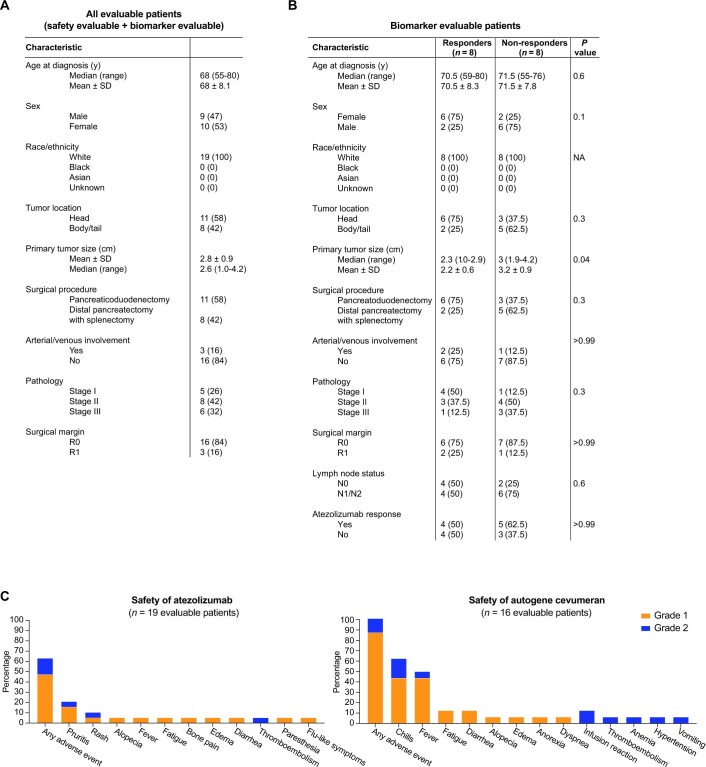
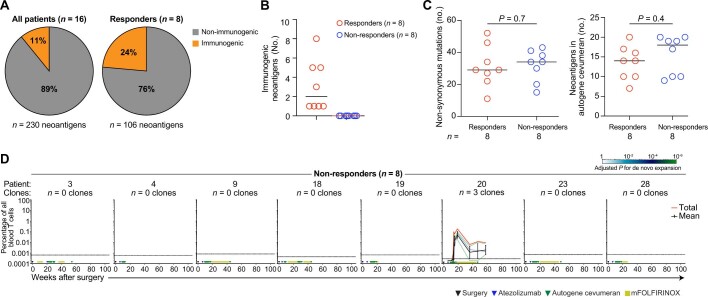
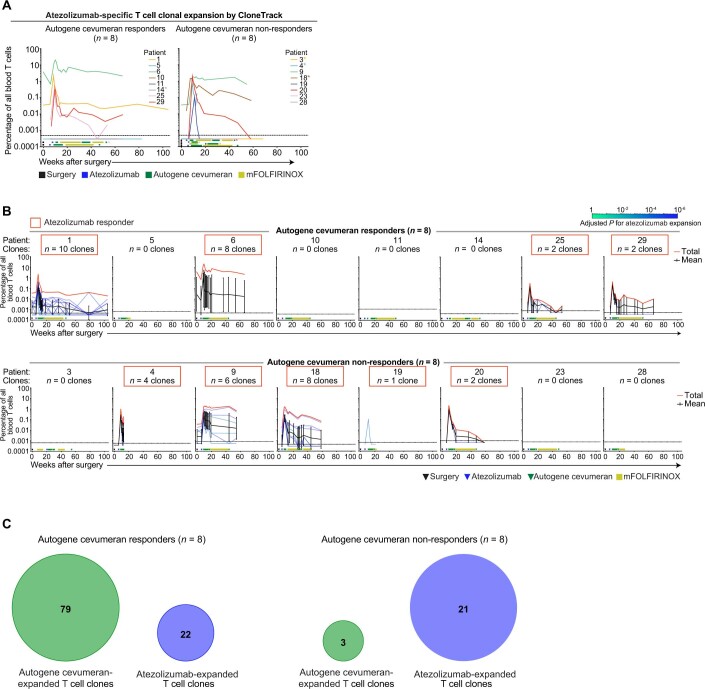
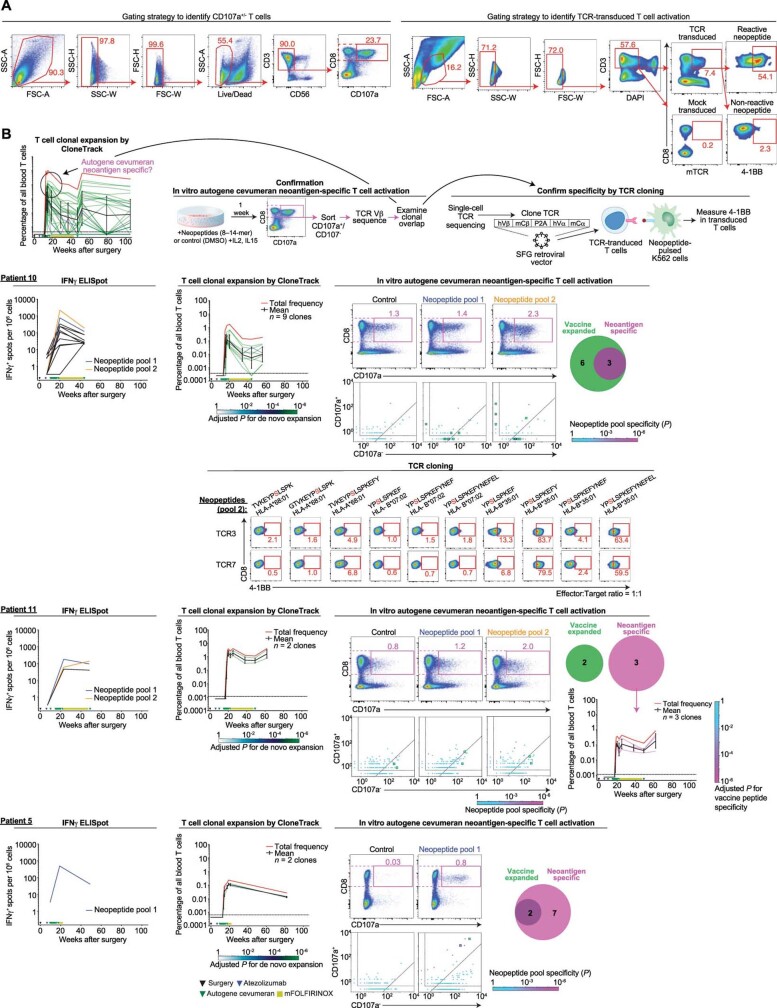
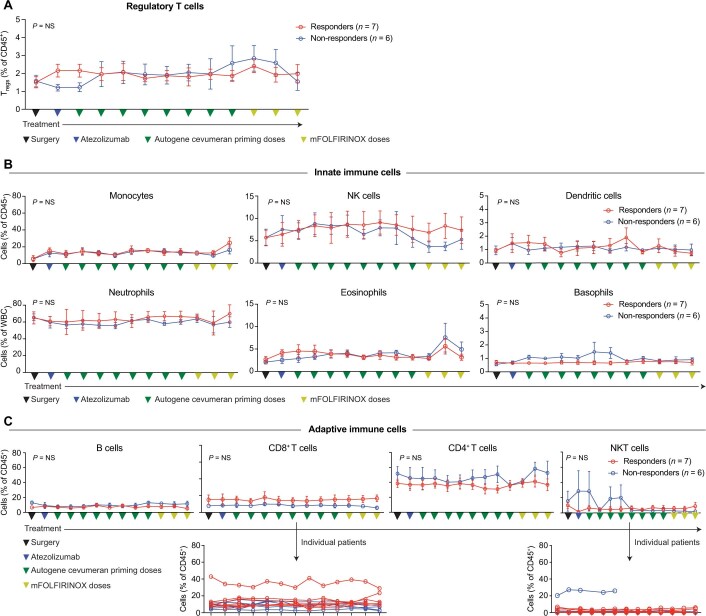
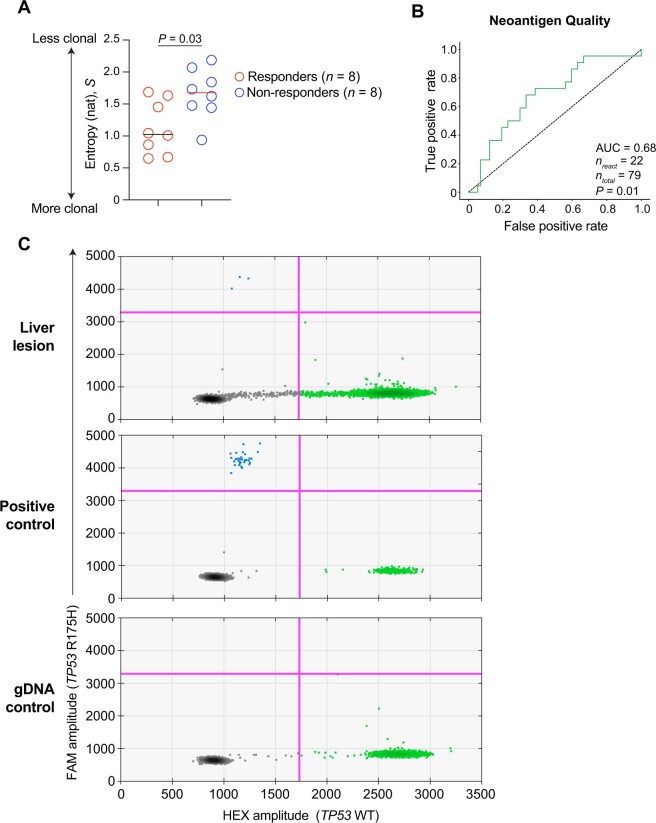
Pancreatic ductal adenocarcinoma (PDAC) is lethal in 88% of patients 1 , yet harbours mutation-derived T cell neoantigens that are suitable for vaccines 2,3 . Here in a phase I trial of adjuvant autogene cevumeran, an individualized neoantigen vaccine based on uridine mRNA–lipoplex nanoparticles, we synthesized mRNA neoantigen vaccines in real time from surgically resected PDAC tumours. After surgery, we sequentially administered atezolizumab (an anti-PD-L1 immunotherapy), autogene cevumeran (a maximum of 20 neoantigens per patient) and a modified version of a four-drug chemotherapy regimen (mFOLFIRINOX, comprising folinic acid, fluorouracil, irinotecan and oxaliplatin). The end points included vaccine-induced neoantigen-specific T cells by high-threshold assays, 18-month recurrence-free survival and oncologic feasibility. We treated 16 patients with atezolizumab and autogene cevumeran, then 15 patients with mFOLFIRINOX. Autogene cevumeran was administered within 3 days of benchmarked times, was tolerable and induced de novo high-magnitude neoantigen-specific T cells in 8 out of 16 patients, with half targeting more than one vaccine neoantigen. Using a new mathematical strategy to track T cell clones (CloneTrack) and functional assays, we found that vaccine-expanded T cells comprised up to 10% of all blood T cells, re-expanded with a vaccine booster and included long-lived polyfunctional neoantigen-specific effector CD8 + T cells. At 18-month median follow-up, patients with vaccine-expanded T cells (responders) had a longer median recurrence-free survival (not reached) compared with patients without vaccine-expanded T cells (non-responders; 13.4 months, P = 0.003). Differences in the immune fitness of the patients did not confound this correlation, as responders and non-responders mounted equivalent immunity to a concurrent unrelated mRNA vaccine against SARS-CoV-2. Thus, adjuvant atezolizumab, autogene cevumeran and mFOLFIRINOX induces substantial T cell activity that may correlate with delayed PDAC recurrence.
Overview
The claims and statistics of this paper haven’t been checked yet.
Free: it reads the open-access text and checks the first 5 claims that cite a source we can check. Create a free account to check every claim.
Integrity signals
Registry
Cites
Statistics
Figures
Verification
Claims the paper makes
The claims and statistics of this paper haven’t been checked yet.
Free: it reads the open-access text and checks the first 5 claims that cite a source we can check. Create a free account to check every claim.
Claims other papers make about this one
Each is checked against this paper’s own text: does it say what the citing paper says it does?
The source backs part of the claim, not all of it — or backs it for a different population, condition or comparison.
In the citing paper
“Although further confirmatory studies are needed, these results provide initial clinical evidence that personalized therapeutic cancer vaccines can enhance responses to ICIs, with many other studies planned.”
From Adjuvant and neoadjuvant immunotherapies in hepatocellular carcinoma (2024) · cites this paper as [136]
Experimental — accuracy not yet measuredThe source backs part of the claim, not all of it — or backs it for a different population, condition or comparison.
In the citing paper
“In this trial, 8 of 16 patients with resected pancreatic ductal adenocarcinoma remained free of cancer after a median follow-up of 18 months136.”
From Adjuvant and neoadjuvant immunotherapies in hepatocellular carcinoma (2024) · cites this paper as [136]
Experimental — accuracy not yet measuredThe source backs part of the claim, not all of it — or backs it for a different population, condition or comparison.
In the citing paper
“Cancer mRNA-based vaccines tend to be administered alone or in combination with ICIs, and after resection, although they have also been used in neoadjuvant–adjuvant treatment approaches136,138,139 (Fig. 3c,d).”
From Adjuvant and neoadjuvant immunotherapies in hepatocellular carcinoma (2024) · cites this paper as [136]
Experimental — accuracy not yet measuredThe cited source says what the claim attributes to it.
In the citing paper
“patients enrolled in the trial with an immunologic response against the vaccine had longer median RFS than those without such a response136.”
From Adjuvant and neoadjuvant immunotherapies in hepatocellular carcinoma (2024) · cites this paper as [136]
The cited source says what the claim attributes to it.
In the citing paper
“Clinical trials of mRNA-based immunotherapeutics encoding unmutated full-length TAAs in checkpoint inhibitor-treated melanoma [18] and individualised mRNA-based immunotherapeutics encoding patient-specific mutated tumour neoantigens in pancreatic and lung cancer [19, 20] have shown encouraging results.”
From Preclinical development of an mRNA-based multiepitope immunotherapeutic for glioblastoma (2025) · cites this paper as [20]
1 more claim about this paper
Create a free account to see every claim other papers make about this one.
Self-check
Percentages, sums and reported differences re-computed from the paper’s own numbers.
The self-check needs the paper’s full text.
Citations
Cites
Sung, H., Ferlay, J., Siegel, R. L., Laversanne, M., Soerjomataram, I., Jemal, A., & Bray, F. (2021) · CA: A Cancer Journal for Clinicians · doi:10.3322/caac.21660 · Cited by 108,699
Richards, S., Aziz, N., Bale, S., Bick, D., Das, S., Gastier-Foster, J., Grody, W. W., Hegde, M., Lyon, E., Spector, E., et al. (2015) · Genetics in Medicine · doi:10.1038/gim.2015.30 · Cited by 32,594
PD-1 and PD-L1 Immune Checkpoint Blockade to Treat Breast Cancer
Hartkopf, A. D., Taran, F.-A., Wallwiener, M., Walter, C. B., Krämer, B., Grischke, E.-M., & Brucker, S. Y. (2016) · Breast Care · doi:10.1159/000453569 · Cited by 30,845
The Genome Analysis Toolkit: A MapReduce framework for analyzing next-generation DNA sequencing data
McKenna, A., Hanna, M., Banks, E., Sivachenko, A., Cibulskis, K., Kernytsky, A., Garimella, K., Altshuler, D., Gabriel, S., Daly, M., et al. (2010) · Genome Research · doi:10.1101/gr.107524.110 · Cited by 27,895
Siegel, R. L., Miller, K. D., Wagle, N. S., & Jemal, A. (2023) · CA: A Cancer Journal for Clinicians · doi:10.3322/caac.21763 · Cited by 16,303
SCANPY: large-scale single-cell gene expression data analysis
Wolf, F. A., Angerer, P., & Theis, F. J. (2018) · Genome Biology · doi:10.1186/s13059-017-1382-0 · Cited by 8,881
Rahib, L., Smith, B. D., Aizenberg, R., Rosenzweig, A. B., Fleshman, J. M., & Matrisian, L. M. (2014) · Cancer Research · doi:10.1158/0008-5472.can-14-0155 · Cited by 7,094
Predictive correlates of response to the anti-PD-L1 antibody MPDL3280A in cancer patients
Herbst, R. S., Soria, J.-C., Kowanetz, M., Fine, G. D., Hamid, O., Gordon, M. S., Sosman, J. A., McDermott, D. F., Powderly, J. D., Gettinger, S. N., et al. (2014) · Nature · doi:10.1038/nature14011 · Cited by 5,231
Self-citationCOSMIC: the Catalogue Of Somatic Mutations In Cancer
Tate, J. G., Bamford, S., Jubb, H. C., Sondka, Z., Beare, D. M., Bindal, N., Boutselakis, H., Cole, C. G., Creatore, C., Dawson, E., et al. (2019) · Nucleic Acids Research · doi:10.1093/nar/gky1015 · Cited by 4,867
Neoantigens in cancer immunotherapy
Schumacher, T. N., & Schreiber, R. D. (2015) · Science · doi:10.1126/science.aaa4971 · Cited by 4,783
Cited by
Items 601–700 of 1,003
Pancreatic ductal adenocarcinoma: integrating molecular insights for targeted interventions
Nagaraju, G. P., Nellipudi, H. R., Ganji, C., Kuppala, V., Ganji, S. P., Kumari, S., Farran, B., Srilatha, M., Guenter, R. E., & El‐Rayes, B. F. (2026) · Signal Transduction and Targeted Therapy · doi:10.1038/s41392-026-02705-5 · Cited by 9
“144,145 Xing et al. 146 reported that B4GALT5 plays a crucial role in PDAC immune invasion by demonstrating that B4GALT5 elevated expression is associated with poor survival and impaired CD8 ⁺ T-cell cytotoxicity.”
Azoximer bromide and hydroxyapatite: promising immune adjuvants in cancer
Rossi, J., Frayssinet, P., Matciyak, M., & Tupitsyn, N. N. (2024) · Cancer Biology and Medicine · doi:10.20892/j.issn.2095-3941.2023.0222 · Cited by 9
“The new development of cancer vaccines and their recent promising success paves the way for the additional use of immune adjuvants depending on the mechanism of action and the immune status of the patient 39,40 .”
BackgroundA new era of immune therapeutics for pancreatic cancer: Monoclonal antibodies paving the way
Balar, P. C., Apostolopoulos, V., & Chavda, V. P. (2024) · European Journal of Pharmacology · doi:10.1016/j.ejphar.2024.176451 · Cited by 9
Advances in Therapeutic Cancer Vaccines, Their Obstacles, and Prospects Toward Tumor Immunotherapy
Eskandari, A., Leow, T. C., Rahman, M. B. A., & Oslan, S. N. (2024) · Molecular Biotechnology · doi:10.1007/s12033-024-01144-3 · Cited by 9
“A study was conducted on patients with advanced or spreading solid tumors to evaluate the effectiveness of a neoantigen vaccine called BNT122 [114], combined with atezolizumab, in another phase 1b trial (NCT03289962).”
InfluentialEfficacy of LCMV-based cancer immunotherapies is unleashed by intratumoral injections of polyI:C
Gomar, C., Trani, C. A. D., Bella, Á., Arrizabalaga, L., González-Gomariz, J., Fernández-Sendin, M., Álvarez, M., Russo-Cabrera, J. S., Ardaiz, N., Aranda, F., et al. (2024) · Journal for ImmunoTherapy of Cancer · doi:10.1136/jitc-2023-008287 · Cited by 8
T-cell immunity induced and reshaped by an anti-HPV immuno-oncotherapeutic lentiviral vector
Fert, I., Douguet, L., Vesin, B., Moncoq, F., Noirat, A., Authié, P., Ciret, S., Chevalier, F. L., Blanc, C., Vitrenko, Y. A., et al. (2024) · npj Vaccines · doi:10.1038/s41541-024-00894-0 · Cited by 8
“Usually, the repertoire evolution is attributed to cognate TCRs speci fi c to the target antigen 32,33 .”
Vernet, R., Fernández, E., Migliorini, D., Ancrenaz, V., Charrier, E., Belkouch, M., Rohr, O. V., Urwyler, M., Vito, C. D., Renaux, J., et al. (2024) · Cancer Research Communications · doi:10.1158/2767-9764.crc-24-0150 · Cited by 8
Yu, G., Zhang, Z., Eresen, A., Hou, Q., Amirrad, F., Webster, S., Nauli, S. M., Yaghmai, V., & Zhang, Z. (2024) · International Journal of Molecular Sciences · doi:10.3390/ijms252212038 · Cited by 12
“These results suggest that such combination therapy can effectively stimulate durable immune responses and may significantly delay disease recurrence in PDAC patients [36].”
Effective design of therapeutic nanovaccines based on tumor neoantigens
Wang, W., Zhai, Y., Yang, X., Ye, L., Lu, G., Shi, X., & Zhai, G. (2025) · Journal of Controlled Release · doi:10.1016/j.jconrel.2025.01.078 · Cited by 9
Chen, M.-H., Jiang, J., Chen, H., Wu, R.-H., Xie, W., Dai, S.-Z., Zheng, W.-P., Tan, G., & Huang, F. (2025) · Journal for ImmunoTherapy of Cancer · doi:10.1136/jitc-2024-010150 · Cited by 10
“33 34 Currently, the key factor affecting the efficacy of tumor neoantigen vaccines lies in whether the antigens can be effectively engulfed by antigen-presenting cells and delivered to the lymph nodes for specific cross-presentation to CD8 + T lymphocytes.”
Xu, Q., Yin, X., Chen, Z., Huang, E., Yao, X., Li, X., & Liu, P. N. (2025) · Small · doi:10.1002/smll.202500015 · Cited by 11
Tang, X., Zhang, J., Sun, Y., Xu, Z., Huang, T., Liu, X., Song, Y., Zhang, Y., & Deng, Y. (2025) · Journal of Controlled Release · doi:10.1016/j.jconrel.2025.113647 · Cited by 8
Skandorff, I., Ragonnaud, E., Gille, J., Andersson, A.-M. C., Schrödel, S., Duvnjak, L., Turner, L., Thirion, C., Wagner, R., & Holst, P. J. (2023) · International Journal of Molecular Sciences · doi:10.3390/ijms24129972 · Cited by 9
“Importantly, technological advancements within the genetic characterization of cancers and vaccine delivery systems offer new potential for the development of cancer vaccines [1], as well as clinical benefits for patients [2].”
BackgroundFeatures of functional and dysfunctional CD8+ T cells to guide HIV vaccine development
Bhattacharyya, S., Crain, C. R., Goldberg, B. S., & Gaiha, G. D. (2023) · Current Opinion in HIV and AIDS · doi:10.1097/coh.0000000000000812 · Cited by 8
“A number of recent studies using neoantigen epitope-based vaccines in novel formats, such as mRNA [89,90] and heterologous simian adenovirus/self-amplifying RNA immunization [91] provide reason for optimism.”
BackgroundSIGANEO: Similarity network with GAN enhancement for immunogenic neoepitope prediction
Ye, Y., Shen, Y., Wang, J., Li, D., Zhu, Y., Zhao, Z., Pan, Y., Wang, Y., Liu, X., & Wan, J. (2023) · Computational and Structural Biotechnology Journal · doi:10.1016/j.csbj.2023.10.050 · Cited by 9
An overview of up-and-coming immune checkpoint inhibitors for pancreatic cancer
Mahadevia, H. J., Usón, P. L. S., Wang, J., Borad, M. J., & Babiker, H. M. (2024) · Expert Opinion on Pharmacotherapy · doi:10.1080/14656566.2024.2304125 · Cited by 9
“Of note, the trial included treatment with atezolizumab and highlighted the role of ICIs in augmenting the innate and adaptive immune response to neoantigen vaccines, and we predict future advances in this field [88].”
BackgroundInfluentialLarson, A. C., Knoche, S. M., Brumfield, G. L., Doty, K. R., Gephart, B. D., Moore-Saufley, P. R., & Solheim, J. C. (2024) · International Journal of Molecular Sciences · doi:10.3390/ijms25063211 · Cited by 8
“Although nearly half the patients demonstrated an immune response, vaccine targets were selected prior to chemotherapy administration [104].”
BackgroundKeane, F., O'Connor, C. A., Moss, D., Chou, J. F., Perry, M., Crowley, F., Saxena, P., Chan, A., Schoenfeld, J. D., Singhal, A., et al. (2024) · JNCI Journal of the National Cancer Institute · doi:10.1093/jnci/djae269 · Cited by 9
Self-citationBiocompatible lipid nanovehicles for preventive and therapeutic vaccine development
Jia, Y., Zhou, Z., Jiramonai, L., Chen, J., Hua, Q., Zhu, M., Zhang, J., & Liang, X. (2025) · Coordination Chemistry Reviews · doi:10.1016/j.ccr.2025.216718 · Cited by 8
RNA‐Based Therapeutics: Cutting‐Edge Advances in Clinical Research
Ferreira, D., & Rodrigues, L. R. (2025) · Advanced Therapeutics · doi:10.1002/adtp.202500082 · Cited by 7
Chiaro, J., Peltonen, K., Õunap, K., Bailey, A., Feola, S., Wojciechowski, S., Es-Haghi, M., Azkargorta, M., Elortza, F., Russo, S., et al. (2025) · npj Vaccines · doi:10.1038/s41541-025-01234-6 · Cited by 7
“A response was deemed positive if the IFN γ ELISpot count exceeded a minimum threshold of 23.3 spots per 1 * 10 6 PBMCs as shown elsewhere 12 .”
InfluentialKang, L., Huang, H.-J., Xu, C., Chen, H., Huang, D., & Jiang, Z. (2025) · Frontiers in Immunology · doi:10.3389/fimmu.2025.1630940 · Cited by 7
“Preclinical studies and early-phase clinical trials indicate that these immune modulators can effectively increase T cell activation, proliferation, and cytokine production, paving the way for improved clinical outcomes (241).”
Engineering Delivery Technologies for Optimizing mRNA Vaccines
Gu, T., Yan, X., & Liu, S. (2025) · ACS Nano Medicine · doi:10.1021/acsnanomed.5c00032 · Cited by 8
Zhang, D., Fu, X., Zhou, C., Xing, X., Zheng, Y., Zhou, Y., Zheng, X., Chen, G., Zou, J., Zeng, Y., et al. (2025) · ACS Nano · doi:10.1021/acsnano.5c07598 · Cited by 7
Safa, A., Vruzhaj, I., Gambirasi, M., & Toffoli, G. (2025) · Cancers · doi:10.3390/cancers17213506 · Cited by 7
Cui, M., Mo, S., Bai, J., Javed, A. A., Habib, J. R., Yang, S., Chen, T., Xiao, R., Diao, W., Jiang, D., et al. (2025) · Gut · doi:10.1136/gutjnl-2025-336117 · Cited by 9
“60 61 Given the increasing recognition of immune mechanisms in pancreatic cancer, it is equally important to understand the immune response and alterations during the tumourigenesis of IPMN, particularly in IPMN-IC.”
Tan, Y., Yang, T., Jiang, S., Li, S., Cai, L., Wang, Y., Guo, Z., & Wang, X. M. (2026) · Journal of Inorganic Biochemistry · doi:10.1016/j.jinorgbio.2026.113212 · Cited by 8
Yamada, T., Tateishi, R., & Fujishiro, M. (2026) · Clinical and Molecular Hepatology · doi:10.3350/cmh.2025.1179 · Cited by 7
Cai, Y. R., Chen, R., Song, M., Wang, L., Huo, Z., Yang, D., Zhang, S., Gao, S., Hwang, S.-J., Bai, L., et al. (2026) · Frontiers in Immunology · doi:10.3389/fimmu.2026.1722117 · Cited by 7
Current landscape of clinical trials for mRNA-based therapeutics
Li, Q., Zeng, M., Lv, W., Ye, J., & Wu, S. (2026) · Human Vaccines & Immunotherapeutics · doi:10.1080/21645515.2026.2635868 · Cited by 8
Top advances of the year: Pancreatic cancer
Warren, E. A. K., Lesinski, G. B., & Maithel, S. K. (2023) · Cancer · doi:10.1002/cncr.35031 · Cited by 8
Gao, Z., Azar, J. H., Zhu, H., Williams-Perez, S. M., Kang, S. W., Marginean, C. E., Rubinstein, M. P., Makawita, S., Lee, H., & Camp, E. R. (2024) · Frontiers in Immunology · doi:10.3389/fimmu.2024.1324093 · Cited by 10
“Additionally, other strategies such as TCR therapy, CAR-T therapy, tumor-in fi ltrating lymphocyte (TIL) therapy, and mRNA vaccines are still in their nascency (13 – 15).”
BackgroundUnlocking cancer vaccine potential: What are the key factors?
Grant, M. D., Lee, L. N., Chinnakannan, S. K., Tong, O., Kwok, J., Cianci, N., Tillman, L., Saha, A., Almeida, V. P., & Leung, C. S. K. (2024) · Human Vaccines & Immunotherapeutics · doi:10.1080/21645515.2024.2331486 · Cited by 8
Melanoma neoantigen vaccines: Are we getting more personal now?
Latifyan, S., & Haanen, J. B. A. G. (2024) · Med · doi:10.1016/j.medj.2024.03.004 · Cited by 10
Lami, M., Barneschi, L., Saletti, M., Olivucci, M., Cappelli, A., & Paolino, M. (2024) · ChemPhotoChem · doi:10.1002/cptc.202400093 · Cited by 7
Younis, M. A., & Harashima, H. (2024) · Pharmacogenomics and Personalized Medicine · doi:10.2147/pgpm.s431346 · Cited by 12
“182 Gene Therapy Augmenting Conventional Therapies In addition to its individual applicability as an anticancer therapy, several studies have applied gene therapy to potentiate the therapeutic effects of other conventional therapeutics.”
BackgroundVaccination Against Androgen Receptor Splice Variants to Immunologically Target Prostate Cancer
Marek, R. D., Halabi, S., Wang, M., McBane, J., Wei, J.-P., Wang, T., Yang, X.-Y., Liu, C., Lei, G., Lyerly, H. K., et al. (2024) · Vaccines · doi:10.3390/vaccines12111273 · Cited by 7
Middelburg, J., Schaap, G., Sluijter, M., Lloyd, K. A., Ovcinnikovs, V., Schuurman, J., van der Burg, S. H., Kemper, K., & van Hall, T. (2025) · Journal for ImmunoTherapy of Cancer · doi:10.1136/jitc-2024-010331 · Cited by 7
IRE1 is a promising therapeutic target in pancreatic cancer
Lucas, D., Sarkar, T., Niemeyer, C. Y., Harnoss, J. C., Schneider, M., Strowitzki, M. J., & Harnoss, J. M. (2025) · American Journal of Physiology-Cell Physiology · doi:10.1152/ajpcell.00551.2024 · Cited by 7
Metal-modulated T cell antitumor immunity and emerging metalloimmunotherapy
Liao, P., Zhou, Y., Qiu, Y., Hu, R., Li, H., Sun, H., & Li, Y. (2025) · Cancer and Metastasis Reviews · doi:10.1007/s10555-025-10266-2 · Cited by 7
Zelba, H., Shao, B., Rabsteyn, A., Reinhardt, A., Greve, C. L., Oenning, L., Kayser, S., Kyzirakos, C., Latzer, P., Riedlinger, T., et al. (2025) · Journal for ImmunoTherapy of Cancer · doi:10.1136/jitc-2024-011070 · Cited by 8
Approaches to overcome the current treatment plateau in immunotherapy
Giacomo, A. M. D., Canetta, R. M., Connolly, J., Leidner, R. S., Zheng, W., Kim, Y., Ibrahim, R. A., Lahn, M., Smith, M., Eggermont, A. M. M., et al. (2025) · European Journal of Cancer · doi:10.1016/j.ejca.2025.115605 · Cited by 7
Application and development of nanomaterials in the diagnosis and treatment of esophageal cancer
Xiao, Q., Zhang, Y., Zhao, A., Duan, Z., & Yao, J. (2023) · Frontiers in Bioengineering and Biotechnology · doi:10.3389/fbioe.2023.1268454 · Cited by 8
“…involving solid tumors, lung cancer, breast cancer, pancreatic cancer, etc. (Schmidt et al., 2020; Yoneshima et al., 2021; Kosaka et al., 2022; Rojas et al., 2023) However, there are still very few clinical trials speci fi cally targeting esophageal cancer, and low effectiveness remains the…”
BackgroundAdvances in Surgery and (Neo) Adjuvant Therapy in the Management of Pancreatic Cancer
Liu, M., & Wei, A. C.-C. (2024) · Hematology/Oncology Clinics of North America · doi:10.1016/j.hoc.2024.01.004 · Cited by 7
Self-citationMicrobiome-Derived Lipid Nanoparticles for Improved Immunogenicity of mRNA Vaccines
Yong, S., Park, O. H., & Cho, S. (2024) · ACS Materials Letters · doi:10.1021/acsmaterialslett.3c01642 · Cited by 7
Pancreatic cancer: new approaches to drug therapy
Picozzi, V. J. (2024) · International Journal of Surgery · doi:10.1097/js9.0000000000000877 · Cited by 8
“Finally, additional enthusiasm for cancer vaccination in resected PDAC was also generated from a recently reported study [55] .”
Zelba, H., Kyzirakos, C., Kayser, S., Shao, B., Reinhardt, A., Pieper, N., Rabsteyn, A., Döcker, D., Armeanu–Ebinger, S., Kloor, M., et al. (2024) · Vaccines · doi:10.3390/vaccines12040397 · Cited by 7
Okada, M., Yamasaki, S., Nakazato, H., Hirahara, Y., Ishibashi, T., Kawamura, M., Shimizu, K., & Fujii, S. (2024) · Cancer Research · doi:10.1158/0008-5472.can-23-2846 · Cited by 7
Fighting Pancreatic Cancer with a Vaccine-Based Winning Combination: Hope or Reality?
Brugiapaglia, S., Spagnolo, F., Intonti, S., Novelli, F., & Curcio, C. (2024) · Cells · doi:10.3390/cells13181558 · Cited by 7
“Furthermore, more recent personalized approaches, such as the identification of specific TAA and the development of personalized mRNA vaccines (NCT04161755), indicate a shift towards precision medicine tailored to the genetic modification of individual tumors [26].”
BackgroundDevelopment of CAR-T Therapies and Personalized Vaccines for the Treatment of Cholangiocarcinoma
Li, D., Andaloori, L., Crowe, M., Lin, S., Hong, J., Zaidi, N., & Ho, M. (2024) · American Journal Of Pathology · doi:10.1016/j.ajpath.2024.10.021 · Cited by 7
Kakimi, K., & Sugie, T. (2025) · Breast Cancer · doi:10.1007/s12282-025-01707-5 · Cited by 8
“Combinations of ICIs with neoantigen vaccines or adjuvant therapies are under investigation to improve ICI efficacy [16, 17].”
Raufi, A. G., Pellicciotta, I., Palermo, C. F., Sastra, S. A., Chen, A., Alouani, E. L., Maurer, H. C., May, M. S., Iuga, A. C., Rabadán, R., et al. (2023) · bioRxiv (Cold Spring Harbor Laboratory) · doi:10.1101/2023.12.24.573257 · Cited by 7
“…hypotheses are supported by clinical data from an early phase trial in which adjuvant autogene cevumeran, a personalized RNA neoantigen vaccine, stimulated expansion of neoantigen-specific T-cells and resulted in improved recurrence-free survival in participants who developed T-cell responses [16].”
ResultESMO 2023 pancreatic cancer guidelines signal stepwise progress
Springfeld, C., Bailey, P. J., Büchler, M. W., & Neoptolemos, J. P. (2024) · HepatoBiliary Surgery and Nutrition · doi:10.21037/hbsn-24-37 · Cited by 8
Accelerating Neoantigen Discovery: A High-Throughput Approach to Immunogenic Target Identification
Pfitzer, L., Boons, G., Lybaert, L., Criekinge, W. V., Bogaert, C., & Fant, B. (2025) · Vaccines · doi:10.3390/vaccines13080865 · Cited by 7
“[28,36], and the proportion of selected epitopes yielding a positive CD8 immune response, according to the author’s method of selection, was thus computed (dark blue bars).”
InfluentialKabut, J., Stopyra, M., Nafalska, N., Stępień, G. J., Miciak, M., Jezierzański, M. M., Furgoł, T., Feret, K., & Gisterek, I. (2025) · International Journal of Molecular Sciences · doi:10.3390/ijms262210988 · Cited by 7
“While the number of participants was small (n = 16), this finding has confirmed that a mRNA neoantigen vaccine can result in improved outcomes when appropriately supported by other therapies [4,89].”
InfluentialPeri-tumoural lymphocyte neighbourhoods predict longer survival in pancreatic ductal adenocarcinoma
Arseneau, R. J., Mejia, J. P., Nersesian, S., Lee, S. N., Bekkers, C., Samson, T., Gaston, D., Gala-López, B., Ramjeesingh, R., Arnason, T., et al. (2025) · Frontiers in Immunology · doi:10.3389/fimmu.2025.1730817 · Cited by 6
“To mitigate intra-tumoural variability, each patient was represented by duplicate 3 mm cores selected from regions containing >30% tumour cells, as identi fi ed by board-certi fi ed pathologist (TA).”
Greene, E. R., Horvat, N. K., Doxie, D. B., Parihar, V. C., Kim, J., Herting, C. J., Grundy, E. E., Ruffin, A. T., Krasinskas, A. M., Maithel, S. K., et al. (2025) · Cancer Research · doi:10.1158/0008-5472.can-25-1697 · Cited by 7
“Additional strategies, including cancer vaccines, may help mobilize tumor-specific T cells (55).”
Zaghla, B. K. Q., Safyürek, Z., Gröger, D., Mecklenbräuker, S., Lingstädt, N.-S., Popp, O., Spengler, J., Haji, M., Montesion, M., Albacker, L. A., et al. (2026) · Journal for ImmunoTherapy of Cancer · doi:10.1136/jitc-2025-013271 · Cited by 6
Adenosine receptors on the immuno-oncology expressway: TIME, perspectives, and translation
Majumder, B., & Datta, S. (2026) · Frontiers in Immunology · doi:10.3389/fimmu.2025.1676702 · Cited by 9
Developments & Potential of Nanotechnology for the Detection and Treatment of Pancreatic Cancer
O'Meara, D., & Hoskins, C. (2026) · International Journal of Nanomedicine · doi:10.2147/ijn.s559038 · Cited by 5
“68,69 Primary findings show vaccine was well-tolerated and induced de novo high-magnitude neoantigen-specific T cell responses in 8 of 16 patients, including expansion of functional CD8 + T cells detectable in blood.”
Accelerate the Highly Efficient Development of mRNA Vaccines Through Advanced Computational Methods
Gu, R., Si, D., Lei, D., Xie, X., Li, Y., & Wen, H. (2026) · MedComm · doi:10.1002/mco2.70612 · Cited by 6
Lee, H.-J., Cho, E., Song, K., & Kim, T. W. (2026) · Immune Network · doi:10.4110/in.2026.26.e11 · Cited by 8
“T and TCR-T cells, and neoantigen/mRNA vaccination have validated the curative potential of the immune system (3,4).”
Wu, P., Ge, J., Hou, X., Qu, H., Ouyang, J., Wang, D., Tong, T., Meng, Y., Yan, Q., Shi, L., et al. (2026) · Cancer Letters · doi:10.1016/j.canlet.2026.218459 · Cited by 6
Goody, S. M. G., Rowbottom, C., Liu, Y., & Chen, N. (2026) · Molecular Therapy — Nucleic Acids · doi:10.1016/j.omtn.2026.102948 · Cited by 6
“11,12 Collectively, these successes solidify mRNA-LNP vaccines and therapies as a versatile, regulatory-validated modality with a growing clinical footprint spanning licensed respiratory vaccines, late-stage prevention therapeutics, and personalized oncology medicines.”
Podgorica, M., Drivet, E., Viken, J. K., Richman, A. R., Vestbøstad, J., Szodoray, P., Kvam, A. K., Wik, H. S., Tjønnfjord, G. E., Munthe, L. A., et al. (2024) · European Journal Of Haematology · doi:10.1111/ejh.14164 · Cited by 6
“42 In addition, mutations can confer prognostic value guiding treat-ment stratification.”
BackgroundIdentification of Enhanced Vaccine Mimotopes for the p15E Murine Cancer Antigen
Zhou, S., Song, Y., Luo, Y., Quinn, B., Jiao, Y., Long, M. D., Abrams, S. I., & Lovell, J. F. (2024) · Cancer Research Communications · doi:10.1158/2767-9764.crc-23-0384 · Cited by 8
Lin, Y., Ma, J., Yuan, H., Chen, Z., Xu, X., Jiang, M., Zhu, J., Meng, W., Qiu, W., & Liu, Y. (2024) · Briefings in Bioinformatics · doi:10.1093/bib/bbae247 · Cited by 7
Emerging applications of hypomethylating agents in the treatment of glioblastoma (Review)
Silva-Hurtado, T. J., Inocencio, J. F., & Yong, R. L. M. (2024) · Molecular and Clinical Oncology · doi:10.3892/mco.2024.2757 · Cited by 7
“Recent studies have shown that the use of personalized cancer vaccines to boost the host immune response are feasible even in tumors that are recognized as insensitive to immunotherapy, such as GBM (109,110) and pancreatic cancer (111).”
BackgroundSchlom, J., Donahue, R. N., Palena, C., Gameiro, S. R., Hodge, J. W., Hamilton, D. H., & Gulley, J. L. (2024) · Journal for ImmunoTherapy of Cancer · doi:10.1136/jitc-2024-009595 · Cited by 6
Current Developments and Innovations in Early Detection and Subsequent Treatment of Cancer
Goxharaj, A., Suyunov, N., Nikolaev, E. L., Bazhanova, A., & Li, N. (2024) · Journal of cancer research updates · doi:10.30683/1929-2279.2024.13.12 · Cited by 6
“[66] in a study of the effectiveness of personalised RNA-neoantigen vaccines that stimulate T cells in pancreatic cancer.”
Xu, Y., Qi, S., Zhang, G., Liu, D., Xu, D., Qin, T., Cheng, Q., Kang, H. C., Hu, B., & Huang, Z. (2025) · Nucleic Acids Research · doi:10.1093/nar/gkae1280 · Cited by 7
Sethi, S. K., Bradley, C. E., Bialkowski, L., Pang, Y. Y., Thompson, C. D., Schiller, J. T., & Çuburu, N. (2025) · npj Vaccines · doi:10.1038/s41541-025-01131-y · Cited by 6
“Similarly, mRNA vaccines have been deployed to target cancer using personalized neoantigens and systemic vaccination 30 .”
Sentís, I., Melero, J. L., Cebria‐Xart, A., Grzelak, M., Soto, M., Michel, A., Rovira, Q., Rodríguez-Hernández, C. J., Caratù, G., Urpi, A., et al. (2025) · Annals of Oncology · doi:10.1016/j.annonc.2025.05.530 · Cited by 6
Pakola, S. A., Ojala, N., Kudling, T. V., Clubb, J. H. A., Jirovec, E., van der Heijden, M., Arias, V., Haybout, L., Basnet, S., Grönberg-Vähä-Koskela, S. A. M., et al. (2025) · Cancer Immunology Immunotherapy · doi:10.1007/s00262-025-04072-6 · Cited by 6
Yang, G., & Massumi, M. (2025) · Antibodies · doi:10.3390/antib14030052 · Cited by 7
Unraveling the potential: mRNA therapeutics in oncology
Gawalski, K., Przybyszewska, W., Hunia, J., Gawalska, A., & Rymarz, A. (2025) · Frontiers in Oncology · doi:10.3389/fonc.2025.1643444 · Cited by 6
A modular vaccine platform for optimized lipid nanoparticle mRNA immunogenicity
Fang, Z., Monteiro, V. S., Oh, C., Janabi, K. A., Romero, L., Ahsan, N., Yang, L., Peng, L., DiMaio, D., Lucas, C. G. D. O., et al. (2025) · Nature Biomedical Engineering · doi:10.1038/s41551-025-01478-6 · Cited by 7
Shpigelman, J., & Rao, K. (2025) · Immunology · doi:10.1111/imm.70033 · Cited by 9
Messenger RNA and Plasmid DNA Vaccines for the Treatment of Cancer
Moseman, J. E., Shim, D., Jeon, D., Rastogi, I., Schneider, K. M., & McNeel, D. G. (2025) · Vaccines · doi:10.3390/vaccines13090976 · Cited by 7
“These successful preclinical models have paved the way for several clinical trials combining mRNA vaccines with immune checkpoint inhibitors, and these have shown signs of efficacy in patients with pancreatic ductal adenocarcinoma [148] and melanoma [140].”
Immunomodulatory role of vitamin D and emerging immunotherapies in hepatocellular carcinoma
Chiriva‐Internati, M., Grizzi, F., Monari, M., Taverna, G., Figueroa, J. A., Daoyan, W., & Bresalier, R. S. (2025) · Frontiers in Nutrition · doi:10.3389/fnut.2025.1611829 · Cited by 6
Keenan, B. P., Qiao, G., Kunda, N. M., Kone, L. B., Guldberg, S. M., Todeschini, L., Kumar, P., Pollini, T., Hernandez, S., Qin, J., et al. (2025) · Science Advances · doi:10.1126/sciadv.adv9161 · Cited by 8
“This is notable in light of recent studies demonstrating the success of cancer vaccines inducing neoantigen-specific responses, which correlate with clinical responses ( 44 , 45 ).”
mRNA-Based Cancer Vaccines: A Review of the Current Scenario and Future Prospects
Bhattacharya, S., Easmin, N., Panja, A., Nayak, A., & Sur, D. (2026) · Protein and Peptide Letters · doi:10.2174/0109298665402963251022054441 · Cited by 7
Kim, Y. N., Patil, K., Ma, J., Dufek, G. A., & Pai, S. B. (2023) · Biomedicines · doi:10.3390/biomedicines11061716 · Cited by 6
“Notably, personalized RNA vaccines (neoantigens) have been reported recently to stimulate T cells in pancreatic cancer, with 50% of patients exhibiting a delayed recurrence of the cancer [13].”
BackgroundThe liver as a cytokine factory working on mRNA blueprints for cancer immunotherapy
Berraondo, P., Gomis, G., & Melero, I. (2024) · Cancer Cell · doi:10.1016/j.ccell.2024.02.015 · Cited by 6
Lin, Q., Liang, L., Wang, Q., Wang, X., You, Y., Rong, Y., Zhou, Y., & Guo, X. (2024) · Biomedicines · doi:10.3390/biomedicines12040726 · Cited by 7
“Recently, a preliminary phase 1 trial confirmed that an individualized mRNA vaccine, autogene cevumeran, in combination with atezolizumab and mFOLFIRINOX induces substantial T cell activity in surgically resected PAAD patients that correlates with delayed recurrence [17].”
BackgroundUpdates in Molecular Profiling of Pancreatic Ductal Adenocarcinoma
Lee, J. J., & Yeh, J. J. (2024) · Surgical Clinics of North America · doi:10.1016/j.suc.2024.04.001 · Cited by 7
Engineering focusing on cancer
Keshari, K. R., Heller, D. A., Boltyanskiy, R., Hricak, H., Magaldi, T. G., & Overholtzer, M. (2024) · Cancer Cell · doi:10.1016/j.ccell.2024.04.013 · Cited by 6
Ohta, N., Matsuzaki, T., Nakai, M., Tabata, Y., & Nimura, K. (2024) · Molecular Therapy — Nucleic Acids · doi:10.1016/j.omtn.2024.102273 · Cited by 6
Efficacy of novel allogeneic cancer cells vaccine to treat colorectal cancer
Alzeeb, G., Tortorelli, C., Taleb, J., Luca, F. D., Berge, B., Bardet, C., Limagne, E., Brun, M., Chalus, L., Pinteur, B., et al. (2024) · Frontiers in Oncology · doi:10.3389/fonc.2024.1427428 · Cited by 7
A stumbling block in pancreatic cancer treatment: drug resistance signaling networks
Liu, J., Zhang, B., Huang, B., Zhang, K., Guo, F., Wang, Z., & Shang, D. (2025) · Frontiers in Cell and Developmental Biology · doi:10.3389/fcell.2024.1462808 · Cited by 6
Vaccines for cancer interception in familial adenomatous polyposis
Johnson, D. E., & Disis, M. L. (2025) · Frontiers in Immunology · doi:10.3389/fimmu.2025.1525157 · Cited by 6
“Results showed that patients whose T-cell response persisted after immunization enjoyed a longer time to disease recurrence as compared to those patients whose immunity waned (19).”
Hong, Y., Liu, Y., Shen, H., Li, B., & Li, Q. (2025) · Journal of Translational Medicine · doi:10.1186/s12967-025-06344-2 · Cited by 6
“Specifically, CD8 + T cells activated by mRNA delivered to antigen-presenting cells may not eliminate all tumor cells, thereby diminishing therapeutic efficacy [72].”
Immunotherapy for Renal Cell Carcinoma—What More is to Come?
Yochum, Z. A., & Braun, D. A. (2025) · Targeted Oncology · doi:10.1007/s11523-025-01143-7 · Cited by 6
“Personalized cancer vaccines offer a promising strategy for mobilizing and directing tumor-specific T cells to treat solid tumors [123].”
Jones, R. P., Lee, L. Y. W., Corrie, P. G., Danson, S. J., & Vimalachandran, D. (2023) · British journal of surgery · doi:10.1093/bjs/znad332 · Cited by 6
Savsani, K., & Dakshanamurthy, S. (2024) · Diseases · doi:10.3390/diseases12070149 · Cited by 7
“A phase I clinical trial synthesized personalized mRNA vaccines against PDAC from solid tumors, which led to improved disease-free survival [3].”
BackgroundKRAS degradation averts PDAC chemoresistance
Leonhardt, L., & Hebrok, M. (2024) · Nature Cancer · doi:10.1038/s43018-023-00708-7 · Cited by 6
A pan-cancer atlas of therapeutic T cell targetsPreprint
Li, G., Guzmán-Bringas, O. U., Sharma, A., Dellacherie, M. O., Sekhri, P., Yamin, R., Stepec, D., Burq, M., Clotea, I., Tardio, E., et al. (2025) · bioRxiv (Cold Spring Harbor Laboratory) · doi:10.1101/2025.01.22.634237 · Cited by 9
Laturski, A. E., Dulay, M. T., Perry, J. L., & DeSimone, J. M. (2025) · Bioconjugate Chemistry · doi:10.1021/acs.bioconjchem.5c00028 · Cited by 7
Transformers meets neoantigen detection: a systematic literature review
Machaca, V., Goyzueta, V., Cruz, M. G., Sejje, E., Pilco, L. M., López, J., & Túpac, Y. (2024) · Journal of Integrative Bioinformatics · doi:10.1515/jib-2023-0043 · Cited by 5
“Hence, clinical trials for this type of cancer seemingly involved patients who could be diagnosed at earlier stages [166, 179, 180].”
BackgroundNimbolide: A Potential Phytochemical Agent in Multimodal Pancreatic Cancer Therapies
Jogi, M. K., Asnani, H., Singh, S., & Kumar, P. (2024) · Mini-Reviews in Medicinal Chemistry · doi:10.2174/0113895575293138240527061556 · Cited by 5
Metadata
- Authors
- Rojas, L. A., Sethna, Z., Soares, K. C., Olcese, C., Pang, N., Patterson, E., Lihm, J., Ceglia, N., Guasp, P., Chu, A., Yu, R., Chandra, A. K., Waters, T., Ruan, J., Amisaki, M., Zebboudj, A., Odgerel, Z., Payne, G., Derhovanessian, E., Müller, F., Rhee, I., Yadav, M., Dobrin, A., Sadelain, M., Łuksza, M., Cohen, N., Tang, L., Basturk, O., Gönen, M., Katz, S., Do, R. K., Epstein, A. S., Momtaz, P., Park, W., Sugarman, R., Varghese, A. M., Won, E., Desai, A., Wei, A. C., D’Angelica, M. I., Kingham, T. P., Mellman, I., Merghoub, T., Wolchok, J. D., Sahin, U., Türeci, Ö., Greenbaum, B. D., Jarnagin, W. R., Drebin, J., O’Reilly, E. M., & Balachandran, V. P.
- Affiliations
- Memorial Sloan Kettering Cancer Center (US)
- BioNTech (Germany) (DE)
- Genentech (US)
- Tisch Cancer Institute (US)
- Icahn School of Medicine at Mount Sinai (US)
- Weill Cornell Medicine (US)
- Corresponding author
- Greenbaum, Benjamin D.
- Balachandran, Vinod P.
- ORCID
- Rojas, Luis A.
- Sethna, Zachary
- Soares, Kevin C.
- Olcese, Cristina
- Lihm, Jayon
- Ceglia, Nicholas
- Guasp, Pablo
- Yu, Rebecca
- Amisaki, Masataka
- Zebboudj, Abderezak
- Yadav, Mahesh
- Dobrin, Anton
- Sadelain, Michel
- Łuksza, Marta
- Cohen, Noah
- Tang, Laura
- Basturk, Olca
- Gönen, Mithat
- Katz, Seth
- Epstein, Andrew S.
- Momtaz, Parisa
- Park, Wungki
- Varghese, Anna M.
- Won, Elizabeth
- Wei, Alice C.
- Kingham, T. Peter
- Mellman, Ira
- Merghoub, Taha
- Wolchok, Jedd D.
- Sahin, Ugur
- Türeci, Özlem
- Greenbaum, Benjamin D.
- Jarnagin, William R.
- Drebin, Jeffrey
- O’Reilly, Eileen M.
- Balachandran, Vinod P.
- Venue
- Nature
- Published
- 2023-05-10
- Volume
- 618
- Issue
- 7963
- Pages
- 144-150
- ISSN
- 0028-0836 (ISSN-L)
- 1476-4687
- PMC
- PMC10171177
- OpenAlex
- W4376133743
- Cited by
- 1,432
- References
- 63
- Citations by year
- 2026: 426 · 2025: 488 · 2024: 381 · 2023: 136
- FWCI
- 156.84
- Type
- journal article
- Language
- en
- Open access
- hybrid
- doi.org
- Licence
- cc-by
- creativecommons.org/licenses/by/4.0 (tdm)
- creativecommons.org/licenses/by/4.0 (vor)
- Locations
- Nature (publishedVersion, cc-by)
- PubMed Central (publishedVersion, cc-by)
- PubMed (publishedVersion)
- RePEc: Research Papers in Economics (submittedVersion)
- Funders
- Damon Runyon Cancer Research Foundation
- Lustgarten Foundation
- Pershing Square Sohn Cancer Research Alliance
- Cycle for Survival
- National Institutes of Health (CA08748, CCSG, P30 CA08748)
- Genentech
- Stand Up To Cancer
- Marie-Josée and Henry R. Kravis Center for Molecular Oncology
- National Cancer Institute (U01CA224175, P30-CA-08748, CA08748, CA224175, P30CA008748, CCSG P30 CA08748)
- Moonshot Research and Development Program
- Cancer Moonshot
- Topics
- Life Sciences › Immunology and Microbiology › Immunology › Immunotherapy and Immune Responses
- Health Sciences › Medicine › Oncology › Cancer Immunotherapy and Biomarkers
- Health Sciences › Medicine › Oncology › Pancreatic and Hepatic Oncology Research
- Keywords
- pancreatic ductal adenocarcinoma, personalized neoantigen vaccine, mRNA vaccines, atezolizumab, modified FOLFIRINOX, neoantigen-specific T cells, CD8+ T cells, recurrence-free survival, adjuvant immunotherapy, immune fitness, COVID-19 mRNA vaccine
- MeSH terms
- mRNA Vaccines, Adjuvants, Immunologic, Antigens, Neoplasm, Humans, Immunotherapy, Lymphocyte Activation, Pancreatic Neoplasms, T-Lymphocytes, CD8-Positive T-Lymphocytes, Cancer Vaccines, Carcinoma, Pancreatic Ductal, Antibodies, Monoclonal, Humanized
About these checks
Registry, retraction, Cites and statistics results are computed, not judged, with one exception: a printed reference that no index lists is read once by a model before it counts as a citation error. Claims are extracted by a model and kept only when their quote appears verbatim in the text; each cited source is then checked, with a model’s help, for whether it says what the claim relies on. Those verdicts can be wrong — read the claim’s quote and the cited source before relying on one.
Statistics and arithmetic are recomputed, not judged.
Confidence bands are shown only for fields calibrated on our annotated test set. None is calibrated yet, so no band is shown.
What counts as a claim ›How we measure confidence ›How we check this ›
Are you an author, or do you see a problem with this page? Request a review
Data sources
Bibliographic data: Semantic Scholar, OpenAlex, Crossref.
Contains information from the Semantic Scholar Academic Graph Datasets, made available under the ODC Attribution License (ODC-BY 1.0).
Semantic Scholar’s data is described in: Kinney, R., et al. (2023). The Semantic Scholar Open Data Platform. arXiv:2301.10140.
