

Personalized RNA neoantigen vaccines stimulate T cells in pancreatic cancer
Open accessThe DOI matches its Crossref record; 65 of the 65 references it cites were found in a registry or an index.
Abstract
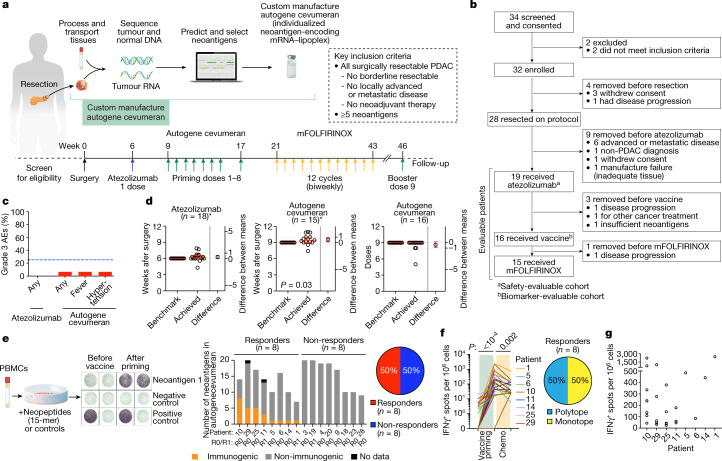
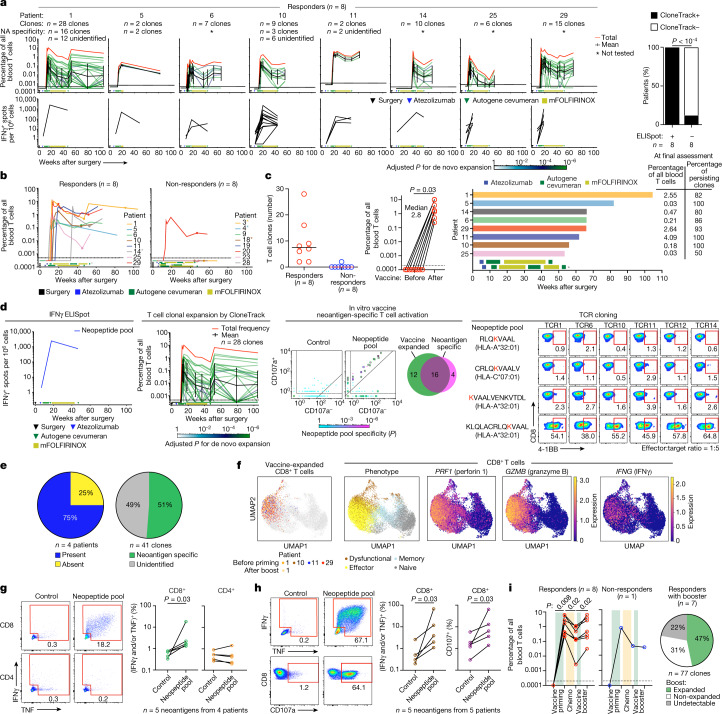
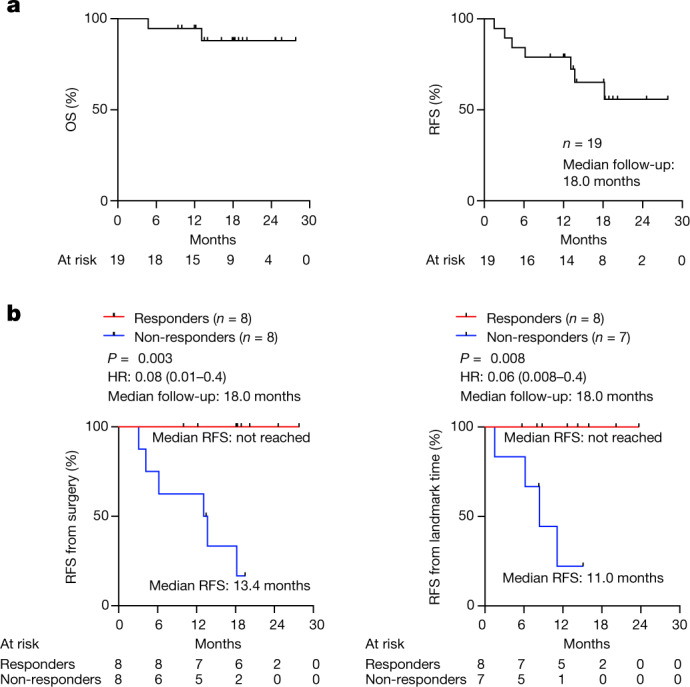
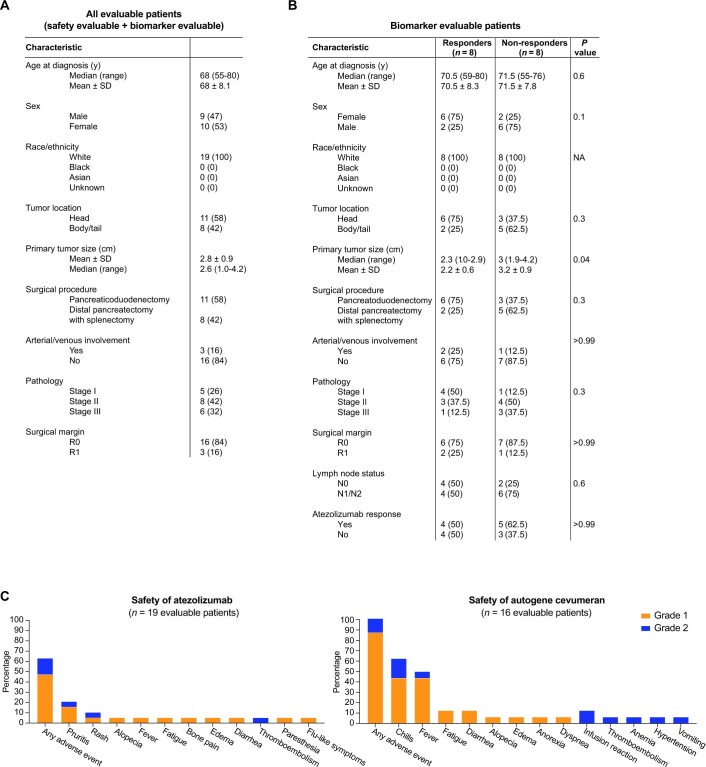
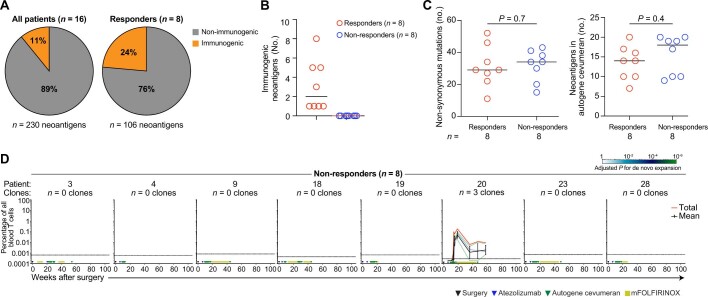
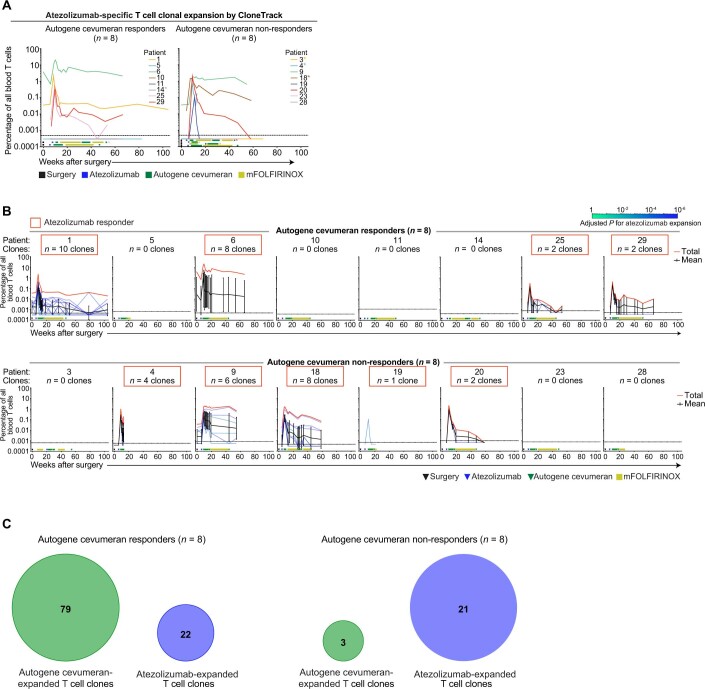
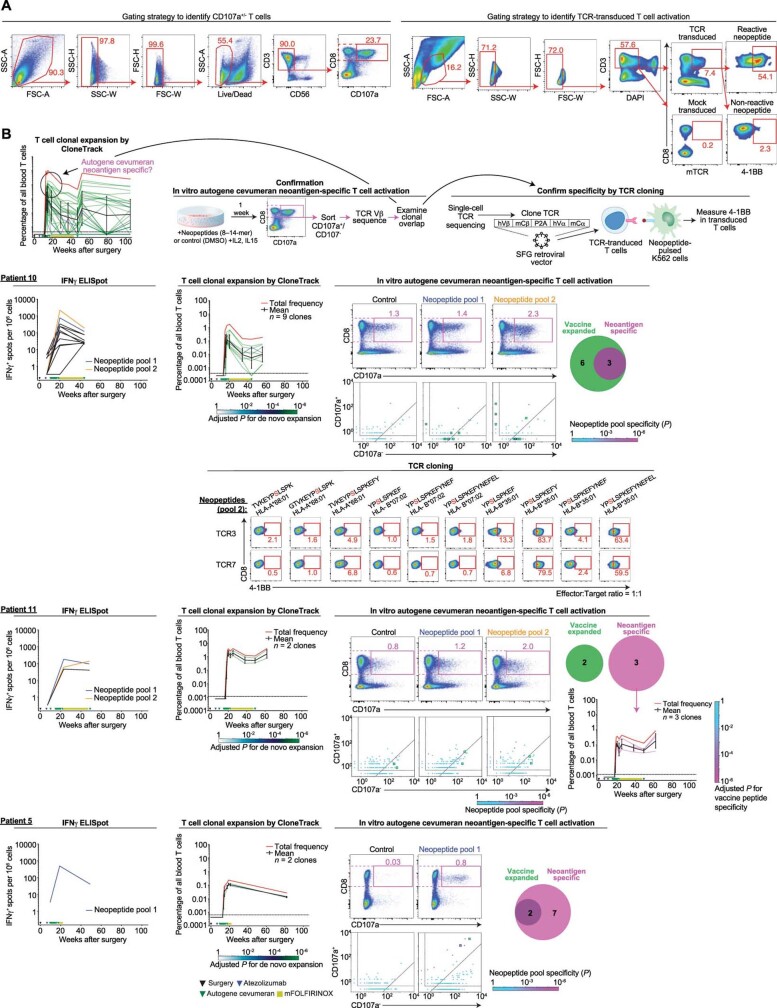
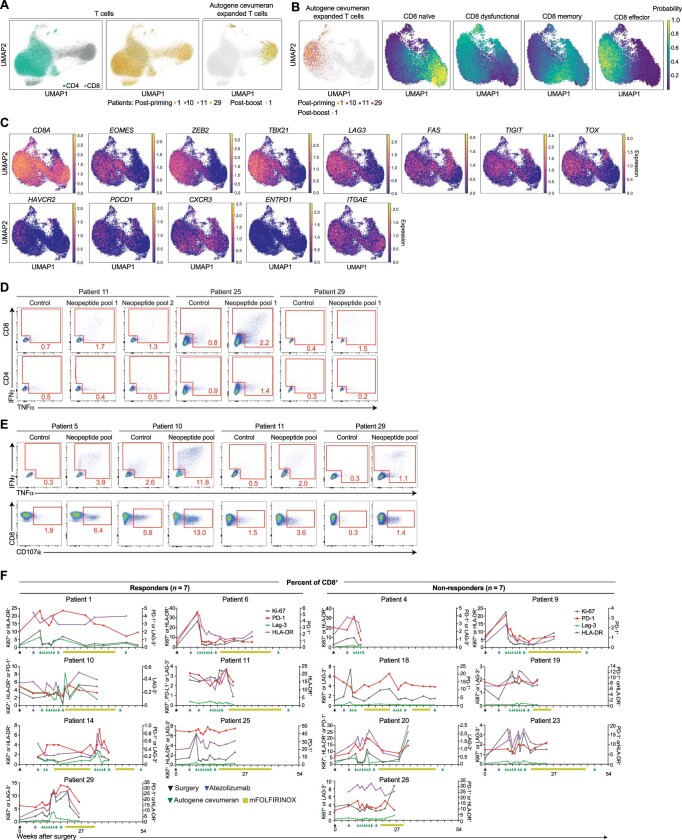
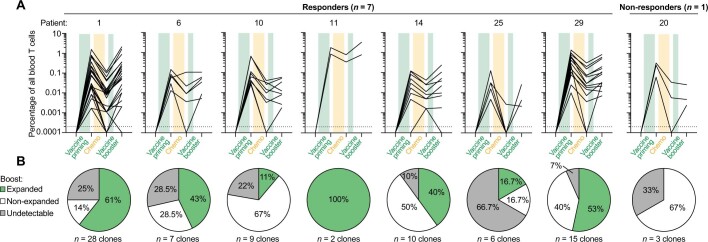
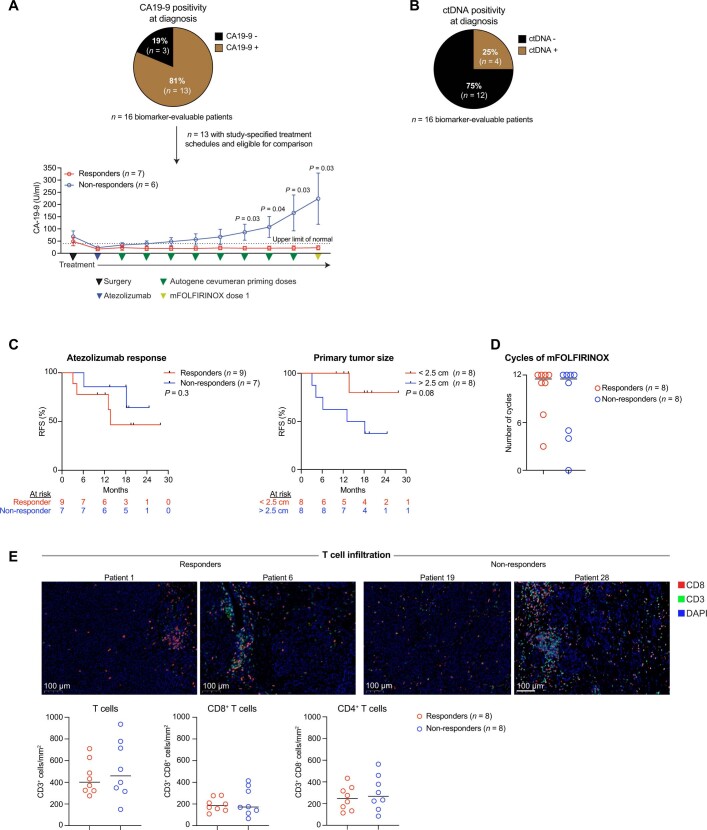
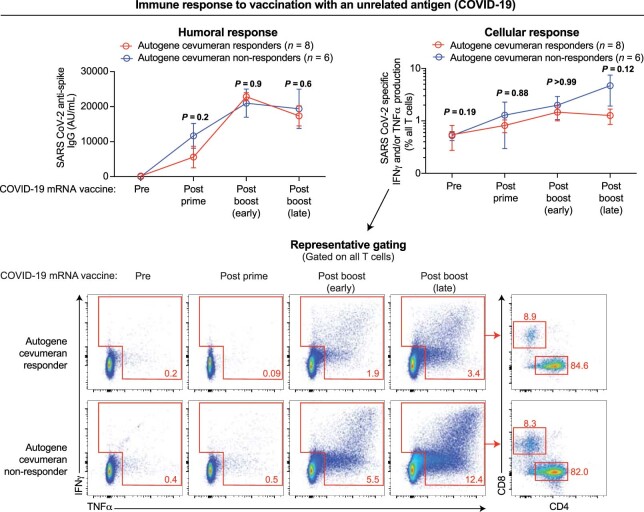
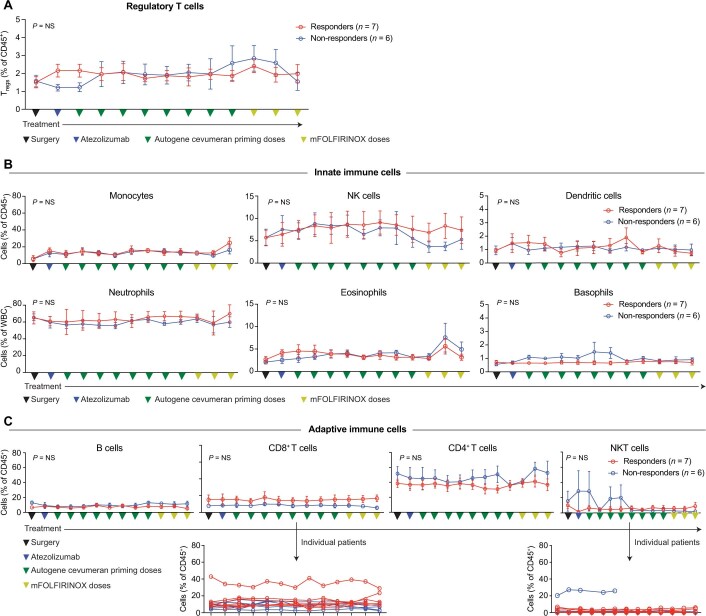
Pancreatic ductal adenocarcinoma (PDAC) is lethal in 88% of patients 1 , yet harbours mutation-derived T cell neoantigens that are suitable for vaccines 2,3 . Here in a phase I trial of adjuvant autogene cevumeran, an individualized neoantigen vaccine based on uridine mRNA–lipoplex nanoparticles, we synthesized mRNA neoantigen vaccines in real time from surgically resected PDAC tumours. After surgery, we sequentially administered atezolizumab (an anti-PD-L1 immunotherapy), autogene cevumeran (a maximum of 20 neoantigens per patient) and a modified version of a four-drug chemotherapy regimen (mFOLFIRINOX, comprising folinic acid, fluorouracil, irinotecan and oxaliplatin). The end points included vaccine-induced neoantigen-specific T cells by high-threshold assays, 18-month recurrence-free survival and oncologic feasibility. We treated 16 patients with atezolizumab and autogene cevumeran, then 15 patients with mFOLFIRINOX. Autogene cevumeran was administered within 3 days of benchmarked times, was tolerable and induced de novo high-magnitude neoantigen-specific T cells in 8 out of 16 patients, with half targeting more than one vaccine neoantigen. Using a new mathematical strategy to track T cell clones (CloneTrack) and functional assays, we found that vaccine-expanded T cells comprised up to 10% of all blood T cells, re-expanded with a vaccine booster and included long-lived polyfunctional neoantigen-specific effector CD8 + T cells. At 18-month median follow-up, patients with vaccine-expanded T cells (responders) had a longer median recurrence-free survival (not reached) compared with patients without vaccine-expanded T cells (non-responders; 13.4 months, P = 0.003). Differences in the immune fitness of the patients did not confound this correlation, as responders and non-responders mounted equivalent immunity to a concurrent unrelated mRNA vaccine against SARS-CoV-2. Thus, adjuvant atezolizumab, autogene cevumeran and mFOLFIRINOX induces substantial T cell activity that may correlate with delayed PDAC recurrence.
Overview
The claims and statistics of this paper haven’t been checked yet.
Free: it reads the open-access text and checks the first 5 claims that cite a source we can check. Create a free account to check every claim.
Integrity signals
Registry
Cites
Statistics
Figures
Verification
Claims the paper makes
The claims and statistics of this paper haven’t been checked yet.
Free: it reads the open-access text and checks the first 5 claims that cite a source we can check. Create a free account to check every claim.
Claims other papers make about this one
Each is checked against this paper’s own text: does it say what the citing paper says it does?
The source backs part of the claim, not all of it — or backs it for a different population, condition or comparison.
In the citing paper
“Although further confirmatory studies are needed, these results provide initial clinical evidence that personalized therapeutic cancer vaccines can enhance responses to ICIs, with many other studies planned.”
From Adjuvant and neoadjuvant immunotherapies in hepatocellular carcinoma (2024) · cites this paper as [136]
Experimental — accuracy not yet measuredThe source backs part of the claim, not all of it — or backs it for a different population, condition or comparison.
In the citing paper
“In this trial, 8 of 16 patients with resected pancreatic ductal adenocarcinoma remained free of cancer after a median follow-up of 18 months136.”
From Adjuvant and neoadjuvant immunotherapies in hepatocellular carcinoma (2024) · cites this paper as [136]
Experimental — accuracy not yet measuredThe source backs part of the claim, not all of it — or backs it for a different population, condition or comparison.
In the citing paper
“Cancer mRNA-based vaccines tend to be administered alone or in combination with ICIs, and after resection, although they have also been used in neoadjuvant–adjuvant treatment approaches136,138,139 (Fig. 3c,d).”
From Adjuvant and neoadjuvant immunotherapies in hepatocellular carcinoma (2024) · cites this paper as [136]
Experimental — accuracy not yet measuredThe cited source says what the claim attributes to it.
In the citing paper
“patients enrolled in the trial with an immunologic response against the vaccine had longer median RFS than those without such a response136.”
From Adjuvant and neoadjuvant immunotherapies in hepatocellular carcinoma (2024) · cites this paper as [136]
The cited source says what the claim attributes to it.
In the citing paper
“Clinical trials of mRNA-based immunotherapeutics encoding unmutated full-length TAAs in checkpoint inhibitor-treated melanoma [18] and individualised mRNA-based immunotherapeutics encoding patient-specific mutated tumour neoantigens in pancreatic and lung cancer [19, 20] have shown encouraging results.”
From Preclinical development of an mRNA-based multiepitope immunotherapeutic for glioblastoma (2025) · cites this paper as [20]
1 more claim about this paper
Create a free account to see every claim other papers make about this one.
Self-check
Percentages, sums and reported differences re-computed from the paper’s own numbers.
The self-check needs the paper’s full text.
Citations
Cites
Sung, H., Ferlay, J., Siegel, R. L., Laversanne, M., Soerjomataram, I., Jemal, A., & Bray, F. (2021) · CA: A Cancer Journal for Clinicians · doi:10.3322/caac.21660 · Cited by 108,699
Richards, S., Aziz, N., Bale, S., Bick, D., Das, S., Gastier-Foster, J., Grody, W. W., Hegde, M., Lyon, E., Spector, E., et al. (2015) · Genetics in Medicine · doi:10.1038/gim.2015.30 · Cited by 32,594
PD-1 and PD-L1 Immune Checkpoint Blockade to Treat Breast Cancer
Hartkopf, A. D., Taran, F.-A., Wallwiener, M., Walter, C. B., Krämer, B., Grischke, E.-M., & Brucker, S. Y. (2016) · Breast Care · doi:10.1159/000453569 · Cited by 30,845
The Genome Analysis Toolkit: A MapReduce framework for analyzing next-generation DNA sequencing data
McKenna, A., Hanna, M., Banks, E., Sivachenko, A., Cibulskis, K., Kernytsky, A., Garimella, K., Altshuler, D., Gabriel, S., Daly, M., et al. (2010) · Genome Research · doi:10.1101/gr.107524.110 · Cited by 27,895
Siegel, R. L., Miller, K. D., Wagle, N. S., & Jemal, A. (2023) · CA: A Cancer Journal for Clinicians · doi:10.3322/caac.21763 · Cited by 16,303
SCANPY: large-scale single-cell gene expression data analysis
Wolf, F. A., Angerer, P., & Theis, F. J. (2018) · Genome Biology · doi:10.1186/s13059-017-1382-0 · Cited by 8,881
Rahib, L., Smith, B. D., Aizenberg, R., Rosenzweig, A. B., Fleshman, J. M., & Matrisian, L. M. (2014) · Cancer Research · doi:10.1158/0008-5472.can-14-0155 · Cited by 7,094
Predictive correlates of response to the anti-PD-L1 antibody MPDL3280A in cancer patients
Herbst, R. S., Soria, J.-C., Kowanetz, M., Fine, G. D., Hamid, O., Gordon, M. S., Sosman, J. A., McDermott, D. F., Powderly, J. D., Gettinger, S. N., et al. (2014) · Nature · doi:10.1038/nature14011 · Cited by 5,231
Self-citationCOSMIC: the Catalogue Of Somatic Mutations In Cancer
Tate, J. G., Bamford, S., Jubb, H. C., Sondka, Z., Beare, D. M., Bindal, N., Boutselakis, H., Cole, C. G., Creatore, C., Dawson, E., et al. (2019) · Nucleic Acids Research · doi:10.1093/nar/gky1015 · Cited by 4,867
Neoantigens in cancer immunotherapy
Schumacher, T. N., & Schreiber, R. D. (2015) · Science · doi:10.1126/science.aaa4971 · Cited by 4,783
Cited by
Items 501–600 of 1,004
Herpels, M., Ishihara, J., & Sadanandam, A. (2023) · The Journal of Pathology · doi:10.1002/path.6171 · Cited by 12
“In 50% of patients, a large neoantigen-specific T-cell population was observed [86].”
BackgroundInfluentialA journey to your self: The vague definition of immune self and its practical implications
Koncz, B., Balogh, G. M., & Manczinger, M. (2024) · Proceedings of the National Academy of Sciences · doi:10.1073/pnas.2309674121 · Cited by 12
“The method approximates the ability of a TCR to discriminate between the original and the mutated peptide based on its cross - reactivity (154, 155).”
Combinatorial leaky probiotic for anticancer immunopotentiation and tumor eradication
Liu, C., Pan, Y., Lim, S.-K., Mou, C., Hu, C. J., & Mou, Y. (2024) · Cell Reports Medicine · doi:10.1016/j.xcrm.2024.101793 · Cited by 13
“5 However, integration of multiple therapeutic modalities in therapeutic regimens can be hampered by logistical, manufacturing, and patent barriers, which can make combination therapies difficult to implement in clinical practices.”
Immune Checkpoint Inhibitors and Vaccination: Assessing Safety, Efficacy, and Synergistic Potential
New, J., Shenton, L. M., Ksayer, R., Wang, J., Zakharia, K., Nicholson, L. J., & Pandey, A. C. (2024) · Vaccines · doi:10.3390/vaccines12111270 · Cited by 15
“Additionally, a longer median recurrence-free survival was observed in patients who developed vaccine-expanded T-cells [47].”
Application of nanomedicines in tumor immunotherapy
Gao, Z., Wan, D., Luo, M., & Wei, X. (2024) · Journal of Molecular Cell Biology · doi:10.1093/jmcb/mjae055 · Cited by 11
Adopting tomorrow’s therapies today: a perspective review of adoptive cell therapy in lung cancer
Abodunrin, F. O., Olson, D. J., Emehinola, O., & Bestvina, C. M. (2025) · Therapeutic Advances in Medical Oncology · doi:10.1177/17588359251320280 · Cited by 12
The Bright Future of mRNA as a Therapeutic Molecule
Vélez, D. E., Torres, B. L., & Hernández, G. (2025) · Genes · doi:10.3390/genes16040376 · Cited by 11
Shenoy, A., Yousif, A., & Hussain, M. D. (2025) · Cancers · doi:10.3390/cancers17081319 · Cited by 14
“The results showed that autogene cevumeran induced strong neoantigen-specific T-cell responses in 50% of participants, with some responses persisting for up to three years post-treatment [126].”
Zhou, S., Lei, Y., Wen, Y., Ding, D., Luo, M.-Q., Cui, H., & Guo, J. (2025) · Journal of Controlled Release · doi:10.1016/j.jconrel.2025.113979 · Cited by 14
Evolving concepts in adjuvant/neoadjuvant therapy for resectable pancreas cancer
Bryant, J. M., Ruffolo, L. I., Soares, K. C., Hoffe, S. E., & Lowy, A. M. (2025) · Journal of Clinical Investigation · doi:10.1172/jci191944 · Cited by 12
“All are non-randomized phase II studies using FOLFIRINOX, each with slightly different criteria for switching to G-NP.”
InfluentialSelf-citationRNA immunotherapy: revolutionizing cancer and autoimmune disease treatments
Savguira, M., Chen, D., Dong, S., & Li, B. (2025) · Trends in Molecular Medicine · doi:10.1016/j.molmed.2025.06.008 · Cited by 16
Mechanisms, advances, and challenges of immunotherapy in gastric cancer
Wang, Z., & Wang, T. (2025) · Frontiers in Immunology · doi:10.3389/fimmu.2025.1639487 · Cited by 11
“A recent study in pancreatic ductal adenocarcinoma demonstrated that patients receiving an mRNA-based personalized vaccine exhibited increased numbers of tumor-speci fi c T cells and prolonged median recurrence-free survival compared to those who did not receive the vaccine (64).”
Immune Surveillance and Immune Escape in Cancer: Mechanisms and Immunotherapy
Peng, Y., Zhan, L., Shi, J., Wang, J., Li, Y., Sun, X., Lv, J., Yang, H., Qiu, Z., Liu, X., et al. (2025) · MedComm · doi:10.1002/mco2.70321 · Cited by 15
Design of nano-delivery systems for pancreatic cancer immunotherapy
Fu, S., Gao, C., Yu, Q., Gong, R., Yang, Z., Zang, X., Shan, S., Mombrú, D., Romero, M., Mombrú, Á. W., et al. (2025) · Cancer Letters · doi:10.1016/j.canlet.2025.218098 · Cited by 11
mRNA-LNP vaccines: rational design, delivery optimization, and clinical translation
Jiang, S., & Lu, Z. (2025) · Journal of Materials Chemistry B · doi:10.1039/d5tb01972a · Cited by 16
Autologous multiantigen-targeted T cell therapy for pancreatic cancer: a phase 1/2 trial
Musher, B., Vasileiou, S., Smaglo, B. G., Robertson, C. S., Wu, M., Wang, T., Watanabe, A., Kuvalekar, M., Velazquez, Y., Ketkar, S., et al. (2026) · Nature Medicine · doi:10.1038/s41591-025-04043-5 · Cited by 14
“In addition, combining mTAA T cells with other immunotherapeutic strategies (for example, checkpoint inhibitors 7,66 , oncolytic viruses 67,68 , stimulatory cytokines or tumor vaccines 58,59,61,62,69,70 ) to enhance tumor immunogenicity and overcome immune evasion can be considered.”
Tumor-reactive T helper cells in the context of vaccination against glioma
Zhao, B., Kilian, M., Bunse, T., Platten, M., & Bunse, L. (2023) · Cancer Cell · doi:10.1016/j.ccell.2023.09.013 · Cited by 12
Li, K., Li, X., Wu, J. J., Wu, H., Wu, M., Zhou, Y., Ya, L., Zou, Y., Jiang, X., & Xu, H. (2024) · Advanced Functional Materials · doi:10.1002/adfm.202404956 · Cited by 12
Sarfraz, Z., Sarfraz, A., Farooq, M. D., Khalid, M., Cheema, K., Javad, F., Khan, T., Pervaiz, Z., Sarfraz, M., Jaan, A., et al. (2024) · Journal of Gastrointestinal Cancer · doi:10.1007/s12029-024-01078-8 · Cited by 11
“Rojas et al. [32] evaluated personalized RNA neoantigen vaccines with atezolizumab, noting T cell responses in 50% of vaccine recipients and improved recurrence-free survival, with a median of 18 months for responders versus 13.4 months for non-responders.”
InfluentialPersonalized Neoantigen DNA Cancer Vaccines: Current Status and Future Perspectives
Viborg, N., Kleine‐Kohlbrecher, D., & Rønø, B. (2024) · Journal of Cellular Immunology · doi:10.33696/immunology.6.188 · Cited by 10
de Graaf, J. F., Pesic, T., Spitzer, F. S., Oosterhuis, K., Camps, M. G. M., Zoutendijk, I., Teunisse, B., Zhu, W., Arakelian, T., Zondag, G. C. M., et al. (2024) · Molecular Therapy Oncology · doi:10.1016/j.omton.2024.200835 · Cited by 14
“14,16,19,20 CD8 + T cell responses can be improved by CD4 + T cell-mediated help, which is facilitated by different dendritic cells (DCs) in draining lymphoid tissue.”
He, Y.-R., Xia, H., Yun, P., Xu, Y., Ma, W. M. J., Xiao, Z.-X., & Zha, G. (2024) · Pharmaceutics · doi:10.3390/pharmaceutics16070940 · Cited by 10
“…development [23]. mRNA-based individualized neoantigen therapy mRNA-4157, prolonged recurrence-free survival in patients with resected high-risk melanoma, another neoantigen-based mRNA vaccine autogene cevumeran (BNT122) induces effective T cell response and inhibits recurrence of PDAC [21,35].”
BackgroundImproving the efficacy of cancer immunotherapy by host-defence caerin 1.1 and 1.9 peptides
Fu, Q., Luo, Y., Li, J., Zhang, P., Tang, S., Song, X., Fu, J., Liu, M., Mo, R., Wei, M. Q., et al. (2024) · Human Vaccines & Immunotherapeutics · doi:10.1080/21645515.2024.2385654 · Cited by 10
Mortality for pancreatic cancer throughout 2003–2022 in the US
Mattiuzzi, C., & Lippi, G. (2024) · Journal of Pancreatology · doi:10.1097/jp9.0000000000000203 · Cited by 10
Hill, C., Parkinson, R. M., Jaffee, E. M., Sugar, E. A., Zheng, L., Onners, B., Weiss, M. J., Wolfgang, C. L., Cameron, J. L., Pawlik, T. M., et al. (2024) · International Journal of Radiation Oncology*Biology*Physics · doi:10.1016/j.ijrobp.2024.10.039 · Cited by 12
Cancer Vaccines and Beyond: The Transformative Role of Nanotechnology in Immunotherapy
Delgado-Almenta, V., Blaya-Cánovas, J. L., Calahorra, J., López-Tejada, A., Griñán‐Lisón, C., & Granados-Principal, S. M. (2025) · Pharmaceutics · doi:10.3390/pharmaceutics17020216 · Cited by 12
“A CloneTrack analysis revealed vaccine-expanded T-cell clones that persisted long-term and re-expanded upon boosting [171].”
Li, C., Ke, F., Mao, S., Montemayor, Z., Traore, M. D. M., Balsa, A., Djibo, M., Karekar, N., Hu, H., Wen, H., et al. (2025) · ACS Nano · doi:10.1021/acsnano.4c15113 · Cited by 10
Impact of systemic anticancer therapy timing on cancer vaccine immunogenicity: a review
Gomez-Randulfe, I., Lavender, H., Symeonides, S. N., & Blackhall, F. H. (2025) · Therapeutic Advances in Medical Oncology · doi:10.1177/17588359251316988 · Cited by 12
DNA-based immunotherapy for cancer: In vivo approaches for recalcitrant targets
Bhojnagarwala, P. S., Jose, J. S., Zhao, S., & Weiner, D. B. (2025) · Molecular Therapy · doi:10.1016/j.ymthe.2025.04.008 · Cited by 10
“140 Overall, they report a 50% response rate in this study of 16 individuals.”
Strategies for neoantigen screening and immunogenicity validation in cancer immunotherapy (Review)
Feng, H., Jin, Y., & Wu, B. (2025) · International Journal of Oncology · doi:10.3892/ijo.2025.5749 · Cited by 10
“Development of novel multi‑ target antigen vaccines by targeting multiple neoantigens simultaneously can activate a broader immune response, thereby enhancing therapeutic efficacy (50,54,91).”
InfluentialLassoued, W., Madan, R. A., Xue, E., Burnett, D., Canubas, K., Bailey, S., Marté, J. L., Tsai, Y.-T., Donahue, R. N., Turkbey, I. B., et al. (2025) · Journal for ImmunoTherapy of Cancer · doi:10.1136/jitc-2024-010851 · Cited by 11
Cho, S., Kwak, W., Yoon, H., Lee, J., Lee, S., Park, H., Jo, S., Lee, Y., Seo, Y., Cho, Y., et al. (2025) · Advanced Science · doi:10.1002/advs.202506426 · Cited by 11
Nagaoka, K., Nakanishi, H., Tanaka, H., Anindita, J., Kawamura, T., Tanaka, T., Yamashita, T., Kuroda, A., Nomura, S., Akita, H., et al. (2025) · Gastric Cancer · doi:10.1007/s10120-025-01640-8 · Cited by 10
“Notably, a recent study demonstrated promising results with BNT122 when combined with atezolizumab and chemotherapy in pancreatic cancer, a malignancy traditionally difficult to treat, suggesting broader potential for neoAg-mRNA vaccines in other challenging cancers [26].”
Functional tumor-reactive CD8 + T cells in pancreatic cancer
Sun, H., Shi, C., Fang, G., Guo, Q., Du, Z., Chen, G., Wu, Y., Chen, Z., Hua, J., Zhang, Y., et al. (2025) · Journal of Experimental & Clinical Cancer Research · doi:10.1186/s13046-025-03517-1 · Cited by 11
Ahmed, S., Gozal, D., & Khalyfa, A. (2025) · International Journal of Molecular Sciences · doi:10.3390/ijms262110316 · Cited by 10
Immunological surveillance against cancer across mammals
Vincze, O., Minias, P., Corthay, A., Colchero, F., Lemaître, J., Maille, L., Malkócs, T., Hagemann, J., Conde, D. A., Pavard, S., et al. (2025) · Nature Communications · doi:10.1038/s41467-025-65286-x · Cited by 10
“Due to its prominent role in cancer defense, MHC-I-mediated immune surveillanceis currentlyalso the primary target mechanism for cancer vaccines 25,26 .”
Ikrar, T., Muchsin, W., & Sophian, A. (2026) · Journal of Controlled Release · doi:10.1016/j.jconrel.2026.115019 · Cited by 10
Ye, L., Zhao, G., Ma, J., Gan, Q., Luo, N., Pan, D., Chen, C., Chen, X., & Ning, S. (2026) · Signal Transduction and Targeted Therapy · doi:10.1038/s41392-026-02769-3 · Cited by 10
“As of 2020, clinical validation accelerated, with landmark studies including Rojas et al., who combined the BNT122 RNA vaccine with checkpoint inhibition in pancreatic cancer, 11 and Weber et al., 12 who demonstrated the superior ef fi cacy of an mRNA-4157/pembrolizumab regimen in melanoma.”
InfluentialCheng, D., Hu, J., Wu, X. O., Wang, B., Chen, R., Zhao, W., Fang, C., & Ji, M. (2023) · Frontiers in Oncology · doi:10.3389/fonc.2023.1281545 · Cited by 11
“For example, Rojas et al. (36) have successfully developed a personalized RNA neoantigen vaccine demonstrating the capacity to activate T cells in individuals with PC. Burrack et al. (37) demonstrated that the combination of PD-1 and PD-L1 blockade effectively reinvigorated T cells, resulting in a signi fi cant extensi…”
BackgroundVaccines: a promising therapy for myelodysplastic syndrome
Gera, K., Chauhan, A., Castillo, P., Rahman, M., Mathavan, A., Mathavan, A., Ogando‐Rivas, E., Elliott, L. A., Wingard, J. R., & Sayour, E. J. (2024) · Journal of Hematology & Oncology · doi:10.1186/s13045-023-01523-4 · Cited by 10
“In May 2023, a phase 1 trial reported that patients with resected pancreatic cancer treated with chemotherapy, atezolizumab and a personalized mRNA vaccine had a 50% cancer-free rate [13].”
BackgroundMahmood, U., Carrier, E., & Khan, K. H. (2024) · Cancer Treatment Reviews · doi:10.1016/j.ctrv.2024.102750 · Cited by 11
Amhis, N., Carignan, J., & Tai, L. (2024) · Molecular Therapy Oncology · doi:10.1016/j.omton.2024.200825 · Cited by 11
Majumder, B., Nataraj, N. B., Maitreyi, L., & Datta, S. (2024) · Frontiers in Immunology · doi:10.3389/fimmu.2024.1414376 · Cited by 11
The Road Ahead in Pancreatic Cancer: Emerging Trends and Therapeutic Prospects
Do, C. T. P., Prochnau, J. Y., Domínguez, A. M., Wang, P., & Rao, M. K. (2024) · Biomedicines · doi:10.3390/biomedicines12091979 · Cited by 10
“Recent clinical trials involving an mRNA-based vaccine for pancreatic cancer have shown promising results, particularly in a study conducted at Memorial Sloan Kettering Cancer Center [132].”
ResultmRNA-Based Cancer Vaccines: Advancements and Prospects
Wu, L., Yi, W., Yao, S., Xie, S., Peng, R., Zhang, J., & Tan, W. (2024) · Nano Letters · doi:10.1021/acs.nanolett.4c03296 · Cited by 15
Prospects and challenges of neoantigen applications in oncology
Shi, R., Ran, L., Tian, Y., Guo, W., Zhao, L., Jin, S., Cheng, J., Zhang, Z., & Ma, Y. C. (2024) · International Immunopharmacology · doi:10.1016/j.intimp.2024.113329 · Cited by 11
Preclinical development of an mRNA-based multiepitope immunotherapeutic for glioblastoma
Lutz, J., Feist, R. K., Sonntag, T., Peguero-Sánchez, E., Wolter, K., Bick, R., Bauer, J., Walz, J. S., & Heidenreich, R. (2025) · Cancer Immunology, Immunotherapy · doi:10.1007/s00262-025-04178-x · Cited by 11
Type III CRISPR-mediated flexible RNA excision with engineered guide RNAs
Sun, Y., Wu, Y., He, Z., Wang, Y., Hou, W., Cao, Y. B., Zhou, Q., & Zhang, R. (2025) · Molecular Cell · doi:10.1016/j.molcel.2025.01.021 · Cited by 9
Recent Advances in the Development and Efficacy of Anti-Cancer Vaccines—A Narrative Review
Kiełbowski, K., Plewa, P., Zadworny, J., Bakinowska, E., Becht, R., & Pawlik, A. (2025) · Vaccines · doi:10.3390/vaccines13030237 · Cited by 13
“Rojas et al. [34] investigated the sequential treatment of patients with pancreatic ductal adenocarcinoma with atezolizumab, autogene-cevumeran, and mFOLFIRINOX.”
Treatment Innovations in Pancreatic Cancer: Putting Patient Priorities First
Reiss, K. A., Soares, K. C., Torphy, R. J., & Gyawali, B. (2025) · American Society of Clinical Oncology Educational Book · doi:10.1200/edbk-25-473204 · Cited by 10
Self-citationImmune-Based Strategies for Pancreatic Cancer in the Adjuvant Setting
Liang, K.-L., & Azad, N. S. (2025) · Cancers · doi:10.3390/cancers17071246 · Cited by 10
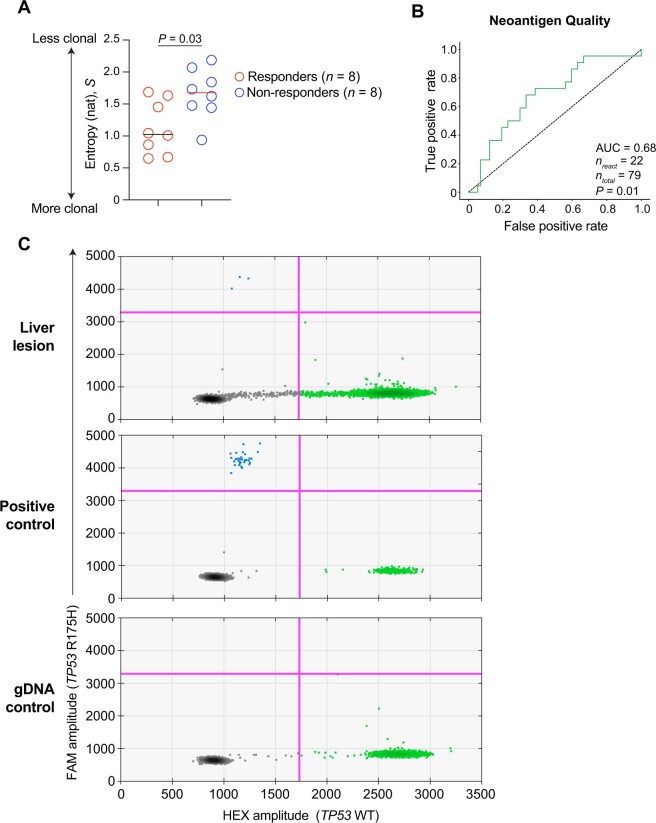
“Interestingly, tumors of responders were observed to be more clonal, which the investigators postulated may represent immune-edited evolution, as seen in immunogenic PDAC long term survivors [60].”
Unlocking the full therapeutic potential of lipid nanoparticles through extrahepatic delivery
Truong, H. Q., & Meng, F. (2025) · Nano Research · doi:10.26599/nr.2025.94907422 · Cited by 11
Tian, H., Li, G., Chiu, C. K. C., Li, E. L., Chen, Y., Zhu, T., Hu, M., Wang, Y., Wen, S., Li, J., et al. (2025) · Cell Insight · doi:10.1016/j.cellin.2025.100251 · Cited by 10
“The conventional approach for personalized tumor neo-antigen screening uses DNA/RNA NGS, which translates nucleotide sequences into amino acid sequences to predict potential neoantigen combinations(Ding et al., 2021; Rojas et al., 2023).”
Bozkus, C. C., Brown, M., Velazquez, L. G., Thomas, M., Wilson, E. A., O’Donnell, T. J., Kaminska, A., Ruchnewitz, D., Geertz, D., Bykov, Y., et al. (2025) · iScience · doi:10.1016/j.isci.2025.113044 · Cited by 9
“42,43 Removing patient-specific immune response amplitudes by setting them all to the same optimized value displayed significantly reduced performance (Figure 2D), highlighting the heterogeneity of anti-S T cell responses observed across different donors.”
Self-citationDeciphering the MHC immunopeptidome of human cancers with Ligand.MHC atlas
Ran, Z., Mu, M., Lin, S., Wang, T., Zeng, J., Kuang, L., Chen, K., Suo, S., Yuan, K., & Xu, H. (2025) · Briefings in Bioinformatics · doi:10.1093/bib/bbaf314 · Cited by 10
Bioengineering approaches to trained immunity: Physiologic targets and therapeutic strategies
Knight, H. R., Kim, M., Kannan, N., Taylor, H. B., Main, H., Azcue, E., & Esser-Kahn, A. P. (2025) · eLife · doi:10.7554/elife.106339 · Cited by 9
Lu, Z., Zhu, W., & Liu, X. (2025) · Seminars in Oncology · doi:10.1016/j.seminoncol.2025.152399 · Cited by 9
Zhang, Y., Hu, Y., Ma, L., Wu, Y., Chao, D., Chen, X., Xu, Z., Su, X., Dai, W., Huang, J., et al. (2025) · Frontiers in Immunology · doi:10.3389/fimmu.2025.1538032 · Cited by 12
“Tumor neoantigen vaccine, or their combination with ICBs, appear particularly promising in patients after surgical resection (8, 13, 14).”
Magoola, M., & Niazi, S. K. (2025) · Vaccines · doi:10.3390/vaccines13090970 · Cited by 11
“For instance, neoantigen vaccines have shown targeted responses in pancreatic cancer trials, although they are less scalable [12,13].”
Leveraging T cells for cancer immunotherapy
Bates, A., Fletcher, N. E., Gao, F., Pinho, M. P., & Dong, T. (2025) · Immunity & Inflammation · doi:10.1007/s44466-025-00007-z · Cited by 13
“In contrast, therapeutic cancer vaccines prime naïve T cells, generating a novel tumour-specific immune response, while also expanding pre-existing tumour-reactive cells in the periphery [332– 335].”
PredIG: an interpretable predictor of T-cell epitope immunogenicity
Farriol-Duran, R., Domínguez-Dalmases, C., Cañellas-Solé, A., Vázquez, M., Porta‐Pardo, E., & Guallar, V. (2025) · Genome Medicine · doi:10.1186/s13073-025-01569-8 · Cited by 12
RNA-based drugs: current, imminent and possible therapeutic applications
Torrisi, S. A., Geraci, F., Diolosà, L., Luca, A. D., Falzone, L., Drago, F., Libra, M., & Leggio, G. M. (2025) · Pharmacology & Therapeutics · doi:10.1016/j.pharmthera.2025.108958 · Cited by 11
Chimeric MHC class I– and II–restricted non-self epitopes broaden antitumor T cell reactions
Zhang, R., Ma, R., Leong, M. M., Watson, I. R., Iida, K., Yaguchi, T., Matsuda, F., Honjo, T., & Chamoto, K. (2025) · The Journal of Experimental Medicine · doi:10.1084/jem.20250025 · Cited by 9
Dendritic cell redundancy enables priming of anti-tumor CD4+ T cells in pancreatic cancer
Kureshi, C. T. S., Walsh, M. J., Kureshi, R., Cardot‐Ruffino, V., Agardy, D. A., Ali, L. R., Dougan, J. M., Li, Q., Shen, J., Zuo, C., et al. (2026) · Cancer Cell · doi:10.1016/j.ccell.2026.04.005 · Cited by 11
Xiang, Z., Lu, J., Rao, S., Fu, C., Yao, Y., Yi, Y., Yang, M., Sun, W., Guo, W., & Chen, X. S. (2024) · Theranostics · doi:10.7150/thno.93395 · Cited by 10
“Currently, the nanovaccine based on codelivery of neoantigen and adjuvants have achieved encouraging outcomes in both animal models and some patients [20-26], which is demonstrated by the potent antitumor immune response of their clinical investigations [27-30].”
BackgroundCellular collusion: cracking the code of immunosuppression and chemo resistance in PDAC
Musiu, C., Lupo, F., Agostini, A., Lionetto, G., Bevere, M., Paiella, S., Carbone, C., Corbo, V., Ugel, S., & Sanctis, F. D. (2024) · Frontiers in Immunology · doi:10.3389/fimmu.2024.1341079 · Cited by 10
“…(197), TME datasets (52, 139, 198) and genomic/molecular tumor pro fi les (45, 91, 199), as well as advance in biotechnology and clinical research allowed to employ cutting-edge approaches, including personalized RNA neoantigen vaccines (200) and selective inhibitors in PDAC treatment (201, 202).”
BackgroundSchlattmann, D., Weber, B., Wyszynski, L., Schönhoff, M., & Haas, H. (2024) · European Journal of Pharmaceutics and Biopharmaceutics · doi:10.1016/j.ejpb.2024.114380 · Cited by 10
Recent advances in the treatment of pancreatic cancer
Ma, Y., Zhang, F., & Yang, Y. (2024) · Holistic Integrative Oncology · doi:10.1007/s44178-024-00089-6 · Cited by 9
Developing Vaccines in Pancreatic Adenocarcinoma: Trials and Tribulations
Phan, T. X., Fan, D., & Melstrom, L. G. (2024) · Current Oncology · doi:10.3390/curroncol31090361 · Cited by 9
“An individualized neoantigen vaccine (a maximum of 20 neoantigens per patient) based on uridine mRNA–lipoplex nanoparticles has been tested in an adjuvant setting with atezolizumab (an anti-PD-L1 immunotherapy) and mFOLFIRINOX (folinic acid, fluorouracil, irinotecan and oxaliplatin) [232].”
BackgroundInfluentialBasar, E., Mead, H., Shum, B. O. V., Rauter, I., Ay, C., Skaletz‐Rorowski, A., & Brockmeyer, N. H. (2024) · Pharmaceutics · doi:10.3390/pharmaceutics16091207 · Cited by 12
Advancing Immunotherapy in Pancreatic Cancer
Hegazi, A., Rager, L. E., Watkins, D., & Su, K. (2024) · International Journal of Molecular Sciences · doi:10.3390/ijms252111560 · Cited by 9
“Although immunotherapy in pancreatic cancer has historically yielded discouraging results, recent studies using anticancer mRNA vaccines with adjuvant immunotherapy alongside chemotherapy have shown promising results [13].”
ResultBhutani, B., Sharma, V., Ganguly, N. K., & Rana, R. (2025) · Biomedicine & Pharmacotherapy · doi:10.1016/j.biopha.2025.117987 · Cited by 11
Kim, H. S., Simpson, G. G., Fei, F., Garris, C., & Weissleder, R. (2025) · Journal of the American Chemical Society · doi:10.1021/jacs.4c14474 · Cited by 10
Tadic, S., Ochoa‐Callejero, L., Narro-Íñiguez, J., García-Sanmartín, J., & Martínez, A. (2025) · Frontiers in Immunology · doi:10.3389/fimmu.2025.1604156 · Cited by 9
The Prospect of Harnessing the Microbiome to Improve Immunotherapeutic Response in Pancreatic Cancer
Rogers, S. C., Charles, A. M., & Thomas, R. M. (2023) · Cancers · doi:10.3390/cancers15245708 · Cited by 11
“Those with vaccine-expanded T cells had a longer recurrence-free survival compared to those who did not have T-cell expansion [40].”
ResultAre we getting closer to a successful neoantigen cancer vaccine?
Manoutcharian, K., & Gevorkian, G. (2024) · Molecular Aspects of Medicine · doi:10.1016/j.mam.2024.101254 · Cited by 9
Current and future genomic applications for surgeons
Alkhatib, O., Miles, T., Jones, R., Mair, R., Palmer, R., Winter, H., & McDermott, F. D. (2024) · Annals of The Royal College of Surgeons of England · doi:10.1308/rcsann.2024.0031 · Cited by 9
“19,21 The most compelling clinical data to date around the ef fi cacy of mRNA vaccines relate to their use as adjuvant therapy after resected pancreatic cancer.”
BackgroundMethodImperial, R. J. L., Mosalem, O. M., Majeed, U., Tran, N. H., Borad, M. J., & Babiker, H. M. (2024) · Clinical and Experimental Gastroenterology · doi:10.2147/ceg.s390655 · Cited by 10
Wang, R., Zhang, Y., Du, S., Li, Y., Ren, Y., & Lin, J. (2025) · International Journal of Nanomedicine · doi:10.2147/ijn.s520329 · Cited by 8
Wang, Z., Zhou, H., Su, Q., Qiu, Q., Deng, W., Zhang, M., Xu, Z., Li, J., Xiao, J., & Duan, X. (2025) · Science Advances · doi:10.1126/sciadv.adx6732 · Cited by 8
Targeting the roots of myeloid malignancies with T cell receptors
Földvári, Z., Brennan, M. S., Titov, A., Jacobsen, S. E. W., & Olweus, J. (2025) · Nature reviews. Cancer · doi:10.1038/s41568-025-00857-0 · Cited by 9
“Recent clinical trials have indicated that mRNA vaccines encoding neoantigens can delay relapse in patients with resected pancreatic cancer and melanoma 147,148 .”
Huang, H., Xiao, Z., Feng, W., Song, X., Chen, L., Huang, L., Ding, L. S., & Chen, Y. (2025) · Cell Reports Medicine · doi:10.1016/j.xcrm.2025.102312 · Cited by 15
Srinivasan, D., Gout, J., Kleger, A., & Roger, É. (2025) · Advanced Drug Delivery Reviews · doi:10.1016/j.addr.2025.115697 · Cited by 11
Han, Y., Zhang, K., Xin, N., Gao, X., Ma, G., An, J., & Li, Y. (2025) · Journal of Colloid and Interface Science · doi:10.1016/j.jcis.2025.139025 · Cited by 10
Zhang, H., Yang, L., Wang, L., Cui, L., Wang, Z., You, X., Xie, C., Zhang, H., Liu, Y., Li, M., et al. (2025) · Molecular Therapy · doi:10.1016/j.ymthe.2025.09.032 · Cited by 9
Wang, H., Wu, X., Wang, J., Wang, X., & Lü, Y. (2025) · Materials Today Bio · doi:10.1016/j.mtbio.2025.102393 · Cited by 16
“In addition to the application as prophylactic vaccines targeting pathogens, mRNA-LNPs have undergone testing in oncology clinical trials for intratumoral expression of combinations of immunostimulatory cytokines or as cancer vaccines [26,27].”
Emerging therapeutic advancements in pancreatic cancer: a contemporary review
Malla, M., Sakr, Y., Gupta, G., Akce, M., & El‐Rayes, B. F. (2025) · Discover Oncology · doi:10.1007/s12672-025-03027-8 · Cited by 8
“These initial results advocate for further comprehensive studies on tailored mRNA neo-antigen vaccines in PDAC [121].”
Liang, Z., Yang, K., & Li, M. (2025) · Small · doi:10.1002/smll.202510759 · Cited by 8
A Rationally Engineered Spleen‐Tropic One‐Component Lipid‐mRNA Complex (OncoLRC) for Cancer Vaccines
Yin, Q., Zhang, C., Li, J., Huang, K., & Qiu, M. (2025) · Advanced Science · doi:10.1002/advs.202512535 · Cited by 12
In silico design of a multi-epitope vaccine against the triple negative breast cancer
Zahraei, M., Basmenj, E. R., Behrouzi, G., Keshel, S. H., & Alem, M. (2025) · Scientific Reports · doi:10.1038/s41598-025-26511-1 · Cited by 10
“Producing a personalized vaccine requires genetic information from both the cancer cells and the affected individual at every stage of the disease 114,117,120 .”
InfluentialTan, T., Diao, Y., Yu, X., Chen, L., & Fang, H. (2026) · Acta Pharmaceutica Sinica B · doi:10.1016/j.apsb.2025.12.044 · Cited by 9
Prabhu, N., Rajinikanth, V., & Narayanan, M. (2026) · Molecular Biology Reports · doi:10.1007/s11033-025-11421-2 · Cited by 8
Wang, M., Sun, M., Dong, H., Zhang, X., Zhang, J., Zhang, Z., Ni, M., Li, L., Pei, Y., Chen, X., et al. (2026) · Advanced Science · doi:10.1002/advs.202511887 · Cited by 9
Hidden Targets in Cancer Immunotherapy: The Potential of “Dark Matter” Neoantigens
Rwandamuriye, F. X., Redwood, A., Creaney, J., & Robinson, B. W. S. (2026) · Vaccines · doi:10.3390/vaccines14010104 · Cited by 9
“Clinical studies consistently show that only a subset of predicted nsSNV-and INDEL-derived epitopes elicit measurable T-cell responses, with per-epitope immunogenicity ranging from ~10% in low-mutation-burden or immunosuppressive tumours [7] to >60% in optimised vaccine platforms [11].”
InfluentialKRAS Inhibition in Pancreatic Ductal Adenocarcinoma
Pradeep, R., Isbeih, N. J., Abraham, F. F., Noori, E., Yeung, Z. P., & Kundranda, M. N. (2026) · Journal of Clinical Medicine · doi:10.3390/jcm15020873 · Cited by 9
“Furthermore, Cancer vaccines underscore the importance of antigen presentation enhancement by modulating the T-cell progenitor population and may represent a future therapy in surgically resected PDAC [106].”
Lee, K.-H., Sears, T. J., Zanetti, M., & Carter, H. K. (2026) · Nature Communications · doi:10.1038/s41467-026-68651-6 · Cited by 12
“Since2017, numerous cancer vaccine trials have been conducted in cancers such as melanoma 3 – 6 , glioblastoma 7,8 , pancreatic cancer 9 , and others 6,10,11 .”
Xu, X., An, J., Bai, D., Xu, Y., Wu, T., Yang, H., Yan, Y., Yang, S., Wei, Z., Yao, Y., et al. (2026) · Journal of Controlled Release · doi:10.1016/j.jconrel.2026.114680 · Cited by 9
Johnson, D. B., Nassar, A. H., Aijaz, A., Knight, A. D., Zerey, M., Rini, B. I., Naqash, A. R., & Sullivan, R. J. (2026) · Nature Reviews Clinical Oncology · doi:10.1038/s41571-026-01123-4 · Cited by 11
Filippini, D. M., & Tourneau, C. L. (2026) · Translational Oncology · doi:10.1016/j.tranon.2026.102715 · Cited by 9
“…resection and a priming dose of the anti – PD-L1 antibody atezolizumab, followed by mFOLFIRINOX chemotherapy, the vaccine induced robust de novo CD8 + T cell responses in approximately 50 % of treated patients, with early signals suggesting improved outcomes among immune responders [35,36].”
Expanding global access to mRNA vaccines
Eshaghi, B., Langer, R., & Jaklenec, A. (2026) · Nature Reviews Bioengineering · doi:10.1038/s44222-026-00424-8 · Cited by 9
“Candidate peptides are then computationally predicted and ranked for immunogenicity, and the top set is encoded in the individualized mRNA vaccine 45 .”
Metadata
- Authors
- Rojas, L. A., Sethna, Z., Soares, K. C., Olcese, C., Pang, N., Patterson, E., Lihm, J., Ceglia, N., Guasp, P., Chu, A., Yu, R., Chandra, A. K., Waters, T., Ruan, J., Amisaki, M., Zebboudj, A., Odgerel, Z., Payne, G., Derhovanessian, E., Müller, F., Rhee, I., Yadav, M., Dobrin, A., Sadelain, M., Łuksza, M., Cohen, N., Tang, L., Basturk, O., Gönen, M., Katz, S., Do, R. K., Epstein, A. S., Momtaz, P., Park, W., Sugarman, R., Varghese, A. M., Won, E., Desai, A., Wei, A. C., D’Angelica, M. I., Kingham, T. P., Mellman, I., Merghoub, T., Wolchok, J. D., Sahin, U., Türeci, Ö., Greenbaum, B. D., Jarnagin, W. R., Drebin, J., O’Reilly, E. M., & Balachandran, V. P.
- Affiliations
- Memorial Sloan Kettering Cancer Center (US)
- BioNTech (Germany) (DE)
- Genentech (US)
- Tisch Cancer Institute (US)
- Icahn School of Medicine at Mount Sinai (US)
- Weill Cornell Medicine (US)
- Corresponding author
- Greenbaum, Benjamin D.
- Balachandran, Vinod P.
- ORCID
- Rojas, Luis A.
- Sethna, Zachary
- Soares, Kevin C.
- Olcese, Cristina
- Lihm, Jayon
- Ceglia, Nicholas
- Guasp, Pablo
- Yu, Rebecca
- Amisaki, Masataka
- Zebboudj, Abderezak
- Yadav, Mahesh
- Dobrin, Anton
- Sadelain, Michel
- Łuksza, Marta
- Cohen, Noah
- Tang, Laura
- Basturk, Olca
- Gönen, Mithat
- Katz, Seth
- Epstein, Andrew S.
- Momtaz, Parisa
- Park, Wungki
- Varghese, Anna M.
- Won, Elizabeth
- Wei, Alice C.
- Kingham, T. Peter
- Mellman, Ira
- Merghoub, Taha
- Wolchok, Jedd D.
- Sahin, Ugur
- Türeci, Özlem
- Greenbaum, Benjamin D.
- Jarnagin, William R.
- Drebin, Jeffrey
- O’Reilly, Eileen M.
- Balachandran, Vinod P.
- Venue
- Nature
- Published
- 2023-05-10
- Volume
- 618
- Issue
- 7963
- Pages
- 144-150
- ISSN
- 0028-0836 (ISSN-L)
- 1476-4687
- PMC
- PMC10171177
- OpenAlex
- W4376133743
- Semantic Scholar
- 55fd904db721ad5dce7a927013289852b215482c
- Cited by
- 1,432
- References
- 63
- Citations by year
- 2026: 426 · 2025: 488 · 2024: 381 · 2023: 136
- FWCI
- 156.84
- Type
- journal article
- Language
- en
- Open access
- hybrid
- doi.org
- Licence
- cc-by
- creativecommons.org/licenses/by/4.0 (tdm)
- creativecommons.org/licenses/by/4.0 (vor)
- Locations
- Nature (publishedVersion, cc-by)
- PubMed Central (publishedVersion, cc-by)
- PubMed (publishedVersion)
- RePEc: Research Papers in Economics (submittedVersion)
- Funders
- Damon Runyon Cancer Research Foundation
- Lustgarten Foundation
- Pershing Square Sohn Cancer Research Alliance
- Cycle for Survival
- National Institutes of Health (CA08748, CCSG, P30 CA08748)
- Genentech
- Stand Up To Cancer
- Marie-Josée and Henry R. Kravis Center for Molecular Oncology
- National Cancer Institute (U01CA224175, P30-CA-08748, CA08748, CA224175, P30CA008748, CCSG P30 CA08748)
- Moonshot Research and Development Program
- Cancer Moonshot
- Topics
- Life Sciences › Immunology and Microbiology › Immunology › Immunotherapy and Immune Responses
- Health Sciences › Medicine › Oncology › Cancer Immunotherapy and Biomarkers
- Health Sciences › Medicine › Oncology › Pancreatic and Hepatic Oncology Research
- Keywords
- pancreatic ductal adenocarcinoma, personalized neoantigen vaccine, mRNA vaccines, atezolizumab, modified FOLFIRINOX, neoantigen-specific T cells, CD8+ T cells, recurrence-free survival, adjuvant immunotherapy, immune fitness, COVID-19 mRNA vaccine
- MeSH terms
- mRNA Vaccines, Adjuvants, Immunologic, Antigens, Neoplasm, Humans, Immunotherapy, Lymphocyte Activation, Pancreatic Neoplasms, T-Lymphocytes, CD8-Positive T-Lymphocytes, Cancer Vaccines, Carcinoma, Pancreatic Ductal, Antibodies, Monoclonal, Humanized
About these checks
Registry, retraction, Cites and statistics results are computed, not judged, with one exception: a printed reference that no index lists is read once by a model before it counts as a citation error. Claims are extracted by a model and kept only when their quote appears verbatim in the text; each cited source is then checked, with a model’s help, for whether it says what the claim relies on. Those verdicts can be wrong — read the claim’s quote and the cited source before relying on one.
Statistics and arithmetic are recomputed, not judged.
Confidence bands are shown only for fields calibrated on our annotated test set. None is calibrated yet, so no band is shown.
What counts as a claim ›How we measure confidence ›How we check this ›
Are you an author, or do you see a problem with this page? Request a review
Data sources
Bibliographic data: Semantic Scholar, OpenAlex, Crossref.
Contains information from the Semantic Scholar Academic Graph Datasets, made available under the ODC Attribution License (ODC-BY 1.0).
Semantic Scholar’s data is described in: Kinney, R., et al. (2023). The Semantic Scholar Open Data Platform. arXiv:2301.10140.
