

High-fidelity parallel entangling gates on a neutral-atom quantum computer
Open accessThe DOI matches its Crossref record; 101 of the 101 references it cites were found in a registry or an index.
Abstract
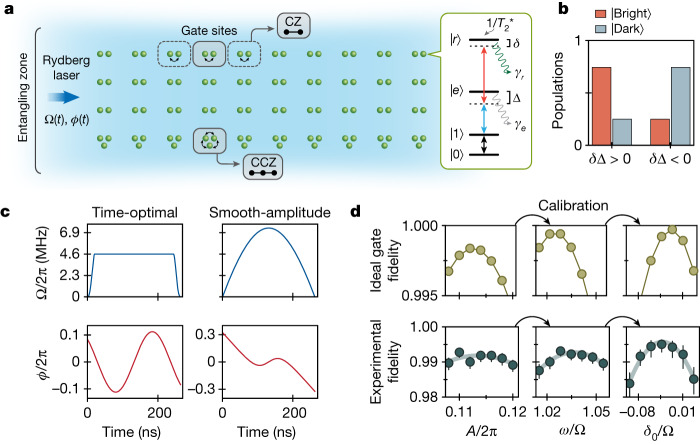
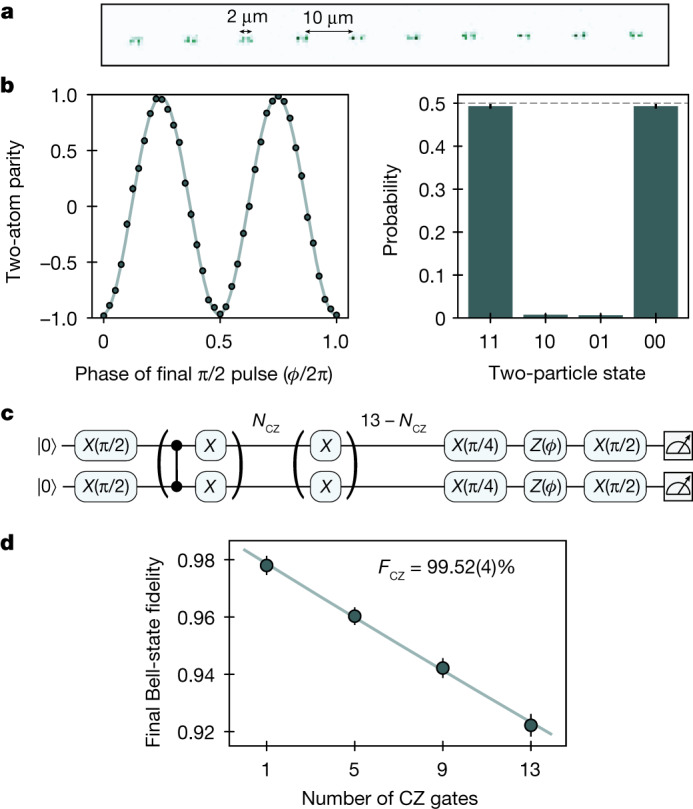
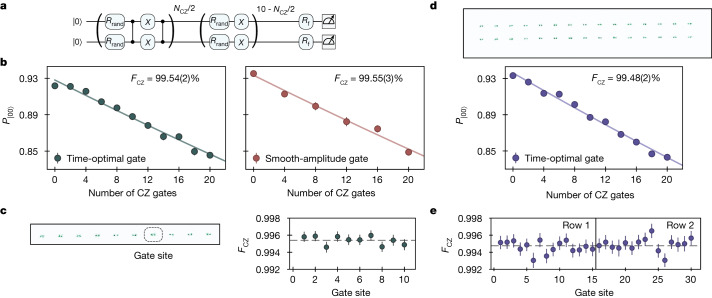
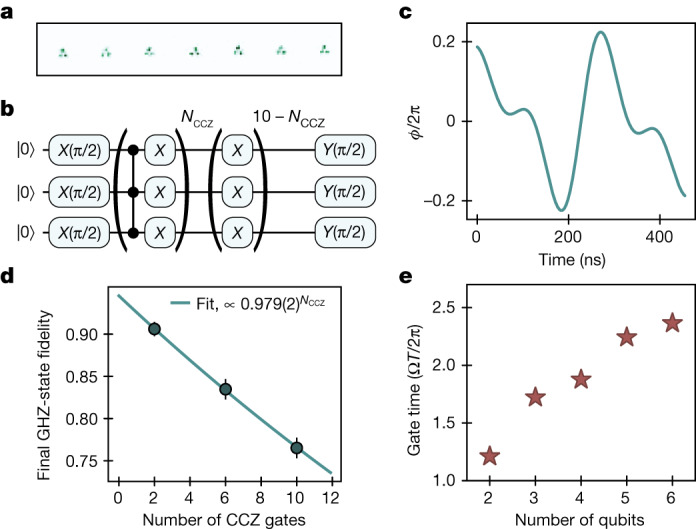
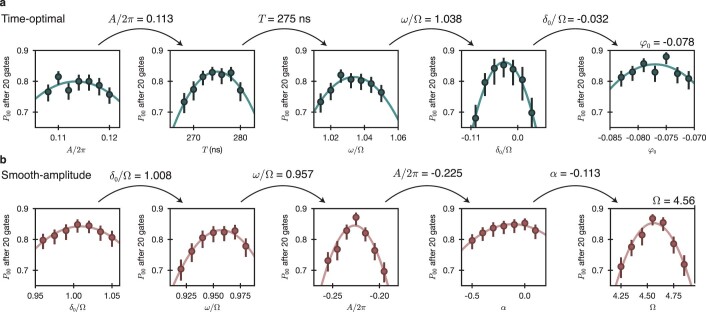
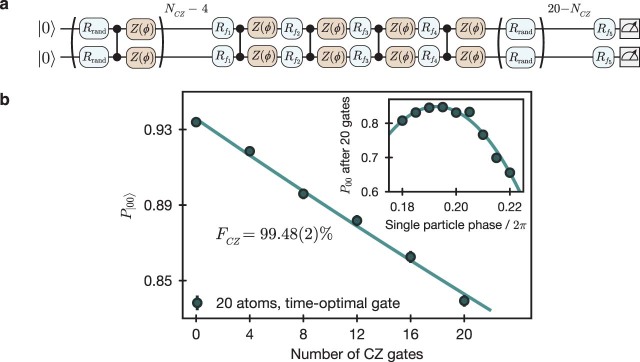
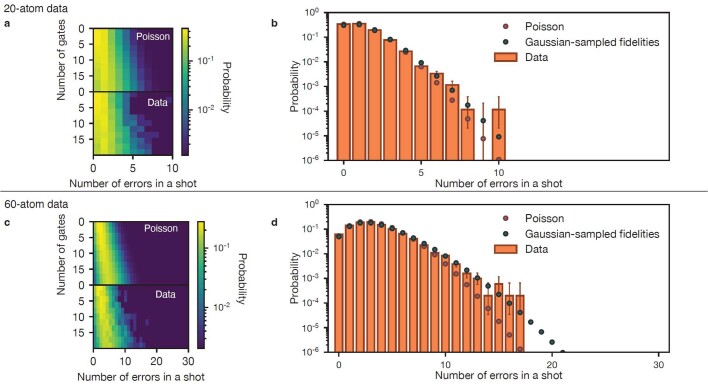
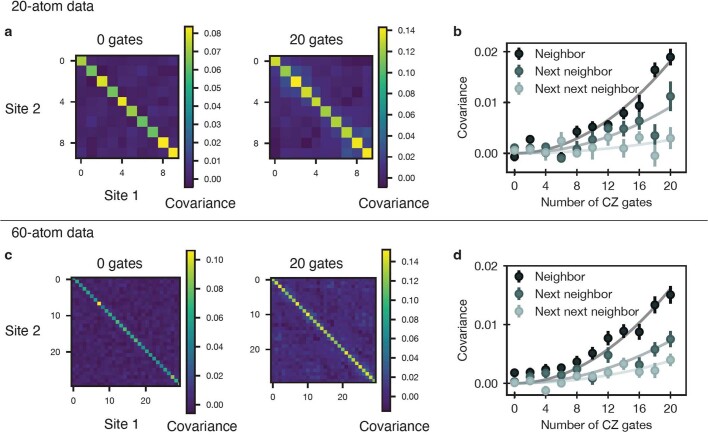
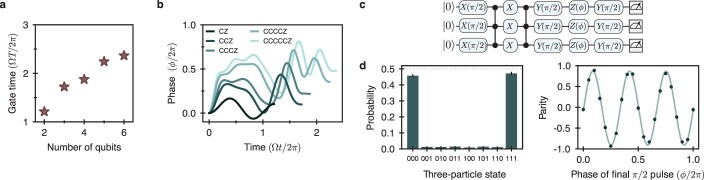
The ability to perform entangling quantum operations with low error rates in a scalable fashion is a central element of useful quantum information processing 1 . Neutral-atom arrays have recently emerged as a promising quantum computing platform, featuring coherent control over hundreds of qubits 2,3 and any-to-any gate connectivity in a flexible, dynamically reconfigurable architecture 4 . The main outstanding challenge has been to reduce errors in entangling operations mediated through Rydberg interactions 5 . Here we report the realization of two-qubit entangling gates with 99.5% fidelity on up to 60 atoms in parallel, surpassing the surface-code threshold for error correction 6,7 . Our method uses fast, single-pulse gates based on optimal control 8 , atomic dark states to reduce scattering 9 and improvements to Rydberg excitation and atom cooling. We benchmark fidelity using several methods based on repeated gate applications 10,11 , characterize the physical error sources and outline future improvements. Finally, we generalize our method to design entangling gates involving a higher number of qubits, which we demonstrate by realizing low-error three-qubit gates 12,13 . By enabling high-fidelity operation in a scalable, highly connected system, these advances lay the groundwork for large-scale implementation of quantum algorithms 14 , error-corrected circuits 7 and digital simulations 15 .
Overview
The claims and statistics of this paper haven’t been checked yet.
Free: it reads the open-access text and checks the first 5 claims that cite a source we can check. Create a free account to check every claim.
Integrity signals
Registry
Cites
Statistics
Figures
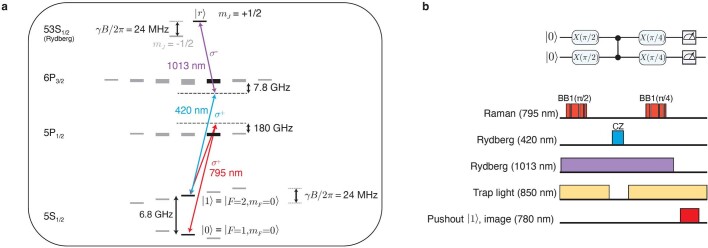
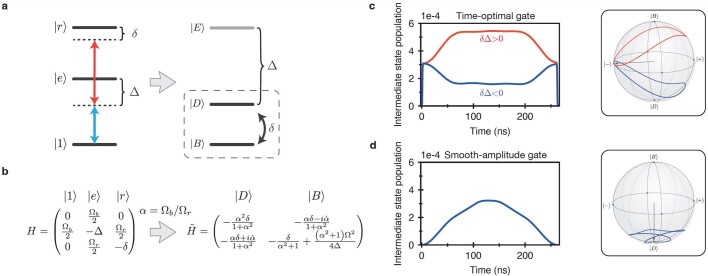
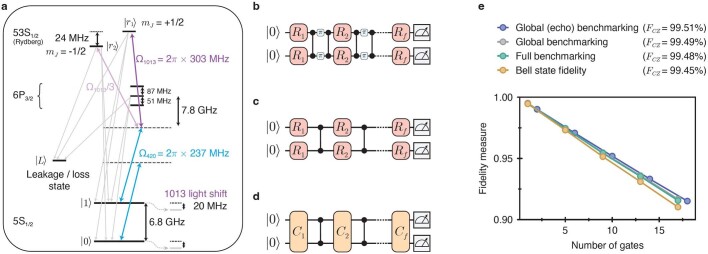
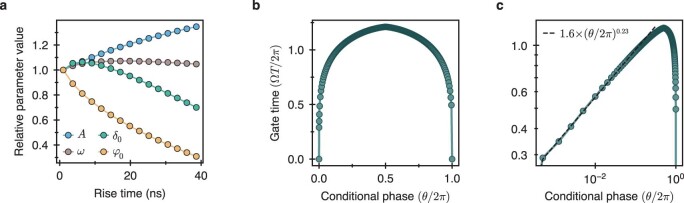
Verification
Claims the paper makes
The claims and statistics of this paper haven’t been checked yet.
Free: it reads the open-access text and checks the first 5 claims that cite a source we can check. Create a free account to check every claim.
Claims other papers make about this one
Each is checked against this paper’s own text: does it say what the citing paper says it does?
The source backs part of the claim, not all of it — or backs it for a different population, condition or comparison.
In the citing paper
“Using logical-level control and a zoned architecture in reconfigurable neutral-atom arrays7, our system combines high two-qubit gate fidelities8, arbitrary connectivity7,9, as well as fully programmable single-qubit rotations and mid-circuit readout10–15.”
From Logical quantum processor based on reconfigurable atom arrays (2024) · cites this paper as [8]
Experimental — accuracy not yet measuredThe source backs part of the claim, not all of it — or backs it for a different population, condition or comparison.
In the citing paper
“Averaged over the five computation logicals, we find that, by using the fault-tolerant initialization (postselecting on the ancilla logical flag not detecting errors) our |0L⟩ initialization fidelity is , exceeding both our physical qubit |0⟩ initialization fidelity (99.32(4)% (ref. 8)) and physical two-qubit gate fidelity (99.5% (ref. 8)).”
From Logical quantum processor based on reconfigurable atom arrays (2024) · cites this paper as [8]
Experimental — accuracy not yet measuredThe source backs part of the claim, not all of it — or backs it for a different population, condition or comparison.
In the citing paper
“Although ref. 8 seems to find some small cross-talk seemingly originating from decay into Rydberg P states, this should be considerably suppressed in the practical operation here owing to the approximately 200 μs duration between gates, during which time Rydberg atoms should either fly away or decay back to the ground state.”
From Logical quantum processor based on reconfigurable atom arrays (2024) · cites this paper as [8]
Experimental — accuracy not yet measuredThe source backs part of the claim, not all of it — or backs it for a different population, condition or comparison.
In the citing paper
“Even though the tail of the top-hat Rydberg excitation beams is only suppressed to about 10% intensity, the two-photon drive is far off-resonant owing to the approximately 20 MHz 1013 light shift detuning that is present for the entangling-zone atoms8.”
From Logical quantum processor based on reconfigurable atom arrays (2024) · cites this paper as [8]
Experimental — accuracy not yet measuredThe source backs part of the claim, not all of it — or backs it for a different population, condition or comparison.
In the citing paper
“We ensure that, in our dynamical decoupling, we have an odd number of π pulses between CZ gates (whenever possible), as this echoes out both systematic and spurious contributions to the single-qubit phase7,8.”
From Logical quantum processor based on reconfigurable atom arrays (2024) · cites this paper as [8]
Experimental — accuracy not yet measured
5 more claims about this paper
Create a free account to see every claim other papers make about this one.
Self-check
Percentages, sums and reported differences re-computed from the paper’s own numbers.
The self-check needs the paper’s full text.
Citations
Cites
Quantum Computing in the NISQ era and beyond
Preskill, J. (2018) · Quantum · doi:10.22331/q-2018-08-06-79 · Cited by 8,830
Fault-tolerant quantum computation by anyons
Kitaev, A. Y. (2003) · Annals of Physics · doi:10.1016/s0003-4916(02)00018-0 · Cited by 7,238 · cited 1×
“A thorough error budget is presented along with explanations of routes to further pushing gates to the regime of F>0.999 to make the system capable of reaching future fault tolerant performance.”
BackgroundInfluentialSurface codes: Towards practical large-scale quantum computation
Fowler, A. G., Mariantoni, M., Martinis, J. M., & Cleland, A. N. (2012) · Physical Review A · doi:10.1103/physreva.86.032324 · Cited by 3,059
Observation of electromagnetically induced transparency
Boller, K.-J., Imamoğlu, A., & Harris, S. E. (1991) · Physical Review Letters · doi:10.1103/physrevlett.66.2593 · Cited by 3,058 · cited 2×
“I was also particularly interested in their analysis of correlations between the sites, with this again being the first time sufficiently large ensembles have been used combined with repeated gate applications to really show how errors and correlations build in the system.”
BackgroundMethodSuperconducting quantum circuits at the surface code threshold for fault tolerance
Barends, R., Kelly, J., Megrant, A., Veitia, A., Sank, D., Jeffrey, E., White, T. C., Mutus, J., Fowler, A. G., Campbell, B., et al. (2014) · Nature · doi:10.1038/nature13171 · Cited by 1,733
Fast Quantum Gates for Neutral Atoms
Jaksch, D., Cirac, J. I., Zoller, P., Rolston, S. L., Côté, R., & Lukin, M. D. (2000) · Physical Review Letters · doi:10.1103/physrevlett.85.2208 · Cited by 1,540
Self-citationPredicting many properties of a quantum system from very few measurements
Huang, H.-Y., Kueng, R., & Preskill, J. (2020) · Nature Physics · doi:10.1038/s41567-020-0932-7 · Cited by 1,240
NMR techniques for quantum control and computation
Vandersypen, L. M. K., & Chuang, I. L. (2005) · Reviews of Modern Physics · doi:10.1103/revmodphys.76.1037 · Cited by 1,217
Suppressing quantum errors by scaling a surface code logical qubit
Google Quantum, A. I., Acharya, R., Aleiner, I., Allen, R., Andersen, T. I., Ansmann, M., Arute, F., Arya, K., Asfaw, A., Atalaya, J., et al. (2023) · Nature · doi:10.1038/s41586-022-05434-1 · Cited by 1,103 · cited 2×
“This protocol has the advantage of populating atomic dark states which do not contain population in the intermediate state used for the two-photon excitation to the Rydberg state, thereby reducing spontaneous emission.”
BackgroundQuantum phases of matter on a 256-atom programmable quantum simulator
Ebadi, S., Wang, T. T., Levine, H., Keesling, A., Semeghini, G., Omran, A., Bluvstein, D., Samajdar, R., Pichler, H., Ho, W. W., et al. (2021) · Nature · doi:10.1038/s41586-021-03582-4 · Cited by 995
Self-citation
Research works printed but not linked: 7
- Kalinowski M Maskara N Lukin MD Non-Abelian Floquet spin liquids in a digital Rydberg simulator Phys. Rev. X 2023 13 031008
- Shende VV Markov IL On the CNOT-cost of TOFFOLI gates Quantum Inf. Comput. 2009 9 461 486
- Ma S Universal gate operations on nuclear spin qubits in an optical tweezer array of 171Yb atoms Phys. Rev. X 2022 12 021028
- Brown MO Thiele T Kiehl C Hsu T-W Regal CA Gray-molasses optical-tweezer loading: controlling collisions for scaling atom-array assembly Phys. Rev. X 2019 9 011057
- Chang, T. H., Wang, T. N., Jen, H. H. & Chen, Y. C. High-fidelity Rydberg control-Z gates with time-optimal pulses. Preprint at https://arxiv.org/abs/2303.16395 (2023). · arXiv
- Khazali M Mølmer K Fast multiqubit gates by adiabatic evolution in interacting excited-state manifolds of Rydberg atoms and superconducting circuits Phys. Rev. X 2020 10 021054
- Singh K Anand S Pocklington A Kemp JT Bernien H Dual-element, two-dimensional atom array with continuous-mode operation Phys. Rev. X 2022 12 011040
Cited by
Items 501–600 of 973
Quantum error mitigation via structural encoding with classical error correction codes
Sohn, I., Lee, C., Song, W., Bae, K., & Lee, W. (2026) · EPJ Quantum Technology · doi:10.1140/epjqt/s40507-026-00474-2 · Cited by 3
OneAdapt: Resource-Adaptive Compilation of Measurement-Based Quantum Computing for Photonic Hardware
Zhang, H., Ruan, J., Tullsen, D. M., Ding, Y., Li, A., & Humble, T. (2025) · IEEE/ACM International Symposium on Microarchitecture (MICRO) · doi:10.1145/3725843.3756100 · Cited by 3
“In contrast to other quantum computing platforms such as superconducting [36, 39, 54, 70], trapped ion [49, 52, 57] and neutral atom systems [10, 23, 72], photonic platforms are well suited for a different computing model called measurement-based quantum computing (MBQC) or one-way quantum…”
Toward Scalable Gate-Level Parallelism on Trapped-Ion Processors with Racetrack Electrodes
Jang, E., Kim, D., Lee, Y., Kwon, J., Huang, Y., & Ro, W. W. (2026) · IEEE International Symposium on High-Performance Computer Architecture (HPCA) · doi:10.1109/hpca68181.2026.11408608 · Cited by 3
“This speed is 4.8 × faster than the shuttling speed of qubits based on Rydberg atoms [25].”
InfluentialMeasurement-induced noncommutativity in adaptive fermionic linear optics
Cao, C.-F., Tang, Y.-F., & Eisert, J. (2026) · Physical Review Letters · doi:10.1103/3jm3-wwfz · Cited by 4
Controlled- Z gates with giant atoms in structured waveguides
Rieck, W., Soro, A., Kockum, A. F., & Chen, G. (2026) · Physical Review A · doi:10.1103/yfm3-qmqq · Cited by 2
Kong, L., Huang, C., Zhang, Z., Zhou, Y., Ren, X., Li, S., & Liang, Z. (2026) · ACM/IEEE Design Automation Conference (DAC) · doi:10.1145/3770743.3804196 · Cited by 4
Self-citationEngineering the non-Hermitian Su-Schrieffer-Heeger model with skin effects in Rydberg atom arrays
Bai, J. N., Yang, F., Yan, D., Li, W., & Shao, X. (2026) · Physical Review A · doi:10.1103/47hc-sftq · Cited by 3
“First, optical tweezers provide scalable real-space geometries, high-fidelity single-site addressability, and flexible control of boundary conditions, which are essential for directly resolving the boundary accumulation associated with the NHSE and for probing the influence of local disorder [27, 28].”
A folded surface code architecture for 2D quantum hardware
Sun, Z., & Cai, Z. (2026) · npj Quantum Information · doi:10.1038/s41534-026-01344-6 · Cited by 3
Fault-tolerant quantum computation with static atomic buses
Bergonzoni, M., Pecorari, L., Norrell, S., Poole, C., Pupillo, G., & Saffman, M. (2026) · PRX Quantum · doi:10.1103/n1ll-yxtt · Cited by 1
“0 µ m, with infidelities below 10 − 3 [2–8], well below typical quantum-error-correction thresholds that are generally of the order of 10 − 2 .”
Nakamura, Y., Ozawa, N., Kusano, T., Yokoyama, R., Shibata, K., Takano, T., Takasu, Y., & Takahashi, Y. (2024) · Journal of the Physical Society of Japan · doi:10.7566/jpsj.94.014301 · Cited by 1
A Fast Rearrangement Method for Defect-Free Atom Arrays
Zhang, Y., Zhang, Z., Zhang, G., Zhang, Z., Chen, Y., Li, Y., Liu, W., Wu, J., Sovkov, V. B., & Ma, J. (2025) · Photonics · doi:10.3390/photonics12020117 · Cited by 3
Neutral atom quantum computers for the applications in condensed matter physics
Shweta, Kaur, I., Singh, N., Kanjilal, S., & Santra, B. (2025) · Journal of Physics Condensed Matter · doi:10.1088/1361-648x/adbb9b · Cited by 3
“Optical lattices enable the direct observation of spin and density distributions [70, 99], while tweezer systems ensure high-fidelity readout of qubit states [94, 95, 101, 102].”
InfluentialDemystifying Quantum Gate Fidelity for Electronics Engineers
Borgarino, M., & Badiali, A. (2025) · Applied Sciences · doi:10.3390/app15052675 · Cited by 3
Learning out-of-time-ordered correlators with classical kernel methods
Tanner, J., Pye, J., & Wang, J. B. (2025) · Physical review. B./Physical review. B · doi:10.1103/physrevb.111.144301 · Cited by 3
“For example, neutral atom processors provide large qubit numbers, but exhibit two qubit gate error rates of roughly 0.5% [3], which severely limits circuit depths.”
InfluentialA Typology of Quantum-Classical Faults
Giusto, E., Núñcz-Corrales, S., Cilardo, A., Mazzocca, N., & Humble, T. S. (2025) · International Conference on Dependable Systems and Networks workshops · doi:10.1109/dsn-w65791.2025.00060 · Cited by 3
Santillan, F. D., & Hanke, A. (2024) · Physics Open · doi:10.1016/j.physo.2025.100292 · Cited by 1
“This mechanism can also entangle three or more atoms enabling native multi-qubit gates [66, 67].”
Optimized readout strategies for neutral-atom quantum processors
Chen, L., Zhu, W., Chen, Z.-J., Wang, Z.-B., Hu, Y., Jie, Q., Guo, G.-C., & Zou, C. (2025) · Physical Review A · doi:10.1103/k2w2-83kc · Cited by 3
“Figure 1(a) depicts the experimental setup of a neutral atom array system [6, 8, 13–17, 21, 22], highlighting the process of photon scattering during the readout stage.”
Cavity polariton blockade for non-local entangling gates with trapped atoms
Srivastava, V., Jandura, S., Brennen, G. K., & Pupillo, G. (2025) · Quantum Science and Technology · doi:10.1088/2058-9565/adfd79 · Cited by 4
“For initial atom states {| 1 ′ 1 ′ ⟩ , | 1 ′ 0 ⟩ , | 00 ⟩} , the effective Hamiltonian acts in the subspace spanned by {| 1 ′ 1 ′ ⟩} , {| 1 ′ 0 ⟩ , | 1 ′ 1 ⟩} and {| 00 ⟩ , | W ⟩} , respectively where | W ⟩ = ( | 01 ⟩ + | 10 ⟩ ) / √ 2.”
InfluentialBeterov, I. I., Kozenko, K. V., Ryabtsev, I. I., & Xu, P. (2026) · Physical Review A · doi:10.1103/g6sw-w48t · Cited by 3
Optimal constant-cost implementations of Clifford operations using global interactions
Nemirovsky, J., Peleg, L., Kish, A. B., & Shapira, Y. (2026) · EPJ Quantum Technology · doi:10.1140/epjqt/s40507-026-00520-z · Cited by 4
Low-overhead tailoring and learning of noise in graph states
Park, G., Sun, J., & Jeong, H. (2026) · Physical Review A · doi:10.1103/rr8y-yz5m · Cited by 3
Ryabtsev, I. I., Ashkarin, I. N., Beterov, I. I., Tretyakov, D. B., Yakshina, E. A., Entin, V. M., & Cheinet, P. (2025) · Physical Review A · doi:10.1103/ws7n-926f · Cited by 3
“For neutral-atom qubits, fidelities of two-qubit gates exceeding 0.994 have been reached [5–7].”
InfluentialQuantum speed limits from symmetries in quantum control
Wiedmann, M., & Burgarth, D. K. (2026) · Journal of Physics A Mathematical and Theoretical · doi:10.1088/1751-8121/ae3f68 · Cited by 4
Parity Cross-Resonance: A Multiqubit Gate
Xu, X.-X., Wang, S., Joshi, R., Hai, R., & Ansari, M. H. (2025) · Physical Review Applied · doi:10.1103/6d5v-vrm4 · Cited by 3
Tuning long-range interactions in Sr Rydberg atoms: the effect of series perturbations
Topcu, T., & Derevianko, A. (2015) · Journal of Physics B: Atomic, Molecular and Optical Physics · doi:10.1088/1361-6455/aebb7c · Cited by 1
Scheduling and Physical Design
Cong, J. (2024) · International Symposium on Physical Design · doi:10.1145/3626184.3635290 · Cited by 3
“Trapped ion systems in long chains or quantum charge-coupled device (CCD) [35] architectures and neutral atoms trapped in arrays of optical tweezers [41, 19]. have also been developed, reaching very low gate errors [17, 33, 20].”
BackgroundDeterministic Photonic Entanglement Arising from Non-Abelian Quantum Holonomy
Bhattacharya, A., & Raman, C. (2025) · Physical Review Letters · doi:10.1103/physrevlett.134.080201 · Cited by 3
Probing the interaction energy of two Rb85 atoms in an optical tweezer via spin-motion coupling
Zhuang, J., Wang, K., Wang, P., Wei, M.-R., Mamat, B., Sheng, C., Xu, P., Liu, M., Wang, J., He, X., et al. (2024) · Physical Review A · doi:10.1103/physreva.109.043320 · Cited by 3
QUBO Modeling for a Spectrum of Domination Problems
Pan, H., & Lu, C. (2024) · Journal of mathematics · doi:10.1155/jom/3201094 · Cited by 2
Realizing fracton order from long-range quantum entanglement in programmable Rydberg atom arraysPreprint
Nevidomskyy, A. H., Bernien, H., & Canright, A. (2024) · arXiv (Cornell University) · doi:10.48550/arxiv.2407.05885 · Cited by 3
“…which is challenging because of the multi-atom nature of the necessary interactions, our proposal requires only two-qubit gates between the ancilla and code qubits, whose implementation is readily available and can be performed efficiently and in parallel using programmable tweezer arrays [9, 10].”
BackgroundBinkowski, L., Osborne, T. J., Schwiering, M., Schwonnek, R., & Ziegler, T. (2024) · arXiv (Cornell University) · doi:10.48550/arxiv.2411.00435 · Cited by 3
Taniguchi, K., Noguchi, A., & Oka, T. (2025) · arXiv (Cornell University) · doi:10.48550/arxiv.2502.17200 · Cited by 3
“Meanwhile, rapidly developing quantum technologies keep breaking the records of high-fidelity quantum operations in diverse platforms [26–29], increasing the demand for more precise Hamiltonian implementations.”
Productionizing Quantum Mass ProductionPreprint
Huggins, W., Khattar, T., & Wiebe, N. (2025) · arXiv (Cornell University) · doi:10.48550/arxiv.2506.00132 · Cited by 2
“For example, some Clifford gates may be more difficult to implement than others, and the costs may vary based on the particular choice of quantum error correcting code or the underlying hardware platform [20, 44, 45].”
Deterministic high-rate entanglement distillation with neutral atom arraysPreprint
Hahn, T. A., White, R., Bernien, H., & Arnon, R. (2025) · arXiv (Cornell University) · doi:10.48550/arxiv.2503.00445 · Cited by 3
“Atom array systems have demonstrated raw Bell state fidelities of 98% and two-qubit CZ gate fidelities of 99.5% [18], coupling of multiple atoms to an optical network [8, 19], and array sizes of thousands of atoms [20].”
InfluentialTseng, P.-H., & Chen, Y. (2026) · APS Open Science · doi:10.48550/arxiv.2507.15453 · Cited by 3
Scalable Steady-State Entanglement with Floquet-Engineered Stabilizer Pumping in Neutral Atom ArraysPreprint
Guo, F.-Q., Su, S., Li, W., & Shao, X. Q. (2025) · arXiv (Cornell University) · doi:10.48550/arxiv.2509.18379 · Cited by 3
Correction of chain losses in trapped ion quantum computers
Coble, N. J., Ye, M., & Delfosse, N. (2025) · arXiv (Cornell University) · doi:10.48550/arxiv.2511.16632 · Cited by 3
“Even though the loss rate of trapped ions is typically lower than technologies like neutral atoms [10] (an ion can be trapped for days or even months in some cases [7, 11]), ion losses cannot be ignored because they spread via qubit interactions.”
Preparation of cat states in many-body eigenbasis via non-local measurementPreprint
Yin, R., & Zhao, H. (2025) · arXiv (Cornell University) · doi:10.48550/arxiv.2507.00199 · Cited by 3
Blockade-induced exchange primitives for scalable neutral-atom QPUPreprint
Khazali, M., & Mølmer, K. (2025) · arXiv (Cornell University) · doi:10.48550/arxiv.2511.22214 · Cited by 3
“Their native entangling toolbox is exceptionally well developed for controlled-phase operations, from foundational blockade-gate proposals to high-fidelity dark-state and parallel multiqubit implementations [5–10].”
Bhowmick, R., Wadhwa, H., Singh, A. K., Sidana, T., Tran, Q. H., & Sabapathy, K. K. (2025) · arXiv (Cornell University) · doi:10.48550/arxiv.2503.16361 · Cited by 3
Quantum Solvers: Predictive Aeroacoustic&Aerodynamic modelingPreprint
van Hulst, N.-L., Panagos, T., Reese, G. S., Panahiyan, S., & Hashizume, T. (2025) · arXiv (Cornell University) · doi:10.48550/arxiv.2507.21683 · Cited by 1
“Recent decades have witnessed outstanding advances in technological and theoretical aspects of quantum computing [3–6].”
Optimized Experiment Design and Analysis for Fully Randomized Benchmarking
Kwiatkowski, A. (2024) · CU Scholar (University of Colorado Boulder) · Cited by 3
Comparing and correcting robustness metrics for quantum optimal controlPreprint
Kamen, A., Fine, S., Bhattacharyya, B., Chong, F. T., & Goldschmidt, A. J. (2026) · arXiv (Cornell University) · doi:10.48550/arxiv.2602.10349 · Cited by 3
Boundary-Aware Stabilizer Scheduling for Distributed Quantum Error CorrectionPreprint
Gupta, S., Bhambay, S., Alavisamani, N., Walton, N., & Vasantam, T. (2026) · arXiv (Cornell University) · doi:10.48550/arxiv.2604.22471 · Cited by 1
“A promising way to achieve this is through modular quantum architectures [23, 24], in which a large quantum processor is constructed from smaller QPUs connected by quantum communication channels [25,26].”
Arbitrary parallel entangling gates with independent calibration on a trapped ion quantum computerPreprint
Diaz, M., Mohammadi-Arzanagh, M., Zhu, Y., Hafezi, M., Linke, N. M., Green, A., & Nam, A. Y. (2026) · arXiv (Cornell University) · doi:10.48550/arxiv.2604.25993 · Cited by 3
Information-Geometric Bound on the Robustness of Entanglement GenerationPreprint
Saleem, Z. H. (2026) · arXiv (Cornell University) · doi:10.48550/arxiv.2606.05696 · Cited by 3
Topological Codes from Space Groups: A Route beyond Translation InvariancePreprint
Xu, C.-Y., Liu, Z.-C., & Xu, Y. (2026) · arXiv (Cornell University) · doi:10.48550/arxiv.2606.20548 · Cited by 3
AnuragK.S., V., Patra, A., Mukherjee, M., Bhat, R., SaiShankar, P., Maitra, R., & Jaiganesh, G. (2026) · arXiv.org · doi:10.48550/arxiv.2606.30551 · Cited by 5
“The CCCRy( θ ) double-excitation gate maps naturally onto the native gate set of Rydberg-blockade platforms (QuEra [25, 26], Pasqal [27, 28]): global blockade pulses realise symmetric, high-rank multi-controlled phase gates ( C k Z and parametrized C k P ( ϕ )) in a single entangling operation [26,…”
Low-latency FPGA-based electronic control system for fast preparation of defect-free atom arraysPreprint
Hu, Y.-D., Ma, D.-Q., Zhang, T.-Y., Chen, L., Zhang, Y.-C., Zhong, X.-K., Zhu, W.-Y., Fan, H.-J., Jie, Q.-X., Zhang, Y.-L., et al. (2026) · arXiv (Cornell University) · doi:10.48550/arxiv.2607.08687 · Cited by 3
“5% [13–15].”
Native CCZ Gate with Fluxonium Qubits and a Microwave-Driven CouplerPreprint
Mazhorin, G. S., Chudakova, T. A., Kazmina, A. S., Berezkin, N. G., Zotova, A. V., Polyanskiy, A. M., Abramov, N., Tarkhov, M., Mumlyakov, A., Trofimov, I., et al. (2026) · arXiv (Cornell University) · doi:10.48550/arxiv.2607.27094 · Cited by 4
“The pursuit of such native multi-qubit primitives has recently attracted growing interest across several quantum-computing platforms, including trapped ions [10, 11], neutral atoms [12, 13], and spin-based systems [14, 15].”
Neutral atom quantum computingPreprint
Saffman, M. (2026) · arXiv (Cornell University) · doi:10.48550/arxiv.2608.30783 · Cited by 4
Vanilla Exact Synthesis of CNOT Circuits is NP-hardPreprint
Li, C.-J., & Guan, J. (2026) · arXiv.org · doi:10.48550/arxiv.2609.04160 · Cited by 4
Demonstration of measurement-free universal logical quantum computation
Butt, F., Pogorelov, I., Freund, R., Steiner, A., Meyer, M., Monz, T., & Müller, M. (2026) · Nature Communications · doi:10.1038/s41467-026-68533-x · Cited by 2
Qudit encoding in Rydberg-blockaded arrays of atoms
Robert, A., & Bienaimé, T. (2026) · Physical Review A · doi:10.1103/dv2h-ryps · Cited by 2
“Experimentally, large values of Ω 1 r can be achieved with the availability of high-power lasers, using either single-photon [29, 32, 33] or two-photon excitation schemes [30].”
Geometric phase and multipartite entanglement of Rydberg atom chains
Wang, C.-Y. (2025) · Physical Review A · doi:10.1103/physreva.111.033321 · Cited by 2
Two-dimensional platforms for entanglement engineering via nonreciprocal dipole interactions
Fang, W., Du, P.-T., Li, G.-X., & Yang, Y.-P. (2025) · Physical Review A · doi:10.1103/pd3d-h2j9 · Cited by 1
Barium-based Rydberg-atom quantum technologies with long Rydberg coherence
Shi, X.-F. (2025) · Physical Review A · doi:10.1103/bbv3-d4ch · Cited by 2
“Here, we compare entangling gate fidelities between barium-based neutral-atom quantum computing with those based on akali-metal atoms [28], ytterbium [81], and strontium [41].”
InfluentialRobust Rydberg facilitation via rapid adiabatic passage
Wang, X., Wang, Y., & Liang, Q. (2026) · Physical Review Research · doi:10.1103/23x7-g2h6 · Cited by 2
Loading and Imaging Atom Arrays via Electromagnetically Induced Transparency
Qiu, E. H., Šumarac, T., Niu, P., Tsesses, S., Wassaf, F., Spierings, D. C., Chen, M.-W., Uysal, M. T., Bartlett, A., Menssen, A., et al. (2025) · PRX Quantum · doi:10.1103/fd15-4g1n · Cited by 2
“3 G due to technical limitations, we have experimentally confirmed that our scheme can operate in a bias field of 10 G, which is similar to the one used for high-fidelity quantum gates in 87 Rb [12] (see Appendix E for more details).”
Self-citationLeveraging magic resources for quantum channel capacity enhancement under stabilizer convolution
Sun, W., & Jin, Y. (2025) · Physical Review A · doi:10.1103/qnz3-4fsc · Cited by 2
Long-ranged gates in quantum computation architectures with limited connectivity
Dür, W. (2025) · Quantum Science and Technology · doi:10.1088/2058-9565/ae20b6 · Cited by 2
Autonomously designed pulses for robust, site-selective control of atomic qubits
Park, S., Lee, S., Lee, K., Kim, M., & Kim, D. (2026) · Physical Review Applied · doi:10.1103/dspx-fgp2 · Cited by 2
“Control fidelity approaching 0.9999 for single-qubit gates [9] and 0.999 for two-qubit gates [10] has been demonstrated with global laser illumination across entire atom arrays.”
InfluentialCompact dual-beam Zeeman slower for high-flux cold atoms
Chen, C., Liu, K.-J., Deng, D.-Z., Ma, S.-C., Zhu, P., He, Z., Chen, J.-F., Wu, X., & Chen, P. (2025) · Physical Review Applied · doi:10.1103/17w5-9kqq · Cited by 2
“…number of proposals suggest that hybrid quantum computation architectures utilizing dual species offer significant advantages [13–16], and call up the need for more efficient and compact Zeeman slower designs to meet the growing demand for portable and scalable quantum technologies [17–19].”
Continuous-time quantum-walk-based ansätze on neutral-atom hardware
Matwiejew, E., Wurtz, J., Chen, J., Elahi, P. J., Macrì, T., & Varetto, U. (2026) · Physical Review A · doi:10.1103/cbd2-635q · Cited by 2
Q-RLONAS: Towards Efficient Quantum Neural Architecture Search
Son, S. B., & Park, S. (2025) · International Conference on Quantum Computing and Engineering · doi:10.1109/qce65121.2025.00193 · Cited by 2
“Two-qubit gate is crucial in enhancing entanglement within quantum circuits [21], [22].”
Optimizing two-qubit gates for ultracold fermions in optical lattices
Reuter, J. A. P., Singh, J., Calarco, T., Motzoi, F., & Zeier, R. (2026) · Physical Review A · doi:10.1103/j6x3-hh74 · Cited by 2
Morandi, O. (2025) · Physical Review A · doi:10.1103/5319-gnrt · Cited by 2
Lu, Y., & Shi, X. (2026) · Quantum Science and Technology · doi:10.1088/2058-9565/ae34e1 · Cited by 2
“According to laser powers over 100 W as experimentally demonstrated in Rydberg-atom technologies [12, 22, 28], it is possible to assume Ω / ( 2 π ) = 30 MHz, which leads to E decay = 2 .”
InfluentialDigital Rydberg simulation of dynamical quantum phase transitions in the schwinger model
Pomarico, D., Dell'Anna, F., Cioli, R., Pascazio, S., Pepe, F., Facchi, P., & Ercolessi, E. (2025) · Physical Review Research · doi:10.1103/b233-qtvm · Cited by 3
A Short Introduction to Quantum Error Correction
Guedes, T. (2026) · Brazilian Journal of Physics · doi:10.1007/s13538-026-02007-9 · Cited by 2
Efficient noisy quantum state and process tomography
Li, C., Zhuang, S., Zhang, Y., Wang, J. B., Yuan, X., Wu, Y., & Wang, C. (2026) · Quantum Science and Technology · doi:10.1088/2058-9565/aeae6e · Cited by 2
“Coherent manipulation of complex quantum states with hundreds of physical qubits has been demonstrated across multiple platforms, including trapped ions [4], neutral atom arrays [5], and superconducting qubit circuits [1, 2, 6].”
Kozenko, K. V., Gromyko, V. V., Beterov, I. I., & Ryabtsev, I. I. (2026) · Physical Review A · doi:10.1103/dt3z-3cqv · Cited by 2
Hyperspectral Anomaly Detection Using Einstein Fuzzy Computing and Quantum Neural Network
Lin, C.-H., Young, S.-S., & Langari, R. (2026) · IEEE Transactions on Geoscience and Remote Sensing · doi:10.1109/tgrs.2026.3691164 · Cited by 1
“These experimental results substantially verify the strong robustness attributed to the novel hesitancy tokens.”
Reducibility of native weighted graphs on Rydberg arrays
Kombe, J., & Pritchard, J. D. (2026) · Physical Review Applied · doi:10.1103/vbpq-f9qf · Cited by 3
Anticipating decoherence in quantum systems
Maan, P., Chen, Y.-H., Borneman, S., Lawrie, B., Puretzky, A., Alaeian, H., Boltasseva, A., Shalaev, V., & Kildishev, A. (2026) · Nature Communications · doi:10.1038/s41467-026-72829-3 · Cited by 1
Quantum computation using dark states in a Rydberg atom array
Rej, S. S., & Deb, B. (2026) · Journal of Physics B Atomic Molecular and Optical Physics · doi:10.1088/1361-6455/ae73d1 · Cited by 2
Operator learning for efficient quantum computation
Over, P., Bengoechea, S., Busilacchi, L. B., Kiffner, M., Rung, T., & Michailidis, A. A. (2026) · Quantum Science and Technology · doi:10.1088/2058-9565/aeb3b0 · Cited by 2
“Within this work, we explore QCS in a way that allows certain characteristics of quantum hardware to be taken into account during the algorithmic design, specifically by restricting the qubit support of each trainable gate to a user-specified connectivity list (see section 2.2).”
InfluentialCascaded Rydberg antiblockade: Multi-atom excitation dynamics and entanglement
Wu, J.-L., Wu, J., Song, P.-Y., Wang, Y., Gao, Y., Song, X., & Su, S. (2026) · Science China Physics Mechanics and Astronomy · doi:10.1007/s11433-026-3006-x · Cited by 3
Qudit-native framework for discrete time crystals
Ma, W., Fan, H., & Zhang, S.-X. (2025) · Physical review B · doi:10.1103/qbhv-yr3d · Cited by 1
High-efficiency realization of the super-robust Rydberg Deutsch gate
Li, A., Liu, B.-B., Yan, L.-L., Su, S., Chen, G., & Feng, M. (2024) · Physical Review Research · doi:10.1103/physrevresearch.6.023231 · Cited by 2
Memory-Optimized Cubic Splines for High-Fidelity Quantum Operations
Ernst, J. O., Snoeijs, J., Peaks, M., & Wolf, J. (2025) · IEEE Transactions on Quantum Engineering · doi:10.1109/tqe.2025.3574463 · Cited by 2
“Generally, state-of-the-art single-and multiqubit gates require pulses on the order of microsec-onds [1], [2], with some faster gates, such as Rydberg gates, happening on the order of hundreds of nanoseconds [3], [4], and some longer microwave gates stretching up to millisec-onds [5], [6].”
A universal algorithm for defect-free atomic array with arbitrary periodic geometries [Invited]
Zhou, Y., Wang, S., Chen, J., Hu, Y., Xu, Z., & Shen, H. (2023) · Chinese Optics Letters · doi:10.3788/col202321.110010 · Cited by 2
Phase shifting control for IQ separation in qubit state tomography
You, Z., Chio, C., Hoi, I.-C., Tam, K., & Ian, H. (2024) · Quantum Information Processing · doi:10.1007/s11128-023-04229-1 · Cited by 2
Engineering Artificial Atomic Systems of Giant Electric Dipole Moment.
Yu, B., Chu, Y.-M., Betzholz, R., Zhang, S., & Cai, J.-M. (2023) · Physical Review Letters · doi:10.1103/physrevlett.132.073202 · Cited by 2
Application of RFSoC-based arbitrary waveform generator for coherent control of atomic qubits
Maetani, K., Machino, A., Koike, K., Morisaka, S., Miyanishi, K., Kobayashi, T., Toyoda, K., Negoro, M., Miyoshi, T., & Ohira, R. (2024) · Japanese Journal of Applied Physics · doi:10.35848/1347-4065/ad40ea · Cited by 2
Distant two-qubit gates in atomic array with Rydberg interaction using geometric quantum control
He, Z.-R., Fu, Z.-X., Liang, J., Chen, Z.-Y., Liu, H.-Z., Huang, J.-Y., Yue, M., Han, Z.-W., Lv, Q.-X., Du, Y.-X., et al. (2024) · Quantum Frontiers · doi:10.1007/s44214-024-00072-2 · Cited by 3
Multipartite entangling power by von Neumann entropy
Qiu, X., Song, Z.-W., & Chen, L. (2024) · Physical Review A · doi:10.1103/physreva.111.022407 · Cited by 4
Low-noise fiber laser systems at 689 nm and 698 nm for strontium
Pertoldi, A., Jha, A., Hauge, J. M., Wayland, J., Kale, Y. B., Singh, Y., Montague, P. B., & Varming, P. (2025) · Optics Express · doi:10.1364/oe.555332 · Cited by 2
Han, S., Song, K., Zan, P., Yu, C., Li, A., Zhou, H., Qin, C., & Xiao, L. (2025) · Optics Express · doi:10.1364/oe.554525 · Cited by 2
Self-citationXu, Z.-X., Jia, X., Qin, K., Wang, W., Zhou, Y., & Li, D.-H. (2025) · Photonics · doi:10.3390/photonics12080830 · Cited by 1
Rabcev, I. I., Ashkarin, I. N., Beterov, I. I., Aksina, E. A., Tret'akov, D. B., Entin, V. M., & Sene, P. (2025) · Zhur. Eksptl'. i Teoret. Fiz. · doi:10.7868/s3034641x25070028 · Cited by 2
Exact large deviations and emergent long-range correlations in sequential quantum East circuits
Li, J., Bertini, B., Garrahan, J. P., & Jack, R. L. (2025) · Physical review B · doi:10.1103/72kx-56lt · Cited by 2
“…only essential physical ingredi-ents, such as the locality of interactions; (ii) the symmetry between space and time realised by quantum circuits offers more avenues for theoretical analysis of their dynamics [1–6]; and (iii) circuits do model accurately certain actual quantum devices [7–12].”
Catalytic entanglement transformations with noisy hardware
Sharma, H. K., Сергеевич, М. А., Helsen, J., & Borregaard, J. (2026) · Quantum · doi:10.22331/q-2026-05-29-2117 · Cited by 3
“In practice, the infidelity of single-qubit gates is often an order of magnitude lower than the error introduced by multi-qubit gates [36].”
InfluentialLaser Systems for High Fidelity Control and Entanglement of Neutral Atomic QubitsPreprint
Picken, C., Despard, I., Kelly, A., Pritchard, J. D., Bain, J. R. P., Hempler, N., Maker, G. T., & Malcolm, G. P. A. (2023) · arXiv (Cornell University) · doi:10.48550/arxiv.2304.08402 · Cited by 2
“Recent progress has seen neutral atoms emerge as a promising candidate to realise a full scale quantum computing system, with demonstrations of single qubit gates which exceed the threshold for fault tolerant quantum computation over large arrays [6] and significant increases in two qubit gate fidelities via Rydberg i…”
Design the Quantum Instruction Set with the Cartan Coordinate Analysis FrameworkPreprint
Wu, A.-B., Leng, J., & Guo, M.-Y. (2024) · arXiv (Cornell University) · doi:10.48550/arxiv.2410.04008 · Cited by 2
Distributed quantum logic algorithmPreprint
Arseniev, B. (2024) · arXiv (Cornell University) · doi:10.48550/arxiv.2411.11979 · Cited by 2
Rydberg Exciton Dynamics in the Blockade Regime of Cu2OPreprint
Minarik, G. E., Arsenault, E., da Silveira, L. A. V., Handa, T., & Zhu, X.-Y. (2025) · arXiv (Cornell University) · doi:10.48550/arxiv.2508.05806 · Cited by 2
OneAdapt: Adaptive Compilation for Resource-Constrained Photonic One-Way Quantum ComputingPreprint
Zhang, H., Ruan, J., Tullsen, D. M., Ding, Y., Li, A., & Humble, T. S. (2025) · arXiv (Cornell University) · doi:10.48550/arxiv.2504.17116 · Cited by 2
Phase gadget compilation of quantum circuits using multiqubit gatesPreprint
Nemirovsky, J., Chuchem, M., Peleg, L., Solomons, Y., Kish, A. B., & Shapira, Y. (2025) · arXiv (Cornell University) · doi:10.48550/arxiv.2510.16788 · Cited by 2
Experimental Efficient Influence Sampling of Quantum ProcessesPreprint
Zhan, H., Bao, Z., Ye, Z., Wang, Q., Mi, M., Yao, P., & Zhang, L. (2025) · arXiv (Cornell University) · doi:10.48550/arxiv.2506.07103 · Cited by 2
Metadata
- Authors
- Evered, S. J., Bluvstein, D., Kalinowski, M., Ebadi, S., Manovitz, T., Zhou, H., Li, S. H., Geim, A. A., Wang, T. T., Maskara, N., Levine, H., Semeghini, G., Greiner, M., Vuletić, V., & Lukin, M. D.
- Affiliations
- Harvard University (US)
- Massachusetts Institute of Technology (US)
- Corresponding author
- Lukin, Mikhail D.
- ORCID
- Venue
- Nature
- Published
- 2023-10-11
- Volume
- 622
- Issue
- 7982
- Pages
- 268-272
- ISSN
- 0028-0836 (ISSN-L)
- 1476-4687
- PMC
- PMC10567572
- OpenAlex
- W4387542025
- Semantic Scholar
- 531874012fede3c01f44f2d81bfb926c0a25c9aa
- Cited by
- 522
- References
- 97
- Citations by year
- 2026: 134 · 2025: 229 · 2024: 138 · 2023: 21
- FWCI
- 60.51
- Type
- journal article
- Language
- en
- Open access
- hybrid
- doi.org
- Licence
- cc-by
- creativecommons.org/licenses/by/4.0 (tdm)
- creativecommons.org/licenses/by/4.0 (vor)
- Locations
- Nature (publishedVersion, cc-by)
- PubMed Central (publishedVersion, cc-by)
- PubMed (publishedVersion)
- arXiv (Cornell University) (submittedVersion)
- OSTI OAI (U.S. Department of Energy Office of Scientific and Technical Information) (submittedVersion)
- FIU - Digital Commons (Florida International University) (submittedVersion)
- Florida International University Digital Commons (Florida International University) (submittedVersion, cc-by)
- RePEc: Research Papers in Economics (submittedVersion)
- arXiv (Cornell University)
- Funders
- National Science Foundation (1745303, W911NF-20-1-0082)
- U.S. Department of Energy (DESC0021013, DESC0021110, 7568717)
- Defense Advanced Research Projects Agency (W911NF2010021)
- National Defense Science and Engineering Graduate
- Multidisciplinary University Research Initiative (W911NF2010082)
- Center for Ultracold Atoms, Massachusetts Institute of Technology
- Army Research Office (W911NF-20-1-0082, W911NF)
- Topics
- Physical Sciences › Physics and Astronomy › Atomic and Molecular Physics, and Optics › Cold Atom Physics and Bose-Einstein Condensates
- Physical Sciences › Computer Science › Artificial Intelligence › Quantum Computing Algorithms and Architecture
- Physical Sciences › Physics and Astronomy › Atomic and Molecular Physics, and Optics › Quantum Information and Cryptography
- Keywords
- neutral atom quantum computing, entangling gates, Rydberg interactions, gate fidelity, three-qubit gates, optimal control, dark states, atom cooling, Rydberg excitation, error sources, scalable quantum hardware
About these checks
Registry, retraction, Cites and statistics results are computed, not judged, with one exception: a printed reference that no index lists is read once by a model before it counts as a citation error. Claims are extracted by a model and kept only when their quote appears verbatim in the text; each cited source is then checked, with a model’s help, for whether it says what the claim relies on. Those verdicts can be wrong — read the claim’s quote and the cited source before relying on one.
Statistics and arithmetic are recomputed, not judged.
Confidence bands are shown only for fields calibrated on our annotated test set. None is calibrated yet, so no band is shown.
What counts as a claim ›How we measure confidence ›How we check this ›
Are you an author, or do you see a problem with this page? Request a review
Data sources
Bibliographic data: Semantic Scholar, OpenAlex, Crossref.
Contains information from the Semantic Scholar Academic Graph Datasets, made available under the ODC Attribution License (ODC-BY 1.0).
Semantic Scholar’s data is described in: Kinney, R., et al. (2023). The Semantic Scholar Open Data Platform. arXiv:2301.10140.
