

High-fidelity parallel entangling gates on a neutral-atom quantum computer
Open accessThe DOI matches its Crossref record; 101 of the 101 references it cites were found in a registry or an index.
Abstract
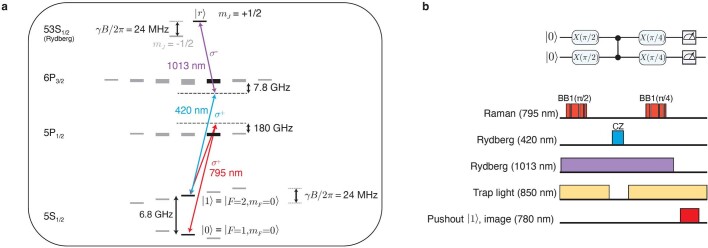
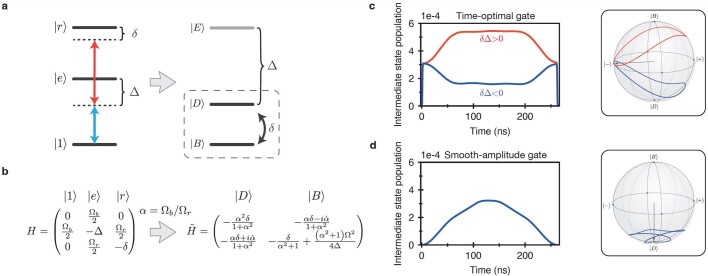
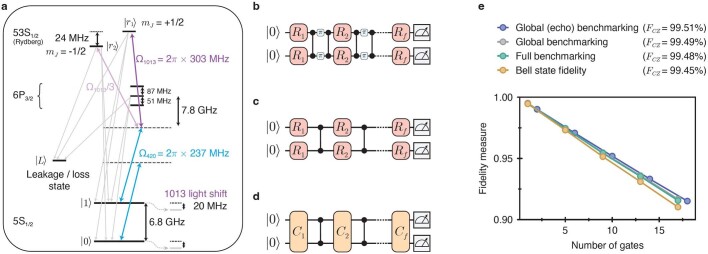
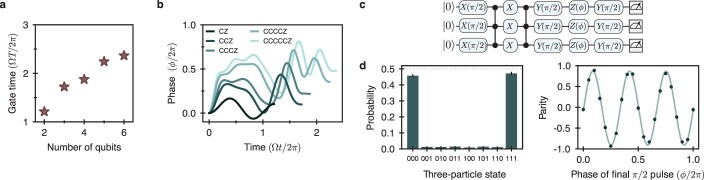
The ability to perform entangling quantum operations with low error rates in a scalable fashion is a central element of useful quantum information processing 1 . Neutral-atom arrays have recently emerged as a promising quantum computing platform, featuring coherent control over hundreds of qubits 2,3 and any-to-any gate connectivity in a flexible, dynamically reconfigurable architecture 4 . The main outstanding challenge has been to reduce errors in entangling operations mediated through Rydberg interactions 5 . Here we report the realization of two-qubit entangling gates with 99.5% fidelity on up to 60 atoms in parallel, surpassing the surface-code threshold for error correction 6,7 . Our method uses fast, single-pulse gates based on optimal control 8 , atomic dark states to reduce scattering 9 and improvements to Rydberg excitation and atom cooling. We benchmark fidelity using several methods based on repeated gate applications 10,11 , characterize the physical error sources and outline future improvements. Finally, we generalize our method to design entangling gates involving a higher number of qubits, which we demonstrate by realizing low-error three-qubit gates 12,13 . By enabling high-fidelity operation in a scalable, highly connected system, these advances lay the groundwork for large-scale implementation of quantum algorithms 14 , error-corrected circuits 7 and digital simulations 15 .
Overview
The claims and statistics of this paper haven’t been checked yet.
Free: it reads the open-access text and checks the first 5 claims that cite a source we can check. Create a free account to check every claim.
Integrity signals
Registry
Cites
Statistics
Figures
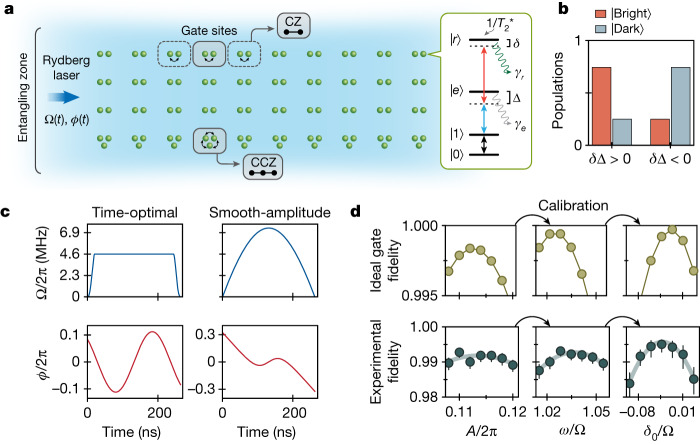
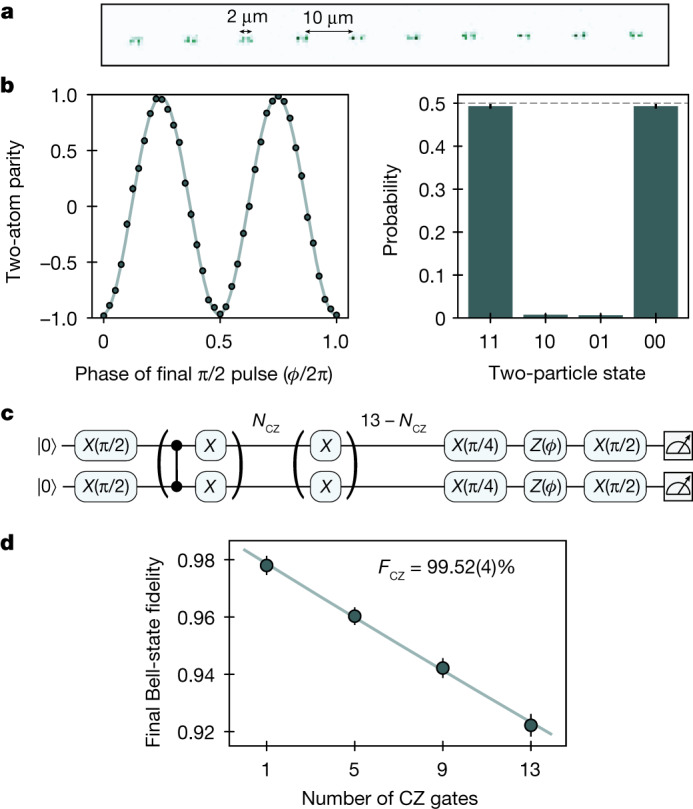
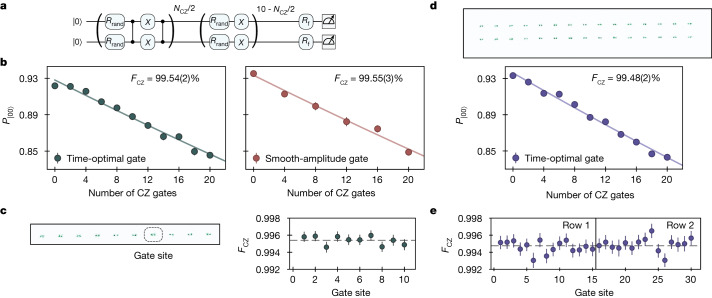
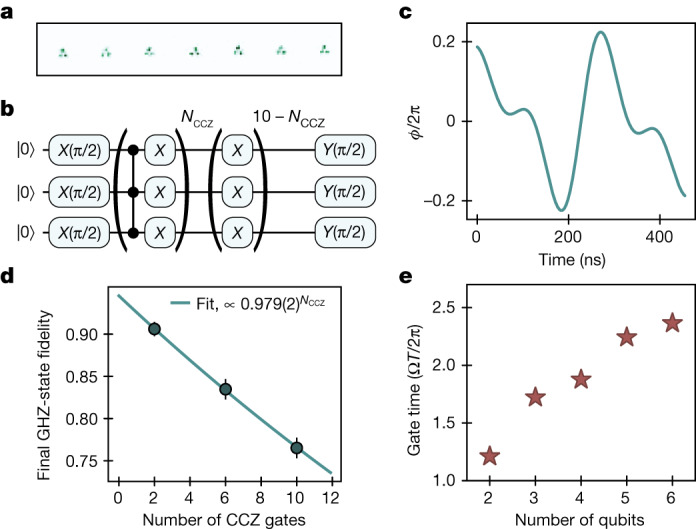
Verification
Claims the paper makes
The claims and statistics of this paper haven’t been checked yet.
Free: it reads the open-access text and checks the first 5 claims that cite a source we can check. Create a free account to check every claim.
Claims other papers make about this one
Each is checked against this paper’s own text: does it say what the citing paper says it does?
The source backs part of the claim, not all of it — or backs it for a different population, condition or comparison.
In the citing paper
“Using logical-level control and a zoned architecture in reconfigurable neutral-atom arrays7, our system combines high two-qubit gate fidelities8, arbitrary connectivity7,9, as well as fully programmable single-qubit rotations and mid-circuit readout10–15.”
From Logical quantum processor based on reconfigurable atom arrays (2024) · cites this paper as [8]
Experimental — accuracy not yet measuredThe source backs part of the claim, not all of it — or backs it for a different population, condition or comparison.
In the citing paper
“Averaged over the five computation logicals, we find that, by using the fault-tolerant initialization (postselecting on the ancilla logical flag not detecting errors) our |0L⟩ initialization fidelity is , exceeding both our physical qubit |0⟩ initialization fidelity (99.32(4)% (ref. 8)) and physical two-qubit gate fidelity (99.5% (ref. 8)).”
From Logical quantum processor based on reconfigurable atom arrays (2024) · cites this paper as [8]
Experimental — accuracy not yet measuredThe source backs part of the claim, not all of it — or backs it for a different population, condition or comparison.
In the citing paper
“Although ref. 8 seems to find some small cross-talk seemingly originating from decay into Rydberg P states, this should be considerably suppressed in the practical operation here owing to the approximately 200 μs duration between gates, during which time Rydberg atoms should either fly away or decay back to the ground state.”
From Logical quantum processor based on reconfigurable atom arrays (2024) · cites this paper as [8]
Experimental — accuracy not yet measuredThe source backs part of the claim, not all of it — or backs it for a different population, condition or comparison.
In the citing paper
“Even though the tail of the top-hat Rydberg excitation beams is only suppressed to about 10% intensity, the two-photon drive is far off-resonant owing to the approximately 20 MHz 1013 light shift detuning that is present for the entangling-zone atoms8.”
From Logical quantum processor based on reconfigurable atom arrays (2024) · cites this paper as [8]
Experimental — accuracy not yet measuredThe source backs part of the claim, not all of it — or backs it for a different population, condition or comparison.
In the citing paper
“We ensure that, in our dynamical decoupling, we have an odd number of π pulses between CZ gates (whenever possible), as this echoes out both systematic and spurious contributions to the single-qubit phase7,8.”
From Logical quantum processor based on reconfigurable atom arrays (2024) · cites this paper as [8]
Experimental — accuracy not yet measured
5 more claims about this paper
Create a free account to see every claim other papers make about this one.
Self-check
Percentages, sums and reported differences re-computed from the paper’s own numbers.
The self-check needs the paper’s full text.
Citations
Cites
Quantum Computing in the NISQ era and beyond
Preskill, J. (2018) · Quantum · doi:10.22331/q-2018-08-06-79 · Cited by 8,830
Fault-tolerant quantum computation by anyons
Kitaev, A. Y. (2003) · Annals of Physics · doi:10.1016/s0003-4916(02)00018-0 · Cited by 7,238 · cited 1×
“A thorough error budget is presented along with explanations of routes to further pushing gates to the regime of F>0.999 to make the system capable of reaching future fault tolerant performance.”
BackgroundInfluentialSurface codes: Towards practical large-scale quantum computation
Fowler, A. G., Mariantoni, M., Martinis, J. M., & Cleland, A. N. (2012) · Physical Review A · doi:10.1103/physreva.86.032324 · Cited by 3,059
Observation of electromagnetically induced transparency
Boller, K.-J., Imamoğlu, A., & Harris, S. E. (1991) · Physical Review Letters · doi:10.1103/physrevlett.66.2593 · Cited by 3,058 · cited 2×
“I was also particularly interested in their analysis of correlations between the sites, with this again being the first time sufficiently large ensembles have been used combined with repeated gate applications to really show how errors and correlations build in the system.”
BackgroundMethodSuperconducting quantum circuits at the surface code threshold for fault tolerance
Barends, R., Kelly, J., Megrant, A., Veitia, A., Sank, D., Jeffrey, E., White, T. C., Mutus, J., Fowler, A. G., Campbell, B., et al. (2014) · Nature · doi:10.1038/nature13171 · Cited by 1,733
Fast Quantum Gates for Neutral Atoms
Jaksch, D., Cirac, J. I., Zoller, P., Rolston, S. L., Côté, R., & Lukin, M. D. (2000) · Physical Review Letters · doi:10.1103/physrevlett.85.2208 · Cited by 1,540
Self-citationPredicting many properties of a quantum system from very few measurements
Huang, H.-Y., Kueng, R., & Preskill, J. (2020) · Nature Physics · doi:10.1038/s41567-020-0932-7 · Cited by 1,240
NMR techniques for quantum control and computation
Vandersypen, L. M. K., & Chuang, I. L. (2005) · Reviews of Modern Physics · doi:10.1103/revmodphys.76.1037 · Cited by 1,217
Suppressing quantum errors by scaling a surface code logical qubit
Google Quantum, A. I., Acharya, R., Aleiner, I., Allen, R., Andersen, T. I., Ansmann, M., Arute, F., Arya, K., Asfaw, A., Atalaya, J., et al. (2023) · Nature · doi:10.1038/s41586-022-05434-1 · Cited by 1,103 · cited 2×
“This protocol has the advantage of populating atomic dark states which do not contain population in the intermediate state used for the two-photon excitation to the Rydberg state, thereby reducing spontaneous emission.”
BackgroundQuantum phases of matter on a 256-atom programmable quantum simulator
Ebadi, S., Wang, T. T., Levine, H., Keesling, A., Semeghini, G., Omran, A., Bluvstein, D., Samajdar, R., Pichler, H., Ho, W. W., et al. (2021) · Nature · doi:10.1038/s41586-021-03582-4 · Cited by 995
Self-citation
Research works printed but not linked: 7
- Kalinowski M Maskara N Lukin MD Non-Abelian Floquet spin liquids in a digital Rydberg simulator Phys. Rev. X 2023 13 031008
- Shende VV Markov IL On the CNOT-cost of TOFFOLI gates Quantum Inf. Comput. 2009 9 461 486
- Ma S Universal gate operations on nuclear spin qubits in an optical tweezer array of 171Yb atoms Phys. Rev. X 2022 12 021028
- Brown MO Thiele T Kiehl C Hsu T-W Regal CA Gray-molasses optical-tweezer loading: controlling collisions for scaling atom-array assembly Phys. Rev. X 2019 9 011057
- Chang, T. H., Wang, T. N., Jen, H. H. & Chen, Y. C. High-fidelity Rydberg control-Z gates with time-optimal pulses. Preprint at https://arxiv.org/abs/2303.16395 (2023). · arXiv
- Khazali M Mølmer K Fast multiqubit gates by adiabatic evolution in interacting excited-state manifolds of Rydberg atoms and superconducting circuits Phys. Rev. X 2020 10 021054
- Singh K Anand S Pocklington A Kemp JT Bernien H Dual-element, two-dimensional atom array with continuous-mode operation Phys. Rev. X 2022 12 011040
Cited by
Items 301–400 of 973
Multitarget Rydberg gates via spatial blockade engineering
Stein, S., Liu, C., Kan, S., Crane, E., Ding, Y., Mao, Y., Schuckert, A., & Li, A. (2026) · Physical Review Research · doi:10.1103/k72m-9tn8 · Cited by 9
“In many systems, the pulse is applied globally to all atoms within an entangling region, offering a path toward scalable, parallel entangling operations [12].”
InfluentialDevice for MHz-rate rastering of arbitrary 2D optical potentials.
Bytyqi, E., Sinclair, J., Ramette, J., & Vuletić, V. (2026) · Optics Letters · doi:10.1364/ol.596039 · Cited by 7
“The shuttling application imposes stringent requirements: (1) the raster rate must exceed ∼ 1 MHz to avoid parametric heating [10–12], and (2) atoms must be transported adiabatically in steps of ∼ 100 nm—the size of an atomic wave packet [8, 17].”
Self-citationAnonymous, Byun, A., Коновалов, А. В., Kazemi, J., Schuler, M., & Lechner, W. (2026) · Physical Review Research · doi:10.1103/z46h-mgh4 · Cited by 9
“Considering the entire exchange gate family, U XY ( θ ) , finding analytically parametrized pulses for the angle θ would simplify the implementation of a continuous set of gates by reducing experimental calibration efforts [6].”
Sun, Y. (2023) · Physical Review Applied · doi:10.1103/physrevapplied.20.l061002 · Cited by 9
Machine learning-enhanced optical tweezers for defect-free rearrangement
Lee, Y., & Chae, E. (2024) · Current Applied Physics · doi:10.1016/j.cap.2024.03.003 · Cited by 9
Measuring Bipartite Spin Correlations of Lattice-Trapped Dipolar Atoms
Alaoui, Y. A., Muleady, S. R., Chaparro, E., Trifa, Y., Rey, A. M., Roscilde, T., Laburthe-Tolra, B., & Vernac, L. (2024) · Physical Review Letters · doi:10.1103/physrevlett.133.203401 · Cited by 9
Quantum interface for telecom frequency conversion based on diamond-type atomic ensembles
Tseng, P.-H., Chen, L., Shiu, J.-S., & Chen, Y.-F. (2024) · Physical Review A · doi:10.1103/physreva.109.043716 · Cited by 8
Fano resonance in excitation spectroscopy and cooling of an optically trapped single atom
Chow, C. H., Ng, B. L., Prakash, V., & Kurtsiefer, C. (2024) · Physical Review Research · doi:10.1103/physrevresearch.6.023154 · Cited by 9
Efficient Eigenstate Preparation in an Integrable Model with Hilbert Space Fragmentation
Ruiz, R., Sopena, A., Pozsgay, B., & López, E. (2025) · PRX Quantum · doi:10.1103/g9f9-p8ks · Cited by 9
Unraveling the structures in the van der Waals interactions of alkali-metal Rydberg atoms
Wadenpfuhl, K., & Adams, C. S. (2025) · Physical Review A · doi:10.1103/physreva.111.062803 · Cited by 9
The Virtual Quantum Device (VQD): A tool for detailed emulation of quantum computers
Gustiani, C., Jones, T., & Benjamin, S. C. (2025) · Quantum · doi:10.22331/q-2025-02-25-1642 · Cited by 9
“Recent experimental demonstrations have shown these gates can be implemented with high fidelity in systems with > 100 qubits [45], making neutral atoms a promising candidate for scalable quantum computing.”
Laser Cooling and Qubit Measurements on a Forbidden Transition in Neutral Cs Atoms
Scott, J., Lim, H.-J., Singla, U., Meece, Q., Fang, C., Choy, J. T., Kolkowitz, S., Graham, T. M., & Saffman, M. E. (2025) · Physical Review Letters · doi:10.1103/j4h9-fdvh · Cited by 9
Simulating a two-component Bose-Hubbard model with imbalanced hopping in a Rydberg tweezer array
Zhang, Y., Gaddie, A., Do, H.-V., Biedermann, G. W., & Lewis-Swan, R. J. (2024) · Physical Review A · doi:10.1103/physreva.109.053317 · Cited by 9
Overview of projective quantum measurementsPreprint
Barberena, D., & Friedman, A. J. (2024) · arXiv (Cornell University) · doi:10.48550/arxiv.2404.05679 · Cited by 9
Logical Error Rates for a [[4,2,2]]-Encoded Variational Quantum Eigensolver AnsatzPreprint
Gowrishankar, M., Claudino, D., Wright, J., & Humble, T. S. (2024) · arXiv (Cornell University) · doi:10.48550/arxiv.2405.03032 · Cited by 9
Designing Fault-Tolerant Blind Quantum ComputationPreprint
Baranes, G., Wang, I. W., Machado, F., Suleymanzade, A., Stas, P.-J., Wei, Y.-C., Yelin, S. F., Borregaard, J., & Lukin, M. D. (2025) · arXiv (Cornell University) · doi:10.48550/arxiv.2505.21621 · Cited by 9
Self-citationTrapping, manipulating and probing ultracold atoms: a quantum technologies tutorialPreprint
Wolswijk, L., Cavicchioli, L., Vinelli, G., Chiarotti, M., Donati, L., Fernandez, M. F., Hernández-Rajkov, D., Mancini, C., Vezio, P., Zhou, T., et al. (2025) · arXiv (Cornell University) · doi:10.48550/arxiv.2510.20790 · Cited by 10
Optimized Many-Hypercube Codes toward Lower Logical Error Rates and Earlier RealizationPreprint
Goto, H. (2025) · arXiv (Cornell University) · doi:10.48550/arxiv.2512.00561 · Cited by 9
Nakaji, K., Wurtz, J., Huang, H., Calderón, L. M., Panicker, K., Kyoseva, E. S., & Aspuru‐Guzik, A. (2025) · arXiv (Cornell University) · doi:10.48550/arxiv.2506.05536 · Cited by 9
“In contrast, two-qubit operations involve bringing two atoms into close proximity and exciting them into Rydberg states with a global Rydberg laser [9, 11].”
Generation of 480 nm picosecond pulses for ultrafast excitation of Rydberg atoms
Mahesh, T. P., Matsubara, T., Chew, Y. T., Tomita, T., de Léséleuc, S., & Ohmori, K. (2025) · Optics Letters · doi:10.1364/ol.538707 · Cited by 8
Ion-mediated interaction and controlled-phase-gate operation between two atomic qubits
Mudli, S., Mal, S., Rej, S. S., Dey, A., & Deb, B. (2024) · Physical Review A · doi:10.1103/physreva.110.062618 · Cited by 10
Park, M., Maskara, N., Kalinowski, M., & Lukin, M. D. (2025) · Physical Review A · doi:10.1103/physreva.111.012419 · Cited by 8
Self-citationTwo-qubit gate protocols with microwave-dressed Rydberg ions in a linear Paul trap
Wilkinson, J. W. P., Bolsmann, K., Guedes, T. L. M., Müller, M., & Lesanovsky, I. (2025) · New Journal of Physics · doi:10.1088/1367-2630/add494 · Cited by 8
“For the latter, highly excited Rydberg atoms interact strongly via dipole–dipole interactions, allowing the implementation of entangling gates on nanosecond timescales [55, 61, 64, 122].”
Non-destructive optical read-out and manipulation of circular Rydberg atoms
Machu, Y., Hernández, A. D., Creutzer, G., Young, A., Raimond, J., Brune, M., & Sayrin, C. (2025) · Physical Review X · doi:10.1103/st3l-14d7 · Cited by 6
“Remarkable recent achievements include the demonstration of high-fidelity gates [9– 11], the operation of a quantum processor [12] or the quantum simulation of dynamics of interacting spins [13– 15], with performances ultimately limited by the ≈ 100 µ s lifetime of the laser-accessible Rydberg…”
Volcano architecture for scalable quantum processor units
Ma, D.-Q., Jie, Q.-X., Hu, Y., Zhu, W., Zhang, Y., Fan, H.-J., Zhong, X.-K., Chen, G.-J., Zhang, Y., Zhang, T., et al. (2025) · Science China Physics Mechanics and Astronomy · doi:10.1007/s11433-025-2804-2 · Cited by 8
Direct Generation of an Array with 78400 Optical Tweezers Using a Single Metasurface
Wang, Y., Liao, Y., Zhang, T., Tian, Y., Wu, Y., Zhang, W., Zhang, W., Huang, Y., Zhai, H., Chen, W., et al. (2025) · Chinese Physics Letters · doi:10.1088/0256-307x/43/1/010606 · Cited by 8
Multiqubit parity gates for Rydberg atoms in various configurations
Kazemi, J., Schuler, M., Ertler, C., & Lechner, W. (2025) · Physical Review Research · doi:10.1103/56qk-rmsz · Cited by 9
Faster Randomized Dynamical Decoupling
Yi, C., Kim, L., & Marvian, M. (2026) · Physical Review Letters · doi:10.1103/fk7j-y1vl · Cited by 9
“…in concept, design, and implementation, DD has been applied across a wide range of experimental platforms, including superconducting devices [5–9], trapped ions [10, 11], solid-state spins [12–16], allowing for state-of-the-art quantum computing demonstrations on various platforms [17–23].”
BackgroundControlling Rydberg atom-polariton interactions: from exceptional points to fast readout
Šumarac, T., Qiu, E. H., Tsesses, S., Niu, P., Menssen, A., Xu, W.-C., Walther, V., Delić, U., Choi, S., Lukin, M., et al. (2026) · Physical Review X · doi:10.1103/bm5h-5jpx · Cited by 3
Self-citationEfimov effect in long-range quantum spin chains
Sun, N., Feng, L., & Zhang, P. (2026) · Communications Physics · doi:10.1038/s42005-026-02580-0 · Cited by 8
“A prominent example is quantum spin chains with long-range couplings, which are relevant in trapped-ion systems [21– 26], Rydberg arrays [27–37], and solid-state NMR systems [38–42].”
Rethinking noise in quantum machine learning: When noise improves learning
Zhu, L., Zhang, Z., Dong, Y., & Li, X. (2026) · APL Computational Physics · doi:10.1063/5.0331090 · Cited by 8
“State-of-the-art two-qubit gate fidelities have reached 99.5% on neutral-atom arrays 18 , 99.9% on trapped-ion 19 and superconducting 20 platforms, with recent advances achieving 99.99% on trapped-ion systems 21 .”
InfluentialSingle-pulse two-qubit gates for Rydberg atoms with noncyclic geometric control
Chen, Z.-Y., Liang, J., Fu, Z.-X., Liu, H.-Z., He, Z.-R., Wang, M., Han, Z.-W., Huang, J.-Y., Lv, Q.-X., & Du, Y.-X. (2024) · Physical Review A · doi:10.1103/physreva.109.042621 · Cited by 8
Virtual mitigation of coherent non-adiabatic transitions by echo verification
Schiffer, B. F., van Vreumingen, D., Tura, J., & Polla, S. (2024) · Quantum · doi:10.22331/q-2024-05-14-1346 · Cited by 8
“Rydberg atom arrays have recently demonstrated such capabilities [14, 29].”
BackgroundQuantum search in many-body interacting systems with long-range interactions
Xing, F., Wei, Y., & Liao, Z. (2024) · Physical Review A · doi:10.1103/physreva.109.052435 · Cited by 8
“Another possible candidate is the Rydberg atom whose Stark effect can be of the order of GHz while its decay rate can be as low as KHz [69, 70].”
Speeding Up Quantum Measurement Using Space-Time Trade-Off
Corlett, C., Čepaitė, I., Daley, A. J., Gustiani, C., Pelegrí, G., Pritchard, J. D., Linden, N., & Skrzypczyk, P. (2025) · Physical Review Letters · doi:10.1103/physrevlett.134.080801 · Cited by 9
“The relatively short two-qubit gate times compared to readout times in the following references demonstrate the advantage of our scheme to superconducting [31, 32] and neutral atom [1, 33] quantum computers while for trapped-ion quantum computers [34, 35] the advantage is less clear cut at present.”
Efficient generation of multiqubit entanglement states using rapid adiabatic passage
Xu, S., Li, X., Li, X., Li, J., & Xue, M. (2024) · Physical Review A · doi:10.1103/physreva.110.023108 · Cited by 9
Recompiling QAOA Circuits on Various Rotational Directions
Jang, E., Ha, D., Choi, S., Kim, Y., Kwon, J., Lee, Y., Ahn, S., Kim, H. J., & Ro, W. W. (2024) · International Conference on Parallel Architectures and Compilation Techniques (PACT) · doi:10.1145/3656019.3676899 · Cited by 8
Autoionization-Enhanced Rydberg Dressing by Fast Contaminant Removal
Cao, A., Yelin, T. L., Eckner, W. J., Oppong, N. D., & Kaufman, A. M. (2025) · Physical Review Letters · doi:10.1103/physrevlett.134.133201 · Cited by 8
“In this regime, the AI rate of the Rydberg state can be approximated from Fermi’s golden rule to be ≈ Ω 2AI / Γ AI [4].”
Reducing Quantum Error Correction Overhead With Versatile Flag-Sharing Syndrome Extraction Circuits
Liou, P.-H., & Lai, C. (2025) · IEEE Transactions on Quantum Engineering · doi:10.1109/tqe.2025.3572764 · Cited by 9
“Evered et al. [32] demonstrated a neutral-atom-based quantum computer capable of high-fidelity entangling operations on multiple qubit pairs simultaneously.”
BackgroundResource-efficient shadow tomography using equatorial stabilizer measurements
Park, G., Teo, Y. S., & Jeong, H. (2025) · Physical Review Research · doi:10.1103/9pbp-jzr9 · Cited by 9
“[74], [75] and later [60] respectively reported gate fidelities of 89%, 97% and 99.5% using atomic-qubit-array entanglement.”
InfluentialQuantum Hamiltonian algorithms for maximum independent sets
Zhao, X., Ge, P., Yu, H., You, L., Wilczek, F. A., & Wu, B. (2025) · National Science Review · doi:10.1093/nsr/nwaf304 · Cited by 9
“While it remains unclear whether they might offer any quantum advantage over classical algorithms, the promising scalability of the experimental platform employed in [1, 10, 11] raises significant hope that it may provide a viable experimental approach for finding MIS of n > 2000.”
BackgroundOptimizing two-qubit gates for ultracold atoms using Fermi-Hubbard models
Singh, J., Reuter, J. A. P., Calarco, T., Motzoi, F., & Zeier, R. (2025) · Physical Review Applied · doi:10.1103/xqzw-m27l · Cited by 8
Pulse optimization in adiabatic quantum computation and control
Turyansky, D., Zolti, Y., Cohen, Y., & Pick, A. (2026) · Physical Review Research · doi:10.1103/dq3h-1k35 · Cited by 8
“Motivated by the success of quantum optimal control (QOC) algorithms in enhancing the performance of gate-based quantum algorithms [16, 26], we introduce a QOC pulse-optimization method for adiabatic protocols.”
Lattice Defects in Rydberg Atom Arrays
Wang, H., Li, C.-S., Li, X., Gu, Y.-F., & Liu, S. (2025) · Physical review. B./Physical review. B · doi:10.1103/zf2q-gxr1 · Cited by 9
Ground-state reachability for variational quantum eigensolvers: a Rydberg-atom case study
Singh, J., Kruckenhauser, A., van Bijnen, R., & Zeier, R. (2026) · Quantum Science and Technology · doi:10.1088/2058-9565/ae7b7b · Cited by 8
Measurement-Free Quantum Error Correction Optimized for Biased Noise
Brechtelsbauer, K., Butt, F., Locher, D. F., Higuera-Quintero, S., Weber, S., Müller, M., & Büchler, H. P. (2025) · PRX Quantum · doi:10.1103/wsnf-prwl · Cited by 8
“Since typical durations of gates are several orders of magnitude smaller than the qubit coherence times, idling errors during gates can be neglected [44, 45, 52, 53].”
Scalable quantum simulator with an extended gate set in giant atoms
Chen, G., & Kockum, A. F. (2025) · Quantum · doi:10.22331/q-2026-01-30-1992 · Cited by 7
Engineering Long-Range and Multibody Interactions via Global Kinetic Constraints
Wu, R., Yang, B., Claeys, P. W., & Zhao, H. (2026) · Physical Review Letters · doi:10.1103/4l1s-kkw7 · Cited by 8
CMOS-fabricated ultraviolet light modulator using low-loss alumina piezo-optomechanical photonics
Castillo, Z. A., Shugayev, R., Dominguez, D., Gehl, M. T., Karl, N. J., Leenheer, A. J., Little, B., Jau, Y., & Eichenfield, M. (2026) · Optica Quantum · doi:10.1364/opticaq.582412 · Cited by 8
Quantum-inspired activation functions and quantum Chebyshev-polynomial networkPreprint
Li, S., Salek, M. S., Wang, Y., & Chowdhury, M. A. (2024) · arXiv · doi:10.48550/arxiv.2404.05901 · Cited by 8
“Due to achievements in quantum hardware development [11–15], quantum supremacy was demonstrated via the random sampling task made by Google superconducting quantum computers and photonic quantum devices [16, 17].”
BackgroundSelf-citationClassical Algorithms for Hamiltonian Dynamics Mean Value and Guided Local Hamiltonian ProblemPreprint
Wu, Y., Zhang, Y., Wang, C., & Yuan, X. (2024) · arXiv (Cornell University) · doi:10.48550/arxiv.2409.04161 · Cited by 8
“Meanwhile, due to the exponential increase of error mitigation cost with circuit depth [16, 17], current noisy quantum hardware platforms—including trapped ions [30], neutral atom arrays [31], and superconducting qubit circuits [22, 32]—can only implement constant-depth circuits.”
Derandomized shallow shadows: Efficient Pauli learning with bounded-depth circuitsPreprint
Kirk, K. V., Kokail, C., Kunjummen, J., Hu, H.-Y., Teng, Y., Cain, M., Taylor, J. M., Yelin, S. F., Pichler, H., & Lukin, M. D. (2024) · arXiv (Cornell University) · doi:10.48550/arxiv.2412.18973 · Cited by 8
Self-citationCoherence Preserving Leakage Detection and Cooling in Alkaline Earth AtomsPreprint
Omanakuttan, S., Buchemmavari, V., Martin, M. J., & Deutsch, I. (2024) · arXiv (Cornell University) · doi:10.13140/rg.2.2.18730.84168 · Cited by 8
Converting qubit relaxation into erasures with a single fluxoniumPreprint
Liu, C., Li, Y., Wang, J., Guan, Q., Jin, L.-J., Ma, L., Hu, R., Wang, T., Zhu, X., Yu, H., et al. (2026) · arXiv (Cornell University) · doi:10.48550/arxiv.2601.11086 · Cited by 8
“Multiple platforms, such as superconducting circuits [1–4], trapped ions [5–7], and neutral atoms [8–10], are now routinely assembling and controlling tens to hundreds of physical qubits at or beyond the error threshold required for quantum error correction.”
Self-citationUniversal Dynamical Scaling of Strong-to-Weak Spontaneous Symmetry Breaking in Open Quantum SystemsPreprint
Shu, C., Zhang, K., Luo, Z.-X., You, Y., & Sun, K. (2026) · arXiv (Cornell University) · doi:10.48550/arxiv.2603.06363 · Cited by 8
“Finally, the examples discussed in this paper are experimentally accessible in programmable open quantum platforms including trapped Ryd-berg ions [55, 56], optical lattices [57], and neutral atom arrays [58, 59].”
Factoring $2048$ bit RSA integers with a half-million-qubit modular atomic processorPreprint
Xue, T., & Covey, J. P. (2026) · arXiv (Cornell University) · doi:10.48550/arxiv.2605.03951 · Cited by 8
“Since Rydberg gates are fast ( ≈ 300 ns) [56, 62], the gate time of the logical CNOTs is dominated by the moving time of atoms, and we approximate the gate time of logical CNOTs as 10( d + 1) µ s.”
Entangling gate performance and fidelity limits with neutral atom Förster resonancesPreprint
Norrell, S. A., Shen, Y., Saffman, M., & Otten, M. (2026) · arXiv (Cornell University) · doi:10.48550/arxiv.2605.19245 · Cited by 8
“2% of the optimum [1].”
Fault-tolerant quantum computation with a neutral atom processor
Reichardt, B. W., Paetznick, A., Aasen, D., Basov, I., Bello-Rivas, J. M., Bonderson, P., Chao, R., van Dam, W., Hastings, M. B., Mishmash, R. V., et al. (2024) · arXiv · doi:10.48550/arxiv.2411.11822 · Cited by 7
“Neutral atom devices have been mainly analog, but recent progress has enabled digital, gate-based computation [EBK + 23, SST + 23, MLP + 23, RCC + 24, FTS + 24, MSS + 24].”
InfluentialLong-lived giant circular Rydberg atoms at room temperature
Pultinevicius, E., Götzelmann, A., Thielemann, F., Hölzl, C., & Meinert, F. (2025) · Nature Communications · doi:10.1038/s41467-026-77764-x · Cited by 4
“For these applications the lifetime of the Rydberg levels sets fundamental limits for gate fi delities, coherence times, or spectroscopic precision.”
Ji, J.-W., Sunami, S., Kikura, S., Goban, A., & Simon, C. (2025) · Physical Review Applied · doi:10.1103/vcrh-hl73 · Cited by 7
“Most importantly, high-fidelity Rydberg gates between two atoms have been demonstrated [49, 52–54], enabling deterministic operations for entanglement swapping.”
Gate-based readout and cooling of neutral atoms
Tsai, R. B.-S., Picard, L. R. B., Sun, X., Le, Y., Leung, K. H., & Endres, M. (2026) · Physical Review Letters · doi:10.1103/8ncv-2mcx · Cited by 7
Asymmetric and fast Rydberg gate protocol for entanglement outside of the blockade regime
Anonymous, Buchemmavari, V., & Saffman, M. E. (2026) · Physical Review A · doi:10.1103/gvwj-vpl8 · Cited by 7
Noise-Aware Variational Eigensolvers: A Dissipative Route for Lattice Gauge Theories
Cobos, J., Locher, D. F., Bermúdez, A., Müller, M., & Rico, E. (2024) · PRX Quantum · doi:10.1103/prxquantum.5.030340 · Cited by 7
Cheng, L., Liu, S.-C., Peng, L.-Y., & Gong, Q. (2024) · Physical Review Applied · doi:10.1103/physrevapplied.22.034021 · Cited by 7
Finite-temperature Rydberg arrays: Quantum phases and entanglement characterization
Reinić, N., Jaschke, D., Wanisch, D., Silvi, P., & Montangero, S. (2024) · Physical Review Research · doi:10.1103/physrevresearch.6.033322 · Cited by 7
“With the possibility of arranging individual Rydberg atoms in arrays of arbitrary geometries using optical tweezers [6–9], recent advancements in quantum computing with neutral atoms have demonstrated high-fidelity qubit gates [10– 12] and arbitrary connectivity [13, 14].”
Ultra-sensitive light detection technologies based on single-photon detectors: a review
Nofriandi, A., Hamdi, H., Ratnawulan, R., & Yulkifli, Y. (2024) · Sensing Technology · doi:10.1080/28361466.2024.2404268 · Cited by 7
Modeling and Simulating Rydberg Atom Quantum Computers for Hardware-Software Co-design with PachinQo
Ludmir, J., Huo, Y., DiBrita, N. S., & Patel, T. (2024) · Proceedings of the ACM on Measurement and Analysis of Computing Systems · doi:10.1145/3700421 · Cited by 7
“However, research on compiling quantum programs for Rydberg atom systems has largely focused on individual and global addressing [10, 15, 22, 38, 47, 47, 48].”
InfluentialLow-density parity-check representation of fault-tolerant quantum circuits
Li, Y. (2025) · Physical Review Research · doi:10.1103/physrevresearch.7.013115 · Cited by 8
Erasing Doppler dephasing error in Rydberg quantum gates
Li, R., Qian, J., & Zhang, W. (2025) · New Journal of Physics · doi:10.1088/1367-2630/adcfbe · Cited by 7
“Specifically, we perform a smooth phase modulation whose slope also represents the two-photon detuning value [9, 45].”
InfluentialDirectional transport in Rydberg atom arrays via kinetic constraints and temporal modulation
Wang, Y., Wang, J., Panja, A., Wang, X., & Liang, Q.-Y. (2025) · Physical Review Research · doi:10.1103/physrevresearch.7.l022035 · Cited by 7
Ivanova-Rohling, V. N., Rohling, N., & Burkard, G. (2025) · EPJ Quantum Technology · doi:10.1140/epjqt/s40507-025-00363-0 · Cited by 7
“Among those platforms are superconducting qubits [1, 2], Rydberg atoms [3], trapped ions [4], and spin qubits in semiconductor quantum dots [5].”
Reducing quantum error correction overhead using soft information
Majaniemi, J., & Matekole, E. S. (2026) · Quantum Science and Technology · doi:10.1088/2058-9565/ae4e55 · Cited by 9
“The following process describes how we extract the error suppression rate Λ from surface code simulations of variable code distances d .”
InfluentialCoherence of Microwave and Optical Qubit Levels in Neutral Thulium
Mishin, D., Tregubov, D. O., Kolachevsky, N., & Golovizin, A. A. (2025) · PRX Quantum · doi:10.1103/f8xg-w57m · Cited by 7
Variational approach to open quantum systems with long-range competing interactions
Hryniuk, D., & Szymańska, M. (2025) · Communications Physics · doi:10.1038/s42005-025-02479-2 · Cited by 6
Fast quantum gates for neutral atoms separated by a few tens of micrometers
Bergonzoni, M., Riso, R. R., & Pupillo, G. (2026) · Physical Review Research · doi:10.1103/hjrh-4327 · Cited by 8
Scalable and fault-tolerant preparation of encoded k -uniform states
Majidy, S., Hangleiter, D., & Gullans, M. J. (2025) · Physical Review A · doi:10.1103/cl23-c3jg · Cited by 7
Numerical Circuit Synthesis and Compilation for Multi-State Preparation
Szasz, A., Younis, E., & de Jong, W. A. (2023) · International Conference on Quantum Computing and Engineering · doi:10.1109/qce57702.2023.00092 · Cited by 6
“1% to 1% for quantum computing architectures including trapped ions [3], [4], neutral atoms [5]– [7], silicon quantum dots [8], and superconducting qubits [9]– [12].”
BackgroundSpacetime Quantum Circuit Complexity via MeasurementsPreprint
Du, Z., Liu, Z.-W., & Ma, X. (2024) · arXiv (Cornell University) · doi:10.48550/arxiv.2408.16602 · Cited by 7
Régent, F.-M. L. (2025) · arXiv (Cornell University) · doi:10.48550/arxiv.2507.03678 · Cited by 7
Programmable few-atom Bragg scattering and ground-state cooling in a cavityPreprint
Wang, G., Spierings, D., Peters, M. L., Chen, M.-W., Delić, U., & Vuletić, V. (2025) · arXiv (Cornell University) · doi:10.48550/arxiv.2508.10748 · Cited by 7
“In view of the very low attainable temperatures given by the cavity linewidth (2 µ K in our case), cavity cooling can be used to improve the fidelity of various quantum processes, such as the gate fidelity in Rydberg arrays [11].”
InfluentialSelf-citationMultiQ: Multi-Programming Neutral Atom Quantum ArchitecturesPreprint
Romão, F., Vonk, D., Giortamis, E., Sprokholt, D., & Bhatotia, P. (2026) · arXiv (Cornell University) · doi:10.48550/arxiv.2601.08504 · Cited by 7
Quantum Deep Learning: A Comprehensive ReviewPreprint
Ji, Y., Chen, Z.-Y., Roth, M., Kreplin, D. A., Schiffer, C., King, M., Anton, O., Alam, M. S., Krutzik, M., Willsch, D., et al. (2026) · arXiv (Cornell University) · doi:10.48550/arxiv.2603.06644 · Cited by 7
The Impact of Qubit Connectivity on Quantum Advantage in Noisy IQP CircuitsPreprint
Placidi, L., Rinaldi, E., Fujii, K., & Liu, C.-Y. (2026) · arXiv (Cornell University) · doi:10.48550/arxiv.2604.12635 · Cited by 7
“In contrast, architectures with near all-to-all or dynamically reconfigurable long-range connectivity, most notably trapped-ion and neutral-atom platforms, can often implement the same interaction pattern with substantially less routing overhead than fixed nearest-neighbor layouts [15], [16].”
Benchmarking a machine-learning differential equations solver on a neutral-atom logical processorPreprint
Mathiot, P., Garnaoui, E., Leriche, A.-U., Philip, E., Albrecht, B., Briosne-Fréjaville, C., Cardarelli, L., Cornillot, A., Cournez, G., Couturier, L., et al. (2026) · arXiv (Cornell University) · doi:10.48550/arxiv.2605.21276 · Cited by 7
Optimal protocols for entangling gates inN-qubit atomic systems
Solá, I. R., Shin, S., & Chang, B. Y. (2023) · AIP Advances · doi:10.1063/5.0171334 · Cited by 6
Holonomic swap and controlled-swap gates of neutral atoms via selective Rydberg pumping
Sun, C., Chen, X. Y., Mu, W. L., Wang, G. C., You, J.-B., & Shao, X. Q. (2024) · EPJ Quantum Technology · doi:10.1140/epjqt/s40507-024-00246-w · Cited by 6
Improved Entanglement‐Based High‐Dimensional Optical Quantum Computation with Linear Optics
Gao, H., Song, G., & Wei, H. (2024) · Annalen der Physik · doi:10.1002/andp.202400144 · Cited by 6
Universal Gate-Based Quantum Computer With Individual Optical Addressing of Neutral Atom Qubits
Radnaev, A. G., & team on behalf of Infleqtion’s Sqorpius (2024) · Frontiers in Optics + Laser Science 2024 (FiO, LS) · doi:10.1364/fio.2024.fw6c.4
Scaling of computational order parameters in Rydberg-atom graph states
Qin, Z., & Scarola, V. W. (2025) · Physical Review A · doi:10.1103/physreva.111.042617 · Cited by 6
“We define computational order parameters as the fidelities to implement measurement-based quantum logic operations in the Clifford group.”
Hamiltonian formulations of centroid-based clustering
Seong, M., & Park, D. K. (2025) · Frontiers in Physics · doi:10.3389/fphy.2025.1544623 · Cited by 6
Robust implicit quantum control of interacting spin chains
Stefanescu, L., Edwards-Pratt, L., O'Connor, J., Tsegaye, E., Le, N. H., & Mintert, F. (2025) · Physical Review A · doi:10.1103/zmcn-ddkj · Cited by 6
“Noise-resilience has also been achieved with high accuracy for two-qubit en-tangling gates [7, 9–21] and few-qubit gates [15, 22, 23], but the development of control techniques to achieve noise-resilience gets rapidly more challenging with increasing system size [24].”
Xu, H.-Z., Chai, X., Hu, M., Wang, Z., Feng, Y.-L., Chen, Y., Zhang, X., Wang, J., Zhuang, W.-F., Jin, Y., et al. (2025) · Research · doi:10.34133/research.0947 · Cited by 7
Architecture for a quantum repeater based on Rydberg-atom quantum processors
Zhang, Y., Jie, Q., Li, M., Wu, S.-H., Wang, Z.-B., Zou, X., Zhang, P., Li, G., Zhang, T., Guo, G.-C., et al. (2025) · Physical Review Applied · doi:10.1103/8rss-rqr2 · Cited by 7
Control of Dipolar Dynamics by Geometrical Programming
You, J., Doyle, J. M., Liu, Z., Yu, S. S., & Periwal, A. (2025) · Physical Review Letters · doi:10.1103/k22t-xgcy · Cited by 6
Shallow Quantum Circuit for Generating Extremely Low-Entangled Approximate State Designs.
Lee, W., Hhan, M., Cho, G. Y., & Kwon, H. (2025) · Physical Review Letters · doi:10.1103/p966-lcgs
“01 , as an explicit example, our construction requires 58-depth, which could be achievable in near-term quantum devices using parallel applications of entangling gates with all-to-all connectivity [39–41].”
Kurzyna, S., Niewelt, B., Mazelanik, M., Wasilewski, W., Demkowicz-Dobrzański, R., & Parniak, M. (2025) · Nature Communications · doi:10.1038/s41467-026-76016-2 · Cited by 1
“This manifests in their remarkable properties crucial for the implementation of quantum gates 47 and single photon generation 48 .”
Active robustness against detuning error for Rydberg quantum gates
Hou, Q.-L., Wang, H., & Qian, J. (2024) · Physical Review Applied · doi:10.1103/physrevapplied.22.034054 · Cited by 6
Resource estimation for entanglement routing in quantum networks
Dawar, M., Riedinger, R., Vyas, N., & Mendes, P. (2026) · Physical Review A · doi:10.1103/vf4x-rjsd · Cited by 6
Mamat, B., Sheng, C., Zhang, Y.-Q., Hou, J., Xu, P., Wang, K., Zhuang, J., Wei, M.-R., Liu, M., Wang, J., et al. (2024) · Physical Review Applied · doi:10.1103/physrevapplied.22.064021 · Cited by 6
“The rapid development of single Rydberg atoms in optical tweezers, as a tunable physical system at the quantum level, is aimed at realizing quantum simulation [1–6], quantum computation [7–9] and other realms of quantum information processing [10–13].”
Zhao, P. Z., Chen, T., Liu, S., & Gong, J. (2025) · Physical Review A · doi:10.1103/physreva.111.022621 · Cited by 6
“To date one-qubit gates can be executed at very high fideli-ties [36–38].”
Metadata
- Authors
- Evered, S. J., Bluvstein, D., Kalinowski, M., Ebadi, S., Manovitz, T., Zhou, H., Li, S. H., Geim, A. A., Wang, T. T., Maskara, N., Levine, H., Semeghini, G., Greiner, M., Vuletić, V., & Lukin, M. D.
- Affiliations
- Harvard University (US)
- Massachusetts Institute of Technology (US)
- Corresponding author
- Lukin, Mikhail D.
- ORCID
- Venue
- Nature
- Published
- 2023-10-11
- Volume
- 622
- Issue
- 7982
- Pages
- 268-272
- ISSN
- 0028-0836 (ISSN-L)
- 1476-4687
- PMC
- PMC10567572
- OpenAlex
- W4387542025
- Semantic Scholar
- 531874012fede3c01f44f2d81bfb926c0a25c9aa
- Cited by
- 522
- References
- 97
- Citations by year
- 2026: 134 · 2025: 229 · 2024: 138 · 2023: 21
- FWCI
- 60.51
- Type
- journal article
- Language
- en
- Open access
- hybrid
- doi.org
- Licence
- cc-by
- creativecommons.org/licenses/by/4.0 (tdm)
- creativecommons.org/licenses/by/4.0 (vor)
- Locations
- Nature (publishedVersion, cc-by)
- PubMed Central (publishedVersion, cc-by)
- PubMed (publishedVersion)
- arXiv (Cornell University) (submittedVersion)
- OSTI OAI (U.S. Department of Energy Office of Scientific and Technical Information) (submittedVersion)
- FIU - Digital Commons (Florida International University) (submittedVersion)
- Florida International University Digital Commons (Florida International University) (submittedVersion, cc-by)
- RePEc: Research Papers in Economics (submittedVersion)
- arXiv (Cornell University)
- Funders
- National Science Foundation (1745303, W911NF-20-1-0082)
- U.S. Department of Energy (DESC0021013, DESC0021110, 7568717)
- Defense Advanced Research Projects Agency (W911NF2010021)
- National Defense Science and Engineering Graduate
- Multidisciplinary University Research Initiative (W911NF2010082)
- Center for Ultracold Atoms, Massachusetts Institute of Technology
- Army Research Office (W911NF-20-1-0082, W911NF)
- Topics
- Physical Sciences › Physics and Astronomy › Atomic and Molecular Physics, and Optics › Cold Atom Physics and Bose-Einstein Condensates
- Physical Sciences › Computer Science › Artificial Intelligence › Quantum Computing Algorithms and Architecture
- Physical Sciences › Physics and Astronomy › Atomic and Molecular Physics, and Optics › Quantum Information and Cryptography
- Keywords
- neutral atom quantum computing, entangling gates, Rydberg interactions, gate fidelity, three-qubit gates, optimal control, dark states, atom cooling, Rydberg excitation, error sources, scalable quantum hardware
About these checks
Registry, retraction, Cites and statistics results are computed, not judged, with one exception: a printed reference that no index lists is read once by a model before it counts as a citation error. Claims are extracted by a model and kept only when their quote appears verbatim in the text; each cited source is then checked, with a model’s help, for whether it says what the claim relies on. Those verdicts can be wrong — read the claim’s quote and the cited source before relying on one.
Statistics and arithmetic are recomputed, not judged.
Confidence bands are shown only for fields calibrated on our annotated test set. None is calibrated yet, so no band is shown.
What counts as a claim ›How we measure confidence ›How we check this ›
Are you an author, or do you see a problem with this page? Request a review
Data sources
Bibliographic data: Semantic Scholar, OpenAlex, Crossref.
Contains information from the Semantic Scholar Academic Graph Datasets, made available under the ODC Attribution License (ODC-BY 1.0).
Semantic Scholar’s data is described in: Kinney, R., et al. (2023). The Semantic Scholar Open Data Platform. arXiv:2301.10140.
