

High-fidelity parallel entangling gates on a neutral-atom quantum computer
Open accessThe DOI matches its Crossref record; 101 of the 101 references it cites were found in a registry or an index.
Abstract
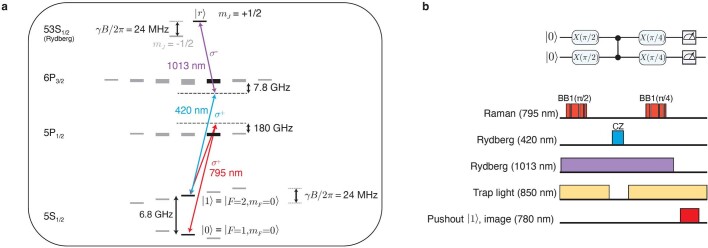
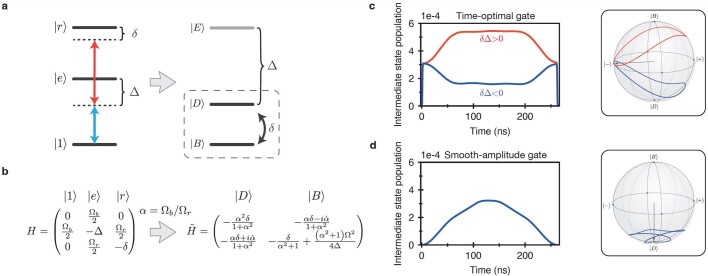
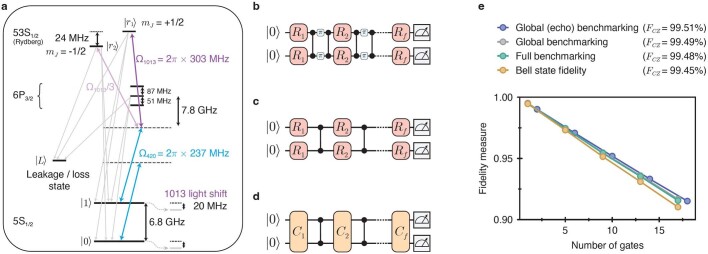
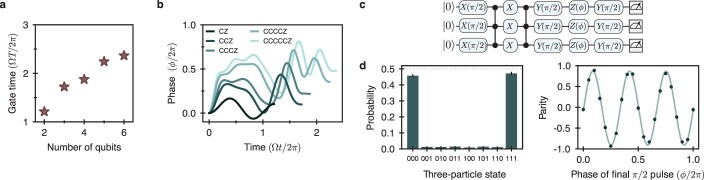
The ability to perform entangling quantum operations with low error rates in a scalable fashion is a central element of useful quantum information processing 1 . Neutral-atom arrays have recently emerged as a promising quantum computing platform, featuring coherent control over hundreds of qubits 2,3 and any-to-any gate connectivity in a flexible, dynamically reconfigurable architecture 4 . The main outstanding challenge has been to reduce errors in entangling operations mediated through Rydberg interactions 5 . Here we report the realization of two-qubit entangling gates with 99.5% fidelity on up to 60 atoms in parallel, surpassing the surface-code threshold for error correction 6,7 . Our method uses fast, single-pulse gates based on optimal control 8 , atomic dark states to reduce scattering 9 and improvements to Rydberg excitation and atom cooling. We benchmark fidelity using several methods based on repeated gate applications 10,11 , characterize the physical error sources and outline future improvements. Finally, we generalize our method to design entangling gates involving a higher number of qubits, which we demonstrate by realizing low-error three-qubit gates 12,13 . By enabling high-fidelity operation in a scalable, highly connected system, these advances lay the groundwork for large-scale implementation of quantum algorithms 14 , error-corrected circuits 7 and digital simulations 15 .
Overview
The claims and statistics of this paper haven’t been checked yet.
Free: it reads the open-access text and checks the first 5 claims that cite a source we can check. Create a free account to check every claim.
Integrity signals
Registry
Cites
Statistics
Figures
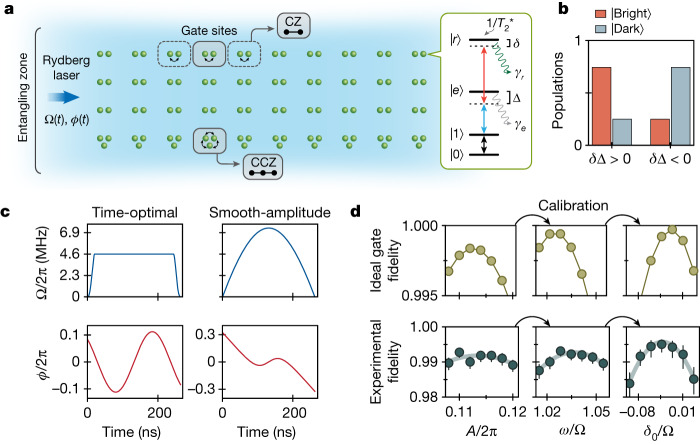
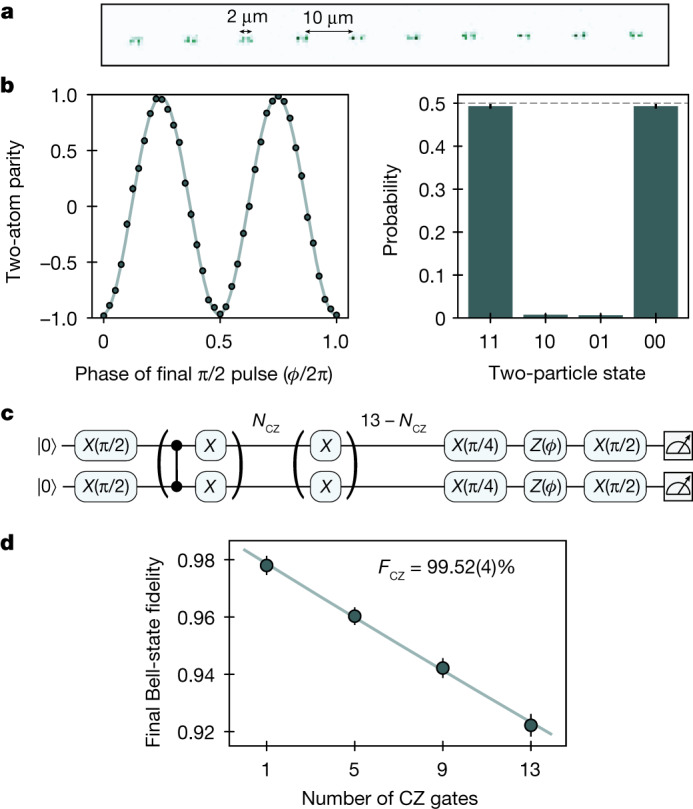
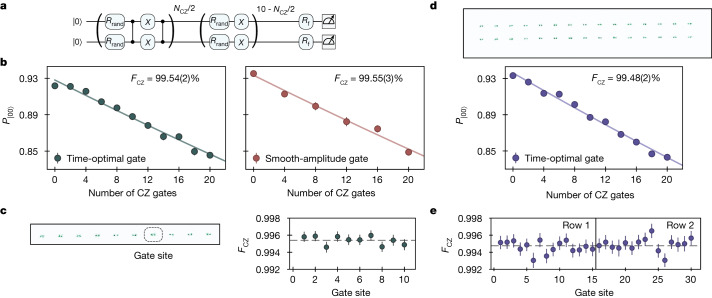
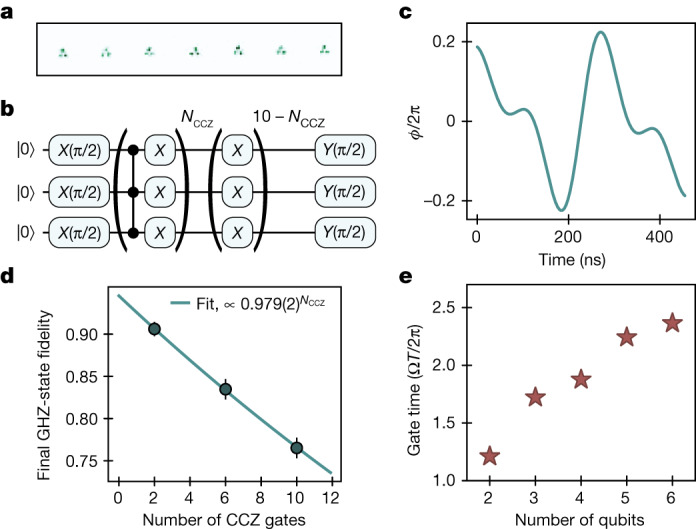
Verification
Claims the paper makes
The claims and statistics of this paper haven’t been checked yet.
Free: it reads the open-access text and checks the first 5 claims that cite a source we can check. Create a free account to check every claim.
Claims other papers make about this one
Each is checked against this paper’s own text: does it say what the citing paper says it does?
The source backs part of the claim, not all of it — or backs it for a different population, condition or comparison.
In the citing paper
“Using logical-level control and a zoned architecture in reconfigurable neutral-atom arrays7, our system combines high two-qubit gate fidelities8, arbitrary connectivity7,9, as well as fully programmable single-qubit rotations and mid-circuit readout10–15.”
From Logical quantum processor based on reconfigurable atom arrays (2024) · cites this paper as [8]
Experimental — accuracy not yet measuredThe source backs part of the claim, not all of it — or backs it for a different population, condition or comparison.
In the citing paper
“Averaged over the five computation logicals, we find that, by using the fault-tolerant initialization (postselecting on the ancilla logical flag not detecting errors) our |0L⟩ initialization fidelity is , exceeding both our physical qubit |0⟩ initialization fidelity (99.32(4)% (ref. 8)) and physical two-qubit gate fidelity (99.5% (ref. 8)).”
From Logical quantum processor based on reconfigurable atom arrays (2024) · cites this paper as [8]
Experimental — accuracy not yet measuredThe source backs part of the claim, not all of it — or backs it for a different population, condition or comparison.
In the citing paper
“Although ref. 8 seems to find some small cross-talk seemingly originating from decay into Rydberg P states, this should be considerably suppressed in the practical operation here owing to the approximately 200 μs duration between gates, during which time Rydberg atoms should either fly away or decay back to the ground state.”
From Logical quantum processor based on reconfigurable atom arrays (2024) · cites this paper as [8]
Experimental — accuracy not yet measuredThe source backs part of the claim, not all of it — or backs it for a different population, condition or comparison.
In the citing paper
“Even though the tail of the top-hat Rydberg excitation beams is only suppressed to about 10% intensity, the two-photon drive is far off-resonant owing to the approximately 20 MHz 1013 light shift detuning that is present for the entangling-zone atoms8.”
From Logical quantum processor based on reconfigurable atom arrays (2024) · cites this paper as [8]
Experimental — accuracy not yet measuredThe source backs part of the claim, not all of it — or backs it for a different population, condition or comparison.
In the citing paper
“We ensure that, in our dynamical decoupling, we have an odd number of π pulses between CZ gates (whenever possible), as this echoes out both systematic and spurious contributions to the single-qubit phase7,8.”
From Logical quantum processor based on reconfigurable atom arrays (2024) · cites this paper as [8]
Experimental — accuracy not yet measured
5 more claims about this paper
Create a free account to see every claim other papers make about this one.
Self-check
Percentages, sums and reported differences re-computed from the paper’s own numbers.
The self-check needs the paper’s full text.
Citations
Cites
Quantum Computing in the NISQ era and beyond
Preskill, J. (2018) · Quantum · doi:10.22331/q-2018-08-06-79 · Cited by 8,830
Fault-tolerant quantum computation by anyons
Kitaev, A. Y. (2003) · Annals of Physics · doi:10.1016/s0003-4916(02)00018-0 · Cited by 7,238 · cited 1×
“A thorough error budget is presented along with explanations of routes to further pushing gates to the regime of F>0.999 to make the system capable of reaching future fault tolerant performance.”
BackgroundInfluentialSurface codes: Towards practical large-scale quantum computation
Fowler, A. G., Mariantoni, M., Martinis, J. M., & Cleland, A. N. (2012) · Physical Review A · doi:10.1103/physreva.86.032324 · Cited by 3,059
Observation of electromagnetically induced transparency
Boller, K.-J., Imamoğlu, A., & Harris, S. E. (1991) · Physical Review Letters · doi:10.1103/physrevlett.66.2593 · Cited by 3,058 · cited 2×
“I was also particularly interested in their analysis of correlations between the sites, with this again being the first time sufficiently large ensembles have been used combined with repeated gate applications to really show how errors and correlations build in the system.”
BackgroundMethodSuperconducting quantum circuits at the surface code threshold for fault tolerance
Barends, R., Kelly, J., Megrant, A., Veitia, A., Sank, D., Jeffrey, E., White, T. C., Mutus, J., Fowler, A. G., Campbell, B., et al. (2014) · Nature · doi:10.1038/nature13171 · Cited by 1,733
Fast Quantum Gates for Neutral Atoms
Jaksch, D., Cirac, J. I., Zoller, P., Rolston, S. L., Côté, R., & Lukin, M. D. (2000) · Physical Review Letters · doi:10.1103/physrevlett.85.2208 · Cited by 1,540
Self-citationPredicting many properties of a quantum system from very few measurements
Huang, H.-Y., Kueng, R., & Preskill, J. (2020) · Nature Physics · doi:10.1038/s41567-020-0932-7 · Cited by 1,240
NMR techniques for quantum control and computation
Vandersypen, L. M. K., & Chuang, I. L. (2005) · Reviews of Modern Physics · doi:10.1103/revmodphys.76.1037 · Cited by 1,217
Suppressing quantum errors by scaling a surface code logical qubit
Google Quantum, A. I., Acharya, R., Aleiner, I., Allen, R., Andersen, T. I., Ansmann, M., Arute, F., Arya, K., Asfaw, A., Atalaya, J., et al. (2023) · Nature · doi:10.1038/s41586-022-05434-1 · Cited by 1,103 · cited 2×
“This protocol has the advantage of populating atomic dark states which do not contain population in the intermediate state used for the two-photon excitation to the Rydberg state, thereby reducing spontaneous emission.”
BackgroundQuantum phases of matter on a 256-atom programmable quantum simulator
Ebadi, S., Wang, T. T., Levine, H., Keesling, A., Semeghini, G., Omran, A., Bluvstein, D., Samajdar, R., Pichler, H., Ho, W. W., et al. (2021) · Nature · doi:10.1038/s41586-021-03582-4 · Cited by 995
Self-citation
Research works printed but not linked: 7
- Kalinowski M Maskara N Lukin MD Non-Abelian Floquet spin liquids in a digital Rydberg simulator Phys. Rev. X 2023 13 031008
- Shende VV Markov IL On the CNOT-cost of TOFFOLI gates Quantum Inf. Comput. 2009 9 461 486
- Ma S Universal gate operations on nuclear spin qubits in an optical tweezer array of 171Yb atoms Phys. Rev. X 2022 12 021028
- Brown MO Thiele T Kiehl C Hsu T-W Regal CA Gray-molasses optical-tweezer loading: controlling collisions for scaling atom-array assembly Phys. Rev. X 2019 9 011057
- Chang, T. H., Wang, T. N., Jen, H. H. & Chen, Y. C. High-fidelity Rydberg control-Z gates with time-optimal pulses. Preprint at https://arxiv.org/abs/2303.16395 (2023). · arXiv
- Khazali M Mølmer K Fast multiqubit gates by adiabatic evolution in interacting excited-state manifolds of Rydberg atoms and superconducting circuits Phys. Rev. X 2020 10 021054
- Singh K Anand S Pocklington A Kemp JT Bernien H Dual-element, two-dimensional atom array with continuous-mode operation Phys. Rev. X 2022 12 011040
Cited by
Logical quantum processor based on reconfigurable atom arrays
Bluvstein, D., Evered, S. J., Geim, A. A., Li, S. H., Zhou, H., Manovitz, T., Ebadi, S., Cain, M., Kalinowski, M., Hangleiter, D., et al. (2024) · Nature · doi:10.1038/s41586-023-06927-3 · Cited by 1,119
“7,8,30, with key upgrades enabling universal digital operation.”
BackgroundMethodInfluentialSelf-citationA tweezer array with 6,100 highly coherent atomic qubits
Manetsch, H. J., Nomura, G., Bataille, E., Lv, X., Leung, K. H., & Endres, M. (2025) · Nature · doi:10.1038/s41586-025-09641-4 · Cited by 491
“Our results, along with recent developments 8,22–24 , indicate that universal quantum computing and QEC with thousands to tens of thousands of physical qubits could be a near-term prospect.”
InfluentialConstant-overhead fault-tolerant quantum computation with reconfigurable atom arrays
Xu, Q., Bonilla Ataides, J. P., Pattison, C. A., Raveendran, N., Bluvstein, D., Wurtz, J., Vasić, B., Lukin, M. D., Jiang, L., & Zhou, H. (2024) · Nature Physics · doi:10.1038/s41567-024-02479-z · Cited by 157
“28.”
Self-citationA fault-tolerant neutral-atom architecture for universal quantum computation
Bluvstein, D., Geim, A. A., Li, S. H., Evered, S. J., Ataides, J. P. B., Baranes, G., Gu, A., Manovitz, T., Xu, M., Kalinowski, M., et al. (2025) · Nature · doi:10.1038/s41586-025-09848-5 · Cited by 416
“36, in this work, with the 420-nm laser red-detuned by 4.8 GHz from the intermediate state.”
InfluentialSelf-citationObserving the Quantum Mpemba Effect in Quantum Simulations
Joshi, L. K., Franke, J., Rath, A., Ares, F., Murciano, S., Kranzl, F., Blatt, R., Zoller, P., Vermersch, B., Calabrese, P., et al. (2024) · Physical Review Letters · doi:10.1103/physrevlett.133.010402 · Cited by 279
Erasure conversion in a high-fidelity Rydberg quantum simulator
Scholl, P., Shaw, A. L., Tsai, R. B.-S., Finkelstein, R., Choi, J., & Endres, M. (2023) · Nature · doi:10.1038/s41586-023-06516-4 · Cited by 141
“In this context, we note very recent results for improved computational gate fidelities 42 .”
BackgroundExperimental demonstration of logical magic state distillation
Rodriguez, P. S., Robinson, J. M., Jepsen, N., He, Z., Duckering, C., Zhao, C., Wu, K.-H., Campo, J., Bagnall, K. R., Kwon, M., et al. (2025) · Nature · doi:10.1038/s41586-025-09367-3 · Cited by 243
“We benchmark controlled-phase (CZ) two-qubit gates by driving pairs of block-aded atoms with alternating single-qubit and two-qubit gates [55].”
Self-citationAquila: QuEra's 256-qubit neutral-atom quantum computerPreprint
Wurtz, J., Bylinskii, A., Braverman, B., Amato-Grill, J., Cantu, S., Huber, F., Lukin, A., Liu, F., Weinberg, P., Long, J., et al. (2023) · arXiv (Cornell University) · doi:10.48550/arxiv.2306.11727 · Cited by 236
High-fidelity gates and mid-circuit erasure conversion in an atomic qubit
Ma, S., Liu, G., Peng, P., Zhang, B., Jandura, S., Claes, J., Burgers, A. P., Pupillo, G., Puri, S., & Thompson, J. D. (2023) · Nature · doi:10.1038/s41586-023-06438-1 · Cited by 228
Continuous operation of a coherent 3,000-qubit system
Chiu, N.-C., Trapp, E. C., Guo, J.-N., Abobeih, M., Stewart, L. M., Hollerith, S., Stroganov, P., Kalinowski, M., Geim, A., Evered, S. J., et al. (2025) · Nature · doi:10.1038/s41586-025-09596-6 · Cited by 153
“The state preparation fidelity can potentially be improved by incorporating Raman-assisted optical pumping schemes [4].”
InfluentialSelf-citationMulti-qubit gates and Schrödinger cat states in an optical clock
Cao, A., Eckner, W. J., Yelin, T. L., Young, A. W., Jandura, S., Yan, L., Kim, K., Pupillo, G., Ye, J., Oppong, N. D., et al. (2024) · Nature · doi:10.1038/s41586-024-07913-z · Cited by 185
“In the future, more precise calibration procedures 11 , as well as robust pulse design 76 , could help to mitigate these errors.”
BackgroundMethodInfluentialAnand, S., Bradley, C. E., White, R., Ramesh, V., Singh, K., & Bernien, H. (2024) · Nature Physics · doi:10.1038/s41567-024-02638-2 · Cited by 183
“While improvements in operation fidelities will be required, the necessary technical upgrades are well-understood [40, 60].”
Probing the Kitaev honeycomb model on a neutral-atom quantum computer
Evered, S. J., Kalinowski, M., Geim, A. A., Manovitz, T., Bluvstein, D., Li, S. H., Maskara, N., Zhou, H., Ebadi, S., Xu, M., et al. (2025) · Nature · doi:10.1038/s41586-025-09475-0 · Cited by 173
“We implement each CP gate using a single Rydberg laser pulse with constant intensity and a phase profile given by the cosine function, A cos( ωt + φ ) , and a constant two-photon detuning δ [12].”
InfluentialSelf-citationShor's algorithm is possible with as few as 10,000 reconfigurable atomic qubitsPreprint
Cain, M., Xu, Q., King, R., Picard, L. R. B., Levine, H., Endres, M., Preskill, J., Huang, H.-Y., & Bluvstein, D. (2026) · arXiv (Cornell University) · doi:10.48550/arxiv.2603.28627 · Cited by 181
Self-citationLiu, Y., Singh, S., Smith, K. C., Crane, E., Martyn, J. M., Eickbusch, A., Schuckert, A., Li, R. D., Sinanan-Singh, J., Soley, M. B., et al. (2026) · PRX Quantum · doi:10.1103/4rf7-9tfx · Cited by 171
Quantum Computing: Navigating the Future of Computation, Challenges, and Technological Breakthroughs
Memon, Q. A., Ahmad, M. A., & PECHT, M. G. (2024) · Quantum Reports · doi:10.3390/quantum6040039 · Cited by 157
Universal quantum operations and ancilla-based read-out for tweezer clocks
Finkelstein, R., Tsai, R. B.-S., Sun, X., Scholl, P., Direkci, S., Gefen, T., Choi, J., Shaw, A. L., & Endres, M. (2024) · Nature · doi:10.1038/s41586-024-08005-8 · Cited by 142
“We note that independent of this correction, our result is only the second reported demonstration for neutral atoms generally, and the first in alkaline-earth atoms, to achieve two-qubit gate fidelity above 0.99 with Rydberg-based gates for long-lived qubits 17 .”
BackgroundMethodInfluentialMind the gaps: The fraught road to quantum advantagePreprint
Eisert, J., & Preskill, J. P. (2025) · arXiv (Cornell University) · doi:10.48550/arxiv.2510.19928 · Cited by 144
“Neutral-atom platforms [18–20] encode qubits in atoms held by optical tweezers or optical lattices.”
Benchmarking and Fidelity Response Theory of High-Fidelity Rydberg Entangling Gates
Tsai, R. B.-S., Sun, X., Shaw, A. L., Finkelstein, R., & Endres, M. (2025) · PRX Quantum · doi:10.1103/prxquantum.6.010331 · Cited by 133
Hyyppä, E., Vepsäläinen, A. P., Papič, M., Chan, C. F., Inel, S., Landra, A., Liu, W., Luus, J., Marxer, F., Ockeloen-Korppi, C. F., et al. (2024) · PRX Quantum · doi:10.1103/prxquantum.5.030353 · Cited by 124
An elementary review on basic principles and developments of qubits for quantum computing
Chae, E., Choi, J., & Kim, J. (2024) · Nano Convergence · doi:10.1186/s40580-024-00418-5 · Cited by 120
“However, significant strides have been made over the past decade, achieving remarkable single-and two-qubit gate fidelities, surpassing 0.9999 and 0.999, respectively [97, 98, 127].”
BackgroundInfluentialContinuous operation of large-scale atom arrays in optical lattices
Gyger, F., Ammenwerth, M., Tao, R., Timme, H., Snigirev, S., Bloch, I., & Zeiher, J. (2024) · Physical Review Research · doi:10.1103/physrevresearch.6.033104 · Cited by 123
Zimborás, Z., Koczor, B., Holmes, Z., Borrelli, E.-M., Gilyén, A., Huang, H.-Y., Cai, Z., Acín, A., Aolita, L., Banchi, L., et al. (2025) · arXiv (Cornell University) · doi:10.48550/arxiv.2501.05694 · Cited by 119
Neutral atom quantum computing hardware: performance and end-user perspective
Wintersperger, K., Dommert, F., Ehmer, T., Hoursanov, A., Klepsch, J., Mauerer, W., Reuber, G., Strohm, T., Yin, M., & Luber, S. (2023) · EPJ Quantum Technology · doi:10.1140/epjqt/s40507-023-00190-1 · Cited by 117
“Since the ground and excited states of neutral atoms naturally exhibit more than two energy levels, the realisation of qudits is possible and is currently being explored, also in the context of quantum memories [43].”
BackgroundDemonstrating a Long-Coherence Dual-Rail Erasure Qubit Using Tunable Transmons
Levine, H., Haim, A., Hung, J., Alidoust, N., Kalaee, M., Lorenzo, L. D., Wollack, E. A., Arrangoiz-Arriola, P., Khalajhedayati, A., Sanil, R., et al. (2023) · Physical Review X · doi:10.1103/physrevx.14.011051 · Cited by 89
“While many physical qubit platforms have reached error rates below the surface code threshold [1–5], a major frontier challenge is to continue driving down error rates to reduce the overhead necessary to protect logical qubits.”
BackgroundSelf-citationHigh-Fidelity Universal Gates in the 171 Yb Ground-State Nuclear-Spin Qubit
Muniz, J. A., Stone, M. B., Stack, D. T., Jaffe, M., Kindem, J. M., Wadleigh, L., Zalys-Geller, E., Zhang, X., Chen, C.-A., Norcia, M. A., et al. (2025) · PRX Quantum · doi:10.1103/prxquantum.6.020334 · Cited by 118
Midcircuit Operations Using the omg Architecture in Neutral Atom Arrays
Lis, J. W., Senoo, A., McGrew, W. F., Rönchen, F., Jenkins, A., & Kaufman, A. M. (2023) · Physical Review X · doi:10.1103/physrevx.13.041035 · Cited by 113
“The recent realization of the two-qubit entangling gates with fidelities of 99.5% in alkali qubits, and 98% in 171 Yb nuclear-spin qubits, brings neutral atom arrays even closer to implementing fault-tolerant computation [43,84].”
BackgroundInfluentialRealization of High-Fidelity CZ Gate Based on a Double-Transmon Coupler
Li, R., Kubo, K., Ho, Y., Yan, Z., Nakamura, Y., & Goto, H. (2024) · Physical Review X · doi:10.1103/physrevx.14.041050 · Cited by 113
AI-Enabled Parallel Assembly of Thousands of Defect-Free Neutral Atom Arrays
Lin, R., Zhong, H.-S., You, L., Zhao, Z.-R., Zheng, L.-T., Hu, T.-R., Wu, H., Wu, Z., Ma, W.-J., Gao, Y., et al. (2025) · Physical Review Letters · doi:10.1103/2ym8-vs82 · Cited by 114
Spectroscopy and Modeling of Yb 171 Rydberg States for High-Fidelity Two-Qubit Gates
Peper, M., Li, Y., Knapp, D. Y., Bileska, M., Ma, S., Liu, G., Peng, P., Zhang, B., Horvath, S. P., Burgers, A. P., et al. (2025) · Physical Review X · doi:10.1103/physrevx.15.011009 · Cited by 114
High-Fidelity Detection of Large-Scale Atom Arrays in an Optical Lattice
Tao, R., Ammenwerth, M., Gyger, F., Bloch, I., & Zeiher, J. (2024) · Physical Review Letters · doi:10.1103/physrevlett.133.013401 · Cited by 108
“These features have resulted in successful implementations of tweezer arrays in various fields such as quantum metrology [25–27], quantum computing [24, 28– 33] and quantum simulation [34, 35].”
MethodHigh-Rate and High-Fidelity Modular Interconnects between Neutral Atom Quantum Processors
Li, Y., & Thompson, J. D. (2024) · PRX Quantum · doi:10.1103/prxquantum.5.020363 · Cited by 97
“With foreseeable error rates below 10 − 3 for all physical operations [26, 28, 64, 65], achieving logical error rates of 10 − 12 is possible with an overhead of 10 3 physical qubits per logical qubit using a standard surface code [66].”
MethodError-detected quantum operations with neutral atoms mediated by an optical cavity
Grinkemeyer, B., Guardado-Sanchez, E., Dimitrova, I., Shchepanovich, D., Mandopoulou, G. E., Borregaard, J., Vuletić, V., & Lukin, M. D. (2025) · Science · doi:10.1126/science.adr7075 · Cited by 97
Self-citationNon-Abelian Floquet Spin Liquids in a Digital Rydberg Simulator
Kalinowski, M., Maskara, N., & Lukin, M. (2022) · Physical Review X · doi:10.1103/physrevx.13.031008 · Cited by 65
“5% have been demonstrated [38], and are expected to go above 99.”
BackgroundSelf-citationCompiling Quantum Circuits for Dynamically Field-Programmable Neutral Atoms Array Processors
Tan, D. B., Bluvstein, D., Lukin, M. D., & Cong, J. (2024) · Quantum · doi:10.22331/q-2024-03-14-1281 · Cited by 93
“The gaps of the number of two-qubit gates for a QAOA benchmark with 22 nodes in the graph are 4.5x, 2.5x, and 1.7x, respectively.”
BackgroundResultInfluentialSelf-citationHigh-rate quantum LDPC codes for long-range-connected neutral atom registers
Pecorari, L., Jandura, S., Brennen, G. K., & Pupillo, G. (2025) · Nature Communications · doi:10.1038/s41467-025-56255-5 · Cited by 91
“…for neutral atom hardware based on numbers reported in experiments for state preparation and measurement (SPAM) errors [25], and gate errors [25, 26], by adopting the following hardware-specific noise parameters { p = p 2 (1) , p 2 ( j ) = c j p, p 1 = p/ 10 , p p = p m = 2 p } , with c j the…”
Emergent U(1) lattice gauge theory in Rydberg atom arrays
Cheng, Y., & Zhai, H. (2024) · Nature Reviews Physics · doi:10.1038/s42254-024-00749-6 · Cited by 86
“Finally, the most exciting development in this platform comes from its great potential for fault-tolerant universal quantum computation 28,32–35 , 131 .”
Erasure cooling, control, and hyperentanglement of motion in optical tweezers
Shaw, A. L., Scholl, P., Finkelstein, R., Tsai, R. B.-S., Choi, J., & Endres, M. (2025) · Science · doi:10.1126/science.adn2618 · Cited by 84
“The sequence is similar to the one presented in Fig.”
Atomique: A Quantum Compiler for Reconfigurable Neutral Atom Arrays
Wang, H., Liu, P., Tan, D. B., Liu, Y., Gu, J., Pan, D. Z., Cong, J., Acar, U. A., & Han, S. (2024) · Proceedings - International Symposium on Computer Architecture/Proceedings · doi:10.1109/isca59077.2024.00030 · Cited by 80
“Nonetheless, under current achievable two-qubit fidelity and coherence time [10], [24] Atomique remains more reliable.”
BackgroundShao, X., Su, S., Li, L., Nath, R., Wu, J., & Li, W. (2024) · Applied Physics Reviews · doi:10.1063/5.0211071 · Cited by 79
Fault-tolerant logical Clifford gates from code automorphisms
Sayginel, H., Koutsioumpas, S., Webster, M. A., Rajput, A., & Browne, D. (2024) · PRX Quantum · doi:10.1103/vf7v-cpq9 · Cited by 53
“Examples of such architectures include ion trap shuttle systems [14] and atom arrays [15].”
Programmable simulations of molecules and materials with reconfigurable quantum processors
Maskara, N., Ostermann, S., Shee, J., Kalinowski, M., Gomez, A. M., Bravo, R. A., Wang, D. S., Krylov, A. I., Yao, N. Y., Head‐Gordon, M., et al. (2025) · Nature Physics · doi:10.1038/s41567-024-02738-z · Cited by 78
“51).”
InfluentialSelf-citationResource Analysis of Low-Overhead Transversal Architectures for Reconfigurable Atom Arrays
Zhou, H., Duckering, C., Zhao, C., Bluvstein, D., Cain, M., Kubica, A., Wang, S.-T., & Lukin, M. D. (2025) · Proceedings - International Symposium on Computer Architecture/Proceedings · doi:10.1145/3695053.3731039 · Cited by 75
“In order to turn the current noisy quantum computers [12, 13, 42].”
Self-citationSunami, S., Tamiya, S., Inoue, R., Yamasaki, H., & Goban, A. (2025) · PRX Quantum · doi:10.1103/prxquantum.6.010101 · Cited by 73
“The fidelity exceeds 99 % [17, 70] and expected to reach 99.9 % with better excitation protocols and improved laser systems [17, 18, 47, 71].”
InfluentialHigh-performance fault-tolerant quantum computing with many-hypercube codes
Goto, H. (2024) · Science Advances · doi:10.1126/sciadv.adp6388 · Cited by 72
High-fidelity entanglement and coherent multi-qubit mapping in an atom array
Senoo, A., Baumgärtner, A., Lis, J. W., Vaidya, G. M., Zeng, Z., Giudici, G., Pichler, H., & Kaufman, A. M. (2026) · Nature Physics · doi:10.1038/s41567-026-03258-8 · Cited by 71
“We employ a time-optimal gate protocol 47,48 , sinusoidally modulating the optical phase of the driving laser.”
Realization of an Extremely Anisotropic Heisenberg Magnet in Rydberg Atom Arrays
Kim, K., Yang, F., Mølmer, K., & Ahn, J. (2023) · Physical Review X · doi:10.1103/physrevx.14.011025 · Cited by 58
Fault-tolerant optical interconnects for neutral-atom arrays
Sinclair, J., Ramette, J., Grinkemeyer, B., Bluvstein, D., Lukin, M. D., & Vuletić, V. (2025) · Physical Review Research · doi:10.1103/physrevresearch.7.013313 · Cited by 68
Self-citationLeveraging Qubit Loss Detection in Fault-Tolerant Quantum Algorithms
Baranes, G., Cain, M., Ataides, J. P. B., Bluvstein, D., Sinclair, J., Vuletić, V., Zhou, H., & Lukin, M. D. (2026) · Physical Review X · doi:10.1103/ycwc-3myc · Cited by 66
“…as SWAP SE, teleportation-based SE, and direct conversion SE—and direct conversion SE with perfect loss information, in a single logical memory ex-periment at an experimentally-motivated loss fraction of 0.5, comparable to that observed in recent neutral atom experiments [10, 11, 15, 62].”
InfluentialSelf-citationHigh Rate Magic State Cultivation on the Surface Code
Vaknin, Y., Jacoby, S., Grimsmo, A. L., & Retzker, A. (2026) · PRX Quantum · doi:10.1103/p8tw-6kq9 · Cited by 66
Fault-tolerant one-bit addition with the smallest interesting color code
Wang, Y., Simsek, S., Gatterman, T. M., Gerber, J. A., Gilmore, K., Gresh, D., Hewitt, N., Horst, C. V., Matheny, M., Mengle, T., et al. (2024) · Science Advances · doi:10.1126/sciadv.ado9024 · Cited by 64
“To reconstruct S X = X ⊗ 8 , we use a flag-based circuit to non-destructively measure X ⊗ 4 on the opposite face and take the parity of the five measurement outputs to reconstruct the stabilizer eigenvalue.”
Universal high-fidelity quantum gates for spin qubits in diamond
Bartling, H. P., Yun, J., Schymik, K.-N., van Riggelen, M., Enthoven, L., van Ommen, H. B., Babaie, M., Sebastiano, F., Markham, M., Twitchen, D. J., et al. (2025) · Physical Review Applied · doi:10.1103/physrevapplied.23.034052 · Cited by 67
Quantum computing universal thermalization dynamics in a (2 + 1)D Lattice Gauge Theory
Mueller, N., Wang, T., Katz, O., Davoudi, Z., & Cetina, M. (2025) · Nature Communications · doi:10.1038/s41467-025-60177-7 · Cited by 64
“Recent advancements in quantum information theory and experiment [22–26] have brought this topic within immediate experimental reach, potentially enabling, via quantum simulation [27–29], verification of important thermalization paradigms, and discovery of novel principles grounded in quantum…”
Self-citationUniversal Quantum Computation in Globally Driven Rydberg Atom Arrays
Cesa, F., & Pichler, H. (2023) · Physical Review Letters · doi:10.1103/physrevlett.131.170601 · Cited by 63
Schmid, L., Locher, D. F., Rispler, M., Blatt, S., Zeiher, J., Müller, M., & Wille, R. (2024) · Quantum Science and Technology · doi:10.1088/2058-9565/ad33ac · Cited by 62
“This is in particular interesting for the Rubidium setup, where the CCZ gate with the corresponding fidelity has been demonstrated in experimets [5].”
BackgroundInfluentialAn integrated atom array-nanophotonic chip platform with background-free imaging
Menon, S. G., Glachman, N., Pompili, M., Dibos, A., & Bernien, H. (2024) · Nature Communications · doi:10.1038/s41467-024-50355-4 · Cited by 65
“Recently, high-fidelity en-tangling operations [5–7] and the capability to perform mid-circuit readout and feedback [8–11] have also been demonstrated in atom-array systems.”
BackgroundCircuit-Based Leakage-to-Erasure Conversion in a Neutral-Atom Quantum Processor
Chow, M. N. H., Buchemmavari, V., Omanakuttan, S., Little, B., Pandey, S., Deutsch, I., & Jau, Y. (2024) · PRX Quantum · doi:10.1103/prxquantum.5.040343 · Cited by 62
Quantum Computing Enhanced SensingPreprint
Allen, R. R., Machado, F., Chuang, I. L., Huang, H.-Y., & Choi, S. (2025) · arXiv (Cornell University) · doi:10.48550/arxiv.2501.07625 · Cited by 62
Measurement-Free Fault-Tolerant Quantum Error Correction in Near-Term Devices
Heußen, S., Locher, D. F., & Müller, M. (2024) · PRX Quantum · doi:10.1103/prxquantum.5.010333 · Cited by 62
“Moreover, the multiqubit gates required for our scheme are natively available in this platform [81].”
BackgroundMethodInfluentialPoole, C., Graham, T., Perlin, M., Otten, M., & Saffman, M. (2024) · Physical Review A · doi:10.1103/physreva.111.022433 · Cited by 41
“[19], with the addition of the super-Gaussian envelope and enforcing of anti-symmetry of the phase about the pulse midpoint.”
InfluentialHigh-fidelity entangling gates and nonlocal circuits with neutral atoms.
Evered, S. J., Xu, M.-Q., Li, S. H., Geim, A., Ataides, J. P., Kalinowski, M., Bluvstein, D., Maskara, N., Kokail, C., Greiner, M., et al. (2026) · Science · doi:10.1126/science.aei1312 · Cited by 51
“[24], here we only use 3D polarization gradient cooling (PGC), as we find that errors from atomic temperature form a small part of our overall error budget (Fig.”
InfluentialSelf-citationSite-Selective Cavity Readout and Classical Error Correction of a 5-Bit Atomic Register
Hu, B., Sinclair, J., Bytyqi, E., Chong, M., Rudelis, A., Ramette, J., Vendeiro, Z., & Vuletić, V. (2025) · Physical Review Letters · doi:10.1103/physrevlett.134.120801 · Cited by 58
Self-citationEmbedding Quantum Many-Body Scars into Decoherence-Free Subspaces.
Wang, H., Yuan, D., Zhang, S., Wang, Z., Deng, D.-L., & Duan, L. (2023) · Physical Review Letters · doi:10.1103/physrevlett.132.150401 · Cited by 45
“The simultaneously operated two-qubit gate fidelities of superconducting qubits and Rydberg atoms have exceeded 99.5% nowadays [67, 91], which are high enough to support the large circuit depths for realizing the desired dissipative scarred dynamics.”
InfluentialTime-Efficient Logical Operations on Quantum Low-Density Parity Check Codes
Zhang, G., & Li, Y. (2025) · Physical Review Letters · doi:10.1103/physrevlett.134.070602 · Cited by 56
Efficient Control of a Transmon Qudit Using Effective Spin- 7 / 2 Rotations
Champion, E., Wang, Z., Parker, R. W., & Blok, M. (2025) · Physical Review X · doi:10.1103/vbh4-lysv · Cited by 57
“The canonical approach uses qubits encoded in coupled (effective) spin-1/2 systems that can be controlled with high-fidelity owing to their strong nonlinearity [10–13].”
MethodLogical qubits with erasure conversion using metastable neutral atoms
Zhang, B., Liu, G., Bornet, G., Horvath, S. P., Peng, P., Ma, S., Huang, S., Puri, S., & Thompson, J. D. (2026) · Nature Physics · doi:10.1038/s41567-026-03309-0 · Cited by 57
“To mitigate inhomogeneous light shifts from optical tweezers during operations, the conventional approach is to turn off the trapping light during sensitive procedures such as entangling gate operations or state preparation 29,42,52,72 .”
Radnaev, A. G., Chung, W. C., Cole, D. C., Mason, D., Ballance, T. G., Bedalov, M. J., Belknap, D. A., Berman, M. R., Blakely, M., Bloomfield, I. L., et al. (2025) · PRX Quantum · doi:10.1103/66s8-jj18 · Cited by 54
“…of population from | 1 ⟩ and from the Rydberg level | R ⟩ to the intermediate state that produces “dark-intermediate-state” ground-Rydberg coupling [6], (b) interference in coupling paths through | 7 P 1 / 2 , F = 4 , m F = 1 ⟩ and | 7 P 1 / 2 , F = 3 , m F = 1 ⟩ , (c) the full decay chain from…”
InfluentialLong-Lived Quantum Memory Enabling Atom-Photon Entanglement over 101 km of Telecom Fiber
Zhou, Y., Malik, P., Fertig, F., Bock, M., Bauer, T., van Leent, T., Zhang, W., Becher, C., & Weinfurter, H. (2024) · PRX Quantum · doi:10.1103/prxquantum.5.020307 · Cited by 54
Enhanced Quantum Control of Individual Ultracold Molecules Using Optical Tweezer Arrays
Ruttley, D. K., Guttridge, A., Hepworth, T., & Cornish, S. (2024) · PRX Quantum · doi:10.1103/prxquantum.5.020333 · Cited by 25
“The platform’s inherent scalability [43] provides a promising avenue for constructing arrays with an even greater number of particles.”
BackgroundTan, D., Lin, W.-H., & Cong, J. (2024) · Asia and South Pacific Design Automation Conference · doi:10.1145/3658617.3697778 · Cited by 52
“2.5 r b interaction site coordinate AOD c 0 q 0 q 1 q 2 q 3 q 4 q 5 q 6 0 Excitation by a global Rydberg laser exposure b) q 1 q 5 q 2 q 3 q 4 q 6 q 0 2Q gate”
InfluentialAndrist, R. S., Schuetz, M. J. A., Minssen, P., Yalovetzky, R., Chakrabarti, S., Herman, D., Kumar, N., Salton, G., Shaydulin, R., Sun, Y., et al. (2023) · Physical Review Research · doi:10.1103/physrevresearch.5.043277 · Cited by 52
Demonstration of Weighted-Graph Optimization on a Rydberg-Atom Array Using Local Light Shifts
de Oliveira, A. G., Diamond-Hitchcock, E., Walker, D. M., Wells-Pestell, M. T., Pelegrí, G., Picken, C., Malcolm, G. P. A., Daley, A. J., Bass, J., & Pritchard, J. D. (2025) · PRX Quantum · doi:10.1103/prxquantum.6.010301 · Cited by 53
Decoding across Transversal Clifford Gates in the Surface Code
Serra-Peralta, M., Shaw, M. H., & Terhal, B. M. (2026) · PRX Quantum · doi:10.1103/sk5y-25b1 · Cited by 52
“5% for two-qubit gates, and 1 − 5% for measurement operations [51–54].”
Chen, K., Li, T.-Y., Wang, Y.-Y., See, S. C. W., Wang, C., Wille, R., Chen, N.-Y., Yang, A.-C., & Lin, C.-Y. (2025) · Machine Learning Science and Technology · doi:10.1088/2632-2153/adb4ba · Cited by 50
“Challenges such as the fidelity of qubits, the error rates of two-qubit gates, and the limited number of available qubits present substantial hurdles [13–15].”
Repeated Ancilla Reuse for Logical Computation on a Neutral Atom Quantum Computer
Muniz, J. A., Crow, D., Kim, H., Kindem, J. M., Cairncross, W. B., Ryou, A., Bohdanowicz, T. C., Chen, C.-A., Ji, Y., Jones, A. M. W., et al. (2025) · Physical Review X · doi:10.1103/v7ny-fg31 · Cited by 54
Device-independent quantum key distribution over 100 km with single atoms.
Lu, B.-W., Yang, C.-W., Wang, R.-Q., Gao, B.-F., Zhen, Y.-Z., Wang, Z., Shi, J.-K., Ren, Z.-Q., Hahn, T. A., Tan, E., et al. (2026) · Science · doi:10.1126/science.aec6243 · Cited by 33
“Our experimental setup is compatible with Rydberg-based tweezer arrays, enabling multiplexed quantum networking for parallel entanglement generation [40, 41], supporting entanglement purification [42–45] and deterministic entanglement swapping via Rydberg-based atom-atom gates [46].”
qSIEVE: Efficient qLDPC Memory via Systolic Movement in Atom Arrays
Viszlai, J., Yang, W., Lin, S. F., Liu, J., Nottingham, N., Baker, J. M., & Chong, F. T. (2026) · ACM Transactions on Quantum Computing · doi:10.1145/3779066 · Cited by 47
“The scale needed for a single memory block with qSIEVE has also been demonstrated as machines with > 250 atoms exist in experiment [10, 22, 62].”
Bezuglov, N. N., Beterov, I. I., Cinins, A., Miculis, K., Entin, V. M., Betleni, P. I., Suliman, G., Gromyko, V. V., Tretyakov, D. B., Yakshina, E. A., et al. (2025) · Physical Review A · doi:10.1103/s918-nqsp · Cited by 47
Hardware-efficient ansatz without barren plateaus in any depthPreprint
Park, C.-Y., Kang, M., & Huh, J. (2024) · arXiv (Cornell University) · doi:10.48550/arxiv.2403.04844 · Cited by 33
“Throughout the paper, we mainly consider − which is a natural entangling gate for major quantum computing platforms [36–41].”
BackgroundBeterov, I., Yakshina, E., Suliman, G., Betleni, P. I., Prilutskaya, A. A., Skvortsova, D. A., Zagirov, T. R., Tretyakov, D., Entin, V., Bezuglov, N., et al. (2024) · Žurnal èksperimentalʹnoj i teoretičeskoj fiziki · doi:10.31857/s0044451024100109
Error Correction of Transversal cnot Gates for Scalable Surface-Code Computation
Sahay, K., Lin, Y., Huang, S., Brown, K. R., & Puri, S. (2025) · PRX Quantum · doi:10.1103/prxquantum.6.020326 · Cited by 46
“Specifically for the example of reconfigurable neutral atoms, the corresponding error contribution arises from qubit movement across distances scaling with the surface code size [13, 74].”
Q-Pilot: Field Programmable Qubit Array Compilation with Flying Ancillas
Wang, H., Tan, D. B., Liu, P., Liu, Y., Gu, J., Cong, J., & Han, S. (2024) · ACM/IEEE Design Automation Conference (DAC) · doi:10.1145/3649329.3658470 · Cited by 46
Persistent currents in ultracold gases
Polo, J., Chetcuti, W. J., Haug, T., Minguzzi, A., Wright, K., & Amico, L. (2025) · Physics Reports · doi:10.1016/j.physrep.2025.06.003 · Cited by 45
Local clustering decoder as a fast and adaptive hardware decoder for the surface code
Ziad, A. B., Zalawadiya, A., Topal, C., Camps, J., Gehér, G. P., Stafford, M. P., & Turner, M. L. (2025) · Nature Communications · doi:10.1038/s41467-025-66773-x · Cited by 50
Fast, continuous, and coherent atom reloading in a neutral-atom qubit array.
Li, Y.-Y., Bao, Y.-C., Peper, M., Li, C.-Y., & Thompson, J. D. (2025) · Science · doi:10.1126/science.adz9952 · Cited by 41
“In recent years, neutral atom quantum computers have made significant advances in scale [1–3] and gate fidelity [4– 6], leading to demonstrations of quantum error correction and algorithms with logical qubits [7–11].”
Floquet-tailored Rydberg interactions
Zhao, L.-H., Lee, M. D. K., Aliyu, M. M., & Loh, H. (2023) · Nature Communications · doi:10.1038/s41467-023-42899-8 · Cited by 31
“…laser coherence though cavity filtering [6], suppressing off-resonant scattering rates by increasing the detuning from the intermediate state [3, 47], and reducing the position disorder through ground-state cooling [45], all of which have already been demonstrated separately in other experiment…”
Automated Synthesis of Fault-Tolerant State Preparation Circuits for Quantum Error-Correction Codes
Peham, T., Schmid, L., Berent, L., Müller, M., & Wille, R. (2025) · PRX Quantum · doi:10.1103/prxquantum.6.020330 · Cited by 46
Stabilizer Testing and Magic Entropy via Quantum Fourier Analysis
Bu, K.-F., Gu, W.-C., & Jaffe, A. (2023) · Communications in Mathematical Physics · doi:10.1007/s00220-025-05421-3 · Cited by 21
Constant-Overhead Fault-Tolerant Bell-Pair Distillation Using High-Rate Codes
Ataides, J. P. B., Zhou, H., Xu, Q., Baranes, G., Li, B., Lukin, M. D., & Jiang, L. (2025) · Physical Review Letters · doi:10.1103/s39k-r2kq · Cited by 44
Self-citationA randomized measurement toolbox for an interacting Rydberg-atom quantum simulator
Notarnicola, S., Elben, A., Lahaye, T., Browaeys, A., Montangero, S., & Vermersch, B. (2023) · New Journal of Physics · doi:10.1088/1367-2630/acfcd3 · Cited by 44
Graph algorithms with neutral atom quantum processors
Dalyac, C., Leclerc, L., Vignoli, L., Djellabi, M., Coelho, W. D. S., Alves, B. X. R., Dareau, A., Dreon, D., Elfving, V. E., Signoles, A., et al. (2024) · The European Physical Journal A · doi:10.1140/epja/s10050-024-01385-5 · Cited by 43
Duncan, C. W., Poggi, P. M., Bukov, M., Zinner, N. T., & Campbell, S. (2025) · PRX Quantum · doi:10.1103/j8c7-v2hd · Cited by 44
Magic Tricycles: Efficient Magic-State Generation with Finite Block-Length Quantum LDPC Codes
Menon, V., Ataides, J. P. B., Mehta, R., Gu, A., Tan, D. B., & Lukin, M. D. (2026) · Physical Review X · doi:10.1103/ghhp-cytl · Cited by 45
“The syndrome extraction circuit can be implemented on either fixed architectures with all re-16 quired couplings fabricated [92], or on reconfigurable architectures with physical qubit permutation [6, 31, 4, 73, 5, 23, 74, 61, 58, 39, 3, 70].”
Self-citationAn optical tweezer array of ultracold polyatomic molecules
Vilas, N. B., Robichaud, P., Hallas, C., Li, G. K., Anderegg, L., & Doyle, J. M. (2024) · Nature · doi:10.1038/s41586-024-07199-1 · Cited by 42
Quantum simulation of generic spin-exchange models in Floquet-engineered Rydberg-atom arrays
Nishad, N., Keselman, A., Lahaye, T., Browaeys, A., & Tsesses, S. (2023) · Physical Review A · doi:10.1103/physreva.108.053318 · Cited by 44
Categorical Symmetries in Spin Models with Atom Arrays.
Warman, A., Yang, F., Tiwari, A., Pichler, H., & Schäfer-Nameki, S. (2024) · Physical Review Letters · doi:10.1103/249m-m8wq · Cited by 30
“…phase gate U P ( ϕ ) = e − i ϕQ I i , two-qubit controlled phase gate U CP ( ϕ ) = e − i ϕQ I i Q αi ( α = II , III), and three-qubit controlled phase gate As data qubits sitting on different sites are outside the blockade radius, the operation e − i (cid:80) i P i τ can be parallelized [59, 60].”
Reuse-Aware Compilation for Zoned Quantum Architectures Based on Neutral Atoms
Lin, W.-H., Tan, D., & Cong, J. (2024) · International Symposium on High-Performance Computer Architecture · doi:10.1109/hpca61900.2025.00021 · Cited by 41
“The key fidelity metric in quantum computing, two-qubit entangling gate fidelity, has reached 99.5% [2].”
InfluentialQuantum Error Correction resilient against Atom Loss
Perrin, H., Jandura, S., & Pupillo, G. (2025) · Quantum · doi:10.22331/q-2025-10-13-1884 · Cited by 42
Fault-Tolerant Code-Switching Protocols for Near-Term Quantum Processors
Butt, F., Heußen, S., Rispler, M., & Müller, M. (2024) · PRX Quantum · doi:10.1103/prxquantum.5.020345 · Cited by 41
“…interesting to adapt the protocols and also consider connectivity of other platforms, in particular nearest neighbor connectivity of superconducting qubits [78] or dynamically reconfigurable quantum registers of neutral atom processors [33, 79] or shuttling-based trapped-ion architectures [76, 80].”
BackgroundSystematic benchmarking of quantum computers: status and recommendationsPreprint
Lorenz, J. M., Monz, T., Eisert, J., Reitzner, D., Schopfer, F., Barbaresco, F., Kurowski, K., van der Schoot, W., Strohm, T., Sénellart, J., et al. (2025) · arXiv (Cornell University) · doi:10.48550/arxiv.2503.04905 · Cited by 41
“While quantum computers were already proposed in the 1980s, their practical usefulness remains an open question despite substantial recent breakthroughs in realizing fault-tolerant quantum devices in the last decade [2, 3].”
Metadata
- Authors
- Evered, S. J., Bluvstein, D., Kalinowski, M., Ebadi, S., Manovitz, T., Zhou, H., Li, S. H., Geim, A. A., Wang, T. T., Maskara, N., Levine, H., Semeghini, G., Greiner, M., Vuletić, V., & Lukin, M. D.
- Affiliations
- Harvard University (US)
- Massachusetts Institute of Technology (US)
- Corresponding author
- Lukin, Mikhail D.
- ORCID
- Venue
- Nature
- Published
- 2023-10-11
- Volume
- 622
- Issue
- 7982
- Pages
- 268-272
- ISSN
- 0028-0836 (ISSN-L)
- 1476-4687
- PMC
- PMC10567572
- OpenAlex
- W4387542025
- Cited by
- 522
- References
- 97
- Citations by year
- 2026: 134 · 2025: 229 · 2024: 138 · 2023: 21
- FWCI
- 60.51
- Type
- journal article
- Language
- en
- Open access
- hybrid
- doi.org
- Licence
- cc-by
- creativecommons.org/licenses/by/4.0 (tdm)
- creativecommons.org/licenses/by/4.0 (vor)
- Locations
- Nature (publishedVersion, cc-by)
- PubMed Central (publishedVersion, cc-by)
- PubMed (publishedVersion)
- arXiv (Cornell University) (submittedVersion)
- OSTI OAI (U.S. Department of Energy Office of Scientific and Technical Information) (submittedVersion)
- FIU - Digital Commons (Florida International University) (submittedVersion)
- Florida International University Digital Commons (Florida International University) (submittedVersion, cc-by)
- RePEc: Research Papers in Economics (submittedVersion)
- arXiv (Cornell University)
- Funders
- National Science Foundation (1745303, W911NF-20-1-0082)
- U.S. Department of Energy (DESC0021013, DESC0021110, 7568717)
- Defense Advanced Research Projects Agency (W911NF2010021)
- National Defense Science and Engineering Graduate
- Multidisciplinary University Research Initiative (W911NF2010082)
- Center for Ultracold Atoms, Massachusetts Institute of Technology
- Army Research Office (W911NF-20-1-0082, W911NF)
- Topics
- Physical Sciences › Physics and Astronomy › Atomic and Molecular Physics, and Optics › Cold Atom Physics and Bose-Einstein Condensates
- Physical Sciences › Computer Science › Artificial Intelligence › Quantum Computing Algorithms and Architecture
- Physical Sciences › Physics and Astronomy › Atomic and Molecular Physics, and Optics › Quantum Information and Cryptography
- Keywords
- neutral atom quantum computing, entangling gates, Rydberg interactions, gate fidelity, three-qubit gates, optimal control, dark states, atom cooling, Rydberg excitation, error sources, scalable quantum hardware
About these checks
Registry, retraction, Cites and statistics results are computed, not judged, with one exception: a printed reference that no index lists is read once by a model before it counts as a citation error. Claims are extracted by a model and kept only when their quote appears verbatim in the text; each cited source is then checked, with a model’s help, for whether it says what the claim relies on. Those verdicts can be wrong — read the claim’s quote and the cited source before relying on one.
Statistics and arithmetic are recomputed, not judged.
Confidence bands are shown only for fields calibrated on our annotated test set. None is calibrated yet, so no band is shown.
What counts as a claim ›How we measure confidence ›How we check this ›
Are you an author, or do you see a problem with this page? Request a review
Data sources
Bibliographic data: Semantic Scholar, OpenAlex, Crossref.
Contains information from the Semantic Scholar Academic Graph Datasets, made available under the ODC Attribution License (ODC-BY 1.0).
Semantic Scholar’s data is described in: Kinney, R., et al. (2023). The Semantic Scholar Open Data Platform. arXiv:2301.10140.
