

Earliest modern human genomes constrain timing of Neanderthal admixture
Open accessThe DOI matches its Crossref record; 69 of the 69 references it cites were found in a registry or an index.
Abstract
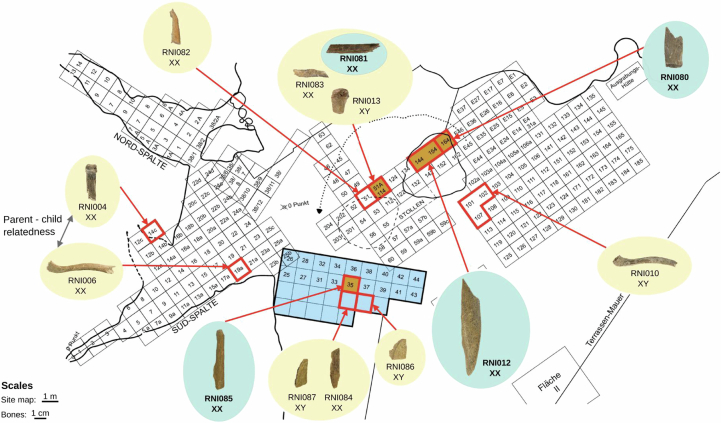
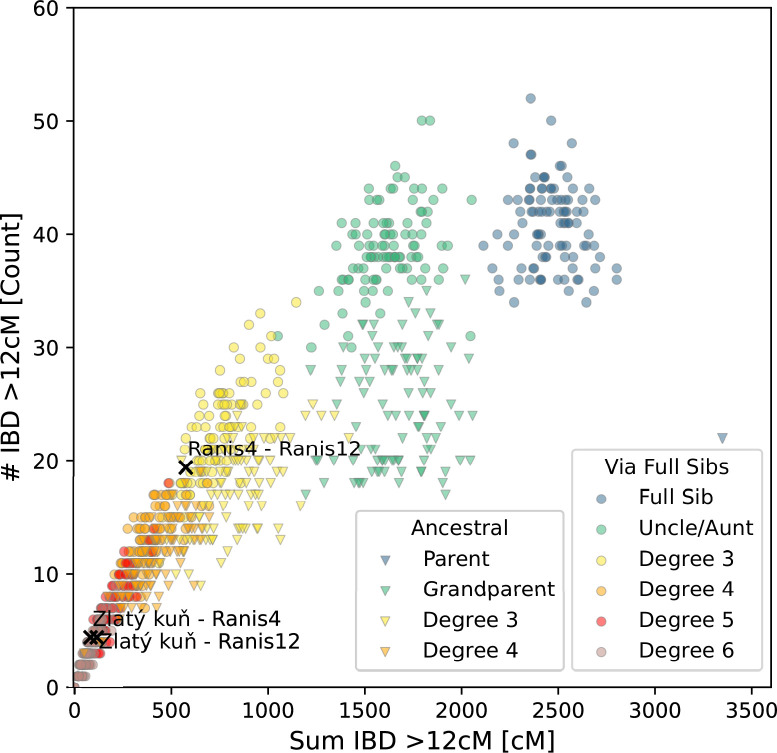
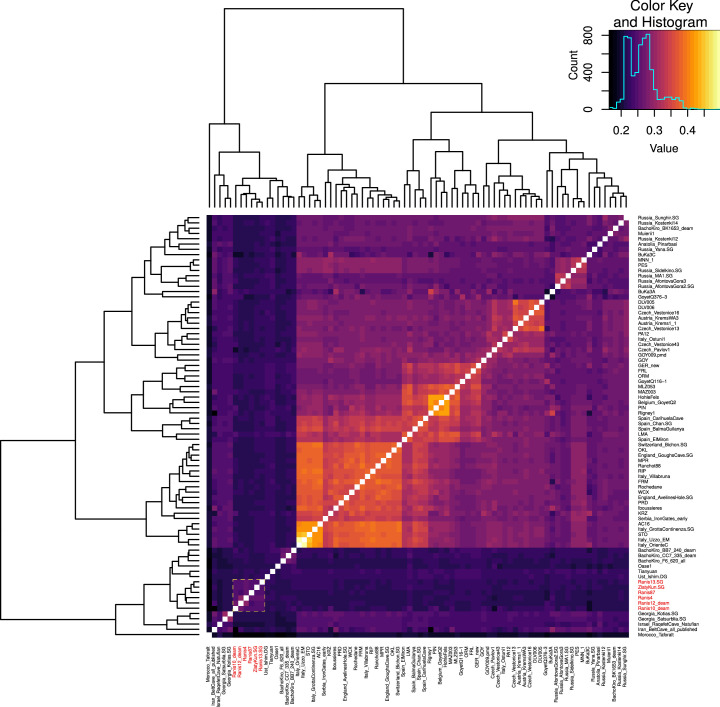
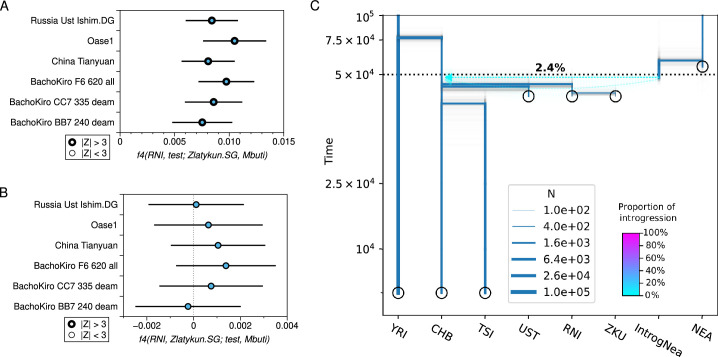
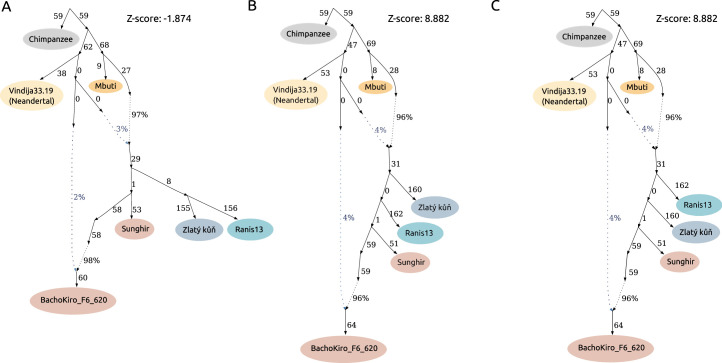
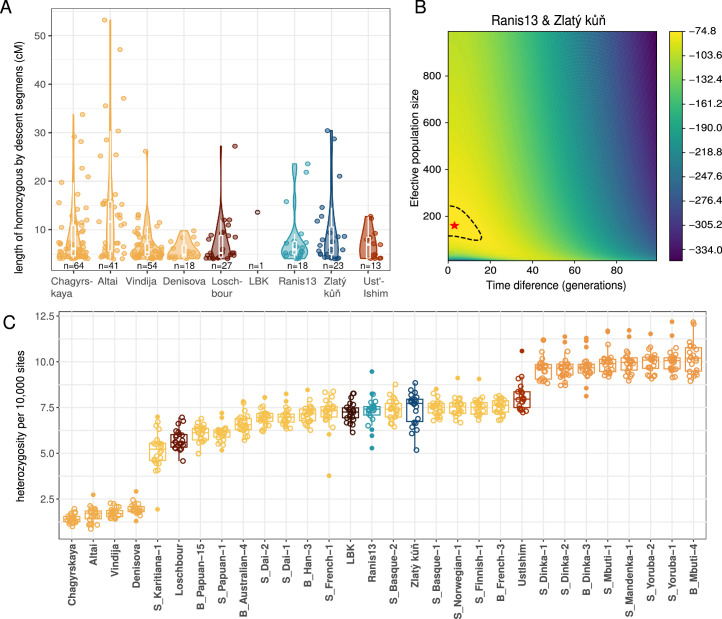
Modern humans arrived in Europe more than 45,000 years ago, overlapping at least 5,000 years with Neanderthals 1–4. Limited genomic data from these early modern humans have shown that at least two genetically distinct groups inhabited Europe, represented by Zlatý kůň, Czechia 3 and Bacho Kiro, Bulgaria 2. Here we deepen our understanding of early modern humans by analysing one high-coverage genome and five low-coverage genomes from approximately 45,000-year-old remains from Ilsenhöhle in Ranis, Germany 4, and a further high-coverage genome from Zlatý kůň. We show that distant familial relationships link the Ranis and Zlatý kůň individuals and that they were part of the same small, isolated population that represents the deepest known split from the Out-of-Africa lineage. Ranis genomes harbour Neanderthal segments that originate from a single admixture event shared with all non-Africans that we date to approximately 45,000–49,000 years ago. This implies that ancestors of all non-Africans sequenced so far resided in a common population at this time, and further suggests that modern human remains older than 50,000 years from outside Africa represent different non-African populations.
Overview
The claims and statistics of this paper haven’t been checked yet.
Free: it reads the open-access text and checks the first 5 claims that cite a source we can check. Create a free account to check every claim.
Integrity signals
Registry
Cites
Statistics
Figures
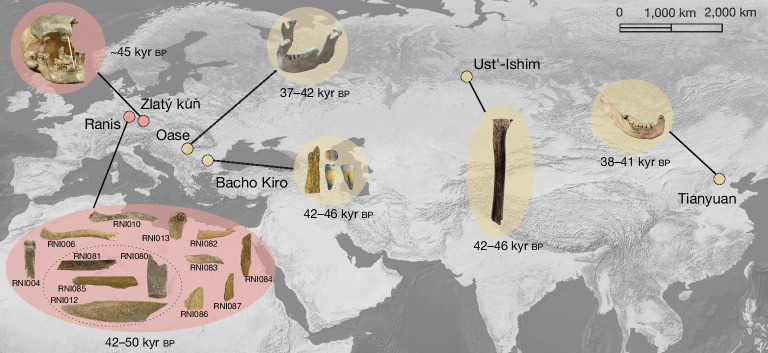
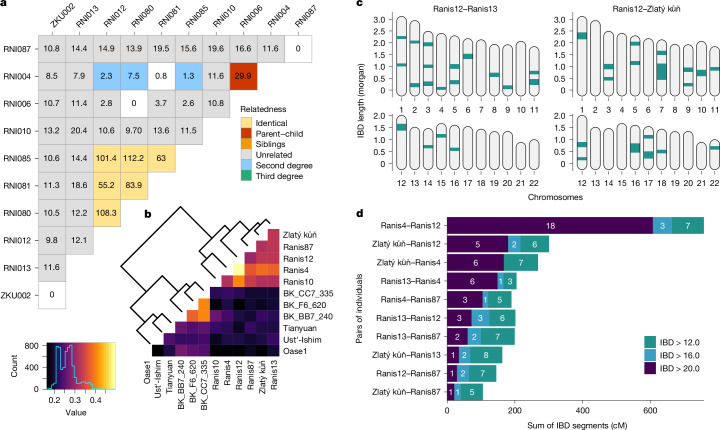
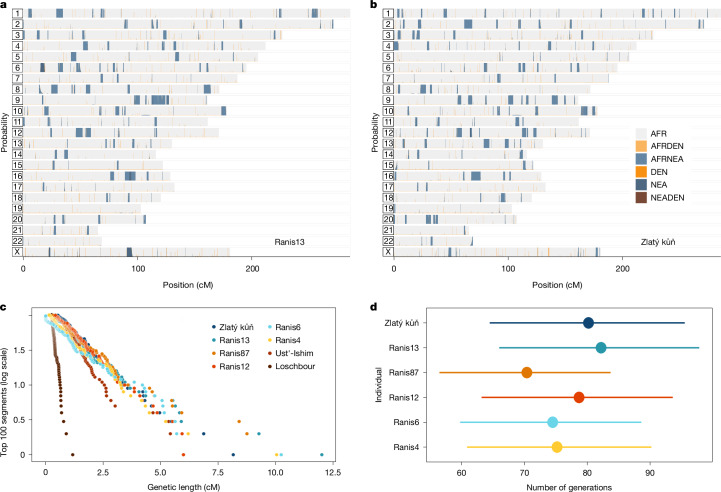
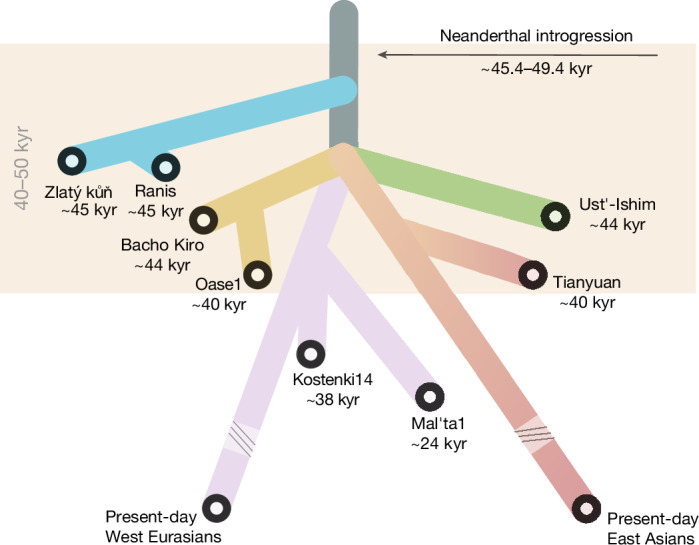
Verification
Claims the paper makes
The claims and statistics of this paper haven’t been checked yet.
Free: it reads the open-access text and checks the first 5 claims that cite a source we can check. Create a free account to check every claim.
Claims other papers make about this one
Each is checked against this paper’s own text: does it say what the citing paper says it does?
The check wasn’t confident either way, so it gives no verdict — never disputed.
In the citing paper
“Population Z separated from XYND 1-3 Ma ago in the reconstruction of Fan et al. 7 , ∼ 1.5 Ma in that of Cousins et al. 3 , over 500 ka in that of Zhang et al. 32 and 1.3 Ma (95% CI: 1.181-1.428) in ours, assuming generations of 29 y.”
From The Genetic Legacy of Introgression from Two Deeply Divergent Lineages in the Genus Homo (2026) · cites this paper as [32]
Experimental — accuracy not yet measured
Self-check
Percentages, sums and reported differences re-computed from the paper’s own numbers.
The self-check needs the paper’s full text.
Citations
Cites
The Sequence Alignment/Map format and SAMtools
Li, H., Handsaker, B., Wysoker, A., Fennell, T., Ruan, J., Homer, N., Marth, G., Abecasis, G., Durbin, R., & 1000 Genome Project Data Processing Subgroup (2009) · Bioinformatics · doi:10.1093/bioinformatics/btp352 · Cited by 62,041
Fast and accurate short read alignment with Burrows-Wheeler transform
Li, H., & Durbin, R. (2009) · Bioinformatics · doi:10.1093/bioinformatics/btp324 · Cited by 58,607
Fast gapped-read alignment with Bowtie 2
Langmead, B., & Salzberg, S. L. (2012) · Nature Methods · doi:10.1038/nmeth.1923 · Cited by 56,400
The Genome Analysis Toolkit: A MapReduce framework for analyzing next-generation DNA sequencing data
McKenna, A., Hanna, M., Banks, E., Sivachenko, A., Cibulskis, K., Kernytsky, A., Garimella, K., Altshuler, D., Gabriel, S., Daly, M., et al. (2010) · Genome Research · doi:10.1101/gr.107524.110 · Cited by 27,895
BEDTools: a flexible suite of utilities for comparing genomic features
Quinlan, A. R., & Hall, I. M. (2010) · Bioinformatics · doi:10.1093/bioinformatics/btq033 · Cited by 27,437
Tandem repeats finder: a program to analyze DNA sequences
Benson, G. (1999) · Nucleic Acids Research · doi:10.1093/nar/27.2.573 · Cited by 9,374 · cited 1×
“Following previous approaches 6,27,32 , we applied further filters to remove sites that fall within the 2.5% extremes of the GC-corrected coverage distribution, and removed tandem repeats 59 and sites called as indels.”
InfluentialAncient Admixture in Human History
Patterson, N., Moorjani, P., Luo, Y., Mallick, S., Rohland, N., Zhan, Y., Genschoreck, T., Webster, T., & Reich, D. (2012) · Genetics · doi:10.1534/genetics.112.145037 · Cited by 2,848 · cited 12×
“3) (Supplementary Information 17).”
InfluentialInference of human population history from individual whole-genome sequences
Li, H., & Durbin, R. (2011) · Nature · doi:10.1038/nature10231 · Cited by 2,590 · cited 3×
“Several measures can be informative about the effective population sizes, corresponding to the number of breeding individuals per generation, at different times in an individual’s past 25,26 .”
The complete genome sequence of a Neanderthal from the Altai Mountains
Prüfer, K., Racimo, F., Patterson, N., Jay, F., Sankararaman, S., Sawyer, S., Heinze, A., Renaud, G., Sudmant, P. H., de Filippo, C., et al. (2014) · Nature · doi:10.1038/nature12886 · Cited by 2,254
Self-citationA high-coverage genome sequence from an archaic denisovan individual
Meyer, M., Kircher, M., Gansauge, M.-T., Li, H., Racimo, F., Mallick, S., Schraiber, J. G., Jay, F., Prüfer, K., de Filippo, C., et al. (2012) · Science · doi:10.1126/science.1224344 · Cited by 1,967
Self-citationThe Simons Genome Diversity Project: 300 genomes from 142 diverse populations
Mallick, S., Li, H., Lipson, M., Mathieson, I., Gymrek, M., Racimo, F., Zhao, M., Chennagiri, N., Nordenfelt, S., Tandon, A., et al. (2016) · Nature · doi:10.1038/nature18964 · Cited by 1,584 · cited 3×
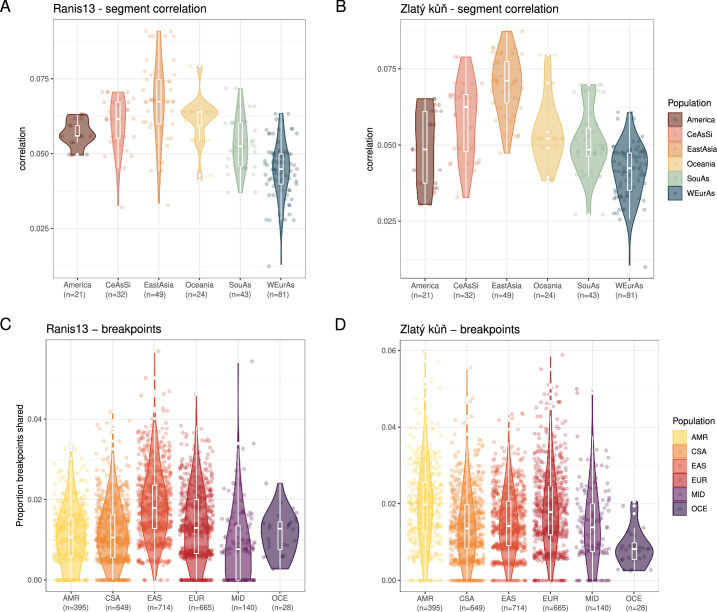
“…segments in the high-coverage genomes of Ranis13 and Zlatý kůň with segments in a set of 274 worldwide present-day and 57 ancient modern humans 38,39 , and (2) calculated the proportion of edges of Neanderthal segments in the Zlatý kůň or Ranis genomes that are also found in 2,000 present-day…”
Self-citationGenome-wide patterns of selection in 230 ancient Eurasians
Mathieson, I., Lazaridis, I., Rohland, N., Mallick, S., Patterson, N., Roodenberg, S. A., Harney, E., Stewardson, K., Fernandes, D., Novak, M., et al. (2015) · Nature · doi:10.1038/nature16152 · Cited by 1,515 · cited 2×
“We restricted our analyses to on-target sites from the 1240k capture array 15 , and provided the model with contamination estimates from AuthentiCT 14 and/or hapCon_ROH 17 as described in Supplementary Information 6.”
InfluentialSelf-citationThe genomic landscape of Neanderthal ancestry in present-day humans
Sankararaman, S., Mallick, S., Dannemann, M., Prüfer, K., Kelso, J., Pääbo, S., Patterson, N., & Reich, D. (2014) · Nature · doi:10.1038/nature12961 · Cited by 1,107
Self-citationInferring human population size and separation history from multiple genome sequences
Schiffels, S., & Durbin, R. (2014) · Nature Genetics · doi:10.1038/ng.3015 · Cited by 1,073 · cited 1×
“However, the analysis of effective population size over time using the pairwise sequentially Markovian coalescent (PSMC) method 25 shows that both individuals lived shortly after a strong reduction in population size that has been associated with the Out-of-Africa event 31 (Supplementary Figs.”
Genome sequence of a 45,000-year-old modern human from western Siberia
Fu, Q., Li, H., Moorjani, P., Jay, F., Slepchenko, S. M., Bondarev, A. A., Johnson, P. L. F., Aximu-Petri, A., Prüfer, K., de Filippo, C., et al. (2014) · Nature · doi:10.1038/nature13810 · Cited by 1,023 · cited 4×
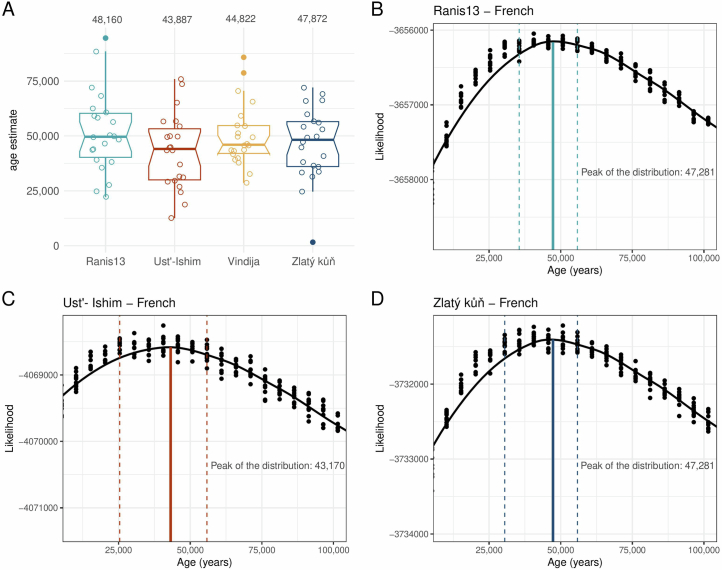
“32 to estimate the age of both individuals.”
InfluentialSelf-citationAn early modern human from Romania with a recent Neanderthal ancestor
Fu, Q., Hajdinjak, M., Moldovan, O. T., Constantin, S., Mallick, S., Skoglund, P., Patterson, N., Rohland, N., Lazaridis, I., Nickel, B., et al. (2015) · Nature · doi:10.1038/nature14558 · Cited by 802 · cited 1×
“Ranis specimens were subjected to targeted enrichment for 1.2 million variants suitable for population genetic analysis (1240k array) 15 and 1.7 million variants informative for Neanderthal and Denisovan ancestry (Archaic Admixture array) 16 .”
InfluentialSelf-citationOptiType: precision HLA typing from next-generation sequencing data
Szolek, A., Schubert, B., Mohr, C., Sturm, M., Feldhahn, M., & Kohlbacher, O. (2014) · Bioinformatics · doi:10.1093/bioinformatics/btu548 · Cited by 769
The timing and spatiotemporal patterning of Neanderthal disappearance
Higham, T., Douka, K., Wood, R., Ramsey, C. B., Brock, F., Basell, L., Camps, M., Arrizabalaga, A., Baena, J., Barroso-Ruíz, C., et al. (2014) · Nature · doi:10.1038/nature13621 · Cited by 759
A high-coverage Neandertal genome from Vindija Cave in Croatia
Prüfer, K., de Filippo, C., Grote, S., Mafessoni, F., Korlević, P., Hajdinjak, M., Vernot, B., Skov, L., Hsieh, P., Peyrégne, S., et al. (2017) · Science · doi:10.1126/science.aao1887 · Cited by 719 · cited 6×
“Homozygous regions in the high-coverage genomes of Ranis13 and Zlatý kůň were detected using a previously described method 6,27 .”
InfluentialSelf-citationDNA analysis of an early modern human from Tianyuan Cave, China
Fu, Q., Meyer, M., Gao, X., Stenzel, U., Burbano, H. A., Kelso, J., & Pääbo, S. (2013) · Proceedings of the National Academy of Sciences · doi:10.1073/pnas.1221359110 · Cited by 608
Self-citationFenner, J. N. (2005) · American Journal of Physical Anthropology · doi:10.1002/ajpa.20188 · Cited by 508 · cited 1×
“40,41), and the direct radio-carbon date of Ranis13 (43,400–46,580 cal bp) 4 to arrive at a revised date of the common Neanderthal admixture of 45–49 ka (Supplementary Information 13).”
The Combined Landscape of Denisovan and Neanderthal Ancestry in Present-Day Humans
Sankararaman, S., Mallick, S., Patterson, N., & Reich, D. (2016) · Current Biology · doi:10.1016/j.cub.2016.03.037 · Cited by 465 · cited 1×
“Previous analyses of present-day non-Africans identified five large chromosomal regions that are devoid of Neanderthal ancestry (Nean-derthal deserts), and that were probably formed by strong negative selection shortly after admixture 35–37 .”
Neandertal and Denisovan DNA from Pleistocene sediments
Slon, V., Hopfe, C., Weiß, C. L., Mafessoni, F., de la Rasilla, M., Lalueza-Fox, C., Rosas, A., Soressi, M., Knul, M. V., Miller, R., et al. (2017) · Science · doi:10.1126/science.aam9695 · Cited by 465
Self-citationThe Date of Interbreeding between Neandertals and Modern Humans
Sankararaman, S., Patterson, N., Li, H., Pääbo, S., & Reich, D. (2012) · PLoS Genetics · doi:10.1371/journal.pgen.1002947 · Cited by 460
Excavating Neandertal and Denisovan DNA from the genomes of Melanesian individuals
Vernot, B., Tucci, S., Kelso, J., Schraiber, J. G., Wolf, A. B., Gittelman, R. M., Dannemann, M., Grote, S., McCoy, R. C., Norton, H., et al. (2016) · Science · doi:10.1126/science.aad9416 · Cited by 459 · cited 1×
“However, in contrast to these results, a recent study of two low-coverage genomes from 36–37-kyr-old Buran Kaya III individuals from Crimea found signals that were interpreted as evidence for a contribution of Zlatý kůň ancestry to these individuals 22 .”
Self-citationRohland, N., Glocke, I., Aximu-Petri, A., & Meyer, M. (2018) · Nature Protocols · doi:10.1038/s41596-018-0050-5 · Cited by 369
Self-citationCharacterizing mutagenic effects of recombination through a sequence-level genetic map
Halldorsson, B. V., Palsson, G., Stefansson, O. A., Jonsson, H., Hardarson, M. T., Eggertsson, H. P., Gunnarsson, B., Oddsson, A., Halldorsson, G. H., Zink, F., et al. (2019) · Science · doi:10.1126/science.aau1043 · Cited by 361
Advances in the Evolutionary Understanding of MHC Polymorphism
Radwan, J., Babik, W., Kaufman, J., Lenz, T. L., & Winternitz, J. (2020) · Trends in Genetics · doi:10.1016/j.tig.2020.01.008 · Cited by 333 · cited 1×
“We therefore analysed the genetic diversity at the human leukocyte antigen (HLA) loci, which are among the most polymorphic loci in the human genome 29,30 .”
The modern human colonization of western Eurasia: when and where?
Hublin, J.-J. (2015) · Quaternary Science Reviews · doi:10.1016/j.quascirev.2014.08.011 · Cited by 320 · cited 11×
“In an attempt to maximize statistical power in the test, we included all sites covered by the combined data from Buran Kaya III in a comparison with the high-coverage Zlatý kůň, Ranis13 and Ust’-Ishim genomes, and low-coverage early European hunter-gatherer genomes from Russia 23,24 .”
InfluentialSelf-citationGenomic structure in Europeans dating back at least 36,200 years
Seguin-Orlando, A., Korneliussen, T. S., Sikora, M., Malaspinas, A.-S., Manica, A., Moltke, I., Albrechtsen, A., Ko, A., Margaryan, A., Moiseyev, V., et al. (2014) · Science · doi:10.1126/science.aaa0114 · Cited by 315 · cited 1×
“In an attempt to maximize statistical power in the test, we included all sites covered by the combined data from Buran Kaya III in a comparison with the high-coverage Zlatý kůň, Ranis13 and Ust’-Ishim genomes, and low-coverage early European hunter-gatherer genomes from Russia 23,24 .”
The landscape of recombination in African Americans
Hinch, A. G., Tandon, A., Patterson, N., Song, Y., Rohland, N., Palmer, C. D., Chen, G. K., Wang, K., Buxbaum, S. G., Akylbekova, E. L., et al. (2011) · Nature · doi:10.1038/nature10336 · Cited by 314
Ancient genomes show social and reproductive behavior of early Upper Paleolithic foragers
Sikora, M., Seguin-Orlando, A., Sousa, V. C., Albrechtsen, A., Korneliussen, T., Ko, A., Rasmussen, S., Dupanloup, I., Nigst, P. R., Bosch, M. D., et al. (2017) · Science · doi:10.1126/science.aao1807 · Cited by 312 · cited 1×
“In an attempt to maximize statistical power in the test, we included all sites covered by the combined data from Buran Kaya III in a comparison with the high-coverage Zlatý kůň, Ranis13 and Ust’-Ishim genomes, and low-coverage early European hunter-gatherer genomes from Russia 23,24 .”
A high-coverage Neandertal genome from Chagyrskaya Cave
Mafessoni, F., Grote, S., de Filippo, C., Slon, V., Kolobova, K. A., Viola, B., Markin, S. V., Chintalapati, M., Peyrégne, S., Skov, L., et al. (2020) · Proceedings of the National Academy of Sciences · doi:10.1073/pnas.2004944117 · Cited by 309 · cited 4×
“7a), and (2) an estimate based on the shift in demographic histories estimated by PSMC from genomes of different ages 32 (Extended Data Fig.”
InfluentialSelf-citationPalaeogenomics of Upper Palaeolithic to Neolithic European hunter-gatherers
Posth, C., Yu, H., Ghalichi, A., Rougier, H., Crevecoeur, I., Huang, Y., Ringbauer, H., Rohrlach, A. B., Nägele, K., Villalba-Mouco, V., et al. (2023) · Nature · doi:10.1038/s41586-023-05726-0 · Cited by 279 · cited 14×
“3) (Supplementary Information 17).”
InfluentialSelf-citationleeHom: adaptor trimming and merging for Illumina sequencing reads
Renaud, G., Stenzel, U., & Kelso, J. (2014) · Nucleic Acids Research · doi:10.1093/nar/gku699 · Cited by 274
Self-citationParental relatedness through time revealed by runs of homozygosity in ancient DNA
Ringbauer, H., Novembre, J., & Steinrücken, M. (2021) · Nature Communications · doi:10.1038/s41467-021-25289-w · Cited by 245 · cited 2×
“In addition, we detected ROH using 1240k sites in low-and high-coverage genomes with hapROH 28 .”
Self-citation40,000-Year-Old Individual from Asia Provides Insight into Early Population Structure in Eurasia
Yang, M. A., Gao, X., Theunert, C., Tong, H., Aximu-Petri, A., Nickel, B., Slatkin, M., Meyer, M., Pääbo, S., Kelso, J., et al. (2017) · Current Biology · doi:10.1016/j.cub.2017.09.030 · Cited by 240
Self-citationGansauge, M.-T., Aximu-Petri, A., Nagel, S., & Meyer, M. (2020) · Nature Protocols · doi:10.1038/s41596-020-0338-0 · Cited by 228
Self-citationInitial Upper Palaeolithic humans in Europe had recent Neanderthal ancestry
Hajdinjak, M., Mafessoni, F., Skov, L., Vernot, B., Hübner, A., Fu, Q., Essel, E., Nagel, S., Nickel, B., Richter, J., et al. (2021) · Nature · doi:10.1038/s41586-021-03335-3 · Cited by 217 · cited 2×
“Although distinct stone tool technologies existed 40–50 ka in Europe 11,12 , only one of the five early modern human sites that yielded genome-wide data is associated with such a technology—namely, the Initial Upper Palaeolithic (Bachokirian) in Bacho Kiro 2 .”
InfluentialSelf-citationLimits of long-term selection against Neandertal introgression
Petr, M., Pääbo, S., Kelso, J., & Vernot, B. (2019) · Proceedings of the National Academy of Sciences · doi:10.1073/pnas.1814338116 · Cited by 211
Self-citationThe MHC, disease and selection
Trowsdale, J. (2011) · Immunology Letters · doi:10.1016/j.imlet.2011.01.002 · Cited by 209
The evolutionary history of Neanderthal and Denisovan Y chromosomes
Petr, M., Hajdinjak, M., Fu, Q., Essel, E., Rougier, H., Crevecoeur, I., Semal, P., Golovanova, L. V., Doronichev, V. B., Lalueza-Fox, C., et al. (2020) · Science · doi:10.1126/science.abb6460 · Cited by 195
Self-citationMoorjani, P., Sankararaman, S., Fu, Q., Przeworski, M., Patterson, N., & Reich, D. (2016) · Proceedings of the National Academy of Sciences · doi:10.1073/pnas.1514696113 · Cited by 174 · cited 12×
“3) (Supplementary Information 17).”
InfluentialEfficiently Inferring the Demographic History of Many Populations With Allele Count Data
Kamm, J., Terhorst, J., Durbin, R., & Song, Y. S. (2020) · Journal of the American Statistical Association · doi:10.1080/01621459.2019.1635482 · Cited by 164
Delete-m Jackknife for Unequal m
Busing, F. M. T. A., Meijer, E., & Leeden, R. V. D. (1999) · Statistics and Computing · doi:10.1023/a:1008800423698 · Cited by 160
Accurate detection of identity-by-descent segments in human ancient DNA
Ringbauer, H., Huang, Y., Akbari, A., Mallick, S., Olalde, I., Patterson, N., & Reich, D. (2024) · Nature Genetics · doi:10.1038/s41588-023-01582-w · Cited by 155 · cited 12×
“3) (Supplementary Information 17).”
InfluentialSelf-citationA genome sequence from a modern human skull over 45,000 years old from Zlatý kůň in Czechia
Prüfer, K., Posth, C., Yu, H., Stoessel, A., Spyrou, M. A., Deviese, T., Mattonai, M., Ribechini, E., Higham, T., Velemínský, P., et al. (2021) · Nature Ecology & Evolution · doi:10.1038/s41559-021-01443-x · Cited by 126 · cited 15×
“3) (Supplementary Information 17).”
InfluentialSelf-citationKIN: a method to infer relatedness from low-coverage ancient DNA
Popli, D., Peyrégne, S., & Peter, B. M. (2023) · Genome Biology · doi:10.1186/s13059-023-02847-7 · Cited by 124 · cited 2×
“We used the software KIN 18 to infer kinship among the specimens with more than 0.05× coverage.”
InfluentialSelf-citationscrm: efficiently simulating long sequences using the approximated coalescent with recombination
Staab, P. R., Zhu, S., Metzler, D., & Lunter, G. (2015) · Bioinformatics · doi:10.1093/bioinformatics/btu861 · Cited by 97 · cited 1×
“In brief, after correcting for biases introduced through filtering with the help of simulations (using scrm 60 ), we compared the demographic history reconstructed from the genome of a present-day French individual (SS6004468, HGDP00533) 38 with the demographic history reconstructed from the…”
Homo sapiens reached the higher latitudes of Europe by 45,000 years ago
Mylopotamitaki, D., Weiß, M., Fewlass, H., Zavala, E. I., Rougier, H., Sümer, A. P., Hajdinjak, M., Smith, G. M., Ruebens, K., Sinet‐Mathiot, V., et al. (2024) · Nature · doi:10.1038/s41586-023-06923-7 · Cited by 94 · cited 4×
“This is in line with the archaeological evidence, such as a low proportion of processed animal remains, limited evidence for the use of fire and a low artefact density at the site which point to short-term occupation of the cave 4,42,43 .”
InfluentialSelf-citationHuman generation times across the past 250,000 years
Wang, R. J., Al-Saffar, S. I., Rogers, J., & Hahn, M. W. (2023) · Science Advances · doi:10.1126/sciadv.abm7047 · Cited by 93
Flas, D. (2011) · World Archaeology · doi:10.1080/00438243.2011.624725 · Cited by 81 · cited 13×
“3) (Supplementary Information 17).”
InfluentialNeanderthal ancestry through time: Insights from genomes of ancient and present-day humans
Iasi, L. N. M., Chintalapati, M., Skov, L., Mesa, A. B., Hajdinjak, M., Peter, B. M., & Moorjani, P. (2024) · Science · doi:10.1126/science.adq3010 · Cited by 79
Self-citationsnpAD: an ancient DNA genotype caller
Prüfer, K. (2018) · Bioinformatics · doi:10.1093/bioinformatics/bty507 · Cited by 78 · cited 1×
“We used snpAD (v.0.3.11) 6,57 to call genotypes for the Zlatý kůň and Ranis13 high-coverage genomes after filtering for a base quality of 30 and a sequence length of 30, and after re-aligning indels using GATK 58 (v.1.3-14).”
InfluentialSelf-citationPeyrégne, S., & Peter, B. M. (2020) · Genome Biology · doi:10.1186/s13059-020-02123-y · Cited by 71 · cited 1×
“…specimens were excluded from downstream analyses because they showed a high fraction of contaminating DNA sequences from present-day humans (greater than 40% contamination in a test based on characteristic patterns of ancient DNA damage 14 ; Supplementary Table 1.2 and Supplementary Information 3).”
InfluentialSelf-citation100,000 years of gene flow between Neandertals and Denisovans in the Altai mountains
Peter, B. M. (2020) · bioRxiv (Cold Spring Harbor Laboratory) · doi:10.1101/2020.03.13.990523 · Cited by 56
Self-citationQuantifying and reducing spurious alignments for the analysis of ultra-short ancient DNA sequences
de Filippo, C., Meyer, M., & Prüfer, K. (2018) · BMC Biology · doi:10.1186/s12915-018-0581-9 · Cited by 53
Self-citationA high-coverage Neandertal genome from Chagyrskaya CavePreprint
Mafessoni, F., Grote, S., de Filippo, C., et al. (2020) · bioRxiv (Cold Spring Harbor Laboratory) · doi:10.1101/2020.03.12.988956 · Cited by 51
Self-citationNeanderthal coexistence with Homo sapiens in Europe was affected by herbivore carrying capacity
Vidal‐Cordasco, M., Terlato, G., Ocio, D., & Marín-Arroyo, A. B. (2023) · Science Advances · doi:10.1126/sciadv.adi4099 · Cited by 45
The ecology, subsistence and diet of ~45,000-year-old Homo sapiens at Ilsenhöhle in Ranis, Germany
Smith, G. M., Ruebens, K., Zavala, E. I., Sinet‐Mathiot, V., Fewlass, H., Pederzani, S., Jaouen, K., Mylopotamitaki, D., Britton, K., Rougier, H., et al. (2024) · Nature Ecology & Evolution · doi:10.1038/s41559-023-02303-6 · Cited by 41 · cited 1×
“This is in line with the archaeological evidence, such as a low proportion of processed animal remains, limited evidence for the use of fire and a low artefact density at the site which point to short-term occupation of the cave 4,42,43 .”
Self-citationRohrlach, A. B., Papac, L., Childebayeva, A., Rivollat, M., Villalba-Mouco, V., Neumann, G. U., Penske, S., Skourtanioti, E., van de Loosdrecht, M., Akar, M., et al. (2021) · Scientific Reports · doi:10.1038/s41598-021-94491-z · Cited by 39
Self-citationZavala, E. I., Aximu‐Petri, A., Richter, J., Nickel, B., Vernot, B., & Meyer, M. (2022) · Molecular Ecology Resources · doi:10.1111/1755-0998.13607 · Cited by 32
Self-citationAncient DNA from the Green Sahara reveals ancestral North African lineage
Salem, N., van de Loosdrecht, M. S., Sümer, A. P., Vai, S., Hübner, A., Peter, B., Bianco, R. A., Lari, M., Modi, A., Al-Faloos, M. F. M., et al. (2025) · Nature · doi:10.1038/s41586-025-08793-7 · Cited by 25
Self-citationJöris, O., Neruda, P., Wiśniewski, A., & Weiss, M. (2022) · Journal of Paleolithic Archaeology · doi:10.1007/s41982-022-00126-8 · Cited by 20 · cited 1×
“We assigned the Y-chromosomal haplogroup from capture and shotgun sequencing data to a basal haplogroup F for Ranis10, whereas Ranis13 and Ranis87 were assigned to haplogroup NO (K2a), similar to the Siberian ancient individual Ust'-Ishim (Supplementary Fig.”
Demidenko, Y. E., & Škrdla, P. (2023) · Journal of Paleolithic Archaeology · doi:10.1007/s41982-023-00142-2 · Cited by 20 · cited 1×
“This association is further supported by several LRJ sites in Czechia, including Nad Kačákem, a cave site about 10 km from Zlatý kůň 44 .”
An Extended Admixture Pulse Model Reveals the Limitations to Human–Neandertal Introgression Dating
Iasi, L. N. M., Ringbauer, H., & Peter, B. M. (2021) · Molecular Biology and Evolution · doi:10.1093/molbev/msab210 · Cited by 19 · cited 1×
“However, we note that a perhaps more realistic model of continued admixture over multiple generations 34 provides an even better fit and estimates the admixture to have taken place around 80 generations before the individuals lived (Supplementary Table 13.4).”
InfluentialSelf-citationGenome sequences of 36,000- to 37,000-year-old modern humans at Buran-Kaya III in Crimea
Bennett, E. A., Parasayan, O., Prat, S., Péan, S., Crépin, L., Yanevich, O., Grange, T., & Geigl, E.-M. (2023) · Nature Ecology & Evolution · doi:10.1038/s41559-023-02211-9 · Cited by 16 · cited 1×
“However, in contrast to these results, a recent study of two low-coverage genomes from 36–37-kyr-old Buran Kaya III individuals from Crimea found signals that were interpreted as evidence for a contribution of Zlatý kůň ancestry to these individuals 22 .”
Pierini, F., Nutsua, M., Böhme, L., Özer, O., Bonczarowska, J. H., Susat, J., Franke, A., Nebel, A., Krause‐Kyora, B., & Lenz, T. L. (2020) · Scientific Reports · doi:10.1038/s41598-020-64312-w · Cited by 15
Self-citationRohrlach, A. B., Papac, L., Childebayeva, A., et al. (2021) · bioRxiv (Cold Spring Harbor Laboratory) · doi:10.1101/2021.02.19.431761 · Cited by 15
Self-citation
Research works printed but not linked: 1
- Ringbauer, H. et al. Accurate detection of identity-by-descent segments in human ancient DNA. Nat. Genet. 56, 143–151 (2024). 38123640 PMC10786714 · DOI · Paper page
Cited by
Yuan, Y., Yu, L.-L., Bi, C., Huang, L., Su, B., Nie, J., Dou, Z., Yang, S., & Li, Y. (2025) · Chinese Medicine · doi:10.1186/s13020-025-01075-4 · Cited by 46
Major expansion in the human niche preceded out of Africa dispersal
Hallett, E. Y., Leonardi, M., Cerasoni, J. N., Will, M., Beyer, R. M., Krapp, M., Kandel, A. W., Manica, A., & Scerri, E. M. L. (2025) · Nature · doi:10.1038/s41586-025-09154-0 · Cited by 42
A high-coverage genome from a 200,000-year-old DenisovanPreprint
Peyrégne, S., Massilani, D., Swiel, Y., Boyle, M. J., Iasi, L. N. M., Sümer, A. P., Mesa, A. B., de Filippo, C., Viola, B., Essel, E., et al. (2025) · bioRxiv (Cold Spring Harbor Laboratory) · doi:10.1101/2025.10.20.683404 · Cited by 37
Self-citationCosnefroy, Q., Crevecoeur, I., Semal, P., Hajdinjak, M., Mesa, A. B., Krause, J., Gnecchi-Ruscone, G., Posth, C., Bocherens, H., Devièse, T., et al. (2025) · Scientific Reports · doi:10.1038/s41598-025-24460-3 · Cited by 7
“Indeed, even if Homo sapiens groups are not (yet) documented in the region at the same time as Neandertals are at Goyet, they are present roughly contemporaneously at Ranis, Germany, about 600 km to the east 80–82 .”
Self-citationXiong, Z., Li, Y., Liu, X., Lu, H., Hysi, P. G., Pardo, L. M., Uitterlinden, A. G., Rivadeneira, F., Ikram, M. A., Ghanbari, M., et al. (2025) · Nature Communications · doi:10.1038/s41467-025-61761-7 · Cited by 16
“The Vindija sample is expected to be the best representative of the introgression population, as suggested by Reilly et al. 12 and recent studies have proposed a narrow time range (~45 – 49 kya BP) for the introgression period 70,71 .”
Metadata
- Authors
- Sümer, A. P., Rougier, H., Villalba-Mouco, V., Huang, Y., Iasi, L. N. M., Essel, E., Bossoms Mesa, A., Furtwaengler, A., Peyrégne, S., de Filippo, C., Rohrlach, A. B., Pierini, F., Mafessoni, F., Fewlass, H., Zavala, E. I., Mylopotamitaki, D., Bianco, R. A., Schmidt, A., Zorn, J., Nickel, B., Patova, A., Posth, C., Smith, G. M., Ruebens, K., Sinet-Mathiot, V., Stoessel, A., Dietl, H., Orschiedt, J., Kelso, J., Zeberg, H., Bos, K. I., Welker, F., Weiss, M., McPherron, S. P., Schüler, T., Hublin, J.-J., Velemínský, P., Brůžek, J., Peter, B. M., Meyer, M., Meller, H., Ringbauer, H., Hajdinjak, M., Prüfer, K., & Krause, J.
- Affiliations
- Max Planck Institute for Evolutionary Anthropology (DE)
- California State University, Northridge (US)
- Weizmann Institute of Science (IL)
- The Francis Crick Institute (GB)
- Collège de France (FR)
- University of Tübingen (DE)
- Landesamt für Denkmalpflege und Archäologie Sachsen-Anhalt (DE)
- Karolinska Institutet (SE)
- University of Copenhagen (DK)
- Friedrich-Alexander-Universität Erlangen-Nürnberg (DE)
- Thüringer Landesamt für Denkmalpflege und Archäologie (DE)
- Centre National de la Recherche Scientifique (FR)
- National Museum (CZ)
- Charles University (CZ)
- Corresponding author
- Sümer, Arev P.
- Prüfer, Kay
- Krause, Johannes
- ORCID
- Sümer, Arev P.
- Rougier, Hélène
- Villalba-Mouco, Vanessa
- Huang, Yilei
- Iasi, Leonardo N. M.
- Essel, Elena
- Bossoms Mesa, Alba
- Peyrégne, Stéphane
- Rohrlach, Adam B.
- Pierini, Federica
- Mafessoni, Fabrizio
- Fewlass, Helen
- Zavala, Elena I.
- Mylopotamitaki, Dorothea
- Bianco, Raffaela A.
- Posth, Cosimo
- Smith, Geoff M.
- Ruebens, Karen
- Sinet-Mathiot, Virginie
- Stoessel, Alexander
- Orschiedt, Jörg
- Kelso, Janet
- Zeberg, Hugo
- Bos, Kirsten I.
- Welker, Frido
- Weiss, Marcel
- McPherron, Shannon P.
- Schüler, Tim
- Hublin, Jean-Jacques
- Velemínský, Petr
- Brůžek, Jaroslav
- Peter, Benjamin M.
- Meyer, Matthias
- Meller, Harald
- Ringbauer, Harald
- Hajdinjak, Mateja
- Prüfer, Kay
- Krause, Johannes
- Venue
- Nature
- Published
- 2024-12-12
- Volume
- 638
- Issue
- 8051
- Pages
- 711-717
- ISSN
- 0028-0836 (ISSN-L)
- 1476-4687
- PMC
- PMC11839475
- OpenAlex
- W4405302027
- Cited by
- 58
- References
- 66
- Citations by year
- 2026: 30 · 2025: 27 · 2024: 1
- FWCI
- 101.15
- Type
- journal article
- Language
- en
- Open access
- hybrid
- doi.org
- Licence
- cc-by
- creativecommons.org/licenses/by/4.0 (tdm)
- creativecommons.org/licenses/by/4.0 (vor)
- Locations
- Nature (publishedVersion, cc-by)
- PubMed Central (publishedVersion, cc-by)
- PubMed (publishedVersion)
- Research at the University of Copenhagen (University of Copenhagen) (publishedVersion, cc-by)
- CentAUR (University of Reading) (acceptedVersion)
- DIGITAL.CSIC (Spanish National Research Council (CSIC)) (acceptedVersion, other-oa)
- UCL Discovery (University College London) (submittedVersion)
- HAL (submittedVersion, cc-by)
- RePEc: Research Papers in Economics (submittedVersion)
- ArTS Archivio della ricerca di Trieste (University of Trieste https://www.units.it/) (submittedVersion, cc-by)
- MPG.PuRe (Max Planck Society) (submittedVersion, cc-by)
- Refubium (Universitätsbibliothek der Freien Universität Berlin) (submittedVersion, cc-by)
- Explore Bristol Research (submittedVersion, cc-by)
- Universitätsbibliothek der FU Berlin Hochschulschriftenstelle u. Dokumentenserver (cc-by)
- Funders
- Grantová Agentura České Republiky (GA23-06822S)
- Knut och Alice Wallenbergs Stiftelse
- Vetenskapsrådet
- Topics
- Social Sciences › Anthropology › Pleistocene-Era Hominins and Archaeology
- Life Sciences › Biochemistry, Genetics and Molecular Biology › Genetics › Forensic and Genetic Research
- Life Sciences › Biochemistry, Genetics and Molecular Biology › Genetics › Genetic diversity and population structure
- Keywords
- Neanderthal admixture
- MeSH terms
- DNA, Ancient, Human Genetics, Animals, Europe, Biological Evolution, Female, Fossils, Germany, Humans, Male, Phylogeny, Time Factors, Genome, Human, History, Ancient, Neanderthals, Human Migration
About these checks
Registry, retraction, Cites and statistics results are computed, not judged, with one exception: a printed reference that no index lists is read once by a model before it counts as a citation error. Claims are extracted by a model and kept only when their quote appears verbatim in the text; each cited source is then checked, with a model’s help, for whether it says what the claim relies on. Those verdicts can be wrong — read the claim’s quote and the cited source before relying on one.
Statistics and arithmetic are recomputed, not judged.
Confidence bands are shown only for fields calibrated on our annotated test set. None is calibrated yet, so no band is shown.
What counts as a claim ›How we measure confidence ›How we check this ›
Are you an author, or do you see a problem with this page? Request a review
Data sources
Bibliographic data: Semantic Scholar, OpenAlex, Crossref.
Contains information from the Semantic Scholar Academic Graph Datasets, made available under the ODC Attribution License (ODC-BY 1.0).
Semantic Scholar’s data is described in: Kinney, R., et al. (2023). The Semantic Scholar Open Data Platform. arXiv:2301.10140.
