

The DOI matches its Crossref record; 105 of the 105 references it cites were found in a registry or an index.
Mental health prevalence and predictors among university students in nine countries during the COVID-19 pandemic: a cross-national study
Open accessAbstract
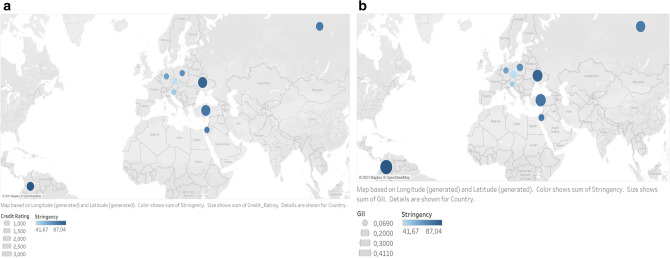
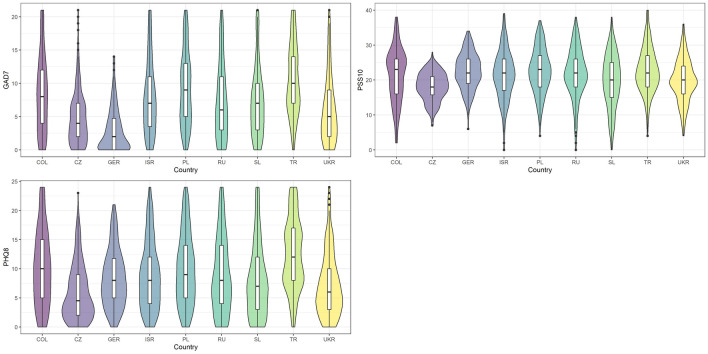
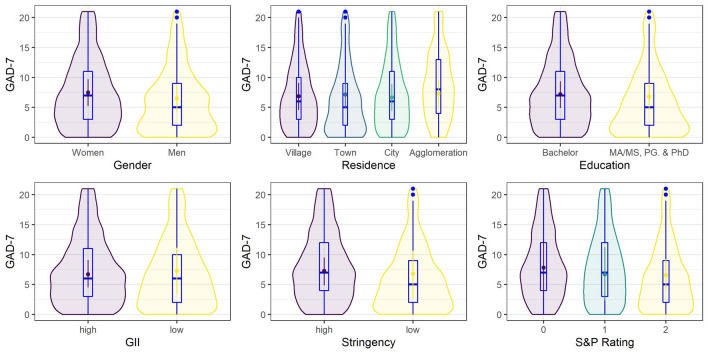
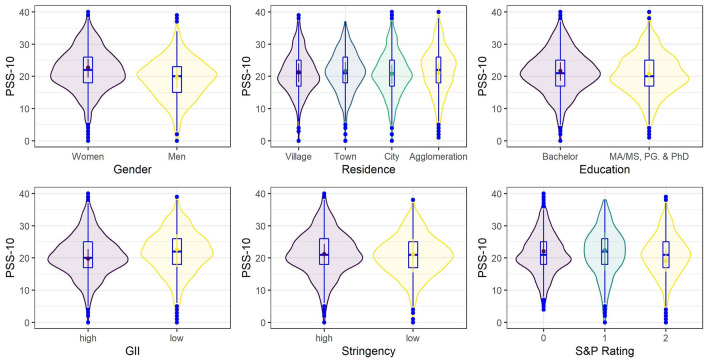
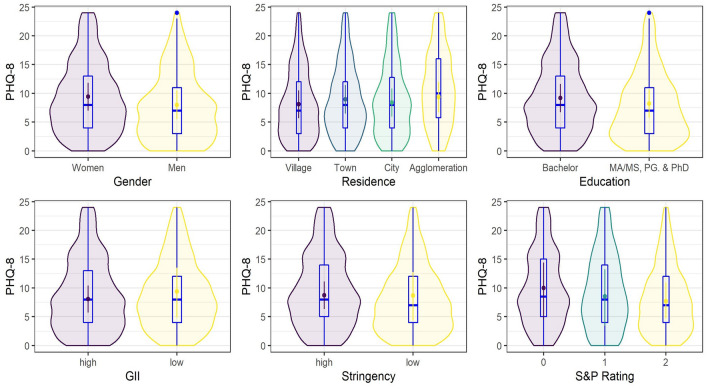
The student population has been highly vulnerable to the risk of mental health deterioration during the coronavirus disease (COVID-19) pandemic. This study aimed to reveal the prevalence and predictors of mental health among students in Poland, Slovenia, Czechia, Ukraine, Russia, Germany, Turkey, Israel, and Colombia in a socioeconomic context during the COVID-19 pandemic. The study was conducted among 2349 students (69% women) from May-July 2020. Data were collected by means of the Generalized Anxiety Disorder (GAD-7), Patient Health Questionnaire (PHQ-8), Perceived Stress Scale (PSS-10), Gender Inequality Index (GII), Standard & Poor's Global Ratings, the Oxford COVID-19 Government Response Tracker (OxCGRT), and a sociodemographic survey. Descriptive statistics and Bayesian multilevel skew-normal regression analyses were conducted. The prevalence of high stress, depression, and generalized anxiety symptoms in the total sample was 61.30%, 40.3%, and 30%, respectively. The multilevel Bayesian model showed that female sex was a credible predictor of PSS-10, GAD-7, and PHQ-8 scores. In addition, place of residence (town) and educational level (first-cycle studies) were risk factors for the PHQ-8. This study showed that mental health issues are alarming in the student population. Regular psychological support should be provided to students by universities.
Overview
The claims and statistics of this paper haven’t been checked yet.
Run the check — free, no account needed. It reads the open-access text and checks the sources it cites.
Integrity signals
Registry
Cites
Statistics
Figures
Verification
Claims the paper makes
The claims and statistics of this paper haven’t been checked yet.
Run the check — free, no account needed. It reads the open-access text and checks the sources it cites.
Self-check
Percentages, sums and reported differences re-computed from the paper’s own numbers.
The self-check needs the paper’s full text.
Citations
Cites
Diagnostic and Statistical Manual of Mental Disorders
American Psychiatric Association (2013) · doi:10.1176/appi.books.9780890425596 · Cited by 116,369
Faul, F., Erdfelder, E., Lang, A.-G., & Buchner, A. (2007) · Behavior Research Methods · doi:10.3758/bf03193146 · Cited by 65,971
A Global Measure of Perceived Stress
Cohen, S., Kamarck, T., & Mermelstein, R. (1983) · Journal of Health and Social Behavior · doi:10.2307/2136404 · Cited by 32,807
Eysenck, H. J. (1985) · Behaviour Research and Therapy · doi:10.1016/0005-7967(85)90087-7 · Cited by 32,038
A Brief Measure for Assessing Generalized Anxiety Disorder: The GAD-7
Spitzer, R. L., Kroenke, K., Williams, J. B. W., & Löwe, B. (2006) · Archives of Internal Medicine · doi:10.1001/archinte.166.10.1092 · Cited by 31,765
“Stress: appraisal and coping,”
Folkman, S. (2013) · Encyclopedia of Behavioral Medicine · doi:10.1007/978-1-4419-1005-9_215 · Cited by 27,833
The Psychological Impact of Quarantine and How to Reduce It: Rapid Review of the Evidence
Brooks, S. K., Webster, R. K., Smith, L. E., Woodland, L., Wessely, S., Greenberg, N., & Rubin, G. J. (2020) · doi:10.2139/ssrn.3532534 · Cited by 16,394
The psychological impact of quarantine and how to reduce it: Rapid review of the evidence
Brooks, S. K., Webster, R. K., Smith, L. E., Woodland, L., Wessely, S., Greenberg, N., & Rubin, G. J. (2020) · The Lancet · doi:10.1016/s0140-6736(20)30460-8 · Cited by 16,378
Guidelines for the process of cross-cultural adaptation of self-report measures
Beaton, D. E., Bombardier, C., Guillemin, F., & Ferraz, M. B. (2000) · Spine · doi:10.1097/00007632-200012150-00014 · Cited by 14,542
Diagnostic and Statistical Manual of Mental Disorders(DSM)
Leong, F. T. L. (2008) · Sage eBooks · doi:10.4135/9781412963978.n182 · Cited by 10,861
Wang, C., Pan, R., Wan, X., Tan, Y., Xu, L., Ho, C. S., & Ho, R. C. (2020) · International Journal of Environmental Research and Public Health · doi:10.3390/ijerph17051729 · Cited by 9,923
brms : An R Package for Bayesian Multilevel Models Using Stan
Bürkner, P.-C. (2017) · Journal of Statistical Software · doi:10.18637/jss.v080.i01 · Cited by 9,476
The PHQ-9: A New Depression Diagnostic and Severity Measure
Kroenke, K., & Spitzer, R. L. (2002) · Psychiatric Annals · doi:10.3928/0048-5713-20020901-06 · Cited by 5,898
The psychological impact of the COVID-19 epidemic on college students in China
Cao, W., Fang, Z., Hou, G., Han, M., Xu, X., Dong, J., & Zheng, J. (2020) · Psychiatry Research · doi:10.1016/j.psychres.2020.112934 · Cited by 5,843
Impact of COVID-19 pandemic on mental health in the general population: a systematic review
Xiong, J., Lipsitz, O., Nasri, F., Lui, L. M. W., Gill, H., Phan, L., Chen-Li, D., Iacobucci, M., Ho, R., Majeed, A., et al. (2020) · Journal of Affective Disorders · doi:10.1016/j.jad.2020.08.001 · Cited by 5,204
The PHQ-8 as a measure of current depression in the general population
Kroenke, K., Strine, T. W., Spitzer, R. L., Williams, J. B. W., Berry, J. T., & Mokdad, A. H. (2009) · Journal of Affective Disorders · doi:10.1016/j.jad.2008.06.026 · Cited by 5,121
Racial Differences in Physical and Mental Health: Socio-economic Status, Stress and Discrimination
Williams, D. R., Yu, Y., Jackson, J. S., & Anderson, N. B. (1997) · Journal of Health Psychology · doi:10.1177/135910539700200305 · Cited by 4,786
COVID-19 and mental health: A review of the existing literature
Rajkumar, R. P. (2020) · Asian Journal of Psychiatry · doi:10.1016/j.ajp.2020.102066 · Cited by 3,574
Wang, C., Pan, R., Wan, X., Tan, Y., Xu, L., McIntyre, R. S., Choo, F. N., Tran, B., Ho, R., Sharma, V. K., et al. (2020) · Brain, Behavior, and Immunity · doi:10.1016/j.bbi.2020.04.028 · Cited by 2,571
The mental health of medical workers in Wuhan, China dealing with the 2019 novel coronavirus.
Kang, L., Li, Y., Hu, S., Chen, M., Yang, C., Yang, B. X., Wang, Y., Hu, J., Lai, J., Ma, X., et al. (2020) · The Lancet Psychiatry · doi:10.1016/s2215-0366(20)30047-x · Cited by 2,061
Impacts of the COVID-19 pandemic on life of higher education students: A global perspective
Aristovnik, A., Keržič, D., Ravšelj, D., Tomaževič, N., & Umek, L. (2020) · Sustainability · doi:10.3390/su12208438 · Cited by 2,047
2019-nCoV epidemic: Address mental health care to empower society
Bao, Y., Sun, Y., Meng, S., Shi, J., & Lu, L. (2020) · The Lancet · doi:10.1016/s0140-6736(20)30309-3 · Cited by 2,038
A systematic review of studies of depression prevalence in university students
Ibrahim, A. K., Kelly, S. J., Adams, C. E., & Glazebrook, C. (2013) · Journal of Psychiatric Research · doi:10.1016/j.jpsychires.2012.11.015 · Cited by 1,988
Li, S., Wang, Y., Xue, J., Zhao, N., & Zhu, T. (2020) · International Journal of Environmental Research and Public Health · doi:10.3390/ijerph17062032 · Cited by 1,835
(2014) · Thammasat University Digital Collections · Cited by 1,732
Elmer, T., Mepham, K., & Stadtfeld, C. (2020) · PLOS ONE · doi:10.1371/journal.pone.0236337 · Cited by 1,658
Odriozola-González, P., Planchuelo-Gómez, Á., Irurtia, M. J., & de Luis-García, R. (2020) · Psychiatry Research · doi:10.1016/j.psychres.2020.113108 · Cited by 1,181
The effect of COVID-19 on youth mental health
Liang, L., Ren, H., Cao, R., Hu, Y., Qin, Z., Li, C., & Mei, S. (2020) · Psychiatric Quarterly · doi:10.1007/s11126-020-09744-3 · Cited by 971
Troyer, E. A., Kohn, J. N., & Hong, S. (2020) · Brain, Behavior, and Immunity · doi:10.1016/j.bbi.2020.04.027 · Cited by 964
R-squared for Bayesian Regression Models
Gelman, A., Goodrich, B., Gabry, J., & Vehtari, A. (2018) · The American Statistician · doi:10.1080/00031305.2018.1549100 · Cited by 924
(2013) · Pluto Press eBooks · doi:10.2307/j.ctt183pb3w.5 · Cited by 908
Browning, M. H. E. M., Larson, L. R., Sharaievska, I., Rigolon, A., McAnirlin, O., Mullenbach, L., Cloutier, S., Vu, T. M., Thomsen, J., Reigner, N., et al. (2021) · PLOS ONE · doi:10.1371/journal.pone.0245327 · Cited by 888
Anxiety and coping strategies among nursing students during the covid-19 pandemic
Savitsky, B., Findling, Y., Ereli, A., & Hendel, T. (2020) · Nurse Education in Practice · doi:10.1016/j.nepr.2020.102809 · Cited by 812
Persistence of mental health problems and needs in a college student population
Zivin, K., Eisenberg, D., Gollust, S. E., & Golberstein, E. (2009) · Journal of Affective Disorders · doi:10.1016/j.jad.2009.01.001 · Cited by 784
Nochaiwong, S., Ruengorn, C., Thavorn, K., Hutton, B., Awiphan, R., Phosuya, C., Ruanta, Y., Wongpakaran, N., & Wongpakaran, T. (2021) · Scientific Reports · doi:10.1038/s41598-021-89700-8 · Cited by 743
Barzilay, R., Moore, T. M., Greenberg, D. M., DiDomenico, G. E., Brown, L. A., White, L. K., Gur, R. C., & Gur, R. E. (2020) · Translational Psychiatry · doi:10.1038/s41398-020-00982-4 · Cited by 634
Zhang, Y., Zhang, H., Ma, X., & Di, Q. (2020) · International Journal of Environmental Research and Public Health · doi:10.3390/ijerph17103722 · Cited by 589
Impact of COVID-19 pandemic on mental health: An international study
Gloster, A. T., Lamnisos, D., Lubenko, J., Presti, G., Squatrito, V., Constantinou, M., Nicolaou, C., Papacostas, S., Aydın, G., Chong, Y. Y., et al. (2020) · PLOS ONE · doi:10.1371/journal.pone.0244809 · Cited by 558
Rogowska, A. M., Kuśnierz, C., & Bokszczanin, A. (2020) · Psychology Research and Behavior Management · doi:10.2147/prbm.s266511 · Cited by 439
Ma, Z., Zhao, J., Li, Y., Chen, D., Wang, T., Zhang, Z., Chen, Z., Yu, Q., Jiang, J., Fan, F., et al. (2020) · Epidemiology and Psychiatric Sciences · doi:10.1017/s2045796020000931 · Cited by 437
Stress and the higher education student: a critical review of the literature
Robotham, D., & Julian, C. (2006) · Journal of Further and Higher Education · doi:10.1080/03098770600617513 · Cited by 436
Poverty, social inequality and mental health
Murali, V., & Oyebode, F. (2004) · Advances in Psychiatric Treatment · doi:10.1192/apt.10.3.216 · Cited by 426
COVID-19: The forgotten priorities of the pandemic
Mesa-Vieira, C., Franco, O. H., Gómez–Restrepo, C., & Abel, T. (2020) · Maturitas · doi:10.1016/j.maturitas.2020.04.004 · Cited by 386
Aristovnik, A., Keržič, D., Ravšelj, D., Tomaževič, N., & Umek, L. (2021) · Data in Brief · doi:10.1016/j.dib.2021.107659 · Cited by 324
Global Economic Prospects, June 2020
Bank, W. (2020) · doi:10.1596/978-1-4648-1553-9 · Cited by 297
Debowska, A., Horeczy, B., Boduszek, D., & Dolinski, D. (2022) · Psychological Medicine · doi:10.1017/s003329172000392x · Cited by 287
Exploring perceived stress among students in Turkey during the COVID-19 pandemic
Aslan, I., Ochnik, D., & Çınar, O. (2020) · International Journal of Environmental Research and Public Health · doi:10.3390/ijerph17238961 · Cited by 255
Self-citationPsychological responses during the COVID-19 outbreak among university students in Bangladesh
Islam, M. S., Sujan, M. S. H., Tasnim, R., Sikder, M. T., Potenza, M. N., & van Os, J. (2020) · PLOS ONE · doi:10.1371/journal.pone.0245083 · Cited by 245
Exposure to coronavirus news on mainstream media: The role of risk perceptions and depression
Olagoke, A. A., Olagoke, O. O., & Hughes, A. M. (2020) · British Journal of Health Psychology · doi:10.1111/bjhp.12427 · Cited by 236
Working from Home and COVID-19: The Chances and Risks for Gender Gaps
Arntz, M., Yahmed, S. B., & Berlingieri, F. (2020) · Intereconomics · doi:10.1007/s10272-020-0938-5 · Cited by 199
Wang, X., Lei, S., Le, S., Yang, Y., Zhang, B., Yao, W., Gao, Z., & Cheng, S. (2020) · International Journal of Environmental Research and Public Health · doi:10.3390/ijerph17155575 · Cited by 187
Budget crises, health, and social welfare programmes
Stückler, D., Basu, S., & McKee, M. (2010) · BMJ · doi:10.1136/bmj.c3311 · Cited by 185
Hakulinen, C., Elovainio, M., Arffman, M., Lumme, S., Pirkola, S., Keskimäki, I., Manderbacka, K., & Böckerman, P. (2019) · Acta Psychiatrica Scandinavica · doi:10.1111/acps.13067 · Cited by 185
Rogowska, A. M., Павлова, Ю., Kuśnierz, C., Ochnik, D., Боднар, І., & Petrytsa, P. (2020) · Journal of Clinical Medicine · doi:10.3390/jcm9113494 · Cited by 179
Fried, E. I., Papanikolaou, F., & Epskamp, S. (2021) · Clinical Psychological Science · doi:10.1177/21677026211017839 · Cited by 165
The evolution of mental health in Spain during the economic crisis
Bartoll, X., Palència, L., Malmusi, D., Suhrcke, M., & Borrell, C. (2013) · European Journal of Public Health · doi:10.1093/eurpub/ckt208 · Cited by 151
Mækelæ, M. J., Reggev, N., Dutra, N. B., Tamayo, R. M., Silva-Sobrinho, R. A., Klevjer, K., & Pfuhl, G. (2020) · Royal Society Open Science · doi:10.1098/rsos.200644 · Cited by 149
Psychological Functioning of Slovene Adults during the COVID-19 Pandemic: Does Resilience Matter?
Kavčič, T., Avsec, A., & Kocjan, G. Z. (2020) · Psychiatric Quarterly · doi:10.1007/s11126-020-09789-4 · Cited by 138
CNS implications of COVID-19: a comprehensive review
Nagu, P., Parashar, A., Behl, T., & Mehta, V. (2020) · Reviews in the Neurosciences · doi:10.1515/revneuro-2020-0070 · Cited by 134
Margraf, J., Brailovskaia, J., & Schneider, S. (2020) · PLoS ONE · doi:10.1371/journal.pone.0243523 · Cited by 129
Horstkotte, D., Schulte, H., Bircks, W. H., & Strauer, B. E. (1993) · PubMed · Cited by 125
Behl, T., Kaur, I., BUNGAU, S. G., Kumar, A., Uddin, M. S., Kumar, C., Pal, G., Sahil, Shrivastava, K., Zengin, G., et al. (2020) · Life Sciences · doi:10.1016/j.lfs.2020.118075 · Cited by 105
International Prevalence and Correlates of Psychological Stress during the Global COVID-19 Pandemic
Adamson, M. M., Phillips, A., Seenivasan, S., Martinez, J., Grewal, H., Kang, X., Coetzee, J. P., Luttenbacher, I., Jester, A., Harris, O. A., et al. (2020) · International Journal of Environmental Research and Public Health · doi:10.3390/ijerph17249248 · Cited by 94
Brailovskaia, J., Cosci, F., Mansueto, G., Miragall, M., Herrero, R., Baños, R., Krasavtseva, Y., Kochetkov, Y., & Margraf, J. (2020) · Psychiatry Research · doi:10.1016/j.psychres.2020.113596 · Cited by 94
Structure of two adenovirus type 12 transforming polypeptides and their evolutionary implications
Perricaudet, M., le Moullec, J.-M., Tiollais, P., & Pettersson, U. (1980) · Nature · doi:10.1038/288174a0 · Cited by 89
Yehudai, M., Bender, S., Гриценко, В. В., Konstantinov, V. V., Reznik, A., & Isralowitz, R. (2020) · International Journal of Mental Health and Addiction · doi:10.1007/s11469-020-00360-7 · Cited by 87
Maalouf, F. T., Mdawar, B., Meho, L. I., & Akl, E. A. (2020) · Journal of Psychiatric Research · doi:10.1016/j.jpsychires.2020.10.018 · Cited by 84
Pharmacokinetics of naproxen in subjects with normal and impaired renal function
Anttila, M., Haataja, M., & Kasanen, A. (1980) · European Journal of Clinical Pharmacology · doi:10.1007/bf00563009 · Cited by 80
Ochnik, D., Rogowska, A. M., Kuśnierz, C., Jakubiak, M., Schütz, A., Held, M. J., Arzenšek, A., Benatov, J., Berger, R., Korchagina, E. V., et al. (2021) · Journal of Clinical Medicine · doi:10.3390/jcm10132882 · Cited by 80
Risk Factors Underlying COVID-19 Lockdown-Induced Mental Distress
Novotný, J., Gonzalez-Rivas, J. P., Kunzová, Š., Skladaná, M., Pospíšilová, A., Polcrova, A. B., Medina‐Inojosa, J. R., López-Jiménez, F. A., Geda, Y. E., & Stokin, G. B. (2020) · Frontiers in Psychiatry · doi:10.3389/fpsyt.2020.603014 · Cited by 68
Fried, E. I., Papanikolaou, F., & Epskamp, S. (2020) · doi:10.31234/osf.io/36xkp · Cited by 68
Growth factors, cytokines and soluble forms of receptor molecules in cancer patients.
Zumkeller, W., & Schofield, P. N. (1995) · PubMed · Cited by 64
Socio-economic factors linked with mental health during the recession: a multilevel analysis
Ruíz-Pérez, I., Bermúdez‐Tamayo, C., & Rodríguez‐Barranco, M. (2017) · International Journal for Equity in Health · doi:10.1186/s12939-017-0518-x · Cited by 53
Liekefett, L., & Becker, J. C. (2021) · British Journal of Social Psychology · doi:10.1111/bjso.12439 · Cited by 48
Schlichtiger, J., Brunner, S., Steffen, J., & Huber, B. C. (2020) · Journal of Investigative Medicine · doi:10.1136/jim-2020-001553 · Cited by 43
Henry, J. J., & Mittleman, J. M. (1995) · Developmental Biology · doi:10.1006/dbio.1995.1258 · Cited by 36
Early Afterdepolarization in a Patient with Complete Atrioventricuiar Block and Torsades de Pointes
Kurita, T., Ohe, T., Shimizu, W., Hotta, D., & Shimomura, K. (1993) · Pacing and Clinical Electrophysiology · doi:10.1111/j.1540-8159.1993.tb01532.x · Cited by 32
Editorial Social inequality and mental health
Hartwell, H. J. (2008) · The Journal of the Royal Society for the Promotion of Health · doi:10.1177/14664240081280030701 · Cited by 30
Depression Severity and Depression Stigma Among Students
Musa, A., Ashraf, J., Tsai, F., Abolmagd, S., Liu, C., Hussain, H., Voslářová, E., Khalil, M. A. E. F., Wolitzky-Taylor, K. B., Lee, D., et al. (2020) · The Journal of Nervous and Mental Disease · doi:10.1097/nmd.0000000000001226 · Cited by 29
A Drosophila E(spl) Gene Is "Neurogenic" in Xenopus: A Green Fluorescent Protein Study
Tannahill, D., Bray, S. J., & Harris, W. A. (1995) · Developmental Biology · doi:10.1006/dbio.1995.1116 · Cited by 27
Endo, F., Awata, H., Katoh, H., & Matsuda, I. (1995) · Genomics · doi:10.1016/0888-7543(95)80122-3 · Cited by 24
Hepatitis associated with use of sulindac in a child
Kaul, A., Reddy, J. C., Fagman, E., & Smith, G. F. (1981) · The Journal of Pediatrics · doi:10.1016/s0022-3476(81)80283-1 · Cited by 19
[Maternally-transmitted severe neonatal aphthosis].
Thivolet, J., Cambazard, F., & Mf, G. (1982) · PubMed · Cited by 19
Microassay of Adenylosuccinase by Capillary Electrophoresis
SALERNO, C., & Crifò, C. (1995) · Analytical Biochemistry · doi:10.1006/abio.1995.1240 · Cited by 17
Leder, J., Pastukhov, A., & Schütz, A. (2020) · doi:10.31234/osf.io/nugcr · Cited by 15
Comparative Histochemical and Biochemical Studies of Mast Cell Tryptase in Human Gingiva
Kennett, C. N., Cox, S. W., Eley, B. M., & Osman, I. A. (1993) · Journal of Periodontology · doi:10.1902/jop.1993.64.9.870 · Cited by 14
The reaction of the dental profession to changes in the 1970s.
Waldman, H. B. (1980) · American Journal of Public Health · doi:10.2105/ajph.70.6.619 · Cited by 13
Alcaptonuria and sucrase-isomaltase deficiency in three offspring of a consanguineous marriage.
Garnica, A. D., Cerda, J. J., Maenard, D., Preiser, H., & Crane, K. (1981) · PubMed · Cited by 11
Hartmann, E. E. (1995) · International Journal of Neuroscience · doi:10.3109/00207459508986101 · Cited by 10
Suicide and holocaust survivors.
Roden, R. G. (1982) · PubMed · Cited by 10
Depression and workaholism in undergraduates: Examining gender as a moderator
Rogowska, A. M., Zmaczyńska-Witek, B., & Olejniczak, P. (2021) · Journal of American College Health · doi:10.1080/07448481.2020.1865976 · Cited by 10
Prostaglandins in human duodenal secretions
Casey, C. E., Meydani, S. N., Walravens, P. A., Dupont, J., & Hambidge, K. M. (1980) · Prostaglandins and Medicine · doi:10.1016/0161-4630(80)90053-1 · Cited by 9
Quantitative Evaluation of Saccadic Eye Movement Disorders Under Random Visual Stimuli on CRT
Kosijgi, Y., Ohnishi, A., Ikebe, J., Yasuda, K., & Kumagai, Y. (1982) · IEEE Transactions on Biomedical Engineering · doi:10.1109/tbme.1982.324885 · Cited by 8
Idiopathic esophageal varices.
Kelsen, K., & Burbige, E. J. (1982) · PubMed · Cited by 7
Chauvenet, P. H., & Paque, R. E. (1982) · International Journal of Cancer · doi:10.1002/ijc.2910300210 · Cited by 6
Hardt, H. (1981) · Biochimica et Biophysica Acta (BBA) - Bioenergetics · doi:10.1016/0005-2728(81)90119-5 · Cited by 5
The Formation Of Parallel RNA-RNA DuplexesIn Vitro
Tchurikov, N. A., Ponomarenko, N. A., Golova, Y. B., & CHERNOV, B. K. (1995) · Journal of Biomolecular Structure and Dynamics · doi:10.1080/07391102.1995.10508860 · Cited by 4
THE STUDY OF “PURE CALCIUM OXALATE CALCULI” WHICH WERE PASSED
Tozuka, K., Abé, H., Minowa, T., Konjiki, T., & Sudô, T. (1982) · The Japanese Journal of Urology · doi:10.5980/jpnjurol1928.73.6_740 · Cited by 4
Well-being of undergraduates during the COVID-19 pandemicPreprint
Rogowska, A., Kuśnierz, C., Ochnik, D., Schütz, A., Aslan, İ., Павлова, Ю., Benatov, J., Arzenšek, A., Jakubiak, M., Blažková, I., et al. (2020) · doi:10.17605/osf.io/brkgd · Cited by 4
Nachum, H., Golan, A., Herman, A., Bukovsky, I., Caspi, E., & Ron‐El, R. (1993) · European Journal of Obstetrics & Gynecology and Reproductive Biology · doi:10.1016/0028-2243(93)90027-a · Cited by 1
[The determination of the status of prosthodontics at Basel 1995].
Besimo, C. (1995) · PubMed · Cited by 1
Assurance for a successful group practice. Business-financial advice for physicians.
Rr, D. (1982) · PubMed · Cited by 1
[Essay on the development of dermatology during the past 100 years].
Proppe, A. (1966) · PubMed · Cited by 1
[Eye changes in exposure to vibration].
Vp, M., & Chemnyĭ, A. B. (1982) · PubMed · Cited by 1
[Thermal management of the newborn--a historical perspective].
Dollberg, S. (1995) · PubMed · Cited by 1
Research works printed but not linked: 1
- Hale, T., Petherick, A., Phillips, T. & Webster, S. Variation in government responses to COVID-19. Blavatnik School Gov. Work. Pap. 31, 2020–2111 (2020).
Cited by
Sorted by citations
Ferrari, M., Allan, S., Arnold, C., Eleftheriadis, D., Álvarez‐Jiménez, M., Gumley, A. I., & Gleeson, J. (2022) · Journal of Medical Internet Research · doi:10.2196/39686 · Cited by 162
Pandya, A., & Lodha, P. (2022) · SSM - Mental Health · doi:10.1016/j.ssmmh.2022.100122 · Cited by 70
Benatov, J., Ochnik, D., Rogowska, A. M., Arzenšek, A., & Bitenc, U. M. (2022) · International Journal of Environmental Research and Public Health · doi:10.3390/ijerph19031334 · Cited by 66
Gavurová, B., Ivanková, V., Rigelský, M., Mudarri, T., & Miovský, M. (2022) · Frontiers in Public Health · doi:10.3389/fpubh.2022.859107 · Cited by 65
Gogoi, M., Webb, A. J., Pareek, M., Bayliss, C. D., & Gies, L. (2022) · International Journal of Environmental Research and Public Health · doi:10.3390/ijerph19159322 · Cited by 58
Metadata
- Authors
- Ochnik, D., Rogowska, A. M., Kuśnierz, C., Jakubiak, M., Schütz, A., Held, M. J., Arzenšek, A., Benatov, J., Berger, R., Korchagina, E. V., Pavlova, I., Blažková, I., Aslan, I., Çınar, O., & Cuero-Acosta, Y. A.
- Affiliations
- Akademia Śląska (PL)
- University of Opole (PL)
- Opole University of Technology (PL)
- Maria Curie-Skłodowska University (PL)
- University of Bamberg (DE)
- University of Primorska (SI)
- University of Haifa (IL)
- Tel Aviv University (IL)
- Peter the Great St. Petersburg Polytechnic University (RU)
- Mendel University in Brno (CZ)
- Ağrı İbrahim Çeçen University (TR)
- Corresponding author
- Held, Marco J.
- ORCID
- Venue
- Scientific Reports
- Published
- 2021-09-20
- Volume
- 11
- Issue
- 1
- Pages
- 18644-18644
- ISSN
- 2045-2322 (ISSN-L)
- PMC
- PMC8452732
- OpenAlex
- W3198966822
- Cited by
- 220
- References
- 104
- Citations by year
- 2026: 20 · 2025: 28 · 2024: 52 · 2023: 60 · 2022: 54 · 2021: 6
- FWCI
- 29.29
- Type
- journal article
- Language
- en
- Open access
- gold
- doi.org
- Locations
- Scientific Reports (publishedVersion, cc-by)
- Europe PMC (PubMed Central) (publishedVersion, other-oa)
- PubMed Central (publishedVersion, cc-by)
- PubMed (publishedVersion)
- Ağrı İbrahim Çeçen University Institutional Repository (submittedVersion, cc-by-nc-nd)
- DOAJ (DOAJ: Directory of Open Access Journals) (submittedVersion, cc-by-sa)
- Funders
- Otto-Friedrich-Universität Bamberg
- Topics
- Social Sciences › Psychology › Clinical Psychology › COVID-19 and Mental Health
- Social Sciences › Psychology › Developmental and Educational Psychology › Student Stress and Coping
- Health Sciences › Medicine › Psychiatry and Mental health › Mental Health Treatment and Access
- Keywords
- student mental health, COVID-19 pandemic, depression, generalized anxiety disorder, perceived stress, university students, cross-national comparison, gender differences, socioeconomic factors, psychological support, risk factors
- MeSH terms
- COVID-19, Anxiety Disorders, Bayes Theorem, Depression, Female, Geography, Humans, Male, Mental Health, Regression Analysis, Stress, Psychological, Students, Universities, Prevalence, Multilevel Analysis, Pandemics
About these checks
Registry, retraction, Cites and statistics results are computed, not judged, with one exception: a printed reference that no index lists is read once by a model before it counts as a citation error. Claims are extracted by a model and kept only when their quote appears verbatim in the text; each cited source is then checked, with a model’s help, for whether it says what the claim relies on. Those verdicts can be wrong — read the claim’s quote and the cited source before relying on one.
Statistics and arithmetic are recomputed, not judged.
Confidence bands are shown only for fields calibrated on our annotated test set. None is calibrated yet, so no band is shown.
What counts as a claim ›How we measure confidence ›How we check this ›
Are you an author, or do you see a problem with this page? Request a review
