

How mitochondria produce reactive oxygen species
Open accessThe DOI matches its Crossref record; 135 of the 136 references it cites were found in a registry or an index.
Abstract
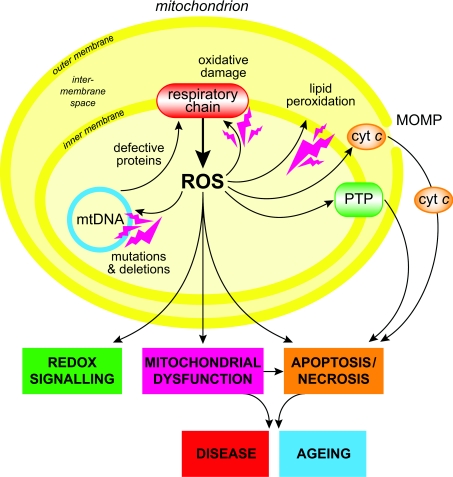
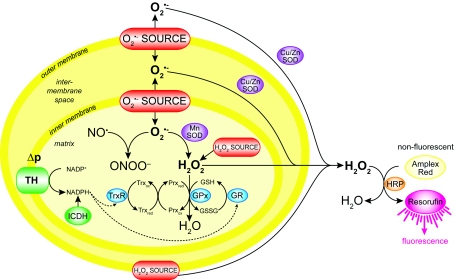
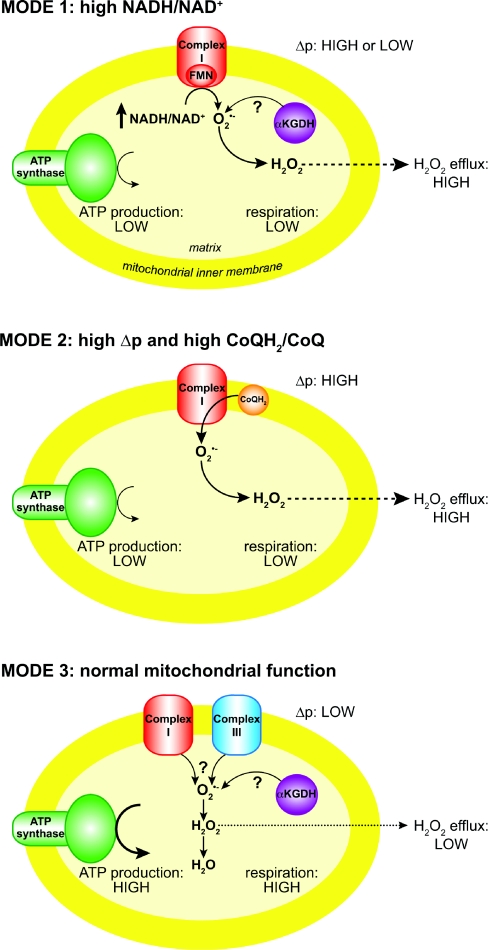
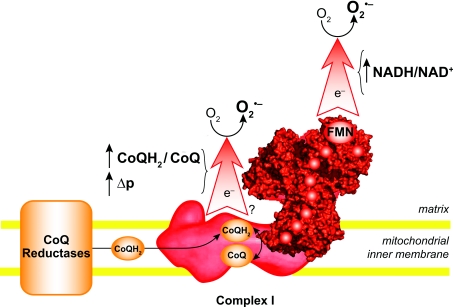
The production of ROS (reactive oxygen species) by mammalian mitochondria is important because it underlies oxidative damage in many pathologies and contributes to retrograde redox signalling from the organelle to the cytosol and nucleus. Superoxide (O2•−) is the proximal mitochondrial ROS, and in the present review I outline the principles that govern O2•− production within the matrix of mammalian mitochondria. The flux of O2•− is related to the concentration of potential electron donors, the local concentration of O2 and the second-order rate constants for the reactions between them. Two modes of operation by isolated mitochondria result in significant O2•− production, predominantly from complex I: (i) when the mitochondria are not making ATP and consequently have a high Δp (protonmotive force) and a reduced CoQ (coenzyme Q) pool; and (ii) when there is a high NADH/NAD+ ratio in the mitochondrial matrix. For mitochondria that are actively making ATP, and consequently have a lower Δp and NADH/NAD+ ratio, the extent of O2•− production is far lower. The generation of O2•− within the mitochondrial matrix depends critically on Δp, the NADH/NAD+ and CoQH2/CoQ ratios and the local O2 concentration, which are all highly variable and difficult to measure in vivo. Consequently, it is not possible to estimate O2•− generation by mitochondria in vivo from O2•−-production rates by isolated mitochondria, and such extrapolations in the literature are misleading. Even so, the description outlined here facilitates the understanding of factors that favour mitochondrial ROS production. There is a clear need to develop better methods to measure mitochondrial O2•− and H2O2 formation in vivo, as uncertainty about these values hampers studies on the role of mitochondrial ROS in pathological oxidative damage and redox signalling.
Overview
The claims and statistics of this paper haven’t been checked yet.
Free: it reads the open-access text and checks the first 5 claims that cite a source we can check. Create a free account to check every claim.
Integrity signals
Registry
Cites
Statistics
Figures
Verification
Claims the paper makes
The claims and statistics of this paper haven’t been checked yet.
Free: it reads the open-access text and checks the first 5 claims that cite a source we can check. Create a free account to check every claim.
Claims other papers make about this one
Each is checked against this paper’s own text: does it say what the citing paper says it does?
The source backs part of the claim, not all of it — or backs it for a different population, condition or comparison.
In the citing paper
“Mitochondria-derived ROS (mtROS) are mainly produced by complexes I and III as O2●−.”
From Functions of ROS in Macrophages and Antimicrobial Immunity (2021) · cites this paper as [86]
Experimental — accuracy not yet measuredThe source backs part of the claim, not all of it — or backs it for a different population, condition or comparison.
In the citing paper
“Antimycin A blocks the Qi site of complex III of the ETC [86,422], thereby preventing electrons from entering the complex, which leads to increased leakage of electrons into the IMS.”
From Functions of ROS in Macrophages and Antimicrobial Immunity (2021) · cites this paper as [86]
Experimental — accuracy not yet measuredThe source backs part of the claim, not all of it — or backs it for a different population, condition or comparison.
In the citing paper
“Normally, the unpaired electron of ubisemiquinone is transferred to the cytochrome b center of complex III; however, this electron can also react with molecular oxygen to form superoxide 2, 26.”
From Mitochondrial reactive oxygen species regulate cellular signaling and dictate biological outcomes (2010) · cites this paper as [2]
Experimental — accuracy not yet measuredThe source backs part of the claim, not all of it — or backs it for a different population, condition or comparison.
In the citing paper
“Within the mitochondria, the main sites of superoxide production have been localized to the electron transport chain (ETC) complexes I (C I) and Ⅲ [6–9].”
From Honokiol induces superoxide production by targeting mitochondrial respiratory chain complex I in Candida albicans (2017) · cites this paper as [6]
Experimental — accuracy not yet measuredThe source backs part of the claim, not all of it — or backs it for a different population, condition or comparison.
In the citing paper
“The mitochondrial respiratory chain is the major source of intracellular ROS generation.”
From Honokiol induces superoxide production by targeting mitochondrial respiratory chain complex I in Candida albicans (2017) · cites this paper as [6]
Experimental — accuracy not yet measured
10 more claims about this paper
Create a free account to see every claim other papers make about this one.
Self-check
Percentages, sums and reported differences re-computed from the paper’s own numbers.
The self-check needs the paper’s full text.
Citations
Cites
Free Radicals in the Physiological Control of Cell Function
Dröge, W. (2002) · Physiological Reviews · doi:10.1152/physrev.00018.2001 · Cited by 9,855
Electron transfers in chemistry and biology
Marcus, R. A., & Sutin, N. (1985) · Biochimica et Biophysica Acta (BBA) - Reviews on Bioenergetics · doi:10.1016/0304-4173(85)90014-x · Cited by 8,050
Hydroperoxide metabolism in mammalian organs.
Chance, B., Sies, H., & Boveris, A. (1979) · Physiological Reviews · doi:10.1152/physrev.1979.59.3.527 · Cited by 5,827
Mitochondrial formation of reactive oxygen species
Turrens, J. F. (2003) · The Journal of Physiology · doi:10.1113/jphysiol.2003.049478 · Cited by 5,084
Schafer, F. Q., & Buettner, G. R. (2001) · Free Radical Biology and Medicine · doi:10.1016/s0891-5849(01)00480-4 · Cited by 4,587
Mitochondria, Oxidants, and Aging
Balaban, R. S., Nemoto, S., & Finkel, T. (2005) · Cell · doi:10.1016/j.cell.2005.02.001 · Cited by 4,388
The Free Radical Theory of Aging Matures
BECKMAN, K. B., & AMES, B. N. (1998) · Physiological Reviews · doi:10.1152/physrev.1998.78.2.547 · Cited by 3,879
Mitochondrial free radical generation, oxidative stress, and aging
Cadenas, E., & Davies, K. J. A. (2000) · Free Radical Biology and Medicine · doi:10.1016/s0891-5849(00)00317-8 · Cited by 3,010
Boveris, A., & Chance, B. (1973) · Biochemical Journal · doi:10.1042/bj1340707 · Cited by 2,626
Peroxynitrite: biochemistry, pathophysiology and development of therapeutics
Szabó, C., Ischiropoulos, H., & Radi, R. (2007) · Nature Reviews Drug Discovery · doi:10.1038/nrd2222 · Cited by 2,134
Oxygen sensing by HIF hydroxylases
Schofield, C. J., & Ratcliffe, P. J. (2004) · Nature Reviews Molecular Cell Biology · doi:10.1038/nrm1366 · Cited by 2,068
Holmgren, A. (1985) · Annual Review of Biochemistry · doi:10.1146/annurev.bi.54.070185.001321 · Cited by 1,951
Mitochondrial reactive oxygen species trigger hypoxia-induced transcription
Chandel, N. S., Maltepe, E., Goldwasser, E., Mathieu, C. E., Simon, M. C., & Schumacker, P. T. (1998) · Proceedings of the National Academy of Sciences · doi:10.1073/pnas.95.20.11715 · Cited by 1,926
Dilated cardiomyopathy and neonatal lethality in mutant mice lacking manganese superoxide dismutase
Li, Y., Huang, T.-T., Carlson, E. J., Melov, S., Ursell, P. C., Olson, J. L., Noble, L. J., Yoshimura, M. P., Berger, C., Chan, P. H., et al. (1995) · Nature Genetics · doi:10.1038/ng1295-376 · Cited by 1,789 · cited 2×
“…mode 3 is relatively low and the sources are poorly understood, it may turn out to be the mode of greatest biological importance and be responsible for the long-term accumulation of mitochondrial oxidative damage and for the extensive tissue damage seen in the absence of MnSOD [45,46]. production.”
BackgroundKorshunov, S. S., Skulachev, V. P., & Starkov, A. A. (1997) · FEBS Letters · doi:10.1016/s0014-5793(97)01159-9 · Cited by 1,727
The cellular production of hydrogen peroxide
Boveris, A., Oshino, N., & Chance, B. (1972) · Biochemical Journal · doi:10.1042/bj1280617 · Cited by 1,547
Topology of superoxide production from different sites in the mitochondrial electron transport chain
St-Pierre, J., Buckingham, J. A., Roebuck, S. J., & Brand, M. D. (2002) · Journal of Biological Chemistry · doi:10.1074/jbc.m207217200 · Cited by 1,545 · cited 5×
“…2 •− production, [E], will vary with organism, tissue, state, age or hormonal status, and may underlie many of the changes in maximum ROS production capacity between tissues [23]; for example, complex I content may explain the different maximum capacities of pigeon and rat heart mitochondria [24].”
BackgroundInfluentialMitochondrial complex III is required for hypoxia-induced ROS production and cellular oxygen sensing
Guzy, R. D., Hoyos, B., Robin, E., Chen, H., Liu, L., Mansfield, K. D., Simon, M. C., Hammerling, U., & Schumacker, P. T. (2005) · Cell Metabolism · doi:10.1016/j.cmet.2005.05.001 · Cited by 1,545
Partial Resolution of the Enzymes Catalyzing Oxidative Phosphorylation
Kagawa, Y., & Racker, E. (1971) · Journal of Biological Chemistry · doi:10.1016/s0021-9258(18)61930-1 · Cited by 1,362
Sawyer, D. T., & Valentine, J. S. (1981) · Accounts of Chemical Research · doi:10.1021/ar00072a005 · Cited by 1,358
Mitochondrial metabolism of reactive oxygen species
Andreyev, A. Y., Kushnareva, Y. E., & Starkov, A. A. (2005) · Biochemistry (Moscow) · doi:10.1007/s10541-005-0102-7 · Cited by 1,336
Specific Aquaporins Facilitate the Diffusion of Hydrogen Peroxide across Membranes
Bienert, G. P., Møller, A. L. B., Kristiansen, K. A., Schulz, A., Møller, I. M., Schjoerring, J. K., & Jahn, T. P. (2007) · Journal of Biological Chemistry · doi:10.1074/jbc.m603761200 · Cited by 1,306
Generation of reactive oxygen species by the mitochondrial electron transport chain
Liu, Y., Fiskum, G., & Schubert, D. (2002) · Journal of Neurochemistry · doi:10.1046/j.0022-3042.2002.00744.x · Cited by 1,260 · cited 6×
“Under these conditions, the lowered (cid:2) p and the oxidized NADH pool prevent O 2 •− production by RET and greatly decrease O 2 •− production at the FMN of complex I, making H 2 O 2 efflux from mitochondria negligible compared with modes 1 or 2 (e.g. [4,78,89,119]).”
BackgroundInfluentialComplete Structure of the 11-Subunit Bovine Mitochondrial Cytochrome bc 1 Complex
Iwata, S., Lee, J. W., Okada, K., Lee, J. K., Iwata, M., Rasmussen, B., Link, T. A., Ramaswamy, S., & Jap, B. K. (1998) · Science · doi:10.1126/science.281.5373.64 · Cited by 1,253
Cleeter, M. W. J., Cooper, J. M., Darley-Usmar, V. M., Moncada, S., & Schapira, A. H. V. (1994) · FEBS Letters · doi:10.1016/0014-5793(94)00424-2 · Cited by 1,241
Ubisemiquinone is the electron donor for superoxide formation by complex III of heart mitochondria
Turrens, J. F., Alexandre, A., & Lehninger, A. L. (1985) · Archives of Biochemistry and Biophysics · doi:10.1016/0003-9861(85)90293-0 · Cited by 1,214
Giorgio, M., Migliaccio, E., Orsini, F., Paolucci, D., Moroni, M., Contursi, C., Pelliccia, G., Luzi, L., Minucci, S., Marcaccio, M., et al. (2005) · Cell · doi:10.1016/j.cell.2005.05.011 · Cited by 1,176
Targeting Antioxidants to Mitochondria by Conjugation to Lipophilic Cations
Murphy, M. P., & Smith, R. A. J. (2007) · Annual Review of Pharmacology and Toxicology · doi:10.1146/annurev.pharmtox.47.120505.105110 · Cited by 1,173 · cited 1×
“This raises the possibility that better understanding of how mitochondria produce ROS will lead to the rational design of therapies to minimize mitochondrial oxidative damage [130].”
BackgroundSelf-citationMembrane transport of hydrogen peroxide
Bienert, G. P., Schjoerring, J. K., & Jahn, T. P. (2006) · Biochimica et Biophysica Acta (BBA) - Biomembranes · doi:10.1016/j.bbamem.2006.02.015 · Cited by 1,075
Mitochondria, oxygen free radicals, disease and ageing
Raha, S., & Robinson, B. H. (2000) · Trends in Biochemical Sciences · doi:10.1016/s0968-0004(00)01674-1 · Cited by 1,066
Brown, G. C., & Cooper, C. E. (1994) · FEBS Letters · doi:10.1016/0014-5793(94)01290-3 · Cited by 1,055
Complex iii releases superoxide to both sides of the inner mitochondrial membrane
Muller, F. L., Liu, Y., & Van Remmen, H. (2004) · Journal of Biological Chemistry · doi:10.1074/jbc.m407715200 · Cited by 1,036
Mitochondrial superoxide: production, biological effects, and activation of uncoupling proteins
Brand, M. D., Affourtit, C., Esteves, T. C., Green, K., Lambert, A. J., Miwa, S., Pakay, J. L., & Parker, N. (2004) · Free Radical Biology and Medicine · doi:10.1016/j.freeradbiomed.2004.05.034 · Cited by 1,032 · cited 2×
“The generation of O 2 •− by both modes 1 and 2 will be decreased by mild uncoupling, perhaps suggesting that the physiological function of uncoupling proteins-2 and -3 is to modulate mitochondrial O 2 •− production [118].”
BackgroundLebovitz, R. M., Zhang, H., Vogel, H., Cartwright, J., Dionne, L., Lu, N., Huang, S., & Matzuk, M. M. (1996) · Proceedings of the National Academy of Sciences · doi:10.1073/pnas.93.18.9782 · Cited by 1,023
Mitochondrial Superoxide Dismutase
Weisiger, R. A., & Fridovich, I. (1973) · Journal of Biological Chemistry · doi:10.1016/s0021-9258(19)43735-6 · Cited by 958
Weisiger, R. A., & Fridovich, I. (1973) · Journal of Biological Chemistry · doi:10.1016/s0021-9258(19)43969-0 · Cited by 895
Guzy, R. D., & Schumacker, P. T. (2006) · Experimental Physiology · doi:10.1113/expphysiol.2006.033506 · Cited by 881 · cited 6×
“These studies have led to the proposal that the source of the ROS is complex III [121], possibly a ubisemiquinone at the Q o site [126] , thereby altering the P R of protein redox groups.”
BackgroundInfluentialCadenas, E., Boveris, A., Ragan, C. I., & Stoppani, A. O. M. (1977) · Archives of Biochemistry and Biophysics · doi:10.1016/0003-9861(77)90035-2 · Cited by 855
Activation of molecular oxygen by flavins and flavoproteins.
Massey, V. (1994) · Journal of Biological Chemistry · doi:10.1016/s0021-9258(17)31664-2 · Cited by 816
Does nitric oxide modulate mitochondrial energy generation and apoptosis?
Moncada, S., & Erusalimsky, J. D. (2002) · Nature Reviews Molecular Cell Biology · doi:10.1038/nrm762 · Cited by 793
Selective fluorescent imaging of superoxide in vivo using ethidium-based probes
Robinson, K. M., Janes, M. S., Pehar, M., Monette, J. S., Ross, M. F., Hagen, T. M., Murphy, M. P., & Beckman, J. S. (2006) · Proceedings of the National Academy of Sciences · doi:10.1073/pnas.0601945103 · Cited by 777
Self-citationImai, H., & Nakagawa, Y. (2003) · Free Radical Biology and Medicine · doi:10.1016/s0891-5849(02)01197-8 · Cited by 767
Structure of the Hydrophilic Domain of Respiratory Complex I from Thermus thermophilus
Sazanov, L. A., & Hinchliffe, P. (2006) · Science · doi:10.1126/science.1123809 · Cited by 763
Kussmaul, L., & Hirst, J. (2006) · Proceedings of the National Academy of Sciences · doi:10.1073/pnas.0510977103 · Cited by 720
Han, D., Antunes, F., Canali, R., Rettori, D., & Cadenas, E. (2003) · Journal of Biological Chemistry · doi:10.1074/jbc.m210269200 · Cited by 711 · cited 3×
“…dyes such as hydroethidine and MitoSOX TM [47–50], measurement of the reaction of O 2 •− with compounds to form chemiluminescent products [44,51], spin trapping [52] or measurement of the inactivation rate of aconitase [53] do provide useful information on mitochondrial O 2 •− production.”
BackgroundIntracellular messenger function of hydrogen peroxide and its regulation by peroxiredoxins
Rhee, S. G., Kang, S. W., Jeong, W., Chang, T.-S., Yang, K.-S., & Woo, H. A. (2005) · Current Opinion in Cell Biology · doi:10.1016/j.ceb.2005.02.004 · Cited by 708
Redistribution of Intracellular Oxygen in Hypoxia by Nitric Oxide: Effect on HIF1α
Hagen, T., Taylor, C. T., Lam, F., & Moncada, S. (2003) · Science · doi:10.1126/science.1088805 · Cited by 704
Skulachev, V. P. (1996) · Quarterly Reviews of Biophysics · doi:10.1017/s0033583500005795 · Cited by 703 · cited 1×
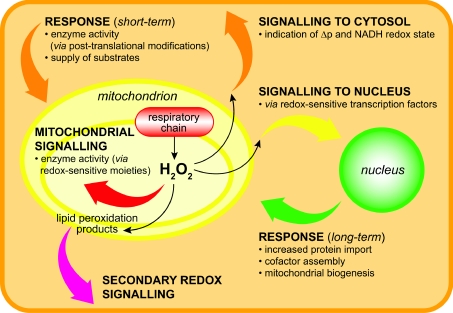
“In addition, mitochondrial ROS may act as a modulatable redox signal, reversibly affecting the activity of a range of functions in the mitochondria, cytosol and nucleus. environment to the mitochondrion, owing to O 2 consumption by cytochrome oxidase [18,19].”
BackgroundNitric oxide and mitochondrial respiration
Brown, G. C. (1999) · Biochimica et Biophysica Acta (BBA) - Bioenergetics · doi:10.1016/s0005-2728(99)00025-0 · Cited by 702
Mitochondrial α-Ketoglutarate Dehydrogenase Complex Generates Reactive Oxygen Species
Starkov, A. A., Fiskum, G., Chinopoulos, C., Lorenzo, B. J., Browne, S. E., Patel, M. S., & Beal, M. F. (2004) · The Journal of Neuroscience · doi:10.1523/jneurosci.1899-04.2004 · Cited by 688
KUSHNAREVA, Y., MURPHY, A. N., & ANDREYEV, A. (2002) · Biochemical Journal · doi:10.1042/bj20021121 · Cited by 677
Peroxiredoxin, a Novel Family of Peroxidases
Rhee, S. G., Kang, S. W., Chang, T., Jeong, W., & Kim, K. (2001) · IUBMB Life · doi:10.1080/15216540252774748 · Cited by 639
Superoxide radicals as precursors of mitochondrial hydrogen peroxide
Loschen, G., Azzi, A., Richter, C., & Flohé, L. (1974) · FEBS Letters · doi:10.1016/0014-5793(74)80281-4 · Cited by 634
Tissue oxygen tension and brain sensitivity to hypoxia
Erecińska, M., & Silver, I. A. (2001) · Respiration Physiology · doi:10.1016/s0034-5687(01)00306-1 · Cited by 615
Bioenergetics and the formation of mitochondrial reactive oxygen species
Adam-Vizi, V., & Chinopoulos, C. (2006) · Trends in Pharmacological Sciences · doi:10.1016/j.tips.2006.10.005 · Cited by 610
ΔΨ m ‐Dependent and ‐independent production of reactive oxygen species by rat brain mitochondria
Votyakova, T. V., & Reynolds, I. J. (2001) · Journal of Neurochemistry · doi:10.1046/j.1471-4159.2001.00548.x · Cited by 601
Zhao, H., Joseph, J., Fales, H. M., Sokoloski, E. A., Levine, R. L., Vasquez-Vivar, J., & Kalyanaraman, B. (2005) · Proceedings of the National Academy of Sciences · doi:10.1073/pnas.0501719102 · Cited by 576
Detection of catalase in rat heart mitochondria.
Radi, R., Turrens, J. F., Chang, L. Y., Bush, K. M., Crapo, J. D., & Freeman, B. A. (1991) · Journal of Biological Chemistry · doi:10.1016/s0021-9258(18)54740-2 · Cited by 573 · cited 1×
“These include per-oxiredoxins 3 and 5 [64], catalase [65,66] and glutathione peroxidases 1 and 4 [67], with the peroxiredoxins probably of the greatest significance [64].”
BackgroundComplex I Is the Major Site of Mitochondrial Superoxide Production by Paraquat
Cochemé, H. M., & Murphy, M. P. (2008) · Journal of Biological Chemistry · doi:10.1074/jbc.m708597200 · Cited by 571
Self-citationBell, E. L., Klimova, T. A., Eisenbart, J., Moraes, C. T., Murphy, M. P., Budinger, G. R. S., & Chandel, N. S. (2007) · The Journal of Cell Biology · doi:10.1083/jcb.200609074 · Cited by 568
Self-citationRespiratory chain linked H2O2 production in pigeon heart mitochondria
Loschen, G., & Flohé, L. (1971) · FEBS Letters · doi:10.1016/0014-5793(71)80459-3 · Cited by 552
Nitric oxide regulates mitochondrial respiration and cell functions by inhibiting cytochrome oxidase
Brown, G. C. (1995) · FEBS Letters · doi:10.1016/0014-5793(95)00763-y · Cited by 540
Characterization of Superoxide-producing Sites in Isolated Brain Mitochondria
Kudin, A. P., Bimpong-Buta, N. Y.-B., Vielhaber, S., Elger, C. E., & Kunz, W. S. (2004) · Journal of Biological Chemistry · doi:10.1074/jbc.m310341200 · Cited by 508
Barja, G. (1999) · Journal of Bioenergetics and Biomembranes · doi:10.1023/a:1005427919188 · Cited by 494 · cited 10×
“105, 429–435 55 Barja, G. (1999) Kinetic measurement of mitochondrial oxygen radical production. In Methods in Aging Research, pp. 533–548, CRC Press, Boca Raton 56 Sohal, R. S. (1991) Hydrogen peroxide production by mitochondria may be a biomarker of aging. Mech. Ageing Dev. 60, 189–198 57 Hansford, R. G., Hogue, B.…”
BackgroundInfluentialRegulation of brain mitochondrial H2O2 production by membrane potential and NAD(P)H redox state
Starkov, A. A., & Fiskum, G. (2003) · Journal of Neurochemistry · doi:10.1046/j.1471-4159.2003.01908.x · Cited by 492
[57] Determination of the production of superoxide radicals and hydrogen peroxide in mitochondria
Boveris, A. (1984) · Methods in Enzymology · doi:10.1016/s0076-6879(84)05060-6 · Cited by 487
Lambert, A. J., & Brand, M. D. (2004) · Journal of Biological Chemistry · doi:10.1074/jbc.m406576200 · Cited by 480 · cited 6×
“It may be that high (cid:2) p stabilizes the Q o siteubisemiquinone;however,theveryhighproductionofO 2 •− by complex I during RET in the presence of succinate is abolished completely by rotenone [87,95].”
BackgroundInfluentialLAMBERT, A. J., & BRAND, M. D. (2004) · Biochemical Journal · doi:10.1042/bj20040485 · Cited by 470
Generation of Reactive Oxygen Species in the Reaction Catalyzed by α-Ketoglutarate Dehydrogenase
Tretter, L., & Adam-Vizi, V. (2004) · The Journal of Neuroscience · doi:10.1523/jneurosci.1842-04.2004 · Cited by 457
The effect of hyperoxia on superoxide production by lung submitochondrial particles
Turrens, J. F., Freeman, B. A., Levitt, J. G., & Crapo, J. D. (1982) · Archives of Biochemistry and Biophysics · doi:10.1016/0003-9861(82)90518-5 · Cited by 448
Dependence of H2O2 formation by rat heart mitochondria on substrate availability and donor age
Hansford, R. G., Hogue, B. A., & Mildaziene, V. (1997) · Journal of Bioenergetics and Biomembranes · doi:10.1023/a:1022420007908 · Cited by 447
Guzy, R. D., Sharma, B., Bell, E., Chandel, N. S., & Schumacker, P. T. (2008) · Molecular and Cellular Biology · doi:10.1128/mcb.01338-07 · Cited by 427 · cited 1×
“Complex II oxidizes succinate passing electrons to CoQ, but, although the damaged or mutated complex can produce ROS [101,115], it seems that all O 2 •− production during succinate oxidation arises from complex I by RET.”
BackgroundZielonka, J., Vasquez-Vivar, J., & Kalyanaraman, B. (2008) · Nature Protocols · doi:10.1038/nprot.2007.473 · Cited by 424
Control of mitochondrial β-oxidation flux
Eaton, S. (2002) · Progress in Lipid Research · doi:10.1016/s0163-7827(01)00024-8 · Cited by 411
The nuclear encoded subunits of complex I from bovine heart mitochondria
Hirst, J., Carroll, J., Fearnley, I. M., Shannon, R. J., & Walker, J. E. (2003) · Biochimica et Biophysica Acta (BBA) - Bioenergetics · doi:10.1016/s0005-2728(03)00059-8 · Cited by 385
Rhee, S. G., Yang, K.-S., Kang, S. W., Woo, H. A., & Chang, T.-S. (2005) · Antioxidants & Redox Signaling · doi:10.1089/ars.2005.7.619 · Cited by 376
The Interaction of Energy and Electron Transfer Reactions in Mitochondria
Chance, B., & Hollunger, G. (1961) · Journal of Biological Chemistry · doi:10.1016/s0021-9258(18)64210-3 · Cited by 363
Cytochrome oxidase : a synthesis
Wikström, M. K. F., Krab, K., & Saraste, M. (1981) · Andalas University Repository (Andalas University) · Cited by 329
The production of reactive oxygen species by complex I
Hirst, J., King, M. S., & Pryde, K. R. (2008) · Biochemical Society Transactions · doi:10.1042/bst0360976 · Cited by 312
Superoxide and hydrogen peroxide production by Drosophila mitochondria
Miwa, S., St-Pierre, J., Partridge, L., & Brand, M. D. (2003) · Free Radical Biology and Medicine · doi:10.1016/s0891-5849(03)00464-7 · Cited by 299
Takeshige, K., & Minakami, S. (1979) · Biochemical Journal · doi:10.1042/bj1800129 · Cited by 298
Aconitase: Sensitive target and measure of superoxide
Gardner, P. R. (2002) · Methods in Enzymology · doi:10.1016/s0076-6879(02)49317-2 · Cited by 295
Hanukoglu, I. (2006) · Drug Metabolism Reviews · doi:10.1080/03602530600570040 · Cited by 293 · cited 1×
“SomeofthesearenotconnectedtotheNADHorCoQpools, such as the adrenodoxin reductase/adrenodoxin/cytochrome P 450 [116,117].”
BackgroundO2-regulated gene expression: transcriptional control of cardiorespiratory physiology by HIF-1
Semenza, G. L. (2004) · Journal of Applied Physiology · doi:10.1152/japplphysiol.00770.2003 · Cited by 268
MATEO, J., GARCÍA-LECEA, M., CADENAS, S., HERNÁNDEZ, C., & MONCADA, S. (2003) · Biochemical Journal · doi:10.1042/bj20031155 · Cited by 258
Mitochondrial NADPH, transhydrogenase and disease
Rydström, J. (2006) · Biochimica et Biophysica Acta (BBA) - Bioenergetics · doi:10.1016/j.bbabio.2006.03.010 · Cited by 256
Generation of Superoxide Anion by Succinate-Cytochromec Reductase from Bovine Heart Mitochondria
Zhang, L., Yu, L., & Yu, C.-A. (1998) · Journal of Biological Chemistry · doi:10.1074/jbc.273.51.33972 · Cited by 252
Polarographic assay and intracellular distribution of superoxide dismutase in rat liver.
Tyler, D. D. (1975) · Biochemical Journal · doi:10.1042/bj1470493 · Cited by 247
Sazanov, L. A. (2007) · Biochemistry · doi:10.1021/bi602508x · Cited by 231
Catalase Takes Part in Rat Liver Mitochondria Oxidative Stress Defense
Salvi, M., Battaglia, V., Brunati, A. M., La Rocca, N., Tibaldi, E., Pietrangeli, P., Marcocci, L., Mondovi, B., Rossi, C. A., & Toninello, A. (2007) · Journal of Biological Chemistry · doi:10.1074/jbc.m701589200 · Cited by 231
O2 solubility in aqueous media determined by a kinetic method
Reynafarje, B., Costa, L. E., & Lehninger, A. L. (1985) · Analytical Biochemistry · doi:10.1016/0003-2697(85)90381-1 · Cited by 226
Generating, Partitioning, Targeting and Functioning of Superoxide in Mitochondria
Liu, S.-S. (1997) · Bioscience Reports · doi:10.1023/a:1027328510931 · Cited by 217
Shiva, S., Brookes, P. S., Patel, R. P., Anderson, P. G., & Darley-Usmar, V. M. (2001) · Proceedings of the National Academy of Sciences · doi:10.1073/pnas.131128898 · Cited by 211
Sazanov, L. A., & Jackson, J. B. (1994) · FEBS Letters · doi:10.1016/0014-5793(94)00370-x · Cited by 205
Electron tunneling chains of mitochondria
Moser, C. C., Farid, T. A., Chobot, S. E., & Dutton, P. L. (2006) · Biochimica et Biophysica Acta (BBA) - Bioenergetics · doi:10.1016/j.bbabio.2006.04.015 · Cited by 205
Partial Resolution of the Enzymes Catalyzing Oxidative Phosphorylation
Hinkle, P. C., Butow, R. A., Racker, E., & Chance, B. (1967) · Journal of Biological Chemistry · doi:10.1016/s0021-9258(18)99410-x · Cited by 195
Glutathionylation of Mitochondrial Proteins
Hurd, T. R., Costa, N. J., Dahm, C. C., Beer, S. M., Brown, S. E., Filipovska, A., & Murphy, M. P. (2005) · Antioxidants & Redox Signaling · doi:10.1089/ars.2005.7.999 · Cited by 195
Self-citationMuller, F. (2000) · AGE · doi:10.1007/s11357-000-0022-9 · Cited by 193
Palacios-Callender, M., Quintero, M., Hollis, V. S., Springett, R. J., & Moncada, S. (2004) · Proceedings of the National Academy of Sciences · doi:10.1073/pnas.0401723101 · Cited by 181
Hoffman, D. L., Salter, J. D., & Brookes, P. S. (2007) · American Journal of Physiology-Heart and Circulatory Physiology · doi:10.1152/ajpheart.00699.2006 · Cited by 166
Cino, M., & Maestro, R. F. D. (1989) · Archives of Biochemistry and Biophysics · doi:10.1016/0003-9861(89)90148-3 · Cited by 163
Hurd, T. R., Prime, T. A., Harbour, M. E., Lilley, K. S., & Murphy, M. P. (2007) · Journal of Biological Chemistry · doi:10.1074/jbc.m703591200 · Cited by 157
Self-citationHow Do Enzymes Activate Oxygen without Inactivating Themselves?
Klinman, J. P. (2007) · Accounts of Chemical Research · doi:10.1021/ar6000507 · Cited by 157
Pk, J. (1966) · Biochimica et Biophysica Acta (BBA) - Enzymology and Biological Oxidation · doi:10.1016/0926-6593(66)90057-9 · Cited by 155
Cytochrome Oxidase, A Synthesis
Wilson, M. T. (1982) · Biochemical Society Transactions · doi:10.1042/bst0100434a · Cited by 153
Forman, H. J., & Azzi, A. (1997) · The FASEB Journal · doi:10.1096/fasebj.11.5.9141504 · Cited by 148
Yu, B. (1998) · CRC Press eBooks · doi:10.1201/b14256 · Cited by 147
The sites of superoxide anion generation in higher plant mitochondria
Rich, P. R., & Bonner, W. D. (1978) · Archives of Biochemistry and Biophysics · doi:10.1016/0003-9861(78)90373-9 · Cited by 146
Role of superoxide radical in mitochondrial dehydrogenase reactions
Forman, H. J., & Kennedy, J. A. (1974) · Biochemical and Biophysical Research Communications · doi:10.1016/0006-291x(74)90418-5 · Cited by 138
Sanjuán-Pla, A., Cervera, A. M., Apostolova, N., Garcia-Bou, R., Víctor, V. M., Murphy, M. P., & McCreath, K. J. (2005) · FEBS Letters · doi:10.1016/j.febslet.2005.03.088 · Cited by 135
Self-citationInactivation of the 2‐oxo acid dehydrogenase complexes upon generation of intrinsic radical species
Bunik, V. I., & Sievers, C. (2002) · European Journal of Biochemistry · doi:10.1046/j.1432-1033.2002.03204.x · Cited by 134
A Metabolic Enzyme That Rapidly Produces Superoxide, Fumarate Reductase of Escherichia coli
Imlay, J. A. (1995) · Journal of Biological Chemistry · doi:10.1016/s0021-9258(18)94548-5 · Cited by 131
Lambert, A. J., Buckingham, J. A., Boysen, H. M., & Brand, M. D. (2008) · Biochimica et Biophysica Acta (BBA) - Bioenergetics · doi:10.1016/j.bbabio.2008.03.005 · Cited by 130
Respiration-dependent Removal of Exogenous H2O2 in Brain Mitochondria
Zoccarato, F., Cavallini, L., & Alexandre, A. (2004) · Journal of Biological Chemistry · doi:10.1074/jbc.m308143200 · Cited by 130
Krishnamoorthy, G., & Hinkle, P. C. (1988) · Journal of Biological Chemistry · doi:10.1016/s0021-9258(19)77873-9 · Cited by 130
Drahota, Z., Chowdhury, S. R., Floryk, D., Mráček, T., Wilhelm, J., Rauchová, H., Lenaz, G., & Houštěk, J. (2002) · Journal of Bioenergetics and Biomembranes · doi:10.1023/a:1015123908918 · Cited by 121
Superoxide production by mitochondria in the presence of nitric oxide forms peroxynitrite
Packer, M. A., Porteous, C. M., & Murphy, M. P. (1996) · IUBMB Life · doi:10.1080/15216549600201103 · Cited by 118
Self-citationHanukoglu, I., Rapoport, R., Weiner, L. M., & Sklan, D. J. (1993) · Archives of Biochemistry and Biophysics · doi:10.1006/abbi.1993.1452 · Cited by 116
The three-dimensional structure of complex I from Yarrowia lipolytica: A highly dynamic enzyme
Radermacher, M., Ruíz, T., Clason, T. A., Benjamin, S., Brandt, U., & Zickermann, V. (2006) · Journal of Structural Biology · doi:10.1016/j.jsb.2006.02.011 · Cited by 113
Zielonka, J., Srinivasan, S., Hardy, M., Ouari, O., López, M., Vasquez-Vivar, J. M., Avadhani, N. G., & Kalyanaraman, B. (2007) · Free Radical Biology and Medicine · doi:10.1016/j.freeradbiomed.2007.11.013 · Cited by 112
Characteristics of α‐glycerophosphate‐evoked H2O2 generation in brain mitochondria
Tretter, L., Takacs, K., Hegedus, V., & Adam‐Vizi, V. (2007) · Journal of Neurochemistry · doi:10.1111/j.1471-4159.2006.04223.x · Cited by 109
Dihydroorotate-dependent superoxide producton in rat brain and liver
Forman, H. J., & Kennedy, J. (1976) · Archives of Biochemistry and Biophysics · doi:10.1016/0003-9861(76)90252-6 · Cited by 105
Oxygen dependence of mitochondrial nitric oxide synthase activity
Álvarez, S., Valdez, L. B., Zaobornyj, T., & Boveris, A. (2003) · Biochemical and Biophysical Research Communications · doi:10.1016/s0006-291x(03)00818-0 · Cited by 105
Oxidation of mitochondrial peroxiredoxin 3 during the initiation of receptor-mediated apoptosis
Cox, A. G., Pullar, J. M., Hughes, G., Ledgerwood, E. C., & Hampton, M. B. (2007) · Free Radical Biology and Medicine · doi:10.1016/j.freeradbiomed.2007.11.017 · Cited by 91
The single subunit NADH dehydrogenase reduces generation of reactive oxygen species from complex I
Seo, B. B., Marella, M., Yagi, T., & Matsuno-Yagi, A. (2006) · FEBS Letters · doi:10.1016/j.febslet.2006.10.008 · Cited by 89
Oshino, N., Jamieson, D., & Chance, B. (1975) · Biochemical Journal · doi:10.1042/bj1460053 · Cited by 88
Lucas, M., & Solano, F. (1992) · Analytical Biochemistry · doi:10.1016/0003-2697(92)90366-f · Cited by 79
Superoxide dismutase as an inhibitor of reactions of semiquinone radicals
Winterbourn, C. C., French, J. K., & Claridge, R. F. C. (1978) · FEBS Letters · doi:10.1016/0014-5793(78)80953-3 · Cited by 78
Hydrogen peroxide production by mitochondria may be a biomarker of aging
Sohal, R. S. (1991) · Mechanisms of Ageing and Development · doi:10.1016/0047-6374(91)90130-r · Cited by 77
Sequence and tissue-dependent RNA expression of mouse FAD-linked glycerol-3-phosphate dehydrogenase
Koza, R. A., Kozak, U. C., Brown, L. J., Leiter, E. H., Macdonald, M. J., & Kozak, L. P. (1996) · Archives of Biochemistry and Biophysics · doi:10.1006/abbi.1996.0536 · Cited by 76
Pk, J. (1966) · Biochimica et Biophysica Acta (BBA) - Enzymology and Biological Oxidation · doi:10.1016/0926-6593(66)90058-0 · Cited by 75
Disulphide formation on mitochondrial protein thiols
Hurd, T. R., Filipovska, A., Costa, N. J., Dahm, C. C., & Murphy, M. P. (2005) · Biochemical Society Transactions · doi:10.1042/bst0331390 · Cited by 62
Self-citationRigobello, M. P., Folda, A., Scutari, G., & Bindoli, A. (2005) · Archives of Biochemistry and Biophysics · doi:10.1016/j.abb.2005.07.007 · Cited by 44
Dissociation of superoxide production by mitochondrial complex I from NAD(P)H redox state
Lambert, A. J., Buckingham, J. A., & Brand, M. D. (2008) · FEBS Letters · doi:10.1016/j.febslet.2008.04.030 · Cited by 39
Grigolava, I. V., Ksenzenko, M. I., Aa, K., Tikhonov, A. N., & Tm, K. (1980) · PubMed · Cited by 18
Research works printed but not linked: 1
- Hurd T. R. Prime T. A. Harbour M. E. Lilley K. S. Murphy M. P. Detection of reactive oxygen species-sensitive thiol proteins by redox difference gel electrophoresis: implications for mitochondrial redox signaling J. Biol. Chem. 2007 282 22040 22051 17525152 · DOI · Paper page
Cited by
Sharma, P., Jha, A. B., Dubey, R. S., & Pessarakli, M. (2012) · Journal of Botany · doi:10.1155/2012/217037 · Cited by 5,473
Mitochondrial Reactive Oxygen Species (ROS) and ROS-Induced ROS Release
Zorov, D. B., Juhaszova, M., & Sollott, S. J. (2014) · Physiological Reviews · doi:10.1152/physrev.00026.2013 · Cited by 5,383
“Good reviews on the current mechanisms of ROS production in mitochondria are available elsewhere for the reader interested in a general background and for those interested in substantially detailed mechanistic depth (3, 13, 201, 202, 308, 397, 416).”
BackgroundReactive oxygen species (ROS) as pleiotropic physiological signalling agents
Sies, H., & Jones, D. P. (2020) · Nature Reviews Molecular Cell Biology · doi:10.1038/s41580-020-0230-3 · Cited by 5,335
Sies, H., Berndt, C., & Jones, D. P. (2017) · Annual Review of Biochemistry · doi:10.1146/annurev-biochem-061516-045037 · Cited by 3,520
Mitochondria: In Sickness and in Health
Nunnari, J., & Suomalainen, A. (2012) · Cell · doi:10.1016/j.cell.2012.02.035 · Cited by 3,479
Metadata
- Authors
- Murphy, M. P.
- Affiliations
- MRC Mitochondrial Biology Unit (GB)
- Corresponding author
- Murphy, Michael P.
- ORCID
- Murphy, Michael P.
- Venue
- Biochemical Journal
- Publisher
- Portland Press Ltd.
- Published
- 2008-12-12
- Volume
- 417
- Issue
- 1
- Pages
- 1-13
- ISSN
- 0264-6021 (ISSN-L)
- 1470-8728
- PMC
- PMC2605959
- OpenAlex
- W2122341467
- Cited by
- 8,207
- References
- 136
- Citations by year
- 2026: 507 · 2025: 579 · 2024: 601 · 2023: 551 · 2022: 670 · 2021: 686 · 2020: 650 · 2019: 553 · 2018: 568 · 2017: 529 · 2016: 444 · 2015: 384 · 2014: 366 · 2013: 329 · 2012: 293
- FWCI
- 12.49
- Type
- journal article
- Language
- en
- Open access
- hybrid
- doi.org
- Licence
- Locations
- Biochemical Journal (publishedVersion, cc-by-nc)
- PubMed Central (publishedVersion, cc-by-nc)
- PubMed (publishedVersion)
- Topics
- Life Sciences › Biochemistry, Genetics and Molecular Biology › Molecular Biology › Mitochondrial Function and Pathology
- Life Sciences › Biochemistry, Genetics and Molecular Biology › Molecular Biology › Redox biology and oxidative stress
- Life Sciences › Biochemistry, Genetics and Molecular Biology › Cell Biology › Autophagy in Disease and Therapy
- Keywords
- mitochondrial reactive oxygen species, superoxide production, mitochondrial matrix, complex I, proton motive force, NAD+/NADH ratio, coenzyme Q10, oxygen concentration, oxidative damage, hydrogen peroxide production, isolated mitochondria
- MeSH terms
- Animals, Humans, Hydrogen Peroxide, Mitochondria, Models, Biological, Superoxides, Reactive Oxygen Species, Electron Transport Complex I
About these checks
Registry, retraction, Cites and statistics results are computed, not judged, with one exception: a printed reference that no index lists is read once by a model before it counts as a citation error. Claims are extracted by a model and kept only when their quote appears verbatim in the text; each cited source is then checked, with a model’s help, for whether it says what the claim relies on. Those verdicts can be wrong — read the claim’s quote and the cited source before relying on one.
Statistics and arithmetic are recomputed, not judged.
Confidence bands are shown only for fields calibrated on our annotated test set. None is calibrated yet, so no band is shown.
What counts as a claim ›How we measure confidence ›How we check this ›
Are you an author, or do you see a problem with this page? Request a review
Data sources
Bibliographic data: Semantic Scholar, OpenAlex, Crossref.
Contains information from the Semantic Scholar Academic Graph Datasets, made available under the ODC Attribution License (ODC-BY 1.0).
Semantic Scholar’s data is described in: Kinney, R., et al. (2023). The Semantic Scholar Open Data Platform. arXiv:2301.10140.
