

Gut microbiota drives structural variation of exogenous probiotics to enhance colonization
Open accessThe DOI matches its Crossref record; 77 of the 77 references it cites were found in a registry or an index; 20 of the 26 sources its claims cite were checked for support.
Abstract
Probiotics encounter colonization resistance from native gut microbiomes, affecting their effectiveness. Genetic engineering of probiotics lacks universal applicability, as gut microbiotas are highly individualized. Here, we employed probiotic Lactiplantibacillus plantarum HNU082 (Lp082) to test whether Lp082 gut-adapted mutants can resolve colonization resistance in a new gut environment. Relying on culture-based methods and metagenomics, two distinct evolutionary clades of Lp082 in mice gut were observed, where one clade, which acquired more mutations, exhibited a longer survival time. However, these Lp082 isolates carrying many single nucleotide variants (SNVs) still exhibited phenotypic inconsistencies, with 13 strains of enhanced acid resistance. Thus, nanopore sequencing was proposed to identify structural variations (SVs). Among them, 12 strains had the Cro/C1-type HTH DNA-binding domain insertion, which enhanced growth and reproduction under bile salt stress, thereby increasing colonization time and quantity in the gut. The gut domestication process can drive probiotics to undergo many SNVs and SVs, thereby enhancing their colonization ability, which provides new insights into the colonization mechanisms and offers an ecology-based strategy.
Overview
CoChat Summary
## TL;DR
In mice, the probiotic *Lactiplantibacillus plantarum* HNU082 (Lp082) evolved into two distinct clades during repeated gut passage, and the clade with more mutations eventually dominated. The study links improved colonization to structural variation, especially a Cro/C1-type HTH DNA-binding gene insertion that increased bile-salt tolerance and survival.
## Key findings
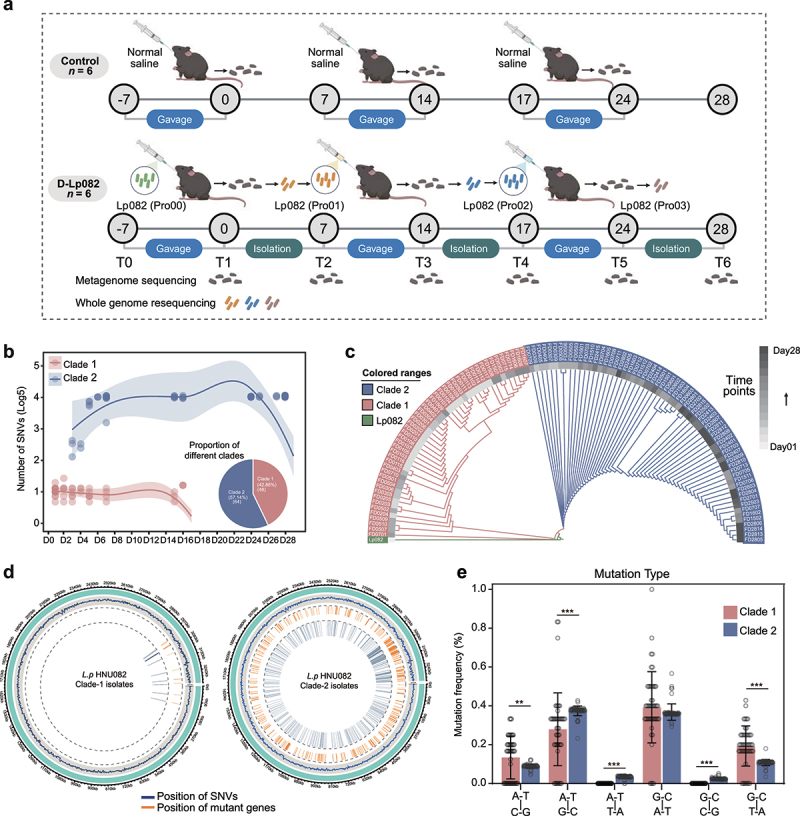
- Across three rounds of domestication, the authors obtained 112 Lp082 isolates and found they clustered into two clades: 48 isolates (42.86%) in clade 1 and 64 isolates (57.14%) in clade 2.
- By day 24, only clade-2 strains could be isolated; these strains carried more mutations and showed significantly different clustering from clade 1 (Anosim, p = 0.001).
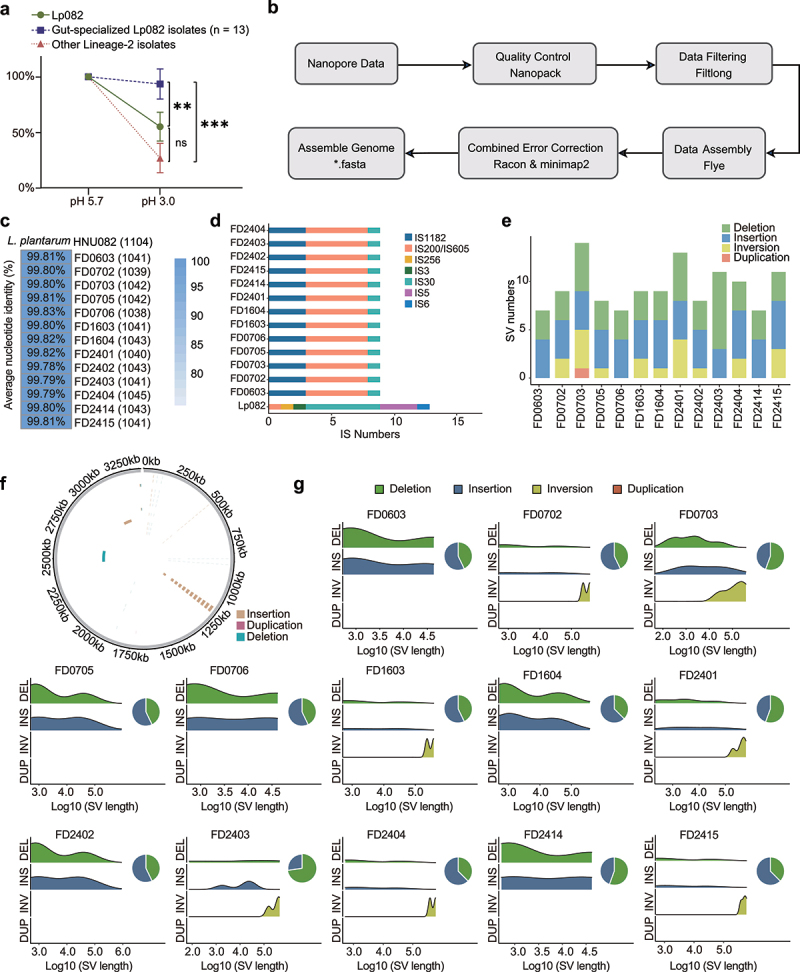
- In the gut-adapted strains, 13 isolates showed higher acid tolerance at pH 3.0 than the original Lp082, and nanopore sequencing identified structural variations across these strains.
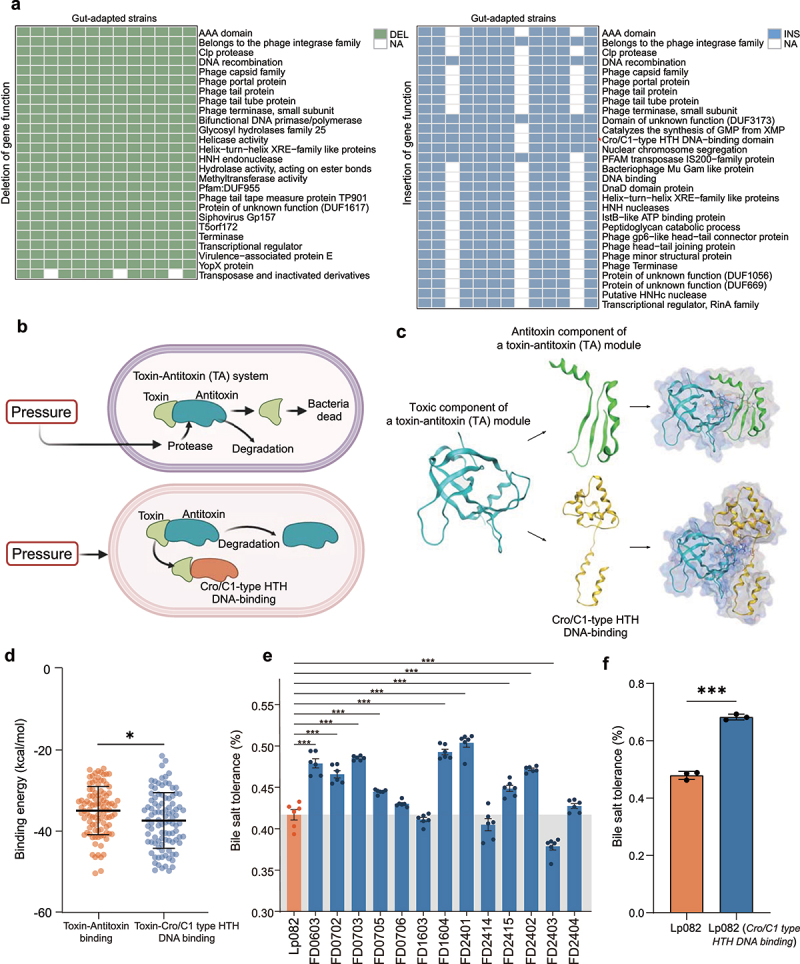
- A Cro/C1-type HTH DNA-binding gene insertion was found in 12 of the 13 gut-adapted strains; overexpression of this gene in the original strain produced a significantly increased survival rate under bile salt stress (p < 0.001).
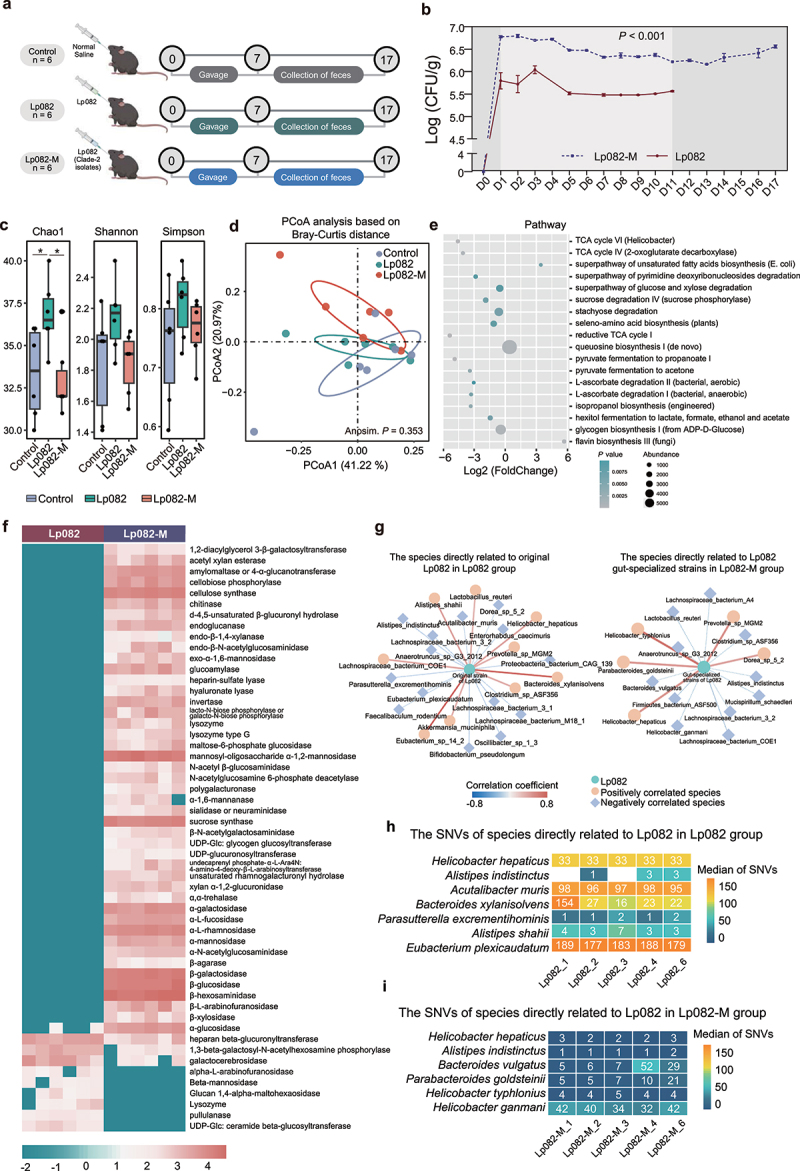
- In vivo, gut-adapted strains showed longer colonization time and higher abundance than the original strain (p < 0.001) and caused less disturbance to the gut microbiota, including reduced niche overlap (p < 0.01) and higher microbial robustness (p < 0.05).
## Methods
- Design: Multi-round “domestication” of Lp082 in mice, followed by a second in vivo verification comparing the original strain and gut-adapted strains in new mice.
- Data/sample: C57BL/6J mice, with control (n = 6) and D-Lp082 (n = 6) groups; 112 bacterial isolates were collected across the domestication experiment, and 13 gut-adapted strains were subjected to nanopore sequencing.
- Main analysis: Whole-genome Illumina resequencing for SNV calling and phylogenetics; metagenomic sequencing for resident microbiota and functional/pathway analysis; nanopore sequencing for SV detection; qPCR for fecal Lp082 quantification; in vitro acid/bile tolerance tests; and gene overexpression to validate the Cro/C1-type HTH DNA-binding gene.
## Limitations
- The paper states that the applicability of gut-adapted strains across different human gut environments is not clear and that whether their adaptability is universal, group-specific, or host-specific “needs further research.”
- The authors note that their hypotheses about broader applicability and personalized use of gut-adapted strains need further research to verify.
- Evident from the text: the main in vivo work was done in mice, so direct human generalization is not established in the provided text.
Model-written summary. Check it against the paper before relying on it.
Integrity signals
Registry
Cites
Statistics
Figures
Verification
Claims the paper makes
13 Valid · 4 Not valid · 4 Not checked · 87 Own results and interpretations
Some cited sources support this claim and some don’t — read each source’s verdict below.
In the paper
“Exogenous microbial strains have to adapt and evolve within the host throughout their life cycle.10,20”
§ Gut microbiota drives structural variation of exogenous probiotics to enhance colonization > Introduction
What the sources say
- Disputedcites [10] Schloissnig S, Arumugam M, Sunagawa S, Mitreva M, Tap J, Zhu A, Waller A, Mende DR, Kultima JR, Martin J, et al. Genomic variation landscape of the human gut microbiome. Nature. 2013; 493(7430): 45– 50. doi: 10.1038/nature11711. 23222524 PMC3536929 sourceExperimental — accuracy not yet measured
The Results section on pN/pS says gut-species evolution is dominated by long-term purifying selection and drift, rather than rapid adaptation to specific host environments. The Results section on temporal stability reports that individual-specific strain variation patterns remained stable over the monitored intervals. These findings run counter to the claim that exogenous strains must continually adapt and evolve within a host throughout their life cycle. (LLM, conf=0.86)
Checked by a reasoning model — may be wrong.
- Partly supportedcites [20] Zhao S, Lieberman TD, Poyet M, Kauffman KM, Gibbons SM, Groussin M, Xavier RJ, Alm EJ. Adaptive evolution within gut microbiomes of healthy people. Cell Host Microbe. 2019; 25(5): 656– 667. doi: 10.1016/j.chom.2019.03.007. 31028005 PMC6749991 sourceExperimental — accuracy not yet measured
The Discussion reports within-host adaptation of B. fragilis in healthy people, and the section on implications considers how individual-specific pressures might affect probiotic strains. It does not establish that exogenous strains must adapt and evolve throughout their life cycle; that extends the finding beyond the strains and timeframe studied. (LLM, conf=0.87)
plainstates a cause- Asserted: passes — The authors put it forward as true.
- Checkable: passes — It can be checked against evidence.
- Load-bearing: passes — The paper’s conclusions depend on it.
- Based: passes — The paper gives a reason why it holds.
- Disputed
At least one cited source doesn’t support this claim or points to a different paper, and none confirmed it — see the verdicts below.
In the paper
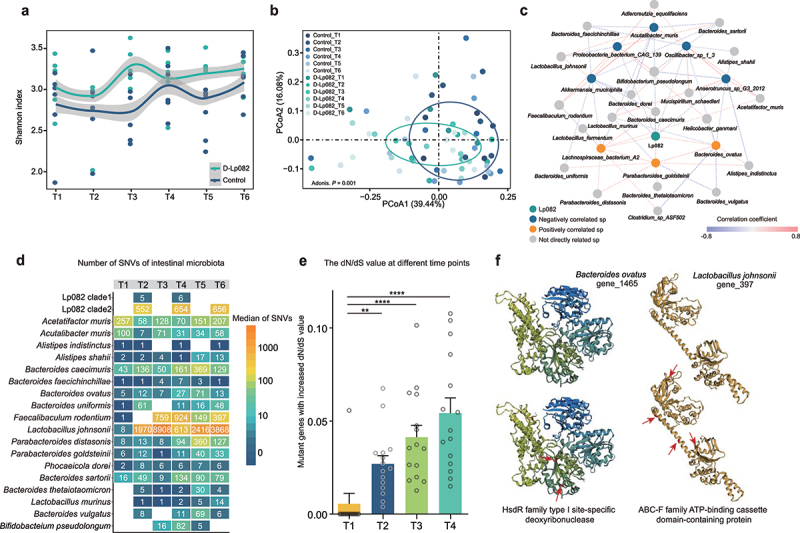
“Gene 397 of L. johnsonii encoded an ABC-F family ATP-binding cassette domain-containing protein, crucial for transmembrane transport.30”
§ Gut microbiota drives structural variation of exogenous probiotics to enhance colonization > Results > The synergistic adaptation of resident microbiota
What the sources say
- Disputedcites [30] Szollosi D, Rose-Sperling D, Hellmich UA, Stockner T. Comparison of mechanistic transport cycle models of ABC exporters. Biochim Biophys Acta Biomembr. 2018; 1860(4): 818– 832. doi: 10.1016/j.bbamem.2017.10.028. 29097275 PMC7610611 sourceExperimental — accuracy not yet measured
The Introduction to ABC transporter function and architecture (page unavailable) says ABC-F proteins consist only of nucleotide-binding domains, lack transmembrane domains, and participate in DNA repair and translation—not transmembrane transport. The paper does not identify gene 397 of L. johnsonii; that detail is unsupported rather than contradicted. (LLM, conf=0.88)
Checked by a reasoning model — may be wrong.
plain- Asserted: passes — The authors put it forward as true.
- Checkable: passes — It can be checked against evidence.
- Load-bearing: unclear — It is unclear whether the paper’s conclusions depend on it.
- Based: passes — The paper gives a reason why it holds.
- Disputed
The cited sources support only part of this claim — read each source’s verdict below.
In the paper
“Even in individuals with gut disorders, which favor colonization, the gut commensals often remain resilient to the establishment of exogenous probiotic strains.8”
§ Gut microbiota drives structural variation of exogenous probiotics to enhance colonization > Introduction
What the sources say
- Partly supportedcites [8] Gibson MK, Pesesky MW, Dantas G. The yin and yang of bacterial resilience in the human gut microbiota. J Mol Biol. 2014; 426(23): 3866– 3876. doi: 10.1016/j.jmb.2014.05.029. 24911583 PMC4252752 sourceExperimental — accuracy not yet measured
The “Colonization Resistance for Beneficial Bacteria” section says two probiotic strains used to treat gastrointestinal disease are cleared from the majority of patients within weeks, supporting the claim that stable establishment is difficult. It does not say that gut disorders favor probiotic colonization; its discussion of colonization resistance specifically describes the stable adult gut microbiota. Page numbers are unavailable in our copy. (LLM, conf=0.84)
plain- Asserted: passes — The authors put it forward as true.
- Checkable: passes — It can be checked against evidence.
- Load-bearing: passes — The paper’s conclusions depend on it.
- Based: passes — The paper gives a reason why it holds.
- Partly supported
The cited sources support only part of this claim — read each source’s verdict below.
In the paper
“This can be attributed to the highly individual-specificity of the human microbiome,10,11 shaped by genetics, diet, age, geography, disease status, and intrinsic host factors.12”
§ Gut microbiota drives structural variation of exogenous probiotics to enhance colonization > Introduction
What the sources say
- Partly supportedcites [10] Schloissnig S, Arumugam M, Sunagawa S, Mitreva M, Tap J, Zhu A, Waller A, Mende DR, Kultima JR, Martin J, et al. Genomic variation landscape of the human gut microbiome. Nature. 2013; 493(7430): 45– 50. doi: 10.1038/nature11711. 23222524 PMC3536929 sourceExperimental — accuracy not yet measured
The Abstract reports individual-specific, temporally stable SNP patterns in the gut microbiota, supporting the individuality point attributed to this source. The study concerns the gut rather than the human microbiome across body sites. The list of shaping factors carries a separate citation in the citing sentence and is not judged here. (LLM, conf=0.82)
- Not checked — no full text of the sourcecites [11] Ferreiro A, Dantas G, Ciorba MA. Insights into how probiotics colonize the healthy human gut. Gastroenterology. 2019; 156(3): 820– 822. doi: 10.1053/j.gastro.2019.01.022. 30659834 source
- Partly supportedcites [12] Rothschild D, Weissbrod O, Barkan E, Kurilshikov A, Korem T, Zeevi D, Costea PI, Godneva A, Kalka IN, Bar N. Environment dominates over host genetics in shaping human gut microbiota. Nature. 2018; 555(7695): 210– 215. doi: 10.1038/nature25973. 29489753 sourceExperimental — accuracy not yet measured
The paper’s main findings report that diet, lifestyle and anthropometric factors are associated with differences in gut microbiome composition; its Microbiome-environment associations section also considers age and glycaemic status. But the study concerns healthy Israeli individuals and does not establish geography or disease status as shaping factors. It finds that host genetics have only a minor role, rather than presenting genetics as a major determinant. (LLM, conf=0.86)
plainstates a cause- Asserted: passes — The authors put it forward as true.
- Checkable: passes — It can be checked against evidence.
- Load-bearing: passes — The paper’s conclusions depend on it.
- Based: passes — The paper gives a reason why it holds.
- Partly supported
The cited sources support only part of this claim — read each source’s verdict below.
In the paper
“Successful gut microbiota modulation relies on colonizing viable probiotic bacteria in the intestine.6”
§ Gut microbiota drives structural variation of exogenous probiotics to enhance colonization > Introduction
What the sources say
- Partly supportedcites [6] Wang X, Zhang P, Zhang X. Probiotics regulate gut microbiota: an effective method to improve immunity. Oxycedrus Needles Berries Mol. 2021; 26(19): 6076. doi: 10.3390/molecules26196076. PMC8512487 34641619 sourceExperimental — accuracy not yet measured
The Introduction defines probiotics as live microorganisms and says they maintain the balance of intestinal microbes. Section 2.1 reports that probiotics regulate intestinal flora, but the paper does not say that successful modulation requires viable probiotic bacteria to colonize the intestine. The claim turns a described effect into a requirement. (LLM, conf=0.87)
plainstates a cause- Asserted: passes — The authors put it forward as true.
- Checkable: passes — It can be checked against evidence.
- Load-bearing: passes — The paper’s conclusions depend on it.
- Based: passes — The paper gives a reason why it holds.
- Partly supported
58 more claims · 2 with their cited sources checked
Create a free account to see all 108 claims and every source verdict.
- Probably not a substantial claim. 13
- It may state two separate claims as one. 36
Citations
Cites
Fast gapped-read alignment with Bowtie 2
Langmead, B., & Salzberg, S. L. (2012) · Nature Methods · doi:10.1038/nmeth.1923 · Cited by 56,400 · cited 1×
“49 Meanwhile, the reference database of the original Lp082 genome was built by Bowtie2, 50 and the bam file was obtained by mapping the reads of single bacteria resequencing.”
Cytoscape: A software Environment for integrated models of biomolecular interaction networks
Shannon, P., Markiel, A., Ozier, O., Baliga, N. S., Wang, J. T., Ramage, D., Amin, N., Schwikowski, B., & Ideker, T. (2003) · Genome Research · doi:10.1101/gr.1239303 · Cited by 51,888 · cited 1×
“69 The genomic Circos plot used to annotate the SNVs was drawn with the “circlize” package.”
MEGA X: Molecular Evolutionary Genetics Analysis across Computing Platforms
Kumar, S., Stecher, G., Li, M., Knyaz, C., & Tamura, K. (2018) · Molecular Biology and Evolution · doi:10.1093/molbev/msy096 · Cited by 37,529 · cited 2×
“51 After that, the evolutionary tree file was generated and beautified with iTOL software (v 6.5.8).”
Influentialfastp: an ultra-fast all-in-one FASTQ preprocessor
Chen, S., Zhou, Y., Chen, Y., & Gu, J. (2018) · Bioinformatics · doi:10.1093/bioinformatics/bty560 · Cited by 29,721 · cited 1×
“46”
Minimap2: Pairwise alignment for nucleotide sequences
Li, H. (2018) · Bioinformatics · doi:10.1093/bioinformatics/bty191 · Cited by 14,807 · cited 1×
“26-r1175) 57 to obtain the complete genome.”
Fast and sensitive protein alignment using DIAMOND
Buchfink, B., Xie, C., & Huson, D. H. (2015) · Nature Methods · doi:10.1038/nmeth.3176 · Cited by 14,201 · cited 1×
“0.15) with the UniRef90 database, 64 and Metabolic pathways were annotated by the MetaCyc database.”
InfluentialProdigal: prokaryotic gene recognition and translation initiation site identification
Hyatt, D., Chen, G.-L., LoCascio, P. F., Land, M. L., Larimer, F. W., & Hauser, L. J. (2010) · BMC Bioinformatics · doi:10.1186/1471-2105-11-119 · Cited by 12,587
Interactive Tree Of Life (iTOL) v5: an online tool for phylogenetic tree display and annotation
Letunic, I., & Bork, P. (2021) · Nucleic Acids Research · doi:10.1093/nar/gkab301 · Cited by 11,124
Li, D., Liu, C.-M., Luo, R., Sadakane, K., & Lam, T.-W. (2015) · Bioinformatics · doi:10.1093/bioinformatics/btv033 · Cited by 9,893
The Phyre2 web portal for protein modeling, prediction and analysis
Kelley, L. A., Mezulis, S., Yates, C. M., Wass, M. N., & Sternberg, M. J. E. (2015) · Nature Protocols · doi:10.1038/nprot.2015.053 · Cited by 9,652 · cited 1×
“77 The experimental design diagram was created using BioRender (https://www.biorender.com/).”
VEGAN, a package of R functions for community ecology
Dixon, P. (2003) · Journal of Vegetation Science · doi:10.1111/j.1654-1103.2003.tb02228.x · Cited by 6,824 · cited 1×
“73 CLR transformation of the relative abundance was performed by the “zcomposition” package.”
High throughput ANI analysis of 90K prokaryotic genomes reveals clear species boundaries
Jain, C., Rodriguez-R, L. M., Phillippy, A. M., Konstantinidis, K. T., & Aluru, S. (2018) · Nature Communications · doi:10.1038/s41467-018-07641-9 · Cited by 5,748
Wickham, H. (2011) · WIREs Computational Statistics · doi:10.1002/wics.147 · Cited by 4,304
circlize implements and enhances circular visualization in R
Gu, Z., Gu, L., Eils, R., Schlesner, M., & Brors, B. (2014) · Bioinformatics · doi:10.1093/bioinformatics/btu393 · Cited by 4,246
Introduction to the human gut microbiota
Thursby, E., & Juge, N. (2017) · Biochemical Journal · doi:10.1042/bcj20160510 · Cited by 3,600 · cited 1×
“40 It is not clear whether the adaptability gained by gut-adapted strains can still be maintained in different individuals’ gut environments.”
Fast and accurate de novo genome assembly from long uncorrected reads
Vaser, R., Sović, I., Nagarajan, N., & Šikić, M. (2017) · Genome Research · doi:10.1101/gr.214270.116 · Cited by 3,043 · cited 2×
“5.0) 56 and minimap2 (v2.”
InfluentialEvolutionary divergence and convergence in proteins.
ZUCKERKANDL, E., & PAULING, L. (1965) · Evolving Genes and Proteins · doi:10.1016/b978-1-4832-2734-4.50017-6 · Cited by 3,020 · cited 1×
“26 We hypothesize that divergent evolution also profoundly occurs for probiotic strains in the gut.”
De novo assembly of human genomes with massively parallel short read sequencing
Li, R., Zhu, H., Ruan, J., Qian, W., Fang, X., Shi, Z., Li, Y., Li, S., Shan, G., Kristiansen, K., et al. (2010) · Genome Research · doi:10.1101/gr.097261.109 · Cited by 2,926 · cited 1×
“31 Nutrient transport and monodeoxynucleotides production are imperative for bacterial DNA replication and reproduction.”
Environment dominates over host genetics in shaping human gut microbiota
Rothschild, D., Weissbrod, O., Barkan, E., Kurilshikov, A., Korem, T., Zeevi, D., Costea, P. I., Godneva, A., Kalka, I. N., Bar, N., et al. (2018) · Nature · doi:10.1038/nature25973 · Cited by 2,859 · cited 1×
“12 Thus, developing an effective probiotic regimen must consider the individual-specific basis.”
Effects of probiotics, prebiotics, and synbiotics on human health
Markowiak, P., & Śliżewska, K. (2017) · Nutrients · doi:10.3390/nu9091021 · Cited by 2,401 · cited 1×
“However, the effectiveness of probiotic bacteria varies greatly from person to person, 39 highlighting the importance of selecting appropriate gut-adapted probiotic bacteria with high adaptability and colonization ability for personalized gut health management.”
Beghini, F., McIver, L. J., Blanco-Míguez, A., Dubois, L., Asnicar, F., Maharjan, S., Mailyan, A., Manghi, P., Scholz, M., Thomas, A. M., et al. (2021) · eLife · doi:10.7554/elife.65088 · Cited by 2,303
Climate warming enhances microbial network complexity and stability
Yuan, M. M., Guo, X., Wu, L., Zhang, Y., Xiao, N., Ning, D., Shi, Z., Zhou, X., Wu, L., Yang, Y., et al. (2021) · Nature Climate Change · doi:10.1038/s41558-021-00989-9 · Cited by 2,238 · cited 1×
“74 Niche breadth and niche overlap were calculated using the “spaa” package, 75 while robustness was calculated following the methodology of Yuan et al. 76 Wilcoxon rank-sum tests were used to test significant differences at p < 0.05 between the two groups.”
InfluentialZmora, N., Zilberman-Schapira, G., Suez, J., Mor, U., Dori-Bachash, M., Bashiardes, S., Kotler, E., Zur, M., Regev-Lehavi, D., Brik, R. B.-Z., et al. (2018) · Cell · doi:10.1016/j.cell.2018.08.041 · Cited by 1,695 · cited 1×
“In healthy adults, probiotic bacteria colonize the gut, lasting only a few days, 7 resulting in a gradual decline in their numbers and health benefits until re-supplementa-tion.”
Genetic adaptation by Pseudomonas aeruginosa to the airways of cystic fibrosis patients
Smith, E. E., Buckley, D. G., Wu, Z., Saenphimmachak, C., Hoffman, L. R., D’Argenio, D. A., Miller, S. I., Ramsey, B. W., Speert, D. P., Moskowitz, S. M., et al. (2006) · Proceedings of the National Academy of Sciences · doi:10.1073/pnas.0602138103 · Cited by 1,319
Three decades of nanopore sequencing
Deamer, D., Akeson, M., & Branton, D. (2016) · Nature Biotechnology · doi:10.1038/nbt.3423 · Cited by 1,292
The conserved domain database in 2023
Wang, J., Chitsaz, F., Derbyshire, M. K., Gonzales, N. R., Gwadz, M., Lu, S., Marchler, G. H., Song, J. S., Thanki, N., Yamashita, R. A., et al. (2023) · Nucleic Acids Research · doi:10.1093/nar/gkac1096 · Cited by 1,277 · cited 1×
“28 NLP P60 protein plays a widespread role in supporting the dynamics of the bacterial cell wall or bacterial growth.”
Vilar, S., Cozza, G., & Moro, S. (2008) · Current Topics in Medicinal Chemistry · doi:10.2174/156802608786786624 · Cited by 1,191 · cited 1×
“78”
Kolde, R. (2010) · CRAN: Contributed Packages · doi:10.32614/cran.package.pheatmap · Cited by 1,174
Yersinia pestis , the cause of plague, is a recently emerged clone of Yersinia pseudotuberculosis
Achtman, M., Zurth, K., Morelli, G., Torrea, G., Guiyoule, A., & Carniel, E. (1999) · Proceedings of the National Academy of Sciences · doi:10.1073/pnas.96.24.14043 · Cited by 1,126
metaFlye: scalable long-read metagenome assembly using repeat graphs
Kolmogorov, M., Bickhart, D. M., Behsaz, B., Gurevich, A., Rayko, M., Shin, S. B., Kuhn, K., Yuan, J., Polevikov, E., Smith, T. P. L., et al. (2020) · Nature Methods · doi:10.1038/s41592-020-00971-x · Cited by 1,077 · cited 1×
“9.2), 55 and the final genome assembly was polished three times using a combination of Racon (v1.”
InfluentialPalarea-Albaladejo, J., & Martín-Fernández, J. A. (2015) · Chemometrics and Intelligent Laboratory Systems · doi:10.1016/j.chemolab.2015.02.019 · Cited by 965 · cited 1×
“74 Niche breadth and niche overlap were calculated using the “spaa” package, 75 while robustness was calculated following the methodology of Yuan et al. 76 Wilcoxon rank-sum tests were used to test significant differences at p < 0.05 between the two groups.”
InfluentialGenomic variation landscape of the human gut microbiome
Schloissnig, S., Arumugam, M., Sunagawa, S., Mitreva, M., Tap, J., Zhu, A., Waller, A., Mende, D. R., Kultima, J. R., Martin, J., et al. (2013) · Nature · doi:10.1038/nature11711 · Cited by 907 · cited 2×
“9 This can be attributed to the highly individual-specificity of the human microbiome, 10,11 shaped by genetics, diet, age, geography, disease status, and intrinsic host factors.”
NanoPack2: population-scale evaluation of long-read sequencing data
De Coster, W., & Rademakers, R. (2023) · Bioinformatics · doi:10.1093/bioinformatics/btad311 · Cited by 844
Bifidobacteria-mediated immune system imprinting early in life
Henrick, B. M., Rodriguez, L., Lakshmikanth, T., Pou, C., Henckel, E., Arzoomand, A., Olin, A., Wang, J., Mikes, J., Tan, Z., et al. (2021) · Cell · doi:10.1016/j.cell.2021.05.030 · Cited by 800
Probiotic yogurt improves antioxidant status in type 2 diabetic patients
Ejtahed, H. S., Mohtadi-Nia, J., Homayouni-Rad, A., Niafar, M., Asghari-Jafarabadi, M., & Mofid, V. (2012) · Nutrition · doi:10.1016/j.nut.2011.08.013 · Cited by 683
Immune System Stimulation by Probiotic Microorganisms
Ashraf, R., & Shah, N. P. (2014) · Critical Reviews in Food Science and Nutrition · doi:10.1080/10408398.2011.619671 · Cited by 549
Olm, M. R., Crits-Christoph, A., Bouma-Gregson, K., Firek, B. A., Morowitz, M. J., & Banfield, J. F. (2021) · Nature Biotechnology · doi:10.1038/s41587-020-00797-0 · Cited by 537 · cited 1×
“Based on the correlation between strain Lp082 and gut resident microorganisms, we employed inStrain software 48 to annotate the mutation sites for a wide array of gut microbiota.”
Galdeano, C. M., & Perdigón, G. (2006) · Clinical and Vaccine Immunology · doi:10.1128/cvi.13.2.219-226.2006 · Cited by 535
Probiotics Regulate Gut Microbiota: An Effective Method to Improve Immunity
Wang, X., Zhang, P., & Zhang, X. (2021) · Molecules · doi:10.3390/molecules26196076 · Cited by 529 · cited 1×
“6 Here, “coloni-zation” refers to establishing a permanent or long-lasting (several weeks, months, or years) presence.”
ISEScan: automated identification of insertion sequence elements in prokaryotic genomes
Xie, Z., & Tang, H. (2017) · Bioinformatics · doi:10.1093/bioinformatics/btx433 · Cited by 489
Adaptive Evolution within Gut Microbiomes of Healthy People
Zhao, S., Lieberman, T. D., Poyet, M., Kauffman, K. M., Gibbons, S. M., Groussin, M., Xavier, R. J., & Alm, E. J. (2019) · Cell Host & Microbe · doi:10.1016/j.chom.2019.03.007 · Cited by 434 · cited 2×
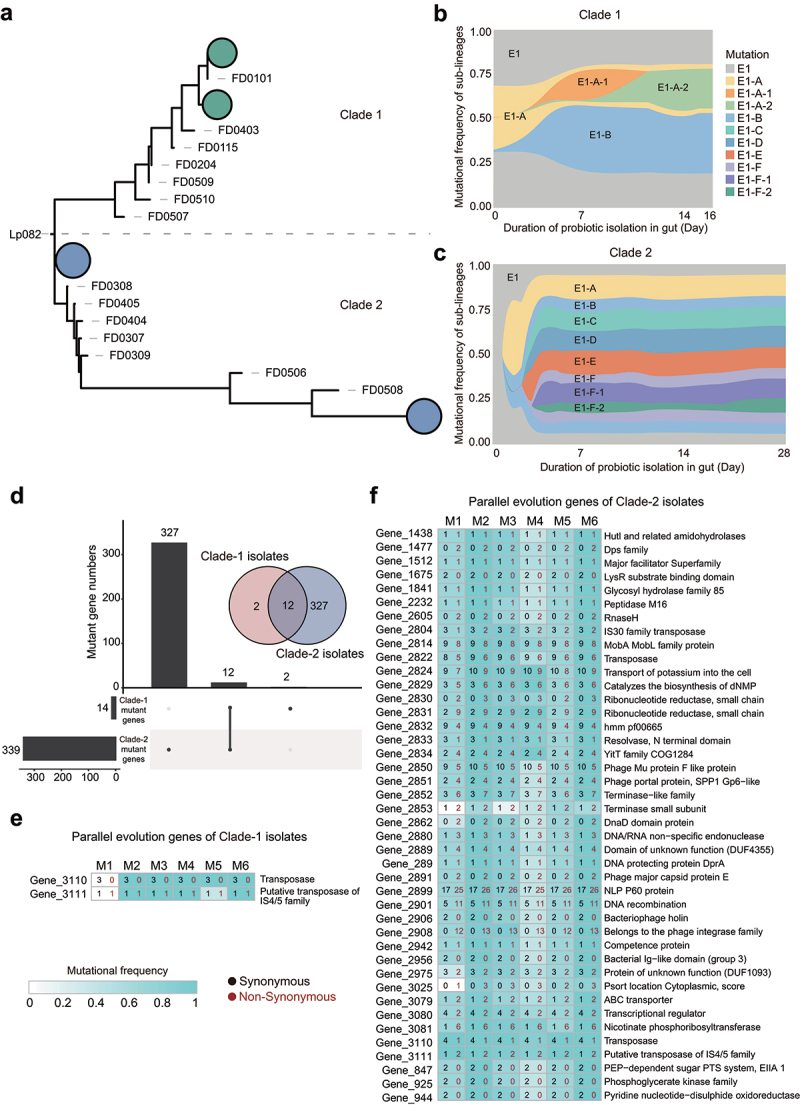
“20,25 This study identified two parallel evolutionary genes in clade-1 isolates, while 56 were identified in clade-2 isolates.”
NanoDrop Microvolume Quantitation of Nucleic Acids
Desjardins, P., & Conklin, D. (2010) · Journal of Visualized Experiments · doi:10.3791/2565 · Cited by 417
Helicobacter pylori evolution and phenotypic diversification in a changing host
Suerbaum, S., & Josenhans, C. (2007) · Nature Reviews Microbiology · doi:10.1038/nrmicro1658 · Cited by 384 · cited 1×
“21,22 Extensive studies proved bacterial pathogens accumulate mutations to compete with resident microbiome and host factors when entering the host intestines.”
Anantharaman, V., & Aravind, L. (2003) · Genome Biology · doi:10.1186/gb-2003-4-2-r11 · Cited by 365 · cited 1×
“29”
dbCAN-seq: a database of carbohydrate-active enzyme (CAZyme) sequence and annotation
Huang, L., Zhang, H., Wu, P., Entwistle, S., Li, X., Yohe, T., Yi, H., Yang, Z., & Yin, Y. (2018) · Nucleic Acids Research · doi:10.1093/nar/gkx894 · Cited by 323
Luoto, R., Kalliomäki, M., Laitinen, K., & Isolauri, E. (2010) · International Journal of Obesity · doi:10.1038/ijo.2010.50 · Cited by 315
Update of probiotics in human world: A nonstop source of benefactions till the end of time
Zommiti, M., Feuilloley, M. G. J., & Connil, N. (2020) · Microorganisms · doi:10.3390/microorganisms8121907 · Cited by 225
Molecular Mechanisms for Bacterial Potassium Homeostasis
Stautz, J., Hellmich, Y., Fuss, M. F., Silberberg, J. M., Devlin, J. R., Stockbridge, R. B., & Hänelt, I. (2021) · Journal of Molecular Biology · doi:10.1016/j.jmb.2021.166968 · Cited by 189 · cited 1×
“27 Additionally, the MobA MobL family protein, which also showed mutations, may be involved in plasmid transfer and horizontal gene transfer (HGT) among bacterial populations.”
Within-host evolution of a gut pathobiont facilitates liver translocation
Yang, Y., Nguyen, M., Khetrapal, V., Sonnert, N. D., Martin, A. L., Chen, H., Kriegel, M. A., & Palm, N. W. (2022) · Nature · doi:10.1038/s41586-022-04949-x · Cited by 158 · cited 1×
“36 Additionally, adaptive mutants of Staphylococcus aureus spread throughout the entire body, and the acapsular USA300 clade of S. aureus demonstrated the advantages over capsular strains for colonization of nares.”
Intestinal transgene delivery with native E. coli chassis allows persistent physiological changes
Russell, B. J., Brown, S. D., Siguenza, N., Mai, I., Saran, A. R., Lingaraju, A., Maissy, E. S., Dantas Machado, A. C., Pinto, A. F. M., Sanchez, C., et al. (2022) · Cell · doi:10.1016/j.cell.2022.06.050 · Cited by 151
Next-generation probiotics: a promising approach towards designing personalized medicine
Singh, T. P., & Natraj, B. H. (2021) · Critical Reviews in Microbiology · doi:10.1080/1040841x.2021.1902940 · Cited by 138 · cited 1×
“Numerous studies have explored strategies for enhancing individualized probiotic treatment, 13,14 including optimizing the type of probiotic bacteria, administration timing, and frequency, dietary, encapsulation technologies, and engineered therapies.”
Multiscale Evolutionary Dynamics of Host-Associated Microbiomes
Ferreiro, A., Crook, N., Gasparrini, A. J., & Dantas, G. (2018) · Cell · doi:10.1016/j.cell.2018.02.015 · Cited by 127 · cited 1×
“23,24 After being introduced, probiotic bacteria also reasonably undergo adaptive evolution.”
Comparison of mechanistic transport cycle models of ABC exporters
Szöllősi, D., Rose-Sperling, D., Hellmich, U. A., & Stockner, T. (2018) · Biochimica et Biophysica Acta (BBA) - Biomembranes · doi:10.1016/j.bbamem.2017.10.028 · Cited by 107 · cited 1×
“30 Additionally, gene 1465 of Bacteroides ovatus encoded HsdR family type I site-specific deoxyribonuclease, which can digest DNA to produce monodeoxynucleotides.”
Experimental Evaluation of Host Adaptation of Lactobacillus reuteri to Different Vertebrate Species
Duar, R. M., Frese, S. A., Lin, X. B., Fernando, S. C., Burkey, T. E., Tasseva, G., Peterson, D. A., Blom, J., Wenzel, C. Q., Szymanski, C. M., et al. (2017) · Applied and Environmental Microbiology · doi:10.1128/aem.00132-17 · Cited by 104 · cited 1×
“41 At the same time, Yersinia pestis enables switching hosts with just a few horizontally acquired traits.”
Zhang, J., Wang, X., Huo, D., Li, W., Hu, Q., Xu, C., Liu, S., & Li, C. (2016) · Scientific Reports · doi:10.1038/srep32524 · Cited by 102 · cited 1×
“Lp082 was isolated from Hainan Yucha, a traditional fermented food, 43 and had specific functions, including preventing hyper-lipidemia and regulating neurotransmitter secretion disorder.”
Self-citationMUM&Co: accurate detection of all SV types through whole-genome alignment
O’Donnell, S., & Fischer, G. (2020) · Bioinformatics · doi:10.1093/bioinformatics/btaa115 · Cited by 85
Shao, Y., Huo, D., Peng, Q., Pan, Y., Jiang, S., Liu, B., & Zhang, J. (2017) · Food & Function · doi:10.1039/c7fo00902j · Cited by 80 · cited 1×
“44,45 The mice (C57BL/6J, 10 weeks, Shanghai Slack Experimental Animal Co., Ltd., China) were divided into two groups, the Control group ( n = 6) and D-Lp082 (Domestication-Lp082) group ( n = 6) were kept on a 12-hour light/12-hour dark cycle with single cage feeding.”
Self-citationOn-person adaptive evolution of Staphylococcus aureus during treatment for atopic dermatitis
Key, F. M., Khadka, V. D., Romo‐González, C., Blake, K. J., Deng, L., Lynn, T. C., Lee, J. C., Chiu, I. M., García‐Romero, M. T., & Lieberman, T. D. (2023) · Cell Host & Microbe · doi:10.1016/j.chom.2023.03.009 · Cited by 74
The Yin and Yang of Bacterial Resilience in the Human Gut Microbiota
Gibson, M. K., Pesesky, M. W., & Dantas, G. (2014) · Journal of Molecular Biology · doi:10.1016/j.jmb.2014.05.029 · Cited by 71 · cited 1×
“8 Another important factor associated with colonization is the gut-individualized response to probiotic bacteria, where some individuals, regardless of age (infants or adults), show no response to probiotic interventions.”
Selective pressures during chronic infection drive microbial competition and cooperation
Baishya, J., & Wakeman, C. A. (2019) · npj Biofilms and Microbiomes · doi:10.1038/s41522-019-0089-2 · Cited by 70 · cited 1×
“21,22 Extensive studies proved bacterial pathogens accumulate mutations to compete with resident microbiome and host factors when entering the host intestines.”
spaa: SPecies Association Analysis
Zhang, J. (2010) · doi:10.32614/cran.package.spaa · Cited by 69
Self-citationHuang, S., Jiang, S., Huo, D., Allaband, C., Estaki, M., Cantu, V., Belda-Ferre, P., Vázquez-Baeza, Y., Zhu, Q., Ma, C., et al. (2021) · Microbiome · doi:10.1186/s40168-021-01102-0 · Cited by 61 · cited 2×
“20,25 This study identified two parallel evolutionary genes in clade-1 isolates, while 56 were identified in clade-2 isolates.”
Self-citationJiang, S., Liu, A., Ma, W., Liu, X., Luo, P., Zhan, M., Zhou, X., Chen, L., & Zhang, J. (2023) · Food & Function · doi:10.1039/d3fo01701j · Cited by 58
Self-citationUse of genetically modified bacteria for drug delivery in humans: Revisiting the safety aspect
Wegmann, U., Carvalho, A. L., Stocks, M., & Carding, S. R. (2017) · Scientific Reports · doi:10.1038/s41598-017-02591-6 · Cited by 53 · cited 1×
“18,19 (4) The complex and dynamic interactions between probiotic bacteria and the unique composition of an individual’s gut microbiome remain a major challenge.”
Zhang, Z., Peng, Q., Huo, D., Jiang, S., Ma, C., Chang, H., Chen, K., Li, C., Pan, Y., & Zhang, J. (2021) · Frontiers in Cell and Developmental Biology · doi:10.3389/fcell.2021.678190 · Cited by 49 · cited 1×
“44,45 The mice (C57BL/6J, 10 weeks, Shanghai Slack Experimental Animal Co., Ltd., China) were divided into two groups, the Control group ( n = 6) and D-Lp082 (Domestication-Lp082) group ( n = 6) were kept on a 12-hour light/12-hour dark cycle with single cage feeding.”
Self-citationEcological and molecular perspectives on responders and non-responders to probiotics and prebiotics
Ojima, M. N., Yoshida, K., Sakanaka, M., Jiang, L., Odamaki, T., & Katayama, T. (2022) · Current Opinion in Biotechnology · doi:10.1016/j.copbio.2021.06.023 · Cited by 46 · cited 1×
“9 This can be attributed to the highly individual-specificity of the human microbiome, 10,11 shaped by genetics, diet, age, geography, disease status, and intrinsic host factors.”
DNA degradation in human teeth exposed to thermal stress
Lozano‐Peral, D., Rubio, L., Santos, I., Gaitán-Arroyo, M. J., Viguera, E., & Martín‐de‐las‐Heras, S. (2021) · Scientific Reports · doi:10.1038/s41598-021-91505-8 · Cited by 33
Native microbiome dominates over host factors in shaping the probiotic genetic evolution in the gut
Jiang, S., Zhang, C., Han, Z., Ma, W., Wang, S., Huo, D., Cui, W., Zhai, Q., Huang, S., & Zhang, J. (2023) · npj Biofilms and Microbiomes · doi:10.1038/s41522-023-00447-8 · Cited by 25 · cited 1×
“38 However, such patterns of evolution were not observed in germ-free mice.”
Self-citationPersonalized therapy with probiotics from the host by TripleA
Kort, R. (2014) · Trends in biotechnology · doi:10.1016/j.tibtech.2014.04.002 · Cited by 23 · cited 1×
“Numerous studies have explored strategies for enhancing individualized probiotic treatment, 13,14 including optimizing the type of probiotic bacteria, administration timing, and frequency, dietary, encapsulation technologies, and engineered therapies.”
Darwinian evolution as a dynamical principle
Kocher, C. D., & Dill, K. A. (2023) · Proceedings of the National Academy of Sciences · doi:10.1073/pnas.2218390120 · Cited by 23 · cited 1×
“35 This principle aligns with Darwinian theory and has been observed in various organisms, including pathogens and our probiotic study.”
A targeted treatment with off-target risks
Fruman, D. A., & O'Brien, S. (2017) · Nature · doi:10.1038/nature21504 · Cited by 22
Genetically modified bacteria enlisted in fight against disease
Reardon, S. (2018) · Nature · doi:10.1038/d41586-018-05476-4 · Cited by 19 · cited 1×
“18,19 (4) The complex and dynamic interactions between probiotic bacteria and the unique composition of an individual’s gut microbiome remain a major challenge.”
Levante, A., Lazzi, C., Vatsellas, G., Chatzopoulos, D., Dionellis, V. S., Makrythanasis, P., Neviani, E., & Folli, C. (2021) · Microorganisms · doi:10.3390/microorganisms9030648 · Cited by 18 · cited 1×
“32,33 Still, under environmental stress (such as bile salts), the antitoxin is degraded by proteases, leading to toxin release and bacterial death.”
HigBA toxin–antitoxin system of Weissella cibaria is involved in response to the bile salt stress
Cai, T., Zhao, Q., Xiang, W., Zhu, L., Rao, Y., & Tang, J. (2022) · Journal of the Science of Food and Agriculture · doi:10.1002/jsfa.12042 · Cited by 17 · cited 1×
“34 The Cro/C1-type HTH DNA-binding gene can substitute for the degraded antitoxin by binding to the toxin, thus lifting the growth and proliferation limitations on the bacteria (Figure 5(b)).”
Ferrari, A., Maggi, S., Montanini, B., Levante, A., Lazzi, C., Yamaguchi, Y., Rivetti, C., & Folli, C. (2019) · Scientific Reports · doi:10.1038/s41598-019-44094-6 · Cited by 15 · cited 1×
“32,33 Still, under environmental stress (such as bile salts), the antitoxin is degraded by proteases, leading to toxin release and bacterial death.”
Guo, Q., Wang, G., Zheng, L., Xue, H. F., Wang, R., Fang, Y., & Zhang, J. (2025) · Nature Communications · doi:10.1038/s41467-025-57581-4 · Cited by 15 · cited 1×
“68 The resulting recombinant plasmid was subsequently introduced into Lp082 via electro-poration.”
Self-citationInsights into How Probiotics Colonize the Healthy Human Gut
Ferreiro, A., Dantas, G., & Ciorba, M. A. (2019) · Gastroenterology · doi:10.1053/j.gastro.2019.01.022 · Cited by 10
Research works printed but not linked: 1
- Hyatt D, Chen G-L, Pf L, Land ML, Larimer FW, Hauser LJ. Prodigal: prokaryotic gene recognition and translation initiation site identification. BMC Bioinform. 2010; 11(1): 1– 11. doi: 10.1186/1471-2105-11-119. PMC2848648 20211023 · DOI · Paper page
Cited by
Integrating microbiome insights into cervical cancer
Bautista, J., Sardi, P. C., Paguay-Caisabanda, I., Gancino-Guevara, K., & López‐Cortés, A. (2026) · Frontiers in Medicine · doi:10.3389/fmed.2026.1766052 · Cited by 13
“Integrating ecological principles into therapeutic design could improve prognostic power and intervention success in preventing HPV progression (139, 140).”
Probiotics: From natural to artificial
Liu, L.-H., Zhang, X., Huang, Y., Chen, R., Huang, J., Wang, S., Li, W., & Jiang, A. (2026) · Biotechnology Advances · doi:10.1016/j.biotechadv.2026.108916 · Cited by 5
Mai, Z., Wang, B., Hu, Q., Jia, Z., Wang, J., Liu, B. Y., & Ge, J. (2026) · Probiotics and Antimicrobial Proteins · doi:10.1007/s12602-026-10979-y · Cited by 1
“In addition, methods such as screening intestinal adaptive mutant strains can be carried out to enhance the colonization ability of LAB [306].”
The Gut Microbiome–Endocrine Axis in Obesity: Mechanisms and Therapeutics
Mao, H., Wang, X. L., Pang, Y., Lu, Y., Wang, H. W., Li, H., Ni, Y., & Jia, W. P. (2026) · Journal of Gastroenterology and Hepatology · doi:10.1111/jgh.70511 · Cited by 1
“A major hurdle is the high colonization resistance and the low transient persistence of many administered strains, limiting their long-term impact [69].”
Nomiri, S., Yazdani, F., Heidary, H., Sadeghi, A., Tarzemani, S., Sadeghloo, Z., Niasar, M. S., Tillotson, G., Safarpour, H., & Raeisi, H. (2026) · Probiotics and Antimicrobial Proteins · doi:10.1007/s12602-026-11164-x · Cited by 1
Metadata
- Authors
- Jiang, S., Huang, S., Zhang, Z., Ma, W., Han, Z., Song, Y., Huo, D., Cui, W., & Zhang, J.
- Affiliations
- Hainan University (CN)
- University of Hong Kong (HK)
- Corresponding author
- Zhang, Jiachao
- Venue
- Gut Microbes
- Publisher
- Informa UK Limited
- Published
- 2025-05-10
- Volume
- 17
- Issue
- 1
- Pages
- 2503371-2503371
- ISSN
- 1949-0976 (ISSN-L)
- 1949-0984
- PMC
- PMC12068336
- OpenAlex
- W4410266372
- Cited by
- 15
- References
- 77
- Citations by year
- 2026: 14 · 2025: 1
- FWCI
- 7.03
- Type
- journal article
- Language
- en
- Open access
- gold
- doi.org
- Licence
- Locations
- Gut Microbes (publishedVersion, cc-by-nc)
- PubMed Central (publishedVersion, cc-by-nc)
- PubMed (publishedVersion)
- The HKU Scholars Hub (University of Hong Kong) (submittedVersion, cc-by-nc-nd)
- DOAJ (DOAJ: Directory of Open Access Journals) (submittedVersion, cc-by-sa)
- Funders
- National Natural Science Foundation of China (32222066)
- Topics
- Life Sciences › Agricultural and Biological Sciences › Food Science › Probiotics and Fermented Foods
- Life Sciences › Biochemistry, Genetics and Molecular Biology › Molecular Biology › Gut microbiota and health
- Life Sciences › Biochemistry, Genetics and Molecular Biology › Genetics › Bacterial Genetics and Biotechnology
- Keywords
- probiotics, Lactobacillus plantarum, intestinal colonization, colonization resistance, gut microbiota, structural variants, single nucleotide variants, nanopore sequencing, acid resistance, bile salt stress, mouse gut
- MeSH terms
- Gastrointestinal Microbiome, Animals, Bile Acids and Salts, Probiotics, Gastrointestinal Tract, Lactiplantibacillus plantarum, Mice, Metagenomics
About these checks
Registry, retraction, Cites and statistics results are computed, not judged, with one exception: a printed reference that no index lists is read once by a model before it counts as a citation error. Claims are extracted by a model and kept only when their quote appears verbatim in the text; each cited source is then checked, with a model’s help, for whether it says what the claim relies on. Those verdicts can be wrong — read the claim’s quote and the cited source before relying on one.
The claim verdicts this report counts are experimental: their accuracy is not yet measured.
A language model drew the claims from the paper on 2026-10-09, under version 3 of the claim definition (model deepseek-v4.1-flash, prompt extract-v3).
A second model labelled each claim on 2026-10-09 (model jev-1.13-20260917, definition revision gold-guideline-v0.2).
Cited sources are checked with a language model’s help (gpt-6-sol).
Statistics and arithmetic are recomputed, not judged.
Confidence bands are shown only for fields calibrated on our annotated test set. None is calibrated yet, so no band is shown.
What counts as a claim ›How we measure confidence ›How we check this ›
Are you an author, or do you see a problem with this page? Request a review
Data sources
Bibliographic data: Semantic Scholar, OpenAlex, Crossref.
Contains information from the Semantic Scholar Academic Graph Datasets, made available under the ODC Attribution License (ODC-BY 1.0).
Semantic Scholar’s data is described in: Kinney, R., et al. (2023). The Semantic Scholar Open Data Platform. arXiv:2301.10140.
