

IL-23 drives a pathogenic T cell population that induces autoimmune inflammation
Open accessThe DOI matches its Crossref record; 39 of the 39 references it cites were found in a registry or an index.
Abstract
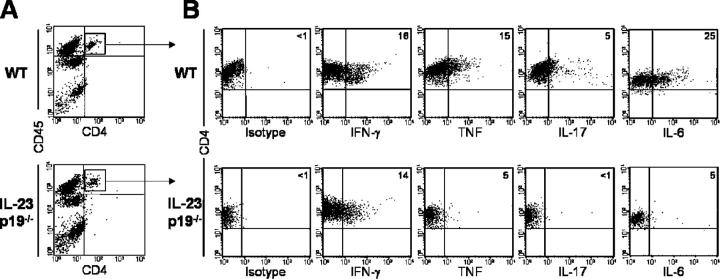
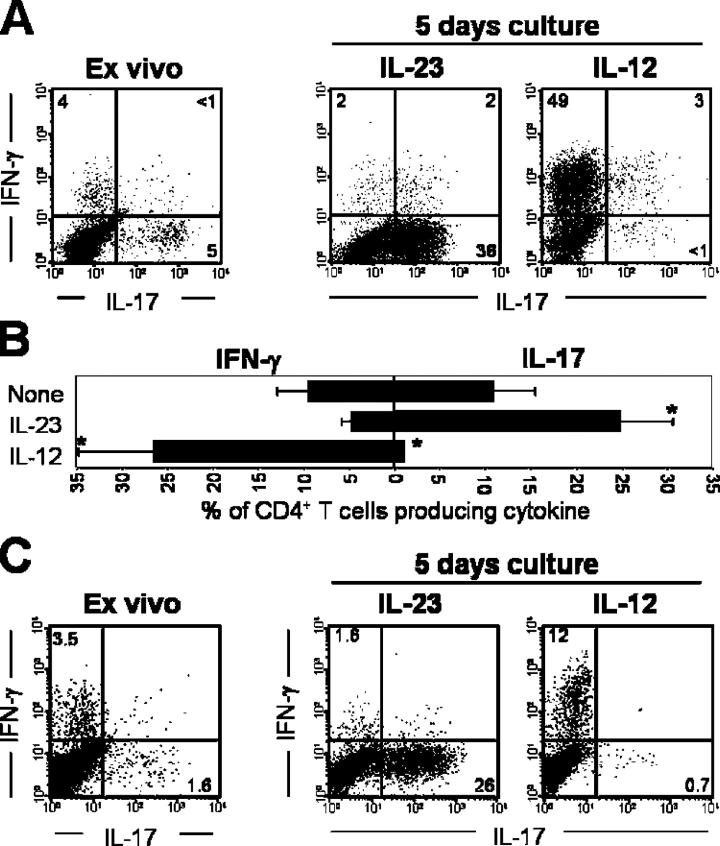
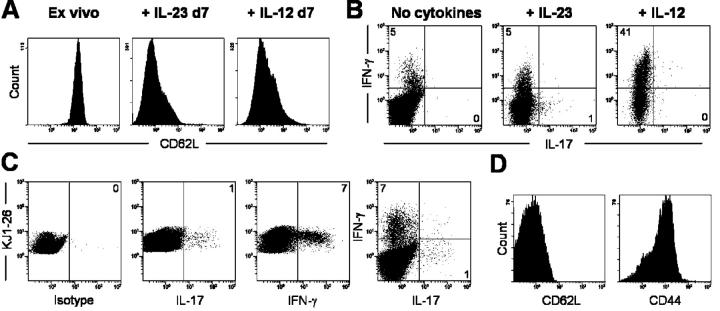
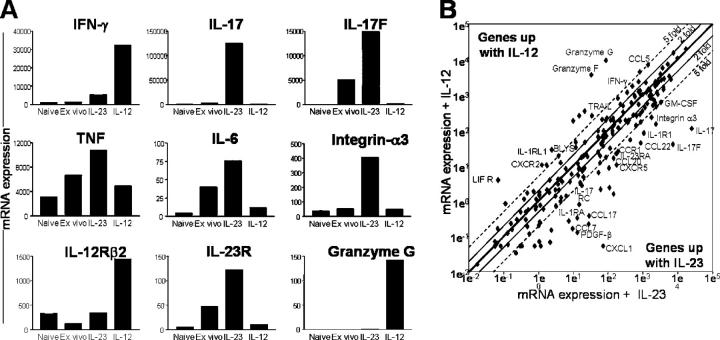
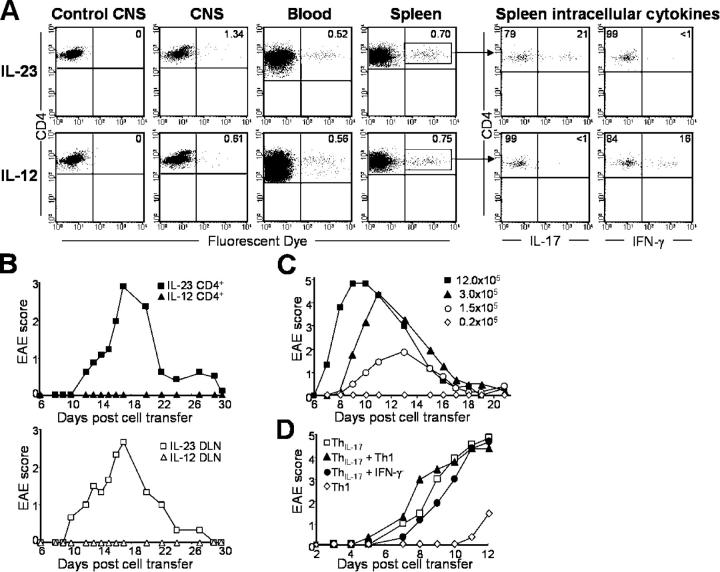
Interleukin (IL)-23 is a heterodimeric cytokine composed of a unique p19 subunit, and a common p40 subunit shared with IL-12. IL-12 is important for the development of T helper (Th)1 cells that are essential for host defense and tumor suppression. In contrast, IL-23 does not promote the development of interferon-gamma-producing Th1 cells, but is one of the essential factors required for the expansion of a pathogenic CD4(+) T cell population, which is characterized by the production of IL-17, IL-17F, IL-6, and tumor necrosis factor. Gene expression analysis of IL-23-driven autoreactive T cells identified a unique expression pattern of proinflammatory cytokines and other novel factors, distinguishing them from IL-12-driven T cells. Using passive transfer studies, we confirm that these IL-23-dependent CD4(+) T cells are highly pathogenic and essential for the establishment of organ-specific inflammation associated with central nervous system autoimmunity.
Overview
The claims and statistics of this paper haven’t been checked yet.
Free: it reads the open-access text and checks the first 5 claims that cite a source we can check. Create a free account to check every claim.
Integrity signals
Registry
Cites
Statistics
Figures
Verification
Claims the paper makes
The claims and statistics of this paper haven’t been checked yet.
Free: it reads the open-access text and checks the first 5 claims that cite a source we can check. Create a free account to check every claim.
Claims other papers make about this one
Each is checked against this paper’s own text: does it say what the citing paper says it does?
The source backs part of the claim, not all of it — or backs it for a different population, condition or comparison.
In the citing paper
“which is induced after stimulation by IL-21.”
From Distinct characteristics of hippocampal pathogenic th17 cells in a mouse model of depression (2018) · cites this paper as Langrish et al., 2005
Experimental — accuracy not yet measuredThe source backs part of the claim, not all of it — or backs it for a different population, condition or comparison.
In the citing paper
“the acquisition of the pathogenic phenotype occurs after expression of the IL-23 receptor (IL-23R) by TH17 cells (Ghoreschi et al., 2010; Langrish et al., 2005)”
From Distinct characteristics of hippocampal pathogenic th17 cells in a mouse model of depression (2018) · cites this paper as Langrish et al., 2005
Experimental — accuracy not yet measuredThe source backs part of the claim, not all of it — or backs it for a different population, condition or comparison.
In the citing paper
“CCR6 and IL-23R have been linked to the pathogenicity of TH17 cells in autoimmune diseases (Hirota et al., 2007; Kohler et al., 2003; Langrish et al., 2005), such as multiple sclerosis, suggesting that the depression-associated hippocampal TH17 cells display CNS-directed pathogenic properties that may underlie a portion of their pro-depressive actions.”
From Distinct characteristics of hippocampal pathogenic th17 cells in a mouse model of depression (2018) · cites this paper as Langrish et al., 2005
Experimental — accuracy not yet measuredIn the citing paper
“The so-called “IL-23-IL-17 axis” was found to function as a critical driver of autoimmune disease”
From The IL-17 Family of Cytokines in Health and Disease (2019) · cites this paper as Langrish et al., 2005
Self-check
Percentages, sums and reported differences re-computed from the paper’s own numbers.
The self-check needs the paper’s full text.
Citations
Cites
2 retracted
Inducible costimulator is essential for collagen-induced arthritis
Nurieva, R. I., Treuting, P., Duong, J., Flavell, R. A., & Dong, C. (2003) · Journal of Clinical Investigation · doi:10.1172/jci17321 · Cited by 117
RetractedThe IL-12Rβ2 gene functions as a tumor suppressor in human B cell malignancies
Airoldi, I., Carlo, E. D., Banelli, B., Moserle, L., Cocco, C., Pezzolo, A., Sorrentino, C., Rossi, E., Romani, M., Amadori, A., et al. (2004) · Journal of Clinical Investigation · doi:10.1172/jci20303 · Cited by 65 · cited 1×
“IL-12 is an important factor for the differentiation of naive T cells into IFN- � ‐producing Th1 cells, is essential for antimicrobial responses (4, 5), and serves as a suppressor of human B cell tumors ( 6 ).”
BackgroundRetractedCua, D. J., Sherlock, J., Chen, Y., Murphy, C. A., Joyce, B., Seymour, B., Lucian, L., To, W., Kwan, S., Churakova, T., et al. (2003) · Nature · doi:10.1038/nature01355 · Cited by 2,906 · cited 3×
“Blood was collected and lysed (RBC lysis buffer; Sigma-Aldrich), and mononuclear cells from brains and spinal cord tissue were prepared as described previously ( 1 ) and surface stained with anti‐CD4-APC.”
MethodInfluentialSelf-citationOppmann, B., Lesley, R., Blom, B., Timans, J. C., Xu, Y., Hunte, B., Vega, F., Yu, N., Wang, J., Singh, K., et al. (2000) · Immunity · doi:10.1016/s1074-7613(00)00070-4 · Cited by 2,822 · cited 1×
“Although IL-23 shares a common p40 subunit with IL-12 (3), these cytokines have divergent activities.”
BackgroundSelf-citationToll Pathway-Dependent Blockade of CD4 + CD25 + T Cell-Mediated Suppression by Dendritic Cells
Pasare, C., & Medzhitov, R. (2003) · Science · doi:10.1126/science.1078231 · Cited by 1,997 · cited 1×
“IL-6 produced by LPS-activated dendritic cells can turn off regulatory T cell (T reg cell) function, allowing effector T cell activation ( 35 ).”
BackgroundAggarwal, S., Ghilardi, N., Xie, M.-H., de Sauvage, F. J., & Gurney, A. L. (2003) · Journal of Biological Chemistry · doi:10.1074/jbc.m207577200 · Cited by 1,847 · cited 1×
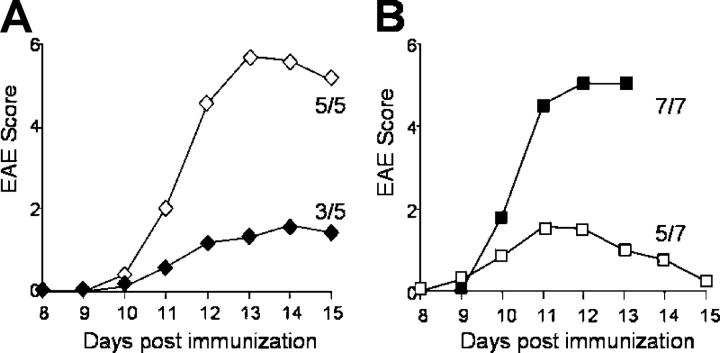
“Ex vivo analysis of draining LN (DLN) cells from immunized WT and IL-23p19 mice reflected the CNS data, with similar IFN- levels, but no IL-17 production by the IL-23p19 cells (2, 14, 15).”
BackgroundDivergent Pro- and Antiinflammatory Roles for IL-23 and IL-12 in Joint Autoimmune Inflammation
Murphy, C. A., Langrish, C. L., Chen, Y., Blumenschein, W., McClanahan, T., Kastelein, R. A., Sedgwick, J. D., & Cua, D. J. (2003) · The Journal of Experimental Medicine · doi:10.1084/jem.20030896 · Cited by 1,669 · cited 3×
“These results are consistent with papers suggesting that IL-23 is required for the development and expansion of IL-17–producing CD4 T cells (2, 16, 17).”
BackgroundMethodResultSelf-citationSuppression of Immune Induction of Collagen-Induced Arthritis in IL-17-Deficient Mice
Nakae, S., Nambu, A., Sudo, K., & Iwakura, Y. (2003) · The Journal of Immunology · doi:10.4049/jimmunol.171.11.6173 · Cited by 1,273
Exacerbations of multiple sclerosis in patients treated with gamma interferon
Panitch, H., Haley, A., Hirsch, R., & Johnson, K. (1987) · The Lancet · doi:10.1016/s0140-6736(87)92863-7 · Cited by 1,071 · cited 1×
“Treatments with IFNlead to disease exacerbation in human MS (22), and transgenic mice overexpressing IFN- in the CNS showed increased oligodendrocyte death leading to demyelinating diseases (23, 24).”
BackgroundFerber, I. A., Brocke, S., Taylor-Edwards, C., Ridgway, W., Dinisco, C., Steinman, L., Dalton, D., & Fathman, C. G. (1996) · The Journal of Immunology · doi:10.4049/jimmunol.156.1.5 · Cited by 989
Cited by
Items 701–800 of 1,038
Kothur, K., Wienholt, L. A., Mohammad, S. S., Tantsis, E. M., Pillai, S. C., Britton, P. N., Jones, C., Angiti, R. R., Barnes, E. H., Schlub, T. E., et al. (2016) · PLoS ONE · doi:10.1371/journal.pone.0161656 · Cited by 151
“When we compared the cytokine/chemokine profile in different encephalitis groups, patients with ADEM showed predominant elevation of Th1 (IFN-γ, TNF-α, CXCL9, CXCL10), Th2 (IL-4, Eotaxin, CCL17, IL-13), Th17 (IL-23, G-CSF, IL-6, IL-8 and IL-17A), B cell (CXCL13, BAFF, CCL19) and other cytokines (CXCL1, IFN-α 2, IL-1ra…”
ResultAgak, G. W., Kao, S., Ouyang, K., Qin, M., Moon, D., Butt, A., & Kim, J. (2018) · Journal of Investigative Dermatology · doi:10.1016/j.jid.2017.07.842 · Cited by 139
“Non-stimulated clones did not secrete IFN-γ, IL-10, or any Th17 associated cytokine (data not shown).”
InfluentialTH17 cells and corticosteroid insensitivity in severe asthma
Xie, Y., Abel, P. W., Casale, T. B., & Tu, Y. (2021) · Journal of Allergy and Clinical Immunology · doi:10.1016/j.jaci.2021.12.769 · Cited by 153
Podojil, J. R., & Miller, S. D. (2009) · Immunological Reviews · doi:10.1111/j.1600-065x.2009.00773.x · Cited by 142
“Th17 cells are critical for the development and maintenance of experimental autoimmune encephalomyelitis (EAE), the major animal model of MS (10, 11).”
BackgroundIL-12– and IL-23–induced T helper cell subsets
Bettelli, E., & Kuchroo, V. K. (2005) · The Journal of Experimental Medicine · doi:10.1084/jem.20042279 · Cited by 144
“(page 233) describe a subset of CD4 T cells that they call Th IL-17 cells, which are generated by isolating T cells from experimental autoimmune encephalomyelitis (EAE)-susceptible SJL mice immunized with an encephalitogenic peptide and culturing them with IL-23 (6).”
BackgroundResultInfluentialTh17 cytokines and vaccine-induced immunity
Lin, Y., Slight-Webb, S. R., & Khader, S. A. (2010) · Seminars in Immunopathology · doi:10.1007/s00281-009-0191-2 · Cited by 156
“Most autoimmune models deliver antigens in adjuvants such as Complete Freund’s Adjuvant (CFA) [53] or pertussis toxin [40] to induce the inflammatory disease phenotype.”
InfluentialDevelopment of an anti‐IL‐17A auto‐vaccine that prevents experimental auto‐immune encephalomyelitis
Uyttenhove, C., & Van Snick, J. (2006) · European Journal of Immunology · doi:10.1002/eji.200636662 · Cited by 138
T-bet is a critical determinant in the instability of the IL-17-secreting T-helper phenotype
Mathur, A. N. (2006) · Blood · doi:10.1182/blood-2006-04-015016 · Cited by 143
Th1/Th2/Th17/Treg cytokines in Guillain–Barré syndrome and experimental autoimmune neuritis
Zhang, H., Zheng, X., & Zhu, J. (2013) · Cytokine & Growth Factor Reviews · doi:10.1016/j.cytogfr.2013.05.005 · Cited by 146
“Th17 cells mainly produce IL-17A, whose secretion is further stimulated by IL-23 in vitro [49] and in vivo [50].”
BackgroundSkepner, J. E., Ramesh, R., Trocha, M., Schmidt, D. R., Baloglu, E., Lobera, M., Carlson, T. J., Hill, J. A., Orband‐Miller, L. A., Barnes, A. A., et al. (2014) · The Journal of Immunology · doi:10.4049/jimmunol.1302190 · Cited by 155
The Yin and Yang of interleukin-21 in allergy, autoimmunity and cancer
Spolski, R. J., & Leonard, W. J. (2008) · Current Opinion in Immunology · doi:10.1016/j.coi.2008.02.004 · Cited by 143
In vivo–activated CD103+CD4+ regulatory T cells ameliorate ongoing chronic graft-versus-host disease
Zhao, D., Zhang, C., Yi, T., Lin, C.-L. V., Todorov, I., KANDEEL, F. R., Forman, S. J., & Zeng, D. (2008) · Blood · doi:10.1182/blood-2008-02-140277 · Cited by 151
Xueyi, L., Chen, L., Wu, Z., Han, Q., Li, Q., & Zhu, P. (2012) · Journal of Clinical Immunology · doi:10.1007/s10875-012-9774-0 · Cited by 142
“Some studies have suggested that IL-23 acts as a regulator of the maturation of Th17 cells and promotes chronic inflammation dominated by IL-17, IL-6, IL-8, and TNF-α as well as by neutrophils and macrophages [43, 44].”
BackgroundThe role of transcription factors in shaping regulatory T cell identity
Trujillo-Ochoa, J. L., Kazemian, M., & Afzali, B. (2023) · Nature reviews. Immunology · doi:10.1038/s41577-023-00893-7 · Cited by 160
“244,248).”
Liu, L., Huang, D., Matsui, M., He, T. T., Hu, T., DeMartino, J., Lu, B., Gerard, C., & Ransohoff, R. M. (2006) · The Journal of Immunology · doi:10.4049/jimmunol.176.7.4399 · Cited by 138
“Experimental autoimmune encephalomyelitis (EAE) is an autoimmune disease of the CNS characterized by mononuclear cell infiltration and demyelination and regulated by CD4 T cells that express a type 1 (Th1) cytokine profile and by a distinct T cell subset that is induced by IL-23 and produces high levels of IL-17 (term…”
BackgroundSwords into plowshares: IL-23 repurposes tumor immune surveillance
Langowski, J. L., Kastelein, R. A., & Oft, M. (2007) · Trends in Immunology · doi:10.1016/j.it.2007.03.006 · Cited by 151
Self-citationOsada, Y., Shimizu, S., Kumagai, T., Yamada, S., & Kanazawa, T. (2008) · International Journal for Parasitology · doi:10.1016/j.ijpara.2008.08.007 · Cited by 148
Genetic proof for the transient nature of the Th17 phenotype
Kurschus, F. C., Croxford, A. L., P. Heinen, A., Wörtge, S., Ielo, D., & Waisman, A. (2010) · European Journal of Immunology · doi:10.1002/eji.201040755 · Cited by 140
Balancing Inflammation: The Link between Th17 and Regulatory T Cells
Diller, M. L., Kudchadkar, R. R., Delman, K. A., Lawson, D. H., & Ford, M. L. (2016) · Mediators of Inflammation · doi:10.1155/2016/6309219 · Cited by 139
“While APC-derived IL-23 plays a less crucial role in the initiation of Th17 differentiation, it is critical for the expansion and maintenance of the Th17committed lineage, further activating STAT3 and dampening IL-10 production [8, 11].”
BackgroundPhage-assisted continuous evolution of proteases with altered substrate specificity
Packer, M. S., Rees, H. A., & Liu, D. R. (2017) · Nature Communications · doi:10.1038/s41467-017-01055-9 · Cited by 131
Jin, M., Günther, R., Akgün, K., Hermann, A., & Ziemssen, T. (2020) · Scientific Reports · doi:10.1038/s41598-020-62756-8 · Cited by 124
Photodynamic therapy and anti‐tumor immunity
Gollnick, S. O., Owczarczak, B., & Maier, P. (2006) · Lasers in Surgery and Medicine · doi:10.1002/lsm.20362 · Cited by 139
Minireview: glucocorticoids in autoimmunity: unexpected targets and mechanisms
Flammer, J. R., & Rogatsky, I. (2011) · Molecular Endocrinology · doi:10.1210/me.2011-0068 · Cited by 140
The Dysregulation of Cytokine Networks in Systemic Lupus Erythematosus
Apostolidis, S. A., Lieberman, L. A., Kis‐Tóth, K., Crispín, J. C., & Tsokos, G. C. (2011) · Journal of Interferon & Cytokine Research · doi:10.1089/jir.2011.0029 · Cited by 147
AP-1 Activated by Toll-like Receptors Regulates Expression of IL-23 p19
Liu, W., Ouyang, X., Yang, J., Liu, J., Li, Q., Gu, Y., Fukata, M., Lin, T. R., He, C., Abreu, M. T., et al. (2009) · Journal of Biological Chemistry · doi:10.1074/jbc.m109.025528 · Cited by 149
Cytokines: Names and Numbers You Should Care About
Holdsworth, S. R., & Gan, P. (2015) · Clinical Journal of the American Society of Nephrology · doi:10.2215/cjn.07590714 · Cited by 163
“In 2005, a new distinct Th subset was defined on the basis of its predominant production of IL-17, named Th17 cells (4).”
BackgroundTh17 cells in immunity and autoimmunity
Oukka, M. (2008) · Annals of the Rheumatic Diseases · doi:10.1136/ard.2008.098004 · Cited by 166
Vitamin D 3 Induces IDO + Tolerogenic DC s and Enhances Treg, Reducing the Severity of EAE
Farias, A. S., Spagnol, G. S., Bordeaux‐Rego, P., de Oliveira, C. O. F., Fontana, A. G. M., de Paula, R. F. O., Santos, M. P. A., Pradella, F. M., Moraes, A. S., de Oliveira, E. C., et al. (2013) · CNS Neuroscience & Therapeutics · doi:10.1111/cns.12071 · Cited by 140
“The cytokines that are produced by Th1 and Th17 CD4 T lymphocytes are linked directly to the pathology of the disease, especially IFNc, IL17, and TNFa, whereas Th2-/Th3-produced cytokines, such as IL-10 and TGFb1, ameliorate EAE [7–13].”
BackgroundZhou, Y., Sonobe, Y., Akahori, T., Jin, S., Kawanokuchi, J., Noda, M., Iwakura, Y., Mizuno, T., & Suzumura, A. (2011) · The Journal of Immunology · doi:10.4049/jimmunol.1003307 · Cited by 138
“Because Th17 cells play a critical role in EAE development (36, 37), IL-9 produced by a variety of Th cells has an effector function on EAE, at least on Th17-mediated inflammatory responses.”
BackgroundGao, H., Danzi, M. C., Choi, C. S., Taherian, M., Dalby-Hansen, C., Ellman, D. G., Madsen, P. M., Bixby, J. L., Lemmon, V. P., Lambertsen, K. L., et al. (2017) · Cell Reports · doi:10.1016/j.celrep.2016.11.083 · Cited by 138
“8 Encephalomyelitis (EAE, MS mouse model) and adoptive transfer of Th17 cells resulted in efficient EAE induction (Aggarwal et al., 2003; Langrish et al., 2005).”
Cutting Edge: Human Th17 Cells Are Identified as Bearing CCR2+CCR5− Phenotype
Sato, W., Aranami, T., & Yamamura, T. (2007) · The Journal of Immunology · doi:10.4049/jimmunol.178.12.7525 · Cited by 134
“IL-23 has been shown to play a pivotal role in the survival and expansion of Th17 cells (2, 10).”
BackgroundZrioual, S., Toh, M.-L., Tournadre, A., Zhou, Y., Cazalis, M.-A., Pachot, A., Miossec, V., & Miossec, P. (2008) · The Journal of Immunology · doi:10.4049/jimmunol.180.1.655 · Cited by 137
Autoimmunity in Wiskott–Aldrich Syndrome: An Unsolved Enigma
Catucci, M., Castiello, M. C., Pala, F., Bosticardo, M., & VILLA, A. M. (2012) · Frontiers in Immunology · doi:10.3389/fimmu.2012.00209 · Cited by 151
“Antigen overload in fact results in a prolonged immune response, which promotes expansion of Th17 cell subset, playing a central role in many autoimmune diseases, such as MS, RA, and Crohn’s disease (Langrish et al., 2005; Fouser et al., 2008; Isaksson et al., 2009; Sharma et al., 2009).”
BackgroundPeptidoglycan: a critical activator of the mammalian immune system during infection and homeostasis
Sorbara, M. T., & Philpott, D. J. (2011) · Immunological Reviews · doi:10.1111/j.1600-065x.2011.01047.x · Cited by 136
Hawkes, J. E., Nguyen, G. H., Fujita, M., Florell, S. R., Duffin, K. C., Krueger, G. G., & O’Connell, R. M. (2016) · Journal of Investigative Dermatology · doi:10.1038/jid.2015.409 · Cited by 168
“, IFN-g, IL-17, IL-22, IL-23) (Johansen et al., 2009; Kryczek et al., 2008; Langrish et al., 2005; Nair et al., 2008, 2009) have all been shown to be essential to the pathogenesis of psoriasis.”
BackgroundInterleukin-17 in rheumatoid arthritis: Trials and tribulations
Taams, L. S. (2020) · The Journal of Experimental Medicine · doi:10.1084/jem.20192048 · Cited by 144
Gnerlich, J. L., Mitchem, J. B., Weir, J. S., Sankpal, N. V., Kashiwagi, H., Belt, B. A., Porembka, M. R., Herndon, J. M., Eberlein, T. J., Goedegebuure, P., et al. (2010) · The Journal of Immunology · doi:10.4049/jimmunol.0902609 · Cited by 133
Elevated Th22 Cells Correlated with Th17 Cells in Patients with Rheumatoid Arthritis
Zhang, L., Li, J., Liu, X., Ma, D., Hu, N., Li, Y., Li, W., Hu, Y., Yu, S., Qu, X., et al. (2011) · Journal of Clinical Immunology · doi:10.1007/s10875-011-9540-8 · Cited by 149
“In recent years, additional effector T-cell subsets have been described, including interleukin-17 (IL-17)-producing cells (Th17 cells) [6–11].”
BackgroundUnbalanced Neonatal CD4+ T-Cell Immunity
Debock, I., & Flamand, V. (2014) · Frontiers in Immunology · doi:10.3389/fimmu.2014.00393 · Cited by 136
“Th17 cells were initially identified in mouse models of autoimmunity (27, 28) and established as an independent CD4 helper T-cell subset soon after their identification (29, 30).”
BackgroundTh1, Th2, and Th17 cytokines in systemic lupus erythematosus
Yusoff, F. M., Wong, K. K., & Redzwan, N. M. (2019) · Autoimmunity · doi:10.1080/08916934.2019.1693545 · Cited by 147
Ehteshamfar, S. M., Akhbari, M., Afshari, J. T., Seyedi, M., Nikfar, B., Moghaddam, A. S., Ghanbarzadeh, E., & Momtazi‐Borojeni, A. A. (2020) · Journal of Cellular and Molecular Medicine · doi:10.1111/jcmm.16049 · Cited by 143
STAT3: A Target to Enhance Antitumor Immune Response
Lee, H., Pal, S. K., Reckamp, K., Figlin, R. A., & Yu, H. (2010) · Current Topics in Microbiology and Immunology · doi:10.1007/82_2010_51 · Cited by 134
“Unlike IL-12, IL-23 does not promote IFN-g-producing Th1 cells, but is one of the essential factors required for the expansion of a pathogenic memory T cell population, which is characterized by the production of IL-17, IL-6, and tumor necrosis factor (TNF) (Langrish et al. 2005).”
BackgroundInfluentialTan, S.-L., Zhao, J., Bi, C., Chen, X. C., Hepburn, D. L., Wang, J., Sedgwick, J. D., Chintalacharuvu, S. R., & Na, S. (2006) · The Journal of Immunology · doi:10.4049/jimmunol.176.5.2872 · Cited by 135
“cells as well as a distinct IL-17-secreting T effector cell type (12)”
BackgroundInfluentialSelf-citationKALLAUR, A. P., OLIVEIRA, S. R., SIMÃO, A. N. C., DE ALMEIDA, E. R. D., MORIMOTO, H. K., LOPES, J., DE CARVALHO JENNINGS PEREIRA, W. L., ANDRADE, R. M., PELEGRINO, L. M., BORELLI, S. D., et al. (2013) · Molecular Medicine Reports · doi:10.3892/mmr.2013.1256 · Cited by 130
Luchtman, D. W., Ellwardt, E., Larochelle, C., & Zipp, F. (2014) · Cytokine & Growth Factor Reviews · doi:10.1016/j.cytogfr.2014.07.013 · Cited by 145
“The role of IL-17 in neuroinflammation is, however, puzzling; it is not essential for the development of classical active or adoptive transfer EAE [62,63,86,87], although it can contribute to disease severity [31,88,89].”
BackgroundTh17 cell dynamics in HIV infection
Klatt, N. R., & Brenchley, J. M. (2010) · Current Opinion in HIV and AIDS · doi:10.1097/coh.0b013e3283364846 · Cited by 151
Elevated Th17 cells are accompanied by FoxP3+ Treg cells decrease in patients with lupus nephritis
Xing, Q., Wang, B., Su, H., Cui, J., & Li, J. (2011) · Rheumatology International · doi:10.1007/s00296-010-1771-0 · Cited by 146
Lysakova-Devine, T., Keogh, B., Harrington, B., Nagpal, K., Halle, A., Golenbock, D. T., Monie, T. P., & Bowie, A. (2010) · The Journal of Immunology · doi:10.4049/jimmunol.1002013 · Cited by 150
“tantly, when tested in mice, VIPER successfully inhibited LPSinduced IL-12/23 p40, one of the key cytokines involved in the pathogenesis of autoimmunity (58, 59) at a dose of 0.”
CCR2 defines in vivo development and homing of IL-23-driven GM-CSF-producing Th17 cells
Kara, E. E., McKenzie, D. R., Bastow, C. R., Gregor, C. E., Fenix, K. A., Ogunniyi, A. D., Paton, J. C., Mack, M., Pombal, D. R., Seillet, C., et al. (2015) · Nature Communications · doi:10.1038/ncomms9644 · Cited by 136
Lymphotoxin signalling in immune homeostasis and the control of microorganisms
Upadhyay, V., & Fu, Y.-X. (2013) · Nature Reviews Immunology · doi:10.1038/nri3406 · Cited by 138
Fang, W., & Yang, P. (2008) · Current Eye Research · doi:10.1080/02713680802233968 · Cited by 136
Koyama, K., Kagamu, H., Miura, S., Hiura, T., Miyabayashi, T., Itoh, R., Kuriyama, H., Tanaka, H., Tanaka, J., Yoshizawa, H., et al. (2008) · Clinical Cancer Research · doi:10.1158/1078-0432.ccr-08-1156 · Cited by 145
Ifergan, I., Kebir, H., Alvarez, J. I., Marceau, G., Bernard, M., Bourbonniere, L., Poirier, J., Duquette, P., Talbot, P. J., Arbour, N., et al. (2011) · Brain · doi:10.1093/brain/awr268 · Cited by 130
“In that regard, studies in EAE have shown a crucial role for both TH1 and TH17 CD4 + T lymphocytes in the initiation and progression of EAE (Becher et al., 2003; Langrish et al., 2005; Kebir et al., 2007; Kroenke et al., 2008; Stromnes et al., 2008).”
ResultThe Role of the IL-23/IL-17 Pathway in the Pathogenesis of Spondyloarthritis
Tsukazaki, H., & Kaito, T. (2020) · International Journal of Molecular Sciences · doi:10.3390/ijms21176401 · Cited by 152
“The increased production of IL-17 in response to IL-23 by CD4+ T cells was reported [35], and the novel population of IL-17-producing CD4+ T cells (Th17), clearly distinct from Th1 and Th2 cells, was identified in 2005 [36].”
BackgroundEssential Roles of c-Rel in TLR-Induced IL-23 p19 Gene Expression in Dendritic Cells
Carmody, R. J., Ruan, Q., Liou, H.-C., & Chen, Y. H. (2007) · The Journal of Immunology · doi:10.4049/jimmunol.178.1.186 · Cited by 131
“IL-23 is associated with the differentiation of Th cells into a ThIL-17 phenotype, characterized by the production of IL-17, IL-6, and TNF- (5).”
BackgroundSelf-citationBraun, R. K., Ferrick, C., Neubauer, P. D., Sjoding, M. W., Sterner‐Kock, A., Kock, M., Putney, L. F., Ferrick, D. A., Hyde, D. M., & Love, R. B. (2008) · Inflammation · doi:10.1007/s10753-008-9062-6 · Cited by 145
“Conversely, elevated and prolonged expression of IL-17 is found in autoimmune diseases, including rheumatoid arthritis (RA)/collageninduced arthritis (CIA), colitis, and multiple sclerosis/ experimental autoimmune encephalomyelitis (EAE) [11].”
Nakahama, T., Kimura, A., Nguyen, N. T., Chinen, I., Hanieh, H., Nohara, K., Fujii-Kuriyama, Y., & Kishimoto, T. (2011) · Proceedings of the National Academy of Sciences · doi:10.1073/pnas.1111786108 · Cited by 132
Immune reconstitution inflammatory syndrome in non-HIV immunocompromised patients
Sun, H., & Singh, N. (2009) · Current Opinion in Infectious Diseases · doi:10.1097/qco.0b013e32832d7aff · Cited by 139
T-bet and Eomesodermin Play Critical Roles in Directing T Cell Differentiation to Th1 versus Th17
Yang, Y., Xu, J., Niu, Y., Bromberg, J. S., & Ding, Y. (2008) · The Journal of Immunology · doi:10.4049/jimmunol.181.12.8700 · Cited by 130
Cellular Stress Response and Immune Signaling in Retinal Ischemia–Reperfusion Injury
Minhas, G., Sharma, J. N., & Khan, N. (2016) · Frontiers in Immunology · doi:10.3389/fimmu.2016.00444 · Cited by 254
“IL23 mediates production of IL17 through γδT cells (112).”
BackgroundGaffen, S. L., Kramer, J. M., Yu, J. J., & Shen, F. (2006) · Vitamins and hormones · doi:10.1016/s0083-6729(06)74010-9 · Cited by 151
Plasmacytoid DC promote priming of autoimmune Th17 cells and EAE
Isaksson, M., Ardesjö, B., Rönnblom, L., Kämpe, O., Lassmann, H., Eloranta, M., & Lobell, A. (2009) · European Journal of Immunology · doi:10.1002/eji.200839179 · Cited by 124
Chen, L., & Brosnan, C. F. (2006) · The Journal of Immunology · doi:10.4049/jimmunol.176.5.3115 · Cited by 130
Penna, G., Amuchastegui, S., Cossetti, C., Aquilano, F., Mariani, R., Sanvito, F., Doglioni, C., & Adorini, L. (2006) · The Journal of Immunology · doi:10.4049/jimmunol.177.12.8504 · Cited by 133
“4D), a proinflammatory cytokine produced by pathogenic T cells in autoimmune diseases (29), by anti-TCR-stimulated cells from popliteal lymph nodes.”
BackgroundLaminin-411 Is a Vascular Ligand for MCAM and Facilitates TH17 Cell Entry into the CNS
Flanagan, K., Fitzgerald, K., Baker, J., Regnstrom, K., Gardai, S., Bard, F., Mocci, S., Seto, P., You, M., Larochelle, C., et al. (2012) · PLoS ONE · doi:10.1371/journal.pone.0040443 · Cited by 134
“Both of these cytokines have a critical role in the polarization and effector function of mouse TH17 cells [35,36].”
BackgroundCytokines and effector T cell subsets causing autoimmune CNS disease
Petermann, F., & Korn, T. (2011) · FEBS Letters · doi:10.1016/j.febslet.2011.03.064 · Cited by 128
“amounts on hematopoietic cells [34,36,147,148,159,184–191]”
Jones, G. W., & Jones, S. A. (2016) · Immunology · doi:10.1111/imm.12554 · Cited by 133
Muthian, G., Raikwar, H. P., Rajasingh, J., & Bright, J. J. (2006) · Journal of Neuroscience Research · doi:10.1002/jnr.20826 · Cited by 149
“To this line, it has been shown that IL-12p35 knockout but not IL-12p40 or IL-23p19 knockout mice develop EAE, suggesting IL-23 but not IL-12 is important in the pathogenesis of EAE (Cua et al., 1997; Gran et al., 2002; Becher et al., 2003; Langrish et al., 2005).”
BackgroundCytokine regulation of immunopathology in toxoplasmosis
Gaddi, P. J., & Yap, G. S. (2007) · Immunology and Cell Biology · doi:10.1038/sj.icb.7100038 · Cited by 134
The roles of Galectin-3 in autoimmunity and tumor progression
Radosavljevic, G. D., Volarević, V., Jovanović, I., Milovanović, M., Pejnovic, N. N., Arsenijević, N., Hsu, D. K., & Lukić, M. L. (2012) · Immunologic Research · doi:10.1007/s12026-012-8286-6 · Cited by 146
Yap, D., & Lai, K. (2010) · Journal of Biomedicine and Biotechnology · doi:10.1155/2010/365083 · Cited by 149
Regulation of IL-17 in Human CCR6+ Effector Memory T Cells
Liu, H., & Rohowsky-Kochan, C. (2008) · The Journal of Immunology · doi:10.4049/jimmunol.180.12.7948 · Cited by 131
“IL-17 is coexpressed with TNF- and to a lesser extent with IL-22 in memory T cells In mice, Th17 cells have been reported to secrete IL-17, TNF- , IL-22, and IL-6 (1).”
BackgroundInfluentialIL-17-producing T cells in lupus nephritis
Apostolidis, S. A., Crispín, J. C., & Gc, T. (2011) · Lupus · doi:10.1177/0961203310389100 · Cited by 143
Fenoglio, D., Battaglia, F., Parodi, A., Stringara, S., Negrini, S., Panico, N., Rizzi, M., Kalli, F., Conteduca, G., Ghio, M., et al. (2011) · Clinical Immunology · doi:10.1016/j.clim.2011.01.013 · Cited by 133
Th17 and Cognitive Impairment: Possible Mechanisms of Action
Cipollini, V., Anrather, J., Orzi, F., & Iadecola, C. (2019) · Frontiers in Neuroanatomy · doi:10.3389/fnana.2019.00095 · Cited by 149
“Treatment with anti-IL-17 antibody partially reverses the progress of EAE, attenuating the induction of pathogenic cytokines (Langrish et al., 2005).”
BackgroundmiR-146a modulates autoreactive Th17 cell differentiation and regulates organ-specific autoimmunity
Li, B., Wang, X., Choi, I. Y., Wang, Y.-C., Liu, S., Pham, A. T., Moon, H., Smith, D. J., Rao, D. S., Boldin, M. P., et al. (2017) · Journal of Clinical Investigation · doi:10.1172/jci94012 · Cited by 132
Matsuki, T., Nakae, S., Sudo, K., Horai, R., & Iwakura, Y. (2006) · International Immunology · doi:10.1093/intimm/dxh379 · Cited by 127
“Currently, the contribution of IL-17 to the pathogenesis of EAE was suggested in mice treated with anti-IL-17-neutralizing antibody ( 51 ).”
BackgroundToll-Like Receptors in the Pathogenesis of Autoimmune Diseases
Hosseini, A. M., Majidi, J., Baradaran, B., & Yousefi, M. (2015) · Advanced Pharmaceutical Bulletin · doi:10.15171/apb.2015.082 · Cited by 141
Pathogenic T cell cytokines in multiple sclerosis
Wagner, C. A., Roqué, P. J., & Goverman, J. M. (2020) · Journal of Experimental Medicine · doi:10.1084/jem.20190460 · Cited by 122
Hepatitis C Virus-Specific Th17 Cells Are Suppressed by Virus-Induced TGF-β
Rowan, A. G., Fletcher, J. M., Ryan, E. J., Moran, B., Hegarty, J. E., O’Farrelly, C., & Mills, K. H. G. (2008) · The Journal of Immunology · doi:10.4049/jimmunol.181.7.4485 · Cited by 139
Gessner, M. A., Werner, J. L., Lilly, L. M., Nelson, M. P., Metz, A. E., Dunaway, C. W., Chan, Y. R., Ouyang, W., Brown, G. D., Weaver, C. T., et al. (2012) · Infection and Immunity · doi:10.1128/iai.05939-11 · Cited by 130
“In addition to being critical for the maintenance of the Th17 lineage (23) and IL-17A-producing cells in general (27, 40), IL-23 is also a critical effector cytokine for the induction of IL-22 (37, 40), a class 2 -helical cytokine of the IL-10 family of cytokines (34).”
BackgroundTh17 Cells, Not IL-17+ γδ T Cells, Drive Arthritic Bone Destruction in Mice and Humans
Pöllinger, B., Junt, T., Metzler, B., Walker, U. A., Tyndall, A., Allard, C., Bay, S., Keller, R., Raulf, F., Di Padova, F., et al. (2011) · The Journal of Immunology · doi:10.4049/jimmunol.1003370 · Cited by 126
“In a pathogenic setting, IL-23 is known to enhance the effector functions of Th17 cells (19, 20, 50, 51), as well as IL23R gd T cells (18, 22, 52).”
BackgroundWong, H., & Hoeffer, C. (2018) · Experimental Neurology · doi:10.1016/j.expneurol.2017.04.010 · Cited by 129
“Interestingly, Th17 cells can themselves secrete IL-6 (Langrish et al., 2005), which can result in a positive feedback loop, as well as GM-CSF (Codarri et al., 2011) and TNFα (Langrish et al., 2005), which can synergize with IL-17A to enhance the inflammatory response.”
BackgroundCytokine‐regulated Th17 plasticity in human health and diseases
Cerboni, S., Gehrmann, U., Preite, S., & Mitra, S. (2020) · Immunology · doi:10.1111/imm.13280 · Cited by 139
Th17 Cells in Inflammatory Bowel Disease: Cytokines, Plasticity, and Therapies
Zhao, J., Lu, Q., Liu, Y., Shi, Z., Hu, L., Zeng, Z., Tu, Y., Xiao, Z., & Xu, Q. (2021) · Journal of Immunology Research · doi:10.1155/2021/8816041 · Cited by 144
Understanding Autoimmunity: Mechanisms, Predisposing Factors, and Cytokine Therapies
Yasmeen, F., Pirzada, R. H., Ahmad, B., Choi, B., & Choi, S. (2024) · International Journal of Molecular Sciences · doi:10.3390/ijms25147666 · Cited by 154
“YES-associated protein 1, upon nuclear translocation, regulates gene transcription, inducing proliferation, cell growth, and inflammation [203,204].”
BackgroundRole of intestinal subepithelial myofibroblasts in inflammation and regenerative response in the gut
Andoh, A., Bamba, S., Brittan, M., Fujiyama, Y., & Wright, N. A. (2007) · Pharmacology & Therapeutics · doi:10.1016/j.pharmthera.2006.12.004 · Cited by 141
The β-Glucan Receptor Dectin-1 Promotes Lung Immunopathology during Fungal Allergy via IL-22
Lilly, L. M., Gessner, M. A., Dunaway, C. W., Metz, A. E., Schwiebert, L., Weaver, C. T., Brown, G. D., & Steele, C. (2012) · The Journal of Immunology · doi:10.4049/jimmunol.1201797 · Cited by 130
Chapter 5 Emergence of the Th17 Pathway and Its Role in Host Defense
O’Quinn, D. B., Palmer, M. T., Lee, Y. K., & Weaver, C. T. (2008) · Advances in immunology · doi:10.1016/s0065-2776(08)00605-6 · Cited by 141
Th17 cells, γδ T cells and their interplay in EAE and multiple sclerosis
McGinley, A. M., Edwards, S. C., Raverdeau, M., & Mills, K. H. G. (2018) · Journal of Autoimmunity · doi:10.1016/j.jaut.2018.01.001 · Cited by 147
The biology and therapeutic potential of interleukin 27
Batten, M., & Ghilardi, N. (2007) · Journal of Molecular Medicine · doi:10.1007/s00109-007-0164-7 · Cited by 133
Ueno, N., Fujiya, M., Segawa, S., Nata, T., Moriichi, K., Tanabe, H., Mizukami, Y., Kobayashi, N., Ito, K., & Kohgo, Y. (2011) · Inflammatory Bowel Diseases · doi:10.1002/ibd.21597 · Cited by 128
An Overview of the Intrinsic Role of Citrullination in Autoimmune Disorders
Alghamdi, M. A., Alasmari, D., Assiri, A., Mattar, E. H., Aljaddawi, A. A., Alattas, S. G., & Redwan, E. M. M. M. (2019) · Journal of Immunology Research · doi:10.1155/2019/7592851 · Cited by 136
Yung, S., & Chan, T. M. (2012) · Mediators of Inflammation · doi:10.1155/2012/484167 · Cited by 146
“TGF-β1 together with IL-6 has been shown to induce Th17 cells, a subset of T helper cells that have been implicated in autoimmune disease [209, 210].”
BackgroundAn autoimmune-mediated strategy for prophylactic breast cancer vaccination
Jaini, R., Kesaraju, P., Johnson, J. M., Altuntas, C. Z., Jane‐wit, D., & Tuohy, V. K. (2010) · Nature Medicine · doi:10.1038/nm.2161 · Cited by 129
“offers the potential for in vitro shaping of the autoimmune antitumor T cell repertoire, perhaps by enhancement of the autoaggressive T helper type 17 lineag”
BackgroundIrmler, I. M., Gajda, M. R., & Bräuer, R. (2007) · The Journal of Immunology · doi:10.4049/jimmunol.179.9.6228 · Cited by 149
“Also, there is a strong Ag-specific production of IL-17 in peripheral immune organs and in the CNS in acute and chronic EAE (53).”
BackgroundInfluentialDifferentiation and functional analysis of human TH17 cells
Bürgler, S., Ouaked, N., Bassin, C., Basinski, T. M., Mantel, P., Siegmund, K., Meyer, N., Akdiş, C. A., & Schmidt‐Weber, C. B. (2009) · Journal of Allergy and Clinical Immunology · doi:10.1016/j.jaci.2008.12.017 · Cited by 136
Duarte, J. H., Di Meglio, P., Hirota, K., Ahlfors, H., & Stockinger, B. (2013) · PLoS ONE · doi:10.1371/journal.pone.0079819 · Cited by 122
“As this disease is strongly dependent on Th17 cells [11,37], it appears that the number of Th17 cells in mice with low affinity AhR and the amounts of IL-17 protein produced are nevertheless sufficient to initiate disease.”
BackgroundThe Properties of Cytokines in Multiple Sclerosis: Pros and Cons
Wang, K., Song, F., Fernandez-Escobar, A., Luo, G., Wang, J., & Sun, Y. S. (2018) · The American Journal of the Medical Sciences · doi:10.1016/j.amjms.2018.08.018 · Cited by 134
“Neutralization of IL-17 can significantly attenuate clinical symptoms.(29) In a preclinical study of the EAE model, the pathologic severity was ameliorated in IL-17-deficient animals.”
BackgroundMolecular control of pathogenic Th17 cells in autoimmune diseases
Wu, B., & Wan, Y. Y. (2020) · International Immunopharmacology · doi:10.1016/j.intimp.2020.106187 · Cited by 136
Metadata
- Authors
- Langrish, C. L., Chen, Y., Blumenschein, W. M., Mattson, J., Basham, B., Sedgwick, J. D., McClanahan, T., Kastelein, R. A., & Cua, D. J.
- Affiliations
- 1Discovery Research, DNAX Research Inc., Palo Alto, CA 94304
- 2Experimental Pathology and Pharmacology, DNAX Research Inc., Palo Alto, CA 94304
- 3Bioinformatics, DNAX Research Inc., Palo Alto, CA 94304
- Venue
- The Journal of Experimental Medicine
- Publisher
- Rockefeller University Press
- Published
- 2005-01-17
- Volume
- 201
- Issue
- 2
- Pages
- 233-240
- ISSN
- 0022-1007 (ISSN-L)
- 1540-9538
- PMC
- PMC2212798
- OpenAlex
- W2006249161
- Cited by
- 4,099
- References
- 39
- Citations by year
- 2026: 65 · 2025: 98 · 2024: 107 · 2023: 103 · 2022: 134 · 2021: 147 · 2020: 157 · 2019: 150 · 2018: 165 · 2017: 176 · 2016: 147 · 2015: 238 · 2014: 201 · 2013: 242 · 2012: 261
- FWCI
- 87.41
- Type
- journal article
- Language
- en
- Open access
- bronze
- doi.org
- Locations
- The Journal of Experimental Medicine (publishedVersion)
- PubMed Central (publishedVersion, cc-by-nc-sa)
- PubMed (publishedVersion)
- Topics
- Life Sciences › Immunology and Microbiology › Immunology › Psoriasis: Treatment and Pathogenesis
- Life Sciences › Immunology and Microbiology › Immunology › T-cell and B-cell Immunology
- Life Sciences › Immunology and Microbiology › Immunology › Cytokine Signaling Pathways and Interactions
- Keywords
- IL-23, IL-12, p40 subunit, CD4+ T cells, Th1 cells, IL-17, IL-17F, inflammatory cytokines, autoimmunity, central nervous system autoimmunity, T cell gene expression, passive transfer
- MeSH terms
- Animals, Central Nervous System, Encephalomyelitis, Autoimmune, Experimental, Inflammation, Interleukins, Time Factors, CD4-Positive T-Lymphocytes, Autoimmunity, Gene Expression, Cytokines, Interleukin-12, Interleukin-17, Gene Expression Profiling, Mice, Interleukin-23, Interleukin-23 Subunit p19
About these checks
Registry, retraction, Cites and statistics results are computed, not judged, with one exception: a printed reference that no index lists is read once by a model before it counts as a citation error. Claims are extracted by a model and kept only when their quote appears verbatim in the text; each cited source is then checked, with a model’s help, for whether it says what the claim relies on. Those verdicts can be wrong — read the claim’s quote and the cited source before relying on one.
Statistics and arithmetic are recomputed, not judged.
Confidence bands are shown only for fields calibrated on our annotated test set. None is calibrated yet, so no band is shown.
What counts as a claim ›How we measure confidence ›How we check this ›
Are you an author, or do you see a problem with this page? Request a review
Data sources
Bibliographic data: Semantic Scholar, OpenAlex, Crossref.
Contains information from the Semantic Scholar Academic Graph Datasets, made available under the ODC Attribution License (ODC-BY 1.0).
Semantic Scholar’s data is described in: Kinney, R., et al. (2023). The Semantic Scholar Open Data Platform. arXiv:2301.10140.
