

Negative emissions—Part 2: Costs, potentials and side effects
Open accessThe DOI matches its Crossref record; 399 of the 402 references it cites were found in a registry or an index.
Abstract
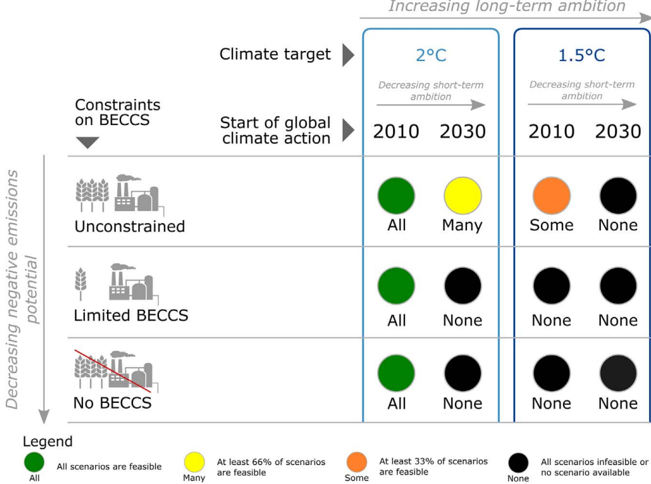
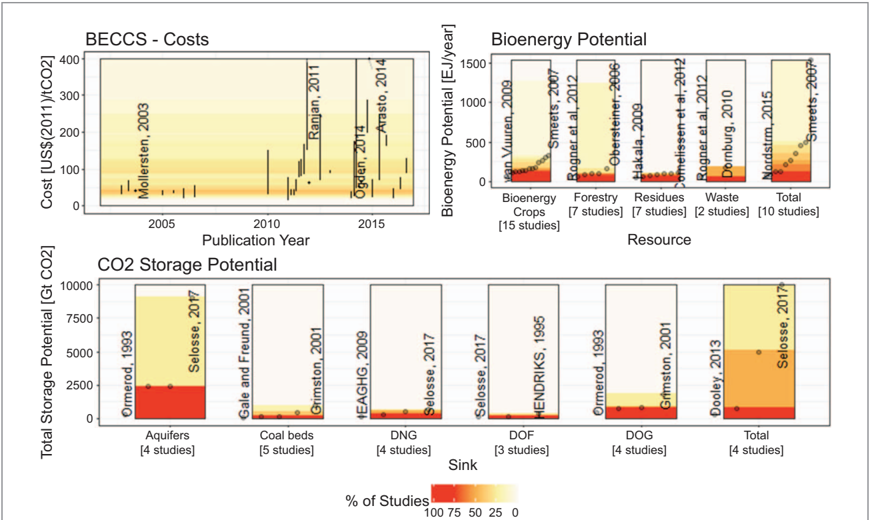
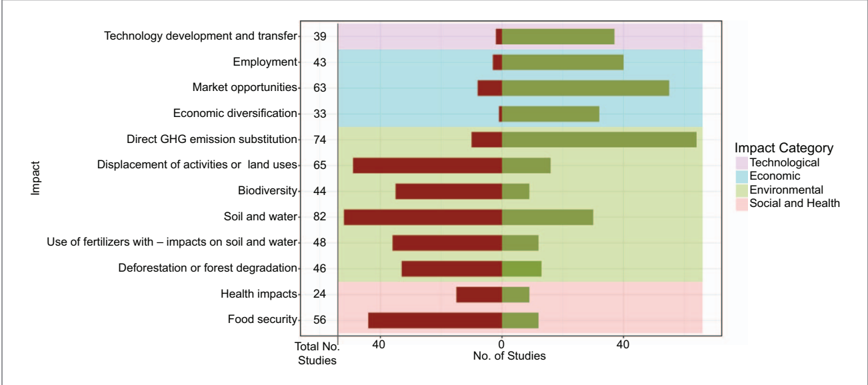
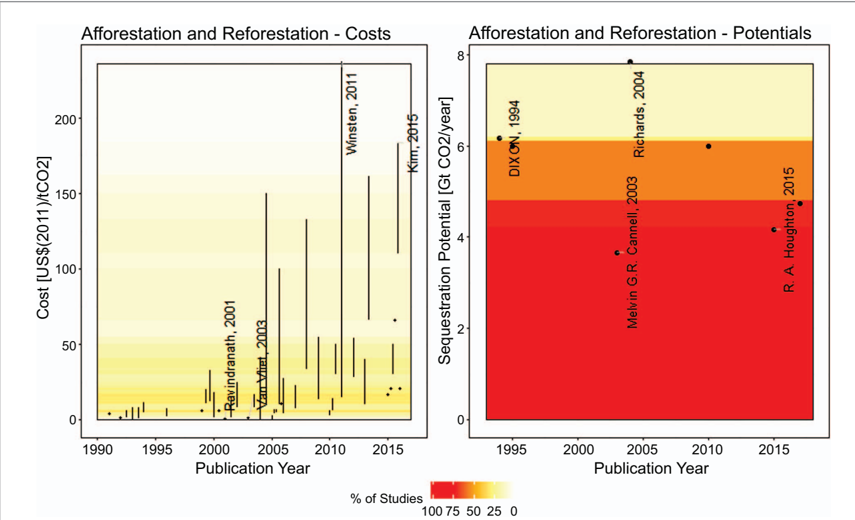
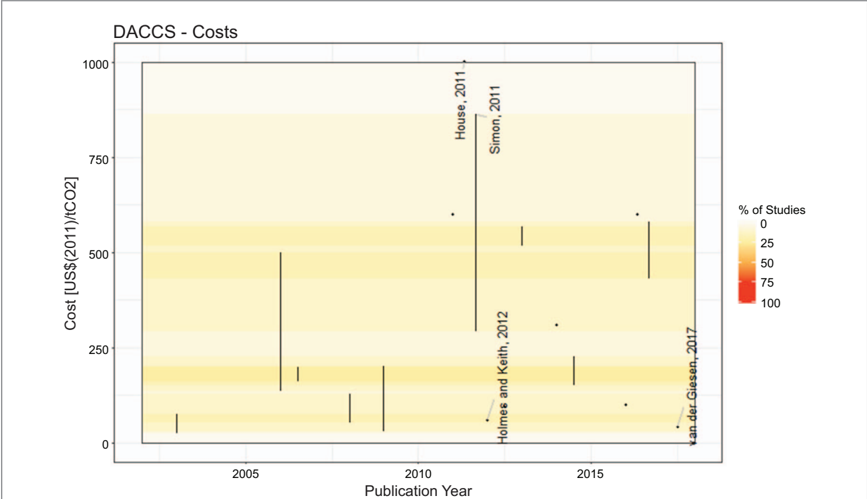
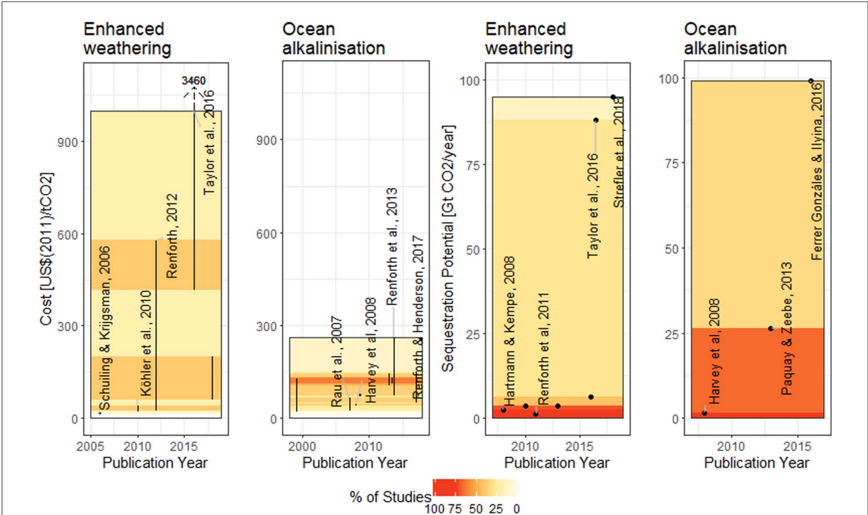
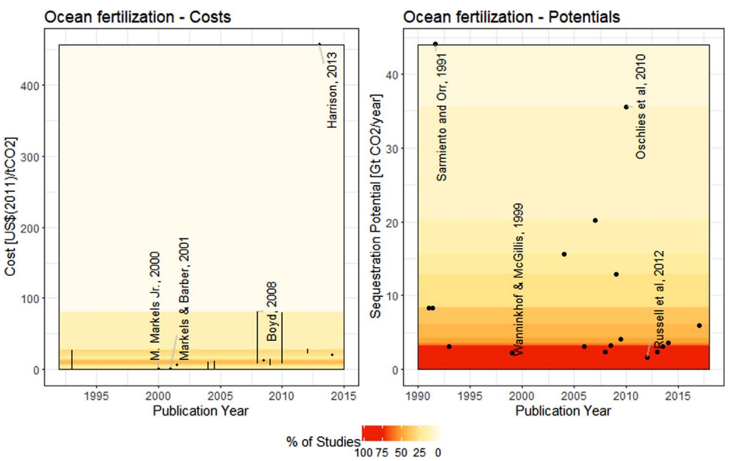
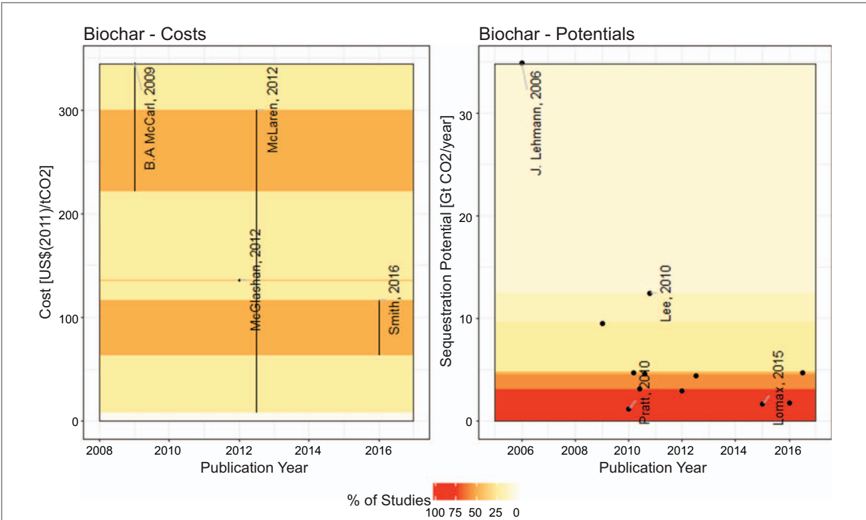
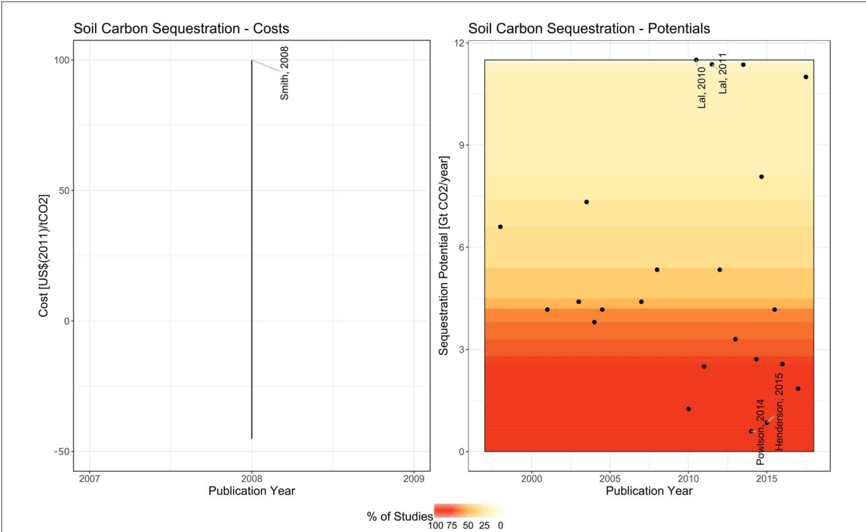
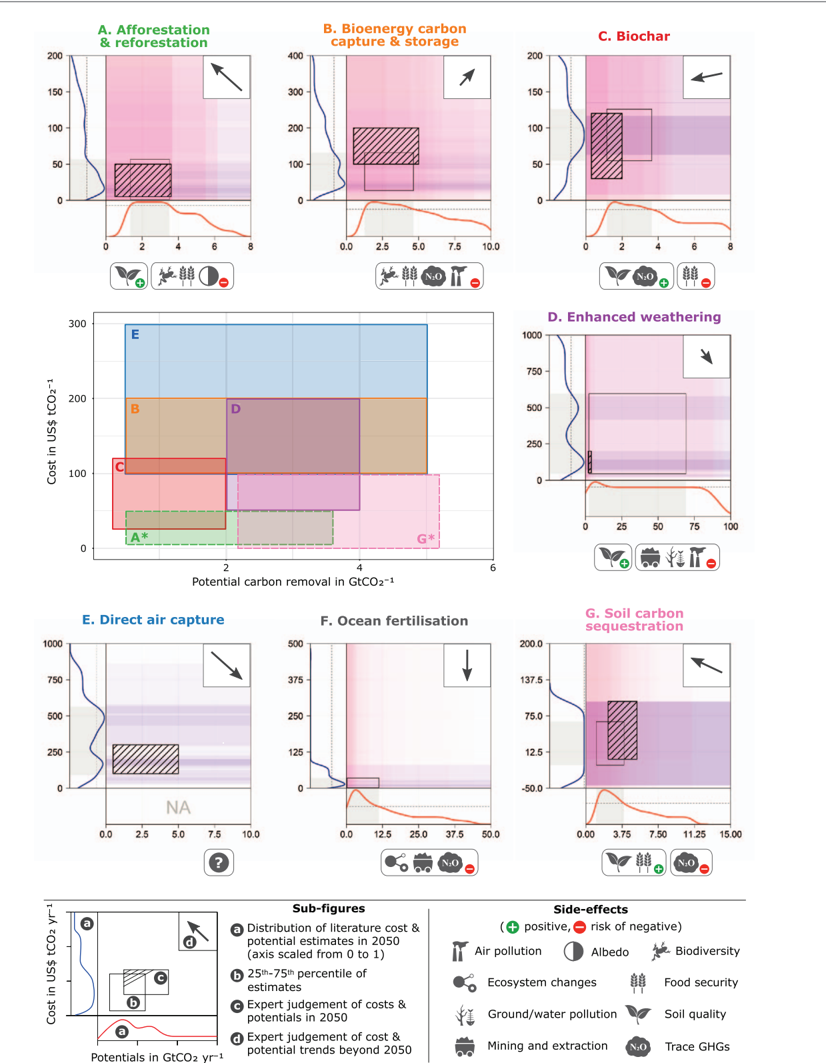
The most recent IPCC assessment has shown an important role for negative emissions technologies (NETs) in limiting global warming to 2 °C cost-effectively. However, a bottom-up, systematic, reproducible, and transparent literature assessment of the different options to remove CO 2 from the atmosphere is currently missing. In part 1 of this three-part review on NETs, we assemble a comprehensive set of the relevant literature so far published, focusing on seven technologies: bioenergy with carbon capture and storage (BECCS), afforestation and reforestation, direct air carbon capture and storage (DACCS), enhanced weathering, ocean fertilisation, biochar, and soil carbon sequestration. In this part, part 2 of the review, we present estimates of costs, potentials, and side-effects for these technologies, and qualify them with the authors' assessment. Part 3 reviews the innovation and scaling challenges that must be addressed to realise NETs deployment as a viable climate mitigation strategy. Based on a systematic review of the literature, our best estimates for sustainable global NET potentials in 2050 are 0.5–3.6 GtCO 2 yr −1 for afforestation and reforestation, 0.5–5 GtCO 2 yr −1 for BECCS, 0.5–2 GtCO 2 yr −1 for biochar, 2–4 GtCO 2 yr −1 for enhanced weathering, 0.5–5 GtCO 2 yr −1 for DACCS, and up to 5 GtCO 2 yr −1 for soil carbon sequestration. Costs vary widely across the technologies, as do their permanency and cumulative potentials beyond 2050. It is unlikely that a single NET will be able to sustainably meet the rates of carbon uptake described in integrated assessment pathways consistent with 1.5 °C of global warming.
Overview
The claims and statistics of this paper haven’t been checked yet.
Free: it reads the open-access text and checks the first 5 claims that cite a source we can check. Create a free account to check every claim.
Integrity signals
Registry
Cites
Statistics
Figures
Verification
Claims the paper makes
The claims and statistics of this paper haven’t been checked yet.
Free: it reads the open-access text and checks the first 5 claims that cite a source we can check. Create a free account to check every claim.
Claims other papers make about this one
Each is checked against this paper’s own text: does it say what the citing paper says it does?
The cited source doesn’t support the claim as written.
In the citing paper
“Previous reviews 18,28,[52][53][54] have shown that these pathways offer substantial CO 2 removal potential:”
From The technological and economic prospects for CO2 utilization and removal (2019) · cites this paper as [28]
Checked by a reasoning model — may be wrong.
Experimental — accuracy not yet measuredThe source backs part of the claim, not all of it — or backs it for a different population, condition or comparison.
In the citing paper
“Plausibly, all bioenergy that can be sourced sustainably (about 100 EJ 3,25 primary energy) could be allocated to BECCS, so that about 4.2-5.6Gt CO 2 per year could be sequestered (reflecting losses in energy and CO 2 in along different steps in the process).”
From The mutual dependence of negative emission technologies and energy systems (2019) · cites this paper as [3]
Experimental — accuracy not yet measuredThe source backs part of the claim, not all of it — or backs it for a different population, condition or comparison.
In the citing paper
“Removal costs are estimated at $5-$50/tCO 2 (Fuss et al. 2018).”
From Strategies for mitigation of climate change: a review (2020) · cites this paper as Fuss et al. 2018
Experimental — accuracy not yet measuredThe source backs part of the claim, not all of it — or backs it for a different population, condition or comparison.
In the citing paper
“Side effects of ocean fertilization that are discussed in the literature include ocean acidification, deep and mid-water oxygen decrease or depletion, increase in production of further greenhouse gases, unpredictable impact on food cycles, creation of toxic algal blooms as well as mixed effects on the seafloor and upper ocean ecosystems (Fuss et al. 2018;Williamson et al. 2012).”
From Strategies for mitigation of climate change: a review (2020) · cites this paper as Fuss et al. 2018
Experimental — accuracy not yet measuredThe source backs part of the claim, not all of it — or backs it for a different population, condition or comparison.
In the citing paper
“In the context of our CDR targets, ERW has a similar potential to that of other CDR strategies 23 estimated for 2050, including bio-energy with carbon capture and storage (BECCS), widely adopted in IPCC future scenarios (0.5-5 Gt CO2 yr -1 ), direct air carbon capture and storage (DAC) (0.5-5 Gt CO2 yr -1 ), biochar (0.5 to 2 Gt CO2 yr -1 ), soil organic carbon (SOC) sequestration (0.5-5 Gt CO2 yr”
From Potential for large-scale CO2 removal via enhanced rock weathering with croplands (2020) · cites this paper as [23]
Experimental — accuracy not yet measured
55 more claims about this paper
Create a free account to see every claim other papers make about this one.
Self-check
Percentages, sums and reported differences re-computed from the paper’s own numbers.
The self-check needs the paper’s full text.
Citations
Cites
Soil Carbon Sequestration Impacts on Global Climate Change and Food Security
Lal, R. (2004) · Science · doi:10.1126/science.1097396 · Cited by 8,376 · cited 6×
“Of the 22 articles (Batjes 1998, Benbi 2013, Conant 2011, Henderson et al 2015, Lal 2003b, 2003a, 2004a, 2004c, 2004b, 2010, 2011, 2013, Lassaletta and Aguilera 2015, Lorenz and Lal 2014, Powlson et al 2014, Salati et al 2010, Smith 2012, 2016, Sommer and Bossio 2014, Minasny et al 2017, Metting et…”
BackgroundInfluentialRiahi, K., van Vuuren, D. P., Kriegler, E., Edmonds, J., O’Neill, B. C., Fujimori, S., Bauer, N., Calvin, K., Dellink, R., Fricko, O., et al. (2017) · Global Environmental Change · doi:10.1016/j.gloenvcha.2016.05.009 · Cited by 6,607
Self-citationThe next generation of scenarios for climate change research and assessment
Moss, R. H., Edmonds, J. A., Hibbard, K. A., Manning, M. R., Rose, S. K., van Vuuren, D. P., Carter, T. R., Emori, S., Kainuma, M., Kram, T., et al. (2010) · Nature · doi:10.1038/nature08823 · Cited by 6,467
Brennan, L., & Owende, P. (2010) · Renewable and Sustainable Energy Reviews · doi:10.1016/j.rser.2009.10.009 · Cited by 4,894 · cited 2×
“24 Although achievable scales are not clear yet, there is also research on third-generation biofuels, derived from algal biomass (Brennan and Owende 2010) with the potential to enhance yields by improving microalgal biology through genetic or metabolic engineering (Tandon and Jin 2017).”
BackgroundCarbon capture and storage (CCS): the way forward
Bui, M., Adjiman, C. S., Bardow, A., Anthony, E. J., Boston, A., Brown, S., Fennell, P. S., Fuss, S., Galindo, A., Hackett, L. A., et al. (2018) · Energy & Environmental Science · doi:10.1039/c7ee02342a · Cited by 4,374
Self-citationGlobal effects of land use on local terrestrial biodiversity
Newbold, T., Hudson, L. N., Hill, S. L. L., Contu, S., Lysenko, I., Senior, R. A., Börger, L., Bennett, D. J., Choimes, A., Collen, B., et al. (2015) · Nature · doi:10.1038/nature14324 · Cited by 4,352
Soil carbon sequestration to mitigate climate change
Lal, R. (2004) · Geoderma · doi:10.1016/j.geoderma.2004.01.032 · Cited by 3,936 · cited 6×
“Of the 22 articles (Batjes 1998, Benbi 2013, Conant 2011, Henderson et al 2015, Lal 2003b, 2003a, 2004a, 2004c, 2004b, 2010, 2011, 2013, Lassaletta and Aguilera 2015, Lorenz and Lal 2014, Powlson et al 2014, Salati et al 2010, Smith 2012, 2016, Sommer and Bossio 2014, Minasny et al 2017, Metting et…”
BackgroundInfluentialGriscom, B. W., Adams, J., Ellis, P. W., Houghton, R. A., Lomax, G., Miteva, D. A., Schlesinger, W. H., Shoch, D., Siikamäki, J. V., Smith, P., et al. (2017) · Proceedings of the National Academy of Sciences · doi:10.1073/pnas.1710465114 · Cited by 3,481
Self-citationO’Neill, B. C., Kriegler, E., Ebi, K. L., Kemp-Benedict, E., Riahi, K., Rothman, D. S., van Ruijven, B. J., van Vuuren, D. P., Birkmann, J., Kok, K., et al. (2017) · Global Environmental Change · doi:10.1016/j.gloenvcha.2015.01.004 · Cited by 3,359
Irreversible climate change due to carbon dioxide emissions
Solomon, S., Plattner, G.-K., Knutti, R., & Friedlingstein, P. (2009) · Proceedings of the National Academy of Sciences · doi:10.1073/pnas.0812721106 · Cited by 3,217 · cited 1×
“…et al 2015, Riahi et al 2015, Eom et al 2015), temperature overshoot carries additional risks associated with higher levels of warming and the resulting impacts and climate feedbacks that could occur (van Vuuren et al 2013, Solomon et al 2009, Friedlingstein et al 2006, Clarke et al 2014).”
Background
Research works printed but not linked: 32
- Bruckner T ed Edenhofer E, 2014, Contribution of Working Group III to the Fifth Assessment Report of the Intergovernmental Panel on Climate Change
- Bui M, 2018, Energy Environ. Sci.
- Ciais P ed Stocker T F, 2013, Climate Change 2013: The Physical Science Basis. Contribution of Working Group I to the Fifth Assessment Report of the Intergovernmental Panel on Climate Change
- Clarke L E ed Edenhofer O, 2014, Clim. Change 2014 Mitig. Clim. Change Contrib. Work. Gr. III to Fifth Assess. Rep. Intergov. Panel Clim. Change, 413
- Coelho S T, 2012, Chapter 20—land and water: linkages to bioenergy, 1459
- Corathers L A, 2015, Earth
- d’Hotman D V, 1961, Int. Sugar J., 63, 363
- Dale V H, 2010, Biofuels: implications for Land Use and Biodiversity
- Díaz S, 2009, Biodiversity, Ecosystem Functioning, and Human Wellbeing
- Fuss S, 2017, Oxf. Res. Encycl. Clim. Sci., 1
- Gale J J, 2004, Geol. Belgica, 7, 99
- Haberl H ed Dewulf J, 2015, Sustainability Assessment of Renewables-Based Products, 1
- Hassani N, 2016, Pet. Res., 25, 4
- IEA GHG, 2005, Building the Cost Curves for CO
- IEA GHG, 1998, Enhanced Coal Bed Methane Recovery with CO
- IPCC ed Metz B, 2005, Carbon Dioxide Capture and Storage (SRCCS)
- IPCC ed Qin D, 2013, Contribution of Working Group I to the Fifth Assessment Report of the Intergovernmental Panel on Climate Change
- IPCC ed Edenhofer O, 2014, Contribution of Working Group III to the Fifth Assessment Report of the Intergovernmental Panel on Climate Change
- IPCC ed Pachauri R K, 2014, Contribution of Working Groups I, II and III to the Fifth Assessment Report of the Intergovernmental Panel on Climate Change
- Liu W W, 2016, Acta Ecol. Sin., 36, 2113
- Lopes A S, 1996, Better Crop. Int., 10, 10
- Magill B, 2017, Clim. Cent.
- Markels M, 2001, Poster Presentation for NETL Conference on Carbon Sequestration, 14
- 10.1088/1748-9326/aabf9 · doi:10.1088/1748-9326/aabf9
- Minx J, 2017, Environ. Res. Lett., 12
- National Academy of Sciences, 2015, Climate Intervention
- 53. Nkouathio D G, Wandji P, Bardintzeff J M, Tematio P, Dongmo A K and Tchoua F 2008 Utilisation des roches volcaniques pour la remineralisation des sols ferrallitiques des regions tropicales. Cas des pyroclastites basaltiques du graben de Tombel (Ligne volcanique du Cameroun) Bull. Soc. Vaudoise Sci. Nat. 91 1-14
- 122. Sedjo R A and Solomon A M 1991 Climate and forests Greenhouse Warming: Abatement and Adaptation (Resources for the Future)
- Strefler J, 2018, Environ. Res. Lett., 13
- Strefler J, 2018, Environ. Res. Lett., 13
- UNEP, 2017, The Emissions Gap Report 2017
- USDOE, 2014, Report
Cited by
Items 201–300 of 1,001
Burger, J., Nöhl, J., Seiler, J., Gabrielli, P., Oeuvray, P., Becattini, V., Reyes-Lúa, A., Riboldi, L., Sansavini, G., & Bardow, A. (2024) · International journal of greenhouse gas control · doi:10.1016/j.ijggc.2023.104039 · Cited by 99
Targeting carbon dioxide removal in the European Union
Geden, O., Peters, G. P., & Scott, V. (2018) · Climate Policy · doi:10.1080/14693062.2018.1536600 · Cited by 105
“…storage (BECCS), direct air capture and storage, soil carbon sequestration or afforestation/reforestation (European Academies Science Advisory Council, 2018; Fuss et al., 2018; Schäfer et al., 2015; Smith et al., 2016, 2017; The Royal Society & Royal Academy of Engineering, 2018; Williamson, 2016).”
BackgroundKeel, S. G., Anken, T., Büchi, L., Chervet, A., Fließbach, A., Flisch, R., Huguenin‐Elie, O., Mader, P. M., Mayer, J., Sinaj, S., et al. (2019) · Agriculture Ecosystems & Environment · doi:10.1016/j.agee.2019.106654 · Cited by 100
Workman, M. H. W., Dooley, K., Lomax, G., Maltby, J., & Darch, G. J. C. (2019) · Environmental Science & Policy · doi:10.1016/j.envsci.2019.10.002 · Cited by 97
Contested framings of greenhouse gas removal and its feasibility: Social and political dimensions
Waller, L., Rayner, T., Chilvers, J., Gough, C., Lorenzoni, I., Jordan, A., & Vaughan, N. E. (2020) · Wiley Interdisciplinary Reviews Climate Change · doi:10.1002/wcc.649 · Cited by 99
“In more instrumental understandings of IAMs, resource availability and carbon pricing are proposed as determining the limits for policy choices between competing GGR pathways (see discussions in Fuss et al., 2018; Otto et al., 2015).”
BackgroundObermeier, W. A., Nabel, J. E. M. S., Loughran, T. F., Hartung, K., Bastos, A., Havermann, F., Anthoni, P. M., Arneth, A., Goll, D. S., Lienert, S., et al. (2021) · Earth System Dynamics · doi:10.5194/esd-12-635-2021 · Cited by 109
IPCC emission scenarios: How did critiques affect their quality and relevance 1990–2022?
Pedersen, J. S. T., van Vuuren, D. P., Gupta, J., Santos, F. D., Edmonds, J., & Swart, R. J. (2022) · Global Environmental Change · doi:10.1016/j.gloenvcha.2022.102538 · Cited by 120
“The initial critiques led to a high-resolution database (i.e., population and GDP) developed by IPCC authors but independently of IPCC (CIESIN, 2002; Gaffin et al., 2004).”
BackgroundMethodMatsuo, Y., Endo, S., Nagatomi, Y., Shibata, Y., Komiyama, R., & Fujii, Y. (2020) · Applied Energy · doi:10.1016/j.apenergy.2019.113956 · Cited by 99
Deep CCS: Moving Beyond 90% Carbon Dioxide Capture
Dods, M. N., Kim, E. J., Long, J. R., & Weston, S. C. (2021) · Environmental Science & Technology · doi:10.1021/acs.est.0c07390 · Cited by 89
Kochanek, J., Soo, R. M., Martinez, C., Dakuidreketi, A., & Mudge, A. M. (2021) · Resources Conservation and Recycling · doi:10.1016/j.resconrec.2021.106109 · Cited by 102
Fuhrman, J., McJeon, H. C., Doney, S. C., Shobe, W., & Clarens, A. F. (2019) · Frontiers in Climate · doi:10.3389/fclim.2019.00011 · Cited by 99
“NETs present significant tradeoffs between biogeophysical or economic outcomes that have only recently begun to be studied (Smith et al., 2016; Fuss et al., 2018; Minx et al., 2018; Nemet et al., 2018).”
BackgroundCheng, F., Small, A. A., & Colosi, L. M. (2021) · Energy Conversion and Management · doi:10.1016/j.enconman.2021.114115 · Cited by 83
Sovacool, B. K. (2021) · Energy Strategy Reviews · doi:10.1016/j.esr.2021.100656 · Cited by 110
Bertram, C., Luderer, G., Popp, A., Minx, J. C., Lamb, W. F., Stevanović, M., Humpenöder, F., Giannousakis, A., & Kriegler, E. (2018) · Environmental Research Letters · doi:10.1088/1748-9326/aac3ec · Cited by 106
Self-citationShirizadeh, B., & Quirion, P. (2020) · Energy Economics · doi:10.1016/j.eneco.2020.105004 · Cited by 92
Bello, S., Galán‐Martín, Á., Feijóo, G., Moreira, M. T., & Guillén‐Gosálbez, G. (2020) · Applied Energy · doi:10.1016/j.apenergy.2020.115884 · Cited by 87
Confronting mitigation deterrence in low-carbon scenarios
Grant, N., Hawkes, A. D., Mittal, S., & Gambhir, A. (2021) · Environmental Research Letters · doi:10.1088/1748-9326/ac0749 · Cited by 100
An equitable redistribution of unburnable carbon
Pye, S., Bradley, S., Hughes, N., Price, J., Welsby, D., & Ekins, P. (2020) · Nature Communications · doi:10.1038/s41467-020-17679-3 · Cited by 94
Adun, H. H., Ampah, J. D., Bamisile, O., & Hu, Y. (2024) · Sustainable Production and Consumption · doi:10.1016/j.spc.2024.01.004 · Cited by 95
Don’t deploy negative emissions technologies without ethical analysis
Lenzi, D., Lamb, W. F., Hilaire, J., Kowarsch, M., & Minx, J. C. (2018) · Nature · doi:10.1038/d41586-018-06695-5 · Cited by 95
Self-citationThe policy implications of an uncertain carbon dioxide removal potential
Grant, N., Hawkes, A. D., Mittal, S., & Gambhir, A. (2021) · Joule · doi:10.1016/j.joule.2021.09.004 · Cited by 98
Trade-offs between Sustainable Development Goals in carbon capture and utilisation
Ioannou, I., Galán‐Martín, Á., Pérez‐Ramírez, J., & Guillén‐Gosálbez, G. (2022) · Energy & Environmental Science · doi:10.1039/d2ee01153k · Cited by 93
Negative-emissions hydrogen energy
Yan, J. (2018) · Nature Climate Change · doi:10.1038/s41558-018-0215-9 · Cited by 84
Hysteresis of the Earth system under positive and negative CO 2 emissions
Jeltsch‐Thömmes, A., Stocker, T. F., & Joos, F. (2020) · Environmental Research Letters · doi:10.1088/1748-9326/abc4af · Cited by 91
“We put aside all questions about feasibility, scalability, permanency, and direct costs or negative consequences of applying CDR technologies on global scales (Smith et al 2016, Fuss et al 2018).”
BackgroundSoil carbon sequestration potential in global croplands
Padarian, J., Minasny, B., McBratney, A. B., & Smith, P. (2022) · PeerJ · doi:10.7717/peerj.13740 · Cited by 95
“The released carbon diffuses into the atmosphere as carbon dioxide, making agriculture an important contributor to the increasing greenhouse gas emissions (IPCC, 2019).”
MethodSelf-citationBoehm, S., Jeffery, M. L., Levin, K., Hecke, J., Schumer, C., Fyson, C. L., Majid, A., Jaeger, J., Nilsson, A. E., Naimoli, S., et al. (2022) · doi:10.46830/wrirpt.22.00028 · Cited by 137
Lopez, G., Pourjamal, Y., & Breyer, C. (2025) · Renewable and Sustainable Energy Reviews · doi:10.1016/j.rser.2025.115371 · Cited by 95
Rodriguez, E., Lefvert, A., Fridahl, M., Grönkvist, S., Haikola, S., & Hansson, A. (2020) · Journal of Cleaner Production · doi:10.1016/j.jclepro.2020.124527 · Cited by 94
Combustion of Biomass in Fluidized Beds: A Review of Key Phenomena and Future Perspectives
Kwong, K. Y., & Marek, E. (2021) · Energy & Fuels · doi:10.1021/acs.energyfuels.1c01947 · Cited by 82
An overview of CO2 capture and utilization in energy models
Desport, L., & Selosse, S. (2022) · Resources Conservation and Recycling · doi:10.1016/j.resconrec.2021.106150 · Cited by 83
Definitions and implications of climate-neutral aviation
Brazzola, N., Patt, A., & Wohland, J. (2022) · Nature Climate Change · doi:10.1038/s41558-022-01404-7 · Cited by 102
The Value of BECCS in IAMs: a Review
Köberle, A. C. (2019) · Current Sustainable/Renewable Energy Reports · doi:10.1007/s40518-019-00142-3 · Cited by 98
Support for the Deployment of Climate Engineering: A Comparison of Ten Different Technologies
Jobin, M., & Siegrist, M. (2020) · Risk Analysis · doi:10.1111/risa.13462 · Cited by 90
“As multiple climate engineering technologies might be necessary to be deployed jointly in the future to tackle climate change (Fuss et al., 2018; Minx et al., 2018), it is relevant to better understand people’s reactions to the broad range of different climate engineering technologies.”
BackgroundInfluentialClimate change mitigation in cities: a systematic scoping of case studies
Sethi, M., Lamb, W. F., Minx, J. C., & Creutzig, F. (2020) · Environmental Research Letters · doi:10.1088/1748-9326/ab99ff · Cited by 96
Self-citationAchieving net zero greenhouse gas emissions critical to limit climate tipping risks
Möller, T., Högner, A., Schleussner, C., Bien, S., Kitzmann, N. H., Lamboll, R., Rogelj, J., Donges, J. F., Rockström, J., & Wunderling, N. (2024) · Nature Communications · doi:10.1038/s41467-024-49863-0 · Cited by 114
“Beyond these concerns, deploying CDR at scale will lead to substantial economic costs 65 and unavoidably involve debates on fairness and equity 68 .”
BackgroundSelf-citationClimate Policy Imbalance in the Energy Sector: Time to Focus on the Value of CO2 Utilization
Tcvetkov, P. (2021) · Energies · doi:10.3390/en14020411 · Cited by 82
Min, Y. J., Ganesan, A., Realff, M. J., & Jones, C. W. (2022) · ACS Applied Materials & Interfaces · doi:10.1021/acsami.2c11143 · Cited by 79
Long-term national climate strategies bet on forests and soils to reach net-zero
Smith, H. B., Vaughan, N. E., & Forster, J. (2022) · Communications Earth & Environment · doi:10.1038/s43247-022-00636-x · Cited by 87
Bracci, J., Sherwin, E. D., Boness, N. L., & Brandt, A. R. (2023) · Nature Communications · doi:10.1038/s41467-023-43137-x · Cited by 78
Creutzig, F., Callaghan, M., Ramakrishnan, A., Javaid, A., Niamir, L., Minx, J. C., Müller-Hansen, F., Sovacool, B. K., Afroz, Z., Andor, M., et al. (2021) · Environmental Research Letters · doi:10.1088/1748-9326/abd78b · Cited by 82
Self-citationEnergy system developments and investments in the decisive decade for the Paris Agreement goals
Bertram, C., Riahi, K., Hilaire, J., Bosetti, V., Drouet, L., Fricko, O., Malik, A., Nogueira, L. P. P., van der Zwaan, B., van Ruijven, B. J., et al. (2021) · Environmental Research Letters · doi:10.1088/1748-9326/ac09ae · Cited by 95
“current progress on key technologies (Smith et al. 2016; Fuss et al. 2018).”
Self-citationSoil organic carbon dynamics from agricultural management practices under climate change
Herzfeld, T., Heinke, J., Rolinski, S., & Müller, C. (2021) · Earth System Dynamics · doi:10.5194/esd-12-1037-2021 · Cited by 98
Possibility for strong northern hemisphere high-latitude cooling under negative emissions
Schwinger, J., Asaadi, A., Goris, N., & Lee, H. (2022) · Nature Communications · doi:10.1038/s41467-022-28573-5 · Cited by 87
Change, I. P. O. C. (2022) · Cambridge University Press eBooks · doi:10.1017/9781009157988.008 · Cited by 84
Techno-economic competitiveness of renewable fuel alternatives in the marine sector
Mukherjee, A., Bruijnincx, P. C. A., & Junginger, M. (2022) · Renewable and Sustainable Energy Reviews · doi:10.1016/j.rser.2022.113127 · Cited by 93
Direct ocean capture: the emergence of electrochemical processes for oceanic carbon removal
Aleta, P., Refaie, A., Afshari, M., Hassan, A. H., & Rahimi, M. (2023) · Energy & Environmental Science · doi:10.1039/d3ee01471a · Cited by 86
Atmospheric alchemy: The energy and cost dynamics of direct air carbon capture
Ozkan, M. (2024) · MRS Energy & Sustainability · doi:10.1557/s43581-024-00091-5 · Cited by 104
Fight for carbon neutrality with state-of-the-art negative carbon emission technologies
Fu, J., Li, P., Lin, Y., Du, H., Liu, H., Zhu, W., & Ren, H. (2022) · Eco-Environment & Health · doi:10.1016/j.eehl.2022.11.005 · Cited by 84
“…from a few dollars to hundreds of dollars per ton of CO 2 for each type of negative carbon emission technology (e.g., USD 45 – 100/t CO 2 for soil carbon sequestration and USD 100 – 300/t CO 2 for carbon capture), depending on the facilities, energy, raw materials and CO 2 concentration [14,19,78].”
BackgroundMethodCointe, B., & Guillemot, H. (2023) · Wiley Interdisciplinary Reviews Climate Change · doi:10.1002/wcc.824 · Cited by 91
“In the months and years following the release of AR5, many articles and reports have been published on CDRs, analyzing their potential, limitations and risks (Fuss et al., 2018).”
BackgroundCarbon Capture and Storage: Application in the Oil and Gas Industry
Yasemi, S., Khalili, Y., Sanati, A. M., & Bagheri, M. (2023) · Sustainability · doi:10.3390/su151914486 · Cited by 97
Koytsoumpa, E. I., Magiri-Skouloudi, D., Karellas, S., & Kakaras, E. C. (2021) · Renewable and Sustainable Energy Reviews · doi:10.1016/j.rser.2021.111641 · Cited by 90
Learning from the Climate Change Debate to Avoid Polarisation on Negative Emissions
Colvin, R. M., Kemp, L., Talberg, A., de Castella, C., Downie, C., Friel, S., Grant, W. J., Howden, M. S., Jotzo, F., Markham, F., et al. (2019) · Environmental Communication · doi:10.1080/17524032.2019.1630463 · Cited by 94
“Most risks, trade-offs, and opportunities are specific to individual negative emissions technologies (Fuss et al., 2018), but there are broader concerns.”
BackgroundTeske, S., Pregger, T., Simon, S., Naegler, T., Pagenkopf, J., Deniz, Ö., van den Adel, B., Dooley, K., & Meinshausen, M. A. (2021) · Energies · doi:10.3390/en14082103 · Cited by 84
“The cost for sequestration with BECCS is approximately USD 100–200 per tonne CO2 [33], and it has a limited mitigation potential of 1 Gt CO2 per year [34].”
BackgroundCurrent investigations on global N2O emissions and reductions: Prospect and outlook
Feng, R., & Li, Z. (2023) · Environmental Pollution · doi:10.1016/j.envpol.2023.122664 · Cited by 79
Eufrasio, R. M., Kantzas, E. P., Edwards, N. R., Holden, P. B., Pollitt, H., Mercure, J.-F., Koh, S. C. L., & Beerling, D. J. (2022) · Communications Earth & Environment · doi:10.1038/s43247-022-00436-3 · Cited by 92
Climate policy for a net-zero future: ten recommendations for Direct Air Capture
Sovacool, B. K., Baum, C. M., Low, S., Roberts, C., & Steinhauser, J. (2022) · Environmental Research Letters · doi:10.1088/1748-9326/ac77a4 · Cited by 83
“…air capture plants (Matter et al 2016, Kelleway et al 2017, Bertram et al 2021, Budinis 2021, Burke et al 2021, UNESCO 2021), none are currently deployed at the scale needed to reliably remove multiple gigatons that will likely be required to mitigate climate change (Fuss et al 2018, Budinis 2021).”
BackgroundInfluentialTerlouw, T., Pokras, D., Becattini, V., & Mazzotti, M. (2024) · Environmental Science & Technology · doi:10.1021/acs.est.3c10041 · Cited by 78
Lozano, E. M., Pedersen, T. H., & Rosendahl, L. A. (2020) · Applied Energy · doi:10.1016/j.apenergy.2020.115753 · Cited by 70
“Among these, the combined use of biomass with carbon capture and storage (BECCS) has shown the highest CO2 reduction potential in Integrated Assessment Models (IAMs), being identified as a key concept to achieve climate change mitigation [1,2].”
BackgroundResultInfluentialStabilisation of soil organic matter with rock dust partially counteracted by plants
Buss, W., Hasemer, H., Ferguson, S., & Borevitz, J. (2023) · Global Change Biology · doi:10.1111/gcb.17052 · Cited by 92
Eight Archetypes of Sustainable Development Goal (SDG) Synergies and Trade‐Offs
Moallemi, E. A., Hosseini, S. H., Eker, S., Gao, L., Bertone, E., Szetey, K., & Bryan, B. A. (2022) · Earth s Future · doi:10.1029/2022ef002873 · Cited by 90
A review of measurement for quantification of carbon dioxide removal by enhanced weathering in soil
Clarkson, M. O., Larkin, C. S., Swoboda, P., Reershemius, T., Suhrhoff, T. J., Maesano, C. N., & Campbell, J. S. (2024) · Frontiers in Climate · doi:10.3389/fclim.2024.1345224 · Cited by 94
“86 87 Based on generalist model predictions, EW has a global CDR potential in the range of 0.5–4 Gt CO 2 per year (Fuss et al., 2018; Beerling et al., 2020; IPCC, 2022), which can be optimized through the choice of feedstock and weathering environment (Beerling et al., 2020; Cipolla et al., 2021,…”
BackgroundInfluentialPromises and perils of the Paris Agreement
Lawrence, M. G., & Schäfer, S. (2019) · Science · doi:10.1126/science.aaw4602 · Cited by 81
Annex III: Scenarios and Modelling Methods
Change, I. P. O. C. (2023) · Cambridge University Press eBooks · doi:10.1017/9781009157926.022 · Cited by 126
Navigating Potential Hype and Opportunity in Governing Marine Carbon Removal
Boettcher, M., Brent, K. A., Buck, H. J., Low, S., McLaren, D. P., & Mengis, N. (2021) · Frontiers in Climate · doi:10.3389/fclim.2021.664456 · Cited by 84
“In reality, applications are less effective, need more space, and are combined with enhanced oil recovery (EOR) (GCCS, 2017; Fuss et al., 2018).”
BackgroundQi, J., Liu, J., Chen, G., Yao, J., Yan, B., Yi, W., Zao, H., & Xu, S. (2023) · Energy Conversion and Management · doi:10.1016/j.enconman.2023.117562 · Cited by 67
Vanderklift, M. A., Herr, D., Lovelock, C. E., Murdiyarso, D., Raw, J. L., & Steven, A. (2022) · Frontiers in Marine Science · doi:10.3389/fmars.2022.872064 · Cited by 84
“Effective protection, management, and restoration of vegetated ecosystems on land and in the ocean can help reduce net emissions of greenhouse gases (GHGs) to limit global warming (Howard et al., 2017; Fuss et al., 2018).”
BackgroundSoil core study indicates limited CO2 removal by enhanced weathering in dry croplands in the UK
Buckingham, F., Henderson, G. M., Holdship, P., & Renforth, P. (2022) · Applied Geochemistry · doi:10.1016/j.apgeochem.2022.105482 · Cited by 74
Deployment of clean energy technologies towards carbon neutrality under resource constraints
Guo, J., Zhu, K., & Cheng, Y. (2024) · Energy · doi:10.1016/j.energy.2024.131012 · Cited by 73
Transforming waste to wealth: Harnessing carbon dioxide for sustainable solutions
Alli, Y. A., Bamisaye, A., Bamidele, M. O., Etafo, N. O., Chkirida, S., Lawal, A., Hammed, V. O., Akinfenwa, A. S., Hanson, E., Nwakile, C., et al. (2024) · Results in Surfaces and Interfaces · doi:10.1016/j.rsurfi.2024.100321 · Cited by 103
Güleç, F., & Okolie, J. A. (2023) · Environmental Chemistry Letters · doi:10.1007/s10311-023-01656-5 · Cited by 78
Multimodel Analysis of Future Land Use and Climate Change Impacts on Ecosystem Functioning
Krause, A., Haverd, V., Poulter, B., Anthoni, P. M., Quesada, B., Rammig, A., & Arneth, A. (2019) · Earth s Future · doi:10.1029/2018ef001123 · Cited by 71
“, 2017), depending on a wide range of assumptions including population growth, diet shifts, yield changes, the necessity and type of land‐based CC mitigation, and the valuation of the manifold synergies and trade‐offs between services associated with different forms of land use (e.g., Alexander et al., 2016; Doelman e…”
BackgroundLand-based implications of early climate actions without global net-negative emissions
Hasegawa, T., Fujimori, S., Frank, S., Humpenöder, F., Bertram, C., Després, J., Drouet, L., Emmerling, J., Gusti, M. I., Harmsen, M. J. H. M., et al. (2021) · Nature Sustainability · doi:10.1038/s41893-021-00772-w · Cited by 77
Environmental performance of different sorbents used for direct air capture
Leonzio, G., Mwabonje, O. N., Fennell, P. S., & Shah, N. (2022) · Sustainable Production and Consumption · doi:10.1016/j.spc.2022.04.004 · Cited by 83
Ulpiani, G., Vetters, N., Melica, G., & Bertoldi, P. (2023) · Sustainable Cities and Society · doi:10.1016/j.scs.2023.104572 · Cited by 87
The quest for sustainable forest bioenergy: win-win solutions for climate and biodiversity
Giuntoli, J., Barredo, J. I., Avitabile, V., Camia, A., Cazzaniga, N. E., Grassi, G., Jasinevičius, G., Jonsson, R., Luisa, M., Robert, N., et al. (2022) · Renewable and Sustainable Energy Reviews · doi:10.1016/j.rser.2022.112180 · Cited by 77
Lopez, G., Aghahosseini, A., Child, M., Khalili, S., Fasihi, M., Bogdanov, D., & Breyer, C. (2022) · Renewable and Sustainable Energy Reviews · doi:10.1016/j.rser.2022.112452 · Cited by 70
River chemistry constraints on the carbon capture potential of surficial enhanced rock weathering
Zhang, S., Planavsky, N. J., Katchinoff, J. A. R., Raymond, P. A., Kanzaki, Y., Reershemius, T., & Reinhard, C. T. (2022) · Limnology and Oceanography · doi:10.1002/lno.12244 · Cited by 78
“However, all currently proposed CDR techniques are subject to signi fi cant constraints imposed by available land, fi nancial cost, environmental impact, and conceptual or technological maturity (Fuss et al. 2018).”
BackgroundAdvancing frontiers in CO2 capture: The renaissance of biomass-derived carbon materials
Umar, M., Yusuf, B. O., Aliyu, M., Hussain, I., Alhassan, A. M., Awad, M. M., Taialla, O. A., Ali, B., Alhooshani, K. R., & Ganiyu, S. A. (2024) · Coordination Chemistry Reviews · doi:10.1016/j.ccr.2024.216380 · Cited by 69
Natural Climate Solutions for China: The Last Mile to Carbon Neutrality
Qin, Z., Deng, X., Griscom, B. W., Huang, Y., Li, T., Smith, P., Yuan, W., & Zhang, W. J. (2021) · Advances in Atmospheric Sciences · doi:10.1007/s00376-021-1031-0 · Cited by 70
Self-citationForest-based climate change mitigation and adaptation in Europe
Verkerk, P. J., Delacote, P., Hurmekoski, E., Kunttu, J., Matthews, R., Mäkipää, R., Mosley, F., Perugini, L., Reyer, C., Roe, S., et al. (2022) · From science to policy · doi:10.36333/fs14 · Cited by 118
Early systems change necessary for catalyzing long-term sustainability in a post-2030 agenda
Moallemi, E. A., Eker, S., Gao, L., Hadjikakou, M., Liu, Q., Kwakkel, J. H., Reed, P. M., Obersteiner, M. H., Guo, Z., & Bryan, B. A. (2022) · One Earth · doi:10.1016/j.oneear.2022.06.003 · Cited by 88
“53,75 Even given their feasibility in a context,some of thenegativeemissionstechnologiescancompetewithagricultural production and put food security and biodiversity at risk.”
Tokarska, K. B., Zickfeld, K., & Rogelj, J. (2019) · Earth s Future · doi:10.1029/2019ef001312 · Cited by 74
“(For a comprehensive summary of various CDR technologies and their feasibility see Minx et al., 2018; Fuss et al., 2018).”
Self-citationNegative Emissions: Priorities for Research and Policy Design
Fajardy, M., Patrizio, P., Daggash, H. A., & Dowell, N. M. (2019) · Frontiers in Climate · doi:10.3389/fclim.2019.00006 · Cited by 71
“5–5 GtCO2 for DACCS, and 2– 4 GtCO2 for EW (Fuss et al., 2018).”
BackgroundInfluentialDu, Y., Gao, T., Rochelle, G. T., & Bhown, A. S. (2021) · International journal of greenhouse gas control · doi:10.1016/j.ijggc.2021.103473 · Cited by 75
Technological Options for Direct Air Capture: A Comparative Process Engineering Review
Wu, X., Krishnamoorti, R., & Bollini, P. (2022) · Annual Review of Chemical and Biomolecular Engineering · doi:10.1146/annurev-chembioeng-102121-065047 · Cited by 68
Leveraging the bioeconomy for carbon drawdown
Dees, J., Sagues, W. J., Woods, E., Goldstein, H. M., Simon, A. J., & Sanchez, D. L. (2023) · Green Chemistry · doi:10.1039/d2gc02483g · Cited by 73
“15,16 Potential CO 2 removal capacities in the year 2050 were estimated to be 0.5 – 5 GtCO 2 per year for BECCS, 0.5 – 3.6 GtCO 2 per year for a ff oresta-tion and reforestation, 0.5 – 5 GtCO 2 per year for DACCS, 2 – 4 GtCO 2 per year for enhanced weathering, 0.5 – 2 GtCO 2 per year for biochar,…”
InfluentialSaharudin, D. M., Jeswani, H. K., & Azapagic, A. (2024) · The Science of The Total Environment · doi:10.1016/j.scitotenv.2024.170266 · Cited by 77
EMF 35 JMIP study for Japan’s long-term climate and energy policy: scenario designs and key findings
Sugiyama, M., Fujimori, S., Wada, K., Oshiro, K., Kato, E., Komiyama, R., Herran, D. S., Matsuo, Y., Shiraki, H., & Ju, Y. (2021) · Sustainability Science · doi:10.1007/s11625-021-00913-2 · Cited by 68
Reviewing the sociotechnical dynamics of carbon removal
Sovacool, B. K., Baum, C. M., & Low, S. (2023) · Joule · doi:10.1016/j.joule.2022.11.008 · Cited by 73
Diversity of biomass usage pathways to achieve emissions targets in the European energy system
Millinger, M., Hedenus, F., Zeyen, E., Neumann, F., Reichenberg, L., & Berndes, G. (2025) · Nature Energy · doi:10.1038/s41560-024-01693-6 · Cited by 158
Butnar, I., Li, P., Strachan, N. D., Portugal‐Pereira, J., Gambhir, A., & Smith, P. (2020) · Environmental Research Letters · doi:10.1088/1748-9326/ab5c3e · Cited by 76
“Based on a systematic review of the literature and on expert judgement, Fuss et al (2018) estimates the cost of BECCS in 2050 to be in the range of 100–200 $/t CO2.”
BackgroundMethodInfluentialSelf-citationThe BECCS Implementation Gap–A Swedish Case Study
Fuss, S., & Johnsson, F. (2021) · Frontiers in Energy Research · doi:10.3389/fenrg.2020.553400 · Cited by 58
Self-citationMillinger, M., Reichenberg, L., Hedenus, F., Berndes, G., Zeyen, E., & Brown, T. (2022) · Applied Energy · doi:10.1016/j.apenergy.2022.120016 · Cited by 82
Prospects for carbon-negative biomanufacturing
Scown, C. D. (2022) · Trends in biotechnology · doi:10.1016/j.tibtech.2022.09.004 · Cited by 61
Can arbuscular mycorrhizal fungi speed up carbon sequestration by enhanced weathering?
Verbruggen, E., Struyf, E., & Vicca, S. (2021) · Plants People Planet · doi:10.1002/ppp3.10179 · Cited by 71
Capturing a soil carbon economy
Keenor, S. G., Rodrigues, A. F., Mao, L., Latawiec, A. E., Harwood, A. R., & Reid, B. J. (2021) · Royal Society Open Science · doi:10.1098/rsos.202305 · Cited by 71
Sovacool, B. K., Baum, C. M., & Low, S. (2022) · Risk Analysis · doi:10.1111/risa.13932 · Cited by 67
“…pathways, which highlights in particular that the deployment potential of individual options cannot be additively combined and that scenarios deploying portfolios of multiple options tend to show decreasing rates of diffusion the more options are added together (Fuss et al., 2018).”
BackgroundThe Introduction of Sustainable Aviation Fuels—A Discussion of Challenges, Options and Alternatives
Grimme, W. G. (2023) · Aerospace · doi:10.3390/aerospace10030218 · Cited by 80
“Optimistic scenarios assume that the capturing CO 2 from the ambient air and storing it safely will cost less than USD 140 US/t [62], although the span of estimations is high and ranges up to USD 1000/t.”
Mullen, D., Herraiz, L., Gibbins, J., & Lucquiaud, M. (2023) · International journal of greenhouse gas control · doi:10.1016/j.ijggc.2023.103904 · Cited by 64
“Since DACCS has a higher reported cost than most other CDR technologies (Fuss et al., 2018), this also sets a cap on the premium for permanently compensating for indirect emissions in the hydrogen production chain.”
Eco-CCUS: A cost-effective pathway towards carbon neutrality in China
Li, M., He, N., Xu, L., Peng, C. H., Chen, H., & Yu, G. (2023) · Renewable and Sustainable Energy Reviews · doi:10.1016/j.rser.2023.113512 · Cited by 60
Metadata
- Authors
- Fuss, S., Lamb, W. F., Callaghan, M. W., Hilaire, J., Creutzig, F., Amann, T., Beringer, T., de Oliveira Garcia, W., Hartmann, J., Khanna, T., Luderer, G., Nemet, G. F., Rogelj, J., Smith, P., Vicente, J. L. V., Wilcox, J., del Mar Zamora Dominguez, M., & Minx, J. C.
- Affiliations
- Mercator Research Institute on Global Commons and Climate Change (DE)
- University of Leeds (GB)
- Universität Hamburg (DE)
- Potsdam Institute for Climate Impact Research (DE)
- University of Wisconsin–Madison (US)
- International Institute for Applied Systems Analysis (AT)
- University of Aberdeen (GB)
- Colorado School of Mines (US)
- Corresponding author
- Fuss, Sabine
- ORCID
- Venue
- Environmental Research Letters
- Publisher
- IOP Publishing
- Published
- 2018-05-21
- Volume
- 13
- Issue
- 6
- Pages
- 063002
- ISSN
- 1748-9326 (ISSN-L)
- OpenAlex
- W2804406438
- Semantic Scholar
- ca2b06bf3d1bd787e7941d46ef0e673b8e288399
- Cited by
- 1,525
- References
- 402
- Citations by year
- 2026: 128 · 2025: 225 · 2024: 231 · 2023: 262 · 2022: 264 · 2021: 200 · 2020: 117 · 2019: 84 · 2018: 13
- FWCI
- 66.25
- Type
- journal article
- Language
- en
- Open access
- gold
- doi.org
- Licence
- cc-by
- iopscience.iop.org/info/page/text-and-data-mining (tdm, 1 d)
- creativecommons.org/licenses/by/3.0/ (vor, 1 d)
- Locations
- Environmental Research Letters (publishedVersion, cc-by)
- White Rose Research Online (University of Leeds, The University of Sheffield, University of York) (acceptedVersion)
- Aberdeen University Research Archive (Aberdeen University) (submittedVersion)
- DOAJ (DOAJ: Directory of Open Access Journals) (submittedVersion)
- Publication Database PIK (Potsdam Institute for Climate Impact Research (PIK)) (submittedVersion, other-oa)
- Spiral (Imperial College London) (submittedVersion, cc-by)
- Repository for Publications and Research Data (ETH Zurich) (submittedVersion, cc-by)
- ETH Zürich Research Collection (cc-by)
- Funders
- Bundesministerium für Bildung und Forschung (01LS1610B, 03EK3046B)
- UK Energy Research Centre (UKERC/FFR2/3)
- Deutsche Forschungsgemeinschaft (SSP-1689)
- Natural Environment Research Council (NE/P019455/1, NE/P019900/1)
- Topics
- Physical Sciences › Chemical Engineering › Filtration and Separation › Carbon Dioxide Capture Technologies
- Social Sciences › Economics, Econometrics and Finance › Economics and Econometrics › Climate Change Policy and Economics
- Physical Sciences › Environmental Science › Global and Planetary Change › Climate Change and Geoengineering
- Keywords
- negative emissions technologies, bioenergy with carbon capture and storage, afforestation and reforestation, direct air capture, enhanced weathering, biochar, soil carbon sequestration, climate change mitigation, 2°C target, 1.5°C target
About these checks
Registry, retraction, Cites and statistics results are computed, not judged, with one exception: a printed reference that no index lists is read once by a model before it counts as a citation error. Claims are extracted by a model and kept only when their quote appears verbatim in the text; each cited source is then checked, with a model’s help, for whether it says what the claim relies on. Those verdicts can be wrong — read the claim’s quote and the cited source before relying on one.
Statistics and arithmetic are recomputed, not judged.
Confidence bands are shown only for fields calibrated on our annotated test set. None is calibrated yet, so no band is shown.
What counts as a claim ›How we measure confidence ›How we check this ›
Are you an author, or do you see a problem with this page? Request a review
Data sources
Bibliographic data: Semantic Scholar, OpenAlex, Crossref.
Contains information from the Semantic Scholar Academic Graph Datasets, made available under the ODC Attribution License (ODC-BY 1.0).
Semantic Scholar’s data is described in: Kinney, R., et al. (2023). The Semantic Scholar Open Data Platform. arXiv:2301.10140.
