

Negative emissions—Part 2: Costs, potentials and side effects
Open accessThe DOI matches its Crossref record; 399 of the 402 references it cites were found in a registry or an index.
Abstract
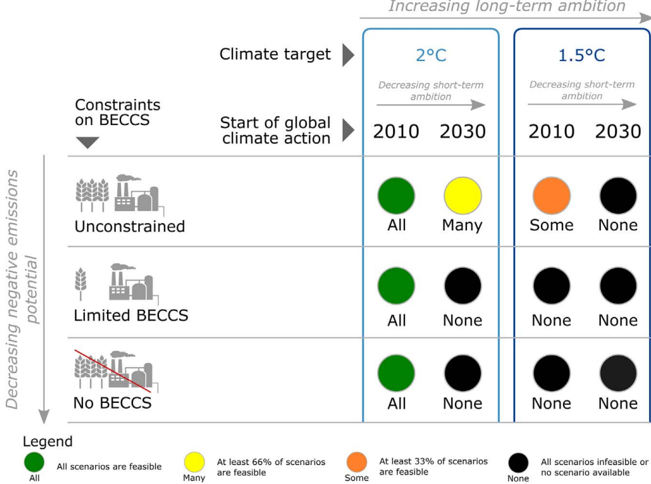
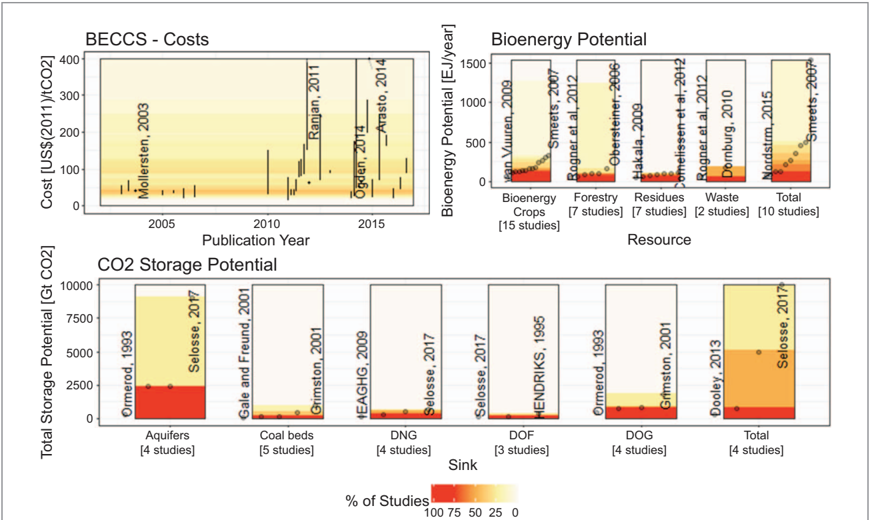
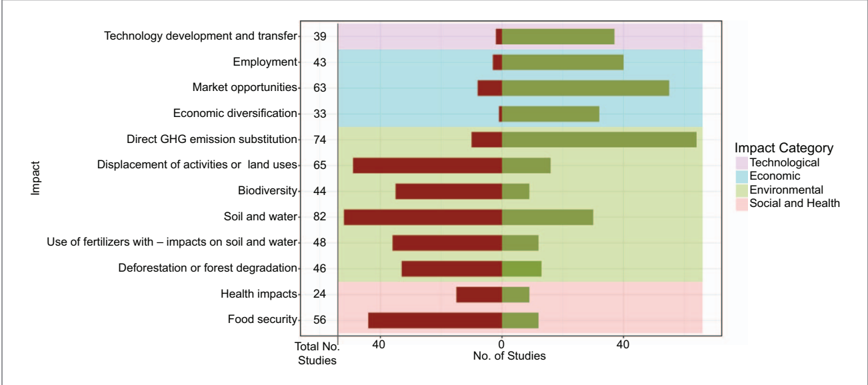
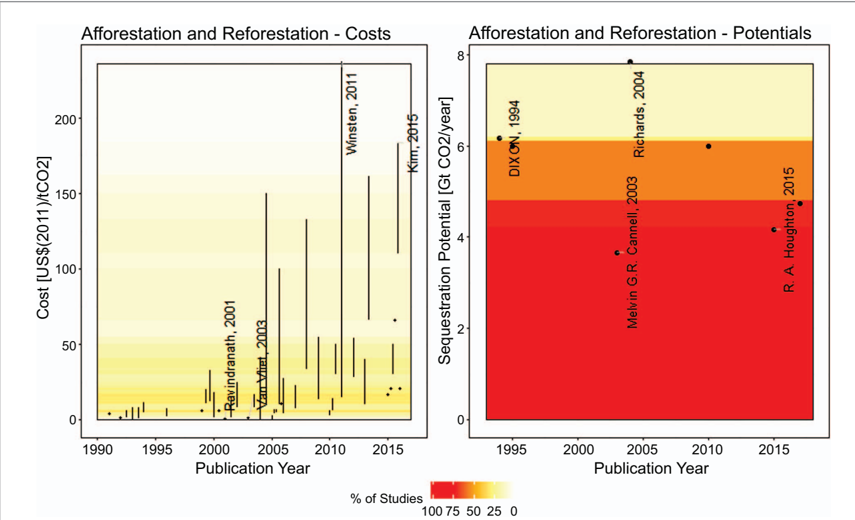
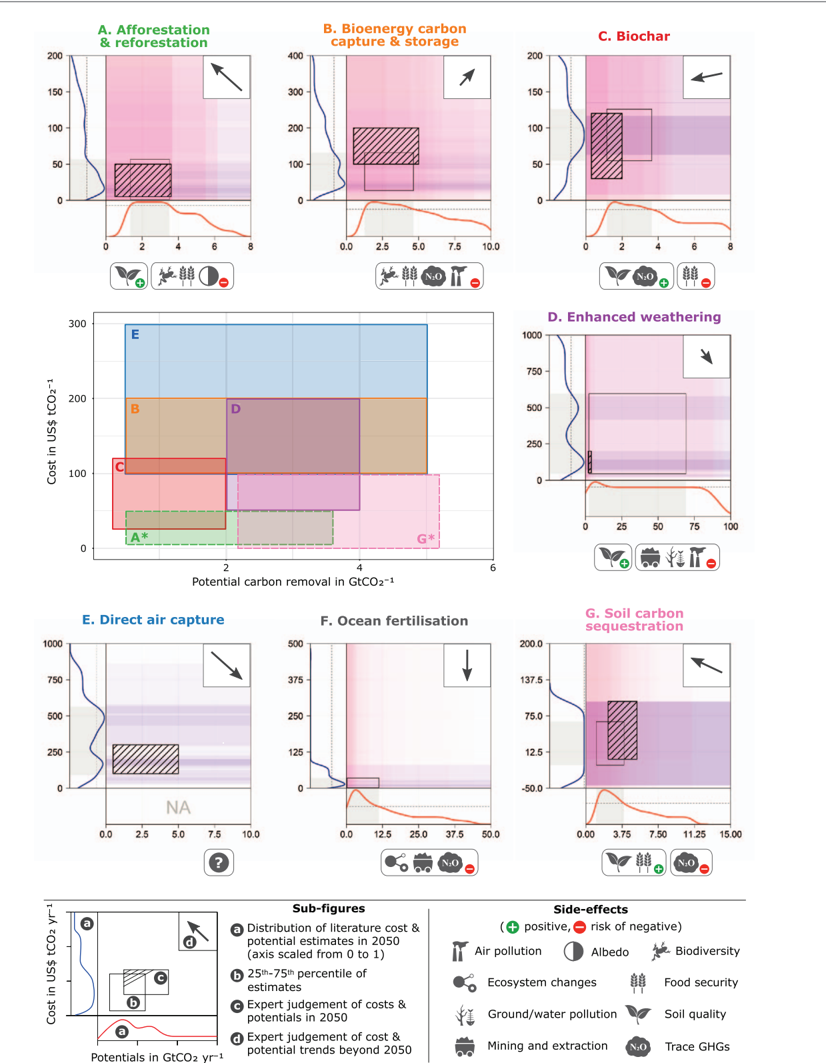
The most recent IPCC assessment has shown an important role for negative emissions technologies (NETs) in limiting global warming to 2 °C cost-effectively. However, a bottom-up, systematic, reproducible, and transparent literature assessment of the different options to remove CO 2 from the atmosphere is currently missing. In part 1 of this three-part review on NETs, we assemble a comprehensive set of the relevant literature so far published, focusing on seven technologies: bioenergy with carbon capture and storage (BECCS), afforestation and reforestation, direct air carbon capture and storage (DACCS), enhanced weathering, ocean fertilisation, biochar, and soil carbon sequestration. In this part, part 2 of the review, we present estimates of costs, potentials, and side-effects for these technologies, and qualify them with the authors' assessment. Part 3 reviews the innovation and scaling challenges that must be addressed to realise NETs deployment as a viable climate mitigation strategy. Based on a systematic review of the literature, our best estimates for sustainable global NET potentials in 2050 are 0.5–3.6 GtCO 2 yr −1 for afforestation and reforestation, 0.5–5 GtCO 2 yr −1 for BECCS, 0.5–2 GtCO 2 yr −1 for biochar, 2–4 GtCO 2 yr −1 for enhanced weathering, 0.5–5 GtCO 2 yr −1 for DACCS, and up to 5 GtCO 2 yr −1 for soil carbon sequestration. Costs vary widely across the technologies, as do their permanency and cumulative potentials beyond 2050. It is unlikely that a single NET will be able to sustainably meet the rates of carbon uptake described in integrated assessment pathways consistent with 1.5 °C of global warming.
Overview
The claims and statistics of this paper haven’t been checked yet.
Free: it reads the open-access text and checks the first 5 claims that cite a source we can check. Create a free account to check every claim.
Integrity signals
Registry
Cites
Statistics
Figures
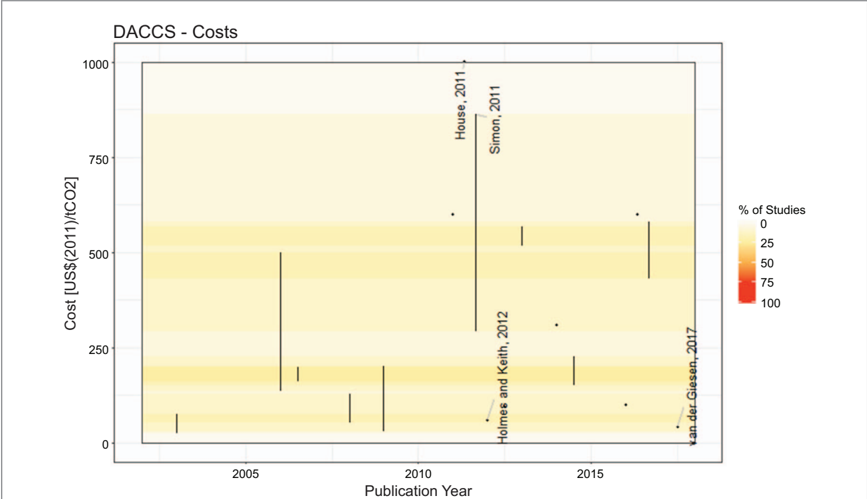
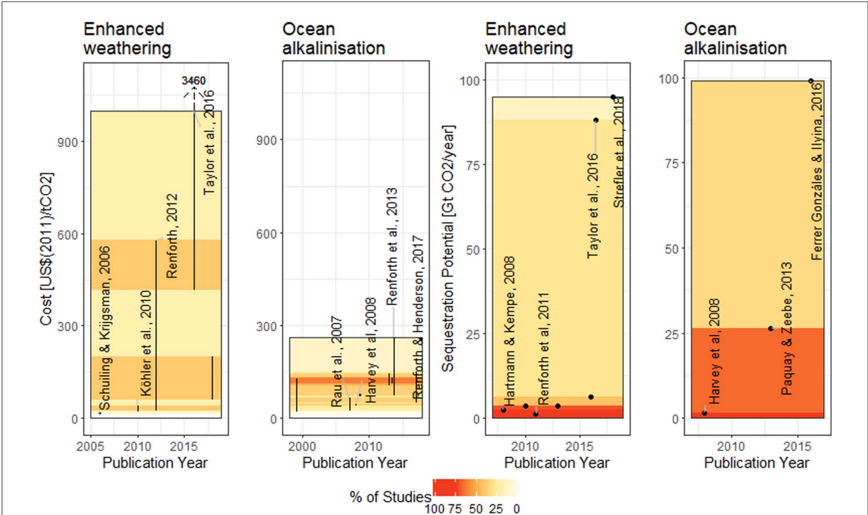
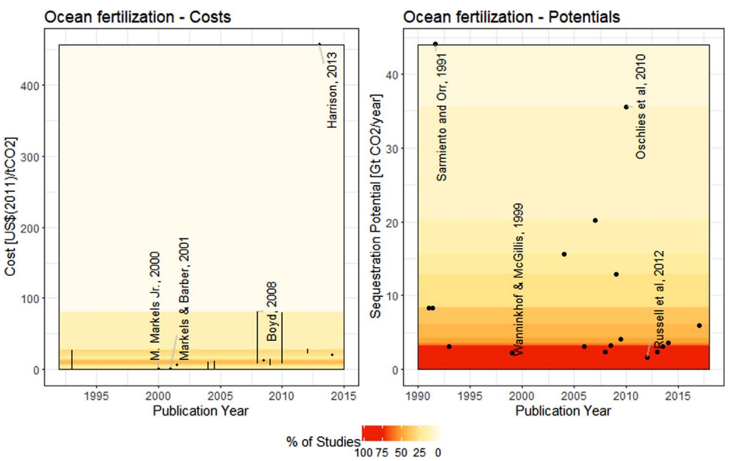
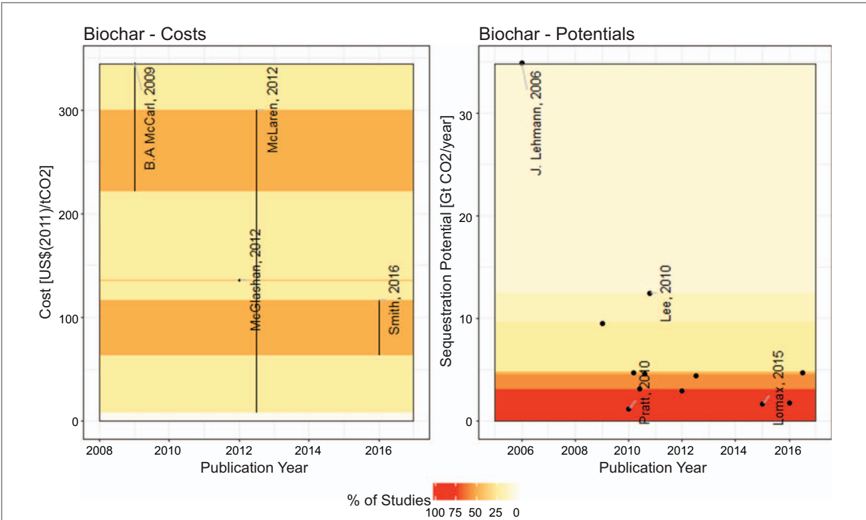
Verification
Claims the paper makes
The claims and statistics of this paper haven’t been checked yet.
Free: it reads the open-access text and checks the first 5 claims that cite a source we can check. Create a free account to check every claim.
Claims other papers make about this one
Each is checked against this paper’s own text: does it say what the citing paper says it does?
The cited source doesn’t support the claim as written.
In the citing paper
“Previous reviews 18,28,[52][53][54] have shown that these pathways offer substantial CO 2 removal potential:”
From The technological and economic prospects for CO2 utilization and removal (2019) · cites this paper as [28]
Checked by a reasoning model — may be wrong.
Experimental — accuracy not yet measuredThe source backs part of the claim, not all of it — or backs it for a different population, condition or comparison.
In the citing paper
“Plausibly, all bioenergy that can be sourced sustainably (about 100 EJ 3,25 primary energy) could be allocated to BECCS, so that about 4.2-5.6Gt CO 2 per year could be sequestered (reflecting losses in energy and CO 2 in along different steps in the process).”
From The mutual dependence of negative emission technologies and energy systems (2019) · cites this paper as [3]
Experimental — accuracy not yet measuredThe source backs part of the claim, not all of it — or backs it for a different population, condition or comparison.
In the citing paper
“Removal costs are estimated at $5-$50/tCO 2 (Fuss et al. 2018).”
From Strategies for mitigation of climate change: a review (2020) · cites this paper as Fuss et al. 2018
Experimental — accuracy not yet measuredThe source backs part of the claim, not all of it — or backs it for a different population, condition or comparison.
In the citing paper
“Side effects of ocean fertilization that are discussed in the literature include ocean acidification, deep and mid-water oxygen decrease or depletion, increase in production of further greenhouse gases, unpredictable impact on food cycles, creation of toxic algal blooms as well as mixed effects on the seafloor and upper ocean ecosystems (Fuss et al. 2018;Williamson et al. 2012).”
From Strategies for mitigation of climate change: a review (2020) · cites this paper as Fuss et al. 2018
Experimental — accuracy not yet measuredThe source backs part of the claim, not all of it — or backs it for a different population, condition or comparison.
In the citing paper
“In the context of our CDR targets, ERW has a similar potential to that of other CDR strategies 23 estimated for 2050, including bio-energy with carbon capture and storage (BECCS), widely adopted in IPCC future scenarios (0.5-5 Gt CO2 yr -1 ), direct air carbon capture and storage (DAC) (0.5-5 Gt CO2 yr -1 ), biochar (0.5 to 2 Gt CO2 yr -1 ), soil organic carbon (SOC) sequestration (0.5-5 Gt CO2 yr”
From Potential for large-scale CO2 removal via enhanced rock weathering with croplands (2020) · cites this paper as [23]
Experimental — accuracy not yet measured
55 more claims about this paper
Create a free account to see every claim other papers make about this one.
Self-check
Percentages, sums and reported differences re-computed from the paper’s own numbers.
The self-check needs the paper’s full text.
Citations
Cites
Soil Carbon Sequestration Impacts on Global Climate Change and Food Security
Lal, R. (2004) · Science · doi:10.1126/science.1097396 · Cited by 8,376 · cited 6×
“Of the 22 articles (Batjes 1998, Benbi 2013, Conant 2011, Henderson et al 2015, Lal 2003b, 2003a, 2004a, 2004c, 2004b, 2010, 2011, 2013, Lassaletta and Aguilera 2015, Lorenz and Lal 2014, Powlson et al 2014, Salati et al 2010, Smith 2012, 2016, Sommer and Bossio 2014, Minasny et al 2017, Metting et…”
BackgroundInfluentialRiahi, K., van Vuuren, D. P., Kriegler, E., Edmonds, J., O’Neill, B. C., Fujimori, S., Bauer, N., Calvin, K., Dellink, R., Fricko, O., et al. (2017) · Global Environmental Change · doi:10.1016/j.gloenvcha.2016.05.009 · Cited by 6,607
Self-citationThe next generation of scenarios for climate change research and assessment
Moss, R. H., Edmonds, J. A., Hibbard, K. A., Manning, M. R., Rose, S. K., van Vuuren, D. P., Carter, T. R., Emori, S., Kainuma, M., Kram, T., et al. (2010) · Nature · doi:10.1038/nature08823 · Cited by 6,467
Brennan, L., & Owende, P. (2010) · Renewable and Sustainable Energy Reviews · doi:10.1016/j.rser.2009.10.009 · Cited by 4,894 · cited 2×
“24 Although achievable scales are not clear yet, there is also research on third-generation biofuels, derived from algal biomass (Brennan and Owende 2010) with the potential to enhance yields by improving microalgal biology through genetic or metabolic engineering (Tandon and Jin 2017).”
BackgroundCarbon capture and storage (CCS): the way forward
Bui, M., Adjiman, C. S., Bardow, A., Anthony, E. J., Boston, A., Brown, S., Fennell, P. S., Fuss, S., Galindo, A., Hackett, L. A., et al. (2018) · Energy & Environmental Science · doi:10.1039/c7ee02342a · Cited by 4,374
Self-citationGlobal effects of land use on local terrestrial biodiversity
Newbold, T., Hudson, L. N., Hill, S. L. L., Contu, S., Lysenko, I., Senior, R. A., Börger, L., Bennett, D. J., Choimes, A., Collen, B., et al. (2015) · Nature · doi:10.1038/nature14324 · Cited by 4,352
Soil carbon sequestration to mitigate climate change
Lal, R. (2004) · Geoderma · doi:10.1016/j.geoderma.2004.01.032 · Cited by 3,936 · cited 6×
“Of the 22 articles (Batjes 1998, Benbi 2013, Conant 2011, Henderson et al 2015, Lal 2003b, 2003a, 2004a, 2004c, 2004b, 2010, 2011, 2013, Lassaletta and Aguilera 2015, Lorenz and Lal 2014, Powlson et al 2014, Salati et al 2010, Smith 2012, 2016, Sommer and Bossio 2014, Minasny et al 2017, Metting et…”
BackgroundInfluentialGriscom, B. W., Adams, J., Ellis, P. W., Houghton, R. A., Lomax, G., Miteva, D. A., Schlesinger, W. H., Shoch, D., Siikamäki, J. V., Smith, P., et al. (2017) · Proceedings of the National Academy of Sciences · doi:10.1073/pnas.1710465114 · Cited by 3,481
Self-citationO’Neill, B. C., Kriegler, E., Ebi, K. L., Kemp-Benedict, E., Riahi, K., Rothman, D. S., van Ruijven, B. J., van Vuuren, D. P., Birkmann, J., Kok, K., et al. (2017) · Global Environmental Change · doi:10.1016/j.gloenvcha.2015.01.004 · Cited by 3,359
Irreversible climate change due to carbon dioxide emissions
Solomon, S., Plattner, G.-K., Knutti, R., & Friedlingstein, P. (2009) · Proceedings of the National Academy of Sciences · doi:10.1073/pnas.0812721106 · Cited by 3,217 · cited 1×
“…et al 2015, Riahi et al 2015, Eom et al 2015), temperature overshoot carries additional risks associated with higher levels of warming and the resulting impacts and climate feedbacks that could occur (van Vuuren et al 2013, Solomon et al 2009, Friedlingstein et al 2006, Clarke et al 2014).”
Background
Research works printed but not linked: 32
- Bruckner T ed Edenhofer E, 2014, Contribution of Working Group III to the Fifth Assessment Report of the Intergovernmental Panel on Climate Change
- Bui M, 2018, Energy Environ. Sci.
- Ciais P ed Stocker T F, 2013, Climate Change 2013: The Physical Science Basis. Contribution of Working Group I to the Fifth Assessment Report of the Intergovernmental Panel on Climate Change
- Clarke L E ed Edenhofer O, 2014, Clim. Change 2014 Mitig. Clim. Change Contrib. Work. Gr. III to Fifth Assess. Rep. Intergov. Panel Clim. Change, 413
- Coelho S T, 2012, Chapter 20—land and water: linkages to bioenergy, 1459
- Corathers L A, 2015, Earth
- d’Hotman D V, 1961, Int. Sugar J., 63, 363
- Dale V H, 2010, Biofuels: implications for Land Use and Biodiversity
- Díaz S, 2009, Biodiversity, Ecosystem Functioning, and Human Wellbeing
- Fuss S, 2017, Oxf. Res. Encycl. Clim. Sci., 1
- Gale J J, 2004, Geol. Belgica, 7, 99
- Haberl H ed Dewulf J, 2015, Sustainability Assessment of Renewables-Based Products, 1
- Hassani N, 2016, Pet. Res., 25, 4
- IEA GHG, 2005, Building the Cost Curves for CO
- IEA GHG, 1998, Enhanced Coal Bed Methane Recovery with CO
- IPCC ed Metz B, 2005, Carbon Dioxide Capture and Storage (SRCCS)
- IPCC ed Qin D, 2013, Contribution of Working Group I to the Fifth Assessment Report of the Intergovernmental Panel on Climate Change
- IPCC ed Edenhofer O, 2014, Contribution of Working Group III to the Fifth Assessment Report of the Intergovernmental Panel on Climate Change
- IPCC ed Pachauri R K, 2014, Contribution of Working Groups I, II and III to the Fifth Assessment Report of the Intergovernmental Panel on Climate Change
- Liu W W, 2016, Acta Ecol. Sin., 36, 2113
- Lopes A S, 1996, Better Crop. Int., 10, 10
- Magill B, 2017, Clim. Cent.
- Markels M, 2001, Poster Presentation for NETL Conference on Carbon Sequestration, 14
- 10.1088/1748-9326/aabf9 · doi:10.1088/1748-9326/aabf9
- Minx J, 2017, Environ. Res. Lett., 12
- National Academy of Sciences, 2015, Climate Intervention
- 53. Nkouathio D G, Wandji P, Bardintzeff J M, Tematio P, Dongmo A K and Tchoua F 2008 Utilisation des roches volcaniques pour la remineralisation des sols ferrallitiques des regions tropicales. Cas des pyroclastites basaltiques du graben de Tombel (Ligne volcanique du Cameroun) Bull. Soc. Vaudoise Sci. Nat. 91 1-14
- 122. Sedjo R A and Solomon A M 1991 Climate and forests Greenhouse Warming: Abatement and Adaptation (Resources for the Future)
- Strefler J, 2018, Environ. Res. Lett., 13
- Strefler J, 2018, Environ. Res. Lett., 13
- UNEP, 2017, The Emissions Gap Report 2017
- USDOE, 2014, Report
Cited by
The technological and economic prospects for CO2 utilization and removal
Hepburn, C., Adlen, E., Beddington, J., Carter, E. A., Fuss, S., Mac Dowell, N., Minx, J. C., Smith, P., & Williams, C. K. (2019) · Nature · doi:10.1038/s41586-019-1681-6 · Cited by 2,523
Self-citationThe shared socio-economic pathway (SSP) greenhouse gas concentrations and their extensions to 2500
Meinshausen, M., Nicholls, Z. R. J., Lewis, J., Gidden, M. J., Vogel, E., Freund, M., Beyerle, U., Gessner, C., Nauels, A., Bauer, N., et al. (2020) · Geoscientific Model Development · doi:10.5194/gmd-13-3571-2020 · Cited by 1,815
“We did not assume permanent net-negative CO2 emissions to maintain proximity to the original scenario design in the light of biophysical and economic limits of negative emissions, as well as potential side effects (Fuss et al., 2018; Smith et al., 2016). For all scenarios with net negative fossil fuel extensions, we i…”
BackgroundInfluentialSelf-citationStrategies for mitigation of climate change: a review
Fawzy, S., Osman, A. I., Doran, J., & Rooney, D. W. (2020) · Environmental Chemistry Letters · doi:10.1007/s10311-020-01059-w · Cited by 1,522
The role of soil carbon in natural climate solutions
Bossio, D. A., Cook-Patton, S. C., Ellis, P. W., Fargione, J., Sanderman, J., Smith, P., Wood, S., Zomer, R. J., von Unger, M., Emmer, I. M., et al. (2020) · Nature Sustainability · doi:10.1038/s41893-020-0491-z · Cited by 1,273
Self-citationTechno-economic assessment of CO2 direct air capture plants
Fasihi, M., Efimova, O., & Breyer, C. (2019) · Journal of Cleaner Production · doi:10.1016/j.jclepro.2019.03.086 · Cited by 1,171
Global stocks and capacity of mineral-associated soil organic carbon
Georgiou, K., Jackson, R. B., Vindušková, O., Abramoff, R. Z., Ahlström, A., Feng, W., Harden, J. W., Pellegrini, A. F. A., Polley, H. W., Soong, J. L., et al. (2022) · Nature Communications · doi:10.1038/s41467-022-31540-9 · Cited by 979
The meaning of net zero and how to get it right
Fankhauser, S., Smith, S. M., Allen, M., Axelsson, K., Hale, T., Hepburn, C., Kendall, J. M., Khosla, R., Lezaun, J., Mitchell-Larson, E., et al. (2022) · Nature Climate Change · doi:10.1038/s41558-021-01245-w · Cited by 951
Unextractable fossil fuels in a 1.5 °C world
Welsby, D., Price, J., Pye, S., & Ekins, P. (2021) · Nature · doi:10.1038/s41586-021-03821-8 · Cited by 926
Haberl, H., Wiedenhofer, D., Virág, D., Kalt, G., Plank, B., Brockway, P., Fishman, T., Hausknost, D., Krausmann, F., Leon-Gruchalski, B., et al. (2020) · Environmental Research Letters · doi:10.1088/1748-9326/ab842a · Cited by 909
Self-citationNegative emissions—Part 1: Research landscape and synthesis
Minx, J. C., Lamb, W. F., Callaghan, M. W., Fuss, S., Hilaire, J., Creutzig, F., Amann, T., Beringer, T., de Oliveira Garcia, W., Hartmann, J., et al. (2018) · Environmental Research Letters · doi:10.1088/1748-9326/aabf9b · Cited by 865
Self-citationSmith, P., Soussana, J., Angers, D., Schipper, L., Chenu, C., Rasse, D. P., Batjes, N. H., van Egmond, F., McNeill, S., Kuhnert, M., et al. (2020) · Global Change Biology · doi:10.1111/gcb.14815 · Cited by 812
“Global estimates of soil C sequestration potential vary considerably, but a recent sys‐ tematic review by Fuss et al. (2018) suggests an annual technical po‐ tential of 2–5 Gt CO2/year.”
BackgroundSelf-citationTowards a global-scale soil climate mitigation strategy
Amelung, W., Bossio, D., de Vries, W., Kögel-Knabner, I., Lehmann, J., Amundson, R., Bol, R., Collins, C., Lal, R., Leifeld, J., et al. (2020) · Nature Communications · doi:10.1038/s41467-020-18887-7 · Cited by 790
The enduring world forest carbon sink
Pan, Y., Birdsey, R. A., Phillips, O. L., Houghton, R. A., Fang, J., Kauppi, P. E., Keith, H., Kurz, W. A., Ito, A., Lewis, S. L., et al. (2024) · Nature · doi:10.1038/s41586-024-07602-x · Cited by 706
“In the tropics, 467 Mha (26”
Potential for large-scale CO2 removal via enhanced rock weathering with croplands
Beerling, D. J., Kantzas, E. P., Lomas, M. R., Wade, P., Eufrasio, R. M., Renforth, P., Sarkar, B., Andrews, M. G., James, R. H., Pearce, C. R., et al. (2020) · Nature · doi:10.1038/s41586-020-2448-9 · Cited by 700
Direct air capture: process technology, techno-economic and socio-political challenges
Erans, M., Sanz-Pérez, E. S., Hanak, D. P., Clulow, Z., Reiner, D. M., & Mutch, G. A. (2022) · Energy & Environmental Science · doi:10.1039/d1ee03523a · Cited by 688
Status and perspectives on 100% renewable energy systems
Hansen, K., Breyer, C., & Lund, H. (2019) · Energy · doi:10.1016/j.energy.2019.03.092 · Cited by 681
Contribution of the land sector to a 1.5 °C world
Roe, S., Streck, C., Obersteiner, M., Frank, S., Griscom, B., Drouet, L., Fricko, O., Gusti, M., Harris, N., Hasegawa, T., et al. (2019) · Nature Climate Change · doi:10.1038/s41558-019-0591-9 · Cited by 619
“Carbon removal of 1.1 GtCO 2 yr − 1 through BECCS requires 34–180 Mha of land 20,35 and is within the lower range of ‘sustainable potential’ 17 .”
BackgroundInfluentialSelf-citationAchieving net-zero greenhouse gas emission plastics by a circular carbon economy
Meys, R., Kätelhön, A., Bachmann, M., Winter, B., Zibunas, C., Suh, S., & Bardow, A. (2021) · Science · doi:10.1126/science.abg9853 · Cited by 577
An inter-model assessment of the role of direct air capture in deep mitigation pathways
Realmonte, G., Drouet, L., Gambhir, A., Glynn, J., Hawkes, A., Köberle, A. C., & Tavoni, M. (2019) · Nature Communications · doi:10.1038/s41467-019-10842-5 · Cited by 535
Tree planting is not a simple solution
Holl, K. D., & Brancalion, P. H. S. (2020) · Science · doi:10.1126/science.aba8232 · Cited by 532
Overcoming the coupled climate and biodiversity crises and their societal impacts
Pörtner, H.-O., Scholes, R. J., Arneth, A., Barnes, D. K. A., Burrows, M. T., Diamond, S. E., Duarte, C. M., Kiessling, W., Leadley, P., Managi, S., et al. (2023) · Science · doi:10.1126/science.abl4881 · Cited by 519
Lal, R., Bouma, J., Brevik, E., Dawson, L., Field, D. J., Glaser, B., Hatano, R., Hartemink, A. E., Kosaki, T., Lascelles, B., et al. (2021) · Geoderma Regional · doi:10.1016/j.geodrs.2021.e00398 · Cited by 496
Biochar in agriculture – A systematic review of 26 global meta‐analyses
Schmidt, H., Kammann, C., Hagemann, N., Leifeld, J., Bucheli, T. D., Sánchez Monedero, M. A., & Cayuela, M. L. (2021) · GCB Bioenergy · doi:10.1111/gcbb.12889 · Cited by 490
“Besides the direct C- sink effect of soil applied biochar which is considered as one of the six main negative emission technologies (Fuss et al., 2018; Schmidt, AncaCouce, et al., 2019; Smith et al., 2019), the application of biochar may affect the dynamic of native SOC.”
BackgroundTerrestrial carbon sinks in China and around the world and their contribution to carbon neutrality
Yang, Y., Shi, Y., Sun, W., Chang, J., Zhu, J., Chen, L., Wang, X., Guo, Y., Zhang, H., Yu, L., et al. (2022) · Science China Life Sciences · doi:10.1007/s11427-021-2045-5 · Cited by 447
“…could be enhanced by 0.9–3.3 Pg C yr−1 if management practices, such as afforestation, ecosystem restoration and conservation tillage are applied (Fuss et al., 2018; Griscom et al., 2017; Lenton, 2010; Smith et al., 2019), although a few studies suggested that these practices might generate…”
BackgroundInfluentialMcLaughlin, H., Littlefield, A. A., Menefee, M., Kinzer, A., Hull, T., Sovacool, B. K., Bazilian, M. D., Kim, J., & Griffiths, S. (2023) · Renewable and Sustainable Energy Reviews · doi:10.1016/j.rser.2023.113215 · Cited by 448
Hong, W. Y. (2022) · Carbon Capture Science & Technology · doi:10.1016/j.ccst.2022.100044 · Cited by 455
Bach, L. T., Gill, S. J., Rickaby, R. E. M., Gore, S., & Renforth, P. (2019) · Frontiers in Climate · doi:10.3389/fclim.2019.00007 · Cited by 445
“The public reservations are justified since NETs raise ethical concerns (Lin, 2013; Lawford-Smith and Currie, 2017; Shue, 2017; Lenzi, 2018) andmay be associated with side effects for the Earth system (Keller et al., 2014; Fuss et al., 2018; Gattuso et al., 2018).”
BackgroundPathways to net-zero emissions from aviation
Bergero, C., Gosnell, G., Gielen, D., Kang, S., Bazilian, M., & Davis, S. J. (2023) · Nature Sustainability · doi:10.1038/s41893-022-01046-9 · Cited by 430
A comparative energy and costs assessment and optimization for direct air capture technologies
Sabatino, F., Grimm, A., Gallucci, F., van Sint Annaland, M., Kramer, G. J., & Gazzani, M. (2021) · Joule · doi:10.1016/j.joule.2021.05.023 · Cited by 429
Perspective on the hydrogen economy as a pathway to reach net-zero CO2emissions in Europe
van der Spek, M., Banet, C., Bauer, C., Gabrielli, P., Goldthorpe, W., Mazzotti, M., Munkejord, S. T., Røkke, N. A., Shah, N., Sunny, N., et al. (2022) · Energy & Environmental Science · doi:10.1039/d1ee02118d · Cited by 423
Estimating and tracking the remaining carbon budget for stringent climate targets
Rogelj, J., Forster, P. M., Kriegler, E., Smith, C. J., & Séférian, R. (2019) · Nature · doi:10.1038/s41586-019-1368-z · Cited by 418
Self-citationSmith, P., Calvin, K., Nkem, J., Campbell, D., Cherubini, F., Grassi, G., Korotkov, V., Le Hoang, A., Lwasa, S., McElwee, P., et al. (2020) · Global Change Biology · doi:10.1111/gcb.14878 · Cited by 422
“5; Fuss et al. (2018), Lenton (2010, 2014), McLaren (2012), Powell and Lenton (2012) Note: The land management-based mitigation ranges are consistent with those of Roe et al. (2019).”
BackgroundInfluentialSelf-citationLand‐based measures to mitigate climate change: Potential and feasibility by country
Roe, S., Streck, C., Beach, R., Busch, J., Chapman, M., Daioglou, V., Deppermann, A., Doelman, J., Emmet‐Booth, J., Engelmann, J., et al. (2021) · Global Change Biology · doi:10.1111/gcb.15873 · Cited by 408
“Our work builds on and advances previous global studies (Fuss et al., 2018; Griscom et al., 2017; Jia et al., 2019; Roe et al., 2019; Smith et al., 2013, 2014; UNEP, 2017) and regional studies (Griscom et al., 2020; Roe et al., 2019) on land-based mitigation potentials.”
ResultSelf-citationSoil C Sequestration as a Biological Negative Emission Strategy
Paustian, K., Larson, E., Kent, J., Marx, E., & Swan, A. (2019) · Frontiers in Climate · doi:10.3389/fclim.2019.00008 · Cited by 393
The carbon sequestration potential of terrestrial ecosystems
Lal, R., Smith, P., Jungkunst, H. F., Mitsch, W. J., Lehmann, J., Nair, P. K. R., McBratney, A. B., de Moraes Sá, J. C., Schneider, J., Zinn, Y. L., et al. (2018) · Journal of Soil and Water Conservation · doi:10.2489/jswc.73.6.145a · Cited by 394
“Establish credible ranges (minima and maxima) from the published rates of C sequestration in biomass and soil and obtain estimates of the equilibrium period for different land use systems to enable assessment of the cumulative technical potential (Smith 2004, 2016; Smith et al. 2008; Lal 2004, 2010; Paustian et al. 19…”
BackgroundMethodSelf-citationSmith, P., Adams, J., Beerling, D. J., Beringer, T., Calvin, K. V., Fuss, S., Griscom, B., Hagemann, N., Kammann, C., Kraxner, F., et al. (2019) · Annual Review of Environment and Resources · doi:10.1146/annurev-environ-101718-033129 · Cited by 380
Self-citationLife cycle assessment of carbon dioxide removal technologies: a critical review
Terlouw, T., Bauer, C., Rosa, L., & Mazzotti, M. (2021) · Energy & Environmental Science · doi:10.1039/d0ee03757e · Cited by 347
Pauliuk, S., Heeren, N., Berrill, P., Fishman, T., Nistad, A., Tu, Q., Wolfram, P., & Hertwich, E. G. (2021) · Nature Communications · doi:10.1038/s41467-021-25300-4 · Cited by 352
Current status and pillars of direct air capture technologies
Ozkan, M., Nayak, S. P., Ruiz, A. D., & Jiang, W. (2022) · iScience · doi:10.1016/j.isci.2022.103990 · Cited by 350
(2023) · Climate Change 2021 – The Physical Science Basis · doi:10.1017/9781009157896.003 · Cited by 298
Guidance for successful tree planting initiatives
Brancalion, P. H. S., & Holl, K. D. (2020) · Journal of Applied Ecology · doi:10.1111/1365-2664.13725 · Cited by 346
Negative emissions—Part 3: Innovation and upscaling
Nemet, G. F., Callaghan, M. W., Creutzig, F., Fuss, S., Hartmann, J., Hilaire, J., Lamb, W. F., Minx, J. C., Rogers, S., & Smith, P. (2018) · Environmental Research Letters · doi:10.1088/1748-9326/aabff4 · Cited by 343
Self-citationTackling climate change with machine learning
Rolnick, D., Donti, P. L., Kaack, L. H., Kochanski, K., Lacoste, A., Sankaran, K., Ross, A. S., Milojevic-Dupont, N., Jaques, N., Waldman-Brown, A., et al. (2023) · ACM Computing Surveys · doi:10.1145/3485128 · Cited by 336
Self-citationCesaro, Z., Ives, M., Nayak-Luke, R., Mason, M., & Bañares-Alcántara, R. (2021) · Applied Energy · doi:10.1016/j.apenergy.2020.116009 · Cited by 333
1.5 °C degrowth scenarios suggest the need for new mitigation pathways
Keyßer, L. T., & Lenzen, M. (2021) · Nature Communications · doi:10.1038/s41467-021-22884-9 · Cited by 326
United Nations Environment Programme (2023) · United Nations Environment Programme eBooks · doi:10.59117/20.500.11822/43922 · Cited by 322
Reid, W. V., Ali, M. K., & Field, C. B. (2020) · Global Change Biology · doi:10.1111/gcb.14883 · Cited by 315
“With regard to whether BECCS will be the least-cost NET at mid-century, in a 2018 review, Fuss et al. (2018) concluded that the best estimates for sustainable global NET potentials in 2050 for BECCS overlap with the estimates for DAC combined with carbon storage (BECCS: 0.5–5 Gt CO2/year at a cost…”
BackgroundInfluentialPost-2020 biodiversity targets need to embrace climate change
Arneth, A., Shin, Y.-J., Leadley, P., Rondinini, C., Bukvareva, E., Kolb, M., Midgley, G. F., Oberdorff, T., Palomo, I., & Saito, O. (2020) · Proceedings of the National Academy of Sciences · doi:10.1073/pnas.2009584117 · Cited by 316
Evaluating climate geoengineering proposals in the context of the Paris Agreement temperature goals
Lawrence, M. G., Schäfer, S., Muri, H., Scott, V., Oschlies, A., Vaughan, N. E., Boucher, O., Schmidt, H., Haywood, J., & Scheffran, J. (2018) · Nature Communications · doi:10.1038/s41467-018-05938-3 · Cited by 305
Nagireddi, S., Agarwal, J. R., & Vedapuri, D. (2024) · ACS Engineering Au · doi:10.1021/acsengineeringau.3c00049 · Cited by 295
The climate change mitigation potential of bioenergy with carbon capture and storage
Hanssen, S. V., Daioglou, V., Steinmann, Z. J. N., Doelman, J. C., Van Vuuren, D. P., & Huijbregts, M. A. J. (2020) · Nature Climate Change · doi:10.1038/s41558-020-0885-y · Cited by 301
Life Cycle Assessment of Direct Air Carbon Capture and Storage with Low-Carbon Energy Sources
Terlouw, T., Treyer, K., Bauer, C., & Mazzotti, M. (2021) · Environmental Science & Technology · doi:10.1021/acs.est.1c03263 · Cited by 294
The role of soil in regulation of climate
Lal, R., Monger, C., Nave, L., & Smith, P. (2021) · Philosophical Transactions of the Royal Society B · doi:10.1098/rstb.2021.0084 · Cited by 286
“(a) Increasing soil organic carbon sequestration Soils can act as negative emission technologies (NETs) [64,72], also known as a carbon dioxide removal (CDR) option or a GHG removal option [73].”
BackgroundSelf-citationKhalili, S., Rantanen, E., Bogdanov, D., & Breyer, C. (2019) · Energies · doi:10.3390/en12203870 · Cited by 290
Direct Air Capture of CO2: A Key Technology for Ambitious Climate Change Mitigation
Breyer, C., Fasihi, M., Bajamundi, C., & Creutzig, F. (2019) · Joule · doi:10.1016/j.joule.2019.08.010 · Cited by 288
Self-citationCarbon dioxide separation and capture by adsorption: a review
Karimi, M., Shirzad, M., Silva, J. A. C., & Rodrigues, A. E. (2023) · Environmental Chemistry Letters · doi:10.1007/s10311-023-01589-z · Cited by 275
Shahbaz, M., AlNouss, A., Ghiat, I., Mckay, G., Mackey, H., Elkhalifa, S., & Al-Ansari, T. (2021) · Resources, Conservation and Recycling · doi:10.1016/j.resconrec.2021.105734 · Cited by 279
The costs and benefits of biochar production and use: A systematic review
Campion, L., Bekchanova, M., Malina, R., & Kuppens, T. (2023) · Journal of Cleaner Production · doi:10.1016/j.jclepro.2023.137138 · Cited by 268
Cheng, F., Luo, H., & Colosi, L. M. (2020) · Energy Conversion and Management · doi:10.1016/j.enconman.2020.113258 · Cited by 271
Vogel, J., & Hickel, J. (2023) · The Lancet Planetary Health · doi:10.1016/s2542-5196(23)00174-2 · Cited by 265
“…unrealistic assumptions about the rollout rate of renewable energy, 4 unrealistic and risky assumptions about future negative-emission technologies, 32–35 highly unequal international burden sharing (future cumulative emissions per capita), and undermining energy use and development in low-income…”
BackgroundCost and attainability of meeting stringent climate targets without overshoot
Riahi, K., Bertram, C., Huppmann, D., Rogelj, J., Bosetti, V., Cabardos, A.-M., Deppermann, A., Drouet, L., Frank, S., Fricko, O., et al. (2021) · Nature Climate Change · doi:10.1038/s41558-021-01215-2 · Cited by 263
Self-citationGlobal variation in soil carbon sequestration potential through improved cropland management
Lessmann, M., Ros, G. H., Young, M. D., & de Vries, W. (2022) · Global Change Biology · doi:10.1111/gcb.15954 · Cited by 257
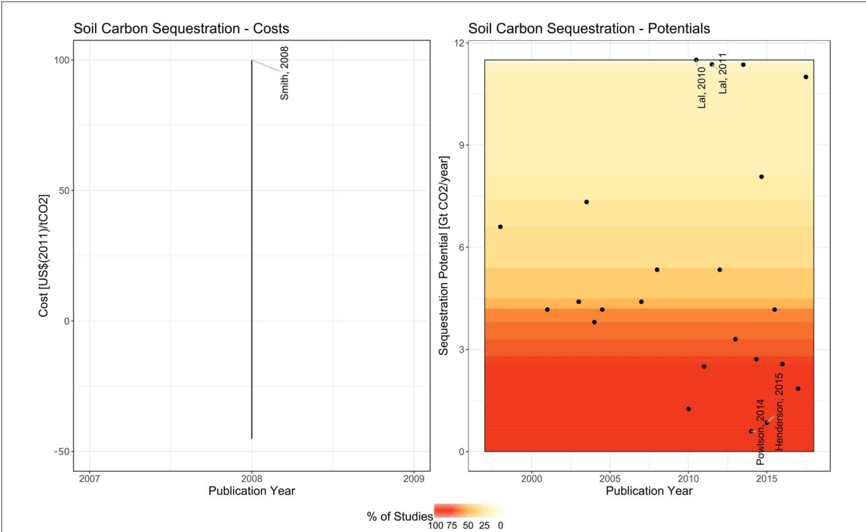
“Fuss et al. (2018) provided a summary of 22 articles with global SOC potentials from improved management based on per- area sequestration estimates.”
BackgroundInternational and national climate policies for aviation: a review
Larsson, J., Elofsson, A., Sterner, T., & Åkerman, J. (2019) · Climate Policy · doi:10.1080/14693062.2018.1562871 · Cited by 255
Fragkos, P., Laura van Soest, H., Schaeffer, R., Reedman, L., Köberle, A. C., Macaluso, N., Evangelopoulou, S., De Vita, A., Sha, F., Qimin, C., et al. (2021) · Energy · doi:10.1016/j.energy.2020.119385 · Cited by 254
Agriculture, Forestry and Other Land Uses (AFOLU)
(2023) · Climate Change 2022 - Mitigation of Climate Change · doi:10.1017/9781009157926.009 · Cited by 249
Carbon for soils, not soils for carbon
Moinet, G. Y. K., Hijbeek, R., van Vuuren, D. P., & Giller, K. E. (2023) · Global Change Biology · doi:10.1111/gcb.16570 · Cited by 249
“In parallel, both climate change (Smith, 2012) and food security (Giller, 2020) have been described as ‘wicked problems’, highlighting their daunting complexity and the formidable international social, political, economic and scientific interdisciplinary effort that is required to offer even…”
BackgroundSoil Carbon Sequestration in the Context of Climate Change Mitigation: A Review
Rodrigues, C. I. D., Brito, L. M., & Nunes, L. J. R. (2023) · Soil Systems · doi:10.3390/soilsystems7030064 · Cited by 246
Negative CO2 emissions through the use of biofuels in chemical looping technology: A review
Mendiara, T., García-Labiano, F., Abad, A., Gayán, P., de Diego, L. F., Izquierdo, M. T., & Adánez, J. (2018) · Applied Energy · doi:10.1016/j.apenergy.2018.09.201 · Cited by 243
Aghahosseini, A., Bogdanov, D., & Breyer, C. (2020) · Energy Strategy Reviews · doi:10.1016/j.esr.2020.100466 · Cited by 243
Emergency deployment of direct air capture as a response to the climate crisis
Hanna, R., Abdulla, A., Xu, Y., & Victor, D. G. (2021) · Nature Communications · doi:10.1038/s41467-020-20437-0 · Cited by 243
Young, J., McQueen, N., Charalambous, C., Foteinis, S., Hawrot, O., Ojeda, M., Pilorgé, H., Andresen, J., Psarras, P., Renforth, P., et al. (2023) · One Earth · doi:10.1016/j.oneear.2023.06.004 · Cited by 239
Potential for low-cost carbon dioxide removal through tropical reforestation
Busch, J., Engelmann, J., Cook-Patton, S. C., Griscom, B. W., Kroeger, T., Possingham, H., & Shyamsundar, P. (2019) · Nature Climate Change · doi:10.1038/s41558-019-0485-x · Cited by 234
Climate change: Strategies for mitigation and adaptation
Wang, F., Harindintwali, J. D., Wei, K., Shan, Y., Mi, Z., Costello, M. J., Grunwald, S., Feng, Z., Wang, F., Guo, Y., et al. (2023) · The Innovation Geoscience · doi:10.59717/j.xinn-geo.2023.100015 · Cited by 231
Climate economics support for the UN climate targets
Hänsel, M. C., Drupp, M. A., Johansson, D. J. A., Nesje, F., Azar, C., Freeman, M. C., Groom, B., & Sterner, T. (2020) · Nature Climate Change · doi:10.1038/s41558-020-0833-x · Cited by 230
“The timing of the availability of negative emissions technologies and their potential magnitude are under debate 69,70 , as well as their relation to the use of different discount rates 71 .”
BackgroundNegative emissions and the long history of carbon removal
Carton, W., Asiyanbi, A., Beck, S., Buck, H. J., & Lund, J. F. (2020) · WIREs Climate Change · doi:10.1002/wcc.671 · Cited by 228
“, 2007), there is now an extensive literature that explores the potential opportunities, risks and trade-offs of relying on negative emissions (Buck, 2016; Dooley, Christoff, & Nicholas, 2018; Fuss et al., 2018; Gough et al., 2018; Heck, Gerten, Lucht, & Popp, 2018; McLaren, 2020; Williamson, 2016), maps the various f…”
BackgroundFood–energy–water implications of negative emissions technologies in a +1.5 °C future
Fuhrman, J., McJeon, H., Patel, P., Doney, S. C., Shobe, W. M., & Clarens, A. F. (2020) · Nature Climate Change · doi:10.1038/s41558-020-0876-z · Cited by 229
Greenhouse Gas Inventory Model for Biochar Additions to Soil
Woolf, D., Lehmann, J., Ogle, S., Kishimoto-Mo, A. W., McConkey, B., & Baldock, J. (2021) · Environmental Science & Technology · doi:10.1021/acs.est.1c02425 · Cited by 227
Dynamic Stability of Soil Carbon: Reassessing the “Permanence” of Soil Carbon Sequestration
Dynarski, K. A., Bossio, D. A., & Scow, K. M. (2020) · Frontiers in Environmental Science · doi:10.3389/fenvs.2020.514701 · Cited by 224
Gambhir, A., Butnar, I., Li, P.-H., Smith, P., & Strachan, N. (2019) · Energies · doi:10.3390/en12091747 · Cited by 222
“, [89]) would all help clarify the role of BECCS.”
BackgroundSelf-citationIndustrial biochar systems for atmospheric carbon removal: a review
Fawzy, S., Osman, A. I., Yang, H., Doran, J., & Rooney, D. W. (2021) · Environmental Chemistry Letters · doi:10.1007/s10311-021-01210-1 · Cited by 220
Assessment of carbon dioxide removal potential via BECCS in a carbon-neutral Europe
Rosa, L., Sanchez, D. L., & Mazzotti, M. (2021) · Energy & Environmental Science · doi:10.1039/d1ee00642h · Cited by 217
The mutual dependence of negative emission technologies and energy systems
Creutzig, F., Breyer, C., Hilaire, J., Minx, J., Peters, G. P., & Socolow, R. (2019) · Energy & Environmental Science · doi:10.1039/c8ee03682a · Cited by 217
Self-citationGalán-Martín, Á., Tulus, V., Díaz, I., Pozo, C., Pérez-Ramírez, J., & Guillén-Gosálbez, G. (2021) · One Earth · doi:10.1016/j.oneear.2021.04.001 · Cited by 215
Land-based climate change mitigation measures can affect agricultural markets and food security
Fujimori, S., Wu, W., Doelman, J., Frank, S., Hristov, J., Kyle, P., Sands, R., van Zeist, W.-J., Havlik, P., Domínguez, I. P., et al. (2022) · Nature Food · doi:10.1038/s43016-022-00464-4 · Cited by 207
“The log normal distribution has two parameters, the mean μt and the variance σt, as in equation (2).”
BackgroundMethodBeyond 90% capture: Possible, but at what cost?
Brandl, P., Bui, M., Hallett, J. P., & Mac Dowell, N. (2021) · International Journal of Greenhouse Gas Control · doi:10.1016/j.ijggc.2020.103239 · Cited by 202
Furszyfer Del Rio, D. D., Sovacool, B. K., Griffiths, S., Bazilian, M., Kim, J., Foley, A. M., & Rooney, D. (2022) · Renewable and Sustainable Energy Reviews · doi:10.1016/j.rser.2022.112706 · Cited by 200
“[247], suggest that the avoidance of CO2 via BECCS employing black liquor produced by pulp and paper mills ranged from US$20 to US$70/tCO2 when utilizing recovery boilers, and when using gasification technologies, costs ranged between US$20–55.”
MethodClimate change mitigation potential of wetlands and the cost-effectiveness of their restoration
Taillardat, P., Thompson, B. S., Garneau, M., Trottier, K., & Friess, D. A. (2020) · Interface Focus · doi:10.1098/rsfs.2019.0129 · Cited by 202
“The breakdown in [articles; projects] format was: mangroves [18; 61], saltmarshes [14; 51], freshwater marsh [4; 15], peatland [4; 7] and floodplain [1; 1].”
BackgroundDiverse carbon dioxide removal approaches could reduce impacts on the energy–water–land system
Fuhrman, J., Bergero, C., Weber, M., Monteith, S., Wang, F. M., Clarens, A. F., Doney, S. C., Shobe, W., & McJeon, H. (2023) · Nature Climate Change · doi:10.1038/s41558-023-01604-9 · Cited by 201
No detectable upper limit of mineral‐associated organic carbon in temperate agricultural soils
Begill, N., Don, A., & Poeplau, C. (2023) · Global Change Biology · doi:10.1111/gcb.16804 · Cited by 201
“If managed accordingly, soils may take up between 0.79 and 1.54 G Gt C year−1 from the atmosphere (Fuss et al., 2018).”
BackgroundInfluentialUncertain storage prospects create a conundrum for carbon capture and storage ambitions
Lane, J., Greig, C., & Garnett, A. (2021) · Nature Climate Change · doi:10.1038/s41558-021-01175-7 · Cited by 199
Why residual emissions matter right now
Buck, H. J., Carton, W., Lund, J. F., & Markusson, N. (2023) · Nature Climate Change · doi:10.1038/s41558-022-01592-2 · Cited by 197
Potential CO2 removal from enhanced weathering by ecosystem responses to powdered rock
Goll, D. S., Ciais, P., Amann, T., Buermann, W., Chang, J., Eker, S., Hartmann, J., Janssens, I., Li, W., Obersteiner, M., et al. (2021) · Nature Geoscience · doi:10.1038/s41561-021-00798-x · Cited by 197
Self-citationExploring negative emission potential of biochar to achieve carbon neutrality goal in China
Deng, X., Teng, F., Chen, M., Du, Z., Wang, B., Li, R., & Wang, P. (2024) · Nature Communications · doi:10.1038/s41467-024-45314-y · Cited by 193
“12), which indicates that biochar could play a greater role in climate mitigation.”
InfluentialAzzi, E. S., Karltun, E., & Sundberg, C. (2019) · Environmental Science & Technology · doi:10.1021/acs.est.9b01615 · Cited by 191
Su-ungkavatin, P., Tiruta-Barna, L., & Hamelin, L. (2023) · Progress in Energy and Combustion Science · doi:10.1016/j.pecs.2023.101073 · Cited by 189
Protect, manage and then restore lands for climate mitigation
Cook-Patton, S. C., Drever, C. R., Griscom, B. W., Hamrick, K., Hardman, H., Kroeger, T., Pacheco, P., Raghav, S., Stevenson, M., Webb, C., et al. (2021) · Nature Climate Change · doi:10.1038/s41558-021-01198-0 · Cited by 191
Land Use Effects on Climate: Current State, Recent Progress, and Emerging Topics
Pongratz, J., Schwingshackl, C., Bultan, S., Obermeier, W., Havermann, F., & Guo, S. (2021) · Current Climate Change Reports · doi:10.1007/s40641-021-00178-y · Cited by 187
“At the same time, however, land-based negative emissions are needed at a large scale [3], as creating gross CO2 sinks on land to meet the Paris Agreement’s goals becomes more urgent each year.”
BackgroundMethodInfluentialTisserant, A., & Cherubini, F. (2019) · Land · doi:10.3390/land8120179 · Cited by 186
“An increasing number of studies assesses the role of biochar as a negative emissions technology, with a quantification of technical, economic, and sustainable large-scale deployment potential [5,14,16,17].”
BackgroundLiu, J., Jiang, B., Shen, J., Zhu, X., Yi, W., Li, Y., & Wu, J. (2021) · Agriculture, Ecosystems & Environment · doi:10.1016/j.agee.2020.107286 · Cited by 183
Goel, A., Moghaddam, E. M., Liu, W., He, C., & Konttinen, J. (2022) · Energy Conversion and Management · doi:10.1016/j.enconman.2022.116020 · Cited by 184
“In line with this, a detailed comparison was made of seven carbon removal technologies, including BECCS, direct air capture and storage, biochar and soil carbon sequestration, afforestation and refor-estation, ocean fertilisation, and enhanced weathering [9].”
Background
Metadata
- Authors
- Fuss, S., Lamb, W. F., Callaghan, M. W., Hilaire, J., Creutzig, F., Amann, T., Beringer, T., de Oliveira Garcia, W., Hartmann, J., Khanna, T., Luderer, G., Nemet, G. F., Rogelj, J., Smith, P., Vicente, J. L. V., Wilcox, J., del Mar Zamora Dominguez, M., & Minx, J. C.
- Affiliations
- Mercator Research Institute on Global Commons and Climate Change (DE)
- University of Leeds (GB)
- Universität Hamburg (DE)
- Potsdam Institute for Climate Impact Research (DE)
- University of Wisconsin–Madison (US)
- International Institute for Applied Systems Analysis (AT)
- University of Aberdeen (GB)
- Colorado School of Mines (US)
- Corresponding author
- Fuss, Sabine
- ORCID
- Venue
- Environmental Research Letters
- Publisher
- IOP Publishing
- Published
- 2018-05-21
- Volume
- 13
- Issue
- 6
- Pages
- 063002
- ISSN
- 1748-9326 (ISSN-L)
- OpenAlex
- W2804406438
- Semantic Scholar
- ca2b06bf3d1bd787e7941d46ef0e673b8e288399
- Cited by
- 1,525
- References
- 402
- Citations by year
- 2026: 128 · 2025: 225 · 2024: 231 · 2023: 262 · 2022: 264 · 2021: 200 · 2020: 117 · 2019: 84 · 2018: 13
- FWCI
- 66.25
- Type
- journal article
- Language
- en
- Open access
- gold
- doi.org
- Licence
- cc-by
- iopscience.iop.org/info/page/text-and-data-mining (tdm, 1 d)
- creativecommons.org/licenses/by/3.0/ (vor, 1 d)
- Locations
- Environmental Research Letters (publishedVersion, cc-by)
- White Rose Research Online (University of Leeds, The University of Sheffield, University of York) (acceptedVersion)
- Aberdeen University Research Archive (Aberdeen University) (submittedVersion)
- DOAJ (DOAJ: Directory of Open Access Journals) (submittedVersion)
- Publication Database PIK (Potsdam Institute for Climate Impact Research (PIK)) (submittedVersion, other-oa)
- Spiral (Imperial College London) (submittedVersion, cc-by)
- Repository for Publications and Research Data (ETH Zurich) (submittedVersion, cc-by)
- ETH Zürich Research Collection (cc-by)
- Funders
- Bundesministerium für Bildung und Forschung (01LS1610B, 03EK3046B)
- UK Energy Research Centre (UKERC/FFR2/3)
- Deutsche Forschungsgemeinschaft (SSP-1689)
- Natural Environment Research Council (NE/P019455/1, NE/P019900/1)
- Topics
- Physical Sciences › Chemical Engineering › Filtration and Separation › Carbon Dioxide Capture Technologies
- Social Sciences › Economics, Econometrics and Finance › Economics and Econometrics › Climate Change Policy and Economics
- Physical Sciences › Environmental Science › Global and Planetary Change › Climate Change and Geoengineering
- Keywords
- negative emissions technologies, bioenergy with carbon capture and storage, afforestation and reforestation, direct air capture, enhanced weathering, biochar, soil carbon sequestration, climate change mitigation, 2°C target, 1.5°C target
About these checks
Registry, retraction, Cites and statistics results are computed, not judged, with one exception: a printed reference that no index lists is read once by a model before it counts as a citation error. Claims are extracted by a model and kept only when their quote appears verbatim in the text; each cited source is then checked, with a model’s help, for whether it says what the claim relies on. Those verdicts can be wrong — read the claim’s quote and the cited source before relying on one.
Statistics and arithmetic are recomputed, not judged.
Confidence bands are shown only for fields calibrated on our annotated test set. None is calibrated yet, so no band is shown.
What counts as a claim ›How we measure confidence ›How we check this ›
Are you an author, or do you see a problem with this page? Request a review
Data sources
Bibliographic data: Semantic Scholar, OpenAlex, Crossref.
Contains information from the Semantic Scholar Academic Graph Datasets, made available under the ODC Attribution License (ODC-BY 1.0).
Semantic Scholar’s data is described in: Kinney, R., et al. (2023). The Semantic Scholar Open Data Platform. arXiv:2301.10140.
