

Negative emissions—Part 2: Costs, potentials and side effects
Open accessThe DOI matches its Crossref record; 399 of the 402 references it cites were found in a registry or an index.
Abstract
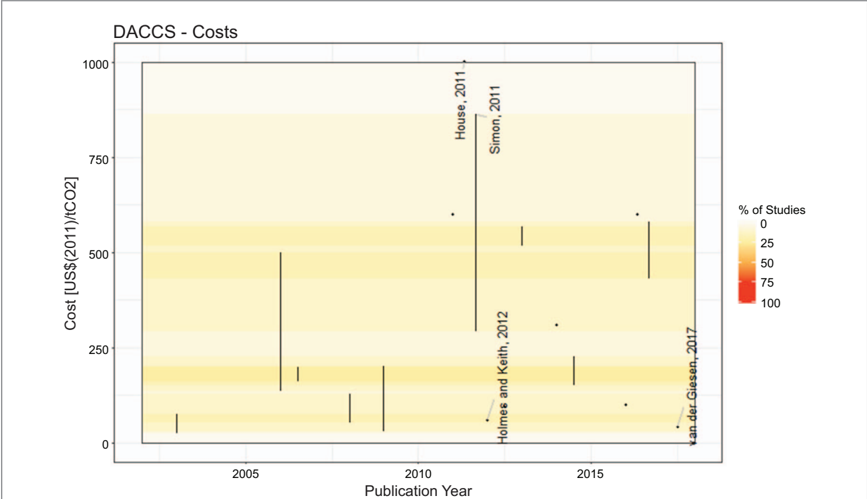
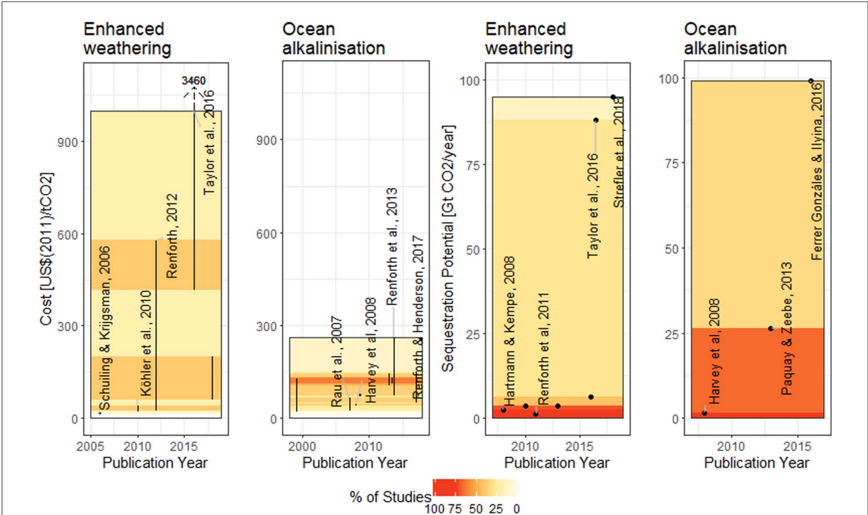
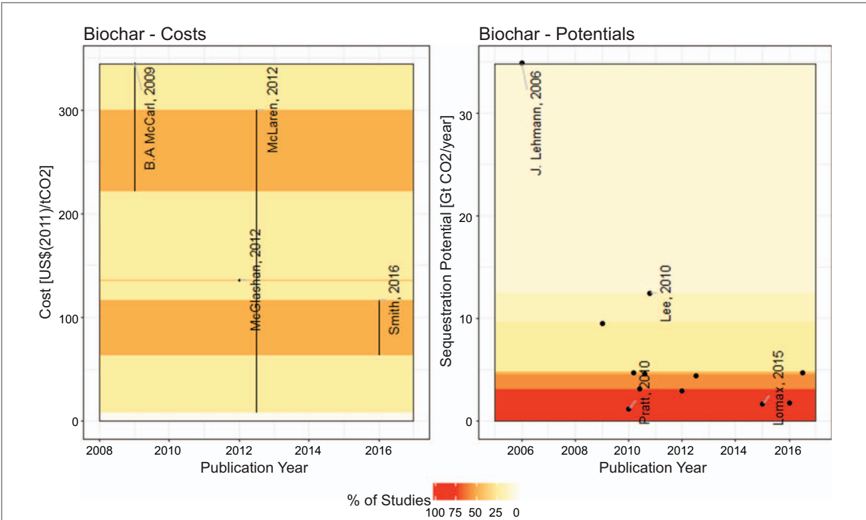
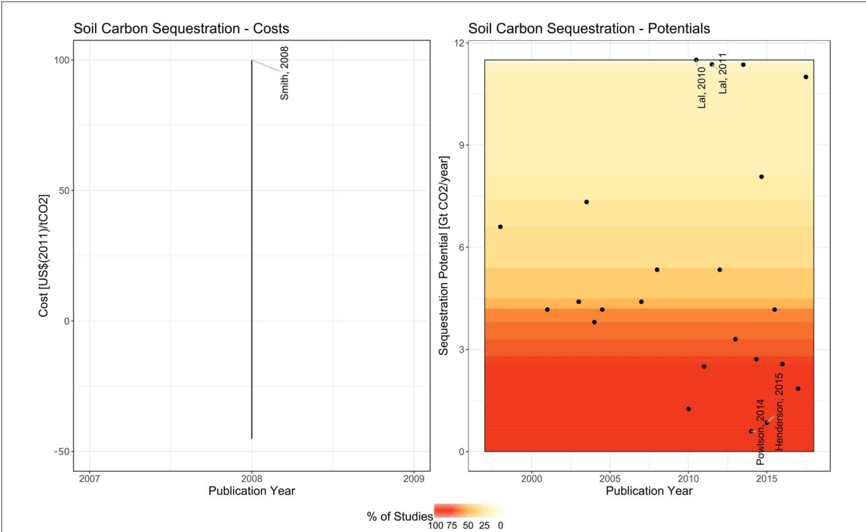
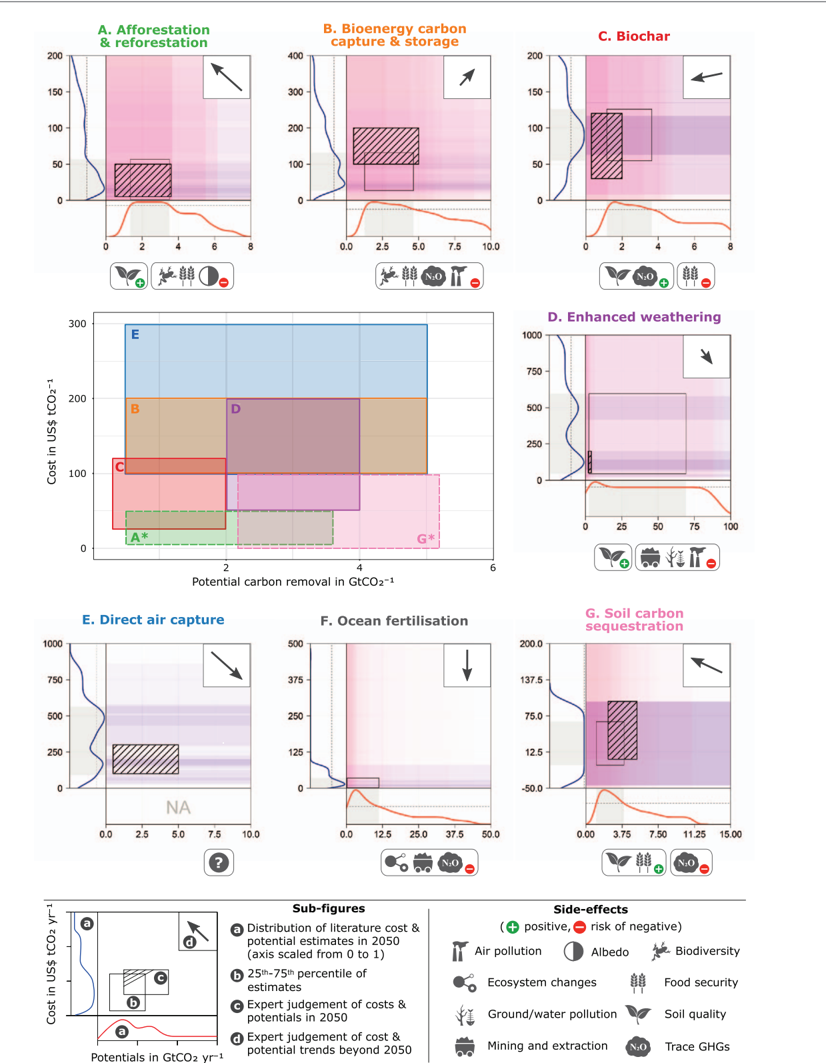
The most recent IPCC assessment has shown an important role for negative emissions technologies (NETs) in limiting global warming to 2 °C cost-effectively. However, a bottom-up, systematic, reproducible, and transparent literature assessment of the different options to remove CO 2 from the atmosphere is currently missing. In part 1 of this three-part review on NETs, we assemble a comprehensive set of the relevant literature so far published, focusing on seven technologies: bioenergy with carbon capture and storage (BECCS), afforestation and reforestation, direct air carbon capture and storage (DACCS), enhanced weathering, ocean fertilisation, biochar, and soil carbon sequestration. In this part, part 2 of the review, we present estimates of costs, potentials, and side-effects for these technologies, and qualify them with the authors' assessment. Part 3 reviews the innovation and scaling challenges that must be addressed to realise NETs deployment as a viable climate mitigation strategy. Based on a systematic review of the literature, our best estimates for sustainable global NET potentials in 2050 are 0.5–3.6 GtCO 2 yr −1 for afforestation and reforestation, 0.5–5 GtCO 2 yr −1 for BECCS, 0.5–2 GtCO 2 yr −1 for biochar, 2–4 GtCO 2 yr −1 for enhanced weathering, 0.5–5 GtCO 2 yr −1 for DACCS, and up to 5 GtCO 2 yr −1 for soil carbon sequestration. Costs vary widely across the technologies, as do their permanency and cumulative potentials beyond 2050. It is unlikely that a single NET will be able to sustainably meet the rates of carbon uptake described in integrated assessment pathways consistent with 1.5 °C of global warming.
Overview
The claims and statistics of this paper haven’t been checked yet.
Free: it reads the open-access text and checks the first 5 claims that cite a source we can check. Create a free account to check every claim.
Integrity signals
Registry
Cites
Statistics
Figures
Verification
Claims the paper makes
The claims and statistics of this paper haven’t been checked yet.
Free: it reads the open-access text and checks the first 5 claims that cite a source we can check. Create a free account to check every claim.
Claims other papers make about this one
Each is checked against this paper’s own text: does it say what the citing paper says it does?
The cited source doesn’t support the claim as written.
In the citing paper
“Previous reviews 18,28,[52][53][54] have shown that these pathways offer substantial CO 2 removal potential:”
From The technological and economic prospects for CO2 utilization and removal (2019) · cites this paper as [28]
Checked by a reasoning model — may be wrong.
Experimental — accuracy not yet measuredThe source backs part of the claim, not all of it — or backs it for a different population, condition or comparison.
In the citing paper
“Plausibly, all bioenergy that can be sourced sustainably (about 100 EJ 3,25 primary energy) could be allocated to BECCS, so that about 4.2-5.6Gt CO 2 per year could be sequestered (reflecting losses in energy and CO 2 in along different steps in the process).”
From The mutual dependence of negative emission technologies and energy systems (2019) · cites this paper as [3]
Experimental — accuracy not yet measuredThe source backs part of the claim, not all of it — or backs it for a different population, condition or comparison.
In the citing paper
“Removal costs are estimated at $5-$50/tCO 2 (Fuss et al. 2018).”
From Strategies for mitigation of climate change: a review (2020) · cites this paper as Fuss et al. 2018
Experimental — accuracy not yet measuredThe source backs part of the claim, not all of it — or backs it for a different population, condition or comparison.
In the citing paper
“Side effects of ocean fertilization that are discussed in the literature include ocean acidification, deep and mid-water oxygen decrease or depletion, increase in production of further greenhouse gases, unpredictable impact on food cycles, creation of toxic algal blooms as well as mixed effects on the seafloor and upper ocean ecosystems (Fuss et al. 2018;Williamson et al. 2012).”
From Strategies for mitigation of climate change: a review (2020) · cites this paper as Fuss et al. 2018
Experimental — accuracy not yet measuredThe source backs part of the claim, not all of it — or backs it for a different population, condition or comparison.
In the citing paper
“In the context of our CDR targets, ERW has a similar potential to that of other CDR strategies 23 estimated for 2050, including bio-energy with carbon capture and storage (BECCS), widely adopted in IPCC future scenarios (0.5-5 Gt CO2 yr -1 ), direct air carbon capture and storage (DAC) (0.5-5 Gt CO2 yr -1 ), biochar (0.5 to 2 Gt CO2 yr -1 ), soil organic carbon (SOC) sequestration (0.5-5 Gt CO2 yr”
From Potential for large-scale CO2 removal via enhanced rock weathering with croplands (2020) · cites this paper as [23]
Experimental — accuracy not yet measured
55 more claims about this paper
Create a free account to see every claim other papers make about this one.
Self-check
Percentages, sums and reported differences re-computed from the paper’s own numbers.
The self-check needs the paper’s full text.
Citations
Cites
Soil Carbon Sequestration Impacts on Global Climate Change and Food Security
Lal, R. (2004) · Science · doi:10.1126/science.1097396 · Cited by 8,376 · cited 6×
“Of the 22 articles (Batjes 1998, Benbi 2013, Conant 2011, Henderson et al 2015, Lal 2003b, 2003a, 2004a, 2004c, 2004b, 2010, 2011, 2013, Lassaletta and Aguilera 2015, Lorenz and Lal 2014, Powlson et al 2014, Salati et al 2010, Smith 2012, 2016, Sommer and Bossio 2014, Minasny et al 2017, Metting et…”
BackgroundInfluentialRiahi, K., van Vuuren, D. P., Kriegler, E., Edmonds, J., O’Neill, B. C., Fujimori, S., Bauer, N., Calvin, K., Dellink, R., Fricko, O., et al. (2017) · Global Environmental Change · doi:10.1016/j.gloenvcha.2016.05.009 · Cited by 6,607
Self-citationThe next generation of scenarios for climate change research and assessment
Moss, R. H., Edmonds, J. A., Hibbard, K. A., Manning, M. R., Rose, S. K., van Vuuren, D. P., Carter, T. R., Emori, S., Kainuma, M., Kram, T., et al. (2010) · Nature · doi:10.1038/nature08823 · Cited by 6,467
Brennan, L., & Owende, P. (2010) · Renewable and Sustainable Energy Reviews · doi:10.1016/j.rser.2009.10.009 · Cited by 4,894 · cited 2×
“24 Although achievable scales are not clear yet, there is also research on third-generation biofuels, derived from algal biomass (Brennan and Owende 2010) with the potential to enhance yields by improving microalgal biology through genetic or metabolic engineering (Tandon and Jin 2017).”
BackgroundCarbon capture and storage (CCS): the way forward
Bui, M., Adjiman, C. S., Bardow, A., Anthony, E. J., Boston, A., Brown, S., Fennell, P. S., Fuss, S., Galindo, A., Hackett, L. A., et al. (2018) · Energy & Environmental Science · doi:10.1039/c7ee02342a · Cited by 4,374
Self-citationGlobal effects of land use on local terrestrial biodiversity
Newbold, T., Hudson, L. N., Hill, S. L. L., Contu, S., Lysenko, I., Senior, R. A., Börger, L., Bennett, D. J., Choimes, A., Collen, B., et al. (2015) · Nature · doi:10.1038/nature14324 · Cited by 4,352
Soil carbon sequestration to mitigate climate change
Lal, R. (2004) · Geoderma · doi:10.1016/j.geoderma.2004.01.032 · Cited by 3,936 · cited 6×
“Of the 22 articles (Batjes 1998, Benbi 2013, Conant 2011, Henderson et al 2015, Lal 2003b, 2003a, 2004a, 2004c, 2004b, 2010, 2011, 2013, Lassaletta and Aguilera 2015, Lorenz and Lal 2014, Powlson et al 2014, Salati et al 2010, Smith 2012, 2016, Sommer and Bossio 2014, Minasny et al 2017, Metting et…”
BackgroundInfluentialGriscom, B. W., Adams, J., Ellis, P. W., Houghton, R. A., Lomax, G., Miteva, D. A., Schlesinger, W. H., Shoch, D., Siikamäki, J. V., Smith, P., et al. (2017) · Proceedings of the National Academy of Sciences · doi:10.1073/pnas.1710465114 · Cited by 3,481
Self-citationO’Neill, B. C., Kriegler, E., Ebi, K. L., Kemp-Benedict, E., Riahi, K., Rothman, D. S., van Ruijven, B. J., van Vuuren, D. P., Birkmann, J., Kok, K., et al. (2017) · Global Environmental Change · doi:10.1016/j.gloenvcha.2015.01.004 · Cited by 3,359
Irreversible climate change due to carbon dioxide emissions
Solomon, S., Plattner, G.-K., Knutti, R., & Friedlingstein, P. (2009) · Proceedings of the National Academy of Sciences · doi:10.1073/pnas.0812721106 · Cited by 3,217 · cited 1×
“…et al 2015, Riahi et al 2015, Eom et al 2015), temperature overshoot carries additional risks associated with higher levels of warming and the resulting impacts and climate feedbacks that could occur (van Vuuren et al 2013, Solomon et al 2009, Friedlingstein et al 2006, Clarke et al 2014).”
Background
Research works printed but not linked: 32
- Bruckner T ed Edenhofer E, 2014, Contribution of Working Group III to the Fifth Assessment Report of the Intergovernmental Panel on Climate Change
- Bui M, 2018, Energy Environ. Sci.
- Ciais P ed Stocker T F, 2013, Climate Change 2013: The Physical Science Basis. Contribution of Working Group I to the Fifth Assessment Report of the Intergovernmental Panel on Climate Change
- Clarke L E ed Edenhofer O, 2014, Clim. Change 2014 Mitig. Clim. Change Contrib. Work. Gr. III to Fifth Assess. Rep. Intergov. Panel Clim. Change, 413
- Coelho S T, 2012, Chapter 20—land and water: linkages to bioenergy, 1459
- Corathers L A, 2015, Earth
- d’Hotman D V, 1961, Int. Sugar J., 63, 363
- Dale V H, 2010, Biofuels: implications for Land Use and Biodiversity
- Díaz S, 2009, Biodiversity, Ecosystem Functioning, and Human Wellbeing
- Fuss S, 2017, Oxf. Res. Encycl. Clim. Sci., 1
- Gale J J, 2004, Geol. Belgica, 7, 99
- Haberl H ed Dewulf J, 2015, Sustainability Assessment of Renewables-Based Products, 1
- Hassani N, 2016, Pet. Res., 25, 4
- IEA GHG, 2005, Building the Cost Curves for CO
- IEA GHG, 1998, Enhanced Coal Bed Methane Recovery with CO
- IPCC ed Metz B, 2005, Carbon Dioxide Capture and Storage (SRCCS)
- IPCC ed Qin D, 2013, Contribution of Working Group I to the Fifth Assessment Report of the Intergovernmental Panel on Climate Change
- IPCC ed Edenhofer O, 2014, Contribution of Working Group III to the Fifth Assessment Report of the Intergovernmental Panel on Climate Change
- IPCC ed Pachauri R K, 2014, Contribution of Working Groups I, II and III to the Fifth Assessment Report of the Intergovernmental Panel on Climate Change
- Liu W W, 2016, Acta Ecol. Sin., 36, 2113
- Lopes A S, 1996, Better Crop. Int., 10, 10
- Magill B, 2017, Clim. Cent.
- Markels M, 2001, Poster Presentation for NETL Conference on Carbon Sequestration, 14
- 10.1088/1748-9326/aabf9 · doi:10.1088/1748-9326/aabf9
- Minx J, 2017, Environ. Res. Lett., 12
- National Academy of Sciences, 2015, Climate Intervention
- 53. Nkouathio D G, Wandji P, Bardintzeff J M, Tematio P, Dongmo A K and Tchoua F 2008 Utilisation des roches volcaniques pour la remineralisation des sols ferrallitiques des regions tropicales. Cas des pyroclastites basaltiques du graben de Tombel (Ligne volcanique du Cameroun) Bull. Soc. Vaudoise Sci. Nat. 91 1-14
- 122. Sedjo R A and Solomon A M 1991 Climate and forests Greenhouse Warming: Abatement and Adaptation (Resources for the Future)
- Strefler J, 2018, Environ. Res. Lett., 13
- Strefler J, 2018, Environ. Res. Lett., 13
- UNEP, 2017, The Emissions Gap Report 2017
- USDOE, 2014, Report
Cited by
Items 501–600 of 1,001
Assessment of technologies and economics for carbon dioxide removal from a portfolio perspective
Mühlbauer, A., Keiner, D., Gerhards, C., Caldera, U., Sterner, M., & Breyer, C. (2025) · International journal of greenhouse gas control · doi:10.1016/j.ijggc.2024.104297 · Cited by 39
Yao, Y., & Zhang, B. (2025) · Environmental Science & Technology · doi:10.1021/acs.est.4c09510 · Cited by 48
Weng, Z. H., & Cowie, A. (2025) · Communications Earth & Environment · doi:10.1038/s43247-025-02228-x · Cited by 43
“For instance, Fuss et al. 75 based their estimate on Woolf et al. 12 , Paustian et al. 76 , Lee and Day 81 , Roberts et al. 72 , Lomax et al. 82 , Pratt and Moran 71 , Griscom et al. 68 , Powell and Lenton 67 , and Smith 64 , deriving an ‘ authors ’ assessment ’ of sustainable potential.”
Carbon sequestration and soil responses to soil amendments – A review
Enebe, M. C., Ray, R. L., & Griffin, R. W. (2025) · Journal of Hazardous Materials Advances · doi:10.1016/j.hazadv.2025.100714 · Cited by 61
Affordable CO2 negative emission through hydrogen from biomass, ocean liming, and CO2 storage
Caserini, S., Barreto, B. B., Lanfredi, C., Cappello, G., Morrey, D. R., & Grosso, M. (2019) · Mitigation and Adaptation Strategies for Global Change · doi:10.1007/s11027-018-9835-7 · Cited by 42
“Although in principle, there is a large potential for available area across the globe to geologically store CO2 permanently (Fuss et al. 2018), and in a CCS project the storage phase is generally less”
BackgroundInfluentialThe International Politics of Carbon Dioxide Removal: Pathways to Cooperative Global Governance
Maher, B., & Symons, J. (2021) · Global Environmental Politics · doi:10.1162/glep_a_00643 · Cited by 38
The energy system transformation needed to achieve the US long-term strategy
Horowitz, R., Binsted, M. T., Browning, M., Fawcett, A. A., Henly, C., Hultman, N., MCFARLAND, J. R., & McJeon, H. C. (2022) · Joule · doi:10.1016/j.joule.2022.06.004 · Cited by 33
Perspectives of CO2 utilization as a negative emission technology
Desport, L., & Selosse, S. (2022) · Sustainable Energy Technologies and Assessments · doi:10.1016/j.seta.2022.102623 · Cited by 44
Global biomethane and carbon dioxide removal potential through anaerobic digestion of waste biomass
Feng, Y., & Rosa, L. (2024) · Environmental Research Letters · doi:10.1088/1748-9326/ad1e81 · Cited by 42
“Additionally, alternative CDR techniques to BECCS, such as biochar, direct air capture and storage and enhance weathering, could be deployed to achieve climate goals [8, 11, 141].”
BackgroundMethodRepo, A., Albrich, K., Jantunen, A., Aalto, J., Lehtonen, I., & Honkaniemi, J. (2024) · Journal of Environmental Management · doi:10.1016/j.jenvman.2024.123124 · Cited by 36
Preserving carbon dioxide removal to serve critical needs
Shindell, D. T., & Rogelj, J. (2025) · Nature Climate Change · doi:10.1038/s41558-025-02251-y · Cited by 37
“This usage has been noted in a previous discussion 11 but has not been explored in the scientific literature, although many studies have noted the potential consequences of over-reliance on CDR 12–16 , including legal consequences 17 .”
Self-citationBio‐Carbon as a Means of Carbon Management in Roads
Pahlavan, F., Aldagari, S., Park, K., Kim, J., & Fini, E. H. (2023) · Advanced Sustainable Systems · doi:10.1002/adsu.202300054 · Cited by 37
Koné, S., & Galiègue, X. (2023) · Environmental Management · doi:10.1007/s00267-023-01821-0 · Cited by 33
“However, by observing the chain of manufacture to the use of such a product, it remains noted that it has as well advantages and disadvantages (Fuss et al. 2018).”
BackgroundEnvironmental problem shifting from climate change mitigation: A mapping review
Hansen, O. W., & van den Bergh, J. C. J. M. (2023) · PNAS Nexus · doi:10.1093/pnasnexus/pgad448 · Cited by 49
“Moving from biological types of CDR to chemical CDR, the main shifts from DACCS are land use , freshwater use , and mineral and metal depletion .”
BackgroundInfluentialGutsch, M., & Leker, J. (2024) · Communications Engineering · doi:10.1038/s44172-023-00152-6 · Cited by 42
Plazzotta, M., Séférian, R., & Douville, H. (2019) · Earth s Future · doi:10.1029/2019ef001165 · Cited by 35
“A recent study from Fuss et al. (2018) has assessed available literature on these well‐established CDR options and suggests that the range of carbon removal efficiency could be larger than expected.”
BackgroundInfluentialEvaluating negative emissions technologies using neutrosophic data envelopment analysis
Tapia, J. F. D. (2020) · Journal of Cleaner Production · doi:10.1016/j.jclepro.2020.125494 · Cited by 31
Climate change mitigation potential of biochar from forestry residues under boreal condition
Hagenbo, A., Antón‐Fernández, C., Bright, R. M., Rasse, D. P., & Astrup, R. (2021) · The Science of The Total Environment · doi:10.1016/j.scitotenv.2021.151044 · Cited by 39
Xu, C., Wang, J., Wu, D., Li, C., Wang, L., Ji, C., Zhang, Y., & Ai, Y. (2021) · Journal of Environmental Management · doi:10.1016/j.jenvman.2021.114129 · Cited by 34
The life cycle environmental impacts of negative emission technologies in North America
Cooper, J., Dubey, L., & Hawkes, A. D. (2022) · Sustainable Production and Consumption · doi:10.1016/j.spc.2022.06.010 · Cited by 40
Low, S., & Honegger, M. (2020) · Risk Analysis · doi:10.1111/risa.13565 · Cited by 37
“Hence, it is currently the only novel carbon sink subject to concerted, systemic-level assessment (Fuss et al., 2018; Minx et al., 2018).”
BackgroundLangholtz, M., Busch, I., Kasturi, A., Hilliard, M. R., McFarlane, J., Tsouris, C., Mukherjee, S., Omitaomu, O. A., Kotikot, S. M., Allen-Dumas, M. R., et al. (2020) · Land · doi:10.3390/land9090299 · Cited by 29
“[12] report a more narrow range of $100 to $200 per tonne CO2.”
BackgroundOshiro, K., Fujimori, S., Hasegawa, T., Asayama, S., Shiraki, H., & Takahashi, K. (2023) · One Earth · doi:10.1016/j.oneear.2023.06.005 · Cited by 32
“, bioenergy carbon capture and storage [BECCS] and afforestation).(6,7) In addition to the IMPs, various unique low-emission pathways have recently”
BackgroundStephenson, S. D., & Allwood, J. M. (2023) · Energy Research & Social Science · doi:10.1016/j.erss.2023.103314 · Cited by 39
Zhao, A., O’Keefe, K. T. V., Binsted, M. T., McJeon, H. C., Bryant, A., Squire, C. V., Zhang, M., Smith, S. J., Cui, R. Y., Ou, Y., et al. (2024) · npj Climate Action · doi:10.1038/s44168-024-00145-x · Cited by 39
“Negative emissions through both natural and technological carbon removal will be increasingly important for meeting net zero as they help to balance the hard-to-abate emissions sources 34 .”
BackgroundSun, J., Niu, W., Du, Y., Ma, L., Huang, S., Mu, F., Zhang, Q., Li, G., Zhu, J., & Siddique, K. H. M. (2024) · Soil and Tillage Research · doi:10.1016/j.still.2024.106265 · Cited by 35
Point-source carbon capture and direct air capture – A technology overview
Ozden, A., Luo, M., & Lum, Y. (2025) · Chemical Engineering Journal · doi:10.1016/j.cej.2025.165535 · Cited by 31
Climate change scenario services: From science to facilitating action
Auer, C., Kriegler, E., Carlsen, H., Kok, K. I., Pedde, S., Krey, V., & Müller, B. (2021) · One Earth · doi:10.1016/j.oneear.2021.07.015 · Cited by 39
Modelling human–natural systems interactions with implications for twenty-first-century warming
Ramanathan, V., Xu, Y., & Versaci, A. (2021) · Nature Sustainability · doi:10.1038/s41893-021-00826-z · Cited by 33
Scott, K., Smith, C., Lowe, J. A., & Garcia‐Carreras, L. (2021) · Global Environmental Change · doi:10.1016/j.gloenvcha.2021.102448 · Cited by 35
Use of aircraft in ocean alkalinity enhancement
Gentile, E., Tarantola, F., Lockley, A. J., Vivian, C., & Caserini, S. (2022) · The Science of The Total Environment · doi:10.1016/j.scitotenv.2022.153484 · Cited by 32
Longa, F. D., Fragkos, P. F., Nogueira, L. P. P., & van der Zwaan, B. (2022) · Computers & Industrial Engineering · doi:10.1016/j.cie.2022.108029 · Cited by 46
Singh, U., & Colosi, L. M. (2022) · Energy Conversion and Management X · doi:10.1016/j.ecmx.2022.100230 · Cited by 45
The policy and ecology of forest-based climate mitigation: challenges, needs, and opportunities
Giebink, C. L., Domke, G. M., Fisher, R. A., Heilman, K. A., MOORE, D. J. P., DeRose, R. J., & Evans, M. E. K. (2022) · Plant and Soil · doi:10.1007/s11104-022-05315-6 · Cited by 32
Sovacool, B. K. (2022) · Energy Research & Social Science · doi:10.1016/j.erss.2022.102857 · Cited by 41
Cownden, R., Mullen, D., & Lucquiaud, M. (2023) · International Journal of Hydrogen Energy · doi:10.1016/j.ijhydene.2022.12.349 · Cited by 36
Migo-Sumagang, M. V., Tan, R. R., & Aviso, K. B. (2023) · Energy · doi:10.1016/j.energy.2023.127445 · Cited by 33
Inequality repercussions of financing negative emissions
Andreoni, P., Emmerling, J., & Tavoni, M. (2023) · Nature Climate Change · doi:10.1038/s41558-023-01870-7 · Cited by 42
“5 that different international distributions of removal effort tend to have a smaller impact on global inequality relative to ownership effect, especially for technologies with a lower average cost, as is the case for BECCS. https://doi.org/10.1038/s41558-023-01870-7”
InfluentialMühlbauer, A., Keiner, D., Galimova, T., & Breyer, C. (2024) · Mitigation and Adaptation Strategies for Global Change · doi:10.1007/s11027-023-10100-6 · Cited by 32
“…of afforestation and reforestation, BECCS, biochar, enhanced weathering, DACCS, ocean fertilisation and soil carbon sequestration at 0.5–5 GtCO 2 /a (Fuss et al. 2018), widening the application area of e-SiC to the substitution of construction sand could cover about 65% of the total 21 GtCO 2 /a…”
InfluentialMullen, D., & Lucquiaud, M. (2024) · Energy Reports · doi:10.1016/j.egyr.2024.04.067 · Cited by 28
Direct mineralization of atmospheric CO 2 using natural rocks in Japan
Myers, C., & Nakagaki, T. (2020) · Environmental Research Letters · doi:10.1088/1748-9326/abc217 · Cited by 33
The missing piece in policy for carbon dioxide removal: reverse auctions as an interim solution
Lundberg, L., & Fridahl, M. (2022) · Discover Energy · doi:10.1007/s43937-022-00008-8 · Cited by 29
“social acceptance [28, 29], political prioritization [30], path dependencies [11], and trade-offs in competition for resources [18].”
BackgroundHenryson, K., Meurer, K. H. E., Bolinder, M. A., Kätterer, T., & Tidåker, P. (2022) · Carbon Management · doi:10.1080/17583004.2022.2074315 · Cited by 28
Ostovari, H., Kuhrmann, L., Mayer, F., Minten, H., & Bardow, A. (2023) · Journal of CO2 Utilization · doi:10.1016/j.jcou.2023.102496 · Cited by 37
(IPCC), I. P. O. C. C. (2023) · Cambridge University Press eBooks · doi:10.1017/9781009157926.003 · Cited by 48
Meeting sustainable aviation fuel policy targets through first generation corn biorefineries
Batten, R., Galant, O., Karanjikar, M., & Spatari, S. (2022) · Fuel · doi:10.1016/j.fuel.2022.126294 · Cited by 29
Adun, H. H., Ampah, J. D., Bamisile, O., Ozsahin, D. U., & Staffell, I. (2024) · Sustainable Production and Consumption · doi:10.1016/j.spc.2024.04.003 · Cited by 32
Hahn, T., Morfeldt, J., Höglund, R., Karlsson, M., & Fetzer, I. (2024) · Nature Communications · doi:10.1038/s41467-024-54039-x · Cited by 36
Policy transition risk, carbon premiums, and asset prices
Hambel, C., & van der Ploeg, F. (2025) · Journal of Monetary Economics · doi:10.1016/j.jmoneco.2025.103780 · Cited by 47
Effects of Afforestation on Plant Diversity and Soil Quality in Semiarid SE Spain
Segura, C., Jiménez, M. N., Ondoño, E. F., & Navarro, F. B. (2021) · Forests · doi:10.3390/f12121730 · Cited by 32
“These regions are considered extremely vulnerable to land degradation and desertification [2,10,16].”
BackgroundThe Role of Corporates in Governing Carbon Dioxide Removal: Outlining a Research Agenda
Battersby, F., Heap, R., Gray, A. C., Workman, M. H. W., & Strivens, F. (2022) · Frontiers in Climate · doi:10.3389/fclim.2022.686762 · Cited by 29
The policy discourse on negative emissions, land-based technologies, and the Global South
Jaschke, G., & Biermann, F. (2022) · Global Environmental Change · doi:10.1016/j.gloenvcha.2022.102550 · Cited by 35
Morrow, D. R., Apeaning, R. W., & Guard, G. (2023) · Geoscientific model development · doi:10.5194/gmd-16-1105-2023 · Cited by 31
Fetanat, A., Tayebi, M., & Mofid, H. (2023) · Process Safety and Environmental Protection · doi:10.1016/j.psep.2023.09.037 · Cited by 29
Biochar as a carbon dioxide removal strategy in integrated long-run mitigation scenarios
Bergero, C., Wise, M., Lamers, P., Wang, Y., & Weber, M. (2024) · Environmental Research Letters · doi:10.1088/1748-9326/ad52ab · Cited by 37
“…the solid product of pyrogenic carbon capture and storage (PyCCS) [5], has been proposed as a CDR strategy [6–9] with relatively low cost [10, 11], high-technology readiness [12], and potential co-benefits in agricultural systems which could result in higher crop yields [13–15], a key…”
BackgroundA Comprehensive Assessment of Carbon Dioxide Removal Options for Germany
Borchers, M., Förster, J., Thrän, D., Beck, S., Thoni, T., Korte, K., Gawel, E., Markus, T., Schaller, R., Rhoden, I., et al. (2024) · Earth s Future · doi:10.1029/2023ef003986 · Cited by 43
Underestimated sequestration of soil organic carbon in China
Yin, Y., Gong, H., Chen, Z., Tian, X., Wang, Y., Wang, Z., He, K., Qi, M., Chu, Y., Xue, Y., et al. (2025) · Environmental Chemistry Letters · doi:10.1007/s10311-024-01813-4 · Cited by 29
“Soil organic carbon sequestration has emerged as a promising strategy, with the potential to sequester 0.79–1.54 Gt carbon annually, accounting for 6.9–13.4% of global carbon emissions [2–4].”
InfluentialMilão, R. D. F. D., Araújo, O. D. Q. F., & de Medeiros, J. L. (2020) · Renewable and Sustainable Energy Reviews · doi:10.1016/j.rser.2020.110181 · Cited by 33
Simmons, A. T., Cowie, A., & Waters, C. (2021) · The Science of The Total Environment · doi:10.1016/j.scitotenv.2021.145278 · Cited by 30
Lemma, B., Williams, S., & Paustian, K. H. (2021) · Journal of Environmental Management · doi:10.1016/j.jenvman.2021.112893 · Cited by 26
Kuparinen, K., Lipiäinen, S., Vakkilainen, E. K., & Laukkanen, T. (2022) · Environment Development and Sustainability · doi:10.1007/s10668-021-02074-9 · Cited by 28
“, 2017b) or the possible scale or emission reduction potential (Leeson et al., 2017; Fuss et al., 2018; Kuparinen et al., 2019, IEA, 2020).”
BackgroundCO 2 removal and 1.5 °C: what, when, where, and how?
Chiquier, S., Fajardy, M., & Dowell, N. M. (2022) · Energy Advances · doi:10.1039/d2ya00108j · Cited by 30
Cox, E., Spence, E., & Pidgeon, N. (2022) · Public Understanding of Science · doi:10.1177/09636625221112190 · Cited by 31
“9GtCO2y −1 to 95GtCO2y −1 globally, at an estimated cost of between $24/tCO2 and $578/ tCO2 (Fuss et al., 2018).”
BackgroundFirth, A. G., Brooks, J. P., Locke, M. A., Morin, D. J., Brown, A. E., & Baker, B. H. (2022) · Environments · doi:10.3390/environments9090109 · Cited by 32
Relative benefits of allocating land to bioenergy crops and forests vary by region
Melnikova, I., Ciais, P., Tanaka, K., Vuichard, N., & Boucher, O. (2023) · Communications Earth & Environment · doi:10.1038/s43247-023-00866-7 · Cited by 41
Pehl, M., Schreyer, F., & Luderer, G. (2024) · Geoscientific model development · doi:10.5194/gmd-17-2015-2024 · Cited by 35
“The availability of CDR, however, is uncertain (Fuss et al., 2018; Minx et al., 2018; Smith et al., 2015) and subject to major sustainability concerns (Smith et al., 2 In view of the importance of the industry sector in terms of energy demand and CO 2 emissions, its accurate modelling in the…”
Self-citationAbegg, M., Clulow, Z., Nava, L., & Reiner, D. M. (2024) · Frontiers in Climate · doi:10.3389/fclim.2024.1331901 · Cited by 35
Ge, B., Chen, C., Xu, Y., Roberts, S., Zhang, M., Shao, Q., O'Hare, D. M., & Zhu, X. (2024) · Chemical Engineering Journal · doi:10.1016/j.cej.2024.156782 · Cited by 27
Laakso, A., Snyder, P. K., Liess, S., Partanen, A., & Millet, D. B. (2020) · Earth System Dynamics · doi:10.5194/esd-11-415-2020 · Cited by 27
Large-Scale Carbon Dioxide Removal: The Problem of Phasedown
Parson, E. A., & Buck, H. J. (2020) · Global Environmental Politics · doi:10.1162/glep_a_00575 · Cited by 31
“Sequestration in such biological reservoirs will also be vulnerable to disturbance and thus impermanent (Fuss et al. 2018; National Research Council 2019).”
Calcium looping post-combustion CO2 capture in sugarcane bagasse fuelled power plants
Neto, S. D. A., Szklo, A. S., & Rochedo, P. (2021) · International journal of greenhouse gas control · doi:10.1016/j.ijggc.2021.103401 · Cited by 31
Li, W., Feaster, J. T., Akhade, S. A., Davis, J. T., Wong, A. A., Beck, V. A., Varley, J. B., Hawks, S. A., Stadermann, M., Hahn, C., et al. (2021) · ACS Sustainable Chemistry & Engineering · doi:10.1021/acssuschemeng.1c01846 · Cited by 27
Sovacool, B. K., Baum, C. M., & Low, S. (2022) · Ecological Economics · doi:10.1016/j.ecolecon.2022.107648 · Cited by 29
Uncompensated claims to fair emission space risk putting Paris Agreement goals out of reach
Ganti, G., Gidden, M., Smith, C., Fyson, C. L., Nauels, A., Riahi, K., & Schleussner, C. (2023) · Environmental Research Letters · doi:10.1088/1748-9326/acb502 · Cited by 33
Morimoto, S., Kitagawa, N., Bensebaa, F., Kumar, A., Kataoka, S., & Taniguchi, S. (2023) · Journal of Cleaner Production · doi:10.1016/j.jclepro.2023.136763 · Cited by 27
Constraining the Capacity of Global Croplands to CO 2 Drawdown via Mineral Weathering
Haque, F., Khalidy, R., Chiang, Y. W., & Santos, R. M. (2023) · ACS Earth and Space Chemistry · doi:10.1021/acsearthspacechem.2c00374 · Cited by 29
Olesen, I., Bonaldo, A., Farina, R., Gonera, A., Hughes, A. D., Navrud, S., Orsini, F., Parma, L., & Zornoza, R. (2023) · Frontiers in Marine Science · doi:10.3389/fmars.2023.1178014 · Cited by 33
Soils as Carbon Stores and Sinks: Expectations, Patterns, Processes, and Prospects of Transitions
van Noordwijk, M., Aynekulu, E., Hijbeek, R., Milne, E., Minasny, B., & Saputra, D. D. (2023) · Annual Review of Environment and Resources · doi:10.1146/annurev-environ-112621-083121 · Cited by 38
Nordic perspectives on the emerging biochar business
Salo, E., Weber, K., Hagner, M., & Näyhä, A. (2024) · Journal of Cleaner Production · doi:10.1016/j.jclepro.2024.143660 · Cited by 35
Edwards, A. W., Brockway, P. E., Bickerstaff, K., & Nijsse, F. J. M. M. (2025) · Environmental Research Letters · doi:10.1088/1748-9326/adc9c6 · Cited by 34
“Although some level of CDR may be necessary, studies suggest that achieving the scales envisioned in many scenarios may be infeasible (Vaughan and Gough 2016, Forster et al 2020, Waller et al 2020, Jaiswal et al 2024) and could hinder near-term mitigation efforts (Fuss et al 2018, McLaren 2020).”
Managing for climate and production goals on crop-lands
McClelland, S. C., Bossio, D., Gordon, D. R., Lehmann, J. C., Hayek, M., Ogle, S. M., Sanderman, J., Wood, S. A., Yang, Y., & Woolf, D. (2025) · Nature Climate Change · doi:10.1038/s41558-025-02337-7 · Cited by 41
The rise and flows of blue carbon credits advance global climate and biodiversity goals
Farahmand, S., Hilmi, N., & Duarte, C. M. (2025) · npj Ocean Sustainability · doi:10.1038/s44183-025-00141-6 · Cited by 44
On life-cycle sustainability optimization of enhanced weathering systems
Tan, R. R., & Aviso, K. B. (2021) · Journal of Cleaner Production · doi:10.1016/j.jclepro.2021.125836 · Cited by 28
Pradhan, S., Shobe, W., Fuhrman, J., McJeon, H. C., Binsted, M. T., Doney, S. C., & Clarens, A. F. (2021) · Frontiers in Climate · doi:10.3389/fclim.2021.660787 · Cited by 28
“Given the significant role NETs are likely to play in the future strategies to mitigate climate change, several studies have appeared highlighting the need for a careful assessment of NETs role in climate mitigation (Fuss et al., 2018; Fuhrman et al., 2019; Hilaire et al., 2019).”
BackgroundAlkalinity Concentration Swing for Direct Air Capture of Carbon Dioxide
Rinberg, A., Bergman, A., Schrag, D. P., & Aziz, M. J. (2021) · ChemSusChem · doi:10.1002/cssc.202100786 · Cited by 25
Life Cycle and Techno-Economic Assessment Templates for Emerging Carbon Management Technologies
Faber, G., Mangin, C. G. E., & Sick, V. (2021) · Frontiers in Sustainability · doi:10.3389/frsus.2021.764057 · Cited by 31
Tan, Z. D., Carrasco, L. R., Sutikno, S., & Taylor, D. M. (2022) · Environmental Research Letters · doi:10.1088/1748-9326/ac6f6e · Cited by 37
Sajdak, M., Muzyka, R., Gałko, G., Ksepko, E., Zajemska, M., Sobek, S., & Tercki, D. (2022) · Energies · doi:10.3390/en16010355 · Cited by 29
Zakrisson, L., Azzi, E., & Sundberg, C. (2023) · The International Journal of Life Cycle Assessment · doi:10.1007/s11367-023-02144-2 · Cited by 28
“Comparing different CDR systems is relevant when designing future climate pathways that include CDR techniques to reach climate goals (Fuss et al. 2018).”
BackgroundDisentangling artificial and natural benthic weathering in organic rich Baltic Sea sediments
Fuhr, M., Wallmann, K., Dale, A. W., Diercks, I., Kalapurakkal, H. T., Schmidt, M., Sommer, S., Böhnke, S., Perner, M., & Geilert, S. (2023) · Frontiers in Climate · doi:10.3389/fclim.2023.1245580 · Cited by 24
(2022) · Climate Change and Land · doi:10.1017/9781009157988.003 · Cited by 23
Grubert, E. A., & Talati, S. (2023) · Carbon Management · doi:10.1080/17583004.2023.2292111 · Cited by 38
Douglas, C. M., Shanbhogue, S. J., Ghoniem, A. F., & Zang, G. (2025) · Applied Energy · doi:10.1016/j.apenergy.2025.125465 · Cited by 29
Yang, W., & Song, J. (2021) · Sustainable Production and Consumption · doi:10.1016/j.spc.2021.07.010 · Cited by 23
Comparative analysis of UK net-zero scenarios: The role of energy demand reduction
Johnson, E., Betts-Davies, S., & Barrett, J. (2023) · Energy Policy · doi:10.1016/j.enpol.2023.113620 · Cited by 29
Negative CO2 emissions in the lime production using an indirectly heated carbonate looping process
Greco-Coppi, M., Hofmann, C., Walter, D., Ströhle, J., & Epple, B. (2023) · Mitigation and Adaptation Strategies for Global Change · doi:10.1007/s11027-023-10064-7 · Cited by 22
“…Strateg Glob Change (2023) 28:30 1 3 30 Page 4 of 32 negative CO2 emissions, i.e., CDR, is the implementation of carbon capture and storage (CCS) into industrial processes which emit high amounts of biogenic CO2 (Clarke et al., 2014; Fuss et al., 2018; Fuss et al., 2014; Quader and Ahmed, 2017).”
BackgroundOcean-based negative emissions technologies: a governance framework review
Röschel, L., & Neumann, B. (2023) · Frontiers in Marine Science · doi:10.3389/fmars.2023.995130 · Cited by 36
State-by-state energy-water-land-health impacts of the US net-zero emissions goal
Ou, Y., Iyer, G. C., McJeon, H. C., Cui, R. Y., Zhao, A., O’Keefe, K. T. V., Zhao, M., Qiu, Y. S., & Loughlin, D. H. (2023) · Energy and Climate Change · doi:10.1016/j.egycc.2023.100117 · Cited by 27
Fuhr, M., Wallmann, K., Dale, A. W., Kalapurakkal, H. T., Schmidt, M., Sommer, S., Deusner, C., Spiegel, T., Kowalski, J., & Geilert, S. (2024) · Frontiers in Climate · doi:10.3389/fclim.2024.1338556 · Cited by 23
Assessment of optimal conditions for the performance of greenhouse gas removal methods
Asibor, J. O., Clough, P. T., Nabavi, S. A., & Manovic, V. M. (2021) · Journal of Environmental Management · doi:10.1016/j.jenvman.2021.113039 · Cited by 27
Metadata
- Authors
- Fuss, S., Lamb, W. F., Callaghan, M. W., Hilaire, J., Creutzig, F., Amann, T., Beringer, T., de Oliveira Garcia, W., Hartmann, J., Khanna, T., Luderer, G., Nemet, G. F., Rogelj, J., Smith, P., Vicente, J. L. V., Wilcox, J., del Mar Zamora Dominguez, M., & Minx, J. C.
- Affiliations
- Mercator Research Institute on Global Commons and Climate Change (DE)
- University of Leeds (GB)
- Universität Hamburg (DE)
- Potsdam Institute for Climate Impact Research (DE)
- University of Wisconsin–Madison (US)
- International Institute for Applied Systems Analysis (AT)
- University of Aberdeen (GB)
- Colorado School of Mines (US)
- Corresponding author
- Fuss, Sabine
- ORCID
- Venue
- Environmental Research Letters
- Publisher
- IOP Publishing
- Published
- 2018-05-21
- Volume
- 13
- Issue
- 6
- Pages
- 063002
- ISSN
- 1748-9326 (ISSN-L)
- OpenAlex
- W2804406438
- Semantic Scholar
- ca2b06bf3d1bd787e7941d46ef0e673b8e288399
- Cited by
- 1,525
- References
- 402
- Citations by year
- 2026: 128 · 2025: 225 · 2024: 231 · 2023: 262 · 2022: 264 · 2021: 200 · 2020: 117 · 2019: 84 · 2018: 13
- FWCI
- 66.25
- Type
- journal article
- Language
- en
- Open access
- gold
- doi.org
- Licence
- cc-by
- iopscience.iop.org/info/page/text-and-data-mining (tdm, 1 d)
- creativecommons.org/licenses/by/3.0/ (vor, 1 d)
- Locations
- Environmental Research Letters (publishedVersion, cc-by)
- White Rose Research Online (University of Leeds, The University of Sheffield, University of York) (acceptedVersion)
- Aberdeen University Research Archive (Aberdeen University) (submittedVersion)
- DOAJ (DOAJ: Directory of Open Access Journals) (submittedVersion)
- Publication Database PIK (Potsdam Institute for Climate Impact Research (PIK)) (submittedVersion, other-oa)
- Spiral (Imperial College London) (submittedVersion, cc-by)
- Repository for Publications and Research Data (ETH Zurich) (submittedVersion, cc-by)
- ETH Zürich Research Collection (cc-by)
- Funders
- Bundesministerium für Bildung und Forschung (01LS1610B, 03EK3046B)
- UK Energy Research Centre (UKERC/FFR2/3)
- Deutsche Forschungsgemeinschaft (SSP-1689)
- Natural Environment Research Council (NE/P019455/1, NE/P019900/1)
- Topics
- Physical Sciences › Chemical Engineering › Filtration and Separation › Carbon Dioxide Capture Technologies
- Social Sciences › Economics, Econometrics and Finance › Economics and Econometrics › Climate Change Policy and Economics
- Physical Sciences › Environmental Science › Global and Planetary Change › Climate Change and Geoengineering
- Keywords
- negative emissions technologies, bioenergy with carbon capture and storage, afforestation and reforestation, direct air capture, enhanced weathering, biochar, soil carbon sequestration, climate change mitigation, 2°C target, 1.5°C target
About these checks
Registry, retraction, Cites and statistics results are computed, not judged, with one exception: a printed reference that no index lists is read once by a model before it counts as a citation error. Claims are extracted by a model and kept only when their quote appears verbatim in the text; each cited source is then checked, with a model’s help, for whether it says what the claim relies on. Those verdicts can be wrong — read the claim’s quote and the cited source before relying on one.
Statistics and arithmetic are recomputed, not judged.
Confidence bands are shown only for fields calibrated on our annotated test set. None is calibrated yet, so no band is shown.
What counts as a claim ›How we measure confidence ›How we check this ›
Are you an author, or do you see a problem with this page? Request a review
Data sources
Bibliographic data: Semantic Scholar, OpenAlex, Crossref.
Contains information from the Semantic Scholar Academic Graph Datasets, made available under the ODC Attribution License (ODC-BY 1.0).
Semantic Scholar’s data is described in: Kinney, R., et al. (2023). The Semantic Scholar Open Data Platform. arXiv:2301.10140.
