

Negative emissions—Part 2: Costs, potentials and side effects
Open accessThe DOI matches its Crossref record; 399 of the 402 references it cites were found in a registry or an index.
Abstract
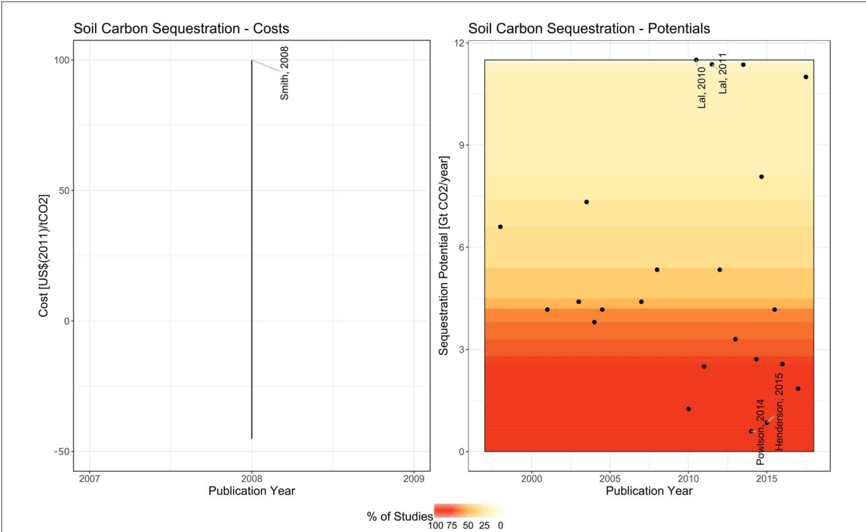
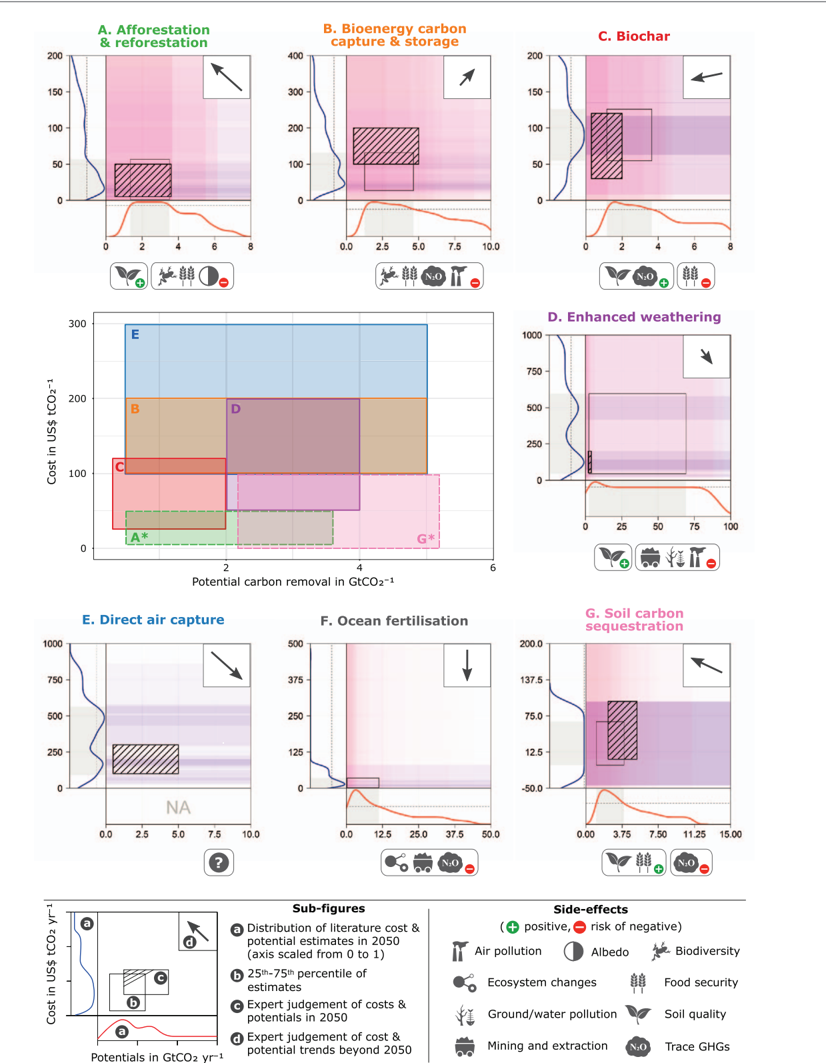
The most recent IPCC assessment has shown an important role for negative emissions technologies (NETs) in limiting global warming to 2 °C cost-effectively. However, a bottom-up, systematic, reproducible, and transparent literature assessment of the different options to remove CO 2 from the atmosphere is currently missing. In part 1 of this three-part review on NETs, we assemble a comprehensive set of the relevant literature so far published, focusing on seven technologies: bioenergy with carbon capture and storage (BECCS), afforestation and reforestation, direct air carbon capture and storage (DACCS), enhanced weathering, ocean fertilisation, biochar, and soil carbon sequestration. In this part, part 2 of the review, we present estimates of costs, potentials, and side-effects for these technologies, and qualify them with the authors' assessment. Part 3 reviews the innovation and scaling challenges that must be addressed to realise NETs deployment as a viable climate mitigation strategy. Based on a systematic review of the literature, our best estimates for sustainable global NET potentials in 2050 are 0.5–3.6 GtCO 2 yr −1 for afforestation and reforestation, 0.5–5 GtCO 2 yr −1 for BECCS, 0.5–2 GtCO 2 yr −1 for biochar, 2–4 GtCO 2 yr −1 for enhanced weathering, 0.5–5 GtCO 2 yr −1 for DACCS, and up to 5 GtCO 2 yr −1 for soil carbon sequestration. Costs vary widely across the technologies, as do their permanency and cumulative potentials beyond 2050. It is unlikely that a single NET will be able to sustainably meet the rates of carbon uptake described in integrated assessment pathways consistent with 1.5 °C of global warming.
Overview
The claims and statistics of this paper haven’t been checked yet.
Free: it reads the open-access text and checks the first 5 claims that cite a source we can check. Create a free account to check every claim.
Integrity signals
Registry
Cites
Statistics
Figures
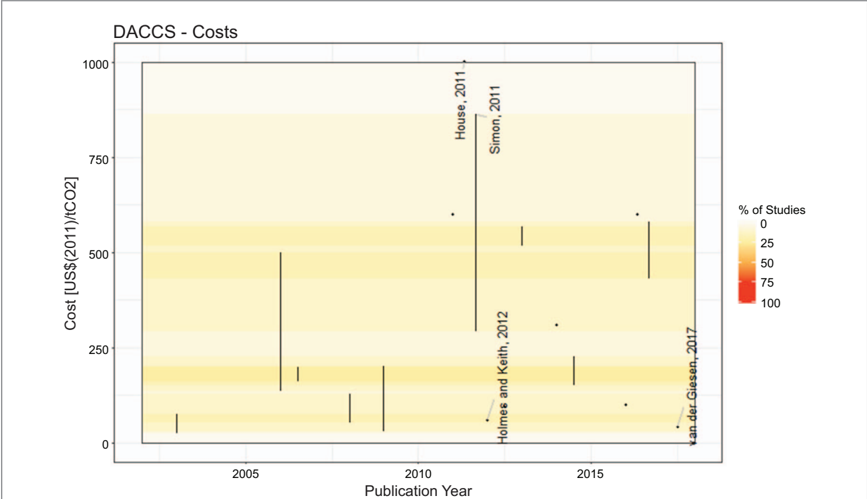
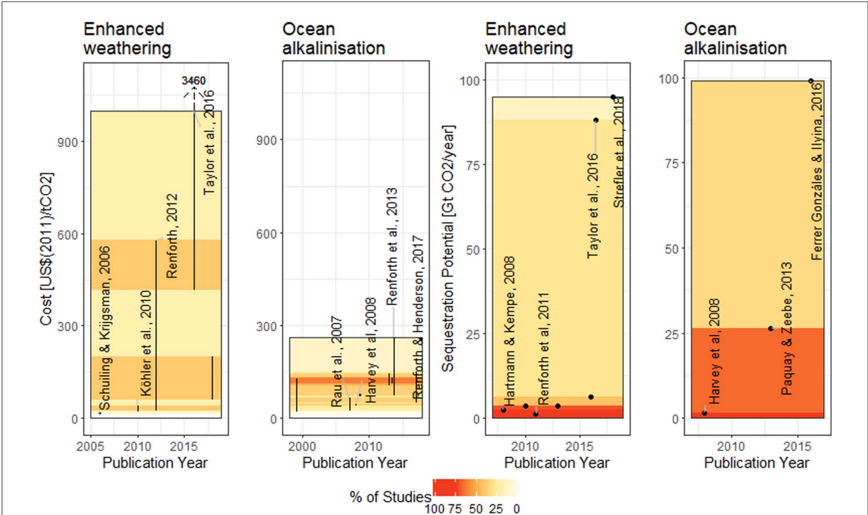
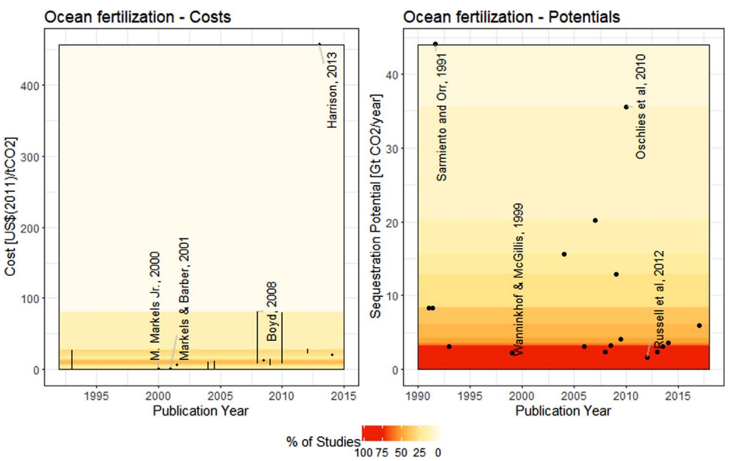
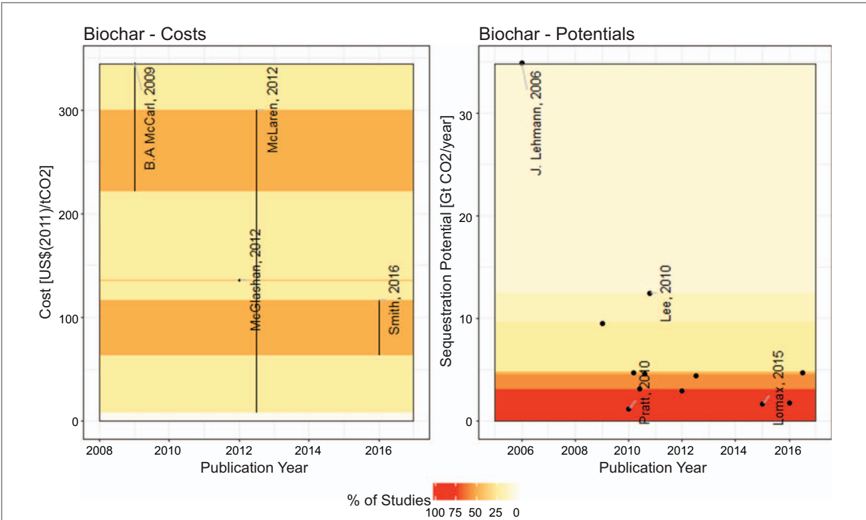
Verification
Claims the paper makes
The claims and statistics of this paper haven’t been checked yet.
Free: it reads the open-access text and checks the first 5 claims that cite a source we can check. Create a free account to check every claim.
Claims other papers make about this one
Each is checked against this paper’s own text: does it say what the citing paper says it does?
The cited source doesn’t support the claim as written.
In the citing paper
“Previous reviews 18,28,[52][53][54] have shown that these pathways offer substantial CO 2 removal potential:”
From The technological and economic prospects for CO2 utilization and removal (2019) · cites this paper as [28]
Checked by a reasoning model — may be wrong.
Experimental — accuracy not yet measuredThe source backs part of the claim, not all of it — or backs it for a different population, condition or comparison.
In the citing paper
“Plausibly, all bioenergy that can be sourced sustainably (about 100 EJ 3,25 primary energy) could be allocated to BECCS, so that about 4.2-5.6Gt CO 2 per year could be sequestered (reflecting losses in energy and CO 2 in along different steps in the process).”
From The mutual dependence of negative emission technologies and energy systems (2019) · cites this paper as [3]
Experimental — accuracy not yet measuredThe source backs part of the claim, not all of it — or backs it for a different population, condition or comparison.
In the citing paper
“Removal costs are estimated at $5-$50/tCO 2 (Fuss et al. 2018).”
From Strategies for mitigation of climate change: a review (2020) · cites this paper as Fuss et al. 2018
Experimental — accuracy not yet measuredThe source backs part of the claim, not all of it — or backs it for a different population, condition or comparison.
In the citing paper
“Side effects of ocean fertilization that are discussed in the literature include ocean acidification, deep and mid-water oxygen decrease or depletion, increase in production of further greenhouse gases, unpredictable impact on food cycles, creation of toxic algal blooms as well as mixed effects on the seafloor and upper ocean ecosystems (Fuss et al. 2018;Williamson et al. 2012).”
From Strategies for mitigation of climate change: a review (2020) · cites this paper as Fuss et al. 2018
Experimental — accuracy not yet measuredThe source backs part of the claim, not all of it — or backs it for a different population, condition or comparison.
In the citing paper
“In the context of our CDR targets, ERW has a similar potential to that of other CDR strategies 23 estimated for 2050, including bio-energy with carbon capture and storage (BECCS), widely adopted in IPCC future scenarios (0.5-5 Gt CO2 yr -1 ), direct air carbon capture and storage (DAC) (0.5-5 Gt CO2 yr -1 ), biochar (0.5 to 2 Gt CO2 yr -1 ), soil organic carbon (SOC) sequestration (0.5-5 Gt CO2 yr”
From Potential for large-scale CO2 removal via enhanced rock weathering with croplands (2020) · cites this paper as [23]
Experimental — accuracy not yet measured
55 more claims about this paper
Create a free account to see every claim other papers make about this one.
Self-check
Percentages, sums and reported differences re-computed from the paper’s own numbers.
The self-check needs the paper’s full text.
Citations
Cites
Soil Carbon Sequestration Impacts on Global Climate Change and Food Security
Lal, R. (2004) · Science · doi:10.1126/science.1097396 · Cited by 8,376 · cited 6×
“Of the 22 articles (Batjes 1998, Benbi 2013, Conant 2011, Henderson et al 2015, Lal 2003b, 2003a, 2004a, 2004c, 2004b, 2010, 2011, 2013, Lassaletta and Aguilera 2015, Lorenz and Lal 2014, Powlson et al 2014, Salati et al 2010, Smith 2012, 2016, Sommer and Bossio 2014, Minasny et al 2017, Metting et…”
BackgroundInfluentialRiahi, K., van Vuuren, D. P., Kriegler, E., Edmonds, J., O’Neill, B. C., Fujimori, S., Bauer, N., Calvin, K., Dellink, R., Fricko, O., et al. (2017) · Global Environmental Change · doi:10.1016/j.gloenvcha.2016.05.009 · Cited by 6,607
Self-citationThe next generation of scenarios for climate change research and assessment
Moss, R. H., Edmonds, J. A., Hibbard, K. A., Manning, M. R., Rose, S. K., van Vuuren, D. P., Carter, T. R., Emori, S., Kainuma, M., Kram, T., et al. (2010) · Nature · doi:10.1038/nature08823 · Cited by 6,467
Brennan, L., & Owende, P. (2010) · Renewable and Sustainable Energy Reviews · doi:10.1016/j.rser.2009.10.009 · Cited by 4,894 · cited 2×
“24 Although achievable scales are not clear yet, there is also research on third-generation biofuels, derived from algal biomass (Brennan and Owende 2010) with the potential to enhance yields by improving microalgal biology through genetic or metabolic engineering (Tandon and Jin 2017).”
BackgroundCarbon capture and storage (CCS): the way forward
Bui, M., Adjiman, C. S., Bardow, A., Anthony, E. J., Boston, A., Brown, S., Fennell, P. S., Fuss, S., Galindo, A., Hackett, L. A., et al. (2018) · Energy & Environmental Science · doi:10.1039/c7ee02342a · Cited by 4,374
Self-citationGlobal effects of land use on local terrestrial biodiversity
Newbold, T., Hudson, L. N., Hill, S. L. L., Contu, S., Lysenko, I., Senior, R. A., Börger, L., Bennett, D. J., Choimes, A., Collen, B., et al. (2015) · Nature · doi:10.1038/nature14324 · Cited by 4,352
Soil carbon sequestration to mitigate climate change
Lal, R. (2004) · Geoderma · doi:10.1016/j.geoderma.2004.01.032 · Cited by 3,936 · cited 6×
“Of the 22 articles (Batjes 1998, Benbi 2013, Conant 2011, Henderson et al 2015, Lal 2003b, 2003a, 2004a, 2004c, 2004b, 2010, 2011, 2013, Lassaletta and Aguilera 2015, Lorenz and Lal 2014, Powlson et al 2014, Salati et al 2010, Smith 2012, 2016, Sommer and Bossio 2014, Minasny et al 2017, Metting et…”
BackgroundInfluentialGriscom, B. W., Adams, J., Ellis, P. W., Houghton, R. A., Lomax, G., Miteva, D. A., Schlesinger, W. H., Shoch, D., Siikamäki, J. V., Smith, P., et al. (2017) · Proceedings of the National Academy of Sciences · doi:10.1073/pnas.1710465114 · Cited by 3,481
Self-citationO’Neill, B. C., Kriegler, E., Ebi, K. L., Kemp-Benedict, E., Riahi, K., Rothman, D. S., van Ruijven, B. J., van Vuuren, D. P., Birkmann, J., Kok, K., et al. (2017) · Global Environmental Change · doi:10.1016/j.gloenvcha.2015.01.004 · Cited by 3,359
Irreversible climate change due to carbon dioxide emissions
Solomon, S., Plattner, G.-K., Knutti, R., & Friedlingstein, P. (2009) · Proceedings of the National Academy of Sciences · doi:10.1073/pnas.0812721106 · Cited by 3,217 · cited 1×
“…et al 2015, Riahi et al 2015, Eom et al 2015), temperature overshoot carries additional risks associated with higher levels of warming and the resulting impacts and climate feedbacks that could occur (van Vuuren et al 2013, Solomon et al 2009, Friedlingstein et al 2006, Clarke et al 2014).”
Background
Research works printed but not linked: 32
- Bruckner T ed Edenhofer E, 2014, Contribution of Working Group III to the Fifth Assessment Report of the Intergovernmental Panel on Climate Change
- Bui M, 2018, Energy Environ. Sci.
- Ciais P ed Stocker T F, 2013, Climate Change 2013: The Physical Science Basis. Contribution of Working Group I to the Fifth Assessment Report of the Intergovernmental Panel on Climate Change
- Clarke L E ed Edenhofer O, 2014, Clim. Change 2014 Mitig. Clim. Change Contrib. Work. Gr. III to Fifth Assess. Rep. Intergov. Panel Clim. Change, 413
- Coelho S T, 2012, Chapter 20—land and water: linkages to bioenergy, 1459
- Corathers L A, 2015, Earth
- d’Hotman D V, 1961, Int. Sugar J., 63, 363
- Dale V H, 2010, Biofuels: implications for Land Use and Biodiversity
- Díaz S, 2009, Biodiversity, Ecosystem Functioning, and Human Wellbeing
- Fuss S, 2017, Oxf. Res. Encycl. Clim. Sci., 1
- Gale J J, 2004, Geol. Belgica, 7, 99
- Haberl H ed Dewulf J, 2015, Sustainability Assessment of Renewables-Based Products, 1
- Hassani N, 2016, Pet. Res., 25, 4
- IEA GHG, 2005, Building the Cost Curves for CO
- IEA GHG, 1998, Enhanced Coal Bed Methane Recovery with CO
- IPCC ed Metz B, 2005, Carbon Dioxide Capture and Storage (SRCCS)
- IPCC ed Qin D, 2013, Contribution of Working Group I to the Fifth Assessment Report of the Intergovernmental Panel on Climate Change
- IPCC ed Edenhofer O, 2014, Contribution of Working Group III to the Fifth Assessment Report of the Intergovernmental Panel on Climate Change
- IPCC ed Pachauri R K, 2014, Contribution of Working Groups I, II and III to the Fifth Assessment Report of the Intergovernmental Panel on Climate Change
- Liu W W, 2016, Acta Ecol. Sin., 36, 2113
- Lopes A S, 1996, Better Crop. Int., 10, 10
- Magill B, 2017, Clim. Cent.
- Markels M, 2001, Poster Presentation for NETL Conference on Carbon Sequestration, 14
- 10.1088/1748-9326/aabf9 · doi:10.1088/1748-9326/aabf9
- Minx J, 2017, Environ. Res. Lett., 12
- National Academy of Sciences, 2015, Climate Intervention
- 53. Nkouathio D G, Wandji P, Bardintzeff J M, Tematio P, Dongmo A K and Tchoua F 2008 Utilisation des roches volcaniques pour la remineralisation des sols ferrallitiques des regions tropicales. Cas des pyroclastites basaltiques du graben de Tombel (Ligne volcanique du Cameroun) Bull. Soc. Vaudoise Sci. Nat. 91 1-14
- 122. Sedjo R A and Solomon A M 1991 Climate and forests Greenhouse Warming: Abatement and Adaptation (Resources for the Future)
- Strefler J, 2018, Environ. Res. Lett., 13
- Strefler J, 2018, Environ. Res. Lett., 13
- UNEP, 2017, The Emissions Gap Report 2017
- USDOE, 2014, Report
Cited by
Items 901–1,000 of 1,001
Research on the Application of Biochar in Carbon Sequestration: A Bibliometric Analysis
Zhang, S., Wang, S., Zhang, J., Wang, B., Wang, H., Liu, L., Cao, C., Shi, M., & Liu, Y. (2025) · Energies · doi:10.3390/en18112745 · Cited by 10
Correddu, F., Lunesu, M. F., Sechi, S., Caratzu, M. F., & Pulina, G. (2025) · PLoS ONE · doi:10.1371/journal.pone.0330379 · Cited by 11
Developing a framework towards global biochar supply chains to optimize regional production cost
Kern, J., Abdelshafy, A., & Walther, G. (2025) · Environmental Technology & Innovation · doi:10.1016/j.eti.2025.104658 · Cited by 9
Biodiversity implications of land-intensive carbon dioxide removal
Prütz, R., Rogelj, J., Ganti, G., Price, J. T., Warren, R., Forstenhäusler, N., Wu, Y., Augustynczik, A. L. D., Wögerer, M., Krisztin, T., et al. (2026) · Nature Climate Change · doi:10.1038/s41558-026-02557-5 · Cited by 22
Self-citationHof, A. F., van der Wijst, K.-I., & van Vuuren, D. P. (2021) · Frontiers in Climate · doi:10.3389/fclim.2021.785577 · Cited by 11
Environmental Issues: Greenhouse Gas Emissions
Vetter, S. H., Nayak, D. R., McBey, D., Dondini, M., Kuhnert, M., & Oyesiku-Blakemore, J. (2022) · Elsevier eBooks · doi:10.1016/b978-0-12-823960-5.00043-3 · Cited by 7
Jaiganesh, N., Kuo, P., Champatan, V., Gopi, G., Kumar, R. A., & Aravind, P. V. (2022) · Frontiers in Energy Research · doi:10.3389/fenrg.2022.826227 · Cited by 9
Casaban, D., & Tsalaporta, E. (2023) · Sustainable Chemistry for Climate Action · doi:10.1016/j.scca.2023.100021 · Cited by 9
Mapping the landscape of carbon dioxide removal research: a bibliometric analysis
Presty, R., Massol, O., Schippers, E. J., & da Costa, P. (2024) · Environmental Research Letters · doi:10.1088/1748-9326/ad71e0 · Cited by 9
da Silva, F. T. F., Lopes, M. S. G., Asano, L. M., Angelkorte, G. B., Costa, A. K. B., Szklo, A. S., Schaeffer, R., & Coutinho, P. L. D. A. (2024) · Biomass and Bioenergy · doi:10.1016/j.biombioe.2024.107387 · Cited by 7
Prospects for the potential carbon sink effects of afforestation to enhance weathering in China
Wu, W., Nel, W., Ji, J.-Q., & Chen, J. (2024) · Journal of Asian Earth Sciences · doi:10.1016/j.jseaes.2024.106370 · Cited by 9
Tan, R. R., Aviso, K. B., Lao, A. R., & Promentilla, M. A. B. (2021) · Process Integration and Optimization for Sustainability · doi:10.1007/s41660-020-00147-2 · Cited by 7
Supply Chain Driven Commercialisation of Bio Energy Carbon Capture and Storage
Klement, J., Rootzén, J., Normann, F., & Johnsson, F. (2021) · Frontiers in Climate · doi:10.3389/fclim.2021.615578 · Cited by 12
“However, with the exception of Platt et al. (2018), who assessed different business models for negative emissions and associated revenues, and Bellamy and Geden (2019), who called on policy makers to support NETs emerging “bottom-up” at the company or regional level, the role of the private sector in creating a demand…”
BackgroundInfluentialMarkus, T., Schaller, R., Gawel, E., & Korte, K. (2021) · Natur und Recht · doi:10.1007/s10357-021-3804-8 · Cited by 9
Costs of avoiding net negative emissions under a carbon budget
van der Wijst, K.-I., Hof, A. F., & van Vuuren, D. P. (2021) · Environmental Research Letters · doi:10.1088/1748-9326/ac03d9 · Cited by 11
Drake, H. F., Rivest, R. L., Edelman, A. S., & Deutch, J. M. (2021) · Environmental Research Letters · doi:10.1088/1748-9326/ac243e · Cited by 10
Aliabadi, D. E., Thrän, D., Bezama, A., & Avşar, B. (2022) · MDPI eBooks · doi:10.3390/books978-3-03897-777-3-10 · Cited by 11
Bioenergy with Carbon Capture and Storage (BECCS)
Fajardy, M. (2022) · Royal Society of Chemistry eBooks · doi:10.1039/9781839165245-00080 · Cited by 8
Digitization of the work environment for sustainable production
Plapper, P. (2022) · doi:10.30844/wgab_2022 · Cited by 11
Bogale, A. A., Melash, A. A., & Percze, A. (2023) · Soil Systems · doi:10.3390/soilsystems7020048 · Cited by 11
“9 gigatons of carbon dioxide annually, with the primary determining factor being the accessibility of biomass resources for the production of biochar [67] (Figure 3).”
BackgroundOptimal Resource Allocation for Carbon Mitigation
Cerasoli, S., & Porporato, A. M. (2023) · Sustainability · doi:10.3390/su151310291 · Cited by 9
Lungkadee, T., Katongtung, T., Pokkanta, P.-R., Onsree, T., Jaroenkhasemmeesuk, C., & Tippayawong, N. (2024) · AIMS energy · doi:10.3934/energy.2024014 · Cited by 11
“This estimate is derived from a meticulous survey of the literature, quantifying sustainable global negative emission technology (NET) potentials for 2050 within the range of 0.5–2 GtCO 2 per year, accompanied by a monetary valuation ranging from USD 30–120 per tCO 2 [16].”
InfluentialThe role of negative emissions technologies in the UK’s net-zero strategy
Bakkaloglu, S., Mersch, M., Sunny, N., Markides, C. N., Shah, N., & Hawkes, A. D. (2024) · Cell Reports Sustainability · doi:10.1016/j.crsus.2024.100126 · Cited by 10
Snyder, B. F. (2019) · AMBIO · doi:10.1007/s13280-019-01301-y · Cited by 8
“However, the purpose of this manuscript is not to criticize the SCC, but to propose an alternative method for CO2 valuation based on the costs of negative emission technologies (NETs).”
BackgroundMethodInfluentialEstimating the potential cooling effect of cirrus thinning achieved via the seeding approach
Liu, J., & Shi, X. (2021) · Atmospheric chemistry and physics · doi:10.5194/acp-21-10609-2021 · Cited by 15
Hill, C. M., Mendoza-Cortés, J. L., Velázquez, J. M., & Whittaker‐Brooks, L. (2021) · iScience · doi:10.1016/j.isci.2021.103700 · Cited by 7
Methodology Underpinning the State of Climate Action Series
Schumer, C., Jaeger, J., Boehm, S., Jeffery, M. L., Levin, K., Hecke, J., Fyson, C. L., Naimoli, S., Majid, A., Lebling, K., et al. (2022) · doi:10.46830/writn.22.00064 · Cited by 10
“We similarly constrained our technological carbon dioxide removal (hereafter referred to as carbon removal) targets to include levels of BECCS that avoid unintended negative impacts on food security, biodiversity, and/or net emissions from land-use change associated with accessing biomass feedstocks (Fuss et al. 2018).”
BackgroundMethodInfluentialDeutsch, T. G., Baker, S. E., Agbo, P., Kauffman, D. R., Vickers, J. W., & Schaidle, J. A. (2021) · doi:10.2172/1814138 · Cited by 7
“With an eye for achieving those successes, participants were then asked to respond to and discuss specific questions about how such successes could be realized within their assigned timeframes, particularly: (1) What are the key barriers and challenges to success? (2) What are needed activities to overcome barriers an…”
BackgroundInfluentialAdditional soil organic carbon storage potential in global croplandsPreprint
Padarian, J., Minasny, B., McBratney, A. B., & Smith, P. (2021) · doi:10.5194/soil-2021-73 · Cited by 12
Self-citationOverconfidence in climate overshootPreprint
Schleussner, C., Ganti, G., Lejeune, Q., Zhu, B., Pfleiderer, P., Prütz, R., Ciais, P., Frölicher, T. L., Fuss, S., Gasser, T., et al. (2023) · doi:10.22541/essoar.170158343.39134302/v1 · Cited by 8
Self-citationLück, S., Callaghan, M., Borchers, M., Cowie, A., Fuss, S., Geden, O., Gidden, M., Hartmann, J., Kammann, C. I., Keller, D. P., et al. (2024) · Research Square · doi:10.21203/rs.3.rs-4109712/v1 · Cited by 7
Self-citationSustainable negative emissions in Europe: evaluating scenarios to meet carbon neutrality by 2050
Markkanen, J., Koponen, K., & Lehtilä, A. (2024) · Environmental Research Letters · doi:10.1088/1748-9326/ad71e1 · Cited by 10
Fair carbon removal obligations under climate response uncertainty
Ganti, G., Pelz, S., Kloenne, U., Gidden, M., Schleussner, C., & Nicholls, Z. (2025) · Climate Policy · doi:10.1080/14693062.2025.2481138 · Cited by 13
“The range of concerns over CDR deployment has been documented in several papers that explore them and investigate associated uncertainties in detail (Andreoni et al., 2024; Creutzig et al., 2021; Deprez et al., 2024; Fuss et al., 2018).”
Climate change and forestry carbon sink: a literature review and visualization perspective
Zhang, Q., Song, J., & Mayuka, R. N. (2025) · Frontiers in Forests and Global Change · doi:10.3389/ffgc.2025.1487503 · Cited by 8
Dai, P., Yang, L., Wang, Z., Dai, J., & Li, J. (2025) · Journal of Soils and Sediments · doi:10.1007/s11368-025-04074-y · Cited by 6
“Minor variations in SOC may cause substantial impacts on atmospheric CO 2 concentrations and trigger potential positive feedbacks to climate change (Fuss et al. 2018).”
Borovics, A., Király, É., Kottek, P., Illés, G. Z., & Schiberna, E. (2025) · Forests · doi:10.3390/f16081251 · Cited by 9
Impact of Basalt Rock Powder on Ryegrass Growth and Nutrition on Sandy and Loamy Acid Soils
Desmalles, C., Jordan‐Meille, L., Hernández-Allica, J., Thomas, C. L., Dunham, S. J., Deng, F., McGrath, S. P., & Haefele, S. M. (2025) · Agronomy · doi:10.3390/agronomy15081791 · Cited by 10
Li, M., Wang, R., Zheng, X., Wang, C., & Rogelj, J. (2025) · Environmental Research Letters · doi:10.1088/1748-9326/adff2e · Cited by 8
“For example, large-scale bioenergy with carbon capture and storage (BECCS) poses potential risks to access to food, water, and biodiversity [7], while direct air capture and sequestration (DACS) increases energy demand making decarbonization of the energy sector more challenging [8].”
Self-citationA comparative study of deep learning-based simulation for geological CO2 sequestration
Tariq, Z., Fu, Q., Abu-Al-Saud, M. O., He, X., Manea, A., Finkbeiner, T., Hoteit, H., & Yan, B. (2025) · Advances in Water Resources · doi:10.1016/j.advwatres.2025.105096 · Cited by 9
Yang, J., Gao, L., Guo, Z., Dong, Y., Moallemi, E. A., Eker, S., Liu, Q., Chi, Z., Liu, F., Obersteiner, M. H., et al. (2025) · The Lancet Planetary Health · doi:10.1016/j.lanplh.2025.101318 · Cited by 6
Vienne, A., Newell, J., Roussard, J., Doherty, R., Cox, S. F., Lyons, G. A., & Vicca, S. (2026) · Biogeosciences · doi:10.5194/bg-23-1681-2026 · Cited by 8
“Beyond emission reductions, carbon dioxide removal (CDR) technologies have emerged as critical tools for achieving net-zero climate goals (Fuss et al., 2018; Rogelj et al., 2018).”
Shi, S., Gao, S., Zhou, G., Chang, D., Liu, R., Liang, T., Zhang, J., Che, Z., & Cao, W. (2026) · Soil and Tillage Research · doi:10.1016/j.still.2026.107158 · Cited by 6
Recent advancements and assessment of carbon capture technologies for climate crisis mitigation
Zainal, B. S., Fattah, I. M. R., Ong, H. C., Muraza, O., Osman, N., & Mahlia, T. M. I. (2026) · Chemical Engineering Journal · doi:10.1016/j.cej.2026.175776 · Cited by 8
Potential impacts of pandemics on global warming, agricultural production, and biodiversity loss
Xiong, Y., Wang, R., Gasser, T., Ciais, P., Peñuelas, J., Sardans, J., Clark, J. H., Cao, J., Xing, X., Xu, S., et al. (2024) · One Earth · doi:10.1016/j.oneear.2024.02.012 · Cited by 7
“70 The long-term impacts of pandemics such as COVID-19 should be fully considered in the future projection of climate change.”
BackgroundCarbon retrieving: Missing opportunities for a just transition in the Coal Industry
da Silva, F. T. F., Szklo, A. S., Schaeffer, R., & Rochedo, P. (2024) · Energy and Climate Change · doi:10.1016/j.egycc.2024.100141 · Cited by 7
Li, Z., Zhang, Q., Jing, X., Hussain, H. A., Shi, Y., & Liu, Y. (2024) · Process Safety and Environmental Protection · doi:10.1016/j.psep.2024.09.085 · Cited by 7
Singh, J., Singh, U., Rodriguez-García, G., Vishal, V., & Anex, R. P. (2024) · International journal of greenhouse gas control · doi:10.1016/j.ijggc.2024.104281 · Cited by 6
How to measure the efficiency of bioenergy crops compared to forestation
Egerer, S., Falk, S., Mayer, D., Nützel, T., Obermeier, W. A., & Pongratz, J. (2024) · Biogeosciences · doi:10.5194/bg-21-5005-2024 · Cited by 10
Do oversimplified durability metrics undervalue biochar carbon dioxide removal?
Ringsby, A. J., & Maher, K. (2025) · Environmental Research Letters · doi:10.1088/1748-9326/adac7b · Cited by 8
The Tree Task: An incentivized, one-shot decision task to study pro-environmental behavior
Essl, A., Hauser, D., Suter, M., & von Bieberstein, F. (2025) · Journal of Environmental Psychology · doi:10.1016/j.jenvp.2025.102540 · Cited by 7
Cho, F. H. T., Agnolucci, P., Bateman, I. J., Lee, C., Lovett, A. A., Mancini, M. C., Rapti, C., & Day, B. (2025) · Proceedings of the National Academy of Sciences · doi:10.1073/pnas.2320961122 · Cited by 12
Panumonwatee, G., Choosumrong, S., Pampasit, S., Premprasit, R., Nemoto, T., & Raghavan, V. (2025) · Carbon Research · doi:10.1007/s44246-025-00201-z · Cited by 8
“Carbon sequestration, the process of capturing and storing atmospheric carbon dioxide (CO 2 ), has emerged as a crucial strategy for mitigating the impacts of climate change (Bui et al. 2018; Fuss et al. 2018).”
Optimization of nitrogen, water and salinity for maximizing soil organic carbon in coastal wetlands
He, M., Mo, X., Meng, W., Li, H., Xu, W., & Huang, Z. (2022) · Global Ecology and Conservation · doi:10.1016/j.gecco.2022.e02146 · Cited by 6
Socio-Economic and Health Management of Pandemics Based on Forgotten Effects Theory
de Paula, L. B., Gil‐Lafuente, A. M., & Castro‐Rezende, A. (2022) · Cybernetics & Systems · doi:10.1080/01969722.2022.2058693 · Cited by 6
“Studies (Masson-Delmotte et al. 2018; Fuss et al. 2018) indicate that the increase in temperature between 1.”
BackgroundInfluentialWater-air gas exchange of CO2 and CH4 in coastal wetlands
Rosentreter, J. A. (2022) · Elsevier eBooks · doi:10.1016/b978-0-12-819220-7.00003-0 · Cited by 11
Vittorio, A. D., Narayan, K. B., Patel, P., Calvin, K., & Vernon, C. (2022) · GCB Bioenergy · doi:10.1111/gcbb.13016 · Cited by 6
“…lack of alternative technologies, innovation, and socio- political barriers (e.g., Koberl, 2019), and to their limited representations of life cycle emissions and externality costs associated with climate effects and more broadly unsustainable environmental effects (e.g., Fuss et al., 2018).”
BackgroundResultSu, J., Teng, H. H., Wan, X. Y., Zhang, J., & Liu, C. (2022) · International Journal of Environmental Research and Public Health · doi:10.3390/ijerph20010550 · Cited by 8
“However, this scheme is severely fettered by land availability [6].”
BackgroundEfficient food systems for greater sustainability
Cai, W., Wang, R., & Zhang, S. (2023) · Nature Food · doi:10.1038/s43016-023-00780-3 · Cited by 6
Haberl, H., Fischer‐Kowalski, M., Krausmann, F., & Schmid, M. S. (2023) · Designing environments · doi:10.1007/978-3-031-34378-0_5 · Cited by 23
Kar, S., Billen, P., Björnebo, L., Katz, B., Yang, S., Volk, T. A., & Spatari, S. (2021) · GCB Bioenergy · doi:10.1111/gcbb.12890 · Cited by 7
“In addition to replacing fossil fuel with biomass- based energy sources, bioenergy with carbon capture and storage (BECCS) is recognized as a key strategy for limiting global warming to 2°C (Fuss et al., 2018).”
BackgroundThe effect of water deficit and livestock stocking density on soil organic carbon stocks in Namibia
Chabala, L. M., Angombe, S., Amelung, W., & Lark, R. M. (2021) · Geoderma · doi:10.1016/j.geoderma.2021.115522 · Cited by 7
Implementing the Paris Climate Agreement: Risks and Opportunities for Sustainable Land Use
Fee, E. (2019) · International yearbook of soil law and policy · doi:10.1007/978-3-030-00758-4_12 · Cited by 10
Chapter 32 : Mitigation. Fifth National Climate Assessment
Davis, S. J., Dodder, R., Turner, D. D., Azevedo, I. L., Bazilian, M., Bistline, J. E. T., Carley, S. R., Clack, C. T. M., Fargione, J., Grubert, E. A., et al. (2023) · doi:10.7930/nca5.2023.ch32 · Cited by 13
Suitner, N., Hartmann, J., Varliero, S., Faucher, G., Suessle, P., & Moras, C. A. (2025) · doi:10.5194/egusphere-2025-381 · Cited by 6
Self-citationVimmerstedt, L. J., Atnoorkar, S., Bergero, C., Wise, M., Peterson, S., Newes, E. K., & Inman, D. (2023) · Environmental Research Letters · doi:10.1088/1748-9326/acf146 · Cited by 5
Offset ratios and temporary contract designs for climate integrity in carbon farming
Lötjönen, S., Kulovesi, K., Lång, K., & Ollikainen, M. (2024) · Carbon Management · doi:10.1080/17583004.2024.2329593 · Cited by 9
Forest restoration for climate change mitigation and adaptation
Kübler, D., & Günter, S. (2024) · Oxford University Press eBooks · doi:10.1093/9780197683958.003.0006 · Cited by 7
Rhein, S., & Bernauer, T. (2025) · Journal of European Public Policy · doi:10.1080/13501763.2025.2470313 · Cited by 7
“Carbon removal approaches vary in the duration and uncertainty connected to CO 2 storage (Fuss et al. , 2018; Minx et al. , 2018).”
Impact of soil erosion on soil organic carbon loss and its implications for carbon neutrality
Yoon, J.-H., Jung, S. S., Kim, H. S., Park, Y., Kim, H., Mishra, U., Gautam, S., Alewell, C., Panagos, P., Kirkham, M. B., et al. (2025) · Advances in agronomy · doi:10.1016/bs.agron.2025.01.005 · Cited by 5
Selecting proper technologies for capturing CO2 from bioenergy conversion
Li, H., Dong, B., Nookuea, W., Sun, Q., Thorin, E., & Yu, Z. (2025) · Renewable and Sustainable Energy Reviews · doi:10.1016/j.rser.2025.115747 · Cited by 9
Scientific advances and future trends in ocean carbon sink: an interdisciplinary review
Wei, H., Deng, Y., Epa, U. P. K., Belle, B. D., Sharma, B. N., Zhang, H., & Sa, H. (2025) · Frontiers in Marine Science · doi:10.3389/fmars.2025.1658207 · Cited by 9
Bjørn, A., Fantke, P., Hauschild, M. Z., Jolliet, O., Laurent, A., Owsianiak, M., Ryberg, M. W., & Vea, E. B. (2026) · Environmental Research Letters · doi:10.1088/1748-9326/ae3dfa · Cited by 10
“Furthermore, the longer the transition to renewable energy is postponed, the greater the need for technologies for atmospheric carbon removal will become, and they come with their own suite of environmental burdens (Fuss et al 2018, Jeswani et al 2022).”
Buma, B. J., Dietzen, C., Gordon, D. R., Maher, K., Neumann, R. B., Planavsky, N. J., Reershemius, T., Suhrhoff, T. J., Vicca, S., Waring, B. G., et al. (2026) · Communications Earth & Environment · doi:10.1038/s43247-026-03375-5 · Cited by 10
Bıçakçı, B., Lopez, G., & Breyer, C. (2026) · Energy Reports · doi:10.1016/j.egyr.2026.109220 · Cited by 8
SEQUESTERING ORGANIC CARBON IN SOILS THROUGH LAND USE CHANGE AND AGRICULTURAL PRACTICES: A REVIEW
Lianhai, W. U. (2022) · Frontiers of Agricultural Science and Engineering · doi:10.15302/j-fase-2022474 · Cited by 9
Yu, C., Mao, J.-H., Huang, X., & Zhang, Y. (2024) · Environmental and Sustainability Indicators · doi:10.1016/j.indic.2024.100358 · Cited by 8
Block, S., Viebahn, P., & Jungbluth, C. H. (2024) · Frontiers in Climate · doi:10.3389/fclim.2024.1353939 · Cited by 6
Bryant, S. L. (2024) · Springer eBooks · doi:10.1007/978-3-031-51586-6_7 · Cited by 7
Local and spillover effects of net-zero actions on SDG 7
Zhuang, Y., Zhou, H., Wang, T., Zhang, L., & Cheng, C. (2025) · Energy · doi:10.1016/j.energy.2025.136322 · Cited by 5
Energy requirements for securing wellbeing in Switzerland and the space for affluence and inequality
Millward-Hopkins, J., Fisch-Romito, V., Nick, S., & Chevrel, E. (2025) · Nature Communications · doi:10.1038/s41467-025-59276-2 · Cited by 9
“Furthermore, many scenarios keeping warming to safe levels rely upon potentially unrealistic and infeasible technological deployment, most notably a grand scale of carbon capture 12 , which presents issues for both biodiversity 13 and equity 14 .”
Baur, S., Sanderson, B. M., Séférian, R., & Terray, L. (2025) · Earth System Dynamics · doi:10.5194/esd-16-667-2025 · Cited by 5
Justice in Renewable Energy Transitions for Climate Mitigation
Wallimann-Helmer, I. (2020) · Elsevier eBooks · doi:10.1016/b978-0-12-819727-1.00029-7 · Cited by 6
Addressing Climate Change Risks: Importance and Urgency
Radunsky, K., & Cadman, T. (2020) · Springer eBooks · doi:10.1007/978-3-030-22759-3_288-1 · Cited by 7
Clarke, L. J. (2021) · Environmental Technology & Innovation · doi:10.1016/j.eti.2021.101838 · Cited by 5
Can carbon capture be a new revenue opportunity for the pulp and paper sector?
Kuparinen, K., Lipiäinen, S., & Vakkilainen, E. K. (2021) · TAPPI Journal · doi:10.32964/tj20.8.527 · Cited by 5
Negative Emissions: The Role and Response of the Climate System
JONES, C. D. (2022) · Royal Society of Chemistry eBooks · doi:10.1039/9781839165245-00027 · Cited by 5
Montrone, L., Steckel, J. C., & Nemet, G. F. (2023) · Environmental Research Letters · doi:10.1088/1748-9326/accdf0 · Cited by 10
Self-citationCarbon Dioxide to Methanol: A Green Alternative to Fueling the Future
Leonzio, G., & Zondervan, E. (2024) · Elsevier eBooks · doi:10.1016/b978-0-443-15740-0.00024-0 · Cited by 5
How energy demand and wellbeing change as we use our time differently
Davies, S. R., Lupton, R., & Allwood, J. M. (2024) · Energy Policy · doi:10.1016/j.enpol.2024.114115 · Cited by 6
Nevzorova, T. (2024) · Gases · doi:10.3390/gases4030009 · Cited by 5
“Carbon removal solutions are activities that transfer carbon from the atmosphere to storage within a non-atmospheric carbon pool and contribute toward decreasing atmospheric carbon dioxide levels [26].”
BackgroundIntroduction – Carbon Capture and Storage
Bui, M., & Dowell, N. M. (2019) · Royal Society of Chemistry eBooks · doi:10.1039/9781788012744-00001 · Cited by 7
Wifling, M. (2020) · Climatic Change · doi:10.1007/s10584-020-02904-1 · Cited by 7
Milão, R. D. F. D., Araújo, O. D. Q. F., & de Medeiros, J. L. (2021) · Elsevier eBooks · doi:10.1016/b978-0-12-821879-2.00005-3 · Cited by 5
Soil carbon stock estimations: methods and a case study of the Maranhão State, Brazil
Mendes, T. J., Siqueira, D. S., de Figueiredo, E. B., Bordonal, R. D. O., Moitinho, M. R., Júnior, J. M., & Scala, N. L. (2021) · Environment Development and Sustainability · doi:10.1007/s10668-021-01351-x · Cited by 6
“Sequestering organic carbon in soil may be achieved by removing as much as 0.79 to 1.54 Gt C year−1 from the atmosphere (Fuss, 2018), thus demonstrating the potential of soils to help climate change mitigation (IPCC, 2019).”
BackgroundInfluentialChen, C.-Y., Ko, S.-H., & Lam, T. Y. (2021) · Scientific Reports · doi:10.1038/s41598-021-87129-7 · Cited by 5
High Volatile Conversion in a Chemical Looping Combustion System with Three Different Biomasses
Lindmüller, L., Haus, J., & Heinrich, S. (2022) · Energy & Fuels · doi:10.1021/acs.energyfuels.2c00901 · Cited by 5
Zhang, N., Ning, Z., Zhang, H., & Yang, H. (2022) · Forestry An International Journal of Forest Research · doi:10.1093/forestry/cpac044 · Cited by 7
Wang, L., Bartocci, P., Abad, A., Bischi, A., Yang, H., Cabello, A., Loscertales, M. D. L. O., Zampilli, M., & Fantozzi, F. (2023) · Energies · doi:10.3390/en16093850 · Cited by 8
Soil Carbon Sequestration: A Step towards Sustainability
Kaushal, S., Sharma, N. K., Singh, I., & Singh, H. (2023) · International Journal of Plant & Soil Science · doi:10.9734/ijpss/2023/v35i112957 · Cited by 9
Barber, G., Edwards, A., & Zander, K. K. (2023) · Climate Policy · doi:10.1080/14693062.2023.2239758 · Cited by 6
“Understanding the available quantity of such options has become critical to global emissions target-setting (Bednar et al., 2019; Fajardy & Mac Dowell, 2017; Fuss et al., 2018; Jackson et al., 2017; Kato & Yamagata, 2014; Minx et al., 2017, 2018).”
Background
Metadata
- Authors
- Fuss, S., Lamb, W. F., Callaghan, M. W., Hilaire, J., Creutzig, F., Amann, T., Beringer, T., de Oliveira Garcia, W., Hartmann, J., Khanna, T., Luderer, G., Nemet, G. F., Rogelj, J., Smith, P., Vicente, J. L. V., Wilcox, J., del Mar Zamora Dominguez, M., & Minx, J. C.
- Affiliations
- Mercator Research Institute on Global Commons and Climate Change (DE)
- University of Leeds (GB)
- Universität Hamburg (DE)
- Potsdam Institute for Climate Impact Research (DE)
- University of Wisconsin–Madison (US)
- International Institute for Applied Systems Analysis (AT)
- University of Aberdeen (GB)
- Colorado School of Mines (US)
- Corresponding author
- Fuss, Sabine
- ORCID
- Venue
- Environmental Research Letters
- Publisher
- IOP Publishing
- Published
- 2018-05-21
- Volume
- 13
- Issue
- 6
- Pages
- 063002
- ISSN
- 1748-9326 (ISSN-L)
- OpenAlex
- W2804406438
- Semantic Scholar
- ca2b06bf3d1bd787e7941d46ef0e673b8e288399
- Cited by
- 1,525
- References
- 402
- Citations by year
- 2026: 128 · 2025: 225 · 2024: 231 · 2023: 262 · 2022: 264 · 2021: 200 · 2020: 117 · 2019: 84 · 2018: 13
- FWCI
- 66.25
- Type
- journal article
- Language
- en
- Open access
- gold
- doi.org
- Licence
- cc-by
- iopscience.iop.org/info/page/text-and-data-mining (tdm, 1 d)
- creativecommons.org/licenses/by/3.0/ (vor, 1 d)
- Locations
- Environmental Research Letters (publishedVersion, cc-by)
- White Rose Research Online (University of Leeds, The University of Sheffield, University of York) (acceptedVersion)
- Aberdeen University Research Archive (Aberdeen University) (submittedVersion)
- DOAJ (DOAJ: Directory of Open Access Journals) (submittedVersion)
- Publication Database PIK (Potsdam Institute for Climate Impact Research (PIK)) (submittedVersion, other-oa)
- Spiral (Imperial College London) (submittedVersion, cc-by)
- Repository for Publications and Research Data (ETH Zurich) (submittedVersion, cc-by)
- ETH Zürich Research Collection (cc-by)
- Funders
- Bundesministerium für Bildung und Forschung (01LS1610B, 03EK3046B)
- UK Energy Research Centre (UKERC/FFR2/3)
- Deutsche Forschungsgemeinschaft (SSP-1689)
- Natural Environment Research Council (NE/P019455/1, NE/P019900/1)
- Topics
- Physical Sciences › Chemical Engineering › Filtration and Separation › Carbon Dioxide Capture Technologies
- Social Sciences › Economics, Econometrics and Finance › Economics and Econometrics › Climate Change Policy and Economics
- Physical Sciences › Environmental Science › Global and Planetary Change › Climate Change and Geoengineering
- Keywords
- negative emissions technologies, bioenergy with carbon capture and storage, afforestation and reforestation, direct air capture, enhanced weathering, biochar, soil carbon sequestration, climate change mitigation, 2°C target, 1.5°C target
About these checks
Registry, retraction, Cites and statistics results are computed, not judged, with one exception: a printed reference that no index lists is read once by a model before it counts as a citation error. Claims are extracted by a model and kept only when their quote appears verbatim in the text; each cited source is then checked, with a model’s help, for whether it says what the claim relies on. Those verdicts can be wrong — read the claim’s quote and the cited source before relying on one.
Statistics and arithmetic are recomputed, not judged.
Confidence bands are shown only for fields calibrated on our annotated test set. None is calibrated yet, so no band is shown.
What counts as a claim ›How we measure confidence ›How we check this ›
Are you an author, or do you see a problem with this page? Request a review
Data sources
Bibliographic data: Semantic Scholar, OpenAlex, Crossref.
Contains information from the Semantic Scholar Academic Graph Datasets, made available under the ODC Attribution License (ODC-BY 1.0).
Semantic Scholar’s data is described in: Kinney, R., et al. (2023). The Semantic Scholar Open Data Platform. arXiv:2301.10140.
