

Negative emissions—Part 2: Costs, potentials and side effects
Open accessThe DOI matches its Crossref record; 399 of the 402 references it cites were found in a registry or an index.
Abstract
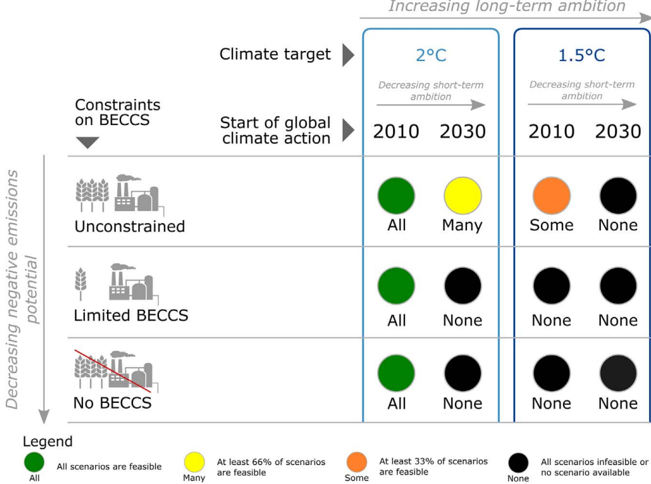
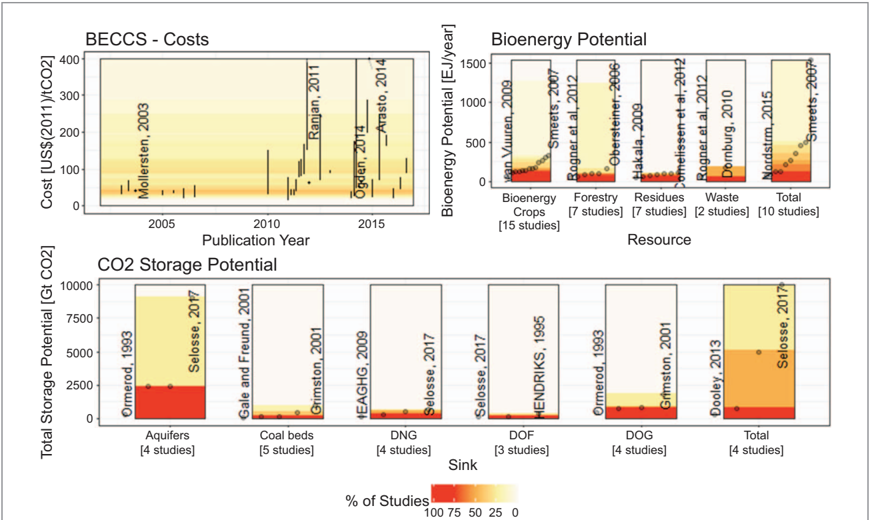
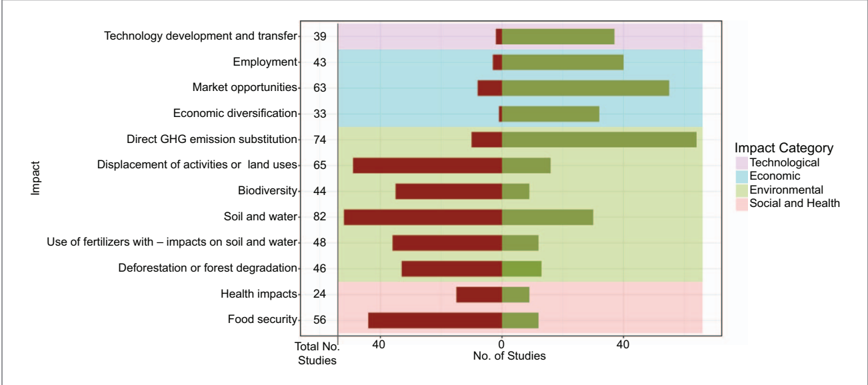
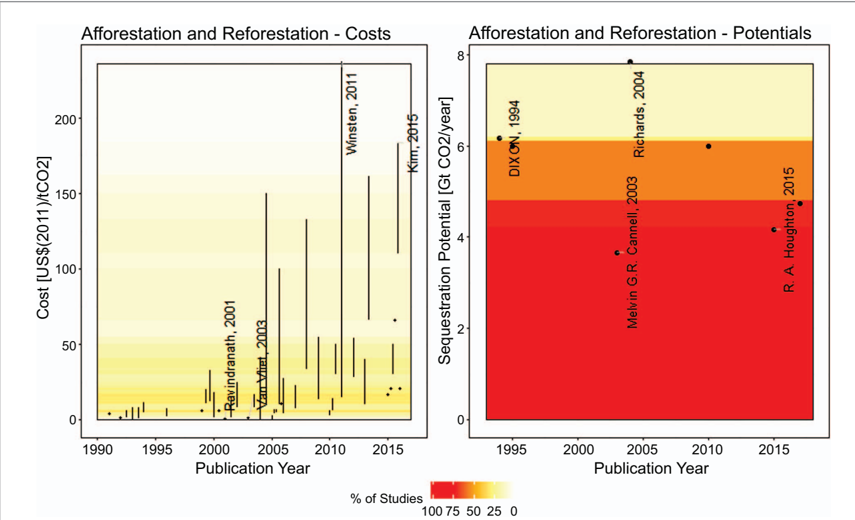
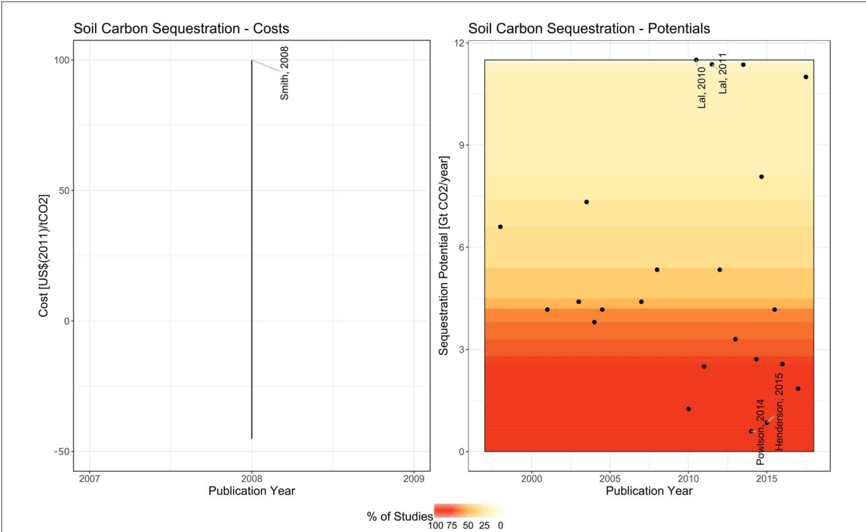
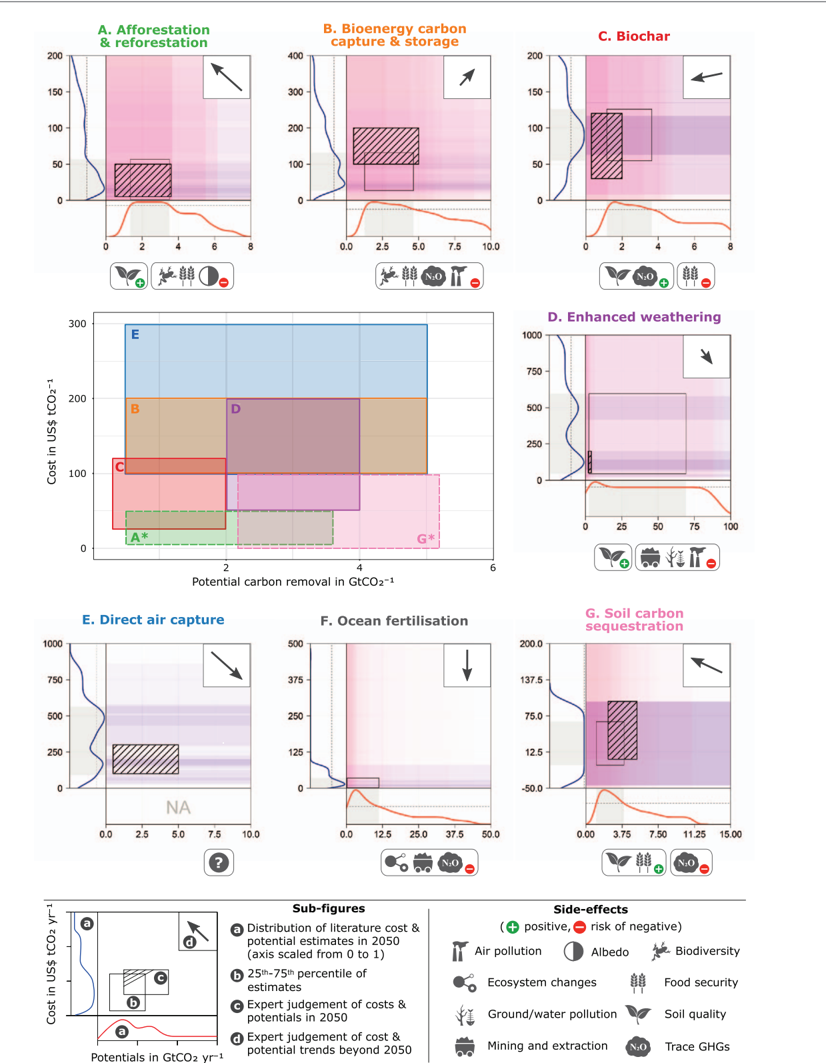
The most recent IPCC assessment has shown an important role for negative emissions technologies (NETs) in limiting global warming to 2 °C cost-effectively. However, a bottom-up, systematic, reproducible, and transparent literature assessment of the different options to remove CO 2 from the atmosphere is currently missing. In part 1 of this three-part review on NETs, we assemble a comprehensive set of the relevant literature so far published, focusing on seven technologies: bioenergy with carbon capture and storage (BECCS), afforestation and reforestation, direct air carbon capture and storage (DACCS), enhanced weathering, ocean fertilisation, biochar, and soil carbon sequestration. In this part, part 2 of the review, we present estimates of costs, potentials, and side-effects for these technologies, and qualify them with the authors' assessment. Part 3 reviews the innovation and scaling challenges that must be addressed to realise NETs deployment as a viable climate mitigation strategy. Based on a systematic review of the literature, our best estimates for sustainable global NET potentials in 2050 are 0.5–3.6 GtCO 2 yr −1 for afforestation and reforestation, 0.5–5 GtCO 2 yr −1 for BECCS, 0.5–2 GtCO 2 yr −1 for biochar, 2–4 GtCO 2 yr −1 for enhanced weathering, 0.5–5 GtCO 2 yr −1 for DACCS, and up to 5 GtCO 2 yr −1 for soil carbon sequestration. Costs vary widely across the technologies, as do their permanency and cumulative potentials beyond 2050. It is unlikely that a single NET will be able to sustainably meet the rates of carbon uptake described in integrated assessment pathways consistent with 1.5 °C of global warming.
Overview
The claims and statistics of this paper haven’t been checked yet.
Free: it reads the open-access text and checks the first 5 claims that cite a source we can check. Create a free account to check every claim.
Integrity signals
Registry
Cites
Statistics
Figures
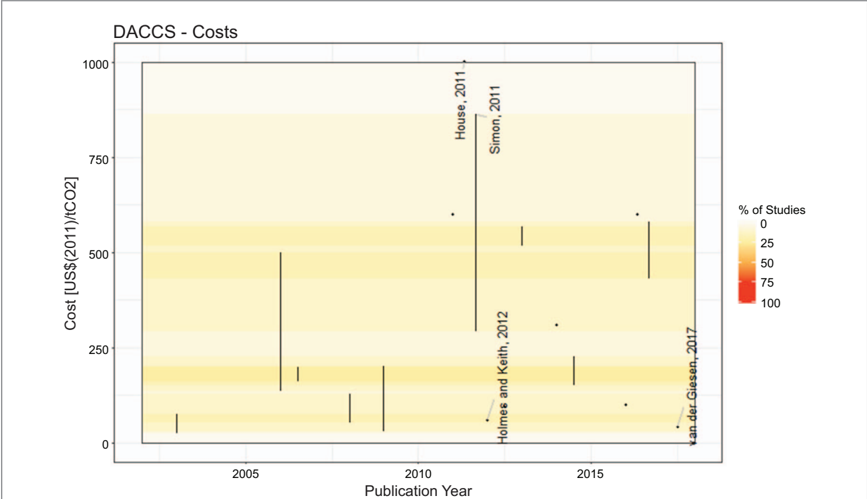
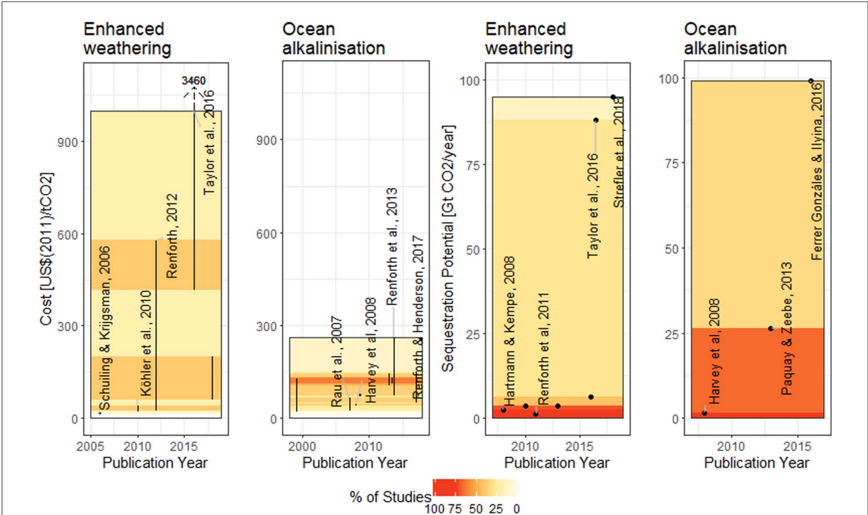
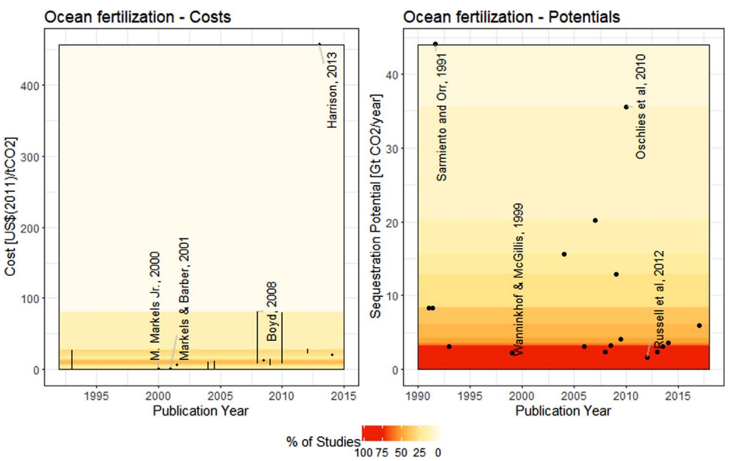
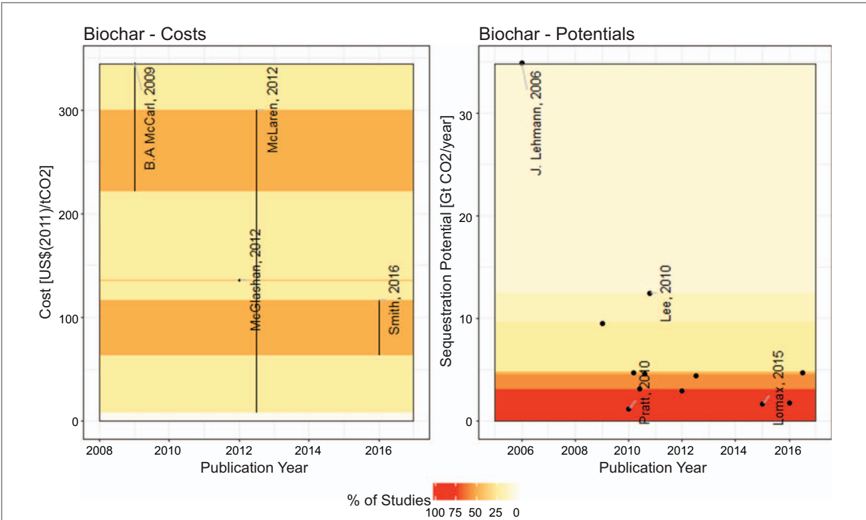
Verification
Claims the paper makes
The claims and statistics of this paper haven’t been checked yet.
Free: it reads the open-access text and checks the first 5 claims that cite a source we can check. Create a free account to check every claim.
Claims other papers make about this one
Each is checked against this paper’s own text: does it say what the citing paper says it does?
The cited source doesn’t support the claim as written.
In the citing paper
“Previous reviews 18,28,[52][53][54] have shown that these pathways offer substantial CO 2 removal potential:”
From The technological and economic prospects for CO2 utilization and removal (2019) · cites this paper as [28]
Checked by a reasoning model — may be wrong.
Experimental — accuracy not yet measuredThe source backs part of the claim, not all of it — or backs it for a different population, condition or comparison.
In the citing paper
“Plausibly, all bioenergy that can be sourced sustainably (about 100 EJ 3,25 primary energy) could be allocated to BECCS, so that about 4.2-5.6Gt CO 2 per year could be sequestered (reflecting losses in energy and CO 2 in along different steps in the process).”
From The mutual dependence of negative emission technologies and energy systems (2019) · cites this paper as [3]
Experimental — accuracy not yet measuredThe source backs part of the claim, not all of it — or backs it for a different population, condition or comparison.
In the citing paper
“Removal costs are estimated at $5-$50/tCO 2 (Fuss et al. 2018).”
From Strategies for mitigation of climate change: a review (2020) · cites this paper as Fuss et al. 2018
Experimental — accuracy not yet measuredThe source backs part of the claim, not all of it — or backs it for a different population, condition or comparison.
In the citing paper
“Side effects of ocean fertilization that are discussed in the literature include ocean acidification, deep and mid-water oxygen decrease or depletion, increase in production of further greenhouse gases, unpredictable impact on food cycles, creation of toxic algal blooms as well as mixed effects on the seafloor and upper ocean ecosystems (Fuss et al. 2018;Williamson et al. 2012).”
From Strategies for mitigation of climate change: a review (2020) · cites this paper as Fuss et al. 2018
Experimental — accuracy not yet measuredThe source backs part of the claim, not all of it — or backs it for a different population, condition or comparison.
In the citing paper
“In the context of our CDR targets, ERW has a similar potential to that of other CDR strategies 23 estimated for 2050, including bio-energy with carbon capture and storage (BECCS), widely adopted in IPCC future scenarios (0.5-5 Gt CO2 yr -1 ), direct air carbon capture and storage (DAC) (0.5-5 Gt CO2 yr -1 ), biochar (0.5 to 2 Gt CO2 yr -1 ), soil organic carbon (SOC) sequestration (0.5-5 Gt CO2 yr”
From Potential for large-scale CO2 removal via enhanced rock weathering with croplands (2020) · cites this paper as [23]
Experimental — accuracy not yet measured
55 more claims about this paper
Create a free account to see every claim other papers make about this one.
Self-check
Percentages, sums and reported differences re-computed from the paper’s own numbers.
The self-check needs the paper’s full text.
Citations
Cites
Soil Carbon Sequestration Impacts on Global Climate Change and Food Security
Lal, R. (2004) · Science · doi:10.1126/science.1097396 · Cited by 8,376 · cited 6×
“Of the 22 articles (Batjes 1998, Benbi 2013, Conant 2011, Henderson et al 2015, Lal 2003b, 2003a, 2004a, 2004c, 2004b, 2010, 2011, 2013, Lassaletta and Aguilera 2015, Lorenz and Lal 2014, Powlson et al 2014, Salati et al 2010, Smith 2012, 2016, Sommer and Bossio 2014, Minasny et al 2017, Metting et…”
BackgroundInfluentialRiahi, K., van Vuuren, D. P., Kriegler, E., Edmonds, J., O’Neill, B. C., Fujimori, S., Bauer, N., Calvin, K., Dellink, R., Fricko, O., et al. (2017) · Global Environmental Change · doi:10.1016/j.gloenvcha.2016.05.009 · Cited by 6,607
Self-citationThe next generation of scenarios for climate change research and assessment
Moss, R. H., Edmonds, J. A., Hibbard, K. A., Manning, M. R., Rose, S. K., van Vuuren, D. P., Carter, T. R., Emori, S., Kainuma, M., Kram, T., et al. (2010) · Nature · doi:10.1038/nature08823 · Cited by 6,467
Brennan, L., & Owende, P. (2010) · Renewable and Sustainable Energy Reviews · doi:10.1016/j.rser.2009.10.009 · Cited by 4,894 · cited 2×
“24 Although achievable scales are not clear yet, there is also research on third-generation biofuels, derived from algal biomass (Brennan and Owende 2010) with the potential to enhance yields by improving microalgal biology through genetic or metabolic engineering (Tandon and Jin 2017).”
BackgroundCarbon capture and storage (CCS): the way forward
Bui, M., Adjiman, C. S., Bardow, A., Anthony, E. J., Boston, A., Brown, S., Fennell, P. S., Fuss, S., Galindo, A., Hackett, L. A., et al. (2018) · Energy & Environmental Science · doi:10.1039/c7ee02342a · Cited by 4,374
Self-citationGlobal effects of land use on local terrestrial biodiversity
Newbold, T., Hudson, L. N., Hill, S. L. L., Contu, S., Lysenko, I., Senior, R. A., Börger, L., Bennett, D. J., Choimes, A., Collen, B., et al. (2015) · Nature · doi:10.1038/nature14324 · Cited by 4,352
Soil carbon sequestration to mitigate climate change
Lal, R. (2004) · Geoderma · doi:10.1016/j.geoderma.2004.01.032 · Cited by 3,936 · cited 6×
“Of the 22 articles (Batjes 1998, Benbi 2013, Conant 2011, Henderson et al 2015, Lal 2003b, 2003a, 2004a, 2004c, 2004b, 2010, 2011, 2013, Lassaletta and Aguilera 2015, Lorenz and Lal 2014, Powlson et al 2014, Salati et al 2010, Smith 2012, 2016, Sommer and Bossio 2014, Minasny et al 2017, Metting et…”
BackgroundInfluentialGriscom, B. W., Adams, J., Ellis, P. W., Houghton, R. A., Lomax, G., Miteva, D. A., Schlesinger, W. H., Shoch, D., Siikamäki, J. V., Smith, P., et al. (2017) · Proceedings of the National Academy of Sciences · doi:10.1073/pnas.1710465114 · Cited by 3,481
Self-citationO’Neill, B. C., Kriegler, E., Ebi, K. L., Kemp-Benedict, E., Riahi, K., Rothman, D. S., van Ruijven, B. J., van Vuuren, D. P., Birkmann, J., Kok, K., et al. (2017) · Global Environmental Change · doi:10.1016/j.gloenvcha.2015.01.004 · Cited by 3,359
Irreversible climate change due to carbon dioxide emissions
Solomon, S., Plattner, G.-K., Knutti, R., & Friedlingstein, P. (2009) · Proceedings of the National Academy of Sciences · doi:10.1073/pnas.0812721106 · Cited by 3,217 · cited 1×
“…et al 2015, Riahi et al 2015, Eom et al 2015), temperature overshoot carries additional risks associated with higher levels of warming and the resulting impacts and climate feedbacks that could occur (van Vuuren et al 2013, Solomon et al 2009, Friedlingstein et al 2006, Clarke et al 2014).”
Background
Research works printed but not linked: 32
- Bruckner T ed Edenhofer E, 2014, Contribution of Working Group III to the Fifth Assessment Report of the Intergovernmental Panel on Climate Change
- Bui M, 2018, Energy Environ. Sci.
- Ciais P ed Stocker T F, 2013, Climate Change 2013: The Physical Science Basis. Contribution of Working Group I to the Fifth Assessment Report of the Intergovernmental Panel on Climate Change
- Clarke L E ed Edenhofer O, 2014, Clim. Change 2014 Mitig. Clim. Change Contrib. Work. Gr. III to Fifth Assess. Rep. Intergov. Panel Clim. Change, 413
- Coelho S T, 2012, Chapter 20—land and water: linkages to bioenergy, 1459
- Corathers L A, 2015, Earth
- d’Hotman D V, 1961, Int. Sugar J., 63, 363
- Dale V H, 2010, Biofuels: implications for Land Use and Biodiversity
- Díaz S, 2009, Biodiversity, Ecosystem Functioning, and Human Wellbeing
- Fuss S, 2017, Oxf. Res. Encycl. Clim. Sci., 1
- Gale J J, 2004, Geol. Belgica, 7, 99
- Haberl H ed Dewulf J, 2015, Sustainability Assessment of Renewables-Based Products, 1
- Hassani N, 2016, Pet. Res., 25, 4
- IEA GHG, 2005, Building the Cost Curves for CO
- IEA GHG, 1998, Enhanced Coal Bed Methane Recovery with CO
- IPCC ed Metz B, 2005, Carbon Dioxide Capture and Storage (SRCCS)
- IPCC ed Qin D, 2013, Contribution of Working Group I to the Fifth Assessment Report of the Intergovernmental Panel on Climate Change
- IPCC ed Edenhofer O, 2014, Contribution of Working Group III to the Fifth Assessment Report of the Intergovernmental Panel on Climate Change
- IPCC ed Pachauri R K, 2014, Contribution of Working Groups I, II and III to the Fifth Assessment Report of the Intergovernmental Panel on Climate Change
- Liu W W, 2016, Acta Ecol. Sin., 36, 2113
- Lopes A S, 1996, Better Crop. Int., 10, 10
- Magill B, 2017, Clim. Cent.
- Markels M, 2001, Poster Presentation for NETL Conference on Carbon Sequestration, 14
- 10.1088/1748-9326/aabf9 · doi:10.1088/1748-9326/aabf9
- Minx J, 2017, Environ. Res. Lett., 12
- National Academy of Sciences, 2015, Climate Intervention
- 53. Nkouathio D G, Wandji P, Bardintzeff J M, Tematio P, Dongmo A K and Tchoua F 2008 Utilisation des roches volcaniques pour la remineralisation des sols ferrallitiques des regions tropicales. Cas des pyroclastites basaltiques du graben de Tombel (Ligne volcanique du Cameroun) Bull. Soc. Vaudoise Sci. Nat. 91 1-14
- 122. Sedjo R A and Solomon A M 1991 Climate and forests Greenhouse Warming: Abatement and Adaptation (Resources for the Future)
- Strefler J, 2018, Environ. Res. Lett., 13
- Strefler J, 2018, Environ. Res. Lett., 13
- UNEP, 2017, The Emissions Gap Report 2017
- USDOE, 2014, Report
Cited by
Items 401–500 of 1,001
Towards Indicators for a Negative Emissions Climate Stabilisation Index: Problems and Prospects
Fridahl, M., Hansson, A., & Haikola, S. (2020) · Climate · doi:10.3390/cli8060075 · Cited by 50
“Achieving cost-efficient response measures is key in the literature on negative emissions [19,49,78].”
BackgroundInfluentialCan biomass supply meet the demands of bioenergy with carbon capture and storage (BECCS)?
Jones, M. B., & Albanito, F. (2020) · Global Change Biology · doi:10.1111/gcb.15296 · Cited by 52
“1180251 Minx, J. C., Lamb, W., Callaghan, M., Bornmann, L., & Fuss, S. (2017). Fast growing research on negative emissions. Environmental Research Letters, 12, 035007. https://doi.org/10.1088/1748-9326/aa5ee5 Muri, H. (2018). The role of large-scale BECCS in the pursuit of the 1.5°C target: An earth system model persp…”
BackgroundInfluentialCarbon-Negative Biofuel Production
Kim, S., Zhang, X., Reddy, A. D., Dale, B. E., Thelen, K. D., Jones, C. D., Izaurralde, R. C., Runge, T., & Maravelias, C. (2020) · Environmental Science & Technology · doi:10.1021/acs.est.0c01097 · Cited by 44
Thoni, T., Beck, S., Borchers, M., Förster, J., Görl, K., Hahn, A., Mengis, N., Stevenson, A., & Thrän, D. (2020) · Frontiers in Climate · doi:10.3389/fclim.2020.590305 · Cited by 48
“For instance, some countries are geologically not suitable for CO2storage (e.g., Singapore’s LT-LEDS), while others face social or institutional barriers for certain NETs (Fridahl and Lehtveer, 2018; Geden et al., 2018).”
BackgroundThe cost of permanent carbon dioxide removal
Prado, A., & Dowell, N. M. (2023) · Joule · doi:10.1016/j.joule.2023.03.006 · Cited by 60
ElSayed, M., Aghahosseini, A., Caldera, U., & Breyer, C. (2023) · Applied Energy · doi:10.1016/j.apenergy.2023.121216 · Cited by 51
Cabral, R. P., Bui, M., & Dowell, N. M. (2019) · International journal of greenhouse gas control · doi:10.1016/j.ijggc.2019.05.020 · Cited by 52
Milão, R. D. F. D., Carminati, H. B., Araújo, O. D. Q. F., & de Medeiros, J. L. (2019) · Renewable and Sustainable Energy Reviews · doi:10.1016/j.rser.2019.109251 · Cited by 49
Todd-Brown, K. E., Abramoff, R., Beem-Miller, J. P., Blair, H. K., Earl, S. R., Frederick, K. J., Fuka, D. R., Guevara, M., Harden, J. W., Heckman, K., et al. (2022) · Biogeosciences · doi:10.5194/bg-19-3505-2022 · Cited by 51
“, 2013) and can contribute to climate change mitigation through soil carbon sequestration management practices (Smith et al., 2020; Fuss et al., 2018).”
Impact of Climate on the Global Capacity for Enhanced Rock Weathering on Croplands
Baek, S. H., Kanzaki, Y., Lora, J. M., Planavsky, N. J., Reinhard, C. T., & Zhang, S. (2023) · Earth s Future · doi:10.1029/2023ef003698 · Cited by 68
Imagining circular carbon: A mitigation (deterrence) strategy for the petrochemical industry
Palm, E., Tilsted, J. P., Vogl, V., & Nikoleris, A. (2023) · Environmental Science & Policy · doi:10.1016/j.envsci.2023.103640 · Cited by 49
Captured Futures: Rethinking the Drama of Environmental Politics
Hajer, M. A., & Oomen, J. (2025) · doi:10.1093/9780198955382.001.0001 · Cited by 69
Sustainable bioenergy for climate mitigation: developing drought-tolerant trees and grasses
Taylor, G., Donnison, I. S., Murphy‐Bokern, D., Morgante, M., Bogeat‐Triboulot, M., Bhalerao, R. P., Hertzberg, M., Polle, A., Harfouche, A. L., Alasia, F., et al. (2019) · Annals of Botany · doi:10.1093/aob/mcz146 · Cited by 47
Schweizer, V. J. (2020) · Climatic Change · doi:10.1007/s10584-019-02615-2 · Cited by 52
Syngas Evolution from CO2 Electroreduction by Porous Au Nanostructures
Mascaretti, L., Niorettini, A., Bricchi, B. R., Ghidelli, M., Naldoni, A., Caramori, S., Bassi, A. L., & Berardi, S. (2020) · ACS Applied Energy Materials · doi:10.1021/acsaem.0c00301 · Cited by 44
Fuzzy optimization of carbon management networks based on direct and indirect biomass co-firing
Aviso, K. B., Sy, C. L., Tan, R. R., & Ubando, A. T. (2020) · Renewable and Sustainable Energy Reviews · doi:10.1016/j.rser.2020.110035 · Cited by 46
Recognizing the Value of Collaboration in Delivering Carbon Dioxide Removal
Fajardy, M., & Dowell, N. M. (2020) · One Earth · doi:10.1016/j.oneear.2020.07.014 · Cited by 51
Ruseva, T. B., Hedrick, J., Marland, G., Tovar, H., Sabou, C., & Besombes, E. (2020) · Current Opinion in Environmental Sustainability · doi:10.1016/j.cosust.2020.09.009 · Cited by 52
State of Climate Action 2021: Systems Transformations Required to Limit Global Warming to 1.5°C
Boehm, S., Lebling, K., Levin, K., Fekete, H., Jaeger, J., Waite, R., Nilsson, A. E., Thwaites, J., Wilson, R., Geiges, A., et al. (2021) · doi:10.46830/wrirpt.21.00048 · Cited by 74
Anticipating moral hazard undermines climate mitigation in an experimental geoengineering game
Andrews, T. M., Delton, A. W., & Kline, R. (2022) · Ecological Economics · doi:10.1016/j.ecolecon.2022.107421 · Cited by 49
Costa, M., Piazzullo, D., Battista, D. D., & Vita, A. D. (2022) · Journal of Environmental Management · doi:10.1016/j.jenvman.2022.115434 · Cited by 43
Burke, J., & Gambhir, A. (2022) · Energy and Climate Change · doi:10.1016/j.egycc.2022.100074 · Cited by 60
“In a number of IAMs, towards the second half of the 21st century, increasing levels of carbon pricing incentivise the large-scale deployment of what is currently the most commonly-implemented GGR in IAMs, bio-energy with carbon capture and storage (BECCS)[107].”
Navigating within the Safe Operating Space with Carbon Capture On-Board
Negri, V., Charalambous, M. A., Medrano‐García, J. D., & Guillén‐Gosálbez, G. (2022) · ACS Sustainable Chemistry & Engineering · doi:10.1021/acssuschemeng.2c04627 · Cited by 48
Guo, F., Wang, Y., Zhu, H., Zhang, C., Sun, H., Fang, Z., Yang, J., Zhang, L., Mu, Y., Man, Y. B., et al. (2023) · Agricultural Systems · doi:10.1016/j.agsy.2023.103691 · Cited by 62
A taxonomy to map evidence on the co-benefits, challenges, and limits of carbon dioxide removal
Prütz, R., Fuss, S., Lück, S., Stephan, L., & Rogelj, J. (2024) · Communications Earth & Environment · doi:10.1038/s43247-024-01365-z · Cited by 54
“17, and ref.”
Self-citationThe practice of responsible research and innovation in “climate engineering”
Low, S., & Buck, H. J. (2020) · Wiley Interdisciplinary Reviews Climate Change · doi:10.1002/wcc.644 · Cited by 47
Cox, E., Pidgeon, N., & Spence, E. (2021) · Risk Analysis · doi:10.1111/risa.13717 · Cited by 50
“very brief introduction to the topic and rationale of CO2 removal, participants learnt about three major CO2 removal technology proposals, selected on the basis of their potential ability to sequester very large quantities of CO2 over a very long time-frame (Friedmann, 2019; Fuss et al., 2018).”
BackgroundAnalysis of Technologies for Carbon Dioxide Capture from the Air
Leonzio, G., Fennell, P. S., & Shah, N. (2022) · Applied Sciences · doi:10.3390/app12168321 · Cited by 44
“…from the atmosphere and include the following: afforestation and reforestation (AR), soil carbon sequestration (SCS), biochar (BC), bioenergy with carbon capture and storage (BECCS), direct air capture (DAC), enhanced weathering and ocean alkalinization (EW) and ocean fertilization (OF) [8].”
InfluentialKemp, S. J., Lewis, A. L., & Rushton, J. C. (2022) · Applied Geochemistry · doi:10.1016/j.apgeochem.2022.105465 · Cited by 51
Gidden, M., Brutschin, E., Ganti, G., Ünlü, G., Zakeri, B., Fricko, O., Mitterrutzner, B., Lovat, F., & Riahi, K. (2023) · Environmental Research Letters · doi:10.1088/1748-9326/acd8d5 · Cited by 52
Energy crisis in Europe enhances the sustainability of green chemicals
Nabera, A., Istrate, I.-R., Martín, A. J., Pérez‐Ramírez, J., & Guillén‐Gosálbez, G. (2023) · Green Chemistry · doi:10.1039/d3gc01053h · Cited by 46
Nemet, G. F., Greene, J. H., Müller-Hansen, F., & Minx, J. C. (2023) · Communications Earth & Environment · doi:10.1038/s43247-023-01056-1 · Cited by 56
Self-citationPathways to Carbon Neutrality: A Review of Strategies and Technologies Across Sectors
Khaffaf, I. A., Al-Tamimi, A. K., & Ahmed, V. (2024) · Energies · doi:10.3390/en17236129 · Cited by 55
“GHGs from the air [7].”
Energy Accounting for a Renewable Energy Future
Moriarty, P., & Honnery, D. (2019) · Energies · doi:10.3390/en12224280 · Cited by 41
“Implementing these technologies would take decades to be significant, and are very costly in energy and monetary terms [22].”
BackgroundPlan and Policies for Soil Organic Carbon Management Under Agroforestry System
Jhariya, M. K., Raj, A., Banerjee, A., Meena, R. S., Bargali, S. S., Kumar, S., Nema, S., Poonam, P., & Oraon, P. R. (2022) · Springer eBooks · doi:10.1007/978-981-19-6179-3_8 · Cited by 45
Net zero vs. carbon neutrality: supply chain management challenges and future research agenda
Chen, G., Lim, M. K., Yeo, W. M., & Tseng, M. (2024) · International Journal of Logistics Research and Applications · doi:10.1080/13675567.2024.2359058 · Cited by 57
“In analysing the challenges of transitioning to green technologies, Fuss et al. (2018) highlight the prevalence of risks associated with uncertainty in the field.”
Peltola, P., Saari, J., Tynjälä, T., & Hyppänen, T. (2020) · Energy · doi:10.1016/j.energy.2020.118550 · Cited by 42
The impact of technology availability on the transition to net-zero industry in Sweden
Sandberg, E., & Krook‐Riekkola, A. (2022) · Journal of Cleaner Production · doi:10.1016/j.jclepro.2022.132594 · Cited by 48
Snapshot of the Carbon Dioxide Removal certification and standards ecosystem (2021–2022)
Arcusa, S., & Sprenkle-Hyppolite, S. (2022) · Climate Policy · doi:10.1080/14693062.2022.2094308 · Cited by 53
“Their omittance may also reflect the notion that not all suggested CDR activities are necessarily good ideas, as some have unknown or high risks, side-effects, or have implementation barriers (Fuss et al., 2018; Minx et al., 2018; Morrow et al., 2020; Williamson, 2016).”
BackgroundSoil carbon sequestration in global working lands as a gateway for negative emission technologies
Almaraz, M., Simmonds, M., Boudinot, F. G., Vittorio, A. D., Bingham, N. L., Khalsa, S. D. S., Ostoja, S. M., Scow, K. M., Jones, A. D., Holzer, I., et al. (2023) · Global Change Biology · doi:10.1111/gcb.16884 · Cited by 38
“…of SCS practices described here ( Table 1 ) range from $7– 119/t CO 2 sequestered (or as much as $300/t CO 2 in the case of biochar; Smith et al., 2008 ; McLaren, 2012 ), making them relatively affordable compared to other NETs like direct air capture (US$600– 1000/t CO 2 ; Fuss et al., 2018 ).”
BackgroundMethodInfluentialThe limits to degrowth: Economic and climatic consequences of pessimist assumptions on decoupling
Warlenius, R. (2023) · Ecological Economics · doi:10.1016/j.ecolecon.2023.107937 · Cited by 51
Sustainable production of CO2-derived materials
Ramírez-Corredores, M. M. (2024) · npj Materials Sustainability · doi:10.1038/s44296-024-00041-9 · Cited by 45
Novel Carbon Dioxide Utilization Technologies: A Means to an End
Warsi, Y., Kabanov, V., Zhou, P., & Sinha, A. (2020) · Frontiers in Energy Research · doi:10.3389/fenrg.2020.574147 · Cited by 40
Wiesberg, I. L., de Medeiros, J. L., de Mello, R. V. P., Maia, J. G. S. S., Bastos, J. B. V., & Araújo, O. D. Q. F. (2021) · Renewable and Sustainable Energy Reviews · doi:10.1016/j.rser.2021.111486 · Cited by 47
Kalt, G., Mayer, A. C. R., Haberl, H., Kaufmann, L., Lauk, C., Matej, S., Röös, E., Theurl, M. C., & Erb, K. (2021) · Ecological Modelling · doi:10.1016/j.ecolmodel.2021.109729 · Cited by 45
Understanding the carbon dioxide removal range in 1.5 °C compatible and high overshoot pathways
Prütz, R., Strefler, J., Rogelj, J., & Fuss, S. (2023) · Environmental Research Communications · doi:10.1088/2515-7620/accdba · Cited by 54
Self-citationDonnison, C. L., Trdlicova, K., Mohr, A., & Taylor, G. (2023) · Energy Research & Social Science · doi:10.1016/j.erss.2023.103153 · Cited by 47
Zhang, B., Kroeger, J., Planavsky, N. J., & Yao, Y. (2023) · Environmental Science & Technology · doi:10.1021/acs.est.3c01658 · Cited by 55
Scott-Buechler, C. M., Cain, B. E., Osman, K., Ardoin, N. M., Fraser, C. C., Adcox, G., Polk, E., & Jackson, R. B. (2024) · Communications Earth & Environment · doi:10.1038/s43247-024-01334-6 · Cited by 55
“Compared with most other CDR methods, direct air capture (DAC) has smaller land and water footprints, and estimates of its global capacity range from 0.5 to 5 GtCO 2 /yr by 2050 2,3 .”
BackgroundInfluentialLife cycle assessment of bioenergy with carbon capture and storage: A review
Salas, D. A., Boero, A., & Ramirez, A. D. (2024) · Renewable and Sustainable Energy Reviews · doi:10.1016/j.rser.2024.114458 · Cited by 45
Samour, A., Radmehr, R., Ali, E. B., Shayanmehr, S., Ofori, E. K., Porhajašová, J. I., Babošová, M., Kačániová, M., & Dimnwobi, S. K. (2024) · Heliyon · doi:10.1016/j.heliyon.2024.e39970 · Cited by 40
An overview of global desertification control efforts: Key challenges and overarching solutions
Ahmed, Z., Dongwei, G. U. I., Abd‐Elmabod, S. K., Murtaza, G., & Ali, S. (2024) · Soil Use and Management · doi:10.1111/sum.13154 · Cited by 46
The global implications of a Russian gas pivot to Asia
Pye, S., Bradshaw, M., Price, J., Zhang, D., Kuzemko, C., Sharples, J. D., Welsby, D., & Dodds, P. E. (2025) · Nature Communications · doi:10.1038/s41467-024-55697-7 · Cited by 58
The role of biomass in China’s long-term mitigation toward the Paris climate goals
Pan, X., Chen, W., Wang, L., Lin, L., & Li, N. (2018) · Environmental Research Letters · doi:10.1088/1748-9326/aaf06c · Cited by 41
“According to the review on extensive NETs literature by Fuss et al (2018), the average unit cost of BECCS ranges from 15 to 400 US$/tCO2 depending on sources.”
MethodConnolly, R., Connolly, M., Carter, R. M., & Soon, W. (2020) · Energies · doi:10.3390/en13061365 · Cited by 40
“This scenario predicts that society will develop and implement technologies to allow substantial carbon sequestration, leading to “negative CO2 emissions”, such as those considered by Fuss et al. (2018) [145].”
BackgroundBorchers, M., Thrän, D., Chi, Y., Dahmen, N., Dittmeyer, R., Dolch, T., Dold, C., Förster, J., Herbst, M., Heß, D., et al. (2022) · Frontiers in Climate · doi:10.3389/fclim.2022.810343 · Cited by 47
“There are many CDR options already identified and described in the scientific literature (e.g., Oschlies and Klepper, 2017; Fuss et al., 2018; IPCC, 2018, 2021).”
BackgroundHuman Rights and Large-Scale Carbon Dioxide Removal: Potential Limits to BECCS and DACCS Deployment
Günther, P., & Ekardt, F. (2022) · Land · doi:10.3390/land11122153 · Cited by 53
“However, the regeneration process of high-temperature systems is highly energy-intensive and costly [16,79].”
BackgroundInfluentialLe, C., Feng, J., Sun, L., Yuan, W., Wu, G., Zhang, S., & Yang, Z. (2023) · Journal of Cleaner Production · doi:10.1016/j.jclepro.2023.137436 · Cited by 42
Key uncertainties behind global projections of direct air capture deployment
Motlaghzadeh, K., Schweizer, V. J., Craik, N., & Moreno‐Cruz, J. (2023) · Applied Energy · doi:10.1016/j.apenergy.2023.121485 · Cited by 42
Guo, F., Sun, H., Yang, J., Zhang, L., Mu, Y., Wang, Y., & Wu, F. (2023) · The Science of The Total Environment · doi:10.1016/j.scitotenv.2023.166118 · Cited by 47
Mahajan, S., Elfving, J., & Lahtinen, M. (2024) · Journal of environmental chemical engineering · doi:10.1016/j.jece.2024.112193 · Cited by 37
“These negative emission technologies (NETs) [1] accelerate the removal of already released CO 2 and come in various types, for example, biochar (BC), afforestation and reforestation (AR), bioenergy with carbon capture and storage (BECCS), and direct air capture (DAC) in conjunction with carbon…”
BackgroundSokol, N. W., Sohng, J., Moreland, K. C., Slessarev, E. W., Goertzen, H., Schmidt, R., Samaddar, S., Holzer, I., Almaraz, M., Geoghegan, E. K., et al. (2024) · Biogeochemistry · doi:10.1007/s10533-024-01160-0 · Cited by 55
“To meet this target, most Integrated Assessment Models also require direct removal of carbon dioxide (CO 2 ) from the atmosphere—both to remove excess CO 2 that has accumulated in the atmosphere and to offset emissions that cannot be abated (Fuss et al. 2018; Minx et al. 2018).”
New Approaches for Ecological and Social Sustainability in a Post-Pandemic World
Moriarty, P., & Honnery, D. (2020) · World · doi:10.3390/world1030014 · Cited by 41
“However, its possible adverse health effects must be considered [65,67], as well as high energy costs for rock grinding.”
BackgroundPerceptions of naturalness predict US public support for Soil Carbon Storage as a climate solution
Sweet, S. K., Schuldt, J. P., Lehmann, J. C., Bossio, D., & Woolf, D. (2021) · Climatic Change · doi:10.1007/s10584-021-03121-0 · Cited by 46
“…that gaining policy traction in this area will require not only demonstrating the scientific feasibility of these techniques (Caldeira et al. 2013; Fuss et al. 2018) but also understanding public opinion on the issue, including the psychological factors that predict support for different…”
BackgroundLee, K., Fyson, C. L., & Schleussner, C. (2021) · Environmental Research Letters · doi:10.1088/1748-9326/ac1970 · Cited by 42
“The magnitude and direction of CDR transfers may also change due to uncertainties relating to the extent of available removals from a portfolio of existing and emerging CDR technologies (Fuss et al 2018, Köberle 2019).”
BackgroundInfluentialFörster, J., Beck, S., Borchers, M., Gawel, E., Korte, K., Markus, T., Mengis, N., Oschlies, A., Schaller, R., Stevenson, A., et al. (2022) · Frontiers in Climate · doi:10.3389/fclim.2022.758628 · Cited by 47
Modeling of Vacuum Temperature Swing Adsorption for Direct Air Capture Using Aspen Adsorption
Deschamps, T., Kanniche, M., Grandjean, L., & Authier, O. (2022) · Clean Technologies · doi:10.3390/cleantechnol4020015 · Cited by 42
Duan, X., Gunina, A., Rui, Y., Xia, Y., Hu, Y., Ma, C., Qiao, H., Zhang, Y., Wu, J., Su, Y., et al. (2024) · CATENA · doi:10.1016/j.catena.2024.107902 · Cited by 38
Hirata, A., Ohashi, H., Hasegawa, T., Fujimori, S., Takahashi, K., Tsuchiya, K., & Matsui, T. (2024) · Communications Earth & Environment · doi:10.1038/s43247-024-01433-4 · Cited by 50
“However, scenarios with large-scale deployment of these measures have raised many concerns 12,13 .”
Acen, C., Bamisile, O., Cai, D., Ukwuoma, C. C., Obiora, S. C., Huang, Q. Z., Ozsahin, D. U., & Adun, H. H. (2024) · The Science of The Total Environment · doi:10.1016/j.scitotenv.2024.174302 · Cited by 51
Exploring techno-economic landscapes of abatement options for hard-to-electrify sectors
Bachorz, C., Verpoort, P. C., Luderer, G., & Ueckerdt, F. (2025) · Nature Communications · doi:10.1038/s41467-025-59277-1 · Cited by 53
“43 andourcalculationforthecostof blue H 2 — see Supplementary Note 9 — , and for non-fossil CO 2 , the latest Clime-works estimations 27 and literature values for the cost of biogenic carbon 44 ).”
Self-citationBiochar use in global forests: opportunities and challenges
Bruckman, V. J., & Pumpanen, J. (2019) · Developments in psychiatry · doi:10.1016/b978-0-444-63998-1.00017-3 · Cited by 59
Clean energy futures: An Australian based foresight study
Gilmore, N., Koskinen, I., van Gennip, D., Paget, G., Burr, P. A., Obbard, E. G., Daiyan, R., Sproul, A. B., Kay, M. J., Lennon, A. J., et al. (2022) · Energy · doi:10.1016/j.energy.2022.125089 · Cited by 41
Lefvert, A., Rodriguez, E., Fridahl, M., Grönkvist, S., Haikola, S., & Hansson, A. (2021) · Energy Research & Social Science · doi:10.1016/j.erss.2021.102452 · Cited by 41
“Therefore, CCS on fossil CO 2 emissions and BECCS are increasingly seen as required parts of the climate change mitigation toolbox [15,16].”
BackgroundPlanting trees to combat global warming
Osman, A. I., Fawzy, S., Lichtfouse, É., & Rooney, D. W. (2023) · Environmental Chemistry Letters · doi:10.1007/s10311-023-01598-y · Cited by 43
The global mismatch between equitable carbon dioxide removal liability and capacity
Yang, P., Mi, Z., Wei, Y., Hanssen, S. V., Liu, L.-C., Coffman, D., Sun, X., Liao, H., Yao, Y.-F., Kang, J.-N., et al. (2023) · National Science Review · doi:10.1093/nsr/nwad254 · Cited by 44
Expanding the Library of Ions for Moisture-Swing Carbon Capture
Hegarty, J., Shindel, B., Sukhareva, D., Barsoum, M. L., Farha, O. K., & Dravid, V. P. (2023) · Environmental Science & Technology · doi:10.1021/acs.est.3c02543 · Cited by 38
Deploying Direct Air Capture at Scale: How Close to Reality?
Desport, L., Gurgel, A., Morris, J., Herzog, H. J., Chen, Y.-H. H., Selosse, S., & Paltsev, S. (2023) · Energy Economics · doi:10.1016/j.eneco.2023.107244 · Cited by 39
Torri, C., Pambieri, G., Gualandi, C., Piraccini, M., Rombolà, A. G., & Fabbri, D. (2019) · Renewable Energy · doi:10.1016/j.renene.2019.10.025 · Cited by 38
Fragkos, P. F. (2020) · Energy Technology · doi:10.1002/ente.202000395 · Cited by 38
The risk of catastrophic climate change: Future energy implications
Moriarty, P., & Honnery, D. (2021) · Futures · doi:10.1016/j.futures.2021.102728 · Cited by 38
Regional carbon drawdown with enhanced weathering of non-hazardous industrial wastes
Jia, X., Zhang, Z., Wang, F., Li, Z., Wang, Y., Aviso, K. B., Foo, D. C. Y., Nair, P. N. S. B., Tan, R. R., & Wang, F. (2021) · Resources Conservation and Recycling · doi:10.1016/j.resconrec.2021.105910 · Cited by 39
Sovacool, B. K., Daniels, C. U., & AbdulRafiu, A. (2022) · Energy Research & Social Science · doi:10.1016/j.erss.2022.102645 · Cited by 57
Unlocking the potential of BECCS with indigenous sources of biomass at a national scale
Zhang, D., Bui, M., Fajardy, M., Patrizio, P., Kraxner, F., & Dowell, N. M. (2020) · Sustainable Energy & Fuels · doi:10.1039/c9se00609e · Cited by 44
Merk, C., Liebe, U., Meyerhoff, J., & Rehdanz, K. (2023) · Communications Earth & Environment · doi:10.1038/s43247-023-00713-9 · Cited by 43
Emerging concepts in intermediate carbon dioxide emplacement to support carbon dioxide removal
Breunig, H. M., Rosner, F., Lim, T. H., & Peng, P. (2023) · Energy & Environmental Science · doi:10.1039/d2ee03623a · Cited by 32
Azar, C., Martín, J. G., Johansson, D. J. A., & Sterner, T. (2023) · Climatic Change · doi:10.1007/s10584-023-03540-1 · Cited by 45
Hinrichs, C., Köhler, P., Völker, C., & Hauck, J. (2023) · Biogeosciences · doi:10.5194/bg-20-3717-2023 · Cited by 44
Lefvert, A., & Grönkvist, S. (2023) · Energy Policy · doi:10.1016/j.enpol.2023.113882 · Cited by 39
Which bioenergy with carbon capture and storage (BECCS) pathways can provide net-negative emissions?
Hayat, M. A., Alhadhrami, K., & Elshurafa, A. M. (2024) · International journal of greenhouse gas control · doi:10.1016/j.ijggc.2024.104164 · Cited by 33
Gray, L. A., Bisonó-León, A. G., Rojas, F. E., Veroneau, S. S., & Slocum, A. H. (2021) · Phycology · doi:10.3390/phycology1010004 · Cited by 46
“A portfolio approach is recommended—technical risk being spread over many different types of CDR/NETs technologies.”
BackgroundInfluentialChemical Looping Combustion of a Biomass Char in Fe2O3-, CuO-, and SrFeO3−δ-Based Oxygen Carriers
Kwong, K. Y., Harrison, A. R. P., Gebers, J. C., Dennis, J. S., & Marek, E. (2022) · Energy & Fuels · doi:10.1021/acs.energyfuels.2c01269 · Cited by 33
Biochar - Productive Technologies, Properties and Applications
Bartoli, M., Giorcelli, M., & Tagliaferro, A. (2022) · IntechOpen eBooks · doi:10.5772/intechopen.100763 · Cited by 40
Much of zero emissions commitment occurs before reaching net zero emissions
Koven, C. D., Sanderson, B. M., & Swann, A. L. S. (2022) · Environmental Research Letters · doi:10.1088/1748-9326/acab1a · Cited by 53
Implications of CO 2 Sourcing on the Life-Cycle Greenhouse Gas Emissions and Costs of Algae Biofuels
Singh, U., Banerjee, S., & Hawkins, T. R. (2023) · ACS Sustainable Chemistry & Engineering · doi:10.1021/acssuschemeng.3c02082 · Cited by 32
How important is carbon sequestration in phytoliths within the soil?
de Tombeur, F., Hodson, M. J., Saunders, M., & Clode, P. L. (2024) · Plant and Soil · doi:10.1007/s11104-024-06700-z · Cited by 38
“For comparison, Fuss et al. (2018) estimated that the soil C sequestration potential is 5000 Tg CO 2 yr −1 , that is around 1400 Tg C yr −1 .”
Krogh, A., Junginger, M., Shen, L., Grue, J., & Pedersen, T. H. (2024) · The Science of The Total Environment · doi:10.1016/j.scitotenv.2024.173660 · Cited by 34
Ampah, J. D., Jin, C., Liu, H., Yao, M., Afrane, S., Adun, H. H., Fuhrman, J., Ho, D. T., & McJeon, H. C. (2024) · Nature Communications · doi:10.1038/s41467-024-50594-5 · Cited by 43
“For instance, bioenergy with carbon capture and storage (BECCS) is land-and water-intensive 8,9 , while direct air capture with carbon storage (DACCS) is highly energy-intensive and can increase emissions 10,11 .”
3775-year-old wood burial supports “wood vaulting” as a durable carbon removal method
Zeng, N., Zhao, X., Poisson, G., Clifford, B. C., Liu, Y., Liu, H., Meng, T., Picard, L., Zeng-Mariotti, E., Zaitchik, B. F., et al. (2024) · Science · doi:10.1126/science.adm8133 · Cited by 42
A review of thermochemical decomposition techniques for biochar production
Do, P. T. M., & Loc, N. X. (2024) · Environment Development and Sustainability · doi:10.1007/s10668-024-05841-6 · Cited by 57
Metadata
- Authors
- Fuss, S., Lamb, W. F., Callaghan, M. W., Hilaire, J., Creutzig, F., Amann, T., Beringer, T., de Oliveira Garcia, W., Hartmann, J., Khanna, T., Luderer, G., Nemet, G. F., Rogelj, J., Smith, P., Vicente, J. L. V., Wilcox, J., del Mar Zamora Dominguez, M., & Minx, J. C.
- Affiliations
- Mercator Research Institute on Global Commons and Climate Change (DE)
- University of Leeds (GB)
- Universität Hamburg (DE)
- Potsdam Institute for Climate Impact Research (DE)
- University of Wisconsin–Madison (US)
- International Institute for Applied Systems Analysis (AT)
- University of Aberdeen (GB)
- Colorado School of Mines (US)
- Corresponding author
- Fuss, Sabine
- ORCID
- Venue
- Environmental Research Letters
- Publisher
- IOP Publishing
- Published
- 2018-05-21
- Volume
- 13
- Issue
- 6
- Pages
- 063002
- ISSN
- 1748-9326 (ISSN-L)
- OpenAlex
- W2804406438
- Semantic Scholar
- ca2b06bf3d1bd787e7941d46ef0e673b8e288399
- Cited by
- 1,525
- References
- 402
- Citations by year
- 2026: 128 · 2025: 225 · 2024: 231 · 2023: 262 · 2022: 264 · 2021: 200 · 2020: 117 · 2019: 84 · 2018: 13
- FWCI
- 66.25
- Type
- journal article
- Language
- en
- Open access
- gold
- doi.org
- Licence
- cc-by
- iopscience.iop.org/info/page/text-and-data-mining (tdm, 1 d)
- creativecommons.org/licenses/by/3.0/ (vor, 1 d)
- Locations
- Environmental Research Letters (publishedVersion, cc-by)
- White Rose Research Online (University of Leeds, The University of Sheffield, University of York) (acceptedVersion)
- Aberdeen University Research Archive (Aberdeen University) (submittedVersion)
- DOAJ (DOAJ: Directory of Open Access Journals) (submittedVersion)
- Publication Database PIK (Potsdam Institute for Climate Impact Research (PIK)) (submittedVersion, other-oa)
- Spiral (Imperial College London) (submittedVersion, cc-by)
- Repository for Publications and Research Data (ETH Zurich) (submittedVersion, cc-by)
- ETH Zürich Research Collection (cc-by)
- Funders
- Bundesministerium für Bildung und Forschung (01LS1610B, 03EK3046B)
- UK Energy Research Centre (UKERC/FFR2/3)
- Deutsche Forschungsgemeinschaft (SSP-1689)
- Natural Environment Research Council (NE/P019455/1, NE/P019900/1)
- Topics
- Physical Sciences › Chemical Engineering › Filtration and Separation › Carbon Dioxide Capture Technologies
- Social Sciences › Economics, Econometrics and Finance › Economics and Econometrics › Climate Change Policy and Economics
- Physical Sciences › Environmental Science › Global and Planetary Change › Climate Change and Geoengineering
- Keywords
- negative emissions technologies, bioenergy with carbon capture and storage, afforestation and reforestation, direct air capture, enhanced weathering, biochar, soil carbon sequestration, climate change mitigation, 2°C target, 1.5°C target
About these checks
Registry, retraction, Cites and statistics results are computed, not judged, with one exception: a printed reference that no index lists is read once by a model before it counts as a citation error. Claims are extracted by a model and kept only when their quote appears verbatim in the text; each cited source is then checked, with a model’s help, for whether it says what the claim relies on. Those verdicts can be wrong — read the claim’s quote and the cited source before relying on one.
Statistics and arithmetic are recomputed, not judged.
Confidence bands are shown only for fields calibrated on our annotated test set. None is calibrated yet, so no band is shown.
What counts as a claim ›How we measure confidence ›How we check this ›
Are you an author, or do you see a problem with this page? Request a review
Data sources
Bibliographic data: Semantic Scholar, OpenAlex, Crossref.
Contains information from the Semantic Scholar Academic Graph Datasets, made available under the ODC Attribution License (ODC-BY 1.0).
Semantic Scholar’s data is described in: Kinney, R., et al. (2023). The Semantic Scholar Open Data Platform. arXiv:2301.10140.
