

Negative emissions—Part 2: Costs, potentials and side effects
Open accessThe DOI matches its Crossref record; 399 of the 402 references it cites were found in a registry or an index.
Abstract
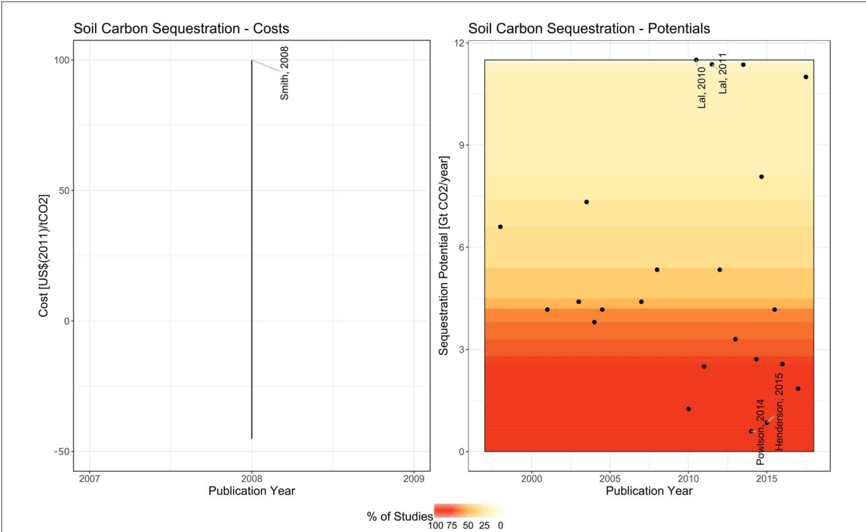
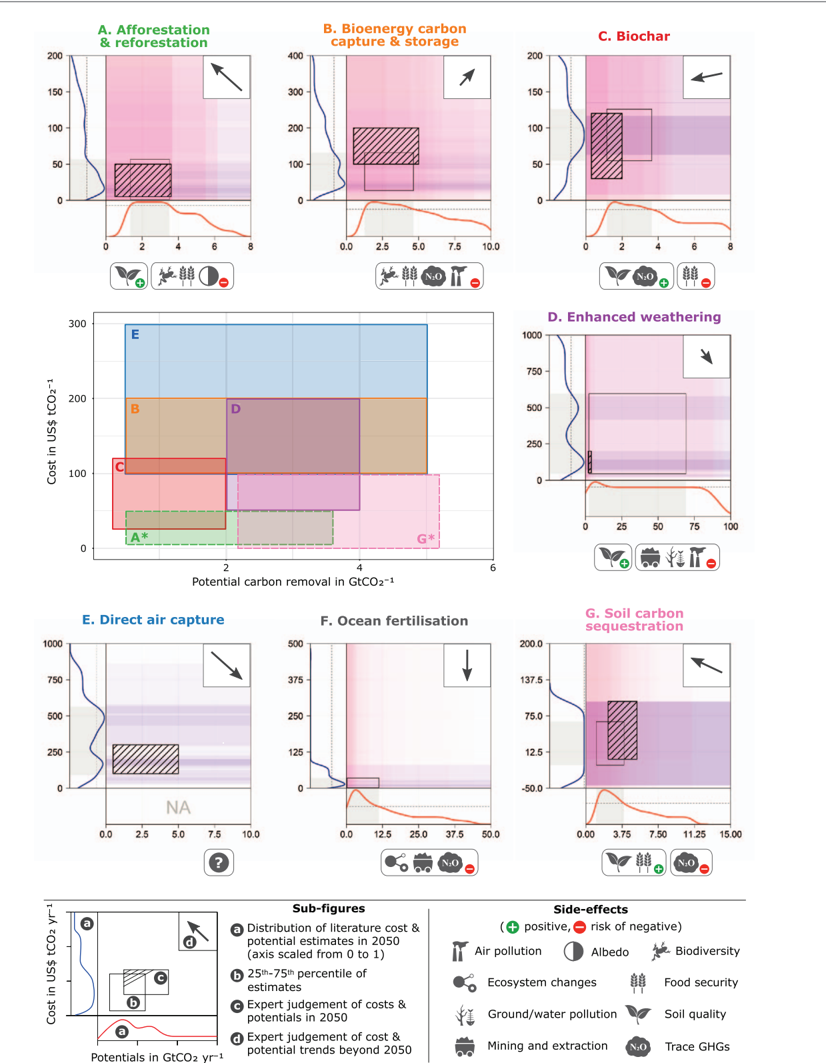
The most recent IPCC assessment has shown an important role for negative emissions technologies (NETs) in limiting global warming to 2 °C cost-effectively. However, a bottom-up, systematic, reproducible, and transparent literature assessment of the different options to remove CO 2 from the atmosphere is currently missing. In part 1 of this three-part review on NETs, we assemble a comprehensive set of the relevant literature so far published, focusing on seven technologies: bioenergy with carbon capture and storage (BECCS), afforestation and reforestation, direct air carbon capture and storage (DACCS), enhanced weathering, ocean fertilisation, biochar, and soil carbon sequestration. In this part, part 2 of the review, we present estimates of costs, potentials, and side-effects for these technologies, and qualify them with the authors' assessment. Part 3 reviews the innovation and scaling challenges that must be addressed to realise NETs deployment as a viable climate mitigation strategy. Based on a systematic review of the literature, our best estimates for sustainable global NET potentials in 2050 are 0.5–3.6 GtCO 2 yr −1 for afforestation and reforestation, 0.5–5 GtCO 2 yr −1 for BECCS, 0.5–2 GtCO 2 yr −1 for biochar, 2–4 GtCO 2 yr −1 for enhanced weathering, 0.5–5 GtCO 2 yr −1 for DACCS, and up to 5 GtCO 2 yr −1 for soil carbon sequestration. Costs vary widely across the technologies, as do their permanency and cumulative potentials beyond 2050. It is unlikely that a single NET will be able to sustainably meet the rates of carbon uptake described in integrated assessment pathways consistent with 1.5 °C of global warming.
Overview
The claims and statistics of this paper haven’t been checked yet.
Free: it reads the open-access text and checks the first 5 claims that cite a source we can check. Create a free account to check every claim.
Integrity signals
Registry
Cites
Statistics
Figures
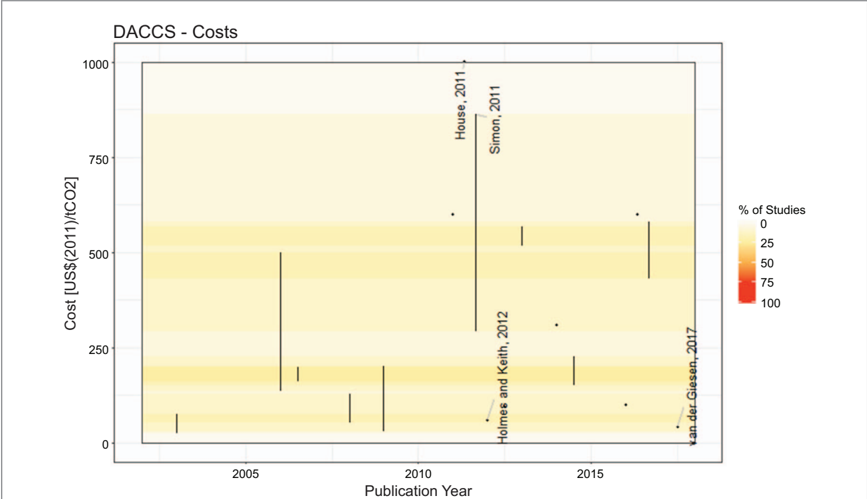
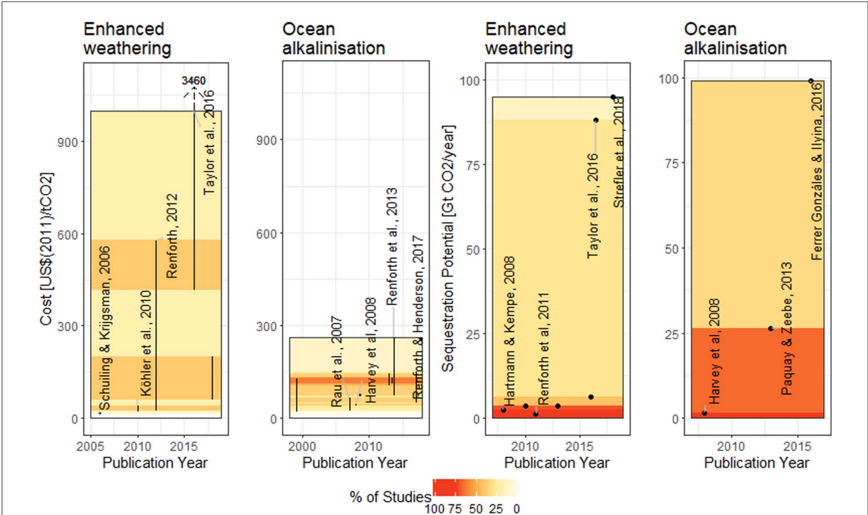
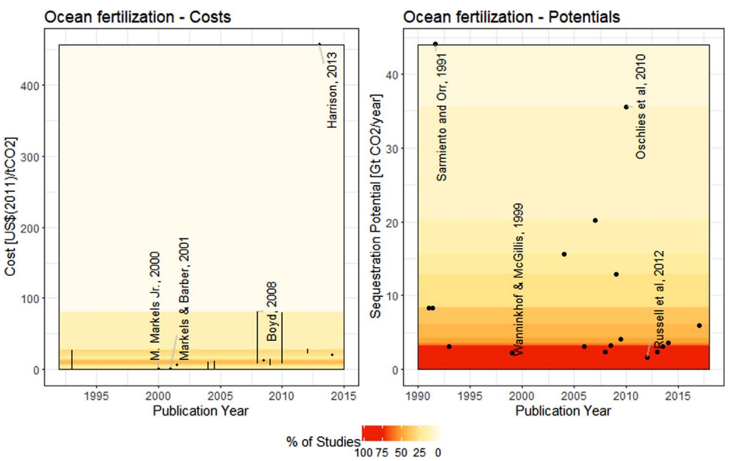
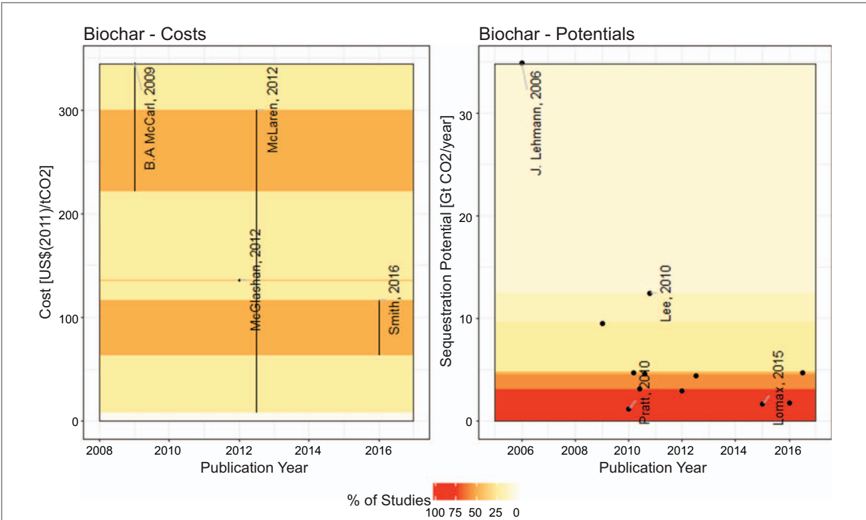
Verification
Claims the paper makes
The claims and statistics of this paper haven’t been checked yet.
Free: it reads the open-access text and checks the first 5 claims that cite a source we can check. Create a free account to check every claim.
Claims other papers make about this one
Each is checked against this paper’s own text: does it say what the citing paper says it does?
The cited source doesn’t support the claim as written.
In the citing paper
“Previous reviews 18,28,[52][53][54] have shown that these pathways offer substantial CO 2 removal potential:”
From The technological and economic prospects for CO2 utilization and removal (2019) · cites this paper as [28]
Checked by a reasoning model — may be wrong.
Experimental — accuracy not yet measuredThe source backs part of the claim, not all of it — or backs it for a different population, condition or comparison.
In the citing paper
“Plausibly, all bioenergy that can be sourced sustainably (about 100 EJ 3,25 primary energy) could be allocated to BECCS, so that about 4.2-5.6Gt CO 2 per year could be sequestered (reflecting losses in energy and CO 2 in along different steps in the process).”
From The mutual dependence of negative emission technologies and energy systems (2019) · cites this paper as [3]
Experimental — accuracy not yet measuredThe source backs part of the claim, not all of it — or backs it for a different population, condition or comparison.
In the citing paper
“Removal costs are estimated at $5-$50/tCO 2 (Fuss et al. 2018).”
From Strategies for mitigation of climate change: a review (2020) · cites this paper as Fuss et al. 2018
Experimental — accuracy not yet measuredThe source backs part of the claim, not all of it — or backs it for a different population, condition or comparison.
In the citing paper
“Side effects of ocean fertilization that are discussed in the literature include ocean acidification, deep and mid-water oxygen decrease or depletion, increase in production of further greenhouse gases, unpredictable impact on food cycles, creation of toxic algal blooms as well as mixed effects on the seafloor and upper ocean ecosystems (Fuss et al. 2018;Williamson et al. 2012).”
From Strategies for mitigation of climate change: a review (2020) · cites this paper as Fuss et al. 2018
Experimental — accuracy not yet measuredThe source backs part of the claim, not all of it — or backs it for a different population, condition or comparison.
In the citing paper
“In the context of our CDR targets, ERW has a similar potential to that of other CDR strategies 23 estimated for 2050, including bio-energy with carbon capture and storage (BECCS), widely adopted in IPCC future scenarios (0.5-5 Gt CO2 yr -1 ), direct air carbon capture and storage (DAC) (0.5-5 Gt CO2 yr -1 ), biochar (0.5 to 2 Gt CO2 yr -1 ), soil organic carbon (SOC) sequestration (0.5-5 Gt CO2 yr”
From Potential for large-scale CO2 removal via enhanced rock weathering with croplands (2020) · cites this paper as [23]
Experimental — accuracy not yet measured
55 more claims about this paper
Create a free account to see every claim other papers make about this one.
Self-check
Percentages, sums and reported differences re-computed from the paper’s own numbers.
The self-check needs the paper’s full text.
Citations
Cites
Soil Carbon Sequestration Impacts on Global Climate Change and Food Security
Lal, R. (2004) · Science · doi:10.1126/science.1097396 · Cited by 8,376 · cited 6×
“Of the 22 articles (Batjes 1998, Benbi 2013, Conant 2011, Henderson et al 2015, Lal 2003b, 2003a, 2004a, 2004c, 2004b, 2010, 2011, 2013, Lassaletta and Aguilera 2015, Lorenz and Lal 2014, Powlson et al 2014, Salati et al 2010, Smith 2012, 2016, Sommer and Bossio 2014, Minasny et al 2017, Metting et…”
BackgroundInfluentialRiahi, K., van Vuuren, D. P., Kriegler, E., Edmonds, J., O’Neill, B. C., Fujimori, S., Bauer, N., Calvin, K., Dellink, R., Fricko, O., et al. (2017) · Global Environmental Change · doi:10.1016/j.gloenvcha.2016.05.009 · Cited by 6,607
Self-citationThe next generation of scenarios for climate change research and assessment
Moss, R. H., Edmonds, J. A., Hibbard, K. A., Manning, M. R., Rose, S. K., van Vuuren, D. P., Carter, T. R., Emori, S., Kainuma, M., Kram, T., et al. (2010) · Nature · doi:10.1038/nature08823 · Cited by 6,467
Brennan, L., & Owende, P. (2010) · Renewable and Sustainable Energy Reviews · doi:10.1016/j.rser.2009.10.009 · Cited by 4,894 · cited 2×
“24 Although achievable scales are not clear yet, there is also research on third-generation biofuels, derived from algal biomass (Brennan and Owende 2010) with the potential to enhance yields by improving microalgal biology through genetic or metabolic engineering (Tandon and Jin 2017).”
BackgroundCarbon capture and storage (CCS): the way forward
Bui, M., Adjiman, C. S., Bardow, A., Anthony, E. J., Boston, A., Brown, S., Fennell, P. S., Fuss, S., Galindo, A., Hackett, L. A., et al. (2018) · Energy & Environmental Science · doi:10.1039/c7ee02342a · Cited by 4,374
Self-citationGlobal effects of land use on local terrestrial biodiversity
Newbold, T., Hudson, L. N., Hill, S. L. L., Contu, S., Lysenko, I., Senior, R. A., Börger, L., Bennett, D. J., Choimes, A., Collen, B., et al. (2015) · Nature · doi:10.1038/nature14324 · Cited by 4,352
Soil carbon sequestration to mitigate climate change
Lal, R. (2004) · Geoderma · doi:10.1016/j.geoderma.2004.01.032 · Cited by 3,936 · cited 6×
“Of the 22 articles (Batjes 1998, Benbi 2013, Conant 2011, Henderson et al 2015, Lal 2003b, 2003a, 2004a, 2004c, 2004b, 2010, 2011, 2013, Lassaletta and Aguilera 2015, Lorenz and Lal 2014, Powlson et al 2014, Salati et al 2010, Smith 2012, 2016, Sommer and Bossio 2014, Minasny et al 2017, Metting et…”
BackgroundInfluentialGriscom, B. W., Adams, J., Ellis, P. W., Houghton, R. A., Lomax, G., Miteva, D. A., Schlesinger, W. H., Shoch, D., Siikamäki, J. V., Smith, P., et al. (2017) · Proceedings of the National Academy of Sciences · doi:10.1073/pnas.1710465114 · Cited by 3,481
Self-citationO’Neill, B. C., Kriegler, E., Ebi, K. L., Kemp-Benedict, E., Riahi, K., Rothman, D. S., van Ruijven, B. J., van Vuuren, D. P., Birkmann, J., Kok, K., et al. (2017) · Global Environmental Change · doi:10.1016/j.gloenvcha.2015.01.004 · Cited by 3,359
Irreversible climate change due to carbon dioxide emissions
Solomon, S., Plattner, G.-K., Knutti, R., & Friedlingstein, P. (2009) · Proceedings of the National Academy of Sciences · doi:10.1073/pnas.0812721106 · Cited by 3,217 · cited 1×
“…et al 2015, Riahi et al 2015, Eom et al 2015), temperature overshoot carries additional risks associated with higher levels of warming and the resulting impacts and climate feedbacks that could occur (van Vuuren et al 2013, Solomon et al 2009, Friedlingstein et al 2006, Clarke et al 2014).”
Background
Research works printed but not linked: 32
- Bruckner T ed Edenhofer E, 2014, Contribution of Working Group III to the Fifth Assessment Report of the Intergovernmental Panel on Climate Change
- Bui M, 2018, Energy Environ. Sci.
- Ciais P ed Stocker T F, 2013, Climate Change 2013: The Physical Science Basis. Contribution of Working Group I to the Fifth Assessment Report of the Intergovernmental Panel on Climate Change
- Clarke L E ed Edenhofer O, 2014, Clim. Change 2014 Mitig. Clim. Change Contrib. Work. Gr. III to Fifth Assess. Rep. Intergov. Panel Clim. Change, 413
- Coelho S T, 2012, Chapter 20—land and water: linkages to bioenergy, 1459
- Corathers L A, 2015, Earth
- d’Hotman D V, 1961, Int. Sugar J., 63, 363
- Dale V H, 2010, Biofuels: implications for Land Use and Biodiversity
- Díaz S, 2009, Biodiversity, Ecosystem Functioning, and Human Wellbeing
- Fuss S, 2017, Oxf. Res. Encycl. Clim. Sci., 1
- Gale J J, 2004, Geol. Belgica, 7, 99
- Haberl H ed Dewulf J, 2015, Sustainability Assessment of Renewables-Based Products, 1
- Hassani N, 2016, Pet. Res., 25, 4
- IEA GHG, 2005, Building the Cost Curves for CO
- IEA GHG, 1998, Enhanced Coal Bed Methane Recovery with CO
- IPCC ed Metz B, 2005, Carbon Dioxide Capture and Storage (SRCCS)
- IPCC ed Qin D, 2013, Contribution of Working Group I to the Fifth Assessment Report of the Intergovernmental Panel on Climate Change
- IPCC ed Edenhofer O, 2014, Contribution of Working Group III to the Fifth Assessment Report of the Intergovernmental Panel on Climate Change
- IPCC ed Pachauri R K, 2014, Contribution of Working Groups I, II and III to the Fifth Assessment Report of the Intergovernmental Panel on Climate Change
- Liu W W, 2016, Acta Ecol. Sin., 36, 2113
- Lopes A S, 1996, Better Crop. Int., 10, 10
- Magill B, 2017, Clim. Cent.
- Markels M, 2001, Poster Presentation for NETL Conference on Carbon Sequestration, 14
- 10.1088/1748-9326/aabf9 · doi:10.1088/1748-9326/aabf9
- Minx J, 2017, Environ. Res. Lett., 12
- National Academy of Sciences, 2015, Climate Intervention
- 53. Nkouathio D G, Wandji P, Bardintzeff J M, Tematio P, Dongmo A K and Tchoua F 2008 Utilisation des roches volcaniques pour la remineralisation des sols ferrallitiques des regions tropicales. Cas des pyroclastites basaltiques du graben de Tombel (Ligne volcanique du Cameroun) Bull. Soc. Vaudoise Sci. Nat. 91 1-14
- 122. Sedjo R A and Solomon A M 1991 Climate and forests Greenhouse Warming: Abatement and Adaptation (Resources for the Future)
- Strefler J, 2018, Environ. Res. Lett., 13
- Strefler J, 2018, Environ. Res. Lett., 13
- UNEP, 2017, The Emissions Gap Report 2017
- USDOE, 2014, Report
Cited by
Items 801–900 of 1,001
Sanchez, R. G., Chatzipanagi, A. I., Kakoulaki, G., Buffi, M., & Szabo, S. (2023) · Energies · doi:10.3390/en16093881 · Cited by 13
Regional implications of carbon dioxide removal in meeting net zero targets for the United States
Fauvel, C., Fuhrman, J., Ou, Y., Shobe, W., Doney, S. C., McJeon, H. C., & Clarens, A. F. (2023) · Environmental Research Letters · doi:10.1088/1748-9326/aced18 · Cited by 12
Carbon balance of plywood from a social reforestation program in Indonesia
Müller, D. P., Szemkus, N., & Hiete, M. (2023) · Scientific Reports · doi:10.1038/s41598-023-40580-0 · Cited by 17
Xing, X., Xiong, Y., Wang, R., Gao, Y., Xu, S., Ciais, P., Gasser, T., Peñuelas, J., Sardans, J., Chen, J., et al. (2024) · Next Sustainability · doi:10.1016/j.nxsust.2024.100040 · Cited by 12
Cownden, R., & Lucquiaud, M. (2024) · Environmental Science & Technology · doi:10.1021/acs.est.4c02933 · Cited by 15
Earth system responses to different levels of greenhouse gas emissions mitigation
Friedlingstein, P., Artaxo, P. E., Gallego-Sala, A. V., Jia, G., JONES, C. D., Kawamiya, M., Loisel, J., Loutre, M., Rehfeld, K., Rovere, A., et al. (2024) · Frontiers in Climate · doi:10.3389/fclim.2024.1480208 · Cited by 17
“For low-end scenarios, the feasibility concerns revolve around the plausibility of the rate of emissions reduction that could be achieved in the coming decades and on the rate of deployment and scale of negative emissions technologies (Fuss et al., 2018; Heck et al., 2018; Séférian et al., 2018).”
Han, H., Ding, J., Wang, J., Zeng, A., Ge, X., & Zhu, X. (2025) · CATENA · doi:10.1016/j.catena.2025.108711 · Cited by 12
Fuhr, M., Dale, A. W., Wallmann, K., Bährle, R., Kalapurakkal, H. T., Sommer, S., Spiegel, T., Dobashi, R., Buchholz, B., Schmidt, M., et al. (2025) · Communications Earth & Environment · doi:10.1038/s43247-025-02079-6 · Cited by 19
Hedging our bet on forest permanence for the economic viability of climate targets
Windisch, M. G., Humpenöder, F., Merfort, L., Bauer, N., Luderer, G., Dietrich, J. P., Heinke, J., Müller, C., Abrahão, G. M., Lotze‐Campen, H., et al. (2025) · Nature Communications · doi:10.1038/s41467-025-57607-x · Cited by 20
Self-citationUnlocking CO2 Infrastructure Deployment: The Impact of Carbon Removal Accounting
Schippers, E. J., & Massol, O. (2022) · Energy Policy · doi:10.1016/j.enpol.2022.113265 · Cited by 15
Modeling the energy mix and economic costs of deep decarbonization scenarios in a CGE framework
Gilmore, E., Ghosh, M., Johnston, P., Siddiqui, M.-S., & Macaluso, N. (2023) · Energy and Climate Change · doi:10.1016/j.egycc.2023.100106 · Cited by 17
Yang, Y., Liu, W., Wu, B. C., Wang, T., Dong, H., Fang, M., & Gao, X. (2023) · Separation and Purification Technology · doi:10.1016/j.seppur.2023.124504 · Cited by 11
Rethinking global carbon storage potential of trees. A comment on Bastin et al. (2019)
Taylor, S. D., & Marconi, S. (2020) · Annals of Forest Science · doi:10.1007/s13595-020-0922-z · Cited by 14
Soil organic carbon commitments under three Rio Conventions: Opportunities for integration
Wiese, L. (2022) · Soil Security · doi:10.1016/j.soisec.2022.100052 · Cited by 11
“…the role and potential of SOC protection and sequestration to support climate change mitigation and adaption has received particular attention of late (Bossio et al., 2020; Demenois et al., 2022, 2020; Fuss et al., 2018; Leifeld and Menichetti, 2018; Rumpel et al., 2020; Sykes et al., 2020).”
Scholten, P. B. V., & Figueirêdo, M. B. (2022) · Macromolecular Chemistry and Physics · doi:10.1002/macp.202200017 · Cited by 11
Transitioning to Affordable and Clean Energy
Constable, E. C. (2022) · MDPI eBooks · doi:10.3390/books978-3-03897-777-3 · Cited by 11
Bioenergy with carbon capture and storage
Clery, D. S., & Rackley, S. (2023) · Elsevier eBooks · doi:10.1016/b978-0-12-819663-2.00017-4 · Cited by 12
Nabavi, S. A., Erans, M., & Manovic, V. M. (2019) · Applied Energy · doi:10.1016/j.apenergy.2019.113731 · Cited by 11
“This time-scale is attractive from an engineering perspective, particularly when compared with the leading NETs such as bioenergy with CCS (BECCS) [32,33], and afforestation [34,35].”
BackgroundBLOEM : A spatially explicit model of bioenergy and carbon capture and storage, applied to Brazil
Tagomori, I. S., Daioglou, V., Rochedo, P., Angelkorte, G. B., Schaeffer, R., van Vuuren, D. P., & Szklo, A. S. (2022) · GCB Bioenergy · doi:10.1111/gcbb.13008 · Cited by 12
Guidelines for effective climate smart forestry
Shephard, N. T., & Maggard, A. (2023) · Environmental Research Letters · doi:10.1088/1748-9326/acd653 · Cited by 11
“BECCS has a high degree of permanence and mitigation potential since it simultaneously displaces fossil fuel and stores CO 2 underground [5].”
Baum, C. M., Low, S., & Sovacool, B. K. (2023) · Technological Forecasting and Social Change · doi:10.1016/j.techfore.2023.122734 · Cited by 12
Leveni, M., & Bielicki, J. M. (2023) · Environmental Research Letters · doi:10.1088/1748-9326/ad0924 · Cited by 10
“This transition must occur while still providing cost-effective energy to power economies and well-being (Fuss et al 2018, Minx et al 2018).”
BackgroundCong, H., Yan, X.-Q., Yang, L., Jiang, Y. Y., Wang, C., Zhan, D., Li, Y., & Dai, M. (2024) · Environmental Science & Technology Letters · doi:10.1021/acs.estlett.4c00313 · Cited by 10
Scaling carbon removal systems: deploying direct air capture amidst Canada’s low-carbon transition
Cortinovis, S. R., Craik, N., Moreno‐Cruz, J., Motlaghzadeh, K., & Schweizer, V. J. (2024) · Frontiers in Climate · doi:10.3389/fclim.2024.1338647 · Cited by 15
“Though the cost of nature-based removals and abatement are lower than both in the near term, their marginal costs will also rise as land becomes scarcer and firms exhaust lower-cost abatement options (Fuss et al., 2018; Gillingham and Stock, 2018).”
BackgroundPrudent carbon dioxide removal strategies hedge against high climate sensitivity
Schaber, T., Ekholm, T., Merikanto, J., & Partanen, A. (2024) · Communications Earth & Environment · doi:10.1038/s43247-024-01456-x · Cited by 15
“Another problem is that scenarios often employ promising and favorable assumptions on CDR feasibility, thereby possibly overstating the role of large-scale CDR in mitigation strategies 7,8,10,17 .”
InfluentialLuo, C., Si-qi, L., Hua, E., Forsell, N., & Chen, M. (2024) · Ecosystem Health and Sustainability · doi:10.34133/ehs.0217 · Cited by 12
Gan, Z., Shao, Q., Ge, B., Wang, Q., & Zhu, X. (2024) · Carbon Capture Science & Technology · doi:10.1016/j.ccst.2024.100328 · Cited by 10
Deep uncertainty in carbon dioxide removal portfolios
Mendez, Q. R., Creutzig, F., & Fuss, S. (2025) · Environmental Research Letters · doi:10.1088/1748-9326/adc613 · Cited by 23
“Often discussed CDR options also have different levels of readiness, achievable potential, social acceptance and impacts on ecosystems [8–10].”
Self-citationYao, W., Morganti, T., Wu, J., Borchers, M., Anschutz, A. J., Bednarz, L.-K., Bhaumik, A., Boettcher, M., Burkhard, K., Cabus, T., et al. (2025) · Earth s Future · doi:10.1029/2024ef004902 · Cited by 16
“…implementation of any CDR option faces limitations, risks, and biophysical, technical, political and social challenges (Creutzig et al., 2015; Fuss et al., 2018), assessments of marine CDR (mCDR) and marine carbon storage (mCS) approaches within a portfolio of CDR options to reach net‐zero…”
Groppelli, S., Calvi, D., Comazzi, F., Alamooti, S. J., Azzellino, A., Barbaccia, E., Caronni, S., Macchi, P., Raos, G., & Basso, D. (2025) · Marine Pollution Bulletin · doi:10.1016/j.marpolbul.2025.118787 · Cited by 11
Song, Y., & Oh, C. (2022) · Journal of Climate Change Research · doi:10.15531/ksccr.2022.13.1.075 · Cited by 10
Williamson, P. C., Boyd, P. W., Harrison, D. P., Reynard, N., & Mashayek, A. (2022) · Royal Society of Chemistry eBooks · doi:10.1039/9781839165245-00291 · Cited by 11
Zhang, Y., Li, Z., Aviso, K. B., Tan, R. R., Wang, F., & Jia, X. (2022) · Resources Conservation and Recycling · doi:10.1016/j.resconrec.2022.106766 · Cited by 12
Titus, K. A., Dempsey, D. E., & Peer, R. (2022) · International journal of greenhouse gas control · doi:10.1016/j.ijggc.2022.103813 · Cited by 13
When will the hydrogen economy arrive?
Moriarty, P., & Honnery, D. (2022) · AIMS energy · doi:10.3934/energy.2022052 · Cited by 10
International Yearbook of Soil Law and Policy 2022
Ginzky, H., Correa, F. D. A., Dooley, E., Heuser, I. L., Kameri‐Mbote, P., Kibugi, R. M., & Ruppel, O. C. (2024) · International yearbook of soil law and policy · doi:10.1007/978-3-031-40609-6 · Cited by 15
Radosits, F. K., Ajanović, A., & Pratschner, S. (2024) · Journal of Sustainable Development of Energy Water and Environment Systems · doi:10.13044/j.sdewes.d12.0484 · Cited by 13
“Carbon capture costs as EUR/t CO 2 were included in the analysis as variable costs [39] .”
MethodRegional variation in the effectiveness of methane-based and land-based climate mitigation options
Hayman, G. D., Comyn‐Platt, E., Huntingford, C., Harper, A., Powell, T., Cox, P. M., Collins, W. J., Webber, C. P., Lowe, J. A., Sitch, S. A., et al. (2021) · Earth System Dynamics · doi:10.5194/esd-12-513-2021 · Cited by 12
Optimization of low-cost negative emissions strategies through multi-resource integration
Abraham, E. J., Linke, P., & Al‐Mohannadi, D. M. (2022) · Journal of Cleaner Production · doi:10.1016/j.jclepro.2022.133806 · Cited by 13
Storylines of Geoengineering in the Australian Media: An Analysis of Online Coverage 2006–2018
Burnard, A., & Colvin, R. M. (2022) · Environmental Communication · doi:10.1080/17524032.2022.2141290 · Cited by 14
“Indeed for many, geoengineering, broadly defined, has been accepted as a necessity for avoiding catastrophic climate change (Fuss et al., 2018; Parker & Geden, 2016).”
BackgroundPost COP26 : does the 1.5°C climate target remain alive?
Wiltshire, A., Bernie, D. J., Gohar, L., Lowe, J. A., Mathison, C., & Smith, C. (2022) · Weather · doi:10.1002/wea.4331 · Cited by 12
“Direct air capture and storage has less environmental impacts than BECCS but is currently more expensive (Fuss et al., 2018).”
BackgroundCoordinating the Deployment of Bioenergy with Carbon Capture and Storage
Schippers, E. J., da Costa, P., & Massol, O. (2022) · Science and Technology for Energy Transition · doi:10.2516/stet/2022018 · Cited by 11
An Oligopoly Game of CDR Strategy Deployment in a Steady-State Net-Zero Emission Climate Regime
Babonneau, F., Bahn, O., Haurie, A. B., & Marc Vielle, B. (2020) · Environmental Modeling & Assessment · doi:10.1007/s10666-020-09734-6 · Cited by 10
“Based on a literature review, [20] proposes a cost range of 100200 $/tCO2 captured in 2050.”
BackgroundMethodYoung, J., McQueen, N., Charalambous, C., Foteinis, S., Hawrot, O., Ojeda, M., Pilorgé, H., Andrésen, J. M., Psarras, P. C., Renforth, P., et al. (2022) · ChemRxiv · doi:10.26434/chemrxiv-2022-dp36t-v2 · Cited by 15
Sequencing Carbon Dioxide Removal into the EU ETSPreprint
Sultani, D., Osorio, S., Günther, C., Pahle, M., Sievert, K., Schmidt, T. S., Steffen, B., & Edenhofer, O. (2024) · SSRN Electronic Journal · doi:10.2139/ssrn.4875550 · Cited by 24
“On top of the purely techno-economic literature, the manifold socio-economic challenges of removals have been widely discussed (Fuss et al, 2018; Strefler et al, 2018; Anderson et al, 2023).”
BackgroundCalogiuri, T., Hagens, M., van Groenigen, J. W., Corbett, T. D. W., Hartmann, J., Hendriksen, R., Janssens, I., Janssens, I. A., Dominguez, G. L., Loescher, G., et al. (2023) · Journal of Visualized Experiments · doi:10.3791/65563 · Cited by 9
Self-citationAssessment of Carbon Dioxide Removal Technologies: A Data-Driven Decision-Making Model
Ma, X., & Bai, C. A. (2023) · IEEE Transactions on Engineering Management · doi:10.1109/tem.2023.3331034 · Cited by 14
“Accordingly, the authors of [1], [12], and [26] state that the costs of DACCS technology are the biggest problem.”
BackgroundInfluentialEffects of aquifer size and formation fracture pressure on CO2 geological storage capacity
Jung, S., & Lee, K. (2024) · Frontiers in Energy Research · doi:10.3389/fenrg.2024.1381402 · Cited by 9
Sustainability performance of enhanced weathering across countries: A triple bottom line approach
Oppon, E., Koh, S. C. L., & Eufrasio, R. M. (2024) · Energy Economics · doi:10.1016/j.eneco.2024.107722 · Cited by 20
Sloot, D., & Bostrom, A. (2024) · Energy Research & Social Science · doi:10.1016/j.erss.2024.103694 · Cited by 10
“The most prominent of these are affor-estation or reforestation, which are relatively low-cost solutions, but with severe limitations and risks attached [17].”
InfluentialCarbon Credits Through Wood Use: Revisiting the Maximum Potential and Sensitivity to Key Assumptions
Niemi, J., Soimakallio, S., Hurmekoski, E., Myllyviita, T., Kunttu, J., Lingua, F., & Snäll, T. (2025) · GCB Bioenergy · doi:10.1111/gcbb.70017 · Cited by 10
“Both options are currently marginal worldwide, but they have a global potential of 0.5–2 Gt CO 2 yr − 1 and 2–4 Gt CO 2 yr − 1 for BECCS and biochar in 2050, respectively, representing approximately 5%–15% of the current global CO 2 emissions (Fuss et al. 2018).”
InfluentialChlela, S., & Selosse, S. (2025) · The Science of The Total Environment · doi:10.1016/j.scitotenv.2025.179271 · Cited by 13
Gasós, A., Pini, R., Becattini, V., & Mazzotti, M. (2025) · Energy & Environmental Science · doi:10.1039/d5ee01752a · Cited by 12
(How to) avoid the inflationary labeling of emissions as “hard to abate”
Dufour‐Décieux, V., Sievert, K., Steffen, B., Bardow, A., & Schmidt, T. S. (2025) · Joule · doi:10.1016/j.joule.2025.102039 · Cited by 20
Román-Cuesta, R. M., den Elzen, M. G. J., Gutiérrez, Z. A., Forsell, N., Lamb, W. F., McGlynn, E., Melo, J., Rossi, S., Meinshausen, M. A., Federici, S., et al. (2025) · Communications Earth & Environment · doi:10.1038/s43247-025-02494-9 · Cited by 20
Self-citationShi, S., Chang, D., Liang, T., Gao, S., Zhou, G., & Cao, W. (2025) · Resources Environment and Sustainability · doi:10.1016/j.resenv.2025.100261 · Cited by 9
Research on Direct Air Capture: A Review
Zhao, Y., Zheng, B., Zhang, J., & Xu, H. (2025) · Energies · doi:10.3390/en18246632 · Cited by 13
“While each approach contributes to decarbonization, they also face distinct limitations-such as geographical constraints, land use implications, infrastructure dependencies, or vulnerability to reversal-highlighting the need for complementary technologies that can address these gaps [11].”
Direct air capture with solid sorbents: Adsorbent design, process engineering, and CO2 conversion
Hassan, M., Shin, C., Lee, T., Lee, S., Chowdhury, S., Kwon, H. T., Kang, S. G., Ahn, S., & Chung, Y. G. (2026) · Chemical Engineering Journal · doi:10.1016/j.cej.2026.175117 · Cited by 9
Weathering without realizing inorganic CO 2 removal revealed through base cation monitoring
Vienne, A., Frings, P. J., Rijnders, J., Suhrhoff, T. J., Reershemius, T., Poetra, R. P., Hartmann, J., Niron, H., Estrada, M. P., Steinwidder, L., et al. (2026) · SOIL · doi:10.5194/soil-12-421-2026 · Cited by 23
Self-citationA Holistic View of Soils in Delivering Ecosystem Services in Forests: A Case Study in South Korea
Vicente‐Vicente, J. L., Fuss, S., Song, C., Lee, J., Kim, M., Lee, W., & Son, Y. (2019) · Forests · doi:10.3390/f10060487 · Cited by 12
“C sequestration in forests has been focused especially on C accumulation in biomass during afforestation and reforestation (AR) processes, another NET that has been widely studied [18,19,31].”
BackgroundSelf-citationZhai, S., Nam, J., Gautam, G. S., Lim, K., Rojas, J. A., Toney, M. F., Carter, E. A., Jung, I., Chueh, W. C., & Majumdar, A. (2022) · Journal of Materials Chemistry A · doi:10.1039/d1ta10391a · Cited by 10
Against the budget view in climate ethics
Tank, L. (2022) · Critical Review of International Social and Political Philosophy · doi:10.1080/13698230.2022.2070833 · Cited by 9
“See, Minx et al. (2018) and Fuss et al. (2018) for reviews of carbon dioxide removal technologies.”
Mei, B., & Clutter, M. L. (2022) · Frontiers in Forests and Global Change · doi:10.3389/ffgc.2022.931504 · Cited by 9
“Unfortunately, there is a lack of research on these topics, although it is the biome that global models associate with the largest potentials of carbon removal (Fuss et al., 2018).”
BackgroundRecent progress in photothermal catalyst design for methanol production
Ng, M., Jovic, V., Waterhouse, G. I. N., & Kennedy, J. (2022) · Emergent Materials · doi:10.1007/s42247-022-00425-4 · Cited by 6
The C-REM 4.0 model: A CGE model for provincial analysis of China’s carbon neutrality target
Peng, H., Qu, C., Karplus, V. J., & Zhang, D. (2024) · Energy and climate management. · doi:10.26599/ecm.2024.9400006 · Cited by 14
Marazza, D., Pesce, S., Greggio, N., Vaccari, F. P., Balugani, E., & Buscaroli, A. (2022) · Agriculture · doi:10.3390/agriculture12081244 · Cited by 14
OPTIMAL CLIMATE POLICY WITH NEGATIVE EMISSIONS
Rebonato, R., Kainth, D., Melin, L., & O’Kane, D. (2024) · International Journal of Theoretical and Applied Finance · doi:10.1142/s0219024924500122 · Cited by 8
Negative Emission Technologies – NETs
Yan, J., Obersteiner, M. H., Möllersten, K., & Moreira, J. R. (2019) · Applied Energy · doi:10.1016/j.apenergy.2019.113749 · Cited by 13
Incentivizing Negative Emissions Through Carbon Shares
Lemoine, D. M. (2020) · National Bureau of Economic Research · doi:10.3386/w27880 · Cited by 20
“See National Research Council (2015), Fuss et al. (2018), and National Academies of Sciences, Engineering, and Medicine (2018) for recent reviews.”
Meinshausen, M. A., Schleussner, C., Beyer, K., Bodeker, G. E., Boucher, O., Canadell, J. G., Daniel, J. S., Diongue, A., Driouech, F., Fischer, E. M., et al. (2023) · doi:10.5194/gmd-2023-176 · Cited by 9
Self-citationAsia’s Transition to Net Zero: Opportunities and Challenges in Agriculture
Panda, A., & Yamano, T. (2023) · doi:10.22617/wps230360-2 · Cited by 12
Zeilerbauer, L., Rodin, V., Puschnigg, S., Aster, H., Danner, S., Veseli, A., Paulik, C., & Fischer, J. (2024) · Carbon Management · doi:10.1080/17583004.2024.2408285 · Cited by 9
“In their topical review, Fuss et al. [261] highlighted that NETs are needed for reaching the 1.5 � C goal for global warming and more on the optional side for a 2.0 � C goal.”
InfluentialProspects of CCUS technology under resource utilization and environmental risks
Liu, L., Liu, C. Z., Wei, J., & Ge, J. (2025) · iScience · doi:10.1016/j.isci.2025.113608 · Cited by 12
“60 In China, projections suggest that the availability of biomass resources will reach 14.58, and 17.24 EJ/a by 2030, and 2050, respectively.”
InfluentialSleep, S., Munjal, R., Leitch, M., Extavour, M., Gaona, A., Ahmad, S., Nishikawa, E., Pitre, V., Psarras, P. C., Ramírez, A., et al. (2021) · Clean Energy · doi:10.1093/ce/zkab039 · Cited by 12
“it is not an example of carbon-dioxide removal (CDR) as described in [24], a common misinterpretation of negative values when substitution is applied in LCA.”
BackgroundAddressing Climate Change Risks: Importance and Urgency
Radunsky, K., & Cadman, T. (2021) · Springer eBooks · doi:10.1007/978-3-030-57281-5_288 · Cited by 14
The reduction of CO2e emissions in the transportation sector: Plug-in electric vehicles and biofuels
Moreira, J. R., Pacca, S. A., & Goldemberg, J. (2022) · Renewable and Sustainable Energy Transition · doi:10.1016/j.rset.2022.100032 · Cited by 8
Impact of organic solutes on capillary phenomena in water-CO2-quartz systems
Sun, E. W.-H., & Bourg, I. C. (2022) · Journal of Colloid and Interface Science · doi:10.1016/j.jcis.2022.08.124 · Cited by 8
Yumashev, D., Janes‐Bassett, V., Redhead, J. W., Rowe, E. C., & Davies, J. A. C. (2022) · Environmental Research Letters · doi:10.1088/1748-9326/aca037 · Cited by 11
Assessing the impact of carbon dioxide removal on the power system
Prado, A., Chiquier, S., Fajardy, M., & Dowell, N. M. (2023) · iScience · doi:10.1016/j.isci.2023.106303 · Cited by 8
Sharma, P., Ho, P. H., Di, W., Creaser, D., & Olsson, L. (2023) · Journal of CO2 Utilization · doi:10.1016/j.jcou.2023.102549 · Cited by 8
Kozera, A., Standar, A., & Genstwa, N. (2023) · Energies · doi:10.3390/en16227655 · Cited by 8
Scaling considerations and optimal control for an offshore wind powered direct air capture system
Webster, S. R., Ishaq, H., & Crawford, C. A. (2024) · Journal of Physics Energy · doi:10.1088/2515-7655/ad31ba · Cited by 11
“However, widespread adoption is limited due to high investment costs and energy demand [20].”
BackgroundThe role and deployment timing of direct air capture in Saudi Arabia’s net-zero transition
Qiu, Y. S., Iyer, G. C., Fuhrman, J., Hejazi, M. I., Kamboj, P., & Kyle, P. G. (2024) · Environmental Research Letters · doi:10.1088/1748-9326/ad4a8f · Cited by 10
“…the technology has not yet reached fully commercial deployment, with only pilot-scale plants operating worldwide mainly due to high costs, substantial energy inputs, a lack of experience on large-scale operation, and public concerns on safety (Fuss et al 2018, Cox et al 2020, Ozkan et al 2022).”
BackgroundNorton, H., Todd, D., & Crawford, C. A. (2024) · Carbon Capture Science & Technology · doi:10.1016/j.ccst.2024.100231 · Cited by 12
Why aren't more landowners enrolling in land-based carbon credit exchanges?
Schofield, L. R., Pearson, M., Newell, S., Clackum, N., & Turner, B. L. (2024) · Rangelands · doi:10.1016/j.rala.2024.05.004 · Cited by 12
The role of electrification and the power sector in U.S. carbon neutrality
O’Keefe, K. T. V., Iyer, G. C., Kennedy, K. M., Ou, Y., Zhao, A., Cui, R. Y., McJeon, H. C., & Hultman, N. (2024) · Energy and Climate Change · doi:10.1016/j.egycc.2024.100155 · Cited by 8
“…CDR strategies in combination with broader emission mitigation strategies — including electrification and energy conservation — will be important to minimize the reliance on some CDR strategies such as BECCS that could have negative implications for the food system and natural ecosystems [17].”
Accounting for local temperature effect substantially alters afforestation patterns
Windisch, M. G., Humpenöder, F., Lejeune, Q., Schleussner, C., Lotze‐Campen, H., & Popp, A. (2022) · Environmental Research Letters · doi:10.1088/1748-9326/ac4f0e · Cited by 10
“However, existing assessments that provide an upper boundary usually do so for a global or inter-regional limit which will fail to prohibit regional trade-offs as found in Latin America in this study [31].”
BackgroundLi, M., & Xu, X. (2022) · Environmental Science and Pollution Research · doi:10.1007/s11356-022-22372-7 · Cited by 8
“JENS HARTMANN-3 (2) Negative emissions—Part 2: Costs, potentials and side effects (Fuss et al. 2018);”
BackgroundDesing, H. (2022) · Environmental Science Advances · doi:10.1039/d2va00168c · Cited by 12
Köhnke, F., Steuri, B., Otto, J., Görl, K., Borchers, M., Förster, J., Thrän, D., Mengis, N., Oschlies, A., & Jacob, D. (2023) · Frontiers in Climate · doi:10.3389/fclim.2023.1056023 · Cited by 8
Tanzer, S. E., Blok, K., & Ramírez, A. (2023) · International journal of greenhouse gas control · doi:10.1016/j.ijggc.2023.103864 · Cited by 11
Sustainable Development Goals assessment of carbon capture on-board
Negri, V., Charalambous, M. A., Medrano‐García, J. D., & Guillén‐Gosálbez, G. (2023) · Computer-aided chemical engineering/Computer aided chemical engineering · doi:10.1016/b978-0-443-15274-0.50466-2 · Cited by 8
Justice in benefitting from carbon removal
Lenzi, D., Schübel, H., & Wallimann-Helmer, I. (2023) · Global Sustainability · doi:10.1017/sus.2023.22 · Cited by 11
“In most cases, carbon dioxide removal will be very costly (Fuss et al., 2018).”
BackgroundSaari, J., Peltola, P., Tynjälä, T., Hyppänen, T., Kaikko, J., & Vakkilainen, E. K. (2020) · Energies · doi:10.3390/en13123075 · Cited by 8
“Among a variety of different negative emission technologies (NETs) to remove CO2 from the atmosphere, bioenergy with carbon capture and storage (BECCS) offers a promising combination of a carbon removal potential estimated at 0.5–5 GtCO2/year and removal cost estimated at 100–200 USD/tCO2 [3].”
BackgroundInfluentialThe Paris Target, Human Rights, and IPCC Weaknesses: Legal Arguments in favour of Smaller BudgetsPreprint
Ekardt, F., Bärenwaldt, M., & Heyl, K. (2022) · Research Square · doi:10.21203/rs.3.rs-1595773/v1 · Cited by 8
Geochemical Drivers of Enhanced Rock Weathering in Soils
Dupla, X., Brantley, S. L., Paulo, C., Möller, B., Power, I., & Grand, S. (2025) · Wiley eBooks · doi:10.1002/9781394204847.ch13 · Cited by 18
Bicarbonate-Carbonate Selectivity through Nanofiltration for Direct Air Capture of Carbon Dioxide
Rinberg, A., & Aziz, M. J. (2024) · ACS ES&T Engineering · doi:10.1021/acsestengg.4c00150 · Cited by 9
Demystifying carbon removals in the context of offsetting for sub-global net-zero targets
Möllersten, K., Dufour, M., Ahonen, H.-M., & Spalding-Fecher, R. (2024) · Carbon Management · doi:10.1080/17583004.2024.2390840 · Cited by 7
“…cost of abatement for the majority of emission reductions is significantly lower than the marginal cost for the bulk of permanent carbon removals [36–38], meaning that more mitigation is achievable on the same budget if ERCs are chosen rather than CRCs. Thirdly, emission reductions usually imply…”
Applying equity principles leads to higher carbon removal obligations in Canada
Motlaghzadeh, K., Craik, N., Moreno‐Cruz, J., Schweizer, V. J., Fuhrman, J., & Hipel, K. W. (2025) · Communications Earth & Environment · doi:10.1038/s43247-025-02080-z · Cited by 10
“– Biochar: Biocharisproduced through thepyrolysisoforganicmaterials in an oxygen-limited environment, resulting in a stable form of carbon that can enhance soil properties when applied to land 61 .”
InfluentialSteinert, N. J., Schwinger, J., Chadwick, R. S., Kug, J., & Lee, H. (2025) · Earth s Future · doi:10.1029/2024ef005787 · Cited by 17
Metadata
- Authors
- Fuss, S., Lamb, W. F., Callaghan, M. W., Hilaire, J., Creutzig, F., Amann, T., Beringer, T., de Oliveira Garcia, W., Hartmann, J., Khanna, T., Luderer, G., Nemet, G. F., Rogelj, J., Smith, P., Vicente, J. L. V., Wilcox, J., del Mar Zamora Dominguez, M., & Minx, J. C.
- Affiliations
- Mercator Research Institute on Global Commons and Climate Change (DE)
- University of Leeds (GB)
- Universität Hamburg (DE)
- Potsdam Institute for Climate Impact Research (DE)
- University of Wisconsin–Madison (US)
- International Institute for Applied Systems Analysis (AT)
- University of Aberdeen (GB)
- Colorado School of Mines (US)
- Corresponding author
- Fuss, Sabine
- ORCID
- Venue
- Environmental Research Letters
- Publisher
- IOP Publishing
- Published
- 2018-05-21
- Volume
- 13
- Issue
- 6
- Pages
- 063002
- ISSN
- 1748-9326 (ISSN-L)
- OpenAlex
- W2804406438
- Semantic Scholar
- ca2b06bf3d1bd787e7941d46ef0e673b8e288399
- Cited by
- 1,525
- References
- 402
- Citations by year
- 2026: 128 · 2025: 225 · 2024: 231 · 2023: 262 · 2022: 264 · 2021: 200 · 2020: 117 · 2019: 84 · 2018: 13
- FWCI
- 66.25
- Type
- journal article
- Language
- en
- Open access
- gold
- doi.org
- Licence
- cc-by
- iopscience.iop.org/info/page/text-and-data-mining (tdm, 1 d)
- creativecommons.org/licenses/by/3.0/ (vor, 1 d)
- Locations
- Environmental Research Letters (publishedVersion, cc-by)
- White Rose Research Online (University of Leeds, The University of Sheffield, University of York) (acceptedVersion)
- Aberdeen University Research Archive (Aberdeen University) (submittedVersion)
- DOAJ (DOAJ: Directory of Open Access Journals) (submittedVersion)
- Publication Database PIK (Potsdam Institute for Climate Impact Research (PIK)) (submittedVersion, other-oa)
- Spiral (Imperial College London) (submittedVersion, cc-by)
- Repository for Publications and Research Data (ETH Zurich) (submittedVersion, cc-by)
- ETH Zürich Research Collection (cc-by)
- Funders
- Bundesministerium für Bildung und Forschung (01LS1610B, 03EK3046B)
- UK Energy Research Centre (UKERC/FFR2/3)
- Deutsche Forschungsgemeinschaft (SSP-1689)
- Natural Environment Research Council (NE/P019455/1, NE/P019900/1)
- Topics
- Physical Sciences › Chemical Engineering › Filtration and Separation › Carbon Dioxide Capture Technologies
- Social Sciences › Economics, Econometrics and Finance › Economics and Econometrics › Climate Change Policy and Economics
- Physical Sciences › Environmental Science › Global and Planetary Change › Climate Change and Geoengineering
- Keywords
- negative emissions technologies, bioenergy with carbon capture and storage, afforestation and reforestation, direct air capture, enhanced weathering, biochar, soil carbon sequestration, climate change mitigation, 2°C target, 1.5°C target
About these checks
Registry, retraction, Cites and statistics results are computed, not judged, with one exception: a printed reference that no index lists is read once by a model before it counts as a citation error. Claims are extracted by a model and kept only when their quote appears verbatim in the text; each cited source is then checked, with a model’s help, for whether it says what the claim relies on. Those verdicts can be wrong — read the claim’s quote and the cited source before relying on one.
Statistics and arithmetic are recomputed, not judged.
Confidence bands are shown only for fields calibrated on our annotated test set. None is calibrated yet, so no band is shown.
What counts as a claim ›How we measure confidence ›How we check this ›
Are you an author, or do you see a problem with this page? Request a review
Data sources
Bibliographic data: Semantic Scholar, OpenAlex, Crossref.
Contains information from the Semantic Scholar Academic Graph Datasets, made available under the ODC Attribution License (ODC-BY 1.0).
Semantic Scholar’s data is described in: Kinney, R., et al. (2023). The Semantic Scholar Open Data Platform. arXiv:2301.10140.
