

Negative emissions—Part 2: Costs, potentials and side effects
Open accessThe DOI matches its Crossref record; 399 of the 402 references it cites were found in a registry or an index.
Abstract
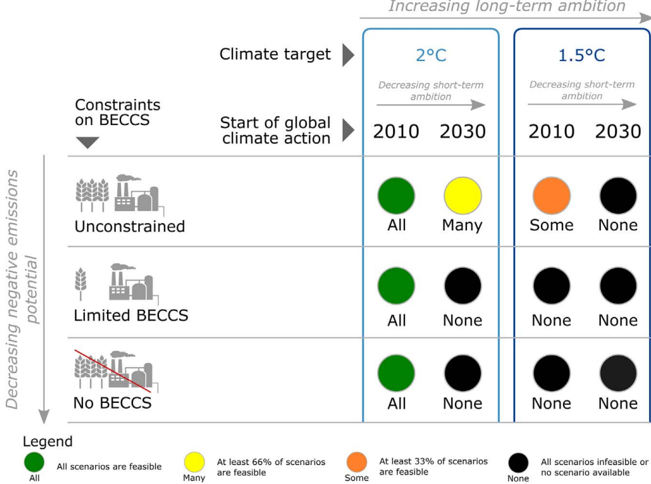
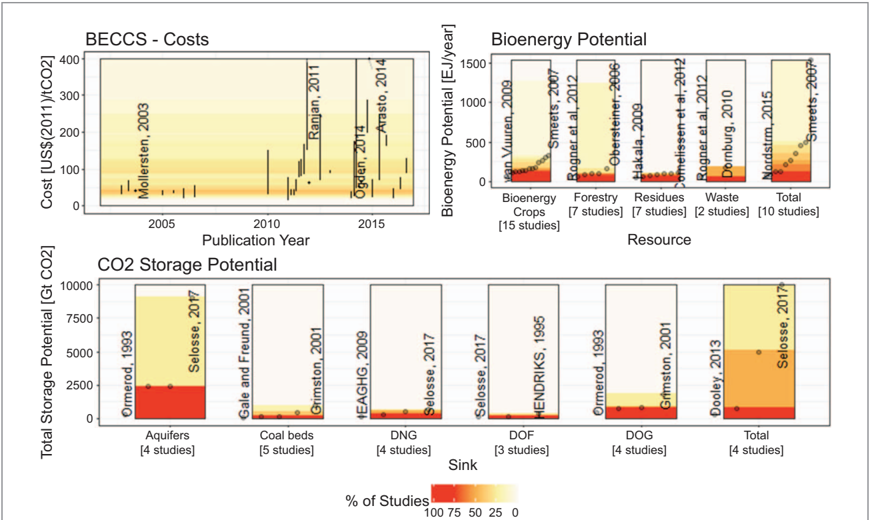
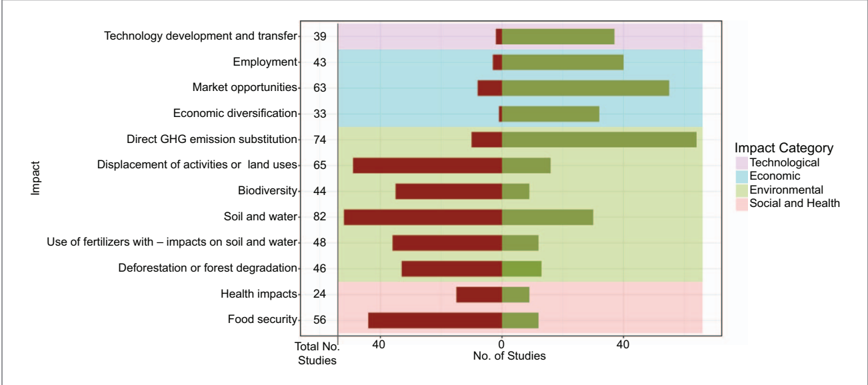
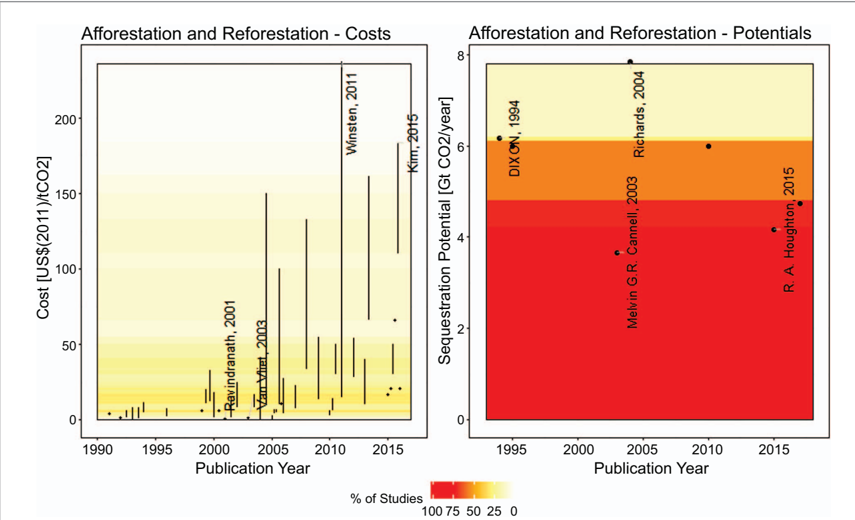
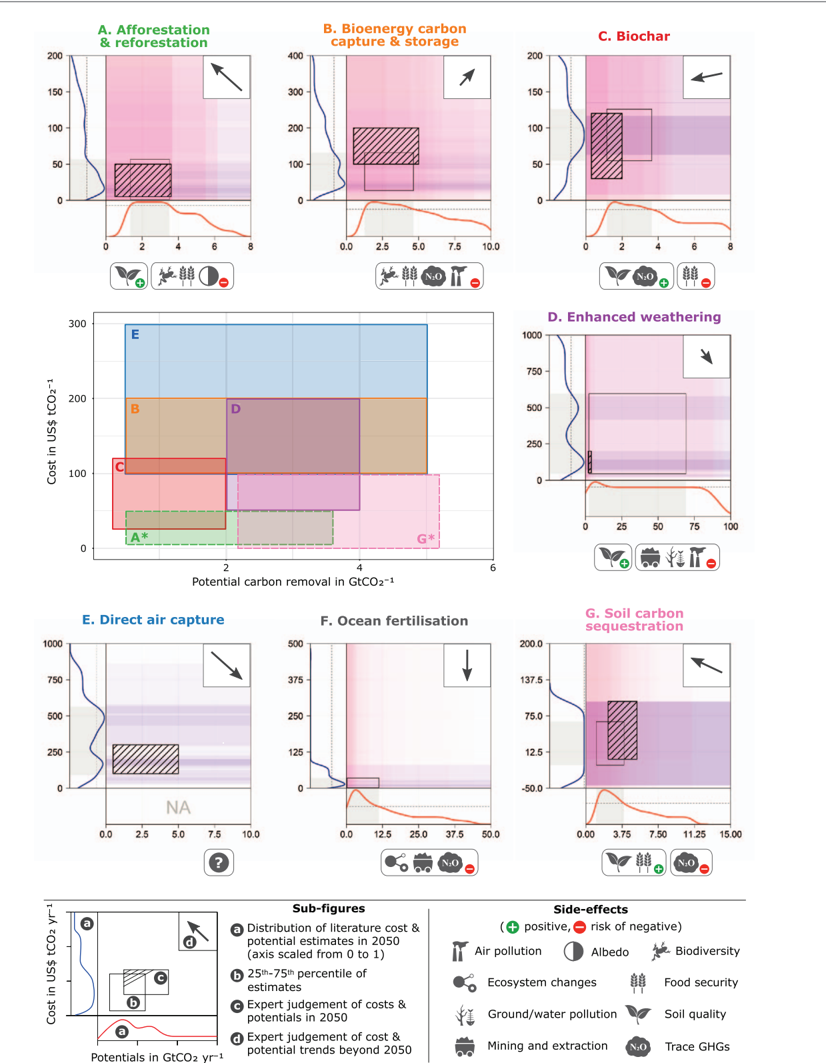
The most recent IPCC assessment has shown an important role for negative emissions technologies (NETs) in limiting global warming to 2 °C cost-effectively. However, a bottom-up, systematic, reproducible, and transparent literature assessment of the different options to remove CO 2 from the atmosphere is currently missing. In part 1 of this three-part review on NETs, we assemble a comprehensive set of the relevant literature so far published, focusing on seven technologies: bioenergy with carbon capture and storage (BECCS), afforestation and reforestation, direct air carbon capture and storage (DACCS), enhanced weathering, ocean fertilisation, biochar, and soil carbon sequestration. In this part, part 2 of the review, we present estimates of costs, potentials, and side-effects for these technologies, and qualify them with the authors' assessment. Part 3 reviews the innovation and scaling challenges that must be addressed to realise NETs deployment as a viable climate mitigation strategy. Based on a systematic review of the literature, our best estimates for sustainable global NET potentials in 2050 are 0.5–3.6 GtCO 2 yr −1 for afforestation and reforestation, 0.5–5 GtCO 2 yr −1 for BECCS, 0.5–2 GtCO 2 yr −1 for biochar, 2–4 GtCO 2 yr −1 for enhanced weathering, 0.5–5 GtCO 2 yr −1 for DACCS, and up to 5 GtCO 2 yr −1 for soil carbon sequestration. Costs vary widely across the technologies, as do their permanency and cumulative potentials beyond 2050. It is unlikely that a single NET will be able to sustainably meet the rates of carbon uptake described in integrated assessment pathways consistent with 1.5 °C of global warming.
Overview
The claims and statistics of this paper haven’t been checked yet.
Free: it reads the open-access text and checks the first 5 claims that cite a source we can check. Create a free account to check every claim.
Integrity signals
Registry
Cites
Statistics
Figures
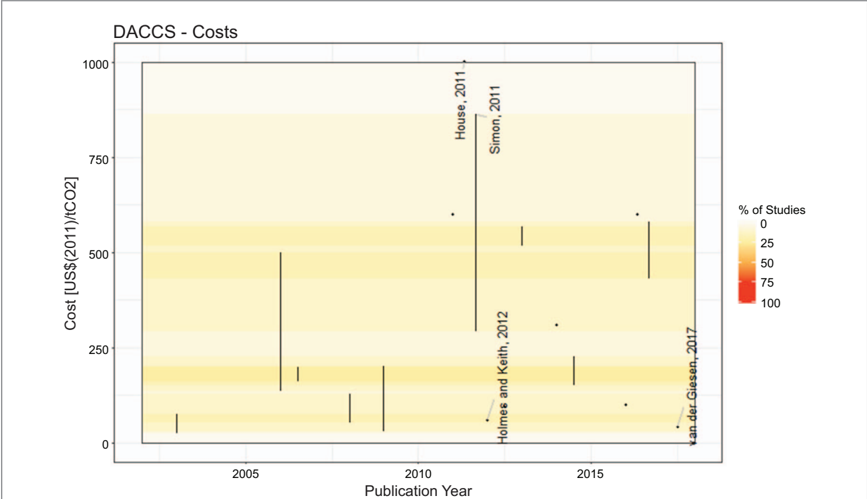
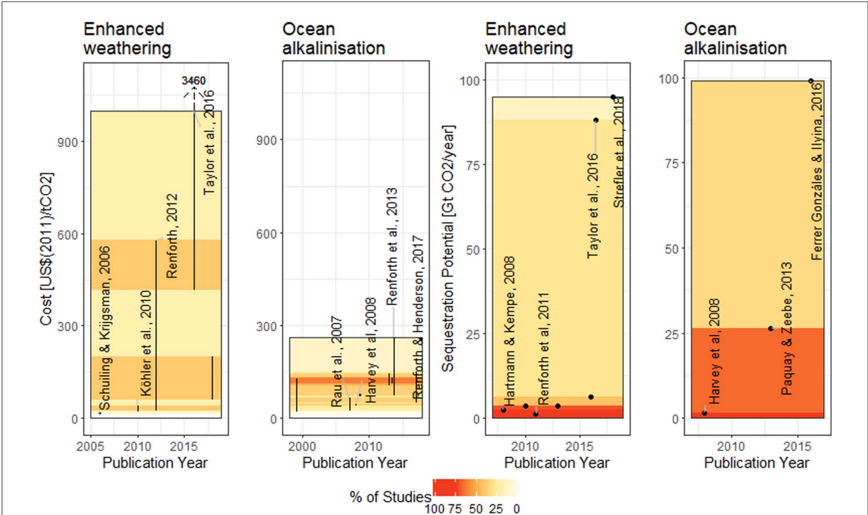
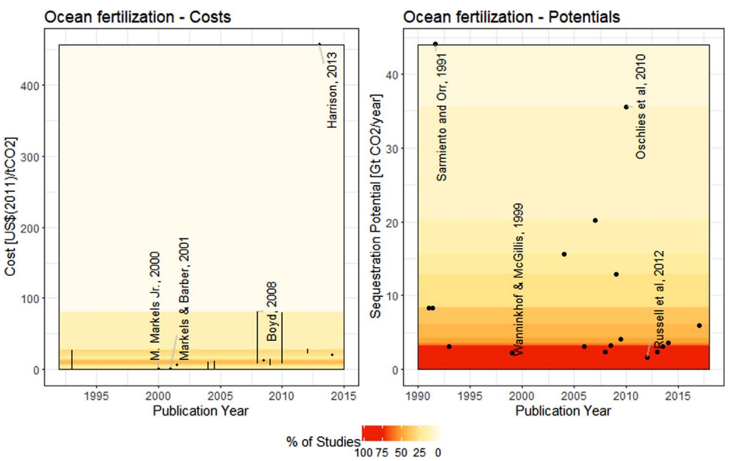
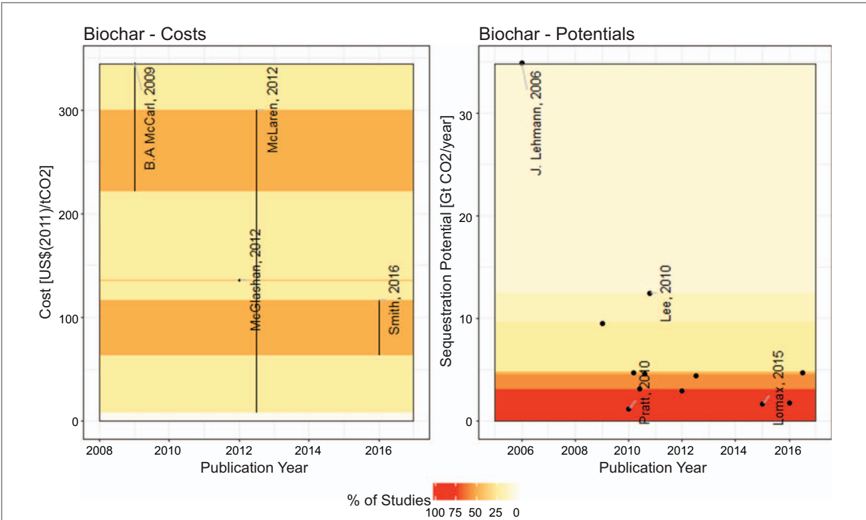
Verification
Claims the paper makes
The claims and statistics of this paper haven’t been checked yet.
Free: it reads the open-access text and checks the first 5 claims that cite a source we can check. Create a free account to check every claim.
Claims other papers make about this one
Each is checked against this paper’s own text: does it say what the citing paper says it does?
The cited source doesn’t support the claim as written.
In the citing paper
“Previous reviews 18,28,[52][53][54] have shown that these pathways offer substantial CO 2 removal potential:”
From The technological and economic prospects for CO2 utilization and removal (2019) · cites this paper as [28]
Checked by a reasoning model — may be wrong.
Experimental — accuracy not yet measuredThe source backs part of the claim, not all of it — or backs it for a different population, condition or comparison.
In the citing paper
“Plausibly, all bioenergy that can be sourced sustainably (about 100 EJ 3,25 primary energy) could be allocated to BECCS, so that about 4.2-5.6Gt CO 2 per year could be sequestered (reflecting losses in energy and CO 2 in along different steps in the process).”
From The mutual dependence of negative emission technologies and energy systems (2019) · cites this paper as [3]
Experimental — accuracy not yet measuredThe source backs part of the claim, not all of it — or backs it for a different population, condition or comparison.
In the citing paper
“Removal costs are estimated at $5-$50/tCO 2 (Fuss et al. 2018).”
From Strategies for mitigation of climate change: a review (2020) · cites this paper as Fuss et al. 2018
Experimental — accuracy not yet measuredThe source backs part of the claim, not all of it — or backs it for a different population, condition or comparison.
In the citing paper
“Side effects of ocean fertilization that are discussed in the literature include ocean acidification, deep and mid-water oxygen decrease or depletion, increase in production of further greenhouse gases, unpredictable impact on food cycles, creation of toxic algal blooms as well as mixed effects on the seafloor and upper ocean ecosystems (Fuss et al. 2018;Williamson et al. 2012).”
From Strategies for mitigation of climate change: a review (2020) · cites this paper as Fuss et al. 2018
Experimental — accuracy not yet measuredThe source backs part of the claim, not all of it — or backs it for a different population, condition or comparison.
In the citing paper
“In the context of our CDR targets, ERW has a similar potential to that of other CDR strategies 23 estimated for 2050, including bio-energy with carbon capture and storage (BECCS), widely adopted in IPCC future scenarios (0.5-5 Gt CO2 yr -1 ), direct air carbon capture and storage (DAC) (0.5-5 Gt CO2 yr -1 ), biochar (0.5 to 2 Gt CO2 yr -1 ), soil organic carbon (SOC) sequestration (0.5-5 Gt CO2 yr”
From Potential for large-scale CO2 removal via enhanced rock weathering with croplands (2020) · cites this paper as [23]
Experimental — accuracy not yet measured
55 more claims about this paper
Create a free account to see every claim other papers make about this one.
Self-check
Percentages, sums and reported differences re-computed from the paper’s own numbers.
The self-check needs the paper’s full text.
Citations
Cites
Soil Carbon Sequestration Impacts on Global Climate Change and Food Security
Lal, R. (2004) · Science · doi:10.1126/science.1097396 · Cited by 8,376 · cited 6×
“Of the 22 articles (Batjes 1998, Benbi 2013, Conant 2011, Henderson et al 2015, Lal 2003b, 2003a, 2004a, 2004c, 2004b, 2010, 2011, 2013, Lassaletta and Aguilera 2015, Lorenz and Lal 2014, Powlson et al 2014, Salati et al 2010, Smith 2012, 2016, Sommer and Bossio 2014, Minasny et al 2017, Metting et…”
BackgroundInfluentialRiahi, K., van Vuuren, D. P., Kriegler, E., Edmonds, J., O’Neill, B. C., Fujimori, S., Bauer, N., Calvin, K., Dellink, R., Fricko, O., et al. (2017) · Global Environmental Change · doi:10.1016/j.gloenvcha.2016.05.009 · Cited by 6,607
Self-citationThe next generation of scenarios for climate change research and assessment
Moss, R. H., Edmonds, J. A., Hibbard, K. A., Manning, M. R., Rose, S. K., van Vuuren, D. P., Carter, T. R., Emori, S., Kainuma, M., Kram, T., et al. (2010) · Nature · doi:10.1038/nature08823 · Cited by 6,467
Brennan, L., & Owende, P. (2010) · Renewable and Sustainable Energy Reviews · doi:10.1016/j.rser.2009.10.009 · Cited by 4,894 · cited 2×
“24 Although achievable scales are not clear yet, there is also research on third-generation biofuels, derived from algal biomass (Brennan and Owende 2010) with the potential to enhance yields by improving microalgal biology through genetic or metabolic engineering (Tandon and Jin 2017).”
BackgroundCarbon capture and storage (CCS): the way forward
Bui, M., Adjiman, C. S., Bardow, A., Anthony, E. J., Boston, A., Brown, S., Fennell, P. S., Fuss, S., Galindo, A., Hackett, L. A., et al. (2018) · Energy & Environmental Science · doi:10.1039/c7ee02342a · Cited by 4,374
Self-citationGlobal effects of land use on local terrestrial biodiversity
Newbold, T., Hudson, L. N., Hill, S. L. L., Contu, S., Lysenko, I., Senior, R. A., Börger, L., Bennett, D. J., Choimes, A., Collen, B., et al. (2015) · Nature · doi:10.1038/nature14324 · Cited by 4,352
Soil carbon sequestration to mitigate climate change
Lal, R. (2004) · Geoderma · doi:10.1016/j.geoderma.2004.01.032 · Cited by 3,936 · cited 6×
“Of the 22 articles (Batjes 1998, Benbi 2013, Conant 2011, Henderson et al 2015, Lal 2003b, 2003a, 2004a, 2004c, 2004b, 2010, 2011, 2013, Lassaletta and Aguilera 2015, Lorenz and Lal 2014, Powlson et al 2014, Salati et al 2010, Smith 2012, 2016, Sommer and Bossio 2014, Minasny et al 2017, Metting et…”
BackgroundInfluentialGriscom, B. W., Adams, J., Ellis, P. W., Houghton, R. A., Lomax, G., Miteva, D. A., Schlesinger, W. H., Shoch, D., Siikamäki, J. V., Smith, P., et al. (2017) · Proceedings of the National Academy of Sciences · doi:10.1073/pnas.1710465114 · Cited by 3,481
Self-citationO’Neill, B. C., Kriegler, E., Ebi, K. L., Kemp-Benedict, E., Riahi, K., Rothman, D. S., van Ruijven, B. J., van Vuuren, D. P., Birkmann, J., Kok, K., et al. (2017) · Global Environmental Change · doi:10.1016/j.gloenvcha.2015.01.004 · Cited by 3,359
Irreversible climate change due to carbon dioxide emissions
Solomon, S., Plattner, G.-K., Knutti, R., & Friedlingstein, P. (2009) · Proceedings of the National Academy of Sciences · doi:10.1073/pnas.0812721106 · Cited by 3,217 · cited 1×
“…et al 2015, Riahi et al 2015, Eom et al 2015), temperature overshoot carries additional risks associated with higher levels of warming and the resulting impacts and climate feedbacks that could occur (van Vuuren et al 2013, Solomon et al 2009, Friedlingstein et al 2006, Clarke et al 2014).”
Background
Research works printed but not linked: 32
- Bruckner T ed Edenhofer E, 2014, Contribution of Working Group III to the Fifth Assessment Report of the Intergovernmental Panel on Climate Change
- Bui M, 2018, Energy Environ. Sci.
- Ciais P ed Stocker T F, 2013, Climate Change 2013: The Physical Science Basis. Contribution of Working Group I to the Fifth Assessment Report of the Intergovernmental Panel on Climate Change
- Clarke L E ed Edenhofer O, 2014, Clim. Change 2014 Mitig. Clim. Change Contrib. Work. Gr. III to Fifth Assess. Rep. Intergov. Panel Clim. Change, 413
- Coelho S T, 2012, Chapter 20—land and water: linkages to bioenergy, 1459
- Corathers L A, 2015, Earth
- d’Hotman D V, 1961, Int. Sugar J., 63, 363
- Dale V H, 2010, Biofuels: implications for Land Use and Biodiversity
- Díaz S, 2009, Biodiversity, Ecosystem Functioning, and Human Wellbeing
- Fuss S, 2017, Oxf. Res. Encycl. Clim. Sci., 1
- Gale J J, 2004, Geol. Belgica, 7, 99
- Haberl H ed Dewulf J, 2015, Sustainability Assessment of Renewables-Based Products, 1
- Hassani N, 2016, Pet. Res., 25, 4
- IEA GHG, 2005, Building the Cost Curves for CO
- IEA GHG, 1998, Enhanced Coal Bed Methane Recovery with CO
- IPCC ed Metz B, 2005, Carbon Dioxide Capture and Storage (SRCCS)
- IPCC ed Qin D, 2013, Contribution of Working Group I to the Fifth Assessment Report of the Intergovernmental Panel on Climate Change
- IPCC ed Edenhofer O, 2014, Contribution of Working Group III to the Fifth Assessment Report of the Intergovernmental Panel on Climate Change
- IPCC ed Pachauri R K, 2014, Contribution of Working Groups I, II and III to the Fifth Assessment Report of the Intergovernmental Panel on Climate Change
- Liu W W, 2016, Acta Ecol. Sin., 36, 2113
- Lopes A S, 1996, Better Crop. Int., 10, 10
- Magill B, 2017, Clim. Cent.
- Markels M, 2001, Poster Presentation for NETL Conference on Carbon Sequestration, 14
- 10.1088/1748-9326/aabf9 · doi:10.1088/1748-9326/aabf9
- Minx J, 2017, Environ. Res. Lett., 12
- National Academy of Sciences, 2015, Climate Intervention
- 53. Nkouathio D G, Wandji P, Bardintzeff J M, Tematio P, Dongmo A K and Tchoua F 2008 Utilisation des roches volcaniques pour la remineralisation des sols ferrallitiques des regions tropicales. Cas des pyroclastites basaltiques du graben de Tombel (Ligne volcanique du Cameroun) Bull. Soc. Vaudoise Sci. Nat. 91 1-14
- 122. Sedjo R A and Solomon A M 1991 Climate and forests Greenhouse Warming: Abatement and Adaptation (Resources for the Future)
- Strefler J, 2018, Environ. Res. Lett., 13
- Strefler J, 2018, Environ. Res. Lett., 13
- UNEP, 2017, The Emissions Gap Report 2017
- USDOE, 2014, Report
Cited by
Items 301–400 of 1,001
An ecosystem of carbon dioxide removal reviews – part 1: direct air CO 2 capture and storage
van der Spek, M. W., Bardow, A., Baum, C. M., Bolongaro, V., Dufour‐Décieux, V., Esch, C., Fritz, L., Garcia, S., Hamann, C., Hondeborg, D., et al. (2025) · Energy & Environmental Science · doi:10.1039/d5ee01732g · Cited by 76
Self-citationEMF-33 insights on bioenergy with carbon capture and storage (BECCS)
Muratori, M., Bauer, N., Rose, S. K., Wise, M., Daioglou, V., Cui, R. Y., Kato, E., Gidden, M., Strefler, J., Fujimori, S., et al. (2020) · Climatic Change · doi:10.1007/s10584-020-02784-5 · Cited by 63
“Bioenergy with carbon capture and storage (BECCS) is one of the main technology solutions included in IAMs to remove carbon dioxide from the atmosphere and provide “negative emissions” (Kemper 2015; Rose et al. 2014; Koelbl et al. 2014; van Vliet et al. 2014; Rogelj et al. 2015; van Vuuren et al. 2013; Calvin et al. 2…”
BackgroundMethodInfluentialCook-Patton, S. C., Gopalakrishna, T., Daigneault, A., Leavitt, S. M., Platt, J., Scull, S. M., Amarjargal, O., Ellis, P. W., Griscom, B. W., McGuire, J. L., et al. (2020) · One Earth · doi:10.1016/j.oneear.2020.11.013 · Cited by 57
Mapping the yields of lignocellulosic bioenergy crops from observations at the global scale
Li, W., Ciais, P., Stehfest, E., van Vuuren, D. P., Popp, A., Arneth, A., Fulvio, F. D., Doelman, J., Humpenöder, F., Harper, A., et al. (2020) · Earth system science data · doi:10.5194/essd-12-789-2020 · Cited by 62
Zhang, S., Xie, Y., Sander, R., Yue, H., & Shu, Y. (2020) · Journal of Cleaner Production · doi:10.1016/j.jclepro.2020.123335 · Cited by 57
The role of carbon dioxide removal in net-zero emissions pledges
Iyer, G. C., Clarke, L., Edmonds, J., Fawcett, A. A., Fuhrman, J., McJeon, H. C., & WALDHOFF, S. T. (2021) · Energy and Climate Change · doi:10.1016/j.egycc.2021.100043 · Cited by 71
Our Extractive Age: Expressions of Violence and Resistance
Shapiro, J., & McNeish, J.-A. (2021) · Routledge eBooks · doi:10.4324/9781003127611 · Cited by 153
Direct Air Capture Using Electrochemically Regenerated Anion Exchange Resins
Shu, Q., Haug, M., Tedesco, M., Kuntke, P., & Hamelers, H. V. M. (2022) · Environmental Science & Technology · doi:10.1021/acs.est.2c01944 · Cited by 60
Overcoming global inequality is critical for land-based mitigation in line with the Paris Agreement
Humpenöder, F., Popp, A., Schleussner, C., Orlov, A., Windisch, M. G., Menke, I., Pongratz, J., Havermann, F., Thiery, W., Luo, F., et al. (2022) · Nature Communications · doi:10.1038/s41467-022-35114-7 · Cited by 68
Technological innovation enables low cost climate change mitigation
Creutzig, F., Hilaire, J., Nemet, G. F., Müller-Hansen, F., & Minx, J. C. (2023) · Energy Research & Social Science · doi:10.1016/j.erss.2023.103276 · Cited by 74
Self-citationIntegrated carbon and nitrogen management for cost-effective environmental policies in China
Xu, X., Zhang, X., Zou, Y., Chen, T., Zhan, J., Cheng, L., Winiwarter, W., Zhang, S., Vitousek, P. M., VRIES, W. D., et al. (2025) · Science · doi:10.1126/science.ads4105 · Cited by 66
An air CO 2 capture system based on the passive carbonation of large Ca(OH) 2 structures
Abánades, J. C., Criado, Y. A., & Fernández, J. R. (2020) · Sustainable Energy & Fuels · doi:10.1039/d0se00094a · Cited by 64
Delivering carbon negative electricity, heat and hydrogen with BECCS – Comparing the options
Bui, M., Zhang, D., Fajardy, M., & Dowell, N. M. (2021) · International Journal of Hydrogen Energy · doi:10.1016/j.ijhydene.2021.02.042 · Cited by 66
Prospects for Simultaneously Capturing Carbon Dioxide and Harvesting Water from Air
Dods, M. N., Weston, S. C., & Long, J. R. (2022) · Advanced Materials · doi:10.1002/adma.202204277 · Cited by 61
Quantifying global carbon dioxide removal deployment
Powis, C. M., Smith, S. M., Minx, J. C., & Gasser, T. (2023) · Environmental Research Letters · doi:10.1088/1748-9326/acb450 · Cited by 75
“The study of CDR is still a nascent field [3, 13, 14] and is therefore still grappling with fundamental”
BackgroundSelf-citationKopitha, K., Elakneswaran, Y., Kitagaki, R., Saito, R., Tsujino, M., Nishida, A., Senboku, H., & Hiroyoshi, N. (2023) · Chemical Engineering Journal · doi:10.1016/j.cej.2023.146067 · Cited by 61
Human Rights and Precautionary Principle: Limits to Geoengineering, SRM, and IPCC Scenarios
Wieding, J., Stubenrauch, J., & Ekardt, F. (2020) · Sustainability · doi:10.3390/su12218858 · Cited by 62
“The scenarios do not yet fully account for the effects of non-CO2 GHG, even though their impact on the climate is significant [48,49].”
BackgroundAlternative Pathway to Phase Down Coal Power and Achieve Negative Emission in China
Wang, R., Li, H., Cai, W., Cui, X., Zhang, S., Li, J., Weng, Y., Song, X., Cao, B., Zhu, L., et al. (2022) · Environmental Science & Technology · doi:10.1021/acs.est.2c06004 · Cited by 57
Sustainable scale-up of negative emissions technologies and practices: where to focus
Cobo, S., Negri, V., Valente, A., Reiner, D. M., Hamelin, L., Dowell, N. M., & Guillén‐Gosálbez, G. (2023) · Environmental Research Letters · doi:10.1088/1748-9326/acacb3 · Cited by 58
Satterfield, T. A., Nawaz, S., & St‐Laurent, G. P. (2023) · Climatic Change · doi:10.1007/s10584-023-03483-7 · Cited by 67
“Technologies of this kind have been criticized for requiring large investments of time, money and energy to become viable at scale (Fuss et al., 2018; Qiu et al., 2022).”
BackgroundMace, M., Fyson, C. L., Schaeffer, M., & Hare, B. (2021) · Global Policy · doi:10.1111/1758-5899.12921 · Cited by 75
“However, by mid-century the values at the upper end of these ranges exceed estimates for the sustainable potential for BECCS (up to 5 GtCO2/yr) and afforestation/reforestation (up to 3.6 GtCO2/yr) (Fuss et al., 2018).”
BackgroundMethodInfluentialBiochar from cookstoves reduces greenhouse gas emissions from smallholder farms in Africa
Sundberg, C., Karltun, E., Gitau, J. K., Kätterer, T., Kimutai, G., Mahmoud, Y., Njenga, M., Nyberg, G., de Nowina, K. R., Roobroeck, D., et al. (2020) · Mitigation and Adaptation Strategies for Global Change · doi:10.1007/s11027-020-09920-7 · Cited by 68
Institutional decarbonization scenarios evaluated against the Paris Agreement 1.5 °C goal
Brecha, R. J., Ganti, G., Lamboll, R., Nicholls, Z., Hare, B., Lewis, J., Meinshausen, M. A., Schaeffer, M., Smith, C., & Gidden, M. (2022) · Nature Communications · doi:10.1038/s41467-022-31734-1 · Cited by 71
International carbon markets for carbon dioxide removal
Michaelowa, A., Honegger, M., Poralla, M., Winkler, M., Dalfiume, S., & Nayak, A. (2023) · PLOS Climate · doi:10.1371/journal.pclm.0000118 · Cited by 54
A multi-model analysis of the EU’s path to net zero
Boitier, B., Νίκας, Α., Gambhir, A., Koasidis, K., Elia, A., Al‐Dabbas, K., Alibaş, Ş., Campagnolo, L., Chiodi, A., Delpiazzo, E., et al. (2023) · Joule · doi:10.1016/j.joule.2023.11.002 · Cited by 67
Brummitt, C. D., Mathers, C., Keating, R., O'Leary, K., Easter, M., Friedl, M. A., DuBuisson, M. L., Campbell, E. E., Pape, R., Peters, S. J. W., et al. (2024) · Journal of Environmental Management · doi:10.1016/j.jenvman.2024.122284 · Cited by 71
Data challenges in optimizing biochar-based carbon sequestration
Tan, R. R. (2019) · Renewable and Sustainable Energy Reviews · doi:10.1016/j.rser.2019.01.032 · Cited by 61
Twenty Key Challenges in Environmental and Resource Economics
Bretschger, L., & Pittel, K. (2020) · Environmental and Resource Economics · doi:10.1007/s10640-020-00516-y · Cited by 70
A perspective on biofuels use and CCS for GHG mitigation in the marine sector
Mukherjee, A., Bruijnincx, P., & Junginger, M. (2020) · iScience · doi:10.1016/j.isci.2020.101758 · Cited by 53
Ideas and perspectives: Synergies from co-deployment of negative emission technologies
Amann, T., & Hartmann, J. (2019) · Biogeosciences · doi:10.5194/bg-16-2949-2019 · Cited by 53
Self-citationThe role of negative emissions in meeting China’s 2060 carbon neutrality goal
Fuhrman, J., Clarens, A. F., McJeon, H. C., Patel, P., Ou, Y., Doney, S. C., Shobe, W., & Pradhan, S. (2021) · Oxford Open Climate Change · doi:10.1093/oxfclm/kgab004 · Cited by 72
Sustainable futures over the next decade are rooted in soil science
Evans, D., Janes‐Bassett, V., Borrelli, P., Chenu, C., Ferreira, C., Griffiths, R. I., Kalantari, Z., Keesstra, S. D., Lal, R., Panagos, P., et al. (2021) · European Journal of Soil Science · doi:10.1111/ejss.13145 · Cited by 70
Self-citationThe surprisingly inexpensive cost of state-driven emission control strategies
Peng, W., Iyer, G. C., Binsted, M. T., Marlon, J. R., Clarke, L., Edmonds, J., & Victor, D. G. (2021) · Nature Climate Change · doi:10.1038/s41558-021-01128-0 · Cited by 62
Tiefenthaler, J., Braune, L., Bauer, C., Sacchi, R., & Mazzotti, M. (2021) · Frontiers in Climate · doi:10.3389/fclim.2021.729259 · Cited by 59
Energetic and Life Cycle Assessment of Direct Air Capture: A Review
Wang, J., Li, S., Deng, S., Zeng, X., Li, K., Liu, J., Yan, J., & Lei, L. (2022) · Sustainable Production and Consumption · doi:10.1016/j.spc.2022.12.017 · Cited by 67
Buss, W., Hasemer, H., Sokol, N. W., Rohling, E. J., & Borevitz, J. (2024) · Communications Earth & Environment · doi:10.1038/s43247-024-01771-3 · Cited by 66
Markusson, N. O., Balta‐Ozkan, N., Chilvers, J., Healey, P., Reiner, D. M., & McLaren, D. P. (2020) · Frontiers in Climate · doi:10.3389/fclim.2020.00002 · Cited by 56
Buylova, A., Fridahl, M., Nasiritousi, N., & Reischl, G. (2021) · Frontiers in Climate · doi:10.3389/fclim.2021.675499 · Cited by 57
“In terms of carbon sequestration capability, the potential of biochar is high (Fuss et al., 2018), although it has not yet become a widely implemented or discussed method, and it is only mentioned in three strategies (Canada, Denmark and Japan).”
BackgroundSolar geoengineering may lead to excessive cooling and high strategic uncertainty
Abatayo, A. L., Bosetti, V., Casari, M., Ghidoni, R., & Tavoni, M. (2020) · Proceedings of the National Academy of Sciences · doi:10.1073/pnas.1916637117 · Cited by 52
Galán‐Martín, Á., Contreras, M. D. M., Romero, I., Ruiz, E., Bueno, S., Eliche‐Quesada, D., & Castro-Galiano, E. (2022) · Renewable and Sustainable Energy Reviews · doi:10.1016/j.rser.2022.112609 · Cited by 64
Ampah, J. D., Jin, C., Liu, H., Afrane, S., Adun, H. H., Morrow, D. R., & Ho, D. T. (2024) · Environmental Science & Technology · doi:10.1021/acs.est.3c06866 · Cited by 63
Sorption of Soil Carbon Dioxide by Biochar and Engineered Porous Carbons
Ringsby, A. J., Ross, C. M., & Maher, K. (2024) · Environmental Science & Technology · doi:10.1021/acs.est.4c02015 · Cited by 54
Joarder, M. S. A., Islam, M. S., Hasan, M. H., Kutub, A., Kabir, M. F., Rashid, F., & Joarder, T. A. (2025) · Environmental Science and Pollution Research · doi:10.1007/s11356-025-36284-9 · Cited by 51
“The data highlights the pivotal role of DAC in decarbonizing key sectors to achieve net-zero emissions targets.”
InfluentialSherwin, E. D. (2020) · Environmental Science & Technology · doi:10.1021/acs.est.0c07955 · Cited by 60
Tanzer, S. E., Blok, K., & Ramírez, A. (2021) · Current Sustainable/Renewable Energy Reports · doi:10.1007/s40518-021-00195-3 · Cited by 73
Hanssen, S. V., Steinmann, Z. J. N., Daioglou, V., Čengić, M., van Vuuren, D. P., & Huijbregts, M. A. J. (2021) · GCB Bioenergy · doi:10.1111/gcbb.12911 · Cited by 62
“…2020; Lundmark et al., 2016; Peura et al., 2018) or (iii) cultivated biomass specifically grown on marginal or abandoned agricultural lands (Campbell et al., 2008; Gelfand et al., 2013) using biodiverse, local and high- yielding mixtures of species (Robertson et al., 2017; Tilman et al., 2006).”
Projected landscape-scale repercussions of global action for climate and biodiversity protection
von Jeetze, P., Weindl, I., Johnson, J. A., Borrelli, P., Panagos, P., Bacca, E. J. M., Karstens, K., Humpenöder, F., Dietrich, J. P., Minoli, S., et al. (2023) · Nature Communications · doi:10.1038/s41467-023-38043-1 · Cited by 69
Postweiler, P., Engelpracht, M., Rezo, D., Gibelhaus, A., & von der Assen, N. V. (2024) · Energy & Environmental Science · doi:10.1039/d3ee02970k · Cited by 55
Inorganic Carbon Should Be Considered for Carbon Sequestration in Agricultural Soils
Liao, Y., Deng, L., Huang, Y., Wu, J., Zheng, W., Shi, J., Dong, L., Li, J., Yang, F., Shangguan, Z., et al. (2025) · Global Change Biology · doi:10.1111/gcb.70160 · Cited by 56
“The wide range of the estimates is due to inconsistencies in the assumed application areas and the inclusion of agricultural practices (Fuss et al. 2018).”
InfluentialProtect young secondary forests for optimum carbon removal
Robinson, N., Drever, C. R., Gibbs, D. A., Lister, K., Esquivel‐Muelbert, A., Heinrich, V., Ciais, P., Silva, C. H. L., Liu, Z., Pugh, T. A. M., et al. (2025) · Nature Climate Change · doi:10.1038/s41558-025-02355-5 · Cited by 77
Assessing Carbon Capture: Public Policy, Science, and Societal Need
Sekera, J. A., & Lichtenberger, A. (2020) · Biophysical Economics and Sustainability · doi:10.1007/s41247-020-00080-5 · Cited by 76
CO2 mitigation or removal: The optimal uses of biomass in energy system decarbonization
Patrizio, P., Fajardy, M., Bui, M., & Dowell, N. M. (2021) · iScience · doi:10.1016/j.isci.2021.102765 · Cited by 56
“, land availability, yield), and the counterfactual scenario considered, among others (Fuss et al., 2018).”
BackgroundPublic perception and acceptance of negative emission technologies – framing effects in Switzerland
Wenger, A., Stauffacher, M., & Dallo, I. (2021) · Climatic Change · doi:10.1007/s10584-021-03150-9 · Cited by 55
Unprecedented threats to cities from multi-century sea level rise
Strauss, B., Kulp, S., Rasmussen, D. J., & Levermann, A. (2021) · Environmental Research Letters · doi:10.1088/1748-9326/ac2e6b · Cited by 68
Human and planetary health implications of negative emissions technologies
Cobo, S., Galán‐Martín, Á., Tulus, V., Huijbregts, M. A. J., & Guillén‐Gosálbez, G. (2022) · Nature Communications · doi:10.1038/s41467-022-30136-7 · Cited by 57
Schwinger, J., Asaadi, A., Steinert, N. J., & Lee, H. (2022) · Earth System Dynamics · doi:10.5194/esd-13-1641-2022 · Cited by 63
Improving adsorption-based direct air capture performance through operating parameter optimization
Luukkonen, A., Elfving, J., & Inkeri, E. (2023) · Chemical Engineering Journal · doi:10.1016/j.cej.2023.144525 · Cited by 60
Towards net zero CO2 emissions without relying on massive carbon dioxide removal
Kaya, Y., Yamaguchi, M., & Geden, O. (2019) · Sustainability Science · doi:10.1007/s11625-019-00680-1 · Cited by 62
The case for estimating carbon return on investment (CROI) for CCUS platforms
Singh, U., & Colosi, L. M. (2021) · Applied Energy · doi:10.1016/j.apenergy.2020.116394 · Cited by 53
Long-term deep decarbonisation pathways for Ecuador: Insights from an integrated assessment model
Villamar, D., Soria, R., Rochedo, P., Szklo, A. S., Império, M., Carvajal, P. E., & Schaeffer, R. (2021) · Energy Strategy Reviews · doi:10.1016/j.esr.2021.100637 · Cited by 56
Boehm, S., Jeffery, M. L., Hecke, J., Schumer, C., Jaeger, J., Fyson, C. L., Levin, K., Nilsson, A. E., Naimoli, S., Daly, E., et al. (2023) · doi:10.46830/wrirpt.23.00010 · Cited by 121
Self-citationEcosystem maintenance energy and the need for a green EROI
Moriarty, P., & Honnery, D. (2019) · Energy Policy · doi:10.1016/j.enpol.2019.05.006 · Cited by 54
Lehtveer, M., & Emanuelsson, A. H. (2021) · Frontiers in Climate · doi:10.3389/fclim.2021.647276 · Cited by 60
“When comparing negative emissions technologies, the cost of carbon per ton of captured CO2 is often used as a measurement (Fuss et al., 2018).”
Backgroundde Oliveira Garcia, W., Amann, T., Hartmann, J., Karstens, K., Popp, A., Boysen, L. R., Smith, P., & Goll, D. (2019) · doi:10.5194/bg-2019-386 · Cited by 48
Self-citationGuillaume, T., Makowski, D., Libohova, Z., Elfouki, S., Fontana, M., Leifeld, J., Bragazza, L., & Sinaj, S. (2022) · Geoderma · doi:10.1016/j.geoderma.2022.115937 · Cited by 59
Coleman, S., Dewhurst, T., Fredriksson, D. W., Gelais, A. T. S., Cole, K. L., MacNicoll, M. T., Laufer, E., & Brady, D. C. (2022) · Frontiers in Marine Science · doi:10.3389/fmars.2022.966304 · Cited by 60
“However, credits vary widely in price and permanence of CO2 removal, a reflection of differences among project methodologies (Fuss et al., 2018).”
BackgroundMethodInfluentialFragkos, P. F. (2023) · Energy Strategy Reviews · doi:10.1016/j.esr.2023.101081 · Cited by 48
Energy and socioeconomic system transformation through a decade of IPCC-assessed scenarios
de Ven, D.-J. V., Mittal, S., Νίκας, Α., Xexakis, G., Gambhir, A., Hermwille, L., Fragkos, P. F., Obergassel, W., González‐Eguino, M., Filippidou, F., et al. (2025) · Nature Climate Change · doi:10.1038/s41558-024-02198-6 · Cited by 56
Luongo, G., Donat, F., & Müller, C. R. (2020) · Physical Chemistry Chemical Physics · doi:10.1039/d0cp01049a · Cited by 47
The UK net-zero target: Insights into procedural justice for greenhouse gas removal
O’Beirne, P., Battersby, F., Mallett, A., Aczel, M. R., Makuch, Z., Workman, M. H. W., & Heap, R. (2020) · Environmental Science & Policy · doi:10.1016/j.envsci.2020.06.013 · Cited by 55
Potentials of direct air capture and storage in a greenhouse gas-neutral European energy system
Lux, B., Schneck, N., Pfluger, B., Männer, W., & Sensfuß, F. (2022) · Energy Strategy Reviews · doi:10.1016/j.esr.2022.101012 · Cited by 55
Ten new insights in climate science 2023
Bustamante, M., Roy, J., Ospina, D., Achakulwisut, P., Aggarwal, A., Bastos, A., Broadgate, W. J., Canadell, J. G., Carr, E. R., Chen, D., et al. (2023) · Global Sustainability · doi:10.1017/sus.2023.25 · Cited by 73
“However, novel CDR methods have large technical removal potential (Smith et al., 2023) and are scaled up in virtually all scenarios that limit warming to 1.5°C or 2°C (Fuss et al., 2018; IPCC, 2022b, Ch12.”
BackgroundInfluentialSelf-citationFerderer, A., Schulz, K. G., Riebesell, U., Baker, K. G., Chase, Z., & Bach, L. T. (2024) · Biogeosciences · doi:10.5194/bg-21-2777-2024 · Cited by 47
The Economics of 1.5°C Climate Change
Dietz, S., Bowen, A., Doda, B., Gambhir, A., & Warren, R. (2018) · Annual Review of Environment and Resources · doi:10.1146/annurev-environ-102017-025817 · Cited by 65
Breyer, C., Khalili, S., & Bogdanov, D. (2019) · Progress in Photovoltaics Research and Applications · doi:10.1002/pip.3114 · Cited by 55
Negative emission technologies
Santos, F. M., Gonçalves, A. L., & Pires, J. C. M. (2019) · Elsevier eBooks · doi:10.1016/b978-0-12-816229-3.00001-6 · Cited by 66
Kalt, G., Lauk, C., Mayer, A., Theurl, M. C., Kaltenegger, K., Winiwarter, W., Erb, K., Matej, S., & Haberl, H. (2020) · Environmental Research Letters · doi:10.1088/1748-9326/ab6c2e · Cited by 57
“However, recent studies have highlighted the C benefits achievable through re- or afforestation (Kreidenweis et al 2016, Griscom et al 2017, Erb et al 2018, Fuss et al 2018, Houghton and Nassikas 2018, Zhang et al 2018, Bastin et al 2019, Braakhekke et al 2019).”
BackgroundMénard, I., Thiffault, É., Kurz, W. A., & Boucher, J. (2022) · New Forests · doi:10.1007/s11056-022-09955-5 · Cited by 54
A review of commercialisation mechanisms for carbon dioxide removal
Hickey, C., Fankhauser, S., Smith, S. M., & Allen, M. R. (2023) · Frontiers in Climate · doi:10.3389/fclim.2022.1101525 · Cited by 57
“can have higher costs, need to demonstrate efficacy and be proven at scale (Fuss et al., 2018).”
BackgroundSaharudin, D. M., Jeswani, H. K., & Azapagic, A. (2023) · Applied Energy · doi:10.1016/j.apenergy.2023.121506 · Cited by 60
Near-term deployment of novel carbon removal to facilitate longer-term deployment
Nemet, G. F., Gidden, M., Greene, J. H., Roberts, C., Lamb, W. F., Minx, J. C., Smith, S. M., Geden, O., & Riahi, K. (2023) · Joule · doi:10.1016/j.joule.2023.11.001 · Cited by 60
Self-citationLin, Z., Lu, X., Xu, Y., Sun, W., Yu, Y., Zhang, W. J., Mishra, U., Kuzyakov, Y. V., Wang, G., & Qin, Z. (2024) · The Science of The Total Environment · doi:10.1016/j.scitotenv.2024.173903 · Cited by 52
Impacts of photovoltaic solar energy on soil carbon: A global systematic review and framework
Krasner, N. Z., Fox, J., Armstrong, A., Ave, K., Carvalho, F., Li, Y., Walston, L. J., Ricketts, M. P., Jordaan, S. M., Najm, M. R. A., et al. (2024) · Renewable and Sustainable Energy Reviews · doi:10.1016/j.rser.2024.115032 · Cited by 58
Geerts, L. J. J., Hylén, A., & Meysman, F. J. R. (2025) · Biogeosciences · doi:10.5194/bg-22-355-2025 · Cited by 46
A comprehensive review of life cycle assessments of direct air capture and carbon dioxide storage
Eke, V., Sahu, T., Ghuman, K. K., Freire-Gormaly, M., & O’Brien, P. G. (2025) · Sustainable Production and Consumption · doi:10.1016/j.spc.2025.02.017 · Cited by 67
Carbon‐dioxide Removal and Biodiversity: A Threat Identification Framework
Dooley, K., Harrould‐Kolieb, E., & Talberg, A. (2020) · Global Policy · doi:10.1111/1758-5899.12828 · Cited by 61
Climate mitigation policies and the potential pathways to conflict: Outlining a research agenda
Gilmore, E., & Buhaug, H. (2021) · Wiley Interdisciplinary Reviews Climate Change · doi:10.1002/wcc.722 · Cited by 60
“For example, the importance of political stability has been identified for bioenergy production as a prerequisite for fostering investment and agricultural trade (Fuss et al., 2018).”
BackgroundAccelerating carbon neutrality could help China's energy system align with below 1.5 °C
Ma, X., Peng, T., Zhang, Y., Wang, L., & Pan, X. (2023) · Journal of Environmental Management · doi:10.1016/j.jenvman.2023.117753 · Cited by 46
Baur, S., Nauels, A., Nicholls, Z., Sanderson, B. M., & Schleussner, C. (2023) · Earth System Dynamics · doi:10.5194/esd-14-367-2023 · Cited by 60
“Without explicit emission reductions, as well as the removal of some of these climate forcers from the atmosphere in the long term, i.e. through carbon dioxide removal (CDR; Fuss et al., 2018), GHG emissions commit us to millennia of elevated temperature levels.”
InfluentialPant, D., Shah, K. K., Sharma, S., Bhatta, M., Tripathi, S., Pandey, H. P., Tiwari, H., Shrestha, J., & Bhat, A. K. (2023) · Journal of soil science and plant nutrition · doi:10.1007/s42729-023-01215-5 · Cited by 48
“Supported amines from DAC have capacity to sequestrate 10 (plus) Gt CO2 pa but the energy supply and storage capacity are the limiting factors (McLaren 2012; Fuss et al. 2018; Smith 2016; Smith et al. 2007).”
BackgroundGanti, G., Gasser, T., Bui, M., Geden, O., Lamb, W. F., Minx, J. C., Schleussner, C., & Gidden, M. (2024) · Communications Earth & Environment · doi:10.1038/s43247-024-01527-z · Cited by 70
“The fi rst group (0 – 100EJ/yr) includes scenarios with global bioenergy demand within sustainability limits previously discussed in the literature 13,34 , with the other two groups (100 – 200 and 200 + EJ/yr) re fl ecting much higher levels of global bioenergy demand.”
BackgroundSelf-citationThe role of bioenergy for global deep decarbonization: CO2 removal or low‐carbon energy?
Butnar, I., Broad, O., Rodríguez, B. S., & Dodds, P. E. (2019) · GCB Bioenergy · doi:10.1111/gcbb.12666 · Cited by 54
“Under the Paris Agreement, 196 countries committed to mitigation of, and adaptation to, climate change so that together they can limit the global average temperature increase to ‘well below 2°C’ above preindustrial levels.”
BackgroundInfluentialWhat ‘climate positive future’? Emerging sociotechnical imaginaries of negative emissions in Sweden
Christiansen, K. L., & Carton, W. (2021) · Energy Research & Social Science · doi:10.1016/j.erss.2021.102086 · Cited by 59
Life cycle optimization of BECCS supply chains in the European Union
Negri, V., Galán‐Martín, Á., Pozo, C., Fajardy, M., Reiner, D. M., Dowell, N. M., & Guillén‐Gosálbez, G. (2021) · Applied Energy · doi:10.1016/j.apenergy.2021.117252 · Cited by 49
Optimal gas-electric energy system decarbonization planning
Wald, G. A. V., Sundar, K., Sherwin, E. D., Zlotnik, A. V., & Brandt, A. R. (2022) · Advances in Applied Energy · doi:10.1016/j.adapen.2022.100086 · Cited by 45
Assessing the diverse environmental effects of biochar systems: An evaluation framework
Azzi, E., Karltun, E., & Sundberg, C. (2021) · Journal of Environmental Management · doi:10.1016/j.jenvman.2021.112154 · Cited by 51
Reconciling climate action with the need for biodiversity protection, restoration and rehabilitation
Gorman, C. E., Torsney, A., Gaughran, A., McKeon, C. M., Farrell, C. A., White, C. D., Donohue, I., Stout, J. C., & Buckley, Y. M. (2022) · The Science of The Total Environment · doi:10.1016/j.scitotenv.2022.159316 · Cited by 54
“Reforestation and afforestation are considered to be relatively costeffective climate mitigation strategies (Fuss et al., 2018) as forests can slow the accumulation of greenhouse gas emissions by sequestering carbon (Rudel et al., 2005).”
BackgroundEffects of no-till on upland crop yield and soil organic carbon: a global meta-analysis
Cui, Y., Zhang, W., Zhang, Y., Liu, X., Zhang, Y., Zheng, X., Luo, J., & Zou, J. (2022) · Plant and Soil · doi:10.1007/s11104-022-05854-y · Cited by 58
“…C in arable lands because it increases SOC through increased C inputs from high biomass productivity and reduces C losses, leading to a net transfer of C from the atmosphere to the soil (estimated to be 0.79 ~ 1.54 Gt C yr −1 globally), which helps mitigate climate change (Fuss et al. 2018).”
InfluentialMeinshausen, M. A., Schleussner, C., Beyer, K., Bodeker, G. E., Boucher, O., Canadell, J. G., Daniel, J. S., Diongue, A., Driouech, F., Fischer, E. M., et al. (2024) · Geoscientific model development · doi:10.5194/gmd-17-4533-2024 · Cited by 78
Self-citationIngwersen, A., Menacho, Á. J. H., Pfister, S., Peel, J. N., Sacchi, R., & Moretti, C. (2024) · The Science of The Total Environment · doi:10.1016/j.scitotenv.2024.177880 · Cited by 55
Metadata
- Authors
- Fuss, S., Lamb, W. F., Callaghan, M. W., Hilaire, J., Creutzig, F., Amann, T., Beringer, T., de Oliveira Garcia, W., Hartmann, J., Khanna, T., Luderer, G., Nemet, G. F., Rogelj, J., Smith, P., Vicente, J. L. V., Wilcox, J., del Mar Zamora Dominguez, M., & Minx, J. C.
- Affiliations
- Mercator Research Institute on Global Commons and Climate Change (DE)
- University of Leeds (GB)
- Universität Hamburg (DE)
- Potsdam Institute for Climate Impact Research (DE)
- University of Wisconsin–Madison (US)
- International Institute for Applied Systems Analysis (AT)
- University of Aberdeen (GB)
- Colorado School of Mines (US)
- Corresponding author
- Fuss, Sabine
- ORCID
- Venue
- Environmental Research Letters
- Publisher
- IOP Publishing
- Published
- 2018-05-21
- Volume
- 13
- Issue
- 6
- Pages
- 063002
- ISSN
- 1748-9326 (ISSN-L)
- OpenAlex
- W2804406438
- Semantic Scholar
- ca2b06bf3d1bd787e7941d46ef0e673b8e288399
- Cited by
- 1,525
- References
- 402
- Citations by year
- 2026: 128 · 2025: 225 · 2024: 231 · 2023: 262 · 2022: 264 · 2021: 200 · 2020: 117 · 2019: 84 · 2018: 13
- FWCI
- 66.25
- Type
- journal article
- Language
- en
- Open access
- gold
- doi.org
- Licence
- cc-by
- iopscience.iop.org/info/page/text-and-data-mining (tdm, 1 d)
- creativecommons.org/licenses/by/3.0/ (vor, 1 d)
- Locations
- Environmental Research Letters (publishedVersion, cc-by)
- White Rose Research Online (University of Leeds, The University of Sheffield, University of York) (acceptedVersion)
- Aberdeen University Research Archive (Aberdeen University) (submittedVersion)
- DOAJ (DOAJ: Directory of Open Access Journals) (submittedVersion)
- Publication Database PIK (Potsdam Institute for Climate Impact Research (PIK)) (submittedVersion, other-oa)
- Spiral (Imperial College London) (submittedVersion, cc-by)
- Repository for Publications and Research Data (ETH Zurich) (submittedVersion, cc-by)
- ETH Zürich Research Collection (cc-by)
- Funders
- Bundesministerium für Bildung und Forschung (01LS1610B, 03EK3046B)
- UK Energy Research Centre (UKERC/FFR2/3)
- Deutsche Forschungsgemeinschaft (SSP-1689)
- Natural Environment Research Council (NE/P019455/1, NE/P019900/1)
- Topics
- Physical Sciences › Chemical Engineering › Filtration and Separation › Carbon Dioxide Capture Technologies
- Social Sciences › Economics, Econometrics and Finance › Economics and Econometrics › Climate Change Policy and Economics
- Physical Sciences › Environmental Science › Global and Planetary Change › Climate Change and Geoengineering
- Keywords
- negative emissions technologies, bioenergy with carbon capture and storage, afforestation and reforestation, direct air capture, enhanced weathering, biochar, soil carbon sequestration, climate change mitigation, 2°C target, 1.5°C target
About these checks
Registry, retraction, Cites and statistics results are computed, not judged, with one exception: a printed reference that no index lists is read once by a model before it counts as a citation error. Claims are extracted by a model and kept only when their quote appears verbatim in the text; each cited source is then checked, with a model’s help, for whether it says what the claim relies on. Those verdicts can be wrong — read the claim’s quote and the cited source before relying on one.
Statistics and arithmetic are recomputed, not judged.
Confidence bands are shown only for fields calibrated on our annotated test set. None is calibrated yet, so no band is shown.
What counts as a claim ›How we measure confidence ›How we check this ›
Are you an author, or do you see a problem with this page? Request a review
Data sources
Bibliographic data: Semantic Scholar, OpenAlex, Crossref.
Contains information from the Semantic Scholar Academic Graph Datasets, made available under the ODC Attribution License (ODC-BY 1.0).
Semantic Scholar’s data is described in: Kinney, R., et al. (2023). The Semantic Scholar Open Data Platform. arXiv:2301.10140.
