

Negative emissions—Part 2: Costs, potentials and side effects
Open accessThe DOI matches its Crossref record; 399 of the 402 references it cites were found in a registry or an index.
Abstract
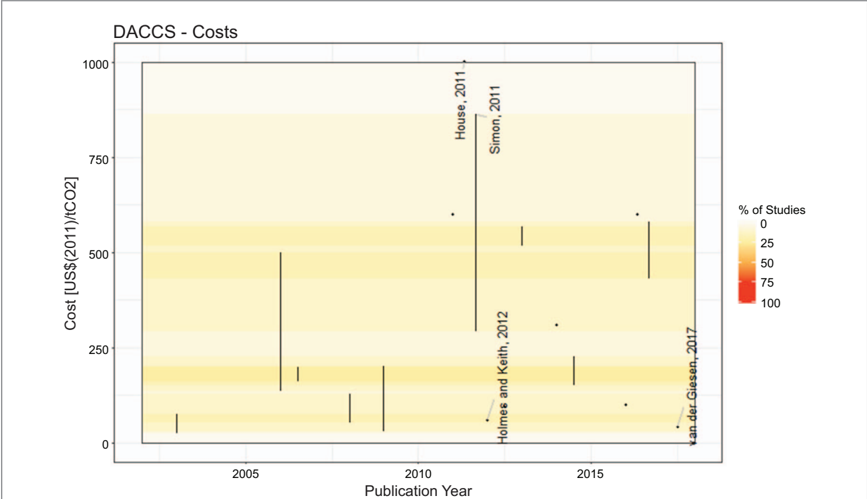
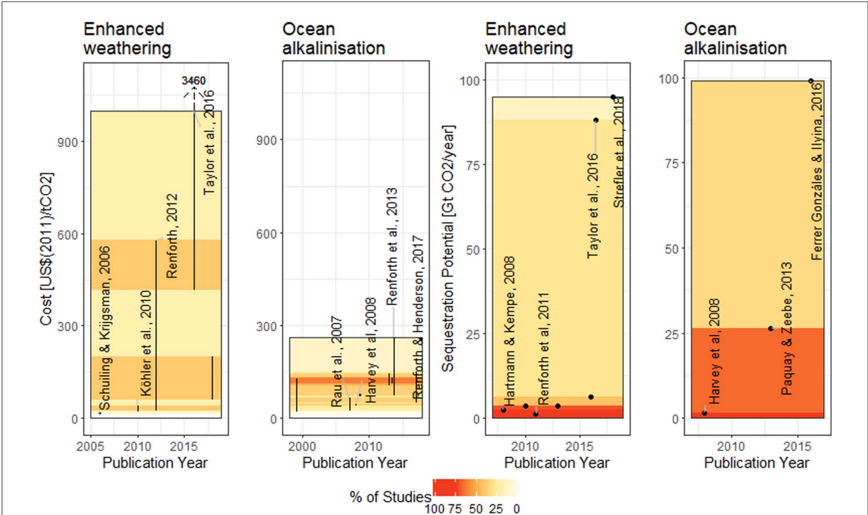
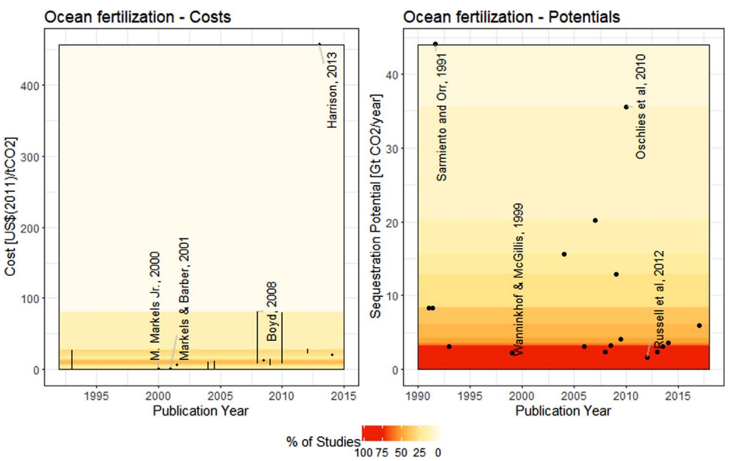
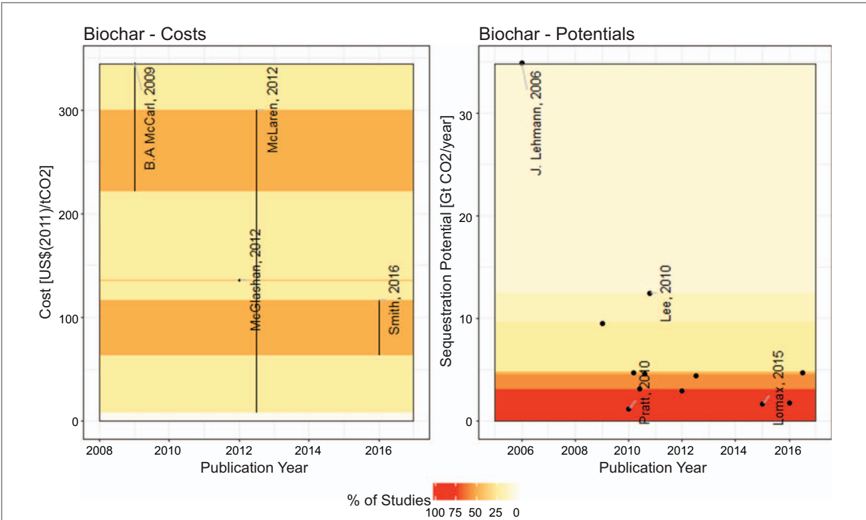
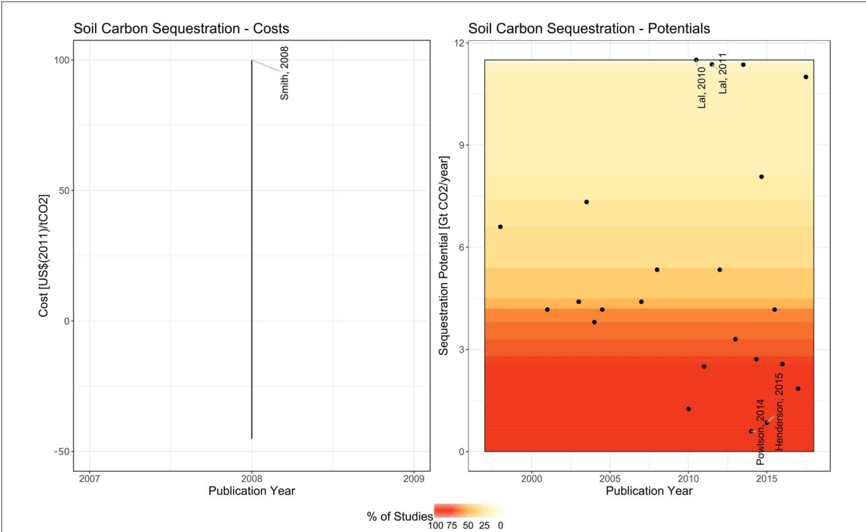
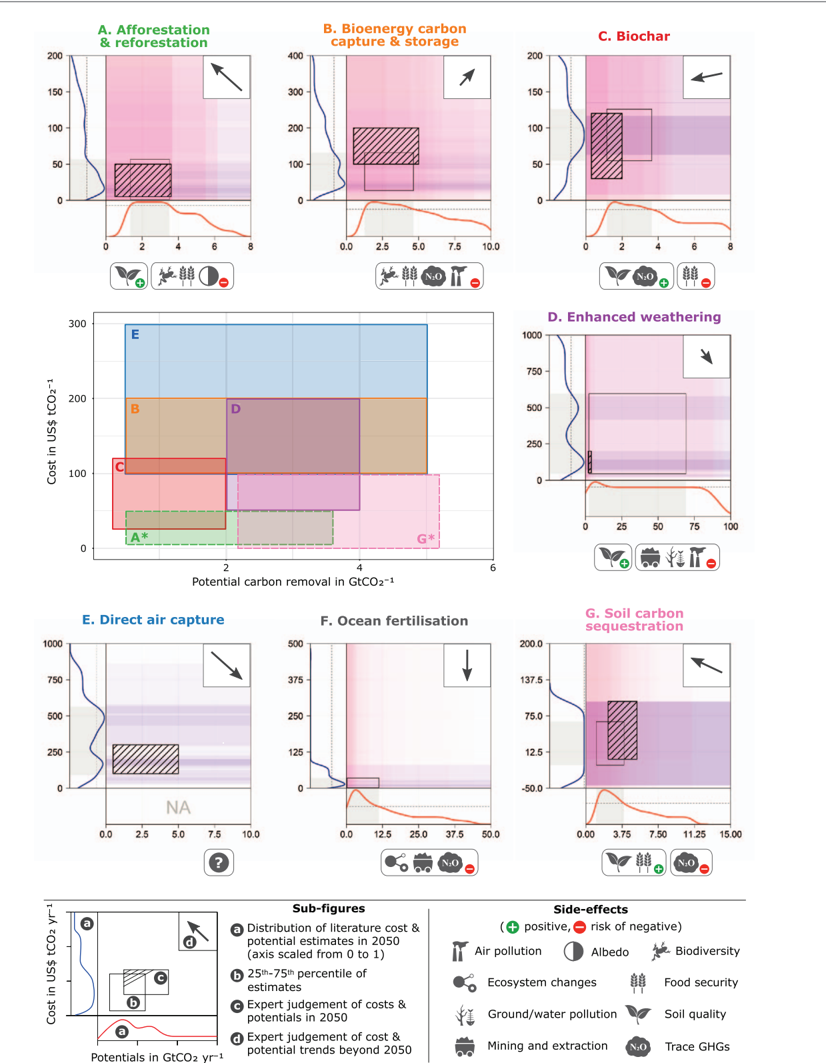
The most recent IPCC assessment has shown an important role for negative emissions technologies (NETs) in limiting global warming to 2 °C cost-effectively. However, a bottom-up, systematic, reproducible, and transparent literature assessment of the different options to remove CO 2 from the atmosphere is currently missing. In part 1 of this three-part review on NETs, we assemble a comprehensive set of the relevant literature so far published, focusing on seven technologies: bioenergy with carbon capture and storage (BECCS), afforestation and reforestation, direct air carbon capture and storage (DACCS), enhanced weathering, ocean fertilisation, biochar, and soil carbon sequestration. In this part, part 2 of the review, we present estimates of costs, potentials, and side-effects for these technologies, and qualify them with the authors' assessment. Part 3 reviews the innovation and scaling challenges that must be addressed to realise NETs deployment as a viable climate mitigation strategy. Based on a systematic review of the literature, our best estimates for sustainable global NET potentials in 2050 are 0.5–3.6 GtCO 2 yr −1 for afforestation and reforestation, 0.5–5 GtCO 2 yr −1 for BECCS, 0.5–2 GtCO 2 yr −1 for biochar, 2–4 GtCO 2 yr −1 for enhanced weathering, 0.5–5 GtCO 2 yr −1 for DACCS, and up to 5 GtCO 2 yr −1 for soil carbon sequestration. Costs vary widely across the technologies, as do their permanency and cumulative potentials beyond 2050. It is unlikely that a single NET will be able to sustainably meet the rates of carbon uptake described in integrated assessment pathways consistent with 1.5 °C of global warming.
Overview
The claims and statistics of this paper haven’t been checked yet.
Free: it reads the open-access text and checks the first 5 claims that cite a source we can check. Create a free account to check every claim.
Integrity signals
Registry
Cites
Statistics
Figures
Verification
Claims the paper makes
The claims and statistics of this paper haven’t been checked yet.
Free: it reads the open-access text and checks the first 5 claims that cite a source we can check. Create a free account to check every claim.
Claims other papers make about this one
Each is checked against this paper’s own text: does it say what the citing paper says it does?
The cited source doesn’t support the claim as written.
In the citing paper
“Previous reviews 18,28,[52][53][54] have shown that these pathways offer substantial CO 2 removal potential:”
From The technological and economic prospects for CO2 utilization and removal (2019) · cites this paper as [28]
Checked by a reasoning model — may be wrong.
Experimental — accuracy not yet measuredThe source backs part of the claim, not all of it — or backs it for a different population, condition or comparison.
In the citing paper
“Plausibly, all bioenergy that can be sourced sustainably (about 100 EJ 3,25 primary energy) could be allocated to BECCS, so that about 4.2-5.6Gt CO 2 per year could be sequestered (reflecting losses in energy and CO 2 in along different steps in the process).”
From The mutual dependence of negative emission technologies and energy systems (2019) · cites this paper as [3]
Experimental — accuracy not yet measuredThe source backs part of the claim, not all of it — or backs it for a different population, condition or comparison.
In the citing paper
“Removal costs are estimated at $5-$50/tCO 2 (Fuss et al. 2018).”
From Strategies for mitigation of climate change: a review (2020) · cites this paper as Fuss et al. 2018
Experimental — accuracy not yet measuredThe source backs part of the claim, not all of it — or backs it for a different population, condition or comparison.
In the citing paper
“Side effects of ocean fertilization that are discussed in the literature include ocean acidification, deep and mid-water oxygen decrease or depletion, increase in production of further greenhouse gases, unpredictable impact on food cycles, creation of toxic algal blooms as well as mixed effects on the seafloor and upper ocean ecosystems (Fuss et al. 2018;Williamson et al. 2012).”
From Strategies for mitigation of climate change: a review (2020) · cites this paper as Fuss et al. 2018
Experimental — accuracy not yet measuredThe source backs part of the claim, not all of it — or backs it for a different population, condition or comparison.
In the citing paper
“In the context of our CDR targets, ERW has a similar potential to that of other CDR strategies 23 estimated for 2050, including bio-energy with carbon capture and storage (BECCS), widely adopted in IPCC future scenarios (0.5-5 Gt CO2 yr -1 ), direct air carbon capture and storage (DAC) (0.5-5 Gt CO2 yr -1 ), biochar (0.5 to 2 Gt CO2 yr -1 ), soil organic carbon (SOC) sequestration (0.5-5 Gt CO2 yr”
From Potential for large-scale CO2 removal via enhanced rock weathering with croplands (2020) · cites this paper as [23]
Experimental — accuracy not yet measured
55 more claims about this paper
Create a free account to see every claim other papers make about this one.
Self-check
Percentages, sums and reported differences re-computed from the paper’s own numbers.
The self-check needs the paper’s full text.
Citations
Cites
Soil Carbon Sequestration Impacts on Global Climate Change and Food Security
Lal, R. (2004) · Science · doi:10.1126/science.1097396 · Cited by 8,376 · cited 6×
“Of the 22 articles (Batjes 1998, Benbi 2013, Conant 2011, Henderson et al 2015, Lal 2003b, 2003a, 2004a, 2004c, 2004b, 2010, 2011, 2013, Lassaletta and Aguilera 2015, Lorenz and Lal 2014, Powlson et al 2014, Salati et al 2010, Smith 2012, 2016, Sommer and Bossio 2014, Minasny et al 2017, Metting et…”
BackgroundInfluentialRiahi, K., van Vuuren, D. P., Kriegler, E., Edmonds, J., O’Neill, B. C., Fujimori, S., Bauer, N., Calvin, K., Dellink, R., Fricko, O., et al. (2017) · Global Environmental Change · doi:10.1016/j.gloenvcha.2016.05.009 · Cited by 6,607
Self-citationThe next generation of scenarios for climate change research and assessment
Moss, R. H., Edmonds, J. A., Hibbard, K. A., Manning, M. R., Rose, S. K., van Vuuren, D. P., Carter, T. R., Emori, S., Kainuma, M., Kram, T., et al. (2010) · Nature · doi:10.1038/nature08823 · Cited by 6,467
Brennan, L., & Owende, P. (2010) · Renewable and Sustainable Energy Reviews · doi:10.1016/j.rser.2009.10.009 · Cited by 4,894 · cited 2×
“24 Although achievable scales are not clear yet, there is also research on third-generation biofuels, derived from algal biomass (Brennan and Owende 2010) with the potential to enhance yields by improving microalgal biology through genetic or metabolic engineering (Tandon and Jin 2017).”
BackgroundCarbon capture and storage (CCS): the way forward
Bui, M., Adjiman, C. S., Bardow, A., Anthony, E. J., Boston, A., Brown, S., Fennell, P. S., Fuss, S., Galindo, A., Hackett, L. A., et al. (2018) · Energy & Environmental Science · doi:10.1039/c7ee02342a · Cited by 4,374
Self-citationGlobal effects of land use on local terrestrial biodiversity
Newbold, T., Hudson, L. N., Hill, S. L. L., Contu, S., Lysenko, I., Senior, R. A., Börger, L., Bennett, D. J., Choimes, A., Collen, B., et al. (2015) · Nature · doi:10.1038/nature14324 · Cited by 4,352
Soil carbon sequestration to mitigate climate change
Lal, R. (2004) · Geoderma · doi:10.1016/j.geoderma.2004.01.032 · Cited by 3,936 · cited 6×
“Of the 22 articles (Batjes 1998, Benbi 2013, Conant 2011, Henderson et al 2015, Lal 2003b, 2003a, 2004a, 2004c, 2004b, 2010, 2011, 2013, Lassaletta and Aguilera 2015, Lorenz and Lal 2014, Powlson et al 2014, Salati et al 2010, Smith 2012, 2016, Sommer and Bossio 2014, Minasny et al 2017, Metting et…”
BackgroundInfluentialGriscom, B. W., Adams, J., Ellis, P. W., Houghton, R. A., Lomax, G., Miteva, D. A., Schlesinger, W. H., Shoch, D., Siikamäki, J. V., Smith, P., et al. (2017) · Proceedings of the National Academy of Sciences · doi:10.1073/pnas.1710465114 · Cited by 3,481
Self-citationO’Neill, B. C., Kriegler, E., Ebi, K. L., Kemp-Benedict, E., Riahi, K., Rothman, D. S., van Ruijven, B. J., van Vuuren, D. P., Birkmann, J., Kok, K., et al. (2017) · Global Environmental Change · doi:10.1016/j.gloenvcha.2015.01.004 · Cited by 3,359
Irreversible climate change due to carbon dioxide emissions
Solomon, S., Plattner, G.-K., Knutti, R., & Friedlingstein, P. (2009) · Proceedings of the National Academy of Sciences · doi:10.1073/pnas.0812721106 · Cited by 3,217 · cited 1×
“…et al 2015, Riahi et al 2015, Eom et al 2015), temperature overshoot carries additional risks associated with higher levels of warming and the resulting impacts and climate feedbacks that could occur (van Vuuren et al 2013, Solomon et al 2009, Friedlingstein et al 2006, Clarke et al 2014).”
Background
Research works printed but not linked: 32
- Bruckner T ed Edenhofer E, 2014, Contribution of Working Group III to the Fifth Assessment Report of the Intergovernmental Panel on Climate Change
- Bui M, 2018, Energy Environ. Sci.
- Ciais P ed Stocker T F, 2013, Climate Change 2013: The Physical Science Basis. Contribution of Working Group I to the Fifth Assessment Report of the Intergovernmental Panel on Climate Change
- Clarke L E ed Edenhofer O, 2014, Clim. Change 2014 Mitig. Clim. Change Contrib. Work. Gr. III to Fifth Assess. Rep. Intergov. Panel Clim. Change, 413
- Coelho S T, 2012, Chapter 20—land and water: linkages to bioenergy, 1459
- Corathers L A, 2015, Earth
- d’Hotman D V, 1961, Int. Sugar J., 63, 363
- Dale V H, 2010, Biofuels: implications for Land Use and Biodiversity
- Díaz S, 2009, Biodiversity, Ecosystem Functioning, and Human Wellbeing
- Fuss S, 2017, Oxf. Res. Encycl. Clim. Sci., 1
- Gale J J, 2004, Geol. Belgica, 7, 99
- Haberl H ed Dewulf J, 2015, Sustainability Assessment of Renewables-Based Products, 1
- Hassani N, 2016, Pet. Res., 25, 4
- IEA GHG, 2005, Building the Cost Curves for CO
- IEA GHG, 1998, Enhanced Coal Bed Methane Recovery with CO
- IPCC ed Metz B, 2005, Carbon Dioxide Capture and Storage (SRCCS)
- IPCC ed Qin D, 2013, Contribution of Working Group I to the Fifth Assessment Report of the Intergovernmental Panel on Climate Change
- IPCC ed Edenhofer O, 2014, Contribution of Working Group III to the Fifth Assessment Report of the Intergovernmental Panel on Climate Change
- IPCC ed Pachauri R K, 2014, Contribution of Working Groups I, II and III to the Fifth Assessment Report of the Intergovernmental Panel on Climate Change
- Liu W W, 2016, Acta Ecol. Sin., 36, 2113
- Lopes A S, 1996, Better Crop. Int., 10, 10
- Magill B, 2017, Clim. Cent.
- Markels M, 2001, Poster Presentation for NETL Conference on Carbon Sequestration, 14
- 10.1088/1748-9326/aabf9 · doi:10.1088/1748-9326/aabf9
- Minx J, 2017, Environ. Res. Lett., 12
- National Academy of Sciences, 2015, Climate Intervention
- 53. Nkouathio D G, Wandji P, Bardintzeff J M, Tematio P, Dongmo A K and Tchoua F 2008 Utilisation des roches volcaniques pour la remineralisation des sols ferrallitiques des regions tropicales. Cas des pyroclastites basaltiques du graben de Tombel (Ligne volcanique du Cameroun) Bull. Soc. Vaudoise Sci. Nat. 91 1-14
- 122. Sedjo R A and Solomon A M 1991 Climate and forests Greenhouse Warming: Abatement and Adaptation (Resources for the Future)
- Strefler J, 2018, Environ. Res. Lett., 13
- Strefler J, 2018, Environ. Res. Lett., 13
- UNEP, 2017, The Emissions Gap Report 2017
- USDOE, 2014, Report
Cited by
Items 701–800 of 1,001
Cutting through the noise on negative emissions
Uden, S., Dargusch, P., & Greig, C. R. (2021) · Joule · doi:10.1016/j.joule.2021.06.013 · Cited by 22
Vibbert, H. B., & Park, A. A. (2022) · Frontiers in Energy Research · doi:10.3389/fenrg.2022.999307 · Cited by 16
“unwanted and potentially toxic effects to life found in ocean water (Hartmann et al., 2013; Montserrat et al., 2017; Fuss et al., 2018).”
BackgroundPetkov, I., Lerbinger, A., Mavromatidis, G., Knoeri, C., & Hoffmann, V. H. (2023) · iScience · doi:10.1016/j.isci.2023.106619 · Cited by 22
Brown, R. W., Chadwick, D. R., Bott, T., West, H., Wilson, P. N., Hodgins, G. R., Snape, C. E., & Jones, D. L. (2023) · Biochar · doi:10.1007/s42773-023-00232-y · Cited by 18
Keel, S. G., Bretscher, D., Leifeld, J., von Ow, A., & Wüst‐Galley, C. (2023) · Carbon Management · doi:10.1080/17583004.2023.2244456 · Cited by 24
Bertoni, L., Roussanaly, S., Riboldi, L., Anantharaman, R., & Gazzani, M. (2024) · Journal of Physics Energy · doi:10.1088/2515-7655/ad2374 · Cited by 27
“Among the available CDR technologies, direct air capture (DAC) is amongst the ones with the highest carbon mitigation potential [4] and the Net-Zero Emissions by 2050 roadmap developed by the International Energy Agency (IEA) estimates that DAC technologies should remove 90 MtCO 2 /year by 2030 and…”
BackgroundInterdisciplinary challenges in bio-energy carbon capture utilization & storage deployment: A review
Yeung, F. D., Sammarchi, S., Wang, E., Gao, Q., & Li, J. (2024) · Carbon Capture Science & Technology · doi:10.1016/j.ccst.2024.100283 · Cited by 33
Lockley, A., & von Hippel, T. (2020) · Frontiers of Engineering Management · doi:10.1007/s42524-020-0102-8 · Cited by 16
Analysis of the rate of combustion of biomass char in a fluidised bed of CLOU particles
Kwong, K. Y., Mao, R., Scott, S. A., Dennis, J. S., & Marek, E. (2020) · Chemical Engineering Journal · doi:10.1016/j.cej.2020.127942 · Cited by 16
Carbon dioxide removal: climbing up the EU climate policy agenda
Schenuit, F., & Geden, O. (2023) · Edward Elgar Publishing eBooks · doi:10.4337/9781789906981.00037 · Cited by 19
Costs to achieve target net emissions reductions in the US electric sector using direct air capture
Supekar, S. D., Lim, T.-H., & Skerlos, S. J. (2019) · Environmental Research Letters · doi:10.1088/1748-9326/ab30aa · Cited by 19
“Since the seminal work on this technology in the 1990s (Lackner et al 1999) knowledge about the chemistry, engineering, and costs of DAC has advanced considerably (Fuss et al 2018, Minx et al 2018, Nemet et al 2018).”
BackgroundFuzzy optimization model for enhanced weathering networks using industrial waste
Aviso, K. B., Lee, J., Ubando, A. T., & Tan, R. R. (2021) · Clean Technologies and Environmental Policy · doi:10.1007/s10098-021-02053-8 · Cited by 18
Kim, H., Qiu, Y. S., McJeon, H. C., Clarens, A. F., Javadi, P., Wang, C., Wang, R., Wang, J., Jiang, H., Miller, A., et al. (2024) · Environmental Research Letters · doi:10.1088/1748-9326/ad77e7 · Cited by 17
Green growth in the mirror of history
Infante‐Amate, J., Travieso, E., & Aguilera, E. (2025) · Nature Communications · doi:10.1038/s41467-025-58777-4 · Cited by 24
Considering durability in carbon dioxide removal strategies for climate change mitigation
Streck, C., Minoli, S., Roe, S., Barry, C., Brander, M., Chiquier, S., Cullity, G., Ellis, P. W., Funk, J., Gidden, M., et al. (2025) · Climate Policy · doi:10.1080/14693062.2025.2501267 · Cited by 21
“However, conventional nature-based CDR methods that rely on storing carbon in vegetation and soil are the most immediately deployable methods at scale as the techniques used in conventional CDR methods are well known and costs are comparatively low (Fuss et al., 2018; Minx et al., 2018).”
Techno-economic analysis of living biocomposites for carbon capture from breweries
In-na, P., Byrne, F., Caldwell, G. S., & Lee, J. G. M. (2022) · Algal Research · doi:10.1016/j.algal.2022.102781 · Cited by 16
How significant a role can China’s forest sector play in decarbonizing its economy?
Hou, J., & Yin, R. (2022) · Climate Policy · doi:10.1080/14693062.2022.2098229 · Cited by 15
“In addition to elucidating the significance of negative emission technologies, as reflected in FES sequestration and HWP storage (Fuss et al., 2018, 8), we argue that these actions are a cost effective way of achieving China’s ER&RE goals.”
BackgroundInfluentialEnevoldsen, P., Baum, C. M., Low, S., & Sovacool, B. K. (2022) · Science Progress · doi:10.1177/00368504221138443 · Cited by 15
Numerical analysis of a negative emission technology of methane to mitigate climate change
Xiong, H., Ming, T., Wu, Y., Li, W., Mu, L., de Richter, R. K., Yan, S., Yuan, Y., & Peng, C. (2023) · Solar Energy · doi:10.1016/j.solener.2023.02.048 · Cited by 15
Impact of agroforestry ecosystem on carbon sequestration potential and climate change
Patel, R., Patel, B., Jaison, M., Dash, B., & Mukherjee, S. (2023) · Elsevier eBooks · doi:10.1016/b978-0-323-95911-7.00002-5 · Cited by 23
Review of carbon emissions offsetting guidelines using instructional criteria
Helppi, O., Salo, E., Vatanen, S., Pajula, T., & Grönman, K. (2023) · The International Journal of Life Cycle Assessment · doi:10.1007/s11367-023-02166-w · Cited by 26
Potentials and barriers to land-based mitigation technologies and practices (LMTs)—a review
Karki, L., Lieu, J., Xylia, M., Laub, M., Ismangil, D., Virla, L. D., Rahn, E., Bilbao, B., Indriani, S. N., Martín-Gallego, P., et al. (2023) · Environmental Research Letters · doi:10.1088/1748-9326/ace91f · Cited by 17
Bednar, J., Macinante, J., Baklanov, A., Hall, J. W., Wagner, F., Ghaleigh, N. S., & Obersteiner, M. H. (2023) · Climate Policy · doi:10.1080/14693062.2023.2276858 · Cited by 26
“…3f) and the associated risks, recognizing that it is still unclear whether from technological, environmental and economic perspectives CDR can be deployed at the required scale to reverse the overshoot (Fuss et al., 2018; Honegger & Reiner, 2018; Lawrence et al., 2018; Obersteiner et al., 2018).”
BackgroundCountry-level estimates of gross and net carbon fluxes from land use, land-use change and forestry
Obermeier, W. A., Schwingshackl, C., Bastos, A., Conchedda, G., Gasser, T., Grassi, G., Houghton, R. A., Tubiello, F. N., Sitch, S. A., & Pongratz, J. (2024) · Earth system science data · doi:10.5194/essd-16-605-2024 · Cited by 23
Jeltsch‐Thömmes, A., Tran, G., Lienert, S., Keller, D. P., Oschlies, A., & Joos, F. (2024) · Environmental Research Letters · doi:10.1088/1748-9326/ad4401 · Cited by 25
“6, with a forcing ceiling of 3.4 and 2.6 Wm − 2 , respectively, require the application of carbon dioxide removal (CDR) technologies (Smith et al 2016, Fuss et al 2018).”
MethodInfluentialSoil carbon-food synergy: sizable contributions of small-scale farmers
Iizumi, T., Hosokawa, N., & Wagai, R. (2021) · CABI Agriculture and Bioscience · doi:10.1186/s43170-021-00063-6 · Cited by 16
A two-step carbon pricing scheme enabling a net-zero and net-negative CO$$_2$$-emissions world
Becattini, V., Gabrielli, P., Frattini, L., Weisbach, D. A., & Mazzotti, M. (2022) · Climatic Change · doi:10.1007/s10584-022-03340-z · Cited by 18
Soil Carbon Sequestration and Biochar
Vetter, S. H., Abdalla, M., Kuhnert, M., & Smith, P. (2022) · Royal Society of Chemistry eBooks · doi:10.1039/9781839165245-00194 · Cited by 18
Self-citationMoreira, J. R., & Pacca, S. A. (2020) · Transportation Research Part D Transport and Environment · doi:10.1016/j.trd.2020.102454 · Cited by 16
Clauser, N. M., Scown, C. D., Pett‐Ridge, J., & Sagues, W. J. (2025) · Renewable and Sustainable Energy Reviews · doi:10.1016/j.rser.2025.115714 · Cited by 16
Enhanced Rock Weathering Altered Soil Organic Carbon Fluxes in a Plant Trial
Boito, L., Steinwidder, L., Rijnders, J., Berwouts, J., Janse, S., Niron, H., Roussard, J., Vienne, A., & Vicca, S. (2025) · Global Change Biology · doi:10.1111/gcb.70373 · Cited by 21
“Present estimates generally place the CDR potential of EW at 2–4 Gt CO 2 y − 1 (Beerling et al. 2020; Fuss et al. 2018; IPCC 2023), but experimental estimates can range between < 1 and 95 Gt CO 2 y − 1 (IPCC 2023; Strefler et al. 2018).”
Elegbeleye, I. F., Oguntona, O. A., & Elegbeleye, F. A. (2025) · Technologies · doi:10.3390/technologies13110509 · Cited by 17
Uncertainties of enhanced rock weathering for climate-change mitigation
Schiedung, M., Harrington, K., Dupla, X., Möller, B., Facq, E., Sweere, T., Don, A., Hilton, R. G., Döetterl, S., & Hemingway, J. (2026) · Nature Reviews Earth & Environment · doi:10.1038/s43017-026-00761-7 · Cited by 32
Kaushal, R., Roy, T., Thapliyal, S., Mandal, D., Singh, D., Tomar, J. M. S., Mehta, H., Ojasvi, P. R., Lepcha, S. T. S., & Jayaraman, D. (2022) · Environmental Monitoring and Assessment · doi:10.1007/s10661-022-09839-3 · Cited by 15
18 Politically relevant solar geoengineering scenarios
Lockley, A., Xu, Y., Tilmes, S., Sugiyama, M., Rothman, D. S., & Hindes, A. (2022) · Socio-Environmental Systems Modeling · doi:10.18174/sesmo.18127 · Cited by 22
“5°C pathways consistent with the Paris Agreement anticipate large-scale CDR deployment in the latter half of the 21st century to reach net-zero emissions (Lewis, 2015; Fuss et al., 2018; Nemet et al., 2018; IPCC, 2018).”
BackgroundOptimization and decision support models for deploying negative emissions technologies
Migo-Sumagang, M. V., Aviso, K. B., Foo, D. C. Y., Short, M., Nair, P. N. S. B., & Tan, R. R. (2023) · PLOS Sustainability and Transformation · doi:10.1371/journal.pstr.0000059 · Cited by 19
“Aside from resource constraints, NETs are also bound to temporal constraints such as technological readiness and time-varying peak CDR potentials [17,30].”
BackgroundInfluentialMa, X., Bryantsev, V. S., & Roy, S. (2023) · Cell Reports Physical Science · doi:10.1016/j.xcrp.2023.101642 · Cited by 14
How much anthropogenic carbon fixation do we need?
Xiao, W.-S., Smaill, S. J., & Zhou, X. (2023) · The Science of The Total Environment · doi:10.1016/j.scitotenv.2023.168213 · Cited by 14
Lyngfelt, A., Fridahl, M., & Haszeldine, R. S. (2023) · Energy Research & Social Science · doi:10.1016/j.erss.2023.103356 · Cited by 17
A bottom–up regional potential assessment of bioenergy with carbon capture and storage in Germany
Sadr, M., Aliabadi, D. E., Jordan, M., & Thrän, D. (2024) · Environmental Research Letters · doi:10.1088/1748-9326/ad7edd · Cited by 14
“Based on a systematic evaluation of the literature, Fuss et al [21] estimate sustainable global CO 2 removal potentials via BECCS in 2050 to be between 0.5 and 5 Gt CO 2 /yr; however, there is an ever-growing dependence on negative emissions due to the shrinking carbon budget, which is particularly…”
InfluentialOcean Alkalinity Enhancement in Deep Water Formation Regions Under Low and High Emission Pathways
Nagwekar, T., Nissen, C., & Hauck, J. (2024) · Earth s Future · doi:10.1029/2023ef004213 · Cited by 19
Review of Economics and Policies of Carbon Dioxide Removal
Oh, S., Greene, J. H., Honegger, M., & Michaelowa, A. (2025) · Current Sustainable/Renewable Energy Reports · doi:10.1007/s40518-025-00252-1 · Cited by 25
“However, previous literature notes that even though BECCS costs start at a lower level, it is expected to decrease more slowly than DACCS due to the limited availability of feedstocks [6, 38, 42].”
“Natural” Climate Solutions Could Speed Up Mitigation, With Risks. Additional Options Are Needed.
Crusius, J. (2020) · Earth s Future · doi:10.1029/2019ef001310 · Cited by 18
“…the risks of climate change involve combinations of reducing CO2 emissions from fossil fuel combustion and from land use and taking up CO2 from the atmosphere using various “negative emissions” technologies (e.g., Fuss et al., 2018; National Academies of Sciences, Engineering, and Medicine, 2019).”
BackgroundMethodInfluentialEffects of small ridge and furrow mulching degradable film on dry direct seeded rice
Li, H., Zeng, S., Luo, X., Fang, L., Liang, Z., & Yang, W. (2021) · Scientific Reports · doi:10.1038/s41598-020-79227-9 · Cited by 15
Offsetting unabated agricultural emissions with CO2 removal to achieve ambitious climate targets
Brazzola, N., Wohland, J., & Patt, A. (2021) · PLoS ONE · doi:10.1371/journal.pone.0247887 · Cited by 16
Ogland-Hand, J., Cohen, S., Kammer, R., Ellett, K., Saar, M. O., Bennett, J. A., & Middleton, R. S. (2022) · Frontiers in Energy Research · doi:10.3389/fenrg.2022.855105 · Cited by 14
“…transitions are sensitive to the cost and availability of CO2 capture and storage (CCS) processes (Krey et al., 2014; Kriegler et al., 2014; Yang et al., 2015; Dessens et al., 2016; Sepulveda et al., 2018; Gambhir et al., 2019; Bistline and Blanford, 2020; Jayadev et al., 2020; Baik et al., 2022).”
BackgroundModeling the effect of budget allocation on the abatement of atmospheric carbon dioxide
MISRA, A. K., & Jha, A. (2022) · Computational and Applied Mathematics · doi:10.1007/s40314-022-01906-2 · Cited by 14
Zhang, D., Guo, Y., Fan, Z., Hu, X., Hao, X., Fang, L., & Li, C. (2022) · Environmental Science and Pollution Research · doi:10.1007/s11356-022-23644-y · Cited by 14
“54Gt C year−1 from the ambient atmosphere (Sabine et al. 2018).”
BackgroundChevallier, T., Loireau, M., Courault, R., Chapuis‐Lardy, L., Desjardins, T., Gomez, C., Grondin, A., Guérin, F., Orange, D., Pélissier, R., et al. (2020) · Sustainability · doi:10.3390/su12176715 · Cited by 16
“−1, [9]) compared to costs related to agricultural climate policy implementation (~US$ 4–23 tCO2eq.”
BackgroundBreyer, C., Khalili, S., Rantanen, E., & Bogdanov, D. (2018) · 2018 IEEE 7th World Conference on Photovoltaic Energy Conversion (WCPEC) (A Joint Conference of 45th IEEE PVSC, 28th PVSEC & 34th EU PVSEC) · doi:10.1109/pvsc.2018.8547258 · Cited by 13
“Net zero GHG emissions, with remaining positive emissions, will not be an option for the Transport sector, since negative emission technologies (NETs) [3,4] are very cost intensive and only justified for almost impossible reductions in the agricultural sector and other technically unavoidable GHG emissions.”
BackgroundDuus‐Otterström, G. (2024) · British Journal of Political Science · doi:10.1017/s0007123423000625 · Cited by 13
“However, like most commentators, I assume that net zero will involve greatly reduced emissions rates given the limits of negative emissions technologies (Anderson and Peters 2016; Fuss et al. 2018).”
BackgroundCormoş, C.-C. (2025) · Journal of environmental chemical engineering · doi:10.1016/j.jece.2025.116601 · Cited by 15
Financial Inclusion, ICT Development, and CO 2 Emissions: An ARDL Approach
Le, T. L. V., Gupta, R., Phạm, D. K., & Nguyen, L. H. (2025) · Sustainable Development · doi:10.1002/sd.3547 · Cited by 15
More carbon per drop to enhance soil carbon sequestration in water-limited environments
Ghimire, R., Clay, D. E., Thapa, S., & Hurd, B. (2022) · Carbon Management · doi:10.1080/17583004.2022.2117082 · Cited by 17
“It is estimated that enhancing SOC sequestration by adopting improved agricultural and land management practices alone can remove 0.79 to 1.54 Gt C year (cid:4) 1 from the atmosphere [4].”
BackgroundInfluentialA country-level assessment of the deployment potential of greenhouse gas removal technologies
Asibor, J. O., Clough, P. T., Nabavi, S. A., & Manovic, V. M. (2022) · Journal of Environmental Management · doi:10.1016/j.jenvman.2022.116211 · Cited by 19
Optimum integration of negative emission technologies for carbon-constrained energy sector planning
Prabhakar, S., & Bandyopadhyay, S. K. (2023) · Journal of Cleaner Production · doi:10.1016/j.jclepro.2023.137302 · Cited by 14
Solar geoengineering and carbon removal significantly lower economic climate damages
Liu, A., Moore, J. C., Cheng, X. Y., & Chen, Y. (2023) · One Earth · doi:10.1016/j.oneear.2023.09.004 · Cited by 15
Adun, H. H., Ampah, J. D., Bamisile, O., Hu, Y., & Staffell, I. (2023) · Energy Sustainable Development/Energy for sustainable development · doi:10.1016/j.esd.2023.101338 · Cited by 14
Optimizing high-dimensional forestry for wood production and carbon sinks
Tahvonen, O., Suominen, A., Parkatti, V.-P., & Malo, P. (2024) · Canadian Journal of Forest Research · doi:10.1139/cjfr-2023-0267 · Cited by 16
Han, M., Zhao, Q. X., Wang, X., Wang, Y., Ciais, P., Zhang, H., Goll, D. S., Zhu, L., Zhao, Z. S., Guo, Z., et al. (2024) · Geoscientific model development · doi:10.5194/gmd-17-4871-2024 · Cited by 14
Yamamoto, K., DeVries, T., & Siegel, D. A. (2024) · Environmental Research Letters · doi:10.1088/1748-9326/ad7477 · Cited by 18
“Marine-based CDR (mCDR) strategies have also garnered interest due to the ocean’s capacity to sequester carbon at the scale needed to offset anthropogenic CO 2 emissions (Fuss et al 2018, Friedlingstein et al 2023).”
A holistic assessment framework for marine carbon dioxide removal options
Baatz, C., Tank, L., Bednarz, L.-K., Boettcher, M., Morganti, T., Voget-Kleschin, L., Cabus, T., van Doorn, E., Dorndorf, T., Havermann, F., et al. (2025) · Environmental Research Letters · doi:10.1088/1748-9326/adc93f · Cited by 22
Characteristics of DAC operation within integrated PtG concepts
Drechsler, C., & Agar, D. W. (2021) · International journal of greenhouse gas control · doi:10.1016/j.ijggc.2020.103230 · Cited by 17
Kerner, C., & Brudermann, T. (2021) · Sustainability · doi:10.3390/su13094774 · Cited by 19
“, the global mitigation potential of afforestation is limited [9].”
BackgroundGoverning natural climate solutions: prospects and pitfalls
Hirons, M. A. (2021) · Current Opinion in Environmental Sustainability · doi:10.1016/j.cosust.2021.06.012 · Cited by 17
Gładysz, P., Strojny, M., Bartela, Ł., Hacaga, M., & Froehlich, T. (2022) · Energies · doi:10.3390/en16010035 · Cited by 14
Optimal synthesis of negative emissions polygeneration systems with desalination
Tan, R. R., Aviso, K. B., Foo, D. C. Y., Lee, J., & Ubando, A. T. (2019) · Energy · doi:10.1016/j.energy.2019.115953 · Cited by 15
Shi, L., Zeng, S., Liu, Z., He, H., Shao, M., Zhao, M. J., & Zhao, Y. (2025) · Earth-Science Reviews · doi:10.1016/j.earscirev.2025.105149 · Cited by 12
Land aridification persists in vulnerable drylands under climate mitigation scenarios
Piao, J., Chen, W., Kug, J., Chen, S., Oh, J., Wang, L., & Cai, Q. (2025) · Communications Earth & Environment · doi:10.1038/s43247-025-02742-y · Cited by 16
“Thisismainlyduetothehysteresisbehaviorofthe ITCZ,whichleadstosustainedprecipitationdecreasesoverwidespread tropicalaridregionsasCO 2 ramps up and ramps down, resulting in aridity hysteresis 27 .”
Sustainable Approaches to Realize Carbon Neutrality in China: A Case Study of Zhejiang Province
Shu, Y., Chen, J., Huang, Y., & Fu, W. (2022) · Journal of Marine Science and Engineering · doi:10.3390/jmse10101351 · Cited by 15
Payen, F. T., Moran, D., Cahurel, J.-Y., Aitkenhead, M. J., Alexander, P. M., & MacLeod, M. J. (2023) · Frontiers in Sustainable Food Systems · doi:10.3389/fsufs.2022.994364 · Cited by 15
“SOC sequestration in agricultural soils has been identified as an effective mitigation tool, both at the global level (e.g., Smith, 2016; Fuss et al., 2018; Sykes et al., 2020) and in France more specifically (e.”
BackgroundTowards a synthesized critique of forest‐based ‘carbon‐fix’ strategies
Vian, J. E., Garvey, B., & Tuohy, P. G. (2023) · Climate Resilience and Sustainability · doi:10.1002/cli2.48 · Cited by 19
Han, L., Zhao, J., Rong, N., Wang, Z. J., Qi, Z., Shen, Z., Ding, H., & Yu, H. (2023) · Biomass Conversion and Biorefinery · doi:10.1007/s13399-023-04357-9 · Cited by 12
Lefvert, A., & Grönkvist, S. (2023) · International journal of greenhouse gas control · doi:10.1016/j.ijggc.2023.103934 · Cited by 12
Aligning incentives for carbon dioxide removal
Reinhard, C. T., Planavsky, N. J., & Khan, A. (2023) · Environmental Research Letters · doi:10.1088/1748-9326/acf591 · Cited by 21
“For instance, integrated assessment models suggest that achieving below 2 ◦ C of total warming since the preindustrial period will require the removal of ∼ 1–10 gigatonnes (Gt; 10 9 tons) of CO 2 per year by 2100 [4].”
BackgroundBlanc‐Betes, E., Gomez‐Casanovas, N., Hartman, M. D., Hudiburg, T. W., Khanna, M., Parton, W. J., & DeLucia, E. H. (2023) · Environmental Science & Technology · doi:10.1021/acs.est.3c05240 · Cited by 12
Song, Y., & Oh, C. (2023) · Energy Research & Social Science · doi:10.1016/j.erss.2023.103339 · Cited by 12
Dewi, R. K., Gong, Y., Huang, Q., Li, P., Hashimi, R., & Komatsuzaki, M. (2023) · Soil and Tillage Research · doi:10.1016/j.still.2023.105977 · Cited by 13
Evaluation and optimisation of the soil carbon turnover routine in the MONICA model (version 3.3.1)
Aiteew, K., Rouhiainen, J., Nendel, C., & Dechow, R. (2024) · Geoscientific model development · doi:10.5194/gmd-17-1349-2024 · Cited by 16
“30 Estimates of the global capacity of agricultural soils for sequestering carbon range from 2 to 5 Pg C a (Fuss et al., 2018).”
BackgroundCarbon dioxide removal via weathering of sugarcane mill ash under different soil conditions
Green, H., Larsen, P. L., Liu, Y., & Nelson, P. N. (2024) · Applied Geochemistry · doi:10.1016/j.apgeochem.2024.105940 · Cited by 13
Jaiswal, S., Nagarajan, A., & Mythri, A. (2024) · Environmental Science & Policy · doi:10.1016/j.envsci.2024.103724 · Cited by 14
Suhrhoff, T. J., Reershemius, T., Wang, J., Jordan, J. S., Reinhard, C. T., & Planavsky, N. J. (2024) · Frontiers in Climate · doi:10.3389/fclim.2024.1346117 · Cited by 23
“In other words, a given scenario below the resolvability threshold only means that soil-based mass-balance approaches will be inadequate for quantifying CDR in these settings, but CDR may still be occurring through EW.”
BackgroundInfluentialBiochar for soil health improvement in the present context of climate change: a reality or fantasy
Sahoo, U., Maitra, S., Hossain, A., Santosh, D. T., Nath, S., Sairam, M., Sagar, L., Jena, J., Pattanayak, S., Gitari, H. I., et al. (2024) · Elsevier eBooks · doi:10.1016/b978-0-443-21562-9.00001-3 · Cited by 15
Adsorption and storage of hydrogen- A computational model approach
Mittal, H. N., Kushwaha, O. S., Nadagouda, M. N., Hegde, G., Allen, S., & Aminabhavi, T. M. (2024) · Environmental Research · doi:10.1016/j.envres.2024.119606 · Cited by 14
Li, Z., Planavsky, N. J., & Reinhard, C. T. (2024) · Frontiers in Climate · doi:10.3389/fclim.2024.1380651 · Cited by 22
“…global technoeconomic and environmental analyses of ERW now exist (Moosdorf et al., 2014; Montserrat et al., 2017; Beerling et al., 2018, 2020; Fuss et al., 2018; Strefler et al., 2018; Eufrasio et al., 2022), there is also strong impetus for more detailed analysis of tradeoffs on a regional…”
BackgroundDynamics of bio-based carbon dioxide removal in Germany
Wollnik, R., Borchers, M., Seibert, R., Abel, S., Herrmann, P., Elsasser, P., Hildebrandt, J., Meisel, K., Hofmann, P., Radtke, K., et al. (2024) · Scientific Reports · doi:10.1038/s41598-024-71017-x · Cited by 16
Baum, C. M., Brutschin, E., Fritz, L., & Sovacool, B. K. (2025) · Risk Analysis · doi:10.1111/risa.17713 · Cited by 12
“To ensure a systematic approach for designing information texts, we oriented these around, for example, the negative impacts listed in Fuss et al. (2018), with one socio-economic and one environmental risk—the same was done for SRM options.”
The Economics of Carbon Dioxide Removal
Edenhofer, O., Franks, M., Gruner, F., Kalkuhl, M., & Lessmann, K. (2025) · Annual Review of Resource Economics · doi:10.1146/annurev-resource-010224-094505 · Cited by 28
“199 O n : T hu , 09 O c t 2025 06 : 48 : 45 mineral, or land use) (Fuss et al. 2018, Prütz et al. 2024).”
InfluentialA fuzzy optimization model for planning integrated terrestrial carbon management networks
Belmonte, B. A., Aviso, K. B., Benjamin, M. F. D., & Tan, R. R. (2021) · Clean Technologies and Environmental Policy · doi:10.1007/s10098-021-02119-7 · Cited by 13
“2018) as well as their risks and potentials (Fuss et al. 2018).”
BackgroundStakeholders’ Risk Perceptions of Decarbonised Energy System: Insights into Patterns of Behaviour
Karimi, F. (2021) · Energies · doi:10.3390/en14217205 · Cited by 13
“Moreover, there are uncertainties and concerns regarding policy issues, liability and public acceptance of CCS [6,8,9].”
BackgroundResearch on China’s technology lists for addressing climate change
Wang, C., Cong, J., Wang, K., Qi, Y., Cai, W., Li, Y., Sha, F., Wang, W., Wei, Y., Zheng, X., et al. (2021) · Chinese Journal of Population Resources and Environment · doi:10.1016/j.cjpre.2021.12.017 · Cited by 16
Optimization of enhanced weathering networks with alternative transportation modes
Tan, R. R., Belmonte, B. A., Benjamin, M. F. D., Andiappan, V., & Aviso, K. B. (2022) · Carbon Resources Conversion · doi:10.1016/j.crcon.2022.04.002 · Cited by 14
Woodall, C. M., & McCormick, C. F. (2022) · Frontiers in Climate · doi:10.3389/fclim.2022.993230 · Cited by 13
“This is within the range of BECCS gasification costs of $30–150/tCO2 used in integrated assessment models (IAMs) (Fuss et al., 2018; Butnar et al., 2020).”
MethodPinto, B. C., Alves, A. B., Ferreira, O. E., Costa, G. H. G., de Oliveira, M. A., Bezerra, A. C. D. S., & Machado, A. R. T. (2023) · Waste Disposal & Sustainable Energy · doi:10.1007/s42768-022-00129-9 · Cited by 12
“[67] reported that the carbon sequestration potential can reach the range of 0.”
BackgroundHu, J., Jåstad, E. O., Bolkesjø, T. F., & Rørstad, P. K. (2023) · Biomass and Bioenergy · doi:10.1016/j.biombioe.2023.106896 · Cited by 15
Lim, T. C., Cuéllar, A., Langseth, K., & Waldon, J. L. (2022) · Environmental Science & Technology · doi:10.1021/acs.est.1c03478 · Cited by 13
Mitigating Climate Change: Growth-friendly Policies to Achieve Net Zero Emissions by 2050Preprint
Jaumotte, F., Liu, W., & McKibbin, W. J. (2021) · SSRN Electronic Journal · doi:10.2139/ssrn.3906977 · Cited by 22
Harnessing enhanced rock weathering for carbon neutrality: potential and challenges in China
Cong, L., Lu, S., Jiang, P., Zheng, T., Zhang, Y., Lü, X., Yu, Z., & Xu, T. (2025) · Earth-Science Reviews · doi:10.1016/j.earscirev.2025.105309 · Cited by 14
Alkalinity enhancement with sodium hydroxide in coastal ocean waters
Wynn-Edwards, C., Dillon, W., Akl, J., Neill, C. C., Anderson, H. J., Lim, H. S., Mongin, M., & Shadwick, E. H. (2025) · Scientific Reports · doi:10.1038/s41598-025-31606-w · Cited by 12
“One of the limitations of using OAE at scale is the energy required for, and therefore cost associated with, the production of alkaline solutions or materials 46,47 suitable for release in the ocean 5,48,49 .”
Feudis, M. D., Selmi, C., Falsone, G., Missere, D., Bonito, M. D., & Antisari, L. V. (2022) · CATENA · doi:10.1016/j.catena.2022.106563 · Cited by 14
Metadata
- Authors
- Fuss, S., Lamb, W. F., Callaghan, M. W., Hilaire, J., Creutzig, F., Amann, T., Beringer, T., de Oliveira Garcia, W., Hartmann, J., Khanna, T., Luderer, G., Nemet, G. F., Rogelj, J., Smith, P., Vicente, J. L. V., Wilcox, J., del Mar Zamora Dominguez, M., & Minx, J. C.
- Affiliations
- Mercator Research Institute on Global Commons and Climate Change (DE)
- University of Leeds (GB)
- Universität Hamburg (DE)
- Potsdam Institute for Climate Impact Research (DE)
- University of Wisconsin–Madison (US)
- International Institute for Applied Systems Analysis (AT)
- University of Aberdeen (GB)
- Colorado School of Mines (US)
- Corresponding author
- Fuss, Sabine
- ORCID
- Venue
- Environmental Research Letters
- Publisher
- IOP Publishing
- Published
- 2018-05-21
- Volume
- 13
- Issue
- 6
- Pages
- 063002
- ISSN
- 1748-9326 (ISSN-L)
- OpenAlex
- W2804406438
- Semantic Scholar
- ca2b06bf3d1bd787e7941d46ef0e673b8e288399
- Cited by
- 1,525
- References
- 402
- Citations by year
- 2026: 128 · 2025: 225 · 2024: 231 · 2023: 262 · 2022: 264 · 2021: 200 · 2020: 117 · 2019: 84 · 2018: 13
- FWCI
- 66.25
- Type
- journal article
- Language
- en
- Open access
- gold
- doi.org
- Licence
- cc-by
- iopscience.iop.org/info/page/text-and-data-mining (tdm, 1 d)
- creativecommons.org/licenses/by/3.0/ (vor, 1 d)
- Locations
- Environmental Research Letters (publishedVersion, cc-by)
- White Rose Research Online (University of Leeds, The University of Sheffield, University of York) (acceptedVersion)
- Aberdeen University Research Archive (Aberdeen University) (submittedVersion)
- DOAJ (DOAJ: Directory of Open Access Journals) (submittedVersion)
- Publication Database PIK (Potsdam Institute for Climate Impact Research (PIK)) (submittedVersion, other-oa)
- Spiral (Imperial College London) (submittedVersion, cc-by)
- Repository for Publications and Research Data (ETH Zurich) (submittedVersion, cc-by)
- ETH Zürich Research Collection (cc-by)
- Funders
- Bundesministerium für Bildung und Forschung (01LS1610B, 03EK3046B)
- UK Energy Research Centre (UKERC/FFR2/3)
- Deutsche Forschungsgemeinschaft (SSP-1689)
- Natural Environment Research Council (NE/P019455/1, NE/P019900/1)
- Topics
- Physical Sciences › Chemical Engineering › Filtration and Separation › Carbon Dioxide Capture Technologies
- Social Sciences › Economics, Econometrics and Finance › Economics and Econometrics › Climate Change Policy and Economics
- Physical Sciences › Environmental Science › Global and Planetary Change › Climate Change and Geoengineering
- Keywords
- negative emissions technologies, bioenergy with carbon capture and storage, afforestation and reforestation, direct air capture, enhanced weathering, biochar, soil carbon sequestration, climate change mitigation, 2°C target, 1.5°C target
About these checks
Registry, retraction, Cites and statistics results are computed, not judged, with one exception: a printed reference that no index lists is read once by a model before it counts as a citation error. Claims are extracted by a model and kept only when their quote appears verbatim in the text; each cited source is then checked, with a model’s help, for whether it says what the claim relies on. Those verdicts can be wrong — read the claim’s quote and the cited source before relying on one.
Statistics and arithmetic are recomputed, not judged.
Confidence bands are shown only for fields calibrated on our annotated test set. None is calibrated yet, so no band is shown.
What counts as a claim ›How we measure confidence ›How we check this ›
Are you an author, or do you see a problem with this page? Request a review
Data sources
Bibliographic data: Semantic Scholar, OpenAlex, Crossref.
Contains information from the Semantic Scholar Academic Graph Datasets, made available under the ODC Attribution License (ODC-BY 1.0).
Semantic Scholar’s data is described in: Kinney, R., et al. (2023). The Semantic Scholar Open Data Platform. arXiv:2301.10140.
