

Specificity of Synaptic Connectivity between Layer 1 Inhibitory Interneurons and Layer 2/3 Pyramidal Neurons in the Rat Neocortex
Open accessThe DOI matches its Crossref record; 76 of the 76 references it cites were found in a registry or an index.
Abstract
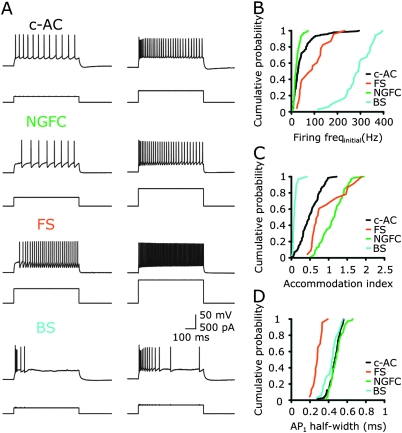
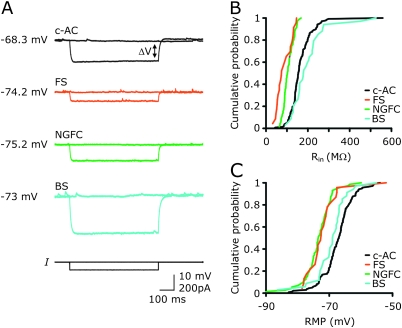
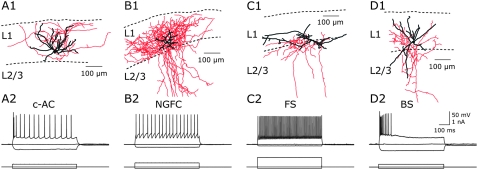
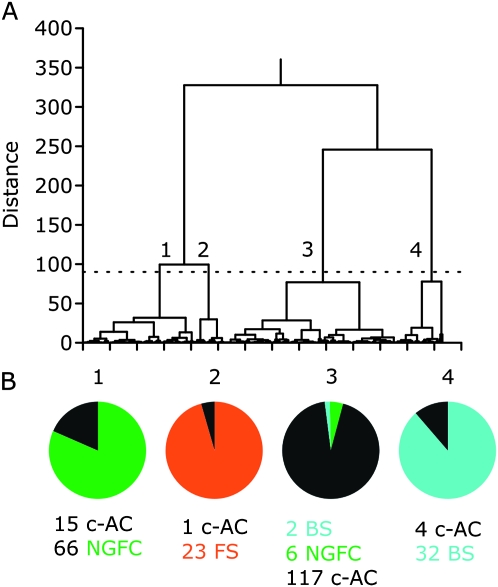
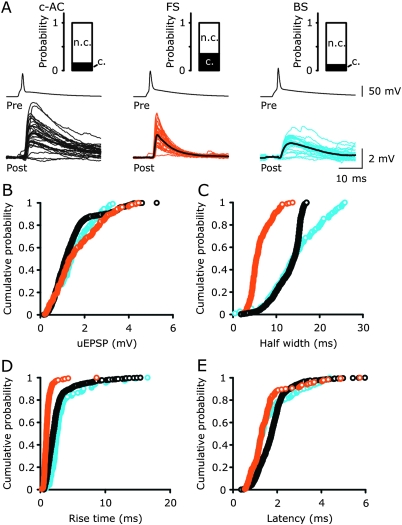
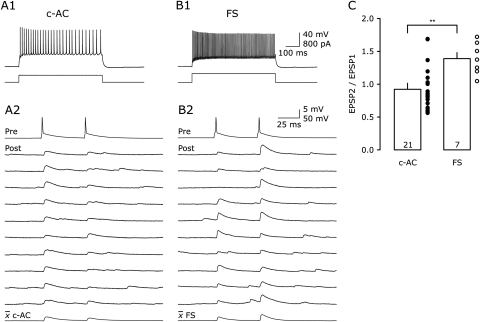
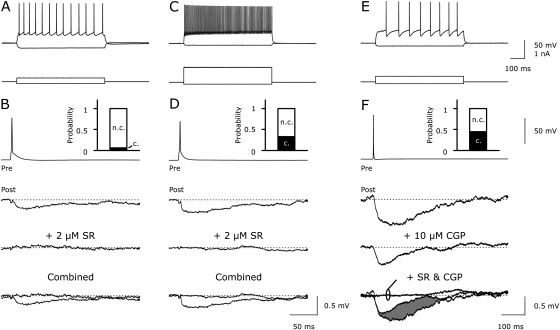
Understanding the structure and function of the neocortical microcircuit requires a description of the synaptic connectivity between identified neuronal populations. Here, we investigate the electrophysiological properties of layer 1 (L1) neurons of the rat somatosensory neocortex (postnatal day 24-36) and their synaptic connectivity with supragranular pyramidal neurons. The active and passive properties of visually identified L1 neurons (n = 266) suggested division into 4 groups according to the Petilla classification scheme with characteristics of neurogliaform cells (NGFCs) (n = 72), classical-accommodating (n = 137), fast-spiking (n = 23), and burst-spiking neurons (n = 34). Anatomical reconstructions of L1 neurons supported the existence of 4 major neuronal groups. Multiparameter unsupervised cluster analysis confirmed the existence of 4 groups, revealing a high degree of similarity with the Petilla scheme. Simultaneous recordings between synaptically connected L1 neurons and L2/3 pyramidal neurons (n = 384) demonstrated neuronal class specificity in both excitatory and inhibitory connectivity and the properties of synaptic potentials. Notably, all groups of L1 neurons received monosynaptic excitatory input from L2/3 pyramidal neurons (n = 33), with the exception of NGFCs (n = 68 pairs tested). In contrast, NGFCs strongly inhibited L2/3 pyramidal neurons (n = 12 out 27 pairs tested). These data reveal a high specificity of excitatory and inhibitory connections in the superficial layers of the neocortex.
Overview
The claims and statistics of this paper haven’t been checked yet.
Free: it reads the open-access text and checks the first 5 claims that cite a source we can check. Create a free account to check every claim.
Integrity signals
Registry
Cites
Statistics
Figures
Verification
Claims the paper makes
The claims and statistics of this paper haven’t been checked yet.
Free: it reads the open-access text and checks the first 5 claims that cite a source we can check. Create a free account to check every claim.
Claims other papers make about this one
Each is checked against this paper’s own text: does it say what the citing paper says it does?
The cited source says what the claim attributes to it.
In the citing paper
“Simultaneous whole cell patch clamp recordings show that they provide strong monosynaptic inhibition to L2/3 pyramidal cells, whose apical dendrites project into L1 (Chu et al., 2003; Wozny and Williams, 2011).”
From Canonical Microcircuits for Predictive Coding (2012) · cites this paper as Wozny and Williams, 2011
Self-check
Percentages, sums and reported differences re-computed from the paper’s own numbers.
The self-check needs the paper’s full text.
Citations
Cites
The Rat Brain in Stereotaxic Coordinates
(1982) · Elsevier eBooks · doi:10.1016/c2009-0-63235-9 · Cited by 51,963
Hierarchical Grouping to Optimize an Objective Function
Ward, J. H. (1963) · Journal of the American Statistical Association · doi:10.1080/01621459.1963.10500845 · Cited by 20,598
AChE-stained horizontal sections of the rat brain in stereotaxic coordinates
Paxinos, G., Watson, C. R. R., & Emson, P. C. (1980) · Journal of Neuroscience Methods · doi:10.1016/0165-0270(80)90021-7 · Cited by 4,497
Interneurons of the neocortical inhibitory system
Markram, H., Toledo-Rodriguez, M., Wang, Y., Gupta, A., Silberberg, G., & Wu, C. (2004) · Nature Reviews Neuroscience · doi:10.1038/nrn1519 · Cited by 2,954 · cited 2×
“The distribution of interneuron classes, however, differs across neocortical layers (Markram et al. 2004; Ascoli et al. 2008).”
BackgroundThe columnar organization of the neocortex
Mountcastle, V. (1997) · Brain · doi:10.1093/brain/120.4.701 · Cited by 2,247
Variations on an inhibitory theme: phasic and tonic activation of GABAA receptors
Farrant, M., & Nusser, Z. (2005) · Nature Reviews Neuroscience · doi:10.1038/nrn1625 · Cited by 2,081 · cited 2×
“As the rise time of uIPSPs also depends on the subunit composition of postsynaptic GABAA receptors, it is, however, possible that GABAA receptor composition may influence these findings (Farrant and Nusser 2005).”
BackgroundNeuronal Diversity and Temporal Dynamics: The Unity of Hippocampal Circuit Operations
Klausberger, T., & Somogyi, P. (2008) · Science · doi:10.1126/science.1149381 · Cited by 2,050 · cited 1×
“For example, classes of cortical interneurons target the axon initial segment, perisomatic regions, or the distal dendrites of pyramidal neurons (Markram et al. 2004; Pouille and Scanziani 2004; Ascoli et al. 2008; Klausberger and Somogyi 2008).”
BackgroundNEURONAL CIRCUITS OF THE NEOCORTEX
Douglas, R. J., & Martin, K. A. C. (2004) · Annual Review of Neuroscience · doi:10.1146/annurev.neuro.27.070203.144152 · Cited by 1,886
Abbott, L. F., & Regehr, W. G. (2004) · Nature · doi:10.1038/nature03010 · Cited by 1,684 · cited 1×
“The amplitude of the second uPSP was measured over a window centered around peak amplitude relative to the subtracted trace.”
MethodTsodyks, M. V., & Markram, H. (1997) · Proceedings of the National Academy of Sciences · doi:10.1073/pnas.94.2.719 · Cited by 1,603
Cited by
Canonical Microcircuits for Predictive Coding
Bastos, A. M., Usrey, W. M., Adams, R. A., Mangun, G. R., Fries, P., & Friston, K. J. (2012) · Neuron · doi:10.1016/j.neuron.2012.10.038 · Cited by 2,421
“Feedback extrinsic connections are inhibitory (Murphy and Sillito, 1987; Sillito et al., 1993; Chu et al., 2003; Olsen et al., 2012; Meyer et al., 2011; Wozny and Williams, 2011).”
BackgroundGABAergic Interneurons in the Neocortex: From Cellular Properties to Circuits
Tremblay, R., Lee, S., & Rudy, B. (2016) · Neuron · doi:10.1016/j.neuron.2016.06.033 · Cited by 2,033
A disinhibitory microcircuit for associative fear learning in the auditory cortex
Letzkus, J. J., Wolff, S. B. E., Meyer, E. M. M., Tovote, P., Courtin, J., Herry, C., & Lüthi, A. (2011) · Nature · doi:10.1038/nature10674 · Cited by 840
Principles of connectivity among morphologically defined cell types in adult neocortex
Jiang, X., Shen, S., Cadwell, C. R., Berens, P., Sinz, F., Ecker, A. S., Patel, S., & Tolias, A. S. (2015) · Science · doi:10.1126/science.aac9462 · Cited by 908
“First, NGCs received very little input from local excitatory neurons (33).”
A cellular mechanism for cortical associations: an organizing principle for the cerebral cortex
Larkum, M. (2013) · Trends in Neurosciences · doi:10.1016/j.tins.2012.11.006 · Cited by 755
Disinhibition, a Circuit Mechanism for Associative Learning and Memory
Letzkus, J. J., Wolff, S. B. E., & Lüthi, A. (2015) · Neuron · doi:10.1016/j.neuron.2015.09.024 · Cited by 411
“Layer 1 contains two main types of interneurons, which are both depolarized from rest by acetylcholine acting on nicotinic receptors: interneurons with a simple axonal arbor (sometimes referred to as single bouquet cells) that preferentially contact deeper layer interneurons and neurogliaform cells displaying a dense…”
BackgroundNeural elements for predictive coding
Shipp, S. (2016) · Frontiers in Psychology · doi:10.3389/fpsyg.2016.01792 · Cited by 340
“…variety of excitatory, inhibitory and disinhibitory effects upon pyramidal cells – the latter reflecting the fact that some layer 1 interneurons inhibit other interneurons (Cauller, 1995; Chu et al., 2003; Shlosberg et al., 2006; Letzkus et al., 2011; Wozny and Williams, 2011; Jiang et al., 2013).”
BackgroundThe organization of two new cortical interneuronal circuits
Jiang, X., Wang, G., Lee, A. J., Stornetta, R. L., & Zhu, J. J. (2013) · Nature Neuroscience · doi:10.1038/nn.3305 · Cited by 338
Scaling down of balanced excitation and inhibition by active behavioral states in auditory cortex
Zhou, M., Liang, F., Xiong, X. R., Li, L., Li, H., Xiao, Z., Tao, H. W., & Zhang, L. I. (2014) · Nature Neuroscience · doi:10.1038/nn.3701 · Cited by 316
Repetition suppression and its contextual determinants in predictive coding
Auksztulewicz, R., & Friston, K. (2016) · Cortex · doi:10.1016/j.cortex.2015.11.024 · Cited by 307
“…activity in hierarchically lower areas (Murphy & Silito, 1987; Olsen, Bortone, Adesnik, & Scanziani, 2012; Silito, Cudeiro, & Murphy, 1993), possibly using poly-synaptic connections via inhibitory interneurons in Layer 1 (Chu, Galarreta, & Hestrin, 2003; Meyer et al., 2011; Wozny & Williams, 2011).”
Ibrahim, L. A., Mesik, L., Ji, X.-Y., Fang, Q., Li, H.-F., Li, Y.-T., Zingg, B., Zhang, L. I., & Tao, H. W. (2016) · Neuron · doi:10.1016/j.neuron.2016.01.027 · Cited by 299
The Cellular Basis of GABA B -Mediated Interhemispheric Inhibition
Palmer, L. M., Schulz, J. M., Murphy, S. C., Ledergerber, D., Murayama, M., & Larkum, M. E. (2012) · Science · doi:10.1126/science.1217276 · Cited by 284
Marek, R., Jin, J., Goode, T. D., Giustino, T. F., Wang, Q., Acca, G. M., Holehonnur, R., Ploski, J. E., Fitzgerald, P. J., Lynagh, T., et al. (2018) · Nature Neuroscience · doi:10.1038/s41593-018-0073-9 · Cited by 226
Four Unique Interneuron Populations Reside in Neocortical Layer 1
Schuman, B., Machold, R. P., Hashikawa, Y., Fuzik, J., Fishell, G. J., & Rudy, B. (2019) · The Journal of Neuroscience · doi:10.1523/jneurosci.1613-18.2018 · Cited by 184
“The c-AC population of Wozny and Williams (2011), the largest population in their study (52% of L1), likely included canopy and 7 cells, both of which have adapting or “classical accommodating” firing patterns (Gupta et al., 2000).”
BackgroundInfluentialPrediction and memory: A predictive coding account
Barron, H. C., Auksztulewicz, R., & Friston, K. (2020) · Progress in Neurobiology · doi:10.1016/j.pneurobio.2020.101821 · Cited by 220
Learning-Related Plasticity in Dendrite-Targeting Layer 1 Interneurons
Abs, E., Poorthuis, R. B., Apelblat, D., Muhammad, K., Pardi, M. B., Enke, L., Kushinsky, D., Pu, D.-L., Eizinger, M. F., Conzelmann, K.-K., et al. (2018) · Neuron · doi:10.1016/j.neuron.2018.09.001 · Cited by 215
“One distinguishing feature is the slow time course and strong GABAB receptor contribution of inhibition from L1 NDNF-INs, which is consistent with previous work on morphologically identified NGCs in L1 (Chu et al., 2003; Jiang et al., 2013, 2015; Palmer et al., 2012; Wozny and Williams, 2011) and other circuits (Tamás…”
BackgroundResultThalamic control of layer 1 circuits in prefrontal cortex
Cruikshank, S. J., Ahmed, O. J., Stevens, T. R., Patrick, S. L., Gonzalez, A. N., Elmaleh, M., & Connors, B. W. (2012) · The Journal of Neuroscience · doi:10.1523/jneurosci.3231-12.2012 · Cited by 212
“Unexpectedly, Interneurons of L1, which are believed to be exclusively GABAergic, are physiologically, morphologically, and neurochemically heterogeneous (Zhou and Hablitz, 1996a; Chu et al., 2003; Zhu and Zhu, 2004; Lee et al., 2010; Wozny and Williams, 2011).”
BackgroundResultInfluentialA blanket of inhibition: functional inferences from dense inhibitory connectivity
Karnani, M. M., Agetsuma, M., & Yuste, R. (2014) · Current Opinion in Neurobiology · doi:10.1016/j.conb.2013.12.015 · Cited by 188
Neuronal circuits in barrel cortex for whisker sensory perception
Staiger, J. F., & Petersen, C. C. H. (2021) · Physiological Reviews · doi:10.1152/physrev.00019.2019 · Cited by 165
Cell-type-specific modulation of neocortical activity by basal forebrain input
Alitto, H. J., & Dan, Y. (2013) · Frontiers in Systems Neuroscience · doi:10.3389/fnsys.2012.00079 · Cited by 153
“This is consistent with the recent finding that only a subset of layer 1 interneurons receive excitatory input from layer 2/3 (Wozny and Williams, 2011).”
BackgroundResultInfluentialNeurogliaform cells in cortical circuits
Overstreet-Wadiche, L., & McBain, C. J. (2015) · Nature Reviews Neuroscience · doi:10.1038/nrn3969 · Cited by 152
Neocortical Layer 1: an elegant solution to top-down and bottom-up integration
Schuman, B., Dellal, S., Prönneke, A., Machold, R., & Rudy, B. (2021) · Annual Review of Neuroscience · doi:10.1146/annurev-neuro-100520-012117 · Cited by 148
Inhibitory Interneurons and their Circuit Motifs in the Many Layers of the Barrel Cortex
Feldmeyer, D., Qi, G., Emmenegger, V., & Staiger, J. F. (2017) · Neuroscience · doi:10.1016/j.neuroscience.2017.05.027 · Cited by 154
A Laminar Organization for Selective Cortico-Cortical Communication
D’Souza, R. D., & Burkhalter, A. (2017) · Frontiers in Neuroanatomy · doi:10.3389/fnana.2017.00071 · Cited by 138
“…likely candidates responsible for inhibitory control within layer 1 are the interneurons residing within the layer itself (Letzkus et al., 2011; Wozny and Williams, 2011; Jiang et al., 2013) as well as interneurons in the lower layers, such as the SST-expressing Martinotti cells, that project…”
BackgroundMediodorsal and Ventromedial Thalamus Engage Distinct L1 Circuits in the Prefrontal Cortex
Anastasiades, P. G., Collins, D. P., & Carter, A. G. (2020) · Neuron · doi:10.1016/j.neuron.2020.10.031 · Cited by 148
Transcranial magnetic stimulation (TMS) inhibits cortical dendrites
Murphy, S. C., Palmer, L. M., Nyffeler, T., Müri, R. M., & Larkum, M. E. (2016) · eLife · doi:10.7554/elife.13598 · Cited by 136
“This form of dendritic inhibition arises from the metabotropic inactivation of L-type (Ca v 1) channels in the apical dendrite that underlie the dendritic Ca 2+ activity ( Wozny and Williams, 2011 ) and can last several hundred milliseconds ( Pe´rez-Garci et al., 2006 ).”
BackgroundState-dependent function of neocortical chandelier cells
Woodruff, A. R., McGarry, L. M., Vogels, T. P., Inan, M., Anderson, S. A., & Yuste, R. (2011) · The Journal of Neuroscience · doi:10.1523/jneurosci.3894-11.2011 · Cited by 115
“…interneuron types are Martinotti cells (Silberberg and Markram, 2007; Murayama et al., 2009), whose axons extend to Layer 1 from cell bodies in deeper layers, and neurogliaform cells (Wozny and Williams, 2011), which have dense local axons and whose cell bodies are routinely found in Layer 1.”
BackgroundState-dependent function of neocortical chandelier cells
Woodruff, A. R., Vogels, T. P., McGarry, L. M., Inan, M., Anderson, S. A., & Yuste, R. (2010) · Columbia Academic Commons (Columbia University) · doi:10.7916/d8416wck · Cited by 111
Lee, A. J., Wang, G., Jiang, X., Johnson, S. M., Hoang, E. T., Lanté, F., Stornetta, R. L., Beenhakker, M. P., Shen, Y., & Julius Zhu, J. (2015) · Cerebral Cortex · doi:10.1093/cercor/bhu020 · Cited by 94
“The cortical L1 consists of sparsely distributed GABAergic interneurons that have somewhat overlapping electrophysiological properties (Chu et al. 2003; Zhu and Zhu 2004; Kubota et al. 2011; Wozny and Williams 2011; Cruikshank et al. 2012; Jiang et al. 2013; Ma et al. 2013).”
BackgroundResultLayer I Interneurons Sharpen Sensory Maps during Neonatal Development
Che, A., Babij, R., Iannone, A. F., Fetcho, R. N., Ferrer, M., Liston, C., Fishell, G., & De Marco García, N. V. (2018) · Neuron · doi:10.1016/j.neuron.2018.06.002 · Cited by 91
“Dampening of Thalamic Inputs to 5HT3aR Re Interneurons Causes Aberrant Activation of Superficial Pyramidal Cells Since superficial 5HT3aR Re interneurons innervate layer II/III pyramidal cells in mature animals (Cruikshank et al., 2012; Jiang et al., 2015, 2013; Lee et al., 2015; Wozny and Williams, 2011) and can inhi…”
Chartrand, T., Dalley, R., Close, J., Goriounova, N. A., Lee, B. R., Mann, R., Miller, J. A., Molnar, G., Mukora, A., Alfiler, L., et al. (2023) · Science · doi:10.1126/science.adf0805 · Cited by 88
Activity-Dependent Modulation of Layer 1 Inhibitory Neocortical Circuits by Acetylcholine
Brombas, A., Fletcher, L. N., & Williams, S. R. (2014) · The Journal of Neuroscience · doi:10.1523/jneurosci.4470-13.2014 · Cited by 86
“…apical dendritic inhibition to layer 2/3 and layer 5 pyramidal neurons by the activation of GABAB receptors (Tamás et al., 2003; Oláh et al., 2009; Wozny and Williams, 2011; Palmer et al., 2012; Jiang et al., 2013), whereas other classes of layer 1 interneurons predominately disinhibit…”
BackgroundMethodResultInfluentialSelf-citationInhibitory Regulation of Dendritic Activity in vivo
Palmer, L., Murayama, M., & Larkum, M. (2012) · Frontiers in Neural Circuits · doi:10.3389/fncir.2012.00026 · Cited by 83
“Because of this arrangement, they can only provide inhibition to other interneurons within L1 (Oláh et al., 2007, 2009) or to the distal dendrites of pyramidal neurons (Oláh et al., 2007; Wozny and Williams, 2011).”
InfluentialAdult cortical plasticity depends on an early postnatal critical period
Greenhill, S. D., Juczewski, K., de Haan, A. M., Seaton, G., Fox, K., & Hardingham, N. R. (2015) · Science · doi:10.1126/science.aaa8481 · Cited by 76
Functional diversity of supragranular GABAergic neurons in the barrel cortex
Gentet, L. J. (2012) · Frontiers in Neural Circuits · doi:10.3389/fncir.2012.00052 · Cited by 76
Rapid Neuromodulation of Layer 1 Interneurons in Human Neocortex
Poorthuis, R. B., Muhammad, K., Wang, M., Verhoog, M. B., Junek, S., Wrana, A., Mansvelder, H. D., & Letzkus, J. J. (2018) · Cell Reports · doi:10.1016/j.celrep.2018.03.111 · Cited by 72
Karnani, M. M., Szabó, G., Erdélyi, F., & Burdakov, D. (2013) · The Journal of Physiology · doi:10.1113/jphysiol.2012.243493 · Cited by 67
“…to describe the main changes along these continua we imposed on the data the standard electrophysiological subtype classification scheme used on inhibitory interneurons in other brain areas (Kawaguchi, 1995; Markram et al. 2004; Ascoli et al. 2008; Young & Sun, 2009; Wozny & Williams, 2011).”
BackgroundMethodResultInfluentialSynaptic and cellular organization of layer 1 of the developing rat somatosensory cortex
Muralidhar, S., Wang, Y., & Markram, H. (2014) · Frontiers in Neuroanatomy · doi:10.3389/fnana.2013.00052 · Cited by 67
“More recent data comes from a study by Williams et al. (Wozny and Williams, 2011) where the L1 cells from the adult rat SSC (P24–P36) were classified into 3 major morphological classes.”
BackgroundMethodInfluentialDevelopment of Layer 1 Neurons in the Mouse Neocortex
Ma, J., Yao, X.-H., Fu, Y., & Yu, Y.-C. (2014) · Cerebral Cortex · doi:10.1093/cercor/bht114 · Cited by 59
Morphological Diversity Strongly Constrains Synaptic Connectivity and Plasticity
Reimann, M. W., Horlemann, A.-L., Ramaswamy, S., Muller, E. B., & Markram, H. (2017) · Cerebral Cortex · doi:10.1093/cercor/bhx150 · Cited by 58
“…connectivity (Bannister 2005; Shepherd et al. 2005; Helmstaedter et al. 2008), nonrandom “targeting” of individual neuron types (Callaway 2002; Watts and Thomson 2005; Yoshimura and Callaway 2005; Wozny and Williams 2011), and clustering of connectivity (Song et al. 2005; Perin et al. 2011).”
BackgroundAnstötz, M., Cosgrove, K. E., Hack, I., Mugnaini, E., Maccaferri, G., & Lübke, J. H. R. (2013) · Brain Structure and Function · doi:10.1007/s00429-013-0627-2 · Cited by 73
“GABAergic interneurons (see also Kubota et al. 2011; Wozny and Williams 2011; Jiang et al. 2013) at this time window (P7–P11) are densely packed in layer 1 intermingled with the population of CR cells and sometimes showed cluster-like arrangements around CR cells (Fig.”
BackgroundMethodInfluentialVenkatesan, K., Liu, Y., & Goldfarb, M. P. (2014) · Journal of Neuroscience · doi:10.1523/jneurosci.1271-14.2014 · Cited by 66
“…during the current injection period, but with gradually increasing interspike intervals, while in burst accommodation, an accommodation phase of several spikes is followed by a long period devoid of firing (Gupta et al., 2000; Y. Wang et al., 2004; Aracri et al., 2006; Wozny and Williams, 2011).”
BackgroundCraig, M. T., Mayne, E. W., Bettler, B., Paulsen, O., & McBain, C. J. (2013) · The Journal of Physiology · doi:10.1113/jphysiol.2012.248088 · Cited by 56
“Neurogliaform cells are present in layer 1 of the neocortex (Hestrin & Armstrong, 1996), where they receive little or no input from superficial pyramidal cells but can exert an inhibitory influence over both excitatory (Wozny & Williams, 2011) and inhibitory C© 2013 The Authors.”
BackgroundCortical Output Is Gated by Horizontally Projecting Neurons in the Deep Layers
Egger, R., Narayanan, R. T., Guest, J. M., Bast, A., Udvary, D., Messore, L. F., Das, S., de Kock, C. P. J., & Oberlaender, M. (2019) · Neuron · doi:10.1016/j.neuron.2019.10.011 · Cited by 58
“…to 0 mV, that of GABAARs to 75 mV. Rise and decay time constants of AMPARs were set to 0.1 ms and 2 ms, respectively (Feldmeyer et al., 2002); those of NMDARs to 2 ms and 26 ms, respectively (Feldmeyer et al., 2002); and those of GABAARs to 1 ms and 20 ms, respectively (Wozny and Williams, 2011).”
BackgroundInfluentialCepeda, C., André, V., Hauptman, J. S., Yamazaki, I., Huynh, M. N., Chang, J. W., Chen, J., Fisher, R. S., Vinters, H. V., Levine, M. S., et al. (2011) · Neurobiology of Disease · doi:10.1016/j.nbd.2011.08.015 · Cited by 59
“Thus, in pediatric CDIIB cases cortical cellular hyperexcitability cannot be due to decreased GABAergic inputs or GABAA receptor sensitivity alone.”
BackgroundInfluentialSteyn‐Ross, M. L., Steyn‐Ross, D. A., & Sleigh, J. W. (2013) · Physical Review X · doi:10.1103/physrevx.3.021005 · Cited by 68
Wester, J. C., & McBain, C. J. (2014) · Current Opinion in Neurobiology · doi:10.1016/j.conb.2014.07.007 · Cited by 56
Neurogliaform cells of amygdala: a source of slow phasic inhibition in the basolateral complex
Mańko, M., Bienvenu, T. C. M., Dalezios, Y., & Capogna, M. (2012) · The Journal of Physiology · doi:10.1113/jphysiol.2012.236745 · Cited by 51
“…Karayannis et al. 2010; Armstrong et al. 2011; Markwardt et al. 2011), neocortex (Tamas et al. 2003; Olah et al. 2007, 2009; Szabadics et al. 2007; Wozny & Williams, 2011; Suzuki & Bekkers, 2012), striatum (Ibanez-Sandoval et al. 2011; English et al. 2012), thalamus (Huntsman et al. 1999;…”
Craig, M. T., & McBain, C. J. (2014) · Current Opinion in Neurobiology · doi:10.1016/j.conb.2013.10.002 · Cited by 51
The yin and yang of cortical layer 1
Larkum, M. E. (2013) · Nature Neuroscience · doi:10.1038/nn.3317 · Cited by 59
Neuronal d-serine regulates dendritic architecture in the somatosensory cortex
Balu, D. T., & Coyle, J. T. (2012) · Neuroscience Letters · doi:10.1016/j.neulet.2012.04.020 · Cited by 50
“For example, evidence suggests that the majority of L1 interneurons inhibit L2/3 pyramidal neurons at the level of the apical dendritic arbor [40].”
BackgroundMining the jewels of the cortex’s crowning mystery
Ibrahim, L. A., Schuman, B., Bandler, R. C., Rudy, B., & Fishell, G. (2020) · Current Opinion in Neurobiology · doi:10.1016/j.conb.2020.04.005 · Cited by 51
Layer-specific regulation of cortical neurons by interhemispheric inhibition
Palmer, L. M., Schulz, J. M., & Larkum, M. E. (2013) · Communicative & Integrative Biology · doi:10.4161/cib.23545 · Cited by 46
Cortical astrocytes prime the induction of spine plasticity and mirror image pain
Ishikawa, T., Eto, K., Kim, S. K., Wake, H., Takeda, I., Horiuchi, H., Moorhouse, A. J., Ishibashi, H., & Nabekura, J. (2018) · Pain · doi:10.1097/j.pain.0000000000001248 · Cited by 47
Disentangling neuronal inhibition and inhibitory pathways in the lateral habenula
Webster, J. F., Vroman, R., Balueva, K., Wulff, P., Sakata, S., & Wozny, C. (2020) · Scientific Reports · doi:10.1038/s41598-020-65349-7 · Cited by 42
“Immunohistochemistry and neuronal recovery Following electrophysiological recordings, slices containing neurons which had been patched and filled with biocytin were processed as previously described (Wozny and Williams, 2011).”
MethodSelf-citationLaw, R. G., Pugliese, S., Shin, H., Sliva, D. D., Lee, S., Neymotin, S., Moore, C., & Jones, S. R. (2022) · Cerebral Cortex · doi:10.1093/cercor/bhab221 · Cited by 41
Farinella, M., Ruedt, D. T., Gleeson, P., Lanore, F., & Silver, R. A. (2014) · PLoS Computational Biology · doi:10.1371/journal.pcbi.1003590 · Cited by 45
“Our simulations suggest that slow GABAB-mediated inhibition arising from NGF cells [61,62,65] is particularly effective at truncating NMDAR spikes and reducing dendritic gain.”
BackgroundJouhanneau, J.-S., & Poulet, J. F. A. (2019) · Frontiers in Synaptic Neuroscience · doi:10.3389/fnsyn.2019.00015 · Cited by 39
Kirkcaldie, M. (2011) · Elsevier eBooks · doi:10.1016/b978-0-12-369497-3.10004-4 · Cited by 49
Electrical coupling regulates layer 1 interneuron microcircuit formation in the neocortex
Yao, X.-H., Wang, M., He, X.-N., He, F., Zhang, S.-Q., Lu, W., Qiu, Z., & Yu, Y. (2016) · Nature Communications · doi:10.1038/ncomms12229 · Cited by 38
Luo, H., Hasegawa, K., Liu, M., & Song, W. (2017) · Frontiers in Neuroanatomy · doi:10.3389/fnana.2017.00115 · Cited by 42
Castejon, C., Barros-Zulaica, N., & Núñez, Á. (2016) · PLoS ONE · doi:10.1371/journal.pone.0148169 · Cited by 43
VGLUT2 Functions as a Differential Marker for Hippocampal Output Neurons
Wozny, C., Beed, P. S., Nitzan, N., Pössnecker, Y., Rost, B. R., & Schmitz, D. (2018) · Frontiers in Cellular Neuroscience · doi:10.3389/fncel.2018.00337 · Cited by 35
“Histology Slices were fixed overnight, washed with phosphate buffered saline (PBS), processed, and mounted on a slide using previously published protocols (Wozny and Williams, 2011).”
MethodSelf-citationLayer 1 of somatosensory cortex: an important site for input to a tiny cortical compartment
Ledderose, J. M. T., Zolnik, T. A., Toumazou, M., Trimbuch, T., Rosenmund, C., Eickholt, B. J., Jaeger, D., Larkum, M. E., & Sachdev, R. N. S. (2023) · Cerebral Cortex · doi:10.1093/cercor/bhad371 · Cited by 40
Hackett, T. A., Clause, A. R., Takahata, T., Hackett, N., & Polley, D. B. (2015) · Brain Structure and Function · doi:10.1007/s00429-015-1062-3 · Cited by 36
“Locally, within columns, the axons of subpopulations of VGluT1 cells in L2–4 reach L1 (Callaway 2002; Ojima et al. 1991; Wallace et al. 1991b; Wozny and Williams 2011) and blend with convergent CC inputs from both hemispheres.”
BackgroundPreserving Inhibition during Developmental Hearing Loss Rescues Auditory Learning and Perception
Mowery, T. M., Caras, M. L., Hassan, S. I., Wang, D. J., Dimidschstein, J., Fishell, G., & Sanes, D. H. (2019) · Journal of Neuroscience · doi:10.1523/jneurosci.0749-19.2019 · Cited by 33
“21 dependent IPSPs (Tamás et al., 2003; Oláh et al., 2007; Wozny and Williams, 2011; Chittajallu 602 et al., 2013; Jiang et al., 2013), it is possible that synapses from this class of interneurons onto 603 ACx layer 2/3 pyramidal neurons are weakened by developmental deprivation, similar to 604”
BackgroundMethodMechanisms of Cortical Differentiation
Adnani, L., Han, S., Li, S., Mattar, P. A., & Schuurmans, C. (2017) · International review of cytology · doi:10.1016/bs.ircmb.2017.07.005 · Cited by 41
Egger, R., Schmitt, A. C., Wallace, D. J., Sakmann, B. J., Oberlaender, M., & Kerr, J. N. D. (2015) · Proceedings of the National Academy of Sciences · doi:10.1073/pnas.1518773112 · Cited by 33
Garcia, L. P., Witteveen, J. S., Middelman, A., van Hulten, J. A., Martens, G. J. M., Homberg, J. R., & Kolk, S. M. (2019) · Molecular Neurobiology · doi:10.1007/s12035-018-1105-x · Cited by 28
Emmenegger, V., Qi, G., Wang, H., & Feldmeyer, D. (2018) · Cerebral Cortex · doi:10.1093/cercor/bhx352 · Cited by 26
Id2 GABAergic interneurons comprise a neglected fourth major group of cortical inhibitory cells
Machold, R. P., Dellal, S. S., Valero, M., Zurita, H., Kruglikov, I., Meng, J. H., Hanson, J. L., Hashikawa, Y., Schuman, B., Buzsáki, G., et al. (2023) · eLife · doi:10.7554/elife.85893 · Cited by 26
“Action potentials in NGFCs have a large AHP and a slow ADP ( Schuman et al., 2019 ; Tamás et al., 2003 ; Oláh et al., 2009 ; Hestrin and Armstrong, 1996 ; Wozny and Williams, 2011 ; Kawaguchi, 1995 ).”
Vandrey, B., Armstrong, J., Brown, C. M., Garden, D. L. F., & Nolan, M. F. (2022) · eLife · doi:10.7554/elife.83008 · Cited by 30
Convergent synaptic inputs to layer 1 cells of mouse cortex
Lam, Y., & Sherman, S. M. (2019) · European Journal of Neuroscience · doi:10.1111/ejn.14324 · Cited by 44
“…among themselves (Chu et al., 2003) and they provide inhibitory input to apical tufts of layers 2/3 and 5 pyramidal cells and to other cells of layers 2/3, forming different types of canonical microcircuits with neurons in these layers (Jiang et al., 2013; Lee et al., 2015; Wozny & Williams, 2011).”
BackgroundInfluentialBasal ganglia—thalamus and the “crowning enigma”
Garcia-Munoz, M., & Arbuthnott, G. W. (2015) · Frontiers in Neural Circuits · doi:10.3389/fncir.2015.00071 · Cited by 28
HCN Channel Modulation of Synaptic Integration in GABAergic Interneurons in Malformed Rat Neocortex
Albertson, A. J., Bohannon, A. S., & Hablitz, J. J. (2017) · Frontiers in Cellular Neuroscience · doi:10.3389/fncel.2017.00109 · Cited by 28
“…(Kawaguchi, 1995; Tamás et al., 2003; Povysheva et al., 2007), have a large number of primary dendrites emanating from a small round soma (Karagiannis et al., 2009; Wozny and Williams, 2011) and produce both GABAA and GABAB receptor mediated responses in pyramidal cells (Simon et al., 2005).”
BackgroundmGlu1α-dependent recruitment of excitatory GABAergic input to neocortical Cajal-Retzius cells
Cosgrove, K. E., & Maccaferri, G. (2012) · Neuropharmacology · doi:10.1016/j.neuropharm.2012.04.025 · Cited by 28
Isbister, J. B., Ecker, A., Pokorny, C., Bolaños‐Puchet, S., Santander, D. E., Arnaudon, A., Awile, O., Barros-Zulaica, N., Alonso, J. B., Boci, E., et al. (2026) · eLife · doi:10.1101/2023.05.17.541168 · Cited by 28
Inhibitory plasticity in layer 1 – dynamic gatekeeper of neocortical associations
Hartung, J., & Letzkus, J. J. (2020) · Current Opinion in Neurobiology · doi:10.1016/j.conb.2020.06.003 · Cited by 23
A ‘Marginal’ tale: the development of the neocortical layer 1
Gesuita, L., & Karayannis, T. (2020) · Current Opinion in Neurobiology · doi:10.1016/j.conb.2020.09.002 · Cited by 21
“…spiking eNGFC (typ e 1) Tasic et al. (2018) Jiang et al. (2015) Tasic et al. (2016) Cadwell et al. (2016) Niquill e et al. (2018) Wozny and Williams (2011) Schuma n et al. (2019) NGFC (NDNF+; NPY+) Hmx3; tdTOM+/ Htr3a-GFP+ (Type 1A) Hmx3; tdTOM+/ Htr3a-GFP+ (Type 1B) Hmx3;…”
Active Inference, Predictive Coding and Cortical Architecture
Adams, R. A., Friston, K. J., & Bastos, A. M. (2015) · Springer eBooks · doi:10.1007/978-94-017-9900-3_7 · Cited by 23
Takahashi, H., Shiramatsu, T. I., Hitsuyu, R., Ibayashi, K., & Kawai, K. (2020) · Scientific Reports · doi:10.1038/s41598-020-65745-z · Cited by 19
Regulation of epileptiform discharges in rat neocortex by HCN channels
Albertson, A. J., Williams, S. B., & Hablitz, J. J. (2013) · Journal of Neurophysiology · doi:10.1152/jn.00955.2012 · Cited by 19
“Paired-recording experiments indicate that a single pyramidal cell axon can evoke 1-to 5-mV EPSPs in FS interneurons (Ali et al. 1998; Berger et al. 2010; Galarreta and Hestrin 2001; Povysheva et al. 2006; Wozny and Williams 2011).”
Self-citationCortical Representation of Touch in Silico
Huang, C., Zeldenrust, F., & Celikel, T. (2022) · Neuroinformatics · doi:10.1007/s12021-022-09576-5 · Cited by 19
“…et al., 2003), SST+ Martinotti neurons (Fino and Yuste, 2011; Kapfer et al., 2007; Wang et al., 2004) , Neurogliaform cells (Tamás et al., 2003; Wozny and Williams, 2011), CR+ bipolar neurons (Caputi et al., 2009; Xu et al., 2006), CR+/VIP+ multipolar neurons (Caputi et al., 2009) and…”
BackgroundHay, Y. A., Naudé, J., Fauré, P., & Lambolez, B. (2018) · Cerebral Cortex · doi:10.1093/cercor/bhy148 · Cited by 11
Meningeal neutrophil immune signaling influences behavioral adaptation following threat
Wu, B., Meng, L., Zhao, Y., Li, J., Tian, Q., Pang, Y., Ren, C., & Dong, Z. (2024) · Neuron · doi:10.1016/j.neuron.2024.10.018 · Cited by 12
Damilou, A., Cai, L., Argunşah, A. Ö., Han, S., Kanatouris, G., Karatsoli, M., Hanley, O., Gesuita, L., Kollmorgen, S., Helmchen, F., et al. (2024) · Nature Communications · doi:10.1038/s41467-024-50658-6 · Cited by 12
NDNF is selectively expressed by neocortical, but not habenular neurogliaform cells
Webster, J. F., Vroman, R., Beerens, S., Sakata, S., & Wozny, C. (2021) · European Journal of Neuroscience · doi:10.1111/ejn.15237 · Cited by 11
“Following electrophysiological recordings, slices containing neurons which had been patched and filled with biocytin were processed as previously described (Wozny & Williams, 2011).”
BackgroundMethodInfluentialSelf-citationDevelopmental Changes in HCN Channel Modulation of Neocortical Layer 1 Interneurons
Bohannon, A. S., & Hablitz, J. J. (2018) · Frontiers in Cellular Neuroscience · doi:10.3389/fncel.2018.00020 · Cited by 12
“This finding is consistent with previous data suggesting the physiological properties of L1 INs can be used to identify discrete cell groups (Wozny and Williams, 2011; Jiang et al., 2013).”
ResultNdnf interneuron excitability is spared in a mouse model of Dravet syndrome
Liebergall, S. R., & Goldberg, E. M. (2024) · Journal of Neuroscience · doi:10.1523/jneurosci.1977-23.2024 · Cited by 12
Ozsvár, A., Komlósi, G., Oláh, G., Baka, J., Molnár, G., & Tamás, G. (2021) · eLife · doi:10.7554/elife.65634 · Cited by 9
“…by NGFCs controls the firing of dendritic spikes in the distal dendritic domain in pyramidal cells (PCs) (Larkum et al., 1999; Palmer et al., 2012a; Wozny and Williams, 2011) and activity in the prefrontal cortex is effectively controlled by the strong feed-forward GABAB inhibition mediated by…”
BackgroundResultSynaptic Microcircuits in the Barrel Cortex
Radnikow, G., Qi, G., & Feldmeyer, D. (2015) · Springer eBooks · doi:10.1007/978-1-4939-2975-7_4 · Cited by 10
Tracing nerve fibers with volume electron microscopy to quantitatively analyze brain connectivity
Turégano-López, M., Pozas, F. D. L., Santuy, A., Rodríguez, J., DeFelipe, J., & Merchán-Pérez, Á. (2024) · Communications Biology · doi:10.1038/s42003-024-06491-0 · Cited by 14
Ramos‐Moreno, T., & Clascá, F. (2013) · Brain Structure and Function · doi:10.1007/s00429-013-0591-x · Cited by 8
“Neurogliaform cells in layer I are scarce and have long been considered ideally positioned to control synaptic integration in apical tufts (Larkum et al. 2007; Wozny and Williams 2011).”
BackgroundLi, X., Chen, T., Descalzi, G., Koga, K., Qiu, S., & Zhuo, M. (2012) · Molecular Pain · doi:10.1186/1744-8069-8-53 · Cited by 8
“By recording sEPSCs, we found that nearly all of the neurons in LI receive synaptic input (data not shown), which is inconsistent with previous work showing that neurogliaform cells, did not receive monosynaptic excitatory input from LII/III pyramidal neurons [11].”
BackgroundResultIsbister, J. B., Ecker, A., Pokorny, C., Bolaños‐Puchet, S., Santander, D. E., Arnaudon, A., Awile, O., Barros-Zulaica, N., Alonso, J. B., Boci, E., et al. (2024) · eLife · doi:10.7554/elife.99693.1 · Cited by 13
Deciphering consciousness: The role of corticothalamocortical interactions in general anesthesia
Zhou, Y., Huang, S., Zhang, T., Deng, D., Huang, L., & Chen, X. (2025) · Pharmacological Research · doi:10.1016/j.phrs.2025.107593 · Cited by 9
Probing subicular inputs to the medial prefrontal cortex
Beerens, S., Vroman, R., Webster, J. F., & Wozny, C. (2021) · iScience · doi:10.1016/j.isci.2021.102856 · Cited by 9
Self-citationFeuerriegel, D., Churches, O. F., Coussens, S. W., & Keage, H. A. D. (2018) · Neuropsychologia · doi:10.1016/j.neuropsychologia.2018.11.010 · Cited by 11
“In this model reductions in responses of superficial pyramidal neurons (which signal prediction errors) occur via inhibitory lateral and feedback connections (Friston, 2005), for example via GABAergic inhibitory interneurons (Chu et al., 2003; Wozny and Williams, 2011).”
Steyn‐Ross, M. L., Steyn‐Ross, D. A., Voss, L. J., & SLEIGH, J. W. (2019) · Physical review. E · doi:10.1103/physreve.99.012318 · Cited by 7
Voltage Imaging of Cortical Oscillations in Layer 1 with Two-Photon Microscopy
Dalphin, N., Dorgans, K., Khaskin, E., & Kühn, B. (2020) · eNeuro · doi:10.1523/eneuro.0274-19.2020 · Cited by 7
“It is possible that a small population of fast-spiking interneurons exists in L1 (Wozny and Williams, 2011), although they are most likely chandelier cells, rather than the basket cells required for gamma generation (Bartos et al., 2007; Buzsáki and Wang, 2012).”
Background
Metadata
- Authors
- Wozny, C., & Williams, S. R.
- Affiliations
- MRC Laboratory of Molecular Biology (GB)
- Corresponding author
- Wozny, Christian
- Venue
- Cerebral Cortex
- Publisher
- Oxford University Press (OUP)
- Published
- 2011-01-10
- Volume
- 21
- Issue
- 8
- Pages
- 1818-1826
- ISSN
- 1047-3211 (ISSN-L)
- 1460-2199
- PMC
- PMC3138515
- OpenAlex
- W2159413089
- Semantic Scholar
- 90e49cee47c0f47750fb2ffd568fe2e3bd147844
- Cited by
- 129
- References
- 75
- Citations by year
- 2026: 2 · 2025: 5 · 2024: 8 · 2023: 5 · 2022: 7 · 2021: 9 · 2020: 10 · 2019: 4 · 2018: 12 · 2017: 8 · 2016: 9 · 2015: 11 · 2014: 12 · 2013: 11 · 2012: 12
- FWCI
- 5.16
- Type
- journal article
- Language
- en
- Open access
- hybrid
- doi.org
- Licence
- cc-by-nc
- Locations
- Cerebral Cortex (publishedVersion, cc-by-nc)
- PubMed Central (publishedVersion, cc-by-nc)
- PubMed (publishedVersion)
- Topics
- Life Sciences › Neuroscience › Cellular and Molecular Neuroscience › Neuroscience and Neuropharmacology Research
- Life Sciences › Neuroscience › Cognitive Neuroscience › Neural dynamics and brain function
- Life Sciences › Neuroscience › Cognitive Neuroscience › Memory and Neural Mechanisms
- Keywords
- layer 1 interneurons, layer 2/3 pyramidal neurons, synaptic connectivity, neurogliaform cells, fast-spiking interneurons, somatosensory cortex, monosynaptic inhibition, excitatory synaptic input, unsupervised clustering, rats
- MeSH terms
- Animals, Cell Communication, Interneurons, Neural Inhibition, Neural Pathways, Synaptic Transmission, Organ Culture Techniques, Somatosensory Cortex, Synapses, Rats, Wistar, Pyramidal Cells, Neocortex, Rats
About these checks
Registry, retraction, Cites and statistics results are computed, not judged, with one exception: a printed reference that no index lists is read once by a model before it counts as a citation error. Claims are extracted by a model and kept only when their quote appears verbatim in the text; each cited source is then checked, with a model’s help, for whether it says what the claim relies on. Those verdicts can be wrong — read the claim’s quote and the cited source before relying on one.
Statistics and arithmetic are recomputed, not judged.
Confidence bands are shown only for fields calibrated on our annotated test set. None is calibrated yet, so no band is shown.
What counts as a claim ›How we measure confidence ›How we check this ›
Are you an author, or do you see a problem with this page? Request a review
Data sources
Bibliographic data: Semantic Scholar, OpenAlex, Crossref.
Contains information from the Semantic Scholar Academic Graph Datasets, made available under the ODC Attribution License (ODC-BY 1.0).
Semantic Scholar’s data is described in: Kinney, R., et al. (2023). The Semantic Scholar Open Data Platform. arXiv:2301.10140.
