

Mendelian randomization with invalid instruments: effect estimation and bias detection through Egger regression
Open accessThe DOI matches its Crossref record; 50 of the 50 references it cites were found in a registry or an index.
Abstract
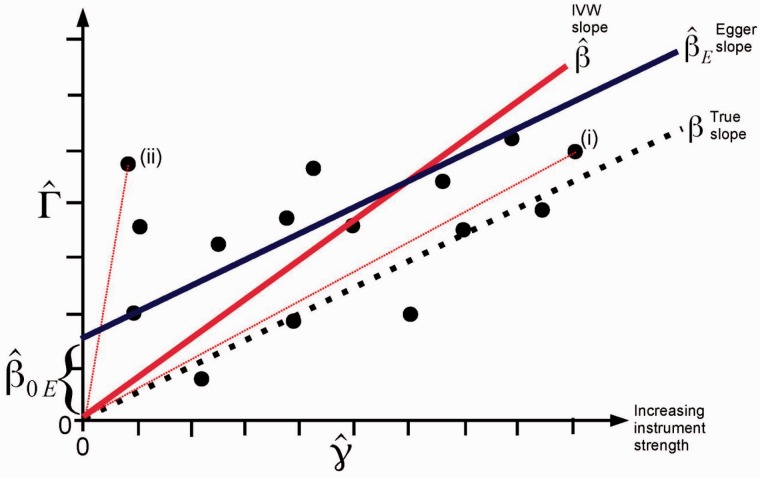
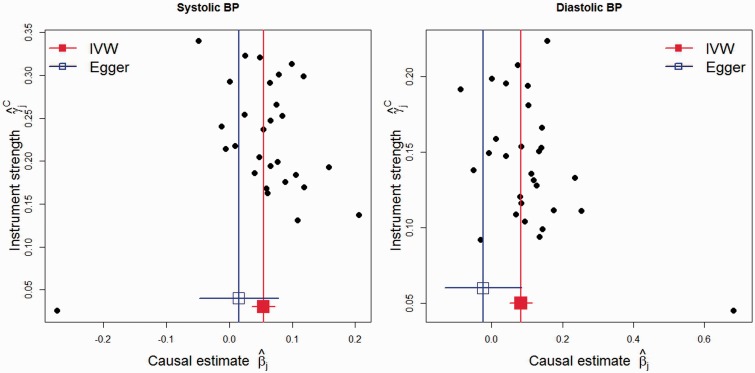
BACKGROUND: The number of Mendelian randomization analyses including large numbers of genetic variants is rapidly increasing. This is due to the proliferation of genome-wide association studies, and the desire to obtain more precise estimates of causal effects. However, some genetic variants may not be valid instrumental variables, in particular due to them having more than one proximal phenotypic correlate (pleiotropy). METHODS: We view Mendelian randomization with multiple instruments as a meta-analysis, and show that bias caused by pleiotropy can be regarded as analogous to small study bias. Causal estimates using each instrument can be displayed visually by a funnel plot to assess potential asymmetry. Egger regression, a tool to detect small study bias in meta-analysis, can be adapted to test for bias from pleiotropy, and the slope coefficient from Egger regression provides an estimate of the causal effect. Under the assumption that the association of each genetic variant with the exposure is independent of the pleiotropic effect of the variant (not via the exposure), Egger's test gives a valid test of the null causal hypothesis and a consistent causal effect estimate even when all the genetic variants are invalid instrumental variables. RESULTS: We illustrate the use of this approach by re-analysing two published Mendelian randomization studies of the causal effect of height on lung function, and the causal effect of blood pressure on coronary artery disease risk. The conservative nature of this approach is illustrated with these examples. CONCLUSIONS: An adaption of Egger regression (which we call MR-Egger) can detect some violations of the standard instrumental variable assumptions, and provide an effect estimate which is not subject to these violations. The approach provides a sensitivity analysis for the robustness of the findings from a Mendelian randomization investigation.
Overview
The claims and statistics of this paper haven’t been checked yet.
Free: it reads the open-access text and checks the first 5 claims that cite a source we can check. Create a free account to check every claim.
Integrity signals
Registry
Cites
Statistics
Figures


Verification
Claims the paper makes
The claims and statistics of this paper haven’t been checked yet.
Free: it reads the open-access text and checks the first 5 claims that cite a source we can check. Create a free account to check every claim.
Claims other papers make about this one
Each is checked against this paper’s own text: does it say what the citing paper says it does?
The cited source doesn’t support the claim as written.
In the citing paper
“These analyses showed no major deviations and did not change conclusions from the main instrumental variable findings.”
From Plasma levels of apolipoprotein E, APOE genotype, and all-cause and cause-specific mortality in 105 949 individuals from a white general population cohort (2019) · cites this paper as [67]
Checked by a reasoning model — may be wrong.
Experimental — accuracy not yet measuredThe source backs part of the claim, not all of it — or backs it for a different population, condition or comparison.
In the citing paper
“Similarly, violation of the ‘exclusion restriction criteria’33–37 could bias causal estimates in IV analyses when used to test effects of intermediates in RCTs or when used in observational data (including MR)”
From Triangulation in aetiological epidemiology (2017) · cites this paper as [36]
Experimental — accuracy not yet measuredThe source backs part of the claim, not all of it — or backs it for a different population, condition or comparison.
In the citing paper
“Furthermore the MR-Egger test, 9 which the authors used to test violation of the exclusion restriction criteria, cannot be used to differentiate effects of adult from child BMI, as Gao and colleagues acknowledge. This is because MR-Egger is only valid if the effect of the genetic instrument on the risk factor of interest is independent of its effect on any other phenotypes that might violate that”
From Commentary: Two-sample Mendelian randomization: opportunities and challenges (2016) · cites this paper as [9]
Experimental — accuracy not yet measuredThe source backs part of the claim, not all of it — or backs it for a different population, condition or comparison.
In the citing paper
“Egger MR was performed to determine the presence of unmeasured pleiotropy70.”
From Integrative genomic analyses identify candidate causal genes for calcific aortic valve stenosis involving tissue-specific regulation (2024) · cites this paper as [70]
Experimental — accuracy not yet measuredThe cited source says what the claim attributes to it.
In the citing paper
“Because MR is relatively novel there has been considerable focus on its limitations and methods for testing and dealing with these, in particular for dealing with violation of the exclusion restriction criteria due to genuine pleiotropy.36,37”
From Triangulation in aetiological epidemiology (2017) · cites this paper as [36]
8 more claims about this paper
Create a free account to see every claim other papers make about this one.
Self-check
Percentages, sums and reported differences re-computed from the paper’s own numbers.
The self-check needs the paper’s full text.
Citations
Cites
Measuring inconsistency in meta-analyses
Higgins, J. P. T., Thompson, S. G., Deeks, J. J., & Altman, D. G. (2003) · BMJ · doi:10.1136/bmj.327.7414.557 · Cited by 63,139
Bias in meta-analysis detected by a simple, graphical test
Egger, M., Smith, G. D., Schneider, M., & Minder, C. (1997) · BMJ · doi:10.1136/bmj.315.7109.629 · Cited by 56,722
Self-citationRegression shrinkage and selection via the lasso
Tibshirani, R. (1996) · Journal of the Royal Statistical Society Series B: Statistical Methodology · doi:10.1111/j.2517-6161.1996.tb02080.x · Cited by 51,482
Duval, S., & Tweedie, R. (2000) · Biometrics · doi:10.1111/j.0006-341x.2000.00455.x · Cited by 14,099
Borenstein, M., Hedges, L. V., Higgins, J. P. T., & Rothstein, H. R. (2021) · doi:10.1002/9781119558378 · Cited by 9,799
Sterne, J. A. C., Sutton, A. J., Ioannidis, J. P. A., Terrin, N., Jones, D. R., Lau, J., Carpenter, J., Rucker, G., Harbord, R. M., Schmid, C. H., et al. (2011) · BMJ · doi:10.1136/bmj.d4002 · Cited by 7,709 · cited 1×
“The general phenomenon is therefore prudently referred to under the umbrella term of ‘small study’ bias.(11,13,14) In the context of Mendelian randomization with multiple instruments, we equate the precision of a single study’s estimate with the strength of a single instrument.”
BackgroundInstrumental Variables Regression with Weak Instruments
Staiger, D., & Stock, J. H. (1997) · Econometrica · doi:10.2307/2171753 · Cited by 7,081
Mendelian Randomization Analysis With Multiple Genetic Variants Using Summarized Data
Burgess, S., Butterworth, A., & Thompson, S. G. (2013) · Genetic Epidemiology · doi:10.1002/gepi.21758 · Cited by 6,050 · cited 1×
“It has been shown that Mendelian randomization analyses based on summarized data are as efficient as those based on individual-level data.(23) Other tools from the meta-analysis literature include methods for bias adjustment, such as the trim-and-fill method,(45) and the use of pseudo-data.”
MethodSelf-citationDavey Smith, G., & Ebrahim, S. (2003) · International Journal of Epidemiology · doi:10.1093/ije/dyg070 · Cited by 5,882 · cited 2×
“We are particularly interested in the coverage properties of the estimators with a null causal effect, and the power of estimators with a positive causal effect, as salient findings from Mendelian randomization investigations are not only the magnitude of the causal effect—or indeed whether such can be estimated—but a…”
BackgroundInstrumental Variables Regression with Weak Instruments
Staiger, D., & Stock, J. (1994) · doi:10.3386/t0151 · Cited by 5,302 · cited 1×
“With many IVs in a one-sample setting (genetic variants, exposure and outcome measured in the same participants), IV estimates (particularly those from the TSLS method) are biased in the direction of the observational association between the exposure and the outcome.(49) This bias depends on the strength of the associ…”
Method
Research works printed but not linked: 12
- 2014, Human Molecular Genetics, 23, 89, 10.1093/hmg/ddu328 · DOI · Paper page
- 2010, Clinical Chemistry, 56, 723, 10.1373/clinchem.2009.141564 · DOI · Paper page
- 2015, International Journal of Epidemiology, 44, 496, 10.1093/ije/dyv071 · DOI · Paper page
- 2013, International Journal of Epidemiology, 42, 1157, 10.1093/ije/dyt110 · DOI · Paper page
- 2013, International Journal of Epidemiology, 42, 1497, 10.1093/ije/dyt179 · DOI · Paper page
- 2013, International Journal of Epidemiology, 42, 1134, 10.1093/ije/dyt093 · DOI · Paper page
- 2015, Statistics in medicine, 34, 454, 10.1002/sim.6358 · DOI · Paper page
- 2013, International Journal of Epidemiology, 42, 111, 10.1093/ije/dys064 · DOI · Paper page
- 2014, Economics and human biology, 13, 99, 10.1016/j.ehb.2013.12.002 · DOI · Paper page
- 2011, International Journal of Epidemiology, 40, 755, 10.1093/ije/dyr036 · DOI · Paper page
- 2013, American Journal of Epidemiology, 178, 1177, 10.1093/aje/kwt084 · DOI · Paper page
- Angrist J Pischke J-S Instrumental variables in action: sometimes you get whatyou need. In: Mostly Harmless Econometrics: An Empiricist’scompanion. Princeton, NJ: Princeton University Press, 2009.
Cited by
Items 101–200 of 1,058
Bayesian weighted Mendelian randomization for causal inference based on summary statistics
Zhao, J., Ming, J., Hu, X., Chen, G., Liu, J., & Yang, C. (2020) · Bioinformatics · doi:10.1093/bioinformatics/btz749 · Cited by 354
“(9) Then, according to LRVB, we can obtain the accurate estimate Σ̂ of the covariance matrix of sufficient statistics in BWMR by Σ̂ = −(H−V−1)−1 = (I−VH)−1V. (10) In summary, from VEM algorithm, we obtain the estimate of β as the mean of latent variable β under variational posterior distribution after the convergence…”
BackgroundMethodInfluentialOng, J., & MacGregor, S. (2019) · Genetic Epidemiology · doi:10.1002/gepi.22207 · Cited by 350
Genetic predisposition to mosaic Y chromosome loss in blood
International Lung Cancer Consortium (INTEGRAL-ILCCO), Thompson, D. J., The Breast Cancer Association Consortium, Consortium of Investigators of Modifiers of BRCA1/2, The Endometrial Cancer Association Consortium, The Ovarian Cancer Association Consortium, The Prostate Cancer Association Group to Investigate Cancer Associated Alterations in the Genome (PRACTICAL) Consortium, The Kidney Cancer GWAS Meta-Analysis Project, eQTLGen Consortium, Biobank-based Integrative Omics Study (BIOS) Consortium, et al. (2019) · Nature · doi:10.1038/s41586-019-1765-3 · Cited by 337
The use of two-sample methods for Mendelian randomization analyses on single large datasets
Minelli, C., Del Greco M., F., van der Plaat, D. A., Bowden, J., Sheehan, N. A., & Thompson, J. (2021) · International Journal of Epidemiology · doi:10.1093/ije/dyab084 · Cited by 328
Self-citationChen, L., Zhernakova, D. V., Kurilshikov, A., Andreu-Sánchez, S., Wang, D., Augustijn, H. E., Vich Vila, A., Study, L. C., Weersma, R. K., Medema, M. H., et al. (2022) · Nature Medicine · doi:10.1038/s41591-022-02014-8 · Cited by 327
Big Data in Public Health: Terminology, Machine Learning, and Privacy
Mooney, S. J., & Pejaver, V. (2018) · Annual Review of Public Health · doi:10.1146/annurev-publhealth-040617-014208 · Cited by 325
“(115; 131) Recent developments in analytic techniques combining estimates from using multiple genetic variants, which may be considered a form of meta-analysis, are a particularly intriguing use of big data.(19; 55) However, we caution that the instrumental variable assumption for any given instrument Mooney and Pejav…”
BackgroundPorcu, E., Rüeger, S., Lepik, K., eQTLGen Consortium, Agbessi, M., Ahsan, H., Alves, I., Andiappan, A., Arindrarto, W., Awadalla, P., et al. (2019) · Nature Communications · doi:10.1038/s41467-019-10936-0 · Cited by 322
Statistical methods for Mendelian randomization in genome-wide association studies: A review
Boehm, F. J., & Zhou, X. (2022) · Computational and Structural Biotechnology Journal · doi:10.1016/j.csbj.2022.05.015 · Cited by 318
“Under the assumption that the SNP-exposure relationship is independent of the SNP’s pleiotropic effects, Egger’s test offers a valid test of the null causal hypothesis and consistently estimates the causal effect, even if all SNPs are invalid instruments [43].”
BackgroundMethodInfluentialCan the impact of childhood adiposity on disease risk be reversed? A Mendelian randomization study.
Richardson, T. G., Sanderson, E., Elsworth, B., Tilling, K., & Davey Smith, G. (2019) · doi:10.1101/19008011 · Cited by 321
Lin, Z., Deng, Y., & Pan, W. (2021) · PLOS Genetics · doi:10.1371/journal.pgen.1009922 · Cited by 319
“More generally, Egger regression is applied under a weaker assumption that the direct or pleiotropic effects of the genetic variants on the outcome are independent of the genetic associations with the exposure (so-called InSIDE assumption) [5].”
MethodZengini, E., Hatzikotoulas, K., Tachmazidou, I., Steinberg, J., Hartwig, F. P., Southam, L., Hackinger, S., Boer, C. G., Styrkarsdottir, U., Gilly, A., et al. (2018) · Nature Genetics · doi:10.1038/s41588-018-0079-y · Cited by 319
Carter, A. R., Gill, D., Davies, N. M., Taylor, A. E., Tillmann, T., Vaucher, J., Wootton, R. E., Munafò, M. R., Hemani, G., Malik, R., et al. (2019) · BMJ · doi:10.1136/bmj.l1855 · Cited by 319
“34 We estimated the indirect effect of education on the risk of each cardiovascular disease subtype through the considered risk factor by multiplying results from these two mendelian randomisation analyses.”
Self-citationKarlsson, T., Rask-Andersen, M., Pan, G., Höglund, J., Wadelius, C., Ek, W. E., & Johansson, Å. (2019) · Nature Medicine · doi:10.1038/s41591-019-0563-7 · Cited by 318
Mendelian randomization: where are we now and where are we going?
Burgess, S., Timpson, N. J., Ebrahim, S., & Davey Smith, G. (2015) · International Journal of Epidemiology · doi:10.1093/ije/dyv108 · Cited by 304
“ment of novel statistical tools for detecting and adjusting for pleiotropy from multiple genetic variants.(41)”
BackgroundMethodSelf-citationFerence, B. A., Kastelein, J. J. P., Ginsberg, H. N., Chapman, M. J., Nicholls, S. J., Ray, K. K., Packard, C. J., Laufs, U., Brook, R. D., Oliver-Williams, C., et al. (2017) · JAMA · doi:10.1001/jama.2017.11467 · Cited by 304
“The primary outcome for analyses using summary-level data was coronary heart disease (CHD), as definedby theCARDIoGRAMplusC4D Consortium.(14,15)”
BackgroundMethodInfluentialSelf-citationInflammatory Biomarkers and Risk of Schizophrenia: A 2-Sample Mendelian Randomization Study
Hartwig, F. P., Borges, M. C., Horta, B. L., Bowden, J., & Davey Smith, G. (2017) · JAMA Psychiatry · doi:10.1001/jamapsychiatry.2017.3191 · Cited by 302
Self-citationEducation and myopia: assessing the direction of causality by mendelian randomisation
Mountjoy, E., Davies, N. M., Plotnikov, D., Smith, G. D., Rodriguez, S., Williams, C. E., Guggenheim, J. A., & Atan, D. (2018) · BMJ · doi:10.1136/bmj.k2022 · Cited by 299
Statistical and integrative system-level analysis of DNA methylation data
Teschendorff, A. E., & Relton, C. L. (2018) · Nature Reviews Genetics · doi:10.1038/nrg.2017.86 · Cited by 296
Association of Lipid Fractions With Risks for Coronary Artery Disease and Diabetes
White, J., Swerdlow, D. I., Preiss, D., Fairhurst-Hunter, Z., Keating, B. J., Asselbergs, F. W., Sattar, N., Humphries, S. E., Hingorani, A. D., & Holmes, M. V. (2016) · JAMA Cardiology · doi:10.1001/jamacardio.2016.1884 · Cited by 293
Xu, Q., Ni, J.-J., Han, B.-X., Yan, S.-S., Wei, X.-T., Feng, G.-J., Zhang, H., Zhang, L., Li, B., & Pei, Y.-F. (2022) · Frontiers in Immunology · doi:10.3389/fimmu.2021.746998 · Cited by 295
Burgess, S., Foley, C. N., & Zuber, V. (2018) · Annual Review of Genomics and Human Genetics · doi:10.1146/annurev-genom-083117-021731 · Cited by 295
“The MR-Egger method (7) was the first robust method for Mendelian randomization to become widely used and has become the de facto sensitivity analysis of choice in many people’s minds.”
BackgroundMethodSelf-citationGenome-wide association studies identify 137 genetic loci for DNA methylation biomarkers of aging
McCartney, D. L., Min, J. L., Richmond, R. C., Lu, A. T., Sobczyk, M. K., Davies, G., Broer, L., Guo, X., Jeong, A., Jung, J., et al. (2021) · Genome Biology · doi:10.1186/s13059-021-02398-9 · Cited by 292
Tadros, R., Francis, C., Xu, X., Vermeer, A. M. C., Harper, A. R., Huurman, R., Kelu Bisabu, K., Walsh, R., Hoorntje, E. T., te Rijdt, W. P., et al. (2021) · Nature Genetics · doi:10.1038/s41588-020-00762-2 · Cited by 282
Advancing the use of genome-wide association studies for drug repurposing
Reay, W. R., & Cairns, M. J. (2021) · Nature Reviews Genetics · doi:10.1038/s41576-021-00387-z · Cited by 283
Khandaker, G. M., Zuber, V., Rees, J. M. B., Carvalho, L., Mason, A. M., Foley, C. N., Gkatzionis, A., Jones, P. B., & Burgess, S. (2020) · Molecular Psychiatry · doi:10.1038/s41380-019-0395-3 · Cited by 281
“We also performed the MR-Egger [34] and weighted median [35] methods to assess the robustness of findings.”
Self-citationSleep Duration and Myocardial Infarction
Daghlas, I., Dashti, H. S., Lane, J., Aragam, K. G., Rutter, M. K., Saxena, R., & Vetter, C. (2019) · Journal of the American College of Cardiology · doi:10.1016/j.jacc.2019.07.022 · Cited by 281
“In two-sample MR, we used random-effects IVW, weighted median (30), MR Egger (31), MR-PRESSO (32), MR-RAPS (Zhao, arXiv 2018), and manual pruning of pleiotropic SNPs associated with cardiometabolic risk factors as sensitivity analyses for genetic confounding through pleiotropy (Online Appendix Section 5).”
MethodChang, J.-J., Ji, Y., Li, Y.-H., Pan, H.-F., & Su, P.-Y. (2021) · Journal of Affective Disorders · doi:10.1016/j.jad.2021.05.109 · Cited by 275
“Finally, we used Egger’s regression test (Bowden et al., 2015) to explore whether publication bias existed.”
MethodGuo, Y., Warren Andersen, S., Shu, X.-O., Michailidou, K., Bolla, M. K., Wang, Q., Garcia-Closas, M., Milne, R. L., Schmidt, M. K., Chang-Claude, J., et al. (2016) · PLOS Medicine · doi:10.1371/journal.pmed.1002105 · Cited by 268
Rao, S., Lau, A., & So, H.-C. (2020) · Diabetes Care · doi:10.2337/dc20-0643 · Cited by 268
“MR methods We conducted MR primarily with the ‘inverse-variance weighted’ (MR-IVW) (25) and Egger regression (MR-Egger) (26) approaches, which are among the most widely used MR methods.”
MethodKidney damage causally affects the brain cortical structure: A Mendelian randomization study
Chen, X., Kong, J., Pan, J., Huang, K., Zhou, W., Diao, X., Cai, J., Zheng, J., Yang, X., Xie, W., et al. (2021) · eBioMedicine · doi:10.1016/j.ebiom.2021.103592 · Cited by 267
“MR-Egger allows all genetic variants to have pleiotropic effect but requires that the pleiotropic effects be independent of the variant-exposure association [29].”
BackgroundZhou, D., Jiang, Y., Zhong, X., Cox, N. J., Liu, C., & Gamazon, E. R. (2020) · Nature Genetics · doi:10.1038/s41588-020-0706-2 · Cited by 264
Kappelmann, N., Arloth, J., Georgakis, M. K., Czamara, D., Rost, N., Ligthart, S., Khandaker, G. M., & Binder, E. B. (2021) · JAMA Psychiatry · doi:10.1001/jamapsychiatry.2020.3436 · Cited by 266
Trajanoska, K., Morris, J. A., Oei, L., Zheng, H.-F., Evans, D. M., Kiel, D. P., Ohlsson, C., Richards, J. B., & Rivadeneira, F. (2018) · BMJ · doi:10.1136/bmj.k3225 · Cited by 265
Genome-wide characterization of circulating metabolic biomarkers
Karjalainen, M. K., Karthikeyan, S., Oliver-Williams, C., Sliz, E., Allara, E., Fung, W. T., Surendran, P., Zhang, W., Jousilahti, P., Kristiansson, K., et al. (2024) · Nature · doi:10.1038/s41586-024-07148-y · Cited by 261
“We also performed sensitivity analyses using Mendelian randomization–Egger regression to account for unmeasured pleiotropy 96 and weighted median regression to assess robustness to invalid genetic instruments 97 .”
MethodCarreras-Torres, R., Johansson, M., Gaborieau, V., Haycock, P. C., Wade, K. H., Relton, C. L., Martin, R. M., Davey Smith, G., & Brennan, P. (2017) · JNCI: Journal of the National Cancer Institute · doi:10.1093/jnci/djx012 · Cited by 263
“approach (40), were performed on the initial set of genetic variants to detect bias due to pleiotropy from unknown origin.”
BackgroundObesity and Multiple Sclerosis: A Mendelian Randomization Study
Mokry, L. E., Ross, S., Timpson, N. J., Sawcer, S., Davey Smith, G., & Richards, J. B. (2016) · PLOS Medicine · doi:10.1371/journal.pmed.1002053 · Cited by 263
“To assess for the presence of pleiotropy, we used MR-Egger regression [26].”
BackgroundMethodInfluentialSamuel, R. M., Majd, H., Richter, M. N., Ghazizadeh, Z., Zekavat, S. M., Navickas, A., Ramirez, J. T., Asgharian, H., Simoneau, C. R., Bonser, L. R., et al. (2020) · Cell Stem Cell · doi:10.1016/j.stem.2020.11.009 · Cited by 261
Ai, S., Zhang, J., Zhao, G., Wang, N., Li, G., So, H.-C., Liu, Y., Chau, S. W.-H., Chen, J., Tan, X., et al. (2021) · European Heart Journal · doi:10.1093/eurheartj/ehab170 · Cited by 260
Cannabis use and risk of schizophrenia: a Mendelian randomization study
Vaucher, J., Keating, B. J., Lasserre, A. M., Gan, W., Lyall, D. M., Ward, J., Smith, D. J., Pell, J. P., Sattar, N., Paré, G., et al. (2018) · Molecular Psychiatry · doi:10.1038/mp.2016.252 · Cited by 260
“We tested for presence of unmeasured pleiotropy of the genetic instruments using MR-Egger as described by Bowden et al.(11) Essentially, this uses the same principles of testing”
InfluentialUsing genetics to understand the causal influence of higher BMI on depression
Tyrrell, J., Mulugeta, A., Wood, A. R., Zhou, A., Beaumont, R. N., Tuke, M. A., Jones, S. E., Ruth, K. S., Yaghootkar, H., Sharp, S., et al. (2019) · International Journal of Epidemiology · doi:10.1093/ije/dyy223 · Cited by 256
“, 2015 and 2016.(33,34) Assuming that both neuronal and non-neuronal genetic risk scores instrumented the same exposure, BMI, we used an over-identification test(35) to check whether the causal estimates from these two genetic risk scores were consistent (i.”
MethodHelgadottir, A., Gretarsdottir, S., Thorleifsson, G., Hjartarson, E., Sigurdsson, A., Magnusdottir, A., Jonasdottir, A., Kristjansson, H., Sulem, P., Oddsson, A., et al. (2016) · Nature Genetics · doi:10.1038/ng.3561 · Cited by 254
Budu-Aggrey, A., Brumpton, B., Tyrrell, J., Watkins, S., Modalsli, E. H., Celis-Morales, C., Ferguson, L. D., Vie, G. Å., Palmer, T., Fritsche, L. G., et al. (2019) · PLOS Medicine · doi:10.1371/journal.pmed.1002739 · Cited by 253
“causal estimate under the InSIDE assumption, in which each SNP–exposure association is independent of the direct pleiotropic effect of the SNP [34].”
BackgroundGeorgakis, M. K., Gill, D., Rannikmäe, K., Traylor, M., Anderson, C. D., MEGASTROKE consortium of the International Stroke Genetics Consortium (ISGC), Lee, J.-M., Kamatani, Y., Hopewell, J. C., Worrall, B. B., et al. (2019) · Circulation · doi:10.1161/circulationaha.118.035905 · Cited by 252
Bowden, J., Hemani, G., & Davey Smith, G. (2018) · American Journal of Epidemiology · doi:10.1093/aje/kwy185 · Cited by 251
“These include the inverse-variance–weighted (IVW) approach (6), MR-Egger regression (7) and multivariate extensions thereof (8, 9).”
Self-citationLiu, Z., Zhang, Y., Graham, S., Pique-Regi, R., Dong, X. C., Chen, Y. E., Willer, C., & Liu, W. (2019) · doi:10.1101/657734 · Cited by 250
Causal relationships between NAFLD, T2D and obesity have implications for disease subphenotyping
Liu, Z., Zhang, Y., Graham, S., Wang, X., Cai, D., Huang, M., Pique-Regi, R., Dong, X. C., Chen, Y. E., Willer, C., et al. (2020) · Journal of Hepatology · doi:10.1016/j.jhep.2020.03.006 · Cited by 248
“We considered as significant if the directions of the estimates by three methods (IVW, weighted median, and MR-Egger) were J Hepatol.”
MethodInfluentialHughes, D. A., Bacigalupe, R., Wang, J., Rühlemann, M. C., Tito, R. Y., Falony, G., Joossens, M., Vieira-Silva, S., Henckaerts, L., Rymenans, L., et al. (2020) · Nature Microbiology · doi:10.1038/s41564-020-0743-8 · Cited by 247
INVENT Consortium, Klarin, D., Program, V. A. M. V., Busenkell, E., Judy, R., Lynch, J., Levin, M., Haessler, J., Aragam, K., Chaffin, M., et al. (2019) · Nature Genetics · doi:10.1038/s41588-019-0519-3 · Cited by 243
Depression and prostate cancer risk: A Mendelian randomization study
Chen, X., Kong, J., Diao, X., Cai, J., Zheng, J., Xie, W., Qin, H., Huang, J., & Lin, T. (2020) · Cancer Medicine · doi:10.1002/cam4.3493 · Cited by 243
Multiomics study of nonalcoholic fatty liver disease
Sveinbjornsson, G., Ulfarsson, M. O., Thorolfsdottir, R. B., Jonsson, B. A., Einarsson, E., Gunnlaugsson, G., Rognvaldsson, S., Arnar, D. O., Baldvinsson, M., Bjarnason, R. G., et al. (2022) · Nature Genetics · doi:10.1038/s41588-022-01199-5 · Cited by 236
Zuber, V., Colijn, J. M., Klaver, C., & Burgess, S. (2020) · Nature Communications · doi:10.1038/s41467-019-13870-3 · Cited by 237
Self-citationChoi, K. W., Stein, M. B., Nishimi, K. M., Ge, T., Coleman, J. R. I., Chen, C.-Y., Ratanatharathorn, A., Zheutlin, A. B., Dunn, E. C., 23andMe Research Team, et al. (2020) · American Journal of Psychiatry · doi:10.1176/appi.ajp.2020.19111158 · Cited by 236
Richardson, T. G., Harrison, S., Hemani, G., & Davey Smith, G. (2019) · eLife · doi:10.7554/elife.43657 · Cited by 198
“evaluating the MR-Egger intercept term (Bowden et al., 2015) to discern whether estimates may be biased by directional pleiotropic effects.”
BackgroundMethodLyall, D. M., Celis-Morales, C., Ward, J., Iliodromiti, S., Anderson, J. J., Gill, J. M. R., Smith, D. J., Ntuk, U. E., Mackay, D. F., Holmes, M. V., et al. (2017) · JAMA Cardiology · doi:10.1001/jamacardio.2016.5804 · Cited by 235
“tions with traits that are on separate pathways to BMI) pleiotropy.(29) If these associations with smoking, deprivation, and alcohol were to lead to directional horizontal plei-”
Xie, J., Huang, H., Liu, Z., Li, Y., Yu, C., Xu, L., & Xu, C. (2023) · Hepatology · doi:10.1002/hep.32728 · Cited by 230
“[33] Third, the MR–Egger sensitivity estimator can provide unbiased estimates of causal effects, even if all SNPs in an instrument are invalid because of pleiotropy.[34] Fourth, we performed the MR pleiotropy residual sum and outlier (MR‐ PRESSO) approach.”
MethodDuckworth, A., Gibbons, M. A., Allen, R. J., Almond, H., Beaumont, R. N., Wood, A. R., Lunnon, K., Lindsay, M. A., Wain, L. V., Tyrrell, J., et al. (2021) · The Lancet Respiratory Medicine · doi:10.1016/s2213-2600(20)30364-7 · Cited by 229
Plasma proteomic biomarker signature of age predicts health and life span
Tanaka, T., Basisty, N., Fantoni, G., Candia, J., Moore, A. Z., Biancotto, A., Schilling, B., Bandinelli, S., & Ferrucci, L. (2020) · eLife · doi:10.7554/elife.61073 · Cited by 213
“For GDF15, where two genetic variants comprised the genetic instrument, an inverse-variance weighted (IVW) linear regression was used (Bowden et al., 2015).”
MethodType 2 Diabetes as a Determinant of Parkinson's Disease Risk and Progression
Chohan, H., Senkevich, K., Patel, R. K., Bestwick, J. P., Jacobs, B. M., Bandres Ciga, S., Gan‐Or, Z., & Noyce, A. J. (2021) · Movement Disorders · doi:10.1002/mds.28551 · Cited by 228
“MR-Egger is a low-power statistical test that can demonstrate how a net directional pleiotropic effect could bias the IVW through violation of the third MR assumption.(22) The weighted median method assumes that at least 50% of the weight of the SNPs are valid and therefore allows up to 50% of the SNPs to be invalid.”
BackgroundAn atlas on risk factors for type 2 diabetes: a wide-angled Mendelian randomisation study
Yuan, S., & Larsson, S. C. (2020) · Diabetologia · doi:10.1007/s00125-020-05253-x · Cited by 229
“We used I(2) to represent the heterogeneity among used SNPs [15] and defined the horizontal pleiotropy according to the p value for the intercept in the MR-Egger model [16].”
MethodChen, X., Hong, X., Gao, W., Luo, S., Cai, J., Liu, G., & Huang, Y. (2022) · Journal of Translational Medicine · doi:10.1186/s12967-022-03407-6 · Cited by 228
“MR-Egger regression could provide a test for unbalanced pleiotropy and considerable heterogeneity, whereas it requires a larger sample size for the same underexposure variation [34].”
BackgroundPolycystic ovary syndrome and risk of type 2 diabetes, coronary heart disease, and stroke
Zhu, T., Cui, J., & Goodarzi, M. O. (2021) · Diabetes · doi:10.2337/db20-0800 · Cited by 226
“In all cases, the MR-Egger intercepts were not different from zero, indicating absence of directional pleiotropy.”
BackgroundMethodInfluentialEducation and coronary heart disease: mendelian randomisation study
Tillmann, T., Vaucher, J., Okbay, A., Pikhart, H., Peasey, A., Kubinova, R., Pajak, A., Tamosiunas, A., Malyutina, S., Hartwig, F. P., et al. (2017) · BMJ · doi:10.1136/bmj.j3542 · Cited by 225
Self-citationDNA Methylation Analysis Identifies Loci for Blood Pressure Regulation
Richard, M. A., Huan, T., Ligthart, S., Gondalia, R., Jhun, M. A., Brody, J. A., Irvin, M. R., Marioni, R., Shen, J., Tsai, P.-C., et al. (2017) · The American Journal of Human Genetics · doi:10.1016/j.ajhg.2017.09.028 · Cited by 225
“Cohort-level effect estimates for each IV were combined using inverse variance-weighted meta-analyses in METAL.22 For each CpG in forward and reverse MR, causation was formally tested based on the inverse variance-weighted effects across all IV-BP and IV-CpG estimates using the R package MendelianRandomization.31 Test…”
MethodInfluentialWarrier, V., Kwong, A. S. F., Luo, M., Dalvie, S., Croft, J., Sallis, H. M., Baldwin, J., Munafò, M. R., Nievergelt, C. M., Grant, A. J., et al. (2021) · The Lancet Psychiatry · doi:10.1016/s2215-0366(20)30569-1 · Cited by 224
Self-citationLindström, S., Wang, L., Smith, E. N., Gordon, W., van Hylckama Vlieg, A., de Andrade, M., Brody, J. A., Pattee, J. W., Haessler, J., Brumpton, B. M., et al. (2019) · Blood · doi:10.1182/blood.2019000435 · Cited by 223
Huan, T., Joehanes, R., Song, C., Peng, F., Guo, Y., Mendelson, M., Yao, C., Liu, C., Ma, J., Richard, M., et al. (2019) · Nature Communications · doi:10.1038/s41467-019-12228-z · Cited by 223
Ference, B. A., Bhatt, D. L., Catapano, A. L., Packard, C. J., Graham, I., Kaptoge, S., Ference, T. B., Guo, Q., Laufs, U., Ruff, C. T., et al. (2019) · JAMA · doi:10.1001/jama.2019.14120 · Cited by 222
Willems, S. M., Wright, D. J., Day, F. R., Trajanoska, K., Joshi, P. K., Morris, J. A., Matteini, A. M., Garton, F. C., Grarup, N., Oskolkov, N., et al. (2017) · Nature Communications · doi:10.1038/ncomms16015 · Cited by 220
Self-citationWalker, V. M., Davey Smith, G., Davies, N. M., & Martin, R. M. (2017) · International Journal of Epidemiology · doi:10.1093/ije/dyx207 · Cited by 217
“Some methods are potentially more robust to certain types of pleiotropy, such as the weighted median and MR-Egger regression methods: these methods are discussed in detail elsewhere.(70,71) 2086 International Journal of Epidemiology, 2017, Vol.”
MethodQi, G., & Chatterjee, N. (2019) · Nature Communications · doi:10.1038/s41467-019-09432-2 · Cited by 207
Genetic analysis of over half a million people characterises C-reactive protein loci
Said, S., Pazoki, R., Karhunen, V., Võsa, U., Ligthart, S., Bodinier, B., Koskeridis, F., Welsh, P., Alizadeh, B. Z., Chasman, D. I., et al. (2022) · Nature Communications · doi:10.1038/s41467-022-29650-5 · Cited by 215
Causality-enriched epigenetic age uncouples damage and adaptation
Ying, K., Liu, H., Tarkhov, A. E., Sadler, M. C., Lu, A. T., Moqri, M., Horvath, S., Kutalik, Z., Shen, X., & Gladyshev, V. N. (2024) · Nature Aging · doi:10.1038/s43587-023-00557-0 · Cited by 210
“The protective or damaging nature of age-related differential methylation at each CpG is indicated by the product of the causal effect and age-associated differential methylation ( b age × b MR ; Fig.”
Surendran, P., Feofanova, E. V., Lahrouchi, N., Ntalla, I., Karthikeyan, S., Cook, J., Chen, L., Mifsud, B., Yao, C., Kraja, A. T., et al. (2020) · Nature Genetics · doi:10.1038/s41588-020-00713-x · Cited by 210
Self-citationWu, Y., Murray, G. K., Byrne, E. M., Sidorenko, J., Visscher, P. M., & Wray, N. R. (2021) · Nature Communications · doi:10.1038/s41467-021-21280-7 · Cited by 212
Large-scale plasma proteomic analysis identifies proteins and pathways associated with dementia risk
Walker, K. A., Chen, J., Zhang, J., Fornage, M., Yang, Y., Zhou, L., Grams, M. E., Tin, A., Daya, N., Hoogeveen, R. C., et al. (2021) · Nature Aging · doi:10.1038/s43587-021-00064-0 · Cited by 212
Gage, S. H., Jones, H. J., Burgess, S., Bowden, J., Davey Smith, G., Zammit, S., & Munafò, M. R. (2017) · Psychological Medicine · doi:10.1017/s0033291716003172 · Cited by 211
“…study uses two-sample MR to assess the likelihood of a causal association between cannabis initiation and schizophrenia, and MR-Egger regression (Bowden et al. 2015) to investigate whether any association observed is due to pleiotropic effects of SNPs rather than causal effects of cannabis on…”
MethodSelf-citation‘Mendelian randomization’: an approach for exploring causal relations in epidemiology
Gupta, V., Walia, G. K., & Sachdeva, M. P. (2017) · Public Health · doi:10.1016/j.puhe.2016.12.033 · Cited by 210
GWAS of epigenetic aging rates in blood reveals a critical role for TERT
Lu, A. T., Xue, L., Salfati, E. L., Chen, B. H., Ferrucci, L., Levy, D., Joehanes, R., Murabito, J. M., Kiel, D. P., Tsai, P.-C., et al. (2018) · Nature Communications · doi:10.1038/s41467-017-02697-5 · Cited by 204
DNA methylation as a mediator of HLA-DRB1*15:01 and a protective variant in multiple sclerosis
Kular, L., Liu, Y., Ruhrmann, S., Zheleznyakova, G., Marabita, F., Gomez-Cabrero, D., James, T., Ewing, E., Lindén, M., Górnikiewicz, B., et al. (2018) · Nature Communications · doi:10.1038/s41467-018-04732-5 · Cited by 201
Causal relationships between obesity and the leading causes of death in women and men
Censin, J. C., Peters, S. A. E., Bovijn, J., Ferreira, T., Pulit, S. L., Mägi, R., Mahajan, A., Holmes, M. V., & Lindgren, C. M. (2019) · PLOS Genetics · doi:10.1371/journal.pgen.1008405 · Cited by 203
“We also (c) evaluated the robustness of the MR findings by comparing different weighting strategies, including use of unweighted and externally weighted (using weights from the GIANT 2015 studies [20,21]) GRSs, and (d) investigated for pleiotropy and performed more pleiotropy-robust sensitivity analyses [50,51] (S1 Te…”
MethodCerebral small vessel disease genomics and its implications across the lifespan
Sargurupremraj, M., Suzuki, H., Jian, X., Sarnowski, C., Evans, T. E., Bis, J. C., Eiriksdottir, G., Sakaue, S., Terzikhan, N., Habes, M., et al. (2020) · Nature Communications · doi:10.1038/s41467-020-19111-2 · Cited by 201
Funck‐Brentano, T., Nethander, M., Movérare‐Skrtic, S., Richette, P., & Ohlsson, C. (2019) · Arthritis & Rheumatology · doi:10.1002/art.40928 · Cited by 199
“Sensitivity analyses were performed using the MREgger method to preclude pleiotropy (29) (Supplementary Figure 1, http://onlin elibr ary.”
MethodBurgess, S., Thompson, D. J., Rees, J. M. B., Day, F. R., Perry, J. R., & Ong, K. K. (2017) · Genetics · doi:10.1534/genetics.117.300191 · Cited by 197
“Although this formally leads to pleiotropy and violation of the instrumental variable assumptions, it has been shown that such ‘balanced pleiotropy’ does not lead to bias in causal estimates [Bowden et al., 2015].”
BackgroundSelf-citationJia, J., Dou, P., Gao, M., Kong, X., Li, C., Liu, Z., & Huang, T. (2019) · Diabetes · doi:10.2337/db19-0153 · Cited by 194
“Study Design The MR approach must satisfy three assumptions (18) (Fig.”
BackgroundMethodInfluentialSun, Y.-Q., Burgess, S., Staley, J. R., Wood, A. M., Bell, S., Kaptoge, S. K., Guo, Q., Bolton, T. R., Mason, A. M., Butterworth, A. S., et al. (2019) · BMJ · doi:10.1136/bmj.l1042 · Cited by 193
“Assensitivityanalyses,weperformedthe MR-Eggermethod, 20 with an intercept term differing from zero representing evidence of directional pleiotropy, and the weighted median method, 21 which is less sensitive to genetic variants having outlying variant-specific causal estimates.”
MethodSelf-citationCausal Inference in Cancer Epidemiology: What Is the Role of Mendelian Randomization?
Yarmolinsky, J., Wade, K. H., Richmond, R. C., Langdon, R. J., Bull, C. J., Tilling, K. M., Relton, C. L., Lewis, S. J., Davey Smith, G., & Martin, R. M. (2018) · Cancer Epidemiology, Biomarkers & Prevention · doi:10.1158/1055-9965.epi-17-1177 · Cited by 194
“directional pleiotropy, and are applicable to analyses utilizing individual-level and summary-level data (71, 72).”
MethodPleiotropy robust methods for multivariable Mendelian randomization
Grant, A. J., & Burgess, S. (2021) · Statistics in Medicine · doi:10.1002/sim.9156 · Cited by 194
“For example, in the single risk factor case, the inverse-variance weighted method [10] is not affected by genetic variant orientation, but methods which model pleiotropic effects, such as the MR-Egger method [11] and the lasso-based approach of Rees et al.”
BackgroundMethodSelf-citationAdiposity and gastrointestinal cancers: epidemiology, mechanisms and future directions
Murphy, N., Jenab, M., & Gunter, M. J. (2018) · Nature Reviews Gastroenterology & Hepatology · doi:10.1038/s41575-018-0038-1 · Cited by 194
Lifestyle and metabolic factors for nonalcoholic fatty liver disease: Mendelian randomization study
Yuan, S., Chen, J., Li, X., Fan, R., Arsenault, B., Gill, D., Giovannucci, E. L., Zheng, J.-S., & Larsson, S. C. (2022) · European Journal of Epidemiology · doi:10.1007/s10654-022-00868-3 · Cited by 192
“Although we could not completely rule out the possibility that our findings might be biased by horizontal pleiotropy, our results remained consistent across several sensitivity analyses and the MR-Egger and MR-PRESSO analyses detected limited evidence in support of strong pleiotropic effects.”
MethodInfluentialA Mendelian randomization study of the effects of blood lipids on breast cancer risk
Nowak, C., & Ärnlöv, J. (2018) · Nature Communications · doi:10.1038/s41467-018-06467-9 · Cited by 190
Labrecque, J., & Swanson, S. A. (2018) · Current Epidemiology Reports · doi:10.1007/s40471-018-0152-1 · Cited by 190
Zhao, Q., Chen, Y., Wang, J., & Small, D. S. (2019) · International Journal of Epidemiology · doi:10.1093/ije/dyz142 · Cited by 188
Hindy, G., Engström, G., Larsson, S. C., Traylor, M., Markus, H. S., Melander, O., & Orho-Melander, M. (2018) · Stroke · doi:10.1161/strokeaha.117.019653 · Cited by 186
“However, the MR-Egger intercept was not significant, and the MR-Egger analysis is less powerful compared with the inverse-variance–weighted methods.(12) A recent Framingham study investigated the role of 47 HDLC SNPs in ischemic stroke and reported no association.”
MethodBlood lipids influence DNA methylation in circulating cells
BIOS Consortium, Dekkers, K. F., van Iterson, M., Slieker, R. C., Moed, M. H., Bonder, M. J., van Galen, M., Mei, H., Zhernakova, D. V., van den Berg, L. H., et al. (2016) · Genome Biology · doi:10.1186/s13059-016-1000-6 · Cited by 187
“We compared the multivariable MR approach with an approach based on Egger regression [17].”
MethodYin, K.-J., Huang, J.-X., Wang, P., Yang, X.-K., Tao, S.-S., Li, H.-M., Ni, J., & Pan, H.-F. (2022) · Frontiers in Immunology · doi:10.3389/fimmu.2022.808832 · Cited by 187
“Under the assumption of Instrument Strength Independent of Direct Effect (InSIDE), the MR-Egger regression executes a weighted linear regression and yields a consistent causal estimate, even though the genetic IVs are all invalid (31).”
BackgroundZhou, H., Rentsch, C. T., Cheng, Z., Kember, R. L., Nunez, Y. Z., Sherva, R. M., Tate, J. P., Dao, C., Xu, K., Polimanti, R., et al. (2020) · JAMA Psychiatry · doi:10.1001/jamapsychiatry.2020.1206 · Cited by 186
Rosoff, D. B., Smith, G. D., & Lohoff, F. W. (2021) · JAMA Psychiatry · doi:10.1001/jamapsychiatry.2020.3554 · Cited by 186
Self-citationClift, A. K., von Ende, A., Tan, P. S., Sallis, H. M., Lindson, N., Coupland, C. A. C., Munafò, M. R., Aveyard, P., Hippisley-Cox, J., & Hopewell, J. C. (2022) · Thorax · doi:10.1136/thoraxjnl-2021-217080 · Cited by 186
“…which up to half of the genetic variants are permitted to be invalid instrumental variables); the Mendelian randomisation-Egger (MR-Egger) method 29 (in which all genetic variants are permitted to be invalid instrumental variables, provided that the pleiotropic effects are independent of…”
Genome-wide association studies of metabolites in Finnish men identify disease-relevant loci
Yin, X., Chan, L. S., Bose, D., Jackson, A. U., VandeHaar, P., Locke, A. E., Fuchsberger, C., Stringham, H. M., Welch, R., Yu, K., et al. (2022) · Nature Communications · doi:10.1038/s41467-022-29143-5 · Cited by 184
Borges, M. C., Haycock, P. C., Zheng, J., Hemani, G., Holmes, M. V., Davey Smith, G., Hingorani, A. D., & Lawlor, D. A. (2022) · BMC Medicine · doi:10.1186/s12916-022-02399-w · Cited by 186
“We estimated the effect of genetically predicted DHA, total omega-3, linoleic acid and total omega-6 on the risk of each cardiovascular disease endpoint using two univariable summary data Mendelian randomization methods: IVW (with multiplicative random effects) and MR-Egger [57, 58].”
MethodInfluential
Metadata
- Authors
- Bowden, J., Davey Smith, G., & Burgess, S.
- Affiliations
- University of Cambridge (GB)
- Corresponding author
- Bowden, J.
- Venue
- International Journal of Epidemiology
- Publisher
- Oxford University Press (OUP)
- Published
- 2015-04-01
- Volume
- 44
- Issue
- 2
- Pages
- 512-525
- ISSN
- 0300-5771 (ISSN-L)
- 1464-3685
- PMC
- PMC4469799
- OpenAlex
- W2113699335
- Cited by
- 9,816
- References
- 50
- Citations by year
- 2026: 937 · 2025: 1929 · 2024: 2977 · 2023: 1482 · 2022: 797 · 2021: 590 · 2020: 379 · 2019: 283 · 2018: 205 · 2017: 123 · 2016: 88 · 2015: 21
- FWCI
- 100.13
- Type
- journal article
- Language
- en
- Open access
- hybrid
- doi.org
- Licence
- cc-by
- Locations
- International Journal of Epidemiology (publishedVersion, cc-by)
- PubMed Central (publishedVersion, cc-by)
- PubMed (publishedVersion)
- Bristol Research (University of Bristol) (submittedVersion, cc-by)
- Apollo (University of Cambridge) (submittedVersion, cc-by)
- Explore Bristol Research (submittedVersion, cc-by)
- Funders
- Wellcome Trust (MC_UU_12013_8, 100114)
- National Institute for Health and Care Research (NF-SI-0512-10165)
- British Heart Foundation (SP/08/007/23628, RG/08/014/24067)
- University of Bristol (MC_UU_12013/2)
- Medical Research Council (MC_UU_12013_2, MC_UU_12013_5, MR/N501906/1, MC UU 12013/8, MR/L012286/1, MR/L003120/1)
- Topics
- Life Sciences › Biochemistry, Genetics and Molecular Biology › Genetics › Genetic Associations and Epidemiology
- Physical Sciences › Mathematics › Statistics and Probability › Advanced Causal Inference Techniques
- Social Sciences › Decision Sciences › Statistics, Probability and Uncertainty › Meta-analysis and systematic reviews
- Keywords
- Mendelian randomization, invalid instruments, pleiotropy, MR-Egger, small-study bias, multiple instruments, causal effect estimation, bias detection, sensitivity analysis
- MeSH terms
- Blood Pressure, Body Height, Coronary Artery Disease, Humans, Models, Biological, Regression Analysis, Respiration, Statistics as Topic, Genetic Variation, Meta-Analysis as Topic, Bias, Causality, Risk Assessment, Mendelian Randomization Analysis, Genetic Pleiotropy
About these checks
Registry, retraction, Cites and statistics results are computed, not judged, with one exception: a printed reference that no index lists is read once by a model before it counts as a citation error. Claims are extracted by a model and kept only when their quote appears verbatim in the text; each cited source is then checked, with a model’s help, for whether it says what the claim relies on. Those verdicts can be wrong — read the claim’s quote and the cited source before relying on one.
Statistics and arithmetic are recomputed, not judged.
Confidence bands are shown only for fields calibrated on our annotated test set. None is calibrated yet, so no band is shown.
What counts as a claim ›How we measure confidence ›How we check this ›
Are you an author, or do you see a problem with this page? Request a review
Data sources
Bibliographic data: Semantic Scholar, OpenAlex, Crossref.
Contains information from the Semantic Scholar Academic Graph Datasets, made available under the ODC Attribution License (ODC-BY 1.0).
Semantic Scholar’s data is described in: Kinney, R., et al. (2023). The Semantic Scholar Open Data Platform. arXiv:2301.10140.
