

Mendelian randomization with invalid instruments: effect estimation and bias detection through Egger regression
Open accessThe DOI matches its Crossref record; 50 of the 50 references it cites were found in a registry or an index.
Abstract
BACKGROUND: The number of Mendelian randomization analyses including large numbers of genetic variants is rapidly increasing. This is due to the proliferation of genome-wide association studies, and the desire to obtain more precise estimates of causal effects. However, some genetic variants may not be valid instrumental variables, in particular due to them having more than one proximal phenotypic correlate (pleiotropy). METHODS: We view Mendelian randomization with multiple instruments as a meta-analysis, and show that bias caused by pleiotropy can be regarded as analogous to small study bias. Causal estimates using each instrument can be displayed visually by a funnel plot to assess potential asymmetry. Egger regression, a tool to detect small study bias in meta-analysis, can be adapted to test for bias from pleiotropy, and the slope coefficient from Egger regression provides an estimate of the causal effect. Under the assumption that the association of each genetic variant with the exposure is independent of the pleiotropic effect of the variant (not via the exposure), Egger's test gives a valid test of the null causal hypothesis and a consistent causal effect estimate even when all the genetic variants are invalid instrumental variables. RESULTS: We illustrate the use of this approach by re-analysing two published Mendelian randomization studies of the causal effect of height on lung function, and the causal effect of blood pressure on coronary artery disease risk. The conservative nature of this approach is illustrated with these examples. CONCLUSIONS: An adaption of Egger regression (which we call MR-Egger) can detect some violations of the standard instrumental variable assumptions, and provide an effect estimate which is not subject to these violations. The approach provides a sensitivity analysis for the robustness of the findings from a Mendelian randomization investigation.
Overview
The claims and statistics of this paper haven’t been checked yet.
Free: it reads the open-access text and checks the first 5 claims that cite a source we can check. Create a free account to check every claim.
Integrity signals
Registry
Cites
Statistics
Figures


Verification
Claims the paper makes
The claims and statistics of this paper haven’t been checked yet.
Free: it reads the open-access text and checks the first 5 claims that cite a source we can check. Create a free account to check every claim.
Claims other papers make about this one
Each is checked against this paper’s own text: does it say what the citing paper says it does?
The cited source doesn’t support the claim as written.
In the citing paper
“These analyses showed no major deviations and did not change conclusions from the main instrumental variable findings.”
From Plasma levels of apolipoprotein E, APOE genotype, and all-cause and cause-specific mortality in 105 949 individuals from a white general population cohort (2019) · cites this paper as [67]
Checked by a reasoning model — may be wrong.
Experimental — accuracy not yet measuredThe source backs part of the claim, not all of it — or backs it for a different population, condition or comparison.
In the citing paper
“Similarly, violation of the ‘exclusion restriction criteria’33–37 could bias causal estimates in IV analyses when used to test effects of intermediates in RCTs or when used in observational data (including MR)”
From Triangulation in aetiological epidemiology (2017) · cites this paper as [36]
Experimental — accuracy not yet measuredThe source backs part of the claim, not all of it — or backs it for a different population, condition or comparison.
In the citing paper
“Furthermore the MR-Egger test, 9 which the authors used to test violation of the exclusion restriction criteria, cannot be used to differentiate effects of adult from child BMI, as Gao and colleagues acknowledge. This is because MR-Egger is only valid if the effect of the genetic instrument on the risk factor of interest is independent of its effect on any other phenotypes that might violate that”
From Commentary: Two-sample Mendelian randomization: opportunities and challenges (2016) · cites this paper as [9]
Experimental — accuracy not yet measuredThe source backs part of the claim, not all of it — or backs it for a different population, condition or comparison.
In the citing paper
“Egger MR was performed to determine the presence of unmeasured pleiotropy70.”
From Integrative genomic analyses identify candidate causal genes for calcific aortic valve stenosis involving tissue-specific regulation (2024) · cites this paper as [70]
Experimental — accuracy not yet measuredThe cited source says what the claim attributes to it.
In the citing paper
“Because MR is relatively novel there has been considerable focus on its limitations and methods for testing and dealing with these, in particular for dealing with violation of the exclusion restriction criteria due to genuine pleiotropy.36,37”
From Triangulation in aetiological epidemiology (2017) · cites this paper as [36]
8 more claims about this paper
Create a free account to see every claim other papers make about this one.
Self-check
Percentages, sums and reported differences re-computed from the paper’s own numbers.
The self-check needs the paper’s full text.
Citations
Cites
Measuring inconsistency in meta-analyses
Higgins, J. P. T., Thompson, S. G., Deeks, J. J., & Altman, D. G. (2003) · BMJ · doi:10.1136/bmj.327.7414.557 · Cited by 63,139
Bias in meta-analysis detected by a simple, graphical test
Egger, M., Smith, G. D., Schneider, M., & Minder, C. (1997) · BMJ · doi:10.1136/bmj.315.7109.629 · Cited by 56,722
Self-citationRegression shrinkage and selection via the lasso
Tibshirani, R. (1996) · Journal of the Royal Statistical Society Series B: Statistical Methodology · doi:10.1111/j.2517-6161.1996.tb02080.x · Cited by 51,482
Duval, S., & Tweedie, R. (2000) · Biometrics · doi:10.1111/j.0006-341x.2000.00455.x · Cited by 14,099
Borenstein, M., Hedges, L. V., Higgins, J. P. T., & Rothstein, H. R. (2021) · doi:10.1002/9781119558378 · Cited by 9,799
Sterne, J. A. C., Sutton, A. J., Ioannidis, J. P. A., Terrin, N., Jones, D. R., Lau, J., Carpenter, J., Rucker, G., Harbord, R. M., Schmid, C. H., et al. (2011) · BMJ · doi:10.1136/bmj.d4002 · Cited by 7,709 · cited 1×
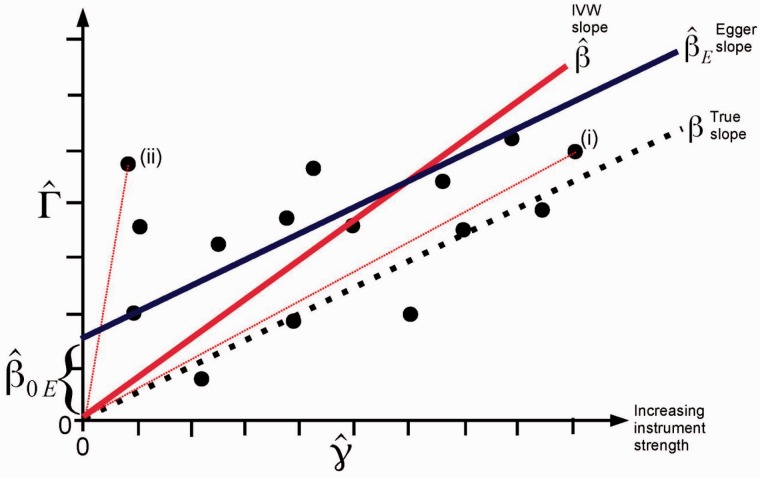
“The general phenomenon is therefore prudently referred to under the umbrella term of ‘small study’ bias.(11,13,14) In the context of Mendelian randomization with multiple instruments, we equate the precision of a single study’s estimate with the strength of a single instrument.”
BackgroundInstrumental Variables Regression with Weak Instruments
Staiger, D., & Stock, J. H. (1997) · Econometrica · doi:10.2307/2171753 · Cited by 7,081
Mendelian Randomization Analysis With Multiple Genetic Variants Using Summarized Data
Burgess, S., Butterworth, A., & Thompson, S. G. (2013) · Genetic Epidemiology · doi:10.1002/gepi.21758 · Cited by 6,050 · cited 1×
“It has been shown that Mendelian randomization analyses based on summarized data are as efficient as those based on individual-level data.(23) Other tools from the meta-analysis literature include methods for bias adjustment, such as the trim-and-fill method,(45) and the use of pseudo-data.”
MethodSelf-citationDavey Smith, G., & Ebrahim, S. (2003) · International Journal of Epidemiology · doi:10.1093/ije/dyg070 · Cited by 5,882 · cited 2×
“We are particularly interested in the coverage properties of the estimators with a null causal effect, and the power of estimators with a positive causal effect, as salient findings from Mendelian randomization investigations are not only the magnitude of the causal effect—or indeed whether such can be estimated—but a…”
BackgroundInstrumental Variables Regression with Weak Instruments
Staiger, D., & Stock, J. (1994) · doi:10.3386/t0151 · Cited by 5,302 · cited 1×
“With many IVs in a one-sample setting (genetic variants, exposure and outcome measured in the same participants), IV estimates (particularly those from the TSLS method) are biased in the direction of the observational association between the exposure and the outcome.(49) This bias depends on the strength of the associ…”
Method
Research works printed but not linked: 12
- 2014, Human Molecular Genetics, 23, 89, 10.1093/hmg/ddu328 · DOI · Paper page
- 2010, Clinical Chemistry, 56, 723, 10.1373/clinchem.2009.141564 · DOI · Paper page
- 2015, International Journal of Epidemiology, 44, 496, 10.1093/ije/dyv071 · DOI · Paper page
- 2013, International Journal of Epidemiology, 42, 1157, 10.1093/ije/dyt110 · DOI · Paper page
- 2013, International Journal of Epidemiology, 42, 1497, 10.1093/ije/dyt179 · DOI · Paper page
- 2013, International Journal of Epidemiology, 42, 1134, 10.1093/ije/dyt093 · DOI · Paper page
- 2015, Statistics in medicine, 34, 454, 10.1002/sim.6358 · DOI · Paper page
- 2013, International Journal of Epidemiology, 42, 111, 10.1093/ije/dys064 · DOI · Paper page
- 2014, Economics and human biology, 13, 99, 10.1016/j.ehb.2013.12.002 · DOI · Paper page
- 2011, International Journal of Epidemiology, 40, 755, 10.1093/ije/dyr036 · DOI · Paper page
- 2013, American Journal of Epidemiology, 178, 1177, 10.1093/aje/kwt084 · DOI · Paper page
- Angrist J Pischke J-S Instrumental variables in action: sometimes you get whatyou need. In: Mostly Harmless Econometrics: An Empiricist’scompanion. Princeton, NJ: Princeton University Press, 2009.
Cited by
Items 201–300 of 1,058
Genome-wide analysis identifies molecular systems and 149 genetic loci associated with income
Hill, W. D., Davies, N. M., Ritchie, S. J., Skene, N. G., Bryois, J., Bell, S., Di Angelantonio, E., Roberts, D. J., Xueyi, S., Davies, G., et al. (2019) · Nature Communications · doi:10.1038/s41467-019-13585-5 · Cited by 185
Corbin, L. J., Richmond, R. C., Wade, K. H., Burgess, S., Bowden, J., Smith, G. D., & Timpson, N. J. (2016) · Diabetes · doi:10.2337/db16-0418 · Cited by 184
“The MR-Egger method also provides a formal statistical test as to whether or not the average pleiotropic effect of the genetic variants is equal to zero (9).”
BackgroundMethodInfluentialSelf-citationRobust methods in Mendelian randomization via penalization of heterogeneous causal estimates
Rees, J. M. B., Wood, A. M., Dudbridge, F., & Burgess, S. (2019) · PLOS ONE · doi:10.1371/journal.pone.0222362 · Cited by 183
“These methods include a median-based method [8] and MR-Egger [9].”
MethodSelf-citationContextualizing selection bias in Mendelian randomization: how bad is it likely to be?
Gkatzionis, A., & Burgess, S. (2019) · International Journal of Epidemiology · doi:10.1093/ije/dyy202 · Cited by 182
“25,26”
Self-citationGut Microbiota and Psychiatric Disorders: A Two-Sample Mendelian Randomization Study
Ni, J.-J., Xu, Q., Yan, S.-S., Han, B.-X., Zhang, H., Wei, X.-T., Feng, G.-J., Zhao, M., Pei, Y.-F., & Zhang, L. (2022) · Frontiers in Microbiology · doi:10.3389/fmicb.2021.737197 · Cited by 181
Cerebrospinal fluid metabolomics identifies 19 brain-related phenotype associations
Panyard, D. J., Kim, K. M., Darst, B. F., Deming, Y. K., Zhong, X., Wu, Y., Kang, H., Carlsson, C. M., Johnson, S. C., Asthana, S., et al. (2021) · Communications Biology · doi:10.1038/s42003-020-01583-z · Cited by 180
The effects of educational robotics in STEM education: a multilevel meta-analysis
Ouyang, F., & Xu, W. (2024) · International Journal of STEM Education · doi:10.1186/s40594-024-00469-4 · Cited by 171
“Second, the Egger’s test is a statistical method used to plot the effect size estimates against their standard errors (Bowden et al., 2015).”
MethodTherapeutic Targets for Heart Failure Identified Using Proteomics and Mendelian Randomization
Henry, A., Gordillo-Marañón, M., Finan, C., Schmidt, A. F., Ferreira, J. P., Karra, R., Sundström, J., Lind, L., Ärnlöv, J., Zannad, F., et al. (2022) · Circulation · doi:10.1161/circulationaha.121.056663 · Cited by 179
“…were available, estimates were calculated with the IVW estimator and MR models using principal components 32 with 90% variance and 99% variance explained; and where there were 3 or more instruments, we in addition calculated estimates using MR with Egger regression estimator 12 (Figure S1).”
InfluentialCao, Z., Wu, Y., Li, Q., Li, Y., & Wu, J. (2022) · Annals of Medicine · doi:10.1080/07853890.2022.2085883 · Cited by 177
“The MER method can provide a relatively robust estimate without the influence of the validity of IVs, and an adjusted result by existing horizontal pleiotropy via the regression slope and intercept [29,30].”
MethodMendelian randomisation in cardiovascular research: an introduction for clinicians
Bennett, D. A., & Holmes, M. V. (2017) · Heart · doi:10.1136/heartjnl-2016-310605 · Cited by 178
“31 An alternative form of pleiotropy is ‘vertical pleiotropy’, which exists when the genetic variant(s) associates with other biomarkers downstream of the main biomarker of interest.”
BackgroundBenn, M., Nordestgaard, B. G., Frikke-Schmidt, R., & Tybjærg-Hansen, A. (2017) · BMJ · doi:10.1136/bmj.j1648 · Cited by 178
Yuan, S., Gill, D., Giovannucci, E. L., & Larsson, S. C. (2022) · Clinical Gastroenterology and Hepatology · doi:10.1016/j.cgh.2020.12.034 · Cited by 177
Noyce, A. J., Kia, D. A., Hemani, G., Nicolas, A., Price, T. R., De Pablo-Fernandez, E., Haycock, P. C., Lewis, P. A., Foltynie, T., Davey Smith, G., et al. (2017) · PLOS Medicine · doi:10.1371/journal.pmed.1002314 · Cited by 175
“MR–Egger regression is similar to IVW regression, except that the intercept is not constrained to pass through the origin [20].”
Bowden, S. J., Doulgeraki, T., Bouras, E., Markozannes, G., Athanasiou, A., Grout-Smith, H., Kechagias, K. S., Ellis, L. B., Zuber, V., Chadeau-Hyam, M., et al. (2023) · BMC Medicine · doi:10.1186/s12916-023-02965-w · Cited by 172
“For exposures with significant effects in the main IVW MR analysis (multiple testing adjusted using Benjamini and Hochberg’s false discovery rate [35]), we performed sensitivity analyses using a range of robust MR approaches to circumvent possible violations of the instrumental variable assumptions (weighted median [3…”
MethodResponse to Hartwig and Davies
Bowden, J., Burgess, S., & Davey Smith, G. (2016) · International Journal of Epidemiology · doi:10.1093/ije/dyw252 · Cited by 174
“E-mail: Dave.Evans@bristol.ac.uk In their letter, Hartwig and Davies1 raise an important issue that was not discussed in the original Mendelian randomization Egger regression (MR Egger) paper by Bowden et al.2 Hartwig and Davies point out that, similar to other varieties of MR, MR-Egger is also susceptible to weak ins…”
Self-citationZhou, W., Liu, G., Hung, R. J., Haycock, P. C., Aldrich, M. C., Andrew, A. S., Arnold, S. M., Bickeböller, H., Bojesen, S. E., Brennan, P., et al. (2021) · International Journal of Cancer · doi:10.1002/ijc.33292 · Cited by 172
“confounders and reverse causality(12) but could be influenced by pleiotropy or linkage disequilibrium (LD) among the markers.(13) The conventional, univariable MR analysis evaluates the effect of a single predictor on an outcome.”
BackgroundCausal Inference in Developmental Origins of Health and Disease (DOHaD) Research
Gage, S. H., Munafò, M. R., & Davey Smith, G. (2016) · Annual Review of Psychology · doi:10.1146/annurev-psych-122414-033352 · Cited by 173
Neutrophil counts and cardiovascular disease
Luo, J., Thomassen, J. Q., Nordestgaard, B. G., Tybjærg-Hansen, A., & Frikke-Schmidt, R. (2023) · European Heart Journal · doi:10.1093/eurheartj/ehad649 · Cited by 167
“We performed several analyses including the inverse-variance weighted (IVW), 36 weighted median estimator, 37 MR-Egger, 38 and MR-PRESSO.”
MethodRosa, M., Chignon, A., Li, Z., Boulanger, M.-C., Arsenault, B. J., Bossé, Y., Thériault, S., & Mathieu, P. (2019) · npj Genomic Medicine · doi:10.1038/s41525-019-0097-4 · Cited by 167
Circulating vitamin D concentration and risk of seven cancers: Mendelian randomisation study
Dimitrakopoulou, V. I., Tsilidis, K. K., Haycock, P. C., Dimou, N. L., Al-Dabhani, K., Martin, R. M., Lewis, S. J., Gunter, M. J., Mondul, A., Shui, I. M., et al. (2017) · BMJ · doi:10.1136/bmj.j4761 · Cited by 169
Adiposity, metabolites, and colorectal cancer risk: Mendelian randomization study
Bull, C. J., Bell, J. A., Murphy, N., Sanderson, E., Davey Smith, G., Timpson, N. J., Banbury, B. L., Albanes, D., Berndt, S. I., Bézieau, S., et al. (2020) · BMC Medicine · doi:10.1186/s12916-020-01855-9 · Cited by 166
“true causal effect [29], and the MR-Egger model which provides an estimate of association magnitude allowing all SNPs to be pleiotropic [30].”
BackgroundMethodCommon Methods for Performing Mendelian Randomization
Teumer, A. (2018) · Frontiers in Cardiovascular Medicine · doi:10.3389/fcvm.2018.00051 · Cited by 165
“In theory, problems of missing data may occur especially when using multiple IVs.”
BackgroundMethodInfluentialGenetic predictors of participation in optional components of UK Biobank
Tyrrell, J., Zheng, J., Beaumont, R., Hinton, K., Richardson, T. G., Wood, A. R., Davey Smith, G., Frayling, T. M., & Tilling, K. (2021) · Nature Communications · doi:10.1038/s41467-021-21073-y · Cited by 162
Polygenic Risk Scores in Clinical Psychology: Bridging Genomic Risk to Individual Differences
Bogdan, R., Baranger, D. A. A., & Agrawal, A. (2018) · Annual Review of Clinical Psychology · doi:10.1146/annurev-clinpsy-050817-084847 · Cited by 163
“…that comprise a PRS, that are robustly associated with A, but have no independent effects on B [although, methods that adjust for such pleiotropy exist (Bowden et al., 2015)] or on any covariate (e.g., smoking) related to B, then such a PRS might serve as a “genetic instrument” for MR analyses.”
Murphy, N., Knuppel, A., Papadimitriou, N., Martin, R. M., Tsilidis, K. K., Smith-Byrne, K., Fensom, G., Perez-Cornago, A., Travis, R. C., Key, T. J., et al. (2020) · Annals of Oncology · doi:10.1016/j.annonc.2020.01.066 · Cited by 163
Song, Y., Zhu, C., Shi, B., Song, C., Cui, K., Chang, Z., Gao, G., Jia, L., Fu, R., Dong, Q., et al. (2023) · eClinicalMedicine · doi:10.1016/j.eclinm.2023.102236 · Cited by 162
Plasma lipids and risk of aortic valve stenosis: a Mendelian randomization study
Nazarzadeh, M., Pinho-Gomes, A.-C., Bidel, Z., Dehghan, A., Canoy, D., Hassaine, A., Ayala Solares, J. R., Salimi-Khorshidi, G., Smith, G. D., Otto, C. M., et al. (2020) · European Heart Journal · doi:10.1093/eurheartj/ehaa070 · Cited by 163
“The MR-Egger regression method was used as the main estimation to account for potential pleiotropy.(21) In addition, the MR pleiotropy residual sum and outlier (MR-PRESSO) method was used to test, and correct, if needed, for possible horizontal pleiotropic outliers in the analysis.”
Self-citationGao, C., Patel, C. J., Michailidou, K., Peters, U., Gong, J., Schildkraut, J., Schumacher, F. R., Zheng, W., Boffetta, P., Stucker, I., et al. (2016) · International Journal of Epidemiology · doi:10.1093/ije/dyw129 · Cited by 163
Shared polygenic risk and causal inferences in amyotrophic lateral sclerosis
Bandres‐Ciga, S., Noyce, A. J., Hemani, G., Nicolas, A., Calvo, A., Mora, G., The ITALSGEN Consortium, The International ALS Genomics Consortium, Tienari, P. J., Stone, D. J., et al. (2019) · Annals of Neurology · doi:10.1002/ana.25431 · Cited by 162
“The slope of the line represents the pooled-effect estimate of the Wald ratios.(15) Traits”
BackgroundUse of Genetic Variants Related to Antihypertensive Drugs to Inform on Efficacy and Side Effects
Gill, D., Georgakis, M. K., Koskeridis, F., Jiang, L., Feng, Q., Wei, W.-Q., Theodoratou, E., Elliott, P., Denny, J. C., Malik, R., et al. (2019) · Circulation · doi:10.1161/circulationaha.118.038814 · Cited by 161
Sex-dimorphic genetic effects and novel loci for fasting glucose and insulin variability
Lagou, V., Mägi, R., Hottenga, J. J., Grallert, H., Perry, J. R. B., Bouatia-Naji, N., Marullo, L., Rybin, D., Jansen, R., Min, J. L., et al. (2021) · Nature Communications · doi:10.1038/s41467-020-19366-9 · Cited by 162
Genome-wide Association Analysis in Humans Links Nucleotide Metabolism to Leukocyte Telomere Length
Li, C., Stoma, S., Lotta, L. A., Warner, S., Albrecht, E., Allione, A., Arp, P. P., Broer, L., Buxton, J. L., Da Silva Couto Alves, A., et al. (2020) · The American Journal of Human Genetics · doi:10.1016/j.ajhg.2020.02.006 · Cited by 162
Leong, A., Cole, J. B., Brenner, L. N., Meigs, J. B., Florez, J. C., & Mercader, J. M. (2021) · PLOS Medicine · doi:10.1371/journal.pmed.1003553 · Cited by 161
Dudbridge, F. (2016) · Genetic Epidemiology · doi:10.1002/gepi.21966 · Cited by 159
“, 2015] and unknown [Bowden et al., 2015] pleiotropic effects.”
BackgroundMethodAssociation between frailty and depression: A bidirectional Mendelian randomization study
Deng, M., Liu, F., Liang, Y., Wang, K., Nie, J., & Liu, J. (2023) · Science Advances · doi:10.1126/sciadv.adi3902 · Cited by 177
“Besides, the MR-Egger regression intercept term was used to assess the possible presence of horizontal pleiotropy, where deviation from zero ( P value 0.05) indicates directional plei-otropy ( 49 ).”
InfluentialWithin family Mendelian randomization studies
Davies, N. M., Howe, L. J., Brumpton, B., Havdahl, A., Evans, D. M., & Davey Smith, G. (2019) · Human Molecular Genetics · doi:10.1093/hmg/ddz204 · Cited by 158
Mills, M. C., Tropf, F. C., Brazel, D. M., van Zuydam, N., Vaez, A., eQTLGen Consortium, Agbessi, M., Ahsan, H., Alves, I., Andiappan, A. K., et al. (2021) · Nature Human Behaviour · doi:10.1038/s41562-021-01135-3 · Cited by 157
“20 In each case IVW 78 and MR-EGGER 79 methods were performed, with an additional round of IVW performed once a Steiger filter 80 had been applied to remove SNPs that appears to show a primary association with the outcome rather than the exposure.”
Lv, W., Xu, L., Shen, H., Liu, H., Qiu, X., Li, B., Shen, W., Ge, C.-L., Lv, F.-Y., Shen, J., et al. (2021) · Journal of Cachexia Sarcopenia and Muscle · doi:10.1002/jcsm.12788 · Cited by 175
“Sensitivity analyses for the MR were performed using the weighted median and the MR–Egger method.(18,19) The”
MethodLipid lowering and Alzheimer disease risk: A mendelian randomization study
Williams, D. M., Finan, C., Schmidt, A. F., Burgess, S., & Hingorani, A. D. (2020) · Annals of Neurology · doi:10.1002/ana.25642 · Cited by 157
“We repeated analyses using alternative methods—weighted median and MR Egger estimators—which provide different degrees of robustness to bias from genetic pleiotropy.(24,25) For the primary gene (drug target)-specific models, data on all successfully harmonized SNPs within the gene regions ( 1 kilobase flank) were elig…”
MethodSelf-citationGill, D., Efstathiadou, A., Cawood, K., Tzoulaki, I., & Dehghan, A. (2019) · International Journal of Epidemiology · doi:10.1093/ije/dyz200 · Cited by 162
“In secondary analyses, we also performed the (random-effects) MR-Egger and weighted median statistical sensitivity analyses to investigate whether similar MR estimates were obtained under these models that relax their requisite assumptions on the presence of pleiotropic genetic variants that affect risk of the conside…”
BackgroundMethodHomocysteine, B vitamins, and cardiovascular disease: a Mendelian randomization study
Yuan, S., Mason, A. M., Carter, P. R., Burgess, S., & Larsson, S. C. (2021) · BMC Medicine · doi:10.1186/s12916-021-01977-8 · Cited by 185
“Three sensitivity analyses, including the weighted median [33], MR-Egger [34], and MR-PRESSO [35] approaches, were performed for tHcy and vitamin B12.”
BackgroundMethodInfluentialSelf-citationBurgess, S., & Davey Smith, G. (2017) · Ophthalmology · doi:10.1016/j.ophtha.2017.03.042 · Cited by 152
“For the MR-Egger method, all genetic associations are oriented to the risk factoreincreasing allele, and the intercept is estimated as part of the analysis.(17) In the weighted median method, the same inverse-variance weights are used, and CIs are constructed using a previously described bootstrapmethod.”
MethodSelf-citationGill, D., Cameron, A. C., Burgess, S., Li, X., Doherty, D. J., Karhunen, V., Abdul‐Rahim, A. H., Rowan, M. T., Zuber, V., Tsao, P. S., et al. (2020) · Hypertension · doi:10.1161/hypertensionaha.120.16547 · Cited by 171
Self-citationOn the Use of the Lasso for Instrumental Variables Estimation with Some Invalid Instruments
Windmeijer, F., Farbmacher, H., Davies, N., & Davey Smith, G. (2019) · Journal of the American Statistical Association · doi:10.1080/01621459.2018.1498346 · Cited by 144
Richmond, R. C., Anderson, E. L., Dashti, H. S., Jones, S. E., Lane, J. M., Strand, L. B., Brumpton, B., Rutter, M. K., Wood, A. R., Straif, K., et al. (2019) · BMJ · doi:10.1136/bmj.l2327 · Cited by 149
Mendelian Randomization Study of Obesity and Cerebrovascular Disease
Marini, S., Merino, J., Montgomery, B. E., Malik, R., Sudlow, C. L. M., Dichgans, M., Florez, J. C., Rosand, J. M., Gill, D., & Anderson, C. D. (2020) · Annals of Neurology · doi:10.1002/ana.25686 · Cited by 166
“Next, we applied regression-based multivariable MR to estimate the effect of SBP and FG, respectively, on risk of stroke and its subtypes, adjusting for the genetic effect of the instruments on BMI or WHR, respectively.(27) The indirect effect of the considered exposure on stroke risk mediated through SBP or FG was es…”
Broadbent, J. R., Foley, C. N., Grant, A. J., Mason, A. M., Staley, J. R., & Burgess, S. (2020) · Wellcome Open Research · doi:10.12688/wellcomeopenres.16374.1 · Cited by 151
“These were mr_ivw (inverse-variance weighted method, IVW) 6 , mr_egger (MR-Egger method) 7 , and mr_median (simple and weighted method methods) 8 , and mr_maxlik (maximum likelihood method) 6 .”
Self-citationDepression and Inflammatory Bowel Disease: A Bidirectional Two-sample Mendelian Randomization Study
Luo, J., Xu, Z., Noordam, R., van Heemst, D., & Li-Gao, R. (2022) · Journal of Crohn's and Colitis · doi:10.1093/ecco-jcc/jjab191 · Cited by 150
Feng, R., Lu, M., Xu, J., Zhang, F., Yang, M., Luo, P., Xu, K., & Xu, P. (2022) · BMC Genomic Data · doi:10.1186/s12863-022-01082-6 · Cited by 169
“We also discussed and corrected for diversity of the results using both the MREgger regression method [28] and the weighted median [29].”
MethodEppinga, R. N., Hagemeijer, Y. P., Burgess, S., Hinds, D. A., Stefánsson, K., Gudbjartsson, D. F., van Veldhuisen, D. J., Munroe, P. B., Verweij, N., & van der Harst, P. (2016) · Nature Genetics · doi:10.1038/ng.3708 · Cited by 160
Self-citationAddressing dyslipidemic risk beyond LDL-cholesterol
Tall, A. R., Thomas, D. G., Gonzalez-Cabodevilla, A. G., & Goldberg, I. J. (2022) · Journal of Clinical Investigation · doi:10.1172/jci148559 · Cited by 150
“These mechanism-specific effects may have been missed in prior studies because of both effect heterogeneity and statistical power limitations related to sample size, which were magnified by the intrinsic power limitations of pleiotropy-adjusted Mendelian randomization techniques (41), but are concordant with the resul…”
ResultLiu, B., Ye, D., Yang, H., Song, J., Sun, X., Mao, Y., & He, Z. (2022) · Frontiers in Immunology · doi:10.3389/fimmu.2022.921546 · Cited by 176
Walker, K. A., Chen, J., Shi, L., Yang, Y., Fornage, M., Zhou, L., Schlosser, P., Surapaneni, A., Grams, M. E., Duggan, M. R., et al. (2023) · Science Translational Medicine · doi:10.1126/scitranslmed.adf5681 · Cited by 148
Maina, J. G., Balkhiyarova, Z., Nouwen, A., Pupko, I., Ulrich, A., Boissel, M., Bonnefond, A., Froguel, P., Khamis, A., Prokopenko, I., et al. (2023) · Diabetes Care · doi:10.2337/dc22-2373 · Cited by 163
Anderson, E. L., Howe, L. D., Wade, K. H., Ben-Shlomo, Y., Hill, W. D., Deary, I. J., Sanderson, E. C., Zheng, J., Korologou-Linden, R., Stergiakouli, E., et al. (2020) · International Journal of Epidemiology · doi:10.1093/ije/dyz280 · Cited by 148
van de Vegte, Y. J., Said, M. A., Rienstra, M., van der Harst, P., & Verweij, N. (2020) · Nature Communications · doi:10.1038/s41467-020-15553-w · Cited by 166
Xiao, G., He, Q., Liu, L., Zhang, T., Zhou, M., Li, X., Chen, Y., Chen, Y., & Qin, C. (2022) · Journal of Translational Medicine · doi:10.1186/s12967-022-03691-2 · Cited by 179
“Next, sensitivity analysis was performed using MR-Egger approach, which can provide consistent estimates with invalid instruments [29].”
MethodLarge-scale multitrait genome-wide association analyses identify hundreds of glaucoma risk loci
Han, X., Gharahkhani, P., Hamel, A. R., Ong, J., Rentería, M. E., Mehta, P. A., Dong, X., Pasutto, F., Hammond, C. J., Young, T. L., et al. (2023) · Nature Genetics · doi:10.1038/s41588-023-01428-5 · Cited by 177
Morris, A. P., Le, T. H., Wu, H., Akbarov, A., van der Most, P. J., Hemani, G., Smith, G. D., Mahajan, A., Gaulton, K. J., Nadkarni, G. N., et al. (2019) · Nature Communications · doi:10.1038/s41467-018-07867-7 · Cited by 145
Genetic and functional insights into the fractal structure of the heart
Meyer, H. V., Dawes, T. J. W., Serrani, M., Bai, W., Tokarczuk, P. F., Cai, J., de Marvao, A., Henry, A., Lumbers, R. T., Gierten, J., et al. (2020) · Nature · doi:10.1038/s41586-020-2635-8 · Cited by 150
G = E: What GWAS Can Tell Us about the Environment
Gage, S. H., Davey Smith, G., Ware, J. J., Flint, J., & Munafò, M. R. (2016) · PLOS Genetics · doi:10.1371/journal.pgen.1005765 · Cited by 132
“These methods include Mendelian randomization Egger regression [37] and the Kang median instrument approach [38].”
MethodAllara, E., Morani, G., Carter, P., Gkatzionis, A., Zuber, V., Foley, C. N., Rees, J. M. B., Mason, A. M., Bell, S., Gill, D., et al. (2019) · Circulation: Genomic and Precision Medicine · doi:10.1161/circgen.119.002711 · Cited by 145
Self-citationAssessing the causal association between human blood metabolites and the risk of epilepsy
Cai, J., Li, X., Wu, S., Tian, Y., Zhang, Y., Wei, Z., Jin, Z., Li, X., Chen, X., & Chen, W.-X. (2022) · Journal of Translational Medicine · doi:10.1186/s12967-022-03648-5 · Cited by 170
“WM assumes that at least half of the instruments are valid [26], while MR-Egger regression provides consistent estimates accounting for pleiotropy when all the instruments are invalid [27].”
MethodLarge-scale association analyses identify host factors influencing human gut microbiome composition
Kurilshikov, A., Medina-Gomez, C., Bacigalupe, R., Radjabzadeh, D., Wang, J., Demirkan, A., Roy, C. I. L., Raygoza Garay, J. A., Finnicum, C. T., Liu, X., et al. (2020) · bioRxiv (Cold Spring Harbor Laboratory) · doi:10.1101/2020.06.26.173724 · Cited by 145
Merino, J., Leong, A., Liu, C.-T., Porneala, B., Walford, G. A., von Grotthuss, M., Wang, T. J., Flannick, J., Dupuis, J., Levy, D., et al. (2018) · Diabetologia · doi:10.1007/s00125-018-4599-x · Cited by 144
“The presence of unbalanced horizontal pleiotropy was assessed by using Mendelian randomisation–Egger when the set of variants in the genetic instrument allowed us to conduct the analysis [29].”
Statistical methods to detect pleiotropy in human complex traits
Hackinger, S., & Zeggini, E. (2017) · Open Biology · doi:10.1098/rsob.170125 · Cited by 143
Using Mendelian randomisation to assess causality in observational studies
Pagoni, P., Dimou, N. L., Murphy, N., & Stergiakouli, E. (2019) · Evidence-Based Mental Health · doi:10.1136/ebmental-2019-300085 · Cited by 176
“MR-Egger In the presence of pleiotropy, one could fit a weighted linear regression of the associations of the instruments with the outcome on the instruments with the exposure, while assuming an unconstrained intercept term (unlike the IVW approach where intercept term is constrained and set to zero), resulting in the…”
MethodMurphy, N., Carreras-Torres, R., Song, M., Chan, A. T., Martin, R. M., Papadimitriou, N., Dimou, N., Tsilidis, K. K., Banbury, B., Bradbury, K. E., et al. (2020) · Gastroenterology · doi:10.1053/j.gastro.2019.12.020 · Cited by 142
“affected the causal estimates for the IGF1 and colorectal cancer association, we used an MR-Egger regression approach.(35) We”
Assessing the Causal Effects of Human Serum Metabolites on 5 Major Psychiatric Disorders
Yang, J., Yan, B., Zhao, B., Fan, Y., He, X., Yang, L., Ma, Q., Zheng, J., Wang, W., Bai, L., et al. (2020) · Schizophrenia Bulletin · doi:10.1093/schbul/sbz138 · Cited by 169
Karhunen, V., Bakker, M. K., Ruigrok, Y. M., Gill, D., & Larsson, S. C. (2021) · Journal of the American Heart Association · doi:10.1161/jaha.121.022277 · Cited by 172
“33 The weighted median method provides robust causal estimates if more than half of the weights are provided by valid instrumental variables.”
Grover, S., Fabiola Del Greco, M., Stein, C. M., & Ziegler, A. (2017) · Methods in molecular biology · doi:10.1007/978-1-4939-7274-6_29 · Cited by 158
“Recently, the test on the intercept of the MR-Egger model has also been recommended for testing bias from pleiotropy in the case of summarized datasets [23].”
MethodYao, S., Zhang, M., Dong, S., Wang, J.-H., Zhang, K., Guo, J., Guo, Y., & Yang, T. (2022) · Nature Human Behaviour · doi:10.1038/s41562-022-01412-9 · Cited by 153
Zheng, J., Luan, J., Sofianopoulou, E., Imamura, F., Stewart, I. D., Day, F. R., Pietzner, M., Wheeler, E., Lotta, L. A., Gundersen, T. E., et al. (2020) · Diabetes Care · doi:10.2337/dc20-1328 · Cited by 169
“analysis (18), and the Cochran Q statistic”
Diabetes Mellitus, Glycemic Traits, and Cerebrovascular Disease: A Mendelian Randomization Study
Georgakis, M. K., Harshfield, E. L., Malik, R., Franceschini, N., Langenberg, C., Wareham, N. J., Markus, H. S., & Dichgans, M. (2021) · Neurology · doi:10.1212/wnl.0000000000011555 · Cited by 169
“MR-Egger provides less precise estimates and relies on the assumption that the strengths of potential pleiotropic instruments are independent of their direct associations with the outcome.(44) The intercept obtained from MR-Egger regression was used as a measure of unbalanced pleiotropy (p<0.”
InfluentialGenetic Architecture of Abdominal Aortic Aneurysm in the Million Veteran Program
Klarin, D., Verma, S. S., Judy, R., Dikilitas, O., Wolford, B. N., Paranjpe, I., Levin, M. G., Pan, C., Tcheandjieu, C., Spin, J. M., et al. (2020) · Circulation · doi:10.1161/circulationaha.120.047544 · Cited by 141
Inherited myeloproliferative neoplasm risk affects haematopoietic stem cells
Bao, E. L., Nandakumar, S. K., Liao, X., Bick, A. G., Karjalainen, J., Tabaka, M., Gan, O. I., Havulinna, A. S., Kiiskinen, T. T. J., Lareau, C. A., et al. (2020) · Nature · doi:10.1038/s41586-020-2786-7 · Cited by 141
Khandaker, G. M., Zuber, V., Rees, J. M. B., Carvalho, L., Mason, A. M., Foley, C. N., Gkatzionis, A., Jones, P. B., & Burgess, S. (2021) · Molecular Psychiatry · doi:10.1038/s41380-020-0857-7 · Cited by 141
Self-citationGuo, J., Yu, K., Dong, S., Yao, S., Rong, Y., Wu, H., Zhang, K., Jiang, F., Chen, Y.-X., Guo, Y., et al. (2022) · Nature Neuroscience · doi:10.1038/s41593-022-01174-7 · Cited by 157
Seyedsalehi, A., Warrier, V., Bethlehem, R. A. I., Perry, B. I., Burgess, S., & Murray, G. K. (2022) · Brain · doi:10.1093/brain/awac392 · Cited by 154
“The presence of asymmetry in the funnel plot is suggestive of directional pleiotropy and bias in the overall causal estimate.(98,103) Third, we car-”
BackgroundSelf-citationInterpretation and Potential Biases of Mendelian Randomization Estimates With Time-Varying Exposures
Labrecque, J. A., & Swanson, S. A. (2019) · American Journal of Epidemiology · doi:10.1093/aje/kwy204 · Cited by 139
“To estimate the effect of an exposure, MR relies on classical (2) or more robust versions (3) of instrumental variable analyses (IV).”
MethodLi, G. H., Cheung, C., Chung, A. K.-K., Cheung, B. M. Y., Wong, I. C. K., Fok, M. L.-Y., Au, P. C.-M., & Sham, P. C. (2020) · Psychological Medicine · doi:10.1017/s0033291720003566 · Cited by 161
Porcu, E., Sadler, M. C., Lepik, K., Auwerx, C., Wood, A. R., Weihs, A., Sleiman, M. S. B., Ribeiro, D. M., Bandinelli, S., Tanaka, T., et al. (2021) · Nature Communications · doi:10.1038/s41467-021-25805-y · Cited by 154
“To test for the presence of pleiotropy, we used Cochran’s Q test [49, 51].”
BackgroundMethodHemani, G., Zheng, J., Wade, K. H., Laurin, C., Elsworth, B., Burgess, S., Bowden, J., Langdon, R., Tan, V., Yarmolinsky, J., et al. (2016) · bioRxiv (Cold Spring Harbor Laboratory) · doi:10.1101/078972 · Cited by 134
Self-citationAssociation of vitamin D levels and risk of ovarian cancer: a Mendelian randomization study
Ong, J., Cuéllar-Partida, G., Lu, Y., Study, A. O. C., Fasching, P. A., Hein, A., Burghaus, S., Beckmann, M. W., Lambrechts, D., Nieuwenhuysen, E. V., et al. (2016) · International Journal of Epidemiology · doi:10.1093/ije/dyw207 · Cited by 150
Lanktree, M. B., Thériault, S., Walsh, M. W., & Paré, G. (2017) · American Journal of Kidney Diseases · doi:10.1053/j.ajkd.2017.06.011 · Cited by 143
Jordan, D. M., Choi, H. K., Verbanck, M., Topless, R., Won, H., Nadkarni, G. N., Merriman, T. R., & Do, R. (2019) · PLoS Medicine · doi:10.1371/journal.pmed.1002725 · Cited by 149
Thériault, S., Gaudreault, N., Lamontagne, M., Rosa, M., Boulanger, M.-C., Messika-Zeitoun, D., Clavel, M.-A., Capoulade, R., Dagenais, F., Pibarot, P., et al. (2018) · Nature Communications · doi:10.1038/s41467-018-03260-6 · Cited by 135
Challenges and novel approaches for investigating molecular mediation
Richmond, R. C., Hemani, G., Tilling, K., Davey Smith, G., & Relton, C. L. (2016) · Human Molecular Genetics · doi:10.1093/hmg/ddw197 · Cited by 134
“If some variants deviate from this proportional effect, then the extent of directional pleiotropy can be investigated with the use of an approach known as “MR Egger” (62), and further derivatives including a weighted median approach (63), which can also be used to provide valid causal estimates even in the presence of…”
BackgroundMethodYuan, Z., Zhu, H., Zeng, P., Yang, S., Sun, S., Yang, C., Liu, J., & Zhou, X. (2020) · Nature Communications · doi:10.1038/s41467-020-17668-6 · Cited by 150
Assessing the causal association of glycine with risk of cardio-metabolic diseases
Wittemans, L. B. L., Lotta, L. A., Oliver‐Williams, C., Stewart, I. D., Surendran, P., Karthikeyan, S., Day, F. R., Koulman, A., Imamura, F., Zeng, L., et al. (2019) · Nature Communications · doi:10.1038/s41467-019-08936-1 · Cited by 152
Self-citationCho, Y., Haycock, P. C., Sanderson, E., Gaunt, T. R., Zheng, J., Morris, A. P., Davey Smith, G., & Hemani, G. (2020) · Nature Communications · doi:10.1038/s41467-020-14452-4 · Cited by 133
“To date, MR method development has viewed horizontal pleiotropy as a nui-sance that needs to be factored out of the analysis 6 – 9 .”
MethodGormley, M., Dudding, T., Sanderson, E. C. M., Martin, R. M., Thomas, S. J., Tyrrell, J., Ness, A., Brennan, P., Munafo, M. R., Pring, M., et al. (2020) · Nature Communications · doi:10.1038/s41467-020-19822-6 · Cited by 152
Wootton, R. E., Lawn, R. B., Millard, L. A. C., Davies, N. M., Taylor, A. E., Munafò, M. R., Timpson, N. J., Davis, O. S. P., Davey Smith, G., & Haworth, C. M. A. (2018) · BMJ · doi:10.1136/bmj.k3788 · Cited by 132
Plasma urate concentration and risk of coronary heart disease: a Mendelian randomisation analysis.
White, J., Sofat, R., Hemani, G., Shah, T., Engmann, J., Dale, C., Shah, S., Kruger, F. A., Giambartolomei, C., Swerdlow, D. I., et al. (2016) · The Lancet Diabetes & Endocrinology · doi:10.1016/s2213-8587(15)00386-1 · Cited by 132
Self-citationGenetic markers as instrumental variables
von Hinke, S., Davey Smith, G., Lawlor, D. A., Propper, C., & Windmeijer, F. (2016) · Journal of Health Economics · doi:10.1016/j.jhealeco.2015.10.007 · Cited by 130
“Bowden et al. (2015) show that, in this setting, Egger regression (a tool to detect small study bias in meta-analysis) can be adapted to test for bias from pleiotropy.”
Genetic Association of Albuminuria with Cardiometabolic Disease and Blood Pressure
Haas, M. E., Aragam, K. G., Emdin, C. A., Bick, A. G., Hemani, G., Davey Smith, G., & Kathiresan, S. (2018) · The American Journal of Human Genetics · doi:10.1016/j.ajhg.2018.08.004 · Cited by 132
The relationship between sleep duration, cognition and dementia: a Mendelian randomization study
Henry, A., Katsoulis, M., Masi, S., Fatemifar, G., Denaxas, S., Acosta, D., Garfield, V., & Dale, C. E. (2019) · International Journal of Epidemiology · doi:10.1093/ije/dyz071 · Cited by 132
Chen, L., Peters, J. E., Prins, B. P., Persyn, E., Traylor, M., Surendran, P., Karthikeyan, S., Yonova‐Doing, E., Angelantonio, E. D., Roberts, D. J., et al. (2022) · Nature Communications · doi:10.1038/s41467-022-33675-1 · Cited by 149
Self-citationGenetic Association of Lipids and Lipid Drug Targets With Abdominal Aortic Aneurysm: A Meta-analysis
Harrison, S. C., Holmes, M. V., Burgess, S., Asselbergs, F. W., Jones, G. T., Baas, A. F., van ’t Hof, F. N., de Bakker, P. I. W., Blankensteijn, J. D., Powell, J. T., et al. (2018) · JAMA Cardiology · doi:10.1001/jamacardio.2017.4293 · Cited by 131
Self-citationDebiased inverse-variance weighted estimator in two-sample summary-data Mendelian randomization
Ye, T., Shao, J., & Kang, H. (2021) · The Annals of Statistics · doi:10.1214/20-aos2027 · Cited by 181
“We compare seven MR methods: the IVW estimator introduced in Section 3, the dIVW estimator proposed in Section 4, and five other methods in the literature, MR-Egger regression [6], weighted median estimator (MR-median) [7], weighted mode estimator (MR-mode) [21], profile score estimator (MR-raps) [40], and profile sco…”
BackgroundMethod
Metadata
- Authors
- Bowden, J., Davey Smith, G., & Burgess, S.
- Affiliations
- University of Cambridge (GB)
- Corresponding author
- Bowden, J.
- Venue
- International Journal of Epidemiology
- Publisher
- Oxford University Press (OUP)
- Published
- 2015-04-01
- Volume
- 44
- Issue
- 2
- Pages
- 512-525
- ISSN
- 0300-5771 (ISSN-L)
- 1464-3685
- PMC
- PMC4469799
- OpenAlex
- W2113699335
- Cited by
- 9,816
- References
- 50
- Citations by year
- 2026: 937 · 2025: 1929 · 2024: 2977 · 2023: 1482 · 2022: 797 · 2021: 590 · 2020: 379 · 2019: 283 · 2018: 205 · 2017: 123 · 2016: 88 · 2015: 21
- FWCI
- 100.13
- Type
- journal article
- Language
- en
- Open access
- hybrid
- doi.org
- Licence
- cc-by
- Locations
- International Journal of Epidemiology (publishedVersion, cc-by)
- PubMed Central (publishedVersion, cc-by)
- PubMed (publishedVersion)
- Bristol Research (University of Bristol) (submittedVersion, cc-by)
- Apollo (University of Cambridge) (submittedVersion, cc-by)
- Explore Bristol Research (submittedVersion, cc-by)
- Funders
- Wellcome Trust (MC_UU_12013_8, 100114)
- National Institute for Health and Care Research (NF-SI-0512-10165)
- British Heart Foundation (SP/08/007/23628, RG/08/014/24067)
- University of Bristol (MC_UU_12013/2)
- Medical Research Council (MC_UU_12013_2, MC_UU_12013_5, MR/N501906/1, MC UU 12013/8, MR/L012286/1, MR/L003120/1)
- Topics
- Life Sciences › Biochemistry, Genetics and Molecular Biology › Genetics › Genetic Associations and Epidemiology
- Physical Sciences › Mathematics › Statistics and Probability › Advanced Causal Inference Techniques
- Social Sciences › Decision Sciences › Statistics, Probability and Uncertainty › Meta-analysis and systematic reviews
- Keywords
- Mendelian randomization, invalid instruments, pleiotropy, MR-Egger, small-study bias, multiple instruments, causal effect estimation, bias detection, sensitivity analysis
- MeSH terms
- Blood Pressure, Body Height, Coronary Artery Disease, Humans, Models, Biological, Regression Analysis, Respiration, Statistics as Topic, Genetic Variation, Meta-Analysis as Topic, Bias, Causality, Risk Assessment, Mendelian Randomization Analysis, Genetic Pleiotropy
About these checks
Registry, retraction, Cites and statistics results are computed, not judged, with one exception: a printed reference that no index lists is read once by a model before it counts as a citation error. Claims are extracted by a model and kept only when their quote appears verbatim in the text; each cited source is then checked, with a model’s help, for whether it says what the claim relies on. Those verdicts can be wrong — read the claim’s quote and the cited source before relying on one.
Statistics and arithmetic are recomputed, not judged.
Confidence bands are shown only for fields calibrated on our annotated test set. None is calibrated yet, so no band is shown.
What counts as a claim ›How we measure confidence ›How we check this ›
Are you an author, or do you see a problem with this page? Request a review
Data sources
Bibliographic data: Semantic Scholar, OpenAlex, Crossref.
Contains information from the Semantic Scholar Academic Graph Datasets, made available under the ODC Attribution License (ODC-BY 1.0).
Semantic Scholar’s data is described in: Kinney, R., et al. (2023). The Semantic Scholar Open Data Platform. arXiv:2301.10140.
