

Mendelian randomization with invalid instruments: effect estimation and bias detection through Egger regression
Open accessThe DOI matches its Crossref record; 50 of the 50 references it cites were found in a registry or an index.
Abstract
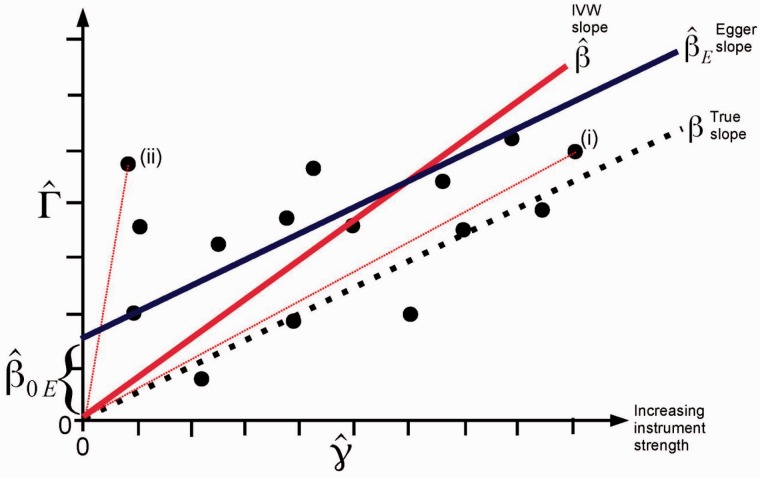
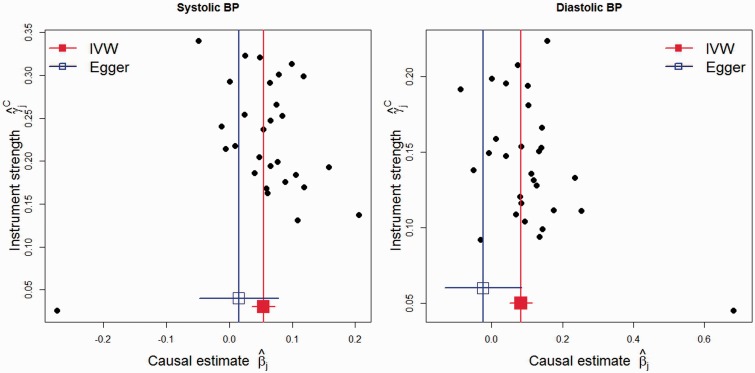
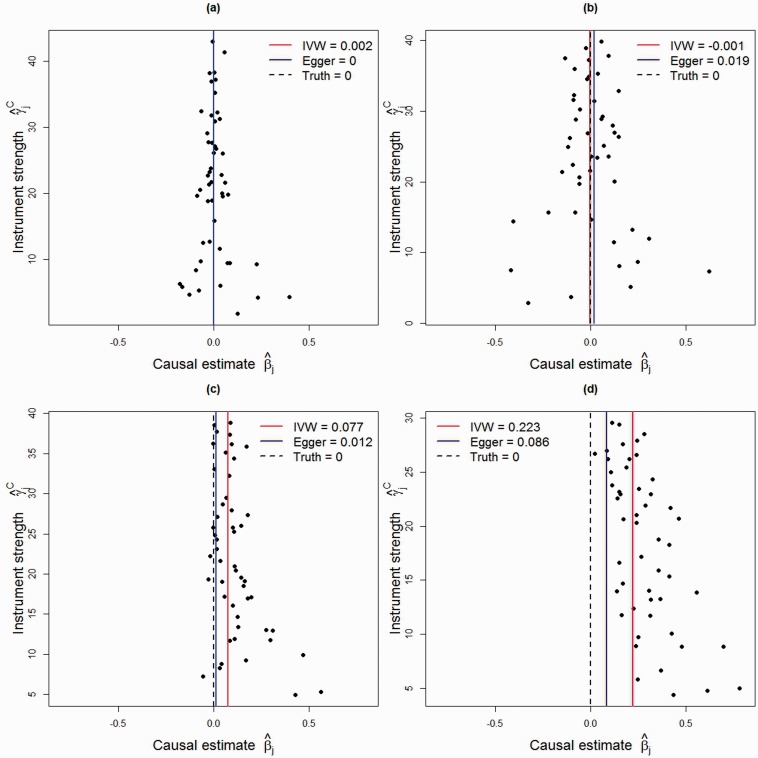
BACKGROUND: The number of Mendelian randomization analyses including large numbers of genetic variants is rapidly increasing. This is due to the proliferation of genome-wide association studies, and the desire to obtain more precise estimates of causal effects. However, some genetic variants may not be valid instrumental variables, in particular due to them having more than one proximal phenotypic correlate (pleiotropy). METHODS: We view Mendelian randomization with multiple instruments as a meta-analysis, and show that bias caused by pleiotropy can be regarded as analogous to small study bias. Causal estimates using each instrument can be displayed visually by a funnel plot to assess potential asymmetry. Egger regression, a tool to detect small study bias in meta-analysis, can be adapted to test for bias from pleiotropy, and the slope coefficient from Egger regression provides an estimate of the causal effect. Under the assumption that the association of each genetic variant with the exposure is independent of the pleiotropic effect of the variant (not via the exposure), Egger's test gives a valid test of the null causal hypothesis and a consistent causal effect estimate even when all the genetic variants are invalid instrumental variables. RESULTS: We illustrate the use of this approach by re-analysing two published Mendelian randomization studies of the causal effect of height on lung function, and the causal effect of blood pressure on coronary artery disease risk. The conservative nature of this approach is illustrated with these examples. CONCLUSIONS: An adaption of Egger regression (which we call MR-Egger) can detect some violations of the standard instrumental variable assumptions, and provide an effect estimate which is not subject to these violations. The approach provides a sensitivity analysis for the robustness of the findings from a Mendelian randomization investigation.
Overview
The claims and statistics of this paper haven’t been checked yet.
Free: it reads the open-access text and checks the first 5 claims that cite a source we can check. Create a free account to check every claim.
Integrity signals
Registry
Cites
Statistics
Figures


Verification
Claims the paper makes
The claims and statistics of this paper haven’t been checked yet.
Free: it reads the open-access text and checks the first 5 claims that cite a source we can check. Create a free account to check every claim.
Claims other papers make about this one
Each is checked against this paper’s own text: does it say what the citing paper says it does?
The cited source doesn’t support the claim as written.
In the citing paper
“These analyses showed no major deviations and did not change conclusions from the main instrumental variable findings.”
From Plasma levels of apolipoprotein E, APOE genotype, and all-cause and cause-specific mortality in 105 949 individuals from a white general population cohort (2019) · cites this paper as [67]
Checked by a reasoning model — may be wrong.
Experimental — accuracy not yet measuredThe source backs part of the claim, not all of it — or backs it for a different population, condition or comparison.
In the citing paper
“Similarly, violation of the ‘exclusion restriction criteria’33–37 could bias causal estimates in IV analyses when used to test effects of intermediates in RCTs or when used in observational data (including MR)”
From Triangulation in aetiological epidemiology (2017) · cites this paper as [36]
Experimental — accuracy not yet measuredThe source backs part of the claim, not all of it — or backs it for a different population, condition or comparison.
In the citing paper
“Furthermore the MR-Egger test, 9 which the authors used to test violation of the exclusion restriction criteria, cannot be used to differentiate effects of adult from child BMI, as Gao and colleagues acknowledge. This is because MR-Egger is only valid if the effect of the genetic instrument on the risk factor of interest is independent of its effect on any other phenotypes that might violate that”
From Commentary: Two-sample Mendelian randomization: opportunities and challenges (2016) · cites this paper as [9]
Experimental — accuracy not yet measuredThe source backs part of the claim, not all of it — or backs it for a different population, condition or comparison.
In the citing paper
“Egger MR was performed to determine the presence of unmeasured pleiotropy70.”
From Integrative genomic analyses identify candidate causal genes for calcific aortic valve stenosis involving tissue-specific regulation (2024) · cites this paper as [70]
Experimental — accuracy not yet measuredThe cited source says what the claim attributes to it.
In the citing paper
“Because MR is relatively novel there has been considerable focus on its limitations and methods for testing and dealing with these, in particular for dealing with violation of the exclusion restriction criteria due to genuine pleiotropy.36,37”
From Triangulation in aetiological epidemiology (2017) · cites this paper as [36]
8 more claims about this paper
Create a free account to see every claim other papers make about this one.
Self-check
Percentages, sums and reported differences re-computed from the paper’s own numbers.
The self-check needs the paper’s full text.
Citations
Cites
Measuring inconsistency in meta-analyses
Higgins, J. P. T., Thompson, S. G., Deeks, J. J., & Altman, D. G. (2003) · BMJ · doi:10.1136/bmj.327.7414.557 · Cited by 63,139
Bias in meta-analysis detected by a simple, graphical test
Egger, M., Smith, G. D., Schneider, M., & Minder, C. (1997) · BMJ · doi:10.1136/bmj.315.7109.629 · Cited by 56,722
Self-citationRegression shrinkage and selection via the lasso
Tibshirani, R. (1996) · Journal of the Royal Statistical Society Series B: Statistical Methodology · doi:10.1111/j.2517-6161.1996.tb02080.x · Cited by 51,482
Duval, S., & Tweedie, R. (2000) · Biometrics · doi:10.1111/j.0006-341x.2000.00455.x · Cited by 14,099
Borenstein, M., Hedges, L. V., Higgins, J. P. T., & Rothstein, H. R. (2021) · doi:10.1002/9781119558378 · Cited by 9,799
Sterne, J. A. C., Sutton, A. J., Ioannidis, J. P. A., Terrin, N., Jones, D. R., Lau, J., Carpenter, J., Rucker, G., Harbord, R. M., Schmid, C. H., et al. (2011) · BMJ · doi:10.1136/bmj.d4002 · Cited by 7,709 · cited 1×
“The general phenomenon is therefore prudently referred to under the umbrella term of ‘small study’ bias.(11,13,14) In the context of Mendelian randomization with multiple instruments, we equate the precision of a single study’s estimate with the strength of a single instrument.”
BackgroundInstrumental Variables Regression with Weak Instruments
Staiger, D., & Stock, J. H. (1997) · Econometrica · doi:10.2307/2171753 · Cited by 7,081
Mendelian Randomization Analysis With Multiple Genetic Variants Using Summarized Data
Burgess, S., Butterworth, A., & Thompson, S. G. (2013) · Genetic Epidemiology · doi:10.1002/gepi.21758 · Cited by 6,050 · cited 1×
“It has been shown that Mendelian randomization analyses based on summarized data are as efficient as those based on individual-level data.(23) Other tools from the meta-analysis literature include methods for bias adjustment, such as the trim-and-fill method,(45) and the use of pseudo-data.”
MethodSelf-citationDavey Smith, G., & Ebrahim, S. (2003) · International Journal of Epidemiology · doi:10.1093/ije/dyg070 · Cited by 5,882 · cited 2×
“We are particularly interested in the coverage properties of the estimators with a null causal effect, and the power of estimators with a positive causal effect, as salient findings from Mendelian randomization investigations are not only the magnitude of the causal effect—or indeed whether such can be estimated—but a…”
BackgroundInstrumental Variables Regression with Weak Instruments
Staiger, D., & Stock, J. (1994) · doi:10.3386/t0151 · Cited by 5,302 · cited 1×
“With many IVs in a one-sample setting (genetic variants, exposure and outcome measured in the same participants), IV estimates (particularly those from the TSLS method) are biased in the direction of the observational association between the exposure and the outcome.(49) This bias depends on the strength of the associ…”
Method
Research works printed but not linked: 12
- 2014, Human Molecular Genetics, 23, 89, 10.1093/hmg/ddu328 · DOI · Paper page
- 2010, Clinical Chemistry, 56, 723, 10.1373/clinchem.2009.141564 · DOI · Paper page
- 2015, International Journal of Epidemiology, 44, 496, 10.1093/ije/dyv071 · DOI · Paper page
- 2013, International Journal of Epidemiology, 42, 1157, 10.1093/ije/dyt110 · DOI · Paper page
- 2013, International Journal of Epidemiology, 42, 1497, 10.1093/ije/dyt179 · DOI · Paper page
- 2013, International Journal of Epidemiology, 42, 1134, 10.1093/ije/dyt093 · DOI · Paper page
- 2015, Statistics in medicine, 34, 454, 10.1002/sim.6358 · DOI · Paper page
- 2013, International Journal of Epidemiology, 42, 111, 10.1093/ije/dys064 · DOI · Paper page
- 2014, Economics and human biology, 13, 99, 10.1016/j.ehb.2013.12.002 · DOI · Paper page
- 2011, International Journal of Epidemiology, 40, 755, 10.1093/ije/dyr036 · DOI · Paper page
- 2013, American Journal of Epidemiology, 178, 1177, 10.1093/aje/kwt084 · DOI · Paper page
- Angrist J Pischke J-S Instrumental variables in action: sometimes you get whatyou need. In: Mostly Harmless Econometrics: An Empiricist’scompanion. Princeton, NJ: Princeton University Press, 2009.
Cited by
Items 401–500 of 1,058
Gao, X., Meng, L.-X., Ma, K.-L., Liang, J., Wang, H., Gao, Q., & Wang, T. (2019) · European Psychiatry · doi:10.1016/j.eurpsy.2019.05.004 · Cited by 94
“For this consideration, a heterogeneity in dependent instrument (HEIDI) analysis was utilized to remove pleiotropic SNP instruments [41], and MR-Egger regression was used to verify the validity of the screened instruments with a significant deviation of the intercept from 0 considered indicative of pleiotropy in the i…”
MethodBlood CSF1 and CXCL12 as Causal Mediators of Coronary Artery Disease
Sjaarda, J., Gerstein, H., Chong, M., Yusuf, S., Meyre, D., Anand, S. S., Hess, S., & Paré, G. (2018) · Journal of the American College of Cardiology · doi:10.1016/j.jacc.2018.04.067 · Cited by 94
“, effects of the genetic variants beyond those on the biomarkers of interest), we used the MR-Egger (18) method where the y-intercept is allowed to float, rather than being fixed at 0.”
MethodInfluentialYe, Y., Noche, R. B., Szejko, N., Both, C. P., Acosta, J., Leasure, A. C., Brown, S. C., Sheth, K. N., Gill, T. M., Zhao, H., et al. (2023) · GeroScience · doi:10.1007/s11357-023-00771-z · Cited by 109
Genetics of myocardial interstitial fibrosis in the human heart and association with disease
Nauffal, V., Achille, P. D., Klarqvist, M. D. R., Cunningham, J. W., Hill, M. C., Pirruccello, J. P., Weng, L.-C. C., Morrill, V. N., Choi, S. H., Khurshid, S. S., et al. (2023) · Nature Genetics · doi:10.1038/s41588-023-01371-5 · Cited by 98
Hamel, A. R., Yan, W., Rouhana, J. M., Monavarfeshani, A., Jiang, X., Mehta, P. A., Advani, J., Luo, Y., Liang, Q., Rajasundaram, S., et al. (2024) · Nature Communications · doi:10.1038/s41467-023-44380-y · Cited by 113
“The simple-median 104 , weighted-median 104 , MR-Egger 105 , and MR-PRESSO 106 methods were applied.”
Au Yeung, S. L., Luo, S., & Schooling, C. M. (2018) · Diabetes Care · doi:10.2337/dc18-0289 · Cited by 92
“We conducted MR-Egger regression, which produces valid estimates even if all the genetic instruments are invalid, as long as the InSIDE (Instrument Strength Independent of Direct Effect) assumption holds (29).”
MethodVitamin D levels and risk of type 1 diabetes: A Mendelian randomization study
Manousaki, D., Harroud, A., Mitchell, R. E., Ross, S. A., Forgetta, V., Timpson, N. J., Smith, G. D., Polychronakos, C., & Richards, J. B. (2021) · PLoS Medicine · doi:10.1371/journal.pmed.1003536 · Cited by 116
“We then applied MR-Egger regression to account for potentially unmeasured pleiotropy [36].”
MethodDarrous, L., Mounier, N., & Kutalik, Z. (2021) · Nature Communications · doi:10.1038/s41467-021-26970-w · Cited by 99
“We compared the causal parameter estimates of the LHC-MR method to those of five conventional MR approaches (MR-Egger, weighted median, IVW, mode MR and weighted mode MR) using a Z-test50.”
InfluentialReay, W. R., Kiltschewskij, D. J., Geaghan, M. P., Atkins, J., Carr, V. J., Green, M. J., & Cairns, M. J. (2022) · Science Advances · doi:10.1126/sciadv.abj8969 · Cited by 109
Ten simple rules for conducting a mendelian randomization study
Taliun, S. A. G., & Evans, D. M. (2021) · PLoS Computational Biology · doi:10.1371/journal.pcbi.1009238 · Cited by 112
“include, but are not limited to, random effects MR, the MR modal-based estimator [23], weighted median MR [24], MR–Egger regression [25], MR–robust adjusted profile score (RAPSAU : PleasenotethatRAPSandPRESSOhavebeendefinedasrobustadjustedprofilescoreandpleiotropyresidualsumandoutlier; respectively; inthesentenceThese…”
BackgroundEvans, D. M., Moen, G.-H., Hwang, L.-D., Lawlor, D. A., & Warrington, N. M. (2019) · International Journal of Epidemiology · doi:10.1093/ije/dyz019 · Cited by 92
“We also used MR Egger regression to provide estimates of the causal effect robust to violations of the exclusion restriction assumption caused by horizontal pleiotropy.(25) Finally, in order to compare our results to those that would have been obtained had we not partitioned genetic effects into maternal and offspring…”
MethodShared genetic etiology between idiopathic pulmonary fibrosis and COVID-19 severity
Fadista, J., Kraven, L. M., Karjalainen, J. M., Andrews, S. J., Geller, F., Initiative, T. C.-1. H. G., Baillie, J. K., Wain, L. V., Jenkins, G. R., & Feenstra, B. (2021) · EBioMedicine · doi:10.1016/j.ebiom.2021.103277 · Cited by 97
“By using a weighted regression with an unconstrained intercept, MR-Egger [21] does also not assume that all variants are valid instruments.”
Clonal myelopoiesis promotes adverse outcomes in chronic kidney disease
Dawoud, A. A. Z., Gilbert, R. D., Tapper, W. J., & Cross, N. C. P. (2022) · Leukemia · doi:10.1038/s41375-021-01382-3 · Cited by 92
Systematic review of Mendelian randomization studies on risk of cancer
Markozannes, G., Kanellopoulou, A., Dimopoulou, O., Kosmidis, D., Zhang, X., Wang, L., Τheodoratou, E., Gill, D., Burgess, S., & Tsilidis, K. K. (2022) · BMC Medicine · doi:10.1186/s12916-022-02246-y · Cited by 107
Self-citationLower Lymphocyte Count is Associated With Increased Risk of Parkinson's Disease
Jensen, M. P., Jacobs, B. M., Dobson, R., Bandres‐Ciga, S., Blauwendraat, C., Schrag, A., Noyce, A. J., & The International Parkinson's Disease Genomics Consortium (IPDGC) (2021) · Annals of Neurology · doi:10.1002/ana.26034 · Cited by 91
“If these assumptions are satisfied, MR can be used to approximate the causal effect of the exposure on the outcome.(21) We performed 2-sample MR using the TwoSampleMR R package.”
MethodTaylor, A. E., Richmond, R. C., Palviainen, T., Loukola, A., Wootton, R. E., Kaprio, J., Relton, C. L., Davey Smith, G., & Munafò, M. R. (2019) · Human Molecular Genetics · doi:10.1093/hmg/ddy434 · Cited by 91
“In MR Egger analysis, there was no clear evidence for directional pleiotropy.”
BackgroundMethodInfluentialMendelian Randomization Studies of Coffee and Caffeine Consumption
Cornelis, M. C., & Munafo, M. R. (2018) · Nutrients · doi:10.3390/nu10101343 · Cited by 91
“Random effects IVW or weighted generalized linear regressions are simple options [22,60,61], but common methods that explicitly account for pleiotropy include MR-Egger regression [62], and the weighted-median estimate [63].”
BackgroundMethodGeorgakis, M. K., Malik, R., Anderson, C. D., Parhofer, K. G., Hopewell, J. C., & Dichgans, M. (2020) · Brain · doi:10.1093/brain/awz413 · Cited by 90
“MR-Egger provides less precise estimates and relies on the assumption that the strengths of potential pleiotropic instruments are independent of their direct associations with the outcome (Bowden et al., 2015).”
BackgroundMethodInfluentialVitamin D and brain health: an observational and Mendelian randomization study
Navale, S. S., Mulugeta, A., Zhou, A., Llewellyn, D. J., & Hyppönen, E. (2022) · American Journal of Clinical Nutrition · doi:10.1093/ajcn/nqac107 · Cited by 107
“For additional sensitivity analyses, we included weighted median (36), weighted mode (37), MR pleiotropy residual sum and outlier (MR-PRESSO) (38), and MR-Egger (39) analyses that all rely on different assumptions relating to underlying pleiotropy (Supplemental Text S5) (15).”
MethodMendelian randomization: causal inference leveraging genetic data
Chen, L. G., Tubbs, J. D., Liu, Z., Thach, T., & Sham, P. C. (2024) · Psychological Medicine · doi:10.1017/s0033291724000321 · Cited by 100
“MR-Egger adds an intercept term to the weighted meta-regression to capture non-zero average pleiotropic effects (Bowden, Davey Smith, & Burgess, 2015; Burgess & Thompson, 2017) and can model the heterogeneity of pleiotropic effects by introducing a random effect, but still depends on the InSIDE…”
BackgroundBeyond Mendelian randomization: how to interpret evidence of shared genetic predictors
Burgess, S., Butterworth, A. S., & Thompson, J. R. (2016) · Journal of Clinical Epidemiology · doi:10.1016/j.jclinepi.2015.08.001 · Cited by 91
“Asymmetry in the funnel plot would also be evidence of differences between estimates from weaker and stronger genetic variants, another possible indication of pleiotropy [39].”
BackgroundSelf-citationSpiller, W., Slichter, D., Bowden, J., & Davey Smith, G. (2018) · International Journal of Epidemiology · doi:10.1093/ije/dyy204 · Cited by 90
“MR-Egger regression requires the effect of genetic variants on the exposure to be independent of their pleiotropic effects on the outcome (InSIDE).(5) The weighted median requires more than 50% of the variants to be valid instruments accounting for weighting,(7) whilst the modal estimator assumes that the most frequen…”
BackgroundMethodInfluentialSelf-citationGenetic Associations Between Modifiable Risk Factors and Alzheimer Disease
Luo, J. M., Thomassen, J. Q., Bellenguez, C., Grenier‐Boley, B., de Rojas, I., Castillo-Morales, A., Parveen, K., Küçükali, F., Nicolas, A., Peters, O., et al. (2023) · JAMA Network Open · doi:10.1001/jamanetworkopen.2023.13734 · Cited by 114
Adult body mass index and risk of ovarian cancer by subtype: a Mendelian randomization study
Dixon‐Suen, S. C., Nagle, C. M., Thrift, A. P., Pharoah, P. D. P., Pearce, C. L., Zheng, W., Painter, J. N., AOCS Group & Australian Cancer Study (Ovarian Cancer), Chenevix‐Trench, G., Fasching, P. A., et al. (2016) · International Journal of Epidemiology · doi:10.1093/ije/dyw158 · Cited by 104
“NTH Netherlands 1997-2008 55 (18-83) 94 139 3 24.”
InfluentialTan, X., Liu, R., Zhao, D., He, Z., Liu, R., Zheng, M., Li, Q., Wang, Q., Liu, D., Feng, F., et al. (2023) · Journal of Advanced Research · doi:10.1016/j.jare.2023.02.016 · Cited by 95
Genetic risk converges on regulatory networks mediating early type 2 diabetes
Walker, J. T., Saunders, D. C., Rai, V., Chen, H., Orchard, P., Dai, C., Pettway, Y. D., Hopkirk, A. L., Reihsmann, C., Tao, Y., et al. (2023) · Nature · doi:10.1038/s41586-023-06693-2 · Cited by 93
“MR-Egger uses the intercept to correct for pleiotropic effects of instrumental variables 105 , while the more precise weighted median approach offers a robust effect-size estimation from median values even in the presence of invalid instrumental variables 106 .”
Early Life Exposures and Adult Cancer Risk
Clarke, M. A., & Joshu, C. E. (2017) · Epidemiologic Reviews · doi:10.1093/epirev/mxx004 · Cited by 99
“Careful study design and analytical techniques (246, 247) can minimize these issues.”
Wiberg, A., Ng, M., Schmid, A. B., Smillie, R. W., Baskozos, G., Holmes, M. V., Künnapuu, K., Mägi, R., Bennett, D. L., & Furniss, D. (2019) · Nature Communications · doi:10.1038/s41467-019-08993-6 · Cited by 88
Pan, Y., Li, H., Wang, Y., Meng, X., & Wang, Y. (2019) · Stroke · doi:10.1161/strokeaha.119.026872 · Cited by 87
“were assessed through the MR-Egger regression method, which slope represents pleiotropy-corrected causal estimates and the intercept represents the average pleiotropic effects across all SNPs.22 Heterogeneity between SNPs was estimated by Cochran Q statistic.25 Random-effects IVW models were used if heterogeneity exis…”
MethodResultInfluentialA Mendelian randomization analysis of circulating lipid traits and breast cancer risk
Beeghly-Fadiel, A. C., Khankari, N. K., Delahanty, R., Shu, X., Lu, Y., Schmidt, M. K., Bolla, M. K., Michailidou, K., Wang, Q., Dennis, J., et al. (2019) · International Journal of Epidemiology · doi:10.1093/ije/dyz242 · Cited by 97
“employed to evaluate the presence of directional pleiotropy by testing whether the intercept was statistically different from zero, and to estimate a bias-reduced Mendelian randomization estimate from the regression slope.(27) Second, a weighted multivariable regression-based approach was used to assess the influence…”
MethodCausal inference for heritable phenotypic risk factors using heterogeneous genetic instruments
Wang, J., Zhao, Q., Bowden, J., Hemani, G., Davey Smith, G., Small, D. S., & Zhang, N. R. (2021) · PLOS Genetics · doi:10.1371/journal.pgen.1009575 · Cited by 88
“For 246 benchmarking, we compare the performance of GRAPPLE with CAUSE [36] and other three well247 adopted MR methods, inverse-variance weighted (IVW) [10], MR-Egger [4] and weighted median [5] 248”
BackgroundMethodInfluentialSelf-citationZhao, S. S., Holmes, M. V., Zheng, J., Sanderson, E. C. M., & Carter, A. R. (2021) · Rheumatology · doi:10.1093/rheumatology/keab654 · Cited by 102
“To test for potential bias from horizontal pleiotropy, we performed a series of sensitivity analyses using the weighted median [15] and mode-based estimators [16], MR-Egger regression [17] and MR-PRESSO (Pleiotropy RESidual Sum and Outlier) [18].”
MethodPhysical activity, sedentary time and breast cancer risk: a Mendelian randomisation study
Dixon‐Suen, S. C., Lewis, S. J., Martin, R. M., English, D. R., Boyle, T., Giles, G. G., Michailidou, K., Bolla, M. K., Wang, Q., Dennis, J., et al. (2022) · British Journal of Sports Medicine · doi:10.1136/bjsports-2021-105132 · Cited by 107
Using human genetics to improve safety assessment of therapeutics
Carss, K., Deaton, A. M., Río-Espínola, A. D., Diogo, D., Fielden, M. R., Kulkarni, D. A., Moggs, J. G., Newham, P., Nelson, M. R., Sistare, F. D., et al. (2022) · Nature Reviews Drug Discovery · doi:10.1038/s41573-022-00561-w · Cited by 100
Association of Lipid-Lowering Drugs With Risk of Psoriasis: A Mendelian Randomization Study
Zhao, S. S., Yiu, Z. Z. N., Barton, A. C., & Bowes, J. (2023) · JAMA Dermatology · doi:10.1001/jamadermatol.2022.6051 · Cited by 94
When Will Mendelian Randomization Become Relevant for Clinical Practice and Public Health?
Davey Smith, G., Paternoster, L., & Relton, C. (2017) · JAMA · doi:10.1001/jama.2016.21189 · Cited by 87
Painter, J. N., O'Mara, T. A., Marquart, L., Webb, P. M., Attia, J., Medland, S. E., Cheng, T., Dennis, J., Holliday, E. G., McEvoy, M., et al. (2016) · Cancer Epidemiology, Biomarkers & Prevention · doi:10.1158/1055-9965.epi-16-0147 · Cited by 87
“To formally test the Mendelian randomization assumption of no pleiotropy, we used the Mendelian randomization adaptation of the Egger test, amethodoriginally developed for assessing small-study bias in meta-analysis (25).”
MethodJohansson, M., Carreras-Torres, R., Scelo, G., Purdue, M. P., Mariosa, D., Muller, D. C., Timpson, N. J., Haycock, P. C., Brown, K. M., Wang, Z., et al. (2019) · PLOS Medicine · doi:10.1371/journal.pmed.1002724 · Cited by 87
Genetic evidence that carbohydrate-stimulated insulin secretion leads to obesity
Astley, C. M., Todd, J. N., Salem, R. M., Vedantam, S., Ebbeling, C. B., Huang, P. L., Ludwig, D. S., Hirschhorn, J. N., & Florez, J. C. (2018) · Clinical Chemistry · doi:10.1373/clinchem.2017.280727 · Cited by 86
“The Egger test was not statistically significant for any of the analyses, although this test is not well-powered and may not be valid in the context of substantial heterogeneity and/or violations of the InSIDE assumption (36).”
Sproviero, W., Winchester, L., Newby, D., Fernandes, M., Shi, L., Goodday, S. M., Prats-Uribe, A., Alhambra, D. P., Buckley, N. J., & Nevado-Holgado, A. J. (2021) · Biological Psychiatry · doi:10.1016/j.biopsych.2020.12.015 · Cited by 86
Rasmussen, K. L., Tybjærg-Hansen, A., Nordestgaard, B. G., & Frikke-Schmidt, R. (2019) · European Heart Journal · doi:10.1093/eurheartj/ehz402 · Cited by 86
BMI and Mortality in UK Biobank: Revised Estimates Using Mendelian Randomization
Wade, K. H., Carslake, D., Sattar, N., Davey Smith, G., & Timpson, N. J. (2018) · Obesity · doi:10.1002/oby.22313 · Cited by 86
“The MR-Egger intercept estimate showed some evidence for pleiotropy in the association between BMI and mortality from other cancers in the whole sample (Supporting Information Figure S2a) and males (Supporting Information Figure S2b), suggesting an underestimated MR estimate with negative directional pleiotropy (which…”
MethodInfluentialGuo, Z., Kang, H., Tony Cai, T., & Small, D. S. (2018) · Journal of the Royal Statistical Society Series B: Statistical Methodology · doi:10.1111/rssb.12275 · Cited by 86
Chen, W., Wang, S., Lv, W., & Pan, Y. (2020) · BMJ Open Diabetes Research & Care · doi:10.1136/bmjdrc-2020-001217 · Cited by 91
“26 The slope of the MR-Egger regression can provide pleiotropy-corrected causal estimates.”
Zhang, J., Chen, Z., Pärna, K., van Zon, S. K. R., Snieder, H., & Thio, C. H. L. (2022) · Diabetologia · doi:10.1007/s00125-022-05705-6 · Cited by 105
“MR-Egger, weighted median) robust to pleiotropy [49, 50] showed consistent results, we did not adjust for cognitive ability, which is highly related to EA and a potential confounder in any EA–outcome relation.”
Berstein, F. M., McCartney, D. L., Lu, A. T., Tsilidis, K. K., Bouras, E., Haycock, P., Burrows, K., Phipps, A. I., Buchanan, D. D., Cheng, I. C., et al. (2022) · eLife · doi:10.7554/elife.75374 · Cited by 104
“MR-Egger assumes that the association between SNPs and epigenetic age acceleration is not correlated with SNPs that affect cancer via pleiotropic pathways (Instrument Strength Independent of Direct Effect—InSIDE assumption) ( Bowden et al., 2015 ).”
Yang, Q., Sanderson, E., Tilling, K., Borges, M. C., & Lawlor, D. A. (2019) · doi:10.1101/19009605 · Cited by 85
“The MR-Egger intercept suggested little evidence of unbalanced horizontal pleiotropy (p-value = 0.732 for dataset 1 3 A on B and 0.763 for B on A; full results in Supplementary Fig.”
InfluentialThe CHRNA5–A3–B4 Gene Cluster and Smoking: From Discovery to Therapeutics
Lassi, G., Taylor, A. E., Timpson, N. J., Kenny, P. J., Mather, R. J., Eisen, T., & Munafò, M. R. (2016) · Trends in Neurosciences · doi:10.1016/j.tins.2016.10.005 · Cited by 85
“It is important to note that new methods for the undertaking of MR analyses are able to account for violations of these assumptions and to quantify the extent of the likely biases induced by failures to satisfy them [55,56].”
Morales, E., Vilahur, N., Salas, L. A., Motta, V., Fernandez, M. F., Murcia, M., Llop, S., Tardon, A., Fernandez-Tardon, G., Santa-Marina, L., et al. (2016) · International Journal of Epidemiology · doi:10.1093/ije/dyw196 · Cited by 85
“MR-Egger regression to assess potential pleiotropy [30] (see more details in the”
MethodBurgess, S., Zuber, V., Gkatzionis, A., & Foley, C. N. (2018) · International Journal of Epidemiology · doi:10.1093/ije/dyy080 · Cited by 85
“Hence the weighted mean of these ratio estimates is a consistent estimate of the causal effect if all genetic variants are valid instruments, but not in general if at least one variant is not a valid instrument.(6) This has motivated the development of robust methods for instrumental variable analysis based on only a…”
MethodSelf-citationWinchester, L. M., Powell, J. F., Lovestone, S., & Nevado‐Holgado, A. J. (2018) · Genome Medicine · doi:10.1186/s13073-018-0556-z · Cited by 88
The use of Mendelian randomisation to identify causal cancer risk factors: promise and limitations
Gala, H., & Tomlinson, I. P. M. (2020) · The Journal of Pathology · doi:10.1002/path.5421 · Cited by 92
“For example, if MR-Egger analysis results in an effect estimate that differs greatly from the original method chosen, it may indicate that many of the IVs are not valid and the originally obtained causal effect estimate is not robust [32,72].”
BackgroundMethodInfluentialGenetic evidence suggests posttraumatic stress disorder as a subtype of major depressive disorder
Zhang, F., Rao, S., Cao, H., Zhang, X., Wang, Q., Xu, Y., Sun, J., Wang, C., Chen, J., Xu, X., et al. (2022) · Journal of Clinical Investigation · doi:10.1172/jci145942 · Cited by 103
“measure of the directional pleiotropy (53).”
Plasma high-density lipoprotein cholesterol and risk of dementia: observational and genetic studies
Kjeldsen, E. W., Thomassen, J. Q., Rasmussen, I. J., Nordestgaard, B. G., Tybjærg‐Hansen, A., & Frikke‐Schmidt, R. (2021) · Cardiovascular Research · doi:10.1093/cvr/cvab164 · Cited by 91
Jones, H. J., Borges, M. C., Carnegie, R., Mongan, D., Rogers, P. J., Lewis, S. J., Thompson, A. D., & Zammit, S. (2021) · The Lancet Psychiatry · doi:10.1016/s2215-0366(21)00286-8 · Cited by 95
Circulating levels of micronutrients and risk of infections: a Mendelian randomization study
Flatby, H. M., Ravi, A., Damås, J. K., Solligård, E., & Rogne, T. (2023) · BMC Medicine · doi:10.1186/s12916-023-02780-3 · Cited by 105
Hemani, G., Bowden, J., Haycock, P., Zheng, J., Davis, O., Flach, P., Gaunt, T., & Smith, G. D. (2017) · doi:10.1101/173682 · Cited by 85
“…natural experiment, and an overall causal estimate can be obtained by meta-analysing the single estimates from each instrument; and b) potential bias arising from the exclusion restriction assumption can be detected or corrected by evaluating the consistency of effects across instruments (4–9).”
BackgroundSelf-citationAttention-deficit/hyperactivity disorder and lifetime cannabis use: genetic overlap and causality
ADHD Group of the Psychiatric Genomics Consortium, I. C. C., Soler Artigas, M., Sánchez-Mora, C., Rovira, P., Richarte, V., Garcia-Martínez, I., Pagerols, M., Demontis, D., Stringer, S., Vink, J. M., et al. (2020) · Molecular Psychiatry · doi:10.1038/s41380-018-0339-3 · Cited by 84
“estimate was preferred over the MR-Egger estimate, as it is more precise in the absence of pleiotropy [41].”
MethodTranscriptome‐wide association studies accounting for colocalization using Egger regression
Barfield, R., Feng, H., Gusev, A., Wu, L., Zheng, W., Paşaniuc, B., & Kraft, P. L. (2018) · Genetic Epidemiology · doi:10.1002/gepi.22131 · Cited by 100
Sleep, major depressive disorder, and Alzheimer disease: A Mendelian randomization study
Huang, J., Zuber, V., Matthews, P. M., Elliott, P., Tzoulaki, J., & Dehghan, A. (2020) · Neurology · doi:10.1212/wnl.0000000000010463 · Cited by 82
Topiwala, A., Wang, C., Ebmeier, K. P., Burgess, S., Bell, S., Levey, D. F., Zhou, H., McCracken, C., Roca‐Fernández, A., Petersen, S. E., et al. (2022) · PLoS Medicine · doi:10.1371/journal.pmed.1004039 · Cited by 88
“The MR-Egger method uses a weighted regression with an unconstrained intercept to relax the assumption that all genetic variants are valid IVs (under the Instrument Strength Independent of Direct Effect (InSIDE) assumption) [45].”
MethodSelf-citationWei, Z., Yang, B., Tang, T., Xiao, Z., Ye, F., Li, X., Wu, S., Huang, J., & Jiang, S. (2023) · Cancer Medicine · doi:10.1002/cam4.5772 · Cited by 96
Wang, Q., Dai, H., Hou, T., Hou, Y., Wang, T., Lin, H., Zhao, Z., Li, M., Zheng, R., Wang, S., et al. (2023) · Journal of Stroke · doi:10.5853/jos.2023.00381 · Cited by 89
“29,30 We assessed horizontal pleiotropy using the MR-Egger method, which performs weighted linear regression with the intercept unconstrained.”
BackgroundMethodKhankari, N. K., Shu, X., Wen, W., Kraft, P. L., Lindström, S., Peters, U., Schildkraut, J., Schumacher, F. R., Paolo, B., Risch, A., et al. (2016) · PLoS Medicine · doi:10.1371/journal.pmed.1002118 · Cited by 89
“Additionally we used a data-driven approach to explore violations of pleiotropy using Egger regression [59].”
MethodRichardson, T. G., Hemani, G., Gaunt, T. R., Relton, C. L., & Davey Smith, G. (2020) · Nature Communications · doi:10.1038/s41467-019-13921-9 · Cited by 82
“This will also facilitate the application of various sensitivity analyses that can be undertaken for MR analyses, such as leave-one out analyses and the MR-Egger approach 49 .”
MethodChoi, Y., Lee, S. J., Spiller, W., Jung, K. J., Lee, J., Kimm, H., Back, J. H., Lee, S., & Jee, S. H. (2019) · Arteriosclerosis Thrombosis and Vascular Biology · doi:10.1161/atvbaha.119.313055 · Cited by 95
Zheng, J., Brion, M., Kemp, J. P., Warrington, N. M., Borges, M. C., Hemani, G., Richardson, T. G., Rasheed, H., Qiao, Z., Haycock, P., et al. (2020) · Journal of Bone and Mineral Research · doi:10.1002/jbmr.3989 · Cited by 89
“In MR-Egger regression, as long as the INSIDE (instrument strength is independent of direct effect) assumption is met, the slope of the weighted regression line provides an asymptotically unbiased causal estimate of the exposure on the outcome that is free from the effects of horizontal pleiotropy.((24)) In general, M…”
MethodWang, Q., Codd, V., Raisi‐Estabragh, Z., Musicha, C., Bountziouka, V., Kaptoge, S. K., Allara, E., Angelantonio, E. D., Butterworth, A. S., Wood, A., et al. (2021) · EBioMedicine · doi:10.1016/j.ebiom.2021.103485 · Cited by 87
“We used MR-Egger regression to assess robustness to horizontal pleiotropy [23].”
Two‐Sample Multivariable Mendelian Randomization Analysis Using R
Rasooly, D., & Peloso, G. M. (2021) · Current Protocols · doi:10.1002/cpz1.335 · Cited by 91
“While the former may not lead to a violation of the IV assumptions, the latter case of horizontal pleiotropy can violate the IV assumptions, leading to a biased derived causal estimate (Bowden et al., 2015).”
BackgroundMethodAdewuyi, E. O., O’Brien, E. K., Nyholt, D. R., Porter, T., & Laws, S. M. (2022) · Communications Biology · doi:10.1038/s42003-022-03607-2 · Cited by 83
Wang, Y., Yang, L., Deng, Y.-Q., Yan, S., Luo, L.-S., Chen, P., & Zeng, X. (2022) · Journal of Translational Medicine · doi:10.1186/s12967-022-03722-y · Cited by 104
Dobbie, L. J., Pittam, B., Zhao, S. S., Alam, U., Hydes, T., Barber, T. M., & Cuthbertson, D. J. (2023) · Human Reproduction · doi:10.1093/humrep/dead053 · Cited by 95
“We used the weighted median, weighed mode and MR Egger methods to evaluate the robustness of IVW estimates to horizontal pleiotropy (Bowden et al. , 2015).”
Wade, K. H., Chiesa, S. T., Hughes, A. D., Chaturvedi, N., Charakida, M., Rapala, A., Muthurangu, V., Khan, T. A., Finer, N., Sattar, N. A., et al. (2018) · Circulation · doi:10.1161/circulationaha.117.033278 · Cited by 89
“The MR-Egger can go some way to accommodate violation of MR assumptions through pleiotropy, where the intercept term provides an estimate for unbalanced pleiotropy.”
BackgroundMethodInfluentialA note on the use of Egger regression in Mendelian randomization studies
Slob, E. A. W., Groenen, P. J. F., Thurik, R., & Rietveld, C. A. (2017) · International Journal of Epidemiology · doi:10.1093/ije/dyx191 · Cited by 102
“In this journal, Bowden and colleagues recently propose using Egger regression to correct for pleiotropic effects of genetics variants.(5) Using simulations, they show that MR-Egger provides unbiased estimates of causal effects if pleiotropy is balanced (i.”
BackgroundMethodInfluentialHerpesvirus infections and Alzheimer's disease: a mendelian randomization study
Huang, S.-Y., Yang, Y.-X., Kuo, K., Li, H.-Q., Shen, X.-N., Chen, S.-D., Cui, M., Tan, L., Dong, Q., & Yu, J.-T. (2021) · Alzheimer's Research & Therapy · doi:10.1186/s13195-021-00905-5 · Cited by 82
Cheng, L., Zhuang, H., Yang, S., Jiang, H., Wang, S., & Zhang, J. (2018) · Frontiers in Genetics · doi:10.3389/fgene.2018.00657 · Cited by 86
“Here MR-Egger regression (Bowden et al., 2015) was used to explore the possibility of pleiotropy.”
MethodResultInfluentialCrawford, A. A., Soderberg, S., Kirschbaum, C., Murphy, L., Eliasson, M., Ebrahim, S., Davey Smith, G., Olsson, T., Sattar, N., Lawlor, D. A., et al. (2019) · European Journal of Endocrinology · doi:10.1530/eje-19-0161 · Cited by 82
Magnus, M. C., Guyatt, A. L., Lawn, R. B., Wyss, A. B., Trajanoska, K., Küpers, L. K., Rivadeneira, F., Tobin, M. D., London, S. J., Lawlor, D. A., et al. (2020) · BMC Medicine · doi:10.1186/s12916-020-01515-y · Cited by 86
“The estimate of the causal effect from the MR-Egger regression is unbiased if the strength of the gene-exposure association does not correlate with the strength of the bias due to horizontal pleiotropy (known as the Instrument Strength Independent of Direct Effect, or InSIDE assumption) [38].”
BackgroundPirastu, N., McDonnell, C. M., Grzeszkowiak, E. J., Mounier, N., Imamura, F., Merino, J., Day, F. R., Zheng, J., Taba, N., Concas, M. P., et al. (2022) · PLoS Genetics · doi:10.1371/journal.pgen.1010162 · Cited by 95
“We then tested for the presence of directional pleiotropy using the intercept from the MR-Egger regression.”
MethodInfluentialXiang, Y., Zhang, C., Wang, J., Cheng, Y., Wang, L., Tong, Y., & Yan, D. (2023) · Journal of Translational Medicine · doi:10.1186/s12967-023-04335-9 · Cited by 93
“The MR-Egger method has relatively low statistical power [21], similar to the IVW method, except that the regression model contains an intercept term θ0 and the p-value of this intercept term can help identify horizontal pleiot-ropy [22].”
MethodFrom genetic associations to genes: methods, applications, and challenges
Qi, T., Song, L., Guo, Y., Chen, C., & Yang, J. (2024) · Trends in Genetics · doi:10.1016/j.tig.2024.04.008 · Cited by 105
Blood lipids and prostate cancer: a Mendelian randomization analysis
Bull, C. J., Bonilla, C., Holly, J. M. P., Perks, C. M., Davies, N. M., Haycock, P., Yu, O. H. Y., Richards, J. B., Eeles, R. A., Easton, D. F., et al. (2016) · Cancer Medicine · doi:10.1002/cam4.695 · Cited by 82
“Future work will involve developing stronger and more specific instruments for circulating lipid traits, and making use of new instrumental variable methods, such as Egger regression which controls for pleiotropy [37].”
Vermeulen, J. M., Wootton, R. E., Treur, J. L., Sallis, H. M., Jones, H. J., Zammit, S., van den Brink, W., Goodwin, G. M., de Haan, L., & Munafò, M. R. (2021) · The British Journal of Psychiatry · doi:10.1192/bjp.2019.202 · Cited by 78
Role of Adiponectin in Coronary Heart Disease Risk: A Mendelian Randomization Study
Borges, M. C., Lawlor, D. A., de Oliveira, C. M., White, J., Horta, B. L., & Barros, A. J. D. (2016) · Circulation Research · doi:10.1161/circresaha.116.308716 · Cited by 91
“To explore the presence of this possible bias, the MR-Egger regression method was used.(31) See Online Data Supplement for a description of this method.”
MethodShamloo, A. S., Dagres, N., Dinov, B., Sommer, P., Husser-Bollmann, D., Bollmann, A., Hindricks, G., & Arya, A. (2019) · IJC Heart & Vasculature · doi:10.1016/j.ijcha.2019.01.003 · Cited by 88
“The probability of publication bias was evaluated through the Egger's regression test and Funnel plots [28].”
MethodGill, D., Brewer, C. F., Monori, G., Trégouët, D., Franceschini, N., Giambartolomei, C., Tzoulaki, I., & Dehghan, A. (2019) · Journal of the American Heart Association · doi:10.1161/jaha.119.012994 · Cited by 88
Hazelwood, E., Sanderson, E. C. M., Tan, V. Y., Ruth, K. S., Frayling, T. M., Dimou, N. L., Gunter, M. J., Dossus, L., Newton, C. L., Ryan, N. A. J., et al. (2022) · BMC Medicine · doi:10.1186/s12916-022-02322-3 · Cited by 96
“Appendix S2.”
MethodInfluentialCheng, Q., Zhang, X., Chen, L., & Liu, J. (2022) · Nature Communications · doi:10.1038/s41467-022-34164-1 · Cited by 106
Warrier, V., Stauffer, E.-M., Huang, Q. Q., Wigdor, E. M., Slob, E. A. W., Seidlitz, J., Ronan, L., Valk, S. L., Mallard, T. T., Grotzinger, A. D., et al. (2023) · Nature Genetics · doi:10.1038/s41588-023-01475-y · Cited by 91
“To account for pleiotropy, we additionally conducted the following sensitivity analyses: (1) median weighted MR (majority-valid 120 ); (2) MR-Egger (accounts for pleiotropy) 121 ; (3) MR PRESSO (detects and excludes outliers in the instrument 122 ).”
MethodMinică, C. C., Dolan, C. V., Boomsma, D. I., de Geus, E., & Neale, M. C. (2018) · Behavior Genetics · doi:10.1007/s10519-018-9904-4 · Cited by 80
“As the authors note, this assumption may not hold universally (Bowden et al. 2015).”
BackgroundInfluentialSo, H.-C., Chau, K.-L., Ao, F.-K., Mo, C.-H., & Sham, P.-C. (2019) · Psychological Medicine · doi:10.1017/s0033291718001812 · Cited by 79
“There was evidence of imbalanced horizontal pleiotropy, but no evidence of heterogeneity under MR Egger.”
MethodInfluentialZhou, X., Wang, L., Xiao, J., Sun, J., Yu, L., Zhang, H., Meng, X., Yuan, S., Timofeeva, M. N., Law, P., et al. (2022) · International Journal of Cancer · doi:10.1002/ijc.33945 · Cited by 101
“First, we used the MR Egger method, which allows for an additional intercept (alpha) term and provides an estimate of directional horizontal pleiotropy.(27) Then, we used”
Richmond, R. C., Timpson, N. J., Felix, J. F., Palmer, T., Gaillard, R., McMahon, G., Davey Smith, G., Jaddoe, V. W., & Lawlor, D. A. (2017) · PLOS Medicine · doi:10.1371/journal.pmed.1002221 · Cited by 80
Sterenborg, R. B. T. M., Steinbrenner, I., Li, Y., Bujnis, M. N., Naito, T., Marouli, E., Galesloot, T. E., Babajide, O., Andreasen, L., Astrup, A., et al. (2024) · Nature Communications · doi:10.1038/s41467-024-44701-9 · Cited by 79
“Sensitivity analyses included: the IVW that combines the ratio estimators of the individual instruments by a random-effects inverse variance weighted meta-analysis; the heterogeneity-robust Egger regression 100 ; the conservative weighted mode 101 , and the MR-PRESSO 102 correcting for outliers.”
MethodNordestgaard, A. T., & Nordestgaard, B. G. (2016) · International Journal of Epidemiology · doi:10.1093/ije/dyw325 · Cited by 79
“A funnel plot of IHD risk estimates as a function of allele effect size on coffee intake for all five genetic variations available in the Copenhagen General Population study and all 11 genetic variations available in Cardiogram (C4D excluded due to inconsistent data) were used to visually inspect for potential pleiotr…”
MethodGenetically Determined FXI (Factor XI) Levels and Risk of Stroke
Gill, D., Georgakis, M. K., Laffan, M., Sabater-Lleal, M., Malik, R., Tzoulaki, I., Veltkamp, R., & Dehghan, A. (2018) · Stroke · doi:10.1161/strokeaha.118.022792 · Cited by 78
Li, G. H., Cheung, C., Au, P. C.-M., Tan, K. C. B., Wong, I. C. K., & Sham, P. C. (2019) · International Journal of Epidemiology · doi:10.1093/ije/dyz145 · Cited by 85
Mendelian randomisation for psychiatry: how does it work, and what can it tell us?
Wootton, R. E., Jones, H. J., & Sallis, H. (2021) · Molecular Psychiatry · doi:10.1038/s41380-021-01173-3 · Cited by 89
Luo, S., Liang, Y., Wong, T. H. T., Schooling, C. M., & Yeung, S. L. A. (2022) · International Journal of Epidemiology · doi:10.1093/ije/dyac076 · Cited by 80
Luo, Q., Hu, Y., Chen, X., Luo, Y. K., Chen, J., & Wang, H. (2022) · Frontiers in Nutrition · doi:10.3389/fnut.2022.899746 · Cited by 98
Metadata
- Authors
- Bowden, J., Davey Smith, G., & Burgess, S.
- Affiliations
- University of Cambridge (GB)
- Corresponding author
- Bowden, J.
- Venue
- International Journal of Epidemiology
- Publisher
- Oxford University Press (OUP)
- Published
- 2015-04-01
- Volume
- 44
- Issue
- 2
- Pages
- 512-525
- ISSN
- 0300-5771 (ISSN-L)
- 1464-3685
- PMC
- PMC4469799
- OpenAlex
- W2113699335
- Cited by
- 9,816
- References
- 50
- Citations by year
- 2026: 937 · 2025: 1929 · 2024: 2977 · 2023: 1482 · 2022: 797 · 2021: 590 · 2020: 379 · 2019: 283 · 2018: 205 · 2017: 123 · 2016: 88 · 2015: 21
- FWCI
- 100.13
- Type
- journal article
- Language
- en
- Open access
- hybrid
- doi.org
- Licence
- cc-by
- Locations
- International Journal of Epidemiology (publishedVersion, cc-by)
- PubMed Central (publishedVersion, cc-by)
- PubMed (publishedVersion)
- Bristol Research (University of Bristol) (submittedVersion, cc-by)
- Apollo (University of Cambridge) (submittedVersion, cc-by)
- Explore Bristol Research (submittedVersion, cc-by)
- Funders
- Wellcome Trust (MC_UU_12013_8, 100114)
- National Institute for Health and Care Research (NF-SI-0512-10165)
- British Heart Foundation (SP/08/007/23628, RG/08/014/24067)
- University of Bristol (MC_UU_12013/2)
- Medical Research Council (MC_UU_12013_2, MC_UU_12013_5, MR/N501906/1, MC UU 12013/8, MR/L012286/1, MR/L003120/1)
- Topics
- Life Sciences › Biochemistry, Genetics and Molecular Biology › Genetics › Genetic Associations and Epidemiology
- Physical Sciences › Mathematics › Statistics and Probability › Advanced Causal Inference Techniques
- Social Sciences › Decision Sciences › Statistics, Probability and Uncertainty › Meta-analysis and systematic reviews
- Keywords
- Mendelian randomization, invalid instruments, pleiotropy, MR-Egger, small-study bias, multiple instruments, causal effect estimation, bias detection, sensitivity analysis
- MeSH terms
- Blood Pressure, Body Height, Coronary Artery Disease, Humans, Models, Biological, Regression Analysis, Respiration, Statistics as Topic, Genetic Variation, Meta-Analysis as Topic, Bias, Causality, Risk Assessment, Mendelian Randomization Analysis, Genetic Pleiotropy
About these checks
Registry, retraction, Cites and statistics results are computed, not judged, with one exception: a printed reference that no index lists is read once by a model before it counts as a citation error. Claims are extracted by a model and kept only when their quote appears verbatim in the text; each cited source is then checked, with a model’s help, for whether it says what the claim relies on. Those verdicts can be wrong — read the claim’s quote and the cited source before relying on one.
Statistics and arithmetic are recomputed, not judged.
Confidence bands are shown only for fields calibrated on our annotated test set. None is calibrated yet, so no band is shown.
What counts as a claim ›How we measure confidence ›How we check this ›
Are you an author, or do you see a problem with this page? Request a review
Data sources
Bibliographic data: Semantic Scholar, OpenAlex, Crossref.
Contains information from the Semantic Scholar Academic Graph Datasets, made available under the ODC Attribution License (ODC-BY 1.0).
Semantic Scholar’s data is described in: Kinney, R., et al. (2023). The Semantic Scholar Open Data Platform. arXiv:2301.10140.
