

AlphaFold Protein Structure Database in 2024: providing structure coverage for over 214 million protein sequences
Open accessThe DOI matches its Crossref record; 29 of the 29 references it cites were found in a registry or an index; 18 of the 18 sources its claims cite were checked for support.
Abstract
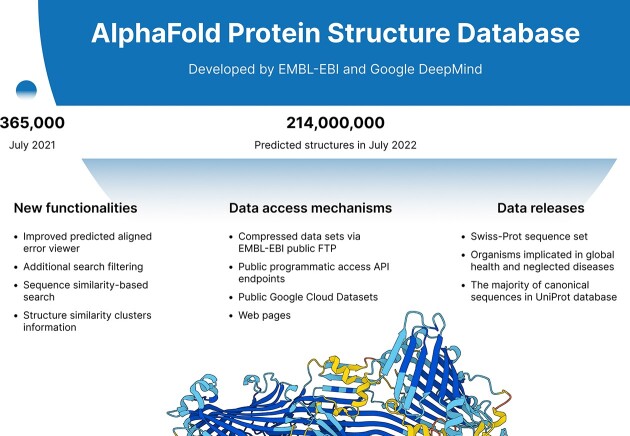
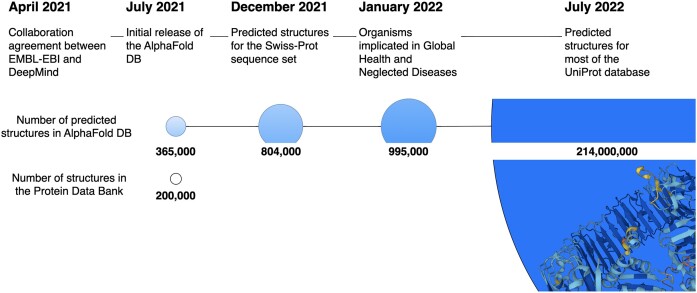
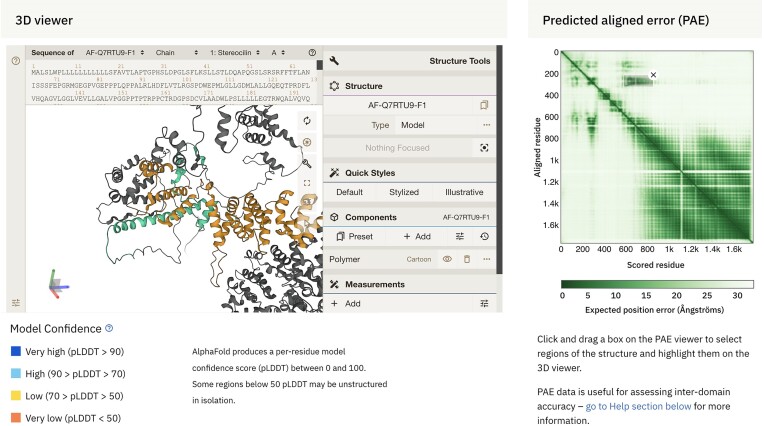
The AlphaFold Database Protein Structure Database (AlphaFold DB, https://alphafold.ebi.ac.uk) has significantly impacted structural biology by amassing over 214 million predicted protein structures, expanding from the initial 300k structures released in 2021. Enabled by the groundbreaking AlphaFold2 artificial intelligence (AI) system, the predictions archived in AlphaFold DB have been integrated into primary data resources such as PDB, UniProt, Ensembl, InterPro and MobiDB. Our manuscript details subsequent enhancements in data archiving, covering successive releases encompassing model organisms, global health proteomes, Swiss-Prot integration, and a host of curated protein datasets. We detail the data access mechanisms of AlphaFold DB, from direct file access via FTP to advanced queries using Google Cloud Public Datasets and the programmatic access endpoints of the database. We also discuss the improvements and services added since its initial release, including enhancements to the Predicted Aligned Error viewer, customisation options for the 3D viewer, and improvements in the search engine of AlphaFold DB.
Overview
CoChat Summary
TL;DR
AlphaFold DB has grown from ~300k to over 214 million predicted protein structures as of September 2023, with expanded access, search, and visualization features. This 2024 update describes data archiving, access mechanisms, integration with core resources, and new clustering/BLAST/PAE viewer capabilities.
Key findings
- AlphaFold DB expanded from approximately 300k structures in 2021 to over 214 million predicted protein structures as of September 2023; the initial July 2021 release housed over 360,000 structures for 20 model organism proteomes.
- Predictions are integrated into resources including PDB, UniProt, Ensembl, InterPro and MobiDB, and are accessible via FTP, Google Cloud Public Datasets (~23 TiB), API, and the website; PAE data is unavailable from EMBL-EBI public FTP.
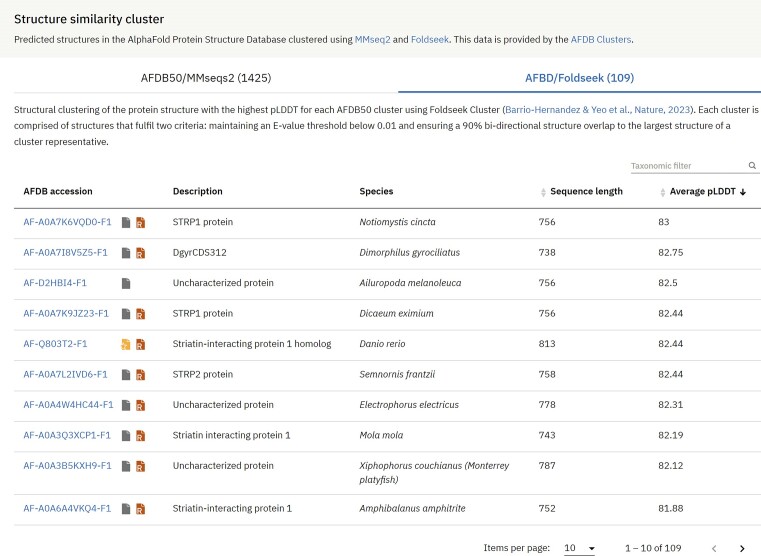
- Structure similarity clustering used MMseqs2 to cluster 214 million UniProtKB sequences into 52 million clusters, then Foldseek secondary clustering yielded 18.8 million clusters, finalizing 2.30 million robust clusters each with at least a pair of structures.
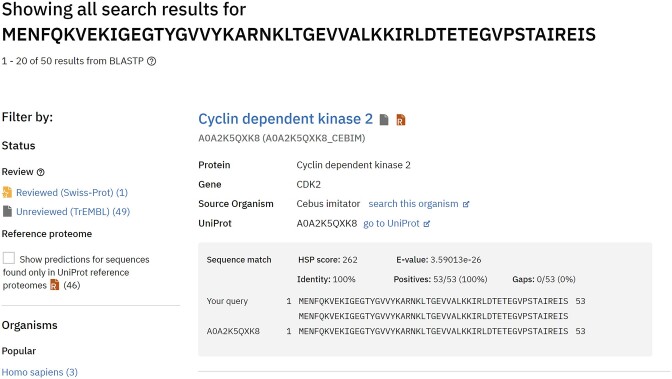
- New features include BLAST sequence similarity search, improved search filters for reviewed/unreviewed and reference proteome status, enhanced PAE viewer–Mol* interactivity, and a November 2022 update fixing a numerical bug that affected ~4% of total structure predictions.
Methods
- Descriptive database update/report with no primary experimental design; data generation is carried out by Google DeepMind, with predictions stored in PDB, mmCIF (modelCIF), and binaryCIF formats plus JSON metadata and confidence metrics pLDDT and PAE.
- Archiving uses successive releases from UniProt reference proteomes (e.g., 2021_02, 2021_04), Swiss-Prot, WHO global health proteomes, and MANE select; as of September 2023, EMBL-EBI FTP hosts TAR files for proteomes of 48 organisms.
- Access and analysis infrastructure includes FTP, Google Cloud Public Datasets, an API keyed on UniProt accessions, Apache-Solr search, BLAST on Google Cloud Platform, and Foldseek/MMseqs2 clustering.
Limitations
- Stated: sequences are not covered if they are less than 16 amino acids; >2700 aa for Swiss-Prot/proteome sequences or >1280 aa for other UniProt sequences; contain non-standard amino acids; are not in the UniProt ‘one sequence per gene’ FASTA file; or are viral proteins; these limitations are under discussion.
- Stated: some sequences may be outdated compared to UniProt due to less frequent AlphaFold DB releases; PAE data is unavailable from EMBL-EBI public FTP; full Google Cloud dataset download requires a Google account and can take roughly 2.5 days at 1 Gbps.
- Evident from the text: all archived structures are predicted models rather than experimental structures, and users must interpret pLDDT/PAE cautiously (e.g., pLDDT <50 likely disordered, 50–70 lower confidence); the database also currently lacks isoform and multimeric predicted structures, which are listed as future work.
Model-written summary. Check it against the paper before relying on it.
Integrity signals
Registry
Cites
Statistics
Figures

Verification
Claims the paper makes
11 Valid · 1 Not valid · 0 Not checked · 28 Own results and interpretations
Every source the paper cites for this claim was checked and supports it.
In the paper
“The new generation of predicted protein structure models has demonstrated remarkable accuracy, which could mitigate the continually widening gap between known protein sequences and experimentally determined protein structures (7).”
§ AlphaFold Protein Structure Database in 2024: providing structure coverage for over 214 million protein sequences > Introduction
What the sources say
- Supportedcites [7] Varadi M., Bordin N., Orengo C., Velankar S. The opportunities and challenges posed by the new generation of deep learning-based protein structure predictors. Curr. Opin. Struct. Biol. 2023; 79: 102543. 36807079 PMC7618866 source
The Introduction says prediction models made a major advance in accuracy and can match or sometimes surpass experimentally determined structures. It also describes a growing gap between known protein sequences and determined structures; the section on new challenges says predicted structures have greatly increased coverage of protein sequence space. These passages support both the accuracy claim and the proposed potential to narrow that gap (page numbers unavailable). (LLM, conf=0.93)
boosted- Asserted: passes — The authors put it forward as true.
- Checkable: passes — It can be checked against evidence.
- Load-bearing: passes — The paper’s conclusions depend on it.
- Based: passes — The paper gives a reason why it holds.
- Supported
Every source the paper cites for this claim was checked and supports it.
In the paper
“In response to frequent requests from the user community since the AlphaFold DB launch, we have made significant strides to implement a sequence-based similarity search feature. We have incorporated the Basic Local Alignment Search Tool (BLAST) (21) into our Google Cloud Platform infrastructure to achieve this.”
§ AlphaFold Protein Structure Database in 2024: providing structure coverage for over 214 million protein sequences > Implementation > Data access
What the sources say
- Supportedcites [21] Camacho C., Coulouris G., Avagyan V., Ma N., Papadopoulos J., Bealer K., Madden T.L. BLAST+: architecture and applications. BMC Bioinf. 2009; 10: 421. PMC2803857 20003500 source
The Background identifies BLAST as a sequence similarity search program that matches a query sequence against a database. In the citing sentence, the citation identifies the tool incorporated; the AlphaFold DB implementation is the citing authors’ own report, not a claim attributed to this source. (LLM, conf=0.91)
plainstates a cause- Asserted: passes — The authors put it forward as true.
- Checkable: passes — It can be checked against evidence.
- Load-bearing: unclear — It is unclear whether the paper’s conclusions depend on it.
- Based: passes — The paper gives a reason why it holds.
- Supported
Every source the paper cites for this claim was checked and supports it.
In the paper
“The impact of the predicted structures is further enhanced by their seamless integration into several core data resources, including PDBe-KB (17), UniProt (6), Ensembl (16), InterPro (15), Genecards (24) and MobiDB (25), among others.”
§ AlphaFold Protein Structure Database in 2024: providing structure coverage for over 214 million protein sequences > Conclusions and outlook
What the sources say
- Supportedcites [17] consortium P.D.B.-K.B. PDBe-KB: collaboratively defining the biological context of structural data. Nucleic Acids Res. 2022; 50: D534– D542. 34755867 PMC8728252 source
Citation (17) is attached specifically to PDBe-KB, rather than to the other resources in the sentence. The Introduction identifies PDBe-KB as a resource that integrates structural and functional annotations, supporting its identification here. (LLM, conf=0.90)
- Supportedcites [6] U.P. Consortium UniProt: the Universal Protein Knowledgebase in 2023. Nucleic Acids Res. 2023; 51: D523– D531. 36408920 PMC9825514 source
The citation is attached to UniProt in a list of resources, and the cited paper is a description of UniProt. Its Data integration and Interactive visualisations in entry pages sections state that UniProt incorporates AlphaFold-predicted structures into protein entries alongside other data; the supplied passages do not give page numbers. (LLM, conf=0.93)
- Supportedcites [16] Cunningham F., Allen J.E., Allen J., Alvarez-Jarreta J., Amode M.R., Armean I.M., Austine-Orimoloye O., Azov A.G., Barnes I., Bennett R. et al. Ensembl 2022. Nucleic Acids Res. 2022; 50: D988– D995. 34791404 PMC8728283 source
The citation identifies Ensembl as one of the resources in the list. In “Developing a new website” (page not provided), the paper says Ensembl’s Entity Viewer provides access to protein information, including 3D structures from PDBe. (LLM, conf=0.86)
plainstates a cause- Asserted: passes — The authors put it forward as true.
- Checkable: passes — It can be checked against evidence.
- Load-bearing: unclear — It is unclear whether the paper’s conclusions depend on it.
- Based: passes — The paper gives a reason why it holds.
- Supported
Every source the paper cites for this claim was checked and supports it.
In the paper
“Tackling this challenge, Steinegger et al. recently unveiled the Foldseek Cluster, a state-of-the-art structural-alignment-based clustering algorithm designed for vast datasets (22). They applied this novel method to the AlphaFold DB archive, making the derived structure similarity clusters available to the research community.”
§ AlphaFold Protein Structure Database in 2024: providing structure coverage for over 214 million protein sequences > Implementation > Data access
What the sources say
- Supportedcites [22] Barrio-Hernandez I., Yeo J., Jänes J., Mirdita M., Gilchrist C.L.M., Wein T., Varadi M., Velankar S., Beltrao P., Steinegger M. Clustering-predicted structures at the scale of the known protein universe. Nature. 2023; 622: 637– 645. 37704730 PMC10584675 source
The Abstract says the authors used Foldseek cluster to cluster the AlphaFold database. The Methods section (“Web server”) says they developed a server for users to explore the clusters, their members and related clusters, supporting the claim that the results were made available to researchers. (LLM, conf=0.93)
plainstates a cause- Asserted: passes — The authors put it forward as true.
- Checkable: passes — It can be checked against evidence.
- Load-bearing: passes — The paper’s conclusions depend on it.
- Based: passes — The paper gives a reason why it holds.
- Supported
- Probably not a substantial claim. 30
- It may state two separate claims as one. 15
- The quote only partly states this claim. 1
Claims other papers make about this one
Each is checked against this paper’s own text: does it say what the citing paper says it does?
The cited source says what the claim attributes to it.
In the citing paper
“houses over 200 million pre-run AF2 predictions”
From The power and pitfalls of AlphaFold2 for structure prediction beyond rigid globular proteins (2024) · cites this paper as [7]
Citations
Cites
Highly accurate protein structure prediction with AlphaFold
Jumper, J., Evans, R., Pritzel, A., Green, T., Figurnov, M., Ronneberger, O., Tunyasuvunakool, K., Bates, R., Žídek, A., Potapenko, A., et al. (2021) · Nature · doi:10.1038/s41586-021-03819-2 · Cited by 43,764
Self-citationBLAST+: architecture and applications
Camacho, C., Coulouris, G., Avagyan, V., Ma, N., Papadopoulos, J., Bealer, K., & Madden, T. L. (2009) · BMC Bioinformatics · doi:10.1186/1471-2105-10-421 · Cited by 22,074
UniProt: the Universal Protein Knowledgebase in 2023
The UniProt Consortium, Bateman, A., Martin, M.-J., Orchard, S., Magrane, M., Ahmad, S., Alpi, E., Bowler-Barnett, E. H., Britto, R., Bye-A-Jee, H., et al. (2023) · Nucleic Acids Research · doi:10.1093/nar/gkac1052 · Cited by 7,210
Evolutionary-scale prediction of atomic level protein structure with a language model
Lin, Z., Akin, H., Rao, R., Hie, B., Zhu, Z., Lu, W., Smetanin, N., Verkuil, R., Kabeli, O., Shmueli, Y., et al. (2022) · doi:10.1101/2022.07.20.500902 · Cited by 5,990 · cited 1×
“In the wake of the latest breakthroughs in prediction software, new databases such as the AlphaFold Protein Structure Database and the ESM Atlas ( 14 ) have emerged.”
MethodThe GeneCards suite: from gene data mining to disease genome sequence analyses
Stelzer, G., Rosen, N., Plaschkes, I., Zimmerman, S., Twik, M., Fishilevich, S., Stein, T. I., Nudel, R., Lieder, I., Mazor, Y., et al. (2016) · Current Protocols in Bioinformatics · doi:10.1002/cpbi.5 · Cited by 5,550 · cited 1×
“The impact of the predicted structures is further enhanced by their seamless integration into several core data resources, including PDBe-KB ( 17 ), UniProt ( 6 ), Ensembl ( 16 ), InterPro ( 15 ), Genecards ( 24 ) and MobiDB ( 25 ), among others.”
BackgroundAccurate prediction of protein structures and interactions using a 3-track network
Baek, M., DiMaio, F., Anishchenko, I., Dauparas, J., Ovchinnikov, S., Lee, G. R., Wang, J., Cong, Q., Kinch, L. N., Schaeffer, R. D., et al. (2021) · doi:10.1101/2021.06.14.448402 · Cited by 5,549
Paysan-Lafosse, T., Blum, M., Chuguransky, S., Grego, T., Pinto, B. L., Salazar, G. A., Bileschi, M. L., Bork, P., Bridge, A., Colwell, L., et al. (2023) · Nucleic Acids Research · doi:10.1093/nar/gkac993 · Cited by 2,399
Cunningham, F., Allen, J. E., Allen, J., Alvarez-Jarreta, J., Amode, M. R., Armean, I. M., Austine-Orimoloye, O., Azov, A. G., Barnes, I., Bennett, R., et al. (2022) · Nucleic Acids Research · doi:10.1093/nar/gkab1049 · Cited by 1,923
Mol* Viewer: modern web app for 3D visualization and analysis of large biomolecular structures
Sehnal, D., Bittrich, S., Deshpande, M., Svobodová, R., Berka, K., Bazgier, V., Velankar, S., Burley, S. K., Koča, J., & Rose, A. S. (2021) · Nucleic Acids Research · doi:10.1093/nar/gkab314 · Cited by 1,154 · cited 1×
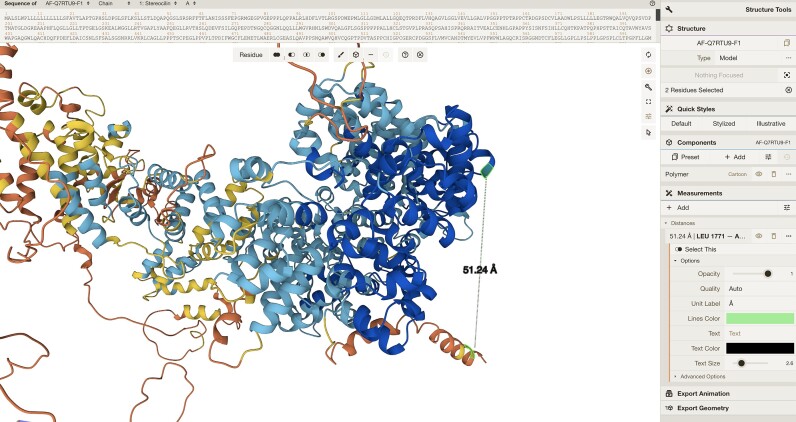
“We improved the visualisation of non-consecutive regions and the interactivity between the PAE viewer and the 3D molecular graphics viewer, Mol* ( 23 ) (Figure 5 ).”
MethodSelf-citationMariani, V., Biasini, M., Barbato, A., & Schwede, T. (2013) · Bioinformatics · doi:10.1093/bioinformatics/btt473 · Cited by 1,138 · cited 1×
“AlphaFold yields a per-residue estimate of its confidence, known as pLDDT, ranging from 0 to 100, indicating the tool’s predicted score on the lDDT-C α metric ( 19 ).”
Method
Cited by
Items 1,001–1,100 of 2,174
Xiong, Y., Li, H., Fan, S., Ding, Y., Wu, M., He, J., Yan, S., Jia, H., & Li, M. (2025) · International Journal of Molecular Sciences · doi:10.3390/ijms26020810 · Cited by 2
Hydrophobic cluster analysis at protein and proteome scales
Callebaut, I., & Mornon, J. (2025) · Biochimie · doi:10.1016/j.biochi.2025.07.013 · Cited by 2
Jeschke, G. (2025) · Helvetica Chimica Acta · doi:10.1002/hlca.202500032 · Cited by 2
Broadening the PHIP-Associated Neurodevelopmental Phenotype
Pascolini, G., Scaglione, G. L., Chandramouli, B., Castiglia, D., Zenzo, G. D., & Didona, B. (2024) · Children · doi:10.3390/children11111395 · Cited by 4
Kawaguchi, S., Isshiki, W., & Kai, T. (2025) · Biochimica et Biophysica Acta (BBA) - General Subjects · doi:10.1016/j.bbagen.2025.130811 · Cited by 2
Kell, D. B., & Pretorius, E. (2025) · Immune discovery. · doi:10.70322/immune.2025.10011 · Cited by 6
Accelerated discovery of thermophilic biocatalysts for marine polysaccharide bioprocessing via ETopt
Liu, C., Li, B., Jiang, H. W., Sun, J., Ren, J., Huang, X., Xu, P., Li, M., Xin, Y., Chen, S., et al. (2026) · International Journal of Biological Macromolecules · doi:10.1016/j.ijbiomac.2026.151068 · Cited by 3
Smith, J. R., Tutaj, M., Thota, J., Lamers, L., Gibson, A. C., Kundurthi, A., Gollapally, V. R., Brodie, K. C., Zacher, S., Laulederkind, S. J. F., et al. (2025) · Database · doi:10.1093/database/baae132 · Cited by 2
Basik, A. A., Gibu, N., Kawagiwa, Y., et al. (2024) · Frontiers in Microbiology · doi:10.3389/fmicb.2024.1378082 · Cited by 2
Generative artificial intelligence performs rudimentary structural biology modeling
(2024) · doi:10.1101/2024.01.10.575113 · Cited by 16
Cruz‐Granados, P., de Jesús, V. R., Soto-Varela, A., Aguado, R. G., & Lopez-Escamez, J. A. (2026) · Frontiers in Immunology · doi:10.3389/fimmu.2026.1789753 · Cited by 3
“Wild-type toll-like receptor 9 ( TLR9 ), tumour necrosis factor receptor superfamily member 1B ( TNFRSF1B ), and tumour necrosis factor receptor superfamily member 6 ( FAS ) computational models were retrieved from Alphafold2 (50).”
From waste to wealth: AI-driven enzyme innovation for straw transformation
Sun, X., Zhou, L., Li, Y., Shen, Q., Wang, Y., Jia, B., Yao, Y., & Pu, Z. (2026) · Bioresource Technology · doi:10.1016/j.biortech.2026.134875 · Cited by 3
Asymmetric loading of TnsE regulates Tn7 targeting of DNA replication structures
Krishnan, S. S., Shen, Y., O'Hagan, T. B., Matthews, L. A., Weerasinghe, N. W., Ghirlando, R., Thibodeaux, C. J., & Guarné, A. (2025) · Nucleic Acids Research · doi:10.1093/nar/gkaf472 · Cited by 2
“The predicted model for Ec TnsE (AF-P05845-F1) was down-loaded from the AlphaFold Protein Structure Database [ 36 ].”
Structure guided functional analysis of the S. cerevisiae Mre11 complex
Hohl, M., Yu, Y., Kuryavyi, V., Patel, D. J., & Petrini, J. H. J. (2025) · Nature Communications · doi:10.1038/s41467-025-62583-3 · Cited by 3
“Model-building of apo-MR and MR-DNA complex structures were performed manually based on the cryo-EM density map and computed model 40 by using COOT4 41 .”
Antal-Kónya, V., Schay, G., Kétszeri, M., Balogh, E., Mikó, Á., Seidl, D., Keszthelyi, T. M., Bernáth, M., Ungvári-Veres, A., Dorval, G., et al. (2026) · Proceedings of the National Academy of Sciences · doi:10.1073/pnas.2524893123 · Cited by 3
Kouidhi, B., Ali, E. M. M., Zmantar, T., et al. (2026) · Computational Biology and Chemistry · doi:10.1016/j.compbiolchem.2026.108922 · Cited by 2
Farrag, M., Aljuhani, R., Benický, J., Ahmed, H. A., Misra, S. K., Mishra, S. K., Sharp, J. S., Doerksen, R. J., Goldman, R., & Pomin, V. H. (2025) · Glycobiology · doi:10.1093/glycob/cwaf025 · Cited by 5
Özkan, S., Padilla, N., & de la Cruz, X. (2024) · Human Genetics · doi:10.1007/s00439-024-02692-z · Cited by 5
“These nine features are derived from structure models generated by (Jumper et al. 2021; Varadi et al. 2024); and several incorporate MSA information.”
Algorithm Selection on Molecular Docking for State-of-the-Art Performance
Yuan, Y., & Mısır, M. (2024) · Proceedings of the 2024 8th International Conference on Computer Science and Artificial Intelligence · doi:10.1145/3709026.3709046 · Cited by 4
Extensive natural variation in bacterial ribosomal drug-binding sites
Ekemezie, C. L., Chan, L. I., Brown, C. R., Helena-Bueno, K., Williams, T. A., & Melnikov, S. V. (2025) · Cell Reports · doi:10.1016/j.celrep.2025.115878 · Cited by 2
Two Key Ferredoxins for Nitrogen Fixation Have Different Specificities and Biophysical Properties
Addison, H., Pfister, P., Lago-Maciel, A., Erb, T. J., Pierik, A. J., & Rebelein, J. G. (2025) · Chemistry - A European Journal · doi:10.1002/chem.202500844 · Cited by 4
Hübenthal, A., & Mack, M. (2025) · Molecular Microbiology · doi:10.1111/mmi.70015 · Cited by 2
Structural insights into mechanisms of zinc scavenging by the Candida albicans zincophore Pra1
Nore, A., Roselletti, E., Chakraborty, T., Särkkä, N., Perera, R. L., Wilson, D., & Syrjänen, J. L. (2025) · Nature Communications · doi:10.1038/s41467-025-65782-0 · Cited by 5
“The AlphaFold model of Candida albicans Pra1 available on the AlphaFold Protein Structure Database was used as a starting model for manual building 24,25 .”
Budimir, A., Stojan, I., Primorac, K., Caporale, A., Krce, L., Raguž, M., Pacor, S., Tossi, A., Rončević, T., & Zoranić, L. (2026) · Scientific Reports · doi:10.1038/s41598-026-44795-9 · Cited by 3
“The AlphaFold Protein Structure Database 26 (https://alphafold.ebi.ac.uk), ColabFold v1.”
Unlocking the genomic repertoire of a cultivated megaphage
Buchan, A., Wiedman, S., Lambirth, K., Bellanger, M., Figueroa, J. L., Wright, E. T., Suresh, P. S., Zhang, Q., Thomas, J. A., Serwer, P., et al. (2025) · npj Viruses · doi:10.1038/s44298-025-00150-9 · Cited by 4
Yang, J., Larsen, J., Sieber, R. N., Ingmer, H., & Bowring, J. Z. (2025) · The Microbe · doi:10.1016/j.microb.2025.100461 · Cited by 2
TILLCANN: a TILLING platform in Cannabis sativa for mutation discovery and crop improvement
Duarte‐Delgado, D., Alexiou, K. G., Pujol, M., Uauy, C., Adamski, N. M., Vidal, V., Torres, A., Zalewski, C., Gaudino, R., Monfort, A., et al. (2025) · Molecular Horticulture · doi:10.1186/s43897-025-00176-w · Cited by 2
Veselu, D., Shoemark, D. K., & van der Kamp, M. W. (2026) · Journal of Computational Biophysics and Chemistry · doi:10.1142/s2737416526400077 · Cited by 2
Woessner, N. M., Chinestrad, P., Rückert, T., Weiß, L., Zintchenko, M., Schaffer, A.-M., Hartmann, S. E., Kiani, A., Köhn, M., Maia, C., et al. (2025) · bioRxiv (Cold Spring Harbor Laboratory) · doi:10.64898/2025.12.10.693420 · Cited by 2
Favretto, F., Jiménez‐Faraco, E., Fruncillo, S., Masè, N., Dominici, P., Hermoso, J. A., & Astegno, A. (2026) · ACS Infectious Diseases · doi:10.1021/acsinfecdis.6c00016 · Cited by 1
GPR15LG binds CXCR4 and synergistically modulates CXCL12-induced cell signaling and migration
Albers, D., Novikova, S., Vieyto-Nuñez, J., et al. (2025) · doi:10.1101/2025.01.13.632759 · Cited by 1
Tyagi, K., Jain, P., Roy, A., et al. (2025) · International Journal of Biological Macromolecules · doi:10.1016/j.ijbiomac.2025.145234 · Cited by 1
Mapping Cryptic Phosphorylation Sites in the Human Proteome
(2024) · doi:10.1101/2024.12.03.626562 · Cited by 9
Tawfiq, R., Kulmanov, M., & Hoehndorf, R. (2025) · bioRxiv (Cold Spring Harbor Laboratory) · doi:10.1101/2025.07.14.664848 · Cited by 1
Bulatova, L. F., Сергеевна, С. В., Sagdeeva, A. R., Vlasenkova, R., Bugaenko, T. A., Galimova, R. R., Nesterova, A. I., Filina, Y. V., & Kiyamova, R. (2025) · Antibodies · doi:10.3390/antib14020030 · Cited by 2
“(Supplementary Table S2) The MX35 epitope of the NaPi2b model was obtained from the AlphaFold Protein Structure Database [55].”
Oliver, J. A. C., Stanbury, K., Schofield, E. C., McLaughlin, B., & Mellersh, C. S. (2025) · G3 Genes Genomes Genetics · doi:10.1093/g3journal/jkaf016 · Cited by 1
“2021; Varadi et al .”
Saha, A., Das, S., Das, P., Ghosh, S., Tamang, A., Thakur, S., & Saha, D. (2026) · Parasites & Vectors · doi:10.1186/s13071-026-07352-x · Cited by 1
“Predicted local distance difference test (pLDDT) scores [27] were also predicted for model selection, and the model with the highest scores was selected for further analysis.”
Expression and characterization of an endo-β-1,6-galactanase from Arabidopsis thaliana
Gistelinck, K., Yu, X., Leyder, A., et al. (2025) · Biochemical Journal · doi:10.1042/bcj20253301 · Cited by 1
ATAD2 and TWIST1 Interaction Promotes MYC Activation in Colorectal Carcinoma
Roy, A., & Sudhamalla, B. (2024) · Biochemistry · doi:10.1021/acs.biochem.4c00360 · Cited by 1
Antibody-induced TREM2 ectodomain shedding inhibits TREM2 signaling in macrophage
Li, W., Jin, H., & Xu, Y. (2025) · Biochemical and Biophysical Research Communications · doi:10.1016/j.bbrc.2025.151674 · Cited by 2
Mode of Action of AlgE1: A Modular Mannuronate C-5 Epimerase
Petersen, A. B., Solem, A., Sætrom, G. I., Sletta, H., Czjzek, M., Aachmann, F. L., & Tøndervik, A. (2025) · Biochemistry · doi:10.1021/acs.biochem.5c00156 · Cited by 1
Ru, Z., Yu, M., Zhu, Y., et al. (2025) · Gene · doi:10.1016/j.gene.2025.149634 · Cited by 1
Unbiased co-occurring mutational landscapes in tumorigenesisPreprint
Li, Y., Xiong, Y., & Wei, W. (2025) · bioRxiv (Cold Spring Harbor Laboratory) · doi:10.1101/2025.01.19.633809 · Cited by 1
Decoding the physicochemical basis of taxonomy preferences in protein design modelsPreprint
Dillon, L. B., Maiwald, A., & Crook, O. M. (2025) · bioRxiv (Cold Spring Harbor Laboratory) · doi:10.1101/2025.10.21.683350 · Cited by 2
“To maintain phylogenetic diversity while ensuring structural information for all proteins, we used AlphaFold2 predicted structures from the AlphaFold Protein Structure Database [51, 55].”
Zhang, S., Mishra, P., Kelly, D. G., Kumar, R., & Bowman, G. R. (2026) · bioRxiv (Cold Spring Harbor Laboratory) · doi:10.64898/2026.05.21.726899 · Cited by 1
“For one of the newly added proteins, ch25h, a membrane protein, the starting structure was downloaded from the AlphaFold Protein Structure Database 32,49 .”
Immune Dysregulation in a Child With SOD1 ‐Related Neurological Disease
Boutin, R. C. T., Shobeirian, F., Adam, S., Lehman, A., Salvarinova, R., & Friedman, J. M. (2024) · American Journal of Medical Genetics Part A · doi:10.1002/ajmg.a.63949 · Cited by 2
Failed Metabolic Adaptation to Stress Underlies Pathogenesis in a Heterozygous Genetic DisorderPreprint
Harmon, R., McCarthy, E. F., Krol, A., Braun, J., Shetti, A., Godsel, L. M., Ren, Z., White, B. E. P., Weinberg, S. E., Simpson, C. L., et al. (2025) · bioRxiv (Cold Spring Harbor Laboratory) · doi:10.1101/2025.04.13.648535 · Cited by 1
Mechanism of human tRNA 3’CCA maturationPreprint
Kuhle, B., Krebs, L., Bhatta, A., Dennerlein, S., Rehling, P., & Hillen, H. S. (2026) · bioRxiv (Cold Spring Harbor Laboratory) · doi:10.64898/2026.03.02.709036 · Cited by 1
Galaxysagittarius-Af: Predicting Targets for Drug-Like Compounds in the Extended Human 3d ProteomePreprint
Kwon, S., Jung, N., Yang, J., et al. (2024) · SSRN Electronic Journal · doi:10.2139/ssrn.4772705 · Cited by 1
Salama, R., Peet, E., Morrione, L., Durant, S., Seager, M., Rennie, M., Scarlata, S., & Nechipurenko, I. (2025) · doi:10.1101/2025.08.18.670960 · Cited by 2
M3Site: multiclass multimodal learning for protein active site identification and classification
Ouyang, S., Luo, Y., Cai, H., Su, K., Liao, F., Zhan, N., Zhao, H., Yin, T., Zhao, L., & Shan, D. (2025) · Briefings in Bioinformatics · doi:10.1093/bib/bbaf590 · Cited by 3
Misek, S. A., Borgenvik, A., Christen, D., Kyrila, G., Zhang, A., Reel, S. M., Boisvert, M., Cai, K. X., Zhou, K. N., Gonzáles, E., et al. (2025) · bioRxiv (Cold Spring Harbor Laboratory) · doi:10.1101/2025.08.18.670743 · Cited by 1
“The predicted structure for human KIAA1549 (accession AF-Q9HCM3-F1-v4) was retrieved from the AlphaFold database 35,100 , and paucimannose N-glycans were attached to the structure as illustrative of N-glycosylation us-ing the Re-Glyco tool 101 .”
Admas, T., Shu, J., Bimpong, D., & Zhang, W. (2026) · Functional & Integrative Genomics · doi:10.1007/s10142-026-01821-3 · Cited by 1
“The secondary and 3D structure prediction of the HvTH1 protein was done using SOPMA and Alpha-Fold Server, respectively (Varadi et al. 2024; Geourjon and Deleage 1995).”
zsasa: a Zig-based engine for high-throughput solvent accessible surface area at proteome scalePreprint
Nagae, T., & Tomii, K. (2026) · bioRxiv (Cold Spring Harbor Laboratory) · doi:10.64898/2026.06.29.733683 · Cited by 1
Fine-tuning of conditional Transformers for the generation of functionally characterized enzymesPreprint
Nicolini, M., Saitto, E., Franco, R. E. J., Cavalleri, E., Mesiti, M., Galeano, A., Malchiodi, D., Paccanaro, A., Robinson, P. N., Casiraghi, E., et al. (2024) · bioRxiv (Cold Spring Harbor Laboratory) · doi:10.1101/2024.08.10.607430 · Cited by 3
“Interestingly, the training set sequence with the highest sequence identity has a predicted structure present in the AlphaFoldDB (Varadi et al., 2024).”
BackgroundMorphology spectrum and molecular landscape in eosinophilic solid and cystic renal cell carcinoma
Wang, Q., Xu, Z., Wang, J., et al. (2026) · Human Pathology · doi:10.1016/j.humpath.2026.106141 · Cited by 1
Pratt, O. S., Elliott, L. G., Haon, M., Mesdaghi, S., Price, R. M., Simpkin, A. J., & Rigden, D. J. (2024) · doi:10.1101/2024.10.30.621056 · Cited by 27
Loo, W. X. W., Sio, J. S., Yap, K., Loo, Y. S., Lim, H. X., Zhang, S., Liu, H., & Ng, C. S. (2026) · Aggregate · doi:10.1002/agt2.70280 · Cited by 1
Brinkmann, B. W., Guo, Z., Vijver, M. G., et al. (2025) · Environmental Science Nano · doi:10.1039/d5en00493d · Cited by 1
Bagaeva, D. I., Demina, G. R., Panina, I. S., et al. (2026) · International Journal of Biological Macromolecules · doi:10.1016/j.ijbiomac.2026.151714 · Cited by 1
Biocatalytic Upcycling of Biomass via Immobilized Enzymes in Continuous Flow
Wang, Y., Gkogkos, G., Huang, W., et al. (2026) · ACS Catalysis · doi:10.1021/acscatal.6c01031 · Cited by 1
Urem, M., Friggen, A. H., Musch, N., Silverman, M. H., Swain, C. J., Barbachyn, M. R., Mortin, L. I., Yu, X., DeLuccia, R. J., Lamers, M. H., et al. (2025) · Nature Communications · doi:10.1038/s41467-025-65324-8 · Cited by 2
“The overall fold of the full length E. faecium PolC protein in complex with the inhibitors is highly similar to the published structure of the G. kaustophilus PolC catalytic domain in complex with dsDNA anddGTP 6 ,andmodelsoffull-length E.faecium PolCintheapostateas predicted by Alphafold 44,45 .”
Hou, Y., Wang, Z., & Zhang, X. (2026) · Environmental Pollution · doi:10.1016/j.envpol.2026.128320 · Cited by 1
Cryo-EM structure of shutdown human nonmuscle myosin 2A
Casas-Mao, D. E., Carrington, G., & Peckham, M. (2026) · Science Advances · doi:10.1126/sciadv.aed1858 · Cited by 3
Birnbaum, F., & Keating, A. E. (2026) · Proceedings of the National Academy of Sciences · doi:10.1073/pnas.2535494123 · Cited by 11
Structural and evolutionary insights into the eukaryotic RNase MRP ribonucleoprotein complex
Zhou, B., Wang, X., Wan, F., et al. (2026) · Nature Communications · doi:10.1038/s41467-026-71007-9 · Cited by 1
LaBrant, E., Smith, C. N., Torres-Gerena, A. D., Ishimwe, J., Huang, F., Tullis, A., Litterer, L., Modi, B., Naldrett, M. J., Altartouri, B., et al. (2026) · Nature Communications · doi:10.1038/s41467-026-73514-1 · Cited by 3
Liang, H., Li, J., Qiu, S., Guo, J., & Liu, J. (2025) · Journal of Inflammation Research · doi:10.2147/jir.s550202 · Cited by 1
Hammerstad, M., Steinvik, E., & Hersleth, H.-P. (2025) · Redox Biology · doi:10.1016/j.redox.2025.103937 · Cited by 1
“The Ct NmbA structure was solved with molecular replacement (MR) with PHASER [59] using a search model of Ct NmbA from the AlphaFold Protein Structure Database [60,61] (Uniprot: Q8KDK7) with a TFZ score of 8.3 and 17.8 for the two molecules in the asymmetric unit.”
InfluentialLang, B., Streit, J. O., Kriwacki, R. W., Christodoulou, J., & Babu, M. M. (2025) · bioRxiv (Cold Spring Harbor Laboratory) · doi:10.1101/2025.06.25.661537 · Cited by 2
PICNIC web server for predicting proteins involved in biomolecular condensates
Hadarovich, A., Scheremetjew, M., Singh, H. R., Moon, H., Hersemann, L., & Tóth-Petróczy, Á. (2025) · Bioinformatics · doi:10.1093/bioinformatics/btaf647 · Cited by 2
“…(https://alphafold. ebi.ac.uk/), it can be pre-computed, e.g. using Colab note-book: https://colab.research.google.com/github/sokrypton/ ColabFold/blob/main/AlphaFold2.ipynb, where one needs to paste the protein sequence and run the cells in the notebook (Mirdita et al. 2022, Varadi et al. 2024).”
Basaldúa-Maciel, V., Martínez–Esquivias, F., & Guzmán‐Flores, J. M. (2025) · Current Medicinal Chemistry · doi:10.2174/0109298673352470250312082922 · Cited by 1
Ji, X., Einsiedler, M., D’Agostino, P. M., Weiße, R. H. ‐., Sträter, N., Herrmann, J. E., Müller, R., & Gulder, T. A. M. (2026) · ACS Catalysis · doi:10.1021/acscatal.6c02607 · Cited by 2
Napoli, G. D., Fissore, A., Salladini, E., Raccuia, E., Oliaro‐Bosso, S., Ruggiero, A., Berisio, R., Medina, M., Velázquez‐Campoy, A., Adinolfi, S., et al. (2025) · bioRxiv (Cold Spring Harbor Laboratory) · doi:10.1101/2025.02.04.636439 · Cited by 1
Zhou, L., Yang, Y., Kang, L., You, J., Wang, Y., Xu, A., Tu, G., Huang, R., Zhou, Z., Li, M., et al. (2026) · Microorganisms · doi:10.3390/microorganisms14051148 · Cited by 1
“In cases where an experimentally determined crystal structure was not available, we used the AlphaFold2 predicted structure [24,25].”
de Oliveira, N. R., Siqueira, A. S., Bueno, P. S. A., Gonçalves, E. C., & Zanette, J. (2025) · Proteins Structure Function and Bioinformatics · doi:10.1002/prot.70054 · Cited by 1
“In this context, recent advances in deep learning-based approaches such as AlphaFold have offered valuable insights [31, 52].”
Jhaveri, N. S., Gupta, B. P., & Chamberlin, H. (2025) · Biology Open · doi:10.1242/bio.062018 · Cited by 1
“To ask whether structurally similar proteins may be encoded byother genomes but not apparent at the primary sequence level using Blastp, we used AlphaFold to evaluate predicted structural features (Jumper et al., 2021; Varadi et al., 2024).”
Bou‐Rouphael, J., Cospain, A., Courtin, T., Keren, B., Marie, C., Lesieur‐Sebellin, M., Héron, D., Agathe, J. D. S., Heide, S., Lejeune, É., et al. (2025) · The American Journal of Human Genetics · doi:10.1016/j.ajhg.2025.09.001 · Cited by 3
Data‐driven evaluation of suitable immunogens for improved antibody selection
Waury, K., Kvartsberg, H., Zetterberg, H., Blennow, K., Teunissen, C. E., & Abeln, S. (2025) · Protein Science · doi:10.1002/pro.70100 · Cited by 1
Han, X. Y., Sun, R., Graewert, M. A., Zhou, Q., Resink, T., Blanchet, C. E., McInerney, G. M., Alici, E., Ljunggren, H., Farnebo, M., et al. (2025) · bioRxiv (Cold Spring Harbor Laboratory) · doi:10.1101/2025.03.27.645651 · Cited by 2
“Our results reveal that, under physiological conditions, G3BP1 adopts a more defined structural organization compared to AlphaFold2 37,38 predictions and undergoes a pronounced conformational compaction upon acidification.”
ViNAS-Pro: Online nanotoxicity data, modeling, and predictions
Wang, T., Yang, X., & Zhu, H. (2025) · Elsevier eBooks · doi:10.1016/b978-0-443-30010-3.00011-8 · Cited by 2
Ravindranath, A. G., Muralidhar, A., Gambhir, N., & Chatterjee, J. (2025) · In Silico Pharmacology · doi:10.1007/s40203-025-00344-2 · Cited by 1
“Various tools were employed for 3D modeling, including AlphaFold (Jumper et al. 2021; Varadi et al. 2023), ESMFold (Lin et al. 2023), trRosetta (Du et al. 2021; Su et al. 2021 ), and SWISS-MODEL (Waterhouse et al. 2018), as the complete PDB structures were not available.”
The chordata olfactory receptor database
Han, W., Bao, S., Liu, J., Wu, Y., Zeng, L., Zhang, T., Chen, N., Yao, K., Fan, S., Huang, A., et al. (2024) · Protein & Cell · doi:10.1093/procel/pwae050 · Cited by 4
“…results and model quality assessments, including predicted local distance difference test, predicted aligned error, and multiple sequence alignment (Varadi et al., 2024); the “taxon-omy” module presents basic species information and OR distribution; the “sequence similarity network” module…”
Wen, L., Titze, A., Topham, C. M., Radde, J., Frazão, C. J. R., & Walther, T. (2026) · Metabolic Engineering · doi:10.1016/j.ymben.2026.04.005 · Cited by 1
Ariefta, N. R., Narita, K., Murata, T., et al. (2024) · Chemico-Biological Interactions · doi:10.1016/j.cbi.2024.111362 · Cited by 1
(2025) · doi:10.1007/s00213-025-06901-z · Cited by 1
“A Vrk2 SNP (rs13466583) in CC041 mice results in a proline to leucine substitution at residue 319, an important structural residue predicted to have deleterious effects due to its predicted role in hydrogen bonding (Varadi et al. 2024).”
AlphaFold 3 accurately models natural variants of Helicobacter pylori catalase KatAPreprint
Perkins, A. (2025) · bioRxiv (Cold Spring Harbor Laboratory) · doi:10.1101/2025.06.02.657526 · Cited by 1
“AlphaFold has emerged as a promising tool to address some of these challenges 4,15,16 .”
Gardnerella fibrinogen-binding protein as a candidate adherence factor
Bulavaitė, A., Dapkūnas, J., Reškevičiūtė, R., Dalgėdienė, I., Valančauskas, L., Baranauskienė, L., & Plečkaitytė, M. (2025) · Frontiers in Cellular and Infection Microbiology · doi:10.3389/fcimb.2025.1556232 · Cited by 2
Gui, J., Chu, H., Zhang, J., Li, X., Liu, W., Li, R., Zhang, F., Dong, M., Gao, K., Luo, H., et al. (2025) · Brain and Behavior · doi:10.1002/brb3.70625 · Cited by 3
“The structures of the proteins were downloaded from the Protein Data Bank (PDB) (http://www.rcsb.org/) and predicted using AlphaFold (https:// alphafold.ebi.ac.uk/) (Varadi et al. 2023) (Table S2).”
Unphosphorylated tyrosines mediate PD-1 inhibition of T cell signaling condensate formation
Sharma, M., Katz, Z., DeWitt, D. C., Ruff, K. M., Singh, A., Lan, H., Phung, W., Tom, J., Song, A., Sudhamsu, J., et al. (2026) · Science · doi:10.1126/science.adt9365 · Cited by 3
Barraza, D., Paulo, T. F., Findley, L., et al. (2025) · bioRxiv (Cold Spring Harbor Laboratory) · doi:10.1101/2025.04.21.649765 · Cited by 1
“Furthermore, AlphaFold predictions show that close structural homologs of Peri-15a are present in many organisms that associate with V. cholerae in the environment including copepods, rotifers, cyanobacteria, non-biting midges, and house flies (33).”
Long-Read Sequencing Unlocks New Insights into the Amphidinium carterae Microbiome
Judd, M., Wira, J., Place, A. R., & Bachvaroff, T. (2024) · doi:10.20944/preprints202406.1789.v1 · Cited by 5
Protein massively parallel binding assay reveals transcription factor binding determinantsPreprint
Lupo, O., Brodsky, S., Jana, T., Manadre, W., Valinsky, G., Navon, Y., Mindel, V., & Barkai, N. (2025) · bioRxiv (Cold Spring Harbor Laboratory) · doi:10.1101/2025.03.05.641616 · Cited by 1
Lombard, V., Van, J. N., Grudinin, S., & Laine, É. (2026) · Acta Crystallographica Section D Structural Biology · doi:10.1107/s2059798326006054 · Cited by 5
“In recent years, spectacular advances in high-throughput deep learning (DL) technologies have provided access to reliable predictions of protein 3D structures at the scale of entire proteomes (Varadi et al., 2024).”
Schlosser, C., Sharrouf, K. A., Papadopoulou, A. A., Haug‐Kröper, M., Singh, S., Johler, M., Pettinger, J., Horn, H., Koch, M., Hoeppner, S., et al. (2025) · Communications Biology · doi:10.1038/s42003-025-08102-y · Cited by 3
“Using AlphaFold-predicted 3D structures 46,47 , we performed a conservation analysis, which supported the hypothesis that the PA domains of the SPPL2 subfamily confer speci fi c protein-protein interactions.”
InfluentialChacha, R., Maina, C., Murungi, E. K., Guantai, E. M., Ngugi, M. P., Ndirangu, E. G., Mugo, J., Njeru, S. N., & Kigondu, E. M. (2025) · Open Research Africa · doi:10.12688/openresafrica.16071.1 · Cited by 1
“Homology models of Msm MmpL5 and MSMEG_5187 EPs were obtained from the AlphaFold DB (Varadi et al. , 2024).”
Yang, H., Tian, M., Kundu, J. K., Deng, W., Xiao, Y., Tan, C., Ruan, Y., & Liu, C. (2026) · Plants · doi:10.3390/plants15121793 · Cited by 1
“…online server (https://colab.research.google.com/ github/sokrypton/ColabFold/blob/main/AlphaFold2.ipynb#scrollTo=11l8k--10q0C, https://doi.org/10.3390/plants15121793 17 February 2025) [105,106] and subsequently visualized with PyMOL software (version 3.1.3.1, Schrödinger, LLC, New York, NY, USA).”
InfluentialBacterial Biofilms as a Reservoir of Amyloids Formed through Specific and Nonspecific Mechanisms
Nizhnikov, A. A. (2025) · Russian Journal of Genetics · doi:10.1134/s1022795425701078 · Cited by 1
Structural determination of natural products at speeds and scale of high-throughput screening
Thornburg, C. C., Kumar, R., Wang, D. J., O’Keefe, B. R., & Grkovic, T. (2026) · Natural Product Reports · doi:10.1039/d6np00016a · Cited by 5
Metadata
- Authors
- Varadi, M., Bertoni, D., Magana, P., Paramval, U., Pidruchna, I., Radhakrishnan, M., Tsenkov, M., Nair, S., Mirdita, M., Yeo, J., Kovalevskiy, O., Tunyasuvunakool, K., Laydon, A., Žídek, A., Tomlinson, H., Hariharan, D., Abrahamson, J., Green, T., Jumper, J., Birney, E., Steinegger, M., Hassabis, D., & Velankar, S.
- Affiliations
- European Molecular Biology Laboratory, European Bioinformatics Institute , Hinxton, UK
- European Bioinformatics Institute (GB)
- Seoul National University (KR)
- Google DeepMind (United Kingdom) (GB)
- Corresponding author
- Hassabis, Demis
- Velankar, Sameer
- ORCID
- Venue
- Nucleic Acids Research
- Publisher
- Oxford University Press (OUP)
- Published
- 2023-11-02
- Volume
- 52
- Issue
- D1
- Pages
- D368-D375
- ISSN
- 0305-1048 (ISSN-L)
- 1362-4962
- PMC
- PMC10767828
- OpenAlex
- W4388464011
- Cited by
- 2,052
- References
- 29
- Citations by year
- 2026: 724 · 2025: 1015 · 2024: 307 · 2023: 5
- FWCI
- 181.98
- Type
- journal article
- Language
- en
- Open access
- gold
- doi.org
- Licence
- Locations
- Nucleic Acids Research (publishedVersion, cc-by)
- PubMed Central (publishedVersion, cc-by)
- PubMed (publishedVersion)
- Seoul National University Open Repository (Seoul National University) (submittedVersion)
- Funders
- Google DeepMind
- National Research Foundation of Korea (2019R1A6A1A10073437, 2020M3A9G7103933, 2021R1C1C102065, 2021M3A9I4021220, RS-2023-00250470)
- Samsung DS Research Fund
- Seoul National University
- Topics
- Life Sciences › Biochemistry, Genetics and Molecular Biology › Molecular Biology › Protein Structure and Dynamics
- Life Sciences › Biochemistry, Genetics and Molecular Biology › Structural Biology › Enzyme Structure and Function
- Life Sciences › Biochemistry, Genetics and Molecular Biology › Molecular Biology › Machine Learning in Bioinformatics
- Keywords
- predicted protein structures, AlphaFold2, protein structure prediction, protein sequence coverage, data archiving, database access, search engines
- MeSH terms
- Amino Acid Sequence, Artificial Intelligence, Proteins, Protein Structure, Secondary, Proteome, Databases, Protein, Search Engine
About these checks
Registry, retraction, Cites and statistics results are computed, not judged, with one exception: a printed reference that no index lists is read once by a model before it counts as a citation error. Claims are extracted by a model and kept only when their quote appears verbatim in the text; each cited source is then checked, with a model’s help, for whether it says what the claim relies on. Those verdicts can be wrong — read the claim’s quote and the cited source before relying on one.
The claim verdicts this report counts are experimental: their accuracy is not yet measured.
A language model drew the claims from the paper on 2026-10-10, under version 3 of the claim definition (model deepseek-v4.1-flash, prompt extract-v3).
A second model labelled each claim on 2026-10-10 (model jev-1.13-20260917, definition revision gold-guideline-v0.2).
Cited sources are checked with a language model’s help (gpt-6-sol).
Statistics and arithmetic are recomputed, not judged.
Confidence bands are shown only for fields calibrated on our annotated test set. None is calibrated yet, so no band is shown.
What counts as a claim ›How we measure confidence ›How we check this ›
Are you an author, or do you see a problem with this page? Request a review
Data sources
Bibliographic data: Semantic Scholar, OpenAlex, Crossref.
Contains information from the Semantic Scholar Academic Graph Datasets, made available under the ODC Attribution License (ODC-BY 1.0).
Semantic Scholar’s data is described in: Kinney, R., et al. (2023). The Semantic Scholar Open Data Platform. arXiv:2301.10140.
