

Childhood Adversities Increase the Risk of Psychosis: A Meta-analysis of Patient-Control, Prospective- and Cross-sectional Cohort Studies
Open accessThe DOI matches its Crossref record; 72 of the 74 references it cites were found in a registry or an index.
Abstract
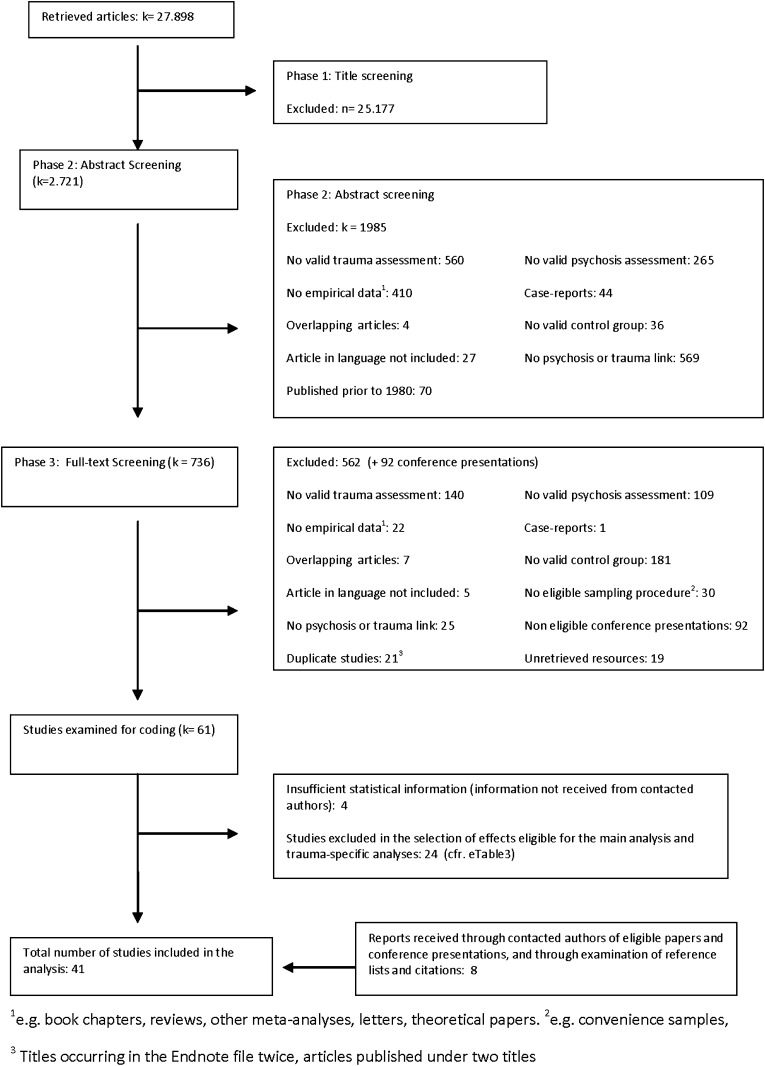
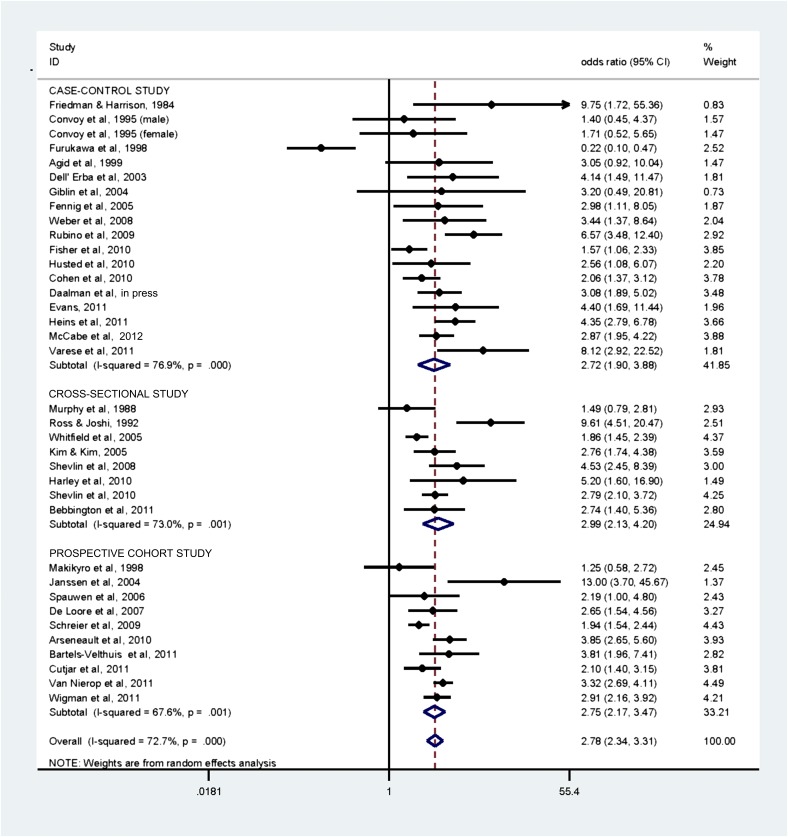
Evidence suggests that adverse experiences in childhood are associated with psychosis. To examine the association between childhood adversity and trauma (sexual abuse, physical abuse, emotional/psychological abuse, neglect, parental death, and bullying) and psychosis outcome, MEDLINE, EMBASE, PsychINFO, and Web of Science were searched from January 1980 through November 2011. We included prospective cohort studies, large-scale cross-sectional studies investigating the association between childhood adversity and psychotic symptoms or illness, case-control studies comparing the prevalence of adverse events between psychotic patients and controls using dichotomous or continuous measures, and case-control studies comparing the prevalence of psychotic symptoms between exposed and nonexposed subjects using dichotomous or continuous measures of adversity and psychosis. The analysis included 18 case-control studies (n = 2048 psychotic patients and 1856 nonpsychiatric controls), 10 prospective and quasi-prospective studies (n = 41,803) and 8 population-based cross-sectional studies (n = 35,546). There were significant associations between adversity and psychosis across all research designs, with an overall effect of OR = 2.78 (95% CI = 2.34-3.31). The integration of the case-control studies indicated that patients with psychosis were 2.72 times more likely to have been exposed to childhood adversity than controls (95% CI = 1.90-3.88). The association between childhood adversity and psychosis was also significant in population-based cross-sectional studies (OR = 2.99 [95% CI = 2.12-4.20]) as well as in prospective and quasi-prospective studies (OR = 2.75 [95% CI = 2.17-3.47]). The estimated population attributable risk was 33% (16%-47%). These findings indicate that childhood adversity is strongly associated with increased risk for psychosis.
Overview
The claims and statistics of this paper haven’t been checked yet.
Free: it reads the open-access text and checks the first 5 claims that cite a source we can check. Create a free account to check every claim.
Integrity signals
Registry
Cites
Statistics
Figures
Verification
Claims the paper makes
The claims and statistics of this paper haven’t been checked yet.
Free: it reads the open-access text and checks the first 5 claims that cite a source we can check. Create a free account to check every claim.
Claims other papers make about this one
Each is checked against this paper’s own text: does it say what the citing paper says it does?
The source backs part of the claim, not all of it — or backs it for a different population, condition or comparison.
In the citing paper
“by study design on obesity and psychosis,7,9”
From Long-term outcomes of childhood sexual abuse: an umbrella review (2019) · cites this paper as [7]
Experimental — accuracy not yet measuredThe source backs part of the claim, not all of it — or backs it for a different population, condition or comparison.
In the citing paper
“A recent meta-ana lysis calculated a population attributable risk of 33%, meaning that if the six types of child adversity studied were to disappear, a third of new psychosis cases would be avoided [13] .”
From The traumagenic neurodevelopmental model of psychosis revisited (2014) · cites this paper as [13]
Experimental — accuracy not yet measuredThe source backs part of the claim, not all of it — or backs it for a different population, condition or comparison.
In the citing paper
“and experiencing physical or sexual abuse (112).”
From Aberrant Salience, Information Processing, and Dopaminergic Signaling in People at Clinical High Risk for Psychosis (2020) · cites this paper as [112]
Experimental — accuracy not yet measuredThe cited source says what the claim attributes to it.
In the citing paper
“Recent studies indicate this is not an evidence-based belief [12,13,167] .”
From The traumagenic neurodevelopmental model of psychosis revisited (2014) · cites this paper as [13]
The cited source says what the claim attributes to it.
In the citing paper
“Furthermore, numerous studies and reviews note that the relationship between child abuse and psychosis remains after controlling for family history of psychosis [9-13,17] .”
From The traumagenic neurodevelopmental model of psychosis revisited (2014) · cites this paper as [13]
8 more claims about this paper
Create a free account to see every claim other papers make about this one.
Self-check
Percentages, sums and reported differences re-computed from the paper’s own numbers.
The self-check needs the paper’s full text.
Citations
Cites
Measuring inconsistency in meta-analyses
Higgins, J. P. T., Thompson, S. G., Deeks, J. J., & Altman, D. G. (2003) · BMJ · doi:10.1136/bmj.327.7414.557 · Cited by 63,139 · cited 1×
“Heterogeneity analyses were carried out using the Q and I(2) statistics to examine and quantify the amount of observed variance accounted for by true heterogeneity rather than sampling error.(57) Meta-regression analysis was subsequently used to determine whether (1) differences in study design and (2) inclusion of ad…”
MethodBias in meta-analysis detected by a simple, graphical test
Egger, M., Smith, G. D., Schneider, M., & Minder, C. (1997) · BMJ · doi:10.1136/bmj.315.7109.629 · Cited by 56,722
Meta-analysis of Observational Studies in Epidemiology<SUBTITLE>A Proposal for Reporting</SUBTITLE>
Stroup, D. F. (2000) · JAMA · doi:10.1001/jama.283.15.2008 · Cited by 20,623
Borenstein, M., Hedges, L. V., Higgins, J. P. T., & Rothstein, H. R. (2009) · doi:10.1002/9780470743386 · Cited by 14,225
Borenstein, M., Hedges, L. V., Higgins, J. P. T., & Rothstein, H. R. (2021) · doi:10.1002/9781119558378 · Cited by 9,799
The Handbook of Research Synthesis and Meta-Analysis
(2019) · doi:10.7758/9781610448864 · Cited by 4,553
Zhang, J., & Yu, K. F. (1998) · JAMA · doi:10.1001/jama.280.19.1690 · Cited by 4,138 · cited 1×
“Risk ratios were treated as ORs without further adjustment as the incidence of psychosis in the studied populations was low (ie, <10%).(56)”
MethodA Nonparametric “Trim and Fill” Method of Accounting for Publication Bias in Meta-Analysis
Duval, S., & Tweedie, R. (2000) · Journal of the American Statistical Association · doi:10.1080/01621459.2000.10473905 · Cited by 2,955
Validity of adult retrospective reports of adverse childhood experiences: review of the evidence
Hardt, J., & Rutter, M. (2004) · Journal of Child Psychology and Psychiatry · doi:10.1111/j.1469-7610.2004.00218.x · Cited by 2,827
Childhood adversities and adult psychopathology in the WHO World Mental Health Surveys
Kessler, R. C., McLaughlin, K. A., Green, J. G., Gruber, M. J., Sampson, N. A., Zaslavsky, A. M., Aguilar-Gaxiola, S., Alhamzawi, A. O., Alonso, J., Angermeyer, M., et al. (2010) · British Journal of Psychiatry · doi:10.1192/bjp.bp.110.080499 · Cited by 2,640 · cited 1×
“Adverse childhood events including trauma is a common experience worldwide, with some estimates suggesting that about a third of the general population may be affected.(1) Evidence suggests that its effects in adulthood may include a range of negative social outcomes, including higher criminality,(2) a lower education…”
Background
Research works printed but not linked: 12
- 15. Dell'Erba G, Venturi P, Tallarico V. Childhood stressful experiences in familial and sporadic schizophrenic patients [Italian] Italian J Psychopathol. 2003;9:32–39.
- 25. Evans G. Trauma and psychosis: investigating dissociation and self-concept clarity [Unpublished doctoral dissertation] University of Liverpool, UK; 2011
- 60. Schreier A, Wolke D, Thomas K, et al. Prospective study of peer victimization in childhood and psychotic symptoms in a nonclinical population at age 12 years. Arch Gen Psychiatry. 2009;66:527–536. doi: 10.1001/archgenpsychiatry.2009.23. · DOI · Paper page
- 63. Janssen I, Krabbendam L, Bak M, et al. Childhood abuse as a risk factor for psychotic experiences. Acta Psychiatr Scand. 2004;109:38–45. doi: 10.1046/j.0001-690x.2003.00217.x. · DOI · Paper page
- 64. Spauwen J, Krabbendam L, Lieb R, Wittchen H-U, van Os J. Impact of psychological trauma on the development of psychotic symptoms: relationship with psychosis proneness. Br J Psychiatry. 2006;188:527–533. doi: 10.1192/bjp.bp.105.011346. · DOI · Paper page
- 65. Nishida A, Tanii H, Nishimura Y, et al. Associations between psychotic-like experiences and mental health status and other psychopathologies among Japanese early teens. Schizophr Res. 2008;99:125–133. doi: 10.1016/j.schres.2007.11.038. · DOI
- 66. Shevlin M, Houston JE, Dorahy MJ, Adamson G. Cumulative traumas and psychosis: an analysis of the National Comorbidity Survey and the British Psychiatric Morbidity Survey. Schizophr Bull. 2008;34:193–199. doi: 10.1093/schbul/sbm069. · DOI · Paper page
- 67. Arseneault L, Cannon M, Fisher HL, et al. Psychotic symptoms: a genetically sensitive longitudinal cohort study. Am J Psychiatry. 2010;168:65–72. doi: 10.1176/appi.ajp.2010.10040567. · DOI · Paper page
- 69. De Loore E, Drukker M, Gunther N, et al. Childhood negative experiences and subclinical psychosis in adolescence: a longitudinal general population study. Early Interv Psychiatry. 2007;1:201–207. · DOI · Paper page
- 70. Whitfield CL, Dube SR, Felitti VJ, Anda RF. Adverse childhood experiences and hallucinations. Child Abuse & Neglect. 2005;29:797–810. doi: 10.1016/j.chiabu.2005.01.004. · DOI · Paper page
- 72. Houston JE, Murphy J, Adamson G, Stringer M, Shevlin M. Childhood sexual abuse, early cannabis use, and psychosis: testing an interaction model based on the National Comorbidity Survey. Schizophr Bull. 2008;34:580–585. doi: 10.1093/schbul/sbm127. · DOI · Paper page
- 73. Husted JA, Ahmed R, Chow EWC, Brzustowicz LM, Bassett AS. Childhood trauma and genetic factors in familial schizophrenia associated with the NOS1AP gene. Schizophr Res. 2010;121:187–192. doi: 10.1016/j.schres.2010.05.021. · DOI
Cited by
Items 601–700 of 1,008
Challenges in researching the immune pathways between early life adversity and psychopathology
Reid, B. M., & Danese, A. (2020) · Development and Psychopathology · doi:10.1017/s0954579420001157 · Cited by 37
“For example, childhood maltreatment predicts several psychiatric disorders, including depression, bipolar disorder, posttraumatic stress disorder (PTSD), and schizophrenia (Gilbert et al., 2009; Varese et al., 2012; Widom, 1999).”
BackgroundStupak, R., & Dobroczyński, B. (2021) · International Journal of Environmental Research and Public Health · doi:10.3390/ijerph18126625 · Cited by 39
“To mention just a few examples, financial and social status [52,53], belonging to an ethnic minority [54], or being a victim of child abuse and other adversities [55] have been shown to influence the frequency of particular diagnoses and prescription of psychiatric drugs.”
BackgroundThe Development-Based Taxonomy of Stressors and Traumas: An Initial Empirical Validation
Kira, I. A. (2021) · Psychology · doi:10.4236/psych.2021.1210099 · Cited by 38
Chadwick, E., & Billings, J. (2022) · Psychology and Psychotherapy Theory Research and Practice · doi:10.1111/papt.12387 · Cited by 46
Emotional Abuse and Psychosis: A Recent Review of the Literature
Ackner, S., Skeate, A., Patterson, P. H., & Neal, A. (2013) · Journal of Aggression Maltreatment & Trauma · doi:10.1080/10926771.2013.837132 · Cited by 51
“In particular, there has been substantial research into the relationship between CT and the later development of psychosis including schizophrenia (Read, Perry, Moskowitz, & Connolly, 2001; Varese et al., 2012).”
BackgroundWoods, A. (2017) · Medical Humanities · doi:10.1136/medhum-2016-011167 · Cited by 31
Child Sexual Abuse and Problems Reported by Survivors of CSA: A Meta-Review
Nagtegaal, M. H., & Boonmann, C. (2021) · Journal of Child Sexual Abuse · doi:10.1080/10538712.2021.1985673 · Cited by 49
Cognitive behavioural therapy for psychosis: The end of the line or time for a new approach?
Newman‐Taylor, K., & Bentall, R. P. (2023) · Psychology and Psychotherapy Theory Research and Practice · doi:10.1111/papt.12498 · Cited by 40
“These insights have been supported by epidemiological and clinical studies that strongly implicate childhood adversity in the aetiology of psychosis (e.g. Varese et al., 2012).”
Self-citationDisrupted glucocorticoid—Immune interactions during stress response in schizophrenia
Chiappelli, J., Shi, Q., Kodi, P., Savransky, A., Kochunov, P., Rowland, L. M., Nugent, K. L., & Hong, L. E. (2015) · Psychoneuroendocrinology · doi:10.1016/j.psyneuen.2015.09.010 · Cited by 38
“Stressful life xperiences in prenatal development (van Os and Selten, 1998) and arly childhood (Varese et al., 2012) increase the risk of developing chizophrenia in adult life; stressful life events in adolescence and dulthood may precipitate the first episode of psychosis and subequent exacerbations of the illness (B…”
BackgroundThe Adenosine Neuromodulation System in Schizophrenia
Rial, D., Lara, D. R., & Cunha, R. A. (2014) · International review of neurobiology · doi:10.1016/b978-0-12-801022-8.00016-7 · Cited by 40
Attachment styles and symptoms in individuals with psychosis
Strand, J., Goulding, A., & Tidefors, I. (2014) · Nordic Journal of Psychiatry · doi:10.3109/08039488.2014.929740 · Cited by 40
Rössler, W., Ajdacic‐Gross, V., Rodgers, S., Haker, H., & Müller, M. (2016) · Schizophrenia Research · doi:10.1016/j.schres.2016.02.006 · Cited by 47
“ospital, University of Zurich, schizophrenic psychosis (Holtzman et al., 2013; Matheson et al., 2013; Varese et al., 2012; Wigman et al., 2012; Schäfer and Fisher, 2011).”
Cristóbal-Narváez, P., Sheinbaum, T., Rosa, A., Ballespí, S., de Castro-Català, M., Peña, E., Kwapil, T. R., & Barrantes-Vidal, N. (2016) · PLoS ONE · doi:10.1371/journal.pone.0158809 · Cited by 43
“Mounting evidence indicates that childhood adversity is associated with an increased risk for psychosis phenotypes [1].”
BackgroundPsychiatric symptoms and risk of victimisation: a population-based study from Southeast London
Bhavsar, V., Dean, K., Hatch, S. L., MacCabe, J. H., & Hotopf, M. H. (2018) · Epidemiology and Psychiatric Sciences · doi:10.1017/s2045796018000537 · Cited by 38
“victimisation on mental disorder, particularly for disorders such as psychosis (in relation to childhood victimisation (Varese et al., 2012)) and post-traumatic stress disorder (PTSD) (Kessler et al.”
InfluentialSeitz, R., Vracotas, N., Béchard‐Evans, L., King, S., Abadi, S., Joober, R., Shah, J. L., MALLA, A. K., & Pruessner, M. (2019) · Psychoneuroendocrinology · doi:10.1016/j.psyneuen.2019.01.010 · Cited by 34
Frydecka, D., Misiak, B., Kotowicz, K., Pionke‐Ubych, R., Krężołek, M., Cechnicki, A., & Gawęda, Ł. (2020) · European Psychiatry · doi:10.1192/j.eurpsy.2020.31 · Cited by 38
“It has been shown that even after controlling demographic factors and comorbid mental disorders, the relationship between traumatic life events and PLEs is fairly significant with odds ratios ranging from 3 to 11 as presented by a recent meta-analysis [10].”
BackgroundQuidé, Y., Girshkin, L., Watkeys, O. J., Carr, V. J., & Green, M. J. (2021) · European Archives of Psychiatry and Clinical Neuroscience · doi:10.1007/s00406-020-01190-3 · Cited by 32
Adverse Childhood Experiences and Methylation of the FKBP5 Gene in Patients with Psychotic Disorders
Misiak, B., Karpiński, P., Szmida, E., Grąźlewski, T., Jabłoński, M., Cyranka, K., Rymaszewska, J., Piotrowski, P., Kotowicz, K., & Frydecka, D. (2020) · Journal of Clinical Medicine · doi:10.3390/jcm9123792 · Cited by 32
Saarinen, A. I. L., Keltikangas‐Järvinen, L., Jääskeläinen, E., Huhtaniska, S., Pudas, J., Tovar-Perdomo, S., Penttilä, M., Miettunen, J., & Lieslehto, J. (2021) · Biological Psychiatry Cognitive Neuroscience and Neuroimaging · doi:10.1016/j.bpsc.2021.01.002 · Cited by 47
Zhu, X., & Grace, A. A. (2022) · Molecular Psychiatry · doi:10.1038/s41380-022-01820-3 · Cited by 40
Childhood trauma as a risk factor for psychosis: A sib-pair study
Barrigón, M. L., Díaz, F. J., Gurpegui, M., Ferrín, M., Salcedo, M. D., Moreno-Granados, J. M., Cervilla, J. A., & Ruíz-Veguilla, M. (2015) · Journal of Psychiatric Research · doi:10.1016/j.jpsychires.2015.08.017 · Cited by 41
“In two recent meta-analyses (Varese et al., 2012; Matheson et al., 2013), childhood adversity and trauma were found to be associated with an increased risk of psychosis.”
Childhood adversities and clinical symptomatology in first-episode psychosis
Lindgren, M., Mäntylä, T. J. S., Rikandi, E., Torniainen‐Holm, M., Morales‐Muñoz, I., Kieseppä, T., Mantere, O., & Suvisaari, J. (2017) · Psychiatry Research · doi:10.1016/j.psychres.2017.08.070 · Cited by 40
“A metaanalysis focusing on psychotic disorders found exposure to childhood adversities to be 2.7 times more common in psychosis patients than in healthy control subjects, adversities increasing the risk of psychosis at a 2.8 odds ratio (Varese et al., 2012b).”
BackgroundInfluentialVulnerability to psychosocial disability in psychosis
Griffiths, S. L., Wood, S. J., & Birchwood, M. J. (2018) · Epidemiology and Psychiatric Sciences · doi:10.1017/s2045796018000495 · Cited by 36
“8 times more likely to develop psychosis in adulthood (Varese et al., 2012); trauma and neglect feature often in personal histories.”
BackgroundSheinbaum, T., Bifulco, A., Ballespí, S., Mitjavila, M., Kwapil, T. R., & Barrantes-Vidal, N. (2015) · PLOS ONE · doi:10.1371/journal.pone.0135150 · Cited by 31
Shinn, A. K., Wolff, J. D., Hwang, M., Lebois, L. A. M., Robinson, M. A., Winternitz, S. R., Öngür, D., Ressler, K. J., & Kaufman, M. L. (2020) · Frontiers in Psychiatry · doi:10.3389/fpsyt.2019.01011 · Cited by 31
“31) for the association between childhood adversity and psychosis (25).”
BackgroundChildren’s mental health: Time to stop using psychiatric diagnosis
Timimi, S. B. (2015) · European Journal of Psychotherapy & Counselling · doi:10.1080/13642537.2015.1094500 · Cited by 35
“However, there is a substantial body of evidence which finds that in the full spectrum of diagnoses in psychiatry, including psychosis, there is a greater likelihood of experiencing trauma and/or abuse (Bebbington et al., 2004; Varese et al., 2012).”
BackgroundLinks between trauma and psychosis (Review)
Giannopoulou, I., Georgiades, S., Stefanou, M., Spandidos, D. A., & Rizos, E. (2023) · Experimental and Therapeutic Medicine · doi:10.3892/etm.2023.12085 · Cited by 46
“Previous meta‑analyses indicated a two to four times increased risk for developing psychosis following exposure to any CT, whether from caregivers (such as abuse) or peers (such as bullying) (4,56).”
InfluentialVarese, F., Sellwood, W., Pulford, D., Awenat, Y. F., Bird, L., Bhutani, G., Carter, L., Davies, L. M., Aseem, S., Davis, C., et al. (2023) · Psychological Medicine · doi:10.1017/s0033291723002532 · Cited by 42
“…demonstrated a robust association between trauma exposure and risk of psychosis (e.g. Pastore, de Girolamo, Tafuri, Tomasicchio, & Margari, 2022; Varese et al., 2012) as well as associations with more severe symptom profiles, adverse prognoses, and severe comorbidities (e.g. Alameda et al.…”
Self-citationFlinn, A., Hefferman-Clarke, R., Parker, S., Allsopp, K., Zhou, L., Begemann, M., Bentall, R. P., & Varese, F. (2025) · Psychological Medicine · doi:10.1017/s0033291725001138 · Cited by 45
Self-citationvan Nierop, M. M., Bak, M., de Graaf, R., ten Have, M., van Dorsselaer, S., Genetic Risk and Outcome of Psychosis (GROUP) Investigators, & van Winkel, R. (2015) · Acta Psychiatrica Scandinavica · doi:10.1111/acps.12437 · Cited by 34
“Childhood trauma is an important risk factor for several mental disorders such as depression (7), anxiety disorder (8) and psychotic disorder (9), but it remains unclear why some individuals go on to develop depression following childhood trauma, while others may develop schizophrenia or a generalized anxiety disorder.”
BackgroundLiu, J. J., Lou, F., Lavebratt, C., & Forsell, Y. (2015) · PLoS ONE · doi:10.1371/journal.pone.0136436 · Cited by 32
Haahr, U., Larsen, T. K., Simonsen, E. H., Rund, B. R., Joa, I., Røssberg, J. I., Johannessen, J. O., Langeveld, J., Evensen, J. H., Trauelsen, A. M., et al. (2016) · Early Intervention in Psychiatry · doi:10.1111/eip.12315 · Cited by 37
“The latter finding may reflect that the prevalence of the different traumas was slightly lower in our study than in other reports.(8,14) As expected, we found substantial gender differences; with women being more exposed to abuse and in particular sexual abuse compared to men.”
BackgroundResultMorgan, C., John, S., Esan, O., Hibben, M., Patel, V., Weiss, H. A., Murray, R. M., Hutchinson, G. A., Gureje, O., THARA, R., et al. (2016) · Psychological Medicine · doi:10.1017/s0033291716000441 · Cited by 34
“2014a, b), and negative interpersonal experiences (Varese et al. 2012; Morgan et al. 2014c) are associated with risk of psychotic disorders – findings which mirror those from * Address for correspondence: Professor C.”
Are mental health staff getting better at asking about abuse and neglect?
Sampson, M., & Read, J. (2017) · International Journal of Mental Health Nursing · doi:10.1111/inm.12237 · Cited by 31
Self-citationImpact of child maltreatment on meaning in life in psychiatric patients
Weibel, S., Vidal, S. I., Olié, É., Hasler, R., Torriani, C., Prada, P., Courtet, P., Guillaume, S., Perroud, N. A., & Huguelet, P. (2017) · Psychiatry Research · doi:10.1016/j.psychres.2017.02.026 · Cited by 39
Rosen, C., Jones, N., Longden, E., Chase, K. A., Shattell, M. M., Melbourne, J. K., Keedy, S., & Sharma, R. P. (2017) · Frontiers in Psychiatry · doi:10.3389/fpsyt.2017.00057 · Cited by 35
Quidé, Y., O’Reilly, N., Watkeys, O. J., Carr, V. J., & Green, M. J. (2017) · Psychological Medicine · doi:10.1017/s0033291717002884 · Cited by 33
Vernal, D. L., Stenstrøm, A. D., Staal, N., Christensen, A. M. R., Ebbesen, C., Pagsberg, A. K., Correll, C. U., Nielsen, R. E., & Lauritsen, M. B. (2018) · European Child & Adolescent Psychiatry · doi:10.1007/s00787-017-1102-z · Cited by 31
Neukel, C., Herpertz, S. C., Hinid-Attar, C., Zietlow, A., Fuchs, A. K., Möhler, E., Bermpohl, F., & Bertsch, K. (2018) · European Archives of Psychiatry and Clinical Neuroscience · doi:10.1007/s00406-018-0929-8 · Cited by 33
Huang, Z., Hou, C., Huang, Y., He, X., Wang, Q., Chen, X., Wang, Z., Wang, S., & Jia, F. (2019) · Psychiatry Research · doi:10.1016/j.psychres.2019.01.060 · Cited by 35
Nyström‐Hansen, M., Andersen, M., Khoury, J. E., Davidsen, K. A., Gumley, A. I., Lyons‐Ruth, K., MacBeth, A. M., & Harder, S. K. (2019) · Developmental Psychobiology · doi:10.1002/dev.21833 · Cited by 36
“The present study focused on childhood adversity in the form of childhood abuse, but childhood adversity in the form of neglect has also been shown to be an important factor in the development of psychopathology (Varese et al., 2012).”
BackgroundGrattan, R. E., Lara, N., Botello, R. M., Tryon, V. L., Maguire, A. M., Carter, C. S., & Niendam, T. A. (2019) · Journal of Clinical Medicine · doi:10.3390/jcm8071082 · Cited by 43
“Traumatic life events are linked with increased odds of developing a psychotic disorder [1], and individuals with psychotic disorders are significantly more likely to report a history of trauma [2].”
Piotrowski, P., Frydecka, D., Kotowicz, K., Stańczykiewicz, B., Samochowiec, J., Szczygieł, K., & Misiak, B. (2020) · Psychoneuroendocrinology · doi:10.1016/j.psyneuen.2020.104645 · Cited by 34
“Childhood traumatic events are reported by around one third of patients with psychosis and are recognized as one of well-established risk factors for psychosis development (Bonoldi et al., 2013; Millan et al., 2017; Varese et al., 2012).”
Pignon, B., Lajnef, M., Kirkbride, J. B., Peyre, H., Ferchiou, A., Richard, J., Baudin, G., Tosato, S., Jongsma, H. E., de Haan, L., et al. (2021) · Schizophrenia Bulletin · doi:10.1093/schbul/sbab060 · Cited by 37
White, R., Haddock, G., Varese, F., & Haarmans, M. (2021) · BMC Psychiatry · doi:10.1186/s12888-021-03262-7 · Cited by 36
“The prevalence of interpersonal abuse in people who experience psychosis and schizophrenia is known to be high [35, 36], but less is known about intimate partner violence specifically.”
BackgroundSelf-citationAschbacher, K., Hagan, M. J., Steine, I. M., Rivera, L. M., Cole, S. W., Baccarella, A., Epel, E. S., Lieberman, A. F., & Bush, N. R. (2021) · Translational Psychiatry · doi:10.1038/s41398-021-01498-1 · Cited by 33
Radley, J., Sivarajah, N., Moltrecht, B., Klampe, M.-L., Hudson, F., Delahay, R., Barlow, J., & Johns, L. (2022) · Frontiers in Psychiatry · doi:10.3389/fpsyt.2021.787166 · Cited by 36
Green, M. J., Raudino, A., Cairns, M. J., Wu, J. Q., Tooney, P. A., Scott, R. J., & Carr, V. J. (2015) · Journal of Psychiatric Research · doi:10.1016/j.jpsychires.2015.07.019 · Cited by 40
“, 2007) are known to influence the development of severe mental disorders, including schizophrenia (Kessler et al., 2010; Varese et al., 2012).”
BackgroundHolshausen, K., Bowie, C. R., & Harkness, K. L. (2014) · Journal of Clinical Child & Adolescent Psychology · doi:10.1080/15374416.2014.952010 · Cited by 36
“Both case-control and cohort studies in adults have reported a relation between childhood maltreatment and both subthreshold psychosis (Read, van Os, Morrison, & Ross, 2005) and psychotic disorders (Varese et al., 2012), as well as dissociation (Holowka, King, Saheb, Pukall, & Brunet, 2003).”
BackgroundMagliano, L., Read, J., Sagliocchi, A., Oliviero, N., D’Ambrosio, A., Campitiello, F., Zaccaro, A., Guizzaro, L., & Patalano, M. (2014) · Psychiatry Research · doi:10.1016/j.psychres.2014.06.002 · Cited by 41
Self-citationBerg, A. O., Aas, M., Larsson, S. M., Nerhus, M., Hauff, E., Andreassen, O. A., & Melle, I. S. (2014) · Psychological Medicine · doi:10.1017/s0033291714001135 · Cited by 40
“8 (Varese et al. 2012), and population studies suggest childhood maltreatment to be a significant predictor of psychotic symptoms later in life even among people who do not require treatment for a mental disorder (Read et al.”
BackgroundInfluentialMacinnes, M., Macpherson, G. J., Austin, J., & Schwannauer, M. (2016) · Psychiatry Research · doi:10.1016/j.psychres.2016.09.054 · Cited by 48
“A recent meta-analysis has also established a strong association between childhood trauma and a greater risk of psychosis (Varese et al. 2012).”
Exploring the case for truth and reconciliation in mental health services
Spandler, H., & McKeown, M. (2017) · Mental Health Review Journal · doi:10.1108/mhrj-01-2017-0011 · Cited by 40
“The harmful effects of mental health systems are especially concerning given the increasing evidence of links between childhood abuse and mental health problems (Varese et al. 2012).”
BackgroundBortolon, C., Seillé, J., & Raffard, S. (2017) · Cognitive Neuropsychiatry · doi:10.1080/13546805.2017.1387524 · Cited by 37
Editorial: Trauma, Psychosis and Posttraumatic Stress Disorder
Hardy, K. V., & Mueser, K. T. (2017) · Frontiers in Psychiatry · doi:10.3389/fpsyt.2017.00220 · Cited by 40
The Role and Clinical Correlates of Complex Post-traumatic Stress Disorder in People With Psychosis
Panayi, P., Berry, K., Sellwood, W., Campodonico, C., Bentall, R. P., & Varese, F. (2022) · Frontiers in Psychology · doi:10.3389/fpsyg.2022.791996 · Cited by 37
Self-citationCao, Y., & Liu, Z. (2014) · PsyCh Journal · doi:10.1002/pchj.78 · Cited by 35
“Particularly in recent years, with the advance of global warming, we have been confronting an era of frequent natural disasters such as hurricanes in addition to earthquakes and volcanoes, and evidence suggests that childhood experience of such adversity is strongly associated with increased risk for psychosis (Varese…”
BackgroundMarshall, M., Shannon, C., Meenagh, C., Corry, N. M., & Mulholland, C. C. (2017) · Irish Journal of Psychological Medicine · doi:10.1017/ipm.2016.43 · Cited by 31
“A number of important reviews have been published in recent years (Varese et al. 2012), including two reviews of childhood trauma in BD (Etain et al.”
BackgroundLi, J., Xie, X., Li, Y., Liu, X., Liao, X., Su, Y., & Si, T. (2017) · Frontiers in Molecular Neuroscience · doi:10.3389/fnmol.2017.00025 · Cited by 36
Mongan, D., Shannon, C., Hanna, D., Boyd, A., & Mulholland, C. C. (2017) · Early Intervention in Psychiatry · doi:10.1111/eip.12478 · Cited by 35
“This can be compared with meta-analytical data indicating that emotional abuse was more strongly associated with psychosis (OR 3.40) than neglect (OR 2.90) (Varese et al., 2012).”
BackgroundResultInfluentialMultiple measures of HPA axis function in ultra high risk and first-episode schizophrenia patients
Nordholm, D., Rostrup, E., Mondelli, V., Randers, L., Nielsen, M. Ø., Wulff, S., Nørbak-Emig, H., Broberg, B. V., Krakauer, K., Dazzan, P., et al. (2018) · Psychoneuroendocrinology · doi:10.1016/j.psyneuen.2018.03.015 · Cited by 37
“17 than childhood trauma (Varese et al., 2012), which has been strongly linked to increased risk of developing psychosis.”
BackgroundBowen, K. L., Jarrett, M., Stahl, D. R., Forrester, A., & Valmaggia, L. (2018) · Personality and Individual Differences · doi:10.1016/j.paid.2018.04.023 · Cited by 46
Arranz, S., Monferrer, N., Algora, M. J., Cabezas, Á., Solé, M., Vilella, E., Labad, J., & Sánchez‐Gistau, V. (2018) · Schizophrenia Research · doi:10.1016/j.schres.2018.04.040 · Cited by 34
Zwicker, A., MacKenzie, L. E., Drobinin, V., Bagher, A. M., Vallis, E. H., Propper, L., Bagnell, A. L., Abidi, S., Pavlová, B., Alda, M., et al. (2019) · Journal of Child Psychology and Psychiatry · doi:10.1111/jcpp.13159 · Cited by 37
Poletti, M., Gebhardt, E., Pelizza, L., Preti, A., & Raballo, A. (2020) · Frontiers in Psychiatry · doi:10.3389/fpsyt.2020.566683 · Cited by 32
“, from air pollution and neuroendocrine disruptors (19– 22) through prenatal/perinatal events as maternal infection and obstetric complications (57–59) to harmful childhood adversities as physical and/or emotional neglect or maltreatment (60, 61) as well as sociodemographic characteristics as urbanicity and immigrant…”
BackgroundAttachment as a partial mediator of the relationship between emotional abuse and schizotypy
Goodall, K., Rush, R., Grünwald, L. M., Darling, S., & Tiliopoulos, N. (2015) · Psychiatry Research · doi:10.1016/j.psychres.2015.09.050 · Cited by 37
“It is also increasingly evident that traumatic childhood experiences play a significant role in the development and maintenance of psychosis (Varese et al., 2012; Matheson et al., 2013).”
BackgroundBoyette, L., van Dam, D. S., Meijer, C. J., Velthorst, E., Cahn, W., de Haan, L., for GROUP Genetic Risk and Outcome of Psychosis investigators, Kahn, R. S., de Haan, L., van Os, J., et al. (2014) · Schizophrenia Bulletin · doi:10.1093/schbul/sbu057 · Cited by 37
Matheson, S. L., Kariuki, M., Green, M. J., Dean, K., Harris, F., Tzoumakis, S., Tarren‐Sweeney, M., Brinkman, S. A., Chilvers, M., Sprague, T., et al. (2016) · Epidemiology and Psychiatric Sciences · doi:10.1017/s204579601600055x · Cited by 33
“Meta-analyses identify a three-fold increased risk of subsequent adult SSDs in children exposed to maltreatment (Varese et al. 2012; Matheson et al. 2013b).”
BackgroundMetabolic syndrome or glucose challenge in first episode of psychosis?
García‐Rizo, C., Fernández-Egea, E., Oliveira, C., Meseguer, A., Cabrera, B., Mezquida, G., Bioque, M., Penadés, R., Parellada, E., Bernardo, M., et al. (2017) · European Psychiatry · doi:10.1016/j.eurpsy.2016.10.001 · Cited by 35
“Childhood physical and sexual abuse, also represent an increased risk ratio of developing psychosis in adulthood [52], adding more background to the gen and environment model [53] as the more environmental stressors the patient suffers the higher the risk of developing”
BackgroundTully, S., Wells, A., & Morrison, A. P. (2017) · Clinical Psychology & Psychotherapy · doi:10.1002/cpp.2099 · Cited by 34
“This may be due to the fact that people with psychosis often have a history of experiencing real catastrophic events, such as abuse and neglect (Varese et al., 2012).”
BackgroundInfluentialChildhood trauma and psychosis: Beyond the association
Baudin, G., Szöke, A., Richard, J., Pélissolo, A., Leboyer, M., & Schürhoff, F. (2017) · Child Abuse & Neglect · doi:10.1016/j.chiabu.2017.08.003 · Cited by 36
Lecei, A., Decoster, J., Binder, M. D., Derom, C. A., Jacobs, N., Menne‐Lothmann, C., van Os, J., Thiery, E. W., Rutten, B. P. F., Wichers, M., et al. (2018) · Schizophrenia Research · doi:10.1016/j.schres.2018.05.025 · Cited by 36
“First, the association is robust, strong, and consistent across samples, as demonstrated by a meta-analysis (Varese et al., 2012).”
BackgroundResultPsychological distress among victimized women on probation and parole: A latent class analysis.
Golder, S., Engstrom, M., Hall, M. T., Higgins, G. E., & Logan, T. (2015) · American Journal of Orthopsychiatry · doi:10.1037/ort0000057 · Cited by 32
“Prior research has found that childhood victimization is associated with increased psychological distress in adulthood across a variety of populations, including women in the justice system (Edwards, Holden, Felitti, & Anda, 2003; Kennedy, Tripodi, & Pettus-Davis, 2013; Varese et al., 2012).”
BackgroundLaloyaux, J., Dessart, G., der Linden, M. V., Lemaire, M., & Larøi, F. (2016) · Cognitive Neuropsychiatry · doi:10.1080/13546805.2015.1137213 · Cited by 31
“CONTACT Julien Laloyaux j.laloyaux@ulg.ac.be Most of these studies have investigated the effects of ALE experienced in childhood (Varese et al., 2012), although the effects of more recent events have also been studied (Hacioglu Yildirim et al., 2014).”
BackgroundJansen, J. E., & Morris, E. M. J. (2016) · Cognitive and Behavioral Practice · doi:10.1016/j.cbpra.2016.04.003 · Cited by 37
“The types of trauma presented include childhood sexual and physical abuse, physical and sexual assaults, bullying, and trauma related to the experience of psychosis (Varese et al., 2012).”
BackgroundMisiak, B., Kotowicz, K., Loska, O., Stramecki, F., Beszłej, J. A., Samochowiec, J., Jabłoński, M., Podwalski, P., Waszczuk, K., Wroński, M., et al. (2018) · Psychoneuroendocrinology · doi:10.1016/j.psyneuen.2018.06.021 · Cited by 31
Fekih‐Romdhane, F., Tira, S., & Cheour, M. (2019) · Psychiatry Research · doi:10.1016/j.psychres.2019.03.034 · Cited by 32
Amygdala subnucleus volumes in psychosis high-risk state and first-episode psychosis
Armio, R.-L., Laurikainen, H., Ilonen, T., Walta, M., Salokangas, R. K. R., Koutsouleris, N., Hietala, J. A., & Tuominen, L. J. (2019) · Schizophrenia Research · doi:10.1016/j.schres.2019.10.014 · Cited by 32
Kelsven, S., de la Fuente‐Sandoval, C., Achim, C. L., Reyes-Madrigal, F., Mirzakhanian, H., Domingues, I., & Cadenhead, K. S. (2020) · Schizophrenia Research · doi:10.1016/j.schres.2020.01.003 · Cited by 30
Childhood Trauma in Persons With Schizophrenia and a History of Interpersonal Violence
Storvestre, G. B., Jensen, A., Bjerke, E., Tesli, N., Røsæg, C., Friestad, C., Andreassen, O. A., Melle, I. S., & Haukvik, U. K. (2020) · Frontiers in Psychiatry · doi:10.3389/fpsyt.2020.00383 · Cited by 37
de Girolamo, G., Iozzino, L., Ferrari, C., Gosek, P., Heitzman, J., Salize, H. J., Wancata, J., Picchioni, M., & Macis, A. (2021) · Psychological Medicine · doi:10.1017/s0033291721003433 · Cited by 33
Grindey, A., & Bradshaw, T. (2022) · International Journal of Mental Health Nursing · doi:10.1111/inm.12992 · Cited by 40
Fessel, J. (2022) · Translational Psychiatry · doi:10.1038/s41398-022-01879-0 · Cited by 32
“Varese et al reviewed 41 studies and found evidence that childhood adversity was present in 33% of patients with SCZ [34].”
BackgroundWan, Z., Rolls, E. T., Feng, J., & Cheng, W. (2022) · EBioMedicine · doi:10.1016/j.ebiom.2022.104002 · Cited by 75
Løkhammer, S., Stavrum, A.-K., Polushina, T. V., Aas, M., Ottesen, A. A., Andreassen, O. A., Melle, I. S., & Hellard, S. L. (2022) · Translational Psychiatry · doi:10.1038/s41398-022-01936-8 · Cited by 34
Christy, A., Cavero, D., Navajeeva, S., Murray-O’Shea, R., Rodríguez, V., Aas, M., Trotta, G., Moudiab, S., Torres, N. G., Zamora, B., et al. (2022) · Schizophrenia Bulletin · doi:10.1093/schbul/sbac105 · Cited by 40
Dissociation in bipolar disorder: relationships between clinical variables and childhood trauma
Hariri, A. G., Gulec, M. Y., Orengul, F. F. C., Sumbul, E. A., Elbay, R. Y., & Gulec, H. (2015) · Journal of Affective Disorders · doi:10.1016/j.jad.2015.05.023 · Cited by 29
“Although a majority of studies have found that emotional and sexual abuse are the most common childhood traumas that negatively influence the course of affective disorders (G.R. Brown et al., 2005; R.J. Brown et al., 2005; Varese et al., 2012; Etain et al., 2013; Braehler et al., 2013), we found that emotional neglect…”
BackgroundRössler, W., Hengartner, M. P., Ajdacic‐Gross, V., Haker, H., & Angst, J. (2014) · Schizophrenia Research · doi:10.1016/j.schres.2014.01.040 · Cited by 34
“, case–control, prospective, and cross-sectional studies, childhood adversity was recently endorsed on a much broader empirical basis (Varese et al., 2012; Matheson et al., 2013).”
BackgroundResultShevlin, M. E., McAnee, G., Bentall, R. P., & Murphy, J. (2014) · Psychosis · doi:10.1080/17522439.2014.980308 · Cited by 46
“A growing literature has reported associations between childhood adversity and psychosis (Varese et al., 2012).”
BackgroundSelf-citationFamilial risk and childhood adversity interplay in the onset of psychosis
Trotta, A., Forti, M. D., lyegbe, C., Green, P., Dazzan, P., Mondelli, V., Morgan, C., Murray, R. M., & Fisher, H. L. (2015) · BJPsych Open · doi:10.1192/bjpo.bp.115.000158 · Cited by 32
“43 Moreover, previous studies have demonstrated that the effect of childhood adversity on psychosis remains significant regardless of the study design 44 and histories of childhood adversity obtained from psychosis patients appear remarkably reliable over time and unaffected by current symptoms.”
Stress et transition psychotique : revue de la littérature
Chaumette, B., Kébir, O., Mam-Lam-Fook, C., Bourgin, J., Godsil, B. P., Gaillard, R., Jay, T. M., & Krebs, M. (2016) · L Encéphale · doi:10.1016/j.encep.2015.10.001 · Cited by 38
Social identity and psychosis: Explaining elevated rates of psychosis in migrant populations
McIntyre, J. C., Elahi, A., & Bentall, R. P. (2016) · Social and Personality Psychology Compass · doi:10.1111/spc3.12273 · Cited by 36
“…social inequality, and urban environments in childhood, childhood trauma such as sexual and physical abuse or bullying, separation from parents at an early age, and victimization in adulthood (Beards, Gayer‐Anderson, Borges, Dewey, Fisher, & Morgan, 2013; Bentall et al. 2014; Varese et al. 2012).”
BackgroundSelf-citationRosen, C., Jones, N., Chase, K. A., Melbourne, J. K., Grossman, L. S., & Sharma, R. P. (2017) · Consciousness and Cognition · doi:10.1016/j.concog.2017.01.015 · Cited by 33
“Likewise, environmental influences including trauma, drug abuse, and urban background have all been identified as contributing factors in the development of psychosis (van Os et al., 2002; Beards et al., 2013; Varese et al., 2012; Isvoranu, Borsboom, van Os, & Guloksuz, 2016).”
BackgroundChildhood abuse and psychotic experiences – evidence for mediation by adulthood adverse life events
Bhavsar, V., Boydell, J. E., McGuire, P. K., Harris, V., Hotopf, M. H., Hatch, S. L., MacCabe, J. H., & Morgan, C. (2017) · Epidemiology and Psychiatric Sciences · doi:10.1017/s2045796017000518 · Cited by 33
“2013) or socioeconomic factors (Varese et al. 2012), or by recall bias (Bonoldi et al.”
BackgroundDoes insecure attachment mediate the relationship between trauma and voice-hearing in psychosis?
Pilton, M., Bucci, S., McManus, J., Hayward, M., Emsley, R., & Berry, K. (2016) · Psychiatry Research · doi:10.1016/j.psychres.2016.10.050 · Cited by 42
Exposure to genocide and the risk of schizophrenia: a population-based study.
Levine, S. Z., Levav, I., Goldberg, Y., Pugachova, I., Becher, Y., & Yoffe, R. (2016) · Psychological Medicine · doi:10.1017/s0033291715002354 · Cited by 28
“Hypothesis IV submits that childhood is a sensitive period during which exposure to severe traumas potentially increases the risk of schizophrenia (Morgan & Fisher, 2007; Varese et al. 2012).”
BackgroundUrbanicity and psychotic disorders: Facts and hypotheses
Pignon, B., Szöke, A., Ku, B. S., Melchior, M., & Schürhoff, F. (2023) · Dialogues in Clinical Neuroscience · doi:10.1080/19585969.2023.2272824 · Cited by 40
“…trauma, discrimination experiences or stressful life events and psychotic disorders is well known, with several psychosocial stressors being consistently associated with an increased risk for psychotic disorders in longitudinal studies (Varese et al. 2012; Beards et al. 2013; Pearce et al. 2019).”
Zavos, H. M. S., Eley, T. C., McGuire, P. K., Plomin, R. J., Cardno, A. G., Freeman, D. H., & Ronald, A. (2016) · Schizophrenia Bulletin · doi:10.1093/schbul/sbw021 · Cited by 34
Reviewing the epigenetics of schizophrenia
Cromby, J., Chung, E. M. L., Papadopoulos, D., & Talbot, C. J. (2016) · Journal of Mental Health · doi:10.1080/09638237.2016.1207229 · Cited by 32
“Fifth, in recent years studies have linked psychosis to childhood adversities (Varese et al., 2012) and abuse (Read et al., 2005), suggesting the possible relevance of developmental (and hence epigenetic) processes to schizophrenia and related diagnoses.”
BackgroundChildhood Adversity, Cortisol Levels, and Psychosis: A Retrospective Investigation
Faravelli, C., Mansueto, G., Palmieri, S., Sauro, C. L., Rotella, F., Pietrini, F., & Fioravanti, G. (2017) · The Journal of Nervous and Mental Disease · doi:10.1097/nmd.0000000000000699 · Cited by 32
Metadata
- Authors
- Varese, F., Smeets, F., Drukker, M., Lieverse, R., Lataster, T., Viechtbauer, W., Read, J., van Os, J., & Bentall, R. P.
- Affiliations
- University of Liverpool (GB)
- Maastricht University (NL)
- University of Auckland (NZ)
- ORCID
- Venue
- Schizophrenia Bulletin
- Publisher
- Oxford University Press (OUP)
- Published
- 2012-03-29
- Volume
- 38
- Issue
- 4
- Pages
- 661-671
- ISSN
- 0586-7614 (ISSN-L)
- 1745-1701
- PMC
- PMC3406538
- OpenAlex
- W2097940171
- Semantic Scholar
- e74a0894053502319556985b4d9811ec75c1f7bd
- Cited by
- 2,436
- References
- 74
- Citations by year
- 2026: 153 · 2025: 158 · 2024: 156 · 2023: 216 · 2022: 206 · 2021: 192 · 2020: 240 · 2019: 190 · 2018: 183 · 2017: 181 · 2016: 177 · 2015: 141 · 2014: 125 · 2013: 87 · 2012: 27
- FWCI
- 17.70
- Type
- journal article
- Language
- en
- Open access
- hybrid
- doi.org
- Licence
- cc-by-nc
- Locations
- Schizophrenia Bulletin (publishedVersion, cc-by-nc)
- Europe PMC (PubMed Central) (publishedVersion, cc-by-nc)
- PubMed Central (publishedVersion, cc-by-nc)
- PubMed (publishedVersion)
- Research Publications (Maastricht University) (publishedVersion, cc-by-nc)
- UEL Research Repository (University of East London) (acceptedVersion)
- Lirias (submittedVersion, cc-by-nc)
- Lancaster EPrints (Lancaster University) (submittedVersion)
- Research Explorer (The University of Manchester) (submittedVersion)
- UEL Research Repository (University of East London) (submittedVersion, cc-by-nc)
- Swinburne figshare (Swinburne University of Technology) (submittedVersion)
- Research Publications (Maastricht University) (submittedVersion, other-oa)
- Funders
- Economic and Social Research Council (ES/I015043/1, ES/I015043/2, RES-000-)
- Topics
- Social Sciences › Psychology › Clinical Psychology › Child Abuse and Trauma
- Health Sciences › Medicine › Psychiatry and Mental health › Schizophrenia research and treatment
- Social Sciences › Psychology › Clinical Psychology › Posttraumatic Stress Disorder Research
- Keywords
- childhood adversity, childhood trauma
- MeSH terms
- Adolescent, Adult, Child, Child Abuse, Cross-Sectional Studies, Humans, Prospective Studies, Psychotic Disorders, Risk Factors, Cohort Studies, Case-Control Studies, Adult Survivors of Child Abuse, Bullying, Parental Death
About these checks
Registry, retraction, Cites and statistics results are computed, not judged, with one exception: a printed reference that no index lists is read once by a model before it counts as a citation error. Claims are extracted by a model and kept only when their quote appears verbatim in the text; each cited source is then checked, with a model’s help, for whether it says what the claim relies on. Those verdicts can be wrong — read the claim’s quote and the cited source before relying on one.
Statistics and arithmetic are recomputed, not judged.
Confidence bands are shown only for fields calibrated on our annotated test set. None is calibrated yet, so no band is shown.
What counts as a claim ›How we measure confidence ›How we check this ›
Are you an author, or do you see a problem with this page? Request a review
Data sources
Bibliographic data: Semantic Scholar, OpenAlex, Crossref.
Contains information from the Semantic Scholar Academic Graph Datasets, made available under the ODC Attribution License (ODC-BY 1.0).
Semantic Scholar’s data is described in: Kinney, R., et al. (2023). The Semantic Scholar Open Data Platform. arXiv:2301.10140.
