

Childhood Adversities Increase the Risk of Psychosis: A Meta-analysis of Patient-Control, Prospective- and Cross-sectional Cohort Studies
Open accessThe DOI matches its Crossref record; 72 of the 74 references it cites were found in a registry or an index.
Abstract
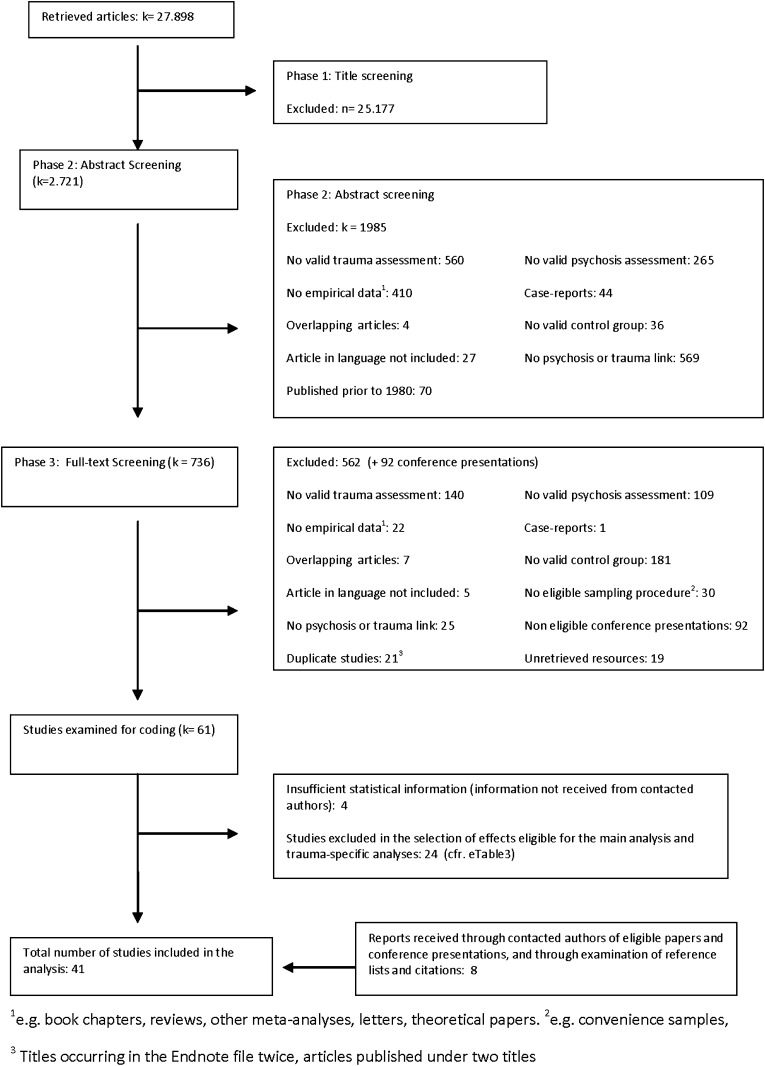
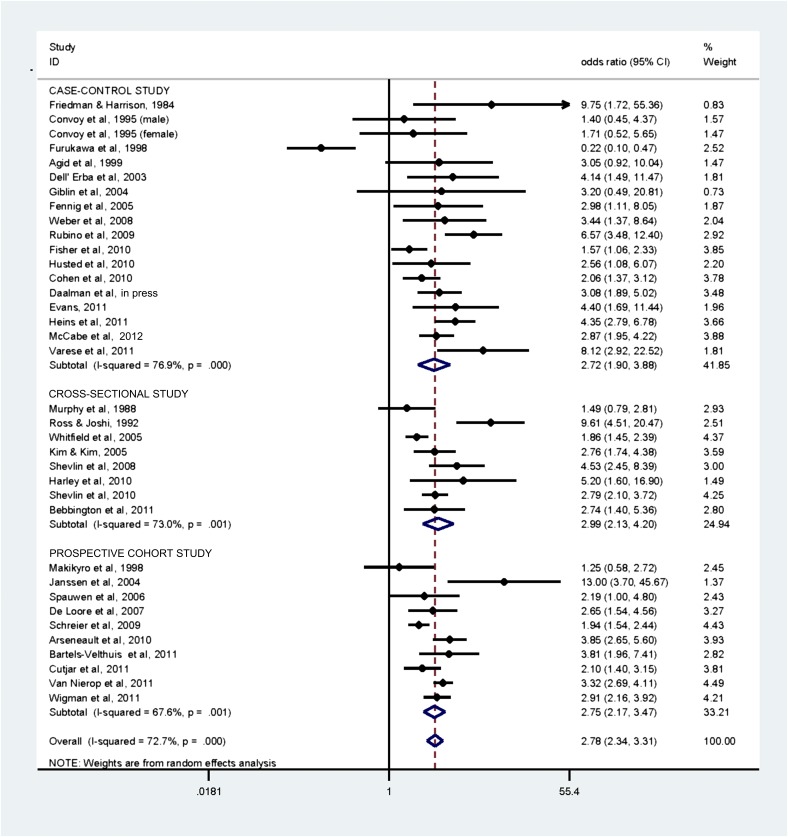
Evidence suggests that adverse experiences in childhood are associated with psychosis. To examine the association between childhood adversity and trauma (sexual abuse, physical abuse, emotional/psychological abuse, neglect, parental death, and bullying) and psychosis outcome, MEDLINE, EMBASE, PsychINFO, and Web of Science were searched from January 1980 through November 2011. We included prospective cohort studies, large-scale cross-sectional studies investigating the association between childhood adversity and psychotic symptoms or illness, case-control studies comparing the prevalence of adverse events between psychotic patients and controls using dichotomous or continuous measures, and case-control studies comparing the prevalence of psychotic symptoms between exposed and nonexposed subjects using dichotomous or continuous measures of adversity and psychosis. The analysis included 18 case-control studies (n = 2048 psychotic patients and 1856 nonpsychiatric controls), 10 prospective and quasi-prospective studies (n = 41,803) and 8 population-based cross-sectional studies (n = 35,546). There were significant associations between adversity and psychosis across all research designs, with an overall effect of OR = 2.78 (95% CI = 2.34-3.31). The integration of the case-control studies indicated that patients with psychosis were 2.72 times more likely to have been exposed to childhood adversity than controls (95% CI = 1.90-3.88). The association between childhood adversity and psychosis was also significant in population-based cross-sectional studies (OR = 2.99 [95% CI = 2.12-4.20]) as well as in prospective and quasi-prospective studies (OR = 2.75 [95% CI = 2.17-3.47]). The estimated population attributable risk was 33% (16%-47%). These findings indicate that childhood adversity is strongly associated with increased risk for psychosis.
Overview
The claims and statistics of this paper haven’t been checked yet.
Free: it reads the open-access text and checks the first 5 claims that cite a source we can check. Create a free account to check every claim.
Integrity signals
Registry
Cites
Statistics
Figures
Verification
Claims the paper makes
The claims and statistics of this paper haven’t been checked yet.
Free: it reads the open-access text and checks the first 5 claims that cite a source we can check. Create a free account to check every claim.
Claims other papers make about this one
Each is checked against this paper’s own text: does it say what the citing paper says it does?
The source backs part of the claim, not all of it — or backs it for a different population, condition or comparison.
In the citing paper
“by study design on obesity and psychosis,7,9”
From Long-term outcomes of childhood sexual abuse: an umbrella review (2019) · cites this paper as [7]
Experimental — accuracy not yet measuredThe source backs part of the claim, not all of it — or backs it for a different population, condition or comparison.
In the citing paper
“A recent meta-ana lysis calculated a population attributable risk of 33%, meaning that if the six types of child adversity studied were to disappear, a third of new psychosis cases would be avoided [13] .”
From The traumagenic neurodevelopmental model of psychosis revisited (2014) · cites this paper as [13]
Experimental — accuracy not yet measuredThe source backs part of the claim, not all of it — or backs it for a different population, condition or comparison.
In the citing paper
“and experiencing physical or sexual abuse (112).”
From Aberrant Salience, Information Processing, and Dopaminergic Signaling in People at Clinical High Risk for Psychosis (2020) · cites this paper as [112]
Experimental — accuracy not yet measuredThe cited source says what the claim attributes to it.
In the citing paper
“Recent studies indicate this is not an evidence-based belief [12,13,167] .”
From The traumagenic neurodevelopmental model of psychosis revisited (2014) · cites this paper as [13]
The cited source says what the claim attributes to it.
In the citing paper
“Furthermore, numerous studies and reviews note that the relationship between child abuse and psychosis remains after controlling for family history of psychosis [9-13,17] .”
From The traumagenic neurodevelopmental model of psychosis revisited (2014) · cites this paper as [13]
8 more claims about this paper
Create a free account to see every claim other papers make about this one.
Self-check
Percentages, sums and reported differences re-computed from the paper’s own numbers.
The self-check needs the paper’s full text.
Citations
Cites
Measuring inconsistency in meta-analyses
Higgins, J. P. T., Thompson, S. G., Deeks, J. J., & Altman, D. G. (2003) · BMJ · doi:10.1136/bmj.327.7414.557 · Cited by 63,139 · cited 1×
“Heterogeneity analyses were carried out using the Q and I(2) statistics to examine and quantify the amount of observed variance accounted for by true heterogeneity rather than sampling error.(57) Meta-regression analysis was subsequently used to determine whether (1) differences in study design and (2) inclusion of ad…”
MethodBias in meta-analysis detected by a simple, graphical test
Egger, M., Smith, G. D., Schneider, M., & Minder, C. (1997) · BMJ · doi:10.1136/bmj.315.7109.629 · Cited by 56,722
Meta-analysis of Observational Studies in Epidemiology<SUBTITLE>A Proposal for Reporting</SUBTITLE>
Stroup, D. F. (2000) · JAMA · doi:10.1001/jama.283.15.2008 · Cited by 20,623
Borenstein, M., Hedges, L. V., Higgins, J. P. T., & Rothstein, H. R. (2009) · doi:10.1002/9780470743386 · Cited by 14,225
Borenstein, M., Hedges, L. V., Higgins, J. P. T., & Rothstein, H. R. (2021) · doi:10.1002/9781119558378 · Cited by 9,799
The Handbook of Research Synthesis and Meta-Analysis
(2019) · doi:10.7758/9781610448864 · Cited by 4,553
Zhang, J., & Yu, K. F. (1998) · JAMA · doi:10.1001/jama.280.19.1690 · Cited by 4,138 · cited 1×
“Risk ratios were treated as ORs without further adjustment as the incidence of psychosis in the studied populations was low (ie, <10%).(56)”
MethodA Nonparametric “Trim and Fill” Method of Accounting for Publication Bias in Meta-Analysis
Duval, S., & Tweedie, R. (2000) · Journal of the American Statistical Association · doi:10.1080/01621459.2000.10473905 · Cited by 2,955
Validity of adult retrospective reports of adverse childhood experiences: review of the evidence
Hardt, J., & Rutter, M. (2004) · Journal of Child Psychology and Psychiatry · doi:10.1111/j.1469-7610.2004.00218.x · Cited by 2,827
Childhood adversities and adult psychopathology in the WHO World Mental Health Surveys
Kessler, R. C., McLaughlin, K. A., Green, J. G., Gruber, M. J., Sampson, N. A., Zaslavsky, A. M., Aguilar-Gaxiola, S., Alhamzawi, A. O., Alonso, J., Angermeyer, M., et al. (2010) · British Journal of Psychiatry · doi:10.1192/bjp.bp.110.080499 · Cited by 2,640 · cited 1×
“Adverse childhood events including trauma is a common experience worldwide, with some estimates suggesting that about a third of the general population may be affected.(1) Evidence suggests that its effects in adulthood may include a range of negative social outcomes, including higher criminality,(2) a lower education…”
Background
Research works printed but not linked: 12
- 15. Dell'Erba G, Venturi P, Tallarico V. Childhood stressful experiences in familial and sporadic schizophrenic patients [Italian] Italian J Psychopathol. 2003;9:32–39.
- 25. Evans G. Trauma and psychosis: investigating dissociation and self-concept clarity [Unpublished doctoral dissertation] University of Liverpool, UK; 2011
- 60. Schreier A, Wolke D, Thomas K, et al. Prospective study of peer victimization in childhood and psychotic symptoms in a nonclinical population at age 12 years. Arch Gen Psychiatry. 2009;66:527–536. doi: 10.1001/archgenpsychiatry.2009.23. · DOI · Paper page
- 63. Janssen I, Krabbendam L, Bak M, et al. Childhood abuse as a risk factor for psychotic experiences. Acta Psychiatr Scand. 2004;109:38–45. doi: 10.1046/j.0001-690x.2003.00217.x. · DOI · Paper page
- 64. Spauwen J, Krabbendam L, Lieb R, Wittchen H-U, van Os J. Impact of psychological trauma on the development of psychotic symptoms: relationship with psychosis proneness. Br J Psychiatry. 2006;188:527–533. doi: 10.1192/bjp.bp.105.011346. · DOI · Paper page
- 65. Nishida A, Tanii H, Nishimura Y, et al. Associations between psychotic-like experiences and mental health status and other psychopathologies among Japanese early teens. Schizophr Res. 2008;99:125–133. doi: 10.1016/j.schres.2007.11.038. · DOI
- 66. Shevlin M, Houston JE, Dorahy MJ, Adamson G. Cumulative traumas and psychosis: an analysis of the National Comorbidity Survey and the British Psychiatric Morbidity Survey. Schizophr Bull. 2008;34:193–199. doi: 10.1093/schbul/sbm069. · DOI · Paper page
- 67. Arseneault L, Cannon M, Fisher HL, et al. Psychotic symptoms: a genetically sensitive longitudinal cohort study. Am J Psychiatry. 2010;168:65–72. doi: 10.1176/appi.ajp.2010.10040567. · DOI · Paper page
- 69. De Loore E, Drukker M, Gunther N, et al. Childhood negative experiences and subclinical psychosis in adolescence: a longitudinal general population study. Early Interv Psychiatry. 2007;1:201–207. · DOI · Paper page
- 70. Whitfield CL, Dube SR, Felitti VJ, Anda RF. Adverse childhood experiences and hallucinations. Child Abuse & Neglect. 2005;29:797–810. doi: 10.1016/j.chiabu.2005.01.004. · DOI · Paper page
- 72. Houston JE, Murphy J, Adamson G, Stringer M, Shevlin M. Childhood sexual abuse, early cannabis use, and psychosis: testing an interaction model based on the National Comorbidity Survey. Schizophr Bull. 2008;34:580–585. doi: 10.1093/schbul/sbm127. · DOI · Paper page
- 73. Husted JA, Ahmed R, Chow EWC, Brzustowicz LM, Bassett AS. Childhood trauma and genetic factors in familial schizophrenia associated with the NOS1AP gene. Schizophr Res. 2010;121:187–192. doi: 10.1016/j.schres.2010.05.021. · DOI
Cited by
Items 501–600 of 1,008
van Os, J., Marsman, A., van Dam, D., Simons, C. J. P., & GROUP Investigators (2017) · Schizophrenia Bulletin · doi:10.1093/schbul/sbw177 · Cited by 57
Lotzin, A., CANSAS Study Group, Buth, S., Sehner, S., Hiller, P., Martens, M.-S., Pawils, S., Metzner, F., Read, J., Härter, M., et al. (2018) · Psychological Trauma: Theory, Research, Practice, and Policy · doi:10.1037/tra0000269 · Cited by 40
“Keywords: abuse, neglect, maltreatment, trauma-informed care, addiction, substance abuse, counseling, screening Introduction Exposure to traumatic events in childhood increases the risk for developing mental disorders in adulthood (Kendler et al., 2000; Norman et al., 2012; Varese et al., 2012).”
BackgroundSelf-citationWang, D.-S., Chung, C.-H., Chang, H.-A., Kao, Y.-C., Chu, D.-M., Wang, C.-C., Chen, S.-J., Tzeng, N.-S., & Chien, W.-C. (2020) · Child Abuse & Neglect · doi:10.1016/j.chiabu.2020.104362 · Cited by 40
Betz, L. T., Penzel, N., Rosen, M., & Kambeitz, J. P. (2020) · Psychological Medicine · doi:10.1017/s003329172000135x · Cited by 47
“…behaviors later in life (Afifi et al., 2011; Dube, Anda, Felitti, Edwards, & Croft, 2002; Grilo & Masheb, 2002; Kessler, Davis, & Kendler, 1997; Khoury, Tang, Bradley, Cubells, & Ressler, 2010; Lindert et al., 2014; Lotzin, Grundmann, Hiller, Pawils, & Schäfer, 2019; Varese et al., 2012).”
BackgroundRodríguez, V., Alameda, L., Trotta, G., Spinazzola, E., Marino, P., Matheson, S. L., Laurens, K. R., Murray, R. M., & Vassos, E. (2021) · Schizophrenia Bulletin · doi:10.1093/schbul/sbaa197 · Cited by 47
Changes in Default-Mode Network Associated With Childhood Trauma in Schizophrenia
Dauvermann, M. R., Mothersill, D., Rokita, K., King, S., Holleran, L., Kane, R., McKernan, D. P., Kelly, J. P., Morris, D. W., Corvin, A. P., et al. (2021) · Schizophrenia Bulletin · doi:10.1093/schbul/sbab025 · Cited by 46
Estimating Aggregate Environmental Risk Score in Psychiatry: The Exposome Score for Schizophrenia
Pries, L.-K., Erzın, G., Rutten, B. P. F., van Os, J., & Gülöksüz, S. (2021) · Frontiers in Psychiatry · doi:10.3389/fpsyt.2021.671334 · Cited by 49
“39) (25) is smaller than those for other environmental exposures, such as emotional abuse (OR= 3.”
BackgroundInfluentialMisiak, B., Szewczuk-Bogusławska, M., Samochowiec, J., Moustafa, A. A., & Gawęda, Ł. (2023) · Journal of Affective Disorders · doi:10.1016/j.jad.2023.05.044 · Cited by 44
Schizophrenia, a disease of impaired dynamic metabolic flexibility: A new mechanistic framework
Sarnyai, Z., & Ben‐Shachar, D. (2024) · Psychiatry Research · doi:10.1016/j.psychres.2024.116220 · Cited by 43
“Early life stress and trauma have been consistently identified through extensive meta-analyses and umbrella reviews as major risk factors in schizophrenia (Bailey et al. 2018; van Winkel et al. 2008; Hailes et al. 2019; Varese et al. 2012).”
BackgroundEffects of Multidimensional Treatment Foster Care on Psychotic Symptoms in Girls
Poulton, R., Ryzin, M. J. V., Harold, G. T., Chamberlain, P., Fowler, D. G., Cannon, M. D., Arseneault, L., & Leve, L. D. (2014) · Journal of the American Academy of Child & Adolescent Psychiatry · doi:10.1016/j.jaac.2014.08.014 · Cited by 44
Are mental health services getting better at responding to abuse, assault and neglect?
Read, J., Sampson, M., & Critchley, C. (2016) · Acta Psychiatrica Scandinavica · doi:10.1111/acps.12552 · Cited by 39
“Childhood adversities, such as abuse and neglect, are risk factors for most mental health problems, including: depression, psychosis, anxiety disorders, eating disorders, sexual dysfunction, personality disorder, dissociative disorder and substance misuse (1-5).”
BackgroundSelf-citationA Mentalization-Based Treatment Approach to Disturbances of Social Understanding in Schizophrenia
Brent, B. K., & Fonagy, P. (2014) · Elsevier eBooks · doi:10.1016/b978-0-12-405172-0.00015-6 · Cited by 49
“, 2004) and other experiences of trauma (Varese et al., 2012), represent an important environmental risk factor for schizophrenia.”
BackgroundTran, N. K., van Berkel, S. R., van IJzendoorn, M. H., & Alink, L. R. A. (2017) · BMC Public Health · doi:10.1186/s12889-017-4258-z · Cited by 60
“This finding is consistent with previous research in mostly Western countries [2, 5, 6, 51].”
ResultWang, H., Sun, Y., Liu, X., Wang, H., Ma, Y., Su, Y., Li, J., & Si, T. (2019) · Chinese Medical Journal · doi:10.1097/cm9.0000000000000313 · Cited by 37
Sweeting, J. A., Garfin, D. R., Holman, E. A., & Silver, R. C. (2020) · Child Abuse & Neglect · doi:10.1016/j.chiabu.2019.104048 · Cited by 53
“Childhood bullying has been linked to adverse mental health outcomes including greater risks for suicide, agoraphobia, depression, psychotic disorder, schizophrenia, schizoaffective disorder, and panic disorder (Copeland, Wolke, Angold, & Costello, 2013; Sourander et al., 2015; Varese et al., 2012).”
BackgroundGayer-Anderson, C. E., Reininghaus, U., Paetzold, I., Hubbard, K., Beards, S., Mondelli, V., Forti, M. D., Murray, R. M., Pariante, C. M., Dazzan, P., et al. (2020) · Journal of Psychiatric Research · doi:10.1016/j.jpsychires.2020.02.002 · Cited by 47
Varese, F., Douglas, M., Dudley, R. E. J., Bowe, S. E., Christodoulides, T., Common, S., Grace, T., Lumley, V., McCartney, L., Pace, S. M., et al. (2020) · Psychology and Psychotherapy Theory Research and Practice · doi:10.1111/papt.12304 · Cited by 50
Self-citationHazelgrove, K. M., Biaggi, A., Waites, F., Fusté, M., Osborne, S., Conroy, S., Howard, L. M., Mehta, M. A., Miele, M., Nikkheslat, N., et al. (2021) · Psychoneuroendocrinology · doi:10.1016/j.psyneuen.2021.105218 · Cited by 48
Gender differences in the association between environment and psychosis
Yay-Pence, A., Pries, L.-K., Ferrara, M., Rutten, B. P. F., van Os, J., & Gülöksüz, S. (2022) · Schizophrenia Research · doi:10.1016/j.schres.2022.02.039 · Cited by 48
Fekih‐Romdhane, F., Pandi-Perumal, S. R., Conus, P., Krebs, M., Cheour, M., Seeman, M. V., & Jahrami, H. (2022) · Acta Psychiatrica Scandinavica · doi:10.1111/acps.13494 · Cited by 54
Parent Abuse by Adolescents With First-Episode Psychosis in Egypt
Fawzi, M. H., Fawzi, M. M., & Fouad, A. A. (2013) · Journal of Adolescent Health · doi:10.1016/j.jadohealth.2013.07.004 · Cited by 50
Childhood adversity and PTSD experiences: Testing a multiple mediator model.
Murphy, S., Shevlin, M., Armour, C., Elklit, A., & Christoffersen, M. N. (2014) · Traumatology · doi:10.1037/h0099838 · Cited by 39
“…for example, post-traumatic stress disorder (PTSD) (Shenk, Putman, & Noll, 2012), general psychopathology (Kessler et al., 2010), psychotic disorders (Read, Fink, Rudegeair, Felitti, & Whitfield, 2008; Varese et al., 2012) and higher health care utilization (Chartier, Walker, & Naimark, 2010).”
Cognitive biases and auditory verbal hallucinations in healthy and clinical individuals
Daalman, K., Sommer, I. E. C., Derks, E. M., & Peters, E. R. (2013) · Psychological Medicine · doi:10.1017/s0033291713000275 · Cited by 38
“…Press 2013 doi:10.1017/S0033291713000275 ORIGINAL ARTICLE between trauma and psychosis, and hearing voices in particular (Bebbington et al. 2011; Varese et al. 2012), both clinical and non-clinical samples with AVH report equally high rates of trauma (Andrew et al. 2008; Lovatt et al. 2010),…”
BackgroundInfluentialGenetic liability to schizophrenia is associated with exposure to traumatic events in childhood
Sallis, H. M., Croft, J., Havdahl, A., Jones, H. J., Dunn, E. C., Davey Smith, G., Zammit, S., & Munafò, M. R. (2021) · Psychological Medicine · doi:10.1017/s0033291720000537 · Cited by 38
Age at first tobacco use and risk of subsequent psychosis-related outcomes: A birth cohort study
McGrath, J. J., Alati, R., Clavarino, A. M., Williams, G. M., Bor, W., Najman, J. M., Connell, M., & Scott, J. G. (2015) · Australian & New Zealand Journal of Psychiatry · doi:10.1177/0004867415587341 · Cited by 39
“It is also feasible that psychosocial factors within the family known to be associated with increased risk of psychosis such as childhood adversity (Varese et al., 2012) and parental mental illness (Rasic et al.”
BackgroundChildhood maltreatment and social functioning in adults with sub-clinical psychosis
Boyda, D., & McFeeters, D. (2015) · Psychiatry Research · doi:10.1016/j.psychres.2015.01.023 · Cited by 38
“While many negative experiences including peer victimisation, parental loss and economic hardship have been associated with the risk of developing psychotic-like experiences or symptoms; childhood maltreatment continues to impose the most distressing and prolonged effects (Bebbington, 2004; Fryers and Brugha, 2013; Ja…”
BackgroundWickham, S. L., & Bentall, R. P. (2016) · The Journal of Nervous and Mental Disease · doi:10.1097/nmd.0000000000000511 · Cited by 58
“In an analysis of epidemiological, case-control, and prospective studies, Varese et al. (2012a) found that childhood sexual abuse (CSA), physical abuse, and emotional abuse were all significantly associated with psychosis.”
BackgroundMethodResultInfluentialSelf-citationde Castro-Català, M., Peña, E., Kwapil, T. R., Papiol, S., Sheinbaum, T., Cristóbal-Narváez, P., Ballespí, S., Barrantes-Vidal, N., & Rosa, A. (2017) · Psychoneuroendocrinology · doi:10.1016/j.psyneuen.2017.08.024 · Cited by 49
Does childhood trauma play a role in the aetiology of psychosis? A review of recent evidence
Coughlan, H., & Cannon, M. D. (2017) · BJPsych Advances · doi:10.1192/apt.bp.116.015891 · Cited by 47
“…and psychotic outcomes, 2012–2015 Authors Studies included, n Sample size range, n Age range, years Type/s of childhood trauma examined Main findings Varese et al (2012) 41 35–17 337 12–78 Sexual abuse, physical abuse, emotional/psychological abuse, neglect, parental death, bullying Childhood…”
BackgroundAas, M., Dieset, I., Mørch, R., Steen, N. E., Hope, S., Reponen, E. J., Laskemoen, J. F., Ueland, T., Aukrust, P., Melle, I., et al. (2019) · Schizophrenia Research · doi:10.1016/j.schres.2018.08.007 · Cited by 38
“Furthermore, childhood trauma, drug addiction and poor lifestyle are environmental factors associated with both of these disorders (Aas et al., 2016; Di Forti et al., 2015; Varese et al., 2012).”
Radhakrishnan, R., Gülöksüz, S., ten Have, M., de Graaf, R., van Dorsselaer, S., Günther, N., Rauschenberg, C., Reininghaus, U., Pries, L.-K., Bak, M., et al. (2018) · Psychological Medicine · doi:10.1017/s0033291718002635 · Cited by 47
“Among the environmental risk factors, childhood adversity (Varese et al., 2012), urbanicity (Vassos et al., 2012; Heinz et al., 2013), and regular cannabis use (D’Souza et al., 2016; Marconi et al., 2016) have been shown to increase the risk of developing psychotic experiences, persistent psychotic…”
BackgroundPeach, N., Álvarez‐Jiménez, M., Cropper, S. J., Sun, P., & Bendall, S. (2018) · British Journal of Clinical Psychology · doi:10.1111/bjc.12206 · Cited by 45
Bruni, A., Carbone, E. A., Pugliese, V., Aloi, M., Calabrò, G., Cerminara, G., Segura-García, C., & De Fazio, P. (2018) · BMC Psychiatry · doi:10.1186/s12888-018-1972-8 · Cited by 38
Severe childhood trauma and clinical and neurocognitive features in schizotypal personality disorder
Velikonja, T., Velthorst, E., McClure, M. M., Rutter, S., Calabrese, W. R., Rosell, D., Koenigsberg, H. W., Goodman, M., New, A. S., Hazlett, E. A., et al. (2019) · Acta Psychiatrica Scandinavica · doi:10.1111/acps.13032 · Cited by 38
“Furthermore, evidence supports a dose– response relationship between trauma and disorders along schizophrenia spectrum (9, 14, 15).”
BackgroundResultRokita, K., Dauvermann, M. R., Mothersill, D., Holleran, L., Holland, J. F., Costello, L., Cullen, C., Kane, R., McKernan, D. P., Morris, D. W., et al. (2020) · Journal of Clinical Psychology · doi:10.1002/jclp.23023 · Cited by 43
Mitchell, S., Shannon, C., Mulholland, C. C., & Hanna, D. (2020) · Early Intervention in Psychiatry · doi:10.1111/eip.13068 · Cited by 49
“Research findings point to a significant and predictive relationship between childhood trauma and psychosis risk (Traulesen et al., 2015; Varese et al., 2012).”
BackgroundThe Importance of Suicide Risk Formulation in Schizophrenia
Berardelli, I., Rogante, E., Sarubbi, S., Erbuto, D., Lester, D., & Pompili, M. (2021) · Frontiers in Psychiatry · doi:10.3389/fpsyt.2021.779684 · Cited by 58
Unravelling psychosis: psychosocial epidemiology, mechanism, and meaning.
Bebbington, P. (2015) · 上海精神医学 · doi:10.11919/j.issn.1002-0829.215027 · Cited by 47
Childhood abuse v. neglect and risk for major psychiatric disorders
Alkema, A., Marchi, M., van der Zaag, J., van der Sluis, D., Warrier, V., Genetic Risk and Outcome of Psychosis (GROUP) Investigators, Ophoff, R. A., Kahn, R. S., Cahn, W., Hovens, J. G. F. M., et al. (2023) · Psychological Medicine · doi:10.1017/s0033291723003471 · Cited by 46
“…risk and hallucinations in patients with a history of child abuse (Croft et al., 2019; Marchi et al., 2022a; Read, Van Os, Morrison, & Ross, 2005; Van Os et al., 2020; Varese et al., 2012) and warrants the question about a possible causal relation between child abuse (and not neglect) and SCZ.”
Backgroundvan Nierop, M. M., Janssens, M., Genetic Risk OUtcome of Psychosis (GROUP) Investigators, Bruggeman, R., Cahn, W., de Haan, L., Kahn, R. S., Meijer, C. J., Myin‐Germeys, I., van Os, J., et al. (2013) · PLoS ONE · doi:10.1371/journal.pone.0076690 · Cited by 48
“Several environmental factors have been implicated in the aetiology of psychotic illness including urban birth and upbringing [1], minority position [2], childhood trauma [3] and cannabis use [4].”
BackgroundSocial anxiety in first-episode psychosis: The role of childhood trauma and adult attachment
Michail, M., & Birchwood, M. J. (2014) · Journal of Affective Disorders · doi:10.1016/j.jad.2014.03.033 · Cited by 51
“A review by Read et al (13) revealed that early abuse and maltreatment are among the most prominent factors consistently reported in the developmental pathways of those who develop psychosis with evidence supporting a dose-response relationship (14, 15, 16, 17).”
BackgroundThe dynamics of attachment insecurity and paranoid thoughts: An experience sampling study
Sitko, K., Varese, F., Sellwood, W., Hammond, A., & Bentall, R. P. (2016) · Psychiatry Research · doi:10.1016/j.psychres.2016.08.057 · Cited by 45
“It has consistently been reported that psychosis is associated with a wide range of early adverse experiences (Varese et al., 2012).”
Self-citationHennig, T., Jaya, E. S., & Lincoln, T. M. (2016) · Schizophrenia Bulletin · doi:10.1093/schbul/sbw139 · Cited by 41
Embodiment, Enaction, and Culture: Investigating the Constitution of the Shared World
Durt, C., Fuchs, T. A. E., & Tewes, C. (2017) · Project Muse (Johns Hopkins University) · Cited by 39
Frissen, A., van Os, J., Peeters, S. C. T., Gronenschild, E. H. B. M., & Marcelis, M. C. (2017) · Psychiatry Research Neuroimaging · doi:10.1016/j.pscychresns.2017.11.004 · Cited by 42
Mallet, J., Strat, Y. L., Schürhoff, F., Mazer, N., Portalier, C., Andrianarisoa, M., Aouizerate, B., Berna, F. S., Brunel, L., Capdevielle, D., et al. (2018) · European Archives of Psychiatry and Clinical Neuroscience · doi:10.1007/s00406-018-0873-7 · Cited by 46
“Still, experiencing childhood trauma affects stress responses among victims [21] and, therefore, increases their subsequent risk for substance abuse [22] and schizophrenia [23].”
BackgroundShame and the psychosis continuum: A systematic review of the literature
Carden, L. J., Saini, P., Seddon, C., Watkins, M., & Taylor, P. J. (2018) · Psychology and Psychotherapy Theory Research and Practice · doi:10.1111/papt.12204 · Cited by 54
Current evidence of childhood traumatic experiences in psychosis – focus on gender differences
Comacchio, C., Lasalvia, A., & Ruggeri, M. (2019) · Psychiatry Research · doi:10.1016/j.psychres.2019.112507 · Cited by 38
Rauschenberg, C., van Os, J., Goedhart, M., Schieveld, J. N. M., & Reininghaus, U. (2020) · European Child & Adolescent Psychiatry · doi:10.1007/s00787-020-01540-5 · Cited by 50
Prokopez, C. R., Vallejos, M., Farinola, R., Alberio, G., Caporusso, G. B., Cozzarin, L. G., Chiapella, L. C., Fuentes, P., & Daray, F. M. (2020) · Psychiatry Research · doi:10.1016/j.psychres.2020.113411 · Cited by 44
Gawęda, Ł., Pionke‐Ubych, R., Hartmann, J., Nelson, B., Cechnicki, A., & Frydecka, D. (2020) · Schizophrenia Bulletin · doi:10.1093/schbul/sbaa125 · Cited by 41
Schneeberger, A. R., Muenzenmaier, K. H., Castille, D. M., Battaglia, J., & Link, B. G. (2014) · Journal of Trauma & Dissociation · doi:10.1080/15299732.2014.903550 · Cited by 41
“Newer studies (Spauwen, Krabbendam, Lieb, Wittchen, & van Os, 2006; Varese et al., 2012) have suggested that childhood adversity may present a risk factor for the development of psychotic symptoms (Schafer & Fisher, 2011).”
BackgroundChildhood trauma, midbrain activation and psychotic symptoms in borderline personality disorder
Nicol, K., Pope, M., Romaniuk, L., & Hall, J. (2015) · Translational Psychiatry · doi:10.1038/tp.2015.53 · Cited by 37
Værnes, T. G., Røssberg, J. I., & Møller, P. (2018) · Psychopathology · doi:10.1159/000488462 · Cited by 42
Childhood trauma and schizotypy in non-clinical samples: A systematic review and meta-analysis
Toutountzidis, D., Gale, T. M., Irvine, K., Sharma, S., & Laws, K. R. (2022) · PLoS ONE · doi:10.1371/journal.pone.0270494 · Cited by 48
“While much research has focused on links between early life trauma and adult psychosis, including a possible causal role [19], the current findings show that trauma in childhood does not necessarily lead to the development of clinical presentations of psychosis.”
BackgroundRamsay, H., Kelleher, I., Flannery, P. J., Clarke, M. C., Lynch, F., Harley, M., Connor, D., Fitzpatrick, C., Morris, D. W., & Cannon, M. D. (2013) · PLoS ONE · doi:10.1371/journal.pone.0079741 · Cited by 43
“In common with psychotic disorders, psychotic experiences are more prevalent in adolescents who have had traumatic experiences, including physical abuse, exposure to domestic violence and unwanted sexual experiences [16-27].”
BackgroundFilatova, S., Marttila, R., Koivumaa-Honkanen, H. T., Nordström, T., Veijola, J. M., Maki, P. M., Khandaker, G. M., Isohanni, M. K., Jääskeläinen, E., Moilanen, K., et al. (2016) · Epidemiology and Psychiatric Sciences · doi:10.1017/s2045796016000123 · Cited by 42
“…(Matheson et al. 2011), low birth weight (Isohanni et al. 2006), infections in the central nervous system during childhood (Khandaker et al. 2014), stressful life events and childhood adversities (Varese et al. 2012), cannabis use later in life and urban residence (Matheson et al. 2014).”
BackgroundVisual Hallucinations in First-Episode Psychosis: Association with Childhood Trauma
Solesvik, M., Joa, I., Larsen, T. K., Langeveld, J., Johannessen, J. O., Bjørnestad, J. R., Anda, L. G., Gisselgård, J., Hegelstad, W. T. V., & Brønnick, K. (2016) · PLoS ONE · doi:10.1371/journal.pone.0153458 · Cited by 45
“A dissociative tendency, measured using The Dissociative Experiences Scale (DES), has been found to mediate the association between childhood trauma and hallucinatory experiences [16, 37], and could be a potential explanatory factor for the association between childhood trauma and visual hallucinations in this study.”
MethodÖzcan, N. K., Boyacıoğlu, N. E., Enginkaya, S., Bilgin, H., & Tomruk, N. B. (2016) · Journal of Clinical Nursing · doi:10.1111/jocn.13274 · Cited by 42
How do mental health services respond when child abuse or neglect become known? A literature review
Read, J., Harper, D. J., Tucker, I. M., & Kennedy, A. (2018) · International Journal of Mental Health Nursing · doi:10.1111/inm.12498 · Cited by 42
Self-citationTrauma‐focused imaginal exposure for auditory hallucinations: A case series
Brand, R. M., Bendall, S., Hardy, A., Rossell, S. L., & Thomas, N. (2020) · Psychology and Psychotherapy Theory Research and Practice · doi:10.1111/papt.12284 · Cited by 44
“We included experiences of interpersonal trauma that did not meet diagnostic criteria for PTSD (i.e., bullying, emotional abuse) because theory (Hardy, 2017) and research (Varese et al., 2012) have linked these experiences to AH (the main focus of the study).”
BackgroundJones, N., Kamens, S. R., Oluwoye, O. A., Mascayano, F., Perry, C., Manseau, M. W., & Compton, M. T. (2021) · Psychiatric Services · doi:10.1176/appi.ps.202000211 · Cited by 43
Clarke, R., Kelly, R. E., & Hardy, A. (2021) · Journal of Behavior Therapy and Experimental Psychiatry · doi:10.1016/j.jbtep.2021.101699 · Cited by 40
Gromer, J. (2012) · Ethical Human Psychology and Psychiatry · doi:10.1891/1559-4343.14.3.162 · Cited by 48
“This literature has been recently summarized in a meta-analysis, which found that childhood adversity is strongly associated with psychotic experiences in adulthood (Varese et al., 2012).”
BackgroundMacBeth, A. M., Gumley, A. I., Schwannauer, M., Carcione, A., McLeod, H. J., & Dimaggio, G. (2015) · Clinical Psychology & Psychotherapy · doi:10.1002/cpp.1959 · Cited by 45
“, disturbances in psychodevelopmental processes, such as interpersonal trauma or abuse prior to onset of psychosis (Sitko, Bentall, Shevlin, & Sellwood, 2014; Varese et al., 2012).”
BackgroundLongden, E., Corstens, D., Bowe, S. E., Pyle, M., Emsley, R., Peters, S., Branitsky, A., Chauhan, N., Dehmahdi, N., Jones, W., et al. (2022) · Schizophrenia Research · doi:10.1016/j.schres.2022.11.007 · Cited by 46
“However, despite robust evidence for the link between hallucinations and adversity exposure (Bailey et al., 2018; Bortolon et al., 2017; McCarthy-Jones, 2018; Varese et al., 2012), adequate access to psychological therapies is a longstanding problem within healthcare services (Colling et al.”
BackgroundPsychotic disorders as a framework for precision psychiatry
Coutts, F., Koutsouleris, N., & McGuire, P. K. (2023) · Nature Reviews Neurology · doi:10.1038/s41582-023-00779-1 · Cited by 57
Fares‐Otero, N. E., Alameda, L., Pfaltz, M. C., Martínez‐Arán, A., Schäfer, I., & Vieta, E. (2023) · Psychological Medicine · doi:10.1017/s0033291723001678 · Cited by 42
“…domestic violence and bullying occurring before age 18 years (Teicher & Samson, 2013), is one of the most serious environmental risk factors for the development of physical or mental illness (Gilbert et al., 2009; Hughes et al., 2017), including PD (Morgan & Fisher, 2007; Varese et al., 2012).”
BackgroundSmeets, F., Lataster, T., Viechtbauer, W., Delespaul, P., & G.R.O.U.P. (2015) · Schizophrenia Bulletin · doi:10.1093/schbul/sbu122 · Cited by 35
Self-citationTakara, K., & Kondo, T. (2015) · Mental Health in Family Medicine · doi:10.25149/1756-8358.1102011 · Cited by 43
Thompson, A. D., Marwaha, S., Nelson, B., Wood, S. J., McGorry, P. D., Yung, A. R., & Lin, A. P. (2016) · Psychiatry Research · doi:10.1016/j.psychres.2016.01.017 · Cited by 48
“Others have highlighted the importance of dissociation in the relationship between trauma and development of psychotic symptoms (Varese et al, 2012).”
Impact of childhood adversity on corticolimbic volumes in youth at clinical high-risk for psychosis
LoPilato, A. M., Goines, K., Addington, J., Bearden, C. E., Cadenhead, K. S., Cannon, T. D., Cornblatt, B. A., Mathalon, D. H., McGlashan, T. H., Seidman, L. J., et al. (2019) · Schizophrenia Research · doi:10.1016/j.schres.2019.01.048 · Cited by 37
Burrows, E. L., & Hannan, A. J. (2015) · Biological Psychology · doi:10.1016/j.biopsycho.2015.11.015 · Cited by 41
“…been linked with the disorder and during adolescence, stress and cannabis abuse have been identified to negatively impact on an individual’s risk of developing schizophrenia (Brown, 2006; Henquet et al., 2005; McGrath et al., 2010; Moore et al., 2007; Morgan and Fisher, 2007; Varese et al., 2012).”
Are hallucinations related to betrayal trauma exposure? A three-study exploration.
Gómez, J. M., Kaehler, L. A., & Freyd, J. J. (2014) · Psychological Trauma Theory Research Practice and Policy · doi:10.1037/a0037084 · Cited by 46
Kilian, S., Burns, J. K., Seedat, S., Asmal, L., Chiliza, B., du Plessis, S., Olivier, M. R., Kidd, M., & Emsley, R. A. (2017) · PLoS ONE · doi:10.1371/journal.pone.0170178 · Cited by 43
The predictive value of early maladaptive schemas in paranoid responses to social stress
Sundag, J., Ascone, L., & Lincoln, T. M. (2018) · Clinical Psychology & Psychotherapy · doi:10.1002/cpp.2128 · Cited by 35
Bolhuis, K., Koopman‐Verhoeff, M. E., Blanken, L. M. E., Cibrev, D., Jaddoe, V. W. V., Verhulst, F. C., Hillegers, M. H. J., Kushner, S. A., & Tiemeier, H. (2018) · Acta Psychiatrica Scandinavica · doi:10.1111/acps.12891 · Cited by 35
Shah, S., Mackinnon, A., Galletly, C., Carr, V., McGrath, J. J., Stain, H. J., Castle, D., Harvey, C., Sweeney, S., & Morgan, V. A. (2014) · Schizophrenia Research · doi:10.1016/j.schres.2014.07.011 · Cited by 34
Gumley, A., Braehler, C., & Macbeth, A. (2014) · British Journal of Clinical Psychology · doi:10.1111/bjc.12041 · Cited by 34
“Adverse developmental experiences including abuse, deprivation, and loss are well-established risk factors for psychosis (Varese et al., 2012).”
BackgroundRetractedCristóbal-Narváez, P., Sheinbaum, T., Myin‐Germeys, I., Kwapil, T. R., de Castro-Català, M., Domínguez‐Martínez, T., Racioppi, A., Monsonet, M., Hinojosa‐Marqués, L., van Winkel, R., et al. (2017) · Acta Psychiatrica Scandinavica · doi:10.1111/acps.12789 · Cited by 42
Sun, P., Álvarez‐Jiménez, M., Simpson, K., Lawrence, K. A., Peach, N., & Bendall, S. (2018) · Comprehensive Psychiatry · doi:10.1016/j.comppsych.2018.04.004 · Cited by 41
Stability of retrospective self‐reports of childhood trauma in first‐episode psychosis
Simpson, S., Phillips, L., Baksheev, G., Garner, B., Markulev, C., Phassouliotis, C., Álvarez‐Jiménez, M., McGorry, P. D., & Bendall, S. (2018) · Early Intervention in Psychiatry · doi:10.1111/eip.12700 · Cited by 39
Tong, J., Simpson, K., Álvarez‐Jiménez, M., & Bendall, S. (2018) · Early Intervention in Psychiatry · doi:10.1111/eip.12761 · Cited by 41
“Meta-analytical research has found exposure to trau- matic experiences during childhood increases the risk of developing psychosis by 2.72 times (Varese et al., 2012).”
BackgroundInfluentialMaking Sense of Voices: a case series
Steel, C., Schnackenberg, J., Perry, H., Longden, E., Greenfield, E., & Corstens, D. (2019) · Psychosis · doi:10.1080/17522439.2018.1559874 · Cited by 45
“Furthermore, the effectiveness of neuroleptics has been shown to be reduced in individuals with a history of trauma (Hassan & De Luca, 2015), a finding that is particularly relevant to voice hearing, which is associated with a high level of exposure to traumatic events (Varese et al., 2012).”
BackgroundMcAnee, G., Shevlin, M. E., Murphy, J., & Houston, J. E. (2019) · Child Abuse & Neglect · doi:10.1016/j.chiabu.2019.02.006 · Cited by 40
Steenkamp, L. R., Weijers, J. G., Gerrmann, J., Eurelings-Bontekoe, E. H. M., & Selten, J. (2019) · Schizophrenia Research · doi:10.1016/j.schres.2019.03.021 · Cited by 43
van Os, J., Pries, L.-K., ten Have, M., de Graaf, R., van Dorsselaer, S., Delespaul, P., Bak, M., Kenis, G., Lin, B. D., Luykx, J. J., et al. (2020) · Psychological Medicine · doi:10.1017/s0033291720003748 · Cited by 42
“One of the best replicated, non-proxy environmental effects with a relatively large effect size is childhood adversity (CA)(Varese et al., 2012).”
BackgroundEffect of child abuse and neglect on schizophrenia and other psychotic disorders
Chaiyachati, B. H., & Gur, R. E. (2021) · Pharmacology Biochemistry and Behavior · doi:10.1016/j.pbb.2021.173195 · Cited by 42
“A systematic review completed in 2012 synthesized the association between schizophrenia and childhood experiences of abuse and adversities and posited that sum risk associated with adversity accounted for 33% overall population likelihood for schizophrenia (Varese, Smeets et al. 2012).”
BackgroundPrimary Psychosis: Risk and Protective Factors and Early Detection of the Onset
Brasso, C., Giordano, B., Badino, C., Bellino, S., Bozzatello, P., Montemagni, C., & Rocca, P. (2021) · Diagnostics · doi:10.3390/diagnostics11112146 · Cited by 48
“Only parental death appears to be independently associated with augmented primary psychosis risk [52].”
BackgroundWang, Y. Y., Warmenhoven, H., Feng, Y., Wilson, A. D., Guo, D., & Chen, R. (2021) · Journal of Affective Disorders · doi:10.1016/j.jad.2021.12.052 · Cited by 48
Pedersen, C. B., Antonsen, S., Timmermann, A., Pedersen, M. G., Ejlskov, L., Horsdal, H. T., Agerbo, E., Webb, R. T., Raaschou‐Nielsen, O., Sigsgaard, T., et al. (2021) · Schizophrenia Bulletin Open · doi:10.1093/schizbullopen/sgab056 · Cited by 42
Kennedy, S. C., Tripodi, S. J., Pettus‐Davis, C., & Ayers, J. (2015) · Women & Criminal Justice · doi:10.1080/08974454.2015.1023486 · Cited by 42
“…these relationships, with an increased dose of childhood abuse predicting the increased response of mental health issues or substance misuse in adulthood (Kendler, Kuhn, & Prescott, 2004; Kennedy et al., 2013; Read, van Os, Morrison, & Ross, 2005; Sciolla et al., 2011; Varese et al., 2012).”
BackgroundResultInfluentialDevelopmental trauma disorder: An attachment-based perspective
Rahim, M. (2014) · Clinical Child Psychology and Psychiatry · doi:10.1177/1359104514534947 · Cited by 52
“Such experiences have been associated with a range of negative outcomes in adulthood, including sexual promiscuity, substance misuse, aggression and suicidality, as well as increased risk of psychosis (Felitti et al., 1998; Flannery, Singer, & Wester, 2001; Varese et al., 2012).”
BackgroundReinwald, J., Becker, R., Mallien, A. S., Falfán-Melgoza, C., Sack, M., von Hohenberg, C. C., Braun, U., Cosa‐Linan, A., Gass, N., Vasilescu, A.-N., et al. (2017) · Biological Psychiatry · doi:10.1016/j.biopsych.2017.12.010 · Cited by 41
Can the new epidemiology of schizophrenia help elucidate its causation?
Abed, R., & Abbas, M. J. (2014) · Irish Journal of Psychological Medicine · doi:10.1017/ipm.2014.2 · Cited by 35
“There is strong evidence that childhood abuse is a risk factor for schizophrenia (Varese et al. 2012).”
BackgroundNikopaschos, F., Burrell, G., Clark, J., & Salgueiro, A. (2023) · Frontiers in Psychology · doi:10.3389/fpsyg.2023.1145100 · Cited by 43
“Experiencing trauma in childhood, in particular childhood sexual abuse, has been strongly linked to the development of difficulties commonly labelled as psychosis (Bebbington et al., 2011; Varese et al., 2012).”
BackgroundØstefjells, T., Lystad, J. U., Berg, A. O., Hagen, R., Loewy, R. L., Sandvik, L., Melle, I. S., & Røssberg, J. I. (2017) · Psychological Medicine · doi:10.1017/s0033291717000848 · Cited by 40
“…trauma is linked to a higher prevalence of bipolar (Daruy-Filho et al. 2011; Aas et al. 2016b; Agnew-Blais & Danese, 2016; Palmier-Claus et al. 2016) and psychotic (Varese et al. 2012; Bonoldi et al. 2013; Gibson et al. 2016; Longden and Read, 2016) disorders, and a more severe course and outcome.”
BackgroundInfluentialGekker, M., Coutinho, E. S. F., Berger, W., Luz, M. P., de Araújo, A. X. G., Pagotto, L. F., Marques‐Portella, C., Figueira, I. L. D. V., & Mendlowicz, M. V. (2018) · Psychiatry Research · doi:10.1016/j.psychres.2018.05.042 · Cited by 44
Traumagenics: At the intersect of childhood trauma, immunity and psychosis
Chase, K. A., Melbourne, J. K., Rosen, C., McCarthy‐Jones, S., Jones, N., Feiner, B. M., & Sharma, R. P. (2018) · Psychiatry Research · doi:10.1016/j.psychres.2018.12.097 · Cited by 38
Mørkved, N., Johnsen, E., Kroken, R. A., Gjestad, R., Winje, D., Thimm, J. C., Fathian, F., Rettenbacher, M. A., Anda, L. G., & Løberg, E. (2020) · Schizophrenia Research Cognition · doi:10.1016/j.scog.2020.100179 · Cited by 37
Metadata
- Authors
- Varese, F., Smeets, F., Drukker, M., Lieverse, R., Lataster, T., Viechtbauer, W., Read, J., van Os, J., & Bentall, R. P.
- Affiliations
- University of Liverpool (GB)
- Maastricht University (NL)
- University of Auckland (NZ)
- ORCID
- Venue
- Schizophrenia Bulletin
- Publisher
- Oxford University Press (OUP)
- Published
- 2012-03-29
- Volume
- 38
- Issue
- 4
- Pages
- 661-671
- ISSN
- 0586-7614 (ISSN-L)
- 1745-1701
- PMC
- PMC3406538
- OpenAlex
- W2097940171
- Semantic Scholar
- e74a0894053502319556985b4d9811ec75c1f7bd
- Cited by
- 2,436
- References
- 74
- Citations by year
- 2026: 153 · 2025: 158 · 2024: 156 · 2023: 216 · 2022: 206 · 2021: 192 · 2020: 240 · 2019: 190 · 2018: 183 · 2017: 181 · 2016: 177 · 2015: 141 · 2014: 125 · 2013: 87 · 2012: 27
- FWCI
- 17.70
- Type
- journal article
- Language
- en
- Open access
- hybrid
- doi.org
- Licence
- cc-by-nc
- Locations
- Schizophrenia Bulletin (publishedVersion, cc-by-nc)
- Europe PMC (PubMed Central) (publishedVersion, cc-by-nc)
- PubMed Central (publishedVersion, cc-by-nc)
- PubMed (publishedVersion)
- Research Publications (Maastricht University) (publishedVersion, cc-by-nc)
- UEL Research Repository (University of East London) (acceptedVersion)
- Lirias (submittedVersion, cc-by-nc)
- Lancaster EPrints (Lancaster University) (submittedVersion)
- Research Explorer (The University of Manchester) (submittedVersion)
- UEL Research Repository (University of East London) (submittedVersion, cc-by-nc)
- Swinburne figshare (Swinburne University of Technology) (submittedVersion)
- Research Publications (Maastricht University) (submittedVersion, other-oa)
- Funders
- Economic and Social Research Council (ES/I015043/1, ES/I015043/2, RES-000-)
- Topics
- Social Sciences › Psychology › Clinical Psychology › Child Abuse and Trauma
- Health Sciences › Medicine › Psychiatry and Mental health › Schizophrenia research and treatment
- Social Sciences › Psychology › Clinical Psychology › Posttraumatic Stress Disorder Research
- Keywords
- childhood adversity, childhood trauma
- MeSH terms
- Adolescent, Adult, Child, Child Abuse, Cross-Sectional Studies, Humans, Prospective Studies, Psychotic Disorders, Risk Factors, Cohort Studies, Case-Control Studies, Adult Survivors of Child Abuse, Bullying, Parental Death
About these checks
Registry, retraction, Cites and statistics results are computed, not judged, with one exception: a printed reference that no index lists is read once by a model before it counts as a citation error. Claims are extracted by a model and kept only when their quote appears verbatim in the text; each cited source is then checked, with a model’s help, for whether it says what the claim relies on. Those verdicts can be wrong — read the claim’s quote and the cited source before relying on one.
Statistics and arithmetic are recomputed, not judged.
Confidence bands are shown only for fields calibrated on our annotated test set. None is calibrated yet, so no band is shown.
What counts as a claim ›How we measure confidence ›How we check this ›
Are you an author, or do you see a problem with this page? Request a review
Data sources
Bibliographic data: Semantic Scholar, OpenAlex, Crossref.
Contains information from the Semantic Scholar Academic Graph Datasets, made available under the ODC Attribution License (ODC-BY 1.0).
Semantic Scholar’s data is described in: Kinney, R., et al. (2023). The Semantic Scholar Open Data Platform. arXiv:2301.10140.
