

Childhood Adversities Increase the Risk of Psychosis: A Meta-analysis of Patient-Control, Prospective- and Cross-sectional Cohort Studies
Open accessThe DOI matches its Crossref record; 72 of the 74 references it cites were found in a registry or an index.
Abstract
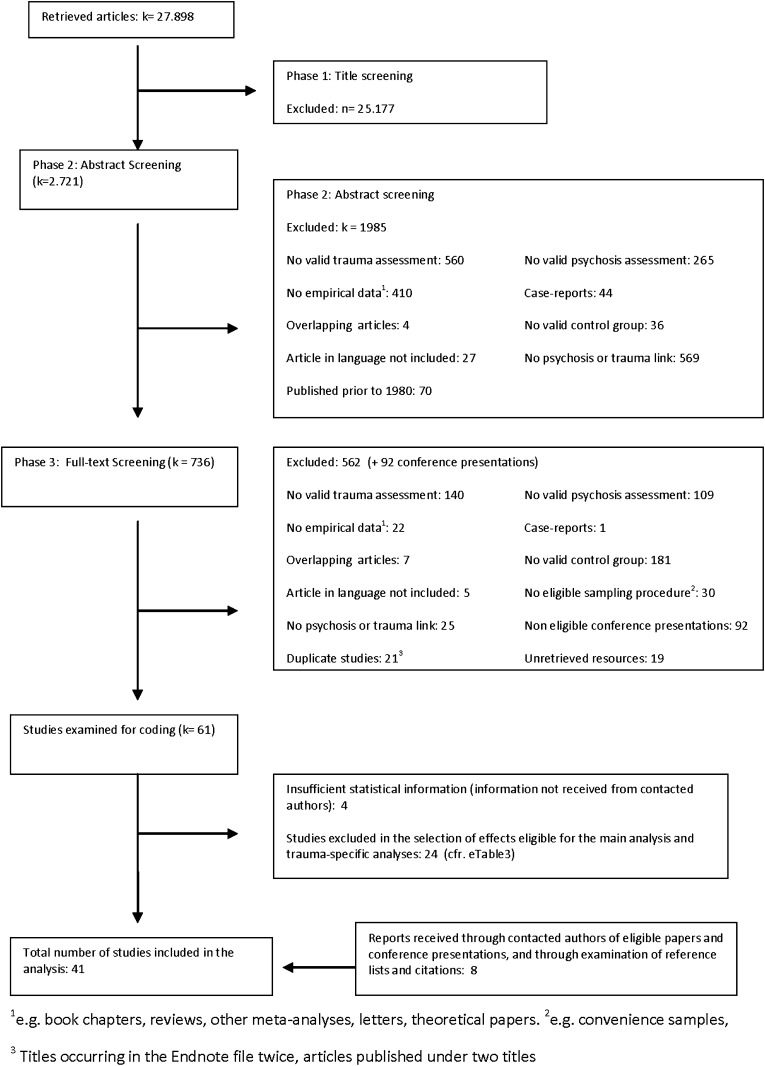
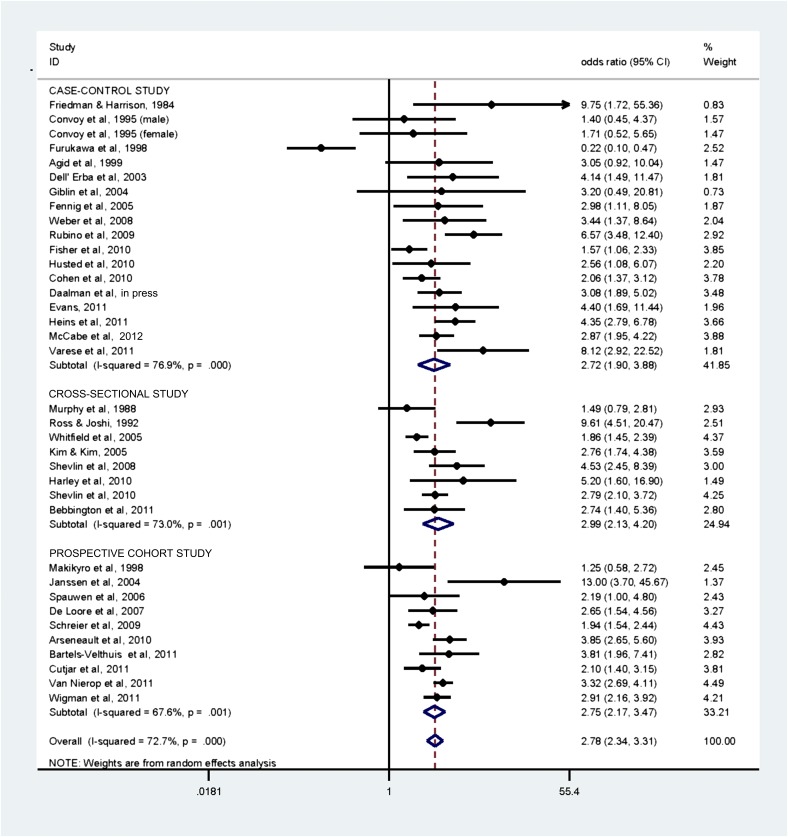
Evidence suggests that adverse experiences in childhood are associated with psychosis. To examine the association between childhood adversity and trauma (sexual abuse, physical abuse, emotional/psychological abuse, neglect, parental death, and bullying) and psychosis outcome, MEDLINE, EMBASE, PsychINFO, and Web of Science were searched from January 1980 through November 2011. We included prospective cohort studies, large-scale cross-sectional studies investigating the association between childhood adversity and psychotic symptoms or illness, case-control studies comparing the prevalence of adverse events between psychotic patients and controls using dichotomous or continuous measures, and case-control studies comparing the prevalence of psychotic symptoms between exposed and nonexposed subjects using dichotomous or continuous measures of adversity and psychosis. The analysis included 18 case-control studies (n = 2048 psychotic patients and 1856 nonpsychiatric controls), 10 prospective and quasi-prospective studies (n = 41,803) and 8 population-based cross-sectional studies (n = 35,546). There were significant associations between adversity and psychosis across all research designs, with an overall effect of OR = 2.78 (95% CI = 2.34-3.31). The integration of the case-control studies indicated that patients with psychosis were 2.72 times more likely to have been exposed to childhood adversity than controls (95% CI = 1.90-3.88). The association between childhood adversity and psychosis was also significant in population-based cross-sectional studies (OR = 2.99 [95% CI = 2.12-4.20]) as well as in prospective and quasi-prospective studies (OR = 2.75 [95% CI = 2.17-3.47]). The estimated population attributable risk was 33% (16%-47%). These findings indicate that childhood adversity is strongly associated with increased risk for psychosis.
Overview
The claims and statistics of this paper haven’t been checked yet.
Free: it reads the open-access text and checks the first 5 claims that cite a source we can check. Create a free account to check every claim.
Integrity signals
Registry
Cites
Statistics
Figures
Verification
Claims the paper makes
The claims and statistics of this paper haven’t been checked yet.
Free: it reads the open-access text and checks the first 5 claims that cite a source we can check. Create a free account to check every claim.
Claims other papers make about this one
Each is checked against this paper’s own text: does it say what the citing paper says it does?
The source backs part of the claim, not all of it — or backs it for a different population, condition or comparison.
In the citing paper
“by study design on obesity and psychosis,7,9”
From Long-term outcomes of childhood sexual abuse: an umbrella review (2019) · cites this paper as [7]
Experimental — accuracy not yet measuredThe source backs part of the claim, not all of it — or backs it for a different population, condition or comparison.
In the citing paper
“A recent meta-ana lysis calculated a population attributable risk of 33%, meaning that if the six types of child adversity studied were to disappear, a third of new psychosis cases would be avoided [13] .”
From The traumagenic neurodevelopmental model of psychosis revisited (2014) · cites this paper as [13]
Experimental — accuracy not yet measuredThe source backs part of the claim, not all of it — or backs it for a different population, condition or comparison.
In the citing paper
“and experiencing physical or sexual abuse (112).”
From Aberrant Salience, Information Processing, and Dopaminergic Signaling in People at Clinical High Risk for Psychosis (2020) · cites this paper as [112]
Experimental — accuracy not yet measuredThe cited source says what the claim attributes to it.
In the citing paper
“Recent studies indicate this is not an evidence-based belief [12,13,167] .”
From The traumagenic neurodevelopmental model of psychosis revisited (2014) · cites this paper as [13]
The cited source says what the claim attributes to it.
In the citing paper
“Furthermore, numerous studies and reviews note that the relationship between child abuse and psychosis remains after controlling for family history of psychosis [9-13,17] .”
From The traumagenic neurodevelopmental model of psychosis revisited (2014) · cites this paper as [13]
8 more claims about this paper
Create a free account to see every claim other papers make about this one.
Self-check
Percentages, sums and reported differences re-computed from the paper’s own numbers.
The self-check needs the paper’s full text.
Citations
Cites
Measuring inconsistency in meta-analyses
Higgins, J. P. T., Thompson, S. G., Deeks, J. J., & Altman, D. G. (2003) · BMJ · doi:10.1136/bmj.327.7414.557 · Cited by 63,139 · cited 1×
“Heterogeneity analyses were carried out using the Q and I(2) statistics to examine and quantify the amount of observed variance accounted for by true heterogeneity rather than sampling error.(57) Meta-regression analysis was subsequently used to determine whether (1) differences in study design and (2) inclusion of ad…”
MethodBias in meta-analysis detected by a simple, graphical test
Egger, M., Smith, G. D., Schneider, M., & Minder, C. (1997) · BMJ · doi:10.1136/bmj.315.7109.629 · Cited by 56,722
Meta-analysis of Observational Studies in Epidemiology<SUBTITLE>A Proposal for Reporting</SUBTITLE>
Stroup, D. F. (2000) · JAMA · doi:10.1001/jama.283.15.2008 · Cited by 20,623
Borenstein, M., Hedges, L. V., Higgins, J. P. T., & Rothstein, H. R. (2009) · doi:10.1002/9780470743386 · Cited by 14,225
Borenstein, M., Hedges, L. V., Higgins, J. P. T., & Rothstein, H. R. (2021) · doi:10.1002/9781119558378 · Cited by 9,799
The Handbook of Research Synthesis and Meta-Analysis
(2019) · doi:10.7758/9781610448864 · Cited by 4,553
Zhang, J., & Yu, K. F. (1998) · JAMA · doi:10.1001/jama.280.19.1690 · Cited by 4,138 · cited 1×
“Risk ratios were treated as ORs without further adjustment as the incidence of psychosis in the studied populations was low (ie, <10%).(56)”
MethodA Nonparametric “Trim and Fill” Method of Accounting for Publication Bias in Meta-Analysis
Duval, S., & Tweedie, R. (2000) · Journal of the American Statistical Association · doi:10.1080/01621459.2000.10473905 · Cited by 2,955
Validity of adult retrospective reports of adverse childhood experiences: review of the evidence
Hardt, J., & Rutter, M. (2004) · Journal of Child Psychology and Psychiatry · doi:10.1111/j.1469-7610.2004.00218.x · Cited by 2,827
Childhood adversities and adult psychopathology in the WHO World Mental Health Surveys
Kessler, R. C., McLaughlin, K. A., Green, J. G., Gruber, M. J., Sampson, N. A., Zaslavsky, A. M., Aguilar-Gaxiola, S., Alhamzawi, A. O., Alonso, J., Angermeyer, M., et al. (2010) · British Journal of Psychiatry · doi:10.1192/bjp.bp.110.080499 · Cited by 2,640 · cited 1×
“Adverse childhood events including trauma is a common experience worldwide, with some estimates suggesting that about a third of the general population may be affected.(1) Evidence suggests that its effects in adulthood may include a range of negative social outcomes, including higher criminality,(2) a lower education…”
Background
Research works printed but not linked: 12
- 15. Dell'Erba G, Venturi P, Tallarico V. Childhood stressful experiences in familial and sporadic schizophrenic patients [Italian] Italian J Psychopathol. 2003;9:32–39.
- 25. Evans G. Trauma and psychosis: investigating dissociation and self-concept clarity [Unpublished doctoral dissertation] University of Liverpool, UK; 2011
- 60. Schreier A, Wolke D, Thomas K, et al. Prospective study of peer victimization in childhood and psychotic symptoms in a nonclinical population at age 12 years. Arch Gen Psychiatry. 2009;66:527–536. doi: 10.1001/archgenpsychiatry.2009.23. · DOI · Paper page
- 63. Janssen I, Krabbendam L, Bak M, et al. Childhood abuse as a risk factor for psychotic experiences. Acta Psychiatr Scand. 2004;109:38–45. doi: 10.1046/j.0001-690x.2003.00217.x. · DOI · Paper page
- 64. Spauwen J, Krabbendam L, Lieb R, Wittchen H-U, van Os J. Impact of psychological trauma on the development of psychotic symptoms: relationship with psychosis proneness. Br J Psychiatry. 2006;188:527–533. doi: 10.1192/bjp.bp.105.011346. · DOI · Paper page
- 65. Nishida A, Tanii H, Nishimura Y, et al. Associations between psychotic-like experiences and mental health status and other psychopathologies among Japanese early teens. Schizophr Res. 2008;99:125–133. doi: 10.1016/j.schres.2007.11.038. · DOI
- 66. Shevlin M, Houston JE, Dorahy MJ, Adamson G. Cumulative traumas and psychosis: an analysis of the National Comorbidity Survey and the British Psychiatric Morbidity Survey. Schizophr Bull. 2008;34:193–199. doi: 10.1093/schbul/sbm069. · DOI · Paper page
- 67. Arseneault L, Cannon M, Fisher HL, et al. Psychotic symptoms: a genetically sensitive longitudinal cohort study. Am J Psychiatry. 2010;168:65–72. doi: 10.1176/appi.ajp.2010.10040567. · DOI · Paper page
- 69. De Loore E, Drukker M, Gunther N, et al. Childhood negative experiences and subclinical psychosis in adolescence: a longitudinal general population study. Early Interv Psychiatry. 2007;1:201–207. · DOI · Paper page
- 70. Whitfield CL, Dube SR, Felitti VJ, Anda RF. Adverse childhood experiences and hallucinations. Child Abuse & Neglect. 2005;29:797–810. doi: 10.1016/j.chiabu.2005.01.004. · DOI · Paper page
- 72. Houston JE, Murphy J, Adamson G, Stringer M, Shevlin M. Childhood sexual abuse, early cannabis use, and psychosis: testing an interaction model based on the National Comorbidity Survey. Schizophr Bull. 2008;34:580–585. doi: 10.1093/schbul/sbm127. · DOI · Paper page
- 73. Husted JA, Ahmed R, Chow EWC, Brzustowicz LM, Bassett AS. Childhood trauma and genetic factors in familial schizophrenia associated with the NOS1AP gene. Schizophr Res. 2010;121:187–192. doi: 10.1016/j.schres.2010.05.021. · DOI
Cited by
Items 401–500 of 1,008
Carbone, E. A., Pugliese, V., Bruni, A., Aloi, M., Calabrò, G., Jaén‐Moreno, M. J., Segura‐Garcìa, C., & Fazio, P. D. (2019) · Journal of Affective Disorders · doi:10.1016/j.jad.2019.08.049 · Cited by 60
Read, J., & Harper, D. J. (2020) · Journal of Constructivist Psychology · doi:10.1080/10720537.2020.1773356 · Cited by 61
“Child abuse plays a causal role in most mental health problems, including: depression, anxiety, eating difficulties, sexual problems, ‘personality disorders’, dissociation, substance abuse, PTSD, mood swings and psychosis (Kessler et al. 2010; Read, 2013a; Varese et al., 2012).”
BackgroundSelf-citationCampodonico, C., Varese, F., & Berry, K. (2022) · BMC Psychiatry · doi:10.1186/s12888-022-03808-3 · Cited by 49
“Repeated childhood trauma, which is particularly prevalent in people with psychosis [3], has frequently Open Access”
BackgroundSelf-citationSheinbaum, T., Kwapil, T. R., & Neus Barrantes-vidal, A. (2014) · Psychiatry Research · doi:10.1016/j.psychres.2014.07.030 · Cited by 57
“This study did not replicate the association between sexual abuse and psychotic phenomena obtained in previous studies (Varese et al., 2012), which may be due in part to a low prevalence of sexual abuse in our sample (low, moderate, and severe sexual abuse were reported by 5.”
InfluentialAnomalous self-experience and childhood trauma in first-episode schizophrenia
Haug, E., Øie, M. G., Andreassen, O. A., Bratlien, U., Nelson, B., Aas, M., Møller, P., & Melle, I. S. (2014) · Comprehensive Psychiatry · doi:10.1016/j.comppsych.2014.10.005 · Cited by 53
“CT has repeatedly been postulated as a risk factor for developing psychotic disorders including schizophrenia [10–14], with a recent meta-analysis which included prospective case-control studies showing a modest but statistically significant odds-ratio [10].”
BackgroundPersistent negative symptoms in individuals at Ultra High Risk for psychosis
Yung, A. R., Nelson, B., McGorry, P. D., Wood, S. J., & Lin, A. (2019) · Schizophrenia Research · doi:10.1016/j.schres.2018.10.019 · Cited by 48
The effect of left-behind phenomenon and physical neglect on behavioral problems of children
Wen, Y., Li, X.-B., Zhao, X., Wang, X., Hou, W., Bo, Q., Zheng, W., Pao, C., Tan, T. X., & Wang, C. (2018) · Child Abuse & Neglect · doi:10.1016/j.chiabu.2018.11.007 · Cited by 55
Brain metabolic alterations in mice subjected to postnatal traumatic stress and in their offspring
Gapp, K., Corcoba, A., van Steenwyk, G., Mansuy, I. M., & Duarte, J. M. (2017) · Journal of Cerebral Blood Flow & Metabolism · doi:10.1177/0271678x16667525 · Cited by 48
Bullying victimisation and paranoid ideation in people at ultra high risk for psychosis
Valmaggia, L., Day, F., Kroll, J., Laing, J., Byrne, M., Fusar‐Poli, P., & McGuire, P. K. (2015) · Schizophrenia Research · doi:10.1016/j.schres.2015.08.029 · Cited by 66
“…ideation and early adverse experiences, including bullying, and suggested that developing psychotic symptoms after childhood bullying appears to be related to the frequency, severity and duration of the bullying (Pickering et al., 2008, Varese et al., 2012, Lopes, 2013, Kraan et al., 2015).”
BackgroundGu, W., Zhao, Q., Yuan, C., Yi, Z., Zhao, M., & Wang, Z. (2022) · General Psychiatry · doi:10.1136/gpsych-2021-100741 · Cited by 74
Paksarian, D., Eaton, W. W., Mortensen, P. B., & Pedersen, C. B. (2014) · Schizophrenia Bulletin · doi:10.1093/schbul/sbu074 · Cited by 59
The Psychological Impact of Austerity: A Briefing Paper
McGrath, L., Griffin, V., Mundy, E., Curno, T., Weerasinghe, D., & Zlotowitz, S. (2016) · Open Research Online (The Open University) · doi:10.15123/uel.885xw · Cited by 70
Laskemoen, J. F., Aas, M., Vaskinn, A., Berg, A. O., Lunding, S. H., Barrett, E. A., Melle, I. S., & Simonsen, C. (2020) · Psychological Medicine · doi:10.1017/s0033291720000914 · Cited by 55
“Childhood trauma is a well-documented risk factor for the development of severe mental disorders (Varese et al., 2012).”
Misiak, B., Pruessner, M., Samochowiec, J., Wiśniewski, M., Reginia, A., & Stańczykiewicz, B. (2021) · Frontiers in Neuroendocrinology · doi:10.1016/j.yfrne.2021.100930 · Cited by 58
Haarmans, M., Vass, V., & Bentall, R. P. (2016) · Psychosis · doi:10.1080/17522439.2015.1131323 · Cited by 50
“…is particularly relevant in psychosis due to the association of experiences such as voice-hearing with cumulative or multiple forms of adversity (Varese et al., 2012), social inequality (Kirkbride & Ulrich, & Coid, 2014) and immigrant and ethnic minority status (Bourque, van der Ven, & Malla,…”
BackgroundSelf-citationSchroeder, K., Langeland, W., Fisher, H. L., Huber, C. G., & Schäfer, I. (2016) · Comprehensive Psychiatry · doi:10.1016/j.comppsych.2016.04.019 · Cited by 64
“There is substantial evidence that childhood adversity is common among patients with psychotic disorders [1, 2].”
BackgroundVelthorst, E., Nelson, B., O’Connor, K., Mossaheb, N., de Haan, L., Bruxner, A., Simmons, M. B., Yung, A. R., & Thompson, A. D. (2013) · Psychiatry Research · doi:10.1016/j.psychres.2013.06.007 · Cited by 58
“…disorders (Schäfer and Fisher, 2011), in recent years a growing body of literature has addressed the role of trauma in the development of psychosis, and more specifically schizophrenia (see for reviews Morgan and Fisher, 2007; Krabbendam, 2008; Bendall et al., 2008; Varese et al., 2012).”
InfluentialParental Communication and Psychosis: A Meta-analysis
de Sousa, P., Varese, F., Sellwood, W., & Bentall, R. P. (2014) · Schizophrenia Bulletin · doi:10.1093/schbul/sbt088 · Cited by 47
“001; Q[4] = 14.”
Self-citationDeRosse, P., Nitzburg, G. C., Kompancaril, B., & Malhotra, A. K. (2014) · Schizophrenia Research · doi:10.1016/j.schres.2014.03.009 · Cited by 47
“Several studies have demonstrated an association between childhood maltreatment and psychotic disorders and a recent review and metaanalysis of these studies (Varese et al., 2012) found that childhood adversity is substantially associated with an increased risk for psychosis with a population attributable risk of ~33%.”
BackgroundLi, X., Lv, Q., Tang, W., Deng, W., Zhao, L., Meng, Y., Guo, W., & Li, T. (2020) · Journal of Affective Disorders · doi:10.1016/j.jad.2020.12.126 · Cited by 56
“Meta-analyses show that ELA is associated with double or more psychological outcomes (Torjesen, 2019; Varese et al., 2012).”
BackgroundBaldini, V., Stefano, R. D., Rindi, L. V., Ahmed, A. O., Koola, M. M., Solmi, M., Papola, D., De Ronchi, D., Barbui, C., & Ostuzzi, G. (2023) · Psychiatry Research · doi:10.1016/j.psychres.2023.115488 · Cited by 46
Quidé, Y., Bortolasci, C. C., Spolding, B., Kidnapillai, S., Watkeys, O. J., Cohen‐Woods, S., Berk, M., Carr, V. J., Walder, K. R., & Green, M. J. (2018) · Psychological Medicine · doi:10.1017/s0033291718003690 · Cited by 51
“Although sexual abuse has been reported as a significant risk factor for psychotic symptoms (Cutajar et al., 2010), all types of trauma have been implicated in their development (Varese et al., 2012).”
BackgroundInfluentialU-Flourish university students well-being and academic success longitudinal study: a study protocol
Goodday, S., Rivera, D., Foran, H., King, N., Milanovic, M., Keown‐Stoneman, C. D. G., Horrocks, J., Tetzlaff, E., Bowie, C. R., Pickett, W., et al. (2019) · BMJ Open · doi:10.1136/bmjopen-2019-029854 · Cited by 59
Assessing child abuse: “We need to talk!”
Bifulco, A. T., & Schimmenti, A. (2019) · Child Abuse & Neglect · doi:10.1016/j.chiabu.2019.104236 · Cited by 56
Aloba, O. O., Opakunle, T., & Ogunrinu, O. (2020) · Child Abuse & Neglect · doi:10.1016/j.chiabu.2020.104357 · Cited by 52
Davies, E., Read, J., & Shevlin, M. E. (2021) · Higher Education · doi:10.1007/s10734-021-00774-9 · Cited by 71
“The long-term mental health impacts of child abuse and neglect can include anxiety, depression, PTSD, eating difficulties, ‘personality disorders’, dissociation, sexual difficulties, substance abuse, psychosis and mood swings (Kendler et al., 2000; Kessler et al. 2010; Varese et al., 2012).”
BackgroundSelf-citationWoolway, G., Smart, S. E., Lynham, A. J., Lloyd, J. L., Owen, M. J., Jones, I. R., Walters, J., & Legge, S. E. (2022) · Schizophrenia Bulletin · doi:10.1093/schbul/sbac049 · Cited by 61
“31) times more likely to report being exposed to childhood adversity or trauma than controls.(22) Furthermore, this association has demonstrated D o w n lo a d e d ro m h tp s //a c a d e m ic .”
Zhou, L., Sommer, I. E., Yang, P., Sikirin, L., van Os, J., Bentall, R. P., Varese, F., & Begemann, M. (2025) · American Journal of Psychiatry · doi:10.1176/appi.ajp.20240456 · Cited by 70
Self-citationTheleritis, C. G., Fisher, H. L., Shäfer, I., Winters, L., Stahl, D. R., Morgan, C., Dazzan, P., Breedvelt, J., Sambath, I., Vitoratou, S., et al. (2014) · Schizophrenia Research · doi:10.1016/j.schres.2014.07.013 · Cited by 51
Hutton, P., KELLY, J. A., Lowens, I., Taylor, P. J., & Tai, S. (2012) · Psychiatry Research · doi:10.1016/j.psychres.2012.08.010 · Cited by 57
“Early abuse, interpersonal trauma and neglect (Gracie et al., 2007; Varese et al., 2012) may lead”
BackgroundAn integrated biopsychosocial model of childhood maltreatment and psychosis
Barker, V., Gumley, A. I., Schwannauer, M., & Lawrie, S. M. (2015) · The British Journal of Psychiatry · doi:10.1192/bjp.bp.113.143578 · Cited by 62
Childhood trauma and psychosis: new perspectives on aetiology and treatment
Bendall, S., Álvarez‐Jiménez, M., Nelson, B., & McGorry, P. D. (2013) · Early Intervention in Psychiatry · doi:10.1111/eip.12008 · Cited by 56
“reduced by 33% (if causality is assumed and the pattern of other risk factors is unchanged).(1) This suggests that one way to prevent psychosis is”
BackgroundInfluentialDissociation mediates the relationship between childhood maltreatment and subclinical psychosis
Cole, C. L., Newman‐Taylor, K., & Kennedy, F. (2016) · Journal of Trauma & Dissociation · doi:10.1080/15299732.2016.1172537 · Cited by 57
Coping as a mediator of stress and psychotic-like experiences
Ered, A., Gibson, L. E., Maxwell, S. D., Cooper, S., & Ellman, L. M. (2017) · European Psychiatry · doi:10.1016/j.eurpsy.2017.01.327 · Cited by 53
“Indeed, both cross-sectional studies and prospective studies suggest that childhood traumatic life events have a dosedependent link to psychotic symptoms [4,5].”
BackgroundMoskowitz, A. K., Mosquera, D., & Longden, E. (2017) · European Journal of Trauma & Dissociation · doi:10.1016/j.ejtd.2017.01.003 · Cited by 56
“In contrast, schizophrenia is almost universally considered not to be a dissociative disorder (but see Scharfetter, 2008), despite the recognition that childhood trauma is common (Longden & Read, 2016; Read, van Os, Morrison, & Ross, 2005; Varese et al., 2012).”
BackgroundKratzer, L., Heinz, P., Pfitzer, F., Padberg, F., Jobst, A., & Schennach, R. (2017) · European Journal of Trauma & Dissociation · doi:10.1016/j.ejtd.2017.06.004 · Cited by 56
Child maltreatment and psychosis
Kaufman, J., & Torbey, S. (2019) · Neurobiology of Disease · doi:10.1016/j.nbd.2019.01.015 · Cited by 59
Early life exposures, neurodevelopmental disorders, and transposable elements
Lapp, H. E., & Hunter, R. G. (2019) · Neurobiology of Stress · doi:10.1016/j.ynstr.2019.100174 · Cited by 46
Age at migration and the risk of psychotic disorders: a systematic review and meta‐analysis
Anderson, K. K., & Edwards, J. (2020) · Acta Psychiatrica Scandinavica · doi:10.1111/acps.13147 · Cited by 51
“These consistent effects of early adversities—which include factors such as early parental separation (34) and various forms of childhood bullying, abuse, and neglect (31)—highlight childhood as a key developmental risk period, and these shared effects of early stressors may be suggestive of a common neurodevelopmenta…”
BackgroundAdams, R., Ohlsen, S., & Wood, E. (2020) · European Journal of Psychotraumatology · doi:10.1080/20008198.2019.1711349 · Cited by 63
“However, there is increasing evidence indicating that trauma experienced during childhood can play a pivotal role in the development and perpetuation of psychotic symptoms (Hardy, 2017; Varese et al., 2012).”
BackgroundBoyda, D., McFeeters, D., Dhingra, K., & Rhoden, L. (2018) · Journal of Clinical Psychology · doi:10.1002/jclp.22690 · Cited by 45
Patterns of comorbidity associated with ICD-11 PTSD among older adults in the United States
Fox, R. J., Hyland, P., Power, J. M., & Coogan, A. N. (2020) · Psychiatry Research · doi:10.1016/j.psychres.2020.113171 · Cited by 52
Wigman, J. T. W., Collip, D., Wichers, M., Delespaul, P., Derom, C., Thiery, E., Vollebergh, W. A. M., Lataster, T., Jacobs, N., Myin-Germeys, I., et al. (2013) · PLoS ONE · doi:10.1371/journal.pone.0054653 · Cited by 46
“childhood trauma) [19] environmental adversity as well as with the level of familial vulnerability for expression of psychosis [20,21].”
Self-citationThe impact of adverse child and adult experiences on recovery from serious mental illness.
Stumbo, S. P., Yarborough, B. J. H., Paulson, R. I., & Green, C. A. (2015) · Psychiatric Rehabilitation Journal · doi:10.1037/prj0000141 · Cited by 45
“Several studies have also demonstrated relationships between adverse childhood experiences and onset of mental health problems (Kessler et al., 2010; McLaughlin et al., 2010; Green et al., 2010; Varese et al., 2012).”
BackgroundMentalization-based treatment for psychotic disorder: protocol of a randomized controlled trial
Weijers, J. G., ten Kate, C., Eurelings-Bontekoe, E. H. M., Viechtbauer, W., Rampaart, R., BATEMAN, A. W., & Selten, J. (2016) · BMC Psychiatry · doi:10.1186/s12888-016-0902-x · Cited by 62
“Lastly, childhood trauma has been established as an important factor in the origins of both disorders [32].”
BackgroundSelf-citationNiimura, J., Nakanishi, M., Okumura, Y., Kawano, M., & Nishida, A. (2019) · International Journal of Mental Health Nursing · doi:10.1111/inm.12603 · Cited by 62
Allostatic load index and its clinical correlates at various stages of psychosis
Piotrowski, P., Kotowicz, K., Rymaszewska, J., Beszłej, J. A., Plichta, P., Samochowiec, J., Kalinowska, S., Trześniowska-Drukała, B., & Misiak, B. (2019) · Schizophrenia Research · doi:10.1016/j.schres.2019.06.009 · Cited by 45
Thomas, J. C., Letourneau, N. L., Dewey, D., Campbell, T. S., Giesbrecht, G. F., & the APrON Study Team (2020) · Development and Psychopathology · doi:10.1017/s0954579419001767 · Cited by 53
“The associations between ACEs and poor mental health outcomes including depression, anxiety, and psychosis are well documented in a number of recent meta-analyses (Li et al., 2016; Lindert et al., 2014; Varese et al., 2012), and ACEs have been shown to account for approximately 30% of mental health disorders worldwide…”
BackgroundThe neurophysiological embedding of child maltreatment
Holochwost, S. J., Wang, G., Kołacz, J., Mills-Koonce, R., Klika, J. B., & Jaffee, S. R. (2020) · Development and Psychopathology · doi:10.1017/s0954579420000383 · Cited by 71
“…of depression (Kessler, Davis, & Kendler, 1997; Nanni, Uher, & Danese, 2012), bipolar disorder (Agnew-Blais & Danese, 2016), psychotic disorders (Varese et al., 2012), posttraumatic stress disorder (PTSD) (Widom, 1999), as well as increased likelihood of substance use (Klanecky, McChargue, &…”
BackgroundComplex PTSD symptoms mediate the association between childhood trauma and physical health problems
Ho, G. W. K., Karatzias, T., Vallières, F., Bondjers, K., Shevlin, M. E., Cloître, M., Ben‐Ezra, M., Bisson, J. I., Roberts, N. P., Wright, L. A., et al. (2021) · Journal of Psychosomatic Research · doi:10.1016/j.jpsychores.2021.110358 · Cited by 55
“problems, such as depression and psychosis, than physical or sexual forms of trauma (Grossman, Sorsoli, & Kia-Keating, 2006; Varese et al., 2012).”
Need for Ethnic and Population Diversity in Psychosis Research
Burkhard, C., Çiçek, S., Barzilay, R., Radhakrishnan, R., & Gülöksüz, S. (2021) · Schizophrenia Bulletin · doi:10.1093/schbul/sbab048 · Cited by 59
Quidé, Y., Bortolasci, C. C., Spolding, B., Kidnapillai, S., Watkeys, O. J., Cohen-Woods, S., Carr, V. J., Berk, M., Walder, K., & Green, M. J. (2021) · Progress in Neuro-Psychopharmacology and Biological Psychiatry · doi:10.1016/j.pnpbp.2020.110013 · Cited by 44
Schizophrenia: A critical view on genetic effects
Fosse, R., Joseph, J., & Jones, M. (2015) · Psychosis · doi:10.1080/17522439.2015.1081269 · Cited by 45
“Second, in contrast to the minor degree of explained variance in genetic studies, the risks associated with environmental factors are quite high (e.g. Varese et al., 2012).”
BackgroundPastore, A., de Girolamo, G., Tafuri, S., Tomasicchio, A., & Margari, F. (2020) · European Child & Adolescent Psychiatry · doi:10.1007/s00787-020-01574-9 · Cited by 61
“A recent meta-analysis focusing on the effect of specific traumas including maltreatment, bullying and parental death during childhood, revealed that, with the exception of parental death, none of specific type of trauma is a stronger predictor of psychosis than any other, suggesting that other adversity-related varia…”
BackgroundPrachason, T., Mutlu, İ., Fusar‐Poli, L., Menne‐Lothmann, C., Decoster, J., van Winkel, R., Collip, D., Delespaul, P., Binder, M. D., Derom, C. A., et al. (2023) · Social Psychiatry and Psychiatric Epidemiology · doi:10.1007/s00127-023-02546-5 · Cited by 56
“The population attributable fraction of CA exposure is estimated to be around 33% for psychosis and 59% for depression as well as anxiety [7, 8].”
BackgroundDevelopmental mechanisms in the prodrome to psychosis
Walker, E. F., Trotman, H. D., Goulding, S. M., Holtzman, C. W., Ryan, A. T., McDonald, A., Shapiro, D. I., & Brasfield, J. L. (2013) · Development and Psychopathology · doi:10.1017/s0954579413000783 · Cited by 50
“Exposure to trauma in childhood, a more acute and severe form of psychosocial stress, has been linked with risk for subsequent psychosis in numerous investigations (for a review, see Varese et al., 2012).”
BackgroundDifferent Paths to Core Pathology: The Equifinal Model of the Schizophrenia Syndrome
Green, I. W., & Glausier, J. R. (2015) · Schizophrenia Bulletin · doi:10.1093/schbul/sbv136 · Cited by 49
Relation between psychotic symptoms, parental care and childhood trauma in severe mental disorders
Catalán, A., Angosto, V., Díaz, A., Valverde, C., de Artaza, M. G., Sesma-Pardo, E., Maruottolo, C., Galletero, I., Bustamante, S. E. Z., Bilbao, A., et al. (2017) · Psychiatry Research · doi:10.1016/j.psychres.2017.02.017 · Cited by 53
Mętel, D., Arciszewska, A., Daren, A., Pionke‐Ubych, R., Cechnicki, A., Frydecka, D., & Gawęda, Ł. (2019) · Early Intervention in Psychiatry · doi:10.1111/eip.12829 · Cited by 53
“Varese et al. (2012) in their meta-analysis stated, that one-third of the psychotic patients would not have developed psychosis if they had not been exposed to traumatic life events, especially to abuse of sexual, physical or emotional nature.”
BackgroundDahoun, T., Nour, M. M., McCutcheon, R. A., Adams, R. A., Bloomfield, M., & Howes, O. D. (2019) · Translational Psychiatry · doi:10.1038/s41398-019-0627-y · Cited by 48
Risk and protective factors for psychotic experiences in adolescence: a population-based study
McMahon, E. M., Corcoran, P. E., Keeley, H., Clarke, M. C., Coughlan, H., Wasserman, D., Hoven, C. W., Carli, V., Sarchiapone, M., Healy, C., et al. (2020) · Psychological Medicine · doi:10.1017/s0033291719004136 · Cited by 56
“In the case of most studies examined, risk increased with each additional adversity (Varese et al., 2012).”
BackgroundResting state alpha oscillatory activity is a valid and reliable marker of schizotypy
Trajkovic, J., Gregorio, F. D., Ferri, F., Marzi, C., Diciotti, S., & Romei, V. (2021) · Scientific Reports · doi:10.1038/s41598-021-89690-7 · Cited by 56
Priebe, S., Fung, C., Brusco, L. I., Carbonetti, F. L., Gómez–Restrepo, C., Uribe-Restrepo, J. M., Diez‐Canseco, F., Smuk, M., Holt, N. J., Kirkbride, J. B., et al. (2021) · BMJ Open · doi:10.1136/bmjopen-2021-052339 · Cited by 41
Sood, M., Carnelley, K. B., & Newman‐Taylor, K. (2022) · British Journal of Clinical Psychology · doi:10.1111/bjc.12361 · Cited by 52
“The research available suggests that dissociation mediates the association between early adversity and hallucinations (e.g., Berry, Varese, & Bucci, 2017; Varese et al., 2012).”
Trauma therapies for psychosis: A state‐of‐the‐art review
Hardy, A., Keen, N., van den Berg, D. P. G., Varese, F., Longden, E., Ward, T., & Brand, R. M. (2023) · Psychology and Psychotherapy Theory Research and Practice · doi:10.1111/papt.12499 · Cited by 82
“…events, particularly childhood interpersonal victimisation, are associated with the occurrence, severity and persistence of psychosis, with a dose– response relationship, supporting a potential causal role (Bailey et al., 2018; de Vries et al., 2018; Trotta et al., 2015; Varese et al., 2012).”
Self-citationEpigenetics and its implications for Psychology
González‐Pardo, H., & Álvarez, M. P. (2013) · Psicothema · doi:10.7334/psicothema2012.327 · Cited by 61
Haram, M., Tesli, M., Bettella, F., Djurovic, S., Andreassen, O. A., & Melle, I. (2015) · Frontiers in Human Neuroscience · doi:10.3389/fnhum.2015.00009 · Cited by 43
Psychotic symptoms, functioning and coping in adolescents with mental illness
Wigman, J. T. W., Devlin, N. M., Kelleher, I., Murtagh, A., Harley, M., Kehoe, A., Fitzpatrick, C., & Cannon, M. D. (2014) · BMC Psychiatry · doi:10.1186/1471-244x-14-97 · Cited by 50
“A large body of literature has shown that trauma can lead to psychotic development [33,34].”
BackgroundDillon, J., Johnstone, L., & Longden, E. (2014) · Palgrave Macmillan UK eBooks · doi:10.1057/9781137304667_14 · Cited by 55
Weijers, J. G., Fonagy, P., Eurelings-Bontekoe, E. H. M., Termorshuizen, F., Viechtbauer, W., & Selten, J. (2017) · Psychiatry Research · doi:10.1016/j.psychres.2017.11.010 · Cited by 57
Self-citationWeijers, J. G., ten Kate, C., Debbané, M., BATEMAN, A. W., de Jong, S., Selten, J., & Eurelings-Bontekoe, E. H. M. (2020) · Journal of Contemporary Psychotherapy · doi:10.1007/s10879-019-09449-0 · Cited by 57
Sexual health of women with schizophrenia: A review
Barker, L. C., & Vigod, S. N. (2020) · Frontiers in Neuroendocrinology · doi:10.1016/j.yfrne.2020.100840 · Cited by 52
Amoretti, S., Verdolini, N., Mezquida, G., Rabelo‐da‐Ponte, F. D., Cuesta, M. J., Pina‐Camacho, L., Gómez-Ramiro, M., De‐la‐Cámara, C., González-Pinto, A. M., Díaz‐Caneja, C. M., et al. (2021) · European Neuropsychopharmacology · doi:10.1016/j.euroneuro.2021.01.095 · Cited by 48
Psychosis spectrum illnesses as disorders of prefrontal critical period plasticity
Vinogradov, S., Chafee, M. V., Lee, E. G., & Morishita, H. (2022) · Neuropsychopharmacology · doi:10.1038/s41386-022-01451-w · Cited by 55
“Early childhood adverse experiences increase the risk for schizophrenia [51] S.”
BackgroundInfluentialTraumatic loss and psychosis – Reconceptualising the role of trauma in psychosis.
Vallath, S., Ravikanth, L., Regeer, B., Borba, P. C., Henderson, D. C., & Scholte, W. F. (2020) · European Journal of Psychotraumatology · doi:10.1080/20008198.2020.1725322 · Cited by 42
“…the last decade and many studies have consistently shown that traumatic events are among the most robust factors in the development of psychosis (Bendall, Alvarez-Jimenez, & Nelson, 2013; Moriyama et al., 2018; Okkels, Trabjerg, & Arendt, 2016; Sareen, Cox, & Goodwin, 2005; Varese et al., 2012).”
BackgroundMyers, N. A. L., & Ziv, T. (2016) · Medical Anthropology Quarterly · doi:10.1111/maq.12288 · Cited by 42
The thrifty psychiatric phenotype
García‐Rizo, C., Fernández-Egea, E., Bernardo, M., & Kirkpatrick, B. W. (2014) · Acta Psychiatrica Scandinavica · doi:10.1111/acps.12309 · Cited by 42
“Diverse environmental factors, both prenatal (infections, hypertension during pregnancy, and placental abnormalities) (9) and postnatal (10) increase the risk of psychosis.”
BackgroundMurphy, S., Murphy, J., & Shevlin, M. (2015) · British Journal of Clinical Psychology · doi:10.1111/bjc.12077 · Cited by 42
Early life stressors and suicidal ideation: Mediation by interpersonal risk factors
Puzia, M., Kraines, M. A., Liu, R. T., & Kleiman, E. M. (2013) · Personality and Individual Differences · doi:10.1016/j.paid.2013.08.027 · Cited by 56
Trauma history characteristics associated with mental states at clinical high risk for psychosis
Russo, D. A., Štochl, J., Painter, M., Dobler, V., Jackson, E., Jones, P. B., & Pérez, J. M. (2014) · Psychiatry Research · doi:10.1016/j.psychres.2014.08.028 · Cited by 47
“Psychosis has been linked with a history of adverse life events (Read et al., 2005; Morgan et al., 2007; Bendall et al., 2008; Bebbington et al., 2011; Fisher et al., 2010; Varese et al., 2012).”
Kim, J. S., & Lee, S. (2016) · Progress in Neuro-Psychopharmacology and Biological Psychiatry · doi:10.1016/j.pnpbp.2016.01.013 · Cited by 51
Baudin, G., Godin, O., Lajnef, M., Aouizerate, B., Berna, F. S., Brunel, L., Capdevielle, D., Chéreau, I., Dorey, J., Dubertret, C., et al. (2016) · Schizophrenia Research · doi:10.1016/j.schres.2016.04.042 · Cited by 48
“In most studies, CT are restricted to physical and sexual abuse, with little attention given to emotional trauma, which is frequent in, and deleterious to, schizophrenia (Ackner et al., 2013; Varese et al., 2012).”
InfluentialSchizotypal personality traits and social cognition are associated with childhood trauma exposure
Quidé, Y., Cohen‐Woods, S., O’Reilly, N., Carr, V. J., Elzinga, B. M., & Green, M. J. (2018) · British Journal of Clinical Psychology · doi:10.1111/bjc.12187 · Cited by 53
Mall, S., Platt, J. M., Temmingh, H. S., Musenge, E., Campbell, M., Susser, E., & Stein, D. J. (2019) · Psychological Medicine · doi:10.1017/s0033291719001703 · Cited by 48
“…those who have experienced cumulative traumas are generally consistent with previous studies (Anda et al., 2006; van Os et al., 2008) including three systematic reviews of the relationship between childhood trauma and schizophrenia (Read et al., 2005; Matheson et al., 2012; Varese et al., 2012).”
Late-onset psychosis and very-late-onset-schizophrenia-like-psychosis: an updated systematic review
Suen, Y. N., Wong, S. M. Y., Hui, C. L. M., Chan, S. K. W., Lee, E. H. M., Chang, W. C., & Chen, E. Y. H. (2019) · International Review of Psychiatry · doi:10.1080/09540261.2019.1670624 · Cited by 50
“Consistent with studies suggesting the relationship between significant life events and mental disorders, including psychosis (Bramon & Murray, 2001; Varese et al., 2012), both VLOSLP and very-late onset depression reported more adverse life events and losses than HC (Giblin et al., 2004).”
BackgroundThe revised Psychosis Attachment Measure: Measuring disorganized attachment
Pollard, C., Bucci, S., MacBeth, A. M., & Berry, K. (2020) · British Journal of Clinical Psychology · doi:10.1111/bjc.12249 · Cited by 52
“It is nowwell established that trauma increases the risk of developing psychosis (Varese et al., 2012).”
BackgroundParanoia and conspiracy thinking
Greenburgh, A., & Raihani, N. (2022) · Current Opinion in Psychology · doi:10.1016/j.copsyc.2022.101362 · Cited by 50
Chatziioannidis, S., Andreou, C., Agorastos, A., Kaprinis, S., Malliaris, Y., Garyfallos, G., & Bozikas, V. P. (2019) · Psychiatry Research · doi:10.1016/j.psychres.2019.05.021 · Cited by 41
Cyberbullying in those at clinical high risk for psychosis
Magaud, E., Nyman, K., & Addington, J. (2013) · Early Intervention in Psychiatry · doi:10.1111/eip.12013 · Cited by 50
“state and trait risk factors for psychotic illness.(1) High rates of childhood trauma and bullying have been reported in individuals at CHR of psychosis.”
BackgroundTrauelsen, A. M., Bendall, S., Jansen, J. E., Nielsen, H. L., Pedersen, M. B., Trier, C. H., Haahr, U., & Simonsen, E. H. (2016) · Australian & New Zealand Journal of Psychiatry · doi:10.1177/0004867415625814 · Cited by 47
“Childhood adversities are established risk factors for nonaffective psychosis (Varese et al., 2012).”
BackgroundTrauma and psychosis symptoms in a sample of help-seeking youth
Kline, E. R., Millman, Z. B., Denenny, D. M., Wilson, C. S., Thompson, E., Demro, C., Connors, K. M., Bussell, K., Reeves, G. M., & Schiffman, J. E. (2016) · Schizophrenia Research · doi:10.1016/j.schres.2016.04.006 · Cited by 45
Bucci, S., Emsley, R., & Berry, K. (2016) · Psychiatry Research · doi:10.1016/j.psychres.2016.11.036 · Cited by 54
“We examined only physical and sexual abuse in the current study as interpersonal traumas, in particular physical and sexual abuse, have been specifically linked to psychotic symptoms (Varese et al., 2012) and have been shown to increase vulnerability to the development of psychotic symptoms via disruptions in the atta…”
BackgroundInfluentialRecent life events and psychosis: The role of childhood adversities
Mansueto, G., & Faravelli, C. (2017) · Psychiatry Research · doi:10.1016/j.psychres.2017.06.042 · Cited by 41
“The relationship between stressful life events and psychosis is well established (Jung, 1907; Bleuer, 1911; Steinber and Durell, 1968; Beck and Worthen, 1972; Brown et al., 1973; Varese et al., 2012; Beards et al., 2013; Gallagher et al., 2013; Trotta et al., 2015; Butjosa et al., 2016).”
BackgroundDevelopmental Aspects of Schizotypy and Suspiciousness: a Review
Wong, K. K., & Raine, A. (2018) · Current Behavioral Neuroscience Reports · doi:10.1007/s40473-018-0144-y · Cited by 45
Zhou, J. L., Feng, L., Hu, C., Pao, C., Xiao, L., & Wang, G. (2019) · Frontiers in Psychology · doi:10.3389/fpsyg.2019.01321 · Cited by 51
“9% of the risk for mood disorders can be attributable to childhood maltreatment (Kessler et al., 2010; Varese et al., 2012; DeRosse et al., 2014).”
BackgroundHearing voices as a feature of typical and psychopathological experience
Toh, W. L., Moseley, P., & Fernyhough, C. (2022) · Nature Reviews Psychology · doi:10.1038/s44159-021-00013-z · Cited by 51
WELLFOCUS PPT: Modifying positive psychotherapy for psychosis.
Riches, S., Schrank, B., Rashid, T., & Slade, M. (2015) · Psychotherapy · doi:10.1037/pst0000013 · Cited by 50
“Experts agreed that forgiveness should be conceptualised by using recent examples of someone who has ‘let you down’, thus reducing the likelihood that group members consider childhood trauma (Varese et al., 2012), to address attitudes.”
BackgroundConsumer recommendations for enhancing the Safewards model and interventions
Kennedy, H., Roper, C., Randall, R., Pintado, D., Buchanan‐Hagen, S., Fletcher, J. R., & Hamilton, B. E. (2019) · International Journal of Mental Health Nursing · doi:10.1111/inm.12570 · Cited by 45
Sideli, L., Fisher, H. L., Murray, R. M., Sallis, H., Russo, M., Stilo, S. A., Paparelli, A., Wiffen, B. D. R., O’Connor, J. A., Pintore, S., et al. (2015) · Early Intervention in Psychiatry · doi:10.1111/eip.12285 · Cited by 48
Childhood adversity and conduct disorder: A developmental pathway to violence in schizophrenia
Oakley, Ç., Harris, S. T., Fahy, T. A., Murphy, D., & Picchioni, M. (2016) · Schizophrenia Research · doi:10.1016/j.schres.2016.01.047 · Cited by 49
“Childhood adversity is strongly associated with an increased risk for psychosis and could have a significant aetiological role (Varese et al., 2012).”
Background
Metadata
- Authors
- Varese, F., Smeets, F., Drukker, M., Lieverse, R., Lataster, T., Viechtbauer, W., Read, J., van Os, J., & Bentall, R. P.
- Affiliations
- University of Liverpool (GB)
- Maastricht University (NL)
- University of Auckland (NZ)
- ORCID
- Venue
- Schizophrenia Bulletin
- Publisher
- Oxford University Press (OUP)
- Published
- 2012-03-29
- Volume
- 38
- Issue
- 4
- Pages
- 661-671
- ISSN
- 0586-7614 (ISSN-L)
- 1745-1701
- PMC
- PMC3406538
- OpenAlex
- W2097940171
- Semantic Scholar
- e74a0894053502319556985b4d9811ec75c1f7bd
- Cited by
- 2,436
- References
- 74
- Citations by year
- 2026: 153 · 2025: 158 · 2024: 156 · 2023: 216 · 2022: 206 · 2021: 192 · 2020: 240 · 2019: 190 · 2018: 183 · 2017: 181 · 2016: 177 · 2015: 141 · 2014: 125 · 2013: 87 · 2012: 27
- FWCI
- 17.70
- Type
- journal article
- Language
- en
- Open access
- hybrid
- doi.org
- Licence
- cc-by-nc
- Locations
- Schizophrenia Bulletin (publishedVersion, cc-by-nc)
- Europe PMC (PubMed Central) (publishedVersion, cc-by-nc)
- PubMed Central (publishedVersion, cc-by-nc)
- PubMed (publishedVersion)
- Research Publications (Maastricht University) (publishedVersion, cc-by-nc)
- UEL Research Repository (University of East London) (acceptedVersion)
- Lirias (submittedVersion, cc-by-nc)
- Lancaster EPrints (Lancaster University) (submittedVersion)
- Research Explorer (The University of Manchester) (submittedVersion)
- UEL Research Repository (University of East London) (submittedVersion, cc-by-nc)
- Swinburne figshare (Swinburne University of Technology) (submittedVersion)
- Research Publications (Maastricht University) (submittedVersion, other-oa)
- Funders
- Economic and Social Research Council (ES/I015043/1, ES/I015043/2, RES-000-)
- Topics
- Social Sciences › Psychology › Clinical Psychology › Child Abuse and Trauma
- Health Sciences › Medicine › Psychiatry and Mental health › Schizophrenia research and treatment
- Social Sciences › Psychology › Clinical Psychology › Posttraumatic Stress Disorder Research
- Keywords
- childhood adversity, childhood trauma
- MeSH terms
- Adolescent, Adult, Child, Child Abuse, Cross-Sectional Studies, Humans, Prospective Studies, Psychotic Disorders, Risk Factors, Cohort Studies, Case-Control Studies, Adult Survivors of Child Abuse, Bullying, Parental Death
About these checks
Registry, retraction, Cites and statistics results are computed, not judged, with one exception: a printed reference that no index lists is read once by a model before it counts as a citation error. Claims are extracted by a model and kept only when their quote appears verbatim in the text; each cited source is then checked, with a model’s help, for whether it says what the claim relies on. Those verdicts can be wrong — read the claim’s quote and the cited source before relying on one.
Statistics and arithmetic are recomputed, not judged.
Confidence bands are shown only for fields calibrated on our annotated test set. None is calibrated yet, so no band is shown.
What counts as a claim ›How we measure confidence ›How we check this ›
Are you an author, or do you see a problem with this page? Request a review
Data sources
Bibliographic data: Semantic Scholar, OpenAlex, Crossref.
Contains information from the Semantic Scholar Academic Graph Datasets, made available under the ODC Attribution License (ODC-BY 1.0).
Semantic Scholar’s data is described in: Kinney, R., et al. (2023). The Semantic Scholar Open Data Platform. arXiv:2301.10140.
