

Childhood Adversities Increase the Risk of Psychosis: A Meta-analysis of Patient-Control, Prospective- and Cross-sectional Cohort Studies
Open accessThe DOI matches its Crossref record; 72 of the 74 references it cites were found in a registry or an index.
Abstract
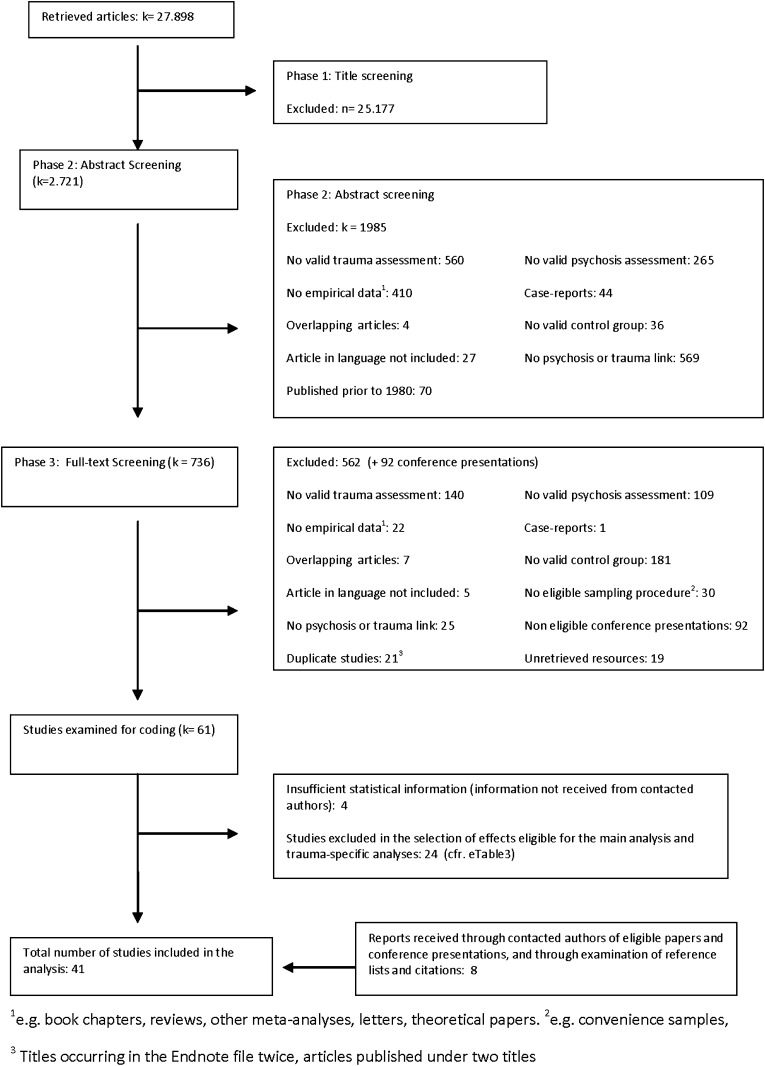
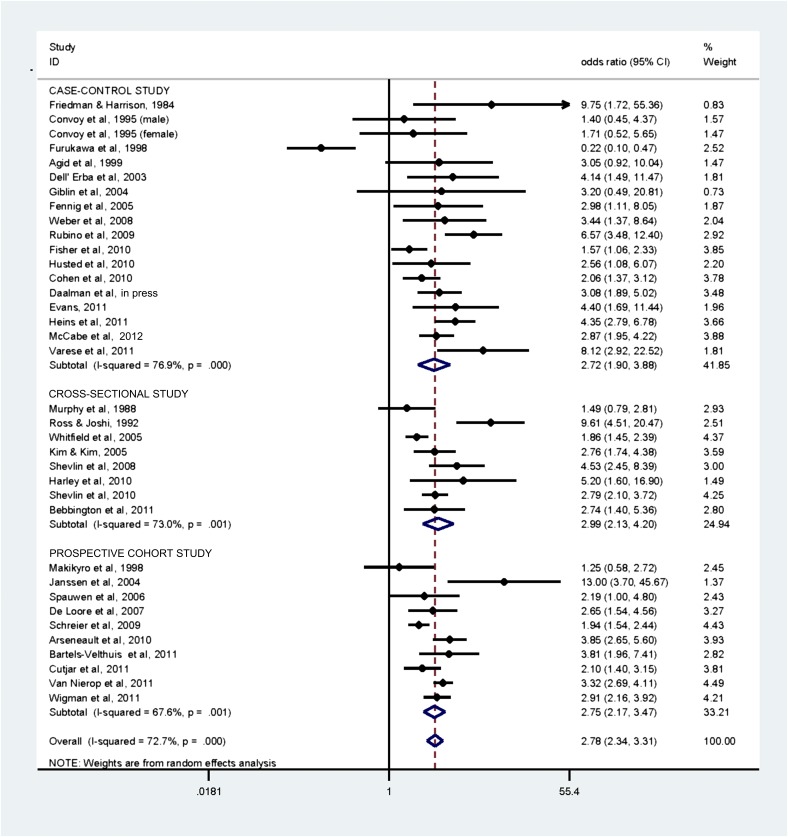
Evidence suggests that adverse experiences in childhood are associated with psychosis. To examine the association between childhood adversity and trauma (sexual abuse, physical abuse, emotional/psychological abuse, neglect, parental death, and bullying) and psychosis outcome, MEDLINE, EMBASE, PsychINFO, and Web of Science were searched from January 1980 through November 2011. We included prospective cohort studies, large-scale cross-sectional studies investigating the association between childhood adversity and psychotic symptoms or illness, case-control studies comparing the prevalence of adverse events between psychotic patients and controls using dichotomous or continuous measures, and case-control studies comparing the prevalence of psychotic symptoms between exposed and nonexposed subjects using dichotomous or continuous measures of adversity and psychosis. The analysis included 18 case-control studies (n = 2048 psychotic patients and 1856 nonpsychiatric controls), 10 prospective and quasi-prospective studies (n = 41,803) and 8 population-based cross-sectional studies (n = 35,546). There were significant associations between adversity and psychosis across all research designs, with an overall effect of OR = 2.78 (95% CI = 2.34-3.31). The integration of the case-control studies indicated that patients with psychosis were 2.72 times more likely to have been exposed to childhood adversity than controls (95% CI = 1.90-3.88). The association between childhood adversity and psychosis was also significant in population-based cross-sectional studies (OR = 2.99 [95% CI = 2.12-4.20]) as well as in prospective and quasi-prospective studies (OR = 2.75 [95% CI = 2.17-3.47]). The estimated population attributable risk was 33% (16%-47%). These findings indicate that childhood adversity is strongly associated with increased risk for psychosis.
Overview
The claims and statistics of this paper haven’t been checked yet.
Free: it reads the open-access text and checks the first 5 claims that cite a source we can check. Create a free account to check every claim.
Integrity signals
Registry
Cites
Statistics
Figures
Verification
Claims the paper makes
The claims and statistics of this paper haven’t been checked yet.
Free: it reads the open-access text and checks the first 5 claims that cite a source we can check. Create a free account to check every claim.
Claims other papers make about this one
Each is checked against this paper’s own text: does it say what the citing paper says it does?
The source backs part of the claim, not all of it — or backs it for a different population, condition or comparison.
In the citing paper
“by study design on obesity and psychosis,7,9”
From Long-term outcomes of childhood sexual abuse: an umbrella review (2019) · cites this paper as [7]
Experimental — accuracy not yet measuredThe source backs part of the claim, not all of it — or backs it for a different population, condition or comparison.
In the citing paper
“A recent meta-ana lysis calculated a population attributable risk of 33%, meaning that if the six types of child adversity studied were to disappear, a third of new psychosis cases would be avoided [13] .”
From The traumagenic neurodevelopmental model of psychosis revisited (2014) · cites this paper as [13]
Experimental — accuracy not yet measuredThe source backs part of the claim, not all of it — or backs it for a different population, condition or comparison.
In the citing paper
“and experiencing physical or sexual abuse (112).”
From Aberrant Salience, Information Processing, and Dopaminergic Signaling in People at Clinical High Risk for Psychosis (2020) · cites this paper as [112]
Experimental — accuracy not yet measuredThe cited source says what the claim attributes to it.
In the citing paper
“Recent studies indicate this is not an evidence-based belief [12,13,167] .”
From The traumagenic neurodevelopmental model of psychosis revisited (2014) · cites this paper as [13]
The cited source says what the claim attributes to it.
In the citing paper
“Furthermore, numerous studies and reviews note that the relationship between child abuse and psychosis remains after controlling for family history of psychosis [9-13,17] .”
From The traumagenic neurodevelopmental model of psychosis revisited (2014) · cites this paper as [13]
8 more claims about this paper
Create a free account to see every claim other papers make about this one.
Self-check
Percentages, sums and reported differences re-computed from the paper’s own numbers.
The self-check needs the paper’s full text.
Citations
Cites
Measuring inconsistency in meta-analyses
Higgins, J. P. T., Thompson, S. G., Deeks, J. J., & Altman, D. G. (2003) · BMJ · doi:10.1136/bmj.327.7414.557 · Cited by 63,139 · cited 1×
“Heterogeneity analyses were carried out using the Q and I(2) statistics to examine and quantify the amount of observed variance accounted for by true heterogeneity rather than sampling error.(57) Meta-regression analysis was subsequently used to determine whether (1) differences in study design and (2) inclusion of ad…”
MethodBias in meta-analysis detected by a simple, graphical test
Egger, M., Smith, G. D., Schneider, M., & Minder, C. (1997) · BMJ · doi:10.1136/bmj.315.7109.629 · Cited by 56,722
Meta-analysis of Observational Studies in Epidemiology<SUBTITLE>A Proposal for Reporting</SUBTITLE>
Stroup, D. F. (2000) · JAMA · doi:10.1001/jama.283.15.2008 · Cited by 20,623
Borenstein, M., Hedges, L. V., Higgins, J. P. T., & Rothstein, H. R. (2009) · doi:10.1002/9780470743386 · Cited by 14,225
Borenstein, M., Hedges, L. V., Higgins, J. P. T., & Rothstein, H. R. (2021) · doi:10.1002/9781119558378 · Cited by 9,799
The Handbook of Research Synthesis and Meta-Analysis
(2019) · doi:10.7758/9781610448864 · Cited by 4,553
Zhang, J., & Yu, K. F. (1998) · JAMA · doi:10.1001/jama.280.19.1690 · Cited by 4,138 · cited 1×
“Risk ratios were treated as ORs without further adjustment as the incidence of psychosis in the studied populations was low (ie, <10%).(56)”
MethodA Nonparametric “Trim and Fill” Method of Accounting for Publication Bias in Meta-Analysis
Duval, S., & Tweedie, R. (2000) · Journal of the American Statistical Association · doi:10.1080/01621459.2000.10473905 · Cited by 2,955
Validity of adult retrospective reports of adverse childhood experiences: review of the evidence
Hardt, J., & Rutter, M. (2004) · Journal of Child Psychology and Psychiatry · doi:10.1111/j.1469-7610.2004.00218.x · Cited by 2,827
Childhood adversities and adult psychopathology in the WHO World Mental Health Surveys
Kessler, R. C., McLaughlin, K. A., Green, J. G., Gruber, M. J., Sampson, N. A., Zaslavsky, A. M., Aguilar-Gaxiola, S., Alhamzawi, A. O., Alonso, J., Angermeyer, M., et al. (2010) · British Journal of Psychiatry · doi:10.1192/bjp.bp.110.080499 · Cited by 2,640 · cited 1×
“Adverse childhood events including trauma is a common experience worldwide, with some estimates suggesting that about a third of the general population may be affected.(1) Evidence suggests that its effects in adulthood may include a range of negative social outcomes, including higher criminality,(2) a lower education…”
Background
Research works printed but not linked: 12
- 15. Dell'Erba G, Venturi P, Tallarico V. Childhood stressful experiences in familial and sporadic schizophrenic patients [Italian] Italian J Psychopathol. 2003;9:32–39.
- 25. Evans G. Trauma and psychosis: investigating dissociation and self-concept clarity [Unpublished doctoral dissertation] University of Liverpool, UK; 2011
- 60. Schreier A, Wolke D, Thomas K, et al. Prospective study of peer victimization in childhood and psychotic symptoms in a nonclinical population at age 12 years. Arch Gen Psychiatry. 2009;66:527–536. doi: 10.1001/archgenpsychiatry.2009.23. · DOI · Paper page
- 63. Janssen I, Krabbendam L, Bak M, et al. Childhood abuse as a risk factor for psychotic experiences. Acta Psychiatr Scand. 2004;109:38–45. doi: 10.1046/j.0001-690x.2003.00217.x. · DOI · Paper page
- 64. Spauwen J, Krabbendam L, Lieb R, Wittchen H-U, van Os J. Impact of psychological trauma on the development of psychotic symptoms: relationship with psychosis proneness. Br J Psychiatry. 2006;188:527–533. doi: 10.1192/bjp.bp.105.011346. · DOI · Paper page
- 65. Nishida A, Tanii H, Nishimura Y, et al. Associations between psychotic-like experiences and mental health status and other psychopathologies among Japanese early teens. Schizophr Res. 2008;99:125–133. doi: 10.1016/j.schres.2007.11.038. · DOI
- 66. Shevlin M, Houston JE, Dorahy MJ, Adamson G. Cumulative traumas and psychosis: an analysis of the National Comorbidity Survey and the British Psychiatric Morbidity Survey. Schizophr Bull. 2008;34:193–199. doi: 10.1093/schbul/sbm069. · DOI · Paper page
- 67. Arseneault L, Cannon M, Fisher HL, et al. Psychotic symptoms: a genetically sensitive longitudinal cohort study. Am J Psychiatry. 2010;168:65–72. doi: 10.1176/appi.ajp.2010.10040567. · DOI · Paper page
- 69. De Loore E, Drukker M, Gunther N, et al. Childhood negative experiences and subclinical psychosis in adolescence: a longitudinal general population study. Early Interv Psychiatry. 2007;1:201–207. · DOI · Paper page
- 70. Whitfield CL, Dube SR, Felitti VJ, Anda RF. Adverse childhood experiences and hallucinations. Child Abuse & Neglect. 2005;29:797–810. doi: 10.1016/j.chiabu.2005.01.004. · DOI · Paper page
- 72. Houston JE, Murphy J, Adamson G, Stringer M, Shevlin M. Childhood sexual abuse, early cannabis use, and psychosis: testing an interaction model based on the National Comorbidity Survey. Schizophr Bull. 2008;34:580–585. doi: 10.1093/schbul/sbm127. · DOI · Paper page
- 73. Husted JA, Ahmed R, Chow EWC, Brzustowicz LM, Bassett AS. Childhood trauma and genetic factors in familial schizophrenia associated with the NOS1AP gene. Schizophr Res. 2010;121:187–192. doi: 10.1016/j.schres.2010.05.021. · DOI
Cited by
Items 201–300 of 1,008
Early-life adversity and long-term neurobehavioral outcomes: epigenome as a bridge?
Vaiserman, A. M., & Koliada, A. K. (2017) · Human Genomics · doi:10.1186/s40246-017-0129-z · Cited by 97
Does Psychedelic Therapy Have a Transdiagnostic Action and Prophylactic Potential?
Kočárová, R., Horáček, J., & Carhart-Harris, R. (2021) · Frontiers in Psychiatry · doi:10.3389/fpsyt.2021.661233 · Cited by 96
Social Adversity in the Etiology of Psychosis: A Review of the Evidence
Longden, E., & Read, J. (2016) · American Journal of Psychotherapy · doi:10.1176/appi.psychotherapy.2016.70.1.5 · Cited by 110
Self-citationEnvironmental adversities and psychotic symptoms: The impact of timing of trauma, abuse, and neglect
Schalinski, I., Breinlinger, S., Hirt, V., Teicher, M. H., Odenwald, M., & Rockstroh, B. (2019) · Schizophrenia Research · doi:10.1016/j.schres.2017.10.034 · Cited by 95
Is it time for immunopsychiatry in psychotic disorders?
Leboyer, M., Oliveira, J., Tamouza, R., & Groc, L. (2016) · Psychopharmacology · doi:10.1007/s00213-016-4266-1 · Cited by 111
Schizophrenia: The new etiological synthesis
Rantala, M. J., Luoto, S., Borráz-León, J. I., & Krams, I. A. (2022) · Neuroscience & Biobehavioral Reviews · doi:10.1016/j.neubiorev.2022.104894 · Cited by 127
“…increased sensitivity to stress would explain why traumatic life events in childhood increase the risk of psychosis and schizophrenia later in life (Popovic et al., 2019; Varese et al., 2012) if chronic stress leads to a higher likelihood of activation of latent microbial infection in the brain.”
BackgroundBraehler, C., Valiquette, L., Holowka, D. W., MALLA, A. K., Joober, R., Ciampi, A., Pawliuk, N., & King, S. (2013) · Psychiatry Research · doi:10.1016/j.psychres.2013.05.033 · Cited by 121
“72 times more likely to have experienced childhood trauma than controls (Varese et al., 2012).”
Backgroundvan der Steen, Y., Drees, J., Lataster, T., Viechtbauer, W., Simons, C. J. P., Lardinois, M., Michel, T. M., Janssen, B., Bechdolf, A., Wagner, M., et al. (2017) · Acta Psychiatrica Scandinavica · doi:10.1111/acps.12714 · Cited by 114
“Stressful life events (6), childhood adversity (7), as well as small everyday hassles (8, 9) have been associated with the development and course of psychotic disorder.”
BackgroundSelf-citationPsychological maltreatment: An international challenge to children's safety and well being
Brassard, M. R., Hart, S. N., & Glaser, D. (2020) · Child Abuse & Neglect · doi:10.1016/j.chiabu.2020.104611 · Cited by 118
From Phenomenology to Neurophysiological Understanding of Hallucinations in Children and Adolescents
Jardri, R., Bartels-Velthuis, A. A., Debbané, M., Jenner, J. A., Kelleher, I., Dauvilliers, Y., Plazzi, G., Demeulemeester, M., David, C. N., Rapoport, J., et al. (2014) · Schizophrenia Bulletin · doi:10.1093/schbul/sbu029 · Cited by 93
FKBP5 as a possible moderator of the psychosis-inducing effects of childhood trauma
Collip, D., Myin-Germeys, I., Wichers, M., Jacobs, N., Derom, C., Thiery, E., Lataster, T., Simons, C., Delespaul, P., Marcelis, M., et al. (2013) · British Journal of Psychiatry · doi:10.1192/bjp.bp.112.115972 · Cited by 92
“…reporting interaction between a functional polymorphism in brain-derived neurotrophic factor (BDNF) and childhood trauma in models of adult psychotic experiences in the general population, 21 indicated fair (analysis 4) to excellent (analysis 1, 2, 5) power, whereas power was modest for analysis 3.”
Self-citationBullying victimisation and risk of psychotic phenomena: Analyses of british national survey data
Catone, G., Marwaha, S., Kuipers, E., Lennox, B., Freeman, D., Bebbington, P., & Broome, M. (2015) · The Lancet Psychiatry · doi:10.1016/s2215-0366(15)00055-3 · Cited by 91
Salivary cortisol in early psychosis: New findings and meta-analysis
Chaumette, B., Kébir, O., Mam-Lam-Fook, C., Morvan, Y., Bourgin, J., Godsil, B. P., Plaze, M., Gaillard, R., Jay, T. M., & Krebs, M. (2015) · Psychoneuroendocrinology · doi:10.1016/j.psyneuen.2015.10.007 · Cited by 112
Subramaniam, M., Abdin, E., Seow, E., Vaingankar, J. A., Shafie, S., Shahwan, S., Lim, M., Fung, D. S. S., James, L., Verma, S. K., et al. (2020) · Child Abuse & Neglect · doi:10.1016/j.chiabu.2020.104447 · Cited by 101
Gong, J., & Chan, R. C. K. (2017) · Psychiatry Research · doi:10.1016/j.psychres.2017.11.019 · Cited by 103
“, 2009), psychosis (Larkin and Read, 2008; Thompson et al., 2013; Varese et al., 2012), post-traumatic stress disorder (Anda et al.”
The Gut–Brain Axis in Schizophrenia: The Implications of the Gut Microbiome and SCFA Production
Ju, S., Shin, Y., Han, S., Kwon, J., Choi, T. G., Kang, I., & Kim, S. S. (2023) · Nutrients · doi:10.3390/nu15204391 · Cited by 108
“Reports suggest that individuals who faced adversity during childhood have a 2.78 times higher likelihood of developing psychosis than those who did not experience such adversity [4].”
BackgroundInfluentialSex and schizophrenia: a review of gender differences
Falkenburg, J., & Tracy, D. K. (2012) · Psychosis · doi:10.1080/17522439.2012.733405 · Cited by 112
“Bentall, & Fosse, 2009), the development of mental illness generally and psychosis specifically (Bentall, Wickham, Shevlin, & Varese, 2012) through all life stages, from pre- and peri-natally, through childhood and early life adversity, to adulthood (Varese et al., 2012).”
BackgroundAas, M., Andreassen, O. A., Aminoff, S. R., Færden, A., Romm, K. L., Nesvåg, R., Berg, A. O., Simonsen, C., Agartz, I., & Melle, I. (2016) · BMC Psychiatry · doi:10.1186/s12888-016-0827-4 · Cited by 88
“31) [1].”
Guloksuz, S., van Nierop, M., Lieb, R., van Winkel, R., Wittchen, H.-U., & van Os, J. (2015) · Psychological Medicine · doi:10.1017/s0033291715000380 · Cited by 88
“Exposure to an urban environment (Vassos et al. 2012), early childhood trauma (Varese et al. 2012) and cannabis use (Minozzi et al. 2010) are consistently associated with psychotic outcome in rigorously designed epidemiological studies, including prospective studies, in both clinical and general…”
BackgroundGreen, M. J., Chia, T.-Y., Cairns, M. J., Wu, J. Q., Tooney, P. A., Scott, R. J., & Carr, V. J. (2013) · Journal of Psychiatric Research · doi:10.1016/j.jpsychires.2013.10.018 · Cited by 108
Naicker, S. N., Norris, S. A., Mabaso, M., & Richter, L. (2017) · PLoS ONE · doi:10.1371/journal.pone.0181522 · Cited by 106
“In their 2012 meta-analysis, Varese and colleagues [41] found eight prospective studies linking childhood adversities to psychosis from the Netherlands (3), the United Kingdom (2), Finland (1), Germany (1) and Australia (1).”
BackgroundHayward, L. E., Vartanian, L. R., Kwok, C., & Newby, J. M. (2020) · Journal of Affective Disorders · doi:10.1016/j.jad.2020.01.036 · Cited by 85
“For instance, early adversity is associated with an increased risk of schizophrenia (Matheson et al., 2013; Varese et al., 2012), low self-concept clarity is pronounced in people with schizophrenia spectrum disorders (Cicero, 2018; Cicero et al.”
BackgroundPan, Y., Lin, X., Liu, J., Zhang, S., Zeng, X., Chen, F., & Wu, J. (2020) · Trauma Violence & Abuse · doi:10.1177/1524838020912867 · Cited by 116
“%) was nearly twice that of the general group (17%); this finding is consistent with those of previous studies (Lindert et al., 2014; Varese et al., 2012).”
ResultVass, V., Morrison, A. P., Law, H., Dudley, J., Taylor, P. J., Bennett, K. M., & Bentall, R. P. (2015) · Psychiatry Research · doi:10.1016/j.psychres.2015.09.042 · Cited by 111
“72 times more likely to have been exposed to childhood adversity than the general population (Varese et al., 2012) and self-blame is well-documented in victims of trauma (Coffey et al.”
Self-citationStill Searching for Lost Truths About the Bitter Sorrows of Childhood
Susser, E., & Widom, C. S. (2012) · Schizophrenia Bulletin · doi:10.1093/schbul/sbs074 · Cited by 86
Altered synaptic connectivity and brain function in mice lacking microglial adapter protein Iba1
Lituma, P. J., Woo, E., O’Hara, B. F., Castillo, P. E., Sibinga, N. E. S., & Nandi, S. (2021) · Proceedings of the National Academy of Sciences · doi:10.1073/pnas.2115539118 · Cited by 96
Mental health of unaccompanied refugee minors in Europe: A systematic review
Daniel-Calveras, A., Baldaquí, N., & Baeza, I. (2022) · Child Abuse & Neglect · doi:10.1016/j.chiabu.2022.105865 · Cited by 119
Impact of Interpersonal Trauma on the Social Functioning of Adults With First-Episode Psychosis
Stain, H. J., Bronnick, K., Hegelstad, W. T. V., Joa, I., Johannessen, J. O., Langeveld, J., Mawn, L., & Larsen, T. K. (2014) · Schizophrenia Bulletin · doi:10.1093/schbul/sbt166 · Cited by 86
Cristóbal Narváez, P., Sheinbaum Frank, T., Ballespí Sola, S., Mitjavila i Garcia, M., Myin-Germeys, I., Kwapil, T., & Barrantes Vidal, N. (2016) · RECERCAT (Consorci de Serveis Universitaris de Catalunya) · doi:10.1371/journal.pone.0153557
“The finding that abuse, neglect, and bullying were associated with positive symptoms is consistent with recent meta-analyses [9, 51], and, importantly, provides evidence that these relations hold for symptoms experienced in the realm of daily life.”
ResultChoi, J., Teshome, T. Z., & Smith, J. P. (2020) · Journal of Affective Disorders · doi:10.1016/j.jad.2020.10.041 · Cited by 101
Trotta, A., Di Forti, M., Mondelli, V., Dazzan, P., Pariante, C., David, A., Mulè, A., Ferraro, L., Formica, I., Murray, R. M., et al. (2013) · Schizophrenia Research · doi:10.1016/j.schres.2013.07.001 · Cited by 85
“Moreover, previous studies have demonstrated that the effect of childhood adversity on psychosis remains significant regardless of study design (Varese et al., 2012) and histories of childhood adversity obtained by psychosis patients are reasonably reliable over time and unaffected by current symptoms (Fisher et al.”
BackgroundInfluentialEU-GEI WP2 Group, Gayer-Anderson, C. E., Jongsma, H. E., Forti, M. D., Quattrone, D., Velthorst, E., de Haan, L., Selten, J., Szöke, A., Llorca, P., et al. (2020) · Social Psychiatry and Psychiatric Epidemiology · doi:10.1007/s00127-020-01831-x · Cited by 91
Fifty Years of Research on Schizophrenia: The Ascendance of the Glutamatergic Synapse
Coyle, J. T., Ruzicka, W. B., & Balu, D. T. (2020) · American Journal of Psychiatry · doi:10.1176/appi.ajp.2020.20101481 · Cited by 132
“Fetal viral infections, famine during pregnancy, and complicated birth (63) as well as childhood abuse and neglect (64) are established environmental risk factors for schizophrenia.”
BackgroundSwan, S., Keen, N., Reynolds, N., & Onwumere, J. (2017) · Frontiers in Psychology · doi:10.3389/fpsyg.2017.00341 · Cited by 83
“Individuals with psychosis, in particular, are consistently shown to have experienced high levels of trauma (Lommen and Restifo, 2009; Varese et al., 2012).”
BackgroundPaksarian, D., Eaton, W. W., Mortensen, P. B., Merikangas, K. R., & Pedersen, C. B. (2015) · Psychological Medicine · doi:10.1017/s0033291715000781 · Cited by 92
“There has been a recent resurgence of interest in the role of childhood adversity in the etiology of psychotic disorders, including schizophrenia and bipolar disorder (Etain et al. 2008; Varese et al. 2012).”
BackgroundThe Maudsley environmental risk score for psychosis
Vassos, E., Sham, P. C., Kempton, M. J., Trotta, A., Stilo, S. A., Gayer-Anderson, C. E., Forti, M. D., Lewis, C. M., Murray, R. M., & Morgan, C. (2019) · Psychological Medicine · doi:10.1017/s0033291719002319 · Cited by 94
“In the most comprehensive meta-analysis of 36 studies (Varese et al., 2012), including 5698 psychotic patients, any adversity was associated with an increased risk of psychosis, with an overall OR of 2.”
Alameda, L., Christy, A., Rodriguez, V., Salazar de Pablo, G., Thrush, M., Shen, Y., Alameda, B., Spinazzola, E., Iacoponi, E., Trotta, G., et al. (2021) · Schizophrenia Bulletin · doi:10.1093/schbul/sbaa199 · Cited by 82
Panagou, C., & MacBeth, A. M. (2022) · Clinical Psychology & Psychotherapy · doi:10.1002/cpp.2732 · Cited by 111
“…as anxiety and depressive disorders (Chapman et al., 2004; Danese et al., 2009; Mersky et al., 2013), PTSD (Green et al., 2010; Schoedl et al., 2010), substance misuse (Dube et al., 2003), psychosis (Varese et al., 2012), self-harm and suicidal ideation (Dube et al., 2003; Thompson et al., 2019).”
BackgroundCompassion Focused Approaches to Working With Distressing Voices
Heriot-Maitland, C., McCarthy-Jones, S., Longden, E., & Gilbert, P. (2019) · Frontiers in Psychology · doi:10.3389/fpsyg.2019.00152 · Cited by 80
“Threat, Shame, and Self-Criticism There is a strong association between voice-hearing and childhood traumas (Read et al., 2003; Janssen et al., 2004; Bentall et al., 2012; Varese et al., 2012; Kelleher et al., 2013; Longden et al., 2016) meaning that many voice-hearers have, as children, experienced subordination to a…”
BackgroundPries, L.-K., Lage‐Castellanos, A., Delespaul, P., Kenis, G., Luykx, J. J., Lin, B. D., Richards, A. L., Akdede, B. B., Binbay, T., Altınyazar, V., et al. (2019) · Schizophrenia Bulletin · doi:10.1093/schbul/sbz054 · Cited by 90
The dual hit hypothesis of schizophrenia: Evidence from animal models
Guerrin, C. G. J., Doorduin, J., Sommer, I. E., & de Vries, E. F. J. (2021) · Neuroscience & Biobehavioral Reviews · doi:10.1016/j.neubiorev.2021.10.025 · Cited by 95
“Later environmental factors include bullying at school and discrimination (Varese et al., 2012), earlyonset drug abuse (Forti et al.”
Backgroundvan Nierop, M., van Os, J., Gunther, N., van Zelst, C., de Graaf, R., ten Have, M., van Dorsselaer, S., Bak, M., Myin‐Germeys, I., & van Winkel, R. (2014) · Acta Psychiatrica Scandinavica · doi:10.1111/acps.12212 · Cited by 81
“Furthermore, efforts to prevent CT may have the potential to reduce incidence rates of psychosis, as indicated by the population attributable risk of 33% reported by Varese and colleagues (14).”
BackgroundLydholm, C. N., Köhler-Forsberg, O., Nordentoft, M., Yolken, R. H., Mortensen, P. B., Petersen, L., & Benros, M. E. (2019) · Biological Psychiatry · doi:10.1016/j.biopsych.2018.09.013 · Cited by 80
Cunningham, T., Hoy, K., & Shannon, C. (2016) · Psychosis · doi:10.1080/17522439.2015.1053969 · Cited by 80
“Recent years have seen increased interest into associations between the experience of trauma and the development of psychosis (e.g. Varese et al., 2012).”
BackgroundWickham, S., Sitko, K., & Bentall, R. P. (2015) · Psychological Medicine · doi:10.1017/s0033291714002633 · Cited by 80
Self-citationTrauma and psychosis: The mediating role of self-concept clarity and dissociation
Evans, G. J., Reid, G., Preston, P., Palmier-Claus, J., & Sellwood, W. (2015) · Psychiatry Research · doi:10.1016/j.psychres.2015.04.053 · Cited by 79
“Recent research has found the relationship between various forms of CT and hallucination proneness to be positively mediated by dissociation, particularly regarding sexual abuse (Varese et al., 2012a).”
BackgroundAllen, P., Azis, M., Modinos, G., Bossong, M. G., Bonoldi, I., Samson, C., Quinn, B., Kempton, M. J., Howes, O. D., Stone, J. M., et al. (2017) · Schizophrenia Bulletin · doi:10.1093/schbul/sbx169 · Cited by 89
Sex differences in DNA methylation of the cord blood are related to sex-bias psychiatric diseases
Maschietto, M., Bastos, L. C., Tahira, A. C., Bastos, E. P., Euclydes, V. L. V., Brentani, A., Fink, G., de Baumont, A., Felipe-Silva, A., Francisco, R. P. V., et al. (2017) · Scientific Reports · doi:10.1038/srep44547 · Cited by 78
Iyegbe, C. O., Campbell, D., Butler, A. W., Ajnakina, O., & Sham, P. C. (2014) · Social Psychiatry and Psychiatric Epidemiology · doi:10.1007/s00127-014-0823-2 · Cited by 87
Social isolation in rats: effects on animal welfare and molecular markers for neuroplasticity
Begni, V., Sanson, A., Pfeiffer, N., Brandwein, C., Inta, D., Talbot, S. R., Riva, M. A., Gass, P., & Mallien, A. S. (2020) · PLOS ONE · doi:10.1371/journal.pone.0240439 · Cited by 78
“Especially early life stress, such as maternal separation or social isolation, compromises brain development, and can contribute to mental illness [1, 2].”
BackgroundThe neurobiological effects of childhood maltreatment on brain structure, function, and attachment
Tomoda, A., Nishitani, S., Takiguchi, S., Fujisawa, T. X., Sugiyama, T., & Teicher, M. H. (2024) · European Archives of Psychiatry and Clinical Neuroscience · doi:10.1007/s00406-024-01779-y · Cited by 133
Psychotic experiences and PTSD: exploring associations in a population survey
Alsawy, S., Wood, L., Taylor, P. J., & Morrison, A. P. (2015) · Psychological Medicine · doi:10.1017/s003329171500080x · Cited by 78
“Another limitation was that the TSQ only interviews those who have experienced a traumatic event since the age of 16 years about their experiences of PTSD symptoms and, therefore, this data does not capture those who experienced childhood trauma, which is most predictive of psychotic experiences (Morrison et al. 2003;…”
BackgroundInfluentialMisiak, B., Szmida, E., Karpiński, P., Loska, O., Sąsiadek, M. M., & Frydecka, D. (2015) · Epigenomics · doi:10.2217/epi.15.68 · Cited by 77
Şahin, S., Yüksel, Ç., Güler, J., Karadayı, G., Akturan, E., Göde, E., Özhan, A. A., & Üçok, A. (2013) · Early Intervention in Psychiatry · doi:10.1111/eip.12022 · Cited by 96
“72 times more likely to have been exposed to childhood adversity than controls, and the estimated population attributable risk was 33%.(11) Some authors suggest that there might be a direct or Early Intervention in Psychiatry 2013; 7: 414–420 doi:10.”
BackgroundRauschenberg, C., van Os, J., Cremers, D., Goedhart, M., Schieveld, J. N. M., & Reininghaus, U. (2017) · Acta Psychiatrica Scandinavica · doi:10.1111/acps.12775 · Cited by 77
“Studies have consistently shown an association between CT and an increased risk of experiencing psychotic symptoms in adolescence and adulthood, with most evidence supporting a link with sexual (20, 21, 23, 25–27), physical (28–33) and emotional (23, 27) abuse.”
BackgroundNeurodevelopmental Factors in Schizophrenia
Jaaro-Peled, H., & Sawa, A. (2020) · Psychiatric Clinics of North America · doi:10.1016/j.psc.2020.02.010 · Cited by 105
Fisher, H. L., Caspi, A., Poulton, R., Meier, M. H., Houts, R., Harrington, H., Arseneault, L., & Moffitt, T. E. (2013) · Comprehensive Psychiatry · doi:10.1016/j.comppsych.2013.07.020 · Cited by 79
The dopaminergic response to acute stress in health and psychopathology: A systematic review
Vaessen, T., Hernaus, D., Myin‐Germeys, I., & van Amelsvoort, T. (2015) · Neuroscience & Biobehavioral Reviews · doi:10.1016/j.neubiorev.2015.07.008 · Cited by 97
Childhood Parasomnias and Psychotic Experiences at Age 12 Years in a United Kingdom Birth Cohort
Fisher, H. L., Lereya, S. T., Thompson, A., Lewis, G., Zammit, S., & Wolke, D. (2014) · SLEEP · doi:10.5665/sleep.3478 · Cited by 74
Vargas, T., Lam, P. H., Azis, M., Osborne, K. J., Lieberman, A., & Mittal, V. A. (2019) · Schizophrenia Bulletin · doi:10.1093/schbul/sby150 · Cited by 75
Debost, J.-C. P. G., Larsen, J. T., Munk-Olsen, T., Mortensen, P. B., Meyer, U., & Petersen, L. (2017) · Schizophrenia Bulletin · doi:10.1093/schbul/sbw083 · Cited by 75
Aas, M., Kauppi, K., Brandt, C. L., Tesli, M., Kaufmann, T., Steen, N. E., Agartz, I., Westlye, L. T., Andreassen, O. A., & Melle, I. (2017) · Psychological Medicine · doi:10.1017/s0033291716002762 · Cited by 59
“Childhood trauma increases risk of psychotic disorders, with an overall odds ratio of 2.78 (95% confidence interval 2.34–3.31) (Varese et al. 2012).”
BackgroundInfluentialGirgis, R. R., Zoghbi, A. W., Javitt, D. C., & Lieberman, J. A. (2018) · Journal of Psychiatric Research · doi:10.1016/j.jpsychires.2018.07.006 · Cited by 80
Carr, S., Hardy, A., & Fornells‐Ambrojo, M. (2018) · European Journal of Psychotraumatology · doi:10.1080/20008198.2018.1512265 · Cited by 91
“In this sense, the TALE appears robust in identifying those traumas most associated with PTSD and psychosis (van Dam et al., 2012; Varese et al., 2012).”
BackgroundResultInfluentialEvidence of a Causal Relationship Between Smoking Tobacco and Schizophrenia Spectrum Disorders
Scott, J. G., Anthony, L., Niemelä, S., Miettunen, J., Emmerson, B., & Mustonen, A. (2018) · Frontiers in Psychiatry · doi:10.3389/fpsyt.2018.00607 · Cited by 85
Shah, J. L., & MALLA, A. K. (2015) · Schizophrenia Research · doi:10.1016/j.schres.2015.01.010 · Cited by 82
Personalized medicine in psychiatry
Wium-Andersen, I. K., Vinberg, M., Kessing, L. V., & McIntyre, R. S. (2017) · Nordic Journal of Psychiatry · doi:10.1080/08039488.2016.1216163 · Cited by 74
Niemantsverdriet, M. B. A., Slotema, C. W., Blom, J. D., Franken, I. H., Hoek, H. W., Sommer, I. E. C., & van der Gaag, M. (2017) · Scientific Reports · doi:10.1038/s41598-017-13108-6 · Cited by 74
The characteristics of psychotic features in bipolar disorder
van Bergen, A. H., Verkooijen, S., Vreeker, A., Abramovic, L., Hillegers, M. H. J., Spijker, A. T., Hoencamp, E., Regeer, E. J., Knapen, S. E., der Lek, R. F. R., et al. (2018) · Psychological Medicine · doi:10.1017/s0033291718002854 · Cited by 85
“Childhood trauma, regardless of its type, is known to increase the risk of schizophrenia and psychosis in general (Varese et al., 2012).”
BackgroundLuhrmann, T. M., Alderson-Day, B., Bell, V., Bless, J. J., Corlett, P., Hugdahl, K., Jones, N., Larøi, F., Moseley, P., Padmavati, R., et al. (2019) · Schizophrenia Bulletin · doi:10.1093/schbul/sby110 · Cited by 73
Sibling bullying in middle childhood and psychotic disorder at 18 years: a prospective cohort study
Dantchev, S., Zammit, S., & Wolke, D. (2018) · Psychological Medicine · doi:10.1017/s0033291717003841 · Cited by 87
Appiah-Kusi, E., Fisher, H. L., Petros, N., Wilson, R., Mondelli, V., Garety, P. A., Mcguire, P., & Bhattacharyya, S. (2017) · Journal of Psychiatric Research · doi:10.1016/j.jpsychires.2017.01.003 · Cited by 71
Shakoor, S., McGuire, P., Cardno, A. G., Freeman, D., Plomin, R., & Ronald, A. (2015) · Schizophrenia Bulletin · doi:10.1093/schbul/sbu142 · Cited by 72
“Epidemiological studies have shown that exposure to childhood adversities (bullying, physical abuse, sexual abuse, and maltreatment) increases the risk of developing psychotic experiences (PEs) and psychotic disorders.(5) As a prevalent form of childhood adversity affecting ~13% of children and adolescents worldwide,(…”
Seffer, D., Rippberger, H., Schwarting, R. K. W., & Wöhr, M. (2015) · Frontiers in Behavioral Neuroscience · doi:10.3389/fnbeh.2015.00102 · Cited by 72
“…functioning characterized by social withdrawal, like the development of anxiety and depressive disorders, but also psychosis and schizophrenia (Brown et al., 1999; Lansford et al., 2002; Read et al., 2005; Gilbert et al., 2009; Spinhoven et al., 2010; Varese et al., 2012; DeRosse et al., 2014).”
BackgroundDing, Y., Lin, H., Zhou, L., Yan, H., & He, N. (2014) · Drug and Alcohol Dependence · doi:10.1016/j.drugalcdep.2014.06.042 · Cited by 78
Early-life origin of adult insomnia: does prenatal–early-life stress play a role?
Palagini, L., Drake, C. L., Gehrman, P., Meerlo, P., & Riemann, D. W. (2015) · Sleep Medicine · doi:10.1016/j.sleep.2014.10.013 · Cited by 82
Attachment in Schizophrenia--Implications for Research, Prevention, and Treatment
Harder, S. (2014) · Schizophrenia Bulletin · doi:10.1093/schbul/sbu133 · Cited by 72
Sin, J., Spain, D., Furuta, M., Murrells, T., & Norman, I. J. (2017) · Cochrane Database of Systematic Reviews · doi:10.1002/14651858.cd011464.pub2 · Cited by 88
Sitko, K., Bewick, B. M., Owens, D., & Masterson, C. (2020) · Schizophrenia Bulletin Open · doi:10.1093/schizbullopen/sgaa023 · Cited by 70
Cognitive phenotype and psychiatric disorder in 22q11.2 deletion syndrome: A review
Biswas, A. B., & Furniss, F. (2016) · Research in Developmental Disabilities · doi:10.1016/j.ridd.2016.02.010 · Cited by 82
“A meta-analysis (Varese et al., 2012) of studies employing a variety of methodologies found a significant association between trauma and increased risk for psychosis with an overall Odds Ratio of 2.78 (95% confidence interval 2.34–3.31) and sub-analyses confirming significant associations between…”
BackgroundInfluentialCotter, J., Kaess, M., & Yung, A. R. (2015) · Irish Journal of Psychological Medicine · doi:10.1017/ipm.2014.74 · Cited by 70
“2008, 2013), and the development of full-threshold psychosis later in life (Varese et al. 2012; Thompson et al. 2014).”
BackgroundAdverse childhood events and psychosis in bipolar affective disorder
Upthegrove, R., Chard, C., Jones, L. A., Gordon‐Smith, K., Forty, L., Jones, I. R., & Craddock, N. J. (2015) · The British Journal of Psychiatry · doi:10.1192/bjp.bp.114.152611 · Cited by 84
“Most of these studies are from community-based samples with broad definition of psychosis and classified by self-report (1).”
BackgroundResultInfluentialPolese, D., Fornaro, M., Palermo, M., De Luca, V., & de Bartolomeis, A. (2019) · Frontiers in Psychiatry · doi:10.3389/fpsyt.2019.00210 · Cited by 70
Gibson, L. E., Anglin, D. M., Klugman, J., Reeves, L. E., Fineberg, A. M., Maxwell, S. D., Kerns, C. M., & Ellman, L. M. (2014) · Journal of Psychiatric Research · doi:10.1016/j.jpsychires.2014.02.020 · Cited by 82
de Pablo, G. S., Guinart, D., Armendariz, A., Aymerich, C., Catalán, A., Alameda, L., Rogdaki, M., Baringo, E. M., Soler‐Vidal, J., Oliver, D., et al. (2024) · Schizophrenia Bulletin · doi:10.1093/schbul/sbae017 · Cited by 95
“79,80 Among the evaluated outcomes, the benefits of EIS on suicide rates 35,49,52 and on service users’ satisfaction, 53 pivotal to favor engagement and decrease dropout rates, are notable.”
BackgroundSocial Disadvantage: Cause or Consequence of Impending Psychosis?
Stilo, S. A., Di Forti, M., Mondelli, V., Falcone, A. M., Russo, M., O'Connor, J., Palmer, E., Paparelli, A., Kolliakou, A., Sirianni, M., et al. (2013) · Schizophrenia Bulletin · doi:10.1093/schbul/sbs112 · Cited by 68
“5 Special attention has been given to social inequality at birth and the parental socioeconomic situation of people who develop psychosis 6–8 ; but there are still unanswered questions.”
BackgroundTrotta, A., Iyegbe, C., Di Forti, M., Sham, P. C., Campbell, D. D., Cherny, S. S., Mondelli, V., Aitchison, K. J., Murray, R. M., Vassos, E., et al. (2016) · PLOS ONE · doi:10.1371/journal.pone.0163319 · Cited by 69
“Moreover, it has been shown that the impact of childhood adversity on psychosis is not confounded by the type of study design utilized [2] and psychosis patients are reliable and consistent over time in recalling histories of childhood adversity, regardless of the severity of current symptoms [31].”
BackgroundKilian, S., Asmal, L., Chiliza, B., Olivier, M., Phahladira, L., Scheffler, F., Seedat, S., Marder, S., Green, M. F., & Emsley, R. A. (2017) · Psychological Medicine · doi:10.1017/s0033291717003671 · Cited by 79
“Exposure to adversity during childhood increases the risk of developing schizophrenia (Varese et al. 2012) and is associated with poorer outcome (van Dam et al.”
BackgroundResultBerthelot, N., Paccalet, T., Gilbert, E., Moreau, I., Mérette, C., Gingras, N., Rouleau, N., & Maziade, M. (2015) · Journal of Psychiatry and Neuroscience · doi:10.1503/jpn.140211 · Cited by 83
Course of auditory vocal hallucinations in childhood: 11‐year follow‐up study
Bartels‐Velthuis, A. A., Wigman, J. T. W., Jenner, J. A., Bruggeman, R., & van Os, J. (2016) · Acta Psychiatrica Scandinavica · doi:10.1111/acps.12571 · Cited by 73
“Onset and persistence of psychotic experiences is associated with exposure to environmental risk factors (2) including early childhood adversity (13, 14), bullying (15) and cannabis use (2).”
BackgroundResultSchalinski, I., Teicher, M. H., Carolus, A. M., & Rockstroh, B. S. (2017) · Schizophrenia Research · doi:10.1016/j.schres.2017.05.014 · Cited by 81
“With an attributional risk of 33%, ACE are reliably related to psychosis (Varese et al., 2012) and have been integrated in etiological models (Read et al.”
Childhood trauma: psychiatry's greatest public health challenge?
Sara, G., & Lappin, J. (2017) · The Lancet Public Health · doi:10.1016/s2468-2667(17)30104-4 · Cited by 67
Inflammation Theories in Psychotic Disorders: A Critical Review
Suvisaari, J., & Mantere, O. (2013) · Infectious Disorders - Drug Targets · doi:10.2174/18715265112129990032 · Cited by 66
Parental Divorce or Death During Childhood and Adolescence and Its Association With Mental Health
Tebeka, S., Hoertel, N., Dubertret, C., & Strat, Y. L. (2016) · The Journal of Nervous and Mental Disease · doi:10.1097/nmd.0000000000000549 · Cited by 88
“…Räikkönen, 2012), mood or anxiety disorders (Grover et al., 2005; Kendler et al., 1992; Mortensen et al., 2003; Tyrka et al., 2008), and psychosis (Varese et al., 2012), and to commit suicide (Gravseth et al., 2010), although some studies failed to report such association (Fuller-Thomson and…”
BackgroundIurescia, S., Seripa, D., & Rinaldi, M. (2016) · Molecular Neurobiology · doi:10.1007/s12035-016-0304-6 · Cited by 73
Zuelli, F. M. D. G. C., Loureiro, C. M., Shuhama, R., Fachim, H., Menezes, P. R., Louzada‐Júnior, P., Mondelli, V., & Del‐Ben, C. M. (2019) · Psychological Medicine · doi:10.1017/s0033291719001016 · Cited by 70
“Furthermore, patients with psychosis are almost three times more likely to have been exposed to childhood maltreatment, and the prevention of traumatic experiences could reduce the incidence of psychosis by 33% (Varese et al., 2012).”
BackgroundBlunted cortisol awakening response in people at ultra high risk of developing psychosis
Day, F. L., Valmaggia, L. R., Mondelli, V., Papadopoulos, A., Papadopoulos, I., Pariante, C. M., & McGuire, P. (2014) · Schizophrenia Research · doi:10.1016/j.schres.2014.06.041 · Cited by 66
“According to these models, stressful experiences are encountered throughout life and interact with a pre-existing vulnerability – or even contribute to it – to increase the risk of psychosis (Varese et al., 2012).”
BackgroundThomas, S., Höfler, M., Schäfer, I., & Trautmann, S. (2019) · Acta Psychiatrica Scandinavica · doi:10.1111/acps.13077 · Cited by 64
“There is evidence for a dose-response relationship between CM and the later development of psychotic disorders (30, 31), and CM is associated with the severity, persistence and content of hallucinations and delusions in early and established psychosis (32–36).”
BackgroundBegemann, M., Schutte, M. J. L., van Dellen, E., Abramovic, L., Boks, M. P., van Haren, N. E. M., Mandl, R. C. W., Vinkers, C. H., Bohlken, M. M., & Sommer, I. E. (2021) · Psychological Medicine · doi:10.1017/s0033291721002087 · Cited by 79
Childhood trauma, PTSD, and psychosis: Findings from a highly traumatized, minority sample
Powers, A., Fani, N., Cross, D., Ressler, K. J., & Bradley, B. (2016) · Child Abuse & Neglect · doi:10.1016/j.chiabu.2016.06.015 · Cited by 65
“This is substantiated by two recent critical and meta-analytic reviews demonstrating clear associations between childhood trauma exposure and psychotic disorders (Morgan & Fisher, 2007; Varese et al., 2012).”
Result
Metadata
- Authors
- Varese, F., Smeets, F., Drukker, M., Lieverse, R., Lataster, T., Viechtbauer, W., Read, J., van Os, J., & Bentall, R. P.
- Affiliations
- University of Liverpool (GB)
- Maastricht University (NL)
- University of Auckland (NZ)
- ORCID
- Venue
- Schizophrenia Bulletin
- Publisher
- Oxford University Press (OUP)
- Published
- 2012-03-29
- Volume
- 38
- Issue
- 4
- Pages
- 661-671
- ISSN
- 0586-7614 (ISSN-L)
- 1745-1701
- PMC
- PMC3406538
- OpenAlex
- W2097940171
- Semantic Scholar
- e74a0894053502319556985b4d9811ec75c1f7bd
- Cited by
- 2,436
- References
- 74
- Citations by year
- 2026: 153 · 2025: 158 · 2024: 156 · 2023: 216 · 2022: 206 · 2021: 192 · 2020: 240 · 2019: 190 · 2018: 183 · 2017: 181 · 2016: 177 · 2015: 141 · 2014: 125 · 2013: 87 · 2012: 27
- FWCI
- 17.70
- Type
- journal article
- Language
- en
- Open access
- hybrid
- doi.org
- Licence
- cc-by-nc
- Locations
- Schizophrenia Bulletin (publishedVersion, cc-by-nc)
- Europe PMC (PubMed Central) (publishedVersion, cc-by-nc)
- PubMed Central (publishedVersion, cc-by-nc)
- PubMed (publishedVersion)
- Research Publications (Maastricht University) (publishedVersion, cc-by-nc)
- UEL Research Repository (University of East London) (acceptedVersion)
- Lirias (submittedVersion, cc-by-nc)
- Lancaster EPrints (Lancaster University) (submittedVersion)
- Research Explorer (The University of Manchester) (submittedVersion)
- UEL Research Repository (University of East London) (submittedVersion, cc-by-nc)
- Swinburne figshare (Swinburne University of Technology) (submittedVersion)
- Research Publications (Maastricht University) (submittedVersion, other-oa)
- Funders
- Economic and Social Research Council (ES/I015043/1, ES/I015043/2, RES-000-)
- Topics
- Social Sciences › Psychology › Clinical Psychology › Child Abuse and Trauma
- Health Sciences › Medicine › Psychiatry and Mental health › Schizophrenia research and treatment
- Social Sciences › Psychology › Clinical Psychology › Posttraumatic Stress Disorder Research
- Keywords
- childhood adversity, childhood trauma
- MeSH terms
- Adolescent, Adult, Child, Child Abuse, Cross-Sectional Studies, Humans, Prospective Studies, Psychotic Disorders, Risk Factors, Cohort Studies, Case-Control Studies, Adult Survivors of Child Abuse, Bullying, Parental Death
About these checks
Registry, retraction, Cites and statistics results are computed, not judged, with one exception: a printed reference that no index lists is read once by a model before it counts as a citation error. Claims are extracted by a model and kept only when their quote appears verbatim in the text; each cited source is then checked, with a model’s help, for whether it says what the claim relies on. Those verdicts can be wrong — read the claim’s quote and the cited source before relying on one.
Statistics and arithmetic are recomputed, not judged.
Confidence bands are shown only for fields calibrated on our annotated test set. None is calibrated yet, so no band is shown.
What counts as a claim ›How we measure confidence ›How we check this ›
Are you an author, or do you see a problem with this page? Request a review
Data sources
Bibliographic data: Semantic Scholar, OpenAlex, Crossref.
Contains information from the Semantic Scholar Academic Graph Datasets, made available under the ODC Attribution License (ODC-BY 1.0).
Semantic Scholar’s data is described in: Kinney, R., et al. (2023). The Semantic Scholar Open Data Platform. arXiv:2301.10140.
