

Childhood Adversities Increase the Risk of Psychosis: A Meta-analysis of Patient-Control, Prospective- and Cross-sectional Cohort Studies
Open accessThe DOI matches its Crossref record; 72 of the 74 references it cites were found in a registry or an index.
Abstract
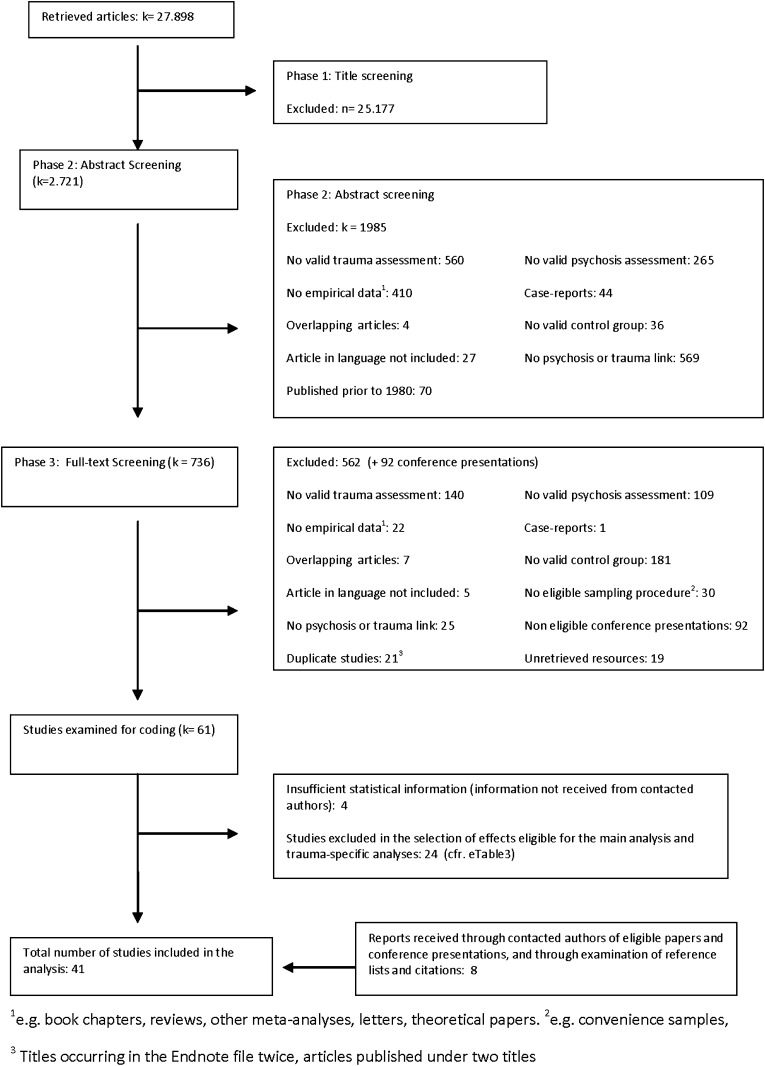
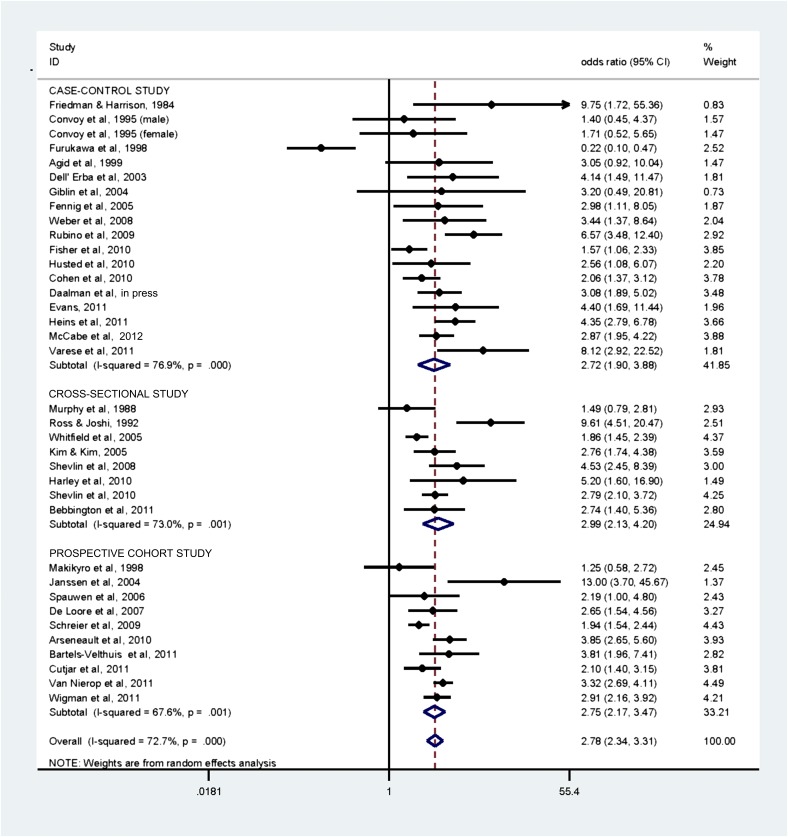
Evidence suggests that adverse experiences in childhood are associated with psychosis. To examine the association between childhood adversity and trauma (sexual abuse, physical abuse, emotional/psychological abuse, neglect, parental death, and bullying) and psychosis outcome, MEDLINE, EMBASE, PsychINFO, and Web of Science were searched from January 1980 through November 2011. We included prospective cohort studies, large-scale cross-sectional studies investigating the association between childhood adversity and psychotic symptoms or illness, case-control studies comparing the prevalence of adverse events between psychotic patients and controls using dichotomous or continuous measures, and case-control studies comparing the prevalence of psychotic symptoms between exposed and nonexposed subjects using dichotomous or continuous measures of adversity and psychosis. The analysis included 18 case-control studies (n = 2048 psychotic patients and 1856 nonpsychiatric controls), 10 prospective and quasi-prospective studies (n = 41,803) and 8 population-based cross-sectional studies (n = 35,546). There were significant associations between adversity and psychosis across all research designs, with an overall effect of OR = 2.78 (95% CI = 2.34-3.31). The integration of the case-control studies indicated that patients with psychosis were 2.72 times more likely to have been exposed to childhood adversity than controls (95% CI = 1.90-3.88). The association between childhood adversity and psychosis was also significant in population-based cross-sectional studies (OR = 2.99 [95% CI = 2.12-4.20]) as well as in prospective and quasi-prospective studies (OR = 2.75 [95% CI = 2.17-3.47]). The estimated population attributable risk was 33% (16%-47%). These findings indicate that childhood adversity is strongly associated with increased risk for psychosis.
Overview
The claims and statistics of this paper haven’t been checked yet.
Free: it reads the open-access text and checks the first 5 claims that cite a source we can check. Create a free account to check every claim.
Integrity signals
Registry
Cites
Statistics
Figures
Verification
Claims the paper makes
The claims and statistics of this paper haven’t been checked yet.
Free: it reads the open-access text and checks the first 5 claims that cite a source we can check. Create a free account to check every claim.
Claims other papers make about this one
Each is checked against this paper’s own text: does it say what the citing paper says it does?
The source backs part of the claim, not all of it — or backs it for a different population, condition or comparison.
In the citing paper
“by study design on obesity and psychosis,7,9”
From Long-term outcomes of childhood sexual abuse: an umbrella review (2019) · cites this paper as [7]
Experimental — accuracy not yet measuredThe source backs part of the claim, not all of it — or backs it for a different population, condition or comparison.
In the citing paper
“A recent meta-ana lysis calculated a population attributable risk of 33%, meaning that if the six types of child adversity studied were to disappear, a third of new psychosis cases would be avoided [13] .”
From The traumagenic neurodevelopmental model of psychosis revisited (2014) · cites this paper as [13]
Experimental — accuracy not yet measuredThe source backs part of the claim, not all of it — or backs it for a different population, condition or comparison.
In the citing paper
“and experiencing physical or sexual abuse (112).”
From Aberrant Salience, Information Processing, and Dopaminergic Signaling in People at Clinical High Risk for Psychosis (2020) · cites this paper as [112]
Experimental — accuracy not yet measuredThe cited source says what the claim attributes to it.
In the citing paper
“Recent studies indicate this is not an evidence-based belief [12,13,167] .”
From The traumagenic neurodevelopmental model of psychosis revisited (2014) · cites this paper as [13]
The cited source says what the claim attributes to it.
In the citing paper
“Furthermore, numerous studies and reviews note that the relationship between child abuse and psychosis remains after controlling for family history of psychosis [9-13,17] .”
From The traumagenic neurodevelopmental model of psychosis revisited (2014) · cites this paper as [13]
8 more claims about this paper
Create a free account to see every claim other papers make about this one.
Self-check
Percentages, sums and reported differences re-computed from the paper’s own numbers.
The self-check needs the paper’s full text.
Citations
Cites
Measuring inconsistency in meta-analyses
Higgins, J. P. T., Thompson, S. G., Deeks, J. J., & Altman, D. G. (2003) · BMJ · doi:10.1136/bmj.327.7414.557 · Cited by 63,139 · cited 1×
“Heterogeneity analyses were carried out using the Q and I(2) statistics to examine and quantify the amount of observed variance accounted for by true heterogeneity rather than sampling error.(57) Meta-regression analysis was subsequently used to determine whether (1) differences in study design and (2) inclusion of ad…”
MethodBias in meta-analysis detected by a simple, graphical test
Egger, M., Smith, G. D., Schneider, M., & Minder, C. (1997) · BMJ · doi:10.1136/bmj.315.7109.629 · Cited by 56,722
Meta-analysis of Observational Studies in Epidemiology<SUBTITLE>A Proposal for Reporting</SUBTITLE>
Stroup, D. F. (2000) · JAMA · doi:10.1001/jama.283.15.2008 · Cited by 20,623
Borenstein, M., Hedges, L. V., Higgins, J. P. T., & Rothstein, H. R. (2009) · doi:10.1002/9780470743386 · Cited by 14,225
Borenstein, M., Hedges, L. V., Higgins, J. P. T., & Rothstein, H. R. (2021) · doi:10.1002/9781119558378 · Cited by 9,799
The Handbook of Research Synthesis and Meta-Analysis
(2019) · doi:10.7758/9781610448864 · Cited by 4,553
Zhang, J., & Yu, K. F. (1998) · JAMA · doi:10.1001/jama.280.19.1690 · Cited by 4,138 · cited 1×
“Risk ratios were treated as ORs without further adjustment as the incidence of psychosis in the studied populations was low (ie, <10%).(56)”
MethodA Nonparametric “Trim and Fill” Method of Accounting for Publication Bias in Meta-Analysis
Duval, S., & Tweedie, R. (2000) · Journal of the American Statistical Association · doi:10.1080/01621459.2000.10473905 · Cited by 2,955
Validity of adult retrospective reports of adverse childhood experiences: review of the evidence
Hardt, J., & Rutter, M. (2004) · Journal of Child Psychology and Psychiatry · doi:10.1111/j.1469-7610.2004.00218.x · Cited by 2,827
Childhood adversities and adult psychopathology in the WHO World Mental Health Surveys
Kessler, R. C., McLaughlin, K. A., Green, J. G., Gruber, M. J., Sampson, N. A., Zaslavsky, A. M., Aguilar-Gaxiola, S., Alhamzawi, A. O., Alonso, J., Angermeyer, M., et al. (2010) · British Journal of Psychiatry · doi:10.1192/bjp.bp.110.080499 · Cited by 2,640 · cited 1×
“Adverse childhood events including trauma is a common experience worldwide, with some estimates suggesting that about a third of the general population may be affected.(1) Evidence suggests that its effects in adulthood may include a range of negative social outcomes, including higher criminality,(2) a lower education…”
Background
Research works printed but not linked: 12
- 15. Dell'Erba G, Venturi P, Tallarico V. Childhood stressful experiences in familial and sporadic schizophrenic patients [Italian] Italian J Psychopathol. 2003;9:32–39.
- 25. Evans G. Trauma and psychosis: investigating dissociation and self-concept clarity [Unpublished doctoral dissertation] University of Liverpool, UK; 2011
- 60. Schreier A, Wolke D, Thomas K, et al. Prospective study of peer victimization in childhood and psychotic symptoms in a nonclinical population at age 12 years. Arch Gen Psychiatry. 2009;66:527–536. doi: 10.1001/archgenpsychiatry.2009.23. · DOI · Paper page
- 63. Janssen I, Krabbendam L, Bak M, et al. Childhood abuse as a risk factor for psychotic experiences. Acta Psychiatr Scand. 2004;109:38–45. doi: 10.1046/j.0001-690x.2003.00217.x. · DOI · Paper page
- 64. Spauwen J, Krabbendam L, Lieb R, Wittchen H-U, van Os J. Impact of psychological trauma on the development of psychotic symptoms: relationship with psychosis proneness. Br J Psychiatry. 2006;188:527–533. doi: 10.1192/bjp.bp.105.011346. · DOI · Paper page
- 65. Nishida A, Tanii H, Nishimura Y, et al. Associations between psychotic-like experiences and mental health status and other psychopathologies among Japanese early teens. Schizophr Res. 2008;99:125–133. doi: 10.1016/j.schres.2007.11.038. · DOI
- 66. Shevlin M, Houston JE, Dorahy MJ, Adamson G. Cumulative traumas and psychosis: an analysis of the National Comorbidity Survey and the British Psychiatric Morbidity Survey. Schizophr Bull. 2008;34:193–199. doi: 10.1093/schbul/sbm069. · DOI · Paper page
- 67. Arseneault L, Cannon M, Fisher HL, et al. Psychotic symptoms: a genetically sensitive longitudinal cohort study. Am J Psychiatry. 2010;168:65–72. doi: 10.1176/appi.ajp.2010.10040567. · DOI · Paper page
- 69. De Loore E, Drukker M, Gunther N, et al. Childhood negative experiences and subclinical psychosis in adolescence: a longitudinal general population study. Early Interv Psychiatry. 2007;1:201–207. · DOI · Paper page
- 70. Whitfield CL, Dube SR, Felitti VJ, Anda RF. Adverse childhood experiences and hallucinations. Child Abuse & Neglect. 2005;29:797–810. doi: 10.1016/j.chiabu.2005.01.004. · DOI · Paper page
- 72. Houston JE, Murphy J, Adamson G, Stringer M, Shevlin M. Childhood sexual abuse, early cannabis use, and psychosis: testing an interaction model based on the National Comorbidity Survey. Schizophr Bull. 2008;34:580–585. doi: 10.1093/schbul/sbm127. · DOI · Paper page
- 73. Husted JA, Ahmed R, Chow EWC, Brzustowicz LM, Bassett AS. Childhood trauma and genetic factors in familial schizophrenia associated with the NOS1AP gene. Schizophr Res. 2010;121:187–192. doi: 10.1016/j.schres.2010.05.021. · DOI
Cited by
Items 701–800 of 1,008
Aas, M., Djurovic, S., Ueland, T., Mørch, R. H., Laskemoen, J. F., Reponen, E. J., Cattaneo, A., Steen, N. E., Agartz, I., Melle, I. S., et al. (2019) · The World Journal of Biological Psychiatry · doi:10.1080/15622975.2018.1557345 · Cited by 28
“Large meta-analyses confirm childhood trauma to be 3-fold the risk of developing a psychotic illness (Varese et al. 2012).”
BackgroundThe genetic relationship between female reproductive traits and six psychiatric disorders
Ni, G., Amare, A. T., Zhou, X., Mills, N. T., Gratten, J., & Lee, S. (2019) · Scientific Reports · doi:10.1038/s41598-019-48403-x · Cited by 37
Liu, Y., Mendonça, M., Johnson, S. J., O’Reilly, H., Bartmann, P., Marlow, N., & Wolke, D. (2019) · Psychological Medicine · doi:10.1017/s0033291719003349 · Cited by 33
“…found that exposure to any trauma from caregivers (e.g. abuse) or peers (e.g. bullying) can increase the risk of psychotic disorders in later life (Varese et al. 2012; Croft et al. 2018), and others found increased risk of psychotic experiences with only certain types of trauma (Bell et al. 2019).”
BackgroundInfluentialChildhood Polyvictimization and Mental Health Issues among Incarcerated Women
Kennedy, S. C., Mennicke, A. M., & Paul, R. (2020) · Journal of Aggression Maltreatment & Trauma · doi:10.1080/10926771.2020.1774693 · Cited by 31
Poletti, M., & Raballo, A. (2020) · Harvard Review of Psychiatry · doi:10.1097/hrp.0000000000000266 · Cited by 30
Ioannou, M., Foiselle, M., Mallet, J., Stam, E. L., Godin, O., Dubertret, C., Terro, E., Sommer, I. E., Haarman, B. C. M., Leboyer, M., et al. (2020) · European Neuropsychopharmacology · doi:10.1016/j.euroneuro.2020.11.001 · Cited by 28
Impact of childhood trauma on positive and negative symptom remission in first episode psychosis
Pruessner, M., King, S., Veru, F., Schalinski, I., Vracotas, N., Abadi, S., Jordan, G., Lepage, M., Iyer, S. N., MALLA, A. K., et al. (2021) · Schizophrenia Research · doi:10.1016/j.schres.2021.02.023 · Cited by 33
“adversity and an increased risk for psychosis onset (Varese et al., 2012).”
BackgroundVoice phenomenology as a mirror of the past
van den Berg, D., Tolmeijer, E., Jongeneel, A., Staring, A. B. P., Palstra, E., van der Gaag, M., & Hardy, A. (2022) · Psychological Medicine · doi:10.1017/s0033291721004955 · Cited by 40
“…You ’ re a schmuck ’ , The relationship between trauma and psychosis is now well recognised, and evidence suggests there may be specific associations between interpersonal victimisation and voice hearing (Hardy, 2017; Morrison, Frame, & Larkin, 2003; Van Den Berg et al., 2015; Varese et al., 2012).”
InfluentialLi, X., Tu, L., & Jiang, X. (2022) · Frontiers in Psychiatry · doi:10.3389/fpsyt.2022.924795 · Cited by 40
Getting a kinematic handle on reach-to-grasp: a meta-analysis
Collins, K. C., Kennedy, N. C., Clark, A., & Pomeroy, V. M. (2017) · Physiotherapy · doi:10.1016/j.physio.2017.10.002 · Cited by 29
Violent behaviour in early psychosis patients: Can we identify clinical risk profiles?
Moulin, V., Palix, J., Golay, P., Dumais, A., Gholam‐Rezaee, M., Azzola, A., Baumann, P., Alameda, L., & Conus, P. (2017) · Early Intervention in Psychiatry · doi:10.1111/eip.12512 · Cited by 34
“had faced at least one experience of sexual or physical abuse (Varese et al., 2012).”
BackgroundCooke, A., & Kinderman, P. (2017) · Journal of Humanistic Psychology · doi:10.1177/0022167817745621 · Cited by 41
“Turning to the issue of causation—etiology, in medical language—Understanding psychosis and schizophrenia presents evidence that psychosis is often related to experiences of abuse, deprivation, victimization, and racism (e.g., Fearon et al., 2006; Varese et al., 2012).”
Psychosocial resilience and vulnerability in Western Australian Aboriginal youth
Hopkins, K. D., Taylor, C. L., & Zubrick, S. R. (2017) · Child Abuse & Neglect · doi:10.1016/j.chiabu.2017.11.014 · Cited by 32
Childhood trauma in schizophrenia spectrum disorders as compared to substance abuse disorders
Mørkved, N., Winje, D., Dovran, A., Arefjord, K., Johnsen, E., Kroken, R. A., Anda, L. G., Thimm, J. C., Sinkeviciute, I., Rettenbacher, M. A., et al. (2018) · Psychiatry Research · doi:10.1016/j.psychres.2018.01.011 · Cited by 34
Vaessen, T. S. J., de Jong, L., Schäfer, A., Damen, T., Uittenboogaard, A., Krolinski, P., Nwosu, C. V., Pinckaers, F. M. E., Rotee, I. L. M., Smeets, A. P. W., et al. (2018) · PLoS ONE · doi:10.1371/journal.pone.0192658 · Cited by 30
Self-citationEarly life stress and altered social behaviors: A perspective across species
Parise, L. F., Joseph Burnett, C., & Russo, S. J. (2025) · Neuroscience Research · doi:10.1016/j.neures.2023.11.005 · Cited by 28
A literature review and meta‐analysis of drug company–funded mental health websites
Read, J., & Cain, A. (2013) · Acta Psychiatrica Scandinavica · doi:10.1111/acps.12146 · Cited by 27
“Furthermore, minimizing psychosocial causal factors may reduce the probability that service users will raise, and that staff will ask about, important issues such as current social and financial stressors or past neglect and abuse (35, 36), thereby inhibiting comprehensive formulations and impeding appropriate treatme…”
BackgroundSelf-citationReininghaus, U., Daemen, M., Postma, M. R., Schick, A., Hoes-van der Meulen, I., Volbragt, N., Nieman, D., Delespaul, P., de Haan, L., van der Pluijm, M., et al. (2024) · JAMA Psychiatry · doi:10.1001/jamapsychiatry.2023.4590 · Cited by 28
Self-citationCullen, A. E., Fisher, H. L., Gullet, N., Fraser, E. R., Roberts, R. E., Zahid, U., To, M., Yap, N. H., Zunszain, P. A., Pariante, C. M., et al. (2022) · Biological Psychiatry · doi:10.1016/j.biopsych.2021.08.009 · Cited by 27
“daily stressors, and childhood trauma) in the development and exacerbation of psychotic disorders (1-7).”
An Integrative Cognitive Model of Internalized Stigma in Psychosis
Wood, L., Byrne, R., & Morrison, A. P. (2017) · Behavioural and Cognitive Psychotherapy · doi:10.1017/s1352465817000224 · Cited by 27
“This is unsurprising given the high prevalence of experiences of adversity that are also commonly stigmatized, such as sexual abuse and institutional care (Varese et al., 2012).”
BackgroundRinger, J. M., Buchanan, E. E., Olesek, K., & Lysaker, P. H. (2014) · Psychology and Psychotherapy: Theory, Research and Practice · doi:10.1111/papt.12012 · Cited by 30
“For example, less secure attachment styles may leave persons with fewer social supports needed to cope with traumatic early symptoms or other risk factors for the development of schizophrenia such as early life adversity, urbanicity, poverty, minority group position (van Os, Kenis, & Rutten, 2010), and trauma (Varese…”
BackgroundMaayan, L. A., & Maayan, M. (2023) · Journal of Psychiatric Research · doi:10.1016/j.jpsychires.2023.11.025 · Cited by 28
“There are several studies that suggest a relationship between early adversity and later anxiety (Young et al., 1997), psychosis (Varese, et al., 2012), borderline personality (Porter, et al., 2020) and major depressive disorders.”
BackgroundXue, J., Huang, H. M., Guo, Z., Chen, J., & Feng, W. (2024) · Computers in Human Behavior · doi:10.1016/j.chb.2024.108449 · Cited by 37
Choi, J. Y., Choi, Y. M., Kim, B., Lee, D. W., Gim, M. S., & Park, S. H. (2015) · Psychiatry Research · doi:10.1016/j.psychres.2015.05.112 · Cited by 32
“Furthermore, as a recent meta-analysis found that childhood abuse is related to psychosis regardless of the type of psychotic disorder (Varese et al., 2012), we sought to investigate this finding by including a wide range of psychiatric conditions that may exhibit symptoms of psychosis such as schizophrenia spectrum d…”
BackgroundAsking about trauma: the experiences of psychological therapists in early intervention services
Toner, J., Daiches, A., & Larkin, W. (2013) · Psychosis · doi:10.1080/17522439.2012.697484 · Cited by 27
“A recent meta-analysis by Varese et al. (2012) reviewed 41 studies to examine the association between childhood adversity and trauma and psychosis outcome.”
MethodMorgan, V. A., Morgan, F., Galletly, C. A., Valuri, G. M., Shah, S., & Jablensky, A. V. (2015) · Social Psychiatry and Psychiatric Epidemiology · doi:10.1007/s00127-015-1155-6 · Cited by 31
“risk of mental illness [16, 17] and with vulnerability to further victimisation in adulthood [14, 18].”
BackgroundMcCarthy‐Jones, S., Romero, M. C., McCarthy-Jones, R., Dillon, J., Cooper-Rompato, C. F., Kieran, K., Kaufman, M. L., & Blackman, L. M. (2015) · Frontiers in Psychiatry · doi:10.3389/fpsyt.2015.00181 · Cited by 33
“Indeed, it has been estimated that if five specific types of child abuse were ended, this would remove around a third of cases of psychosis (97).”
Suggestibility and signal detection performance in hallucination-prone students
Alganami, F. H. A. F. H., Varese, F., Wagstaff, G. F., & Bentall, R. P. (2017) · Cognitive Neuropsychiatry · doi:10.1080/13546805.2017.1294056 · Cited by 30
Self-citationModulation of HPA axis response to social stress in schizophrenia by childhood trauma
Lange, C., Huber, C. G., Fröhlich, D., Borgwardt, S., Lang, U. E., & Walter, M. (2017) · Psychoneuroendocrinology · doi:10.1016/j.psyneuen.2017.03.027 · Cited by 27
“Furthermore, SSD patients have a 2.72 times higher chance to experience childhood trauma compared to healthy controls (for review see Varese et al., 2012).”
InfluentialKocsis-Bogár, K., Mészáros, V., & Perczel-Forintos, D. (2018) · Comprehensive Psychiatry · doi:10.1016/j.comppsych.2018.01.007 · Cited by 28
“connection of childhood physical (CPA), emotional (CEA) and sexual (CSA) abuse and psychotic state or different psychotic symptoms have been found [7,14] and CPA has been repeatedly shown to be the most persistent type of abuse to predict psychosis after adjusting for possible confounders [14].”
BackgroundResultHolland, J. F., Khandaker, G. M., Dauvermann, M. R., Morris, D. W., Zammit, S., & Donohoe, G. J. (2020) · Social Psychiatry and Psychiatric Epidemiology · doi:10.1007/s00127-019-01813-8 · Cited by 30
Association between childhood trauma and multimodal early-onset hallucinations
Medjkane, F., Notredame, C.-É., Sharkey, L., D’Hondt, F., Vaïva, G., & Jardri, R. (2020) · The British Journal of Psychiatry · doi:10.1192/bjp.2019.266 · Cited by 27
Paetzold, I., Myin‐Germeys, I., Schick, A., Nelson, B., Velthorst, E., Schirmbeck, F. N., Study, E.-G. H. R., van Os, J., Morgan, C., Hartmann, J., et al. (2021) · Epidemiology and Psychiatric Sciences · doi:10.1017/s2045796021000251 · Cited by 30
“…evidence suggests that childhood trauma (i.e. potentially harmful experiences as sexual, physical and emotional abuse as well as physical and emotional neglect; Morgan and Fisher, 2007) increases transition risk in individuals at ultra-high-risk state for psychosis (UHR; Varese et al ., 2012).”
Rosenfield, P., Jiang, D., & Pauselli, L. (2021) · Schizophrenia Research · doi:10.1016/j.schres.2021.06.005 · Cited by 35
Aas, M., Alameda, L., Forti, M. D., Quattrone, D., Dazzan, P., Trotta, A., Ferraro, L., Rodríguez, V., Vassos, E., Sham, P. C., et al. (2021) · Psychological Medicine · doi:10.1017/s0033291721003664 · Cited by 32
“A history of adversity is associated with up to a three-fold life-long increased risk of psychotic disorder with an increase in risk according to the number and severity of exposures (Aas et al., 2016; Croft et al., 2019; Varese et al., 2012).”
BackgroundDegnan, A., Berry, K., Humphrey, C., & Bucci, S. (2022) · Clinical Psychology & Psychotherapy · doi:10.1002/cpp.2731 · Cited by 39
“It is now widely accepted that exposure to trauma in childhood, including abuse (physical, sexual, and emotional), neglect, and bullying, increases the risk of developing psychosis (Matheson et al., 2013; van Dam et al., 2012; Varese et al., 2012).”
BackgroundThe future of diagnosis in clinical neurosciences: Comparing multiple sclerosis and schizophrenia
Misiak, B., Samochowiec, J., Kowalski, K., Gäebel, W., Bassetti, C. L., Chan, A., Gorwood, P. A. P. M., Papiol, S., Dom, G., Volpe, U., et al. (2023) · European Psychiatry · doi:10.1192/j.eurpsy.2023.2432 · Cited by 31
Li, X., Huang, Y., Liu, M., Zhang, M., Liu, Y., Teng, T., Liu, X., Yu, Y., Jiang, Y., Ouyang, X., et al. (2023) · International Journal of Clinical and Health Psychology · doi:10.1016/j.ijchp.2023.100401 · Cited by 27
DeRosse, P., Ikuta, T., Peters, B. D., Karlsgodt, K. H., Szeszko, P. R., & Malhotra, A. K. (2014) · Psychiatry Research Neuroimaging · doi:10.1016/j.pscychresns.2014.09.001 · Cited by 30
“In a recent meta-analysis (Varese et al., 2012), childhood adversity was substantially related to an increased risk for psychosis with a population attributable risk of 33%.”
BackgroundThe EPOS Group, Salokangas, R. K. R., Schultze‐Lutter, F., Hietala, J. A., Heinimaa, M., From, T., Ilonen, T., Löyttyniemi, E., von Reventlow, H. G., Juckel, G., et al. (2015) · Social Psychiatry and Psychiatric Epidemiology · doi:10.1007/s00127-015-1160-9 · Cited by 34
“Also in line with previous studies [7, 24, 25], childhood sexual abuse had a strong association with paranoid symptoms.”
ResultWalters, S., Hogg, L., & Gillmore, C. (2016) · Psychosis · doi:10.1080/17522439.2015.1131324 · Cited by 27
“…rates of trauma in psychosis range from 70% to 94% (Bechdolf et al., 2010; Kilcommons & Morrison, 2005) and a recent meta-analysis reported that patients with psychosis were almost three times more likely than controls to have been exposed to traumatic events during childhood (Varese et al., 2012).”
BackgroundLongden, E., House, A. O., & Waterman, M. G. (2016) · Journal of Trauma & Dissociation · doi:10.1080/15299732.2016.1155193 · Cited by 31
“The scale was modified for the present research with the addition of a question assessing peer victimization, an experience associated with hallucinations as well as psychosis more generally (see Varese et al., 2012).”
BackgroundMethodBlair, M. A., Nitzburg, G. C., DeRosse, P., & Karlsgodt, K. H. (2018) · Schizophrenia Research · doi:10.1016/j.schres.2018.02.026 · Cited by 33
How do hearing voices peer-support groups work? A three-phase model of transformation
Hornstein, G. A., Robinson Putnam, E., & Branitsky, A. (2020) · Psychosis · doi:10.1080/17522439.2020.1749876 · Cited by 26
Friends interventions in psychosis: a narrative review and call to action
Harrop, C. E., Ellett, L., Brand, R. M., & Lobban, F. A. (2014) · Early Intervention in Psychiatry · doi:10.1111/eip.12172 · Cited by 29
Harder, S. K., Davidsen, K. A., MacBeth, A. M., Lange, T., Minnis, H., Andersen, M., Simonsen, E. H., Lundy, J.-M., Nyström‐Hansen, M., Trier, C. H., et al. (2015) · BMC Psychiatry · doi:10.1186/s12888-015-0692-6 · Cited by 28
A latent class analysis of psychotic symptoms in the general population
Pignon, B., Peyre, H., Szöke, A., Geoffroy, P. A., Rolland, B., Jardri, R., Thomas, P., Vaïva, G., Roelandt, J.-L., Benradia, I., et al. (2017) · Australian & New Zealand Journal of Psychiatry · doi:10.1177/0004867417744255 · Cited by 31
Debost, J.-C., Larsen, J. T., Munk‐Olsen, T., Mortensen, P. B., Agerbo, E., & Petersen, L. V. (2019) · Brain Behavior and Immunity · doi:10.1016/j.bbi.2019.06.031 · Cited by 30
Frost, R., Vang, M. L., Karatzias, T., Hyland, P., & Shevlin, M. E. (2019) · Psychosis · doi:10.1080/17522439.2019.1626472 · Cited by 32
“Childhood adversity poses a key etiological risk factor in the development of psychosis (Arseneault et al., 2011; Varese et al., 2012).”
BackgroundAppiah‐Kusi, E., Wilson, R., Colizzi, M., Foglia, E., Klamerus, E., Caldwell, A., Bossong, M. G., McGuire, P. K., & Bhattacharyya, S. (2019) · Psychological Medicine · doi:10.1017/s0033291719001946 · Cited by 31
“Of the different types of stress, exposure to childhood trauma (CT) in particular has been linked to an increased risk of development of psychotic disorder (Read, 1997; Read et al., 2005; Varese et al., 2012) as well as its relapse (Petros et al.”
BackgroundStress, Allostatic Load, and Psychosis: One Step Forward in Research But Where to Go Next?
Misiak, B. (2020) · Frontiers in Psychiatry · doi:10.3389/fpsyt.2019.00937 · Cited by 32
“a well-established risk factor of psychosis development (4, 5).”
BackgroundWhispers, echoes, friends and fears: forms and functions of voice‐hearing in adolescence
Parry, S. L., & Varese, F. (2020) · Child and Adolescent Mental Health · doi:10.1111/camh.12403 · Cited by 32
Self-citationYoung people's narratives of hearing voices: Systemic influences and conceptual challenges
Parry, S. L., Loren, E., & Varese, F. (2020) · Clinical Psychology & Psychotherapy · doi:10.1002/cpp.2532 · Cited by 32
Self-citationKhosravi, M., Bakhshani, N., & Kamangar, N. (2021) · BMC Psychiatry · doi:10.1186/s12888-021-03290-3 · Cited by 40
Daemen, M., Postma, M. R., Lindauer, R., der Meulen, I. H.-V., Nieman, D. H., Delespaul, P., Breedvelt, J., van der Gaag, M., Viechtbauer, W., Schruers, K. R. J., et al. (2021) · Trials · doi:10.1186/s13063-021-05585-y · Cited by 33
Self-citationSood, M., Carnelley, K. B., & Newman‐Taylor, K. (2021) · Psychology and Psychotherapy Theory Research and Practice · doi:10.1111/papt.12354 · Cited by 32
“Given the high rates of early adversity in people with psychosis (Varese et al., 2012), it may be necessary to include a hypothetical attachment figure for participants who have difficulty identifying a secure figure from their network.”
Structural and functional neural correlates of schizotypy: A systematic review.
Tonini, E., Quidé, Y., Kaur, M., Whitford, T. J., & Green, M. J. (2021) · Psychological Bulletin · doi:10.1037/bul0000260 · Cited by 26
Duque-Wilckens, N., Teis, R., Sarno, E., Stoelting, F., Khalid, S., Dairi, Z., Douma, A., Maradiaga, N., Hench, S., Dharshika, C. D., et al. (2022) · Brain, Behavior, and Immunity · doi:10.1016/j.bbi.2022.03.009 · Cited by 27
“…in the form of physical and/or psychological abuse or neglect, increases the risk of developing disorders at a multisystemic level later in life (Varese, 2012; Edwards et al., 2003; Goodwin and Stein, 2004; Jones, 2016): children with a history of ELA show higher rates of psychiatric diseases…”
RobIn: A robust interpretable deep network for schizophrenia diagnosis
Organisciak, D., Shum, H. P. H., Nwoye, E. O., & Woo, W. L. (2022) · Expert Systems with Applications · doi:10.1016/j.eswa.2022.117158 · Cited by 30
Daya, I. (2022) · Incarceration · doi:10.1177/26326663221103445 · Cited by 33
“…as an advocate, I was shocked to find that my trauma history was not unique or even rare.8 Repeated studies have found that around 80% of people diagnosed with schizophrenia have a history of trauma, frequently child abuse and neglect (Goodman et al., 1997; Read et al., 2008; Varese et al., 2012).”
BackgroundThe Relationship Between Child Sexual Abuse and Sexual Dysfunction in Adults: A Meta-Analysis
Wang, S.-J., Chang, J.-J., Cao, L., Li, Y., Yuan, M., Wang, G., & Su, P. (2022) · Trauma Violence & Abuse · doi:10.1177/15248380221113780 · Cited by 47
Moving from risk to resilience in psychosis research
Thakkar, K. N., McCleery, A., Minor, K. S., Lee, J., Humpston, C. S., Chopik, W. J., Burt, S. A., Pearson, A. L., Ungar, M. T., & Park, S. (2023) · Nature Reviews Psychology · doi:10.1038/s44159-023-00205-9 · Cited by 31
Karpiński, P., Żebrowska-Różańska, P., Kujawa, D., Łaczmański, Ł., Samochowiec, J., Jabłoński, M., Plichta, P., Piotrowski, P., Bielawski, T., & Misiak, B. (2023) · Psychoneuroendocrinology · doi:10.1016/j.psyneuen.2023.106335 · Cited by 32
Jansen, J. E., Pedersen, M. B., Hastrup, L. H., Haahr, U., & Simonsen, E. H. (2015) · Early Intervention in Psychiatry · doi:10.1111/eip.12294 · Cited by 32
“This corresponds to the growing focus on the impact of trauma on psychosis, as highlighted by a recent meta-analysis.(18)”
BackgroundEarly maladaptive schema, social functioning and distress in psychosis: A preliminary investigation
Taylor, C. D. J., & Harper, S. F. (2017) · Clinical Psychologist · doi:10.1111/cp.12082 · Cited by 40
Stress, Schizophrenia and Bipolar Disorder
Green, M. J., Girshkin, L., Teroganova, N., & Quidé, Y. (2014) · Current topics in behavioral neurosciences · doi:10.1007/7854_2014_290 · Cited by 30
“psychosis than the others (Varese et al. 2012).”
Childhood trauma in schizophrenia spectrum disorder as compared to other mental health disorders
Mørkved, N., Endsjø, M., Winje, D., Johnsen, E., Dovran, A., Arefjord, K., Kroken, R. A., Helle, S., Anda, L. G., Rettenbacher, M. A., et al. (2016) · Psychosis · doi:10.1080/17522439.2016.1201135 · Cited by 32
“ask about CT (Read et al., 2005; Varese et al., 2012) and conduct a thorough trauma assessment (van Nierop et al.”
BackgroundMethodResultInfluentialKraan, T. C., Ising, H. K., Fokkema, M., Velthorst, E., van den Berg, D. P. G., Kerkhoven, M., Veling, W., Smit, F., LINSZEN, D. H., Nieman, D. H., et al. (2016) · Psychiatry Research · doi:10.1016/j.psychres.2016.11.014 · Cited by 33
“One of the outcomes of childhood adversity that now has been recognized is psychosis [3].”
Rame, M., Caudal, D., Schenker, E., Svenningsson, P., Spedding, M., Jay, T. M., & Godsil, B. P. (2017) · PLoS ONE · doi:10.1371/journal.pone.0177036 · Cited by 29
Childhood Bullying, Paranoid Thinking and the Misappraisal of Social Threat: Trouble at School
Jack, A. H., & Egan, V. (2017) · School Mental Health · doi:10.1007/s12310-017-9238-z · Cited by 35
“There is a growing body of literature to suggest that experiences of childhood victimization precipitate the development of paranoid thinking, with greater exposure associated with expressions of heightened severity (e.g., Lataster et al., 2006; Varese et al., 2012).”
BackgroundCognitive Analytic Therapy for psychosis: A case series
Taylor, P. J., Perry, A., Hutton, P., Tan, R., Fisher, N. R., Focone, C., Griffiths, D., & Seddon, C. (2018) · Psychology and Psychotherapy Theory Research and Practice · doi:10.1111/papt.12183 · Cited by 31
“Its emphasis on early experience as a key factor in the development of psychosis is consistent with research on interpersonal trauma and psychosis (Varese et al., 2012).”
ResultMüller, A. D., Gjøde, I. C. T., Eigil, M. S., Busck, H., Bonne, M., Nordentoft, M., & Thorup, A. A. E. (2019) · Trials · doi:10.1186/s13063-019-3191-0 · Cited by 36
“Examples of risk factors during childhood are different kinds of childhood traumas such as child neglect, physical abuse, emotional abuse, sexual abuse, and bullying [22]—all of which may have a serious, negative impact on child development [5, 23].”
BackgroundKaratzias, T., Shevlin, M. E., Pitcairn, J., Thomson, L. D. G., Mahoney, A., & Hyland, P. (2019) · Child Abuse & Neglect · doi:10.1016/j.chiabu.2019.104094 · Cited by 34
“11 analysis of studies examining the relationship between childhood trauma and psychosis reported a significant dose-response relationship, increasing levels of childhood trauma exposure was associated with an increased risk of reporting psychotic symptoms or disorder (Varese et al., 2012).”
BackgroundMistrust and negative self‐esteem: Two paths from attachment styles to paranoia.
Martinez, A. P., Agostini, M., Al‐Suhibani, A., & Bentall, R. P. (2021) · Psychology and Psychotherapy Theory Research and Practice · doi:10.1111/papt.12314 · Cited by 25
“Consistent with these accounts, empirical research supports an association between disrupted early attachment relationships and paranoia (Bentall, Wickham, Shevlin, & Varese, 2012; Varese et al., 2012) and suggests that insecure attachment helps to explain this association (Sitko et al., 2014).”
ResultSelf-citationKöhler‐Forsberg, O., Ge, F., Hauksdóttir, A., Thordardottir, E. B., Ásbjörnsdóttir, K., Rúnarsdóttir, H., Tómasson, G., Jakobsdóttir, J., Guðmundsdóttir, B., Bjornsson, A. S., et al. (2023) · The British Journal of Psychiatry · doi:10.1192/bjp.2023.128 · Cited by 32
Lien, L., & Welander-Vatn, A. (2013) · Clinical Practice and Epidemiology in Mental Health · doi:10.2174/1745017901309010243 · Cited by 32
“An increased rate of psychotic symptoms, selfharm behaviors and suicidal ideations has been reported among victims [11-20].”
BackgroundMagliano, L., Strino, A., Punzo, R., Acone, R., Affuso, G., & Read, J. (2017) · International Journal of Social Psychiatry · doi:10.1177/0020764017695353 · Cited by 29
“Recently, the instrument has been further modified to be applied in health contexts (Magliano, Read, Sagliocchi, et al., 2014), and by the inclusion of items selected on the basis of the research literatures (Varese et al., 2012).”
MethodSelf-citationSpidel, A., Daigneault, I., Kealy, D., & Lecomte, T. (2019) · Behavioural and Cognitive Psychotherapy · doi:10.1017/s1352465818000413 · Cited by 25
“In studies of those with serious mental illness (Mueser et al., 2002; Varese et al., 2012), about 50% of people reported significant childhood trauma, which was linked to being more likely to refuse psychological treatment or to avoid seeking help, to having trouble forming a therapeutic alliance…”
BackgroundZuelli, F. M. D. G. C., Fachim, H., Loureiro, C. M., Shuhama, R., Bertozi, G., Joca, S. R. L., Menezes, P. R., Louzada‐Júnior, P., & Del‐Ben, C. M. (2019) · Frontiers in Neuroscience · doi:10.3389/fnins.2018.01011 · Cited by 26
Examining which factors influence age of onset in males and females with schizophrenia
Neill, E., Tan, E. J., Toh, W. L., Selvendra, A., Morgan, V. A., Rossell, S. L., & Castle, D. J. (2020) · Schizophrenia Research · doi:10.1016/j.schres.2020.08.011 · Cited by 30
Vaskinn, A., Melle, I. S., Aas, M., & Berg, A. O. (2020) · Schizophrenia Research Cognition · doi:10.1016/j.scog.2020.100189 · Cited by 35
“Childhood trauma is prevalent in individuals with schizophrenia (Varese et al., 2012), increases the risk of psychosis (Bendall et al.”
BackgroundSchizophrenia in the World: Arguments for a Contextual Phenomenology of Psychopathology
Pienkos, E. (2020) · Journal of Phenomenological Psychology · doi:10.1163/15691624-12341377 · Cited by 28
Hébert, M., Smith, K., Caouette, J., Cénat, J. M., Karray, A., Cartierre, N., Veuillet‐Combier, C., Mazoyer, A.-V., & Dérivois, D. (2020) · Journal of Affective Disorders · doi:10.1016/j.jad.2020.12.100 · Cited by 32
McKay, M. T., Cannon, M. D., Healy, C., Syer, S., O’Donnell, L., & Clarke, M. C. (2021) · Acta Psychiatrica Scandinavica · doi:10.1111/acps.13289 · Cited by 32
“Firstly, the included studies cluster in three countries, Sweden, Denmark and the United States (with one additional study from the Netherlands).”
BackgroundDevelopmental Profile of Psychiatric Risk Associated With Voltage-Gated Cation Channel Activity
Clifton, N. E., Collado‐Torres, L., Burke, E. E., Pardiñas, A. F., Harwood, J. C., Florio, A. D., Walters, J., Owen, M. J., O’Donovan, M. C., Weinberger, D. R., et al. (2021) · Biological Psychiatry · doi:10.1016/j.biopsych.2021.03.009 · Cited by 25
Stressful life events and psychosis: Gender differences
Mansueto, G., & Faravelli, C. (2021) · Stress and Health · doi:10.1002/smi.3067 · Cited by 32
Trauma and Social Pathways to Psychosis, and Where the Two Paths Meet
Heriot-Maitland, C., Wykes, T., & PETERS, E. R. (2022) · Frontiers in Psychiatry · doi:10.3389/fpsyt.2021.804971 · Cited by 32
“(2) found that childhood adversity and trauma increases the odds of psychosis by 2.”
BackgroundLipner, E., O’Brien, K. J., Pike, M. R., Ered, A., & Ellman, L. M. (2022) · Current topics in behavioral neurosciences · doi:10.1007/7854_2022_378 · Cited by 35
“Specifically, repeated studies have linked pre-and perinatal complications (Davies et al. 2020) and postnatal childhood adversity (Varese et al. 2012) to increased risk of psychosis (Brown 2011), and worsened course (Walker et al. 2008), and earlier onset of illness (Verdoux et al. 1997; Cannon et…”
‘No man is an island’. Testing the specific role of social isolation in formal thought disorder
de Sousa, P., Spray, A., Sellwood, W., & Bentall, R. P. (2015) · Psychiatry Research · doi:10.1016/j.psychres.2015.09.010 · Cited by 31
Self-citationKennedy, S. C., Tripodi, S. J., & Pettus‐Davis, C. (2013) · Psychiatric Quarterly · doi:10.1007/s11126-013-9258-2 · Cited by 30
Madness, childhood adversity and narrative psychiatry: caring and the moral imagination
Thomas, P., & Longden, E. (2013) · Medical Humanities · doi:10.1136/medhum-2012-010268 · Cited by 38
Paccalet, T., Gilbert, E., Berthelot, N., Marquet, P. P., Jomphe, V., Lussier, D., Bouchard, R.-H., Cliche, D., Gingras, N., & Maziade, M. (2016) · Schizophrenia Research · doi:10.1016/j.schres.2016.04.038 · Cited by 29
“, 2015) and trauma (Berthelot et al., 2015; Varese et al., 2012) may also provide meaningful information.”
BackgroundBilgi, M. M., Taspinar, S., Özkul, B., Oğuz, K., Coburn, K. L., & Gönül, A. S. (2017) · Psychiatry Research · doi:10.1016/j.psychres.2017.01.091 · Cited by 27
“Our results confirm that childhood trauma is common among schizophrenia patients and is associated with irritability in adulthood (Frazzetto et al., 2007; Spidel et al., 2010; Swanson et al., 2008; Varese et al., 2012; Whitfield et al., 2003).”
ResultListening to the Voices People Hear: Auditory Hallucinations Beyond a Diagnostic Framework
Longden, E. (2017) · Journal of Humanistic Psychology · doi:10.1177/0022167817696838 · Cited by 35
“…Bentall, & Fosse, 2009; Read, Fink, Rudegeair, Felitti, & Whitfield, 2008; Read, van Os, Morrison, & Ross, 2005; Skehan, Larkin, & Read, 2012) and two meta-analyses (Matheson, Shepherd, Pinchbeck, Laurens, & Carr, 2013; Varese et al., 2012) are available that summarize this considerable literature.”
Grivel, M. M., Leong, W., Masucci, M. D., Altschuler, R., Arndt, L. Y., Redman, S. L., Yang, L. H., Brucato, G., & Girgis, R. R. (2017) · Schizophrenia Research · doi:10.1016/j.schres.2017.09.006 · Cited by 30
“72 times more likely to have reported childhood trauma, including sexual, physical, and emotional abuse, neglect, and bullying, compared to healthy controls; this relationship is further supported across ten prospective and quasi-experimental studies, and eight population-based cross-sectional studies (Varese et al.,…”
BackgroundResultInfluentialSpecificity of Childhood Trauma Type and Attenuated Positive Symptoms in a Non-Clinical Sample
Ered, A., & Ellman, L. M. (2019) · Journal of Clinical Medicine · doi:10.3390/jcm8101537 · Cited by 29
“Further, TLEs occurring in childhood are associated with numerous negative outcomes, spanning from chronic health problems to various types of psychopathology [1,2], and psychosis spectrum disorders in particular [3,4].”
BackgroundResultInfluentialTognin, S., Catalán, A., Modinos, G., Kempton, M. J., Bilbao, A., Nelson, B., Pantelis, C., Riecher‐Rössler, A., Bressan, R. A., Barrantes-Vidal, N., et al. (2020) · Schizophrenia Bulletin · doi:10.1093/schbul/sbz128 · Cited by 34
Aakre, J. M., Brown, C. H., Benson, K. M., Drapalski, A. L., & Gearon, J. S. (2014) · Psychiatry Research · doi:10.1016/j.psychres.2014.10.004 · Cited by 32
“This is in keeping with a sizeable literature indicating that childhood trauma experiences are linked to the development of myriad mental health issues in adulthood (Hovens et al., 2010; Varese et al., 2012), although the current study did not establish temporality of trauma experiences and development of psychotic or…”
BackgroundResultInfluentialCognitive–behavioural therapy for clozapine-resistant schizophrenia: the FOCUS RCT
Morrison, A. P., Pyle, M., Gumley, A. I., Schwannauer, M., Turkington, D., MacLennan, G., Norrie, J. D., Hudson, J., Bowe, S. E., French, P., et al. (2019) · Health Technology Assessment · doi:10.3310/hta23070 · Cited by 27
Cullen, A. E., Rai, S., Vaghani, M. S., Mondelli, V., & McGuire, P. K. (2020) · Frontiers in Psychiatry · doi:10.3389/fpsyt.2020.00513 · Cited by 30
“Meta-analyses indicate that major life events and childhood trauma (typically encompassing experiences of neglect and abuse) are associated with increased risk of developing psychotic disorders (1, 2).”
Background
Metadata
- Authors
- Varese, F., Smeets, F., Drukker, M., Lieverse, R., Lataster, T., Viechtbauer, W., Read, J., van Os, J., & Bentall, R. P.
- Affiliations
- University of Liverpool (GB)
- Maastricht University (NL)
- University of Auckland (NZ)
- ORCID
- Venue
- Schizophrenia Bulletin
- Publisher
- Oxford University Press (OUP)
- Published
- 2012-03-29
- Volume
- 38
- Issue
- 4
- Pages
- 661-671
- ISSN
- 0586-7614 (ISSN-L)
- 1745-1701
- PMC
- PMC3406538
- OpenAlex
- W2097940171
- Semantic Scholar
- e74a0894053502319556985b4d9811ec75c1f7bd
- Cited by
- 2,436
- References
- 74
- Citations by year
- 2026: 153 · 2025: 158 · 2024: 156 · 2023: 216 · 2022: 206 · 2021: 192 · 2020: 240 · 2019: 190 · 2018: 183 · 2017: 181 · 2016: 177 · 2015: 141 · 2014: 125 · 2013: 87 · 2012: 27
- FWCI
- 17.70
- Type
- journal article
- Language
- en
- Open access
- hybrid
- doi.org
- Licence
- cc-by-nc
- Locations
- Schizophrenia Bulletin (publishedVersion, cc-by-nc)
- Europe PMC (PubMed Central) (publishedVersion, cc-by-nc)
- PubMed Central (publishedVersion, cc-by-nc)
- PubMed (publishedVersion)
- Research Publications (Maastricht University) (publishedVersion, cc-by-nc)
- UEL Research Repository (University of East London) (acceptedVersion)
- Lirias (submittedVersion, cc-by-nc)
- Lancaster EPrints (Lancaster University) (submittedVersion)
- Research Explorer (The University of Manchester) (submittedVersion)
- UEL Research Repository (University of East London) (submittedVersion, cc-by-nc)
- Swinburne figshare (Swinburne University of Technology) (submittedVersion)
- Research Publications (Maastricht University) (submittedVersion, other-oa)
- Funders
- Economic and Social Research Council (ES/I015043/1, ES/I015043/2, RES-000-)
- Topics
- Social Sciences › Psychology › Clinical Psychology › Child Abuse and Trauma
- Health Sciences › Medicine › Psychiatry and Mental health › Schizophrenia research and treatment
- Social Sciences › Psychology › Clinical Psychology › Posttraumatic Stress Disorder Research
- Keywords
- childhood adversity, childhood trauma
- MeSH terms
- Adolescent, Adult, Child, Child Abuse, Cross-Sectional Studies, Humans, Prospective Studies, Psychotic Disorders, Risk Factors, Cohort Studies, Case-Control Studies, Adult Survivors of Child Abuse, Bullying, Parental Death
About these checks
Registry, retraction, Cites and statistics results are computed, not judged, with one exception: a printed reference that no index lists is read once by a model before it counts as a citation error. Claims are extracted by a model and kept only when their quote appears verbatim in the text; each cited source is then checked, with a model’s help, for whether it says what the claim relies on. Those verdicts can be wrong — read the claim’s quote and the cited source before relying on one.
Statistics and arithmetic are recomputed, not judged.
Confidence bands are shown only for fields calibrated on our annotated test set. None is calibrated yet, so no band is shown.
What counts as a claim ›How we measure confidence ›How we check this ›
Are you an author, or do you see a problem with this page? Request a review
Data sources
Bibliographic data: Semantic Scholar, OpenAlex, Crossref.
Contains information from the Semantic Scholar Academic Graph Datasets, made available under the ODC Attribution License (ODC-BY 1.0).
Semantic Scholar’s data is described in: Kinney, R., et al. (2023). The Semantic Scholar Open Data Platform. arXiv:2301.10140.
