

Childhood Adversities Increase the Risk of Psychosis: A Meta-analysis of Patient-Control, Prospective- and Cross-sectional Cohort Studies
Open accessThe DOI matches its Crossref record; 72 of the 74 references it cites were found in a registry or an index.
Abstract
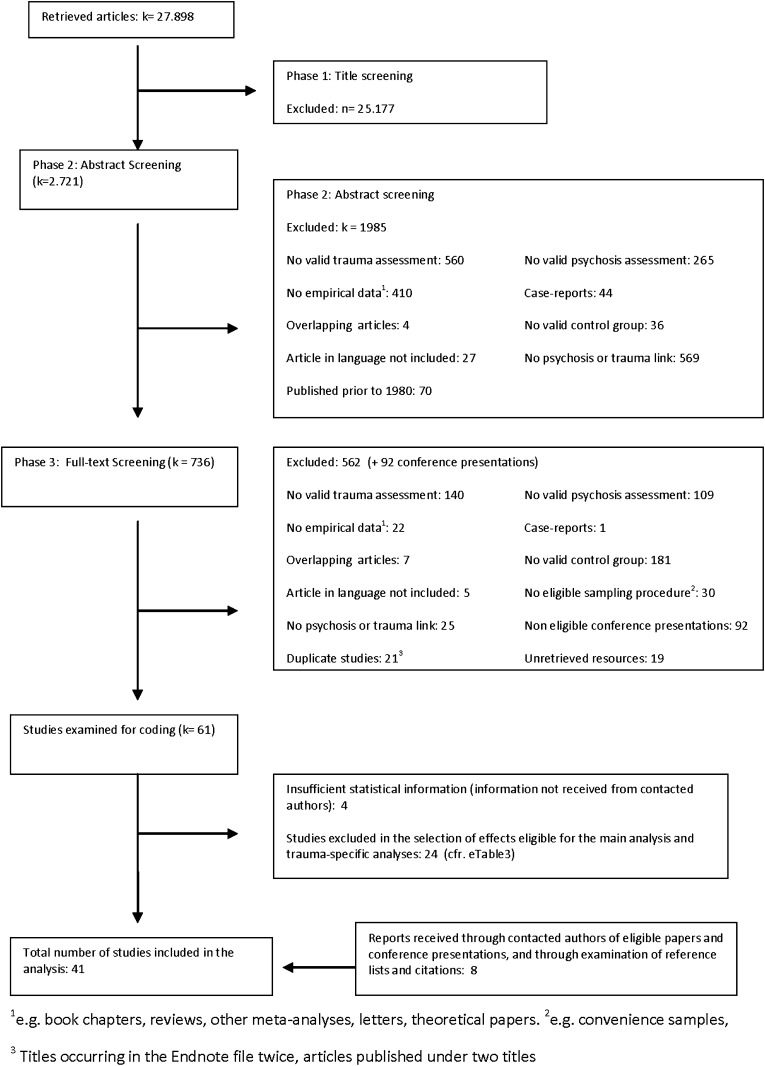
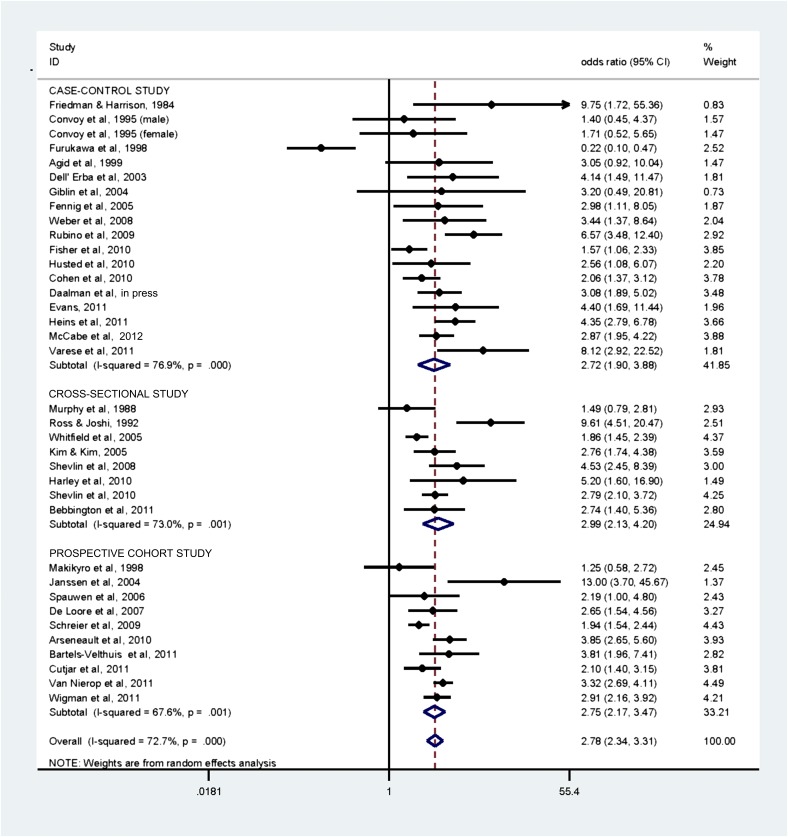
Evidence suggests that adverse experiences in childhood are associated with psychosis. To examine the association between childhood adversity and trauma (sexual abuse, physical abuse, emotional/psychological abuse, neglect, parental death, and bullying) and psychosis outcome, MEDLINE, EMBASE, PsychINFO, and Web of Science were searched from January 1980 through November 2011. We included prospective cohort studies, large-scale cross-sectional studies investigating the association between childhood adversity and psychotic symptoms or illness, case-control studies comparing the prevalence of adverse events between psychotic patients and controls using dichotomous or continuous measures, and case-control studies comparing the prevalence of psychotic symptoms between exposed and nonexposed subjects using dichotomous or continuous measures of adversity and psychosis. The analysis included 18 case-control studies (n = 2048 psychotic patients and 1856 nonpsychiatric controls), 10 prospective and quasi-prospective studies (n = 41,803) and 8 population-based cross-sectional studies (n = 35,546). There were significant associations between adversity and psychosis across all research designs, with an overall effect of OR = 2.78 (95% CI = 2.34-3.31). The integration of the case-control studies indicated that patients with psychosis were 2.72 times more likely to have been exposed to childhood adversity than controls (95% CI = 1.90-3.88). The association between childhood adversity and psychosis was also significant in population-based cross-sectional studies (OR = 2.99 [95% CI = 2.12-4.20]) as well as in prospective and quasi-prospective studies (OR = 2.75 [95% CI = 2.17-3.47]). The estimated population attributable risk was 33% (16%-47%). These findings indicate that childhood adversity is strongly associated with increased risk for psychosis.
Overview
The claims and statistics of this paper haven’t been checked yet.
Free: it reads the open-access text and checks the first 5 claims that cite a source we can check. Create a free account to check every claim.
Integrity signals
Registry
Cites
Statistics
Figures
Verification
Claims the paper makes
The claims and statistics of this paper haven’t been checked yet.
Free: it reads the open-access text and checks the first 5 claims that cite a source we can check. Create a free account to check every claim.
Claims other papers make about this one
Each is checked against this paper’s own text: does it say what the citing paper says it does?
The source backs part of the claim, not all of it — or backs it for a different population, condition or comparison.
In the citing paper
“by study design on obesity and psychosis,7,9”
From Long-term outcomes of childhood sexual abuse: an umbrella review (2019) · cites this paper as [7]
Experimental — accuracy not yet measuredThe source backs part of the claim, not all of it — or backs it for a different population, condition or comparison.
In the citing paper
“A recent meta-ana lysis calculated a population attributable risk of 33%, meaning that if the six types of child adversity studied were to disappear, a third of new psychosis cases would be avoided [13] .”
From The traumagenic neurodevelopmental model of psychosis revisited (2014) · cites this paper as [13]
Experimental — accuracy not yet measuredThe source backs part of the claim, not all of it — or backs it for a different population, condition or comparison.
In the citing paper
“and experiencing physical or sexual abuse (112).”
From Aberrant Salience, Information Processing, and Dopaminergic Signaling in People at Clinical High Risk for Psychosis (2020) · cites this paper as [112]
Experimental — accuracy not yet measuredThe cited source says what the claim attributes to it.
In the citing paper
“Recent studies indicate this is not an evidence-based belief [12,13,167] .”
From The traumagenic neurodevelopmental model of psychosis revisited (2014) · cites this paper as [13]
The cited source says what the claim attributes to it.
In the citing paper
“Furthermore, numerous studies and reviews note that the relationship between child abuse and psychosis remains after controlling for family history of psychosis [9-13,17] .”
From The traumagenic neurodevelopmental model of psychosis revisited (2014) · cites this paper as [13]
8 more claims about this paper
Create a free account to see every claim other papers make about this one.
Self-check
Percentages, sums and reported differences re-computed from the paper’s own numbers.
The self-check needs the paper’s full text.
Citations
Cites
Measuring inconsistency in meta-analyses
Higgins, J. P. T., Thompson, S. G., Deeks, J. J., & Altman, D. G. (2003) · BMJ · doi:10.1136/bmj.327.7414.557 · Cited by 63,139 · cited 1×
“Heterogeneity analyses were carried out using the Q and I(2) statistics to examine and quantify the amount of observed variance accounted for by true heterogeneity rather than sampling error.(57) Meta-regression analysis was subsequently used to determine whether (1) differences in study design and (2) inclusion of ad…”
MethodBias in meta-analysis detected by a simple, graphical test
Egger, M., Smith, G. D., Schneider, M., & Minder, C. (1997) · BMJ · doi:10.1136/bmj.315.7109.629 · Cited by 56,722
Meta-analysis of Observational Studies in Epidemiology<SUBTITLE>A Proposal for Reporting</SUBTITLE>
Stroup, D. F. (2000) · JAMA · doi:10.1001/jama.283.15.2008 · Cited by 20,623
Borenstein, M., Hedges, L. V., Higgins, J. P. T., & Rothstein, H. R. (2009) · doi:10.1002/9780470743386 · Cited by 14,225
Borenstein, M., Hedges, L. V., Higgins, J. P. T., & Rothstein, H. R. (2021) · doi:10.1002/9781119558378 · Cited by 9,799
The Handbook of Research Synthesis and Meta-Analysis
(2019) · doi:10.7758/9781610448864 · Cited by 4,553
Zhang, J., & Yu, K. F. (1998) · JAMA · doi:10.1001/jama.280.19.1690 · Cited by 4,138 · cited 1×
“Risk ratios were treated as ORs without further adjustment as the incidence of psychosis in the studied populations was low (ie, <10%).(56)”
MethodA Nonparametric “Trim and Fill” Method of Accounting for Publication Bias in Meta-Analysis
Duval, S., & Tweedie, R. (2000) · Journal of the American Statistical Association · doi:10.1080/01621459.2000.10473905 · Cited by 2,955
Validity of adult retrospective reports of adverse childhood experiences: review of the evidence
Hardt, J., & Rutter, M. (2004) · Journal of Child Psychology and Psychiatry · doi:10.1111/j.1469-7610.2004.00218.x · Cited by 2,827
Childhood adversities and adult psychopathology in the WHO World Mental Health Surveys
Kessler, R. C., McLaughlin, K. A., Green, J. G., Gruber, M. J., Sampson, N. A., Zaslavsky, A. M., Aguilar-Gaxiola, S., Alhamzawi, A. O., Alonso, J., Angermeyer, M., et al. (2010) · British Journal of Psychiatry · doi:10.1192/bjp.bp.110.080499 · Cited by 2,640 · cited 1×
“Adverse childhood events including trauma is a common experience worldwide, with some estimates suggesting that about a third of the general population may be affected.(1) Evidence suggests that its effects in adulthood may include a range of negative social outcomes, including higher criminality,(2) a lower education…”
Background
Research works printed but not linked: 12
- 15. Dell'Erba G, Venturi P, Tallarico V. Childhood stressful experiences in familial and sporadic schizophrenic patients [Italian] Italian J Psychopathol. 2003;9:32–39.
- 25. Evans G. Trauma and psychosis: investigating dissociation and self-concept clarity [Unpublished doctoral dissertation] University of Liverpool, UK; 2011
- 60. Schreier A, Wolke D, Thomas K, et al. Prospective study of peer victimization in childhood and psychotic symptoms in a nonclinical population at age 12 years. Arch Gen Psychiatry. 2009;66:527–536. doi: 10.1001/archgenpsychiatry.2009.23. · DOI · Paper page
- 63. Janssen I, Krabbendam L, Bak M, et al. Childhood abuse as a risk factor for psychotic experiences. Acta Psychiatr Scand. 2004;109:38–45. doi: 10.1046/j.0001-690x.2003.00217.x. · DOI · Paper page
- 64. Spauwen J, Krabbendam L, Lieb R, Wittchen H-U, van Os J. Impact of psychological trauma on the development of psychotic symptoms: relationship with psychosis proneness. Br J Psychiatry. 2006;188:527–533. doi: 10.1192/bjp.bp.105.011346. · DOI · Paper page
- 65. Nishida A, Tanii H, Nishimura Y, et al. Associations between psychotic-like experiences and mental health status and other psychopathologies among Japanese early teens. Schizophr Res. 2008;99:125–133. doi: 10.1016/j.schres.2007.11.038. · DOI
- 66. Shevlin M, Houston JE, Dorahy MJ, Adamson G. Cumulative traumas and psychosis: an analysis of the National Comorbidity Survey and the British Psychiatric Morbidity Survey. Schizophr Bull. 2008;34:193–199. doi: 10.1093/schbul/sbm069. · DOI · Paper page
- 67. Arseneault L, Cannon M, Fisher HL, et al. Psychotic symptoms: a genetically sensitive longitudinal cohort study. Am J Psychiatry. 2010;168:65–72. doi: 10.1176/appi.ajp.2010.10040567. · DOI · Paper page
- 69. De Loore E, Drukker M, Gunther N, et al. Childhood negative experiences and subclinical psychosis in adolescence: a longitudinal general population study. Early Interv Psychiatry. 2007;1:201–207. · DOI · Paper page
- 70. Whitfield CL, Dube SR, Felitti VJ, Anda RF. Adverse childhood experiences and hallucinations. Child Abuse & Neglect. 2005;29:797–810. doi: 10.1016/j.chiabu.2005.01.004. · DOI · Paper page
- 72. Houston JE, Murphy J, Adamson G, Stringer M, Shevlin M. Childhood sexual abuse, early cannabis use, and psychosis: testing an interaction model based on the National Comorbidity Survey. Schizophr Bull. 2008;34:580–585. doi: 10.1093/schbul/sbm127. · DOI · Paper page
- 73. Husted JA, Ahmed R, Chow EWC, Brzustowicz LM, Bassett AS. Childhood trauma and genetic factors in familial schizophrenia associated with the NOS1AP gene. Schizophr Res. 2010;121:187–192. doi: 10.1016/j.schres.2010.05.021. · DOI
Cited by
Items 101–200 of 1,008
Fetal programming of neuropsychiatric disorders
Faa, G., Manchia, M., Pintus, R., Gerosa, C., Marcialis, M. A., & Fanos, V. (2016) · Birth Defects Research Part C: Embryo Today: Reviews · doi:10.1002/bdrc.21139 · Cited by 159
Peters, E., Ward, T., Jackson, M., Morgan, C., Charalambides, M., McGuire, P., Woodruff, P., Jacobsen, P., Chadwick, P., & Garety, P. A. (2016) · World Psychiatry · doi:10.1002/wps.20301 · Cited by 151
Hardy, A., Emsley, R., Freeman, D., Bebbington, P., Garety, P. A., Kuipers, E. E., Dunn, G., & Fowler, D. (2016) · Schizophrenia Bulletin · doi:10.1093/schbul/sbv175 · Cited by 159
“We hypothesize (1) that childhood sexual abuse and auditory hallucinations, and childhood physical abuse and paranoia will be linked independently of demographic variables; (2) that intrusive trauma memory will mediate the relationship between childhood sexual abuse and hallucinations; (3) that negative self and other…”
BackgroundIncidence of psychotic disorders among first-generation immigrants and refugees in Ontario
Anderson, K. K., Cheng, J., Susser, E., McKenzie, K. J., & Kurdyak, P. (2015) · Canadian Medical Association Journal · doi:10.1503/cmaj.141420 · Cited by 157
Attachment, Neurobiology, and Mentalizing along the Psychosis Continuum
Debbané, M., Salaminios, G., Luyten, P., Badoud, D., Armando, M., Solida Tozzi, A., Fonagy, P., & Brent, B. K. (2016) · Frontiers in Human Neuroscience · doi:10.3389/fnhum.2016.00406 · Cited by 157
“Is There Evidence for an Association Between Trauma and Psychosis Along the Continuum of Psychotic Expression? There is strong evidence suggesting the importance of trauma as a risk factor for psychotic disorders (Read et al., 2005; Varese et al., 2012).”
BackgroundMortality in Schizophrenia and Other Psychoses: A 10-Year Follow-up of the ӔSOP First-Episode Cohort
Reininghaus, U., Dutta, R., Dazzan, P., Doody, G. A., Fearon, P., Lappin, J., Heslin, M., Onyejiaka, A., Donoghue, K., Lomas, B., et al. (2015) · Schizophrenia Bulletin · doi:10.1093/schbul/sbu138 · Cited by 156
“Given there is also evidence that childhood adversity is associated with an increased risk of developing psychosis, 45 it may be speculated that elevated inflammation may increase susceptibility to both (enduring) psychotic disorder and metabolic abnormalities, which, in turn, may increase risk of…”
BackgroundBloomfield, M. A. P., Chang, T., Woodl, M. J., Lyons, L. M., Cheng, Z., Bauer‐Staeb, C., Hobbs, C., Bracke, S., Kennerley, H., Isham, L., et al. (2021) · World Psychiatry · doi:10.1002/wps.20841 · Cited by 155
A systematic review of the nature and correlates of sleep disturbance in early psychosis
Davies, G., Haddock, G., Yung, A. R., Mulligan, L. D., & Kyle, S. D. (2017) · Sleep Medicine Reviews · doi:10.1016/j.smrv.2016.01.001 · Cited by 154
Mood, anxiety and psychotic phenomena measure a common psychopathological factor
Stochl, J., Khandaker, G. M., Lewis, G., Perez, J., Goodyer, I. M., Zammit, S., Sullivan, S., Croudace, T. J., & Jones, P. B. (2015) · Psychological Medicine · doi:10.1017/s003329171400261x · Cited by 153
“For example, early life adversity is a well-replicated risk factor for both adult psychotic illness as well as depressive and anxiety disorders (Widom et al. 2007; Varese et al. 2012).”
BackgroundHunter, A., Tussis, L., & MacBeth, A. (2017) · Journal of Affective Disorders · doi:10.1016/j.jad.2017.07.004 · Cited by 153
“Influence analyses, publication bias and outlier biases were analysed using funnel plots and the Duval and Tweedie (Duval, 2000) “trim and fill” method (Varese et al., 2012).”
MethodUnderstanding auditory verbal hallucinations: a systematic review of current evidence
Upthegrove, R., Broome, M. R., Caldwell, K., Ives, J., Oyebode, F., & Wood, S. J. (2016) · Acta Psychiatrica Scandinavica · doi:10.1111/acps.12531 · Cited by 151
“Whilst there is evidence to suggest a higher incidence of traumatic childhood events in patients with psychosis, and in particular those with hallucinations (85), intrusive memories do not account for the more severe and complex auditory experiences; for example neutral voices commenting on actions, or benevolent voic…”
Kramer, I., Simons, C. J. P., Wigman, J. T. W., Collip, D., Jacobs, N., Derom, C., Thiery, E., van Os, J., Myin-Germeys, I., & Wichers, M. (2014) · Schizophrenia Bulletin · doi:10.1093/schbul/sbs194 · Cited by 151
Brouwer, A., & Carhart-Harris, R. L. (2021) · Journal of Psychopharmacology · doi:10.1177/0269881120959637 · Cited by 143
“Psychological trauma predisposes certain individuals towards dissociation, hallucination and other psychotic-like features (Kilcommons and Morrison, 2005; McCarthy-Jones and Longden, 2015; Varese et al., 2012a).”
BackgroundEnvironmental Social Stress, Paranoia and Psychosis Liability: A Virtual Reality Study
Veling, W., Pot-Kolder, R., Counotte, J., van Os, J., & van der Gaag, M. (2016) · Schizophrenia Bulletin · doi:10.1093/schbul/sbw031 · Cited by 149
“23 The low psychosis liability group consisted of: (3) Siblings of patients with a psychotic disorder, who never had a psychotic episode themselves; and (4) Controls with a negative (first-degree family) history of any psychotic disorder.”
BackgroundBelbasis, L., Köhler, C. A., Stefanis, N., Stubbs, B., van Os, J., Vieta, E., Seeman, M. V., Arango, C., Carvalho, A. F., & Evangelou, E. (2018) · Acta Psychiatrica Scandinavica · doi:10.1111/acps.12847 · Cited by 148
Behavioural outcomes and psychopathology during adolescence
Johnson, S. J., & Wolke, D. (2013) · Early Human Development · doi:10.1016/j.earlhumdev.2013.01.014 · Cited by 170
“[84] This has led to the formulation of the psychosis proneness-persistence-impairment model of psychotic disorder whereby genes, early pre- and perinatal adversities and environmental trauma act together in the development of psychotic disorders.[85-87] Furthermore, prenatal and perinatal factors have been long consi…”
BackgroundChildhood adversities in relation to psychiatric disorders
Pietrek, C., Elbert, T. R., Weierstall, R., Müller, O. J., & Rockstroh, B. S. (2012) · Psychiatry Research · doi:10.1016/j.psychres.2012.11.003 · Cited by 182
Stentebjerg-Olesen, M., Pagsberg, A. K., Fink-Jensen, A., Correll, C. U., & Jeppesen, P. (2016) · Journal of Child and Adolescent Psychopharmacology · doi:10.1089/cap.2015.0097 · Cited by 147
“%) in the pooled samples supports the notion that trauma plays a role in the pathogenesis of EOS as well as in individuals with psychotic symptoms (Harley et al. 2010; Varese et al. 2012; Dvir et al. 2013; Aas et al. 2014; Daglas et al. 2014; Li et al. 2014).”
Psychological Formulation as an Alternative to Psychiatric Diagnosis
Johnstone, L. (2017) · Journal of Humanistic Psychology · doi:10.1177/0022167817722230 · Cited by 195
“This acknowledges the large and growing body of research that indicates a causal role for these events in many or most mental health presentations (Read & Bentall, 2012; Varese et al., 2012).”
BackgroundBaumeister, D., Russell, A., Pariante, C. M., & Mondelli, V. (2014) · Social Psychiatry and Psychiatric Epidemiology · doi:10.1007/s00127-014-0887-z · Cited by 142
“Therefore, childhood trauma, in the context of dysregulation of the HPA axis, may partially mediate the association between inflammation and mental illness, as childhood trauma itself has been shown to be associated with a variety of adult mental disorder [72–74].”
BackgroundExamining the psychosis continuum
DeRosse, P., & Karlsgodt, K. H. (2015) · Current Behavioral Neuroscience Reports · doi:10.1007/s40473-015-0040-7 · Cited by 145
“Several studies have demonstrated an association between childhood maltreatment and psychotic disorders and a recent review and meta-analysis of these studies [79] found that childhood adversity is substantially associated with an increased risk for psychosis with a population attributable risk of ~33%.”
BackgroundMcGrath, J. J., McLaughlin, K. A., Saha, S., Aguilar-Gaxiola, S., Al-Hamzawi, A., Alonso, J., Bruffaerts, R., de Girolamo, G., de Jonge, P., Esan, O., et al. (2017) · Psychological Medicine · doi:10.1017/s0033291716003263 · Cited by 143
“Estimates of PARPs related to psychotic experiences have also been derived from meta-analysis (33%) (Varese et al. 2012), but the relative importance of different types of CAs in contributing to the onset of PEs in the population remains unknown.”
BackgroundMethodInfluentialAltered gut microbiota associated with symptom severity in schizophrenia
Li, S., Zhuo, M., Huang, X., Huang, Y., Zhou, J., Xiong, D., Li, J., Liu, Y., Pan, Z., Li, H., et al. (2020) · PeerJ · doi:10.7717/peerj.9574 · Cited by 142
“, 2011) and environmental risk factors (Brown et al., 2002; Cannon, Jones & Murray, 2002; Cantor-Graae & Selten, 2005; Mulvany et al., 2001; Sara et al., 2014; Stilo et al., 2017; Van Os, Pedersen & Mortensen, 2004; Varese et al., 2012) to determine the pathogenesis of SZ.”
No more psychiatric labels: Why formal psychiatric diagnostic systems should be abolished
Timimi, S. (2014) · International Journal of Clinical and Health Psychology · doi:10.1016/j.ijchp.2014.03.004 · Cited by 139
“…Romme, Buiks, Delespaul, & van Os, 2002; Goodman, Rosenberg, & Mueser, 1997; Greenfield, Strakowski, Tohen, Batson, & Kolbrener, 1994; Honig, Romme, Ensink, Pennings, & de Vries, 1998; Morrison, Frame, & Larkin, 2003; Mueser et al., 1998; Read, Agar, Argyle, & Aderhold, 2003; Varese et al., 2012).”
McKay, M. T., Kilmartin, L., Meagher, A., Cannon, M. D., Healy, C., & Clarke, M. C. (2022) · Journal of Psychiatric Research · doi:10.1016/j.jpsychires.2022.10.015 · Cited by 171
Khalifeh, H., Oram, S., Osborn, D., Howard, L. M., & Johnson, S. (2016) · International Review of Psychiatry · doi:10.1080/09540261.2016.1223608 · Cited by 138
“People with SMI have high rates of childhood abuse (Varese et al., 2012), and this may be an important risk factor in their vulnerability to violence as adults.”
BackgroundShattock, L., Berry, K., Degnan, A., & Edge, D. (2018) · Clinical Psychology & Psychotherapy · doi:10.1002/cpp.2135 · Cited by 137
“Alliance may be particularly relevant to people with schizophrenia and related psychoses as this group are likely to have early traumatic experiences impacting on adult relationships and difficulties with service engagement (Kreyenbuhl, Nossel, & Dixon, 2009; Varese et al., 2012).”
BackgroundChildhood victimization and inflammation in young adulthood: A genetically sensitive cohort study
Baldwin, J. R., Arseneault, L., Caspi, A., Fisher, H. L., Moffitt, T. E., Odgers, C. L., Pariante, C., Ambler, A., Dove, R., Kepa, A., et al. (2018) · Brain, Behavior, and Immunity · doi:10.1016/j.bbi.2017.08.025 · Cited by 137
“Childhood victimization is a major risk factor for a range of mental and physical health problems in later life (Varese et al., 2012; Danese and Tan, 2014; Takizawa et al., 2014, Takizawa et al., 2015).”
Gene–environment interplay in the etiology of psychosis
Zwicker, A., Denovan‐Wright, E. M., & Uher, R. (2018) · Psychological Medicine · doi:10.1017/s003329171700383x · Cited by 174
“Epidemiological studies show strong and consistent associations between multiple environmental exposures and psychosis (Marconi et al. 2016; Varese et al. 2012).”
BackgroundThe Neglect of Left-Behind Children in China: A Meta-Analysis
Wen, Y., Hou, W., Zheng, W., Zhao, X., Wang, X., Bo, Q., Pao, C., Tang, Y., Tan, T. X., Li, X., et al. (2020) · Trauma Violence & Abuse · doi:10.1177/1524838020916837 · Cited by 148
Predictive processing, source monitoring, and psychosis
Griffin, J. D., & Fletcher, P. C. (2017) · Annual Review of Clinical Psychology · doi:10.1146/annurev-clinpsy-032816-045145 · Cited by 133
“It is also noteworthy in this regard that the risk of psychotic disorder is elevated in people with a history of childhood trauma (Schafer & Fisher 2011, Varese et al. 2012).”
BackgroundOlvera Alvarez, H. A., Kubzansky, L. D., Campen, M. J., & Slavich, G. M. (2018) · Neuroscience & Biobehavioral Reviews · doi:10.1016/j.neubiorev.2018.06.002 · Cited by 133
“In this context, the terms early life stress or early adversity, have referred to different types of stressors, including violence, poverty, maltreatment, abuse, and neglect, as well as parental substance abuse or mental illness (Carroll et al., 2011; Dube et al., 2001; Hughes et al., 2017; Infurna et al., 2016; Lacey…”
de Bont, P. A. J. M., van den Berg, D. P. G., van der Vleugel, B. M., de Roos, C., de Jongh, A., van der Gaag, M., & van Minnen, A. (2015) · British Journal of Psychiatry · doi:10.1192/bjp.bp.114.148486 · Cited by 133
Dysregulation of Midbrain Dopamine System and the Pathophysiology of Schizophrenia
Sonnenschein, S. F., Gomes, F. V., & Grace, A. A. (2020) · Frontiers in Psychiatry · doi:10.3389/fpsyt.2020.00613 · Cited by 159
Childhood Trauma as a Cause of Psychosis: Linking Genes, Psychology, and Biology
van Winkel, R., van Nierop, M., Myin-Germeys, I., & van Os, J. (2013) · The Canadian Journal of Psychiatry · doi:10.1177/070674371305800109 · Cited by 132
“Varese et al12 included 36 studies (18 case–control, 10 [quasi] prospective, and 8 population-based cross-sectional studies) with a combined total of over 80 000 subjects.”
BackgroundThompson, A. D., Nelson, B., Yuen, H. P., Lin, A., Amminger, G. P., McGorry, P. D., Wood, S. J., & Yung, A. R. (2014) · Schizophrenia Bulletin · doi:10.1093/schbul/sbt032 · Cited by 131
Toxic stress, behavioral health, and the next major era in public health.
Shern, D. L., Blanch, A. K., & Steverman, S. M. (2016) · American Journal of Orthopsychiatry · doi:10.1037/ort0000120 · Cited by 131
de Bont, P. A. J. M., van den Berg, D. P. G., van der Vleugel, B. M., de Roos, C., de Jongh, A., van der Gaag, M., & van Minnen, A. M. (2016) · Psychological Medicine · doi:10.1017/s0033291716001094 · Cited by 131
“2016) and (meta-analytical) studies linking trauma to psychosis (Bentall et al. 2012; Reiff et al. 2012; Varese et al. 2012; Van Nierop et al. 2014).”
BackgroundResultInfluentialSystematic review and critical appraisal of child abuse measurement instruments
Saini, S. M., Hoffmann, C. R., Pantelis, C., Everall, I. P., & Bousman, C. A. (2019) · Psychiatry Research · doi:10.1016/j.psychres.2018.12.068 · Cited by 130
Struck, N., Krug, A., Yuksel, D., Stein, F., Schmitt, S., Meller, T., Brosch, K., Dannlowski, U., Nenadić, I., Kircher, T., et al. (2020) · Psychiatry Research · doi:10.1016/j.psychres.2020.113398 · Cited by 129
Cuénod, M., Steullet, P., Cabungcal, J.-H., Dwir, D., Khadimallah, I., Klauser, P., Conus, P., & Kim, Q. (2021) · Molecular Psychiatry · doi:10.1038/s41380-021-01374-w · Cited by 138
“Traumatic experiences occurring during the critical time of childhood and adolescence favors the development of psychiatric disorders associated with psychosis and cognitive impairments [188, 189].”
BackgroundChildhood trauma and clinical high risk for psychosis
Loewy, R. L., Corey, S., Amirfathi, F., Dabit, S., Fulford, D., Pearson, R., Hua, J. P. Y., Schlosser, D., Stuart, B. K., Mathalon, D. H., et al. (2019) · Schizophrenia Research · doi:10.1016/j.schres.2018.05.003 · Cited by 130
“72 times as likely to have experienced adverse childhood events than healthy individuals (Varese et al., 2012).”
Do adult mental health services identify child abuse and neglect? A systematic review.
Read, J., Harper, D., Tucker, I., & Kennedy, A. (2018) · International Journal of Mental Health Nursing · doi:10.1111/inm.12369 · Cited by 129
“…including: depression, anxiety disorders, eating disorders, sexual dysfunction, personality disorders, dissociative disorder, substance abuse, PTSD, bipolar disorder and psychosis (Kessler et al. 2010; Longden & Read 2016; Read 2013; Read et al. 2005; Varese et al. 2012; Watson et al. 2012).”
Self-citationThe origins of voices: links between life history and voice hearing in a survey of 100 cases
Corstens, D., & Longden, E. (2013) · Psychosis · doi:10.1080/17522439.2013.816337 · Cited by 129
“…with previous research demonstrating associations between voice hearing and traumatic life events (e.g., Read et al., 2005; Shevlin et al., 2011; Varese et al., 2012), and the likelihood of individuals in psychiatric services to report a high volume of negative, persecutory voices (e.g., Andrew…”
BackgroundGiovanoli, S., Engler, H., Engler, A., Richetto, J., Feldon, J., Riva, M. A., Schedlowski, M., & Meyer, U. (2016) · Translational Psychiatry · doi:10.1038/tp.2016.38 · Cited by 128
Changes in Comorbid Conditions After Prolonged Exposure for PTSD: a Literature Review
van Minnen, A., Zoellner, L. A., Harned, M. S., & Mills, K. (2015) · Current Psychiatry Reports · doi:10.1007/s11920-015-0549-1 · Cited by 127
Childhood adversity specificity and dose-response effect in non-affective first-episode psychosis
Trauelsen, A. M., Bendall, S., Jansen, J. E., Nielsen, H. L., Pedersen, M. B., Trier, C. H., Haahr, U., & Simonsen, E. H. (2015) · Schizophrenia Research · doi:10.1016/j.schres.2015.03.014 · Cited by 150
“…available at ScienceDirect Schizophrenia Research j ourna l homepage: www.e lsev ie r .com/ locate /schres McCabe et al., 2012; Varese et al., 2012a); parental loss/separation (Agid et al., 1999; Aas et al., 2011); and emotional and physical neglect (McCabe et al., 2012; Varese et al., 2012a).”
BackgroundInfluentialWilliams, J., Bucci, S., Berry, K., & Varese, F. (2018) · Clinical Psychology Review · doi:10.1016/j.cpr.2018.05.009 · Cited by 126
Self-citationAssociation Between Abuse History and Adolescent Pregnancy: A Meta-analysis
Madigan, S. L., Wade, M., Tarabulsy, G. M., Jenkins, J. M., & Shouldice, M. (2014) · Journal of Adolescent Health · doi:10.1016/j.jadohealth.2014.05.002 · Cited by 169
“The strength of association between early pregnancy and other forms of abuse, such as physical abuse, emotional abuse, and neglect, all of which have been linked to early sexual intercourse, teenage pregnancy, and an array of adverse psychosocial outcomes, is currently unknown [11,27,28].”
BackgroundMongan, D., Ramesar, M., Föcking, M., Cannon, M., & Cotter, D. (2020) · Early Intervention in Psychiatry · doi:10.1111/eip.12859 · Cited by 123
Hassan, A. N., & Luca, V. D. (2014) · Schizophrenia Research · doi:10.1016/j.schres.2014.10.048 · Cited by 148
“A meta-analysis of 41 studies revealed that all types of childhood adversities increased the risk of psychosis (Varese et al., 2012).”
Backgroundvan Nierop, M., Lataster, T., Smeets, F., Gunther, N., van Zelst, C., de Graaf, R., ten Have, M., van Dorsselaer, S., Bak, M., Myin-Germeys, I., et al. (2014) · Schizophrenia Bulletin · doi:10.1093/schbul/sbt150 · Cited by 122
Self-citationTop‐down and bottom‐up control of stress‐coping
de Kloet, E. R., de Kloet, S. F., de Kloet, C. S., & de Kloet, A. D. (2019) · Journal of Neuroendocrinology · doi:10.1111/jne.12675 · Cited by 136
A systematic review on mediators between adversity and psychosis: potential targets for treatment
Alameda, L., Rodriguez, V., Carr, E., Aas, M., Trotta, G., Marino, P., Vorontsova, N., Herane-Vives, A., Gadelrab, R., Spinazzola, E., et al. (2020) · Psychological Medicine · doi:10.1017/s0033291720002421 · Cited by 122
Korver‐Nieberg, N., Berry, K., Meijer, C. J., & de Haan, L. (2014) · Psychology and Psychotherapy: Theory, Research and Practice · doi:10.1111/papt.12010 · Cited by 121
Increased risk of psychosis in patients with hearing impairment: Review and meta-analyses
Linszen, M. M. J., Brouwer, R. M., Heringa, S. M., & Sommer, I. E. (2015) · Neuroscience & Biobehavioral Reviews · doi:10.1016/j.neubiorev.2015.12.012 · Cited by 129
McCarthy-Jones, S., & Longden, E. (2015) · Frontiers in Psychology · doi:10.3389/fpsyg.2015.01071 · Cited by 120
“Dose–response relations between trauma and AVH (Bentall et al., 2012), and between trauma and psychosis in general (Varese et al., 2012b), suggest a causal relation.”
BackgroundHallucination: Philosophy and Psychology
(2013) · The MIT Press eBooks · doi:10.7551/mitpress/9780262019200.001.0001 · Cited by 116
Renard, S. B., Huntjens, R. J. C., Lysaker, P. H., Moskowitz, A., Aleman, A., & Pijnenborg, G. H. M. (2017) · Schizophrenia Bulletin · doi:10.1093/schbul/sbw063 · Cited by 118
Alameda, L., Ferrari, C., Baumann, P. S., Gholam-Rezaee, M., Do, K. Q., & Conus, P. (2015) · Psychological Medicine · doi:10.1017/s0033291715000690 · Cited by 118
“2006) and a recent meta-analysis (Varese et al. 2012) showed that exposure to trauma is associated with a 2.”
Methodde Bont, P. A. J. M., van Minnen, A., & de Jongh, A. (2013) · Behavior Therapy · doi:10.1016/j.beth.2013.07.002 · Cited by 150
The prevalence and correlates of childhood trauma in patients with early psychosis
Duhig, M., Patterson, S., Connell, M., Foley, S. R., Capra, C., Dark, F. L., Gordon, A., Singh, S., Hides, L. M., McGrath, J. J., et al. (2015) · Australian & New Zealand Journal of Psychiatry · doi:10.1177/0004867415575379 · Cited by 153
“The high rates of emotional abuse in this study are consistent with previous reports suggesting that childhood trauma is a risk factor for psychosis (Varese et al., 2012).”
BackgroundResultDevelopmental origins of cardiovascular disease: Impact of early life stress in humans and rodents
Murphy, M. O., Cohn, D. M., & Loria, A. S. (2017) · Neuroscience & Biobehavioral Reviews · doi:10.1016/j.neubiorev.2016.07.018 · Cited by 117
“However, more recent attention has been brought to ELS as an independent risk factor for hypertension, obesity, substance abuse, smoking as well, which are major contributors in the development of cardiovascular disease (CVD) and type 2 diabetes (Brent and Silverstein, 2013; Luecken, 1998; Varese et al., 2012).”
BackgroundBrand, R. M., McEnery, C., Rossell, S. L., Bendall, S., & Thomas, N. (2017) · Schizophrenia Research · doi:10.1016/j.schres.2017.08.037 · Cited by 144
The interplay between substance use and intimate partner violence perpetration: A meta-ethnography
Gilchrist, G., Dennis, F., Radcliffe, P., Henderson, J., Howard, L. M., & Gadd, D. (2018) · International Journal of Drug Policy · doi:10.1016/j.drugpo.2018.12.009 · Cited by 147
“…disorders, psychosis and depression (Trull et al., 2018; Choi, DiNitto, Marti, & Choi, 2017; Hughes et al., 2017; Smith-Marek et al., 2015; Oram et al., 2014; Varese et al., 2012; Torrens, Gilchrist, & DomingoSalvany, 2011; Gil-González, Vives-Cases, Ruiz, Carrasco-Portiño, & Alvarez Dardet, 2004).”
Howes, O. D., Hird, E. J., Adams, R. A., Corlett, P. R., & McGuire, P. (2020) · Biological Psychiatry · doi:10.1016/j.biopsych.2020.03.012 · Cited by 110
What is a “sense of foreshortened future?” A phenomenological study of trauma, trust, and time
Ratcliffe, M., Ruddell, M., & Smith, B. (2014) · Frontiers in Psychology · doi:10.3389/fpsyg.2014.01026 · Cited by 184
Sands, A., Thompson, E. J., & Gaysina, D. (2017) · Journal of Affective Disorders · doi:10.1016/j.jad.2017.04.015 · Cited by 113
Adversity, cannabis use and psychotic experiences: evidence of cumulative and synergistic effects
Morgan, C., Reininghaus, U., Reichenberg, A., Frissa, S., SELCoH study team, Hotopf, M., & Hatch, S. L. (2014) · British Journal of Psychiatry · doi:10.1192/bjp.bp.113.134452 · Cited by 113
Traumatic stress and human DNA methylation: A critical review
Vinkers, C. H., Kalafateli, A. L., Rutten, B. P., Kas, M. J., Kaminsky, Z., Turner, J. D., & Boks, M. P. (2015) · Epigenomics · doi:10.2217/epi.15.11 · Cited by 112
Risk of Psychosis Among Refugees: A Systematic Review and Meta-analysis
Brandt, L., Henssler, J., Müller, M., Wall, S., Gabel, D., & Heinz, A. (2019) · JAMA Psychiatry · doi:10.1001/jamapsychiatry.2019.1937 · Cited by 111
The role of the gut microbiome in the development of schizophrenia
Kelly, J. R., Minuto, C., Cryan, J. F., Clarke, G., & Dinan, T. G. (2021) · Schizophrenia Research · doi:10.1016/j.schres.2020.02.010 · Cited by 110
Childhood trauma and schizotypy: a systematic literature review
Velikonja, T., Fisher, H. L., Mason, O., & Johnson, S. (2015) · Psychological Medicine · doi:10.1017/s0033291714002086 · Cited by 110
“An overall association between childhood trauma and both psychosis-like symptoms and psychotic disorders has been reported (Varese et al. 2012) but it is unclear whether, and how conclusively, this has now been demonstrated for schizotypy.”
Backgroundvan Dam, D. S., van Nierop, M., Viechtbauer, W., Velthorst, E., van Winkel, R., Genetic Risk and Outcome of Psychosis (GROUP) investigators, Bruggeman, R., Cahn, W., de Haan, L., Kahn, R. S., et al. (2015) · Psychological Medicine · doi:10.1017/s0033291714001561 · Cited by 110
“A growing number of prospective cohort studies, case – control and cross-sectional studies have found strong associations between childhood trauma and the development of psychotic disorders (Varese et al. 2012).”
Self-citationPost-traumatic growth in mental health recovery: qualitative study of narratives
Slade, M., Rennick-Egglestone, S., Blackie, L., Llewellyn-Beardsley, J., Franklin, D., Hui, A., Thornicroft, G., McGranahan, R., Pollock, K., Priebe, S., et al. (2019) · BMJ Open · doi:10.1136/bmjopen-2019-029342 · Cited by 109
“Other, for example, ADHD, personality disorder, substance abuse, autism 7 (9) 0 (0) 2 (10) 3 (16) 2 (13)”
Neurodevelopmental disturbances in schizophrenia: evidence from genetic and environmental factors
Schmitt, A., Falkai, P., & Papiol, S. (2022) · Journal of Neural Transmission · doi:10.1007/s00702-022-02567-5 · Cited by 146
Rafiq, S., Campodonico, C., & Varese, F. (2018) · Acta Psychiatrica Scandinavica · doi:10.1111/acps.12969 · Cited by 108
Self-citationThe impact of social stress on self-esteem and paranoid ideation
Kesting, M.-L., Bredenpohl, M., Klenke, J., Westermann, S., & Lincoln, T. M. (2012) · Journal of Behavior Therapy and Experimental Psychiatry · doi:10.1016/j.jbtep.2012.07.010 · Cited by 125
Reininghaus, U., Gayer-Anderson, C., Valmaggia, L., Kempton, M. J., Calem, M., Onyejiaka, A., Hubbard, K., Dazzan, P., Beards, S., Fisher, H. L., et al. (2016) · Psychological Medicine · doi:10.1017/s003329171600146x · Cited by 108
“2014), emotional abuse has also been associated with an increased risk of psychosis (Varese et al. 2012).”
InfluentialThe dynamics of the stress neuromatrix
Sousa, N. (2016) · Molecular Psychiatry · doi:10.1038/mp.2015.196 · Cited by 107
Bondar, N. P., Lepeshko, A. A., & Reshetnikov, V. V. (2018) · Behavioural Neurology · doi:10.1155/2018/1538931 · Cited by 105
Liu, C. H., Keshavan, M. S., Tronick, E., & Seidman, L. J. (2015) · Schizophrenia Bulletin · doi:10.1093/schbul/sbv047 · Cited by 104
The interface of stress and the HPA axis in behavioural phenotypes of mental illness
Baumeister, D., Lightman, S. L., & Pariante, C. M. (2014) · Current topics in behavioral neurosciences · doi:10.1007/7854_2014_304 · Cited by 104
“…needs to control for the mediating effects of childhood trauma, as childhood trauma itself has been shown to be associated with a variety of adult mental disorder, including depression, bipolar disorder, psychosis and PTSD (Putnam et al. 2013; Varese et al. 2012; Subica 2013; Edwards et al. 2003).”
BackgroundUnderstanding Psychosis and Schizophrenia
Cooke, A. (2014) · Cited by 165
The Impact of Early Life Stress on Anxiety Symptoms in Late Adulthood
Lähdepuro, A., Savolainen, K., Lahti‐Pulkkinen, M., Eriksson, J. G., Lahti, J. M. T., Tuovinen, S., Kajantie, E., Pesonen, A., Heinonen, K., & Räikkönen, K. (2019) · Scientific Reports · doi:10.1038/s41598-019-40698-0 · Cited by 138
Childhood adversity and psychosis: a systematic review of bio-psycho-social mediators and moderators
Sideli, L., Murray, R. M., Schimmenti, A., Corso, M., Barbera, D. L., Trotta, A., & Fisher, H. L. (2020) · Psychological Medicine · doi:10.1017/s0033291720002172 · Cited by 131
“The role of CA in psychosis has recently been established: meta-analyses indicate that childhood maltreatment accounts for up to one-third of the individuals affected with psychosis (Varese et al., 2012) and it is associated with an increased risk for subclinical psychosis and clinically-relevant psychotic disorders,…”
BackgroundNeurobiology of emotional trauma
Giotakos, O. (2020) · Psychiatriki · doi:10.22365/jpsych.2020.312.162 · Cited by 148
“A meta-analysis supported the existence of traumatic psychosis by suggesting that if childhood abuse was eradicated, then one-third of adult psychosis would not occur.(29) (2) Symptoms appear to have a chronic and pervasive vulnerability that is genetic and/or organic in nature.”
BackgroundAdversity in childhood linked to elevated striatal dopamine function in adulthood
Egerton, A., Valmaggia, L. R., Howes, O. D., Day, F., Chaddock, C. A., Allen, P., Winton-Brown, T. T., Bloomfield, M. A. P., Bhattacharyya, S., Chilcott, J., et al. (2016) · Schizophrenia Research · doi:10.1016/j.schres.2016.06.005 · Cited by 103
Aas, M., Pizzagalli, D. A., Laskemoen, J. F., Reponen, E. J., Ueland, T., Melle, I., Agartz, I., Steen, N. E., & Andreassen, O. A. (2019) · Schizophrenia Research · doi:10.1016/j.schres.2019.01.011 · Cited by 102
“In addition to experiencing more frequently childhood traumatic events than healthy individuals (Varese et al., 2012; Church et al., 2017), patients with SZ and BD may also process stress differently owing to lower cognitive load and reduction in grey matter in regions critically implicated in acute stress responses a…”
BackgroundThe Role of Cytokines in the Pathogenesis of Schizophrenia
Dawidowski, B., Górniak, A., Podwalski, P., Lebiecka, Z., Misiak, B., & Samochowiec, J. (2021) · Journal of Clinical Medicine · doi:10.3390/jcm10173849 · Cited by 102
Perceived discrimination and psychosis: a systematic review of the literature
Pearce, J. L., Rafiq, S., Simpson, J., & Varese, F. (2019) · Social Psychiatry and Psychiatric Epidemiology · doi:10.1007/s00127-019-01729-3 · Cited by 122
Self-citationDedic, N., Dworak, H., Zeni, C. M., Rutigliano, G., & Howes, O. D. (2021) · International Journal of Molecular Sciences · doi:10.3390/ijms222413185 · Cited by 106
Padmanabhan, J. L., Shah, J. L., Tandon, N., & Keshavan, M. S. (2017) · Schizophrenia Research · doi:10.1016/j.schres.2016.10.014 · Cited by 98
“, 2002; Geddes and Lawrie, 1995) and childhood adversity or abuse (Varese et al., 2012), among others.”
Carr, S. C., Hardy, A., & Fornells-Ambrojo, M. (2018) · Clinical Psychology Review · doi:10.1016/j.cpr.2017.12.001 · Cited by 99
“…trauma, in particular victimisation, and psychosis (Morrison, Frame & Larkin, 2003; Trotta, Murray, & Fisher, 2015) with a recent meta-analysis indicating that individuals with psychosis were at least twice as likely to have been exposed to childhood adversity as controls (Varese et al., 2012).”
BackgroundSalokangas, R. K. R., Schultze‐Lutter, F., Schmidt, S. J., Pesonen, H., Luutonen, S. H., Patterson, P. H., von Reventlow, H. G., Heinimaa, M., From, T., & Hietala, J. A. (2019) · Journal of Mental Health · doi:10.1080/09638237.2018.1521940 · Cited by 122
“…(Aas et al., 2016; Bonoldi et al., 2013; Brady & Back, 2012; Enoch, 2011; Fernandes & Os orio, 2015; Lindert et al., 2014; Mandelli et al., 2015; Varese et al., 2012), in correlation analyses, all types of CAT domains, except sexual abuse (SexAb), associated comprehensively with all but…”
BackgroundInfluentialPathways to well-being: Untangling the causal relationships among biopsychosocial variables
Karunamuni, N. D., Imayama, I., & Goonetilleke, D. (2020) · Social Science & Medicine · doi:10.1016/j.socscimed.2020.112846 · Cited by 133
Lataster, T., Valmaggia, L., Lardinois, M., van Os, J., & Myin-Germeys, I. (2013) · Psychological Medicine · doi:10.1017/s0033291712002279 · Cited by 98
“1996), childhood trauma (Bebbington et al. 2004; Janssen et al. 2004; Varese et al. 2012) or bullying (Lataster et al.”
BackgroundSelf-citationChang, W. C., Wong, C. S. M., Chen, E. Y. H., Lam, L. C. W., Chan, W. C., Ng, R. M. K., Hung, S. F., Cheung, E. F. C., Sham, P. C., Chiu, H. F. K., et al. (2017) · Schizophrenia Bulletin · doi:10.1093/schbul/sbx056 · Cited by 98
Morgan, C., Reininghaus, U., Fearon, P., Hutchinson, G., Morgan, K., Dazzan, P., Boydell, J., Kirkbride, J. B., Doody, G. A., Jones, P. B., et al. (2014) · Psychological Medicine · doi:10.1017/s0033291713000767 · Cited by 97
“…of this is the recent accumulation of evidence linking various socio-environmental factors (e.g. abuse, disadvantage, migration and ethnicity) with both psychotic disorders and psychotic experiences in general population samples (Morgan et al. 2008; van Dam et al. 2012; Varese et al. 2012).”
BackgroundChildhood adversity and psychosis: generalised or specific effects?
Longden, E., Sampson, M., & Read, J. (2016) · Epidemiology and Psychiatric Sciences · doi:10.1017/s204579601500044x · Cited by 97
“Exposure to childhood loss, stress and victimisation has been extensively studied as a risk factor for psychosis, with meta-analyses reporting odds ratios of between 2.78 (Varese et al. 2012) and 3.60 (Matheson et al. 2013) for multiple forms of adversity.”
BackgroundInfluentialSelf-citation
Metadata
- Authors
- Varese, F., Smeets, F., Drukker, M., Lieverse, R., Lataster, T., Viechtbauer, W., Read, J., van Os, J., & Bentall, R. P.
- Affiliations
- University of Liverpool (GB)
- Maastricht University (NL)
- University of Auckland (NZ)
- ORCID
- Venue
- Schizophrenia Bulletin
- Publisher
- Oxford University Press (OUP)
- Published
- 2012-03-29
- Volume
- 38
- Issue
- 4
- Pages
- 661-671
- ISSN
- 0586-7614 (ISSN-L)
- 1745-1701
- PMC
- PMC3406538
- OpenAlex
- W2097940171
- Semantic Scholar
- e74a0894053502319556985b4d9811ec75c1f7bd
- Cited by
- 2,436
- References
- 74
- Citations by year
- 2026: 153 · 2025: 158 · 2024: 156 · 2023: 216 · 2022: 206 · 2021: 192 · 2020: 240 · 2019: 190 · 2018: 183 · 2017: 181 · 2016: 177 · 2015: 141 · 2014: 125 · 2013: 87 · 2012: 27
- FWCI
- 17.70
- Type
- journal article
- Language
- en
- Open access
- hybrid
- doi.org
- Licence
- cc-by-nc
- Locations
- Schizophrenia Bulletin (publishedVersion, cc-by-nc)
- Europe PMC (PubMed Central) (publishedVersion, cc-by-nc)
- PubMed Central (publishedVersion, cc-by-nc)
- PubMed (publishedVersion)
- Research Publications (Maastricht University) (publishedVersion, cc-by-nc)
- UEL Research Repository (University of East London) (acceptedVersion)
- Lirias (submittedVersion, cc-by-nc)
- Lancaster EPrints (Lancaster University) (submittedVersion)
- Research Explorer (The University of Manchester) (submittedVersion)
- UEL Research Repository (University of East London) (submittedVersion, cc-by-nc)
- Swinburne figshare (Swinburne University of Technology) (submittedVersion)
- Research Publications (Maastricht University) (submittedVersion, other-oa)
- Funders
- Economic and Social Research Council (ES/I015043/1, ES/I015043/2, RES-000-)
- Topics
- Social Sciences › Psychology › Clinical Psychology › Child Abuse and Trauma
- Health Sciences › Medicine › Psychiatry and Mental health › Schizophrenia research and treatment
- Social Sciences › Psychology › Clinical Psychology › Posttraumatic Stress Disorder Research
- Keywords
- childhood adversity, childhood trauma
- MeSH terms
- Adolescent, Adult, Child, Child Abuse, Cross-Sectional Studies, Humans, Prospective Studies, Psychotic Disorders, Risk Factors, Cohort Studies, Case-Control Studies, Adult Survivors of Child Abuse, Bullying, Parental Death
About these checks
Registry, retraction, Cites and statistics results are computed, not judged, with one exception: a printed reference that no index lists is read once by a model before it counts as a citation error. Claims are extracted by a model and kept only when their quote appears verbatim in the text; each cited source is then checked, with a model’s help, for whether it says what the claim relies on. Those verdicts can be wrong — read the claim’s quote and the cited source before relying on one.
Statistics and arithmetic are recomputed, not judged.
Confidence bands are shown only for fields calibrated on our annotated test set. None is calibrated yet, so no band is shown.
What counts as a claim ›How we measure confidence ›How we check this ›
Are you an author, or do you see a problem with this page? Request a review
Data sources
Bibliographic data: Semantic Scholar, OpenAlex, Crossref.
Contains information from the Semantic Scholar Academic Graph Datasets, made available under the ODC Attribution License (ODC-BY 1.0).
Semantic Scholar’s data is described in: Kinney, R., et al. (2023). The Semantic Scholar Open Data Platform. arXiv:2301.10140.
