

Childhood Adversities Increase the Risk of Psychosis: A Meta-analysis of Patient-Control, Prospective- and Cross-sectional Cohort Studies
Open accessThe DOI matches its Crossref record; 72 of the 74 references it cites were found in a registry or an index.
Abstract
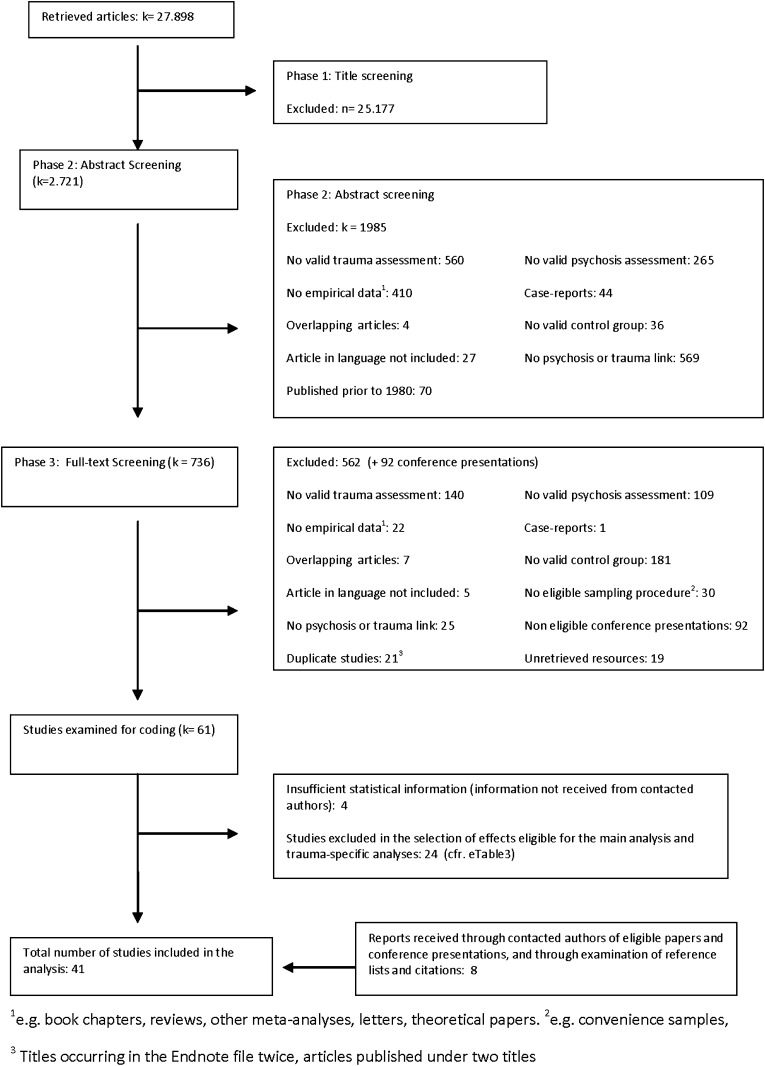
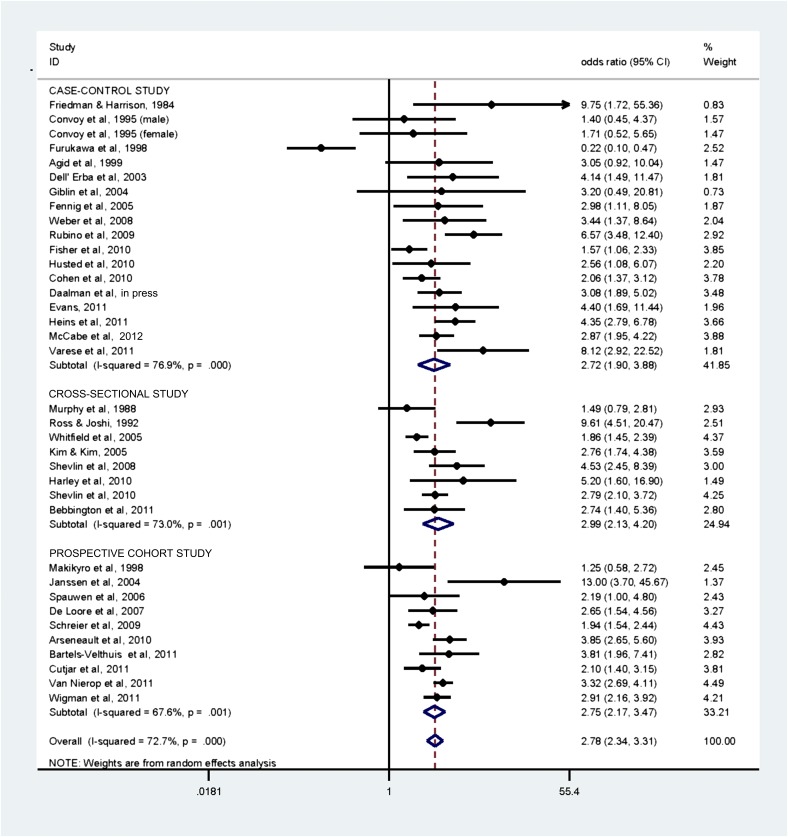
Evidence suggests that adverse experiences in childhood are associated with psychosis. To examine the association between childhood adversity and trauma (sexual abuse, physical abuse, emotional/psychological abuse, neglect, parental death, and bullying) and psychosis outcome, MEDLINE, EMBASE, PsychINFO, and Web of Science were searched from January 1980 through November 2011. We included prospective cohort studies, large-scale cross-sectional studies investigating the association between childhood adversity and psychotic symptoms or illness, case-control studies comparing the prevalence of adverse events between psychotic patients and controls using dichotomous or continuous measures, and case-control studies comparing the prevalence of psychotic symptoms between exposed and nonexposed subjects using dichotomous or continuous measures of adversity and psychosis. The analysis included 18 case-control studies (n = 2048 psychotic patients and 1856 nonpsychiatric controls), 10 prospective and quasi-prospective studies (n = 41,803) and 8 population-based cross-sectional studies (n = 35,546). There were significant associations between adversity and psychosis across all research designs, with an overall effect of OR = 2.78 (95% CI = 2.34-3.31). The integration of the case-control studies indicated that patients with psychosis were 2.72 times more likely to have been exposed to childhood adversity than controls (95% CI = 1.90-3.88). The association between childhood adversity and psychosis was also significant in population-based cross-sectional studies (OR = 2.99 [95% CI = 2.12-4.20]) as well as in prospective and quasi-prospective studies (OR = 2.75 [95% CI = 2.17-3.47]). The estimated population attributable risk was 33% (16%-47%). These findings indicate that childhood adversity is strongly associated with increased risk for psychosis.
Overview
The claims and statistics of this paper haven’t been checked yet.
Free: it reads the open-access text and checks the first 5 claims that cite a source we can check. Create a free account to check every claim.
Integrity signals
Registry
Cites
Statistics
Figures
Verification
Claims the paper makes
The claims and statistics of this paper haven’t been checked yet.
Free: it reads the open-access text and checks the first 5 claims that cite a source we can check. Create a free account to check every claim.
Claims other papers make about this one
Each is checked against this paper’s own text: does it say what the citing paper says it does?
The source backs part of the claim, not all of it — or backs it for a different population, condition or comparison.
In the citing paper
“by study design on obesity and psychosis,7,9”
From Long-term outcomes of childhood sexual abuse: an umbrella review (2019) · cites this paper as [7]
Experimental — accuracy not yet measuredThe source backs part of the claim, not all of it — or backs it for a different population, condition or comparison.
In the citing paper
“A recent meta-ana lysis calculated a population attributable risk of 33%, meaning that if the six types of child adversity studied were to disappear, a third of new psychosis cases would be avoided [13] .”
From The traumagenic neurodevelopmental model of psychosis revisited (2014) · cites this paper as [13]
Experimental — accuracy not yet measuredThe source backs part of the claim, not all of it — or backs it for a different population, condition or comparison.
In the citing paper
“and experiencing physical or sexual abuse (112).”
From Aberrant Salience, Information Processing, and Dopaminergic Signaling in People at Clinical High Risk for Psychosis (2020) · cites this paper as [112]
Experimental — accuracy not yet measuredThe cited source says what the claim attributes to it.
In the citing paper
“Recent studies indicate this is not an evidence-based belief [12,13,167] .”
From The traumagenic neurodevelopmental model of psychosis revisited (2014) · cites this paper as [13]
The cited source says what the claim attributes to it.
In the citing paper
“Furthermore, numerous studies and reviews note that the relationship between child abuse and psychosis remains after controlling for family history of psychosis [9-13,17] .”
From The traumagenic neurodevelopmental model of psychosis revisited (2014) · cites this paper as [13]
8 more claims about this paper
Create a free account to see every claim other papers make about this one.
Self-check
Percentages, sums and reported differences re-computed from the paper’s own numbers.
The self-check needs the paper’s full text.
Citations
Cites
Measuring inconsistency in meta-analyses
Higgins, J. P. T., Thompson, S. G., Deeks, J. J., & Altman, D. G. (2003) · BMJ · doi:10.1136/bmj.327.7414.557 · Cited by 63,139 · cited 1×
“Heterogeneity analyses were carried out using the Q and I(2) statistics to examine and quantify the amount of observed variance accounted for by true heterogeneity rather than sampling error.(57) Meta-regression analysis was subsequently used to determine whether (1) differences in study design and (2) inclusion of ad…”
MethodBias in meta-analysis detected by a simple, graphical test
Egger, M., Smith, G. D., Schneider, M., & Minder, C. (1997) · BMJ · doi:10.1136/bmj.315.7109.629 · Cited by 56,722
Meta-analysis of Observational Studies in Epidemiology<SUBTITLE>A Proposal for Reporting</SUBTITLE>
Stroup, D. F. (2000) · JAMA · doi:10.1001/jama.283.15.2008 · Cited by 20,623
Borenstein, M., Hedges, L. V., Higgins, J. P. T., & Rothstein, H. R. (2009) · doi:10.1002/9780470743386 · Cited by 14,225
Borenstein, M., Hedges, L. V., Higgins, J. P. T., & Rothstein, H. R. (2021) · doi:10.1002/9781119558378 · Cited by 9,799
The Handbook of Research Synthesis and Meta-Analysis
(2019) · doi:10.7758/9781610448864 · Cited by 4,553
Zhang, J., & Yu, K. F. (1998) · JAMA · doi:10.1001/jama.280.19.1690 · Cited by 4,138 · cited 1×
“Risk ratios were treated as ORs without further adjustment as the incidence of psychosis in the studied populations was low (ie, <10%).(56)”
MethodA Nonparametric “Trim and Fill” Method of Accounting for Publication Bias in Meta-Analysis
Duval, S., & Tweedie, R. (2000) · Journal of the American Statistical Association · doi:10.1080/01621459.2000.10473905 · Cited by 2,955
Validity of adult retrospective reports of adverse childhood experiences: review of the evidence
Hardt, J., & Rutter, M. (2004) · Journal of Child Psychology and Psychiatry · doi:10.1111/j.1469-7610.2004.00218.x · Cited by 2,827
Childhood adversities and adult psychopathology in the WHO World Mental Health Surveys
Kessler, R. C., McLaughlin, K. A., Green, J. G., Gruber, M. J., Sampson, N. A., Zaslavsky, A. M., Aguilar-Gaxiola, S., Alhamzawi, A. O., Alonso, J., Angermeyer, M., et al. (2010) · British Journal of Psychiatry · doi:10.1192/bjp.bp.110.080499 · Cited by 2,640 · cited 1×
“Adverse childhood events including trauma is a common experience worldwide, with some estimates suggesting that about a third of the general population may be affected.(1) Evidence suggests that its effects in adulthood may include a range of negative social outcomes, including higher criminality,(2) a lower education…”
Background
Research works printed but not linked: 12
- 15. Dell'Erba G, Venturi P, Tallarico V. Childhood stressful experiences in familial and sporadic schizophrenic patients [Italian] Italian J Psychopathol. 2003;9:32–39.
- 25. Evans G. Trauma and psychosis: investigating dissociation and self-concept clarity [Unpublished doctoral dissertation] University of Liverpool, UK; 2011
- 60. Schreier A, Wolke D, Thomas K, et al. Prospective study of peer victimization in childhood and psychotic symptoms in a nonclinical population at age 12 years. Arch Gen Psychiatry. 2009;66:527–536. doi: 10.1001/archgenpsychiatry.2009.23. · DOI · Paper page
- 63. Janssen I, Krabbendam L, Bak M, et al. Childhood abuse as a risk factor for psychotic experiences. Acta Psychiatr Scand. 2004;109:38–45. doi: 10.1046/j.0001-690x.2003.00217.x. · DOI · Paper page
- 64. Spauwen J, Krabbendam L, Lieb R, Wittchen H-U, van Os J. Impact of psychological trauma on the development of psychotic symptoms: relationship with psychosis proneness. Br J Psychiatry. 2006;188:527–533. doi: 10.1192/bjp.bp.105.011346. · DOI · Paper page
- 65. Nishida A, Tanii H, Nishimura Y, et al. Associations between psychotic-like experiences and mental health status and other psychopathologies among Japanese early teens. Schizophr Res. 2008;99:125–133. doi: 10.1016/j.schres.2007.11.038. · DOI
- 66. Shevlin M, Houston JE, Dorahy MJ, Adamson G. Cumulative traumas and psychosis: an analysis of the National Comorbidity Survey and the British Psychiatric Morbidity Survey. Schizophr Bull. 2008;34:193–199. doi: 10.1093/schbul/sbm069. · DOI · Paper page
- 67. Arseneault L, Cannon M, Fisher HL, et al. Psychotic symptoms: a genetically sensitive longitudinal cohort study. Am J Psychiatry. 2010;168:65–72. doi: 10.1176/appi.ajp.2010.10040567. · DOI · Paper page
- 69. De Loore E, Drukker M, Gunther N, et al. Childhood negative experiences and subclinical psychosis in adolescence: a longitudinal general population study. Early Interv Psychiatry. 2007;1:201–207. · DOI · Paper page
- 70. Whitfield CL, Dube SR, Felitti VJ, Anda RF. Adverse childhood experiences and hallucinations. Child Abuse & Neglect. 2005;29:797–810. doi: 10.1016/j.chiabu.2005.01.004. · DOI · Paper page
- 72. Houston JE, Murphy J, Adamson G, Stringer M, Shevlin M. Childhood sexual abuse, early cannabis use, and psychosis: testing an interaction model based on the National Comorbidity Survey. Schizophr Bull. 2008;34:580–585. doi: 10.1093/schbul/sbm127. · DOI · Paper page
- 73. Husted JA, Ahmed R, Chow EWC, Brzustowicz LM, Bassett AS. Childhood trauma and genetic factors in familial schizophrenia associated with the NOS1AP gene. Schizophr Res. 2010;121:187–192. doi: 10.1016/j.schres.2010.05.021. · DOI
Cited by
Items 301–400 of 1,008
Abajobir, A. A., Kisely, S., Scott, J. G., Williams, G., Clavarino, A., Strathearn, L., & Najman, J. M. (2017) · Schizophrenia Bulletin · doi:10.1093/schbul/sbw175 · Cited by 65
“The responses were recorded on 3 Likert scales: (1) not true, (2) somewhat or sometimes true, and (3) very or very often true.”
BackgroundMethodPignon, B., Schürhoff, F., Szöke, A., Geoffroy, P. A., Jardri, R., Roelandt, J.-L., Rolland, B., Thomas, P., Vaïva, G., & Amad, A. (2017) · Schizophrenia Research · doi:10.1016/j.schres.2017.06.053 · Cited by 72
“Fourth, other key factors that may affect psychotic symptoms and psychiatric disorders risks, such as urbanicity (van Os et al., 2001) or childhood trauma (Varese et al., 2012), could not be assessed and taken into account.”
BackgroundPathways Associating Childhood Trauma to the Neurobiology of Schizophrenia.
Ruby, E., Polito, S., McMahon, K. L., Gorovitz, M., Corcoran, C. M., & Malaspina, D. (2014) · PubMed · Cited by 88
Gumley, A. I., Schwannauer, M., Macbeth, A., Fisher, R., Clark, S., Rattrie, L., Fraser, G., McCabe, R., Blair, A., Davidson, K., et al. (2014) · British Journal of Psychiatry · doi:10.1192/bjp.bp.113.126722 · Cited by 63
Childhood Sexual Abuse and Indicators of Immune Activity: A Systematic Review
D'Elia, A. T., Matsuzaka, C. T., Neto, J. B. B., Mello, M. F., Juruena, M. F., & Mello, A. F. (2018) · Frontiers in Psychiatry · doi:10.3389/fpsyt.2018.00354 · Cited by 75
Ning, J., Zhang, Y., Hu, H., Hu, W., Li, L., Pang, Y., Ma, S., Niu, Y., & Zhang, R. (2021) · The Science of The Total Environment · doi:10.1016/j.scitotenv.2021.146855 · Cited by 68
Psychosis‐inducing effects of cannabis are related to both childhood abuse and COMT genotypes
Alemany, S., Arias, B., Fatjó‐Vilas, M., Villa, H., Moya, J., Ibáñez, M. I., Ortet, G., Gastó, C., & Fañanás, L. (2014) · Acta Psychiatrica Scandinavica · doi:10.1111/acps.12108 · Cited by 64
Characterizing white matter changes in chronic schizophrenia: A free-water imaging multi-site study
Oestreich, L., Lyall, A. E., Pasternak, O., Kikinis, Z., Newell, D. T., Savadjiev, P., Bouix, S., Shenton, M. E., Kubicki, M. R., Whitford, T. J., et al. (2017) · Schizophrenia Research · doi:10.1016/j.schres.2017.02.006 · Cited by 68
“…A uthor M anuscript A uthor M anuscript A uthor M anuscript drugs) and childhood adversity in patients with schizophrenia compared to healthy controls (de Leon & Diaz, 2005; Varese et al., 2012), both of which have been linked to white matter changes (Savjani et al., 2014; Hart and Rubia, 2012).”
BackgroundPearce, J., Simpson, J., Berry, K., Bucci, S., Moskowitz, A., & Varese, F. (2017) · Clinical Psychology & Psychotherapy · doi:10.1002/cpp.2100 · Cited by 64
Self-citationGibson, L. E., Reeves, L. E., Cooper, S., Olino, T. M., & Ellman, L. M. (2018) · Schizophrenia Research · doi:10.1016/j.schres.2018.02.005 · Cited by 69
Influence of early trauma on features of schizophrenia
Ruby, E., Rothman, K., Corcoran, C., Goetz, R. R., & Malaspina, D. (2017) · Early Intervention in Psychiatry · doi:10.1111/eip.12239 · Cited by 63
“This study suggests a role for ET in the development of positive psychotic symptoms in schizophrenia cases with treatment refractory positive symptoms, which is consistent with other findings supporting the relevance of ET for psychosis.(3,5,6) TABLE 4.”
Association Between Parental Income During Childhood and Risk of Schizophrenia Later in Life
Hakulinen, C. A., Webb, R. T., Pedersen, C. B., Agerbo, E., & Mok, P. L. H. (2019) · JAMA Psychiatry · doi:10.1001/jamapsychiatry.2019.2299 · Cited by 84
Vila‐Badia, R., Butjosa, A., Cacho, N. D., Serra‐Arumí, C., Esteban‐Sanjusto, M., Ochoa, S., & Usall, J. (2021) · Schizophrenia Research · doi:10.1016/j.schres.2020.11.047 · Cited by 72
Gevonden, M., Booij, J., van den Brink, W., Heijtel, D., van Os, J., & Selten, J.-P. (2014) · JAMA Psychiatry · doi:10.1001/jamapsychiatry.2014.1325 · Cited by 62
Valmaggia, L., Day, F., & Rus‐Calafell, M. (2016) · Social Psychiatry and Psychiatric Epidemiology · doi:10.1007/s00127-016-1245-0 · Cited by 80
Gawęda, Ł., Prochwicz, K., Adamczyk, P., Frydecka, D., Misiak, B., Kotowicz, K., Szczepanowski, R., Florkowski, M., & Nelson, B. (2017) · Schizophrenia Research · doi:10.1016/j.schres.2017.07.023 · Cited by 74
“Accumulating evidence points to a significant role of traumatic life events in contributing to the risk of psychosis (for meta-analyses see: Bonoldi et al., 2013; Kraan et al., 2015; Varese et al., 2012).”
BackgroundWorsley, J. D., McIntyre, J. C., & Corcoran, R. (2018) · Emotional and Behavioural Difficulties · doi:10.1080/13632752.2018.1530497 · Cited by 86
“People who are bullied suffer from a range of psychological, behavioural, and physical consequences, including increased risk of depression, psychosis, headaches, stomach aches, and suiciderelated behaviours (Gini and Pozzoli 2013; Varese et al. 2012; Copeland et al. 2013).”
BackgroundChildhood adversity and social functioning in psychosis: Exploring clinical and cognitive mediators
Palmier‐Claus, J. E., Berry, K., Darrell-Berry, H., Emsley, R., Parker, S., Drake, R., & Bucci, S. (2016) · Psychiatry Research · doi:10.1016/j.psychres.2016.02.004 · Cited by 76
Peh, O. H., Rapisarda, A., & Lee, J. (2019) · Psychological Medicine · doi:10.1017/s003329171800394x · Cited by 61
“Patients with psychosis were 2.38–3.40 more likely to have been exposed to sexual abuse, physical abuse, emotional abuse, bullying or neglect than controls (Varese et al., 2012).”
BackgroundInfluentialDopaminergic system and neurons: Role in multiple neurological diseases
Chen, H., Li, J., Huang, Z., Fan, X., Wang, X., Chen, X., Guo, H., Liu, H., Li, S., Yu, S., et al. (2024) · Neuropharmacology · doi:10.1016/j.neuropharm.2024.110133 · Cited by 71
Childhood Trauma and Psychosis
Dvir, Y., Denietolis, B., & Frazier, J. A. (2013) · Child and Adolescent Psychiatric Clinics of North America · doi:10.1016/j.chc.2013.04.006 · Cited by 73
“72 times more likely to have been exposed to childhood adversity than controls.(6)”
BackgroundCumulative Effects of Stressful Childhood Experiences on Delusions and Hallucinations
Muenzenmaier, K. H., Seixas, A. A., Schneeberger, A. R., Castille, D. M., Battaglia, J., & Link, B. G. (2015) · Journal of Trauma & Dissociation · doi:10.1080/15299732.2015.1018475 · Cited by 60
Lincoln, T. M., Marín, N. M., & Jaya, E. S. (2017) · European Psychiatry · doi:10.1016/j.eurpsy.2016.12.010 · Cited by 69
“24 25 26 27 28 29 30 31 32 The risk of psychosis is almost threefold for people with a background of childhood trauma (CT) [1].”
Cognitive Attachment Model of Voices: Evidence Base and Future Implications
Berry, K., Varese, F., & Bucci, S. (2017) · Frontiers in Psychiatry · doi:10.3389/fpsyt.2017.00111 · Cited by 75
“(46) argue that this may reflect a possible “two-hit” model, in which dissociation triggers voices in those vulnerable to reality discrimination (or source monitoring) difficulties.”
BackgroundResultInfluentialSelf-citationCattane, N., Mora, C., Lopizzo, N., Borsini, A., Maj, C., Pedrini, L., Rossi, R., Riva, M. A., Pariante, C. M., & Cattaneo, A. (2019) · Schizophrenia Research · doi:10.1016/j.schres.2018.07.030 · Cited by 59
“Moreover, several meta-analyses have provided robust evidence for an association between childhood trauma and SZ (Matheson et al., 2013; Varese et al., 2012).”
BackgroundInfluentialAlameda, L., Fournier, M., Khadimallah, I., Griffa, A., Cleusix, M., Jenni, R., Ferrari, C., Klauser, P., Baumann, P. S., Cuenod, M., et al. (2018) · Proceedings of the National Academy of Sciences · doi:10.1073/pnas.1812821115 · Cited by 59
“CT increases vulnerability to a broad number of medical and major psychiatric conditions (2), including psychosis, where CT is now recognized as a major risk factor (3).”
BackgroundCancel, A., Dallel, S., Zine, A., El‐Hage, W., & Fakra, É. (2019) · Neuroscience & Biobehavioral Reviews · doi:10.1016/j.neubiorev.2019.05.024 · Cited by 68
Hennessy, B., Hunter, A., & Grealish, A. (2023) · Journal of Psychiatric and Mental Health Nursing · doi:10.1111/jpm.12889 · Cited by 61
Laurens, K. R., & Cullen, A. E. (2016) · Social Psychiatry and Psychiatric Epidemiology · doi:10.1007/s00127-015-1151-x · Cited by 59
“major life events, childhood trauma, and milder daily hassles), which have been shown to contribute to the development and maintenance of psychosis in retrospective and prospective studies [31–33], FHx and ASz children aged 11–14 years reported greater exposure to negative life events and daily hassles, respectively,…”
BackgroundMigration history and risk of psychosis: results from the multinational EU-GEI study
Tarricone, I., D’Andrea, G., Jongsma, H. E., Tosato, S., Gayer-Anderson, C. E., Stilo, S. A., Suprani, F., Iyegbe, C. O., van der Ven, E., Quattrone, D., et al. (2021) · Psychological Medicine · doi:10.1017/s003329172000495x · Cited by 78
“…Trotman, Holtzman, Compton, & Walker, 2010; Frissen, Lieverse, Marcelis, Drukker, & Delespaul, 2015; Ochoa, Usall, Cobo, Labad, & Kulkarni, 2012; Varese et al., 2012): sex, country, educational attainment (0 = higher, 1 college/vocational; 2 = school qualification/tertiary; 3 = no school…”
Abate, B. B., Sendekie, A. K., Faris, A. M., Abebe, G. K., Azmeraw, M., Alamaw, A. W., Zemariam, A. B., Kitaw, T. A., Kassaw, A., Wodaynew, T., et al. (2024) · Neuropsychobiology · doi:10.1159/000542392 · Cited by 75
“Ayano G et al 2023 [47] Trevillion K et al 2012 [2] Australia Trevillion K et al 2012 [2] Lindert J et al 2014 [45] Subtotal (I-squared = 97.7%, p = 0.000) Agnew-Blais J et al 2016 [53] Ireland Brazil Varese F et al 2012 [50] Trevillion K et al 2012 [2] Lindert J et al 2014 [45] Norman RE et al…”
InfluentialIntimate partner violence, sexual abuse, and the mediating role of loneliness on psychosis
Boyda, D., McFeeters, D., & Shevlin, M. (2015) · Psychosis · doi:10.1080/17522439.2014.917433 · Cited by 59
“This is surprising given that existing literature has found that personally traumatic events can influence psychotic symptoms (Schafer & Fisher, 2011; Shevlin et al., 2013; Varese et al., 2012).”
BackgroundChildhood trauma, psychosis liability and social stress reactivity: a virtual reality study
Veling, W., Counotte, J., Pot-Kolder, R., van Os, J., & van der Gaag, M. (2016) · Psychological Medicine · doi:10.1017/s0033291716002208 · Cited by 59
“Childhood trauma can have negative long-term consequences for mental health later in life, including an increased risk for psychotic disorders (Varese et al. 2012).”
BackgroundA network analysis of post-traumatic stress and psychosis symptoms
Hardy, A., O’Driscoll, C., Steel, C., van der Gaag, M., & van den Berg, D. P. G. (2020) · Psychological Medicine · doi:10.1017/s0033291720001300 · Cited by 73
“Trauma is 3ypothesized to play a causal role in the occurrence and phenomenology of psychosis for a subgroup of people (Bebbington, 2015; Okkels et al., 2017; Varese et al., 2012).”
BackgroundKarcher, N. R., Niendam, T. A., & Barch, D. M. (2020) · Schizophrenia Research · doi:10.1016/j.schres.2020.05.045 · Cited by 65
Association between Childhood Maltreatment and Suicidal Ideation: A Path Analysis Study
Berardelli, I., Sarubbi, S., Rogante, E., Erbuto, D., Giuliani, C., Lamis, D. A., Innamorati, M., & Pompili, M. (2022) · Journal of Clinical Medicine · doi:10.3390/jcm11082179 · Cited by 69
“Risky sexual behavior and drug and/or alcohol addiction may also be present [6,7].”
BackgroundGeorgiades, A., Almuqrin, A., Rubinic, P., Mouhitzadeh, K., Tognin, S., & Mechelli, A. (2023) · Schizophrenia · doi:10.1038/s41537-023-00362-z · Cited by 58
Social Judgement in Borderline Personality Disorder
Nicol, K., Pope, M., Sprengelmeyer, R., Young, A. W., & Hall, J. (2013) · PLoS ONE · doi:10.1371/journal.pone.0073440 · Cited by 70
“Furthermore, studies of both bipolar disorder and schizophrenia have reported correlations between childhood experience and common symptoms of these disorders [32-34].”
BackgroundWigman, J. T. W., van Os, J., Abidi, L., Huibers, M. J. H., Roelofs, J., Arntz, A., Kelleher, I., & Peeters, F. P. M. L. (2014) · Psychological Medicine · doi:10.1017/s0033291713000871 · Cited by 58
“A final limitation is that the current study did not investigate the potential impact of other factors associated with the course of both psychosis and depression, such as trauma (Kessler et al. 2010; Varese et al. 2012) or cannabis use (Degenhardt et al. 2003; Semple et al. 2005).”
BackgroundPsychoanalysis in modern mental health practice
Yakeley, J. (2018) · The Lancet Psychiatry · doi:10.1016/s2215-0366(18)30052-x · Cited by 62
Assche, L. V., de Ven, L. V., Vandenbulcke, M., & Luyten, P. (2019) · Aging & Mental Health · doi:10.1080/13607863.2019.1571017 · Cited by 81
“However, because of the small sample size, we were not able to conduct analyses for men and women separately, although gender has often been shown to play an important role in research on the impact of childhood trauma (Varese et al., 2012).”
BackgroundAccepting and Working with Voices: The Maastricht Approach
Corstens, D., Escher, S., & Romme, M. (2008) · Psychosis, Trauma and Dissociation · doi:10.1002/9780470699652.ch23 · Cited by 57
Davidsen, K. A., Harder, S. K., MacBeth, A. M., Lundy, J.-M., & Gumley, A. I. (2015) · Social Psychiatry and Psychiatric Epidemiology · doi:10.1007/s00127-015-1127-x · Cited by 68
“Childhood adversity and trauma are linked to increased risk of psychosis [14], with emerging evidence for the role of stress sensitivity as an underlying biological substrate [15].”
BackgroundPearce, J., Murray, C., & Larkin, W. (2019) · Heliyon · doi:10.1016/j.heliyon.2019.e01900 · Cited by 56
“…that in the absence of childhood adversity there would be a 22.9% reduction in mood difficulties, 31% reduction of anxiety, 41.6% reduction of behavioural difficulties, 27.5% reduction of substancerelated difficulties (Kessler et al., 2010) and a 33% reduction in psychosis (Varese et al., 2012).”
BackgroundInfluentialPruessner, M., Lepage, M., Collins, D. L., Pruessner, J. C., Joober, R., & Malla, A. K. (2015) · NeuroImage: Clinical · doi:10.1016/j.nicl.2014.12.001 · Cited by 57
Yung, A. R., Cotter, J., Wood, S. J., McGorry, P., Thompson, A. D., Nelson, B., & Lin, A. (2015) · Psychological Medicine · doi:10.1017/s003329171500135x · Cited by 57
“…functioning Childhood maltreatment is associated with risk for a range of psychotic and non-psychotic disorders (Janssen et al. 2004; Ball & Links, 2009; Chen et al. 2010; Thompson et al. 2010; Varese et al. 2012) and is associated with poor functioning regardless of diagnosis (Cotter et al. 2015).”
BackgroundGayer-Anderson, C., Fisher, H. L., Fearon, P., Hutchinson, G., Morgan, K., Dazzan, P., Boydell, J., Doody, G. A., Jones, P. B., Murray, R. M., et al. (2015) · Social Psychiatry and Psychiatric Epidemiology · doi:10.1007/s00127-015-1058-6 · Cited by 57
“There is now strong evidence of increased risk of psychosis in those who have been exposed to severe adverse events in childhood, such as physical abuse, sexual abuse, psychological abuse, and bullying (see [1] for a meta-analysis of existing studies).”
BackgroundSchizophrenia and Suicide Attempts: Findings from a Representative Community-Based Canadian Sample
Fuller‐Thomson, E., & Hollister, B. (2016) · Schizophrenia Research and Treatment · doi:10.1155/2016/3165243 · Cited by 76
Salokangas, R. K. R., Schultze‐Lutter, F., Patterson, P. H., von Reventlow, H. G., Heinimaa, M., From, T., Luutonen, S. H., Hankala, J., Kotimäki, M., & Tuominen, L. J. (2016) · European Journal of Psychotraumatology · doi:10.3402/ejpt.v7.30062 · Cited by 74
“…dissociative symptoms, substance abuse, suicidal behaviour, and psychosis (Briere, Hodges, & Godbout, 2010; Draijer & Langland, 1999; Ferguson & Dacey, 1997; Pine & Cohen, 2002; Salzman et al., 1993; Soloff, Lynch, & Kelly, 2002; Triffleman, Marmar, Delucchi, & Ronfeldt, 1995; Varese et al., 2012).”
BackgroundChildhood adversity and clinical and psychosocial outcomes in psychosis
Turner, S. E., Harvey, C. A., Hayes, L., Castle, D. J., Galletly, C. A., Sweeney, S., Shah, S., Keogh, L. A., & Spittal, M. J. (2019) · Epidemiology and Psychiatric Sciences · doi:10.1017/s2045796019000684 · Cited by 75
“These qualitative responses were coded into two main categories: sexual abuse and other types of abuse (defined as physical abuse, emotional abuse, neglect and other forms of abuse), based on Australian guidelines (Australian Institute of Health and Welfare, 2012).”
InfluentialLiu, M., Mejía-Lancheros, C., Lachaud, J., Nisenbaum, R. A., Stergiopoulos, V., & Hwang, S. W. (2020) · American Journal of Preventive Medicine · doi:10.1016/j.amepre.2019.12.017 · Cited by 65
Bordon, N., O'Rourke, S., & Hutton, P. (2017) · Schizophrenia Research · doi:10.1016/j.schres.2017.01.014 · Cited by 56
“This theory helps to account for the wellestablished findings that childhood adversity (Varese et al., 2012), migration, urbanicity and discrimination (Selten et al.”
Cancel, A., Comte, M., Truillet, R., Boukezzi, S., Rousseau, P. ‐., Zendjidjian, X. Y., Sage, T., Lazerges, P. ‐., Guedj, E., Khalfa, S., et al. (2015) · Acta Psychiatrica Scandinavica · doi:10.1111/acps.12455 · Cited by 56
For Genetic Risk and Outcome in Psychosis (GROUP), van Dam, D. S., Korver‐Nieberg, N., Velthorst, E., Meijer, C. J., & de Haan, L. (2014) · Social Psychiatry and Psychiatric Epidemiology · doi:10.1007/s00127-014-0894-0 · Cited by 73
“It may be that patients not only report ChM more frequently [1, 3], but also experience more severe or more repetitive forms of ChM.”
BackgroundResultGenes and environments in schizophrenia: The different pieces of a manifold puzzle
Réthelyi, J., Benkovits, J., & Bitter, I. (2013) · Neuroscience & Biobehavioral Reviews · doi:10.1016/j.neubiorev.2013.04.010 · Cited by 67
Childhood trauma and clinical outcome in patients at ultra-high risk of transition to psychosis
Kraan, T. C., van Dam, D. S., Velthorst, E., de Ruigh, E. L., Nieman, D. H., Durston, S., Schothorst, P. F., van der Gaag, M., & de Haan, L. (2015) · Schizophrenia Research · doi:10.1016/j.schres.2015.10.030 · Cited by 70
“The relationship between childhood trauma and psychosis is now well established (Varese et al., 2012) and studies on this association have broadened to the ultra-high risk (UHR) phase (Addington et al., 2013; Bechdolf et al., 2010; Thompson et al., 2010; Thompson et al., 2014; Tikka et al., 2013).”
Ranning, A., Laursen, T. M., Thorup, A. A. E., Hjorthøj, C. R., & Nordentoft, M. (2016) · Journal of the American Academy of Child & Adolescent Psychiatry · doi:10.1016/j.jaac.2016.07.776 · Cited by 67
Hodgins, S. (2017) · Schizophrenia Bulletin · doi:10.1093/schbul/sbx079 · Cited by 66
Adverse childhood experiences and HPA axis function in pregnant women
Thomas, J. C., Magel, C. A., Tomfohr‐Madsen, L. M., Madigan, S. L., Letourneau, N. L., Campbell, T. S., & Giesbrecht, G. F. (2018) · Hormones and Behavior · doi:10.1016/j.yhbeh.2018.04.004 · Cited by 59
Can epigenetics shine a light on the biological pathways underlying major mental disorders?
Alameda, L., Trotta, G., Quigley, H., Rodriguez, V., Gadelrab, R., Dwir, D., Dempster, E., Wong, C. C. Y., & Forti, M. D. (2022) · Psychological Medicine · doi:10.1017/s0033291721005559 · Cited by 60
“Thirdly, we will explore if the existing findings from studies on DNAm changes associated with CA and CU, two of the environmental exposures most consistently associated with psychiatric disorders (Lindert et al., 2014; Mandelli, Petrelli, & Serretti, 2015; Marconi, Di Forti, Lewis, Murray, & Vassos, 2016; Sideli, Qui…”
BackgroundTrotta, A., Murray, R. M., David, A. S., Kolliakou, A., O’Connor, J. A., Forti, M. D., Dazzan, P., Mondelli, V., Morgan, C., & Fisher, H. L. (2015) · Schizophrenia Bulletin · doi:10.1093/schbul/sbv131 · Cited by 63
Sun, M., Zhang, W., Guo, R., Hu, A., Li, Y., Mwansisya, T. E., Zhou, L., Liu, C., Chen, X., Tao, H., et al. (2017) · Psychiatry Research · doi:10.1016/j.psychres.2017.03.059 · Cited by 56
van Nierop, M. M., Lecei, A., Myin‐Germeys, I., Collip, D., Viechtbauer, W., Jacobs, N., Derom, C. A., Thiery, E. W., van Os, J., & van Winkel, R. (2017) · Psychiatry Research · doi:10.1016/j.psychres.2017.12.012 · Cited by 68
“, 2014), and psychosis (Varese et al., 2012), have been well documented.”
BackgroundSelf-citationMansueto, G., Schruers, K. R. J., Cosci, F., van Os, J., Alizadeh, B. Z., Bartels‐Velthuis, A. A., van Beveren, N. J. M., Bruggeman, R., Cahn, W., de Haan, L., et al. (2018) · Schizophrenia Research · doi:10.1016/j.schres.2018.11.028 · Cited by 66
Are adult stressful life events associated with psychotic relapse? A systematic review of 23 studies
Martland, N., Martland, R., Cullen, A. E., & Bhattacharyya, S. (2020) · Psychological Medicine · doi:10.1017/s0033291720003554 · Cited by 66
Identification of transdiagnostic psychiatric disorder subtypes using unsupervised learning
Pelin, H., Ising, M., Stein, F., Meinert, S., Meller, T., Brosch, K., Winter, N. R., Krug, A., Leenings, R., Lemke, H., et al. (2021) · Neuropsychopharmacology · doi:10.1038/s41386-021-01051-0 · Cited by 71
Liu, H., Li, T. W., Liang, L., & Hou, W. K. (2021) · Clinical Psychology Review · doi:10.1016/j.cpr.2021.102069 · Cited by 81
Li, X., Li, Q., Liu, J., Zhang, L., Tang, Y., & Wang, C. (2015) · Psychiatry Research · doi:10.1016/j.psychres.2015.06.001 · Cited by 58
“A meta-analysis of controlled prospective and cross-sectional cohort studies indicated that childhood trauma increases the risk of psychosis (Varese et al., 2012).”
BackgroundBendall, S., Hulbert, C. A., Álvarez‐Jiménez, M., Allott, K., McGorry, P. D., & Jackson, H. J. (2013) · The Journal of Nervous and Mental Disease · doi:10.1097/nmd.0000000000000033 · Cited by 65
“…the association between childhood trauma (CT) and com-mon mental disorders has been long established (Spataro et al., 2004), there is increasing evidence that traumatic experiences in childhood are also a risk factor of psychosis (Bendall et al., 2008; Cutajar et al., 2010; Varese et al., 2012b).”
BackgroundPaolini, E., Moretti, P., & Compton, M. T. (2016) · Psychiatry Research · doi:10.1016/j.psychres.2016.06.002 · Cited by 54
“Then, we found a widespread relationship between childhood adversities and delusional themes, in line with a recent meta-analysis reporting an association with an increased risk of psychosis associated with a wide range of adverse childhood experiences (Matheson et al., 2013; Varese et al., 2012).”
ResultClozapine and GABA transmission in schizophrenia disease models
O'Connor, W. T., & O’Shea, S. D. (2015) · Pharmacology & Therapeutics · doi:10.1016/j.pharmthera.2015.01.005 · Cited by 64
Perona-Garcelán, S., García-Montes, J. M., Rodríguez-Testal, J. F., López-Jiménez, A. M., Ruiz-Veguilla, M., Ductor-Recuerda, M. J., Benítez-Hernández, M. D. M., Arias-Velarde, M. Á., Gómez-Gómez, M. T., & Pérez-Álvarez, M. (2014) · Journal of Trauma & Dissociation · doi:10.1080/15299732.2013.821433 · Cited by 53
Barnhart, S., Garcia, A. R., & Karcher, N. R. (2022) · Journal of Youth and Adolescence · doi:10.1007/s10964-022-01671-9 · Cited by 67
“Dose-response relationships between ACEs and adverse psychosocial and health outcomes have been well-documented over the past 20 years (Anda et al., 2006; Varese et al., 2012; Young and Widom, 2014).”
BackgroundSheffield, J. M., Kandala, S., Burgess, G. C., Harms, M. P., & Barch, D. M. (2016) · Biological Psychiatry Cognitive Neuroscience and Neuroimaging · doi:10.1016/j.bpsc.2016.03.009 · Cited by 63
Gawęda, Ł., Pionke‐Ubych, R., Krężołek, M., Prochwicz, K., Kłosowska, J., Frydecka, D., Misiak, B., Kotowicz, K., Samochowiec, A., Mak, M., et al. (2017) · Psychiatry Research · doi:10.1016/j.psychres.2017.11.009 · Cited by 66
“More recently, particular interest has been given to the role of traumatic life events (see reviews: Read et al., 2005; Varese et al., 2012b; Bonoldi et al., 2013; Kraan et al., 2015; Misiak et al., 2017).”
Ranning, A., Laursen, T. M., Agerbo, E., Thorup, A. A. E., Hjorthøj, C. R., Jepsen, J. R. M., & Nordentoft, M. (2017) · Psychological Medicine · doi:10.1017/s0033291717003518 · Cited by 61
Trauma and the content of hallucinations and post‐traumatic intrusions in first‐episode psychosis
Peach, N., Alvarez‐Jimenez, M., Cropper, S. J., Sun, P., Halpin, E., O’Connell, J., & Bendall, S. (2021) · Psychology and Psychotherapy: Theory, Research and Practice · doi:10.1111/papt.12273 · Cited by 50
Morgan, C., Gayer-Anderson, C. E., Beards, S., Hubbard, K., Mondelli, V., Forti, M. D., Murray, R. M., Pariante, C. M., Dazzan, P., Craig, T., et al. (2020) · The British Journal of Psychiatry · doi:10.1192/bjp.2020.133 · Cited by 64
Gawęda, Ł., Göritz, A. S., & Moritz, S. (2019) · Schizophrenia Research · doi:10.1016/j.schres.2018.11.034 · Cited by 52
A Critical Assessment of the Equal-Environment Assumption of the Twin Method for Schizophrenia
Fosse, R., Joseph, J., & Richardson, K. (2015) · Frontiers in Psychiatry · doi:10.3389/fpsyt.2015.00062 · Cited by 60
Lin, B. D., Pries, L.-K., Sarac, H. S., van Os, J., Rutten, B. P. F., Luykx, J. J., & Gülöksüz, S. (2022) · JAMA Psychiatry · doi:10.1001/jamapsychiatry.2022.1655 · Cited by 51
de Bont, P. A., van den Berg, D. P., van der Vleugel, B. M., de Roos, C., Mulder, C. L., Becker, E. S., de Jongh, A., van der Gaag, M., & van Minnen, A. (2013) · Trials · doi:10.1186/1745-6215-14-151 · Cited by 52
Interplay Between Childhood Physical Abuse and Familial Risk in the Onset of Psychotic Disorders
Fisher, H. L., McGuffin, P., Boydell, J. E., Fearon, P., Craig, T., Dazzan, P., Morgan, K. D., Doody, G. A., Jones, P. B., Leff, J., et al. (2014) · Schizophrenia Bulletin · doi:10.1093/schbul/sbt201 · Cited by 62
Alameda, L., Golay, P., Baumann, P. S., Progin, P., Mebdouhi, N., Elowe, J., Ferrari, C., Do, K. Q., & Conus, P. (2017) · Schizophrenia Bulletin · doi:10.1093/schbul/sbw163 · Cited by 51
Dynamic expression of genes associated with schizophrenia and bipolar disorder across development
Clifton, N. E., Hannon, E. J., Harwood, J. C., Florio, A. D., Thomas, K. L., Holmans, P., Walters, J., O’Donovan, M. C., Owen, M. J., Pocklington, A. J., et al. (2019) · Translational Psychiatry · doi:10.1038/s41398-019-0405-x · Cited by 57
Bloomfield, M., Yusuf, F. N. I. B., Srinivasan, R., Kelleher, I., Bell, V., & Pitman, A. (2020) · The Lancet Psychiatry · doi:10.1016/s2215-0366(20)30041-9 · Cited by 72
Epigenetics and gene expression profile in first-episode psychosis: the role of childhood trauma
Tomassi, S., & Tosato, S. (2017) · Neuroscience & Biobehavioral Reviews · doi:10.1016/j.neubiorev.2017.10.018 · Cited by 51
“Childhood Trauma (CT), including physical and sexual abuse, neglect, parental loss and separation, is a well-documented risk factor for psychosis (Alvarez et al., 2011; Bonoldi et al., 2013; Varese et al., 2012), with an overall odds ratio ranged from 1.”
InfluentialCarhart-Harris, R. L., Wagner, A. C., Agrawal, M., Kettner, H., Rosenbaum, J. F., Gazzaley, A., Nutt, D. J., & Erritzoe, D. (2022) · Journal of Psychopharmacology · doi:10.1177/02698811211008567 · Cited by 51
“Relatedly, early life trauma (Varese et al., 2012) and mental illness (Copeland et al., 2009) are reliable predictors of future morbidity.”
BackgroundQuidé, Y., Tozzi, L., Corcoran, M., Cannon, D. M., & Dauvermann, M. R. (2020) · Neuropsychiatric Disease and Treatment · doi:10.2147/ndt.s285540 · Cited by 68
Varchmin, L., Montag, C., Treusch, Y., Kaminski, J. A., & Heinz, A. (2021) · Frontiers in Psychiatry · doi:10.3389/fpsyt.2021.665957 · Cited by 70
“(67)] covering the risk factors total childhood trauma, specific trauma types (sexual abuse, physical abuse, emotional abuse, neglect) and other childhood adversities as (bullying in childhood, parental death, and variations/impairments in parental communication).”
BackgroundInfluentialKraan, T. C., Velthorst, E., Themmen, M., Valmaggia, L., Kempton, M. J., McGuire, P., van Os, J., Rutten, B. P. F., Smit, F., de Haan, L., et al. (2018) · Schizophrenia Bulletin · doi:10.1093/schbul/sbw162 · Cited by 51
“In both clinical and population based studies, child maltreatment has been found to substantially increase psychosis risk [3, 4].”
BackgroundBeckett, P., Holmes, D., Phipps, M., Patton, D., & Molloy, L. (2017) · Journal of Psychosocial Nursing and Mental Health Services · doi:10.3928/02793695-20170818-03 · Cited by 63
Slotema, C. W., Blom, J. D., Niemantsverdriet, M. B. A., & Sommer, I. E. (2018) · Frontiers in Psychiatry · doi:10.3389/fpsyt.2018.00347 · Cited by 93
“These findings are similar to those for childhood abuse reported for psychotic disorders (61).”
ResultChildhood abuse and psychotic experiences in adulthood: findings from a 35-year longitudinal study
Bell, C., Foulds, J., Horwood, L. J., Mulder, R., & Boden, J. M. (2018) · The British Journal of Psychiatry · doi:10.1192/bjp.2018.264 · Cited by 68
Nettis, M. A., Pariante, C. M., & Mondelli, V. (2019) · Current topics in behavioral neurosciences · doi:10.1007/7854_2019_89 · Cited by 61
Childhood trauma and childhood urbanicity in relation to psychotic disorder
GROUP Investigators, Frissen, A., Lieverse, R., Drukker, M., van Winkel, R., & Delespaul, P. (2015) · Social Psychiatry and Psychiatric Epidemiology · doi:10.1007/s00127-015-1049-7 · Cited by 84
“Because childhood trauma [9] and childhood urbanicity [40] both appear to be substantial risk factors for psychotic disorders,”
Self-citationMisiak, B., Moustafa, A. A., Kiejna, A., & Frydecka, D. (2015) · Comprehensive Psychiatry · doi:10.1016/j.comppsych.2015.12.003 · Cited by 64
Misiak, B., & Frydecka, D. (2016) · Journal of Nervous & Mental Disease · doi:10.1097/nmd.0000000000000567 · Cited by 50
“Another meta-analysis revealed that childhood adversities are associated with almost threefold higher risk of psychosis (Varese et al., 2012).”
BackgroundPsychosis as a Barrier to the Expression of Sexuality and Intimacy: An Environmental Risk?
de Jager, J., & McCann, E. (2016) · Schizophrenia Bulletin · doi:10.1093/schbul/sbw172 · Cited by 53
Childhood trauma, dissociation, and the internal eating disorder ‘voice’
Pugh, M., Waller, G., & Esposito, M. (2018) · Child Abuse & Neglect · doi:10.1016/j.chiabu.2018.10.005 · Cited by 69
Metadata
- Authors
- Varese, F., Smeets, F., Drukker, M., Lieverse, R., Lataster, T., Viechtbauer, W., Read, J., van Os, J., & Bentall, R. P.
- Affiliations
- University of Liverpool (GB)
- Maastricht University (NL)
- University of Auckland (NZ)
- ORCID
- Venue
- Schizophrenia Bulletin
- Publisher
- Oxford University Press (OUP)
- Published
- 2012-03-29
- Volume
- 38
- Issue
- 4
- Pages
- 661-671
- ISSN
- 0586-7614 (ISSN-L)
- 1745-1701
- PMC
- PMC3406538
- OpenAlex
- W2097940171
- Semantic Scholar
- e74a0894053502319556985b4d9811ec75c1f7bd
- Cited by
- 2,436
- References
- 74
- Citations by year
- 2026: 153 · 2025: 158 · 2024: 156 · 2023: 216 · 2022: 206 · 2021: 192 · 2020: 240 · 2019: 190 · 2018: 183 · 2017: 181 · 2016: 177 · 2015: 141 · 2014: 125 · 2013: 87 · 2012: 27
- FWCI
- 17.70
- Type
- journal article
- Language
- en
- Open access
- hybrid
- doi.org
- Licence
- cc-by-nc
- Locations
- Schizophrenia Bulletin (publishedVersion, cc-by-nc)
- Europe PMC (PubMed Central) (publishedVersion, cc-by-nc)
- PubMed Central (publishedVersion, cc-by-nc)
- PubMed (publishedVersion)
- Research Publications (Maastricht University) (publishedVersion, cc-by-nc)
- UEL Research Repository (University of East London) (acceptedVersion)
- Lirias (submittedVersion, cc-by-nc)
- Lancaster EPrints (Lancaster University) (submittedVersion)
- Research Explorer (The University of Manchester) (submittedVersion)
- UEL Research Repository (University of East London) (submittedVersion, cc-by-nc)
- Swinburne figshare (Swinburne University of Technology) (submittedVersion)
- Research Publications (Maastricht University) (submittedVersion, other-oa)
- Funders
- Economic and Social Research Council (ES/I015043/1, ES/I015043/2, RES-000-)
- Topics
- Social Sciences › Psychology › Clinical Psychology › Child Abuse and Trauma
- Health Sciences › Medicine › Psychiatry and Mental health › Schizophrenia research and treatment
- Social Sciences › Psychology › Clinical Psychology › Posttraumatic Stress Disorder Research
- Keywords
- childhood adversity, childhood trauma
- MeSH terms
- Adolescent, Adult, Child, Child Abuse, Cross-Sectional Studies, Humans, Prospective Studies, Psychotic Disorders, Risk Factors, Cohort Studies, Case-Control Studies, Adult Survivors of Child Abuse, Bullying, Parental Death
About these checks
Registry, retraction, Cites and statistics results are computed, not judged, with one exception: a printed reference that no index lists is read once by a model before it counts as a citation error. Claims are extracted by a model and kept only when their quote appears verbatim in the text; each cited source is then checked, with a model’s help, for whether it says what the claim relies on. Those verdicts can be wrong — read the claim’s quote and the cited source before relying on one.
Statistics and arithmetic are recomputed, not judged.
Confidence bands are shown only for fields calibrated on our annotated test set. None is calibrated yet, so no band is shown.
What counts as a claim ›How we measure confidence ›How we check this ›
Are you an author, or do you see a problem with this page? Request a review
Data sources
Bibliographic data: Semantic Scholar, OpenAlex, Crossref.
Contains information from the Semantic Scholar Academic Graph Datasets, made available under the ODC Attribution License (ODC-BY 1.0).
Semantic Scholar’s data is described in: Kinney, R., et al. (2023). The Semantic Scholar Open Data Platform. arXiv:2301.10140.
