

Childhood Adversities Increase the Risk of Psychosis: A Meta-analysis of Patient-Control, Prospective- and Cross-sectional Cohort Studies
Open accessThe DOI matches its Crossref record; 72 of the 74 references it cites were found in a registry or an index.
Abstract
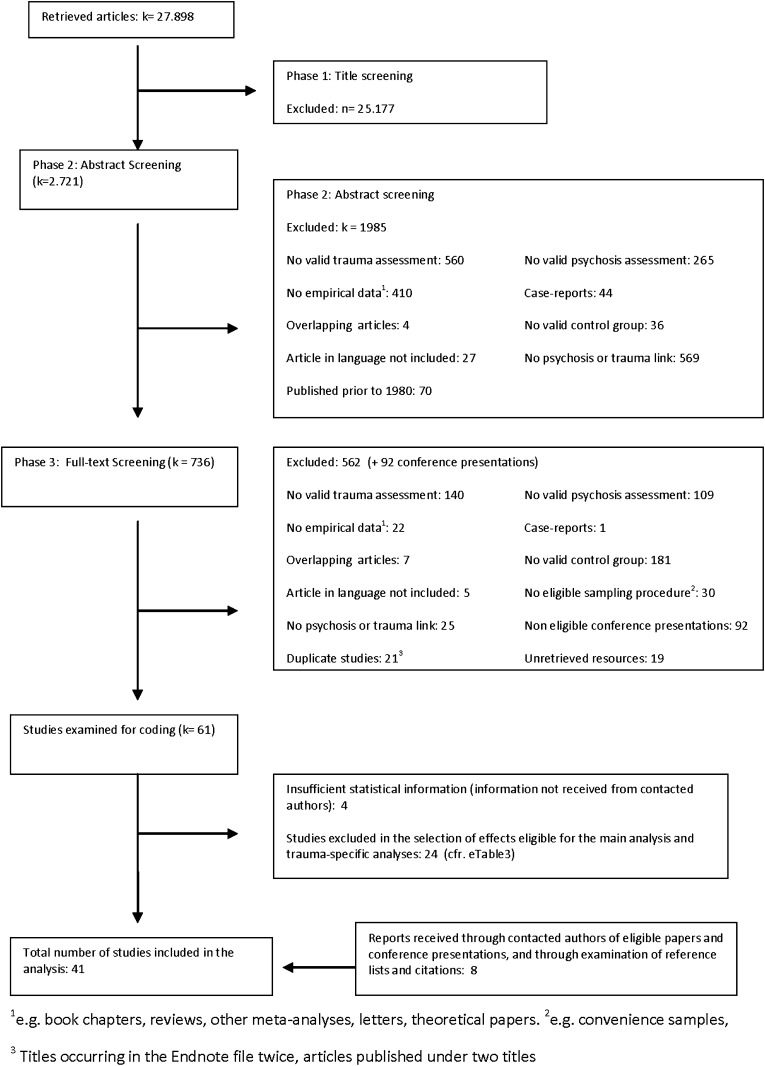
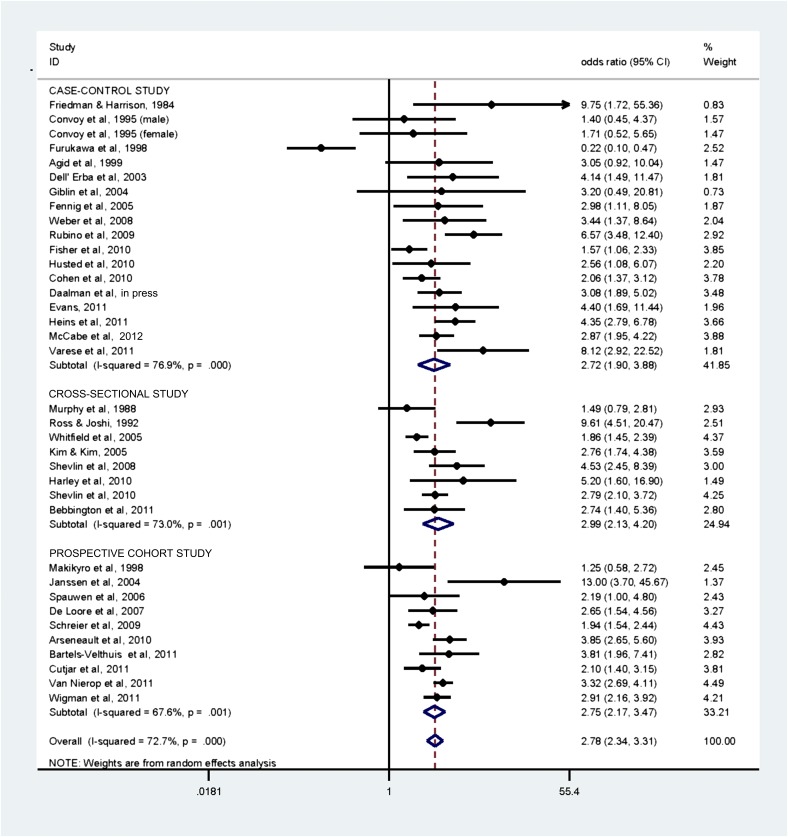
Evidence suggests that adverse experiences in childhood are associated with psychosis. To examine the association between childhood adversity and trauma (sexual abuse, physical abuse, emotional/psychological abuse, neglect, parental death, and bullying) and psychosis outcome, MEDLINE, EMBASE, PsychINFO, and Web of Science were searched from January 1980 through November 2011. We included prospective cohort studies, large-scale cross-sectional studies investigating the association between childhood adversity and psychotic symptoms or illness, case-control studies comparing the prevalence of adverse events between psychotic patients and controls using dichotomous or continuous measures, and case-control studies comparing the prevalence of psychotic symptoms between exposed and nonexposed subjects using dichotomous or continuous measures of adversity and psychosis. The analysis included 18 case-control studies (n = 2048 psychotic patients and 1856 nonpsychiatric controls), 10 prospective and quasi-prospective studies (n = 41,803) and 8 population-based cross-sectional studies (n = 35,546). There were significant associations between adversity and psychosis across all research designs, with an overall effect of OR = 2.78 (95% CI = 2.34-3.31). The integration of the case-control studies indicated that patients with psychosis were 2.72 times more likely to have been exposed to childhood adversity than controls (95% CI = 1.90-3.88). The association between childhood adversity and psychosis was also significant in population-based cross-sectional studies (OR = 2.99 [95% CI = 2.12-4.20]) as well as in prospective and quasi-prospective studies (OR = 2.75 [95% CI = 2.17-3.47]). The estimated population attributable risk was 33% (16%-47%). These findings indicate that childhood adversity is strongly associated with increased risk for psychosis.
Overview
The claims and statistics of this paper haven’t been checked yet.
Free: it reads the open-access text and checks the first 5 claims that cite a source we can check. Create a free account to check every claim.
Integrity signals
Registry
Cites
Statistics
Figures
Verification
Claims the paper makes
The claims and statistics of this paper haven’t been checked yet.
Free: it reads the open-access text and checks the first 5 claims that cite a source we can check. Create a free account to check every claim.
Claims other papers make about this one
Each is checked against this paper’s own text: does it say what the citing paper says it does?
The source backs part of the claim, not all of it — or backs it for a different population, condition or comparison.
In the citing paper
“by study design on obesity and psychosis,7,9”
From Long-term outcomes of childhood sexual abuse: an umbrella review (2019) · cites this paper as [7]
Experimental — accuracy not yet measuredThe source backs part of the claim, not all of it — or backs it for a different population, condition or comparison.
In the citing paper
“A recent meta-ana lysis calculated a population attributable risk of 33%, meaning that if the six types of child adversity studied were to disappear, a third of new psychosis cases would be avoided [13] .”
From The traumagenic neurodevelopmental model of psychosis revisited (2014) · cites this paper as [13]
Experimental — accuracy not yet measuredThe source backs part of the claim, not all of it — or backs it for a different population, condition or comparison.
In the citing paper
“and experiencing physical or sexual abuse (112).”
From Aberrant Salience, Information Processing, and Dopaminergic Signaling in People at Clinical High Risk for Psychosis (2020) · cites this paper as [112]
Experimental — accuracy not yet measuredThe cited source says what the claim attributes to it.
In the citing paper
“Recent studies indicate this is not an evidence-based belief [12,13,167] .”
From The traumagenic neurodevelopmental model of psychosis revisited (2014) · cites this paper as [13]
The cited source says what the claim attributes to it.
In the citing paper
“Furthermore, numerous studies and reviews note that the relationship between child abuse and psychosis remains after controlling for family history of psychosis [9-13,17] .”
From The traumagenic neurodevelopmental model of psychosis revisited (2014) · cites this paper as [13]
8 more claims about this paper
Create a free account to see every claim other papers make about this one.
Self-check
Percentages, sums and reported differences re-computed from the paper’s own numbers.
The self-check needs the paper’s full text.
Citations
Cites
Measuring inconsistency in meta-analyses
Higgins, J. P. T., Thompson, S. G., Deeks, J. J., & Altman, D. G. (2003) · BMJ · doi:10.1136/bmj.327.7414.557 · Cited by 63,139 · cited 1×
“Heterogeneity analyses were carried out using the Q and I(2) statistics to examine and quantify the amount of observed variance accounted for by true heterogeneity rather than sampling error.(57) Meta-regression analysis was subsequently used to determine whether (1) differences in study design and (2) inclusion of ad…”
MethodBias in meta-analysis detected by a simple, graphical test
Egger, M., Smith, G. D., Schneider, M., & Minder, C. (1997) · BMJ · doi:10.1136/bmj.315.7109.629 · Cited by 56,722
Meta-analysis of Observational Studies in Epidemiology<SUBTITLE>A Proposal for Reporting</SUBTITLE>
Stroup, D. F. (2000) · JAMA · doi:10.1001/jama.283.15.2008 · Cited by 20,623
Borenstein, M., Hedges, L. V., Higgins, J. P. T., & Rothstein, H. R. (2009) · doi:10.1002/9780470743386 · Cited by 14,225
Borenstein, M., Hedges, L. V., Higgins, J. P. T., & Rothstein, H. R. (2021) · doi:10.1002/9781119558378 · Cited by 9,799
The Handbook of Research Synthesis and Meta-Analysis
(2019) · doi:10.7758/9781610448864 · Cited by 4,553
Zhang, J., & Yu, K. F. (1998) · JAMA · doi:10.1001/jama.280.19.1690 · Cited by 4,138 · cited 1×
“Risk ratios were treated as ORs without further adjustment as the incidence of psychosis in the studied populations was low (ie, <10%).(56)”
MethodA Nonparametric “Trim and Fill” Method of Accounting for Publication Bias in Meta-Analysis
Duval, S., & Tweedie, R. (2000) · Journal of the American Statistical Association · doi:10.1080/01621459.2000.10473905 · Cited by 2,955
Validity of adult retrospective reports of adverse childhood experiences: review of the evidence
Hardt, J., & Rutter, M. (2004) · Journal of Child Psychology and Psychiatry · doi:10.1111/j.1469-7610.2004.00218.x · Cited by 2,827
Childhood adversities and adult psychopathology in the WHO World Mental Health Surveys
Kessler, R. C., McLaughlin, K. A., Green, J. G., Gruber, M. J., Sampson, N. A., Zaslavsky, A. M., Aguilar-Gaxiola, S., Alhamzawi, A. O., Alonso, J., Angermeyer, M., et al. (2010) · British Journal of Psychiatry · doi:10.1192/bjp.bp.110.080499 · Cited by 2,640 · cited 1×
“Adverse childhood events including trauma is a common experience worldwide, with some estimates suggesting that about a third of the general population may be affected.(1) Evidence suggests that its effects in adulthood may include a range of negative social outcomes, including higher criminality,(2) a lower education…”
Background
Research works printed but not linked: 12
- 15. Dell'Erba G, Venturi P, Tallarico V. Childhood stressful experiences in familial and sporadic schizophrenic patients [Italian] Italian J Psychopathol. 2003;9:32–39.
- 25. Evans G. Trauma and psychosis: investigating dissociation and self-concept clarity [Unpublished doctoral dissertation] University of Liverpool, UK; 2011
- 60. Schreier A, Wolke D, Thomas K, et al. Prospective study of peer victimization in childhood and psychotic symptoms in a nonclinical population at age 12 years. Arch Gen Psychiatry. 2009;66:527–536. doi: 10.1001/archgenpsychiatry.2009.23. · DOI · Paper page
- 63. Janssen I, Krabbendam L, Bak M, et al. Childhood abuse as a risk factor for psychotic experiences. Acta Psychiatr Scand. 2004;109:38–45. doi: 10.1046/j.0001-690x.2003.00217.x. · DOI · Paper page
- 64. Spauwen J, Krabbendam L, Lieb R, Wittchen H-U, van Os J. Impact of psychological trauma on the development of psychotic symptoms: relationship with psychosis proneness. Br J Psychiatry. 2006;188:527–533. doi: 10.1192/bjp.bp.105.011346. · DOI · Paper page
- 65. Nishida A, Tanii H, Nishimura Y, et al. Associations between psychotic-like experiences and mental health status and other psychopathologies among Japanese early teens. Schizophr Res. 2008;99:125–133. doi: 10.1016/j.schres.2007.11.038. · DOI
- 66. Shevlin M, Houston JE, Dorahy MJ, Adamson G. Cumulative traumas and psychosis: an analysis of the National Comorbidity Survey and the British Psychiatric Morbidity Survey. Schizophr Bull. 2008;34:193–199. doi: 10.1093/schbul/sbm069. · DOI · Paper page
- 67. Arseneault L, Cannon M, Fisher HL, et al. Psychotic symptoms: a genetically sensitive longitudinal cohort study. Am J Psychiatry. 2010;168:65–72. doi: 10.1176/appi.ajp.2010.10040567. · DOI · Paper page
- 69. De Loore E, Drukker M, Gunther N, et al. Childhood negative experiences and subclinical psychosis in adolescence: a longitudinal general population study. Early Interv Psychiatry. 2007;1:201–207. · DOI · Paper page
- 70. Whitfield CL, Dube SR, Felitti VJ, Anda RF. Adverse childhood experiences and hallucinations. Child Abuse & Neglect. 2005;29:797–810. doi: 10.1016/j.chiabu.2005.01.004. · DOI · Paper page
- 72. Houston JE, Murphy J, Adamson G, Stringer M, Shevlin M. Childhood sexual abuse, early cannabis use, and psychosis: testing an interaction model based on the National Comorbidity Survey. Schizophr Bull. 2008;34:580–585. doi: 10.1093/schbul/sbm127. · DOI · Paper page
- 73. Husted JA, Ahmed R, Chow EWC, Brzustowicz LM, Bassett AS. Childhood trauma and genetic factors in familial schizophrenia associated with the NOS1AP gene. Schizophr Res. 2010;121:187–192. doi: 10.1016/j.schres.2010.05.021. · DOI
Cited by
The p Factor: One General Psychopathology Factor in the Structure of Psychiatric Disorders?
Caspi, A., Houts, R. M., Belsky, D. W., Goldman-Mellor, S. J., Harrington, H., Israel, S., Meier, M. H., Ramrakha, S., Shalev, I., Poulton, R., et al. (2014) · Clinical Psychological Science · doi:10.1177/2167702613497473 · Cited by 2,449
“…having many different psychiatric outcomes, including mood disorders, anxiety disorders, behavior disorders, and substance-use disorders (Green et al., 2010; Scott, Smith, & Ellis, 2010), as well as schizophrenia, psychosis, and psychotic-like experiences and symptoms (Varese et al., 2012).”
BackgroundOwen, M. J., Sawa, A., & Mortensen, P. B. (2016) · The Lancet · doi:10.1016/s0140-6736(15)01121-6 · Cited by 1,870
Baumeister, D., Akhtar, R., Ciufolini, S., Pariante, C. M., & Mondelli, V (2016) · Molecular Psychiatry · doi:10.1038/mp.2015.67 · Cited by 1,084
“…childhood trauma has been suggested to increase vulnerability to several psychiatric disorders, including depression 3 , anxiety 4 , psychosis 5 and post-traumatic stress disorder (PTSD) 4 , as well as several chronic physical health problems, including rheumatoid arthritis, cardiovascular…”
Jauhar, S., Johnstone, M., & McKenna, P. J. (2022) · The Lancet · doi:10.1016/s0140-6736(21)01730-x · Cited by 996
All for One and One for All: Mental Disorders in One Dimension
Caspi, A., & Moffitt, T. E. (2018) · American Journal of Psychiatry · doi:10.1176/appi.ajp.2018.17121383 · Cited by 918
Galletly, C., Castle, D., Dark, F., Humberstone, V., Jablensky, A., Killackey, E., Kulkarni, J., McGorry, P., Nielssen, O., & Tran, N. (2016) · Australian & New Zealand Journal of Psychiatry · doi:10.1177/0004867416641195 · Cited by 877
“Some migrant groups have substantially higher risks of schizophrenia (Bourque et al., 2011; Cantor-Graae and Selten, 2005), and people born and raised in urban areas have an increased risk of schizophrenia, compared with those born and raised in rural settings (Vassos et al., 2012).”
BackgroundSchizophrenia: an integrated sociodevelopmental-cognitive model
Howes, O. D., & Murray, R. M. (2014) · The Lancet · doi:10.1016/s0140-6736(13)62036-x · Cited by 864
Reuben, A., Moffitt, T. E., Caspi, A., Belsky, D. W., Harrington, H., Schroeder, F., Hogan, S., Ramrakha, S., Poulton, R., & Danese, A. (2016) · Journal of Child Psychology and Psychiatry · doi:10.1111/jcpp.12621 · Cited by 835
“In particular, childhood exposures to adverse conditions, including abuse, neglect, and family dysfunction, have been linked to numerous physical diseases and psychological problems (Afifi et al., 2008; Anda et al., 2006; Benjet, Borges, & Medina-Mora, 2010; Felitti et al., 1998; Green et al., 2010; Scott et al., 2011…”
BackgroundLong-term outcomes of childhood sexual abuse: an umbrella review
Hailes, H. P., Yu, R., Danese, A., & Fazel, S. (2019) · The Lancet Psychiatry · doi:10.1016/s2215-0366(19)30286-x · Cited by 827
Calcia, M. A., Bonsall, D. R., Bloomfield, P. S., Selvaraj, S., Barichello, T., & Howes, O. D. (2016) · Psychopharmacology · doi:10.1007/s00213-016-4218-9 · Cited by 709
“Large-scale epidemiological studies have shown that stress, both early in childhood and later in life, predisposes to the development of mental health problems in adulthood (Scott et al. 2012; Varese et al. 2012; Benjet et al. 2010; Kessler et al. 2010).”
BackgroundNonsocial and social cognition in schizophrenia: current evidence and future directions
Green, M. F., Horan, W. P., & Lee, J. (2019) · World Psychiatry · doi:10.1002/wps.20624 · Cited by 612
The Role of Genes, Stress, and Dopamine in the Development of Schizophrenia
Howes, O. D., McCutcheon, R., Owen, M. J., & Murray, R. M. (2017) · Biological Psychiatry · doi:10.1016/j.biopsych.2016.07.014 · Cited by 601
“In addition to genetic factors, neurodevelopmental hazards (36), and cannabis use (37), chronic psychosocial stressors, including childhood adversity (38), migration/ethnic minority status (39), and urbanicity (40), have become accepted as increasing the risk of schizophrenia.”
Improving outcomes of first‐episode psychosis: an overview
Fusar‐Poli, P., McGorry, P. D., & Kane, J. M. (2017) · World Psychiatry · doi:10.1002/wps.20446 · Cited by 575
What causes psychosis? An umbrella review of risk and protective factors
Radua, J., Ramella‐Cravaro, V., Ioannidis, J. P. A., Reichenberg, A., Phiphopthatsanee, N., Amir, T., Yenn Thoo, H., Oliver, D., Davies, C., Morgan, C., et al. (2018) · World Psychiatry · doi:10.1002/wps.20490 · Cited by 553
Psychosis as a transdiagnostic and extended phenotype in the general population
van Os, J., & Reininghaus, U. (2016) · World Psychiatry · doi:10.1002/wps.20310 · Cited by 531
The social defeat hypothesis of schizophrenia: An update
Selten, J.-P., van der Ven, E., Rutten, B. P. F., & Cantor-Graae, E. (2013) · Schizophrenia Bulletin · doi:10.1093/schbul/sbt134 · Cited by 498
“Firstly, there is little supportive evidence.(15,27) Secondly, the explanations do not allow for the possibility that causality operates in both directions.”
Child maltreatment and risk for psychopathology in childhood and adulthood
Jaffee, S. R. (2017) · Annual Review of Clinical Psychology · doi:10.1146/annurev-clinpsy-032816-045005 · Cited by 487
McKay, M. T., Cannon, M., Chambers, D., Conroy, R. M., Coughlan, H., Dodd, P., Healy, C., O’Donnell, L., & Clarke, M. C. (2021) · Acta Psychiatrica Scandinavica · doi:10.1111/acps.13268 · Cited by 548
“2 | Inclusion and exclusion criteria Only peer-reviewed journal articles that met the following criteria were included: (1) published in the English language; (2) prospectively (or semi-prospectively) collected data; (3) information provided on the precise nature of the trauma, its timing, and method of assessment; (4…”
BackgroundChildhood adversity and borderline personality disorder: a meta‐analysis
Porter, C., Palmier‐Claus, J., Branitsky, A., Mansell, W., Warwick, H., & Varese, F. (2020) · Acta Psychiatrica Scandinavica · doi:10.1111/acps.13118 · Cited by 450
“In line with previous meta-analytic syntheses (17), studies that assessed childhood adversity via unsystematic or opportunistic case note reviews were excluded due to possible response bias.”
BackgroundResultSelf-citationGiovanoli, S., Engler, H., Engler, A., Richetto, J., Voget, M., Willi, R., Winter, C., Riva, M. A., Mortensen, P. B., Feldon, J., et al. (2013) · Science · doi:10.1126/science.1228261 · Cited by 459
The digital revolution and its impact on mental health care
Bucci, S., Schwannauer, M., & Berry, N. (2019) · Psychology and Psychotherapy: Theory, Research and Practice · doi:10.1111/papt.12222 · Cited by 444
“The so-called psychosocial determinants of mental health include adversities such as poverty, living in urban environments, poor housing, belonging to an ethnic minority, childhood maltreatment and bullying (Varese et al., 2012), just to name a few.”
BackgroundBentall, R. P., Wickham, S., Shevlin, M., & Varese, F. (2012) · Schizophrenia Bulletin · doi:10.1093/schbul/sbs049 · Cited by 401
Self-citationPsychoneuroimmunology of early-life stress: the hidden wounds of childhood trauma?
Danese, A., & J Lewis, S. (2017) · Neuropsychopharmacology · doi:10.1038/npp.2016.198 · Cited by 393
“Furthermore, both childhood trauma (Varese et al, 2012; Widom, 1999; Widom et al, 2007) and early-life immune activation (see Inflammation and Psychopathology: Observational Human Studies) are associated with a large range of psychiatric disorders, including depression, bipolar disorder,…”
BackgroundChildhood Trauma and Psychosis in a Prospective Cohort Study: Cause, Effect, and Directionality
Kelleher, I., Keeley, H., Corcoran, P., Ramsay, H., Wasserman, C., Carli, V., Sarchiapone, M., Hoven, C., Wasserman, D., & Cannon, M. (2013) · American Journal of Psychiatry · doi:10.1176/appi.ajp.2012.12091169 · Cited by 386
Shapiro, F. (2014) · The Permanente Journal · doi:10.7812/tpp/13-098 · Cited by 373
Newbury, J. B., Arseneault, L., Moffitt, T. E., Caspi, A., Danese, A., Baldwin, J. R., & Fisher, H. L. (2018) · Journal of Psychiatric Research · doi:10.1016/j.jpsychires.2017.09.020 · Cited by 370
“, 2007b), psychosis (Varese et al., 2012), and suicidal behavior (Ystgaard et al.”
Dudley, R., Taylor, P., Wickham, S., & Hutton, P. (2016) · Schizophrenia Bulletin · doi:10.1093/schbul/sbv150 · Cited by 353
Treated Incidence of Psychotic Disorders in the Multinational EU-GEI Study
Jongsma, H. E., Gayer-Anderson, C., Lasalvia, A., Quattrone, D., Mulè, A., Szöke, A., Selten, J.-P., Turner, C., Arango, C., Tarricone, I., et al. (2018) · JAMA Psychiatry · doi:10.1001/jamapsychiatry.2017.3554 · Cited by 335
From adversity to psychosis: pathways and mechanisms from specific adversities to specific symptoms
Bentall, R. P., de Sousa, P., Varese, F., Wickham, S., Sitko, K., Haarmans, M., & Read, J. (2014) · Social Psychiatry and Psychiatric Epidemiology · doi:10.1007/s00127-014-0914-0 · Cited by 320
“exposure to the abnormal speech styles (communication deviance) of caregivers [1]; sexual abuse (CSA), bullying by peers and other childhood traumas [2]; migration [3];”
BackgroundSelf-citationHeterogeneity in psychiatric diagnostic classification
Allsopp, K., Read, J., Corcoran, R., & Kinderman, P. (2019) · Psychiatry Research · doi:10.1016/j.psychres.2019.07.005 · Cited by 323
“Schizophrenia and psychotic disorders (Varese et al., 2012)”
BackgroundSelf-citationThe role of schizotypy in the study of the etiology of schizophrenia Spectrum disorders
Barrantes-Vidal, N., Grant, P., & Kwapil, T. R. (2015) · Schizophrenia Bulletin · doi:10.1093/schbul/sbu191 · Cited by 329
Life events and psychosis: a review and meta-analysis
Beards, S., Gayer-Anderson, C., Borges, S., Dewey, M. E., Fisher, H. L., & Morgan, C. (2013) · Schizophrenia Bulletin · doi:10.1093/schbul/sbt065 · Cited by 325
Bailey, T., Alvarez-Jimenez, M., Garcia-Sanchez, A. M., Hulbert, C., Barlow, E., & Bendall, S. (2018) · Schizophrenia Bulletin · doi:10.1093/schbul/sbx161 · Cited by 324
“Studies measuring childhood trauma, defined as: (1) must have occurred before age 18 or be described as in “childhood” or “adolescence” (2) must be differentiated from adulthood trauma (3).”
Risk and protective factors for mental disorders beyond genetics: an evidence‐based atlas
Arango, C., Dragioti, E., Solmi, M., Cortese, S., Domschke, K., Murray, R. M., Jones, P. B., Uher, R., Carvalho, A. F., Reichenberg, A., et al. (2021) · World Psychiatry · doi:10.1002/wps.20894 · Cited by 319
“Fullana et al(36) Neurotic, stress-related and somatoform disorders 19 1 (1-1) 100 (54-224) 427 2000-2017”
The impact of environmental factors in severe psychiatric disorders
Schmitt, A., Malchow, B., Hasan, A., & Falkai, P. (2014) · Frontiers in Neuroscience · doi:10.3389/fnins.2014.00019 · Cited by 322
“In a meta-analysis of 18 case-control studies, Varese et al. (2012) filtered adverse experiences in childhood to significantly increase the risk to develop psychosis and schizophrenia.”
BackgroundTrauma-informed mental healthcare in the UK: what is it and how can we further its development?
Sweeney, A., Clement, S., Filson, B., & Kennedy, A. (2016) · Mental Health Review Journal · doi:10.1108/mhrj-01-2015-0006 · Cited by 316
“…and mental health Over the last decade, research evidence has increasingly supported the notion that trauma is linked to adult psychosis and a wide range of other forms of mental distress (e.g. Bentall et al., 2014; Fisher et al., 2010; Kessler et al., 2010; Paradies, 2006; Varese et al., 2012).”
BackgroundPruessner, M., Cullen, A. E., Aas, M., & Walker, E. F. (2017) · Neuroscience & Biobehavioral Reviews · doi:10.1016/j.neubiorev.2016.12.013 · Cited by 315
Non-Genetic Factors in Schizophrenia
Stilo, S. A., & Murray, R. M. (2019) · Current Psychiatry Reports · doi:10.1007/s11920-019-1091-3 · Cited by 311
Validity and utility of Hierarchical Taxonomy of Psychopathology (HiTOP): I. Psychosis superspectrum
Kotov, R., Jonas, K. G., Carpenter, W. T., Dretsch, M. N., Eaton, N. R., Forbes, M. K., Forbush, K. T., Hobbs, K., Reininghaus, U., Slade, T., et al. (2020) · World Psychiatry · doi:10.1002/wps.20730 · Cited by 309
Baldwin, J. R., Wang, B., Karwatowska, L., Schoeler, T., Tsaligopoulou, A., Munafò, M. R., & Pingault, J.-B. (2023) · American Journal of Psychiatry · doi:10.1176/appi.ajp.20220174 · Cited by 313
“, within-article) variance, (3) between-study variance, and (4) between samples variance, and applied robust standard errors to the main meta-analytic models.”
BackgroundFisher, H. L., Caspi, A., Poulton, R., Meier, M. H., Houts, R., Harrington, H., Arseneault, L., & Moffitt, T. E. (2013) · Psychological Medicine · doi:10.1017/s0033291712003091 · Cited by 307
“For instance, a history of maltreatment during childhood has been shown to be more common in adults with schizophrenia and other psychotic disorders (Fisher et al. 2010; Varese et al. 2012) and also in those with PTSD (Brewin et al. 2000) when compared to rates in the general population.”
BackgroundResultInternational incidence of psychotic disorders, 2002–17: a systematic review and meta-analysis
Jongsma, H. E., Turner, C., Kirkbride, J. B., & Jones, P. B. (2019) · The Lancet Public Health · doi:10.1016/s2468-2667(19)30056-8 · Cited by 289
Microglia and the brain: Complementary partners in development and disease
Hammond, T. R., Robinton, D., & Stevens, B. (2018) · Annual Review of Cell and Developmental Biology · doi:10.1146/annurev-cellbio-100616-060509 · Cited by 288
Hidden wounds? inflammatory links between childhood trauma and psychopathology
Danese, A., & Baldwin, J. R. (2017) · Annual Review of Psychology · doi:10.1146/annurev-psych-010416-044208 · Cited by 286
“Childhood maltreatment predicts a heightened incidence of psychotic disorders, including schizophrenia, in later life (Varese et al. 2012).”
BackgroundDomestic and sexual violence against patients with severe mental illness
Khalifeh, H., Moran, P., Borschmann, R., Dean, K., Hart, C., Hogg, J., Osborn, D., Johnson, S., & Howard, L. M. (2015) · Psychological Medicine · doi:10.1017/s0033291714001962 · Cited by 280
“People with SMI are known to have elevated risks of childhood maltreatment, and abuse by family members, including parents, may extend into adulthood (Varese et al. 2012).”
BackgroundGene-environment interaction and psychiatric disorders: Review and future directions
Assary, E., Vincent, J. P., Keers, R., & Pluess, M. (2018) · Seminars in Cell & Developmental Biology · doi:10.1016/j.semcdb.2017.10.016 · Cited by 275
Rethinking Interdisciplinarity across the Social Sciences and Neurosciences
Callard, F., & Fitzgerald, D. (2015) · Palgrave Macmillan UK eBooks · doi:10.1057/9781137407962 · Cited by 272
“There is a growing body of evidence that links traumatic and other kinds of adverse experiences to the development of psychosis and other forms of mental illness (Varese et al. 2012).”
Cross talk: the microbiota and neurodevelopmental disorders
Kelly, J. R., Minuto, C., Cryan, J. F., Clarke, G., & Dinan, T. G. (2017) · Frontiers in Neuroscience · doi:10.3389/fnins.2017.00490 · Cited by 271
“…to affect microbial diversity and impact the overall functionality of the gut microbiome (Mancabelli et al., 2017), is also a risk factor for the development of schizophrenia (Pedersen and Mortensen, 2001; Krabbendam and van Os, 2005; Peen et al., 2010; Vassos et al., 2012; Newbury et al., 2016).”
BackgroundThe traumagenic neurodevelopmental model of psychosis revisited
Read, J., Fosse, R., Moskowitz, A., & Perry, B. (2014) · Neuropsychiatry · doi:10.2217/npy.13.89 · Cited by 262
Self-citationPalmier-Claus, J. E., Berry, K., Bucci, S., Mansell, W., & Varese, F. (2016) · British Journal of Psychiatry · doi:10.1192/bjp.bp.115.179655 · Cited by 264
Self-citationCroft, J., Heron, J., Teufel, C., Cannon, M., Wolke, D., Thompson, A., Houtepen, L., & Zammit, S. (2019) · JAMA Psychiatry · doi:10.1001/jamapsychiatry.2018.3155 · Cited by 260
“Using data from a well-characterized UK birth cohort, the Avon Longitudinal Study of Parents and Children (ALSPAC), we examined (1) whether a comprehensive measure of trauma exposure, using both child- and parentreported data during childhood and adolescence, was associated with psychotic experiences at age 18 years a…”
BackgroundMethodChildhood adversities and psychosis: evidence, challenges, implications
Morgan, C., & Gayer‐Anderson, C. (2016) · World Psychiatry · doi:10.1002/wps.20330 · Cited by 260
McIntyre, J. C., Worsley, J., Corcoran, R., Harrison Woods, P., & Bentall, R. P. (2018) · Journal of Mental Health · doi:10.1080/09638237.2018.1437608 · Cited by 260
“childhood deprivation and maltreatment) known to be associated with poor mental health (Cruwys et al., 2014; Hill, 2003; McIntyre et al., 2017; Varese et al., 2012).”
InfluentialSelf-citationTrotta, A., Murray, R. M., & Fisher, H. L. (2015) · Psychological Medicine · doi:10.1017/s0033291715000574 · Cited by 257
“Several reviews and meta-analyses have attempted to synthesize and quantify the magnitude of the association with onset of psychosis (Read et al. 2005; Morgan & Fisher, 2007; Bendall et al. 2008; Schäfer & Fisher, 2011; Varese et al. 2012).”
BackgroundResultEuropean Network of National Networks studying Gene-Environment Interactions in Schizophrenia (EU-GEI) (2014) · Schizophrenia Bulletin · doi:10.1093/schbul/sbu069 · Cited by 259
Emerging perspectives from the hearing voices movement: implications for research and practice
Corstens, D., Longden, E., McCarthy-Jones, S., Waddingham, R., & Thomas, N. (2014) · Schizophrenia Bulletin · doi:10.1093/schbul/sbu007 · Cited by 256
Psychotic Symptoms and Population Risk for Suicide Attempt: A Prospective Cohort Study
Kelleher, I., Corcoran, P., Keeley, H., Wigman, J. T. W., Devlin, N., Ramsay, H., Wasserman, C., Carli, V., Sarchiapone, M., Hoven, C., et al. (2013) · JAMA Psychiatry · doi:10.1001/jamapsychiatry.2013.140 · Cited by 252
Empirical evidence about recovery and mental health
Slade, M., & Longden, E. (2015) · BMC Psychiatry · doi:10.1186/s12888-015-0678-4 · Cited by 255
“Much evidence has now accumulated to suggest that like other mental health problems, psychosis can be a reaction to such stressful events and life circumstances, particularly abuse or other forms of trauma [55, 56].”
BackgroundGene–Environment Interactions in Severe Mental Illness
Uher, R. (2014) · Frontiers in Psychiatry · doi:10.3389/fpsyt.2014.00048 · Cited by 251
“For example, the availability of vitamin D during the prenatal development may be responsible for 44% cases of schizophrenia (15), childhood maltreatment and bullying account for 33% of cases of schizophrenia (16), urban birth and upbringing may be responsible for 35% of cases (17), and use of cannabis in adolescence…”
BackgroundToxic Stress: Effects, Prevention and Treatment
Franke, H. (2014) · Children · doi:10.3390/children1030390 · Cited by 248
Stress and neurodevelopmental processes in the emergence of psychosis
Holtzman, C. W., Trotman, H. D., Goulding, S. M., Ryan, A. T., MacDonald, A. N., Shapiro, D. I., Brasfield, J. L., & Walker, E. F. (2013) · Neuroscience · doi:10.1016/j.neuroscience.2012.12.017 · Cited by 244
“Varese et al. (2012) conducted a meta-analysis of research on the association between childhood trauma and psychosis.”
BackgroundMoffitt, T. E., & Tank, T. K.-G. 2. T. (2013) · Development and Psychopathology · doi:10.1017/s0954579413000801 · Cited by 236
“A recent discovery is that childhood violence victimization is also linked to schizophrenia, psychosis, and psychotic-like symptoms (Arseneault et al., 2011; Toth, Pickreign Stronach, Rogosch, Caplan, & Cicchetti, 2011; Varese et al., 2012).”
BackgroundPaolicelli, R. C., & Ferretti, M. T. (2017) · Frontiers in Synaptic Neuroscience · doi:10.3389/fnsyn.2017.00009 · Cited by 236
“…associations between exposure to early-life adverse events and risk of neuropsychiatric conditions later in life (MacMillan et al., 2001), including depression (Agid et al., 1999; St Clair et al., 2015), autism spectrum disorders (ASDs) (Kinney et al., 2008) and psychosis (Varese et al., 2012).”
BackgroundThe Bidirectional Associations Between Psychotic Experiences and DSM-IV Mental Disorders
McGrath, J. J., Saha, S., Al-Hamzawi, A., Andrade, L., Benjet, C., Bromet, E. J., Browne, M. O., Caldas de Almeida, J. M., Chiu, W. T., Demyttenaere, K., et al. (2016) · American Journal of Psychiatry · doi:10.1176/appi.ajp.2016.15101293 · Cited by 235
“It is plausible that familial/genetic factors and/or adverse early life exposures (e.g. childhood adversities, cannabis use) could lead to both an increased risk of later mental disorders and an increased risk of PEs (33–35).”
Loneliness in psychosis: a systematic review
Lim, M. H., Gleeson, J. F. M., Alvarez-Jimenez, M., & Penn, D. L. (2018) · Social Psychiatry and Psychiatric Epidemiology · doi:10.1007/s00127-018-1482-5 · Cited by 232
“, small social networks, low social support, childhood bullying, and migration, to name a few) has long been proposed as a risk factor for developing psychosis [7, 20, 21].”
BackgroundA systematic review of attachment and psychosis: measurement, construct validity and outcomes
Gumley, A. I., Taylor, H. E. F., Schwannauer, M., & MacBeth, A. (2014) · Acta Psychiatrica Scandinavica · doi:10.1111/acps.12172 · Cited by 234
“There is growing evidence that stressful developmental experiences and traumatic life events including sexual abuse, being in care and homelessness are linked to increased vulnerability to developing psychosis (1, 2).”
BackgroundInterpretation bias in social anxiety: A systematic review and meta-analysis
Chen, J., Short, M., & Kemps, E. (2020) · Journal of Affective Disorders · doi:10.1016/j.jad.2020.07.121 · Cited by 232
Suicide in Schizophrenia: An Educational Overview
Sher, L., & Kahn, R. S. (2019) · Medicina · doi:10.3390/medicina55070361 · Cited by 223
“Adolescence is a period of transition from childhood to adulthood and also, a time of increased vulnerability to psychiatric disorders including psychotic disorders [24].”
BackgroundBaumeister, D., Sedgwick, O., Howes, O., & Peters, E. (2017) · Clinical Psychology Review · doi:10.1016/j.cpr.2016.10.010 · Cited by 220
“Risk factors HVHs consistently report the presence ofwell-established latent risk factors for psychosis, i.e. genetic loading (Howes et al., 2016) and childhood trauma (Varese et al., 2012).”
BackgroundMethodMisiak, B., Krefft, M., Bielawski, T., Moustafa, A. A., Sąsiadek, M. M., & Frydecka, D. (2017) · Neuroscience & Biobehavioral Reviews · doi:10.1016/j.neubiorev.2017.02.015 · Cited by 218
“Epidemiological findings The meta-analysis performed by Varese et al. (2012b) revealed hat patients with psychosis are almost 3 times more likely to eport having been exposed to childhood trauma in comparison ith healthy controls.”
Paquola, C., Bennett, M. R., & Lagopoulos, J. (2016) · Neuroscience & Biobehavioral Reviews · doi:10.1016/j.neubiorev.2016.08.011 · Cited by 217
Hughes, K., Lowey, H., Quigg, Z., & Bellis, M. A. (2016) · BMC Public Health · doi:10.1186/s12889-016-2906-3 · Cited by 212
“and adult mental illness [11].”
BackgroundA Systematic Review of Reviews of the Outcome of Noninstitutional Child Maltreatment
Carr, A., Duff, H., & Craddock, F. (2020) · Trauma, Violence, & Abuse · doi:10.1177/1524838018801334 · Cited by 206
“Two meta-analyses and two systematic reviews focused predominantly on psychosis (Bendall, Jackson, Hulbert, & McGorry, 2008; Trotta, Murray, & Fisher, 2015; Varese et al., 2012; Velikonja, Fisher, Mason, & Johnson, 2015).”
BackgroundPathways Between Childhood Victimization and Psychosis-like Symptoms in the ALSPAC Birth Cohort
Fisher, H. L., Schreier, A., Zammit, S., Maughan, B., Munafo, M. R., Lewis, G., & Wolke, D. (2013) · Schizophrenia Bulletin · doi:10.1093/schbul/sbs088 · Cited by 206
Hardy, A. (2017) · Frontiers in Psychology · doi:10.3389/fpsyg.2017.00697 · Cited by 201
The effects of early life stress on reward processing
Novick, A. M., Levandowski, M. L., Laumann, L. E., Philip, N. S., Price, L. H., & Tyrka, A. R. (2018) · Journal of Psychiatric Research · doi:10.1016/j.jpsychires.2018.02.002 · Cited by 192
Trauma and the psychosis spectrum: A review of symptom specificity and explanatory mechanisms
Gibson, L. E., Alloy, L. B., & Ellman, L. M. (2016) · Clinical Psychology Review · doi:10.1016/j.cpr.2016.08.003 · Cited by 196
“The second includes TLEs encountered that are predominantly defined as: experiences of physical, sexual, or emotional/psychological abuse, neglect, or bullying (Gray, Litz, Hsu, & Lombardo, 2004; van Dam et al., 2012; Varese et al., 2012a).”
InfluentialKraan, T., Velthorst, E., Smit, F., de Haan, L., & van der Gaag, M. (2015) · Schizophrenia Research · doi:10.1016/j.schres.2014.11.026 · Cited by 195
“2 Introduction A growing body of literature has addressed the role of childhood trauma as one of the risk factors for the development of psychosis [1-4].”
BackgroundThomas, N., Hayward, M., Peters, E., van der Gaag, M., Bentall, R. P., Jenner, J., Strauss, C., Sommer, I. E., Johns, L. C., Varese, F., et al. (2014) · Schizophrenia Bulletin · doi:10.1093/schbul/sbu037 · Cited by 195
Self-citationDegnan, A., Berry, K., Sweet, D., Abel, K., Crossley, N., & Edge, D. (2018) · Social Psychiatry and Psychiatric Epidemiology · doi:10.1007/s00127-018-1552-8 · Cited by 196
“Consistent with previous meta-analyses in the field [36, 37], we developed a protocol to minimise the potential effects of non-independent data, improve comparability across studies and reduce bias: (1) where studies reported cross-sectional and temporal associations, cross-sectional data were used; (2) when longitudi…”
MethodAssessment of School Anti-Bullying Interventions: A Meta-analysis of Randomized Clinical Trials
Fraguas, D., Díaz-Caneja, C. M., Ayora, M., Durán-Cutilla, M., Abregú-Crespo, R., Ezquiaga-Bravo, I., Martín-Babarro, J., & Arango, C. (2021) · JAMA Pediatrics · doi:10.1001/jamapediatrics.2020.3541 · Cited by 195
Prevalence of self-reported childhood abuse in psychosis: a meta-analysis of retrospective studies.
Bonoldi, I., Simeone, E., Rocchetti, M., Codjoe, L., Rossi, G., Gambi, F., Balottin, U., Caverzasi, E., Politi, P., & Fusar-Poli, P. (2013) · Psychiatry Research · doi:10.1016/j.psychres.2013.05.003 · Cited by 188
Childhood Trauma in Schizophrenia: Current Findings and Research Perspectives
Popovic, D., Schmitt, A., Kaurani, L., Senner, F., Papiol, S., Malchow, B., Fischer, A., Schulze, T. G., Koutsouleris, N., & Falkai, P. (2019) · Frontiers in Neuroscience · doi:10.3389/fnins.2019.00274 · Cited by 187
Life adversities and suicidal behavior in young individuals: a systematic review
Serafini, G., Muzio, C., Piccinini, G., Flouri, E., Ferrigno, G., Pompili, M., Girardi, P., & Amore, M. (2015) · European Child & Adolescent Psychiatry · doi:10.1007/s00787-015-0760-y · Cited by 184
Epigenetic programming by early‐life stress: Evidence from human populations
Vaiserman, A. M. (2015) · Developmental Dynamics · doi:10.1002/dvdy.24211 · Cited by 181
“…a range of physical and mental problems in adulthood including hypertension, obesity, cardiovascular disease, substance abuse, smoking, psychosis, depression, and attempted suicide (reviewed, e.g., in Varese et al., 2012; Brent and Silverstein, 2013), as well as cancer (Kelly-Irving et al., 2013).”
BackgroundSchizophrenia stigma in mental health professionals and associated factors: A systematic review
Valery, K.-M., & Prouteau, A. (2020) · Psychiatry Research · doi:10.1016/j.psychres.2020.113068 · Cited by 175
“Altogether, our results and other research (Magliano et al., 2017) rather underscore the need to training MHP about the links between bio-beliefs and stigma/empathy, about essentialism, and about the social causes of psychosis (Murray, 2017; Varese et al., 2012).”
Result(Mis)understanding trauma-informed approaches in mental health
Sweeney, A., & Taggart, D. (2018) · Journal of Mental Health · doi:10.1080/09638237.2018.1520973 · Cited by 174
“For instance, there is evidence of a strong link between childhood trauma and adulthood psychosis (Varese et al., 2012), and intimate partner violence and depression (Devries et al., 2013).”
BackgroundPsychological trauma as a transdiagnostic risk factor for mental disorder: an umbrella meta-analysis
Hogg, B., Gardoki-Souto, I., Valiente-Gómez, A., Rosa, A. R., Fortea, L., Radua, J., Amann, B. L., & Moreno-Alcázar, A. (2023) · European Archives of Psychiatry and Clinical Neuroscience · doi:10.1007/s00406-022-01495-5 · Cited by 171
“Psychological trauma can be defined as a person experiencing events or circumstances which are physically or emotionally harmful or life threatening, and which have lasting adverse effects on their functioning and mental, physical, social, emotional, or spiritual well-being [2], and can include experiences of physical…”
BackgroundCalem, M., Bromis, K., McGuire, P., Morgan, C., & Kempton, M. J. (2017) · NeuroImage Clinical · doi:10.1016/j.nicl.2017.02.016 · Cited by 171
“…mental health outcomes (see (Wilson, 2010) and (Norman et al., 2012) for reviews), including posttraumatic stress disorder (Kessler et al., 1995), psychosis (Varese et al., 2012), depression and anxiety (Lindert et al., 2014), diabetes (Huffhines et al., 2016) and obesity (Danese and Tan, 2014).”
BackgroundStudying Hallucinations Within the NIMH RDoC Framework
Ford, J. M., Morris, S. E., Hoffman, R. E., Sommer, I., Waters, F., McCarthy-Jones, S., Thoma, R. J., Turner, J. A., Keedy, S. K., Badcock, J. C., et al. (2014) · Schizophrenia Bulletin · doi:10.1093/schbul/sbu011 · Cited by 170
The Relationship Between Dissociation and Symptoms of Psychosis: A Meta-analysis
Longden, E., Branitsky, A., Moskowitz, A., Berry, K., Bucci, S., & Varese, F. (2020) · Schizophrenia Bulletin · doi:10.1093/schbul/sbaa037 · Cited by 167
Self-citationvan Nierop, M., Viechtbauer, W., Gunther, N., van Zelst, C., de Graaf, R., ten Have, M., van Dorsselaer, S., Bak, M., Genetic Risk and OUtcome of Psychosis (GROUP) investigators, & van Winkel, R. (2015) · Psychological Medicine · doi:10.1017/s0033291714002372 · Cited by 169
Self-citationAutoimmune Diseases and Psychotic Disorders
Jeppesen, R., & Benros, M. E. (2019) · Frontiers in Psychiatry · doi:10.3389/fpsyt.2019.00131 · Cited by 165
Wolke, D., Lereya, S. T., Fisher, H. L., Lewis, G., & Zammit, S. (2014) · Psychological Medicine · doi:10.1017/s0033291713002912 · Cited by 164
“2011, 2013) and the predictive relationships appear to be as high or even higher in prospective studies compared with cross-sectional studies (van Dam et al. 2012; Varese et al. 2012).”
BackgroundResultInfluentialJawahar, M. C., Murgatroyd, C., Harrison, E. L., & Baune, B. T. (2015) · Clinical Epigenetics · doi:10.1186/s13148-015-0156-3 · Cited by 163
Fitton, L., Yu, R., & Fazel, S. (2020) · Trauma, Violence, & Abuse · doi:10.1177/1524838018795269 · Cited by 164
“As has been suggested in other reviews assessing negative outcomes following child maltreatment, it may be that age of child maltreatment, multi-victimisation, and severity may be more important variables than type of maltreatment (Varese et al., 2012).”
ResultThe relevance of self-esteem and self-schemas to persecutory delusions: A systematic review
Kesting, M.-L., & Lincoln, T. M. (2013) · Comprehensive Psychiatry · doi:10.1016/j.comppsych.2013.03.002 · Cited by 163
The P2X7 Receptor: Central Hub of Brain Diseases
Andrejew, R., Oliveira-Giacomelli, Á., Ribeiro, D. E., Glaser, T., Arnaud-Sampaio, V. F., Lameu, C., & Ulrich, H. (2020) · Frontiers in Molecular Neuroscience · doi:10.3389/fnmol.2020.00124 · Cited by 162
“, 2016) and many environmental factors have been already associated (Byrne et al., 2004; Allardyce and Boydell, 2006; Varese et al., 2012; Cantor-Graae and Pedersen, 2013; Moustafa et al., 2017).”
BackgroundA Network Approach to Environmental Impact in Psychotic Disorder: Brief Theoretical Framework
Isvoranu, A.-M., Borsboom, D., van Os, J., & Guloksuz, S. (2016) · Schizophrenia Bulletin · doi:10.1093/schbul/sbw049 · Cited by 162
Sitko, K., Bentall, R. P., Shevlin, M., O׳Sullivan, N., & Sellwood, W. (2014) · Psychiatry Research · doi:10.1016/j.psychres.2014.03.019 · Cited by 160
Self-citation
Metadata
- Authors
- Varese, F., Smeets, F., Drukker, M., Lieverse, R., Lataster, T., Viechtbauer, W., Read, J., van Os, J., & Bentall, R. P.
- Affiliations
- University of Liverpool (GB)
- Maastricht University (NL)
- University of Auckland (NZ)
- ORCID
- Venue
- Schizophrenia Bulletin
- Publisher
- Oxford University Press (OUP)
- Published
- 2012-03-29
- Volume
- 38
- Issue
- 4
- Pages
- 661-671
- ISSN
- 0586-7614 (ISSN-L)
- 1745-1701
- PMC
- PMC3406538
- OpenAlex
- W2097940171
- Semantic Scholar
- e74a0894053502319556985b4d9811ec75c1f7bd
- Cited by
- 2,436
- References
- 74
- Citations by year
- 2026: 153 · 2025: 158 · 2024: 156 · 2023: 216 · 2022: 206 · 2021: 192 · 2020: 240 · 2019: 190 · 2018: 183 · 2017: 181 · 2016: 177 · 2015: 141 · 2014: 125 · 2013: 87 · 2012: 27
- FWCI
- 17.70
- Type
- journal article
- Language
- en
- Open access
- hybrid
- doi.org
- Licence
- cc-by-nc
- Locations
- Schizophrenia Bulletin (publishedVersion, cc-by-nc)
- Europe PMC (PubMed Central) (publishedVersion, cc-by-nc)
- PubMed Central (publishedVersion, cc-by-nc)
- PubMed (publishedVersion)
- Research Publications (Maastricht University) (publishedVersion, cc-by-nc)
- UEL Research Repository (University of East London) (acceptedVersion)
- Lirias (submittedVersion, cc-by-nc)
- Lancaster EPrints (Lancaster University) (submittedVersion)
- Research Explorer (The University of Manchester) (submittedVersion)
- UEL Research Repository (University of East London) (submittedVersion, cc-by-nc)
- Swinburne figshare (Swinburne University of Technology) (submittedVersion)
- Research Publications (Maastricht University) (submittedVersion, other-oa)
- Funders
- Economic and Social Research Council (ES/I015043/1, ES/I015043/2, RES-000-)
- Topics
- Social Sciences › Psychology › Clinical Psychology › Child Abuse and Trauma
- Health Sciences › Medicine › Psychiatry and Mental health › Schizophrenia research and treatment
- Social Sciences › Psychology › Clinical Psychology › Posttraumatic Stress Disorder Research
- Keywords
- childhood adversity, childhood trauma
- MeSH terms
- Adolescent, Adult, Child, Child Abuse, Cross-Sectional Studies, Humans, Prospective Studies, Psychotic Disorders, Risk Factors, Cohort Studies, Case-Control Studies, Adult Survivors of Child Abuse, Bullying, Parental Death
About these checks
Registry, retraction, Cites and statistics results are computed, not judged, with one exception: a printed reference that no index lists is read once by a model before it counts as a citation error. Claims are extracted by a model and kept only when their quote appears verbatim in the text; each cited source is then checked, with a model’s help, for whether it says what the claim relies on. Those verdicts can be wrong — read the claim’s quote and the cited source before relying on one.
Statistics and arithmetic are recomputed, not judged.
Confidence bands are shown only for fields calibrated on our annotated test set. None is calibrated yet, so no band is shown.
What counts as a claim ›How we measure confidence ›How we check this ›
Are you an author, or do you see a problem with this page? Request a review
Data sources
Bibliographic data: Semantic Scholar, OpenAlex, Crossref.
Contains information from the Semantic Scholar Academic Graph Datasets, made available under the ODC Attribution License (ODC-BY 1.0).
Semantic Scholar’s data is described in: Kinney, R., et al. (2023). The Semantic Scholar Open Data Platform. arXiv:2301.10140.
