

Childhood Adversities Increase the Risk of Psychosis: A Meta-analysis of Patient-Control, Prospective- and Cross-sectional Cohort Studies
Open accessThe DOI matches its Crossref record; 72 of the 74 references it cites were found in a registry or an index.
Abstract
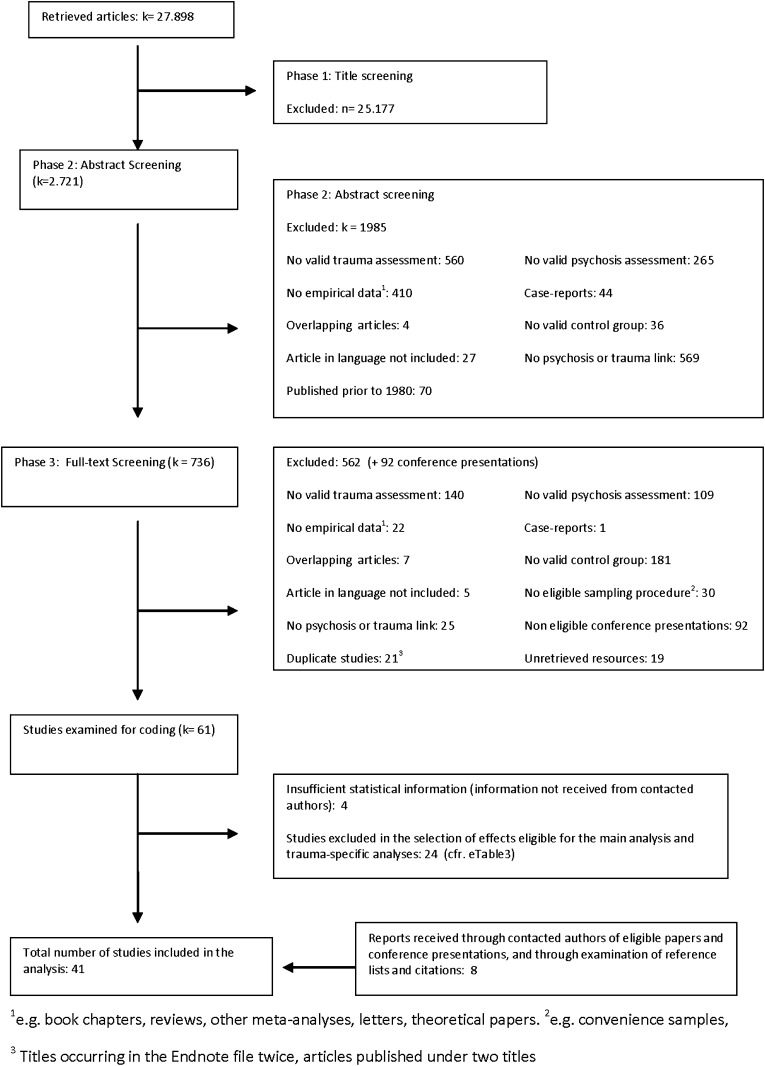
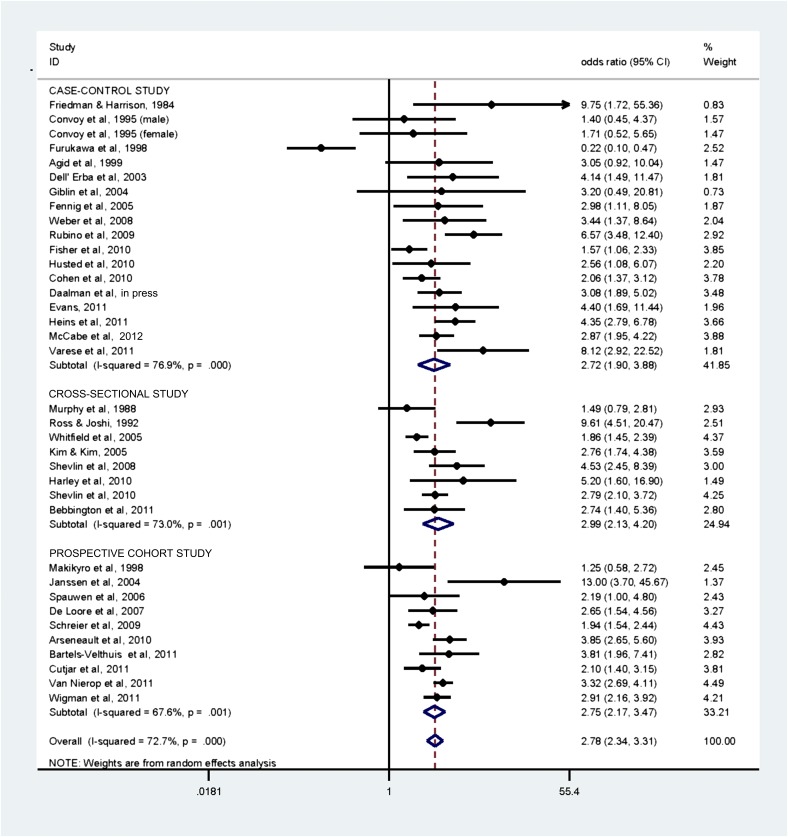
Evidence suggests that adverse experiences in childhood are associated with psychosis. To examine the association between childhood adversity and trauma (sexual abuse, physical abuse, emotional/psychological abuse, neglect, parental death, and bullying) and psychosis outcome, MEDLINE, EMBASE, PsychINFO, and Web of Science were searched from January 1980 through November 2011. We included prospective cohort studies, large-scale cross-sectional studies investigating the association between childhood adversity and psychotic symptoms or illness, case-control studies comparing the prevalence of adverse events between psychotic patients and controls using dichotomous or continuous measures, and case-control studies comparing the prevalence of psychotic symptoms between exposed and nonexposed subjects using dichotomous or continuous measures of adversity and psychosis. The analysis included 18 case-control studies (n = 2048 psychotic patients and 1856 nonpsychiatric controls), 10 prospective and quasi-prospective studies (n = 41,803) and 8 population-based cross-sectional studies (n = 35,546). There were significant associations between adversity and psychosis across all research designs, with an overall effect of OR = 2.78 (95% CI = 2.34-3.31). The integration of the case-control studies indicated that patients with psychosis were 2.72 times more likely to have been exposed to childhood adversity than controls (95% CI = 1.90-3.88). The association between childhood adversity and psychosis was also significant in population-based cross-sectional studies (OR = 2.99 [95% CI = 2.12-4.20]) as well as in prospective and quasi-prospective studies (OR = 2.75 [95% CI = 2.17-3.47]). The estimated population attributable risk was 33% (16%-47%). These findings indicate that childhood adversity is strongly associated with increased risk for psychosis.
Overview
The claims and statistics of this paper haven’t been checked yet.
Free: it reads the open-access text and checks the first 5 claims that cite a source we can check. Create a free account to check every claim.
Integrity signals
Registry
Cites
Statistics
Figures
Verification
Claims the paper makes
The claims and statistics of this paper haven’t been checked yet.
Free: it reads the open-access text and checks the first 5 claims that cite a source we can check. Create a free account to check every claim.
Claims other papers make about this one
Each is checked against this paper’s own text: does it say what the citing paper says it does?
The source backs part of the claim, not all of it — or backs it for a different population, condition or comparison.
In the citing paper
“by study design on obesity and psychosis,7,9”
From Long-term outcomes of childhood sexual abuse: an umbrella review (2019) · cites this paper as [7]
Experimental — accuracy not yet measuredThe source backs part of the claim, not all of it — or backs it for a different population, condition or comparison.
In the citing paper
“A recent meta-ana lysis calculated a population attributable risk of 33%, meaning that if the six types of child adversity studied were to disappear, a third of new psychosis cases would be avoided [13] .”
From The traumagenic neurodevelopmental model of psychosis revisited (2014) · cites this paper as [13]
Experimental — accuracy not yet measuredThe source backs part of the claim, not all of it — or backs it for a different population, condition or comparison.
In the citing paper
“and experiencing physical or sexual abuse (112).”
From Aberrant Salience, Information Processing, and Dopaminergic Signaling in People at Clinical High Risk for Psychosis (2020) · cites this paper as [112]
Experimental — accuracy not yet measuredThe cited source says what the claim attributes to it.
In the citing paper
“Recent studies indicate this is not an evidence-based belief [12,13,167] .”
From The traumagenic neurodevelopmental model of psychosis revisited (2014) · cites this paper as [13]
The cited source says what the claim attributes to it.
In the citing paper
“Furthermore, numerous studies and reviews note that the relationship between child abuse and psychosis remains after controlling for family history of psychosis [9-13,17] .”
From The traumagenic neurodevelopmental model of psychosis revisited (2014) · cites this paper as [13]
8 more claims about this paper
Create a free account to see every claim other papers make about this one.
Self-check
Percentages, sums and reported differences re-computed from the paper’s own numbers.
The self-check needs the paper’s full text.
Citations
Cites
Measuring inconsistency in meta-analyses
Higgins, J. P. T., Thompson, S. G., Deeks, J. J., & Altman, D. G. (2003) · BMJ · doi:10.1136/bmj.327.7414.557 · Cited by 63,139 · cited 1×
“Heterogeneity analyses were carried out using the Q and I(2) statistics to examine and quantify the amount of observed variance accounted for by true heterogeneity rather than sampling error.(57) Meta-regression analysis was subsequently used to determine whether (1) differences in study design and (2) inclusion of ad…”
MethodBias in meta-analysis detected by a simple, graphical test
Egger, M., Smith, G. D., Schneider, M., & Minder, C. (1997) · BMJ · doi:10.1136/bmj.315.7109.629 · Cited by 56,722
Meta-analysis of Observational Studies in Epidemiology<SUBTITLE>A Proposal for Reporting</SUBTITLE>
Stroup, D. F. (2000) · JAMA · doi:10.1001/jama.283.15.2008 · Cited by 20,623
Borenstein, M., Hedges, L. V., Higgins, J. P. T., & Rothstein, H. R. (2009) · doi:10.1002/9780470743386 · Cited by 14,225
Borenstein, M., Hedges, L. V., Higgins, J. P. T., & Rothstein, H. R. (2021) · doi:10.1002/9781119558378 · Cited by 9,799
The Handbook of Research Synthesis and Meta-Analysis
(2019) · doi:10.7758/9781610448864 · Cited by 4,553
Zhang, J., & Yu, K. F. (1998) · JAMA · doi:10.1001/jama.280.19.1690 · Cited by 4,138 · cited 1×
“Risk ratios were treated as ORs without further adjustment as the incidence of psychosis in the studied populations was low (ie, <10%).(56)”
MethodA Nonparametric “Trim and Fill” Method of Accounting for Publication Bias in Meta-Analysis
Duval, S., & Tweedie, R. (2000) · Journal of the American Statistical Association · doi:10.1080/01621459.2000.10473905 · Cited by 2,955
Validity of adult retrospective reports of adverse childhood experiences: review of the evidence
Hardt, J., & Rutter, M. (2004) · Journal of Child Psychology and Psychiatry · doi:10.1111/j.1469-7610.2004.00218.x · Cited by 2,827
Childhood adversities and adult psychopathology in the WHO World Mental Health Surveys
Kessler, R. C., McLaughlin, K. A., Green, J. G., Gruber, M. J., Sampson, N. A., Zaslavsky, A. M., Aguilar-Gaxiola, S., Alhamzawi, A. O., Alonso, J., Angermeyer, M., et al. (2010) · British Journal of Psychiatry · doi:10.1192/bjp.bp.110.080499 · Cited by 2,640 · cited 1×
“Adverse childhood events including trauma is a common experience worldwide, with some estimates suggesting that about a third of the general population may be affected.(1) Evidence suggests that its effects in adulthood may include a range of negative social outcomes, including higher criminality,(2) a lower education…”
Background
Research works printed but not linked: 12
- 15. Dell'Erba G, Venturi P, Tallarico V. Childhood stressful experiences in familial and sporadic schizophrenic patients [Italian] Italian J Psychopathol. 2003;9:32–39.
- 25. Evans G. Trauma and psychosis: investigating dissociation and self-concept clarity [Unpublished doctoral dissertation] University of Liverpool, UK; 2011
- 60. Schreier A, Wolke D, Thomas K, et al. Prospective study of peer victimization in childhood and psychotic symptoms in a nonclinical population at age 12 years. Arch Gen Psychiatry. 2009;66:527–536. doi: 10.1001/archgenpsychiatry.2009.23. · DOI · Paper page
- 63. Janssen I, Krabbendam L, Bak M, et al. Childhood abuse as a risk factor for psychotic experiences. Acta Psychiatr Scand. 2004;109:38–45. doi: 10.1046/j.0001-690x.2003.00217.x. · DOI · Paper page
- 64. Spauwen J, Krabbendam L, Lieb R, Wittchen H-U, van Os J. Impact of psychological trauma on the development of psychotic symptoms: relationship with psychosis proneness. Br J Psychiatry. 2006;188:527–533. doi: 10.1192/bjp.bp.105.011346. · DOI · Paper page
- 65. Nishida A, Tanii H, Nishimura Y, et al. Associations between psychotic-like experiences and mental health status and other psychopathologies among Japanese early teens. Schizophr Res. 2008;99:125–133. doi: 10.1016/j.schres.2007.11.038. · DOI
- 66. Shevlin M, Houston JE, Dorahy MJ, Adamson G. Cumulative traumas and psychosis: an analysis of the National Comorbidity Survey and the British Psychiatric Morbidity Survey. Schizophr Bull. 2008;34:193–199. doi: 10.1093/schbul/sbm069. · DOI · Paper page
- 67. Arseneault L, Cannon M, Fisher HL, et al. Psychotic symptoms: a genetically sensitive longitudinal cohort study. Am J Psychiatry. 2010;168:65–72. doi: 10.1176/appi.ajp.2010.10040567. · DOI · Paper page
- 69. De Loore E, Drukker M, Gunther N, et al. Childhood negative experiences and subclinical psychosis in adolescence: a longitudinal general population study. Early Interv Psychiatry. 2007;1:201–207. · DOI · Paper page
- 70. Whitfield CL, Dube SR, Felitti VJ, Anda RF. Adverse childhood experiences and hallucinations. Child Abuse & Neglect. 2005;29:797–810. doi: 10.1016/j.chiabu.2005.01.004. · DOI · Paper page
- 72. Houston JE, Murphy J, Adamson G, Stringer M, Shevlin M. Childhood sexual abuse, early cannabis use, and psychosis: testing an interaction model based on the National Comorbidity Survey. Schizophr Bull. 2008;34:580–585. doi: 10.1093/schbul/sbm127. · DOI · Paper page
- 73. Husted JA, Ahmed R, Chow EWC, Brzustowicz LM, Bassett AS. Childhood trauma and genetic factors in familial schizophrenia associated with the NOS1AP gene. Schizophr Res. 2010;121:187–192. doi: 10.1016/j.schres.2010.05.021. · DOI
Cited by
Items 801–900 of 1,008
Varese, F., Sellwood, W., Aseem, S., Awenat, Y. F., Bird, L., Bhutani, G., Carter, L., Davies, L. M., Davis, C., Horne, G., et al. (2020) · Early Intervention in Psychiatry · doi:10.1111/eip.13071 · Cited by 30
“Meta-analyses indicate that trauma is associated with an increased risk of developing psychosis, and heightened severity of psychotic symptoms in those who already have psychosis (e.g., Beards et al., 2013; Varese et al., 2012).”
BackgroundSelf-citationOcchipinti, J., Skinner, A., Freebairn, L., Song, Y. J. C., Ho, N., Lawson, K. D., Lee, G. Y., & Hickie, I. B. (2021) · Frontiers in Psychiatry · doi:10.3389/fpsyt.2021.759343 · Cited by 27
Campodonico, C., Berry, K., Haddock, G., & Varese, F. (2021) · Frontiers in Psychiatry · doi:10.3389/fpsyt.2021.735870 · Cited by 32
“After entering all the protective factors (adaptive coping, resilience, social support, secure attachment, optimism and GSE) in the first step of the analysis, the model explained 16% of the variance in the PTSD outcome [F(6,78) = 3.”
MethodSelf-citationDadomo, H., Salvato, G., Lapomarda, G., Ciftci, Z., Messina, I., & Grecucci, A. (2022) · Frontiers in Human Neuroscience · doi:10.3389/fnhum.2022.773593 · Cited by 25
Aas, M., Ueland, T., Lagerberg, T. V., Melle, I. S., Aminoff, S. R., Høegh, M. C., Lunding, S. H., Laskemoen, J. F., Steen, N. E., & Andreassen, O. A. (2022) · Psychiatry Research · doi:10.1016/j.psychres.2022.115045 · Cited by 24
“(2016) estimate a 3-fold increase in risk for schizophrenia (SZ) and bipolar disorder (BD) after exposure to childhood traumatic events (Palmier-Claus et al., 2016; Varese et al., 2012), two disorders often viewed as part of the same continuum with shared neural, genetic and psychological mechanisms (Sorella et al.”
McElroy, E., Shevlin, M. E., Elklit, A., Hyland, P., Murphy, S., & Murphy, J. (2016) · European Journal of Psychotraumatology · doi:10.3402/ejpt.v7.30686 · Cited by 31
“…adds to the already substantial body of evidence that links CSA with a wide range of adult psychiatric disorders (Bebbington et al., 2011; Cutajar et al., 2010; Fergusson et al., 1996, 2008Fergusson et al., 2013; Kessler et al., 1997; Molnar et al., 2001; Read et al., 2003; Varese et al., 2012).”
BackgroundKoskenvuo, K., & Koskenvuo, M. J. (2014) · Journal of Epidemiology & Community Health · doi:10.1136/jech-2014-204732 · Cited by 32
Early Life Bereavement and Schizophrenia: A Nationwide Cohort Study in Denmark and Sweden
Liang, H., Olsen, J., Yuan, W., Cnattingus, S., Vestergaard, M., Obel, C., Gissler, M., & Li, J. (2016) · Medicine · doi:10.1097/md.0000000000002434 · Cited by 28
“However, the issues regarding the effect of age of exposure to psychosis outcome is not addressed, and the psychosis literature has tended to focus exclusively on hallucinatory and delusional symptoms and not on other symptoms.(13) The death of a close family relative is considered one of the most severe life events(1…”
Backgroundde Castro-Català, M., van Nierop, M. M., Barrantes-Vidal, N., Cristóbal-Narváez, P., Sheinbaum, T., Kwapil, T. R., Peña, E., Jacobs, N., Derom, C. A., Thiery, E. W., et al. (2016) · Journal of Psychiatric Research · doi:10.1016/j.jpsychires.2016.08.014 · Cited by 30
Seidenfaden, D., Knorr, U., Soendergaard, M. G., Poulsen, H. E., Fink‐Jensen, A., Jørgensen, M. B., & Jørgensen, A. (2016) · Comprehensive Psychiatry · doi:10.1016/j.comppsych.2016.09.009 · Cited by 26
“) claim to find equal reports of childhood adversities among psychotic patients [5,7,10].”
BackgroundResultMorris, T., Manley, D., Northstone, K., & Sabel, C. E. (2017) · Health & Place · doi:10.1016/j.healthplace.2017.06.004 · Cited by 32
Telomere length and early trauma in schizophrenia
Riley, G., Perrin, M. C., Vaezazizi, L. M., Ruby, E., Goetz, R. R., Dracxler, R. C., Walsh‐Messinger, J., Keefe, D. L., Buckley, P. F., Szeszko, P. R., et al. (2018) · Schizophrenia Research · doi:10.1016/j.schres.2018.02.059 · Cited by 25
“Early trauma exposure is a major risk factor for schizophrenia (Heins et al., 2011; Ruby et al., 2014; Varese et al., 2012), which is furthermore associated with clinical features in the disease, particularly with treatment refractory psychotic symptoms, including auditory hallucinations and command hallucinations (Ca…”
BackgroundJansen, J. E., Pedersen, M. B., Trauelsen, A. M., Lyse Nielsen, H.-G., Haahr, U. H., & Simonsen, E. (2016) · Journal of Nervous & Mental Disease · doi:10.1097/nmd.0000000000000449 · Cited by 23
“T here is compelling evidence that persons with schizophrenia spectrum disorders often experience high levels of childhood trauma compared with persons without these disorders (Varese et al., 2012), and it seems that untreated trauma constitutes an important risk factor in terms of worse long-term outcome (McGorry et…”
BackgroundShared and unique characteristics of metabolic syndrome in psychotic disorders: a review
Saccaro, L. F., Aimo, A., Panichella, G., & Sentissi, O. (2024) · Frontiers in Psychiatry · doi:10.3389/fpsyt.2024.1343427 · Cited by 32
Is adult attachment associated with engagement with services? A systematic literature review
McGonagle, G., Bucci, S., Varese, F., Raphael, J., & Berry, K. (2019) · Journal of Mental Health · doi:10.1080/09638237.2019.1608922 · Cited by 26
“These findings are not surprising as there is a high incidence of early trauma experiences in psychosis samples (Kilcommons & Morrison, 2005; Varese et al., 2012) and it is well-established that early trauma adversely effects the development of the attachment system (Lyons-Ruth & Block, 1996).”
BackgroundSelf-citationEllinghaus, C., Truss, K., Siling, J. L., Phillips, L., Eastwood, O., Medrano, C., & Bendall, S. (2020) · Early Intervention in Psychiatry · doi:10.1111/eip.12919 · Cited by 29
Bowman, S., McKinstry, C., Howie, L., & McGorry, P. D. (2020) · Early Intervention in Psychiatry · doi:10.1111/eip.12928 · Cited by 27
“Studies have also investigated whether childhood trauma predicts conversion to psychosis in ARMS samples and sexual trauma was the strongest predictor of transition (Bechdolf et al., 2010; Thompson et al., 2013; Varese et al., 2012).”
BackgroundSalokangas, R. K. R., Hietala, J. A., Armio, R.-L., Laurikainen, H., From, T., Borgwardt, S., Riecher‐Rössler, A., Brambilla, P., Bonivento, C., Meisenzahl, E. M., et al. (2020) · Schizophrenia Research · doi:10.1016/j.schres.2020.05.041 · Cited by 25
van der Linden, K., Simons, C. J. P., van Amelsvoort, T., & Marcelis, M. C. (2020) · Frontiers in Psychiatry · doi:10.3389/fpsyt.2020.00766 · Cited by 25
Childhood adversity increases methylation in the GRIN2B gene
Engdahl, E., Alavian‐Ghavanini, A., Forsell, Y., Lavebratt, C., & Rüegg, J. (2020) · Journal of Psychiatric Research · doi:10.1016/j.jpsychires.2020.09.022 · Cited by 22
Croft, J., Martin, D., Madley‐Dowd, P., Strelchuk, D., Davies, J., Heron, J. E., Teufel, C., & Zammit, S. (2021) · PLoS ONE · doi:10.1371/journal.pone.0246948 · Cited by 29
“Meta-analyses estimate that the risk of psychosis is increased by 2–3 times [4] in those exposed to childhood trauma.”
BackgroundVaskinn, A., Engelstad, K. N., Torgalsbøen, A., & Rund, B. R. (2021) · Psychiatry Research · doi:10.1016/j.psychres.2021.114093 · Cited by 26
Predicting persistence of hallucinations from childhood to adolescence
Steenkamp, L. R., Tiemeier, H. W., Blanken, L. M. E., Hillegers, M. H. J., Kushner, S. A., & Bolhuis, K. (2021) · The British Journal of Psychiatry · doi:10.1192/bjp.2021.115 · Cited by 30
Stevenson, A., Beltran, M., Misra, S., Ametaj, A., Bronkhorst, A., Gelaye, B., Koenen, K. C., Pretorius, A., Stein, D. J., & Zingela, Z. (2023) · European Journal of Psychotraumatology · doi:10.1080/20008066.2023.2172257 · Cited by 29
Alameda, L., Liu, Z., Sham, P. C., Aas, M., Trotta, G., Rodríguez, V., Forti, M. D., Stilo, S. A., Kandaswamy, R., Arango, C., et al. (2023) · Molecular Psychiatry · doi:10.1038/s41380-023-02044-9 · Cited by 30
“We have used this approach of cumulative score rather than adding the total raw CTQ scores given meta-analytic evidence of a dose-response effect of cumulative trauma in psychosis using similar methods [1], also observed in a larger EUGEI sample;[24] and given previous reports examining the same method when exploring…”
BackgroundMethodCommon genetic variants contribute to heritability of age at onset of schizophrenia
Sada, E., Aranda, S., Papiol, S., Heilbronner, U., Moltó, M. D., Aguilar, E. J., González‐Peñas, J., Andreu-Bernabeu, Á., Arango, C., Crespo‐Facorro, B., et al. (2023) · Translational Psychiatry · doi:10.1038/s41398-023-02508-0 · Cited by 25
“In addition, we obtained GWAS data on three conditions previously associated with AAO: neuroticism [49], educational attainment (EA) [11], and childhood maltreatment [50] (Table S1).”
MethodBrent, B. K. (2014) · Journal of Clinical Psychology · doi:10.1002/jclp.22150 · Cited by 25
“For example, both childhood adversity (particularly trauma; Varese et al., 2012) and dysfunction in early child–caregiver relationships plausibly related to attachment insecurity (e.g., aberrant caregiver sensitivity or attunement (Wahlberg et al., 1997) have been associated with an increased risk…”
BackgroundRomme, M., & Morris, M. (2013) · Psychosis · doi:10.1080/17522439.2013.830641 · Cited by 39
“The interrelation between hearing voices and experienced trauma is now sufficiently described in the literature (Read, van Os, Morrison, & Ross, 2005; Varese et al. 2012) and led to a fifth question: Do voice-hearers tell about the personal aspects of their voices, as part of their recovery?”
BackgroundHernaus, D., Collip, D., Lataster, J., Viechtbauer, W., Myin, E., Ceccarini, J., Laere, K. V., van Os, J., & Myin‐Germeys, I. (2015) · Journal of Abnormal Psychology · doi:10.1037/abn0000010 · Cited by 32
Self-citationResearch in Clinical Psychology: Social Exclusion and Psychological Disorders
Fung, K., Xu, C., Glazier, B. L., Parsons, C. A., & Alden, L. E. (2016) · Springer eBooks · doi:10.1007/978-3-319-33033-4_8 · Cited by 27
What impact does trauma have on the at‐risk mental state? A systematic literature review
Brew, B., Doris, M., Shannon, C., & Mulholland, C. C. (2017) · Early Intervention in Psychiatry · doi:10.1111/eip.12453 · Cited by 29
“…prospective cohort, large cross-sectional and case-control studies examining the association between childhood adversity and trauma and psychosis, Varese et al. (2012) reported that childhood adversity and trauma were strongly associated with an increased risk of psychosis and reported odds…”
Backgroundvan Duin, E. D. A., Vaessen, T., Kasanova, Z., Viechtbauer, W., Reininghaus, U., Saalbrink, P., Vingerhoets, C., Hernaus, D., Booij, J., Swillen, A., et al. (2019) · Psychoneuroendocrinology · doi:10.1016/j.psyneuen.2019.03.023 · Cited by 27
“, 2008; De Bellis and Zisk, 2014), and an increased risk of developing psychiatric disorders (Green et al., 2010; Kessler et al., 2010; Varese et al., 2012; Jawahar et al., 2015).”
BackgroundSelf-citationWang, C., Wang, Q., Li, X., Zhang, Y., Wei, W., Deng, W., Guo, W., He, L., Tang, W., Chen, T., et al. (2019) · Schizophrenia Research · doi:10.1016/j.schres.2019.05.009 · Cited by 26
Coughlan, H., Healy, C., Sheaghdha, Á. N., Murray, G., Humphries, N., Clarke, M. C., & Cannon, M. D. (2019) · Early Intervention in Psychiatry · doi:10.1111/eip.12855 · Cited by 29
“…Miller, & Nemeroff, 2008; Upthegrove et al., 2015), anxiety (Heim & Nemeroff, 2001), psychotic (Ajnakina et al., 2016; Bentall et al., 2014; Longden, Sampson, & Read, 2015; Varese et al., 2012) and personality disorders (Afifi et al., 2011; Klein, Roniger, Schweiger, Späth, & Brodbeck, 2015).”
Childhood social isolation and psychotic experiences in young adulthood: a community based study
Bennett, J. C., Surkan, P. J., Moulton, L. H., Fombonne, E. J., & Melchior, M. (2019) · European Child & Adolescent Psychiatry · doi:10.1007/s00787-019-01417-2 · Cited by 27
Rathke, H., Poulsen, S., Carlsson, J. M., & Palić, S. (2020) · Psychiatry Research · doi:10.1016/j.psychres.2020.112898 · Cited by 33
Do mental health clinicians elicit a history of previous trauma in female psychiatric inpatients?
Xiao, C. L., Gavrilidis, E., Lee, S., & Kulkarni, J. (2016) · Journal of Mental Health · doi:10.3109/09638237.2016.1139074 · Cited by 22
“Patients with psychosis were found in a meta-analysis to be 2.72 times more likely to have been exposed to childhood adversity than controls, and this was a dose-dependent relationship in nine out of 10 studies that tested for it (Varese et al., 2012).”
ResultInfluentialImplementing a Trauma-Informed Model of Care in a Community Acute Mental Health Team
Moloney, B., Cameron, I., Baker, A., Feeney, J., Korner, A., Kornhaber, R. A., Cleary, M. L., & McLean, L. (2018) · Issues in Mental Health Nursing · doi:10.1080/01612840.2018.1437855 · Cited by 28
“More broadly, a trauma history is associated with an increased risk of developing a major mental illness (Bendall, Jackson, Hulbert, & McGorry, 2011; Heins et al., 2011; Janssen et al., 2004; Varese et al., 2012).”
BackgroundAscone, L., Schlier, B., Sundag, J., & Lincoln, T. M. (2019) · Psychology and Psychotherapy Theory Research and Practice · doi:10.1111/papt.12208 · Cited by 27
Hyland, P., Murphy, J., Shevlin, M. E., Bentall, R. P., Karatzias, T., Ho, G. W. K., Boduszek, D., & McElroy, E. (2020) · Psychological Medicine · doi:10.1017/s003329172000104x · Cited by 24
“The latter is a particularly perplexing result given the extensive literature demonstrating that childhood trauma is strongly – and probably causally – related to psychotic illness (Varese et al., 2012).”
BackgroundSelf-citationSchneider, M., Vaessen, T., van Duin, E. D. A., Kasanova, Z., Viechtbauer, W., Reininghaus, U., Vingerhoets, C., Booij, J., Swillen, A., Vorstman, J. A. S., et al. (2020) · Journal of Neurodevelopmental Disorders · doi:10.1186/s11689-020-09333-2 · Cited by 22
Self-citationBoden, Z., Larkin, M., & Harrop, C. E. (2021) · Psychology and Psychotherapy Theory Research and Practice · doi:10.1111/papt.12337 · Cited by 27
“Young people under the care of EIS are more likely to have experienced traumatic and abusive relationships or family adversity in early life (Mackrell & Lavender, 2004), which can be causal factors in their psychosis (Varese et al., 2012).”
BackgroundZhang, H., & Li, Y. (2021) · Journal of Interpersonal Violence · doi:10.1177/08862605211016348 · Cited by 23
“…that child neglect has deleterious impacts on developmental outcomes in childhood and adversely affects mental health, causing problems such as attention-deficit/hyperactivity, anxiety, depression, suicidal behavior, and substance use Manly et al., 2013; Mandelli et al., 2015; Varese et al., 2012).”
BackgroundPrenatal and Childhood Immuno-Metabolic Risk Factors for Adult Depression and Psychosis
Kappelmann, N., Perry, B. I., & Khandaker, G. M. (2022) · Harvard Review of Psychiatry · doi:10.1097/hrp.0000000000000322 · Cited by 23
Hardy, A., Good, S., Dix, J., & Longden, E. (2022) · Frontiers in Psychiatry · doi:10.3389/fpsyt.2022.946615 · Cited by 29
Fang, X., Wu, Z., Wen, L., Zhang, Y., Wang, D., Yu, L., Wang, Y., Chen, Y., Chen, L., Liu, H., et al. (2022) · European Archives of Psychiatry and Clinical Neuroscience · doi:10.1007/s00406-022-01525-2 · Cited by 27
Rahme, C., Kadri, N. E., Haddad, C., Fekih‐Romdhane, F., Obeïd, S., & Hallit, S. R. (2023) · BMC Psychiatry · doi:10.1186/s12888-023-04531-3 · Cited by 27
“There is strong evidence from a metaanalysis of patient-control, prospective, cross-section,al and cohort studies that exposure to traumatic events and experiences is associated with an increased risk for psychosis in adulthood [16].”
BackgroundMacBeth, A. M., Gumley, A. I., Schwannauer, M., & Fisher, R. (2013) · Early Intervention in Psychiatry · doi:10.1111/eip.12087 · Cited by 26
Bratlien, U., Øie, M. G., Haug, E., Møller, P., Andreassen, O. A., Lien, L., & Melle, I. S. (2014) · Psychiatry Research · doi:10.1016/j.psychres.2013.12.048 · Cited by 24
“Further, we did not find any clear indications of more current exposure to traumatic situations previous year and contrary to expectations we found that the clinical group was less exposed to violence at age 16 (Varese et al., 2012).”
EMDR in Psychosis: Guidelines for Conceptualization and Treatment
van den Berg, D. P. G., van der Vleugel, B. M., Staring, A. B. P., de Bont, P. A. J. M., & de Jongh, A. (2013) · Journal of EMDR Practice and Research · doi:10.1891/1933-3196.7.4.208 · Cited by 30
“, sexual abuse, physical abuse, bullying, discrimination), neglect, and being raised in an institution are causally linked to symptoms of psychosis in adults (Bentall, Wickham, Shevlin, & Varese, 2012; Varese et al., 2012).”
BackgroundInfluentialBifactor structure of the Schizotypal Personality Questionnaire (SPQ)
Preti, A., Siddi, S., Vellante, M., Scanu, R., Muratore, T., Gabbrielli, M., Tronci, D., Masala, C., & Петретто, Д. Р. (2015) · Psychiatry Research · doi:10.1016/j.psychres.2015.11.010 · Cited by 23
“, cannabis, amphetamine, hallucinogens), being exposed to social adversity during childhood or to social stress associated to immigration (Morgan et al., 2010; Large et al., 2011; Varese et al., 2012; Linscott and van Os, 2013; Sara et al., 2014).”
BackgroundKasanova, Z., Hernaus, D., Vaessen, T., van Amelsvoort, T., Winz, O., Heinzel, A., Pruessner, J. C., Mottaghy, F. M., Collip, D., & Myin‐Germeys, I. (2016) · PLoS ONE · doi:10.1371/journal.pone.0150746 · Cited by 25
“Indeed, a comprehensive meta-analysis of case-control and population-based studies revealed a threefold increase in risk of developing a psychotic disorder among those reporting childhood trauma [4].”
Shapiro, F. (2014) · Journal of EMDR Practice and Research · doi:10.1891/1933-3196.8.4.181 · Cited by 57
“Other research has revealed a positive correlation between various forms of maltreatment and psychotic symptoms in children (Arseneault et al., 2011; Varese et al., 2012).”
BackgroundDeveloping a Health Inequalities Approach for Mental Health Social Work
Karban, K. (2016) · The British Journal of Social Work · doi:10.1093/bjsw/bcw098 · Cited by 43
“The concept of embodiment is also informed by an understanding of the impact of adversity and trauma (Hermann, 1992; Varese et al., 2012) and increasing evidence relating to the ways in which ‘chronic low level stress “gets under the skin” through the neuro-endocrine, cardiovascular and immune…”
BackgroundCounotte, J., Drexhage, H. A., Wijkhuijs, J. M., Pot-Kolder, R., Bergink, V., Hoek, H. W., & Veling, W. (2017) · Brain Behavior and Immunity · doi:10.1016/j.bbi.2017.12.015 · Cited by 22
Moriyama, T. S., Drukker, M., Gadelha, A., Pan, P. M., Salum, G. A., Manfro, G. G., Mari, J. D. J., Miguel, E. C., Rohde, L. A., Polanczyk, G. V., et al. (2018) · Psychological Medicine · doi:10.1017/s0033291717003762 · Cited by 26
“The only available meta-analysis on the association between childhood adversity and psychosis provides indirect evidence; the association with psychosis was significant for all types of trauma with the exception of parental death, a severe TLE that nevertheless does not involve intention to harm (Varese et al. 2012).”
BackgroundInfluentialSelf-citationMcGregor, N. W., Thompson, N., O’Connell, K. S., Emsley, R. A., van der Merwe, L., & Warnich, L. (2018) · Psychiatry Research · doi:10.1016/j.psychres.2018.01.044 · Cited by 26
Gillett, A. C., Vassos, E., & Lewis, C. M. (2018) · Human Heredity · doi:10.1159/000495697 · Cited by 23
“07) For the ERS, we combine information from meta-analyses of five environmental risk factors: cannabis usage, migrant status, urbanicity, paternal age and childhood adversity [11-15].”
MethodEthnic disparities in psychotic experiences explained by area-level syndemic effects
Coid, J. W., González, R. A., Kallis, C., Zhang, Y., Bhui, K. S., Stavola, B. L. D., Bebbington, P., & Ullrich, S. (2019) · The British Journal of Psychiatry · doi:10.1192/bjp.2019.203 · Cited by 33
Childhood trauma and glucose metabolism in patients with first-episode psychosis
Tosato, S., Bonetto, C., Tomassi, S., Zanardini, R., Faravelli, C., Bruschi, C., D’Agostino, A., Minelli, A., Scocco, P., Lasalvia, A., et al. (2019) · Psychoneuroendocrinology · doi:10.1016/j.psyneuen.2019.104536 · Cited by 26
Overlapping Neurobiological Substrates for Early-Life Stress and Resilience to Psychosis
DeRosse, P., & Barber, A. D. (2020) · Biological Psychiatry Cognitive Neuroscience and Neuroimaging · doi:10.1016/j.bpsc.2020.09.003 · Cited by 30
Rajan, G., Syding, S., Ljunggren, G., Wändell, P. E., Wahlström, L., Philips, B., Svedin, C. G., & Carlsson, A. C. (2020) · European Child & Adolescent Psychiatry · doi:10.1007/s00787-020-01670-w · Cited by 28
“The association between CSA and psychosis has been shown in different studies, including meta-analyses [27, 28].”
Psychosis: Psychological, Social and Integrative Approaches
(2010) · Psychosis · doi:10.1080/17522439.2010.514132 · Cited by 22
Neill, C., & Read, J. (2022) · Community Mental Health Journal · doi:10.1007/s10597-021-00916-4 · Cited by 28
Self-citationMagliano, L., Punzo, R., Strino, A., Acone, R., Affuso, G., & Read, J. (2016) · American Journal of Orthopsychiatry · doi:10.1037/ort0000217 · Cited by 23
Self-citationMontag, C., Schöner, J., Speck, L. G., Just, S. A., Stuke, F., Rentzsch, J., Gallinat, J., & Majić, T. (2020) · PLoS ONE · doi:10.1371/journal.pone.0231257 · Cited by 25
“Maternal stress and childhood adversity [50] are risk factors for the illness as such [51].”
BackgroundSheinbaum, T., Racioppi, A., Kwapil, T. R., & Barrantes-Vidal, N. (2020) · Schizophrenia Research · doi:10.1016/j.schres.2020.03.023 · Cited by 22
Badcock, J. C., Brand, R. M., Thomas, N., Hayward, M., & Paulik, G. (2021) · Psychiatry Research · doi:10.1016/j.psychres.2021.113754 · Cited by 21
Mertens, Y. L., Racioppi, A., Sheinbaum, T., Kwapil, T. R., & Barrantes-Vidal, N. (2021) · European Journal of Psychotraumatology · doi:10.1080/20008198.2021.1888539 · Cited by 26
“Extensive research has found increased developmental risk for psychosis when childhood adversity is reported, even when controlling for family history of mental illness or substance abuse (Read, Van Os, Morrison, & Ross, 2005; Varese et al., 2012).”
BackgroundBegemann, M., Sommer, I. E., Brand, R. M., Oomen, P. P., Jongeneel, A., Berkhout, J., Molenaar, R. E., Wielage, N. N., Toh, W. L., Rossell, S. L., et al. (2021) · Cognitive Neuropsychiatry · doi:10.1080/13546805.2021.1925235 · Cited by 28
“Traumatic or adverse childhood experiences are prevalent in populations of people who hear voices, with evidence implicating a causal relationship (Varese et al., 2012) involving a number of potential mechanisms.”
BackgroundStewart, S. L., Dyke, J. N. V., & Poss, J. W. (2021) · Child Psychiatry & Human Development · doi:10.1007/s10578-021-01289-1 · Cited by 29
“1 3 adverse childhood experiences and trauma, such as abuse, bullying, and victimization, have been associated with an increased risk of psychosis [42, 43].”
BackgroundHendrix, C. L., Brown, A. L., McKenna, B. G., Dunlop, A. L., Corwin, E. J., & Brennan, P. A. (2022) · Journal of Psychopathology and Clinical Science · doi:10.1037/abn0000688 · Cited by 22
Low income and schizophrenia risk: A narrative review
Schneider, M., Müller, C. P., & Knies, A. K. (2022) · Behavioural Brain Research · doi:10.1016/j.bbr.2022.114047 · Cited by 27
Pignon, B., Peyre, H., Ayrolles, A., Kirkbride, J. B., Jamain, S., Ferchiou, A., Richard, J., Baudin, G., Tosato, S., Jongsma, H. E., et al. (2022) · Epidemiology and Psychiatric Sciences · doi:10.1017/s2045796022000464 · Cited by 22
Epigenetic age deacceleration in youth at familial risk for schizophrenia and bipolar disorder
Segura, À. G., de la Serna, E., Sugranyes, G., Baeza, I., Valli, I., Díaz‐Caneja, C. M., Martín-Martínez, N., Moreno, D. M., Gassó, P., Rodríguez, N., et al. (2023) · Translational Psychiatry · doi:10.1038/s41398-023-02463-w · Cited by 24
Adolescent neurocognitive development and decision-making abilities regarding gender-affirming care
Ravindranath, O., Perica, M. I., Parr, A. C., Ojha, A., McKeon, S. D., Montano, G. T., Ullendorff, N., Luna, B., & Edmiston, E. K. (2024) · Developmental Cognitive Neuroscience · doi:10.1016/j.dcn.2024.101351 · Cited by 31
“Critically, stressful life experiences, such as those regularly experienced by TNB youth, are thought to impact neurodevelopment, thus putting individuals at increased risk for mental illness (Benjet et al., 2010; Kessler et al., 2018; Varese et al., 2012).”
BackgroundBroyd, A., Jolley, S., & Johns, L. (2016) · British Journal of Clinical Psychology · doi:10.1111/bjc.12112 · Cited by 26
“Moreover, perceived coping ability may be negatively impacted by higher rates of adverse life experience and by distressing psychotic symptoms (Hatfield, 1989; Read & Ross, 2003; Varese et al., 2012).”
BackgroundRedman, S. L., Corcoran, C. M., Kimhy, D., & Malaspina, D. (2017) · PubMed · Cited by 23
Prevalence of Trauma in an Australian Inner City Mental Health Service Consumer Population
Phipps, M., Molloy, L., & Visentin, D. (2019) · Community Mental Health Journal · doi:10.1007/s10597-018-0239-7 · Cited by 21
“72 times more likely to have been exposed to childhood adversity and trauma than those who were not (Varese et al. 2012).”
BackgroundMehlhausen-Hassoen, D., & Winstok, Z. (2018) · Child Indicators Research · doi:10.1007/s12187-018-9605-9 · Cited by 24
Renkema, T. C., de Haan, L., Schirmbeck, F. N., Alizadeh, B. Z., van Amelsvoort, T., Bartels‐Velthuis, A. A., van Beveren, N. J. M., Bruggeman, R., Cahn, W., de Haan, L., et al. (2019) · Child Abuse & Neglect · doi:10.1016/j.chiabu.2019.104243 · Cited by 23
The Long-Term Effects of Early Life Stress on the Modulation of miR-19 Levels
Mazzelli, M., Maj, C., Mariani, N., Mora, C., Begni, V., Pariante, C. M., Riva, M. A., Cattaneo, A., & Cattane, N. (2020) · Frontiers in Psychiatry · doi:10.3389/fpsyt.2020.00389 · Cited by 25
“For instance, several meta-analyses have provided robust evidence for an association between childhood trauma and SZ (24, 25).”
BackgroundImpact of attachment imagery on paranoia and mood: evidence from two single case studies
Pitfield, C., Maguire, T., & Newman‐Taylor, K. (2020) · Behavioural and Cognitive Psychotherapy · doi:10.1017/s1352465820000351 · Cited by 25
Child Maltreatment and Psychiatric Outcomes in Early Adulthood
Murphy, S., McElroy, E., Elklit, A., Shevlin, M. E., & CHRISTOFFERSEN, M. N. (2020) · Child Abuse Review · doi:10.1002/car.2619 · Cited by 25
High-risk diagnosis, social stress, and parent-child relationships: A moderation model
Bentley, E., Millman, Z. B., Thompson, E., Demro, C., Kline, E. R., Pitts, S. C., DeVylder, J., Smith, M. E., Reeves, G. M., & Schiffman, J. E. (2016) · Schizophrenia Research · doi:10.1016/j.schres.2016.04.014 · Cited by 24
“Child maltreatment, urban upbringing, migration, and minority status are all associated with higher incidence of psychosis (van Os et al., 2010; Varese et al., 2012).”
Samaey, C., Lecei, A., Achterhof, R., Hagemann, N., Hermans, K. S. F. M., Hiekkaranta, A. P., Kirtley, O. J., Reininghaus, U., Boets, B., Myin‐Germeys, I., et al. (2023) · Journal of Adolescence · doi:10.1002/jad.12145 · Cited by 20
Bullying victimisation and psychosis: The interdependence and independence of risk trajectories
Catone, G., Marwaha, S., Lennox, B., & Broome, M. R. (2017) · BJPsych Advances · doi:10.1192/apt.bp.116.016584 · Cited by 30
“Varese et al (2012), in a meta-analysis, examined the association between childhood trauma (sexual, physical and emotional/ psychological abuse; neglect; parental death; and being bullied) and psychosis (identified by both diagnostic and dimensional measures), and concluded that there is a…”
BackgroundSun, P., Álvarez‐Jiménez, M., Lawrence, K. A., Simpson, K., Peach, N., & Bendall, S. (2018) · Early Intervention in Psychiatry · doi:10.1111/eip.12773 · Cited by 24
Díaz‐Caneja, C. M., Babarro, J. M., Abregú-Crespo, R., Huete-Diego, M. Á., Giménez‐Dasí, M., Serrano-Marugán, I., & Arango, C. (2021) · Frontiers in Pediatrics · doi:10.3389/fped.2021.628984 · Cited by 38
Associations between psychosis and visual acuity impairment: A systematic review and meta‐analysis
Shoham, N., Eskinazi, M., Hayes, J., Lewis, G., Theodorsson, M., & Cooper, C. (2021) · Acta Psychiatrica Scandinavica · doi:10.1111/acps.13330 · Cited by 23
Biaggi, A., Hazelgrove, K. M., Waites, F., Fusté, M., Conroy, S., Howard, L. M., Mehta, M. A., Miele, M., Seneviratne, G., Pawlby, S. J., et al. (2021) · Journal of Affective Disorders · doi:10.1016/j.jad.2021.05.076 · Cited by 24
Oh, H. Y., Nagendra, A., Besecker, M., Smith, L., Koyanagi, A., & Wang, J. S. (2021) · Early Intervention in Psychiatry · doi:10.1111/eip.13221 · Cited by 21
Packard, K., & Opendak, M. M. (2022) · Frontiers in Behavioral Neuroscience · doi:10.3389/fnbeh.2022.918862 · Cited by 24
Bertele, S., Heitland, I., Fraccarollo, D., Stapel, B., Bauersachs, J. K., Westhoff‐Bleck, M., & Kahl, K. G. (2022) · Frontiers in Psychiatry · doi:10.3389/fpsyt.2022.1002143 · Cited by 26
Dunleavy, D. J. (2022) · European Journal for Philosophy of Science · doi:10.1007/s13194-022-00492-8 · Cited by 22
“More contemporary examples of progressive programmes might include investigations into the effects of childhood adversity and social deprivation on the development of later psychopathology (e.g., McLaughlin & Hatzenbuehler, 2009; Varese et al., 2012; Wickham et al., 2014), the HIV-AIDS hypothesis (Barré-Sinoussi et al.”
BackgroundChen, C., Sun, Y., Liu, B., Zhang, X., & Song, Y. (2022) · International Journal of Environmental Research and Public Health · doi:10.3390/ijerph192316031 · Cited by 21
“According to the dose–response theory [21], the magnitude of ACEs was also found to be a significant predictor of depression severity.”
MethodWong, T. Y., Moore, T. M., Seidlitz, J., Yuen, K. S. L., Ruparel, K., Barzilay, R., Calkins, M. E., Alexander‐Bloch, A. F., Satterthwaite, T. D., Gur, R. E., et al. (2022) · Molecular Psychiatry · doi:10.1038/s41380-022-01908-w · Cited by 20
Stress, Environment and Early Psychosis
Xenaki, L., Dimitrakopoulos, S., Selaković, M., & Stefanis, N. C. (2023) · Current Neuropharmacology · doi:10.2174/1570159x21666230817153631 · Cited by 27
“Several studies have shown that patients with psychosis are three times more likely to report childhood trauma in comparison to healthy controls [6, 146].”
BackgroundInfluentialRate and predictors of psychotic symptoms after Kashmir earthquake
Ayub, M., Saeed, K., Kingdon, D., & Naeem, F. (2014) · European Archives of Psychiatry and Clinical Neuroscience · doi:10.1007/s00406-014-0561-1 · Cited by 24
“Compared with the small number of studies looking at the effect of recent trauma, link between exposure to trauma in childhood and development of psychosis is much better studied and more established [9].”
BackgroundCristofaro, S. L., Cleary, S. D., Wan, C. R., Broussard, B., Chapman, C., Haggard, P. J., Jananeh, S., Myers, N. L., & Compton, M. T. (2013) · Psychiatry Research · doi:10.1016/j.psychres.2013.06.015 · Cited by 25
“A recent meta-analysis suggested that childhood exposure to adversity makes a child 2.72 times more likely to develop psychosis, and that a dose-response relation between trauma and the development of psychotic symptoms is likely (Varese et al., 2012).”
BackgroundInfluential
Metadata
- Authors
- Varese, F., Smeets, F., Drukker, M., Lieverse, R., Lataster, T., Viechtbauer, W., Read, J., van Os, J., & Bentall, R. P.
- Affiliations
- University of Liverpool (GB)
- Maastricht University (NL)
- University of Auckland (NZ)
- ORCID
- Venue
- Schizophrenia Bulletin
- Publisher
- Oxford University Press (OUP)
- Published
- 2012-03-29
- Volume
- 38
- Issue
- 4
- Pages
- 661-671
- ISSN
- 0586-7614 (ISSN-L)
- 1745-1701
- PMC
- PMC3406538
- OpenAlex
- W2097940171
- Semantic Scholar
- e74a0894053502319556985b4d9811ec75c1f7bd
- Cited by
- 2,436
- References
- 74
- Citations by year
- 2026: 153 · 2025: 158 · 2024: 156 · 2023: 216 · 2022: 206 · 2021: 192 · 2020: 240 · 2019: 190 · 2018: 183 · 2017: 181 · 2016: 177 · 2015: 141 · 2014: 125 · 2013: 87 · 2012: 27
- FWCI
- 17.70
- Type
- journal article
- Language
- en
- Open access
- hybrid
- doi.org
- Licence
- cc-by-nc
- Locations
- Schizophrenia Bulletin (publishedVersion, cc-by-nc)
- Europe PMC (PubMed Central) (publishedVersion, cc-by-nc)
- PubMed Central (publishedVersion, cc-by-nc)
- PubMed (publishedVersion)
- Research Publications (Maastricht University) (publishedVersion, cc-by-nc)
- UEL Research Repository (University of East London) (acceptedVersion)
- Lirias (submittedVersion, cc-by-nc)
- Lancaster EPrints (Lancaster University) (submittedVersion)
- Research Explorer (The University of Manchester) (submittedVersion)
- UEL Research Repository (University of East London) (submittedVersion, cc-by-nc)
- Swinburne figshare (Swinburne University of Technology) (submittedVersion)
- Research Publications (Maastricht University) (submittedVersion, other-oa)
- Funders
- Economic and Social Research Council (ES/I015043/1, ES/I015043/2, RES-000-)
- Topics
- Social Sciences › Psychology › Clinical Psychology › Child Abuse and Trauma
- Health Sciences › Medicine › Psychiatry and Mental health › Schizophrenia research and treatment
- Social Sciences › Psychology › Clinical Psychology › Posttraumatic Stress Disorder Research
- Keywords
- childhood adversity, childhood trauma
- MeSH terms
- Adolescent, Adult, Child, Child Abuse, Cross-Sectional Studies, Humans, Prospective Studies, Psychotic Disorders, Risk Factors, Cohort Studies, Case-Control Studies, Adult Survivors of Child Abuse, Bullying, Parental Death
About these checks
Registry, retraction, Cites and statistics results are computed, not judged, with one exception: a printed reference that no index lists is read once by a model before it counts as a citation error. Claims are extracted by a model and kept only when their quote appears verbatim in the text; each cited source is then checked, with a model’s help, for whether it says what the claim relies on. Those verdicts can be wrong — read the claim’s quote and the cited source before relying on one.
Statistics and arithmetic are recomputed, not judged.
Confidence bands are shown only for fields calibrated on our annotated test set. None is calibrated yet, so no band is shown.
What counts as a claim ›How we measure confidence ›How we check this ›
Are you an author, or do you see a problem with this page? Request a review
Data sources
Bibliographic data: Semantic Scholar, OpenAlex, Crossref.
Contains information from the Semantic Scholar Academic Graph Datasets, made available under the ODC Attribution License (ODC-BY 1.0).
Semantic Scholar’s data is described in: Kinney, R., et al. (2023). The Semantic Scholar Open Data Platform. arXiv:2301.10140.
