

Hearing Impairment and Cognitive Energy: The Framework for Understanding Effortful Listening (FUEL)
Open accessThe DOI matches its Crossref record; 127 of the 132 references it cites were found in a registry or an index; 3 of the 43 sources its claims cite were checked for support.
Abstract
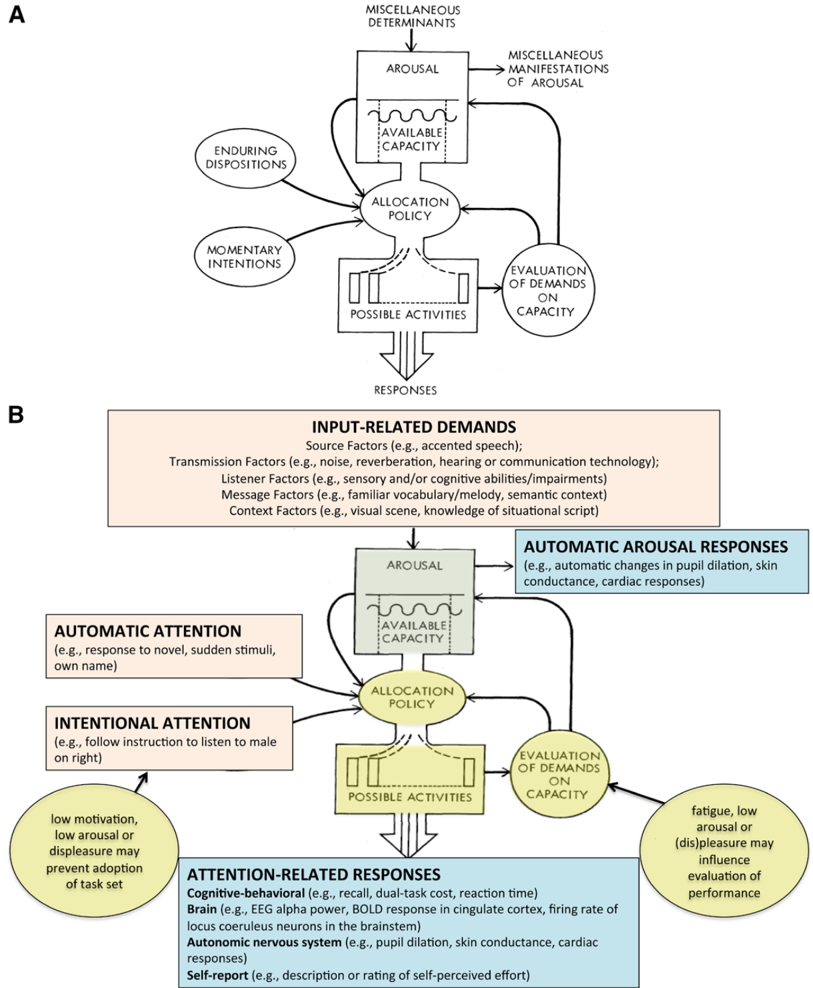
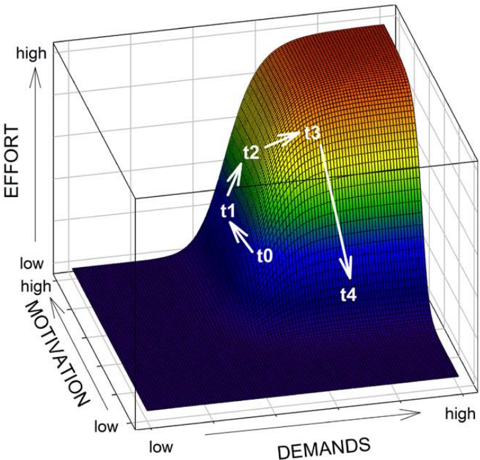
The Fifth Eriksholm Workshop on "Hearing Impairment and Cognitive Energy" was convened to develop a consensus among interdisciplinary experts about what is known on the topic, gaps in knowledge, the use of terminology, priorities for future research, and implications for practice. The general term cognitive energy was chosen to facilitate the broadest possible discussion of the topic. It goes back to who described the effects of attention on perception; he used the term psychic energy for the notion that limited mental resources can be flexibly allocated among perceptual and mental activities. The workshop focused on three main areas: (1) theories, models, concepts, definitions, and frameworks; (2) methods and measures; and (3) knowledge translation. We defined effort as the deliberate allocation of mental resources to overcome obstacles in goal pursuit when carrying out a task, with listening effort applying more specifically when tasks involve listening. We adapted Kahneman's seminal (1973) Capacity Model of Attention to listening and proposed a heuristically useful Framework for Understanding Effortful Listening (FUEL). Our FUEL incorporates the well-known relationship between cognitive demand and the supply of cognitive capacity that is the foundation of cognitive theories of attention. Our FUEL also incorporates a motivation dimension based on complementary theories of motivational intensity, adaptive gain control, and optimal performance, fatigue, and pleasure. Using a three-dimensional illustration, we highlight how listening effort depends not only on hearing difficulties and task demands but also on the listener's motivation to expend mental effort in the challenging situations of everyday life.
Overview
CoChat Summary
TL;DR
The paper reports the Fifth Eriksholm Workshop consensus and proposes FUEL, a conceptual framework for understanding effortful listening that integrates cognitive capacity, motivation, fatigue, and pleasure. It argues that listening effort depends not only on audibility and task demands but also on how listeners evaluate the value of exerting effort in everyday communication.
Key findings
- The workshop’s consensus was that no single existing theory or model sufficiently explains listening effort, so FUEL was proposed as a conceptual framework rather than a quantitative model.
- FUEL adapts Kahneman’s Capacity Model of Attention and adds a motivation dimension; the paper states that effort varies with both demands and motivation, illustrated with a 3D plot of effort, demands, and motivation.
- The paper defines effort as “the deliberate allocation of mental resources to overcome obstacles in goal pursuit when carrying out a task,” and listening effort as effort involved in listening; it extends listening beyond speech to music and environmental sounds.
- The paper organizes candidate listening-effort measures into behavioral, physiological, and self-report measures, and notes that some measures are more sensitive to demands, some to motivation, and some to both.
Methods
- Consensus workshop paper based on the Fifth Eriksholm Workshop on Hearing Impairment and Cognitive Energy, held in June 2015, with 16 participants from audiology, engineering, neuroscience, speech perception, gerontology, philosophy, and psychology.
- The workshop reviewed existing theories/models, definitions, and methods/measures relevant to effortful listening, and used the discussion to develop shared terminology and the FUEL framework.
- The paper’s analysis is conceptual and comparative: it contrasts theories, maps candidate measures onto demand and motivation dimensions, and adapts Kahneman’s model into a listening-specific framework.
Limitations
- The paper explicitly states that the field is not yet at a stage where outcomes can be quantitatively predicted, so FUEL is proposed as a framework rather than a model.
- It states that there is no agreement on an appropriate scale for effort, demands, or motivation, and that the shape of the functions relating them is unknown.
- Evident from the text: the framework is based on a workshop consensus and literature synthesis rather than new empirical data or direct validation studies of FUEL.
Model-written summary of a shortened version of the paper’s full text (it is longer than we read). Check it against the paper before relying on it.
Integrity signals
Registry
Cites
Statistics
Figures
Verification
Claims the paper makes
3 Valid · 7 Not valid · 27 Not checked · 32 Own results and interpretations
Every source the paper cites for this claim was checked and supports it.
In the paper
“From a population health perspective, epidemiological research has provided evidence of a significant association between hearing loss and incident dementia (Albers et al. 2015) and prompted questions regarding the potential advantages of adopting a more integrated approach to research on hearing health and cognitive health (Dupuis et al. 2015; Pichora-Fuller et al. 2015).”
What the sources say
- Supportedcites Albers et al. 2015 matched to “At the interface of sensory and motor dysfunctions and Alzheimer’s disease.” (2015) source
The Epidemiological and Clinical Studies section reports that a prospective cohort found hearing loss independently associated with incident all-cause dementia, with a 95% confidence interval of 1.06–1.50 for the reported risk increase. The paper reports epidemiological evidence for the association; the citing sentence does not claim that it established causation. (LLM, conf=0.94)
plainstates an association- Asserted: passes — The authors put it forward as true.
- Checkable: passes — It can be checked against evidence.
- Load-bearing: unclear — It is unclear whether the paper’s conclusions depend on it.
- Based: passes — The paper gives a reason why it holds.
- Supported
A conclusion the paper draws from its own results — it cites no other source for it, so there is none to check. The quote shows it is in the paper.
In the paper
“Individuals may also need to allocate more cognitive capacity to comprehend, remember, and respond to the auditory objects and events that they have perceived.”
hedgedstates a possible cause- Asserted: passes — The authors put it forward as true.
- Checkable: passes — It can be checked against evidence.
- Load-bearing: passes — The paper’s conclusions depend on it.
- Based: passes — The paper gives a reason why it holds.
A conclusion the paper draws from its own results — it cites no other source for it, so there is none to check. The quote shows it is in the paper.
In the paper
“Therefore, success in achieving listening goals may depend on the deployment of greater cognitive energy when the quality of the signal available to the listener is suboptimal.”
hedgedstates a possible cause- Asserted: passes — The authors put it forward as true.
- Checkable: passes — It can be checked against evidence.
- Load-bearing: passes — The paper’s conclusions depend on it.
- Based: passes — The paper gives a reason why it holds.
None of the sources cited for this claim have been checked yet.
In the paper
“These changes in temporal auditory processing are thought to underpin problems understanding speech in noise and also remembering it once it has been heard.”
hedgedstates a possible cause- Asserted: passes — The authors put it forward as true.
- Checkable: passes — It can be checked against evidence.
- Load-bearing: passes — The paper’s conclusions depend on it.
- Based: passes — The paper gives a reason why it holds.
None of the sources cited for this claim have been checked yet.
In the paper
“(3) his idea that there will be increased mental activity when demands are increased is compatible with the current notion of cognitive compensation (Pichora-Fuller 2010; Grady 2012).”
What the sources say
- Not matchedcites Pichora-Fuller 2010
An author–year citation the paper’s reference list doesn’t settle. We don’t search these by name.
- Not checked — no full text of the sourcecites Grady 2012 matched to “The cognitive neuroscience of ageing” (2012) source
plainstates an association- Asserted: passes — The authors put it forward as true.
- Checkable: passes — It can be checked against evidence.
- Load-bearing: unclear — It is unclear whether the paper’s conclusions depend on it.
- Based: passes — The paper gives a reason why it holds.
- Not matched
15 more claims
Create a free account to see all 69 claims and to verify the 2 references still open.
- It may state two separate claims as one. 13
- Probably not a substantial claim. 46
Claims other papers make about this one
Each is checked against this paper’s own text: does it say what the citing paper says it does?
The cited source says what the claim attributes to it.
In the citing paper
“The subjective experience of effort during communication is likely to precede more chronic experiences of fatigue (Pichora-Fuller et al., 2016).”
From Language proficiency drives listening-related fatigue in those who communicate in English as their second language (2026) · cites this paper as Pichora-Fuller et al., 2016
In the citing paper
“Changes in these kinds of subjective judgments over the course of a communication scenario will likely influence whether or not an individual chooses to withdraw or sustain engagement (Pichora-Fuller et al., 2016).”
From Effortful listening under the microscope: Examining relations between pupillometric and subjective markers of effort and tiredness from listening (2021) · cites this paper as Pichora-Fuller et al., 2016
In the citing paper
“This finding lends weight to the argument that TEPR is not an objective correlate of the subjective experience of listening effort (McGarrigle et al., 2014;Pichora-Fuller et al., 2016;Strand et al., 2018).”
From Effortful listening under the microscope: Examining relations between pupillometric and subjective markers of effort and tiredness from listening (2021) · cites this paper as Pichora-Fuller et al., 2016
In the citing paper
“Thus, to reach lexical access in such adverse conditions, there is a greater need to rely on mental and cognitive processes (Pichora-Fuller et al., 2016; Rönnberg et al., 2008, 2013, 2019).”
From The Involvement of Listening Effort in Explaining Bilingual Listening Under Adverse Listening Conditions (2023) · cites this paper as Pichora-Fuller et al., 2016
In the citing paper
“Our findings are consistent with the FUEL (Pichora-Fuller et al., 2016) and extend it to primary school children.”
From Listening effort and fatigue in native and non-native primary school children (2021) · cites this paper as Pichora-Fuller et al., 2016
5 more claims about this paper
Create a free account to see every claim other papers make about this one.
Citations
Cites
The relation of strength of stimulus to rapidity of habit formation
Yerkes, R. M., & Dodson, J. D. (1908) · Journal of Comparative Neurology and Psychology · doi:10.1002/cne.920180503 · Cited by 6,911
Individual differences in working memory and reading
Daneman, M., & Carpenter, P. A. (1980) · Journal of Verbal Learning and Verbal Behavior · doi:10.1016/s0022-5371(80)90312-6 · Cited by 6,336
The processing-speed theory of adult age differences in cognition
Salthouse, T. A. (1996) · Psychological Review · doi:10.1037/0033-295x.103.3.403 · Cited by 5,902
Social Relationships and Health.
Cohen, S. (2004) · American Psychologist · doi:10.1037/0003-066x.59.8.676 · Cited by 4,852
Aston-Jones, G., & Cohen, J. D. (2005) · Annual Review of Neuroscience · doi:10.1146/annurev.neuro.28.061604.135709 · Cited by 4,472
Broadbent, D. E. (1958) · doi:10.1037/10037-000 · Cited by 4,337
A capacity theory of comprehension: individual differences in working memory
Just, M. A., & Carpenter, P. A. (1992) · Psychological Review · doi:10.1037/0033-295x.99.1.122 · Cited by 4,153
The adaptive brain: aging and neurocognitive scaffolding
Park, D. C., & Reuter-Lorenz, P. (2009) · Annual Review of Psychology · doi:10.1146/annurev.psych.59.103006.093656 · Cited by 2,790
Motor control and aging: Links to age-related brain structural, functional, and biochemical effects
Seidler, R. D., Bernard, J. A., Burutolu, T. B., Fling, B. W., Gordon, M. T., Gwin, J. T., Kwak, Y., & Lipps, D. B. (2010) · Neuroscience & Biobehavioral Reviews · doi:10.1016/j.neubiorev.2009.10.005 · Cited by 1,791
Neurocognitive Aging and the Compensation Hypothesis
Reuter-Lorenz, P. A., & Cappell, K. A. (2008) · Current Directions in Psychological Science · doi:10.1111/j.1467-8721.2008.00570.x · Cited by 1,639
Research works printed but not linked: 2
- Robertson, 1997, The effect of an aural rehabilitation program on responses to scenarios depicting communication breakdown., J Speech Lang Pathol Audiol, 21, 187
- Smith, Development of the Word Auditory Recognition and Recall Measure (WARRM): A working memory test for use in rehabilitative audiology, Ear Hear
Cited by
Items 1,101–1,200 of 1,325
Engaging effort improves efficiency during spoken word recognition in cochlear implant users
Colby, S., & McMurray, B. (2025) · Quarterly Journal of Experimental Psychology · doi:10.1177/17470218251325145 · Cited by 2
Mansilla-Jara, F., Julio–Ramos, T., Godoy–Díaz, Á., Solomons, D., Cigarroa, I., & Toloza–Ramirez, D. (2025) · Revista de Investigación e Innovación en Ciencias de la Salud · doi:10.46634/riics.363
Minimal background noise enhances neural speech tracking: Evidence of stochastic resonancePreprint
Herrmann, B. (2025) · eLife · doi:10.7554/elife.100830.2
Hohenberg, G., Ehlers, J. P., & Ostermann, T. (2025) · Journal of dementia and Alzheimer's disease · doi:10.3390/jdad2020008 · Cited by 1
Effect of simultaneous physical and auditory stressors on cardiorespiratory response
Buj, C., Preuß, M., Mörsdorf, M., Schmidt, A., Guckel, D., Dumitrescu, D., Klein, F., Straetmans, L., Eichelberg, M., & Hein, A. (2025) · Scientific Reports · doi:10.1038/s41598-025-96845-3
“As a broad topic in the field of application and research of audiology, determining the individual level of auditory stress can provide tools for reducing listening effort and thus reducing hearing fatigue 1–3 .”
Milvae, K. D., Kuchinsky, S. E., Nguyen, N., & Goupell, M. J. (2025) · The Journal of the Acoustical Society of America · doi:10.1121/10.0036440 · Cited by 1
The neural basis for auditory and audiovisual speech perceptionPreprint
Peelle, J. E. (2019) · PsyArXiv (OSF Preprints) · doi:10.31234/osf.io/39ej7_v1 · Cited by 1
Interactions between audition and cognition in hearing loss and agingPreprint
Rogers, C. S., & Peelle, J. E. (2019) · PsyArXiv (OSF Preprints) · doi:10.31234/osf.io/d2bxw_v1
Language and agingPreprint
Peelle, J. E. (2019) · PsyArXiv (OSF Preprints) · doi:10.31234/osf.io/xp29u_v1
Faustmann, G., Schönweiler, R., & Löhler, J. (2025) · Laryngo-Rhino-Otologie · doi:10.1055/a-2547-6600
Fiedler, L., Johnsrude, I. S., & Wendt, D. (2025) · bioRxiv (Cold Spring Harbor Laboratory) · doi:10.1101/2025.05.20.655069
Balance Performance in Children Who Are Deaf and Hard of Hearing
King, A. C., Frazier, A., Werfel, K. L., et al. (2025) · Audiology and Neurotology · doi:10.1159/000545482
“For example, given existing evidence that children who are DHH experience chronic fatigue [23], it is possible those fatigue levels may interact with balance in real-life learning situations to in fl uence language and literacy outcomes.”
ALICE: Improved speech in noise understanding with self-guided hearing carePreprint
Wieringen, A. V., Wilderode, M. V., Ridder, L. D., et al. (2025) · medRxiv · doi:10.1101/2025.05.28.25328487
Avan, P., Petit, C., & Deltenre, P. (2025) · Elsevier eBooks · doi:10.1016/b978-0-443-10944-7.00007-x · Cited by 1
Assessment of listening effort experience in normal and hearing-impaired adult population
Kamal, N., Kholy, W. E., El-kabarity, R. H., & Salah, S. M. (2025) · The Egyptian Journal of Otolaryngology · doi:10.1186/s43163-025-00843-1
“Listening effort is defined as “the deliberate allocation of mental resources to overcome obstacles in goal pursuit when carrying out a task that involves listening” [2].”
Kobayashi, A., Fujie, S., & Yasu, K. (2025) · Communications in computer and information science · doi:10.1007/978-3-031-94156-6_11
Noise influence on context formation and lexical retrieval in speech comprehension
Hsin, C.-H., & Lee, C. (2025) · Journal of Neurolinguistics · doi:10.1016/j.jneuroling.2025.101270 · Cited by 1
Porto, L., Wouters, J. M., & Wieringen, A. V. (2025) · Ear and Hearing · doi:10.1097/aud.0000000000001680 · Cited by 2
Petley, L., Gascoyne, S. J., & Hoffman, M. (2025) · Auditory Perception & Cognition · doi:10.1080/25742442.2025.2518040
Listening effort across non-native and regional accents: a pupillometry studyPreprint
Barnard, M., Kunkel, S., Lamarque, R., et al. (2025) · doi:10.31219/osf.io/328pf_v1
Effects of simulated cochlear implant listening on postural control in typical-hearing adults
Özdemir, S., Batuk, M. Ö., D’Alessandro, H. D., et al. (2025) · Auris Nasus Larynx · doi:10.1016/j.anl.2025.06.001
Zink, M. E., Zhen, L. Q., McHaney, J. R., Klara, J., Yurasits, K., Cancel, V. E., Flemm, O., Mitchell, C., Datta, J., Chandrasekaran, B., et al. (2025) · eLife · doi:10.7554/elife.102823.2
Wang, S., & Wong, L. L. N. (2025) · American Journal of Audiology · doi:10.1044/2025_aja-24-00264
Lewis, C. T., Malak, S., Hamada, F., & Toman, J. (2025) · Journal of Aging and Health · doi:10.1177/08982643251360309 · Cited by 2
Cochlear implantation, multilingualism, and multimodality
Knoors, H. E. T., & Dirks, E. (2025) · Oxford University Press eBooks · doi:10.1093/9780198974550.003.0011 · Cited by 1
Language development in the first years of life: An introduction
Knoors, H. E. T., & Dirks, E. (2025) · Oxford University Press eBooks · doi:10.1093/9780198974550.003.0001
Hearing, hearing loss, and being deaf
Knoors, H. E. T., & Dirks, E. (2025) · Oxford University Press eBooks · doi:10.1093/9780198974550.003.0002
Knoors, H. E. T., & Dirks, E. (2025) · Oxford University Press eBooks · doi:10.1093/9780198974550.003.0006
Cochlear implants (CIs) for children with additional disabilities
Knoors, H. E. T., & Dirks, E. (2025) · Oxford University Press eBooks · doi:10.1093/9780198974550.003.0013
Identity, deaf culture, and deaf community
Knoors, H. E. T., & Dirks, E. (2025) · Oxford University Press eBooks · doi:10.1093/9780198974550.003.0012
Family-centered early intervention (FCEI)
Knoors, H. E. T., & Dirks, E. (2025) · Oxford University Press eBooks · doi:10.1093/9780198974550.003.0014
Knoors, H. E. T., & Dirks, E. (2025) · Oxford University Press eBooks · doi:10.1093/9780198974550.003.0007
Caron, C. J., Vilain, C., Schwartz, J., et al. (2025) · Journal of Speech Language and Hearing Research · doi:10.1044/2025_jslhr-24-00334
How does otitis media with effusion history affect spatial auditory processing and listening effort?
Yosef, M. B., Trau-Margalit, A., Harel-Arbeli, T., & Taitelbaum‐Swead, R. (2025) · European Archives of Oto-Rhino-Laryngology · doi:10.1007/s00405-025-09570-y · Cited by 1
“Over the past decade, listening effort (LE) has been recognized as a critical factor, defined as the allocation of cognitive resources, such as attention and memory, to overcome obstacles in speech perception, particularly under challenging listening conditions [17, 18].”
Listening Effort and Memory Effort in Cochlear Implant Users: A Pupillometry Study
Bönitz, H., Fiedler, L., Finke, M., Lyxell, B., Lunner, T., Valdés, A. L., Büchner, A., & Wendt, D. (2025) · Ear and Hearing · doi:10.1097/aud.0000000000001698
Self-citationSinging in Noise: Can Music-Based Acoustic Features Aid Speech-in-Noise Comprehension?
Zendel, B. R., & Robbins, L. (2025) · Auditory Perception & Cognition · doi:10.1080/25742442.2025.2541861
Marshall, K., Vess, A., Novick, J. M., & Slevc, L. R. (2026) · Language Cognition and Neuroscience · doi:10.1080/23273798.2026.2637577
“…be that less robust topic structure representations impair the ability to encode memories relative to discourse structure, or that changes in cognitive effort due to topic transitions alter the resources available for other discourse processes (Evans et al., 2024; Pichora-Fuller et al., 2016).”
Hearing Loss Impacts the Temporal Patterning of Pupillary Dilation in Processing Spoken Stories
O'Leary, R. M., Carlson, E. L., & Wingfield, A. (2025) · Journal of Speech Language and Hearing Research · doi:10.1044/2025_jslhr-25-00088 · Cited by 1
Self-citationBianchi, F., Jonsson, S., Christiansen, T., & Ng, E. H. N. (2025) · Trends in Hearing · doi:10.1177/23312165251367630
“…task demands are increased, for example, by increasing the level of background noise, the increase in cognitive resources needed to understand speech in a higher level of noise (i.e., listening effort; Pichora-Fuller et al., 2016) can be inferred by a decrease in performance on the secondary task.”
InfluentialMohanathas, N., Montanari, L., Downey, R., Li, K., Pichora-Fuller, M. K., Bherer, L., Lussier, M., Phillips, N. D., Wittich, W., St-Onge, N., et al. (2026) · PLoS ONE · doi:10.1371/journal.pone.0331276 · Cited by 1
“…to the Framework for Understanding Effortful Listening model, effortful listening may draw on domain-general cognitive resources, particularly under degraded auditory conditions [39] and this could be detrimental to other important tasks that draw on similar resources, such as balancing [40,41].”
Self-citationMobarakeh, Z. I. P., Rahimi, V., Tavanai, E., Amiri, M., Faryadras, R., & Aazh, H. (2025) · International Journal of Audiology · doi:10.1080/14992027.2025.2547939
“Listening effort (LE) is defined as the deliberate allocation of cognitive resources to overcome obstacles in goal pursuit during a listening task (Pichora-Fuller et al., 2016).”
InfluentialPerron, M., Dimitrijevic, A., & Alain, C. (2025) · Trends in Hearing · doi:10.1177/23312165251375891 · Cited by 2
“…broader dimensions of cognitive and emotional load, including frustration, motivation, and metacognitive awareness (Herrmann & Johnsrude, 2020; Pichora-Fuller et al., 2016), whereas neural measures such as alpha power more directly index cognitive resource allocation and sensory inhibition…”
Trinesh, R., & Uppunda, A. K. (2025) · The Egyptian Journal of Otolaryngology · doi:10.1186/s43163-025-00902-7
“The efficiency of WM is largely determined by the quality of sensory input [3–5].”
Andersson, K. E., Christensen, J. H., Holman, J. A., & Neher, T. (2025) · International Journal of Audiology · doi:10.1080/14992027.2025.2558690
“Specifically, we examined whether the association between heart rate and importance ratings are stronger in speech-related listening situations under higher acoustic demands (higher SPL and lower SNR), consistent with FUEL (Pichora-Fuller et al. 2016), the Motivational Intensity Theory (Brehm and Self 1989), and the c…”
InfluentialKestens, K., Lepla, E., Vandoorne, F., Ceuleers, D., Goylen, L. V., & Keppler, H. (2025) · Journal of Communication Disorders · doi:10.1016/j.jcomdis.2025.106571 · Cited by 5
Sarangi, L., Johnson, J. A., & Bidelman, G. M. (2025) · Audiology Research · doi:10.3390/audiolres15050122 · Cited by 1
Sinfield, V. C., Snyder, S., Tong, Y., & Shader, M. J. (2025) · Hearing Research · doi:10.1016/j.heares.2025.109427 · Cited by 1
“Importantly, FUEL highlights that this effort can be measured in several ways: behavioral performance (e.g., accuracy or reaction time), self-reported exertion, and physiological responses – particularly neural and autonomic markers of cognitive load (Pichora-Fuller et al., 2016).”
InfluentialAccented Speech Perception in Noise After Mild Traumatic Brain Injury
Ricciardone, A., Phillips, M. C., Heffner, C. C., & Myers, E. B. (2025) · Journal of Speech Language and Hearing Research · doi:10.1044/2025_jslhr-24-00879
Bilingual Perception of Dysarthric Speech
Tetzloff, K. A., Fletcher, A. R., Lansford, K. L., Barrett, T. S., & Borrie, S. A. (2025) · Journal of Speech Language and Hearing Research · doi:10.1044/2025_jslhr-25-00288
Perception of hearing loss among call center workers in Barranquilla (Northern Colombia)
Vargas, D. M. O., Hernández, A. C., Almanza, K. P. B., & Sierra, C. A. S. (2025) · Revista Científica Multidisciplinar G-nerando · doi:10.60100/rcmg.v6i2.801
“…of domains and items was supported by evidence on speech intelligibility in noise, listening effort, and auditory and non-auditory effects of noise in work contexts with high communicative demand (Basner et al., 2014; Pichora-Fuller et al., 2016; Peelle, 2018; Francis & Love, 2020; WHO, 2018).”
Neumann, S., Calise, S., Dwyer, B., & Agrawal, S. (2025) · Otology & Neurotology Open · doi:10.1097/ono.0000000000000078
“…in adults (16–18) and children (18–21) and contributes to listening-related fatigue (22), which is important considering the nonfinite nature of cognitive resources (23) and that cognitive demand (influenced by HL and task demands) and motivation are key contributors to listening effort (12).”
Ren, Y., Cui, M. E., & Herrmann, B. (2026) · Journal of Neuroscience · doi:10.1523/jneurosci.1958-25.2026 · Cited by 1
Communication disorders in neurodegenerative disease: Future directions
Roger, É., & Joanette, Y. (2025) · Oxford University Press eBooks · doi:10.1093/oxfordhb/9780198888482.013.0025
Hamery, C., Isnard, V., Lemouton, M., Andéol, G., & Scannella, S. (2025) · Ear and Hearing · doi:10.1097/aud.0000000000001738
Listening effort in age-related hearing loss
Slade, K., & McGarrigle, R. (2025) · Elsevier eBooks · doi:10.1016/b978-0-443-29198-2.00008-4
Cross-modal and cortical neuroplasticity in age-related hearing loss
Sharma, A., Cormier, K., & Schimmel, C. (2025) · Elsevier eBooks · doi:10.1016/b978-0-443-29198-2.00006-0
Goodwin, M. V., & Maidment, D. W. (2025) · Elsevier eBooks · doi:10.1016/b978-0-443-29198-2.00007-2
Aging of the brain systems supporting speech perception
Tremblay, P., Marion-Flamand, M.-A., Ratelle, D., & Sicard, A. (2025) · Elsevier eBooks · doi:10.1016/b978-0-443-29198-2.00001-1
Al-Samiri, R. A. (2025) · Asian-Pacific Journal of Second and Foreign Language Education · doi:10.1186/s40862-025-00358-5
“The authors attributed the advantage of not receiving visual cues compared to seeing the masked speaker to the effect of effortful listening (Pichora-Fuller et al., 2016), in which the listener uses more effort and cognitive capacity to decode speech in the presence of obstacles, such as a face…”
Visual Speech Reduces Cognitive Effort as Measured by EEG Theta Power and Pupil Dilation
Man, B. K. L., Wendt, D., Ng, E. H. N., Eskelund, K., & Andersen, T. (2025) · eNeuro · doi:10.1523/eneuro.0288-25.2025
Thakkar, T. D., Knoepker, J., Dennison, S. R., Roche, J. P., & Litovsky, R. Y. (2025) · Frontiers in Neuroscience · doi:10.3389/fnins.2025.1655826 · Cited by 1
ALICE: Improved Speech in Noise Understanding with Self-guided Hearing Care
Wieringen, A. V., Wilderode, M. V., Ridder, L. D., Francart, T., & Wouters, J. M. (2025) · Trends in Hearing · doi:10.1177/23312165251393034 · Cited by 1
“Without appropriate follow-up, a person with HL will experience increased listening effort and dif fi culties with communication, learning, social-emotional functioning, employment, and quality of life (Davis et al., 2016; Denham et al., 2024; Pichora-Fuller et al., 2016).”
Bologna, W. J., Buckheit, K. P., Esser, K., de Larrea-Mancera, E. S. L., Stecker, G. C., Gallun, F. J., & Seitz, A. R. (2025) · Journal of Speech Language and Hearing Research · doi:10.1044/2025_jslhr-24-00794
“In the interest of building the scientific knowledge around these dimensions of “ listening effort, ” Pichora-Fuller et al. (2016) proposed the Framework for Understanding Effortful Listening (FUEL).”
InfluentialZhen, L. Q., Parida, S., McHaney, J. R., Zink, M. E., Chandrasekaran, B., & Parthasarathy, A. (2025) · bioRxiv (Cold Spring Harbor Laboratory) · doi:10.1101/2025.11.17.688858 · Cited by 1
“Auditory perception depends not only on peripheral fidelity but also on dynamic allocation of cognitive resources, particularly in noisy environments that require selective attention and working-memory updating (Gordon-Salant and Cole, 2016; Pichora-Fuller et al., 2016).”
Karaiskos, C., Vlastos, I. M., Rachiotis, G., Simou, E., Dounias, G., & Kikemeni, A. (2025) · Archives of Environmental & Occupational Health · doi:10.1080/19338244.2025.2588594
Acoustic Conditions and Student Perceptions in a Québec Classroom: A Case Study
Pommée, T., Bouserhal, R. E., Chang, T., Renaud, F., Borges, C. M. F., Bockstael, A., & Verduyckt, I. A. (2025) · Noise and Health · doi:10.4103/nah.nah_102_25
“[41] Classrooms often impose high listening demands due to poor acoustics.”
Marx, M., Taoui, S., Mosnier, I., Venail, F., Mondain, M., Uziel, A. S., Bakhos, D., Lescanne, E., Nguyen, Y., Bernardeschi, D., et al. (2025) · Annales françaises d Oto-rhino-laryngologie et de Pathologie Cervico-faciale · doi:10.1016/j.aforl.2025.02.005
Investigating hearing aid use with smartphone app integration in older adults
Ceylan, D. Ş., Gültekin, G., Saçlı, Y., Aksu, B. A., & Aksu, B. (2025) · The Egyptian Journal of Otolaryngology · doi:10.1186/s43163-025-00930-3
“…explain the relationship between hearing loss and cognitive decline including (1) sustained elevated cognitive effort, and/or (2) cognitive fatigue in compensating for untreated hearing loss and communication breakdown [23], and (3) sensory deprivation partly due to reduced social interaction [10].”
Subjective Versus Objective Measures of Listening Effort in Multilingual Individuals
Bsharat-Maalouf, D., Degani, T., & Karawani, H. (2025) · Journal of Speech Language and Hearing Research · doi:10.1044/2025_jslhr-25-00307
Decoding child speech in silence and noise: The type of background noise shapes adults’ processing
Samimifar, M., & Bulgarelli, F. (2025) · Attention Perception & Psychophysics · doi:10.3758/s13414-025-03194-4
“Environmental conditions, such as background noise, further complicate speech perception, leading to increased effort and potential errors in comprehension (Borghini & Hazan, 2020; Pichora-Fuller et al., 2016).”
Raghavendra, S. (2025) · Journal of Otorhinolaryngology Hearing and Balance Medicine · doi:10.3390/ohbm6020024 · Cited by 2
Marsja, E., Signoret, C., & Stenbäck, V. (2025) · Work · doi:10.1177/10519815251398498 · Cited by 1
“Within the FUEL, 5 turn-taking could be interpreted as a message factor, as it decreases the complexity of the listening situation (i.e., by reducing the number of simultaneous talkers).”
InfluentialMobile eye-tracking glasses capture ocular and head markers of listening effort
Cui, M. E., Verno-Lavigne, E., Saxena, S., Fink, L., & Herrmann, B. (2025) · JASA Express Letters · doi:10.1121/10.0041807 · Cited by 3
de Ruijter, J. H. J., Zekveld, A. A., Stronks, H. C., Smits, C., Frijns, J. H. M., & Kramer, S. E. (2025) · Ear and Hearing · doi:10.1097/aud.0000000000001761 · Cited by 1
Self-citationCognitive Tests and Acceptance of Noise in Older Adults With Normal Hearing
Hedrick, M. S., Bugg, L., Mazeall, L., Grayless, B., Plyler, P. N., & Bolden, J. (2025) · American Journal of Audiology · doi:10.1044/2025_aja-25-00102
Wunderlich, A., Wollesen, B., Asamoah, J., Delbaere, K., & Li, K. (2024) · Figshare · doi:10.6084/m9.figshare.26094286
Valzolgher, C., Capra, S., Gessa, E., Rosi, T., Giovanelli, E., & Pavani, F. (2024) · Figshare · doi:10.6084/m9.figshare.26665438
Barker, B. A., & Reid, H. K. (2022) · OSF Preprints (OSF Preprints) · doi:10.31219/osf.io/prtmx
Keur‐Huizinga, L., Huizinga, N. A., Zekveld, A. A., Versfeld, N. J., de Geus, E. J. C., & Kramer, S. E. (2025) · Hearing Research · doi:10.1016/j.heares.2025.109523
Self-citationÇULHAOĞLU, B., Çağlar, T. G., & Erbek, S. H. (2026) · Irish Journal of Medical Science (1971 -) · doi:10.1007/s11845-025-04257-z
Tamati, T. N., & Ingvalson, E. M. (2026) · Frontiers in Psychology · doi:10.3389/fpsyg.2025.1652000
Slade, K., Davies, R., Pennington, C. R., Plack, C. J., & Nuttall, H. E. (2026) · Journal of Speech Language and Hearing Research · doi:10.1044/2025_jslhr-24-00704
Can, M., Söylemez, E., Aydoğan, Z., Karakoç, K., & Yilmaz, S. (2026) · Applied Neuropsychology Adult · doi:10.1080/23279095.2026.2616787 · Cited by 1
Carneiro, L. A., Salimon, A., Hornsby, B. W. Y., et al. (2026) · International Journal of Audiology · doi:10.1080/14992027.2026.2615087
Self-citationFidgeting Increases Pupil Diameter During Auditory Processing in Young Healthy Adults
Kataoka, S., Miyaguchi, H., Ishizuki, C., Fukuda, H., Yasunaga, M., & Kirimoto, H. (2026) · Brain Sciences · doi:10.3390/brainsci16020127
Gastaldon, S., Gheller, F., Bonfiglio, N., Brotto, D., Bottari, D., Trevisi, P., Martini, A., Vespignani, F., & Peressotti, F. (2026) · bioRxiv (Cold Spring Harbor Laboratory) · doi:10.64898/2026.01.25.701504
Mohanathasan, C., Koleva, P. B., Ehret, J., Bönsch, A., Fels, J., Kuhlen, T., & Schlittmeier, S. J. (2026) · Acta Psychologica · doi:10.1016/j.actpsy.2026.106295
Peripheral phoneme encoding and discrimination in aging and hearing impairmentPreprint
Wouters, M., Gaudrain, É., Dapper, K., et al. (2026) · bioRxiv (Cold Spring Harbor Laboratory) · doi:10.64898/2026.01.27.702044
Downey, R. I., Petersen, B., Mohanathas, N., Campos, J. L., Montero‐Odasso, M., Bherer, L., Pichora-Fuller, M. K., Bray, N. W., Burhan, A. M., Camicioli, R. M., et al. (2026) · Frontiers in Aging Neuroscience · doi:10.3389/fnagi.2025.1716733 · Cited by 1
Self-citationSantangelo, M., Barachetti, C., Guerzoni, L., et al. (2026) · Cochlear Implants International · doi:10.1080/14670100.2026.2620276
“It has been shown that exposure to noisy backgrounds prevents children with CIs from adequately compre-hending spoken language (Davies et al., 2001) and makes more difficult the cognitive load under which children attempt to process auditory information (Pichora-Fuller et al., 2016).”
Hunter, C. R. (2026) · Ear and Hearing · doi:10.1097/aud.0000000000001785
Development of a Noise Desensitization Program to improve speech perception in noise for adultsPreprint
Susmitha, C., & Selvi.T, M. S. (2026) · Research Square · doi:10.21203/rs.3.rs-8268562/v1
Shim, S., & Jang, H. (2026) · Audiology and Speech Research · doi:10.21848/asr.250193
“작업기억은 제한된 용량의 인지적 작업 공간으로 [2], 소음으 로 인해 불완전하게 들어온 음성 신호를 일시적으로 유지하고 장 기기억의 언어 지식과 결합하여 의미를 재구성하는 ‘노력적 청취 (effortful listening)’ 과정에 필수적인 역할을 한다 [3].”
Goylen, L. V., Kestens, K., & Keppler, H. (2026) · American Journal of Audiology · doi:10.1044/2025_aja-25-00089
Exploring resting EEG correlates of age-related hearing difficulties
Hunter, C. R. (2026) · Frontiers in Neuroscience · doi:10.3389/fnins.2026.1736209
Şenli, F. D., Ozkan, A., Acartürk, C., & Çınar, B. Ç. (2026) · European Archives of Oto-Rhino-Laryngology · doi:10.1007/s00405-025-10000-2
“This dissociation is effectively explained by the Framework for Understanding Effortful Listening (FUEL), which concep - tualizes listening effort as a multidimensional phenomenon shaped by task demands and individual cognitive resources [ 2 ].”
Objective and Subjective Measures of Children's Engagement With Auditory Narratives
Robinson, S. M. H., Platkin, R., Bobbitt, S., Hedger, S. C. V., & Butler, B. E. (2026) · Journal of Speech Language and Hearing Research · doi:10.1044/2025_jslhr-25-00646
Spatial hearing adaptation in congenital and acquired single-sided deafness
Ausili, S. A., Prentiss, S. M., Sheets, J. J., & Snapp, H. (2026) · Frontiers in Neuroscience · doi:10.3389/fnins.2026.1726012
Hearing Aids Can Reduce Listening Effort in School-Age Children Who Are Hard of Hearing
Gianakas, S. P., Wiseman, K. B., & Walker, E. A. (2026) · Ear and Hearing · doi:10.1097/aud.0000000000001802
Metadata
- Authors
- Pichora-Fuller, M. K., Kramer, S. E., Eckert, M. A., Edwards, B., Hornsby, B. W. Y., Humes, L. E., Lemke, U., Lunner, T., Matthen, M., Mackersie, C. L., Naylor, G., Phillips, N. A., Richter, M., Rudner, M., Sommers, M. S., Tremblay, K. L., & Wingfield, A.
- Affiliations
- Brandeis University (US)
- Vanderbilt University (US)
- Sonova (Switzerland) (CH)
- Oticon (Denmark) (DK)
- Earlens (United States) (US)
- University of Toronto (CA)
- Indiana University Bloomington (US)
- Corresponding author
- Pichora-Fuller, M. Kathleen
- ORCID
- Venue
- Ear & Hearing
- Published
- 2016-07
- Volume
- 37
- Issue
- 1
- Pages
- 5S-27S
- ISSN
- 0196-0202 (ISSN-L)
- OpenAlex
- W2472770001
- Semantic Scholar
- 353d1914960d7e69bd9f7dd3f6c74863cb5c1bcc
- Cited by
- 1,318
- References
- 132
- Citations by year
- 2026: 180 · 2025: 210 · 2024: 154 · 2023: 141 · 2022: 131 · 2021: 163 · 2020: 117 · 2019: 95 · 2018: 69 · 2017: 45 · 2016: 10
- FWCI
- 46.32
- Type
- journal article
- Language
- en
- Open access
- hybrid
- doi.org
- Licence
- Locations
- Ear and Hearing (publishedVersion, cc-by-nc-nd)
- PubMed (publishedVersion)
- Repository@Nottingham (University of Nottingham) (publishedVersion, cc-by-nc-nd)
- Amsterdam UMC (VU Amsterdam) - Institutional Repository (publishedVersion)
- Repository@Nottingham (University of Nottingham) (submittedVersion, cc-by-nc-nd)
- Pure Amsterdam UMC (submittedVersion, other-oa)
- Liverpool John Moores University (submittedVersion)
- Data Archiving and Networked Services (DANS) (submittedVersion)
- Funders
- University of Toronto
- Oticon Fonden
- Topics
- Health Sciences › Health Professions › Speech and Hearing › Hearing Loss and Rehabilitation
- Social Sciences › Psychology › Developmental and Educational Psychology › Hearing Impairment and Communication
- Life Sciences › Neuroscience › Sensory Systems › Hearing, Cochlea, Tinnitus, Genetics
- Keywords
- hearing loss, cognitive energy, listening effort, attentional capacity, cognitive demand, motivation, fatigue, pleasure, adaptive gain control, optimal performance, knowledge translation
- MeSH terms
- Attention, Auditory Perception, Cognition, Humans, Speech Perception, Comprehension, Hearing Loss
About these checks
Registry, retraction, Cites and statistics results are computed, not judged, with one exception: a printed reference that no index lists is read once by a model before it counts as a citation error. Claims are extracted by a model and kept only when their quote appears verbatim in the text; each cited source is then checked, with a model’s help, for whether it says what the claim relies on. Those verdicts can be wrong — read the claim’s quote and the cited source before relying on one.
The claim verdicts this report counts are experimental: their accuracy is not yet measured.
A language model drew the claims from the paper on 2026-10-10, under version 3 of the claim definition (model deepseek-v4.1-flash, prompt extract-v3).
A second model labelled each claim on 2026-10-10 (model jev-1.13-20260917, definition revision gold-guideline-v0.2).
Cited sources are checked with a language model’s help (gpt-6-sol).
Statistics and arithmetic are recomputed, not judged.
Confidence bands are shown only for fields calibrated on our annotated test set. None is calibrated yet, so no band is shown.
What counts as a claim ›How we measure confidence ›How we check this ›
Are you an author, or do you see a problem with this page? Request a review
Data sources
Bibliographic data: Semantic Scholar, OpenAlex, Crossref.
Contains information from the Semantic Scholar Academic Graph Datasets, made available under the ODC Attribution License (ODC-BY 1.0).
Semantic Scholar’s data is described in: Kinney, R., et al. (2023). The Semantic Scholar Open Data Platform. arXiv:2301.10140.
