

Hearing Impairment and Cognitive Energy: The Framework for Understanding Effortful Listening (FUEL)
Open accessThe DOI matches its Crossref record; 127 of the 132 references it cites were found in a registry or an index; 3 of the 43 sources its claims cite were checked for support.
Abstract
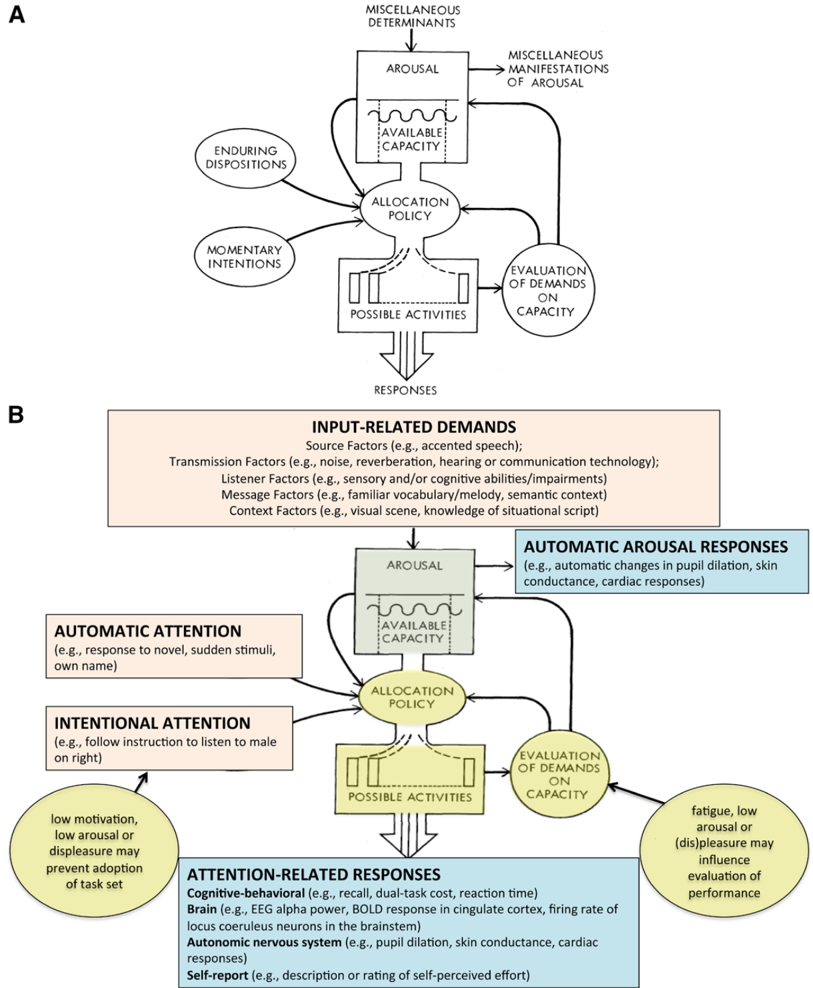
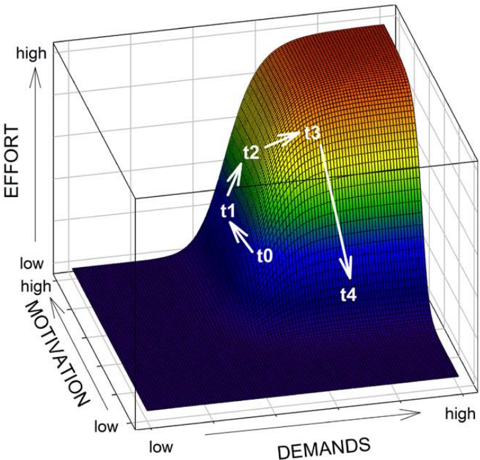
The Fifth Eriksholm Workshop on "Hearing Impairment and Cognitive Energy" was convened to develop a consensus among interdisciplinary experts about what is known on the topic, gaps in knowledge, the use of terminology, priorities for future research, and implications for practice. The general term cognitive energy was chosen to facilitate the broadest possible discussion of the topic. It goes back to who described the effects of attention on perception; he used the term psychic energy for the notion that limited mental resources can be flexibly allocated among perceptual and mental activities. The workshop focused on three main areas: (1) theories, models, concepts, definitions, and frameworks; (2) methods and measures; and (3) knowledge translation. We defined effort as the deliberate allocation of mental resources to overcome obstacles in goal pursuit when carrying out a task, with listening effort applying more specifically when tasks involve listening. We adapted Kahneman's seminal (1973) Capacity Model of Attention to listening and proposed a heuristically useful Framework for Understanding Effortful Listening (FUEL). Our FUEL incorporates the well-known relationship between cognitive demand and the supply of cognitive capacity that is the foundation of cognitive theories of attention. Our FUEL also incorporates a motivation dimension based on complementary theories of motivational intensity, adaptive gain control, and optimal performance, fatigue, and pleasure. Using a three-dimensional illustration, we highlight how listening effort depends not only on hearing difficulties and task demands but also on the listener's motivation to expend mental effort in the challenging situations of everyday life.
Overview
CoChat Summary
TL;DR
The paper reports the Fifth Eriksholm Workshop consensus and proposes FUEL, a conceptual framework for understanding effortful listening that integrates cognitive capacity, motivation, fatigue, and pleasure. It argues that listening effort depends not only on audibility and task demands but also on how listeners evaluate the value of exerting effort in everyday communication.
Key findings
- The workshop’s consensus was that no single existing theory or model sufficiently explains listening effort, so FUEL was proposed as a conceptual framework rather than a quantitative model.
- FUEL adapts Kahneman’s Capacity Model of Attention and adds a motivation dimension; the paper states that effort varies with both demands and motivation, illustrated with a 3D plot of effort, demands, and motivation.
- The paper defines effort as “the deliberate allocation of mental resources to overcome obstacles in goal pursuit when carrying out a task,” and listening effort as effort involved in listening; it extends listening beyond speech to music and environmental sounds.
- The paper organizes candidate listening-effort measures into behavioral, physiological, and self-report measures, and notes that some measures are more sensitive to demands, some to motivation, and some to both.
Methods
- Consensus workshop paper based on the Fifth Eriksholm Workshop on Hearing Impairment and Cognitive Energy, held in June 2015, with 16 participants from audiology, engineering, neuroscience, speech perception, gerontology, philosophy, and psychology.
- The workshop reviewed existing theories/models, definitions, and methods/measures relevant to effortful listening, and used the discussion to develop shared terminology and the FUEL framework.
- The paper’s analysis is conceptual and comparative: it contrasts theories, maps candidate measures onto demand and motivation dimensions, and adapts Kahneman’s model into a listening-specific framework.
Limitations
- The paper explicitly states that the field is not yet at a stage where outcomes can be quantitatively predicted, so FUEL is proposed as a framework rather than a model.
- It states that there is no agreement on an appropriate scale for effort, demands, or motivation, and that the shape of the functions relating them is unknown.
- Evident from the text: the framework is based on a workshop consensus and literature synthesis rather than new empirical data or direct validation studies of FUEL.
Model-written summary of a shortened version of the paper’s full text (it is longer than we read). Check it against the paper before relying on it.
Integrity signals
Registry
Cites
Statistics
Figures
Verification
Claims the paper makes
3 Valid · 7 Not valid · 27 Not checked · 32 Own results and interpretations
Every source the paper cites for this claim was checked and supports it.
In the paper
“From a population health perspective, epidemiological research has provided evidence of a significant association between hearing loss and incident dementia (Albers et al. 2015) and prompted questions regarding the potential advantages of adopting a more integrated approach to research on hearing health and cognitive health (Dupuis et al. 2015; Pichora-Fuller et al. 2015).”
What the sources say
- Supportedcites Albers et al. 2015 matched to “At the interface of sensory and motor dysfunctions and Alzheimer’s disease.” (2015) source
The Epidemiological and Clinical Studies section reports that a prospective cohort found hearing loss independently associated with incident all-cause dementia, with a 95% confidence interval of 1.06–1.50 for the reported risk increase. The paper reports epidemiological evidence for the association; the citing sentence does not claim that it established causation. (LLM, conf=0.94)
plainstates an association- Asserted: passes — The authors put it forward as true.
- Checkable: passes — It can be checked against evidence.
- Load-bearing: unclear — It is unclear whether the paper’s conclusions depend on it.
- Based: passes — The paper gives a reason why it holds.
- Supported
A conclusion the paper draws from its own results — it cites no other source for it, so there is none to check. The quote shows it is in the paper.
In the paper
“Individuals may also need to allocate more cognitive capacity to comprehend, remember, and respond to the auditory objects and events that they have perceived.”
hedgedstates a possible cause- Asserted: passes — The authors put it forward as true.
- Checkable: passes — It can be checked against evidence.
- Load-bearing: passes — The paper’s conclusions depend on it.
- Based: passes — The paper gives a reason why it holds.
A conclusion the paper draws from its own results — it cites no other source for it, so there is none to check. The quote shows it is in the paper.
In the paper
“Therefore, success in achieving listening goals may depend on the deployment of greater cognitive energy when the quality of the signal available to the listener is suboptimal.”
hedgedstates a possible cause- Asserted: passes — The authors put it forward as true.
- Checkable: passes — It can be checked against evidence.
- Load-bearing: passes — The paper’s conclusions depend on it.
- Based: passes — The paper gives a reason why it holds.
None of the sources cited for this claim have been checked yet.
In the paper
“These changes in temporal auditory processing are thought to underpin problems understanding speech in noise and also remembering it once it has been heard.”
hedgedstates a possible cause- Asserted: passes — The authors put it forward as true.
- Checkable: passes — It can be checked against evidence.
- Load-bearing: passes — The paper’s conclusions depend on it.
- Based: passes — The paper gives a reason why it holds.
None of the sources cited for this claim have been checked yet.
In the paper
“(3) his idea that there will be increased mental activity when demands are increased is compatible with the current notion of cognitive compensation (Pichora-Fuller 2010; Grady 2012).”
What the sources say
- Not matchedcites Pichora-Fuller 2010
An author–year citation the paper’s reference list doesn’t settle. We don’t search these by name.
- Not checked — no full text of the sourcecites Grady 2012 matched to “The cognitive neuroscience of ageing” (2012) source
plainstates an association- Asserted: passes — The authors put it forward as true.
- Checkable: passes — It can be checked against evidence.
- Load-bearing: unclear — It is unclear whether the paper’s conclusions depend on it.
- Based: passes — The paper gives a reason why it holds.
- Not matched
15 more claims
Create a free account to see all 69 claims and to verify the 2 references still open.
- It may state two separate claims as one. 13
- Probably not a substantial claim. 46
Claims other papers make about this one
Each is checked against this paper’s own text: does it say what the citing paper says it does?
The cited source says what the claim attributes to it.
In the citing paper
“The subjective experience of effort during communication is likely to precede more chronic experiences of fatigue (Pichora-Fuller et al., 2016).”
From Language proficiency drives listening-related fatigue in those who communicate in English as their second language (2026) · cites this paper as Pichora-Fuller et al., 2016
In the citing paper
“Changes in these kinds of subjective judgments over the course of a communication scenario will likely influence whether or not an individual chooses to withdraw or sustain engagement (Pichora-Fuller et al., 2016).”
From Effortful listening under the microscope: Examining relations between pupillometric and subjective markers of effort and tiredness from listening (2021) · cites this paper as Pichora-Fuller et al., 2016
In the citing paper
“This finding lends weight to the argument that TEPR is not an objective correlate of the subjective experience of listening effort (McGarrigle et al., 2014;Pichora-Fuller et al., 2016;Strand et al., 2018).”
From Effortful listening under the microscope: Examining relations between pupillometric and subjective markers of effort and tiredness from listening (2021) · cites this paper as Pichora-Fuller et al., 2016
In the citing paper
“Thus, to reach lexical access in such adverse conditions, there is a greater need to rely on mental and cognitive processes (Pichora-Fuller et al., 2016; Rönnberg et al., 2008, 2013, 2019).”
From The Involvement of Listening Effort in Explaining Bilingual Listening Under Adverse Listening Conditions (2023) · cites this paper as Pichora-Fuller et al., 2016
In the citing paper
“Our findings are consistent with the FUEL (Pichora-Fuller et al., 2016) and extend it to primary school children.”
From Listening effort and fatigue in native and non-native primary school children (2021) · cites this paper as Pichora-Fuller et al., 2016
5 more claims about this paper
Create a free account to see every claim other papers make about this one.
Citations
Cites
The relation of strength of stimulus to rapidity of habit formation
Yerkes, R. M., & Dodson, J. D. (1908) · Journal of Comparative Neurology and Psychology · doi:10.1002/cne.920180503 · Cited by 6,911
Individual differences in working memory and reading
Daneman, M., & Carpenter, P. A. (1980) · Journal of Verbal Learning and Verbal Behavior · doi:10.1016/s0022-5371(80)90312-6 · Cited by 6,336
The processing-speed theory of adult age differences in cognition
Salthouse, T. A. (1996) · Psychological Review · doi:10.1037/0033-295x.103.3.403 · Cited by 5,902
Social Relationships and Health.
Cohen, S. (2004) · American Psychologist · doi:10.1037/0003-066x.59.8.676 · Cited by 4,852
Aston-Jones, G., & Cohen, J. D. (2005) · Annual Review of Neuroscience · doi:10.1146/annurev.neuro.28.061604.135709 · Cited by 4,472
Broadbent, D. E. (1958) · doi:10.1037/10037-000 · Cited by 4,337
A capacity theory of comprehension: individual differences in working memory
Just, M. A., & Carpenter, P. A. (1992) · Psychological Review · doi:10.1037/0033-295x.99.1.122 · Cited by 4,153
The adaptive brain: aging and neurocognitive scaffolding
Park, D. C., & Reuter-Lorenz, P. (2009) · Annual Review of Psychology · doi:10.1146/annurev.psych.59.103006.093656 · Cited by 2,790
Motor control and aging: Links to age-related brain structural, functional, and biochemical effects
Seidler, R. D., Bernard, J. A., Burutolu, T. B., Fling, B. W., Gordon, M. T., Gwin, J. T., Kwak, Y., & Lipps, D. B. (2010) · Neuroscience & Biobehavioral Reviews · doi:10.1016/j.neubiorev.2009.10.005 · Cited by 1,791
Neurocognitive Aging and the Compensation Hypothesis
Reuter-Lorenz, P. A., & Cappell, K. A. (2008) · Current Directions in Psychological Science · doi:10.1111/j.1467-8721.2008.00570.x · Cited by 1,639
Research works printed but not linked: 2
- Robertson, 1997, The effect of an aural rehabilitation program on responses to scenarios depicting communication breakdown., J Speech Lang Pathol Audiol, 21, 187
- Smith, Development of the Word Auditory Recognition and Recall Measure (WARRM): A working memory test for use in rehabilitative audiology, Ear Hear
Cited by
Items 1,201–1,300 of 1,325
Fantozzi, M. P. T., Crivello, A., Rosa, D. L., Marconi, O., Milazzo, M., Manzoni, D., Fiacchini, G., & Bruschini, L. (2026) · Biomedical Signal Processing and Control · doi:10.1016/j.bspc.2026.110035 · Cited by 1
Metacognition for Listening in Noise: The Role of Age and Hearing Loss
Valzolgher, C., Giovanelli, E., Gessa, E., Rosi, T., Pasin, G., Ferrari, R., Pegoraro, M., Pontoni, F., Spinella, D., Tromballi, G., et al. (2026) · Ear and Hearing · doi:10.1097/aud.0000000000001798 · Cited by 1
Implicit and Explicit Voice Training Effects on Speech-on-Speech Perception and Listening Effort
Biçer, A., Başkent, D., McGettigan, C., & Koelewijn, T. (2026) · Ear and Hearing · doi:10.1097/aud.0000000000001805
Does Misophonia Affect Spatial Hearing? A Study Using Closed-Field Assessment Tools
Roy, U., Prabhu, P., & Nisha, K. V. (2026) · American Journal of Audiology · doi:10.1044/2025_aja-25-00058
Patro, C., & Mishra, S. K. (2026) · BMJ Open · doi:10.1136/bmjopen-2026-116461
“7 Subjective assessments, such as self-rated Likert scales, 29 visual analogue scales (VAS) 30 and standardised questionnaires like the Listening Effort Questionnaire - Cochlear Implant (LEQ-CI), 31 provide a quick and clinically accessible window into a patient’s perceived exertion.”
Luccini, F. M., Danielsson, H., Stenbäck, V., Ng, E. H. N., & Holmer, E. (2026) · Trends in Hearing · doi:10.1177/23312165261433705
“Going back to self-perceived hearing dif fi culties, the Framework for Understanding Effortful Listening (FUEL) is often used to describe how people allocate cognitive resources during different listening situations (Pichora-Fuller et al., 2016).”
InfluentialJamadar, S. D., Kam, J. W. Y., Tan, D. G. H., Chong-White, N., & Ratnanather, J. T. (2026) · Aperture Neuro · doi:10.52294/001c.155143 · Cited by 1
Baboukani, P. S., Aličković, E., Østergaard, J., & Eskelund, K. (2026) · European Journal of Neuroscience · doi:10.1111/ejn.70466 · Cited by 2
Reduced intelligibility explains delayed responses to questions in older adults with hearing loss
Whitley, A., Corps, R. E., & Hadley, L. V. (2026) · Language Cognition and Neuroscience · doi:10.1080/23273798.2026.2640963
“…in people with hearing loss is that they find listening particularly effortful, which increases the cognitive demands of speech processing (e.g. Peelle, 2018; Pichora-Fuller et al., 2016); consequently reducing resources for other higher-level processing (see Fernandez et al., 2024 for discussion).”
Asakura, T., & Maruoka, M. (2026) · International Journal of Industrial Ergonomics · doi:10.1016/j.ergon.2026.103935 · Cited by 1
Familism, Family Cohesion, and Hearing Loss in U.S. Hispanic/Latino Adults
Coco, L., Stickel, A. M., Martinez-Amezcua, P., Gallo, L. C., Talavera, G. A., Arnold, M. L., Campos, B., Romine, J. K., Gonzalez, F., Daviglus, M. L., et al. (2026) · Ear and Hearing · doi:10.1097/aud.0000000000001816 · Cited by 1
Brief training can reduce spatial hearing deficits when wearing hearing protection
Golob, E. J., Nelson, J. T., Piedra, E. T., Adams, J., Esquivel, C. R., Spear, S. A., & Mock, J. R. (2026) · Journal of Neurophysiology · doi:10.1152/jn.00107.2025 · Cited by 2
Mertens, G., de Heyning, P. V., Heuninck, E., Andries, E., Jacquemin, L., Joossen, I., Clement, C., Vermeersch, H., den Brandt, A. H., Cochet, E., et al. (2026) · European Archives of Oto-Rhino-Laryngology · doi:10.1007/s00405-026-10134-x · Cited by 1
“The cumulative impact of these factors results in increased listening effort, particularly in noisy environments, as individuals must rely on monaural cues and exert greater cognitive resources to understand speech [11 ].”
Gatica, R. C., & Blake, M. G. (2026) · Revista de Logopedia Foniatría y Audiología · doi:10.1016/j.rlfa.2026.100567
Dynamics of attention and arousal in healthy and migraine populations
Masson, R. (2020) · theses.fr (ABES) · doi:10.70675/3bb511a1za582z4458za9d7z2bda595f8108
Impact de la réhabilitation auditive sur l’effort cognitif d’écoute des personnes malentendantes
Ferschneider, M. (2021) · theses.fr (ABES) · doi:10.70675/b2d528c9za069z41f6z972dz3c193bd9bcde · Cited by 2
Use of pupillometry in the assessment of listening effort : a methodological approach
Seropian, L. (2021) · theses.fr (ABES) · doi:10.70675/40b9e683z4f4bz4536zbb99z0f7a7a72d5ee
Lanzilotti, C. (2021) · theses.fr (ABES) · doi:10.70675/55cf3f65z0d48z4760zb7ccz8023866e670d · Cited by 1
Lawrence, R. J., Papoutselou, E., Mai, G., Wiggins, I. M., & Hartley, D. E. H. (2026) · Frontiers in Human Neuroscience · doi:10.3389/fnhum.2026.1719052
Poncetti, N. F. (2024) · theses.fr (ABES) · doi:10.70675/be7611b0zec3az44e2z8d5dz4d630ec52b3e · Cited by 2
Huang, W., Zheng, Y., Kuehnel, V., Launer, S., Ding, H., & Guan, J. (2026) · Hearing Research · doi:10.1016/j.heares.2026.109635
Christensen, J. H., Zapata-Rodriguez, V., Santurette, S., & Ahrens, A. (2026) · Ear and Hearing · doi:10.1097/aud.0000000000001825
Involvement of executive resources in prediction: Effects of load and hearing loss in older adults
Fernandez, L. B., Shehzad, M., & Hadley, L. V. (2026) · Psychonomic Bulletin & Review · doi:10.3758/s13423-026-02880-0
“Specifically, we address age-related (i.e., post-lingual) hearing loss, because in spite of similar linguistic experience to those with normal hearing, degraded auditory signals lead to a greater reliance on the cognitive system to extract meaning (e.g., Peelle, 2018; Pichora-Fuller et al., 2016).”
On- and Off-Domain Cognitive Performance of Experienced Hearing Aid Users in Background Noise
Lander, D. M., Baxter, J., & Roup, C. M. (2026) · Journal of Speech Language and Hearing Research · doi:10.1044/2026_jslhr-25-00572
Zhao, K., Tang, T., & Li, J. (2026) · SSRN Electronic Journal · doi:10.2139/ssrn.6617445
Miller, C., Murdock, C., Ananthabhotla, I., et al. (2026) · IEEE International Conference on Acoustics Speech and Signal Processing · doi:10.1109/icassp55912.2026.11460964
Self-citationMotta, G., Tortoriello, G., & Testa, D. (2026) · Audiology Research · doi:10.3390/audiolres16020061
Batuk, İ. T., Karakuluk, I., & Batuk, M. Ö. (2026) · Attention Perception & Psychophysics · doi:10.3758/s13414-026-03253-4
“In daily life, individuals frequently engage in communication-related activities, such as talking and listening, while standing on various surfaces (Pichora-Fuller et al., 2016).”
Development and clinical application of a consonant confusion task to evaluate hearing aid benefitPreprint
Hajicek, J. J., Harris, S., & Neely, S. T. (2026) · medRxiv · doi:10.64898/2026.04.23.26351598
Strasser, E., Brand, T., & Rennies, J. (2026) · Trends in Hearing · doi:10.1177/23312165261441694 · Cited by 1
“…have increasingly examined not only the momentary listening effort required to understand speech in challenging situations (McGarrigle et al., 2014; Pichora-Fuller et al., 2016), but also the sustained listening effort (sLE) needed to maintain performance over extended periods of time (Fiedler et…”
Liu, Y., Tian, X., Fu, A., Guo, Z., Wang, L., Tang, J., Chen, F., & Zhang, H. (2026) · NeuroImage · doi:10.1016/j.neuroimage.2026.121959
Regional brain atrophy mediates age effects on words recognition in noise in adults
Ashjaei, S., Fridriksson, J., Bonilha, L., Newman‐Norlund, R., Kristinsson, S., Neils-Strunjas, J., Newman-Norlund, S. E., Rangus, I., Rorden, C., Hickok, G. S., et al. (2026) · NeuroImage · doi:10.1016/j.neuroimage.2026.121963
Effects of Extended High-Frequency Hearing Loss on Speech-in-Noise Perception in Earphone Usage
Jin, S. H., Kang, D. W., & Choi, C.-H. (2026) · Audiology and Speech Research · doi:10.21848/asr.260226
Development of a training module to improve speech perception in noise for adults
Susmitha, C., & Thangaraj, M. (2026) · The Egyptian Journal of Otolaryngology · doi:10.1186/s43163-026-01095-3
Rapid adaptation to fully intelligible nonnative-accented speech reduces listening effortPreprint
McLaughlin, D. J., Brown, V. A., Strand, J., & Engen, K. V. (2023) · OSF Preprints (OSF Preprints)
Advancing listening effort-based evaluation of speech enhancement systems
López‐Espejo, I., Gelderblom, F. B., Tronstad, T. V., Skiaker, C. B., & Harte, N. (2026) · Computer Speech & Language · doi:10.1016/j.csl.2026.101996 · Cited by 1
Picou, E. M., Morgan, S. D., Marcrum, S. C., Young, E. D., Moore, T. M., & Gustafson, S. J. (2026) · Ear and Hearing · doi:10.1097/aud.0000000000001834
Dimitrijevic, A., & Paul, B. (2021) · OSF Preprints (OSF Preprints)
Fuchs, Z., Muegge, J. B., & Shea, C. (2026) · Bilingualism Language and Cognition · doi:10.1017/s1366728926101308
Barriers and Facilitators to Adult Cochlear Implant Uptake Across Socioeconomic Status
Neukam, J. D., Lee, I. A., Wilson, M. L., Dhanaraj, G. E., Moberly, A. C., & Tamati, T. N. (2026) · Otology & Neurotology Open · doi:10.1097/ono.0000000000000090
Spatial Hearing and Aging Effects on Mandarin Focus Comprehension in Complex Listening Environments
Wang, Y., Du, X., Zhao, X., & Yang, X. (2026) · Journal of Speech Language and Hearing Research · doi:10.1044/2026_jslhr-25-00652
VECCHIO, V. D., Freda, G., Bartolomeis, A. D., et al. (2026) · Brain Sciences · doi:10.3390/brainsci16050532
“…substantial demands on executive functions, working memory, and attentional control, particularly in older adults with degraded auditory input [16,17]. fNIRS studies consistently show that increased recruitment of prefrontal regions during speech perception reflects not only sensory compensation…”
Spandita, H. L., & Jain, C. (2026) · Language Speech and Hearing Services in Schools · doi:10.1044/2026_lshss-25-00120
Impact of Brief Training on Spatial Hearing and Motion Perception While Wearing Hearing Protection
Esparza, L. V., Nelson, J. T., Mock, J. R., Spear, S. A., & Golob, E. J. (2026) · Military Medicine · doi:10.1093/milmed/usag200
Performance measures of the Nuance AudioTM Glasses: behavioral outcomes and real ear measures
Folkeard, P., Sung, Y.-Y., Harel-Arbeli, T., cuccato, G., & Scollie, S. D. (2026) · Frontiers in Audiology and Otology · doi:10.3389/fauot.2026.1822238
Characterizing listener perception of dysarthric speech beyond speech intelligibility
Krajewski, E., Lee, J., Olmstead, A. J., & Viswanathan, N. (2026) · The Journal of the Acoustical Society of America · doi:10.1121/10.0043903
Philips, C., Jacquemin, L., Lammers, M. J. W., Vanderveken, O. M., & Rompaey, V. V. (2026) · Tijdschrift voor Geneeskunde · doi:10.47671/tvg.82.25.105
Cortical Network Activity Associated With Different Types of Word Recognition Errors by Older Adults
Eckert, M. A., Vaden, K. I., McClaskey, C. M., Teubner-Rhodes, S. E., & Dubno, J. R. (2026) · Neurobiology of Language · doi:10.1162/nol.a.275
“Cingulo-opercular cortex is important for performance monitoring to support adaptive behavior when there is expected value (Eckert et al., 2016; Pichora-Fuller et al., 2016; Shenhav et al., 2016).”
Self-citationCognitive load weakens neural speech tracking without altering response timing
Liu, R., ZHANG, H., Liu, C., Xu, X., Zhao, X., Wang, X., Zhang, F., Sha, X., Sun, L., Wang, Z., et al. (2026) · Communications Biology · doi:10.1038/s42003-026-10394-7
“Speech perception in everyday life rarely occurs in isolation, as people often need to understand speech while simultaneously holding information in mind, monitoring other task-relevant information, or planning an action 1,2 .”
Navigating the Noise: Strategies Used by Autistic Adults to Manage Difficult Listening Situations
Sturrock, A., Bendo, G. J., Jarvis, E., Hanks, G., Gowen, E., Plack, C. J., & Guest, H. (2026) · Journal of Speech Language and Hearing Research · doi:10.1044/2026_jslhr-25-00137
Hazen, M., Cushing, S. L., & Gordon, K. A. (2026) · Scientific Reports · doi:10.1038/s41598-026-39747-2
Hearing healthcare in the music industry: results from the MusiCares and Tuned partnership survey
Fagelson, M. A., Malyuk, H., Warner, A., et al. (2026) · Frontiers in Audiology and Otology · doi:10.3389/fauot.2026.1744394
Listening Effort, Sleep Quality, and Digital Addiction: Exploring Their Links
Baş, B., Biber, E. Z., & Akdemir, G. (2026) · Brain and Behavior · doi:10.1002/brb3.71539
Park, E. J., Ahn, J. H., Kim, L., Noh, J., Hwang, C., Lee, W., & Jung, S. J. (2026) · Preventive Medicine · doi:10.1016/j.ypmed.2026.108620
Commuri, V., Fisher, C., Karunathilake, I. M. D., Das, P., Kuchinsky, S. E., Babadi, B., & Simon, J. Z. (2026) · bioRxiv (Cold Spring Harbor Laboratory) · doi:10.64898/2026.06.06.730575
“FUEL (Framework for Understanding Effortful Listening) similarly emphasizes that listening effort reflects an interaction between task demands, sensory fidelity, and available cognitive resources (Pichora-Fuller et al., 2016).”
Luccini, F. M., Danielsson, H., Stenbäck, V., Ng, E. H. N., & Holmer, E. (2026) · Discover Psychology · doi:10.1007/s44202-026-00764-x
“According to the Framework for Understanding Effortful Listening (FUEL) [23], individuals with hearing loss allocate greater cognitive resources to process degraded auditory input, leaving fewer resources available for other tasks.”
InfluentialFiguerola, C. T., Signoret, C., Holmer, E., & Andin, J. (2026) · Scientific Reports · doi:10.1038/s41598-026-57531-0
Valdebenito, D. M., Espinoza‐Palavicino, T., Terán-Mendoza, O., Cancino, V., & Barra-Barrera, J. (2026) · Journal of Aging and Health · doi:10.1177/08982643261446020
Jorgensen, E. J., Werner, M., Modahl, L., & Misurelli, S. M. (2026) · Journal of Speech Language and Hearing Research · doi:10.1044/2026_jslhr-25-00615 · Cited by 1
“…challenging speech-in-noise (SiN) environments, where individuals with hearing loss experience more effortful and poorer quality communication (Beechey et al., 2019; Ellis et al., 2024; Heffernan et al., 2016; Miles et al., 2023; Petersen et al., 2022; Pichora-Fuller et al., 2016, 2017).”
Yun, D., Dillard, L. K., Matthews, L. J., & Dubno, J. R. (2026) · American Journal of Audiology · doi:10.1044/2026_aja-25-00298
Kim, S. H., Koo, M., Jeon, J., Moon, H., Suh, M., Lee, J. H., & Park, M. K. (2026) · Journal of Korean Medical Science · doi:10.3346/jkms.2026.41.e266
Lazzari, L. R., Machado, R. M., Pagliarin, K. C., & Patatt, F. S. A. (2026) · CoDAS · doi:10.1590/2317-1782/e20250242pt
Lazzari, L. R., Machado, R. M., Pagliarin, K. C., & Patatt, F. S. A. (2026) · CoDAS · doi:10.1590/2317-1782/e20250242en
“A utilização dos AASIs é reconhecida por promover uma melhor adaptação sensorial e integração de informações auditivas, reduzindo a carga cognitiva exigida para a compreensão de estímulos linguísticos (22) .”
Amartey, B. T., Chatterjee, M., & de Souza, P. (2026) · Journal of Speech Language and Hearing Research · doi:10.1044/2026_jslhr-25-00918
Liu, H., Tian, X., Fu, A., Cai, J., Zhang, Y., Chen, A., & Zhang, H. (2026) · Hearing Research · doi:10.1016/j.heares.2026.109749
Elmer, S., Lemke, U., & Giroud, N. (2026) · GeroScience · doi:10.1007/s11357-026-02401-w · Cited by 1
Self-citationPeripheral phoneme encoding and discrimination in aging and hearing impairment
Wouters, M., Gaudrain, É., Dapper, K., Schirmer, J., Başkent, D., Rüttiger, L., Knipper, M., & Verhulst, S. (2026) · Hearing Research · doi:10.1016/j.heares.2026.109747
Walker, N. R., Abbas, J. R., Whittle, E., et al. (2026) · Cochlear Implants International · doi:10.1080/14670100.2026.2701575
The limits of listening: How cognitive load and cognitive capacity shape effort in speech perception
Nitsan, G., Banai, K., & Ben‐David, B. M. (2026) · Speech Communication · doi:10.1016/j.specom.2026.103459 · Cited by 1
Pellegatti, M., Visentin, C., Torresin, S., Babich, F., & Prodi, N. (2026) · RIVISTA ITALIANA DI ACUSTICA · doi:10.3280/ria2026oa22073
Fekri, Z., Jalilvand, H., & Danesh, A. A. (2026) · International Journal of Audiology · doi:10.1080/14992027.2026.2704324
Experiences of older adults listening to audiobooks after vision loss
Mathiesen, S. L., Grenier, A. M., Wittich, W., Sukhai, M. A., & Herrmann, B. (2026) · Disability and Rehabilitation · doi:10.1080/09638288.2026.2704461
Altered Neural Oscillations and Hemispheric Asymmetry in Single-Sided Deafness
Zhu, Y. U. N. L. O. N., Hu, D., 蒋壮, Jiang, X., Strelnikov, K., Mao, H., Ip, C.-T., & Zhang, Z. (2026) · Ear and Hearing · doi:10.1097/aud.0000000000001871
Madhukesh, S., Ganapathy, K., Hornsby, B. W. Y., & Palaniswamy, H. P. (2026) · Speech Language and Hearing · doi:10.1080/2050571x.2026.2701548
Self-citationPerception and encoding of narrative events during continuous speech listening in background noise
Panela, R. A., Barnett, A. J., Lamekina, Y., Barense, M. D., & Herrmann, B. (2026) · Acta Psychologica · doi:10.1016/j.actpsy.2026.107543 · Cited by 1
dos Santos, K. M. G., Dias, R. C. T., Silva, J. L. A. M. P., et al. (2026) · CoDAS · doi:10.1590/2317-1782/e20250297pt
dos Santos, K. M. G., Dias, R. C. T., Silva, J. L. A. M. P., et al. (2026) · CoDAS · doi:10.1590/2317-1782/e20250297en
“On the other hand, the number of retired participants may also be contributing to improvements in the domains of “Participation” and “Cognition,” since HA plays a key role in promoting active aging and quality of life (13,16) .”
InfluentialEranna, P. K., Bhat, J. S., & Sarvajna, D. H. (2026) · Applied Neuropsychology Adult · doi:10.1080/23279095.2026.2710179
Yılmaz, B. D., Batuk, M. Ö., D’Alessandro, H. D., et al. (2026) · European Archives of Oto-Rhino-Laryngology · doi:10.1007/s00405-026-10489-1
Schroeer, A., Biehl, T., Latzel, M., Launer, S., Strauß, D. J., & Corona–Strauss, F. I. (2026) · Frontiers in Neuroscience · doi:10.3389/fnins.2026.1838748
Arjmandi, M. K., Fridriksson, J., Ashjaei, S., Vandergriff, C., Newman-Norlund, S. E., Nemati, S., Bonilha, L., & Neils-Strunjas, J. (2026) · Hearing Research · doi:10.1016/j.heares.2026.109767
Cortical speech-in-noise processing reflects subcortical syllable encoding and lexical attention
Kim, S., Arzac, S., Dokic, N., Donnelly, J., Genser, N., Nortwich, K., Rafaniello, M., & Vericker, G. (2026) · Hearing Research · doi:10.1016/j.heares.2026.109773
Relationships Among Hearing, Auditory Processing, and Cognition: A Study of Older Adults
Mullins, K., Lister, J. J., Bush, A. L. H., Conover, L., & Sadeq, N. A. (2026) · Audiology Research · doi:10.3390/audiolres16050131
Jeong, M., Oh, H., Park, J., & Song, J. (2026) · The Journal of the Acoustical Society of America · doi:10.1121/10.0044520
Toward Deployable Machine Learning-Based Personalization of Hearing Aid Fitting: A Survey
Hoque, M. S. U., Lobariñas, E., & Kehtarnavaz, N. (2026) · IEEE Access · doi:10.1109/access.2026.3722303
“The Framework for Understanding Effortful Listening (FUEL) defines listening effort as the deliberate allocation of limited cognitive resources during listening [41].”
Davis, C., Ching, A. S. M., Haroon, A., & Kim, J. (2026) · Trends in Hearing · doi:10.1177/23312165261477134
“…important determinant of listening effort, i.e., highly motivated listeners may invest greater cognitive resources to maintain performance under difficult conditions (Pichora-Fuller et al., 2016), potentially attenuating age-related effects that would be more pronounced in a less selected sample.”
Hussain, M. (2026) · Turkish Journal of Special Education Research and Practice · doi:10.37233/trsped.drr.2004007 · Cited by 1
Listening-Related Fatigue in Adolescents With Prelingual Deafness and Device Experience
Easwar, V., Zhang, V. W., Gavrilis, J., Ching, T. Y. C., & Edwards, B. (2026) · Trends in Hearing · doi:10.1177/23312165261469264
“…(FUEL), which proposes that listening effort depends not only on input-related demands, such as auditory access and listening conditions, but also on the listener’s available cognitive resources, motivation, arousal, and perceived value of successful communication (Pichora-Fuller et al., 2016).”
Self-citationBradley-Garcia, M., Karimpour, H. N., Oksit, D., Lilley, M., Cateaux, C., Tanguay, A. F. N., & Sekeres, M. J. (2026) · Hippocampus · doi:10.1002/hipo.70120 · Cited by 1
“Rather than directly impairing memory for auditory information, chemotherapy-related hearing deficits may interfere with perception and encoding of auditory information, increase cognitive effort during task performance, and reduce subsequent episodic memory recall (Pichora-Fuller et al. 2016).”
Extended Clinical Follow-Up and Long-Term Stuttering Outcomes: A 24-Month Observational Study
Almudhi, A. (2026) · Healthcare · doi:10.3390/healthcare14162576
“…frameworks, including the Framework of Understanding Effortful Listening, further demonstrates the impact of attentional capacity, motivation, and cognitive energy on the communication requirements, and how cognitive load and emotional regulation contribute to speech-related disorders [22].”
Petley, L., Wicks, T. R., Miller, L. M., Blankenship, C. M., Chatwin, J., Bormann, B. M., Whittle, R. S., & Moore, D. R. (2026) · medRxiv · doi:10.64898/2026.08.13.26360392
Non-Linear Dorsolateral Prefrontal Recruitment During Speech-in-Noise Perception in AgingPreprint
Perron, M., & Russo, F. (2026) · bioRxiv (Cold Spring Harbor Laboratory) · doi:10.64898/2026.08.14.744523
Listening Effort in Complex Audiovisual Scenes Under Varying Simulated Room Acoustic Conditions
Ermert, C. A., Loh, K., Baylan, K., Kühlem, K. W., Bönsch, A., Kuhlen, T., & Fels, J. (2026) · Trends in Hearing · doi:10.1177/23312165261468224
“…SNR is controlled between environments with varying reverberation, listening effort is still expected to increase with higher reverberation because the resulting increased listening difficulty may increase reliance on explicit auditory processing (Picou et al. (2016); Pichora-Fuller et al. (2016)).”
Integrated digit‐in‐noise testing for hearing and cognitive screening
Wang, S., Wong, L. L. N., & Tung, J. (2026) · Alzheimer s & Dementia · doi:10.1002/alz.71787
Remijn, G. B., Uzuhashi, Y., Hasuo, E., Ueda, K., & Nakajima, Y. (2026) · Audiology Research · doi:10.3390/audiolres16050122
“The significant effect of trial number might indicate that intelligibility slightly increased as the experiment progressed, but insight into learning effects or listener fatigue [101,102] requires a more targeted investigation than the present study.”
Liang, J., Yu, P., You, Q., & Yang, K. (2026) · Frontiers in Aging Neuroscience · doi:10.3389/fnagi.2026.1852163
How Temporal Overlap in Task Processing and Acoustic Load Affect Listening Effort in Adults
Seitz, J., Berger, J. R., Sinarso, M. A., & Fels, J. (2026) · Trends in Hearing · doi:10.1177/23312165261472354
“To capture this multifaceted construct, research relies on behavioral, subjective, and physiological measures of listening effort (Pichora-Fuller et al., 2016).”
InfluentialCan Workers Detect Safety-Critical Sounds under Task Load?
Oladejo, A. A., Quenin, L., Bhandari, S., et al. (2026) · ASCE Construction Research Congress (CRC) · doi:10.1061/9780784486993.104
Intentional encoding does not alter the trade-off between speech-in-noise perception and memory
Robertson, M., Lansford, K. L., Eijk, L., & Borrie, S. A. (2026) · Memory & Cognition · doi:10.3758/s13421-026-01940-z
Kartal, A., Çiprut, A. A., & Aktaş, S. (2026) · Cochlear Implants International · doi:10.1080/14670100.2026.2725407
Metadata
- Authors
- Pichora-Fuller, M. K., Kramer, S. E., Eckert, M. A., Edwards, B., Hornsby, B. W. Y., Humes, L. E., Lemke, U., Lunner, T., Matthen, M., Mackersie, C. L., Naylor, G., Phillips, N. A., Richter, M., Rudner, M., Sommers, M. S., Tremblay, K. L., & Wingfield, A.
- Affiliations
- Brandeis University (US)
- Vanderbilt University (US)
- Sonova (Switzerland) (CH)
- Oticon (Denmark) (DK)
- Earlens (United States) (US)
- University of Toronto (CA)
- Indiana University Bloomington (US)
- Corresponding author
- Pichora-Fuller, M. Kathleen
- ORCID
- Venue
- Ear & Hearing
- Published
- 2016-07
- Volume
- 37
- Issue
- 1
- Pages
- 5S-27S
- ISSN
- 0196-0202 (ISSN-L)
- OpenAlex
- W2472770001
- Semantic Scholar
- 353d1914960d7e69bd9f7dd3f6c74863cb5c1bcc
- Cited by
- 1,318
- References
- 132
- Citations by year
- 2026: 180 · 2025: 210 · 2024: 154 · 2023: 141 · 2022: 131 · 2021: 163 · 2020: 117 · 2019: 95 · 2018: 69 · 2017: 45 · 2016: 10
- FWCI
- 46.32
- Type
- journal article
- Language
- en
- Open access
- hybrid
- doi.org
- Licence
- Locations
- Ear and Hearing (publishedVersion, cc-by-nc-nd)
- PubMed (publishedVersion)
- Repository@Nottingham (University of Nottingham) (publishedVersion, cc-by-nc-nd)
- Amsterdam UMC (VU Amsterdam) - Institutional Repository (publishedVersion)
- Repository@Nottingham (University of Nottingham) (submittedVersion, cc-by-nc-nd)
- Pure Amsterdam UMC (submittedVersion, other-oa)
- Liverpool John Moores University (submittedVersion)
- Data Archiving and Networked Services (DANS) (submittedVersion)
- Funders
- University of Toronto
- Oticon Fonden
- Topics
- Health Sciences › Health Professions › Speech and Hearing › Hearing Loss and Rehabilitation
- Social Sciences › Psychology › Developmental and Educational Psychology › Hearing Impairment and Communication
- Life Sciences › Neuroscience › Sensory Systems › Hearing, Cochlea, Tinnitus, Genetics
- Keywords
- hearing loss, cognitive energy, listening effort, attentional capacity, cognitive demand, motivation, fatigue, pleasure, adaptive gain control, optimal performance, knowledge translation
- MeSH terms
- Attention, Auditory Perception, Cognition, Humans, Speech Perception, Comprehension, Hearing Loss
About these checks
Registry, retraction, Cites and statistics results are computed, not judged, with one exception: a printed reference that no index lists is read once by a model before it counts as a citation error. Claims are extracted by a model and kept only when their quote appears verbatim in the text; each cited source is then checked, with a model’s help, for whether it says what the claim relies on. Those verdicts can be wrong — read the claim’s quote and the cited source before relying on one.
The claim verdicts this report counts are experimental: their accuracy is not yet measured.
A language model drew the claims from the paper on 2026-10-10, under version 3 of the claim definition (model deepseek-v4.1-flash, prompt extract-v3).
A second model labelled each claim on 2026-10-10 (model jev-1.13-20260917, definition revision gold-guideline-v0.2).
Cited sources are checked with a language model’s help (gpt-6-sol).
Statistics and arithmetic are recomputed, not judged.
Confidence bands are shown only for fields calibrated on our annotated test set. None is calibrated yet, so no band is shown.
What counts as a claim ›How we measure confidence ›How we check this ›
Are you an author, or do you see a problem with this page? Request a review
Data sources
Bibliographic data: Semantic Scholar, OpenAlex, Crossref.
Contains information from the Semantic Scholar Academic Graph Datasets, made available under the ODC Attribution License (ODC-BY 1.0).
Semantic Scholar’s data is described in: Kinney, R., et al. (2023). The Semantic Scholar Open Data Platform. arXiv:2301.10140.
