

Hearing Impairment and Cognitive Energy: The Framework for Understanding Effortful Listening (FUEL)
Open accessThe DOI matches its Crossref record; 127 of the 132 references it cites were found in a registry or an index; 3 of the 43 sources its claims cite were checked for support.
Abstract
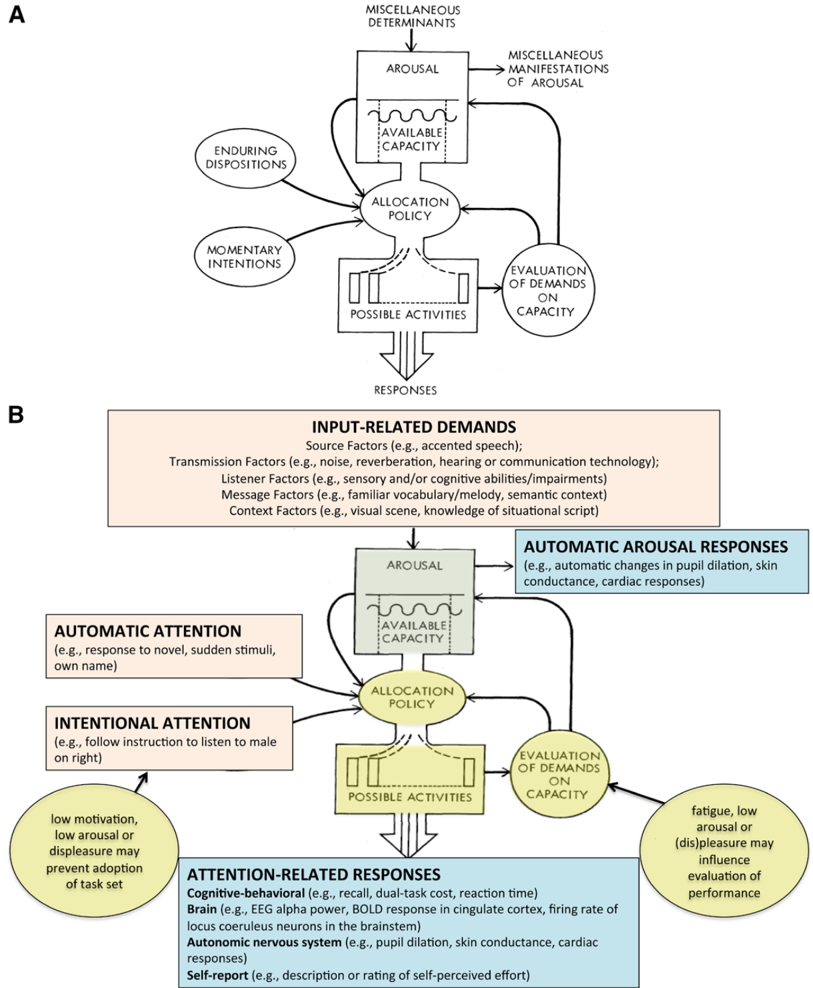
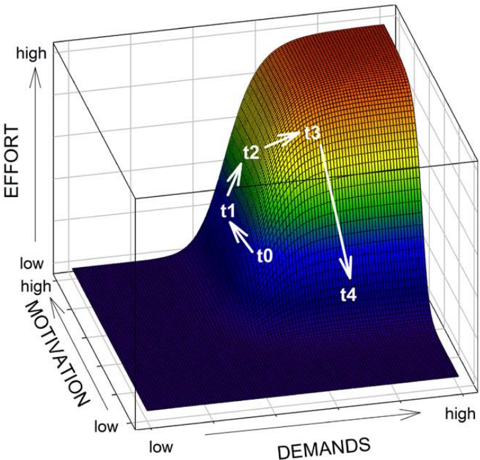
The Fifth Eriksholm Workshop on "Hearing Impairment and Cognitive Energy" was convened to develop a consensus among interdisciplinary experts about what is known on the topic, gaps in knowledge, the use of terminology, priorities for future research, and implications for practice. The general term cognitive energy was chosen to facilitate the broadest possible discussion of the topic. It goes back to who described the effects of attention on perception; he used the term psychic energy for the notion that limited mental resources can be flexibly allocated among perceptual and mental activities. The workshop focused on three main areas: (1) theories, models, concepts, definitions, and frameworks; (2) methods and measures; and (3) knowledge translation. We defined effort as the deliberate allocation of mental resources to overcome obstacles in goal pursuit when carrying out a task, with listening effort applying more specifically when tasks involve listening. We adapted Kahneman's seminal (1973) Capacity Model of Attention to listening and proposed a heuristically useful Framework for Understanding Effortful Listening (FUEL). Our FUEL incorporates the well-known relationship between cognitive demand and the supply of cognitive capacity that is the foundation of cognitive theories of attention. Our FUEL also incorporates a motivation dimension based on complementary theories of motivational intensity, adaptive gain control, and optimal performance, fatigue, and pleasure. Using a three-dimensional illustration, we highlight how listening effort depends not only on hearing difficulties and task demands but also on the listener's motivation to expend mental effort in the challenging situations of everyday life.
Overview
CoChat Summary
TL;DR
The paper reports the Fifth Eriksholm Workshop consensus and proposes FUEL, a conceptual framework for understanding effortful listening that integrates cognitive capacity, motivation, fatigue, and pleasure. It argues that listening effort depends not only on audibility and task demands but also on how listeners evaluate the value of exerting effort in everyday communication.
Key findings
- The workshop’s consensus was that no single existing theory or model sufficiently explains listening effort, so FUEL was proposed as a conceptual framework rather than a quantitative model.
- FUEL adapts Kahneman’s Capacity Model of Attention and adds a motivation dimension; the paper states that effort varies with both demands and motivation, illustrated with a 3D plot of effort, demands, and motivation.
- The paper defines effort as “the deliberate allocation of mental resources to overcome obstacles in goal pursuit when carrying out a task,” and listening effort as effort involved in listening; it extends listening beyond speech to music and environmental sounds.
- The paper organizes candidate listening-effort measures into behavioral, physiological, and self-report measures, and notes that some measures are more sensitive to demands, some to motivation, and some to both.
Methods
- Consensus workshop paper based on the Fifth Eriksholm Workshop on Hearing Impairment and Cognitive Energy, held in June 2015, with 16 participants from audiology, engineering, neuroscience, speech perception, gerontology, philosophy, and psychology.
- The workshop reviewed existing theories/models, definitions, and methods/measures relevant to effortful listening, and used the discussion to develop shared terminology and the FUEL framework.
- The paper’s analysis is conceptual and comparative: it contrasts theories, maps candidate measures onto demand and motivation dimensions, and adapts Kahneman’s model into a listening-specific framework.
Limitations
- The paper explicitly states that the field is not yet at a stage where outcomes can be quantitatively predicted, so FUEL is proposed as a framework rather than a model.
- It states that there is no agreement on an appropriate scale for effort, demands, or motivation, and that the shape of the functions relating them is unknown.
- Evident from the text: the framework is based on a workshop consensus and literature synthesis rather than new empirical data or direct validation studies of FUEL.
Model-written summary of a shortened version of the paper’s full text (it is longer than we read). Check it against the paper before relying on it.
Integrity signals
Registry
Cites
Statistics
Figures
Verification
Claims the paper makes
3 Valid · 7 Not valid · 27 Not checked · 32 Own results and interpretations
Every source the paper cites for this claim was checked and supports it.
In the paper
“From a population health perspective, epidemiological research has provided evidence of a significant association between hearing loss and incident dementia (Albers et al. 2015) and prompted questions regarding the potential advantages of adopting a more integrated approach to research on hearing health and cognitive health (Dupuis et al. 2015; Pichora-Fuller et al. 2015).”
What the sources say
- Supportedcites Albers et al. 2015 matched to “At the interface of sensory and motor dysfunctions and Alzheimer’s disease.” (2015) source
The Epidemiological and Clinical Studies section reports that a prospective cohort found hearing loss independently associated with incident all-cause dementia, with a 95% confidence interval of 1.06–1.50 for the reported risk increase. The paper reports epidemiological evidence for the association; the citing sentence does not claim that it established causation. (LLM, conf=0.94)
plainstates an association- Asserted: passes — The authors put it forward as true.
- Checkable: passes — It can be checked against evidence.
- Load-bearing: unclear — It is unclear whether the paper’s conclusions depend on it.
- Based: passes — The paper gives a reason why it holds.
- Supported
A conclusion the paper draws from its own results — it cites no other source for it, so there is none to check. The quote shows it is in the paper.
In the paper
“Individuals may also need to allocate more cognitive capacity to comprehend, remember, and respond to the auditory objects and events that they have perceived.”
hedgedstates a possible cause- Asserted: passes — The authors put it forward as true.
- Checkable: passes — It can be checked against evidence.
- Load-bearing: passes — The paper’s conclusions depend on it.
- Based: passes — The paper gives a reason why it holds.
A conclusion the paper draws from its own results — it cites no other source for it, so there is none to check. The quote shows it is in the paper.
In the paper
“Therefore, success in achieving listening goals may depend on the deployment of greater cognitive energy when the quality of the signal available to the listener is suboptimal.”
hedgedstates a possible cause- Asserted: passes — The authors put it forward as true.
- Checkable: passes — It can be checked against evidence.
- Load-bearing: passes — The paper’s conclusions depend on it.
- Based: passes — The paper gives a reason why it holds.
None of the sources cited for this claim have been checked yet.
In the paper
“These changes in temporal auditory processing are thought to underpin problems understanding speech in noise and also remembering it once it has been heard.”
hedgedstates a possible cause- Asserted: passes — The authors put it forward as true.
- Checkable: passes — It can be checked against evidence.
- Load-bearing: passes — The paper’s conclusions depend on it.
- Based: passes — The paper gives a reason why it holds.
None of the sources cited for this claim have been checked yet.
In the paper
“(3) his idea that there will be increased mental activity when demands are increased is compatible with the current notion of cognitive compensation (Pichora-Fuller 2010; Grady 2012).”
What the sources say
- Not matchedcites Pichora-Fuller 2010
An author–year citation the paper’s reference list doesn’t settle. We don’t search these by name.
- Not checked — no full text of the sourcecites Grady 2012 matched to “The cognitive neuroscience of ageing” (2012) source
plainstates an association- Asserted: passes — The authors put it forward as true.
- Checkable: passes — It can be checked against evidence.
- Load-bearing: unclear — It is unclear whether the paper’s conclusions depend on it.
- Based: passes — The paper gives a reason why it holds.
- Not matched
15 more claims
Create a free account to see all 69 claims and to verify the 2 references still open.
- It may state two separate claims as one. 13
- Probably not a substantial claim. 46
Claims other papers make about this one
Each is checked against this paper’s own text: does it say what the citing paper says it does?
The cited source says what the claim attributes to it.
In the citing paper
“The subjective experience of effort during communication is likely to precede more chronic experiences of fatigue (Pichora-Fuller et al., 2016).”
From Language proficiency drives listening-related fatigue in those who communicate in English as their second language (2026) · cites this paper as Pichora-Fuller et al., 2016
In the citing paper
“Changes in these kinds of subjective judgments over the course of a communication scenario will likely influence whether or not an individual chooses to withdraw or sustain engagement (Pichora-Fuller et al., 2016).”
From Effortful listening under the microscope: Examining relations between pupillometric and subjective markers of effort and tiredness from listening (2021) · cites this paper as Pichora-Fuller et al., 2016
In the citing paper
“This finding lends weight to the argument that TEPR is not an objective correlate of the subjective experience of listening effort (McGarrigle et al., 2014;Pichora-Fuller et al., 2016;Strand et al., 2018).”
From Effortful listening under the microscope: Examining relations between pupillometric and subjective markers of effort and tiredness from listening (2021) · cites this paper as Pichora-Fuller et al., 2016
In the citing paper
“Thus, to reach lexical access in such adverse conditions, there is a greater need to rely on mental and cognitive processes (Pichora-Fuller et al., 2016; Rönnberg et al., 2008, 2013, 2019).”
From The Involvement of Listening Effort in Explaining Bilingual Listening Under Adverse Listening Conditions (2023) · cites this paper as Pichora-Fuller et al., 2016
In the citing paper
“Our findings are consistent with the FUEL (Pichora-Fuller et al., 2016) and extend it to primary school children.”
From Listening effort and fatigue in native and non-native primary school children (2021) · cites this paper as Pichora-Fuller et al., 2016
5 more claims about this paper
Create a free account to see every claim other papers make about this one.
Citations
Cites
The relation of strength of stimulus to rapidity of habit formation
Yerkes, R. M., & Dodson, J. D. (1908) · Journal of Comparative Neurology and Psychology · doi:10.1002/cne.920180503 · Cited by 6,911
Individual differences in working memory and reading
Daneman, M., & Carpenter, P. A. (1980) · Journal of Verbal Learning and Verbal Behavior · doi:10.1016/s0022-5371(80)90312-6 · Cited by 6,336
The processing-speed theory of adult age differences in cognition
Salthouse, T. A. (1996) · Psychological Review · doi:10.1037/0033-295x.103.3.403 · Cited by 5,902
Social Relationships and Health.
Cohen, S. (2004) · American Psychologist · doi:10.1037/0003-066x.59.8.676 · Cited by 4,852
Aston-Jones, G., & Cohen, J. D. (2005) · Annual Review of Neuroscience · doi:10.1146/annurev.neuro.28.061604.135709 · Cited by 4,472
Broadbent, D. E. (1958) · doi:10.1037/10037-000 · Cited by 4,337
A capacity theory of comprehension: individual differences in working memory
Just, M. A., & Carpenter, P. A. (1992) · Psychological Review · doi:10.1037/0033-295x.99.1.122 · Cited by 4,153
The adaptive brain: aging and neurocognitive scaffolding
Park, D. C., & Reuter-Lorenz, P. (2009) · Annual Review of Psychology · doi:10.1146/annurev.psych.59.103006.093656 · Cited by 2,790
Motor control and aging: Links to age-related brain structural, functional, and biochemical effects
Seidler, R. D., Bernard, J. A., Burutolu, T. B., Fling, B. W., Gordon, M. T., Gwin, J. T., Kwak, Y., & Lipps, D. B. (2010) · Neuroscience & Biobehavioral Reviews · doi:10.1016/j.neubiorev.2009.10.005 · Cited by 1,791
Neurocognitive Aging and the Compensation Hypothesis
Reuter-Lorenz, P. A., & Cappell, K. A. (2008) · Current Directions in Psychological Science · doi:10.1111/j.1467-8721.2008.00570.x · Cited by 1,639
Research works printed but not linked: 2
- Robertson, 1997, The effect of an aural rehabilitation program on responses to scenarios depicting communication breakdown., J Speech Lang Pathol Audiol, 21, 187
- Smith, Development of the Word Auditory Recognition and Recall Measure (WARRM): A working memory test for use in rehabilitative audiology, Ear Hear
Cited by
Items 1,001–1,100 of 1,325
Carr, S. (2018) · TSpace (University of Toronto)
Strand, J. F. (2018) · PsyArXiv (OSF Preprints) · doi:10.31234/osf.io/nwxtv
Closing the Achievement Gap for Children With Hearing Loss
Pakulski, L. A. (2019) · ASHA Leader · doi:10.1044/leader.aea.24082019.20
A modulating circle reduces listening effort and improves spoken word recognition in older adultsPreprint
Brown, V. A., Strand, J. F., & Engen, K. J. V. (2019) · PsyArXiv (OSF Preprints) · doi:10.31234/osf.io/v8x4q
Perceiving Older Adults Producing Clear and Lombard Speech
Davis, C., & Kim, J. (2019) · Interspeech (USB) · doi:10.21437/interspeech.2019-2210
Climbing up the hearing rehabilitation ladder
Ingo, E. (2019) · Studies from the Swedish Institute for Disability Research · doi:10.3384/diss.diva-159945
Talker Intelligibility and Listening Effort with Temporally Modified Speech
Paulus, M., Hazan, V. L., & Adank, P. (2019) · Interspeech (USB) · doi:10.21437/interspeech.2019-1402
“This approach is not sensitive to the effort experienced during listening, an increasingly important aspect of research into speech perception in noise [3], which can be measured by recording the pupil dilation.”
BackgroundUnderstanding virtual speakers
Nirme, J. (2020) · Lund University Publications (Lund University)
Current Perspectives on Aging and Bilingualism across the Life Span
Grant, A. M., Coulter, K., & Phillips, N. A. (2020) · Cambridge University Press eBooks · doi:10.1017/9781108552684.030 · Cited by 1
Self-citationKestens, K., Degeest, S., & Keppler, H. (2020) · Stem- Spraak- en Taalpathologie · doi:10.21827/32.8310/2020-40
Environmental Sound Perception: Effects of Aging and Hearing Loss
Shafiro, V. (2020) · Springer eBooks · doi:10.1007/978-1-4614-7320-6_100683-1
Cognitive Resources Are Recruited Consistently Across People During Story Listening
Bain, M. T. (2020) · Scholarship@Western (Western University) · Cited by 1
Lin, M., & Francis, A. L. (2021) · Cambridge University Press eBooks · doi:10.1017/9781108886901.017
Listening Fatigue in College Students
Murphy, B. (2021) · ThinkTech (Texas Tech University) · Cited by 1
The Importance of Auditory Evaluation in Adults between 45 and 65 Years Old
Nigri, L. F. (2020) · Global Journal of Otolaryngology · doi:10.19080/gjo.2020.23.556108
“In addition, it is possible that hearing loss causes cognitive resources, operational memory, to operate with greater demand to process altered sound information, which creates an excessive cognitive load on upper cortical functions, leading to cognitive decline and dementia [19].”
Background“IKnow”: Helping Those with Hearing Impairment Communicate Fluently
Yin, Y., & Yu, Y. (2021) · Lecture notes in networks and systems · doi:10.1007/978-3-030-80091-8_48
A Meta-analysis of Language Abilities and Executive Function for Children with Cochlear Implants
Yang, Y., & Yim, D. (2021) · Audiology and Speech Research · doi:10.21848/asr.210006
“Pichora-Fuller et al.(2016)은 CI 아동들이 듣기와 구어처리를 위한 부가적인 노 력을 기울여야 한다고 했는데, 이는 인공와우 이식으로 인한 저 하된 코딩 자극이 언어관련 과제를 수행하는 동안 더 많이 실행 기능에 의존해야 하기 때문이라고 해석하였다.”
Acoustic Changes Following Clear Speech Intervention
Shuminsky, P. (2021) · CUNY Academic Works (City University of New York)
Neural activity during story listening is synchronized across individuals despite acoustic maskingPreprint
Irsik, V. C., Johnsrude, I. S., & Herrmann, B. (2021) · bioRxiv (Cold Spring Harbor Laboratory) · doi:10.1101/2021.03.25.437022
Kako se otroci s hudo ali popolno izgubo sluha spopadajo s hrupom?
Saksida, A. (2021) · Alternator · doi:10.3986/alternator.2021.43
Vibrationsanalys : Vibrationsproblem i travers
Sannemalm, Ö., & Svensson, M. (2007) · Digitala vetenskapliga arkivet (Diva) (Karlstad University)
Zweig, H. R., Wieseneck, H. C., & Bunnell, J. W. (1989) · OSTI OAI (U.S. Department of Energy Office of Scientific and Technical Information)
Micula, A. (2021) · Studies from the Swedish Institute for Disability Research · doi:10.3384/9789179291389
Leyssens, L., Vinck, B., Straeten, C. V. D., Dhooge, I., Wuyts, F. L., de Grave, P. W., Bataillie, F., Melkebeek, J. V., Smet, K. D., Hecke, R. V., et al. (2022) · Ear and Hearing · doi:10.1097/aud.0000000000001200 · Cited by 1
“…individual’s cognitive functioning (e.g., working memory, selective attention) and other cognitive-related factors (e.g., Copyright © 2022 Wolters Kluwer Health, Inc. Unauthorized reproduction of this article is prohibited. educational background) (Rönnberg et al. 2013; Pichora-Fuller et al. 2016).”
BackgroundAvivi-Reich, M., Sran, R., & Schneider, B. A. (2022) · Frontiers in Psychology · doi:10.3389/fpsyg.2022.838576
Neural signatures of task-related fluctuations in auditory attention change with agePreprint
Herrmann, B., Maess, B., Henry, M. J., Obleser, J., & Johnsrude, I. (2022) · bioRxiv · doi:10.1101/2022.04.12.487991
“Next, we turned to the observation that older adults often experience listening challenges in their everyday lives (Gatehouse and Noble, 2004; Pichora-Fuller et al., 2016; Strauss and Francis, 2017; Peelle, 2018).”
BackgroundLeyssens, L., Vinck, B., Straeten, C. V. D., Dhooge, I. J. M., Wuyts, F. L., Winnock-de Grave, P., Bataillie, F., Melkebeek, J. V., Smet, K. D., Hecke, R. V., et al. (2022) · Ghent University Academic Bibliography (Ghent University)
Zeng, F. (2020) · Faculty Opinions – Post-Publication Peer Review of the Biomedical Literature · doi:10.3410/f.737244472.793575360
Neural Representation of Auditory Speech Processing in Age-Related Hearing ImpairmentPreprint
Pauquet, J., Thiel, C. M., Mathys, C., & Rosemann, S. (2020) · doi:10.31219/osf.io/bpgr6
Effects of age, word frequency, and noise on the time course of spoken word recognitionPreprint
Engen, K. J. V., Dey, A., Runge, N., Spehar, B., Sommers, M. S., & Peelle, J. E. (2020) · PsyArXiv (OSF Preprints) · doi:10.31234/osf.io/xd3qg
“Thus, lexical competition may underlie at least a portion of the cognitive challenge associated with effortful listening (Peelle, 2018; Pichora-Fuller et al., 2016).”
BackgroundSelf-citationEnvironmental Sound Perception: Effects of Aging and Hearing Loss
Shafiro, V. (2020) · Springer eBooks · doi:10.1007/978-1-4614-7320-6_100683-2
Fit to listen? An initial exploration of “coach fitness”
(2020) · Philosophy of Coaching An International Journal · doi:10.22316/poc/05.1.04
Predictors of listening-related fatigue across the adult lifespanPreprint
McGarrigle, R., Knight, S., Hornsby, B. W. Y., et al. (2020) · doi:10.31234/osf.io/dme4v
Self-citationDefenderfer, J. (2022) · doi:10.21007/etd.cghs.2022.0594 · Cited by 2
Driving Change in Complex Social Systems: How to Design Healthcare Pathways
Feldman, A., Patou, F., & Maier, A. M. (2022) · Proceedings of the Design Society · doi:10.1017/pds.2022.128
How Do Cognitive Resources Modulate Recall in Interleaved Tasks?Preprint
Zhang, R.-C., & Madan, C. R. (2022) · PsyArXiv (OSF Preprints) · doi:10.31234/osf.io/q3bgc
Auditory Short-Term Memory Evaluation in Noise in Musicians
Eser, B. N., & Şerbetçioğlu, M. B. (2022) · Journal of the American Academy of Audiology · doi:10.1055/a-1896-5129
Geriatrik Bireylerde İşitme Kaybı ve Denge Becerilerinin İncelenmesi: Retrospektif Çalışma
Yiğit, Ö., Avcı, N. B., & Aksoy, S. (2022) · Hacettepe Üniversitesi Sağlık Bilimleri Fakültesi Dergisi · doi:10.21020/husbfd.1021493
Xiu, B.-W., Paul, B. T., Chen, J. M., Le, T. N., Lin, V., & Dimitrijevic, A. (2022) · bioRxiv · doi:10.1101/2022.09.02.506424
“…environments where the sound quality of speech is reduced, listeners must apportion their limited cognitive resources towards attending to the targeted speech source, in addition to processing and storing auditory information (Rönnberg et al., 2013; Pichora-Fuller et al., 2016; Peelle, 2018).”
BackgroundMethodInfluentialPrince, P., Chen, J., Le, T., Lin, V. W., & Dimitrijevic, A. (2022) · medRxiv · doi:10.1101/2022.09.07.22279622
“…& Johnsrude, 2007; Miles et al., 2017; Rodd et al., 2005; Song et al., 2015), the limit to their working memory capacity is reached and performance may decline (Arlinger et al., 2009; F. R. Lin, Metter, et al., 2011; Pichora-Fuller et al., 2016; Pichora-Fuller & Singh, 2006; Rudner et al., 2011).”
BackgroundBernstein, L. R., & Trahiotis, C. (2022) · The Journal of the Acoustical Society of America · doi:10.1121/10.0014419
Cognitive predictors of perception and adaptation to dysarthric speech in young adult listenersPreprint
Lansford, K. L., Barrett, T. S., & Borrie, S. A. (2022) · doi:10.31219/osf.io/mhxbv
Mohanathas, N., Downey, R., Li, K., Trkulja, K. L., & Campos, J. L. (2023) · PsyArXiv (OSF Preprints) · doi:10.31234/osf.io/uwgz9
Smith, K. G., & Fogerty, D. (2023) · JASA Express Letters · doi:10.1121/10.0017215
Shields, C., Sladen, M., Rajai, A., Guest, H., Bruce, I. A., Kluk, K., & Nichani, J. (2023) · BMJ Open · doi:10.1136/bmjopen-2022-069719 · Cited by 1
Brown, V. A., & Strand, J. F. (2023) · doi:10.31234/osf.io/vq46h
Listening Effort: Cardiovascular Investigation Through the Point Process
Polo, E. M., Mollura, M., Paglialonga, A., & Barbieri, R. (2022) · Computing in cardiology · doi:10.22489/cinc.2022.211 · Cited by 3
Pupillometry Reveals Differences in Cognitive Demands of Listening to Face Mask-Attenuated SpeechPreprint
Carraturo, S., McLaughlin, D. J., Peelle, J. E., & Engen, K. J. V. (2023) · doi:10.31234/osf.io/qy2ex
Efeito do ruído branco no esforço auditivo de pacientes com zumbido crônico e audição normal
Horiuti, M. B. (2022) · Digital Library of Theses and Dissertations (Universidade de São Paulo) · doi:10.11606/t.5.2022.tde-13042023-140052
From Global to local Functional Connectivity: Application to Listening Effort
Baboukani, P. S. (2022) · VBN Forskningsportal (Aalborg Universitet) · doi:10.54337/aau527272197
McHaney, J. R., Hancock, K. E., Polley, D. B., et al. (2023) · bioRxiv (Cold Spring Harbor Laboratory) · doi:10.1101/2023.08.13.553131
Mack, J. E., Grossman, M., Ward, C. B., Bondar, M., & Ciulla, A. E. (2023) · doi:10.31234/osf.io/f8nj9
Characteristics of cognitive functioning in persons with chronic sensorineural hearing loss
Vladimirova, T. Y., & Martynova, A. B. (2023) · Aspirantskiy Vestnik Povolzhiya · doi:10.55531/2072-2354.2023.23.3.17-20
The role of inhibitory control in spoken word recognition: Evidence from cochlear implant usersPreprint
Colby, S., Smith, F. X., & McMurray, B. (2023) · doi:10.31234/osf.io/94re8
Using response time to evaluate noise fluctuations and Lombard speech in auralizations
Prodi, N., & Visentin, C. (2023) · Immersive and 3D Audio: from Architecture to Automotive (I3DA) · doi:10.1109/i3da57090.2023.10289357
“To face the issue the construct of “listening effort” (LE) was introduced, which was conceptualized as “the deliberate allocation of mental resources to overcome obstacles in goal pursuit when carrying out a task, with listening effort applying more specifically when tasks involve listening” [8].”
BackgroundCORTICAL CHARACTERISTICS OF LISTENING EFFORT
Mohammadi, Y. (2023) · VBN Forskningsportal (Aalborg Universitet) · doi:10.54337/aau561816351
Recognition of Speech With Dynamic Pitch Manipulation in Noise: Effects of Manipulation Methods
Shen, J., & Wu, J. (2023) · Journal of Speech Language and Hearing Research · doi:10.1044/2023_jslhr-23-00142 · Cited by 1
Validity and reliability of self‐reported and neural measures of listening effort
Mohammadi, Y., Østergaard, J., Graversen, C., Andersen, O. K., & Manresa, J. A. B. (2023) · European Journal of Neuroscience · doi:10.1111/ejn.16187
“Listening effort has been defined as the allocation of cognitive resources to overcome auditory challenges (Peelle, 2018; Pichora-Fuller et al., 2016).”
BackgroundBrowser-Based Game Design for Cognitive Effort Aware Quality of Experience Evaluation
Sun, P. W., Santos, F. H., & Hines, A. (2023) · Lecture notes in computer science · doi:10.1007/978-3-031-49065-1_49
Development of an Internet-based system to guide and telemonitor hearing aid users
Soares, A., & de Almeida, K. (2023) · CoDAS · doi:10.1590/2317-1782/20232022162en
Silcox, J. W., Bennett, K., Copeland, A., et al. (2024) · doi:10.31234/osf.io/wzke5
Wouters, J. M., Gransier, R., & Wieringen, A. V. (2024) · Wiley eBooks · doi:10.1002/9781119875949.ch37 · Cited by 1
Jensen-Rico, K. M., Kressner, A. A., Neagu, M.-B., & Wendt, D. (2022) · Convention of the European Acoustics Association Forum Acusticum · doi:10.61782/fa.2023.0656
Cognitive effort in school-aged children
Visentin, C., Pellegatti, M., & Prodi, N. (2024) · Convention of the European Acoustics Association Forum Acusticum · doi:10.61782/fa.2023.0561
“Dependingon the level and spectro-temporal features, noise is expected to impact task accuracy (i.e., number of correct answers) and/or listening effort (i.e., allocation of mental resources to overcome obstacles in goal pursuit when carrying out a listening task [5]).”
BackgroundAhn, J., & Cho, Y. (2024) · Ear and Hearing · doi:10.1097/aud.0000000000001478
Ghiselli, S., Pizzol, E., Vincenti, V., Fabrizi, E., Salsi, D., & Cuda, D. (2024) · Journal of Clinical Medicine · doi:10.3390/jcm13041134
“This effort, known as listening effort, refers to the amount of processing resources allocated to a particular auditory task when task demands are high [7].”
BackgroundDevelopment of a Website for Disseminating Knowledge About listening Effort for Professionals
Alves, H. D. M. C., de Oliveira, J. R. M., Amaral, S. L., Valenti, V. E., & Mondelli, M. F. C. G. (2024) · International Archives of Otorhinolaryngology · doi:10.1055/s-0043-1777803 · Cited by 1
Engaging effort improves efficiency during spoken word recognition in cochlear implant usersPreprint
Colby, S. E., & McMurray, B. (2024) · PsyArXiv (OSF Preprints) · doi:10.31234/osf.io/w27kz
Rovetti, J., Goy, H., Pichora-Fuller, M. K., & Russo, F. (2024) · doi:10.32920/25412962
Self-citationRovetti, J., Goy, H., Pichora-Fuller, M. K., & Russo, F. (2024) · doi:10.32920/25412962.v1
Self-citationPicou, E. M., Singh, G., Goy, H., Russo, F., Hickson, L. M. H., Oxenham, A. J., Buono, G. H., Ricketts, T. A., & Launer, S. (2024) · doi:10.32920/25412953.v1
Picou, E. M., Singh, G., Goy, H., Russo, F., Hickson, L. M. H., Oxenham, A. J., Buono, G. H., Ricketts, T. A., & Launer, S. (2024) · doi:10.32920/25412953
de Sousa, A. F. (2023) · Digital Library of Theses and Dissertations (Universidade de São Paulo) · doi:10.11606/t.5.2023.tde-26032024-154822
Gianakas, S. P., & Winn, M. B. (2024) · PsyArXiv (OSF Preprints) · doi:10.31234/osf.io/5hfg8 · Cited by 2
Influence of Speech Rate on Auditory Recognition in Cochlear Implant Users
de Sousa, A. F., da Costa, L. B. A., Costa, M. J., & Neto, R. V. D. B. (2024) · Audiology and Neurotology · doi:10.1159/000539298 · Cited by 1
“Hearing effort is a multidimensional construct that has a negative effect on the hearing rehabilitation process, due to the mental [10 – 12].”
Cognitive Predictors of Perception and Adaption to Dysarthric Speech in Older AdultsPreprint
Lansford, K. L., Hirsch, M. E., Barrett, T. S., et al. (2024) · doi:10.31219/osf.io/5y2zn
Herrmann, B., & Cui, M. E. (2024) · doi:10.31234/osf.io/9fh4x
Cognitive Hearing Science: Clinical Implications in Audiology
Seeman, S. (2024) · Online Journal of Otolaryngology and Rhinology · doi:10.33552/ojor.2024.06.000647
Minimal background noise enhances neural speech tracking: Evidence of stochastic resonancePreprint
Herrmann, B. (2024) · bioRxiv (Cold Spring Harbor Laboratory) · doi:10.1101/2024.06.19.599692
BELMASK—An Audiovisual Dataset of Adversely Produced Speech for Auditory Cognition Research
Moshona, C. C., Rudawski, F., Fiebig, A., & Sarradj, E. (2024) · Data · doi:10.3390/data9080092
Individual differences in visual pattern completion predict adaptation to degraded speech
Drouin, J. R., & Davis, C. P. (2024) · Brain and Language · doi:10.1016/j.bandl.2024.105449
Stanley, N., & Davis, T. M. (2024) · Journal of Speech Language and Hearing Research · doi:10.1044/2024_jslhr-23-00341
Listening difficulty: From hearing to language
Kuchinsky, S. E., Phillips, I., & Bieber, R. E. (2024) · The Psychology of learning and motivation/The psychology of learning and motivation · doi:10.1016/bs.plm.2024.07.001
Effect of Background Noise and Memory Load on Listening Effort by Normal-Hearing Adults
Nishida, K., Obuchi, C., Shiroma, M., & Noguchi, Y. (2024) · The Japan Journal of Logopedics and Phoniatrics · doi:10.5112/jjlp.65.154
Pandey, P. R., & Herrmann, B. (2024) · doi:10.31234/osf.io/6j27t
Nishida, K., Obuchi, C., Shiroma, M., Okamoto, H., & Noguchi, Y. (2024) · Auris Nasus Larynx · doi:10.1016/j.anl.2024.08.005 · Cited by 1
Huang, C. G., Field, N. A., Latorre, M.-E., et al. (2024) · bioRxiv (Cold Spring Harbor Laboratory) · doi:10.1101/2024.09.20.614145
Prosocial reward relates to performance in difficult speech-on-speech listening conditionsPreprint
Oakeson, R. J., Rosen, S., Herbert, J., Roper, S., Zhang, H., & Scott, S. K. (2024) · bioRxiv (Cold Spring Harbor Laboratory) · doi:10.1101/2024.10.02.616312
“This process leads to a complex state in which the listener is exerting substantial amounts of listening effort—often increasing mental fatigue, decreasing motivation, and having other social psychological consequences (Peelle, 2016; Pichora-Fuller et al., 2016).”
Understanding Speech in ''Noise'' or Free Energy Minimization in the Soundscapes of the AnthropocenePreprint
Strauß, D. J., Francis, A. L., Schäfer, Z., Latzel, M., Corona–Strauss, F. I., & Launer, S. (2024) · doi:10.31234/osf.io/cfvjq
Cowan, C., Jones, K., Ostevik, A. V., Souqi, S. A., Hodgetts, W. E., & Cummine, J. (2024) · Journal of Otorhinolaryngology Hearing and Balance Medicine · doi:10.3390/ohbm5020019
Ishino, T., Nakagawa, K., Higashikawa, F., Hirokane, S., Fujita, R., Ishikawa, C., Kawasumi, T., Takemoto, K., Oda, T., Nishida, M., et al. (2024) · Biology · doi:10.3390/biology13121021
“The impact of fatigue, along with environmental and circumstantial factors, negatively affects cognitive processing, quality of life, and workplace productivity in individuals with hear‑ ing loss [4,9].”
Visualizing Language and Aging From 2013-2022
Li, X., Chen, T., Guo, H., & Wang, H. (2024) · Chinese Journal of Applied Linguistics · doi:10.1515/cjal-2024-0406
Ceuleers, D., Dhooge, I. J. M., Baudonck, N., Swinnen, F. K. R., Kestens, K., & Keppler, H. (2025) · Journal of Speech Language and Hearing Research · doi:10.1044/2024_jslhr-24-00449 · Cited by 1
The time course of cognitive effort during disrupted speech
Burleson, A., & Souza, P. E. (2025) · Quarterly Journal of Experimental Psychology · doi:10.1177/17470218251316797 · Cited by 1
Jakobsen, Y., Faulkner, K. F., Yper, L. N. V., & Schmidt, J. H. (2025) · Audiology Research · doi:10.3390/audiolres15010013
“A similar pattern is seen when a task is too easy, requiring very little demand of cognitive resources, causing the listener to use no effort to complete the task [16].”
Iotzov, I., & Parra, L. C. (2025) · European Journal of Neuroscience · doi:10.1111/ejn.70009 · Cited by 1
“Listening effort can be roughly defined as the amount of cognitive resources that are recruited for completion of a task (Alhanbali et al. 2019; Peelle 2018; Zekveld, Koelewijn, and Kramer 2018), including the deployment of attention (Pichora-Fuller et al. 2016).”
InfluentialHearing loss among teachers: a major public health challenge
Schriemer, A., Bültmann, U., Schriemer, S. H., Abma, F. I., & Roelen, C. A. M. (2025) · BMC Public Health · doi:10.1186/s12889-025-21876-4
Classification of Hearing Status Based on Pupil Measures During Sentence Perception
Lebiecka-Johansen, P., Zekveld, A. A., Wendt, D., Koelewijn, T., Muhammad, A. I., & Kramer, S. E. (2025) · Journal of Speech Language and Hearing Research · doi:10.1044/2024_jslhr-24-00005 · Cited by 2
Self-citation
Metadata
- Authors
- Pichora-Fuller, M. K., Kramer, S. E., Eckert, M. A., Edwards, B., Hornsby, B. W. Y., Humes, L. E., Lemke, U., Lunner, T., Matthen, M., Mackersie, C. L., Naylor, G., Phillips, N. A., Richter, M., Rudner, M., Sommers, M. S., Tremblay, K. L., & Wingfield, A.
- Affiliations
- Brandeis University (US)
- Vanderbilt University (US)
- Sonova (Switzerland) (CH)
- Oticon (Denmark) (DK)
- Earlens (United States) (US)
- University of Toronto (CA)
- Indiana University Bloomington (US)
- Corresponding author
- Pichora-Fuller, M. Kathleen
- ORCID
- Venue
- Ear & Hearing
- Published
- 2016-07
- Volume
- 37
- Issue
- 1
- Pages
- 5S-27S
- ISSN
- 0196-0202 (ISSN-L)
- OpenAlex
- W2472770001
- Semantic Scholar
- 353d1914960d7e69bd9f7dd3f6c74863cb5c1bcc
- Cited by
- 1,318
- References
- 132
- Citations by year
- 2026: 180 · 2025: 210 · 2024: 154 · 2023: 141 · 2022: 131 · 2021: 163 · 2020: 117 · 2019: 95 · 2018: 69 · 2017: 45 · 2016: 10
- FWCI
- 46.32
- Type
- journal article
- Language
- en
- Open access
- hybrid
- doi.org
- Licence
- Locations
- Ear and Hearing (publishedVersion, cc-by-nc-nd)
- PubMed (publishedVersion)
- Repository@Nottingham (University of Nottingham) (publishedVersion, cc-by-nc-nd)
- Amsterdam UMC (VU Amsterdam) - Institutional Repository (publishedVersion)
- Repository@Nottingham (University of Nottingham) (submittedVersion, cc-by-nc-nd)
- Pure Amsterdam UMC (submittedVersion, other-oa)
- Liverpool John Moores University (submittedVersion)
- Data Archiving and Networked Services (DANS) (submittedVersion)
- Funders
- University of Toronto
- Oticon Fonden
- Topics
- Health Sciences › Health Professions › Speech and Hearing › Hearing Loss and Rehabilitation
- Social Sciences › Psychology › Developmental and Educational Psychology › Hearing Impairment and Communication
- Life Sciences › Neuroscience › Sensory Systems › Hearing, Cochlea, Tinnitus, Genetics
- Keywords
- hearing loss, cognitive energy, listening effort, attentional capacity, cognitive demand, motivation, fatigue, pleasure, adaptive gain control, optimal performance, knowledge translation
- MeSH terms
- Attention, Auditory Perception, Cognition, Humans, Speech Perception, Comprehension, Hearing Loss
About these checks
Registry, retraction, Cites and statistics results are computed, not judged, with one exception: a printed reference that no index lists is read once by a model before it counts as a citation error. Claims are extracted by a model and kept only when their quote appears verbatim in the text; each cited source is then checked, with a model’s help, for whether it says what the claim relies on. Those verdicts can be wrong — read the claim’s quote and the cited source before relying on one.
The claim verdicts this report counts are experimental: their accuracy is not yet measured.
A language model drew the claims from the paper on 2026-10-10, under version 3 of the claim definition (model deepseek-v4.1-flash, prompt extract-v3).
A second model labelled each claim on 2026-10-10 (model jev-1.13-20260917, definition revision gold-guideline-v0.2).
Cited sources are checked with a language model’s help (gpt-6-sol).
Statistics and arithmetic are recomputed, not judged.
Confidence bands are shown only for fields calibrated on our annotated test set. None is calibrated yet, so no band is shown.
What counts as a claim ›How we measure confidence ›How we check this ›
Are you an author, or do you see a problem with this page? Request a review
Data sources
Bibliographic data: Semantic Scholar, OpenAlex, Crossref.
Contains information from the Semantic Scholar Academic Graph Datasets, made available under the ODC Attribution License (ODC-BY 1.0).
Semantic Scholar’s data is described in: Kinney, R., et al. (2023). The Semantic Scholar Open Data Platform. arXiv:2301.10140.
