

Domain randomization for transferring deep neural networks from simulation to the real world
Open accessThe DOI matches its Crossref record; 71 of the 71 references it cites were found in a registry or an index; 8 of the 17 sources its claims cite were checked for support.
Abstract
Bridging the `reality gap' that separates simulated robotics from experiments on hardware could accelerate robotic research through improved data availability. This paper explores domain randomization, a simple technique for training models on simulated images that transfer to real images by randomizing rendering in the simulator. With enough variability in the simulator, the real world may appear to the model as just another variation. We focus on the task of object localization, which is a stepping stone to general robotic manipulation skills. We find that it is possible to train a real-world object detector that is accurate to 1.5 cm and robust to distractors and partial occlusions using only data from a simulator with non-realistic random textures. To demonstrate the capabilities of our detectors, we show they can be used to perform grasping in a cluttered environment. To our knowledge, this is the first successful transfer of a deep neural network trained only on simulated RGB images (without pre-training on real images) to the real world for the purpose of robotic control.
Overview
CoChat Summary
TL;DR
This paper introduces domain randomization: training an object detector on simulated RGB images with randomized rendering, textures, lighting, camera pose, and distractors so that the real world appears as another variation. The authors show that a detector trained only in simulation can localize objects in the real world accurately enough to grasp them in clutter.
Key findings
- Real-world object detectors trained only on simulated images localized objects to within about 1.5 cm on average, including with distractors and partial occlusions; per-object errors in Table I range from 0.6 ± 0.3 cm to 3.2 ± 5.8 cm depending on object and condition.
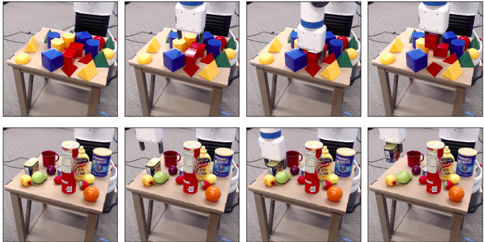
- The pipeline enabled a Fetch robot to detect and pick up the target object in 38 out of 40 trials in increasingly cluttered scenes, and a detector trained on a Spam can succeeded in 9 of 10 trials with previously unseen YCB food distractors.
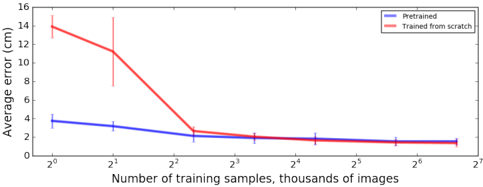
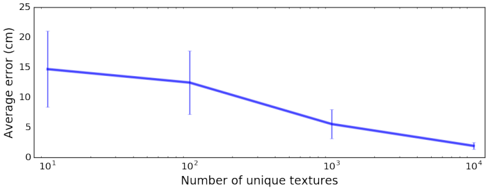
- Ablations found sensitivity to number of training images, number of unique textures, presence of distractors in training, and camera randomization; random noise had negligible effect. Performance improved up to around 50,000 training samples, and degraded significantly with fewer than 1,000 textures.
- ImageNet pretraining was not essential with enough data: random weight initialization achieved nearly the same real-world transfer performance as pretrained initialization, though pretraining helped in the low-data regime.
Methods
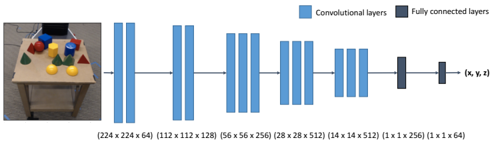
- The authors trained a modified VGG-16 convolutional neural network to map a single 224×224 monocular webcam image to Cartesian coordinates of object(s) of interest, using simulated images rendered by MuJoCo.
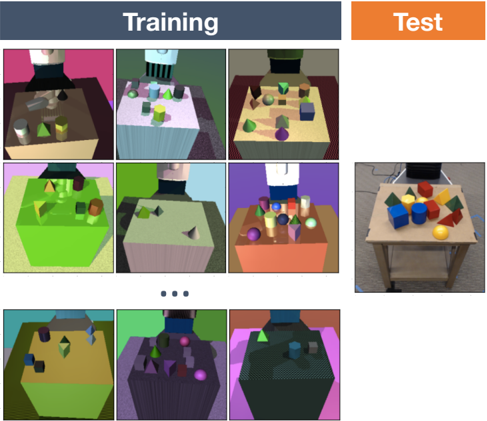
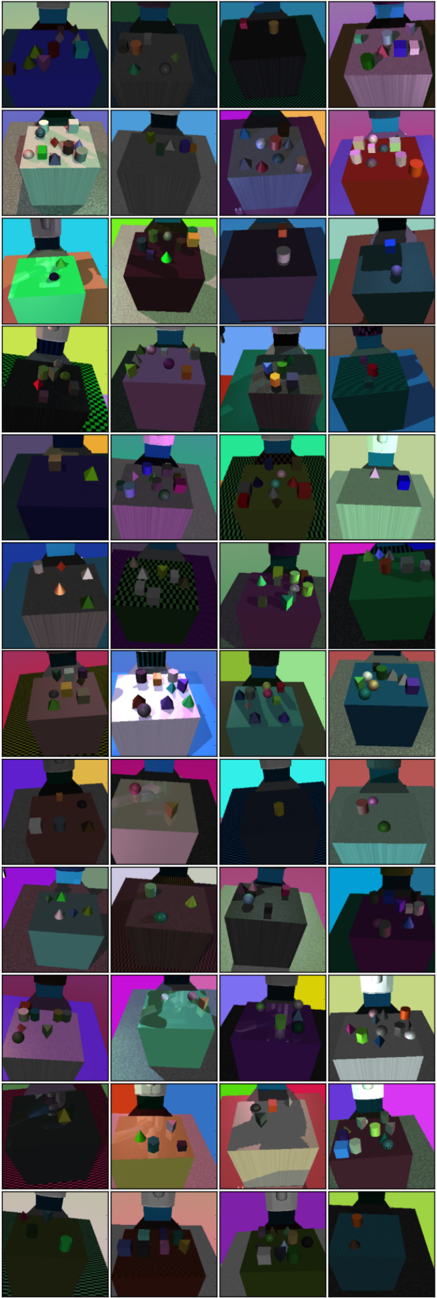
- Domain randomization varied number/shape of distractors, object positions and textures, table/floor/skybox/robot textures, camera position/orientation/field of view, number and properties of lights, and image noise. Textures were random RGB values, gradients, or checker patterns; 0–10 distractor objects were added per scene.
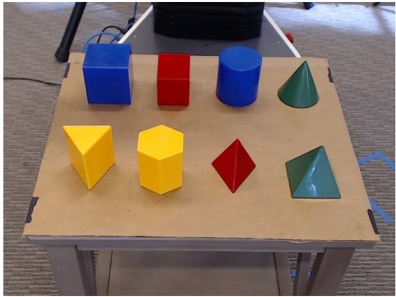
- Training used stochastic gradient descent with Adam on an L2 loss, learning rates around 1e-4, and batch sizes of 25, 50, or 100. Evaluation used 480 webcam images of eight geometric objects at 70–105 cm from a fixed camera, with 60 labeled images per object: 20 alone, 20 with distractors, and 20 partially occluded.
Limitations
- The paper states that the detectors still overfit simulated training data: simulated error was 0.3–0.5 cm versus about 1.5 cm in the real world, and no real-world validation could be done during training because no real data were assumed available.
- The paper states future work is needed for contact-rich manipulation or higher precision, and that the method fixes table height, effectively making the task 2D pose estimation from a single monocular uncalibrated camera.
- Evident from the text: evaluation is limited to eight geometric objects plus one Spam can, the test camera position remains constant across all images, and lighting and surrounding scene were not controlled.
Model-written summary. Check it against the paper before relying on it.
Integrity signals
Registry
Cites
Statistics
Figures
Verification
Claims the paper makes
2 Valid · 8 Not valid · 7 Not checked · 32 Own results and interpretations
The cited sources support only part of this claim — read each source’s verdict below.
In the paper
“Although previous work demonstrated the ability to perform robotic control using a neural network pretrained on ImageNet and fine-tuned on randomized rendered pixels [37], this paper provides the first demonstration that domain randomization can be useful for robotic tasks requiring precision.”
What the sources say
- Partly supportedcites [37] [37] Fereshteh Sadeghi and Sergey Levine. (cad) 2 RL: Real single-image flight without a single real image. arXiv preprint arXiv:1611.04201 , 2016. - sourceExperimental — accuracy not yet measured
The citation [37] is attached to the preceding claim about prior work, not to the citing authors’ claim that their own paper is the first to demonstrate precision robotics. Section 3.1 (p. 4) says LSDA pretrains a CNN on ImageNet classification data and fine-tunes it, but for object detection. It does not report robotic control or fine-tuning on randomized rendered pixels. (LLM, conf=0.84)
boostedstates a cause- Asserted: passes — The authors put it forward as true.
- Checkable: passes — It can be checked against evidence.
- Load-bearing: passes — The paper’s conclusions depend on it.
- Based: passes — The paper gives a reason why it holds.
- Partly supported
The cited sources that could be checked couldn’t confirm or dispute this claim.
In the paper
“Rather than relying on controller robustness, Yu et al. [53] use a model trained on varied physics to perform system identification using online trajectory data, but their approach is not shown to succeed in the real world.”
What the sources say
- Could not verifycites [53] [53] Wenhao Yu, C Karen Liu, and Greg Turk. Preparing for the unknown: Learning a universal policy with online system identification. arXiv preprint arXiv:1702.02453 , 2017. - sourceExperimental — accuracy not yet measured
The cited paper discusses image classification and localisation with convolutional networks (A.1, p. 10; A.2, p. 11), not Yu et al.'s approach. Searches for varied-physics training, online trajectory-based system identification, and real-world success found no passage addressing the claim. Our copy therefore cannot verify it. (LLM, conf=0.78)
plain- Asserted: passes — The authors put it forward as true.
- Checkable: passes — It can be checked against evidence.
- Load-bearing: unclear — It is unclear whether the paper’s conclusions depend on it.
- Based: passes — The paper gives a reason why it holds.
- Could not verify
The cited sources that could be checked couldn’t confirm or dispute this claim.
In the paper
“Though using realistic RGB rendering alone has had limited success for transferring to real robotic tasks [16], incorporating realistic simulation of depth information can allow models trained on rendered images to transfer reasonably well to the real world [32].”
What the sources say
- Could not verifycites [16] [16] Stephen James and Edward Johns. 3d simulation for robot arm control with deep q-learning. arXiv preprint arXiv:1609.03759 , 2016. - sourceExperimental — accuracy not yet measured
The Introduction (§1) and Conclusion (§8) describe Adam as a method for stochastic optimization, while the CNN experiment (§6.3) concerns training on image datasets. Searches for realistic RGB rendering and sim-to-real robotic transfer found no passage addressing whether RGB rendering alone has had limited success on real robotic tasks. (LLM, conf=0.78)
plain- Asserted: passes — The authors put it forward as true.
- Checkable: passes — It can be checked against evidence.
- Load-bearing: passes — The paper’s conclusions depend on it.
- Based: passes — The paper gives a reason why it holds.
- Could not verify
The cited sources that could be checked couldn’t confirm or dispute this claim.
In the paper
“However, their experiments - collision avoidance in hallways and open spaces - do not demonstrate the ability to deal with high-precision tasks.”
What the sources say
- Could not verifycites [37] [37] Fereshteh Sadeghi and Sergey Levine. (cad) 2 RL: Real single-image flight without a single real image. arXiv preprint arXiv:1611.04201 , 2016. - sourceExperimental — accuracy not yet measured
The Experiments section (p. 5) evaluates LSDA on an object-detection dataset, not Sadeghi and Levine’s collision-avoidance experiments. Searches for Sadeghi and Levine, hallway or open-space collision avoidance, and high-precision tasks found no passage addressing the claim. (LLM, conf=0.76)
plain- Asserted: passes — The authors put it forward as true.
- Checkable: passes — It can be checked against evidence.
- Load-bearing: passes — The paper’s conclusions depend on it.
- Based: passes — The paper gives a reason why it holds.
- Could not verify
A result the paper reports from its own data — it cites no other source for it, so there is none to check. The quote shows it is in the paper.
In the paper
“However, using a pre-trained model can significantly improve performance when less training data is used.”
plainstates a cause- Asserted: passes — The authors put it forward as true.
- Checkable: passes — It can be checked against evidence.
- Load-bearing: unclear — It is unclear whether the paper’s conclusions depend on it.
- Based: passes — The paper gives a reason why it holds.
29 more claims
Create a free account to see all 49 claims and to verify the 7 references still open.
- Probably not a substantial claim. 11
- It may state two separate claims as one. 8
Claims other papers make about this one
Each is checked against this paper’s own text: does it say what the citing paper says it does?
The source backs part of the claim, not all of it — or backs it for a different population, condition or comparison.
In the citing paper
“Most policies trained in simulation generalize poorly to the real-world due to agents adapting to specific visual details of the simulator.”
From Language-Based Augmentation to Address Shortcut Learning in Object-Goal Navigation (2023) · cites this paper as [8]
Experimental — accuracy not yet measuredThe source backs part of the claim, not all of it — or backs it for a different population, condition or comparison.
In the citing paper
“In robotic vision tasks including object localization [53], object detection [54], pose estimation [55], and semantic segmentation [56], the training data from simulator always have different textures, lighting, and camera positions from the realistic environments.”
From Sim-to-Real Transfer in Deep Reinforcement Learning for Robotics: a Survey (2020) · cites this paper as [53]
Experimental — accuracy not yet measuredThe source backs part of the claim, not all of it — or backs it for a different population, condition or comparison.
In the citing paper
“These artifacts limit the applicability of generative videos in physics-sensitive domains such as robotics [25,26], autonomous driving [27], simulationbased design, and scientific visualization [28].”
From PhyStruct-Video: Structured Physics State Spaces for Physically Consistent Video Generation (2025) · cites this paper as [25]
Experimental — accuracy not yet measuredThe source backs part of the claim, not all of it — or backs it for a different population, condition or comparison.
In the citing paper
“In domain randomization, the inputs during learning are “randomized” in the sense of being warped or corrupted in particular ways.”
From The overfitted brain: Dreams evolved to assist generalization (2021) · cites this paper as [144]
Experimental — accuracy not yet measuredThe source backs part of the claim, not all of it — or backs it for a different population, condition or comparison.
In the citing paper
“Domain randomization is a domain generalization technique that introduces drastic changes in the training image appearances, which forces the network to learn domain-invariant features between training and target domains [39].”
From A Fully Differentiable Framework for 2D/3D Registration and the Projective Spatial Transformers (2024) · cites this paper as [39]
Experimental — accuracy not yet measured
8 more claims about this paper
Create a free account to see every claim other papers make about this one.
Self-check
Percentages, sums and reported differences re-computed from the paper’s own numbers.
Each contradiction between two passages listed here was confirmed by an independent check.
Rated minor: it would not touch a result — a value no result rests on, a p-value that stays on the same side of the significance level, or a conflict that is clerical, resolved elsewhere in the paper, or outside its own findings.
In the paper
§ A. Experimental Setup · p. 4
“Each training sample consists of (a) a rendered image of the object and one or more distractors (also from among the geometric object set) on a simulated tabletop”
§ A. Domain randomization · p. 4
“Between 0 and 10 distractor objects are added to the table in each scene.”
Citations
Cites
Very Deep Convolutional Networks for Large-Scale Image Recognition
Simonyan, K., & Zisserman, A. (2014) · arXiv · doi:10.48550/arxiv.1409.1556 · Cited by 114,148 · cited 1×
“In particular, we use a modified version the VGG-16 architecture [42] shown in Figure 2.”
MethodAdam: A Method for Stochastic Optimization
Kingma, D. P., & Ba, J. (2014) · arXiv · doi:10.48550/arxiv.1412.6980 · Cited by 98,946 · cited 1×
“We found that using a learning rate of around 1e − 4 (as opposed to the standard 1e − 3 for Adam) improved convergence and helped avoid a common local optimum, mapping all objects to the center of the table.”
MethodLeCun, Y., Bengio, Y., & Hinton, G. (2015) · Nature · doi:10.1038/nature14539 · Cited by 84,126
Human-level control through deep reinforcement learning
Mnih, V., Kavukcuoglu, K., Silver, D., Rusu, A. A., Veness, J., Bellemare, M. G., Graves, A., Riedmiller, M., Fidjeland, A. K., Ostrovski, G., et al. (2015) · Nature · doi:10.1038/nature14236 · Cited by 30,357 · cited 3×
“Learning in simulation is especially promising for building on recent results using deep reinforcement learning to achieve human-level performance on tasks like Atari [27] and robotic control [21], [38].”
BackgroundResultHow transferable are features in deep neural networks?
Yosinski, J., Clune, J., Bengio, Y., & Lipson, H. (2014) · arXiv · doi:10.48550/arxiv.1411.1792 · Cited by 6,061 · cited 1×
“A variety of approaches have been proposed, including re-training the model in the target domain (e.g., [52]), adapting the weights of the model based on the statistics of the source and target domains (e.g., [22]), learning invariant features between domains (e.g., [47]), and learning a mapping…”
BackgroundMuJoCo: A physics engine for model-based control
Todorov, E., Erez, T., & Tassa, Y. (2012) · 2012 IEEE/RSJ International Conference on Intelligent Robots and Systems · doi:10.1109/iros.2012.6386109 · Cited by 4,767 · cited 1×
“We render images using the MuJoCo Physics Engine’s [45] built-in renderer.”
MethodTrust region policy optimization
Schulman, J., Levine, S., Moritz, P., Jordan, M. I., & Abbeel, P. (2015) · arXiv · doi:10.48550/arxiv.1502.05477 · Cited by 4,578 · cited 1×
“Learning in simulation is especially promising for building on recent results using deep reinforcement learning to achieve human-level performance on tasks like Atari [29] and robotic control [26], [41].”
ResultSelf-citationLearning Transferable Features with Deep Adaptation Networks
Long, M., Cao, Y., Wang, J., & Jordan, M. I. (2015) · arXiv · doi:10.48550/arxiv.1502.02791 · Cited by 4,505 · cited 1×
“omputer vision community has devoted significant study to the problem of adapting vision-based models trained in a source domain to a previously unseen target domain (see, e.g., [9], [14], [15], [19], [23], [25], [51]). A variety of approaches have been proposed, including re-training the model in the target domain (e.…”
BackgroundEnd-to-End Training of Deep Visuomotor Policies
Levine, S., Finn, C., Darrell, T., et al. (2015) · Journal of machine learning research · doi:10.5555/2946645.2946684 · Cited by 3,987
Describing Textures in the Wild
Cimpoi, M., Maji, S., Kokkinos, I., Mohamed, S., & Vedaldi, A. (2014) · 2014 IEEE Conference on Computer Vision and Pattern Recognition · doi:10.1109/cvpr.2014.461 · Cited by 2,438 · cited 1×
“To examine how our detectors would perform on objects with complex textures, we created simulated scenes in which the object of interest is given a texture from the Describable Textures Dataset (DTD) [4].”
Method
Research works printed but not linked: 3
- [24] David G Lowe. Three-dimensional object recognition from single two-dimensional images. Artificial intelligence , 31(3):355-395, 1987. -
- [49] Melonee Wise, Michael Ferguson, Derek King, Eric Diehr, and David Dymesich. Fetch and freight: Standard platforms for service robot applications. In Workshop on Autonomous Mobile Service Robots , 2016. -
- sucan, 0, MoveIt!
Cited by
Items 2,401–2,500 of 2,970
Imagination with Generative Adversarial Networks for Object Detection
Srichandan, A., Gupta, B., Prakasam, P., & Mohammed, N., V (2021) · Innovations in Power and Advanced Computing Technologies (i-PACT) · doi:10.1109/i-pact52855.2021.9696929
Action-oriented Scene Understanding
Lüddecke, T. (2019) · eDiss (Georg-August-Universität Göttingen) · doi:10.53846/goediss-7632
DDNet: A Multi-Agent Decision Making and Evaluation in Drilling with Looking-Ahead Simulation
Yu, Y., Jeong, C., Chen, W., et al. (2022) · IADC/SPE International Drilling Conference and Exhibition · doi:10.2118/208736-ms
Training neural networks on domain randomized simulations for ultrasonic inspection
Schlachter, K., Felsner, K., & Zambal, S. (2022) · Open Research Europe · doi:10.12688/openreseurope.14358.1
6D-Posenbestimmung und 3D-Objektrekonstruktion mittels der 2D-Form von Bildsegmenten
Wolnitza, M. (2022) · eDiss (Georg-August-Universität Göttingen) · doi:10.53846/goediss-9169
Ribeiro, E. G. (2020) · Digital Library of Theses and Dissertations (Universidade de São Paulo) · doi:10.11606/d.18.2020.tde-25092020-134758
Abbas, A. K. A. (2021) · Queensland University of Technology · doi:10.5204/thesis.eprints.207935
Robust multi-agent team behaviors in uncertain environment via reinforcement learning
Yan, K. H. (2022) · DR-NTU (Nanyang Technological University) · doi:10.32657/10356/159448
Concurrent Policy Blending and System Identification for Generalized Assistive Control
Bhan, L., Quiñones-Grueiro, M., & Biswas, G. (2022) · Proceedings - IEEE International Conference on Robotics and Automation/Proceedings · doi:10.1109/icra46639.2022.9811672
Off Environment Evaluation Using Convex Risk Minimization
Katdare, P., Liu, S., & Campbell, K. D. (2022) · Proceedings - IEEE International Conference on Robotics and Automation/Proceedings · doi:10.1109/icra46639.2022.9812026
“To account for such model mismatches, Robust RL algorithms learn a policy which is robust to synthetic perturbations in the simulator [13], [14].”
MethodGesture-Based Feedback in Human-Robot Interaction for Object Manipulation
Filipe, L., Peres, R. S., Marques, F., & Barata, J. (2022) · IFIP advances in information and communication technology · doi:10.1007/978-3-031-07520-9_12
Learning visuomotor controllers in simulation for real-world robotic manipulation
Viereck, U. (2020) · Digital Repository Service (Northeastern University) · doi:10.17760/d20356169
Trends and Challenges of Reinforcement Learning
Mariyama, T., & Ohta, K. (2019) · The Journal of The Institute of Image Information and Television Engineers · doi:10.3169/itej.73.265
Curriculum learning for robotic agents
Kurkcu, A. (2022) · DR-NTU (Nanyang Technological University) · doi:10.32657/10356/160311
DOPESLAM: A high-precision ROS-based semantic SLAM systemPreprint
Roch, J., & Najjaran, H. (2022) · Research Square · doi:10.21203/rs.3.rs-1895628/v1
DroBoost: An Intelligent Score and Model Boosting Method for Drone Detection
Eryuksel, O., Ozfuttu, K. A., Akyön, F. Ç., Sahin, K., Buyukborekci, E., Çavuşoğlu, D., & Altinuc, S. O. (2022) · Lecture notes in computer science · doi:10.1007/978-3-031-13324-4_34
“In this study, various improvements were made to our previous method to overcome the difference between real and synthetic domains, also known as the "domain gap" [22].”
MethodBridging the Reality Gap via Progressive Bayesian Optimisation
Chen, Y., & Rosendo, A. (2022) · Lecture notes in networks and systems · doi:10.1007/978-3-031-15226-9_17
Human-in-the-loop prosthetic robot hand control through contextual adaptation
Sharif, M. (2021) · Digital Repository Service (Northeastern University) · doi:10.17760/d20417322
In-Hand Manipulation of Unseen Objects Through 3D Vision
Pereira, M., Dimou, D., & Moreno, P. (2022) · Lecture notes in networks and systems · doi:10.1007/978-3-031-21065-5_14
The photo-realistic facial landmark dataset created with scan-based game characters
Choi, J., Kim, J.-H., Choi, I., et al. (2022) · Journal of Digital Contents Society · doi:10.9728/dcs.2022.23.11.2259
CNN-based real-time 2D-3D deformable registration from a single X-ray projectionPreprint
Lecomte, F., Dillenseger, J., & Cotin, S. (2022) · arXiv (Cornell University) · doi:10.48550/arxiv.2212.07692 · Cited by 2
“To implement Domain Randomization [21] for deformation field generation, we randomly sample αk(t) and ck(t) to generate a large variety of diffeomorphic displacement fields.”
MethodInfluentialAdversarial Discriminative Feature Separation for Generalization in Reinforcement Learning
Liu, Y. K., Wu, C., Xi, X., Li, Y., Cao, G., Cao, W., & Wang, H. (2022) · International Joint Conference on Neural Networks (IJCNN) · doi:10.1109/ijcnn55064.2022.9892539
“Leverage the powerful feature extraction capability of deep neural networks (DNN), Deep RL has shown significant performance on various tasks( e.g., Go [1], video games [2], recommendation systems [3], [4] and robotic control tasks [5], [6]).”
BackgroundDeep Relevant Feature Focusing for Out-of-Distribution Generalization
Wang, F., Zhang, K., Liu, Z., Yuan, X., & Zhao, C. (2022) · Lecture notes in computer science · doi:10.1007/978-3-031-18907-4_19 · Cited by 1
Otamendi, M., Tabar, E. B., Goñi, X., et al. (2022) · Congreso Iberoamericano de Ingeniería Mecánica (CIBIM) · doi:10.5944/bicim2022.062
“Se viene comprobando que la variación de condiciones ambientales influye positivamente en las etapas de entrenamiento de las Redes Neuronales [7,8], adaptándose posteriormente al mundo real sin un salto (conocido como gap) tan grande.”
BackgroundInfluentialAni, M., Basevi, H. R. A., & Leonardis, A. (2022) · IEEE/RSJ International Conference on Intelligent Robots and Systems (IROS) · doi:10.1109/iros47612.2022.9981381
“…simple textures such as shades or gradients of a color, some works also incorporate more complex patterned textures such as checkerboard, striped, or zig zag patterns [11], [16], [2], [7], [17], [10], [9] which recent work has shown to be more beneficial in increasing task-based performance [9].”
BackgroundMethodInfluentialFew-Shot Image-to-Semantics Translation for Policy Transfer in Reinforcement Learning
Sato, R., Fukuchi, K., Sakuma, J., & Akimoto, Y. (2022) · International Joint Conference on Neural Networks (IJCNN) · doi:10.1109/ijcnn55064.2022.9892464
“and transfer it to the real-world environment [7]–[17].”
BackgroundMethodInfluentialBrecher, C., Blanke, P., Padberg, M., Dassen, Y., Fimmers, C., Müller, A., Petrović, O., Pieske, S., Roggendorf, S., Schilling, K., et al. (2023) · Springer eBooks · doi:10.1007/978-3-662-66509-1_27
How to easily make a policy network of reinforcement learning robust without physical modeling
Park, H., Baek, S., & Han, S. (2022) · International Conference on Control, Automation and Systems (ICCAS) · doi:10.23919/iccas55662.2022.10003696
“As the most common method, Domain randomization (DR) [5] is used to make PN itself robust.”
MethodUniversal Notice Networks: Transferring Learned Skills Through a Broad Panel of Applications
Mounsif, M., Lengagne, S., Thuilot, B., & Adouane, L. (2023) · Journal of Intelligent & Robotic Systems · doi:10.1007/s10846-023-01809-2
“Various works aim at mitigating this issue, such as [24],OpenAIDextrous [25] and [26] that leverage domain randomization to help the policy become insensitive to world lighting and texturing, which helps transfer a learned policy for manipulating a cube from a simulated environment to the real-world.”
BackgroundFacade Layout Completion with Long Short-Term Memory Networks
Hensel, S., Goebbels, S. J., & Kada, M. (2023) · Communications in computer and information science · doi:10.1007/978-3-031-25477-2_2 · Cited by 1
Unsupervised Intelligent Pose Estimation of Origami-Inspired Deployable Robots
Lal, R., Swaminathan, R., Sifan, C. A. O., Yuan, S., Lalith, Liang, Q., & Ren, H. (2023) · Lecture notes in bioengineering · doi:10.1007/978-981-19-5932-5_21 · Cited by 1
Gradca: Generalizing to Unseen Domains Via Gradient CalibrationPreprint
Song, Y., Liu, Z., Tang, R., et al. (2022) · SSRN Electronic Journal · doi:10.2139/ssrn.4179870
Dynamic Time Warping und Synthesedaten zur Validierung von Seq2Seq für die Simulation
Wörrlein, B., & Straßburger, S. (2023) · doi:10.11128/arep.21.a2113
Adapt to Non-stationary Environments via Multi-teacher and Single-Student Process
Yue, W., Zhou, Y., & Kou, G. (2022) · 2022 International Conference on Computers and Artificial Intelligence Technologies (CAIT) · doi:10.1109/cait56099.2022.10072083
“One class is to train a context-agnostic policy over a variety of different numerical values of environmental information [10], thus allowing the policy to learn invariances to the underlying environmental information.”
BackgroundMethodInfluentialContext-Adapted Multi-policy Ensemble Method for Generalization in Reinforcement Learning
Xu, T., Wu, F., & Zhao, J. (2023) · Lecture notes in computer science · doi:10.1007/978-3-031-30105-6_34
Style Semantic Disentangle Network for Multi-Source Domain Generalization
Guo, S., Luo, H., Zhu, Y., & Zhao, F. (2023) · IEEE International Conference on Big Data Analytics (ICBDA) · doi:10.1109/icbda57405.2023.10105061 · Cited by 1
Hellinger Metrics for Validating High Fidelity Simulators Using Target Tracking
Vasstein, K., Helgesen, Ø. K., & Brekke, E. (2023) · Lecture notes in computer science · doi:10.1007/978-3-031-31268-7_2
6-DoF Pose Estimation from Stereo LiDAR of Actual Machine using Deep Learning
Hashimoto, S., Nakajima, Y., & Ishihama, N. (2023) · IEEE Aerospace Conference (AERO) · doi:10.1109/aero55745.2023.10115618 · Cited by 1
“We adapted a domain randomization technique for the input data and model to solve the domain shift problem [6].”
MethodEvaluation of Techniques for Sim2Real Reinforcement Learning
Ranaweera, M., & Mahmoud, Q. H. (2023) · Proceedings of the ... International Florida Artificial Intelligence Research Society Conference · doi:10.32473/flairs.36.133317 · Cited by 2
“Research (OpenAI et al. 2019), (Tobin et al. 2017), (Park, Kim, and Kim 2020) demonstrate that domain randomization techniques create a rich distribution of training data and variety, allowing the model to only learn the policies and to show that the model can make accurate predictions on the…”
BackgroundMethodAhmad, M. A., Ourak, M., Vercauteren, T. K., Deprest, J. A., & Poorten, E. V. (2023) · International Symposium on Medical Robotics · doi:10.1109/ismr57123.2023.10130205 · Cited by 1
Moosmann, M., Kaiser, M., Rosport, J., et al. (2023) · ARENA2036 · doi:10.1007/978-3-031-27933-1_15
Artificial data generation pipeline for visual grasping deep learning
Casteluci, L. (2023) · Digital Library of Theses and Dissertations (Universidade de São Paulo) · doi:10.11606/d.18.2023.tde-16062023-112737
Synthetic-Real Domain Adaptation for Probabilistic Pose Estimation
Instituto Tecnologico de Informatica, C. D. V., Catalá, O. D. T., Perez, J., et al. (2023) · Computer Science Research Notes · doi:10.24132/csrn.3301.16
Partially-Labeled Domain Generalization via Multi-Dimensional Domain Adaptation
Ye, F., Bao, J., & Zhang, Y. (2023) · International Joint Conference on Neural Networks (IJCNN) · doi:10.1109/ijcnn54540.2023.10191532
Style Augmentation and Domain-Aware Parametric Contrastive Learning for Domain Generalization
Li, M., Zhang, J., Zhang, W., Gong, L., & Zhang, Z. (2023) · Lecture notes in computer science · doi:10.1007/978-3-031-40292-0_18 · Cited by 1
Kim, G., Kim, H., Kim, Y., & Lee, D. (2023) · International Conference on Ubiquitous Robots (UR) · doi:10.1109/ur57808.2023.10202444
“To address the reality gap, various techniques such as Generalized Force Mode (GFM) [40] and Domain Randomization [41] are proposed to calibrate the control policy learned in simulation and augment the randomness of the simulation environment to accurately reflect the variability of the real-world environment.”
MethodSemantic Segmentation of Synthetic Images into Building Components for Automated Quality Assurance
Zhang, H., Huang, L., Cai, W., & Zou, Z. (2023) · Lecture notes in civil engineering · doi:10.1007/978-3-031-34593-7_14
Albayrak, Ö. B., Schoepflin, D., Holst, D., et al. (2023) · Lecture notes in mechanical engineering · doi:10.1007/978-3-031-38241-3_18
Brain activities for Open Intelligence : Application of Brain Science for Behavior Adaptation
Shimoda, S. (2023) · Journal of the Robotics Society of Japan · doi:10.7210/jrsj.41.591
Machine Learning Based Spray Process QuantificationPreprint
Basil, J., & Hampp, F. (2023) · SSRN Electronic Journal · doi:10.2139/ssrn.4587780
TAWC: Text Augmentation with Word Contributions for Imbalance Aspect-based Sentiment ClassificationPreprint
Santoso, N., Mendonça, I., & Aritsugi, M. (2023) · Research Square · doi:10.21203/rs.3.rs-3467764/v1
Deep Learning-based 6D pose estimation of texture less objects for Industrial Cobots
Vikram, C., Kishore, P. S. R., Aswin, R., Karthik, R., Radhakrishnan, M., & Veeranathan, T. (2023) · Advances in Robotics - International Conference of The Robotics Society (AIR) · doi:10.1145/3610419.3610506
“Josh et al. introduced an approach for object detection using synthetic images generated from a 3D simulated environment [7].”
BackgroundPersonalized Federated Learning with Domain GeneralizationPreprint
Liu, Y., Qu, Z., Wang, S., Shen, C., Liang, Y., & Wang, J. (2023) · SSRN Electronic Journal · doi:10.2139/ssrn.4612992
Unleashing the power of transfer learning for visual applications
Liu, C. (2023) · Digital Repository Service (Northeastern University) · doi:10.17760/d20581914
Machine learning of dissection photographs and surface scanning for quantitative 3D neuropathologyPreprint
Gazula, H., Tregidgo, H. F. J., Billot, B., Balbastre, Y., Williams-Ramirez, J., Herisse, R., Deden-Binder, L. J., Casamitjana, A., Melief, E. J., Latimer, C. S., et al. (2023) · eLife · doi:10.7554/elife.91398.1
Jin, N., Shah, D., Terven, J. R., et al. (2023) · IEEE International Conference on Smart Cloud (SmartCloud) · doi:10.1109/smartcloud58862.2023.00039
“Domain randomization: Domain randomization (DR) generates synthetic data with significant variations to close the domain gap between simulation and real data [3].”
BackgroundUsing Synthetic Data for Wheelchair Footrests Design Customization: The Kyklos 4.0 Approach
Lowin, P., Rebahi, Y., Hilliger, B., et al. (2023) · Artificial Intelligence and Applications · doi:10.47852/bonviewaia32021615
3D Segmentation of Bin Picking by Domain Randomization
Zhang, Z., Tsuchida, S., & Lu, H. (2024) · Communications in computer and information science · doi:10.1007/978-981-99-9109-9_50 · Cited by 1
Norberto, J. M., Cunha, K., Júnior, M. R. D. S., et al. (2023) · Symposium on Virtual and Augmented Reality (SVR) · doi:10.1145/3625008.3625017
Fast convergence network for target posetracking driven by synthetic data
Peng, H. J., Wang, Q., Di, J., Jinyuan, Z., & Pang, Y. (2024) · Journal of Image and Graphics · doi:10.11834/jig.230096
de Hoog, J., Grimard, G., Bourgana, T., Michiels, N., Moonen, S., Geest, R. D., & Bey-Temsamani, A. (2023) · Smart Systems Integration Conference and Exhibition (SSI) · doi:10.1109/ssi58917.2023.10387966 · Cited by 3
“Inspired by the key insight of Tobin et al. [13], that domain randomization is a powerful tool to successfully exploit synthetic data for training deep learning models, we argue that CAD2Render should support a wide set of complex variations.”
BackgroundA Novel Framework for Adaptive Quadruped Robot Locomotion Learning in Uncertain Environments
Li, M., Guo, B., Zhao, K., Xu, R., Liu, S., Mao, S., Zhou, S., Xu, Q., & Yu, Z. (2024) · Lecture notes in computer science · doi:10.1007/978-981-99-9896-8_10 · Cited by 1
On the Influence of Time-Correlation in Initial Training Data for Model-Based Policy Search
Hanna, E., & Doncieux, S. (2023) · International Conference on Advanced Robotics · doi:10.1109/icar58858.2023.10406430
“Works have shown that fine-tuning the simulator [3], training the agent on a simulator representing a distribution around target domain [6] or refining the behaviors learnt in the simulator from real-world data [7] are effective when the discrepancies existing between the simulation and the real…”
BackgroundSynthesizing Traffic Datasets Using Graph Neural Networks
Rodriguez-Criado, D., Chli, M., Manso, L. J., & Vogiatzis, G. (2023) · IEEE International Conference on Intelligent Transportation Systems (ITSC) · doi:10.1109/itsc57777.2023.10421811
“Garg et al. [3] recently proposed a DRL traffic light agent trained on simulated crossroads in a graphics game-like environment, addressing generalization through domain randomization [4].”
BackgroundMachine learning of dissection photographs and surface scanning for quantitative 3D neuropathologyPreprint
Gazula, H., Tregidgo, H. F. J., Billot, B., Balbastre, Y., Williams-Ramirez, J., Herisse, R., Deden-Binder, L. J., Casamitjana, A., Melief, E. J., Latimer, C. S., et al. (2024) · eLife · doi:10.7554/elife.91398.2
Semantic State Prediction in Robotic Cloth Manipulation
Tzelepis, G., Borràs, J., Aksoy, E. E., & Alenyà, G. (2024) · Lecture notes in networks and systems · doi:10.1007/978-3-031-47718-8_15
Impacts of Synthetically Generated Data on Trackformer-based Multi-Object Tracking
Lee, M., Harper, C., Flinchbaugh, W., Larson, E. C., & Thornton, M. A. (2023) · IEEE Applied Imagery Pattern Recognition Workshop · doi:10.1109/aipr60534.2023.10440703
“Much of the existing and current research in synthetic data for computer vision seeks to narrow the domain gap between simulated worlds and the real world in terms of fidelity and diversity [10]–[14].”
BackgroundMethodZuo, G., Wang, Y., Huang, G. M., & Yu, S. (2023) · China Automation Congress (CAC) · doi:10.1109/cac59555.2023.10451571 · Cited by 2
Deep Domain Adaptation: A Sim2Real Neural Approach for Improving Eye-Tracking SystemsPreprint
Nguyen, V.-D., Bailey, R., Diaz, G. J., Ma, C., Fix, A., & Ororbia, A. G. (2024) · OSF Preprints (OSF Preprints) · doi:10.31219/osf.io/psrtj · Cited by 2
Single-Domain Generalized Segmentation Via Seeking the Essence from DiversityPreprint
Li, X. (2024) · SSRN Electronic Journal · doi:10.2139/ssrn.4781669
Simulation-Based Object Detector for Real-Time Defect Recognition on Industrial Infrastructures
Mailhé, C., Ammar, A., & Chinesta, F. (2023) · IEEE Asia-Pacific Conference on Computer Science and Data Engineering (CSDE) · doi:10.1109/csde59766.2023.10487653
“This issue fits within a subfield of machine learning called Domain Adaptation or Domain Transfer aiming at matching a source and a target domain [10].”
BackgroundSim2Real When Data Is Scarce: Image Transformation for Industrial Applications
Weisenböhler, M., Augenstein, P., Hein, B., et al. (2024) · Lecture notes in networks and systems · doi:10.1007/978-3-031-44981-9_6
A Method for Constructing Synthetic Datasets for Weakly Textured Pipe Instance Segmentation
Chen, K., Wang, Y., Luo, C., et al. (2024) · IEEE Advanced Information Technology, Electronic and Automation Control Conference (IAEAC) · doi:10.1109/iaeac59436.2024.10503926
“Tobin [10] et al. narrowed the gap by randomizing the rendering parameters.”
BackgroundMix-Spectrum for Generalization in Visual Reinforcement LearningPreprint
Lee, J. W., & Hwang, H. (2024) · SSRN Electronic Journal · doi:10.2139/ssrn.4818827
Gome-Ngu: Visual Navigation Under Sparse Reward Via Goal-Oriented Memory Encoder with Never-Give-UpPreprint
Lee, J. S., & Moon, J. (2024) · SSRN Electronic Journal · doi:10.2139/ssrn.4825187
Microgrid Control Under UncertaintyPreprint
Halev, A., Liu, Y., & Liu, X. (2024) · SSRN Electronic Journal · doi:10.2139/ssrn.4866653
Robust Deep RL-Based Aerial Transportation of Suspended Loads
Panetsos, F., Karras, G. C., & Kyriakopoulos, K. J. (2024) · Mediterranean Conference on Control and Automation (MED) · doi:10.1109/med61351.2024.10566261
“More specifically, in [18], an object detector is trained using low-fidelity rendered images with random camera and object positions, lighting conditions, and non-realistic textures.”
MethodGeneralization Enhancement of Visual Reinforcement Learning through Internal States
Yang, H., Zhu, W., & Zhu, X. (2024) · Sensors · doi:10.3390/s24144513
“Visual reinforcement learning plays a crucial role in several practical applications, such as video games [1,2], robotic manipulation [3–7], and autonomous navigation [8–11].”
BackgroundPhitidis, J., Kascenas, A., Hernández, M. D. C. V., et al. (2024) · Lecture notes in computer science · doi:10.1007/978-3-031-66958-3_17
Learning Cooperative Trajectories at Intersections in Mixed Traffic
Yan, S., Welschehold, T., Buscher, D., et al. (2024) · Springer eBooks · doi:10.1007/978-3-031-60494-2_15
RaSim: A Range-aware High-fidelity RGB-D Data Simulation Pipeline for Real-world Applications
Liu, X., Zhang, C., Wang, G., Zhang, R., & Ji, X. (2024) · Proceedings - IEEE International Conference on Robotics and Automation/Proceedings · doi:10.1109/icra57147.2024.10611208 · Cited by 4
“Specifically, domain randomization diversifies training data to adapt to various testing scenes [30], [31], [32], while domain adaptation leverages transfer learning techniques to align the simulated environment with the real world [33], [34], [35].”
BackgroundLearning Generalizable Patrolling Strategies through Domain Randomization of Attacker Behaviors
Alvarenga, C. D., Basilico, N., & Carpin, S. (2024) · Proceedings - IEEE International Conference on Robotics and Automation/Proceedings · doi:10.1109/icra57147.2024.10610052
“Next,wepresent the Domain Randomization (DR) [30] training procedure to generalize across attacker models.”
MethodDynamics Adaptive Safe Reinforcement Learning with a Misspecified Simulator
Xue, R., Zhang, Z., Li, L., Chen, F., Li, Y.-C., Yu, Y., & Yuan, L. (2024) · Lecture notes in computer science · doi:10.1007/978-3-031-70368-3_5 · Cited by 1
“As a widely-used solution, domain randomization necessitates expert knowledge of the simulator and creates augmented environments by randomizing the physical parameters of the simulator, thus training policies robust to dynamics changes [28–30 , 41].”
MethodCoddora: CO2-Based Occupancy Detection Model Trained via Domain Randomization
Weber, M., Banihashemi, F., Stjelja, D., et al. (2024) · doi:10.1109/ijcnn60899.2024.10650820
“The idea is to provide the model with a sufficient variety of simulated training data to enable it to generalize effectively to the real world during testing [16].”
BackgroundWan, G., Liu, W., Liu, J., & Cong, D. (2024) · Research Square · doi:10.21203/rs.3.rs-4851864/v1
Asymmetric Actor-Critic for Adapting to Changing Environments in Reinforcement Learning
Yue, W., Zhou, Y., Zhang, X., Hua, Y., Li, M., Fan, Z., Wang, Z., & Kou, G. (2024) · Lecture notes in computer science · doi:10.1007/978-3-031-72341-4_22 · Cited by 1
Enhancing Visual Generalization in Reinforcement Learning with Cycling Augmentation
Sun, S., Lyu, J., Li, L., Guo, J., Yan, M., Liu, R., & Li, X. (2024) · Lecture notes in computer science · doi:10.1007/978-3-031-72341-4_27 · Cited by 1
Leveraging Procedural Generation for Learning Autonomous Peg-in-Hole Assembly in Space
Orsula, A., Geist, M., Olivares-Méndez, M. A., & Martínez, C. (2024) · International Conference on Space Robotics (iSpaRo) · doi:10.1109/isparo60631.2024.10688111 · Cited by 2
“In pursuit of this goal, our work seeks to contribute to the field by exploring the potential of improving the generalization capabilities of RL agents performing peg-in-hole assembly through the use of procedural generation and domain randomization techniques [21].”
BackgroundSynthetic Data Generation with Reinforcement Learning for Fault Diagnosis of Rolling Bearings
Komatsu, T., Htun, K. M., Liu, Z., et al. (2024) · 2022 IEEE 18th International Conference on Automation Science and Engineering (CASE) · doi:10.1109/case59546.2024.10711317
“The proposed framework is inspired by methods researched in the fields of robotics and computer vision [8] [9] [10] [11] [12].”
BackgroundMethodEnd-to-End Visuomotor Learning from Virtual Environment to Real Robot
Higuchi, K., Uhde, C., Cheng, G., Ramírez-Alpizar, I. G., Venture, G., & Yamanobe, N. (2024) · IEEE International Conference on Automation Science and Engineering (CASE) · doi:10.1109/case59546.2024.10711563 · Cited by 2
“However, all of these researches use real robots for learning, which places a heavy burden on the cost of environment construction, safety, and maintenance [12].”
BackgroundMethodRobotic Arm Control Using Visual Neural Networks and Hierarchical Reinforcement Learning
Guo, J., Xue, T., Li, Y., Liu, D., Xie, K., & Wang, B. (2024) · International Conference on Robotics and Computer Vision (ICRCV) · doi:10.1109/icrcv62709.2024.10758557
“We used the saved best model for 100 tests, achieving an average loss of 2.8 cm and a variance of 0.145 cm, resulting in poorer network performance. e ( ) Compared to the VGG-16 model mentioned in related works [9], our model exhibited smaller convergence errors and stronger robustness.”
InfluentialHigh-Throughput Batch Rendering for Embodied AI
Rosenzweig, L. G., Shacklett, B., Xia, W., & Fatahalian, K. (2024) · SIGGRAPH Asia Conference Papers · doi:10.1145/3680528.3687629 · Cited by 7
“For example, techniques such as domain randomization [Sadeghi and Levine 2017; Tobin et al. 2017] of low-fidelity images are used as alternatives to high-fidelity rendering to close the sim-to-real gap.”
Deformability-Based Grasp Pose Detection From a Visible Image
Makihara, K., Domae, Y., Hanai, R., Ramírez-Alpizar, I. G., Kataoka, H., & Harada, K. (2024) · IEEE Access · doi:10.1109/access.2024.3511546 · Cited by 1
“Approaches, such as configuring the real environment to mirror the simulated conditions and employing domain randomization [16] are necessary to address these issues.”
Context-Aware Recognition of Elevator Buttons Using a Sequential Training Methodology
Ghosh, A., Joo, K.-J., Giraldo, G. G., et al. (2024) · International Conference on Control, Automation and Systems (ICCAS) · doi:10.23919/iccas63016.2024.10773121
Domain Randomization-free Sim-to-Real : An Attention-Augmented Memory Approach for Robotic Tasks
Qu, J., Otsubo, S., Yamanokuchi, T., Matsubara, T., & Miwa, S. (2024) · IEEE/RSJ International Conference on Intelligent Robots and Systems (IROS) · doi:10.1109/iros58592.2024.10801944 · Cited by 1
Embodiment Randomization for Cross Embodiment Navigation
Putta, P., Aggarwal, G., Mottaghi, R., Batra, D., Yokoyama, N., Truong, J., & Majumdar, A. (2024) · IEEE/RSJ International Conference on Intelligent Robots and Systems (IROS) · doi:10.1109/iros58592.2024.10802792 · Cited by 6
“In embodiment randomization a robot configuration is randomly sampled at the beginning of each training episode (in a similar manner to domain randomization [9]).”
Fredin, E., & Diller, E. (2024) · IEEE/RSJ International Conference on Intelligent Robots and Systems (IROS) · doi:10.1109/iros58592.2024.10802411
“A domain randomization approach [23] was chosen to facilitate the synthetically-trained model’s generalisation to real data.”
Environmental and Behavioral Imitation for Autonomous Navigation
Junki, A. O. K. I., Sasaki, F., Matsumoto, K., YAMASHINA, R., & Kurazume, R. (2024) · IEEE/RSJ International Conference on Intelligent Robots and Systems (IROS) · doi:10.1109/iros58592.2024.10801902
“Traditional methods for this issue have involved domain transformation techniques [19]–[22], randomization [23], and adaptation methods [24].”
Chen, L., Huang, J., Zhou, Z., Wang, Y., Mo, Y., Miao, Z., Zeng, K., Feng, M., & Wang, D. (2024) · IEEE/RSJ International Conference on Intelligent Robots and Systems (IROS) · doi:10.1109/iros58592.2024.10801440
“Domain randomization, for instance, struggles in one-to-many generalization scenarios and demands multiple similar source domains for effective training [12]–[14].”
Metadata
- Authors
- Tobin, J., Fong, R., Ray, A., Schneider, J., Zaremba, W., & Abbeel, P.
- Affiliations
- University of California, Berkeley (US)
- OpenAI (United States) (US)
- International Computer Science Institute (US)
- ORCID
- Abbeel, Pieter
- Venue
- 2017 IEEE/RSJ International Conference on Intelligent Robots and Systems (IROS)
- Publisher
- IEEE
- Published
- 2017-09
- Pages
- 23-30
- ISSN
- 2153-0858 (ISSN-L)
- OpenAlex
- W2605102758
- Semantic Scholar
- 32ceb28e45a445df4d89df281bb0e3ab5aab1a2a
- Cited by
- 3,124
- References
- 69
- Citations by year
- 2026: 413 · 2025: 433 · 2024: 336 · 2023: 403 · 2022: 374 · 2021: 422 · 2020: 352 · 2019: 256 · 2018: 106 · 2017: 25
- FWCI
- 92.18
- Type
- conference paper
- Language
- en
- Open access
- green
- arxiv.org
- Locations
- IEEE/RSJ International Conference on Intelligent Robots and Systems (IROS) (publishedVersion)
- arXiv (Cornell University) (submittedVersion)
- arXiv (Cornell University)
- Topics
- Physical Sciences › Computer Science › Artificial Intelligence › Reinforcement Learning in Robotics
- Physical Sciences › Engineering › Control and Systems Engineering › Robot Manipulation and Learning
- Physical Sciences › Computer Science › Artificial Intelligence › Domain Adaptation and Few-Shot Learning
- Keywords
- domain randomization, sim-to-real transfer, reality gap, object detection, object localization, robotic grasping, cluttered environments, distractor robustness, partial occlusion, robotic manipulation
About these checks
Registry, retraction, Cites and statistics results are computed, not judged, with one exception: a printed reference that no index lists is read once by a model before it counts as a citation error. Claims are extracted by a model and kept only when their quote appears verbatim in the text; each cited source is then checked, with a model’s help, for whether it says what the claim relies on. Those verdicts can be wrong — read the claim’s quote and the cited source before relying on one.
The claim verdicts this report counts are experimental: their accuracy is not yet measured.
A language model drew the claims from the paper on 2026-10-10, under version 3 of the claim definition (model deepseek-v4.1-flash, prompt extract-v3).
A second model labelled each claim on 2026-10-10 (model jev-1.13-20260917, definition revision gold-guideline-v0.2).
Cited sources are checked with a language model’s help (gpt-6-sol).
Statistics and arithmetic are recomputed, not judged.
Confidence bands are shown only for fields calibrated on our annotated test set. None is calibrated yet, so no band is shown.
What counts as a claim ›How we measure confidence ›How we check this ›
Are you an author, or do you see a problem with this page? Request a review
Data sources
Bibliographic data: Semantic Scholar, OpenAlex, Crossref.
Contains information from the Semantic Scholar Academic Graph Datasets, made available under the ODC Attribution License (ODC-BY 1.0).
Semantic Scholar’s data is described in: Kinney, R., et al. (2023). The Semantic Scholar Open Data Platform. arXiv:2301.10140.
