

How Does Anxiety Affect Second Language Learning? A Reply to Sparks and Ganschow
Open accessThe DOI matches its Crossref record; 55 of the 55 references it cites were found in a registry or an index; none of the 71 sources its claims cite is checked for support yet.
Abstract
The linguistic coding deficit hypothesis, introduced by Sparks and Ganschow (1991, 1993a, 1993b), postulates that language aptitude is the primary source of individual differences in language achievement. This may be seen to reduce affective variables, such as language anxiety, to the role of unfortunate side effects, devoid of explanatory power. This paper advocates that language anxiety can play a significant causal role in creating individual differences in both language learning and communication. It reviews evidence from investigations of anxiety in general and studies of the role of anxiety in the language learning processes and concludes that the linguistic coding deficit hypothesis makes a significant omission by assigning mere epiphenomenal status to affective variables in general and language anxiety in particular.
Overview
CoChat Summary
TL;DR
MacIntyre argues against Sparks and Ganschow’s linguistic coding deficit hypothesis (LCDH), contending that language anxiety can play a significant causal role in individual differences in second language learning and communication rather than being merely an epiphenomenon of aptitude. He proposes that anxiety creates divided attention and interferes with encoding, storage, and retrieval, making LCDH incomplete without affective variables.
Key findings
- Language anxiety can play a significant causal role in creating individual differences in both language learning and communication; the paper reviews evidence of negative correlations between language anxiety and course grades in Japanese, Spanish, and French, standardized written and oral proficiency tests, slower vocabulary learning, and factor-analytic associations with self-rated and actual proficiency.
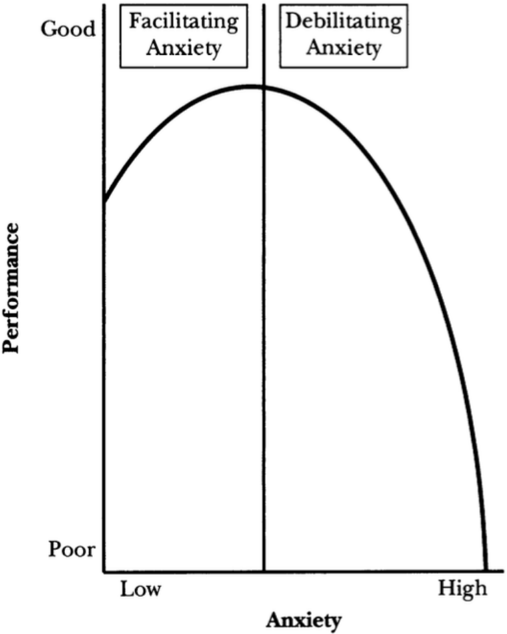
- Anxiety is best understood as a social anxiety with cognitive, affective, and behavioural components; its cognitive dimension (“worry”) competes with task-relevant information for processing space, creating a dual-task or divided-attention situation for anxious learners.
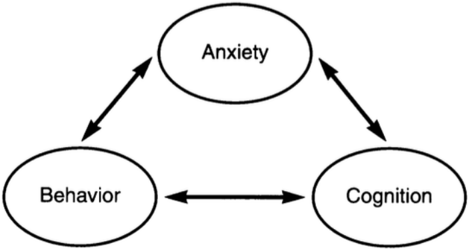
- State anxiety, not trait anxiety, is the immediate reaction associated with cognitive interference; active interference can occur at any stage of learning, and the relations among anxiety, cognition, and behaviour are recursive or cyclical.
- The paper cites Campbell and Ortiz’s (1991) estimate that up to one half of all language students experience debilitating levels of language anxiety, and Gardner et al.’s (1976) finding that language anxiety became a better predictor of achievement as grade level increased from grade 7 to grade 11.
Methods
- Design: theoretical reply and conceptual review, not an empirical study; it responds to Sparks and Ganschow’s LCDH and argues for including affective variables.
- Data or sample: no new sample or data were collected; the paper draws on prior research on anxiety in general and on language anxiety, including cited correlational, factor-analytic, and experimental studies.
- Main analysis: conceptual synthesis using cognitive interference theory, the state/trait anxiety distinction, and a recursive model of anxiety, cognition, and behaviour to critique LCDH’s treatment of affect.
Limitations
- Stated: early empirical studies on anxiety and language learning produced “mixed and confusing” results, and “exactly how anxiety impedes language learning has not been resolved”; the paper also acknowledges that correlational studies are vulnerable to third-variable explanations.
- Evident: as a theoretical reply, the paper presents no new empirical data or sample of its own, so its causal claims rest on synthesis of prior studies, some correlational and some experimental.
- Evident: the paper has no formal limitations section and does not report effect sizes or sample details for its own analyses because it conducts none.
Model-written summary. Check it against the paper before relying on it.
Integrity signals
Registry
Cites
Statistics
Figures
Verification
Claims the paper makes
0 Valid · 5 Not valid · 59 Not checked · 53 Own results and interpretations
In the paper
“it should also be recognised that task performance can provoke anxiety (MacIntyre & Gardner, 1994a).”
§ HOW DOES ANXIETY AFFECT L2 LEARNING? 1 How Does Anxiety Affect Second Language Learning? A Reply to Sparks And Ganschow > Figure 1
What the sources say
- Not matchedcites MacIntyre & Gardner, 1994a
More than one paper fits this citation.
plainstates a cause- Asserted: passes — The authors put it forward as true.
- Checkable: passes — It can be checked against evidence.
- Load-bearing: passes — The paper’s conclusions depend on it.
- Based: passes — The paper gives a reason why it holds.
- Not matched
In the paper
“When the effects of the video camera had dissipated and no longer lead to state anxiety arousal, performance improved relative to those who were experiencing more anxiety arousal.”
§ HOW DOES ANXIETY AFFECT L2 LEARNING? 1 How Does Anxiety Affect Second Language Learning? A Reply to Sparks And Ganschow > Relations among Anxiety, Cognition, and Behaviour
What the sources say
- Not matchedcites MacIntyre & Gardner, 1994a
More than one paper fits this citation.
plainstates a cause- Asserted: passes — The authors put it forward as true.
- Checkable: passes — It can be checked against evidence.
- Load-bearing: passes — The paper’s conclusions depend on it.
- Based: passes — The paper gives a reason why it holds.
- Not matched
A conclusion the paper draws from its own results — it cites no other source for it, so there is none to check. The quote shows it is in the paper.
In the paper
“The two explanations for individual differences in language achievement do not appear to be antithetical, in spite of the apparent claim to the contrary.”
§ HOW DOES ANXIETY AFFECT L2 LEARNING? 1 How Does Anxiety Affect Second Language Learning? A Reply to Sparks And Ganschow > Relations among Anxiety, Cognition, and Behaviour
hedged- Asserted: passes — The authors put it forward as true.
- Checkable: passes — It can be checked against evidence.
- Load-bearing: passes — The paper’s conclusions depend on it.
- Based: passes — The paper gives a reason why it holds.
None of the sources cited for this claim have been checked yet.
In the paper
“Significant negative correlations between language anxiety and course grades have been reported for languages such as Japanese (Aida, 1994), Spanish (Horwitz, 1986), andFrench (MacIntyre &Gardner, 1991b).”
§ HOW DOES ANXIETY AFFECT L2 LEARNING? 1 How Does Anxiety Affect Second Language Learning? A Reply to Sparks And Ganschow > How Does Anxiety Affect Second Language Learning? A Reply to Sparks and Ganschow
What the sources say
- Not checked yetcites Aida, 1994 matched to “Examination of Horwitz, Horwitz, and Cope's Construct of Foreign Language Anxiety: The Case of Students of Japanese” (1994) source
- Not checked yetcites Horwitz, 1986 matched to “Preliminary Evidence for the Reliability and Validity of a Foreign Language Anxiety Scale” (1986) source
- Not matchedcites MacIntyre & Gardner, 1991b
More than one paper fits this citation.
plainstates an association- Asserted: passes — The authors put it forward as true.
- Checkable: passes — It can be checked against evidence.
- Load-bearing: unclear — It is unclear whether the paper’s conclusions depend on it.
- Based: passes — The paper gives a reason why it holds.
A conclusion the paper draws from its own results — it cites no other source for it, so there is none to check. The quote shows it is in the paper.
In the paper
“In cases such as these, phonetic coding impairment is not the best place to look for the cause of the language learning difficulty.”
§ HOW DOES ANXIETY AFFECT L2 LEARNING? 1 How Does Anxiety Affect Second Language Learning? A Reply to Sparks And Ganschow > "Language Anxiety or Native Language Aptitude Differences"
plain- Asserted: passes — The authors put it forward as true.
- Checkable: unclear — It is unclear whether it could be checked against evidence.
- Load-bearing: passes — The paper’s conclusions depend on it.
- Based: passes — The paper gives a reason why it holds.
60 more claims
Create a free account to see all 117 claims and to verify the 22 references still open.
- Probably not a substantial claim. 35
- It may state two separate claims as one. 20
- The quote only partly states this claim. 1
Claims other papers make about this one
Each is checked against this paper’s own text: does it say what the citing paper says it does?
In the citing paper
“In addition, FLCA is argued to be a separate construct from first language learning deficits and subtle language learning disabilities, as several studies on the topic has found students who experience high levels of anxiety but are still successful language learners (MacIntyre, 1995a(MacIntyre, , 1995b)).”
From The Foreign Language Classroom Anxiety Scale and Academic Achievement: An Overview of the Prevailing Literature and a Meta-analysis (2020) · cites this paper as MacIntyre, 1995a
In the citing paper
“FLCA is defended, with the argument made that FLCA is an independent construct, distinct from aptitude, but which may influence or be influenced by the performance of the language learner.”
From The Foreign Language Classroom Anxiety Scale and Academic Achievement: An Overview of the Prevailing Literature and a Meta-analysis (2020) · cites this paper as MacIntyre, 1995a
Self-check
Percentages, sums and reported differences re-computed from the paper’s own numbers.
Each contradiction between two passages listed here was confirmed by an independent check.
Rated minor: it would not touch a result — a value no result rests on, a p-value that stays on the same side of the significance level, or a conflict that is clerical, resolved elsewhere in the paper, or outside its own findings.
In the paper
§ HOW DOES ANXIETY AFFECT L2 LEARNING? 1 How Does Anxiety Affect Second Language Learning? A Reply to Sparks And Ganschow > How Does Anxiety Affect Second Language Learning? A Reply to Sparks and Ganschow
“Horwitz and Young (1991) noted that "Exactly how anxiety impedes language learning has not been resolved" (p.177).”
§ HOW DOES ANXIETY AFFECT L2 LEARNING? 1 How Does Anxiety Affect Second Language Learning? A Reply to Sparks And Ganschow > References
“Horwitz, E. K., & Young, D. J. (1991). Preface. In E. K. Horwitz & D. J. Young (Eds.), Language anxiety: From theory and research to classroom implications (pp. xii-xiv).”
Rated minor: it would not touch a result — a value no result rests on, a p-value that stays on the same side of the significance level, or a conflict that is clerical, resolved elsewhere in the paper, or outside its own findings.
In the paper
§ HOW DOES ANXIETY AFFECT L2 LEARNING? 1 How Does Anxiety Affect Second Language Learning? A Reply to Sparks And Ganschow > How Does Anxiety Affect Second Language Learning? A Reply to Sparks and Ganschow
“Campbell and Ortiz (1991) considered the levels of language anxiety among university students to be "alarming" (p.159)”
§ HOW DOES ANXIETY AFFECT L2 LEARNING? 1 How Does Anxiety Affect Second Language Learning? A Reply to Sparks And Ganschow > References
“Campbell, C. M., & Ortiz, J. (1991). Helping students overcome foreign language anxiety: A foreign language anxiety workshop. In E. K. Horwitz & D. J. Young (Eds.), Language anxiety: From theory and research to classroom implications (pp. 141-150).”
Rated minor: it would not touch a result — a value no result rests on, a p-value that stays on the same side of the significance level, or a conflict that is clerical, resolved elsewhere in the paper, or outside its own findings.
In the paper
§ HOW DOES ANXIETY AFFECT L2 LEARNING? 1 How Does Anxiety Affect Second Language Learning? A Reply to Sparks And Ganschow > "Language Anxiety or Native Language Aptitude Differences"
“## "Language Anxiety or Native Language Aptitude Differences" The title of this section is taken from the subtitle of Sparks and Ganschow's (1991) article describing the LCDH.”
§ HOW DOES ANXIETY AFFECT L2 LEARNING? 1 How Does Anxiety Affect Second Language Learning? A Reply to Sparks And Ganschow > References
“Sparks, R. L., & Ganschow, L. (1991). Foreign language learning differences: Affective or native language aptitude differences? Modern Language Journal, 75, 3-16.”
Citations
Cites
Foreign Language Classroom Anxiety
HORWITZ, E. K., HORWITZ, M. B., & COPE, J. (1986) · The Modern Language Journal · doi:10.1111/j.1540-4781.1986.tb05256.x · Cited by 9,773
Language Learning Strategies: What Every Teacher Should Know
Horwitz, E. K., & Oxford, R. (1991) · The Modern Language Journal · doi:10.2307/329849 · Cited by 5,941
(1985) · Cited by 4,527
Language learning strategies what every teacher should know
Oxford, R. L. (1990) · Cited by 2,164
The Subtle Effects of Language Anxiety on Cognitive Processing in the Second Language
MacIntyre, P. D., & Gardner, R. C. (1994) · Language Learning · doi:10.1111/j.1467-1770.1994.tb01103.x · Cited by 1,823
Self-citationAIDA, Y. (1994) · The Modern Language Journal · doi:10.1111/j.1540-4781.1994.tb02026.x · Cited by 1,608
Individual Differences in Second Language Learning
Skehan, P. (2014) · Routledge eBooks · doi:10.4324/9781315831664 · Cited by 1,518
Cognitive and Emotional Components of Test Anxiety: A Distinction and Some Initial Data
Liebert, R. M., & Morris, L. W. (1967) · Psychological Reports · doi:10.2466/pr0.1967.20.3.975 · Cited by 1,150
Fiske, S. T., & Taylor, S. E. (1991) · Cited by 1,122
THE EFFECT OF AFFECT ON FOREIGN LANGUAGE LEARNING: A REVIEW OF THE ANXIETY RESEARCH
Scovel, T. (1978) · Language Learning · doi:10.1111/j.1467-1770.1978.tb00309.x · Cited by 1,047
Research works printed but not linked: 10
- Cope-Powell, J. (1991). Foreign language classroom anxiety: Institutional responses. In E. K. Horwitz & D. J. Young (Eds.), Language anxiety: From theory and research to classroom implications (pp. 169-176). Englewood Cliffs, NJ: Prentice Hall.
- Crane, S. (1989). Why poor readers misunderstand spoken sentences. In D. Shankweiler & I. Liberman (Eds.), Phonology and reading disability (pp. 133-165). Ann Arbor, MI: University of Michigan Press.
- Fischer, W. F. (1988). Theories of anxiety (2nd ed.). Lanham, MD: University Press of America.
- Horwitz, E. K., & Young, D. J. (1991). Preface. In E. K. Horwitz & D. J. Young (Eds.), Language anxiety: From theory and research to classroom implications (pp. xii-xiv). Englewood Cliffs, NJ: Prentice Hall.
- Levitt, E. E. (1980). The Psychology of Anxiety. Hillsdale, NJ: Erlbaum.
- Price, M. L. (1991). The subjective experience of foreign language anxiety: Interviews with highly anxious students. In E. K. Horwitz & D. J. Young (Eds.), Language anxiety: From theory and research to classroom implications (pp. 101-108). Englewood Cliffs, NJ: Prentice Hall.
- Sarason, I. G. (1986). Test anxiety, worry, and cognitive interference. In R. Schwarzer (Ed.), Self-related cognition in anxiety and motivation (pp. 19-34). Hillsdale, NJ: Erlbaum.
- Schwarzer, R. (1986). Self-related cognition in anxiety and motivation: An introduction. In R. Schwarzer (Ed.), Self-related cognition in anxiety and motivation (pp. 1-17). Hillsdale, NJ: Erlbaum.
- Spielberger, C. D. (1983). Manual for the state-trait anxiety inventory (form Y). Palo Alto, CA: Consulting Psychologists Press.
- Wine, J. D. (1980). Cognitive-attentional theory of test anxiety. In I. G. Sarason (Ed.), Test anxiety: Theory, research and applications (pp. 349-385). Hillsdale, NJ: Erlbaum.
Cited by
Items 101–200 of 851
Analyzing the Use of Motivational Strategies by EFL Teachers in Oman
Al‐Mahrooqi, R., Abrar‐ul‐Hassan, S., & Cofie, C. N. (2011) · Malaysian Journal of ELT Research · Cited by 58
The Relationship of Personality Traits with English Speaking Anxiety
Vural, H. (2019) · Research in Educational Policy and Management · doi:10.46303/repam.01.01.5 · Cited by 58
The Anxiety Factors among Saudi EFL Learners: A Study from English Language Teachers’ Perspective
Asif, F. (2017) · English Language Teaching · doi:10.5539/elt.v10n6p160 · Cited by 56
“MacIntyre (1995) draws a triangle among three variables anxiety, behaviour and cognition and affirms that all these three are interlinked.”
BackgroundA Comparative Study of Listening Anxiety and Reading Anxiety
Çapan, S. A., & Karaca, M. (2013) · Procedia - Social and Behavioral Sciences · doi:10.1016/j.sbspro.2013.01.198 · Cited by 55
Causes and consequences of foreign language anxiety
Kráľová, Z., & Петрова, Г. С. (2017) · XLinguae · doi:10.18355/xl.2017.10.03.09 · Cited by 55
Botes, E., Dewaele, J., & Greiff, S. (2022) · Modern Language Journal · doi:10.1111/modl.12807 · Cited by 54
Pan, H., Xia, F., Kumar, T., Li, X., & Shamsy, A. (2022) · Frontiers in Psychology · doi:10.3389/fpsyg.2022.833616 · Cited by 54
Characteristics of Weak and Strong Readers in a Foreign Language
Alderson, J. C., Huhta, A., & Nieminen, L. (2016) · Modern Language Journal · doi:10.1111/modl.12367 · Cited by 56
Subekti, A. S. (2018) · TEFLIN Journal - A publication on the teaching and learning of English · Cited by 54
Galmiche, D. (2017) · Apples - Journal of Applied Language Studies · doi:10.17011/apples/urn.201708233538 · Cited by 23
Ecological affordance and anxiety in an oral asynchronous computer-mediated environment
McNeil, L. (2014) · Language learning & technology · doi:10.64152/10125/44358 · Cited by 53
Foreign language anxiety research in System between 2004 and 2023: looking back and looking forward
Yu, Q. (2024) · Frontiers in Psychology · doi:10.3389/fpsyg.2024.1373290 · Cited by 53
Wern, T. C., & Rahmat, N. H. (2021) · European Journal of English Language Teaching · doi:10.46827/ejel.v6i3.3553 · Cited by 51
Menezes, E. S. (2015) · LA Referencia (Red Federada de Repositorios Institucionales de Publicaciones Científicas) · Cited by 51
A Study of Cross‐Cultural Adaptation by English‐Speaking Sojourners in Spain
Masgoret, A., Bernaus, M., & Gardner, R. C. (2000) · Foreign Language Annals · doi:10.1111/j.1944-9720.2000.tb01998.x · Cited by 50
Second language anxiety among Latino American immigrants in Australia
de Blakeley, M. G., Ford, R. M., & Casey, L. M. (2015) · International Journal of Bilingual Education and Bilingualism · doi:10.1080/13670050.2015.1083533 · Cited by 49
Learning Together? Experiences on a China–U.K. Articulation Program in Engineering
Hou, J., & McDowell, L. (2013) · Journal of Studies in International Education · doi:10.1177/1028315313497591 · Cited by 49
Singh, T. K. R., & Rajalingam, S. K. (2012) · English Language Teaching · doi:10.5539/elt.v5n7p42 · Cited by 48
Al-Hawamdeh, B. O. S., Hussen, N., & Abdelrasheed, N. S. G. (2023) · Language Testing in Asia · doi:10.1186/s40468-023-00225-5 · Cited by 47
The Effects of Test Anxiety on Learners’ Reading Test Performance
Javanbakht, N., & Hadian, M. (2014) · Procedia - Social and Behavioral Sciences · doi:10.1016/j.sbspro.2014.03.481 · Cited by 47
An Elaboration on the Effect of Reading Anxiety on Reading Achievement
Mohammadpur, B., & Ghafournia, N. (2015) · English Language Teaching · doi:10.5539/elt.v8n7p206 · Cited by 46
Ji, S., Qin, X., & Li, K. (2022) · Frontiers in Psychology · doi:10.3389/fpsyg.2022.859021 · Cited by 45
Cooperative Language Learning: Increasing Opportunities For Learning In Teams
Wichadee, S., & Orawiwatnakul, W. (2012) · Journal of College Teaching & Learning (TLC) · doi:10.19030/tlc.v9i2.6903 · Cited by 46
Foreign language anxiety and dependency distance in English–Chinese interpretation classrooms
Yan, J. X., & Liang, J. (2022) · Frontiers in Psychology · doi:10.3389/fpsyg.2022.952664 · Cited by 46
McIntosh, C., & Noels, K. A. (2004) · TUbilio (Technical University of Darmstadt) · doi:10.26083/tuprints-00012467 · Cited by 45
The relationship between language anxiety and students' participation in foreign language classes
Zhanibek, A. (2001) · Bilkent University Institutional Repository (Bilkent University) · Cited by 49
Impact of Metacognitive Strategies Instruction on Secondary School Students’ Reading Anxieties
Melanlıoğlu, D. (2014) · TED EĞİTİM VE BİLİM · doi:10.15390/eb.2014.3540 · Cited by 45
Increasing reading self-efficacy and reading amount in EFL learners with word-targets
McLean, S., & Poulshock, J. (2018) · Reading in a Foreign Language · doi:10.64152/10125/66739 · Cited by 43
Ahmad, I. S., Al-Shboul, M. M., Nordin, M. S., Rahman, Z. A., Ibrahim, M. B., & Madarsha, K. B. (2013) · English Language Teaching · doi:10.5539/elt.v6n11p89 · Cited by 44
AN ANALYSIS OF STUDENTS’ MOTIVATION AND ANXIETY ON LEARNING ENGLISH AT SMA NEGERI 6 KERINCI
Sari, M. N., & Ningsih, P. E. A. (2022) · Pendekar Jurnal Pendidikan Berkarakter · doi:10.31764/pendekar.v5i3.10994 · Cited by 43
Attia, S. S., & Algazo, M. (2025) · Frontiers in Education · doi:10.3389/feduc.2025.1614353 · Cited by 43
Murtagh, L. (2007) · International Journal of Bilingual Education and Bilingualism · doi:10.2167/beb453.0 · Cited by 43
Complexity of L2 motivation in an asian ESL setting.
Shahbaz, M. (2012) · Porta Linguarum Revista Interuniversitaria de Didáctica de las Lenguas Extranjeras · doi:10.30827/digibug.14699 · Cited by 41
Namaziandost, E., Hafezian, M., & Shafiee, S. (2018) · Asian-Pacific Journal of Second and Foreign Language Education · doi:10.1186/s40862-018-0061-3 · Cited by 42
Language Anxiety and Counseling Self‐Efficacy
Haley, M., Marin, M., & Gelgand, J. C. (2015) · Journal of Multicultural Counseling and Development · doi:10.1002/jmcd.12012 · Cited by 42
Yabancı Dil Olarak Türkçe Öğrenenlerin Okuma Kaygıları ve Okuduğunu Anlama Becerileri
ALTUNKAYA, H., & Erdem, İ. (2017) · Sakarya University Journal of Education · doi:10.19126/suje.307045 · Cited by 41
Student Language Anxiety in Learning English (A survey to non-English Major students in rural area)
Hidayati, T. (2018) · IJELTAL (Indonesian Journal of English Language Teaching and Applied Linguistics) · doi:10.21093/ijeltal.v2i2.55 · Cited by 40
Online synchronous communication in the second-language classroom
Murphy, E. (2010) · Canadian Journal of Learning and Technology · doi:10.21432/t2kg6c · Cited by 40
Chiang, Y.-N. (2006) · Texas ScholarWorks (Texas Digital Library) · Cited by 39
The Relationship between Learners’ Affective Variables and Second Language Achievement
Alrabai, F., & Moskovsky, C. (2016) · Arab World English Journal · doi:10.24093/awej/vol7no2.6 · Cited by 40
Tallon, M. (2006) · Texas ScholarWorks (Texas Digital Library) · Cited by 39
Jin, Y., de Bot, K., & Keijzer, M. C. J. (2017) · Studies in Second Language Learning and Teaching · doi:10.14746/ssllt.2017.7.1.6 · Cited by 38
Gargalianou, V., Muehlfeld, K. S., Urbig, D., & van Witteloostuijn, A. C. (2016) · Schmalenbach Business Review · doi:10.1007/s41464-016-0007-6 · Cited by 40
Mohammed, A. (2015) · Arab World English Journal · doi:10.24093/awej/vol6no2.16 · Cited by 38
Affective learning: the anxiety construct in adult learners
Bigdeli, S. (2010) · Procedia - Social and Behavioral Sciences · doi:10.1016/j.sbspro.2010.12.216 · Cited by 37
Foreign Language Anxiety in Traditional and Distance Learning Foreign Language Classrooms
Bollinger, A. (2017) · Digital Commons (Liberty University) · Cited by 37
RELATIONSHIPS BETWEEN ANXIETY AND ACHIEVEMENT AT THREE STAGES OF LEARNING A FOREIGN LANGUAGE
Onwuegbuzie, A. J., Bailey, P., & Daley, C. E. (1999) · Perceptual and Motor Skills · doi:10.2466/pms.1999.88.3c.1085 · Cited by 37
Biomarkers of “Linguistic Anxiety” in aphasia: A proof-of-concept case study
Cahana-Amitay, D., Oveis, A. C., Sayers, J. T., Pineles, S. L., Spiro, A., & Albert, M. L. (2015) · Clinical Linguistics & Phonetics · doi:10.3109/02699206.2015.1014572 · Cited by 37
The Effect of Anxiety and Emotional Intelligence on Students' Learning Process
Hashempour, S., & Mehrad, A. (2014) · Cited by 34
Nejad, S. G., & Keshavarzi, A. (2015) · Journal of applied linguistics and language research · Cited by 34
Azarfam, A. Y., & Baki, R. (2012) · International Journal of Applied Linguistics & English Literature · doi:10.7575/ijalel.v.1n.2p.153 · Cited by 34
Relative Importance of Learning Variables on L2 Performance
Olivares-Cuhat, G. (2010) · Linguistik Online · doi:10.13092/lo.43.415 · Cited by 33
Saghafi, K., & Shirvan, M. E. (2020) · Journal of language and Education · doi:10.17323/jle.2020.9684 · Cited by 33
L2 grit: A structured approach to preliminary biblio-systematic review
Demir, Y. (2024) · System · doi:10.1016/j.system.2024.103353 · Cited by 33
Ismail, Z., Rasit, N., & Supriyatno, T. (2023) · International Journal of Language Education · doi:10.26858/ijole.v1i1.37368 · Cited by 33
Vincze, L., & MacIntyre, P. D. (2016) · Applied Linguistics Review · doi:10.1515/applirev-2015-2004 · Cited by 33
Self-citationFerdowsi, S., & Razmi, M. H. (2024) · Asian-Pacific Journal of Second and Foreign Language Education · doi:10.1186/s40862-024-00260-6 · Cited by 32
Decreasing Anxiety and Frustration in the Spanish Language Classroom.
Haskin, J., Smith, M. D. L. H., & Racine, M. (2003) · Cited by 32
Le, J. (2004) · Texas ScholarWorks (Texas Digital Library) · Cited by 32
Huang, Y.-W. (2014) · English Language and Literature Studies · doi:10.5539/ells.v4n2p66 · Cited by 31
Alleviating Test Anxiety for Students of Advanced Reading Comprehension
Bensoussan, M. (2012) · RELC Journal · doi:10.1177/0033688212449511 · Cited by 31
Oad, L. (2020) · Pakistan Social Sciences Review · doi:10.35484/pssr.2020(4-iii)77 · Cited by 32
Investigating Factors Causing Students’ Anxiety in Speaking English
Mulyani, S. (2018) · International Journal in Applied Linguistics of Parahikma · Cited by 31
The Level of Anxiety on the Achievement of the Saudi EFL Learners
Alshahrani, M. (2016) · Arab World English Journal · doi:10.2139/ssrn.2859241 · Cited by 30
Rasool, U., Aslam, M. Z., Mahmood, R., Barzani, S. H. H., & Qian, J. (2023) · Heliyon · doi:10.1016/j.heliyon.2023.e13405 · Cited by 30
Jin, Y., de Bot, K., & Keijzer, M. C. J. (2015) · Studies in Second Language Learning and Teaching · doi:10.14746/ssllt.2015.5.1.3 · Cited by 30
Brewer, S. S. (2013) · Lidil · doi:10.4000/lidil.3331 · Cited by 29
Guntzviller, L. M., Yale, R. N., & Jensen, J. D. (2016) · Journal of Cross-Cultural Psychology · doi:10.1177/0022022116635743 · Cited by 29
Shirvan, M. E., Khajavy, G. H., Nazifi, M., & Taherian, T. (2018) · New Horizons in Adult Education and Human Resource Development · doi:10.1002/nha3.20230 · Cited by 29
Apple, M. T. (2013) · JALT Journal · doi:10.37546/jaltjj35.1-1 · Cited by 29
Foreign Language Anxiety in Education
Kianinezhad, N. (2024) · JELITA · doi:10.56185/jelita.v5i1.477 · Cited by 29
Modified output of Japanese EFL learners : variable effects of interlocutor vs. feedback types
Sato, M. (2006) · eScholarship@McGill (McGill) · doi:10.82308/38543 · Cited by 29
INDONESIAN STUDENTS’ STRATEGIES TO COPE WITH FOREIGN LANGUAGE ANXIETY
Abdurahman, N. H., & Rizqi, M. A. (2020) · TEFLIN Journal - A publication on the teaching and learning of English · doi:10.15639/eflinjournal.v31i1/1-18 · Cited by 29
Lindberg, R., McDonough, K., & Trofimovich, P. (2022) · Studies in Second Language Acquisition · doi:10.1017/s0272263122000523 · Cited by 28
Ferdous, F. (2012) · Cited by 29
Çapan, S. A., & PEKTAŞ, R. (2013) · English Language Teaching · doi:10.5539/elt.v6n12p181 · Cited by 28
Haroud, S., Ouchaouka, L., & Saqri, N. (2025) · Frontiers in Education · doi:10.3389/feduc.2025.1510765 · Cited by 28
Discovering Factors of Foreign Language Speaking Anxiety and Coping Strategies
Rafieyan, V. (2016) · Journal for the Study of English Linguistics · doi:10.5296/jsel.v4i1.9668 · Cited by 29
Emergent Target Language Identities Among Latino English Language Learners
Ciriza-Lope, M., Shappeck, M., & Arxer, S. L. (2016) · Journal of Latinos and Education · doi:10.1080/15348431.2015.1134535 · Cited by 27
For Body and Mind: Practicing Yoga and Emotion Regulation
Kobylińska, D., Lewczuk, K., Marchlewska, M., & Pietraszek, A. (2018) · Social Psychological Bulletin · doi:10.5964/spb.v13i1.25502 · Cited by 27
Taboada, M. D. L. M., Burón, A. S., & Fernández-Martín, M. P. (2011) · Edupsykhé Revista de Psicología y Educación · doi:10.57087/edupsykhe.v10i1.3846 · Cited by 27
Foreign Language Anxiety in Virtual Classrooms during the Covid-19 Pandemic in Turkey
Valızadeh, M. (2021) · Journal of humanities and social sciences · Cited by 26
Liu, M., & Dong, L. (2022) · The Asia-Pacific Education Researcher · doi:10.1007/s40299-022-00694-x · Cited by 26
Creating a Positive Learning Environment for Students with English Classroom Anxiety
Liao, H., & Wang, Y.-H. (2015) · Psychological Reports · doi:10.2466/11.pr0.116k21w8 · Cited by 26
Anxiety Levels of Novice and Experienced EFL Instructors: İstanbul Aydın University Case
Mutlu, A. K., & Aydın, Z. (2014) · Procedia - Social and Behavioral Sciences · doi:10.1016/j.sbspro.2014.01.314 · Cited by 25
Task anxiety, cognition and performance on oral tasks in L2 Spanish
Donate, Á. (2022) · Journal of Spanish Language Teaching · doi:10.1080/23247797.2022.2090661 · Cited by 25
YABANCI D‹L Ö⁄REN‹M‹ SÜREC‹NDE KAYGI ANXIETY IN FOREIGN LANGUAGE LEARNING
Ergür, D. O. (2004) · Hacettepe University Journal of Education · Cited by 28
The relationship between emotional intelligence and foreign language anxiety in Turkish EFL students
Şakrak-Ekin, G. (2009) · Bilkent University Institutional Repository (Bilkent University) · Cited by 25
Xu, Y., & Xie, Z. (2024) · Frontiers in Psychiatry · doi:10.3389/fpsyt.2024.1492701 · Cited by 24
Evaluating Saudi University Students’ Beliefs about Learning English
Roomy, M. A. A. (2015) · International Journal of English Linguistics · doi:10.5539/ijel.v5n1p22 · Cited by 25
Portrait of a future teacher: case study of learning styles, strategies, and language disabilities
Nam, C., & Oxford, R. L. (1998) · System · doi:10.1016/s0346-251x(97)00070-5 · Cited by 24
Public Speaking Anxiety of University Students in EFL Context
Fathikasari, N., Gozali, A., & Ratri, D. P. (2022) · JETL (Journal Of Education Teaching and Learning) · doi:10.26737/jetl.v7i1.2741 · Cited by 24
LİSE ÖĞRENCİLERİNDE YABANCI DİL ÖĞRENME KAYGISI: NİTEL BİR ARAŞTIRMA
Baş, G. (2014) · Pamukkale University Journal of Education · doi:10.9779/puje653 · Cited by 24
Undergraduates’ Speaking Anxiety in English as Second Language (ESL) Classrooms
Long, K. L. Y., Yeo, J. Y., & Lin, S. S. P. (2019) · International Journal of Service Management and Sustainability · doi:10.24191/ijsms.v4i1.8180 · Cited by 24
The Effects of Gender and Personality on Foreign Language Anxiety among Adult MultilingualsPreprint
Gargalianou, V., Muehlfeld, K. S., Urbig, D., & van Witteloostuijn, A. C. (2015) · RePEc: Research Papers in Economics · Cited by 21
A Critical “Positivist” Analysis of Tatweer Policy in Saudi Arabia
Elyas, T., & Alghamdi, A. A. (2018) · Emerald Group Publishing Limited eBooks · doi:10.1108/s1479-367920180000035008 · Cited by 23
Liu, M., & Thondhlana, J. (2015) · Repository@Nottingham (University of Nottingham) · doi:10.25170/ijelt.v10i1.657 · Cited by 23
Fakka, B., Asrifan, A., Syahrir, L., Hermansyah, S., & Amran, N. A. R. (2022) · La Ogi English Language Journal · doi:10.55678/loj.v8i1.598 · Cited by 23
Anxiety in Spanish EFL University Lessons: Causes, Responsibility Attribution and Coping
Castro, P. A., & Díaz, J. P.-L. (2014) · Studia Anglica Posnaniensia · doi:10.2478/stap-2014-0003 · Cited by 23
Metadata
- Authors
- MACINTYRE, P. D.
- Affiliations
- Cape Breton University (CA)
- Corresponding author
- MACINTYRE, PETER D.
- ORCID
- MACINTYRE, PETER D.
- Venue
- The Modern Language Journal
- Publisher
- Wiley
- Published
- 1995-03
- Volume
- 79
- Issue
- 1
- Pages
- 90-99
- ISSN
- 0026-7902 (ISSN-L)
- 1540-4781
- OpenAlex
- W1990008549
- Cited by
- 887
- References
- 54
- Citations by year
- 2026: 38 · 2025: 46 · 2024: 50 · 2023: 55 · 2022: 49 · 2021: 51 · 2020: 53 · 2019: 41 · 2018: 52 · 2017: 50 · 2016: 55 · 2015: 49 · 2014: 52 · 2013: 38 · 2012: 38
- FWCI
- 32.58
- Type
- journal article
- Language
- en
- Open access
- green
- hdl.handle.net
- Licence
- Locations
- Modern Language Journal (publishedVersion)
- CBU Scholar (submittedVersion, cc-by-nc-nd)
- Funders
- Cape Breton University
- Social Sciences and Humanities Research Council of Canada
- Topics
- Social Sciences › Arts and Humanities › Language and Linguistics › EFL/ESL Teaching and Learning
- Social Sciences › Psychology › Social Psychology › Communication in Education and Healthcare
- Social Sciences › Psychology › Developmental and Educational Psychology › Second Language Acquisition and Learning
- Keywords
- language anxiety, second language acquisition, language aptitude, individual differences, emotional factors, language achievement, linguistic communication
About these checks
Registry, retraction, Cites and statistics results are computed, not judged, with one exception: a printed reference that no index lists is read once by a model before it counts as a citation error. Claims are extracted by a model and kept only when their quote appears verbatim in the text; each cited source is then checked, with a model’s help, for whether it says what the claim relies on. Those verdicts can be wrong — read the claim’s quote and the cited source before relying on one.
A language model drew the claims from the paper on 2026-11-24, under version 3 of the claim definition (model deepseek-v4.1-flash, prompt extract-v3).
A second model labelled each claim on 2026-11-24 (model jev-1.13-20260917, definition revision gold-guideline-v0.2).
Statistics and arithmetic are recomputed, not judged.
Confidence bands are shown only for fields calibrated on our annotated test set. None is calibrated yet, so no band is shown.
What counts as a claim ›How we measure confidence ›How we check this ›
Are you an author, or do you see a problem with this page? Request a review
Data sources
Bibliographic data: Semantic Scholar, OpenAlex, Crossref.
Contains information from the Semantic Scholar Academic Graph Datasets, made available under the ODC Attribution License (ODC-BY 1.0).
Semantic Scholar’s data is described in: Kinney, R., et al. (2023). The Semantic Scholar Open Data Platform. arXiv:2301.10140.
