

How Does Anxiety Affect Second Language Learning? A Reply to Sparks and Ganschow
Open accessThe DOI matches its Crossref record; 55 of the 55 references it cites were found in a registry or an index; none of the 71 sources its claims cite is checked for support yet.
Abstract
The linguistic coding deficit hypothesis, introduced by Sparks and Ganschow (1991, 1993a, 1993b), postulates that language aptitude is the primary source of individual differences in language achievement. This may be seen to reduce affective variables, such as language anxiety, to the role of unfortunate side effects, devoid of explanatory power. This paper advocates that language anxiety can play a significant causal role in creating individual differences in both language learning and communication. It reviews evidence from investigations of anxiety in general and studies of the role of anxiety in the language learning processes and concludes that the linguistic coding deficit hypothesis makes a significant omission by assigning mere epiphenomenal status to affective variables in general and language anxiety in particular.
Overview
CoChat Summary
TL;DR
MacIntyre argues against Sparks and Ganschow’s linguistic coding deficit hypothesis (LCDH), contending that language anxiety can play a significant causal role in individual differences in second language learning and communication rather than being merely an epiphenomenon of aptitude. He proposes that anxiety creates divided attention and interferes with encoding, storage, and retrieval, making LCDH incomplete without affective variables.
Key findings
- Language anxiety can play a significant causal role in creating individual differences in both language learning and communication; the paper reviews evidence of negative correlations between language anxiety and course grades in Japanese, Spanish, and French, standardized written and oral proficiency tests, slower vocabulary learning, and factor-analytic associations with self-rated and actual proficiency.
- Anxiety is best understood as a social anxiety with cognitive, affective, and behavioural components; its cognitive dimension (“worry”) competes with task-relevant information for processing space, creating a dual-task or divided-attention situation for anxious learners.
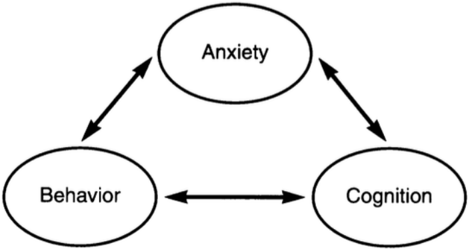
- State anxiety, not trait anxiety, is the immediate reaction associated with cognitive interference; active interference can occur at any stage of learning, and the relations among anxiety, cognition, and behaviour are recursive or cyclical.
- The paper cites Campbell and Ortiz’s (1991) estimate that up to one half of all language students experience debilitating levels of language anxiety, and Gardner et al.’s (1976) finding that language anxiety became a better predictor of achievement as grade level increased from grade 7 to grade 11.
Methods
- Design: theoretical reply and conceptual review, not an empirical study; it responds to Sparks and Ganschow’s LCDH and argues for including affective variables.
- Data or sample: no new sample or data were collected; the paper draws on prior research on anxiety in general and on language anxiety, including cited correlational, factor-analytic, and experimental studies.
- Main analysis: conceptual synthesis using cognitive interference theory, the state/trait anxiety distinction, and a recursive model of anxiety, cognition, and behaviour to critique LCDH’s treatment of affect.
Limitations
- Stated: early empirical studies on anxiety and language learning produced “mixed and confusing” results, and “exactly how anxiety impedes language learning has not been resolved”; the paper also acknowledges that correlational studies are vulnerable to third-variable explanations.
- Evident: as a theoretical reply, the paper presents no new empirical data or sample of its own, so its causal claims rest on synthesis of prior studies, some correlational and some experimental.
- Evident: the paper has no formal limitations section and does not report effect sizes or sample details for its own analyses because it conducts none.
Model-written summary. Check it against the paper before relying on it.
Integrity signals
Registry
Cites
Statistics
Figures
Verification
Claims the paper makes
0 Valid · 5 Not valid · 59 Not checked · 53 Own results and interpretations
In the paper
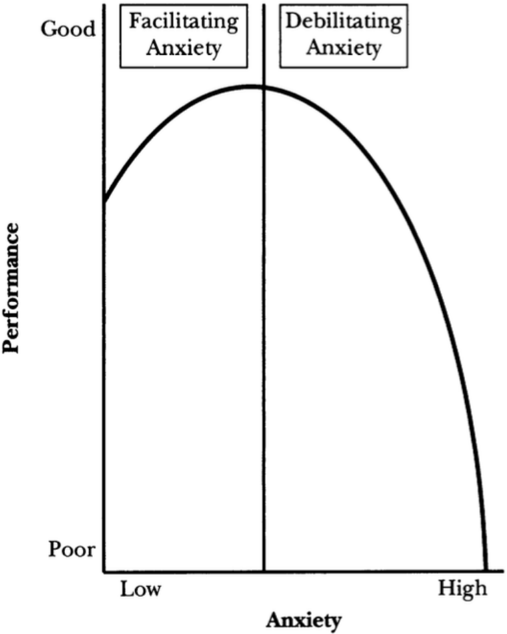
“it should also be recognised that task performance can provoke anxiety (MacIntyre & Gardner, 1994a).”
§ HOW DOES ANXIETY AFFECT L2 LEARNING? 1 How Does Anxiety Affect Second Language Learning? A Reply to Sparks And Ganschow > Figure 1
What the sources say
- Not matchedcites MacIntyre & Gardner, 1994a
More than one paper fits this citation.
plainstates a cause- Asserted: passes — The authors put it forward as true.
- Checkable: passes — It can be checked against evidence.
- Load-bearing: passes — The paper’s conclusions depend on it.
- Based: passes — The paper gives a reason why it holds.
- Not matched
In the paper
“When the effects of the video camera had dissipated and no longer lead to state anxiety arousal, performance improved relative to those who were experiencing more anxiety arousal.”
§ HOW DOES ANXIETY AFFECT L2 LEARNING? 1 How Does Anxiety Affect Second Language Learning? A Reply to Sparks And Ganschow > Relations among Anxiety, Cognition, and Behaviour
What the sources say
- Not matchedcites MacIntyre & Gardner, 1994a
More than one paper fits this citation.
plainstates a cause- Asserted: passes — The authors put it forward as true.
- Checkable: passes — It can be checked against evidence.
- Load-bearing: passes — The paper’s conclusions depend on it.
- Based: passes — The paper gives a reason why it holds.
- Not matched
A conclusion the paper draws from its own results — it cites no other source for it, so there is none to check. The quote shows it is in the paper.
In the paper
“The two explanations for individual differences in language achievement do not appear to be antithetical, in spite of the apparent claim to the contrary.”
§ HOW DOES ANXIETY AFFECT L2 LEARNING? 1 How Does Anxiety Affect Second Language Learning? A Reply to Sparks And Ganschow > Relations among Anxiety, Cognition, and Behaviour
hedged- Asserted: passes — The authors put it forward as true.
- Checkable: passes — It can be checked against evidence.
- Load-bearing: passes — The paper’s conclusions depend on it.
- Based: passes — The paper gives a reason why it holds.
None of the sources cited for this claim have been checked yet.
In the paper
“Significant negative correlations between language anxiety and course grades have been reported for languages such as Japanese (Aida, 1994), Spanish (Horwitz, 1986), andFrench (MacIntyre &Gardner, 1991b).”
§ HOW DOES ANXIETY AFFECT L2 LEARNING? 1 How Does Anxiety Affect Second Language Learning? A Reply to Sparks And Ganschow > How Does Anxiety Affect Second Language Learning? A Reply to Sparks and Ganschow
What the sources say
- Not checked yetcites Aida, 1994 matched to “Examination of Horwitz, Horwitz, and Cope's Construct of Foreign Language Anxiety: The Case of Students of Japanese” (1994) source
- Not checked yetcites Horwitz, 1986 matched to “Preliminary Evidence for the Reliability and Validity of a Foreign Language Anxiety Scale” (1986) source
- Not matchedcites MacIntyre & Gardner, 1991b
More than one paper fits this citation.
plainstates an association- Asserted: passes — The authors put it forward as true.
- Checkable: passes — It can be checked against evidence.
- Load-bearing: unclear — It is unclear whether the paper’s conclusions depend on it.
- Based: passes — The paper gives a reason why it holds.
A conclusion the paper draws from its own results — it cites no other source for it, so there is none to check. The quote shows it is in the paper.
In the paper
“In cases such as these, phonetic coding impairment is not the best place to look for the cause of the language learning difficulty.”
§ HOW DOES ANXIETY AFFECT L2 LEARNING? 1 How Does Anxiety Affect Second Language Learning? A Reply to Sparks And Ganschow > "Language Anxiety or Native Language Aptitude Differences"
plain- Asserted: passes — The authors put it forward as true.
- Checkable: unclear — It is unclear whether it could be checked against evidence.
- Load-bearing: passes — The paper’s conclusions depend on it.
- Based: passes — The paper gives a reason why it holds.
60 more claims
Create a free account to see all 117 claims and to verify the 22 references still open.
- Probably not a substantial claim. 35
- It may state two separate claims as one. 20
- The quote only partly states this claim. 1
Claims other papers make about this one
Each is checked against this paper’s own text: does it say what the citing paper says it does?
In the citing paper
“In addition, FLCA is argued to be a separate construct from first language learning deficits and subtle language learning disabilities, as several studies on the topic has found students who experience high levels of anxiety but are still successful language learners (MacIntyre, 1995a(MacIntyre, , 1995b)).”
From The Foreign Language Classroom Anxiety Scale and Academic Achievement: An Overview of the Prevailing Literature and a Meta-analysis (2020) · cites this paper as MacIntyre, 1995a
In the citing paper
“FLCA is defended, with the argument made that FLCA is an independent construct, distinct from aptitude, but which may influence or be influenced by the performance of the language learner.”
From The Foreign Language Classroom Anxiety Scale and Academic Achievement: An Overview of the Prevailing Literature and a Meta-analysis (2020) · cites this paper as MacIntyre, 1995a
Self-check
Percentages, sums and reported differences re-computed from the paper’s own numbers.
Each contradiction between two passages listed here was confirmed by an independent check.
Rated minor: it would not touch a result — a value no result rests on, a p-value that stays on the same side of the significance level, or a conflict that is clerical, resolved elsewhere in the paper, or outside its own findings.
In the paper
§ HOW DOES ANXIETY AFFECT L2 LEARNING? 1 How Does Anxiety Affect Second Language Learning? A Reply to Sparks And Ganschow > How Does Anxiety Affect Second Language Learning? A Reply to Sparks and Ganschow
“Horwitz and Young (1991) noted that "Exactly how anxiety impedes language learning has not been resolved" (p.177).”
§ HOW DOES ANXIETY AFFECT L2 LEARNING? 1 How Does Anxiety Affect Second Language Learning? A Reply to Sparks And Ganschow > References
“Horwitz, E. K., & Young, D. J. (1991). Preface. In E. K. Horwitz & D. J. Young (Eds.), Language anxiety: From theory and research to classroom implications (pp. xii-xiv).”
Rated minor: it would not touch a result — a value no result rests on, a p-value that stays on the same side of the significance level, or a conflict that is clerical, resolved elsewhere in the paper, or outside its own findings.
In the paper
§ HOW DOES ANXIETY AFFECT L2 LEARNING? 1 How Does Anxiety Affect Second Language Learning? A Reply to Sparks And Ganschow > How Does Anxiety Affect Second Language Learning? A Reply to Sparks and Ganschow
“Campbell and Ortiz (1991) considered the levels of language anxiety among university students to be "alarming" (p.159)”
§ HOW DOES ANXIETY AFFECT L2 LEARNING? 1 How Does Anxiety Affect Second Language Learning? A Reply to Sparks And Ganschow > References
“Campbell, C. M., & Ortiz, J. (1991). Helping students overcome foreign language anxiety: A foreign language anxiety workshop. In E. K. Horwitz & D. J. Young (Eds.), Language anxiety: From theory and research to classroom implications (pp. 141-150).”
Rated minor: it would not touch a result — a value no result rests on, a p-value that stays on the same side of the significance level, or a conflict that is clerical, resolved elsewhere in the paper, or outside its own findings.
In the paper
§ HOW DOES ANXIETY AFFECT L2 LEARNING? 1 How Does Anxiety Affect Second Language Learning? A Reply to Sparks And Ganschow > "Language Anxiety or Native Language Aptitude Differences"
“## "Language Anxiety or Native Language Aptitude Differences" The title of this section is taken from the subtitle of Sparks and Ganschow's (1991) article describing the LCDH.”
§ HOW DOES ANXIETY AFFECT L2 LEARNING? 1 How Does Anxiety Affect Second Language Learning? A Reply to Sparks And Ganschow > References
“Sparks, R. L., & Ganschow, L. (1991). Foreign language learning differences: Affective or native language aptitude differences? Modern Language Journal, 75, 3-16.”
Citations
Cites
Foreign Language Classroom Anxiety
HORWITZ, E. K., HORWITZ, M. B., & COPE, J. (1986) · The Modern Language Journal · doi:10.1111/j.1540-4781.1986.tb05256.x · Cited by 9,773
Language Learning Strategies: What Every Teacher Should Know
Horwitz, E. K., & Oxford, R. (1991) · The Modern Language Journal · doi:10.2307/329849 · Cited by 5,941
(1985) · Cited by 4,527
Language learning strategies what every teacher should know
Oxford, R. L. (1990) · Cited by 2,164
The Subtle Effects of Language Anxiety on Cognitive Processing in the Second Language
MacIntyre, P. D., & Gardner, R. C. (1994) · Language Learning · doi:10.1111/j.1467-1770.1994.tb01103.x · Cited by 1,823
Self-citationAIDA, Y. (1994) · The Modern Language Journal · doi:10.1111/j.1540-4781.1994.tb02026.x · Cited by 1,608
Individual Differences in Second Language Learning
Skehan, P. (2014) · Routledge eBooks · doi:10.4324/9781315831664 · Cited by 1,518
Cognitive and Emotional Components of Test Anxiety: A Distinction and Some Initial Data
Liebert, R. M., & Morris, L. W. (1967) · Psychological Reports · doi:10.2466/pr0.1967.20.3.975 · Cited by 1,150
Fiske, S. T., & Taylor, S. E. (1991) · Cited by 1,122
THE EFFECT OF AFFECT ON FOREIGN LANGUAGE LEARNING: A REVIEW OF THE ANXIETY RESEARCH
Scovel, T. (1978) · Language Learning · doi:10.1111/j.1467-1770.1978.tb00309.x · Cited by 1,047
Anxiety in academic achievement situations.
Alpert, R., & Haber, R. N. (1960) · The Journal of Abnormal and Social Psychology · doi:10.1037/h0045464 · Cited by 1,045
Creating a low-anxiety classroom environment: What does language anxiety research suggest?
YOUNG, D. J. (1991) · The Modern Language Journal · doi:10.1111/j.1540-4781.1991.tb05378.x · Cited by 1,041
Creating a Low-Anxiety Classroom Environment: What Does Language Anxiety Research Suggest?
Young, D. J. (1991) · The Modern Language Journal · doi:10.2307/329492 · Cited by 1,041
Anxiety and Second‐Language Learning: Toward a Theoretical Clarification*
MacIntyre, P. D., & Gardner, R. C. (1989) · Language Learning · doi:10.1111/j.1467-1770.1989.tb00423.x · Cited by 930
Self-citationMotivation, Self‐confidence, and Group Cohesion in the Foreign Language Classroom
Clément, R., Dörnyei, Z., & Noels, K. A. (1994) · Language Learning · doi:10.1111/j.1467-1770.1994.tb01113.x · Cited by 914
Methods and Results in the Study of Anxiety and Language Learning: A Review of the Literature*
MacIntyre, P. D., & Gardner, R. C. (1991) · Language Learning · doi:10.1111/j.1467-1770.1991.tb00677.x · Cited by 856
Self-citationPreliminary Evidence for the Reliability and Validity of a Foreign Language Anxiety Scale
Horwitz, E. K. (1986) · TESOL Quarterly · doi:10.2307/3586302 · Cited by 802
Test anxiety : theory, research, and applications
Sarason, I. G. (1980) · Lawrence Erlbaum Associates eBooks · Cited by 724
Bailey, K. M. (1983) · Cited by 675
A student's contributions to second-language learning. Part II: Affective variables
Gardner, R. C., & MacIntyre, P. D. (1993) · Language Teaching · doi:10.1017/s0261444800000045 · Cited by 620
Self-citationMacIntyre, P. D., & Gardner, R. C. (1991) · Language Learning · doi:10.1111/j.1467-1770.1991.tb00691.x · Cited by 581
Self-citationAn Investigation of Students' Perspectives on Anxiety and Speaking
Young, D. J. (1990) · Foreign Language Annals · doi:10.1111/j.1944-9720.1990.tb00424.x · Cited by 575
Language anxiety: from theory and research to classroom implications
MacIntyre, P. (1992) · System · doi:10.1016/0346-251x(92)90069-f · Cited by 537
Self-citationAnxiety, learning, and memory: A reconceptualization
Eysenck, M. W. (1979) · Journal of Research in Personality · doi:10.1016/0092-6566(79)90001-1 · Cited by 494 · cited 2×
“The basis for the negative effects of anxiety on cognitive activity were summarised by Eysenck (1979) who argued that:”
BackgroundMethodAvoiding Communication: Shyness, Reticence, and Communication Apprehension
Daly, J. A. (1984) · Medical Entomology and Zoology · Cited by 488
Individual Differences in Second-Language Learning
Oxford, R. L., & Skehan, P. (1990) · The Modern Language Journal · doi:10.2307/327635 · Cited by 402
How to be a More Successful Language Learner
Reiss, M.-A., Rubin, J., & Thompson, I. (1983) · The Modern Language Journal · doi:10.2307/327091 · Cited by 378
Self-related Cognitions in Anxiety and Motivation
(2013) · Psychology Press eBooks · doi:10.4324/9780203781609 · Cited by 331
The Relationship Between Anxiety and Foreign Language Oral Proficiency Ratings
Young, D. J. (1986) · Foreign Language Annals · doi:10.1111/j.1944-9720.1986.tb01032.x · Cited by 321
Phonology and Reading Disability: Solving the Reading Puzzle
(1989) · University of Michigan Press eBooks · doi:10.3998/mpub.12236 · Cited by 317
Investigating Language Class Anxiety Using the Focused Essay Technique
MACINTYRE, P. D., & GARDNER, R. C. (1991) · The Modern Language Journal · doi:10.1111/j.1540-4781.1991.tb05358.x · Cited by 314
Self-citationThe Effects of Anxiety on Complex Learning and Academic Achievement
Spielberger, C. D. (1966) · Anxiety and Behavior · doi:10.1016/b978-1-4832-3131-0.50019-6 · Cited by 269
MacIntyre, P. D., & Gardner, R. C. (1994) · Studies in Second Language Acquisition · doi:10.1017/s0272263100012560 · Cited by 237
Self-citationMotivational variables in second language acquisition: A study of Francophones learning English.
Clément, R., Gardner, R. C., & Smythe, P. C. (1977) · Canadian Journal of Behavioural Science / Revue canadienne des sciences du comportement · doi:10.1037/h0081614 · Cited by 230
sparks, R. L., & Ganschow, L. (1993) · Modern Language Journal · doi:10.1111/j.1540-4781.1993.tb01946.x · Cited by 229
Foreign Language Learning Differences: Affective or Native Language Aptitude Differences?
SPARKS, R. L., & GANSCHOW, L. (1991) · The Modern Language Journal · doi:10.1111/j.1540-4781.1991.tb01076.x · Cited by 213
SPARKS, R., & GANSCHOW, L. (1993) · The Modern Language Journal · doi:10.1111/j.1540-4781.1993.tb01974.x · Cited by 203
Second-Language Learning: A Social Psychological Perspective
Gardner, R. C., Smythe, P. C., Clément, R., & Gliksman, L. (1976) · The Canadian Modern Language Review · doi:10.3138/cmlr.32.3.198 · Cited by 192
The Psychology of Anxiety: Second Edition
Levitt, E. E. (2015) · Routledge eBooks · doi:10.4324/9781315673127 · Cited by 192
Second Language Attrition: The Role of Motivation and Use
Gardner, R. C., Lalonde, R. N., Moorcroft, R., & Evers, F. T. (1987) · Journal of Language and Social Psychology · doi:10.1177/0261927x8700600102 · Cited by 183
Anxiety and Cognitive Processing of Instruction
Tobias, S. (2013) · doi:10.4324/9780203781609-8 · Cited by 181
Communication, cognition, and anxiety
Booth‐Butterfield, M. (1991) · Sage eBooks · Cited by 180
Social and individual factors in second language acquisition.
Clément, R., Gardner, R. C., & Smythe, P. C. (1980) · Canadian Journal of Behavioural Science / Revue canadienne des sciences du comportement · doi:10.1037/h0081081 · Cited by 174
A student's contributions to second language learning. Part I: Cognitive variables
Gardner, R. C., & MacIntyre, P. D. (1992) · Language Teaching · doi:10.1017/s026144480000700x · Cited by 161
Self-citationTest anxiety, academic performance, and cognitive appraisals.
Hunsley, J. D. (1985) · Journal of Educational Psychology · doi:10.1037/0022-0663.77.6.678 · Cited by 96
Second Language Acquisition: A Social Psychological Perspective
Gardner, R. C. (2010) · Oxford University Press eBooks · doi:10.1093/oxfordhb/9780195384253.013.0014 · Cited by 90
Attitudes and Motivations of American Students of Spanish
Muchnick, A. G., & Wolfe, D. E. (1982) · Canadian Modern Language Review/ La Revue canadienne des langues vivantes · doi:10.3138/cmlr.38.2.262 · Cited by 77
Klay, R. J. V., & Brown, H. D. (1995) · Die Unterrichtspraxis/Teaching German · doi:10.2307/3531362 · Cited by 49
The Foreign Language Classroom: Bridging Theory and Practice
(1995) · Routledge eBooks · doi:10.4324/9780203820858 · Cited by 41
MacIntyre, P. D., & Gardner, R. C. (1988) · Cited by 37
Self-citationThe Nature and Replicability of Factors in Second Language Acquisition. Research Bulletin No. 605.
Gardner, R. C. (1984) · Cited by 30
Living with stress and anxiety
Wilkinson, G. (1988) · Behaviour Research and Therapy · doi:10.1016/0005-7967(88)90137-4 · Cited by 5
(1963) · The Sciences · doi:10.1002/j.2326-1951.1963.tb00729.x · Cited by 4
(1982)
Research works printed but not linked: 10
- Cope-Powell, J. (1991). Foreign language classroom anxiety: Institutional responses. In E. K. Horwitz & D. J. Young (Eds.), Language anxiety: From theory and research to classroom implications (pp. 169-176). Englewood Cliffs, NJ: Prentice Hall.
- Crane, S. (1989). Why poor readers misunderstand spoken sentences. In D. Shankweiler & I. Liberman (Eds.), Phonology and reading disability (pp. 133-165). Ann Arbor, MI: University of Michigan Press.
- Fischer, W. F. (1988). Theories of anxiety (2nd ed.). Lanham, MD: University Press of America.
- Horwitz, E. K., & Young, D. J. (1991). Preface. In E. K. Horwitz & D. J. Young (Eds.), Language anxiety: From theory and research to classroom implications (pp. xii-xiv). Englewood Cliffs, NJ: Prentice Hall.
- Levitt, E. E. (1980). The Psychology of Anxiety. Hillsdale, NJ: Erlbaum.
- Price, M. L. (1991). The subjective experience of foreign language anxiety: Interviews with highly anxious students. In E. K. Horwitz & D. J. Young (Eds.), Language anxiety: From theory and research to classroom implications (pp. 101-108). Englewood Cliffs, NJ: Prentice Hall.
- Sarason, I. G. (1986). Test anxiety, worry, and cognitive interference. In R. Schwarzer (Ed.), Self-related cognition in anxiety and motivation (pp. 19-34). Hillsdale, NJ: Erlbaum.
- Schwarzer, R. (1986). Self-related cognition in anxiety and motivation: An introduction. In R. Schwarzer (Ed.), Self-related cognition in anxiety and motivation (pp. 1-17). Hillsdale, NJ: Erlbaum.
- Spielberger, C. D. (1983). Manual for the state-trait anxiety inventory (form Y). Palo Alto, CA: Consulting Psychologists Press.
- Wine, J. D. (1980). Cognitive-attentional theory of test anxiety. In I. G. Sarason (Ed.), Test anxiety: Theory, research and applications (pp. 349-385). Hillsdale, NJ: Erlbaum.
Cited by
Language anxiety and achievement
Horwitz, E. (2001) · Annual Review of Applied Linguistics · doi:10.1017/s0267190501000071 · Cited by 1,573
“MacIntyre (1995a, 1995b) and Horwitz (2000) have responded to the LCDH arguing for the existence of language anxiety independent of first or general language learning disabilities.”
BackgroundLanguage Anxiety: Differentiating Writing and Speaking Components
Cheng, Y., Horwitz, E. K., & Schallert, D. L. (1999) · Language Learning · doi:10.1111/0023-8333.00095 · Cited by 765
Biases in Self‐Ratings of Second Language Proficiency: The Role of Language Anxiety
MacIntyre, P. D., Noels, K. A., & Clément, R. (1997) · Language Learning · doi:10.1111/0023-8333.81997008 · Cited by 715
Self-citationListening Comprehension and Anxiety in the Arabic Language Classroom
ELKHAFAIFI, H. (2005) · The Modern Language Journal · doi:10.1111/j.1540-4781.2005.00275.x · Cited by 646
Towards a Full Model of Second Language Learning: An Empirical Investigation
GARDNER, R. C., TREMBLAY, P. F., & MASGORET, A. (1997) · The Modern Language Journal · doi:10.1111/j.1540-4781.1997.tb05495.x · Cited by 634
Metadata
- Authors
- MACINTYRE, P. D.
- Affiliations
- Cape Breton University (CA)
- Corresponding author
- MACINTYRE, PETER D.
- ORCID
- MACINTYRE, PETER D.
- Venue
- The Modern Language Journal
- Publisher
- Wiley
- Published
- 1995-03
- Volume
- 79
- Issue
- 1
- Pages
- 90-99
- ISSN
- 0026-7902 (ISSN-L)
- 1540-4781
- OpenAlex
- W1990008549
- Cited by
- 887
- References
- 54
- Citations by year
- 2026: 38 · 2025: 46 · 2024: 50 · 2023: 55 · 2022: 49 · 2021: 51 · 2020: 53 · 2019: 41 · 2018: 52 · 2017: 50 · 2016: 55 · 2015: 49 · 2014: 52 · 2013: 38 · 2012: 38
- FWCI
- 32.58
- Type
- journal article
- Language
- en
- Open access
- green
- hdl.handle.net
- Licence
- Locations
- Modern Language Journal (publishedVersion)
- CBU Scholar (submittedVersion, cc-by-nc-nd)
- Funders
- Cape Breton University
- Social Sciences and Humanities Research Council of Canada
- Topics
- Social Sciences › Arts and Humanities › Language and Linguistics › EFL/ESL Teaching and Learning
- Social Sciences › Psychology › Social Psychology › Communication in Education and Healthcare
- Social Sciences › Psychology › Developmental and Educational Psychology › Second Language Acquisition and Learning
- Keywords
- language anxiety, second language acquisition, language aptitude, individual differences, emotional factors, language achievement, linguistic communication
About these checks
Registry, retraction, Cites and statistics results are computed, not judged, with one exception: a printed reference that no index lists is read once by a model before it counts as a citation error. Claims are extracted by a model and kept only when their quote appears verbatim in the text; each cited source is then checked, with a model’s help, for whether it says what the claim relies on. Those verdicts can be wrong — read the claim’s quote and the cited source before relying on one.
A language model drew the claims from the paper on 2026-11-24, under version 3 of the claim definition (model deepseek-v4.1-flash, prompt extract-v3).
A second model labelled each claim on 2026-11-24 (model jev-1.13-20260917, definition revision gold-guideline-v0.2).
Statistics and arithmetic are recomputed, not judged.
Confidence bands are shown only for fields calibrated on our annotated test set. None is calibrated yet, so no band is shown.
What counts as a claim ›How we measure confidence ›How we check this ›
Are you an author, or do you see a problem with this page? Request a review
Data sources
Bibliographic data: Semantic Scholar, OpenAlex, Crossref.
Contains information from the Semantic Scholar Academic Graph Datasets, made available under the ODC Attribution License (ODC-BY 1.0).
Semantic Scholar’s data is described in: Kinney, R., et al. (2023). The Semantic Scholar Open Data Platform. arXiv:2301.10140.
